
Article-At-A-Glance:
- Polycrystalline solar panels offer farmers a cost-effective renewable energy solution, typically priced 10-20% lower than monocrystalline alternatives while maintaining solid efficiency.
- These panels perform exceptionally well in high-temperature farm environments, making them ideal for agricultural operations in warm climates.
- With a typical lifespan of 25-30 years, polycrystalline panels provide long-term energy independence for farms while reducing operational costs.
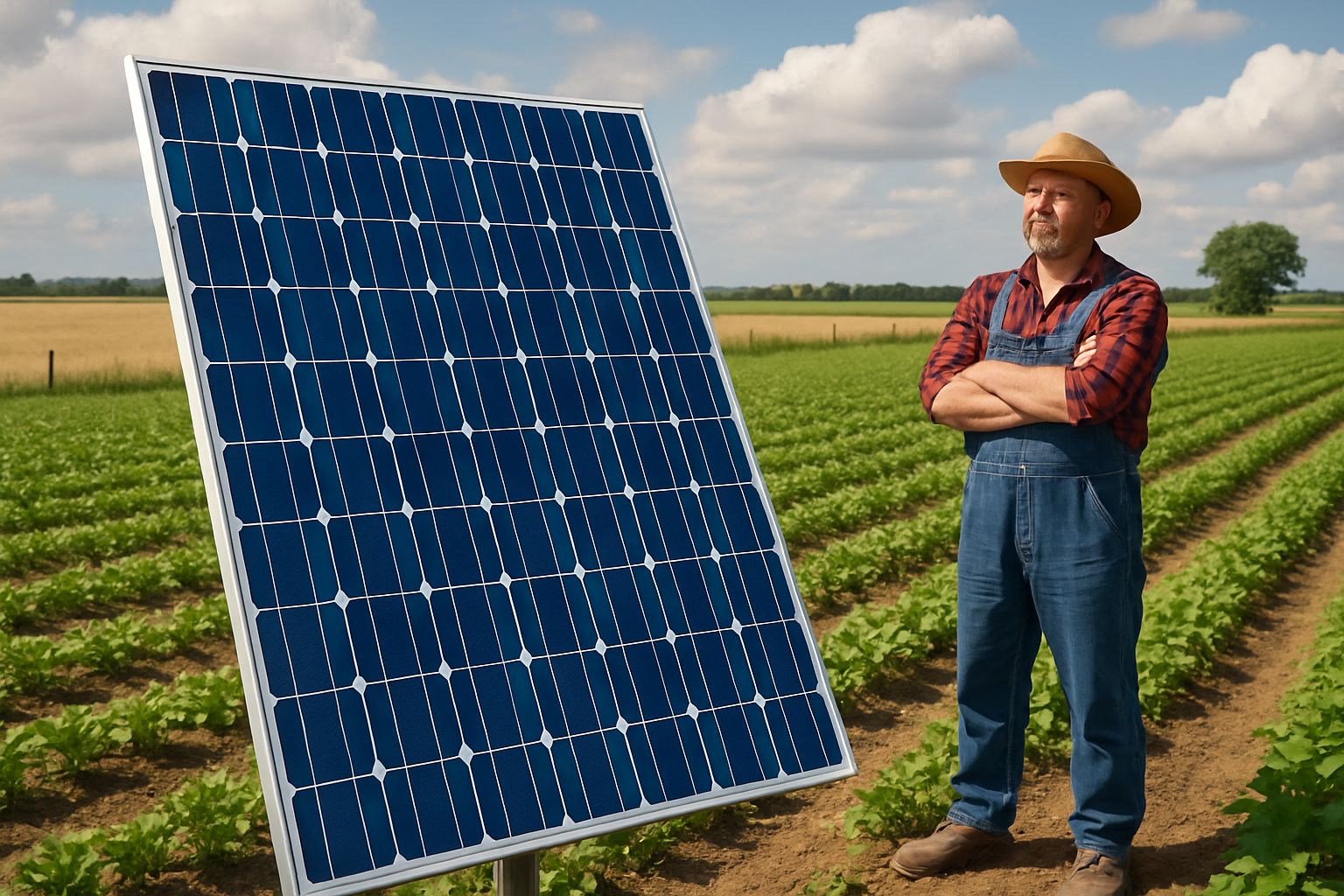
- Their blue appearance results from multiple silicon crystal formations, which creates panels that are more tolerant to partial shading conditions common in agricultural settings.
- Polycrystalline technology strikes an optimal balance between affordability and performance for powering irrigation systems, barn operations, and other critical farm infrastructure.
Agricultural operations demand reliable, cost-effective power solutions to remain competitive in today’s market. Polycrystalline solar panels have emerged as a practical answer to the energy challenges modern farmers face, offering an ideal balance between affordability and performance.
As farms search for ways to minimize operational costs while embracing sustainability, these distinctive blue panels are becoming an increasingly common sight across rural landscapes. Their growing popularity isn’t just a trend—it’s a reflection of their practical benefits for agricultural applications.
At-a-Glance: Powering Your Farm with Polycrystalline Solar
Farming operations require significant energy inputs—from powering irrigation systems and climate control in livestock facilities to running processing equipment and maintaining cold storage. Polycrystalline solar technology offers a path toward energy independence that addresses these needs while reducing long-term operational costs. By harnessing abundant sunlight available across most agricultural regions, these panels transform unused roof space or marginally productive land into valuable energy-generating assets. Frey Energy’s renewable solutions are helping farms nationwide reduce their dependency on fluctuating utility costs while creating more sustainable agricultural operations.

Polycrystalline Solar Panels: The Affordable Energy Solution for Farmers
The economic equation for farmers considering solar has dramatically improved over the past decade. Polycrystalline panels stand out for their affordability, typically costing 10-20% less than their monocrystalline counterparts. This price difference can translate to thousands of dollars in savings for medium to large-scale farm installations—capital that can be reinvested elsewhere in the operation.
While slightly less efficient than monocrystalline alternatives, modern polycrystalline panels still achieve efficiency ratings of 15-17%, more than sufficient for most agricultural needs. This practical efficiency combined with lower acquisition costs creates a compelling value proposition for budget-conscious farm operations looking to transition to renewable energy.
Farm Energy Challenges: Why Solar Makes Sense
Energy represents one of the most significant variable costs in modern farming operations. From running irrigation pumps to powering processing equipment, the demands are substantial and continuous. Traditional energy sources present numerous challenges that increasingly make solar power the logical alternative for forward-thinking agricultural businesses.
Rising Electricity Costs Eating Into Farm Profits
Agricultural profit margins continue to face pressure from escalating energy expenses. Rural electricity rates have climbed steadily at 2-5% annually in many regions, creating unpredictable cost increases that complicate farm financial planning. This price volatility makes budgeting difficult and erodes already tight profit margins common in agricultural operations.
Polycrystalline solar installations offer protection against these rising costs by locking in energy expenses for decades. Once installed, the panels produce electricity at a fixed cost, effectively converting a variable expense into a predictable investment with measurable returns. Many farms report breaking even on their solar investment within 5-7 years, followed by decades of reduced energy expenses.
Unreliable Grid Access in Rural Areas
Many agricultural operations exist in areas with aging utility infrastructure and limited service redundancy. Power outages and voltage fluctuations can damage sensitive equipment and disrupt critical operations like automated feeding systems or climate control. Even brief interruptions can result in significant financial losses or animal welfare concerns. For farmers seeking alternatives, exploring best power solutions can be beneficial.
Solar installations paired with battery storage provide crucial backup power capabilities that maintain essential operations during grid failures. For remote operations where grid extensions would be prohibitively expensive, polycrystalline solar systems offer a cost-effective alternative to traditional utility connections or diesel generators, eliminating both connection fees and ongoing fuel costs.
Environmental Pressure to Reduce Carbon Footprint
Consumer preferences increasingly favor products from environmentally responsible sources. Agricultural operations face mounting pressure to demonstrate sustainability commitments, with many wholesale buyers and food processors establishing specific carbon reduction requirements for their suppliers. Meeting these standards often requires fundamental changes to energy consumption patterns.
Polycrystalline solar panels provide a visible, measurable way for farms to reduce their environmental impact while simultaneously improving their bottom line. A typical 25kW system prevents approximately 30 tons of carbon dioxide emissions annually—equivalent to removing 6 cars from the road or planting 500 trees. This environmental benefit creates marketable value for farm products while potentially opening access to premium markets with sustainability requirements.

“Polycrystalline Solar Panel Materials …” from growingsolarmist.com and used with no modifications.
What Makes Polycrystalline Panels Different?
Understanding what distinguishes polycrystalline panels from other solar technologies helps explain their suitability for agricultural applications. These differences emerge from their unique manufacturing process and directly influence their performance characteristics in farm environments.
The Manufacturing Process: Multiple Silicon Crystals
Polycrystalline panels are created by melting multiple silicon fragments together rather than growing a single crystal. Raw silicon is melted and poured into square molds where it cools and solidifies into a block containing numerous silicon crystals. This multi-crystal structure forms the distinctive boundary lines visible throughout the panel. The manufacturing process requires less energy and precision than monocrystalline production, contributing to the lower cost that makes these panels attractive for large-scale farm installations.
The Distinctive Blue Appearance and Why It Matters
The characteristic blue, somewhat speckled appearance of polycrystalline panels results from how light interacts with their multi-crystalline structure. While aesthetics may seem secondary for agricultural applications, this visible difference helps identify genuine polycrystalline technology. More importantly, the blue coloration typically indicates a lower heat absorption rate compared to darker monocrystalline panels. For farms in hot climates, this property can contribute to better performance during temperature extremes when other panel types may experience efficiency drops. Learn more about how solar panels improve a farm’s resilience.
Lifespan and Durability on the Farm
Modern polycrystalline panels maintain impressive durability despite their more affordable price point. With typical performance guarantees of 25-30 years, these panels match the longevity of more expensive options. The solid construction withstands agricultural challenges including dust accumulation, temperature variations, and moderate hail impacts. Many manufacturers now offer specialized frames for agricultural installations that accommodate mounting on barn roofs, equipment sheds, or ground-mounted systems at field edges. This resilience ensures reliable operation throughout decades of farm service with minimal performance degradation.
5 Key Benefits of Polycrystalline Panels for Agricultural Use
Agricultural operations present unique energy challenges that polycrystalline technology is particularly well-positioned to address. The specific advantages these panels offer align exceptionally well with farm requirements and constraints, enhancing the farm’s resilience against energy fluctuations.
1. Lower Upfront Investment Than Monocrystalline Options
The most immediate advantage of polycrystalline technology for farmers is the reduced capital outlay required. Farm operations typically require larger system sizes to power equipment with substantial energy demands. The 10-20% cost savings compared to monocrystalline alternatives becomes increasingly significant as system size grows. For a 50kW system—common for medium-sized operations—this can represent savings of $5,000-$10,000 on panel costs alone. This lower entry barrier makes solar feasible for farms operating with tight capital constraints or those wanting to test renewable energy before larger commitments.
2. Excellent Performance in High-Temperature Farm Environments
Agricultural operations often function in exposed rural environments with limited shade. Polycrystalline panels typically demonstrate better temperature coefficients than monocrystalline options, meaning they maintain more of their rated output during hot weather. This advantage becomes particularly valuable during summer months when irrigation demands peak alongside temperature. While all silicon-based panels lose some efficiency as they heat up, the performance degradation in polycrystalline panels is often less pronounced, maintaining more consistent output during critical growing season months.
3. Space Efficiency for Large-Scale Farm Installations
The rectangular shape and modular design of polycrystalline panels allow for efficient use of available mounting space on barns, equipment sheds, and other farm structures. Their uniform dimensions simplify installation planning and maximize energy production per square foot of available surface. For ground-mounted systems on marginally productive land, the space efficiency of polycrystalline technology means less acreage removed from potential agricultural use. This balance of space utilization and energy production makes polycrystalline panels practical for farms where land value and productivity remain primary concerns. Learn more about how solar panels improve farm water efficiency.
4. Less Sensitive to Partial Shading from Trees or Structures
Farm installations frequently contend with partial shading from nearby trees, silos, or other agricultural structures. The multi-crystalline composition of polycrystalline panels often translates to better performance under partial shade conditions compared to some alternatives. While all panels experience output reduction when partially shaded, polycrystalline panels typically show more gradual performance decreases rather than the significant drops sometimes observed with monocrystalline options. This characteristic proves valuable in real-world farm settings where perfect, unobstructed placement isn’t always possible.
5. Reduced Maintenance Requirements
Time constraints represent a significant challenge for farm operators, making low-maintenance energy solutions particularly valuable. Polycrystalline panels require minimal ongoing attention beyond occasional cleaning, especially in dusty agricultural environments. Their solid construction without moving parts eliminates many maintenance concerns, while their simpler internal structure means fewer potential failure points. Most systems only require inspection once or twice yearly, with cleaning as needed based on local conditions. This minimal maintenance burden fits well with the practical demands of busy agricultural operations. For more insights on how solar panels improve farm resilience, explore our detailed guide.
Real-World Performance of Polycrystalline Panels: Efficiency and Power Output
Theoretical specifications matter less to farmers than actual performance in field conditions. Polycrystalline panels have demonstrated reliable output across various agricultural settings nationwide. While laboratory ratings provide a starting point for comparison, real-world factors including installation angle, seasonal variations, and local climate conditions significantly impact daily energy production.
Most agricultural installations report consistent performance aligned with manufacturer projections once these environmental factors are properly accounted for. System integrators experienced with farm applications can provide location-specific production estimates that incorporate historical weather data and mounting configurations. These tailored projections typically prove more valuable for farm planning than generic efficiency ratings.
Typical Efficiency Rates for Farm Applications
Contemporary polycrystalline panels achieve efficiency ratings between 13-17%, compared to 17-22% for premium monocrystalline options. This modest efficiency difference rarely becomes a limiting factor for farm installations where space constraints are less restrictive than in residential applications. The practical impact means approximately 15-20% more panels needed to achieve equivalent output compared to the highest-efficiency alternatives. For most agricultural settings, this space requirement remains entirely manageable, making the cost savings the more relevant consideration. Where roof space is limited, modern high-efficiency polycrystalline options narrowing this gap to just 10-15% have recently entered the market.
Daily and Seasonal Output Variations
Agricultural energy demands often align naturally with solar production patterns. Irrigation requirements peak during summer months when solar output reaches maximum levels. Well-designed systems account for this seasonal variation, often incorporating modest oversizing to ensure sufficient production during lower-light winter periods. Daily output follows the expected bell curve, with peak production occurring during midday hours when many farm operations schedule energy-intensive activities. Some farms implement simple energy management practices, scheduling pumping operations or grain drying during peak solar production hours to maximize the direct consumption of generated electricity.
Cost Breakdown: What Farmers Actually Pay
For agricultural operations, understanding the complete financial picture is essential before committing to solar technology. While polycrystalline panels offer attractive upfront savings, the total investment encompasses several components beyond just the panels themselves. A comprehensive understanding of these costs helps farm operators make informed decisions aligned with their financial objectives.
The total expenditure for a farm solar installation typically includes the panels, mounting hardware, inverters, wiring, monitoring systems, and labor costs. Additional factors may include permits, utility interconnection fees, and potential structural reinforcements for roof-mounted systems. Many agricultural installations also include some form of battery storage to maintain critical functions during grid outages.
Understanding this complete cost picture allows for accurate financial planning and proper evaluation of available incentives. Most agricultural operations approach solar as a long-term capital improvement with returns distributed over decades rather than a simple expense.
Initial Purchase Price Per Watt
Polycrystalline panels currently average $0.70-$0.90 per watt at wholesale rates for agricultural-scale purchases, compared to $0.90-$1.20 for monocrystalline alternatives. For a typical 50kW farm installation, this represents a panel cost difference of approximately $10,000-15,000. This substantial saving often enables farmers to increase system size or allocate funds toward battery storage components that improve system resilience.
The total installed cost—including all components and labor—typically ranges from $1.80-$2.50 per watt for ground-mounted agricultural systems using polycrystalline technology. Roof-mounted installations on existing farm structures may reduce this figure by eliminating some foundation and racking expenses. Many agricultural operations achieve better economies of scale than residential installations due to larger system sizes and simpler mounting options.
Installation Costs for Agricultural Settings
Farm installations often benefit from lower per-watt installation costs compared to residential projects due to several factors. The scale of agricultural projects allows for more efficient deployment of installation crews and equipment. Open spaces simplify panel placement and reduce labor hours, while existing farm equipment like tractors and lifts can sometimes assist with installation tasks. Additionally, agricultural properties typically have convenient access to electrical infrastructure designed for substantial loads.
Ground-mounted systems commonly used in agricultural settings avoid the complexities and safety requirements of rooftop installations, further reducing labor costs. These systems also simplify maintenance access throughout the panels’ operational life. Farm operators should request agricultural-specific installation quotes, as contractors experienced with farm systems often offer more competitive pricing than general residential installers.
Available Tax Incentives and Agricultural Grants
Agricultural operations benefit from numerous financial incentives specifically designed for rural renewable energy adoption. The federal Investment Tax Credit currently allows farms to deduct a significant percentage of solar installation costs from their tax liability. USDA’s Rural Energy for America Program (REAP) offers both grants and loan guarantees specifically for agricultural producers installing renewable energy systems. These grants can cover up to 25% of eligible project costs, substantially improving project economics.
Additional incentives vary by state and utility territory, potentially including production-based incentives, accelerated depreciation allowances, property tax exemptions, and net metering programs. Agricultural operations should consult with financial advisors familiar with both agricultural tax structures and renewable energy incentives to maximize available benefits. Many solar providers specializing in agricultural installations offer assistance navigating these complex incentive programs.
Return on Investment Timeline for Different Farm Sizes
Most agricultural solar installations achieve complete payback within 5-8 years when all incentives and energy savings are considered. Small operations (under 25kW) typically fall toward the longer end of this range, while larger systems (100kW+) often achieve faster returns due to economies of scale. After this payback period, the systems continue generating essentially free electricity for decades, with only minimal maintenance expenses. Learn more about monocrystalline vs polycrystalline solar panels for optimizing your farm’s energy efficiency.
The ROI calculation differs significantly between operations based on current electricity rates, consumption patterns, and available incentives. Farms with high daytime energy usage—such as those running irrigation pumps, cooling systems, or processing equipment during daylight hours—typically see faster returns than operations with primarily evening energy demands. Many farmers view solar installations as both operational cost reduction and long-term inflation protection against rising energy costs.

Head-to-Head Comparison: Polycrystalline vs. Other Solar Options
Agricultural decision-makers benefit from understanding how polycrystalline panels compare to alternative solar technologies. Each option presents distinct advantages for specific agricultural applications, with the ideal choice depending on farm-specific factors including budget constraints, space limitations, aesthetic considerations, and performance requirements.
When evaluating options, farmers should consider both immediate needs and long-term operational goals. While initial cost often dominates decision-making, other factors including durability, warranty coverage, degradation rates, and manufacturer reputation significantly impact lifetime value. Many agricultural operations ultimately implement mixed technology approaches, selecting different panel types for specific applications across the property.
Monocrystalline: Higher Efficiency but at What Cost?
Monocrystalline panels achieve higher efficiency ratings (17-22%) than polycrystalline alternatives (15-17%), but this improvement comes with a 15-25% price premium. For space-constrained installations like equipment shed rooftops where maximum production per square foot matters, this efficiency advantage may justify the additional expense. However, for ground-mounted systems on available farmland, the economic equation typically favors polycrystalline options unless land value is exceptionally high.
Beyond efficiency, monocrystalline panels offer slightly better low-light performance, potentially increasing energy harvest during early morning and late afternoon hours. They also typically carry longer performance warranties, though the practical difference (30 years vs. 25 years) extends beyond the planning horizon of most agricultural operations. For farms prioritizing maximum production from limited space and willing to accept higher upfront costs, monocrystalline technology remains competitive despite its price premium.
Thin-Film: Flexibility vs. Space Requirements
Thin-film solar technology offers unique advantages including lighter weight, better performance in extremely high temperatures, and superior shade tolerance compared to crystalline panels. These panels perform particularly well in diffuse light conditions and maintain higher output percentages on cloudy days. Some thin-film products offer physical flexibility that allows installation on curved surfaces like grain bin roofs that cannot accommodate rigid panels.
However, thin-film’s substantially lower efficiency (10-13%) requires approximately 50% more installation space to achieve equivalent output compared to polycrystalline panels. This space requirement, combined with higher mounting costs due to the larger array size, typically makes thin-film less economical for most agricultural applications except where extreme temperatures, unusual mounting surfaces, or significant partial shading exist. The technology remains worth considering for specialized agricultural applications despite these limitations. For more insights on how solar panels improve farm water efficiency, explore our detailed article.
Bifacial Panels: Worth the Extra Investment?
Bifacial panels, which generate electricity from both sides by capturing reflected light from the ground, represent an emerging option for agricultural installations. These panels can increase total energy production by 5-30% depending on installation height, ground reflectivity, and mounting angle. When installed over highly reflective surfaces like concrete pads, light-colored gravel, or even certain cropland, production gains can significantly improve system economics despite higher panel costs.
For elevated ground-mounted systems common in agricultural settings, particularly those allowing continued crop production or grazing beneath the array, the production advantage often justifies the 10-20% price premium. Some innovative farmers have successfully combined bifacial panels with specific crops or ground covers selected to maximize reflectivity. This technology merits consideration for agricultural operations interested in maximizing production from their solar footprint, especially where dual land use is planned.
Here is a table comparing Polycrystalline solar Panels with Other Solar Options for agricultural use — focusing on features, efficiency, and suitability for farms.
|
Solar Panel Type |
Efficiency Range |
Cost per Watt (Approx.) |
Key Advantages for Agriculture |
Limitations |
Best Farm Applications |
|---|---|---|---|---|---|
|
Monocrystalline Panels |
17–22% 1 |
$0.90–$1.50 2 |
High efficiency, compact design, long lifespan, performs well in all climates |
Higher upfront cost |
Space-limited farms, rooftops, and irrigation systems 1 |
|
Polycrystalline Panels |
13–17% 3 |
$0.70–$1.00 3 |
Lower cost, durable, long lifespan, strong in direct sunlight |
Requires more space, less efficient in cloudy conditions | |
|
Thin-Film Panels |
10–13% 5 |
$0.50–$0.90 2 |
Lightweight, flexible, better low-light/shaded performance |
Lower efficiency, shorter lifespan |
Greenhouses, barns, shaded or irregular terrain 5 |
|
Bifacial Panels |
18–22% 6 |
$1.00–$1.60 6 |
Captures light from both sides, high energy yield, great for reflective surfaces like grass or soil |
Higher cost, more complex installation |
Agrivoltaics (dual-use with crops), open-field installations 6 |
Best Agricultural Applications for Polycrystalline Solar Panels
Polycrystalline panels excel in numerous agricultural applications where their balance of cost, performance, and durability creates practical advantages. Understanding these optimal use cases helps farmers identify where these panels deliver maximum value for specific operational needs.
Irrigation Systems and Water Pumping
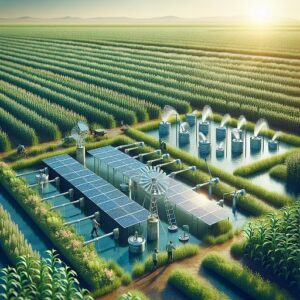
Irrigation represents one of the most natural matches for solar power on farms, as water needs typically peak during sunny summer months when solar production is highest. Polycrystalline panels can directly power pumping systems during daylight hours, reducing or eliminating irrigation electricity costs. For operations requiring consistent water availability, battery storage or grid connection provides reliability during cloudy periods.
Many farms implement solar-powered irrigation without batteries by incorporating adequately sized water storage that accommodates production variations. This approach minimizes system costs while maintaining functional reliability. Polycrystalline panels prove particularly cost-effective for these applications due to their lower initial investment, allowing for larger system sizes that handle peak summer demands while operating economically during lower-demand seasons.
Barn and Outbuilding Power
Agricultural structures with substantial roof areas present ideal mounting locations for polycrystalline panels. These installations convert otherwise unused roof space into productive energy-generating assets without consuming valuable farmland. Barns, equipment sheds, and workshop buildings typically feature simple roof structures with minimal penetrations, simplifying installation and reducing costs compared to residential rooftops.
The energy generated directly supports operations within these buildings including lighting, ventilation, small machinery, and charging stations for electric farm equipment. Many farms implement simple load management strategies, scheduling energy-intensive activities during peak production hours. Polycrystalline panels’ lower cost per watt enables complete coverage of available roof area within budget constraints that might limit monocrystalline installations to partial coverage.
Greenhouse Climate Control
Modern greenhouse operations require substantial energy for heating, cooling, ventilation, and supplemental lighting. Polycrystalline panels mounted on greenhouse roofs or nearby ground arrays can offset these significant electrical demands. Advanced greenhouse designs now incorporate semi-transparent solar panels that generate electricity while allowing sufficient light transmission for plant growth, effectively serving dual purposes.
The predictable daily production curve of solar power aligns well with greenhouse climate control needs that follow similar patterns driven by sunlight intensity. Many operations implement climate control systems specifically designed for variable power input, maximizing direct solar consumption. Polycrystalline technology’s cost advantage enables larger system sizing that accommodates peak cooling demands during summer months while remaining economically viable during lower production periods.
Grain Drying and Processing Equipment
Grain handling represents one of agriculture’s most energy-intensive processes, with drying operations alone consuming substantial electricity or propane. Solar arrays sized to support these seasonal needs can significantly reduce operating costs while providing power for other farm activities during non-harvest periods. The most economical approach often combines solar electric systems with improved energy efficiency measures like better insulation, recirculation systems, and variable frequency drives.
Polycrystalline panels’ lower cost structure allows for the larger system sizes needed to make meaningful contributions to these energy-intensive processes. Many operations implement load management systems that prioritize available solar energy for drying operations during daylight hours, supplementing with conventional power sources only when necessary. This approach maximizes direct solar consumption while minimizing the need for expensive energy storage systems.
Farmers Residence and Workers quarters
Residential power needs on farms present another appropriate application for polycrystalline technology, particularly when integrated with the farm’s broader energy systems. Combining residential and agricultural loads under a single larger system often improves overall economics through economies of scale, shared infrastructure, and more efficient utilization of generated power. This approach typically allows for strategic allocation of solar incentives and tax benefits between farm business and personal expenses based on production percentage used for each purpose.
Maintenance and Longevity on the Farm
Polycrystalline panels require minimal maintenance while offering operational lifespans that typically exceed most other farm investments. Most systems continue producing at over 80% of their original capacity even after 25 years of continuous operation. This exceptional longevity transforms the initial investment into decades of predictable energy production. For a detailed comparison, explore the best options for farmers.
The primary maintenance requirements involve periodic inspection of electrical connections, occasional panel cleaning based on local conditions, and monitoring system performance for any unexpected output changes. Many systems now include automated monitoring that alerts operators to performance issues requiring attention, further reducing maintenance oversight requirements.
Most agricultural operations can handle routine maintenance internally after initial training, with specialized service only required for electrical issues or rare panel replacements. This self-sufficiency aligns well with the independent problem-solving approach common among successful farm operators. Manufacturer warranties typically cover panels for 25+ years and inverters for 10-15 years, providing protection against premature component failures. For more on how solar panels can enhance farm resilience, check out this article.
Cleaning Requirements in Dusty Agricultural Environments
Agricultural operations often generate dust from field operations, gravel roads, and livestock areas that can gradually accumulate on panel surfaces. While rainfall naturally cleans panels in many regions, seasonal cleaning may be necessary to maintain optimal performance, particularly during extended dry periods. Studies indicate that heavy soiling can reduce energy production by 5-15%, though moderate dust accumulation typically causes less than 5% reduction.
Simple cleaning approaches using soft brushes, low-pressure water, and non-abrasive methods generally restore full performance without risking panel damage. Many farms integrate panel cleaning into existing maintenance routines, particularly prior to peak production seasons. Ground-mounted systems popular in agricultural settings simplify this maintenance compared to roof installations, often allowing cleaning using existing farm equipment with appropriate attachments.
Weather Resistance in Rural Settings
“Our polycrystalline system survived a severe hailstorm that damaged roofing on adjacent buildings. We were concerned after seeing golf ball-sized hail, but inspection showed no panel damage. Production remained consistent before and after the storm, confirming their durability in real farm conditions.” — Iowa corn and soybean farmer, 75kW system owner since 2018
Modern polycrystalline panels undergo rigorous testing to ensure resilience against agricultural environmental challenges. Quality panels withstand substantial hail impact (typically certified for 1-inch hailstones at terminal velocity), high wind loads (140+ mph in properly mounted systems), snow accumulation, and extreme temperature variations. This durability proves particularly valuable in rural settings where severe weather events often occur with minimal warning.
The solid glass and aluminum construction resists degradation from most agricultural chemicals, though direct spray exposure should be avoided. UV-resistant materials prevent sunlight degradation despite decades of continuous exposure. Physical damage represents the primary threat to panel longevity, typically from exceptional weather events or mechanical impacts during nearby farm operations.
For regions with specific environmental challenges—such as coastal areas with salt spray or locations with abrasive windblown sand—specialized coatings and enhanced frame materials may be recommended. These upgraded components add minimal cost while substantially extending functional lifespan under harsh conditions. Most manufacturers provide region-specific recommendations based on installation location.
Monitoring System Performance
Modern agricultural solar installations typically include monitoring systems that track production, consumption, and system health. These platforms provide real-time visibility into system performance through web interfaces and mobile applications, allowing farmers to verify proper operation without physical inspection. Advanced systems generate automated alerts when production falls below expected levels, enabling prompt investigation of potential issues before significant energy losses occur.
Many monitoring platforms integrate with farm management software, allowing energy production and consumption to be tracked alongside other operational metrics. This integration supports informed decisions about energy-intensive activities and load management. Some systems enable remote operation of connected equipment to maximize direct solar consumption, automatically activating pumps, fans, or other devices when excess production is available.
Make the Switch: Steps to Solar-Powered Farming
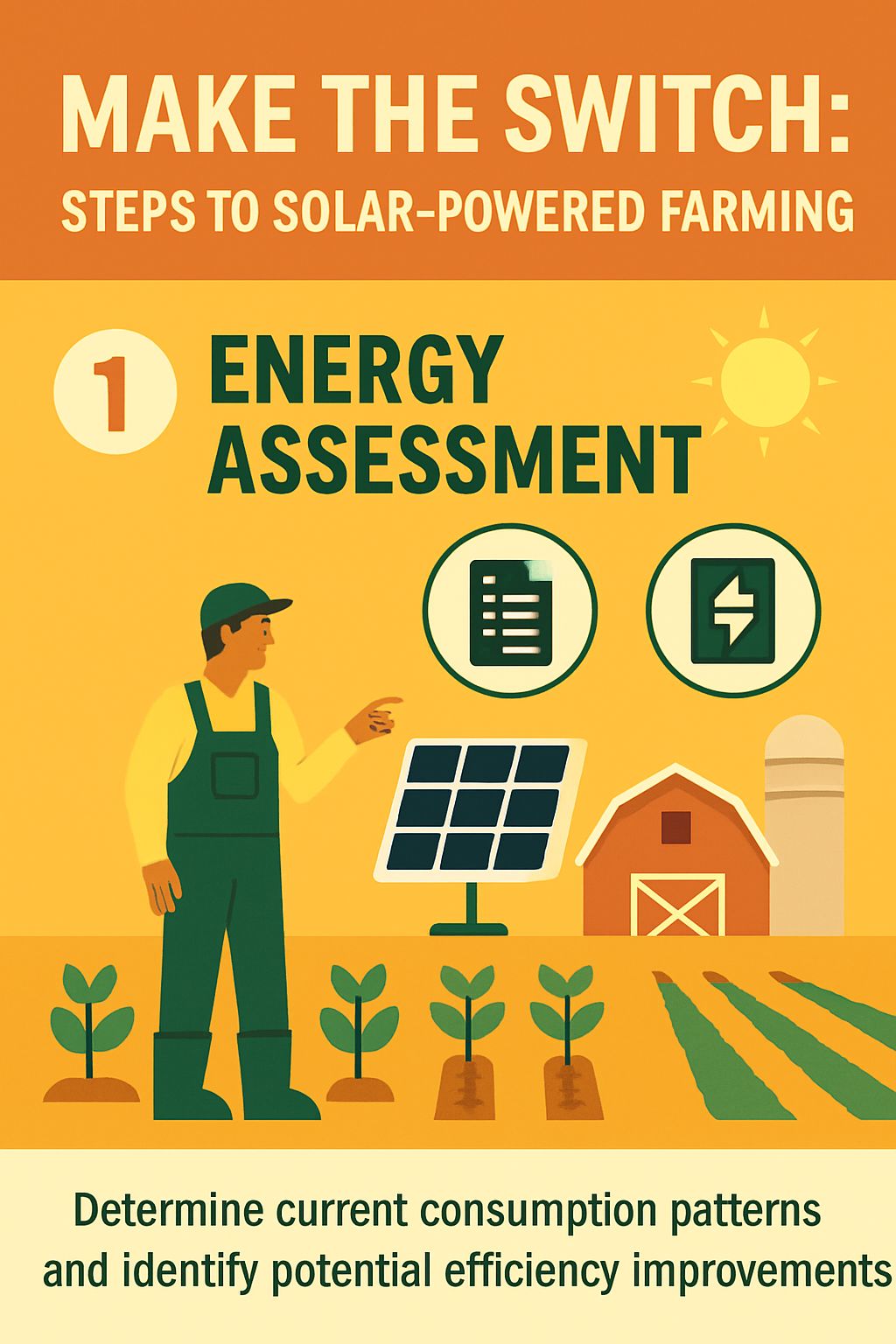
Transitioning to solar-powered agriculture follows a structured process beginning with comprehensive energy assessment to determine current consumption patterns and identify potential efficiency improvements. This foundation enables accurate system sizing and configuration aligned with operational needs. Most agricultural operations benefit from working with solar providers experienced in farm installations who understand agricultural-specific challenges, seasonal variation in energy demands, and incentive programs targeting rural renewable energy adoption. The implementation timeline typically spans 3-6 months from initial consultation to commissioned system, with most installation work scheduled around critical farm operations to minimize disruption.
Frequently Asked Questions
Agricultural operations considering solar investments typically share common questions about practical implementation details. These questions reflect legitimate concerns about integrating new technology into established farming practices. Understanding these practical aspects helps operators make confident decisions aligned with their specific operational needs.
Beyond the technical considerations, many questions center on financial aspects, including incentive availability, financing options, and long-term economic impact. Solar providers experienced with agricultural installations can typically provide region-specific guidance on these topics, often connecting farmers with appropriate financial resources and incentive programs.
How long do polycrystalline solar panels typically last on a farm?
A typical agricultural polycrystalline solar installation maintains at least 80% of its original production capacity after 25 years of continuous operation. Many systems continue functioning well beyond their warranty period at gradually decreasing efficiency.
Quality polycrystalline panels carry production warranties of 25-30 years, guaranteeing minimum performance levels throughout this period. These warranties typically ensure at least 80-85% of rated output capacity at the 25-year mark. The actual physical lifespan often extends significantly longer, with many first-generation systems installed in the 1980s still operating productively today, albeit at reduced efficiency compared to their original specifications.
The primary degradation factors include microscopic cell cracks from thermal cycling, gradual chemical changes within the silicon, and connector weathering. Modern manufacturing improvements have significantly reduced these degradation rates compared to earlier panel generations. Most current models demonstrate degradation rates below 0.5% annually, compared to 1-1.5% in panels manufactured prior to 2010.
For practical farm planning purposes, most financial models calculate returns based on a 25-30 year productive lifespan, though many systems continue generating valuable energy beyond this horizon. The modular nature of solar arrays allows for sectional upgrades over time, with many farms gradually replacing older sections with newer technology while maintaining the original mounting infrastructure.
Can polycrystalline panels withstand extreme weather conditions common in agricultural areas?
Modern polycrystalline panels are engineered specifically to withstand harsh agricultural environments, including temperature extremes ranging from -40°F to 185°F. Quality panels undergo extensive stress testing including freezing-thawing cycles, high humidity exposure, salt spray resistance, and mechanical load testing. This rigorous certification ensures reliability under real-world farm conditions far beyond normal operating parameters.
Wind resistance represents a critical specification for agricultural installations, particularly in open rural landscapes. Properly installed systems withstand sustained winds exceeding 140 mph when mounted according to manufacturer specifications with appropriate structural support. In regions with extreme wind exposure, additional reinforcement may be recommended beyond standard installation requirements.
Hail resistance provides another crucial characteristic for agricultural installations, as rural properties often experience more frequent and severe hailstorms than urban areas. Most quality panels withstand impact from 1-inch diameter hailstones at terminal velocity without damage to the generation surface. Some premium models offer enhanced impact resistance rated for 1.5-inch or larger hailstones, providing additional protection in hail-prone regions.
- Temperature cycling: Certified from -40°F to 185°F with minimal expansion/contraction stress
- Wind resistance: Engineered for 140+ mph winds when properly mounted
- Hail impact: Tested to withstand 1-inch hailstones at terminal velocity
- Snow load: Designed to support 50+ pounds per square foot of accumulation
- UV exposure: Materials selected for 25+ year resistance to solar degradation
What’s the minimum farm size needed to make polycrystalline panels financially viable?
Financial viability depends more on energy consumption than physical farm size, with operations spending at least $100-150 monthly on electricity typically achieving attractive returns. Small operations with high energy intensity—such as greenhouse operations, small-scale processing facilities, or farms with significant irrigation demands—often achieve better returns than larger operations with minimal electrical requirements. Most agricultural solar providers can conduct preliminary economic assessments based on recent utility bills, identifying whether sufficient consumption exists to justify installation. Operations below this threshold may still benefit from targeted applications like solar water pumping or remote power systems that eliminate expensive utility extensions.
Do I need to clean polycrystalline panels more often in dusty farm environments?
Dusty agricultural environments typically require cleaning 2-4 times annually compared to the 0-2 cleanings recommended for residential installations. The cleaning frequency varies significantly based on local conditions including rainfall patterns, proximity to field operations, gravel roads, and livestock areas. Most installations experience a 3-7% production improvement immediately following cleaning when moderate dust accumulation is present. Systems with monitoring capabilities clearly demonstrate when cleaning becomes economically justified by tracking daily production trends. For more on how solar panels can benefit farms, explore how solar panels improve farm water efficiency.
Many agricultural operations develop seasonal cleaning schedules aligned with farm activities, often performing maintenance just before peak production seasons. Simple cleaning methods using soft brushes, non-pressurized water, and non-abrasive techniques preserve the panel surface while restoring performance. Some larger operations invest in specialized cleaning equipment that significantly reduces maintenance time, while others successfully adapt existing farm equipment with appropriate attachments for this purpose.
Can I install polycrystalline panels myself to save on installation costs?
While farmers possess many skills applicable to solar installation—including equipment operation, basic construction techniques, and problem-solving abilities—several specialized aspects require professional expertise. The electrical interconnection, inverter configuration, and utility coordination typically necessitate licensed electrical contractors to ensure safety and code compliance. Additionally, proper structural engineering for mounting systems, particularly roof installations, requires specialized knowledge to prevent damage and ensure longevity.
A practical middle-ground approach many farms successfully implement involves professional system design and critical component installation combined with farm-supplied labor for mounting, panel placement, and basic assembly under professional supervision. This collaborative approach can reduce installation costs by 15-25% while ensuring proper system function and maintaining warranty coverage. Most manufacturers require professional installation to maintain warranty protection, though they often accept supervised hybrid approaches that leverage farm resources.
For operators with electrical experience, specialized solar training programs provide the necessary certification for smaller installations. These programs typically require 1-2 weeks of training followed by supervised installations, potentially enabling complete self-installation of future systems. This approach requires significant time investment but develops valuable capabilities applicable to system maintenance and potential expansion.
Whatever approach you choose, polycrystalline solar panels represent a practical, cost-effective solution for agricultural energy needs. Their balance of affordability, performance, and durability makes them an excellent choice for farms transitioning toward greater energy independence and sustainability. With proper planning and implementation, these systems deliver decades of reliable service while improving both environmental impact and operational economics.
Ready to explore how polycrystalline solar can benefit your agricultural operation? Frey Energy specializes in custom renewable energy solutions designed specifically for farms and agricultural businesses of all sizes. For a deeper understanding of how these panels can improve farm efficiency and productivity, check out this comprehensive guide.
Polycrystalline solar panels are a popular choice for agricultural applications due to their cost-effectiveness and efficiency. These panels are made from multiple silicon crystals, which give them a distinctive blue hue. Farmers often opt for polycrystalline panels because they provide a good balance between performance and price. Additionally, these panels are known for their durability and can withstand various weather conditions, making them ideal for use in farming environments. For a deeper understanding of how these panels are constructed, check out this solar panel materials construction guide.

Leave a Reply