
Key Takeaways
- Monocrystalline silicon panels offer the highest efficiency (20-22%) but come at a premium price point, making them ideal for limited roof space.
- Polycrystalline panels provide a budget-friendly alternative with good efficiency (15-17%), perfect for homeowners with more installation space available.
- Thin-film solar technology weighs 60% less than traditional panels and offers superior performance in high-temperature environments.
- The quality of encapsulation materials directly impacts a solar panel’s lifespan, with premium EVA film preventing moisture intrusion and extending panel life by up to 5 years.
- SolarTech Solutions provides customized solar assessments to help homeowners identify the ideal panel materials for their specific climate, roof configuration, and budget requirements.
Understanding what goes into making a solar panel is crucial for making an informed investment in renewable energy for your home. The materials used in solar panels directly impact their efficiency, durability, and cost—three factors that determine how much clean energy you’ll generate and how quickly you’ll recoup your investment. From the photovoltaic cells that convert sunlight to electricity to the protective layers that shield your panels from harsh weather, every component matters.
When considering solar energy for your home, working with experts like SolarTech Solutions can help you navigate the complex world of solar panel materials and construction. Their engineers analyze your specific needs and recommend panels with the optimal material composition for your climate, roof configuration, and energy goals.

What Makes Solar Panels Work: Materials That Power Your Home
Solar panels transform sunlight into usable electricity through a fascinating process that hinges on the quality and arrangement of several key materials. At their core, these renewable energy workhorses rely on the photovoltaic effect—the ability of certain materials to generate an electric current when exposed to light. This seemingly magical conversion happens due to the strategic layering of specialized materials that work together to capture photons and release electrons.
Silicon Cells: The Heart of Every Solar Panel
Silicon stands as the dominant material in solar cell production, accounting for approximately 95% of all panels manufactured today. This semi-conductive material forms the essential foundation of photovoltaic technology because of its excellent electron-releasing properties and abundant availability (silicon comes from sand). When sunlight strikes a silicon cell, it knocks electrons loose, creating the flow of electricity that powers your home. The purity and structure of this silicon significantly impact how efficiently your panels convert sunlight into usable power, with higher-grade silicon typically generating more electricity per square foot.
Silicon cells undergo a meticulous manufacturing process that involves purifying raw silicon to 99.9999% purity—six nines of purity, as industry professionals call it. This ultra-pure silicon is then carefully grown into crystals, sliced into wafers less than 200 micrometers thick (about the thickness of two sheets of paper), and treated with phosphorus and boron to create the positive-negative junction necessary for electricity production. The precision of this process directly influences the panel’s ultimate performance and longevity.
Protective Layers: Why Durability Matters
Protecting delicate silicon cells from environmental damage requires several specialized layers designed to withstand decades of weather exposure. The top layer typically consists of tempered glass—specially treated to be highly transparent while offering significant impact resistance. This glass allows maximum light transmission (over 90%) while shielding against hail, debris, and other potential hazards. Beneath the glass, an encapsulant layer—commonly ethylene vinyl acetate (EVA)—seals the cells from moisture and provides crucial adhesion between the glass and the silicon cells.
On the backside, a robust polymer backsheet creates a moisture barrier and provides electrical insulation. Premium panels often feature more sophisticated multi-layer backsheets that enhance durability and heat dissipation. Together, these protective materials extend a panel’s operational lifetime to 25-30 years, though the quality of these materials can make a substantial difference in how well panels maintain their performance as they age.
Frame Materials: What Holds It All Together
The structural integrity of solar panels depends largely on their frames, which are typically made from anodized aluminum alloys. These lightweight yet rigid frames secure all the internal components while providing mounting points for installation. Quality aluminum frames undergo treatments that enhance corrosion resistance, allowing them to withstand decades of outdoor exposure without degradation. The frame design also incorporates drainage features to prevent water accumulation and often includes specialized grooves that simplify installation.
Some newer, premium panel designs feature reinforced corner pieces or enhanced structural elements that increase wind and snow load ratings—particularly important for installations in extreme climate regions. For coastal areas, manufacturers sometimes offer frames with additional protective coatings to resist salt corrosion. The frame material and design directly impact.
Types of Solar Panel Materials: Finding Your Perfect Match
Selecting the right solar panel material requires balancing efficiency, aesthetics, durability, and budget considerations. Each material option brings distinct advantages and limitations that make it more suitable for certain applications. Understanding these differences empowers you to make choices aligned with your specific energy goals and installation constraints rather than accepting a one-size-fits-all solution.
Monocrystalline Silicon: Premium Performance
Monocrystalline silicon panels represent the premium tier of solar technology, offering the highest efficiency ratings on the market today—typically ranging from 20-22%. These panels are manufactured from single-crystal silicon ingots, giving them a distinctive uniform dark appearance and octagonal cell shape. The single-crystal structure allows electrons to flow more freely, resulting in superior performance, especially in limited-space installations where maximizing energy production per square foot matters most.
Beyond their efficiency advantages, monocrystalline panels typically offer better performance in low-light conditions and demonstrate superior heat tolerance, maintaining higher output levels even as temperatures rise. This technology also boasts the longest lifespan, with many manufacturers offering 25-30 year performance warranties. The primary drawback remains their higher cost—typically 10-15% more expensive than polycrystalline alternatives—though this price difference has narrowed considerably in recent years as manufacturing processes have improved.
Polycrystalline Silicon: Budget-Friendly Option
Polycrystalline silicon panels strike an attractive balance between affordability and performance, making them the most widely deployed option worldwide. These panels are manufactured by melting multiple silicon fragments together, creating a distinctive blue marbled appearance that results from light reflecting off the various crystal boundaries. With efficiency ratings typically ranging from 13-17%, they generate slightly less power per square foot than their monocrystalline counterparts but often deliver better overall value when roof space isn’t severely limited. Discover how solar panels benefit farmers by improving operations and providing power solutions.
The simplified manufacturing process translates to lower production costs and reduced silicon waste, making polycrystalline panels approximately 10-15% less expensive than monocrystalline options. This cost advantage has made them particularly popular for large residential installations and commercial projects where the total installation size can be adjusted to meet energy requirements. While they do exhibit slightly lower performance in high-temperature environments and have marginally shorter lifespans, modern polycrystalline panels still typically carry 25-year warranties and represent an excellent value proposition for many homeowners.
Thin-Film: Flexible and Lightweight Alternative
Thin-film solar panels represent a radical departure from traditional silicon wafer construction, utilizing microscopically thin layers of photosensitive materials deposited on glass, plastic, or metal substrates. These panels typically use amorphous silicon (a-Si), cadmium telluride (CdTe), or copper indium gallium selenide (CIGS) as their semiconductor materials. The resulting panels are remarkably thin—about 350 times thinner than standard silicon panels—and weigh approximately 60% less, opening up installation possibilities on lightweight or non-traditional structures.
While thin-film technology offers lower efficiency ratings (10-13%) compared to crystalline silicon, it demonstrates superior performance in high-temperature environments and low-light conditions, maintaining more consistent output throughout the day. The manufacturing process also requires significantly less energy and raw materials, resulting in a smaller carbon footprint and potentially faster energy payback time. These panels excel in applications where weight restrictions apply, including commercial rooftops with limited load-bearing capacity, mobile applications, and building-integrated photovoltaics where flexibility matters more than maximum efficiency.
Bifacial Solar Panels: Capturing Light from Both Sides
Bifacial solar panel technology represents one of the most significant innovations in solar design, featuring photovoltaic cells that capture sunlight from both the front and rear surfaces. These double-sided panels typically use high-efficiency monocrystalline or n-type cells with specialized transparent backsheets or dual-glass construction that allows light reflected from surrounding surfaces to enter from behind. This design can increase energy production by 5-30% compared to traditional panels, depending on installation conditions and surface reflectivity.
The performance boost from bifacial technology proves especially valuable in snow-prone regions, where white ground cover can significantly enhance rear-side production, or in installations with highly reflective surroundings such as white roofs or light-colored ground cover. These panels typically cost 10-15% more than comparable monofacial options but can deliver superior lifetime value in the right environmental conditions. Many industry experts consider bifacial technology the future of solar panel design, with adoption rates accelerating as manufacturing scales up and installation best practices become more standardized.
Here is a table summarizing the main types of solar panels used for agricultural applications, highlighting their key characteristics, benefits, and limitations:
|
Solar Panel Type |
Key Features |
Best Uses in Agriculture |
Advantages |
Limitations |
|---|---|---|---|---|
|
Monocrystalline |
Single-crystal silicon, high efficiency, dark appearance |
Limited roof/land space; high-demand farms |
Highest efficiency (up to 22%), longest lifespan (25–30 years), reliable in smaller spaces |
Highest upfront cost, slightly less efficient in extreme heat |
|
Polycrystalline |
Multiple silicon crystals, bluish tone, moderate efficiency |
Large farm roofs/land, budget-conscious projects |
Lower cost per watt, stable performance, good for large-scale installations |
Lower efficiency (13–17%), needs more space, drops in high heat |
|
Thin-Film |
Flexible modules, thin, low weight, lower efficiency |
Curved/irregular surfaces, barns, greenhouse roofs |
Flexible installation, lightweight, better in low light/cloudy regions |
Shorter lifespan, lowest efficiency (<14%), requires most area |
|
Bifacial |
Absorbs sunlight from both sides, transparent back |
Open fields, reflective surfaces, agrivoltaics |
Can boost power output by up to 30% with good reflectivity (albedo); efficient land use |
Higher initial investment, requires careful ground preparation and mounting |

Inside a Solar Panel: Layer-by-Layer Construction
Understanding the precise layering of materials within a solar panel reveals the engineering sophistication behind these seemingly simple devices. Each layer serves critical functions in the energy conversion process, physical protection, and long-term reliability. Modern solar panels typically contain seven distinct layers, each carefully selected and manufactured to exacting standards that determine the panel’s performance, durability, and safety characteristics.
Tempered Glass: The First Line of Defense
The outermost layer of a solar panel consists of specialized low-iron tempered glass, typically 3-4mm thick, engineered to maximize light transmission while providing structural protection. This glass undergoes a thermal treatment process that increases its strength by up to five times compared to standard glass, enabling it to withstand severe impacts from hail, debris, and other environmental hazards. Premium panels often feature anti-reflective coatings that can increase light transmission by up to 3%, directly improving energy production throughout the panel’s lifetime.
Modern solar glass incorporates self-cleaning properties through hydrophobic or hydrophilic treatments that help rainfall effectively remove dirt and dust accumulation. Some manufacturers have begun implementing textured glass surfaces that trap more light at oblique angles, increasing early morning and late afternoon performance. The quality and clarity of this glass layer directly impact both the immediate efficiency and long-term degradation rate of the entire panel system.
EVA Film: The Critical Adhesive Layer
Ethylene vinyl acetate (EVA) film serves as the critical encapsulant that binds the solar cells to the protective glass while providing electrical isolation, UV protection, and moisture resistance. This transparent polymer undergoes a carefully controlled lamination process where heat and pressure transform it from a solid film to a gel-like state before it cures into a robust protective layer. The quality of this EVA encapsulation directly impacts a panel’s vulnerability to potential-induced degradation, delamination, and moisture ingress—all factors that can significantly shorten operational lifespan.
Premium solar manufacturers utilize advanced EVA formulations with enhanced crosslinking properties and specialized additives that resist yellowing and maintain transparency over decades of UV exposure. The thickness and consistency of this layer must be precisely controlled during manufacturing, as variations as small as 0.1mm can impact heat dissipation properties and accelerate degradation rates. High-quality EVA encapsulation can extend a panel’s effective lifetime by up to 5 years compared to panels using standard-grade materials.
Photovoltaic Cells: Where Sunlight Becomes Electricity
The photovoltaic cells form the functional heart of every solar panel, converting photons into flowing electrons through the semiconductor properties of silicon. These cells consist of two distinct silicon layers: a phosphorus-doped n-type layer with extra electrons and a boron-doped p-type layer with electron “holes.” When photons strike the cell, they knock electrons free, creating an electric field at the junction between these layers that drives electrons through the external circuit, generating usable electricity. Discover how solar panels improve farm water efficiency and contribute to sustainable energy solutions.
Modern manufacturing techniques have dramatically improved cell efficiency through innovations like passivated emitter and rear contact (PERC) technology, which adds a reflective layer to the rear surface to capture photons that pass through the cell initially. Other advancements include multi-busbar designs that reduce electrical resistance, selective emitter structures that enhance blue light response, and heterojunction technologies that combine different silicon types for improved performance. The precise arrangement and interconnection of these cells within the panel determine both its voltage and current characteristics, which must be carefully matched to inverter specifications for optimal system performance. For more detailed information on solar panel materials, you can visit EnergySage.
Backsheet: Protection from Behind
The backsheet provides essential electrical insulation and environmental protection for the rear surface of the solar panel. Traditionally made from a composite of polyvinyl fluoride (PVF) and polyethylene terephthalate (PET), this multi-layer polymer sheet prevents moisture ingress while maintaining the electrical integrity of the system. Premium backsheets incorporate specialized reflective materials that can redirect light back toward the cells, potentially increasing energy production by 1-3% while simultaneously improving heat dissipation. For more insights on how solar panels can benefit agriculture, explore how solar panels improve farm operations.
Backsheet quality has emerged as one of the most critical factors in panel longevity, with numerous documented cases of premature failures due to material degradation under field conditions. Leading manufacturers have responded with advanced testing protocols that simulate decades of environmental exposure and innovative materials like dual-glass construction that eliminates the polymer backsheet entirely. The color of the backsheet also impacts panel operating temperature, with white backsheets running 2-3°C cooler than black alternatives, resulting in measurably higher energy production in hot climates. For more information on how solar panels can improve efficiency, explore how solar panels improve farm water efficiency.
Junction Box: The Power Connection Point
The junction box houses the critical electrical connections that channel the panel’s power output to the broader solar array system. This unassuming component contains bypass diodes that prevent hotspot formation when panels are partially shaded, protecting cells from potential damage due to reverse current flow. Modern junction boxes feature IP67 or IP68 waterproof ratings, UV-resistant polymers, and specialized venting systems that prevent condensation buildup while maintaining watertight integrity throughout decades of environmental exposure.
How Material Choices Impact Solar Panel Performance
The specific materials selected for each component of a solar panel create a complex interplay of performance characteristics that determine real-world energy production. While efficiency ratings receive the most attention in marketing materials, factors like temperature response, low-light performance, and degradation rates often have greater impact on lifetime energy yield. Understanding these material-dependent performance aspects helps homeowners make more informed decisions based on their specific installation environment rather than focusing solely on standardized test ratings. For those interested in broader applications, solar panels can also significantly reduce energy costs in agricultural settings.
Efficiency Ratings: What to Expect from Different Materials
The efficiency rating of a solar panel represents the percentage of sunlight it can convert into usable electricity, with today’s commercial panels ranging from 10% to 22%. Monocrystalline silicon leads the market with efficiencies of 20-22%, followed by polycrystalline at 15-17%, and thin-film technologies at 10-13%. These differences translate directly to space requirements—a 10kW system using monocrystalline panels requires approximately 500 square feet of roof space, while the same capacity in thin-film technology might need up to 900 square feet. For most homeowners, the efficiency premium makes sense when roof space is limited or when aesthetic considerations favor fewer, more productive panels. Additionally, solar panels can significantly reduce energy costs, making them a beneficial investment for both residential and agricultural applications.
Temperature Tolerance: Why Some Panels Perform Better in Heat
All solar panels experience efficiency losses as their operating temperature increases, but the magnitude of this decline varies significantly between materials. This characteristic is quantified as the temperature coefficient, typically ranging from -0.3% to -0.5% per degree Celsius above standard test conditions (25°C). Thin-film technologies generally offer the best temperature coefficients (around -0.2% per °C), making them particularly valuable in hot climates where panels routinely operate at 65-75°C. Monocrystalline panels usually outperform polycrystalline in heat resistance, a distinction that can amount to 3-5% more annual energy production in regions with average summer temperatures above 90°F (32°C).
Lifespan Differences Between Materials
The operational lifespan of solar panels varies substantially based on their material composition and manufacturing quality. While standard warranty periods typically cover 25-30 years, actual functional lifespans can extend significantly longer. Monocrystalline panels generally demonstrate the slowest degradation rates, losing approximately 0.3-0.5% of their production capacity annually, which means they’ll still operate at 80-85% of their original output after 25 years. Polycrystalline panels typically degrade slightly faster at 0.5-0.7% annually, while thin-film technologies show more variable degradation rates depending on the specific semiconductor used. For farmers, understanding these solar panel benefits can be crucial for optimizing their operations and power solutions.
The quality of encapsulants and backsheet materials plays an equally important role in determining actual lifespan. Premium panels utilizing advanced polymer formulations and superior manufacturing processes often maintain their integrity longer under harsh environmental conditions. The difference between budget and premium materials becomes most apparent after the first decade of operation, when lower-quality panels begin showing accelerated degradation from UV damage, moisture ingress, and thermal cycling stress.
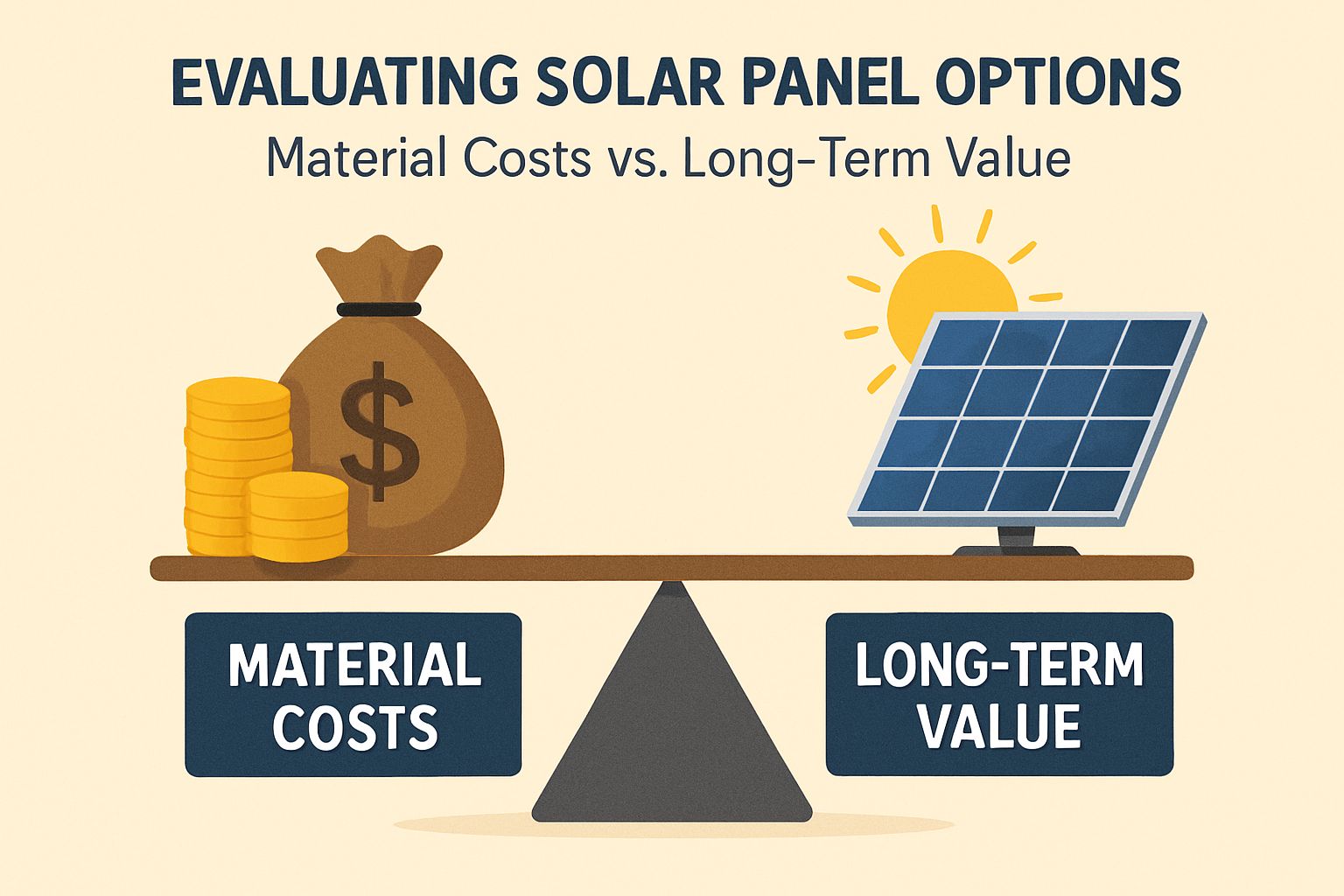
Cost Breakdown: Material Prices and Value Considerations
When evaluating solar panel options, understanding the relationship between material costs and long-term value helps homeowners make financially sound decisions. The price premium for higher-quality materials must be weighed against improved energy production, slower degradation rates, and reduced maintenance needs over the system’s multi-decade lifespan. A comprehensive value assessment should consider the levelized cost of energy (LCOE)—the total lifetime cost divided by total energy production—rather than focusing solely on the initial purchase price.
Price Ranges for Different Panel Types
Current market pricing shows significant variation across solar panel categories, with monocrystalline panels typically commanding $0.90-$1.50 per watt, polycrystalline panels ranging from $0.70-$1.00 per watt, and thin-film options varying from $0.60-$1.00 per watt depending on the specific technology. These base material costs represent approximately 30-40% of the total installed system price, with mounting hardware, inverters, and installation labor comprising the remainder. Premium panel features like half-cut cells, multi-busbar designs, or bifacial capabilities can add 10-20% to the panel cost but often deliver performance improvements that justify the additional investment for many homeowners. For agricultural applications, solar panels can enhance farm operations and provide sustainable power solutions.
Return on Investment: Balancing Upfront Costs with Long-Term Output
A solar panel’s return on investment depends on the relationship between its upfront cost and its cumulative energy production over decades of operation. Higher-efficiency panels generally command price premiums of 15-30% over standard options but can deliver 10-25% more lifetime energy, making them particularly valuable in high-electricity-cost regions or areas with limited installation space. The financial calculation becomes more complex when considering degradation rates—premium panels that maintain their output more effectively often prove more economical despite higher initial costs, especially in locations with generous net metering policies or performance-based incentives.
When Premium Materials Are Worth the Extra Money
Premium panel materials deliver their greatest value in specific installation scenarios where their advantages directly address limiting factors. Roof-space-constrained installations benefit substantially from high-efficiency monocrystalline panels that maximize energy production per square foot. Locations with high summer temperatures see better performance from panels with superior temperature coefficients. Installations in harsh environments—coastal areas with salt spray, regions with heavy snow loads, or locations with extreme temperature fluctuations—gain significant benefits from enhanced durability features like dual-glass construction or reinforced frames that prevent premature degradation. For more information on these materials, you can explore this list of solar PV materials.
Cost-Benefit Analysis by Panel Type
|
Panel Type |
Initial Cost ($/W) |
25-Year Output (kWh/kW) |
Cost per kWh |
Best Use Case |
|---|---|---|---|---|
|
Bifacial |
1.20-1.50 |
36,000-38,000 |
3.2-3.9¢ |
Limited roof space, premium aesthetics |
|
Monocrystalline |
0.90-1.20 |
34,000-36,000 |
2.6-3.3¢ |
Balanced performance and value |
|
Polycrystalline |
0.70-1.00 |
32,000-34,000 |
2.1-2.9¢ |
Budget-conscious, larger available space |
|
Thin Film |
0.60-1.00 |
28,000-32,000 |
1.9-3.5¢ |
Weight-restricted roofs, hot climates |
Environmental Impact of Solar Panel Materials
While solar energy provides clean electricity during operation, the environmental footprint of panel production varies significantly based on material selection and manufacturing processes. Homeowners increasingly consider these environmental factors alongside performance and cost when selecting their solar systems, particularly as awareness grows about sustainable material sourcing and end-of-life management. Manufacturing improvements continue to reduce the environmental impact of solar panels, with most systems achieving energy payback (generating more energy than was used in their production) within 1-4 years depending on the technology and installation location.
Carbon Footprint of Different Panel Types
The carbon footprint of solar panel production varies substantially across different technologies, with monocrystalline silicon typically having the highest embedded carbon at 50-55g CO₂-equivalent per kilowatt-hour produced over its lifetime. This higher footprint stems from the energy-intensive process of purifying silicon to 99.9999% and forming single crystals. Polycrystalline panels generate slightly lower emissions at 40-45g CO₂-eq/kWh due to their simplified manufacturing process. Thin-film technologies demonstrate the lowest carbon footprint among commercial options, with cadmium telluride (CdTe) panels producing just 20-25g CO₂-eq/kWh thanks to less energy-intensive production methods and thinner material requirements. For context, even the highest-carbon solar options produce about 95% fewer lifetime emissions than coal-generated electricity.
Recycling Options at End-of-Life
Solar panel recycling infrastructure continues to evolve as the first generation of mass-deployed systems approaches retirement. Current recycling processes can recover up to 95% of semiconductor materials and 90% of glass from crystalline silicon panels, while aluminum frames and copper wiring are already routinely recycled at high rates. First Solar has pioneered closed-loop recycling for CdTe thin-film panels, recovering up to 90% of materials for reuse in new panels. The European Union leads global policy with its Waste Electrical and Electronic Equipment (WEEE) Directive, which requires manufacturers to finance collection and recycling of solar panels sold in EU markets.
For homeowners in the United States, recycling options vary by state, though the Solar Energy Industries Association (SEIA) has established a national recycling program with collection points throughout the country. Several states including Washington, California, and New York have implemented or proposed extended producer responsibility legislation that would ensure manufacturers provide responsible end-of-life management. The recycling economics continue to improve as recovery processes advance and valuable materials like silver, silicon, and indium become more economical to extract from retired panels.
Did You Know? A typical 60-cell silicon solar panel contains approximately $3-5 worth of silver, $2-3 of copper, $2-4 of aluminum, and $6-10 of high-purity silicon that can be recovered through advanced recycling processes.
While recycling availability continues to expand, the long lifespan of quality solar panels means that today’s installations likely won’t require recycling for 25-35 years, by which time the recycling infrastructure will have matured significantly. Homeowners purchasing systems today can research manufacturer take-back programs and recycling commitments as part of their selection process, with companies like SunPower, First Solar, and REC Solar offering comprehensive recycling services for their products.
The recyclability of different panel materials varies considerably, with glass and aluminum components achieving recovery rates above 95% in current processes. Silicon recovery presents greater challenges but continues to improve with new techniques like thermal and chemical separation. Thin-film technologies containing rare elements like indium, gallium, and tellurium offer particularly strong economic incentives for recycling as these materials face potential supply constraints in coming decades.
Emerging Eco-Friendly Materials
Research laboratories and innovative manufacturers are developing next-generation solar materials designed specifically for environmental sustainability. Perovskite solar cells represent one of the most promising advancements, requiring just 1/100th the material thickness of silicon cells while offering comparable efficiency potential. These cells can be manufactured at lower temperatures using abundant materials and less energy-intensive processes. Other innovations include organic photovoltaics printed on biodegradable substrates, silicon alternatives derived from agricultural waste, and lead-free formulations that eliminate toxic components. While most of these technologies remain in pre-commercial stages, they signal an industry-wide focus on reducing environmental impact throughout the solar panel lifecycle.
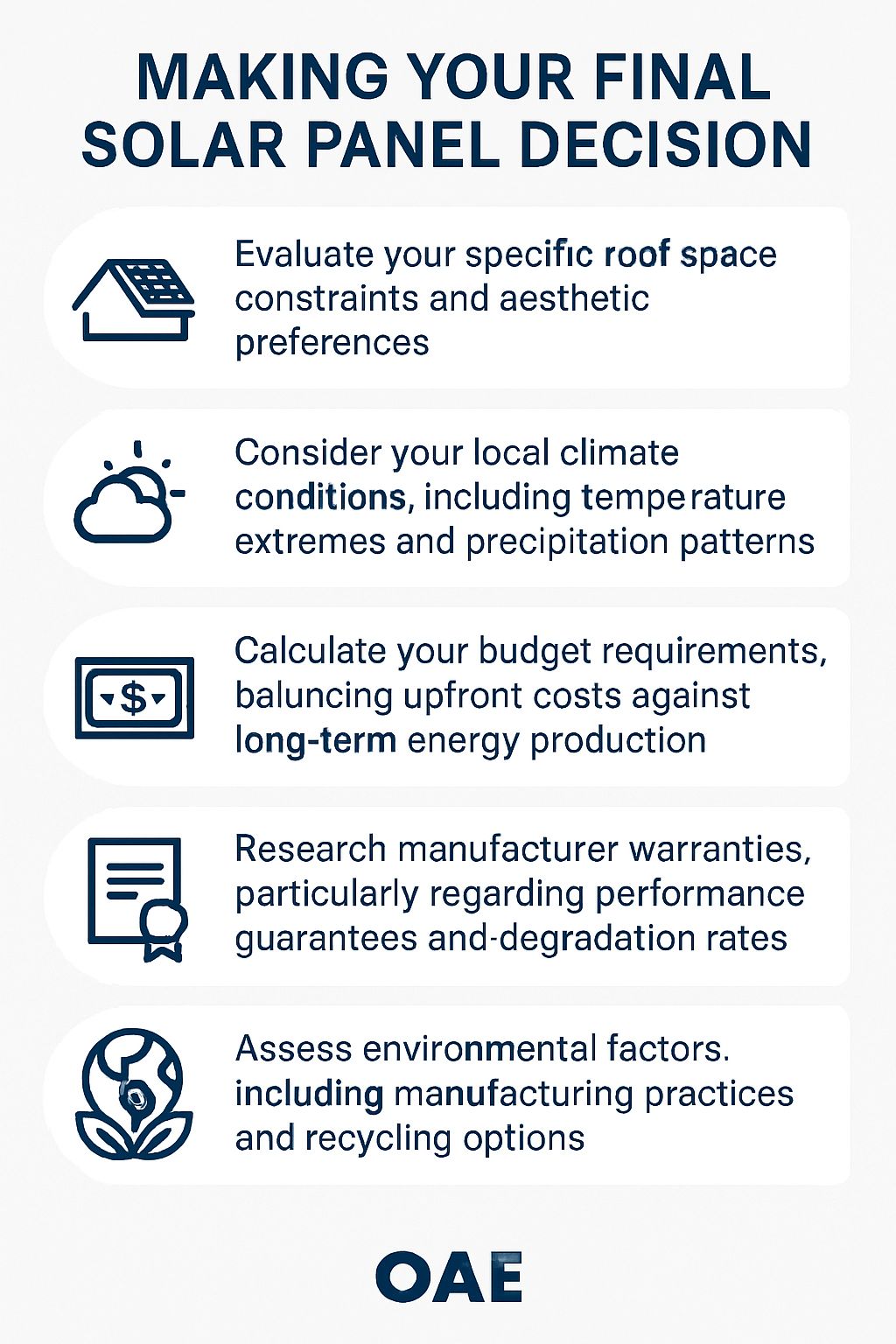
Making Your Final Solar Panel Decision
- Evaluate your specific roof space constraints and aesthetic preferences
- Consider your local climate conditions, including temperature extremes and precipitation patterns
- Calculate your budget requirements, balancing upfront costs against long-term energy production
- Research manufacturer warranties, particularly regarding performance guarantees and degradation rates
- Assess environmental factors, including manufacturing practices and recycling options
The ideal solar panel material for your home emerges from a thoughtful analysis of your specific circumstances rather than general rules. Homeowners with limited roof space or shading issues typically benefit most from high-efficiency monocrystalline panels that maximize production from available area. Those with ample installation space and budget constraints often find better value in polycrystalline technology that delivers slightly lower efficiency at a significant cost advantage. Special installation requirements—like weight restrictions, unusual mounting configurations, or aesthetic concerns—might point toward thin-film or building-integrated photovoltaic solutions despite their efficiency trade-offs.
When evaluating panel options, look beyond the simple efficiency rating to examine the performance characteristics most relevant to your location. Temperature coefficient becomes particularly important in hot climates, while snow shedding capability and frame strength matter more in regions with heavy winter precipitation. Low-light performance makes a substantial difference in cloudy or foggy coastal areas, while salt spray resistance becomes crucial for oceanfront properties. These location-specific factors often influence long-term energy production more significantly than small differences in rated efficiency. For example, solar panels in agricultural settings can improve the farm’s resilience to varying weather conditions.
The timing of your purchase may also influence your material selection, as panel technologies continue advancing while prices decrease. Homeowners able to delay their installation by 1-2 years might gain access to emerging technologies like heterojunction cells, topcon architecture, or bifacial designs at mainstream price points. However, this potential advantage must be weighed against the opportunity cost of postponed energy savings and potential reductions in available incentives, which often decrease over time as solar adoption increases.
Solar professionals like those at SolarTech Solutions can provide personalized recommendations based on a comprehensive assessment of your home’s specific requirements, helping you navigate the complex interplay of material properties, performance characteristics, and installation considerations. Their expertise becomes particularly valuable when evaluating newer technologies or special-purpose panels that may offer advantages for specific installation scenarios.
Climate Considerations for Your Location
Your local climate conditions significantly influence which panel materials will deliver optimal performance for your installation. In hot, sunny regions like the American Southwest, panels with superior temperature coefficients prevent excessive production losses during summer temperature spikes, sometimes delivering 7-10% more annual energy despite identical standard test condition ratings. Conversely, installations in northern regions benefit from panels with excellent low-light performance and robust frames capable of supporting heavy snow loads. Coastal locations require enhanced corrosion resistance to withstand salt spray, while areas prone to hail or high winds need impact-resistant glass and reinforced mounting systems. Working with solar designers familiar with local climate patterns ensures your material selection addresses the specific environmental challenges your system will face throughout its multi-decade operational life.
Roof Type and Installation Requirements
The physical characteristics of your roof—its structure, orientation, pitch, and covering material—create important constraints that influence panel selection. Lightweight roof structures may require thin-film panels that impose less structural load, while complex roof layouts with multiple orientations might benefit from microinverter-equipped panels that perform well despite partial shading. Flat roofs typically use ballasted mounting systems compatible with framed panels, while metal standing-seam roofs allow for specialized clamp attachments that work best with specific frame designs. Roof coverings also matter—asphalt shingles accommodate standard racking systems, while tile roofs often require specialized mounting hardware or even tile replacement solutions. These installation requirements sometimes narrow your material options or create preference for specific panel dimensions and weights that integrate optimally with available mounting systems.
Budget-Friendly Options That Don’t Sacrifice Quality
Achieving solar savings without compromising on quality requires strategic choices rather than simply selecting the lowest-priced option. Quality polycrystalline panels from established manufacturers often represent the sweet spot for value-conscious homeowners, delivering 90-95% of the performance of premium monocrystalline panels at 70-80% of the cost. Look for panels with performance warranties of at least 25 years and degradation guarantees of no more than 0.7% annually, indicating manufacturer confidence in their long-term reliability. Consider slightly older but proven models from tier-one manufacturers, which often sell at discounted prices as newer lines launch, despite offering nearly identical performance and reliability. Combined with strategic system sizing that prioritizes offsetting the highest-cost tier of your utility bill rather than 100% of your consumption, these approaches can deliver excellent financial returns while ensuring your system maintains its performance throughout decades of operation. Additionally, solar panels offer benefits for various operations, enhancing power solutions.
Frequently Asked Questions
As you research solar panel materials and construction, you’ll likely encounter questions about longevity, safety, compatibility, and performance factors. The following responses address common homeowner concerns based on current industry knowledge and best practices, helping you make informed decisions about your renewable energy investment.
How long do different types of solar panels typically last?
Quality solar panels, regardless of material type, typically carry performance warranties of 25-30 years, though their functional lifespan often extends significantly longer. Monocrystalline panels generally demonstrate the slowest degradation rates at 0.3-0.5% annually, enabling them to maintain over 80% of their original output after three decades. Polycrystalline panels typically degrade slightly faster at 0.5-0.7% annually, while thin-film technologies show more variable rates depending on the specific semiconductor material used. The actual operational lifespan depends heavily on installation quality, climate conditions, and maintenance practices, with properly installed systems in moderate climates often remaining productive for 35-40 years, though with gradually declining output. Many of the original solar panels installed in the 1970s and 1980s continue functioning today, albeit at significantly reduced efficiency compared to modern technology.
Are there any toxic materials in solar panels I should be concerned about?
Standard crystalline silicon solar panels contain minimal toxic materials and pose negligible health risks during normal operation. The primary materials—silicon, glass, aluminum, and copper—are non-toxic and stable. Some concern exists regarding the lead-containing solder used in older panel designs, though most modern manufacturers have transitioned to lead-free alternatives. Certain thin-film technologies, particularly those using cadmium telluride (CdTe), do contain toxic compounds, but these materials are securely encapsulated between glass layers, preventing release during normal use or typical damage scenarios. For more details on solar panel materials, you can explore further resources.
The more significant environmental considerations arise during manufacturing and end-of-life disposal rather than during operational use. Manufacturing processes for all panel types involve various chemicals and solvents that require proper industrial handling and disposal. The solar industry has made substantial progress in reducing hazardous material usage, with many manufacturers implementing closed-loop production systems that minimize waste generation and emissions. For end-of-life management, established recycling programs now recover and properly handle potentially hazardous components, though access to these programs varies geographically.
Homeowners concerned about toxicity should note that silicon panels from reputable manufacturers comply with RoHS (Restriction of Hazardous Substances) standards limiting the use of lead, mercury, cadmium, and other hazardous materials. The potential environmental impact of solar panels remains minimal compared to fossil fuel alternatives, particularly when proper recycling channels are utilized at end-of-life. For maximum peace of mind, look for manufacturers with transparent environmental policies and established take-back programs.
Can I mix different types of solar panels in my home system?
While technically possible, mixing different panel types within a single system creates significant design challenges and generally results in suboptimal performance. Solar panels must be arranged in strings with compatible electrical characteristics, including similar voltage and current specifications. Mixing different panel types typically forces the system to operate at the level of the lowest-performing panel, effectively wasting the superior capabilities of better panels. More advanced system architectures using microinverters or power optimizers can mitigate these issues somewhat, allowing panels with different specifications to operate independently, but this approach increases system complexity and cost while potentially reducing reliability. For most homeowners, maintaining consistency in panel technology, manufacturer, and model throughout the system provides the best combination of performance, reliability, and value.
What solar panel materials work best in extreme weather conditions?
For extreme hot climates, thin-film technologies like cadmium telluride (CdTe) and amorphous silicon offer superior performance with temperature coefficients as low as -0.25% per °C, compared to -0.35% to -0.45% for crystalline silicon. This difference means thin-film panels maintain more of their rated output during high-temperature operation, sometimes producing 5-8% more annual energy in hot regions despite lower standard test condition ratings. For cold climates with heavy snow loads, panels with robust aluminum frames, reinforced corner construction, and higher load ratings (5400+ Pa for snow, 2400+ Pa for wind) provide the necessary durability. Many premium monocrystalline panels now incorporate these enhanced physical specifications.
In high-humidity environments like tropical and coastal regions, panels with advanced encapsulation systems using POE (polyolefin elastomer) instead of standard EVA demonstrate superior moisture resistance, reducing the risk of delamination and potential-induced degradation. For regions experiencing frequent hailstorms, panels with thicker front glass (3.2mm versus standard 3.0mm) and enhanced impact resistance ratings should be prioritized. Some manufacturers now offer panels tested to withstand hailstones up to 1.5 inches in diameter at terminal velocity, exceeding standard industry testing requirements.
The most resilient installations in extreme weather zones combine appropriate panel selection with robust mounting systems designed for local conditions. Regions with high wind risks benefit from additional attachment points and reinforced racking, while snow-prone areas require elevated mounting angles and sufficient clearance for snow shedding. Working with solar designers experienced in your specific climate zone ensures your system incorporates the appropriate materials and installation techniques to withstand local environmental challenges throughout its multi-decade operational life.
For customized guidance on selecting the optimal solar panel materials for your specific climate, roof configuration, and energy goals, contact the renewable energy experts at SolarTech Solutions today.
Solar panels are made from a variety of materials, each contributing to the panel’s efficiency and durability. The most common material used is silicon, which forms the solar cells that convert sunlight into electricity. Other materials include glass for the protective layer, aluminum for the frame, and various polymers for insulation and protection. For a detailed overview of these materials, you can explore this list of solar PV materials.





Leave a Reply