

Article At a Glance
- Solar-powered irrigation systems can reduce farm energy costs by up to 80% compared to diesel pumps and grid electricity.
- Most solar irrigation systems pay for themselves within 3 to 7 years, while lasting 25+ years with minimal maintenance.
- Battery storage technology is closing the gap on 24/7 solar irrigation — find out which storage type works best for farms.
- Federal tax credits and USDA grants can cut the upfront cost of solar irrigation by 50 to 65%.
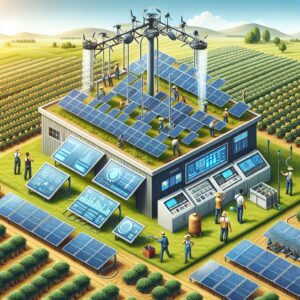
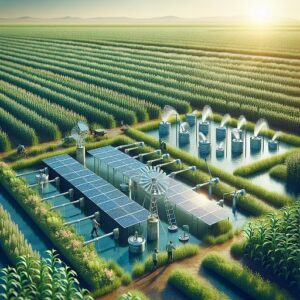
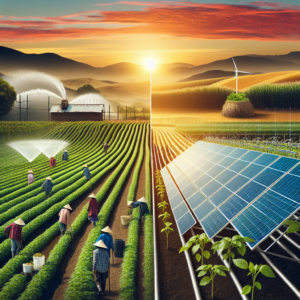
Solar panels and farm irrigation are a combination that is quietly transforming how farmers manage water, energy, and long-term operating costs.
Irrigation is one of the single largest energy expenses on any working farm. Whether you’re running a center pivot system across hundreds of acres or drip lines through a market garden, the pump is almost always running — and whatever is powering it is costing you money every single day. The shift to solar isn’t just an environmental choice. It’s a financial one that is hard to argue against when the numbers are laid out clearly.
Solar Irrigation Cuts Farm Energy Costs by Up to 80%
Farms that switch from diesel or grid-tied pumps to solar-powered irrigation systems report energy cost reductions of up to 80%. That figure isn’t a best-case outlier — it reflects what happens when free sunlight replaces a fuel or utility bill as the primary energy source for water delivery. Over a 25-year system lifespan, those savings compound dramatically, often totaling hundreds of thousands of dollars for mid-to-large scale operations.

Why Traditional Irrigation Power Sources Are a Problem
Before understanding why solar works so well, it helps to understand exactly what it replaces — and why those traditional power sources are increasingly difficult to justify.
The Real Cost of Diesel-Powered Irrigation Pumps
Diesel pumps have been the default for off-grid farm irrigation for decades, but they carry costs that go far beyond what shows up at the fuel pump. Diesel engines require regular oil changes, filter replacements, and mechanical servicing that adds up fast during peak irrigation season. A pump running 8 to 12 hours a day through a dry summer will consume significant volumes of fuel while demanding hands-on maintenance that pulls labor away from the rest of the operation. Any mechanical failure during critical growing periods means crop stress, yield loss, and emergency repair costs arriving at the worst possible time.
Grid Electricity Leaves Farms Exposed to Price Volatility
Grid-connected farms aren’t immune to energy cost pressure either. Agricultural electricity rates have climbed steadily over the past decade, and irrigation-heavy operations are particularly exposed because their peak demand aligns with summer months when utility rates are at their highest. Demand charges — fees utilities apply based on a farm’s peak draw in any given billing period — can make a single high-consumption month disproportionately expensive.
- Utility rate increases are largely outside a farmer’s control
- Time-of-use pricing penalizes daytime irrigation — exactly when solar produces the most power
- Grid outages during heat events can halt irrigation at the worst possible moment
- Demand charges can inflate monthly bills far beyond actual energy consumption
Solar sidesteps all of these variables. Once the system is installed, the energy source is fixed, predictable, and free.
Remote Farms Pay the Highest Price for Unreliable Power
For farms in rural or remote locations, the situation is even more extreme. Grid connection may be miles away, making the infrastructure cost of bringing utility power to a pump site prohibitively expensive. These operations have historically had no choice but to rely on diesel, accepting both the fuel costs and the logistical burden of keeping fuel on-site. Solar changes that equation entirely, making reliable irrigation power accessible regardless of how far a farm sits from the nearest utility line.
How Solar Panels Power Farm Irrigation Systems
The mechanics of solar-powered irrigation are straightforward, and understanding them makes it much easier to size and design a system that actually meets a farm’s water demand.
How Solar Panels Convert Sunlight Into Pump Power
Solar panels generate direct current (DC) electricity when photovoltaic cells absorb sunlight. That DC power is either fed directly to a DC-compatible pump motor or passed through an inverter that converts it to alternating current (AC) for standard pump equipment. Modern solar irrigation controllers manage this conversion efficiently, adjusting pump output dynamically based on available sunlight throughout the day to maximize water delivery during peak sun hours.
Direct-Drive vs. Battery-Backed Solar Irrigation Systems
Direct-drive systems run the pump only when the sun is shining, which works well for farms that can schedule irrigation during daylight hours or use elevated storage tanks to hold water pumped during the day for use at night. Battery-backed systems add a storage layer that allows pumping to continue after sunset or during brief cloudy periods. The right choice depends on water demand timing, storage infrastructure, and budget — but both configurations eliminate or dramatically reduce conventional energy costs.
How System Size Is Matched to Farm Water Demand
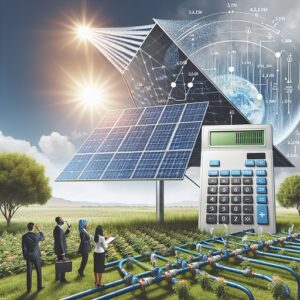
Sizing a solar irrigation system starts with calculating the farm’s daily water requirement in gallons, then working backward through pump flow rate, operating hours, and motor wattage to determine the total solar array capacity needed. A 7.5 horsepower pump running 6 hours per day requires roughly 15 to 18 kilowatt-hours of energy daily, which typically calls for a solar array in the range of 10 to 15 kilowatts depending on location and average sun hours. Larger operations running center pivot systems may require arrays of 100 kilowatts or more, but the per-watt installation cost decreases significantly at that scale.
Every farm’s water needs are different, which is why proper system design requires site-specific analysis rather than generic sizing charts. Soil type, crop water requirements, irrigation method, and local climate all factor into an accurate system specification.

Core Benefits of Solar-Powered Farm Irrigation
The case for solar irrigation isn’t built on a single advantage — it’s the combination of financial, operational, and environmental benefits that makes it one of the most compelling investments available in modern agriculture.
Each benefit listed below represents a real, measurable improvement over conventional irrigation power sources, and together they explain why adoption rates are accelerating across farm operations of every size.
1. Up to 80% Reduction in Energy Costs
Solar irrigation systems eliminate the ongoing fuel and utility expenses that make conventional irrigation so costly over time. Once installed, the energy driving your pumps costs nothing. Farms switching from diesel to solar consistently report energy cost reductions between 60% and 80%, with the exact figure depending on local fuel prices, utility rates, and how many hours per day the system runs. That margin only improves as diesel prices and electricity rates continue to climb. To further enhance efficiency, consider using smart controllers and sensors for your irrigation systems.
2. 25+ Year System Lifespan with Minimal Maintenance
Solar panels carry no moving parts, which is one of the primary reasons they last so long with so little attention. Most commercial-grade agricultural solar panels are warrantied for 25 years and continue producing electricity well beyond that window. The pump motor itself requires periodic inspection, but without an engine, fuel system, or exhaust components to service, the overall maintenance burden drops dramatically compared to diesel equipment.
Willow Creek Farms installed a 15kW solar system paired with a 7.5HP pump and 10,000 gallons of elevated storage. Their irrigation energy costs dropped by 94%, and the system has operated with no major service interventions since installation — a direct result of eliminating the mechanical complexity of their previous diesel setup.
3. Reliable Water Access in Off-Grid Locations
For remote farming operations, solar irrigation doesn’t just reduce costs — it solves a reliability problem that diesel never fully addressed. Fuel supply chains can be disrupted. Engines break down. Solar arrays keep producing electricity from sunrise to sunset, day after day, with no supply chain dependencies and no combustion components to fail during a critical irrigation window.
In regions where grid infrastructure is miles away or simply nonexistent, solar-powered pumps have enabled farmers to irrigate land that was previously too costly or too logistically complicated to farm productively. The water access becomes as reliable as the sun itself.
4. Reduced Carbon Footprint and Fuel Dependency
Agricultural diesel combustion is a meaningful source of on-farm greenhouse gas emissions. Replacing even a single diesel irrigation pump with a solar-powered alternative eliminates thousands of kilograms of CO₂ emissions annually, depending on pump size and operating hours. Beyond the environmental benefit, reducing fuel dependency also insulates the farm from geopolitical price shocks that make diesel planning increasingly unpredictable.
5. Compatibility With Drip and Sprinkler Irrigation Systems
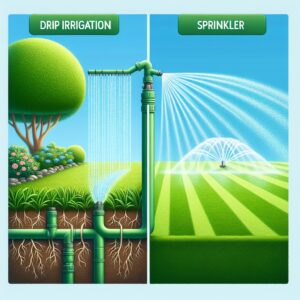
Solar-powered pumps integrate cleanly with both drip and sprinkler irrigation setups. For drip systems, solar pumps maintain consistent low-pressure water delivery that keeps emitters operating evenly across the field. For sprinkler systems, including center pivot configurations, larger solar arrays provide the sustained power output needed to maintain adequate pressure across wide coverage areas. The key is proper system sizing — match the array to the pump’s power draw, and compatibility is straightforward.
Solar Power Usage for Irrigation: What the Numbers Look Like
Understanding exactly how much power a solar irrigation system needs to generate is the foundation of any accurate cost estimate or ROI calculation. The numbers vary by pump size and daily operating hours, but the patterns are consistent enough to use as solid planning benchmarks.
|
Pump Size (HP) |
Approx. Wattage Draw |
Daily Energy Use (8 hrs) |
Estimated Solar Array Size |
|---|---|---|---|
|
1 HP |
~750W |
~6 kWh |
4–5 kW |
|
3 HP |
~2,250W |
~18 kWh |
10–12 kW |
|
7.5 HP |
~5,600W |
~45 kWh |
20–25 kW |
|
15 HP |
~11,200W |
~90 kWh |
40–50 kW |
|
25 HP |
~18,650W |
~149 kWh |
65–80 kW |
|
50 HP |
~37,300W |
~298 kWh |
120–150 kW |
|
Estimates based on average 5.5 peak sun hours per day. Actual requirements vary by location, panel efficiency, and system losses. |
These figures assume standard peak sun hours for mid-latitude agricultural regions. Farms in high-irradiance zones like the southwestern United States or sub-Saharan Africa will generate more energy per installed kilowatt, effectively reducing the array size needed to meet the same water demand. Farms in northern climates or regions with frequent cloud cover will need to size up accordingly.
It’s also worth noting that these estimates account for direct-drive operation during daylight hours. Adding battery storage to extend irrigation into the evening requires additional array capacity to both run the pump and charge the batteries simultaneously — typically increasing total system size by 20 to 40%.
Typical Energy Consumption of Irrigation Pumps
A standard 7.5HP irrigation pump draws approximately 5,600 watts under full load. Running that pump for 8 hours per day generates a daily energy consumption of roughly 44.8 kWh. At a typical agricultural electricity rate of $0.12 per kWh, that’s $5.38 per day — or nearly $2,000 annually just for that single pump. Larger operations running multiple pumps across an irrigation network can see annual electricity bills reaching tens of thousands of dollars before a single solar panel is installed.
How Many Solar Panels a Farm Irrigation System Needs
Using a modern 400-watt solar panel as the benchmark, a 7.5HP pump system requiring a 20kW array would need approximately 50 panels. A small market garden running a 1HP pump could get by with as few as 10 to 12 panels. For large-scale operations using 50HP pumps, arrays of 300 to 375 panels are not uncommon. The panel count drops as individual panel wattage increases — newer 500W and 600W bifacial panels are increasingly common in agricultural installations, reducing the physical footprint of the array without sacrificing output.

Return on Investment for Solar Farm Irrigation
The financial case for solar irrigation is built on three pillars: the elimination of ongoing energy costs, the reduction of maintenance expenses, and the availability of government incentives that significantly lower the upfront investment. When all three are factored together, the return on investment calculation becomes one of the most compelling in modern agriculture.
Solar irrigation systems consistently deliver internal rates of return between 15% and 25% when properly sized and configured for specific farm operations. That performance benchmark outpaces most traditional farm capital investments and does so while simultaneously reducing operational complexity and environmental impact.
Typical Payback Period: 3 to 7 Years
The payback period for a solar irrigation system — the point at which cumulative energy savings equal the original installation cost — typically falls between 3 and 7 years. Smaller systems with lower upfront costs tend toward the shorter end of that range. Larger arrays serving high-consumption operations may take longer to recover their capital cost, but the absolute dollar savings per year are proportionally larger, and the 25-year lifespan means the post-payback period of free energy production is extensive regardless of where the breakeven point falls.
A farm that installs a $60,000 solar irrigation system and saves $12,000 per year in energy and maintenance costs reaches payback in 5 years. From year 6 onward, that $12,000 annual saving flows directly to the bottom line — and continues doing so for another 20 years minimum. Over the full system lifespan, that represents $240,000 in net savings beyond the initial investment.
Federal Tax Credits and USDA Grants That Reduce Upfront Costs
The upfront cost of solar irrigation is the most common barrier farmers cite when evaluating the switch — but the actual out-of-pocket cost after incentives is substantially lower than the sticker price. The federal Investment Tax Credit (ITC) currently allows agricultural operations to deduct 30% of the total solar installation cost from their federal tax liability. For a $60,000 system, that’s an $18,000 reduction in tax owed — not a deduction, but a direct credit.
The USDA’s Rural Energy for America Program (REAP) goes further, offering grants covering up to 50% of eligible project costs for agricultural producers installing renewable energy systems. When the ITC and REAP grant are stacked together, the effective out-of-pocket cost of a solar irrigation system can fall to as little as 35 to 50 cents on the dollar, compressing payback periods and improving ROI calculations significantly. State-level incentives, net metering programs, and accelerated depreciation schedules can reduce that figure even further depending on location.
Long-Term Savings Over a 25-Year System Lifespan
The 25-year window is where solar irrigation’s financial case becomes impossible to ignore. A system installed today at a net cost of $30,000 after incentives — saving $8,000 per year in energy and maintenance — generates $200,000 in cumulative savings over its operational life. That’s not a projection based on optimistic assumptions. It’s straightforward arithmetic applied to verified performance data from actual agricultural installations. The panels don’t depreciate in performance the way an engine does. They simply keep converting sunlight into pump power, year after year, with output declining by less than 0.5% annually on quality commercial-grade panels.
Battery Storage Makes 24/7 Solar Irrigation Possible
Direct-drive solar irrigation is powerful, but it has one obvious constraint: the sun doesn’t shine around the clock. Battery storage removes that limitation entirely, allowing farms to bank excess solar energy generated during peak daylight hours and deploy it after sunset, during cloudy periods, or during early morning irrigation windows when crops benefit most from overnight water absorption. For farms where irrigation scheduling flexibility matters — and on most working farms, it does — battery storage transforms a daylight-only system into a fully dispatchable power source.
How Battery Storage Works With Solar Irrigation
During peak sunlight hours, a solar array generates more electricity than the irrigation pump requires. Without storage, that surplus energy is either fed back to the grid (if grid-connected) or simply wasted. With a battery bank in the system, that surplus charges the batteries in real time. Once the sun drops below the threshold needed to run the pump directly, the system automatically draws from stored energy to maintain pump operation — seamlessly, without any manual intervention required.
The battery bank is sized based on how many additional hours of pump operation the farm needs beyond available daylight hours. A farm that needs to run a 5,600-watt pump for 4 hours after sunset requires at least 22.4 kWh of usable storage capacity — and that figure needs to account for battery depth-of-discharge limits to avoid degrading the cells prematurely. Lithium-ion batteries are typically rated for 80 to 90% usable depth, while lead-acid systems should be kept above 50% to maintain longevity.
Flow Batteries vs. Standard Lithium-Ion for Farm Energy Storage
Lithium-ion batteries dominate the current market for agricultural solar storage because of their relatively high energy density, established supply chains, and falling costs. A lithium iron phosphate (LFP) battery system — the chemistry most commonly used in farm applications due to its thermal stability and longer cycle life — typically delivers 3,000 to 5,000 full charge cycles before reaching 80% of original capacity. For a farm cycling the battery daily through irrigation season, that translates to 8 to 14 years of reliable service.
Flow batteries represent the more promising long-duration storage technology on the horizon. Unlike lithium-ion, flow batteries store energy in liquid electrolyte tanks, meaning capacity can be scaled simply by increasing tank size without replacing core hardware. They tolerate deep discharge without degradation and can deliver consistent power output for 8 to 12 hours or longer — a performance profile that suits large-farm irrigation needs well. The cost per kWh remains higher than lithium-ion for now, but for operations that need extended overnight irrigation coverage, flow battery economics are becoming increasingly competitive and warrant serious evaluation as the technology matures.
Solar Irrigation Is a Smart Long-Term Farm Investment
Solar-powered farm irrigation isn’t a niche technology or a future possibility — it’s a proven, financially sound upgrade that is already delivering measurable returns across farm operations of every size and type. The combination of dramatically reduced energy costs, a 25-plus year system lifespan, minimal maintenance requirements, and substantial government incentives makes solar irrigation one of the clearest capital allocation decisions available in modern agriculture. The farms making this transition now are locking in decades of low-cost water delivery while their competitors continue paying escalating fuel and utility bills. The question is no longer whether solar irrigation makes financial sense. It’s how quickly the transition can be made to start capturing those returns.
Frequently Asked Questions
Solar-powered farm irrigation raises practical questions that deserve direct, specific answers. The sections below address the most common ones with the technical detail needed to make confident decisions.
How Many Solar Panels Do I Need to Run an Irrigation Pump?
The number of solar panels needed depends on your pump’s horsepower, daily operating hours, and the wattage rating of the panels you’re using. As a practical benchmark: a 7.5HP pump running 8 hours per day requires approximately 20 to 25 kilowatts of solar capacity. Using modern 400-watt panels, that translates to roughly 50 to 62 panels. A smaller 1HP pump running the same hours needs only 4 to 5 kilowatts — approximately 10 to 12 panels.
Keep in mind that these figures are starting points, not final specifications. Your geographic location, average peak sun hours, panel tilt angle, and any shading on the array all affect actual output. A site-specific assessment using your farm’s exact coordinates and water demand will give you a more accurate panel count than any generic formula can provide.
Can Solar Irrigation Systems Work on Cloudy Days?
Yes — solar panels continue generating electricity on cloudy days, though at reduced output. Depending on cloud density, output typically falls to between 10% and 25% of peak capacity under heavy overcast conditions. Thin or partial cloud cover has a less dramatic effect, often reducing output by only 20 to 30%.
For direct-drive systems, reduced solar output on cloudy days means reduced pump flow rate rather than a complete system shutdown. Many solar irrigation controllers manage this automatically, throttling pump speed to match available power. Battery-backed systems handle cloudy periods more robustly — stored energy from previous sunny days fills the gap, maintaining consistent pump operation regardless of cloud conditions.
What Is the Average Cost of a Solar-Powered Farm Irrigation System?
System costs vary significantly based on pump size, array capacity, battery storage inclusion, and site preparation requirements. As a general range, small systems serving market gardens or single-field irrigation with a 1 to 3HP pump typically cost between $8,000 and $20,000 before incentives. Mid-scale operations running 7.5 to 15HP pumps can expect system costs in the $25,000 to $60,000 range. Large commercial installations with 50HP or greater pump requirements and substantial battery storage can reach $150,000 to $300,000 or more.
After applying the federal Investment Tax Credit (30%) and USDA REAP grants (up to 50% of eligible costs), the effective out-of-pocket cost falls dramatically. A $60,000 system can realistically come down to $18,000 to $30,000 depending on which incentives the farm qualifies for and how they’re stacked. For more information on how solar panels can benefit farm irrigation systems, check out this detailed guide on solar panels and irrigation systems.
Installation labor, trenching for underground conduit, mounting hardware, and permitting fees add to the base equipment cost and should be factored into any budget estimate from the beginning. Getting multiple quotes from qualified agricultural solar installers is the most reliable way to establish an accurate project cost for a specific farm operation.
Are There Government Grants Available for Solar Farm Irrigation?
Yes, and they’re substantial. The USDA’s Rural Energy for America Program (REAP) is the most significant federal funding source specifically targeting agricultural solar installations. REAP grants cover up to 50% of eligible project costs for qualifying agricultural producers and rural small businesses. Applications are accepted on a rolling basis, and awards are competitive — meaning a well-documented project with a clear energy savings analysis is more likely to receive maximum funding.
Beyond REAP, the federal Investment Tax Credit (ITC) provides a 30% tax credit on the full installed cost of the solar system. Many states offer additional rebates, property tax exemptions on solar equipment, and net metering programs that provide bill credits when excess solar energy is exported to the grid. The Database of State Incentives for Renewables & Efficiency (DSIRE) at dsireusa.org is the most comprehensive resource for identifying state-specific programs available in your location.
Can Solar Panels Power Both Drip and Sprinkler Irrigation Systems?
Solar panels can power both drip and sprinkler irrigation systems. The key difference between the two is operating pressure. Drip irrigation systems typically require lower pressure — often in the range of 8 to 30 PSI — making them naturally compatible with smaller, more energy-efficient solar pump configurations. Sprinkler systems, including center pivot irrigators, operate at higher pressures and flow rates, requiring larger pump motors and correspondingly larger solar arrays.
For drip irrigation specifically, solar-powered pumps excel at maintaining the consistent low-pressure delivery that keeps emitters operating evenly. Pressure fluctuations — a common issue with generator-powered or grid-tied systems experiencing voltage instability — are minimized when a properly sized solar controller manages pump speed dynamically based on available sunlight. For more insights, explore the benefits of solar panel dual-axis trackers for agriculture.
Center pivot systems represent the most energy-intensive sprinkler application, often requiring 50HP or greater pump motors to maintain adequate pressure across spans of 400 meters or more. Large solar arrays of 120kW to 200kW or above have been successfully deployed to power these systems, with some installations incorporating battery storage to maintain pivot operation into the early evening hours when evaporation rates drop and irrigation efficiency improves.
Regardless of irrigation type, the sizing methodology is the same: calculate peak water demand, determine the pump specifications required to meet it, and build the solar array around the pump’s power draw with appropriate margin for system losses and seasonal sun hour variation. Get that calculation right, and solar panels will reliably power any irrigation configuration a farm requires.
Solar panels have become an essential part of modern farm irrigation systems, offering a sustainable and cost-effective solution for powering various agricultural operations. By harnessing the power of the sun, farmers can reduce their reliance on traditional energy sources and lower their overall operational costs. Additionally, integrating smart controllers and sensors with solar-powered irrigation systems can significantly enhance efficiency and productivity, ensuring that crops receive the right amount of water at the right time.

Leave a Reply