
Key Takeaways
- Solar batteries help farmers reduce reliance on grid power, making operations more sustainable and cost-effective.
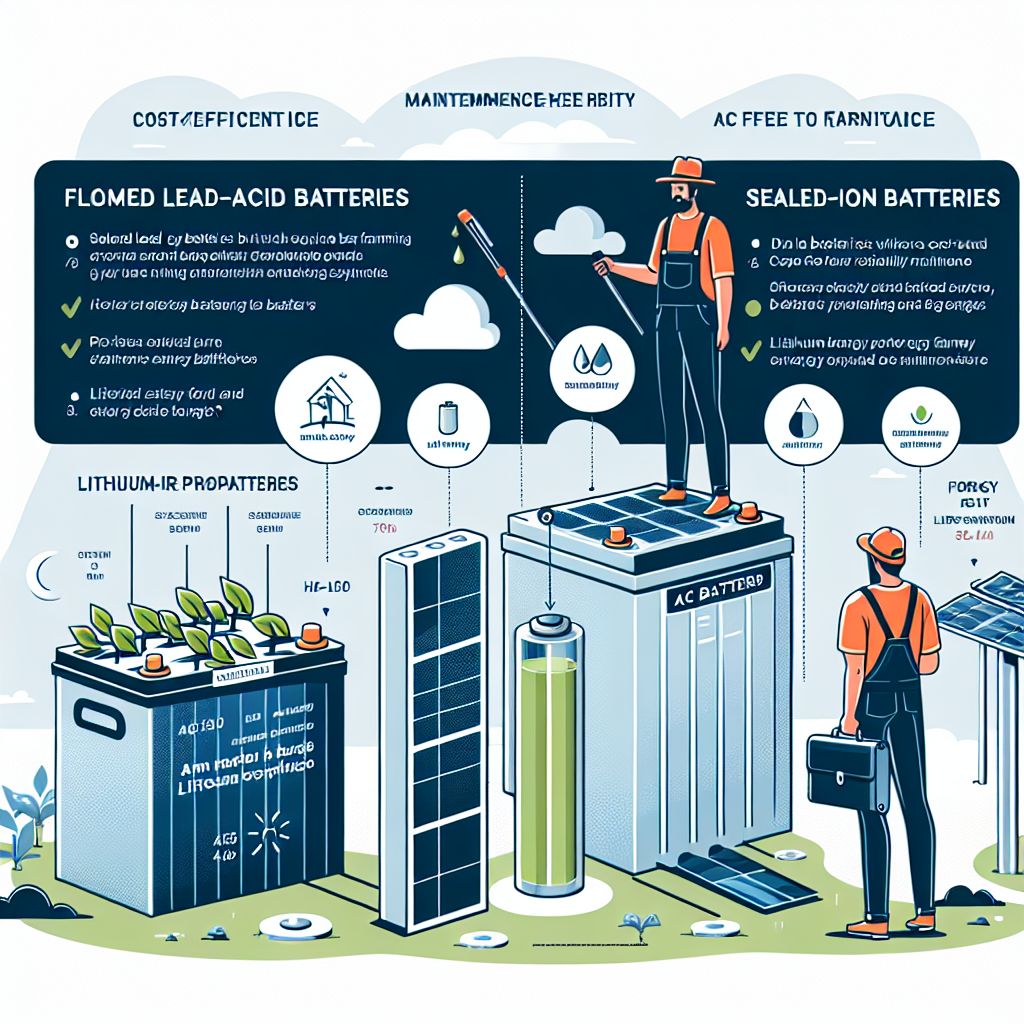
- Flooded lead-acid batteries are cost-effective but require regular maintenance, while sealed lead-acid batteries offer a maintenance-free option.
- Lithium-ion batteries, particularly lithium iron phosphate, provide high energy density and long lifespans, making them ideal for modern farming needs.
- Understanding the difference between DC-coupled and AC-coupled systems can optimize energy efficiency on farms.
- Consulting with solar experts ensures the right battery selection based on specific farm energy needs and budget.
Types of Solar Batteries for Farmers: Guide & Options
In the world of farming, energy is crucial. As farmers, we are always looking for ways to improve efficiency and reduce costs. Solar energy is one way to achieve this, but to make the most of it, we need the right kind of batteries. These batteries store energy from the sun, allowing us to use it whenever we need it, day or night. In this guide, I’ll walk you through the various types of solar batteries available and help you understand which ones might be best for your farm.
Let’s start by looking at why solar batteries are so important in farming. They are not just about cutting costs; they are about ensuring a sustainable future for our farms and our planet.
The Importance of Solar Batteries in Farming
Solar batteries play a vital role in modern agriculture. They store excess solar energy generated during the day, which can be used when sunlight is unavailable. This capability is essential for farming operations that require energy around the clock, such as irrigation systems, lighting for greenhouses, and temperature control in livestock barns.
Key Benefits for Agricultural Use
Integrating solar batteries into farming operations offers several benefits:
- Energy Independence: By storing solar energy, farmers can reduce their dependence on the grid and protect themselves from rising energy costs.
- Environmental Impact: Using solar energy reduces carbon emissions, contributing to a healthier environment.
- Reliability: Solar batteries provide a reliable energy source, even during power outages or periods of low sunlight.
Reducing Dependency on Grid Power
One of the most significant advantages of solar batteries is their ability to reduce dependency on grid power. By harnessing and storing solar energy, farmers can minimize their reliance on traditional electricity sources, which are often subject to price fluctuations and outages. This independence not only ensures a steady energy supply but also offers financial predictability, allowing farmers to plan their budgets more effectively. For those interested in understanding the different materials used in solar panels, check out this guide on monocrystalline solar panels.
Enhancing Sustainability and Cost Efficiency
Solar batteries enhance sustainability by enabling the use of clean, renewable energy. They help farmers reduce their carbon footprint, aligning with global efforts to combat climate change. Moreover, while the initial investment in solar batteries can be significant, the long-term savings on energy costs can be substantial. Many farmers find that the return on investment is well worth it, especially with available incentives and rebates for renewable energy installations.
Here’s a table discussing the different types of batteries that can be used with solar panels for a farmer:
|
Battery Type |
Pros |
Cons |
Best Use Case |
|---|---|---|---|
|
Lead-Acid |
– Cost-effective |
– Requires regular maintenance |
– Budget-conscious farmers |
|
Lithium-Ion |
– High energy density |
– Higher upfront cost |
– Residential and farm installations |
|
Lithium Iron Phosphate (LiFePO4) |
– Extended cycle life (4,000+ cycles) |
– Higher cost than lead-acid |
– RVs, off-grid cabins |
|
Nickel Cadmium |
– Durable |
– Contains toxic materials | |
|
Flow Batteries |
– 100% depth of discharge |
– Large size |
– Large-scale energy storage |
|
Saltwater Batteries |
– Safe and non-toxic – Easily recyclable – Long lifespan (5,000+ cycles) – 100% depth of discharge – No overheating risk |
– Lower energy density – Higher manufacturing costs – Requires more space |
Environmentally conscious farms – Applications prioritizing safety |
Farmers should consider their specific needs, budget, and long-term goals when choosing a solar battery. Lithium-ion and LiFePO4 batteries are becoming increasingly popular for agricultural applications due to their efficiency and longevity, while lead-acid batteries remain a cost-effective option for those with limited budgets. 1, 2, 4
Lead-Acid Batteries in Agricultural Settings
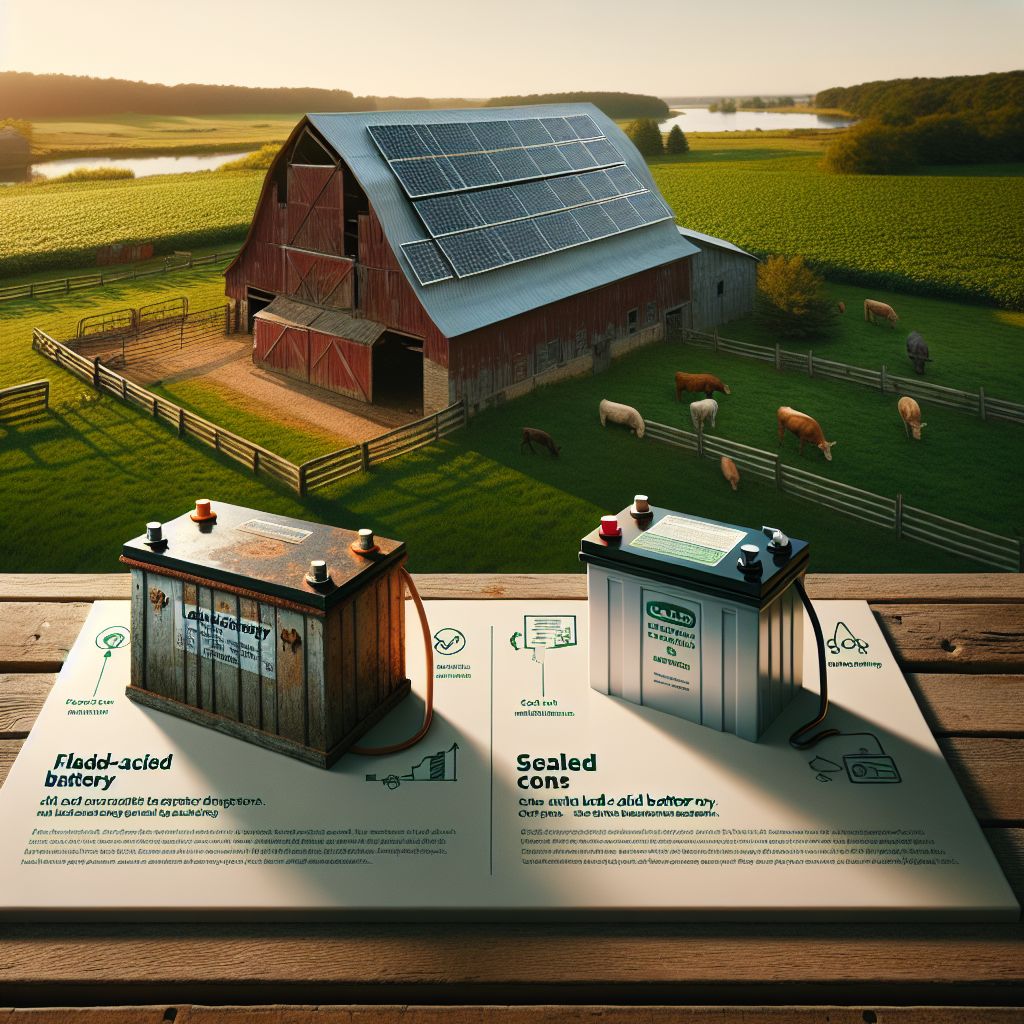
Lead-acid batteries have been a staple in solar energy storage for many years. They are known for their reliability and affordability, making them a popular choice for many farmers. However, understanding the differences between flooded and sealed lead-acid batteries is crucial for making the right choice for your farm.
Flooded Lead-Acid Batteries Explained
Flooded lead-acid batteries, also known as wet cell batteries, are the most common type of lead-acid battery. They contain a liquid electrolyte that requires regular maintenance, such as checking water levels and cleaning terminals to prevent corrosion. Despite the maintenance needs, these batteries are often chosen for their cost-effectiveness and ability to deliver high surge currents.
Sealed Lead-Acid Batteries: Pros and Cons
Sealed lead-acid batteries, including absorbed glass mat (AGM) and gel batteries, offer a maintenance-free alternative to flooded batteries. They are sealed, meaning they do not require regular electrolyte checks or water refills. This feature makes them more convenient for farmers who prefer a low-maintenance option. However, they typically come at a higher price point than flooded batteries. For more on integrating solar technology into agriculture, explore agrivoltaics and its benefits.
Cost Considerations for Farmers
When considering lead-acid batteries, cost is a significant factor. Flooded batteries are generally less expensive upfront, but the ongoing maintenance can add up over time. Sealed batteries, while more costly initially, may save money in the long run due to their lower maintenance requirements. It’s essential to weigh these costs against the benefits each type offers to determine the best fit for your farm’s needs.
Maintenance and Lifespan
Maintenance plays a critical role in the lifespan of lead-acid batteries. Flooded batteries require regular maintenance to ensure optimal performance and longevity. Neglecting maintenance can lead to reduced battery life and efficiency. In contrast, sealed lead-acid batteries require little to no maintenance, making them an attractive option for those seeking convenience. However, regardless of the type, proper care and usage can significantly extend the life of your solar batteries.

Lithium-Ion Batteries: A Modern Solution
Lithium-ion batteries represent a modern solution for solar energy storage in farming. Known for their high energy density and long lifespan, these batteries are becoming increasingly popular among farmers looking for efficient and reliable energy storage solutions.
Understanding Lithium Iron Phosphate
Lithium iron phosphate (LiFePO4) batteries are a type of lithium-ion battery that has gained popularity in the agricultural sector. These batteries are known for their stability and safety, making them a reliable choice for storing solar energy. They offer several advantages over traditional lead-acid batteries, particularly in terms of energy efficiency and longevity.
One of the key features of LiFePO4 batteries is their use of a phosphate-based cathode, which provides excellent thermal and chemical stability. This stability reduces the risk of thermal runaway, a common issue with other lithium-ion batteries, making them safer for use in various environmental conditions. For more information on different battery types, you can refer to this guide on battery types.
Advantages in Energy Density
LiFePO4 batteries boast a high energy density, meaning they can store more energy in a smaller space compared to lead-acid batteries. This feature is particularly beneficial for farmers who have limited space for battery storage. The compact size of these batteries allows for more flexible installation options, whether in a barn, a greenhouse, or a dedicated energy storage area. For farmers looking to integrate solar solutions, understanding the role of solar panels in agriculture can further enhance their energy efficiency.
Lifespan and Cycle Efficiency
Another significant advantage of LiFePO4 batteries is their long lifespan. These batteries can endure thousands of charge and discharge cycles, often outlasting lead-acid batteries by several years. This longevity translates to lower replacement costs over time, making them a cost-effective option for farmers looking for a long-term energy storage solution.
In addition to their lifespan, LiFePO4 batteries offer excellent cycle efficiency. They can discharge and recharge quickly, providing consistent power without significant losses. This efficiency ensures that the stored solar energy is utilized effectively, maximizing the benefits of your solar power system.
Safety Features and Considerations
Safety is a top priority for any energy storage system, and LiFePO4 batteries excel in this area. Their stable chemistry minimizes the risk of overheating and fire, which is crucial for protecting your farm’s infrastructure. Additionally, these batteries are less prone to leakage and environmental contamination, further enhancing their safety profile. For more information on how solar technology can benefit your farm, check out our guide on solar panel use in agriculture.
When considering LiFePO4 batteries, it’s important to ensure they are installed correctly and monitored regularly. While they require less maintenance than lead-acid batteries, regular checks can help maintain their performance and extend their lifespan. Consulting with a solar expert can provide valuable guidance on installation and maintenance practices.
- High energy density for compact storage solutions.
- Long lifespan reduces replacement costs.
- Stable chemistry ensures safety in various conditions.
Overall, LiFePO4 batteries offer a robust and efficient solution for solar energy storage in agriculture, providing both performance and peace of mind.
Flow Batteries: Long-Term Applications
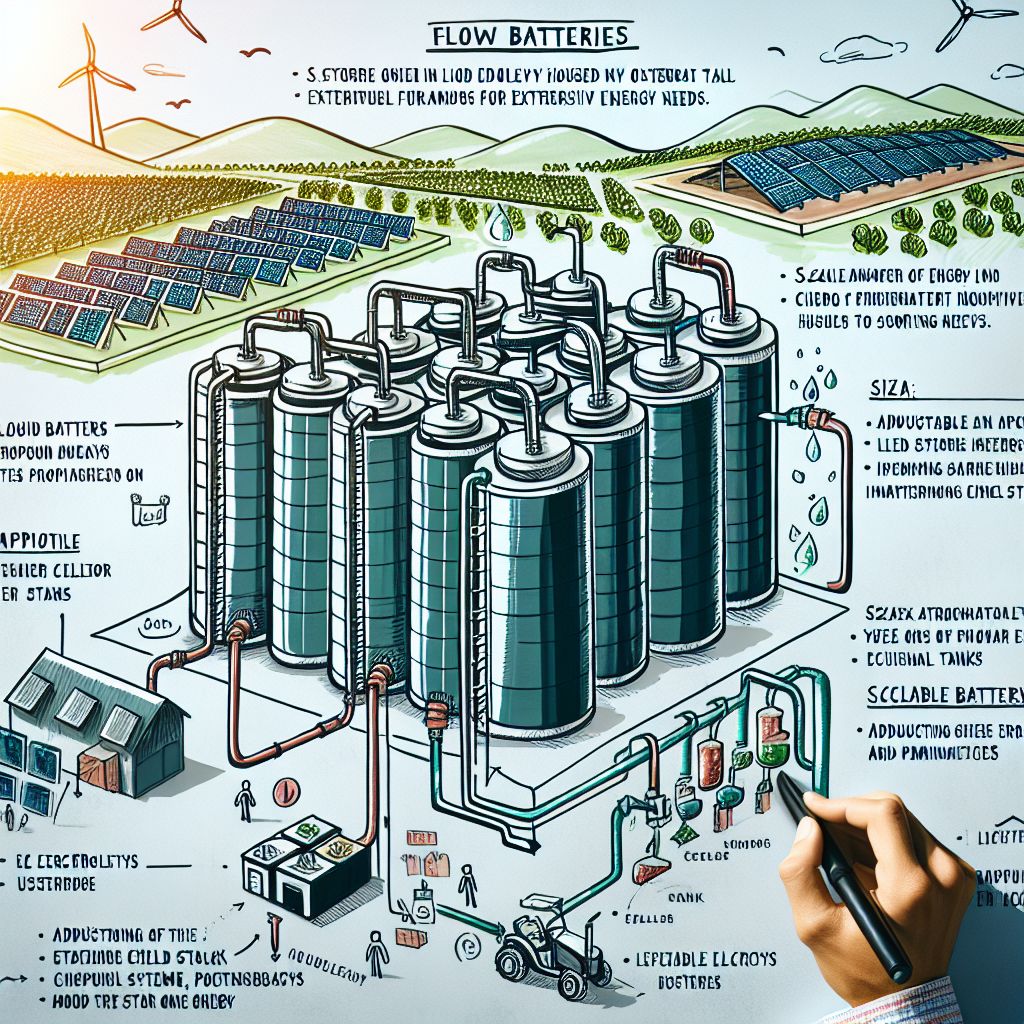
Flow batteries represent a unique category of energy storage that is particularly well-suited for large-scale applications. These batteries store energy in liquid electrolytes, which are housed in external tanks. This design allows for easy scalability, making flow batteries an attractive option for large farms with significant energy demands.
How Flow Batteries Operate
Flow batteries operate by pumping liquid electrolytes through a cell stack, where chemical reactions occur to store or release energy. This process is similar to a fuel cell, but the energy is stored in the liquid rather than in solid electrodes. The key advantage of this design is the ability to scale the energy capacity by simply increasing the size of the electrolyte tanks, which is a principle also applied in agrivoltaics.
Scalability for Large Farms
For farmers with large energy needs, flow batteries offer unparalleled scalability. By adjusting the size of the electrolyte tanks, these batteries can store massive amounts of energy, suitable for powering extensive irrigation systems, processing facilities, and other energy-intensive operations. This flexibility makes flow batteries an ideal choice for farms looking to expand their solar energy capabilities.
Cost and Environmental Impact
While flow batteries can be more expensive to install initially, their long lifespan and low maintenance requirements often offset these costs. Additionally, the materials used in flow batteries are typically more environmentally friendly than those in traditional batteries, reducing their overall environmental impact.
Their ability to provide consistent, reliable power without significant degradation over time makes them a sustainable choice for long-term energy storage.
Practical Use Cases for Farming
Flow batteries are particularly useful in situations where consistent, long-duration energy storage is required. For example, they can support off-grid farming operations or serve as a backup power source during peak energy demands. Their scalability also allows farmers to increase storage capacity as their energy needs grow, providing a flexible and future-proof energy solution.
Saltwater Batteries: Newest Technology
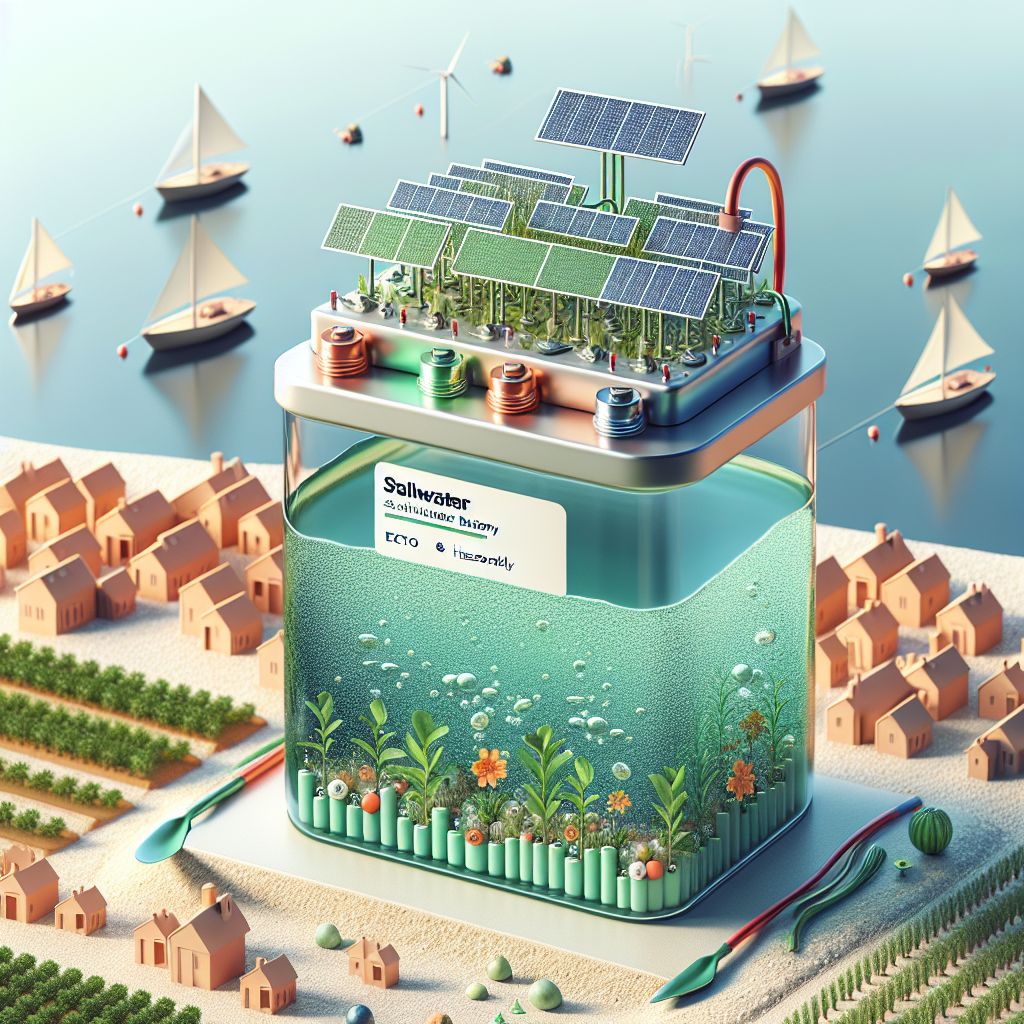
Saltwater batteries are an emerging technology in the world of solar energy storage. They use a saline solution as the electrolyte, offering an environmentally friendly and non-toxic alternative to traditional batteries. These batteries are still relatively new but show promise for sustainable energy storage in agriculture.
What are Saltwater Batteries: How do they work
Saltwater batteries work by using a saltwater solution as the electrolyte, which interacts with electrodes made from safe, non-toxic materials. This design eliminates the need for heavy metals and toxic chemicals, making saltwater batteries a safer and more sustainable option for energy storage.
The simplicity of their design allows for easy recycling and disposal, reducing the environmental impact associated with battery waste.
Cost Considerations for Farmers
Currently, saltwater batteries are more expensive than traditional options, largely due to their emerging status and limited production scale. However, as technology advances and production increases, costs are expected to decrease, making them a more accessible option for farmers in the future. For more information on different types of solar batteries, you can explore this comprehensive guide.
Environmental Impact
One of the most significant benefits of saltwater batteries is their minimal environmental impact. Unlike traditional batteries, they do not contain heavy metals or hazardous materials, reducing the risk of soil and water contamination. This eco-friendly design aligns with sustainable farming practices and can contribute to a healthier planet.
The Pros and Cons of Using Saltwater Batteries
- Pros: Environmentally friendly, non-toxic, safe for use.
- Cons: Higher initial cost, limited availability.
Despite their current limitations, saltwater batteries hold great potential for sustainable energy storage in agriculture, offering a safe and eco-friendly alternative to traditional battery technologies.
As we continue to explore and adopt new technologies, it’s essential to consider both current and future needs to ensure the most effective and sustainable energy solutions for our farms.
DC-Coupled vs. AC-Coupled Solar Batteries
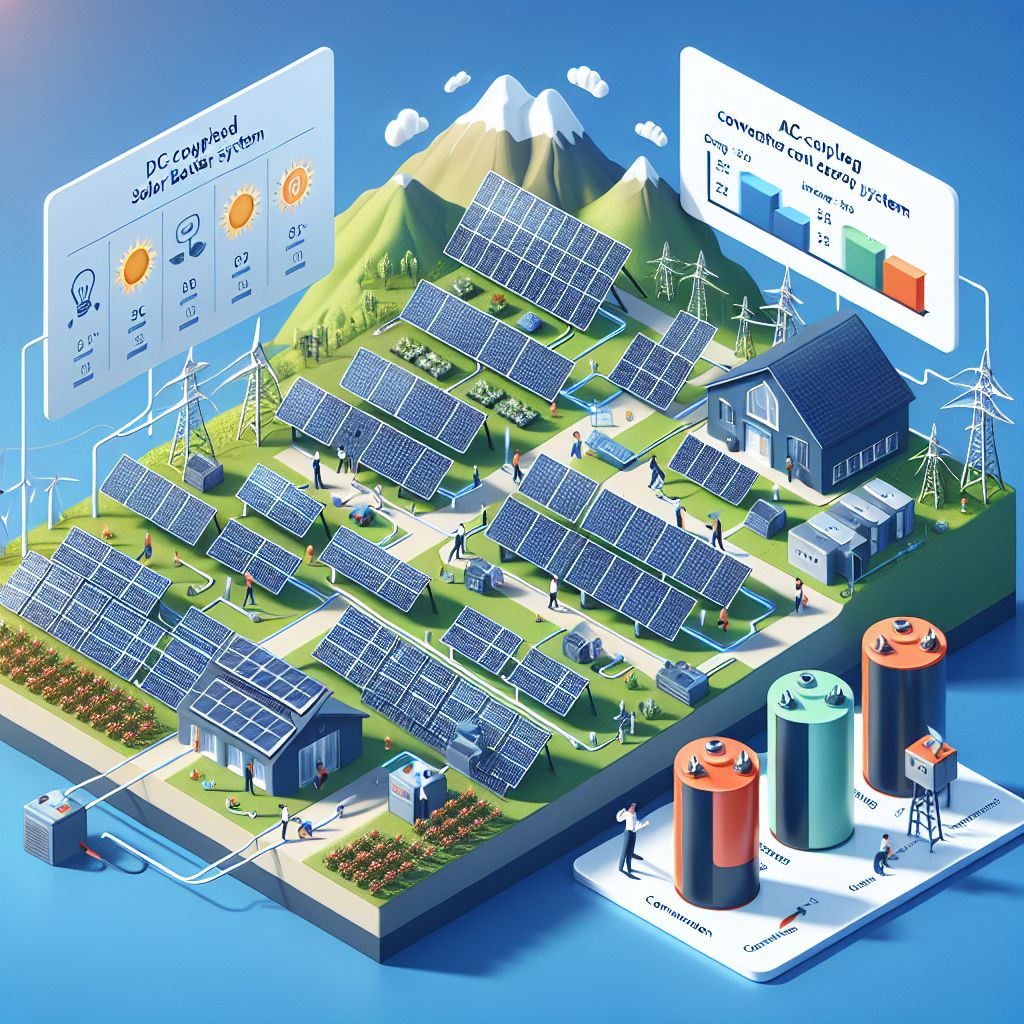
When integrating solar batteries into a farm’s energy system, understanding the difference between DC-coupled and AC-coupled systems is crucial. Each type has its own advantages and can impact the efficiency and cost-effectiveness of your solar energy setup.
Let’s delve into what makes these systems distinct and how they can benefit your farming operations.
Understanding Coupling in Solar Systems
In a solar energy system, “coupling” refers to how the solar panels are connected to the batteries. DC-coupled systems connect the solar panels directly to the battery bank, allowing for direct current (DC) to flow from the panels to the batteries. In contrast, AC-coupled systems convert the DC from the panels into alternating current (AC) before storing it in the batteries.
Advantages of DC-Coupled Systems
DC-coupled systems are often more efficient than AC-coupled systems because they eliminate the need for DC-to-AC conversion, which can result in energy losses. This direct connection allows for more efficient energy transfer and storage, making DC-coupled systems a popular choice for farms looking to maximize energy efficiency.
When to Opt for AC-Coupled Batteries
AC-coupled batteries are ideal when you have an existing solar power system and want to add battery storage without overhauling the entire setup. These systems are particularly beneficial if you plan to use the stored energy for AC appliances directly, as the conversion process is already built into the system. Additionally, AC-coupled systems are often easier to install and can be more cost-effective if you’re integrating with an existing AC infrastructure.
Integrating with Existing Infrastructure
Integrating solar batteries with existing infrastructure requires careful planning. If your farm already has a solar panel system, you’ll need to consider how the batteries will fit into the current setup. AC-coupled systems can be integrated more seamlessly, as they align with the standard electrical grid setup. However, DC-coupled systems might require additional components or changes to the existing infrastructure.
It’s crucial to assess your farm’s current energy system and consult with a solar expert to determine the best integration approach. This assessment ensures that the chosen battery system will operate efficiently and meet your farm’s energy needs.
Selecting the Right Battery for Your Farm
Choosing the right solar battery for your farm involves several considerations, from energy needs to budget constraints. Here’s a step-by-step guide to help you make an informed decision. For more insights, explore our smart farming tools and techniques to optimize your energy solutions.
First, assess your farm’s energy needs. Determine how much energy your farm consumes daily and identify peak usage times. This information will help you select a battery with the appropriate capacity and discharge rate. For more insights, explore the role of solar panels in smart farming.
Next, consider your budget for the battery investment. While some battery types, like lithium-ion, have higher upfront costs, they may offer long-term savings due to their efficiency and lifespan. Weigh the initial investment against potential savings to find the best financial fit.
Assessing Energy Needs and Usage Patterns
Understanding your farm’s energy usage patterns is crucial for selecting the right battery. Monitor your energy consumption over time to identify trends and peak usage periods. This data will guide you in choosing a battery with the capacity to meet your needs, ensuring that you have enough stored energy to cover peak demand times.
Budgeting for Battery Investment
When budgeting for a solar battery, consider both the initial purchase cost and the long-term savings. While some batteries, like lithium-ion, have higher upfront costs, they often provide better efficiency and longer lifespans, leading to savings over time. Factor in potential incentives and rebates available for renewable energy installations, as these can offset the initial investment.
Considering Installation Space
Space is an important consideration when selecting a solar battery. Ensure you have adequate space for the battery system, taking into account any additional components needed for installation. Lithium-ion batteries, with their compact design, are ideal for farms with limited space, while flow batteries may require more room due to their large electrolyte tanks.
Evaluate the available space on your farm and choose a battery system that fits within your constraints without compromising on performance.
Consulting with Solar Experts
Consulting with solar experts can provide valuable insights into the best battery options for your farm. These professionals can assess your energy needs, recommend suitable battery types, and assist with the installation process. Their expertise ensures that your solar battery system is optimized for efficiency and reliability, helping you make the most of your investment. Learn more about the benefits of solar agriculture integration to enhance your farm’s sustainability.
Don’t hesitate to reach out to local solar installers or renewable energy consultants for guidance. Their knowledge and experience can be instrumental in navigating the complexities of solar energy storage.
Final Thoughts on Solar Battery Selection
Selecting the right solar battery for your farm is a critical decision that impacts your energy efficiency and sustainability. By understanding the different battery types and their applications, you can make an informed choice that aligns with your farm’s needs and goals. For more information on integrating solar technology, explore the role of solar panels in smart farming.
Key Takeaways for Optimizing Farm Energy
Here are some key points to consider when optimizing your farm’s energy with solar panels in agriculture:
- Evaluate your farm’s energy needs and usage patterns to select a battery with the right capacity.
- Consider the long-term cost savings of different battery types, not just the initial investment.
- Ensure you have adequate space for the battery system and any additional components.
- Consult with solar experts to gain insights and recommendations tailored to your farm’s specific requirements.
“Choosing the right solar battery can significantly enhance your farm’s energy efficiency and sustainability, leading to cost savings and a reduced carbon footprint.”
With the right solar battery system, you can harness the power of the sun to create a more sustainable and cost-effective farming operation.
Building a Sustainable Future with Solar
Investing in solar batteries is a step towards building a sustainable future for your farm. By embracing renewable energy, you not only reduce your environmental impact but also secure a reliable energy source that can withstand the challenges of modern agriculture. As technology advances and costs decrease, solar energy storage will become increasingly accessible, empowering farmers to lead the way in sustainable farming practices.
Frequently Asked Questions
- What factors should farmers consider when choosing a solar battery?
- How do solar batteries contribute to sustainability in agriculture?
- What are the maintenance requirements for lead-acid batteries?
- Can lithium-ion batteries be used in all weather conditions?
- How do flow batteries benefit larger agricultural operations?
What factors should farmers consider when choosing a solar battery?
Farmers should consider their energy needs, budget, available space, and the specific benefits of each battery type. Consulting with solar experts can also provide valuable guidance tailored to individual farm requirements. For more insights, explore how solar panels can cut operational costs in agriculture.
How do solar batteries contribute to sustainability in agriculture?
Solar batteries enable the use of clean, renewable energy, reducing reliance on fossil fuels and lowering carbon emissions. They provide a reliable energy source, even during power outages, supporting sustainable farming practices.
What are the maintenance requirements for lead-acid batteries?
Flooded lead-acid batteries require regular maintenance, including checking water levels and cleaning terminals. Sealed lead-acid batteries are maintenance-free, offering a convenient alternative with a slightly higher cost.
Can lithium-ion batteries be used in all weather conditions?
Yes, lithium-ion batteries, particularly lithium iron phosphate, are designed to perform well in various weather conditions. Their stable chemistry and robust design make them suitable for diverse agricultural environments.
How do flow batteries benefit larger agricultural operations?
Flow batteries offer scalability, allowing farmers to increase energy storage capacity as needed. Their long lifespan and low maintenance requirements make them ideal for large-scale applications, providing consistent power for extensive operations.
Solar batteries are an essential component for farmers looking to harness renewable energy efficiently. They store the energy generated by solar panels for use when sunlight is not available, ensuring a consistent power supply for farming operations. Understanding the different types of solar batteries, such as lithium-ion, lead-acid, and flow batteries, can help farmers choose the best option for their needs. For those interested in integrating solar energy into their agricultural practices, exploring the concept of agrivoltaics can offer additional benefits by combining solar power with traditional farming techniques.







Leave a Reply