

Solar panels are a fantastic way for farmers to harness clean energy and reduce electricity costs. However, critters can cause significant damage if not properly managed. Let’s dive into how we can protect these valuable assets.
Key Takeaways
- Critters like birds and rodents can damage solar panels, affecting their efficiency.
- Installing critter guards is an effective way to protect solar panels from animal interference.
- Regular maintenance checks can prevent long-term damage and ensure optimal performance.
- Natural deterrents can be used alongside physical barriers for enhanced protection.
- Choosing the right type of critter guard is crucial for effective solar panel protection.
The Importance of Solar Panel Protection for Farmers
Farming is an industry that relies heavily on sustainability and cost-effectiveness. Solar panels help farmers achieve these goals by providing a renewable energy source that can significantly cut electricity bills. However, critters can pose a real threat to these installations.
Why Critters Pose a Threat
Critters are naturally drawn to the warmth and shelter that solar panels offer. Birds, rodents, and even insects can cause damage that leads to decreased energy efficiency and increased maintenance costs. It’s important to understand why critters are attracted to solar panels to develop effective protection strategies.
Impact on Energy Efficiency and Farm Operations
When critters nest under or around solar panels, they can obstruct airflow and shade parts of the panel, reducing its efficiency. Damaged wiring caused by chewing rodents can lead to power outages or even pose fire hazards. These disruptions can affect farm operations, leading to potential losses in productivity and increased costs. To understand more about how solar panels can impact farm operations, check out this comparison of solar panels and solar farms.
Common Critters that Target Solar Panels
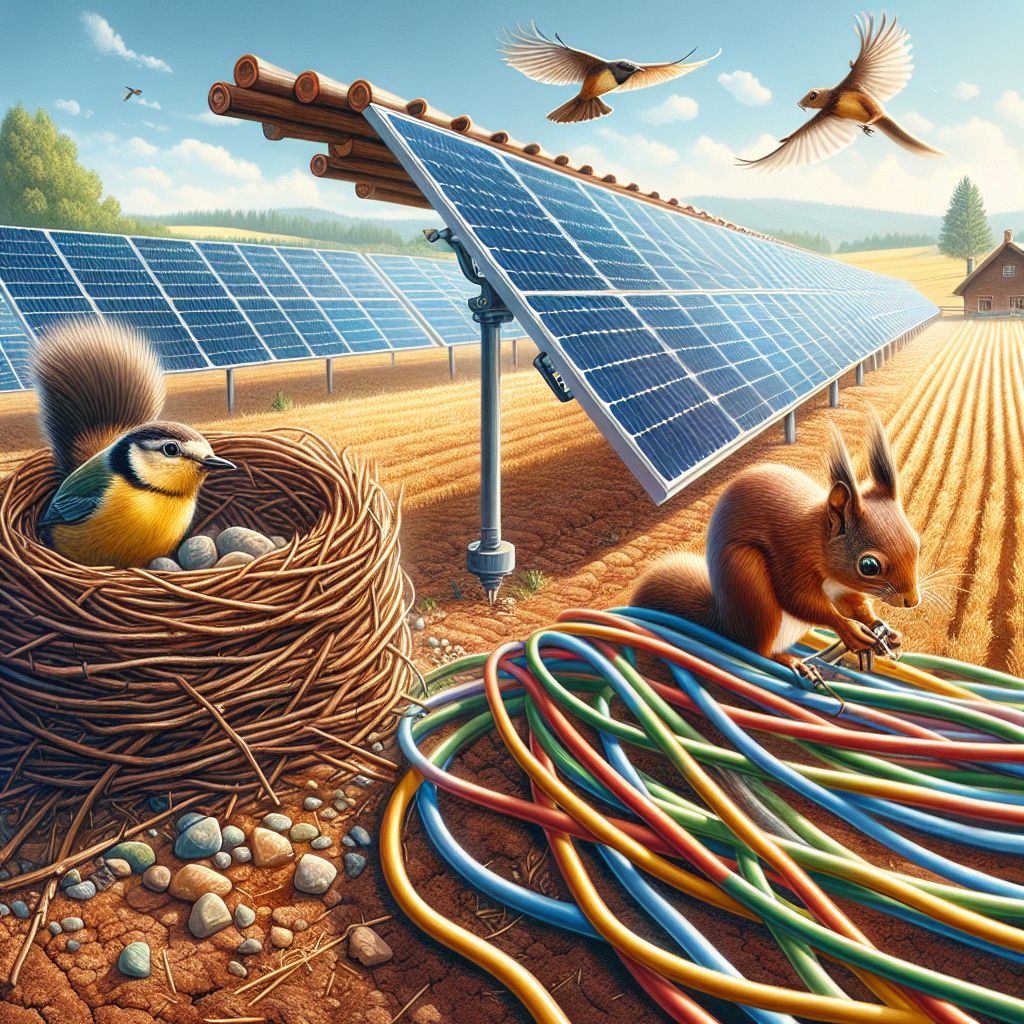
Understanding which critters are most likely to target solar panels can help in developing targeted strategies for protection. For those interested in broader applications, exploring solar panels in farm operations can offer additional insights into how these systems work in different environments. Let’s take a closer look at some of these common culprits.
Birds and Their Nesting Habits
Birds are notorious for nesting under solar panels. The space beneath the panels provides an ideal location for building nests, offering protection from the elements and predators. Unfortunately, these nests can block airflow and cause overheating, leading to reduced efficiency and potential damage to the panels. To learn more about how to protect solar panels from pests, consider exploring various methods to safeguard your investment.
Example: A farmer in California noticed a significant drop in energy output from his solar panels. Upon inspection, he found several bird nests blocking the airflow. After installing bird deterrents, his panels returned to optimal performance.
Rodents and Wiring Damage
Rodents, such as squirrels and mice, are known to chew on wiring, which can cause electrical faults or even fires. This damage can be costly to repair and may lead to prolonged downtime for the solar system. To learn more about protecting your solar investment, check out 5 ways critter guards save your solar investment.
Insects and Long-Term Impacts
Insects might seem less threatening, but over time, they can cause significant issues. Their nests or colonies can lead to moisture build-up, which can corrode panel materials and reduce their lifespan.
Here’s a table discussing the common critters that target solar panels and the damage they can cause:
|
Critter |
Damage to Solar Panels |
|---|---|
|
Birds | |
|
– Droppings accumulate, creating a barrier between sun and panels. 2 | |
|
– Droppings can cause corrosion of metal components. 3 | |
|
– Natural movement can loosen wiring connections. 5 | |
|
Rodents (Rats, Mice, Squirrels) |
– Chew through wiring and connections, causing malfunctions. 1, 3, 4 |
|
– Build nests under panels, interfering with efficiency. 4 | |
|
– Can create short circuits, reducing electricity production. 3 | |
|
Raccoons and Opossums |
– Can climb on panels, potentially breaking glass or scratching surfaces. 4 |
|
Insects and Algae |
– Create a barrier on panel surface, hindering sunlight absorption. 2 |
|
Deer and Elk |
– Can scratch or break photovoltaic cell surfaces with antlers, hooves, or horns. 3 |
This table summarizes the most common critters that can damage solar panels and the specific types of damage they can cause. It’s important for solar panel owners to be aware of these potential threats and take appropriate measures to protect their investment (6, 7).

“Solar Panel Protection from Critters …” from www.solarenergy.org and used with no modifications.
Effective Strategies for Protecting Solar Panels
Now that we know the critters and the problems they cause, let’s explore some effective strategies for protecting solar panels. These strategies can help ensure that solar panels remain efficient and free from critter-related damage.
Installing Physical Barriers
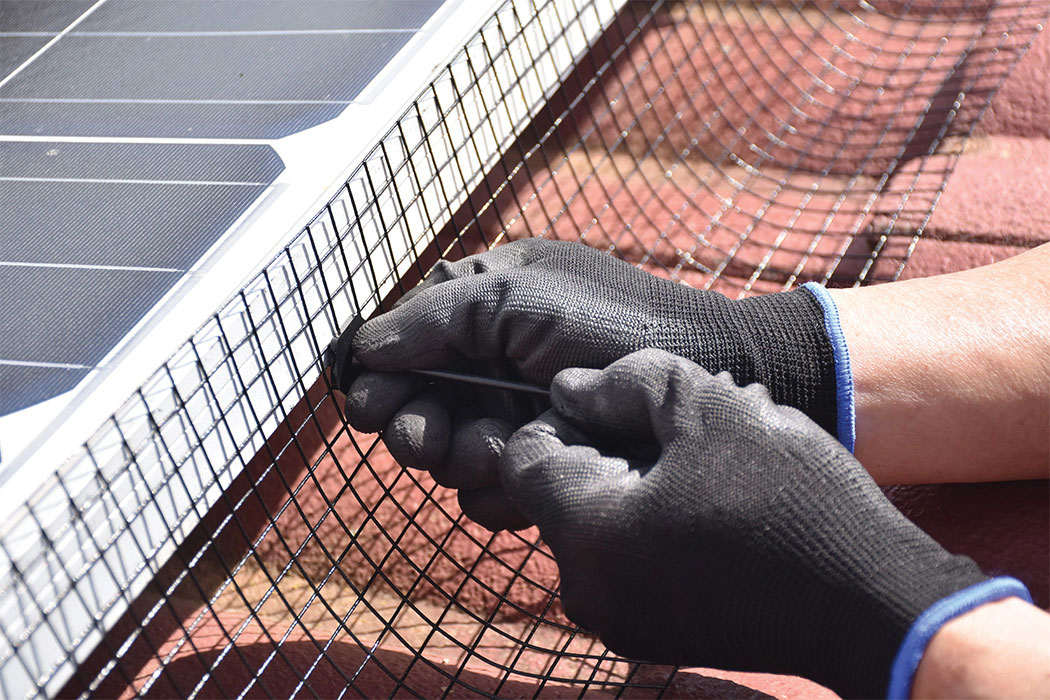
Physical barriers, such as critter guards, are one of the most effective ways to protect solar panels. These guards are designed to prevent animals from accessing the space beneath the panels, thus protecting wiring and preventing nesting.
In the next part, we’ll delve deeper into the installation of physical barriers and other strategies that farmers can employ to protect their solar investments.
Using Natural Deterrents
- Planting certain herbs and flowers that repel pests naturally.
- Using predator decoys to scare away birds.
- Applying non-toxic sprays that deter rodents and insects.
Natural deterrents offer an eco-friendly way to protect solar panels from critters. For instance, planting herbs like mint or lavender around the solar installation can help keep pests at bay. These plants emit scents that many critters find unpleasant, thus reducing their presence.
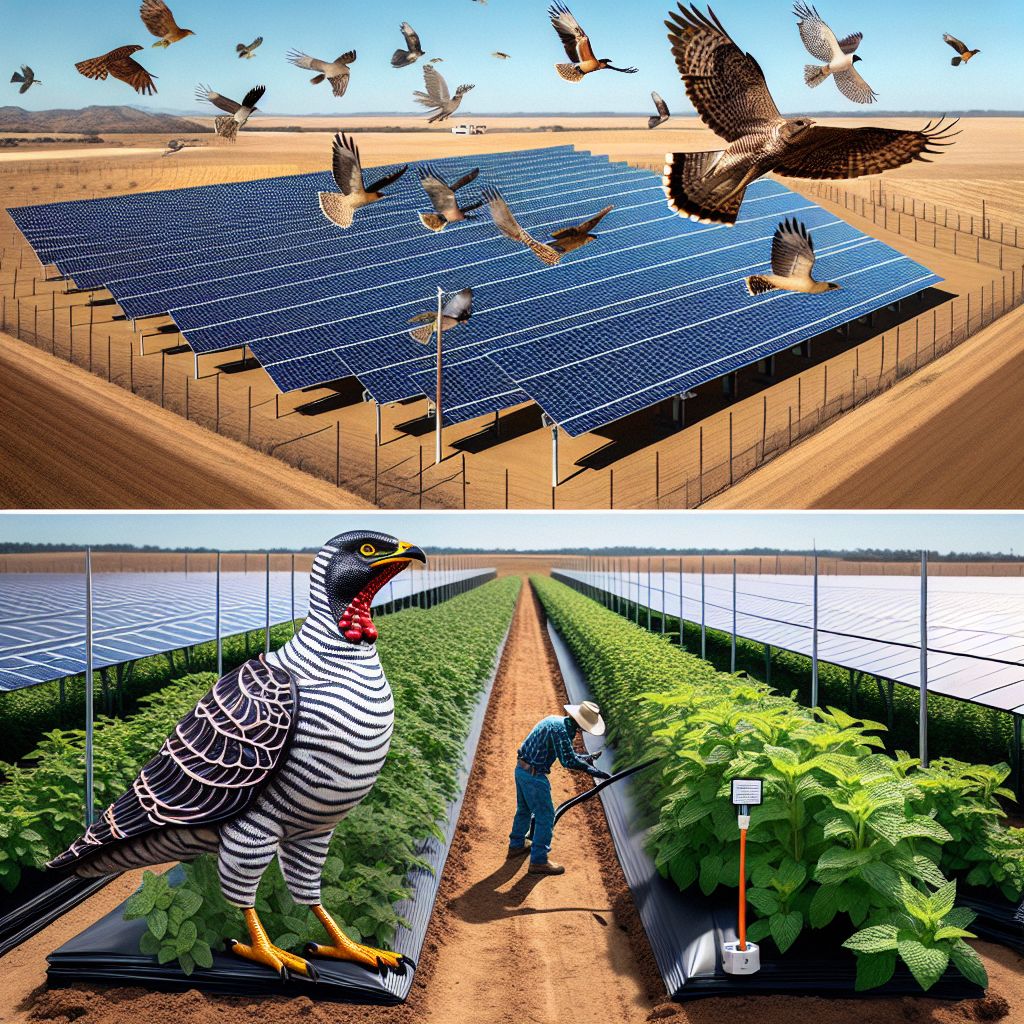
Besides that, placing predator decoys such as fake owls or hawks can effectively scare away birds. These decoys mimic the appearance of natural predators, discouraging birds from nesting near the panels. It’s a simple yet effective strategy that leverages the natural instincts of these animals.
Non-toxic sprays can also be applied around the solar panels to deter rodents and insects. These sprays are safe for the environment and can be a part of a comprehensive pest management plan. When used regularly, they create a barrier that critters are less likely to cross.
Implementing Routine Maintenance Checks
Regular maintenance checks are crucial for identifying potential problems early. By scheduling routine inspections, farmers can catch critter-related issues before they escalate into costly repairs. During these checks, look for signs of nesting, chewing, or any other damage to the panels or wiring.
It’s important to include these checks as part of a broader maintenance schedule. This proactive approach not only helps maintain the efficiency of the solar panels but also prolongs their lifespan, ensuring a better return on investment.
“How to Protect Solar Panels from Pests” from bird-x.com and used with no modifications.
Choosing the Right Critter Guards
Critter guards come in various forms, and choosing the right type is essential for effective protection. These guards act as a physical barrier, preventing animals from accessing the space beneath the solar panels.
Types of Critter Guards
Critter guards are typically made from durable materials like stainless steel mesh or heavy-duty plastic. The choice of material often depends on the specific critter threat and the environmental conditions of the farm. Stainless steel is highly durable and resistant to weathering, making it suitable for areas with harsh climates. For more insights on sustainable farming practices, consider exploring off-grid farming with solar power.
Plastic guards, on the other hand, are lightweight and easy to install. They work well in areas with milder conditions and where the critter threat is not as severe. Understanding the specific needs of your farm will help in selecting the most appropriate guard. For more insights on solar solutions, check out our step-by-step guide to installing solar panels on your farm.
Installation Tips for Farmers
Installing critter guards can be straightforward if done correctly. Begin by measuring the perimeter of the solar panel array to determine how much material is needed. Ensure the guard fits snugly around the panels to prevent any gaps that critters might exploit. For a comprehensive guide, check out this step-by-step guide to installing solar panels on your farm.
It’s also important to check for any existing damage to the panels or wiring before installation. Repair any issues to ensure the guards provide maximum protection. Additionally, regularly inspect the guards for wear and tear, replacing them as needed to maintain their effectiveness.
Real-Life Success Stories: Farmers Share Their Experiences
Learning from others can provide valuable insights into effective solar panel protection. Let’s explore some real-life success stories from farmers who have tackled critter problems head-on.
Case Study 1: Large-Scale Farming Solution
A large-scale farm in Texas faced significant issues with birds nesting under their extensive solar panel array. The farm owner decided to install critter guards made of stainless steel mesh. Within weeks, the bird population decreased, and energy output improved significantly.
The farm also implemented regular maintenance checks and used natural deterrents, such as predator decoys, to complement the guards. This comprehensive approach ensured that the solar panels remained critter-free and operating at peak efficiency.
Case Study 2: Small Farm Adaptation
On a smaller farm in Oregon, the challenge was rodents chewing on wiring. The farmer chose heavy-duty plastic guards due to their ease of installation and effectiveness against rodents. Additionally, the farmer planted mint around the installation, which helped deter pests naturally. For farmers interested in integrating solar solutions, understanding the differences between solar panels for farm operations and solar farms can be crucial.
As a result, the farm experienced fewer disruptions, and the solar panels continued to perform well. This example highlights how even small-scale farms can effectively protect their solar investments with the right strategies.
Future Innovations in Solar Panel Protection
Example: “Innovations in solar panel protection are on the rise, with new materials and technologies being developed to offer even better protection against critters.”
As technology advances, so do the methods for protecting solar panels. Researchers are exploring new materials and designs for critter guards that are more effective and easier to install. These innovations promise to make solar panel protection more accessible to farmers of all sizes.
Technological Advances on the Horizon
Emerging technologies, such as smart sensors, can alert farmers to critter activity in real-time. These sensors can be integrated into the solar panel system, providing data on potential threats and allowing for timely interventions. This proactive approach is likely to become a key component of future solar panel protection strategies.
In conclusion, protecting solar panels from critters is crucial for maintaining their efficiency and longevity. By combining physical barriers, natural deterrents, and regular maintenance, farmers can safeguard their investments and continue to benefit from clean, renewable energy.

Final Thoughts on Solar Panel Protection
As we’ve explored, critter protection is an essential aspect of maintaining solar panel efficiency, especially for farmers relying on renewable energy. Critters can cause significant damage, leading to decreased energy output and increased maintenance costs. By implementing effective protection strategies, farmers can ensure their solar panels remain in optimal condition.
Protecting solar panels requires a multifaceted approach. Physical barriers like critter guards are essential, but they work best when combined with natural deterrents and regular maintenance. These strategies not only protect the panels but also contribute to the overall sustainability and cost-effectiveness of farming operations.
Summary of Best Practices
- Install critter guards to prevent access to the underside of solar panels.
- Use natural deterrents like plants and predator decoys to keep pests away.
- Conduct regular maintenance checks to identify and address issues early.
- Choose the right type of critter guard based on specific farm needs.
- Stay informed about technological advances in solar panel protection.
By following these best practices, farmers can protect their solar investments and ensure that their panels continue to provide clean energy efficiently. For more information on how to protect solar panels from pests, visit This Old House. It’s important to tailor these strategies to the specific conditions and challenges of each farm.
In the future, technological advancements will likely offer even more effective solutions for critter protection. Innovations such as smart sensors and new materials for critter guards promise to enhance the efficiency and ease of solar panel maintenance.
Ultimately, protecting solar panels from critters is a crucial step in ensuring the longevity and effectiveness of solar energy systems. By investing in protection strategies, farmers can continue to benefit from the numerous advantages that solar energy provides.
Encouragement for Continued Vigilance
Maintaining vigilance is key to protecting solar panels from critters. Regularly assess the effectiveness of your protection strategies and be open to adopting new methods as technology evolves. For instance, understanding how to install solar panels on your farm can provide insights into better protection techniques. By staying proactive, farmers can ensure that their solar panels remain a reliable and sustainable energy source for years to come.
Frequently Asked Questions
Addressing common concerns can help farmers better understand how to protect their solar panels from critters. Here are some frequently asked questions about solar panel protection.
What are the most common pests affecting solar panels?
The most common pests include birds, rodents, and insects. Birds often nest under panels, while rodents can chew on wiring. Insects can cause long-term damage through moisture build-up and corrosion.
How often should I inspect my solar panels for critter damage?
It’s advisable to inspect your solar panels at least twice a year. Regular checks can help identify potential issues early, allowing for timely interventions and repairs.
Are there environmentally friendly deterrents available?
Yes, environmentally friendly deterrents include planting pest-repelling herbs, using predator decoys, and applying non-toxic sprays. These methods help keep critters away without harming the environment.
What materials are best for critter guards?
Stainless steel mesh and heavy-duty plastic are common materials for critter guards. Stainless steel is highly durable and weather-resistant, while plastic is lightweight and easy to install. Choose based on your specific needs and environmental conditions.
Can I install critter guards myself?
Yes, many farmers choose to install critter guards themselves. However, it’s important to ensure a snug fit around the panels and address any existing damage before installation. If unsure, consider consulting a professional or refer to this step-by-step guide for assistance.
By taking proactive steps to protect solar panels from critters, farmers can maintain the efficiency and longevity of their solar energy systems. This not only supports sustainable farming practices but also helps reduce energy costs and environmental impact.







Leave a Reply