
Key Takeaways
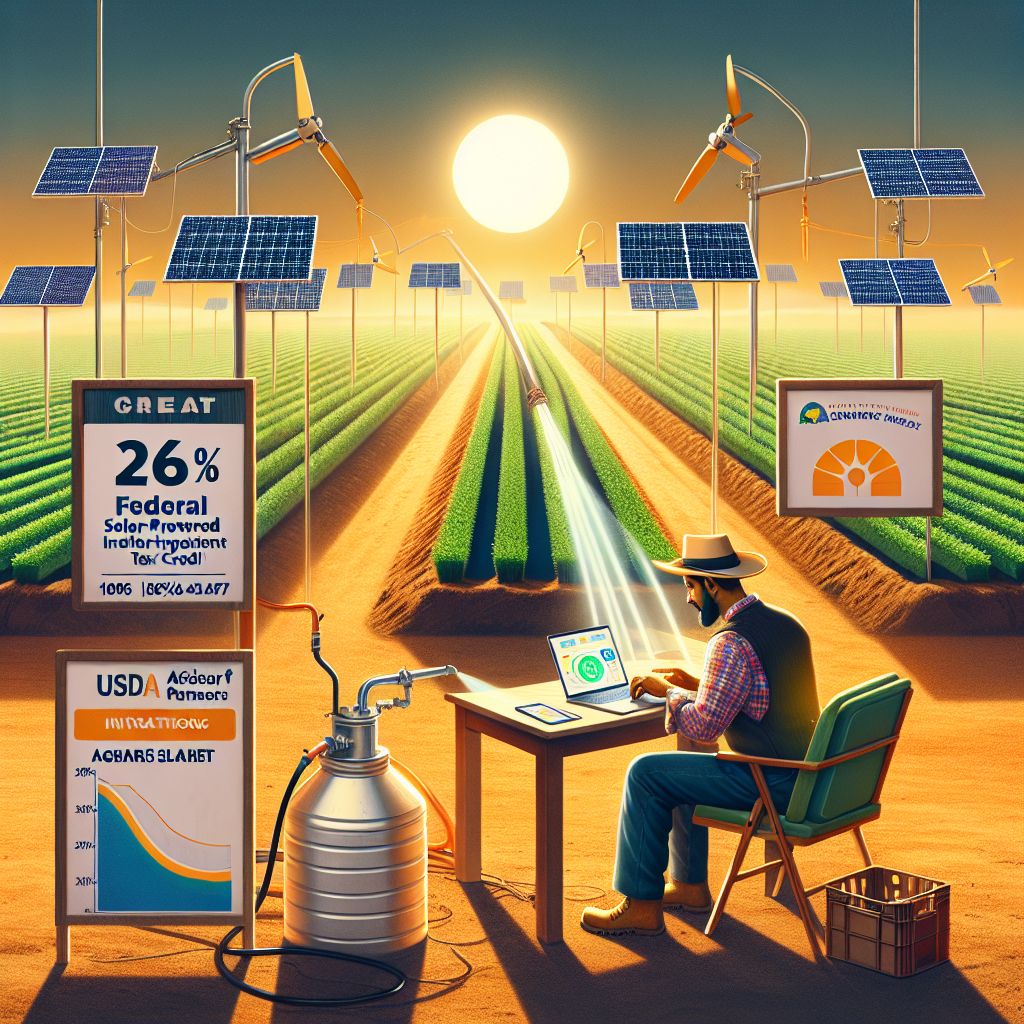
- Farmers are leaving $15,000-$35,000 in annual energy savings on the table by not utilizing agricultural solar tax incentives
- The federal Investment Tax Credit currently offers 26% back on solar installations, but this rate will decrease in coming years
- USDA REAP grants can cover up to 50% of installation costs, significantly reducing the capital investment required
- Modern solar systems can increase farm property values by 4-6% while providing decades of energy cost stability
- AgriSolar Partners helps farmers navigate complex incentive applications with a 97% approval rate, turning paperwork challenges into profit opportunities
The sun beats down on your fields, ripening your crops and draining your wallet through rising electricity bills. What if that same sun could slash your operational costs by thousands while the government picks up a significant portion of the tab?
The reality for most American farmers today is sobering: while focused on weather patterns, equipment maintenance, and commodity prices, they’re overlooking one of the most significant cost-saving opportunities in modern agriculture. Solar energy systems, largely subsidized through various incentive programs, remain frustratingly underutilized across the farming sector.
The Real Cost of Missing Out on Farm Solar Incentives
When crunching the numbers on agricultural operations, energy costs often represent 15-30% of variable expenses. For dairy operations, irrigation systems, grain drying, and climate-controlled livestock facilities, these costs can be even higher. The financial impact of ignoring solar incentives goes far beyond just missing a good deal—it’s actively eroding farm profitability year after year.
“We calculated that we’d lost over $240,000 in potential savings by waiting five years to install our solar system. That’s money that could have funded equipment upgrades or helped weather market fluctuations.” — James Henderson, Henderson Family Farms, Iowa
This sentiment echoes across the country as more farmers realize the true opportunity cost of delayed action. With solar panel efficiency increasing and costs decreasing, the economic argument has never been stronger, especially when coupled with the current incentive landscape.
Lost Annual Savings of $15,000-$35,000 for Average Operations
For a mid-sized farming operation consuming 100,000 kWh annually at today’s average commercial rate of $0.14/kWh, the electric bill runs approximately $14,000 yearly. Solar installations typically offset 70-100% of this consumption, depending on system size and location. When factoring in annual electricity rate increases averaging 2.2% historically, the 25-year savings potential easily exceeds $400,000 for many operations.
Beyond direct electricity savings, solar installations create opportunities for net metering programs where excess production gets credited to your account or sold back to the grid. For seasonal operations with fluctuating energy needs, this can transform electricity from a pure expense into a potential revenue stream during low-usage periods.
Tax Benefits That Disappear When Ignored
The current federal solar investment tax credit allows farm businesses to deduct 26% of the cost of installing a solar energy system from their federal taxes. This represents a dollar-for-dollar reduction in tax liability—not merely a deduction, but a direct reduction in what you owe. On a $100,000 system, that’s $26,000 back in your pocket. To learn more about how farmers can benefit, check out The Farming Insider.
However, this incentive is scheduled to step down over time. After 2023, the residential credit drops to 22%, and by 2024, it reduces further to 10% for commercial installations. Every year of delay directly translates to thousands in lost tax benefits that cannot be recaptured. To maximize these benefits, consider exploring solar panel battery technology for agriculture as an efficient energy solution.
Beyond the investment tax credit, accelerated depreciation benefits allow for writing off the entire solar system within the first year through bonus depreciation, or over 5 years using MACRS (Modified Accelerated Cost Recovery System). For farms with significant tax burdens, this represents another substantial but time-sensitive opportunity.
Time-Sensitive Opportunities With Expiration Dates
Government incentive programs operate on legislative timelines that rarely align with farm planning cycles. The USDA’s Rural Energy for America Program (REAP) offers grants covering up to 25% of project costs and guaranteed loan financing for the remainder, but annual funding is limited and distributed on a competitive basis. Application windows open and close throughout the year, with many farmers missing opportunities simply due to timing misalignment.

Today’s Agricultural Energy Crisis
The agricultural sector faces an energy predicament unlike any other industry. While production demands increase to feed a growing population, input costs—particularly energy—continue to rise at rates outpacing inflation. This squeeze on margins comes precisely when weather volatility requires more energy-intensive interventions for successful harvests.
Rising Electricity Costs Crushing Farm Profit Margins
Agricultural electricity rates have increased approximately 20% over the past decade nationally, with some regions experiencing even steeper climbs. California farmers have seen increases approaching 35%, while Midwestern operations face less dramatic but still significant upward pressure. These increases directly impact bottom lines in an industry where passing costs to consumers remains challenging due to complex supply chains and commodity pricing.
For operations with irrigation requirements, dairy processing, or climate control needs, electricity often represents the second or third largest operational expense after labor and feed/seed costs. As weather patterns shift and growing seasons become less predictable, these energy dependencies only intensify, creating a financial vulnerability that solar adoption directly addresses.
Dependency on Unstable Grid Infrastructure
Rural power infrastructure often suffers from underinvestment and aging components, resulting in more frequent outages and voltage fluctuations than urban counterparts. For agricultural operations dependent on consistent power—whether for automated milking systems, temperature-controlled storage, or irrigation timers—these disruptions can cause significant financial losses and animal welfare concerns. A 2022 Department of Energy study found that rural outages last an average of 2.1 hours longer than urban outages, creating operational vulnerabilities that disproportionately impact farming communities.
On-site solar generation with proper battery backup systems provides critical resilience during these increasingly common grid failures. While the initial investment includes this redundancy benefit, it rarely factors into basic ROI calculations despite representing significant risk mitigation value for continuous operations.
Competition From Solar-Powered Farms
Early adopters of agricultural solar are gaining meaningful competitive advantages in several key areas. Their fixed energy costs create predictable budgeting during volatile market conditions, allowing them to lock in production costs while competitors face continually rising electricity rates. In regions with strong sustainability markets, solar-powered farms can command premium pricing or preferred supplier status from processors and retailers emphasizing environmental credentials.
This competitive imbalance compounds annually. Farms that installed solar systems 5-7 years ago have already recouped significant portions of their investments while building years of cushion against energy inflation. Many are now reinvesting those savings into additional operational efficiencies that further widen the competitiveness gap, such as powering irrigation systems with solar panels.
Current Solar Incentives Most Farmers Miss
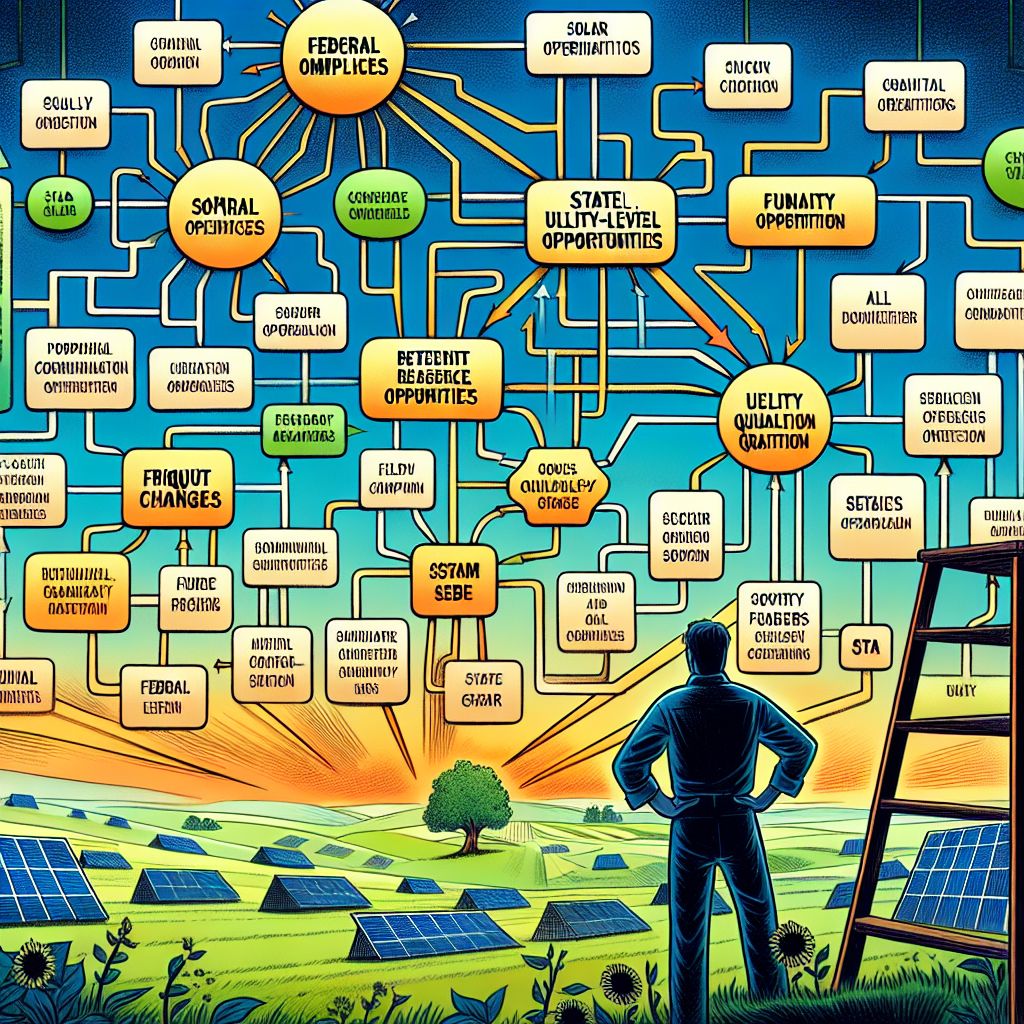
The landscape of agricultural solar incentives represents one of the most comprehensive government support structures available to modern farming operations. However, its complexity and frequent changes mean many farmers remain unaware of their full eligibility. Understanding these programs requires breaking them down by federal, state, and utility-level opportunities, each with distinct qualification criteria and application processes.
1. Federal Investment Tax Credit (26% of System Cost)
The federal Investment Tax Credit (ITC) allows farm businesses to deduct 26% of the installed cost of solar systems directly from their federal taxes. Unlike tax deductions that merely reduce taxable income, this credit provides dollar-for-dollar reduction in actual tax liability. For farms structured as LLCs, S-Corps, or sole proprietorships, these credits can flow through to personal returns, creating significant tax advantages that extend beyond the farm business itself.
The credit applies to both direct ownership and certain leasing arrangements, though the specifics vary. Importantly, if the credit amount exceeds your tax liability in the installation year, the remainder can be carried forward for up to 20 years, ensuring the full benefit is realized regardless of annual profitability fluctuations. Through AgriSolar Partners’ tax credit optimization program, farmers can ensure they’re structuring their solar investments to maximize these benefits across their broader tax strategy. For more insights on solar incentives, you can read about farmers’ solar incentives.
2. USDA REAP Grants (Up to 50% of Project Costs)
The Rural Energy for America Program (REAP) offers grants covering up to 25% of eligible project costs for renewable energy systems, with total grant values ranging from $2,500 to $500,000. When combined with REAP’s guaranteed loan program for the remaining costs, farms can effectively finance their entire solar installation while maintaining working capital for core operations. Though competitive, these grants favor applications demonstrating strong energy savings, innovative approaches to agricultural production, and economic benefits to rural communities. For more details, you can explore the key benefits and tax implications of REAP grants.
Application windows typically open twice yearly, with different requirements for projects above and below $80,000. Successful applications include comprehensive energy audits, detailed vendor quotes, and historical energy usage documentation. The paperwork burden is substantial but can be navigated with proper guidance, yielding funding that transforms project economics.
3. Accelerated Depreciation Benefits
Beyond tax credits, solar systems qualify for accelerated depreciation under the Modified Accelerated Cost Recovery System (MACRS). This allows for writing off the system’s value over just 5 years instead of the 20+ year actual lifespan, creating significant upfront tax advantages. Additionally, bonus depreciation currently permits first-year deduction of 80% of the system’s value after applying the ITC, though this percentage will phase down in coming years.
For farms with substantial tax liabilities, this accelerated schedule creates immediate cash flow benefits that dramatically improve project economics. When properly structured, the combination of ITC and accelerated depreciation can recover 50-60% of a system’s cost within the first year, effectively slashing payback periods in half compared to unoptimized approaches. Additionally, exploring solar panel battery technology can further enhance energy efficiency for agricultural systems.
4. State-Specific Agricultural Solar Programs
Beyond federal incentives, 38 states currently offer additional solar incentives specifically benefiting agricultural producers. California’s Net Energy Metering Aggregation (NEMA) program allows farmers to credit solar production against multiple meters across their property, maximizing self-consumption value. New York’s NY-Sun program offers performance-based incentives that pay per kilowatt-hour produced, while Minnesota’s Renewable Energy Production Incentive provides direct payments for up to 10 years. These state-level benefits often complement federal programs, creating layered incentive structures that can cover 60-80% of total system costs in optimal scenarios. For more detailed insights, you can explore solar incentives for farmers.
5. Net Metering and Electricity Buyback Options
Net metering policies, available in varying forms across 41 states, allow farmers to receive credit for excess solar electricity fed back into the grid. This effectively enables using the grid as a “battery,” banking overproduction during sunny days to offset consumption during nights or cloudy periods. The retail rate compensation for this exported electricity significantly improves project economics compared to systems sized only for self-consumption.
For farms with seasonal operations like grain drying or irrigation, net metering creates particularly attractive economics, as systems can be sized to meet peak season needs while still receiving value for excess production during lower-demand periods. In some states, agricultural producers can even participate in specialized feed-in tariff programs that guarantee fixed payments for solar electricity over 10-20 year contracts.
Time-of-use rate structures further enhance these benefits, as solar systems typically generate during high-value afternoon hours when electricity costs premium rates. This rate arbitrage effect creates additional savings beyond simple kilowatt-hour offsets, especially in states with significant peak/off-peak price differentials.
- Federal tax credits reduce system costs by 26% through 2022
- USDA REAP grants cover up to 25% of costs with guaranteed loans for remainder
- Accelerated depreciation creates substantial first-year tax advantages
- State-specific incentives offer additional financial benefits in 38 states
- Net metering policies allow banking excess production for nighttime use
Here is a clear and organized table summarizing Current Solar Panel Incentives Most Farmers Miss, categorized by Federal, State, and Utility-level opportunities:
|
Incentive Name |
Type |
Description & Key Details |
Typical Value/Benefit |
Commonly Missed Aspects by Farmers |
Eligibility/Application Notes |
|---|---|---|---|---|---|
|
Federal Investment Tax Credit (ITC) |
Federal Tax Credit |
Credit for a percentage of solar system installation costs. |
Many farmers are unaware that the ITC applies to both new and some retrofitted systems. |
Must have tax liability; can be combined with other incentives; application via IRS tax forms. 2, 7 | |
|
USDA REAP Grants |
Federal Grant/Loan |
Grants and guaranteed loans for renewable energy systems and energy efficiency improvements for ag producers and rural businesses. |
Many miss that grants can be paired with loans; simplified application for small projects. |
Must be an agricultural producer or rural small business; no delinquent federal debt; application to USDA. 1 | |
|
Accelerated Depreciation (MACRS Bonus Depreciation) |
Federal Tax Benefit |
Allows rapid depreciation of solar investment, reducing taxable income. |
Up to 100% first-year depreciation |
Often overlooked or misunderstood, especially for smaller farms. |
Must own the solar system; claimed via tax filings; consult a tax advisor. |
|
State-Specific Solar Programs |
State Incentive |
Rebates, grants, or tax credits vary by state; some offer up to 70% of system costs. 4, 8 |
30–70% of system cost in some states |
Many farmers are unaware of state programs or assume they are not eligible. 4, 8 |
Varies by state; check state energy or agriculture department websites for details. 4, 8 |
|
Net Metering & Electricity Buyback |
Utility/State Policy |
Sell excess energy back to the grid, reducing or offsetting electricity costs. |
Value depends on local rates |
Some farmers miss eligibility due to utility restrictions or lack of awareness. 2, 6 |
Must connect to participating utility; rules vary by state and utility. 2, 6 |
|
Utility Rebates & Local Grants |
Utility/Local |
Direct rebates or grants from local utilities or municipalities for solar installation. |
Varies, sometimes thousands of dollars |
Many farmers do not check with their utility for available programs. 6 |
Application through local utility; often first-come, first-served; may require pre-approval. 6 |
|
Community Solar & SREC Programs |
State/Utility |
Community solar programs and Solar Renewable Energy Credits (SRECs) provide ongoing payments or credits for solar production. |
SREC values vary by state, e.g., $80–$90/MWh in NJ 3 |
Many overlook SREC registration or community solar participation. 3 |
Must register system; SREC markets vary; community solar often has capacity limits. 3 |
Key Points Farmers Often Miss:
- Many incentives can be combined for greater savings, but application processes are separate and deadlines differ.
- Eligibility for some programs (like REAP) includes both grants and loans, and small projects may have a simplified process. 1, 4
- Accelerated depreciation (MACRS) is a substantial benefit but requires proper tax planning.
- State and utility programs can add significant value but are highly variable and often under-publicized. 4, 8
- Net metering and SREC programs can provide ongoing revenue, not just upfront savings, but require registration and compliance with specific rules. 3, 6
Why Farmers Avoid Solar (And Why They’re Wrong)
Despite compelling economics and multiple incentive programs, agricultural solar adoption remains surprisingly low. This reluctance stems from several persistent misconceptions that continue to circulate within farming communities, often reinforced by outdated information or limited experience with modern renewable energy systems. Addressing these myths directly reveals the actual barriers are primarily informational rather than practical or financial.
Myth: “Installation Costs Are Too High”
Many farmers dismiss solar based on sticker shock from gross system costs without accounting for incentives or financing options. When properly structured, agricultural solar installations typically require minimal or zero upfront capital investment. Power purchase agreements (PPAs) enable immediate savings with no initial costs, while specialized agricultural solar loans offer fixed-rate financing with payments structured below existing electricity costs. After incentives, today’s installed costs average $1.80-$2.20 per watt for farm-scale systems—roughly 70% lower than a decade ago and continuing to decline annually.
Finding Qualified Agricultural Solar Installers
Not all solar installers understand the unique needs of agricultural operations. Look for companies with specific farm experience who can provide references from similar operations. The ideal installer should understand agricultural electrical loads, have experience with USDA grant applications, and offer maintenance plans that accommodate harvest schedules. Ask potential installers about their experience with three-phase power systems common on farms and their familiarity with agricultural structures like pole barns and equipment sheds.
AgriSolar Partners maintains a nationwide network of certified agricultural solar installers who specialize in farm applications. These professionals understand the unique challenges of farm installations—from dust management systems for panels near field operations to specialized mounting for barn roofs with varying load capacities. They’ll also help identify optimal placement that balances energy production with minimal impact on productive land, such as when powering a center pivot irrigation system with solar panels.
Paperwork Preparation and Submission Timeline
Creating a timeline for incentive applications is crucial for success. Federal tax credit documentation must be prepared for your annual tax filing, while USDA REAP grants have specific application windows that require 3-4 months of preparation. Most state programs have quarterly submission deadlines with different documentation requirements. Working backward from these deadlines ensures you have all necessary energy audits, financial statements, and technical specifications ready when needed. Missing a single document can delay your entire project by months.

Protecting Your Farm’s Financial Future
Beyond immediate tax benefits and energy savings, agricultural solar installations represent a fundamental shift in how farms manage long-term operational risk. With climate volatility increasing production uncertainties, controlling fixed costs becomes even more critical to maintaining viable operations. Energy represents one of the few major farm inputs where prices can be locked in for decades through proper solar implementation.
This energy certainty creates cascading benefits throughout farm operations. When electricity costs become predictable, irrigation scheduling, processing, and storage decisions can be optimized without concern for peak-rate pricing or seasonal utility rate fluctuations. Many farmers report that the psychological benefit of eliminating energy cost uncertainty allows them to focus more effectively on production improvements and market timing decisions.
Energy Cost Predictability For Decades
Modern solar installations carry warranties of 25-30 years, with expected productive lifespans exceeding 35 years. During this entire period, the cost per kilowatt-hour remains fixed at the initial investment level divided by lifetime production. This creates remarkable inflation protection against utility rates that historically increase 2-3% annually, compounding into substantial differences over system lifespans.
For example, a solar kilowatt-hour costing $0.07 today will still cost $0.07 in 2050, while grid electricity projected at $0.14 today could reach $0.30 or higher by then. This growing differential means solar systems become progressively more valuable throughout their operational life, with the greatest benefits coming in later years when most farm operators face retirement or succession planning decisions. For farmers looking to maximize efficiency, exploring solar panel battery technology can provide efficient energy solutions.
Farm Value Increases With Solar Installations
Multiple studies confirm that farms with owned solar assets sell for 4-6% more than comparable properties without renewable energy systems. This premium reflects both the tangible energy savings and the reduced operational risk profile that solar provides. For farm succession planning, solar installations create predictable, inflation-protected income streams that make agricultural properties more attractive to the next generation or outside buyers.
Weather Resilience Through Energy Independence
As extreme weather events increase in frequency, grid disruptions pose growing threats to agricultural operations. From irrigation pumps to refrigeration for perishable products, power outages can quickly cascade into significant losses. Solar systems with battery backup or generators provide critical resilience during these events, allowing essential operations to continue uninterrupted.
This independence creates a competitive advantage during regional disruptions when similarly situated farms may face production losses or quality degradation. The enhanced reliability becomes an increasingly valuable benefit as weather patterns become less predictable and energy infrastructure faces greater strain from climate extremes.
Frequently Asked Questions
When considering agricultural solar installations, farmers typically share common concerns about system performance, financial implications, and practical implementation details. Addressing these questions directly helps overcome hesitation and moves projects forward with greater confidence. Every farm has unique circumstances, but these general answers provide starting points for individual assessments.
The economics of agricultural solar have transformed dramatically in recent years. Systems that once required 12-15 years to recoup investments now regularly achieve payback in 5-7 years with proper incentive utilization. However, focusing solely on payback periods often understates the true value proposition by ignoring the subsequent decades of essentially free electricity and the property value enhancements.
Most agricultural solar questions ultimately connect to specific regional policies, utility programs, and farm circumstances. What works perfectly for a California orchard may require adjustments for a Wisconsin dairy operation. Working with agricultural solar specialists who understand both renewable energy and farming operations ensures you receive guidance tailored to your specific situation.
The agricultural solar landscape continues evolving with new technologies and incentive programs emerging regularly. Staying informed through agricultural extension services, renewable energy associations, and specialized agricultural solar resources ensures you capture all available benefits as they develop. Many farmers find value in annual reassessments of their energy situation as both their operations and available programs change over time.
- System lifespans typically exceed 35 years with minimal degradation
- Maintenance requirements average 2-4 hours annually for most installations
- Financing options include zero-down loans, leases, and power purchase agreements
- Insurance costs increase marginally but are offset by comprehensive policy discounts
- Most installations can be expanded modularly as energy needs grow
How long does it take to recoup a solar investment with incentives?
With current incentives properly applied, most agricultural solar installations achieve payback periods of 4-7 years depending on system size, location, and energy consumption patterns. Dairy operations typically see the fastest returns due to their consistent year-round electricity usage, while seasonal operations may take slightly longer but still achieve excellent long-term economics. The key accelerators for payback include the federal tax credit (26% of system cost), USDA grants (up to 25% of cost), accelerated depreciation benefits, and state-specific incentives that vary by location.
After the payback period, systems typically generate electricity for an additional 25-30 years at minimal operating costs, creating decades of essentially free energy that progressively increases in value as utility rates continue rising. This extended production period represents the true financial benefit, with lifetime returns on investment frequently exceeding 300% when calculated against projected utility rate increases.
Can I install solar if my farm is leased land?
Solar installations remain viable options even for farmers operating on leased land, though they require different approaches than owned-property projects. For leased operations, portable ground-mount systems that can be relocated at lease end offer one solution, while negotiating long-term lease amendments that account for solar investments provides another path forward. Many landlords welcome solar improvements that increase property value and may participate in cost-sharing arrangements that benefit both parties through reduced operating expenses.
Another approach involves third-party ownership models where a solar provider installs, owns, and maintains the system while selling the electricity to the farm operation at rates below utility costs. These power purchase agreements (PPAs) require no capital investment from either tenant or landlord while still delivering immediate energy savings. The agreements typically include provisions for system transfer or removal at lease termination, protecting all parties’ interests.
Do solar panels work during power outages?
“During the 2021 winter storm, our dairy operation continued milking through three days of regional grid failure thanks to our solar-plus-storage system. While neighboring farms dumped milk and struggled with animal welfare issues, our backup system powered critical loads seamlessly. The system paid for itself in that single event.” —Carlos Martinez, Sunshine Dairy, Texas
Standard grid-tied solar systems automatically shut down during power outages as a safety measure to prevent energizing lines that utility workers may be repairing. However, agricultural operations can incorporate battery storage or specialized inverters with “grid-forming” capability to maintain power during outages. These systems typically add 15-30% to project costs but provide critical resilience for operations where power interruptions cause significant losses.
For farms with essential continuous operations like livestock ventilation, refrigeration, or irrigation pumping, hybrid systems combining solar with backup generators offer comprehensive protection. Modern control systems seamlessly transition between power sources based on availability and economic factors, maintaining operations regardless of grid conditions while still capturing solar economics during normal operation.
The additional cost of backup capability must be weighed against the operational risk of outages. For dairy operations, where a single missed milking can impact production for weeks, the investment typically shows clear positive returns. Similarly, poultry operations with ventilation requirements or specialty crop producers with irrigation needs often find the resilience benefit easily justifies the additional investment.
What maintenance do agricultural solar systems require?
Agricultural solar installations typically require minimal maintenance compared to other farm equipment. Annual panel cleaning, quarterly electrical inspections, and monitoring system checks constitute the core maintenance program for most systems. In dusty environments or near field operations, more frequent cleaning may be necessary, though automated cleaning systems and dust-repellent coatings can reduce this burden. Monitoring systems now provide real-time performance data and automatic alerts when production drops below expected levels, enabling quick identification of any issues.
Most agricultural solar installers offer maintenance packages tailored to farm operations, with services scheduled around critical production periods. The actual labor commitment for farm operators is typically 2-4 hours annually for basic maintenance tasks, with specialized electrical work handled by qualified technicians. Many farmers report that solar systems require significantly less attention than virtually any other farm equipment with similar capital costs.
Will installing solar panels affect my crop insurance or farm subsidies?
The USDA has clarified that solar installations supporting farm operations do not negatively impact program eligibility when properly implemented. For ground-mounted systems on cropland, the specific footprint occupied by solar equipment may be classified differently for program purposes, but this typically represents a minimal portion of total acreage. Increasingly, dual-use solar installations that combine agricultural production with solar generation (sometimes called “agrivoltaics”) maintain land in agricultural production while adding energy benefits.
For building-mounted systems on barns, equipment sheds, or processing facilities, there is no impact on program eligibility or reported acreage. These installations utilize existing structures without affecting land classification or production capacity. In fact, many USDA programs actively encourage renewable energy adoption through specific funding mechanisms like REAP grants and the Environmental Quality Incentives Program (EQIP).
Some innovative farmers have even found that certain solar configurations create new opportunities for USDA conservation program participation. Pollinator-friendly solar installations with native plantings beneath and around panels can qualify for additional incentives through conservation programs, effectively stacking multiple benefits on the same land area.
To ensure program compliance, work with solar developers familiar with agricultural operations and USDA requirements. They can help design systems that maintain eligibility while maximizing energy production. When in doubt, consultation with your local FSA office during the planning phase will clarify any potential impacts on your specific program participation.
Ready to stop leaving money on the table and start capturing the substantial tax benefits and incentives available for agricultural solar? AgriSolar Partners specializes in helping farmers navigate incentive programs with our proven application system that has secured over $14 million in agricultural solar funding nationwide.







Leave a Reply