

Key Takeaways
- Solar-powered drip irrigation systems can reduce water usage by up to 70% while eliminating energy costs through renewable solar power.
- A properly sized system pays for itself within 2-5 years through water and energy savings, with minimal maintenance requirements.
- Batteries and storage solutions are essential for maintaining consistent irrigation even during cloudy periods or nighttime watering schedules.
- Modern solar drip systems can be monitored remotely via smartphone apps, allowing precise control over watering schedules.
- Growing Solarmist provides comprehensive solar irrigation solutions that integrate seamlessly with existing farm operations.
Why Solar-Powered Drip Irrigation Is a Game-Changer for Farmers
The agriculture industry stands at a crossroads where resource efficiency isn’t just environmentally responsible—it’s economically essential. Solar-powered drip irrigation represents the intersection of two revolutionary agricultural technologies that together are transforming how we grow food. By combining the water efficiency of drip irrigation with the renewable energy of solar power, farmers gain independence from fluctuating energy costs while dramatically reducing water consumption.
“After implementing solar drip irrigation on my 5-acre vegetable farm, I’ve cut water usage by 68% and eliminated my $3,600 annual irrigation energy bill completely.” — Maria Rodriguez, Organic Farmer in California
The benefits extend far beyond the immediate operational savings. Farmers who adopt solar-powered systems report greater crop consistency, reduced weed pressure, and fewer disease issues due to precise water application. For operations in remote locations, solar power eliminates the need for expensive grid connections or fuel deliveries for generators. Perhaps most importantly, these systems provide resilience against both climate volatility and energy market disruptions, ensuring crops receive consistent water regardless of external factors.
With decreasing solar panel costs and increasing efficiency, these systems have now reached price points that make them accessible to farms of virtually any size. Whether you’re managing a quarter-acre market garden or thousands of acres of high-value crops, solar-powered drip irrigation scales effectively to meet your specific needs.
How Does a Solar Drip Irrigation System Work
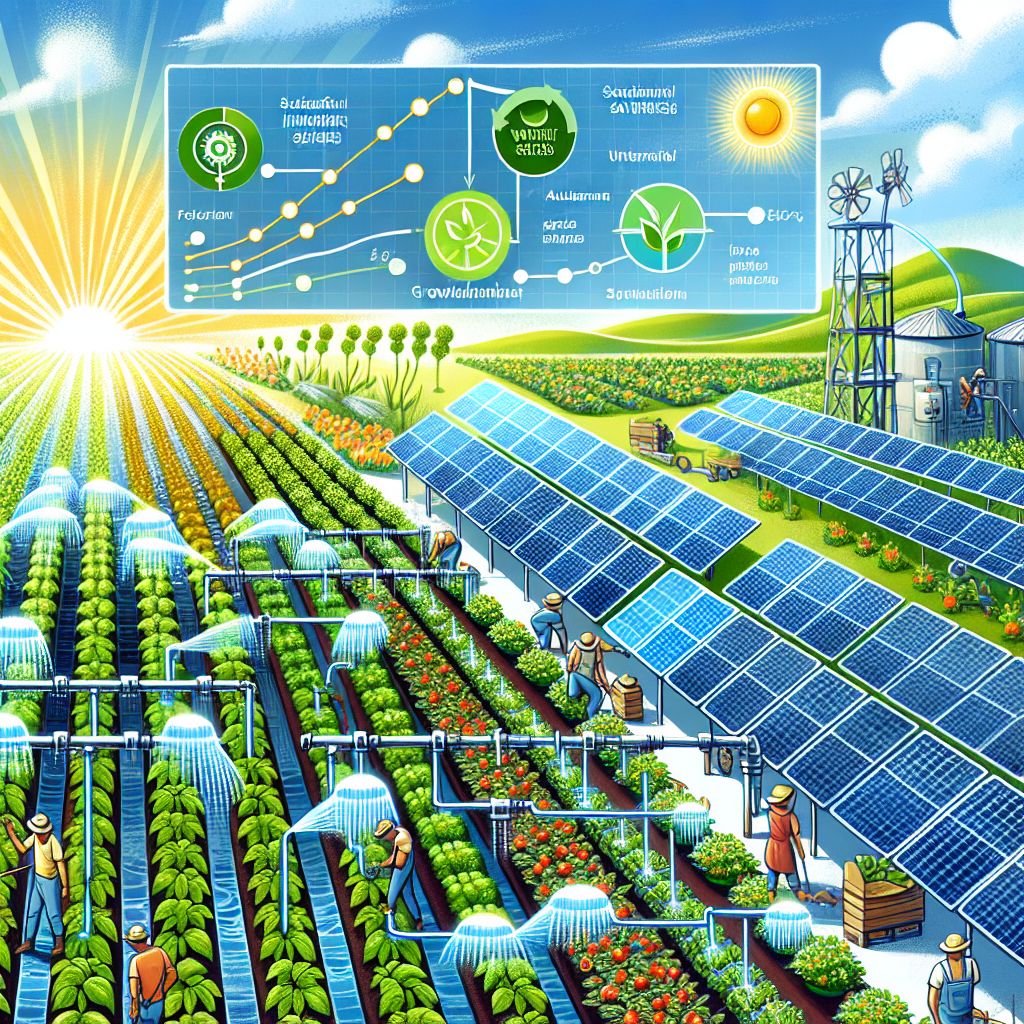
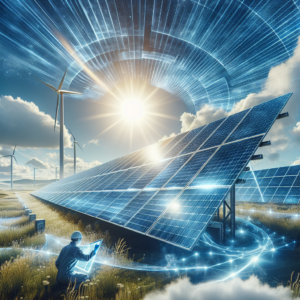
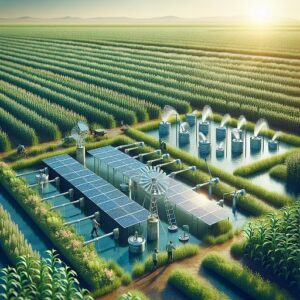
At its core, a solar drip system harnesses sunlight through photovoltaic panels, converting it into electrical energy. This electricity powers a pump that draws water from your source—whether that’s a well, pond, cistern, or municipal supply. The water is then distributed through a network of main lines, sub-mains, and thin-walled drip tapes with precisely spaced emitters that deliver water directly to the root zone of your crops. The entire system is typically controlled by a programmable timer or more sophisticated controller that may include soil moisture sensors to optimize watering schedules.
How Solar Energy Reduces Water and Energy Costs
Traditional irrigation methods like flood or sprinkler systems can waste up to 50-70% of water through evaporation, runoff, and imprecise application. Drip irrigation alone reduces this waste significantly, but when powered by solar energy, the financial benefits multiply. The typical farm irrigation pump consumes between 3-10 kilowatt-hours of electricity per hour of operation. At average electricity rates, this can translate to thousands of dollars annually—costs completely eliminated with a properly sized solar system.
Beyond the direct energy savings, many regions offer additional incentives for solar adoption, including tax credits, rebates, and even premium pricing for crops grown using renewable energy. Water conservation achieved through drip irrigation may also qualify for additional subsidies or credits in water-stressed regions, creating another layer of financial benefit. For farms with seasonal operations, the ability to potentially sell excess solar energy back to the grid during off-seasons creates yet another revenue opportunity.
Environmental Benefits Beyond Your Farm
The environmental advantages of solar-powered drip irrigation extend well beyond the boundaries of your property. By reducing water consumption, these systems help preserve local aquifers and surface water resources, benefiting entire watersheds and communities. The elimination of fossil fuel use for pumping prevents carbon emissions—a medium-sized farm can easily prevent 10-15 tons of CO₂ emissions annually by switching to solar power.
Precision water application also significantly reduces agricultural runoff, minimizing the movement of fertilizers and pesticides into nearby waterways. This protects local ecosystems and reduces the harmful algal blooms that plague many agricultural regions. For farms in regions facing water restrictions or allocation limits, the dramatic water savings from drip irrigation can make the difference between sustained production and forced fallowing.

“Furrow vs Solar Drip Irrigation: Best …” from growingsolarmist.com and used with no modifications.
Essential Components of a Solar Drip System
Building an effective solar-powered drip irrigation system requires careful selection of several key components. Each element must be properly sized and integrated to ensure reliable, efficient operation throughout the growing season. While the initial investment may exceed that of conventional systems, the operational savings and increased crop quality quickly offset these costs.
Solar Panels: Types and Power Requirements
The heart of any solar drip irrigation system is its photovoltaic panels. Monocrystalline panels offer the highest efficiency (17-22%) and smallest footprint, making them ideal for limited space applications, while polycrystalline panels provide a more budget-friendly option with slightly lower efficiency (13-17%). For most small to medium farms, a system rated between 1-5 kW will sufficiently power irrigation pumps, with specific requirements depending on water source depth, irrigation zone size, and daily operation hours. Thin-film panels, while less efficient, can be advantageous in partially shaded locations or where mounting flexibility is needed. PERC (Passivated Emitter and Rear Cell) panels are a newer technology that enhances the efficiency of traditional monocrystalline and polycrystalline panels by adding a layer that reflects unused sunlight back into the cell. This innovation can significantly boost energy output, especially in low-light conditions.
Choosing the right type of solar panel for your system is crucial. Consider the specific needs of your operations, the available space, and your budget. This below table will help you choose the right one:
|
Type of Solar Panel |
Advantages |
Disadvantages |
|---|---|---|
|
Monocrystalline Solar Panels | ||
|
– Performance drops slightly in extreme heat. 1 | ||
|
– Performs well in low-light conditions (cloudy days, mornings). 1, 2 | ||
|
Polycrystalline Solar Panels |
– Cost-effective option, suitable for large-scale installations. 1, 3 |
– Lower efficiency (13-17%) compared to monocrystalline panels. 1, 3 |
|
– Durable and handles heat well. 3 |
– Requires more space for the same energy output as monocrystalline panels. 3 | |
|
– Affordable initial investment, often offset by government incentives. 3 | ||
|
Thin-Film Solar Panels |
– Lightweight, flexible, and easy to install on unconventional surfaces (e.g., curved roofs)1, 5, 7 |
– Lowest efficiency (10-13%) among the options, requiring more space for equivalent output.5, 7 |
|
– Performs well in high temperatures and low-light conditions, ideal for diverse climates. 5, 7 |
– Shorter lifespan (10-20 years) compared to crystalline panels. 5, 7 | |
|
– Cost-effective with lower production and installation costs. 5, 7 |
– Bulkier installations needed for larger-scale energy production.5 | |
|
PERC Solar Panels |
– Enhanced efficiency (Up to 22% or higher) due to passivation layer, capturing more sunlight. 4 |
– Higher cost than traditional Monocrystalline panels, but prices are becoming comparable. 4 |
|
– Performs well in low-light and high-temperature conditions, ideal for varied climates. 2, 4 |
– Technology may be less familiar, requiring specialized installation expertise. 4 | |
|
– Maximizes energy output in limited space, suitable for farms with restricted installation areas. 4 |
This table provides a comparison of solar panel options for farmers, highlighting their suitability based on efficiency, cost, durability, and space requirements. Farmers should consider their specific energy needs, budget, and available installation area when making a decision.
Pumps and Controllers That Work Best
DC pumps are typically the most efficient choice for solar-powered systems as they can run directly off the panels without requiring an inverter. Surface pumps work well for shallow water sources (under 20 feet deep), while submersible pumps are essential for deeper wells. Look for high-efficiency models specifically designed for solar applications, with MPPT (Maximum Power Point Tracking) technology that optimizes performance during varying sunlight conditions.
- Surface pumps: Ideal for ponds, streams, and shallow wells with 1-3 HP models typically sufficient for 1-5 acre operations
- Submersible pumps: Required for wells deeper than 20 feet, with specialized solar models available for depths up to 800 feet
- Booster pumps: Useful for maintaining consistent pressure in larger systems or hilly terrain
- Smart controllers: Allow for zone-specific irrigation timing and integration with soil moisture sensors
Controllers range from simple timers to sophisticated units with weather monitoring capabilities. For smaller operations, a basic controller with battery backup may suffice, while larger farms benefit from smart controllers that can adjust watering schedules based on soil moisture readings, weather forecasts, and crop growth stages. These advanced controllers can reduce water usage by an additional 15-30% by preventing unnecessary irrigation cycles.
When selecting your pump and controller, prioritize models with low starting voltage requirements, as these will begin operating earlier in the day and run longer, maximizing the solar window. Most quality solar pumps now start with as little as 30-50% of their rated voltage, allowing for irrigation even during lower light conditions.
Drip Lines and Emitters: Choosing the Right Setup
Drip irrigation components must be matched to your specific crops, soil type, and field layout. For row crops, drip tape with emitters spaced 8-24 inches apart is standard, while tree crops often require individual emitters with adjustable flow rates. Pressure-compensating emitters maintain consistent water delivery even in sloped fields or at the far end of long irrigation runs. For clay soils, slower flow rates (0.5-1 GPH) prevent runoff, while sandy soils may require higher rates (1-2 GPH) to ensure adequate lateral water movement. To explore more about efficient irrigation systems, you can read about drip irrigation benefits.
Batteries and Storage Solutions
Battery storage transforms an intermittent solar power system into a reliable 24/7 irrigation solution. Lithium iron phosphate (LiFePO4) batteries offer the best performance for agricultural applications, with longer cycle life (3,000+ cycles), deeper discharge capability, and better temperature tolerance than traditional lead-acid options. A properly sized battery bank should provide 1-3 days of autonomy, allowing for continuous irrigation during cloudy periods or enabling night watering when evaporation losses are minimized. For systems over 5kW, consider a hybrid approach that includes grid connection for backup during extended low-sun periods.
Monitoring Systems: Simple to Advanced Options
Modern monitoring solutions transform irrigation management from guesswork to precision agriculture. Basic systems include pressure gauges and water meters that require manual checking, while advanced options offer real-time smartphone monitoring of system performance, soil moisture levels, and weather conditions. Remote monitoring is particularly valuable for farms with multiple irrigation zones or those located away from the farmer’s residence, as they provide instant alerts for pressure drops, clogs, or other system failures that could otherwise go unnoticed for days.
For larger operations, consider integrating your monitoring system with farm management software that can track irrigation data alongside crop yields, enabling data-driven decisions about water application rates. Some systems can even automatically adjust watering schedules based on evapotranspiration rates calculated from local weather data, ensuring crops receive precisely the water they need each day.
Setting Up Your Solar-Powered System Step by Step
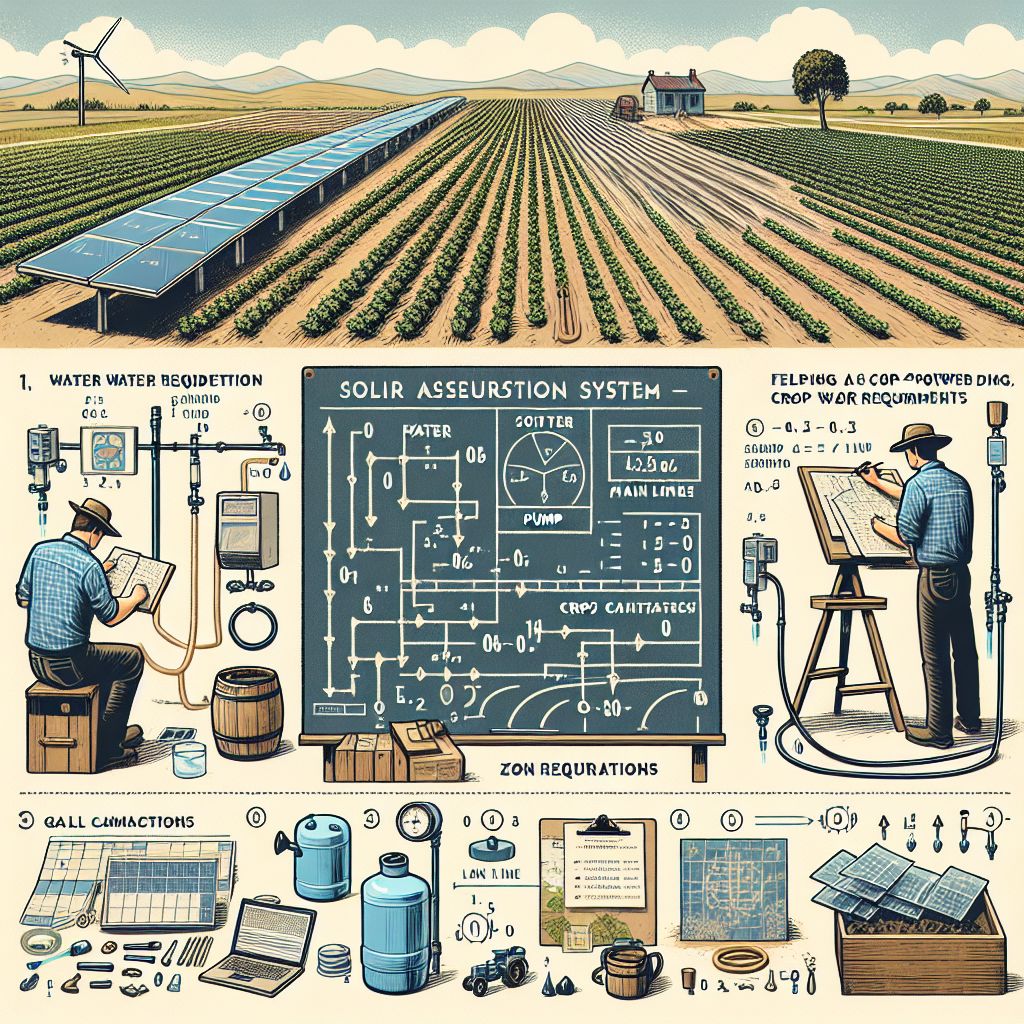
Implementing a solar drip irrigation system requires careful planning before the first component is purchased. Begin with a comprehensive site assessment that evaluates your water source, field topography, soil characteristics, and crop water requirements. This information forms the foundation for all subsequent design decisions.
Next, calculate your daily water requirements based on crop type, planting density, and local climate conditions. This typically ranges from 0.1-0.3 gallons per square foot per day for most vegetable crops, but can vary significantly. Be sure to account for peak season demands when sizing your system, as summer water requirements can be 2-3 times higher than spring or fall needs. For more information on how to efficiently manage your irrigation needs, consider exploring the benefits of drip irrigation systems.
Finally, create a detailed layout plan that includes panel placement, pump location, main line routes, and zone divisions. Proper zoning allows you to irrigate different crops according to their specific needs and helps manage pressure throughout the system. Most farms benefit from dividing fields into zones of 1-2 acres each, though this varies based on water supply capacity and crop diversity.
1. Sizing Your System Correctly
Accurate system sizing is critical to both performance and cost-effectiveness. Calculate your peak daily water needs in gallons, then determine the flow rate and pressure requirements based on your field layout and drip component specifications. This information, combined with your location’s solar insolation data, will determine the required solar array size. A common rule of thumb is 200-300 watts of solar capacity per acre of drip-irrigated crops, though this varies widely based on water source depth and local climate conditions.
2. Optimal Panel Placement for Maximum Efficiency
Panel orientation directly impacts system performance, with south-facing installations (in the Northern Hemisphere) typically generating the most energy throughout the day. Tilt your panels at an angle approximately equal to your latitude for year-round operation, or adjust seasonally—steeper in winter, flatter in summer—for maximum output during specific growing seasons. Consider ground-mounted arrays with adjustable racking systems that allow for seasonal angle optimization.
Avoid even partial shading on panels, as shade on just 5% of a panel can reduce output by up to 25%. Install panels in open areas away from trees, buildings, or other structures that cast shadows, especially during peak sun hours (10am-2pm). For large systems, spacing between panel rows should be at least 2-3 times the height of the panels to prevent self-shading, particularly in northern latitudes where the sun’s angle is lower.
3. Connecting Components Safely
Proper electrical connections ensure system longevity and safety. Use weatherproof junction boxes, UV-resistant solar cable, and waterproof MC4 connectors for all solar connections. Install appropriate overcurrent protection devices and grounding systems according to local electrical codes. For irrigation components, use schedule 40 PVC for mainlines and header pipes, with proper thrust blocking at all major direction changes.
Include a water filtration system appropriate to your water source—screen filters for clean well water or more robust disc or media filters for surface water. Install pressure regulators after the pump to protect drip lines, which typically operate at 10-25 PSI. Air release valves at high points and flush valves at the ends of main lines prevent air locks and allow for system cleaning.
4. Programming Your Irrigation Schedule
Effective irrigation scheduling balances crop water needs with system capabilities and soil characteristics. Start with shorter, more frequent irrigation cycles for seedlings and newly transplanted crops, gradually transitioning to deeper, less frequent watering as root systems develop. Most mature crops benefit from deep watering 2-4 times per week rather than daily shallow irrigation.
Program your controller to operate during peak solar hours when possible, typically 9am-3pm, to maximize direct solar power usage. However, for heat-sensitive crops or in very hot climates, early morning irrigation may be preferable to reduce evaporation losses and plant stress. If using battery storage, consider programming some irrigation cycles for pre-dawn hours when humidity is highest and wind is typically lowest, further increasing efficiency.
Real-World Performance in Different Growing Conditions
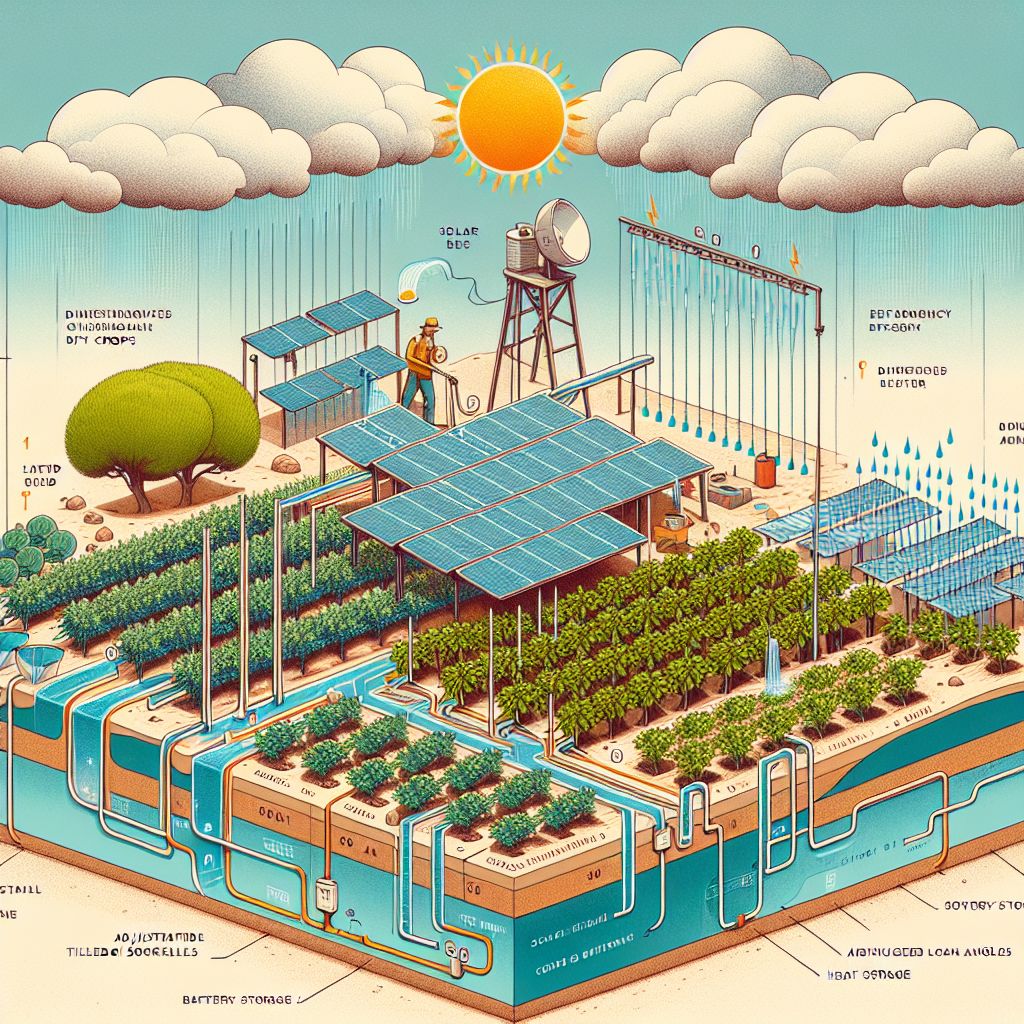
The practical performance of solar drip systems varies considerably based on climate, season, and geographical location. In Mediterranean climates with long, sunny growing seasons, systems typically operate at 90-95% of their theoretical capacity year-round. Continental climates with cold winters and hot summers may see excellent summer performance but require winterization and seasonal operation.
Altitude also impacts system design, with higher elevations receiving more intense solar radiation but potentially facing more extreme temperature fluctuations. Coastal areas benefit from moderate temperatures that reduce evapotranspiration rates but may face challenges from salt spray affecting panel efficiency. Understanding these regional variations is essential for realistic performance expectations and proper system sizing.
Performance During Peak Summer Months
During summer, solar-powered drip irrigation systems truly shine. With 14+ hours of daylight in many growing regions, panels often generate excess power that can be stored for evening use or cloudy days. In areas like the Southwest United States, systems frequently exceed design specifications, with many farmers reporting their systems pump 20-30% more water than calculated minimums. This surplus capacity provides insurance against particularly hot periods when crop water demands spike unexpectedly.
Summer performance optimization involves regular cleaning of solar panels to remove dust and pollen that can reduce efficiency by 5-15%. Position drip lines under plant foliage when possible to shield them from direct sun, reducing evaporation and preventing UV degradation of irrigation components. For crops with high water demands, consider adding reflective mulch that bounces additional light onto solar panels while simultaneously reducing soil evaporation.
How the System Handles Cloudy Days
Modern solar irrigation systems incorporate several strategies to maintain performance during cloudy periods. Battery storage is the primary solution, with most systems sized to provide 1-3 days of autonomy without full sun. For partially cloudy days, systems equipped with MPPT controllers can still generate 40-60% of rated capacity from diffuse light. Some advanced systems automatically adjust to cloudy conditions by extending irrigation run times at lower flow rates, ensuring crops receive their required water volume despite reduced power availability.
For regions with predictable cloudy seasons, oversizing the solar array by 20-30% provides additional energy capture during limited sun exposure. Hybrid systems that can switch between solar power and grid electricity offer the ultimate reliability, though they require additional components and connection fees. When designing your system, analyze local weather patterns for the past 5-10 years to identify the typical duration of cloudy periods and size your battery bank accordingly.
Winter Operation Considerations
In colder climates, winter operation requires special considerations. Panel efficiency actually increases in cold temperatures, but shorter daylight hours and lower sun angles reduce overall energy production. Systems in freeze-prone areas need proper drainage capabilities and may require seasonal shutdown with compressed air blowout of irrigation lines. For year-round growing operations, consider adjustable panel mounts that can be tilted to a steeper winter angle (latitude +15°) to maximize capture of lower-angle winter sunlight.
Some innovative farmers in cold regions use their solar irrigation systems for season extension by coupling them with heat-storage systems. Excess summer power can be directed to heat water or other thermal mass, which is then used to warm high tunnels or greenhouses during cold periods. This approach extends the productive growing season while maintaining system utility year-round.
Cost Analysis: Investment vs. Long-Term Savings
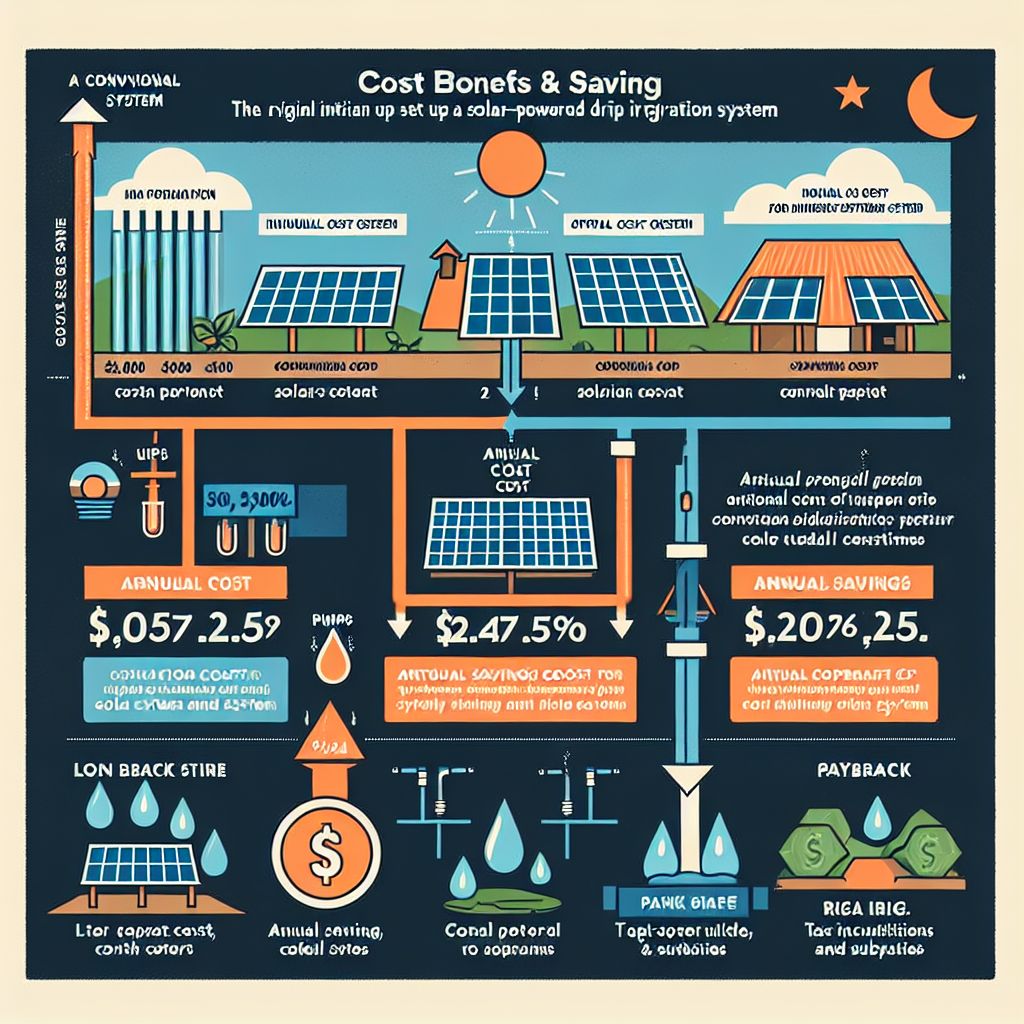
The economics of solar-powered drip irrigation presents a compelling case for long-term investment. Initial costs typically range from $5,000-$10,000 per acre for complete systems, with variations based on water source, terrain, and crop requirements. While this exceeds the $2,000-$4,000 per acre for conventional drip systems, the elimination of ongoing energy costs creates a different financial equation. Most farmers recover their additional investment within 2-5 years through eliminated electricity bills, reduced water costs, and increased crop quality.
Initial Setup Costs Breakdown
Understanding the cost structure helps farmers budget appropriately and prioritize components if implementing in phases. Solar panels typically represent 30-40% of system costs, currently averaging $0.70-$1.00 per watt installed. Specialized solar pumps account for 15-25% of the budget, with prices ranging from $1,500 for smaller surface pumps to $5,000+ for deep well submersibles. Control systems and batteries (if included) comprise another 15-20%, while irrigation components make up the remaining 20-30%. For a 5-acre vegetable operation, a typical total investment ranges from $25,000-$50,000 for a complete system with battery backup.
Annual Savings Compared to Grid-Powered Systems
The financial advantages become clear when examining operational costs. Electric pumps commonly consume 3-10 kWh per hour of operation, translating to $0.45-$1.50 per hour at average utility rates. A typical vegetable farm might irrigate 500-1,000 hours annually, creating potential electricity savings of $450-$1,500 per acre per year. Water savings from drip irrigation efficiency add another $200-$500 per acre annually in many regions. Additional savings come from reduced fertilizer requirements (10-15% less with targeted application), decreased weed pressure (reducing cultivation costs), and often higher marketable yields due to consistent soil moisture.
Payback Period Calculations
Most well-designed solar drip systems achieve financial payback within 2-5 years, depending on local utility rates, water costs, and available incentives. In high-cost electricity regions like California or Hawaii, payback periods often drop below 3 years. For remote locations where grid connection would require expensive infrastructure expansion, solar systems may be immediately less expensive than conventional alternatives, providing instant payback. After the payback period, systems typically operate with minimal costs for 15-25 years, with panels warranted for 25+ years and most maintaining at least 80% efficiency after two decades of use.
Available Tax Incentives and Subsidies
Government incentives dramatically improve the economics of solar irrigation. The federal Investment Tax Credit currently allows businesses to deduct 30% of solar system costs from their taxes, while accelerated depreciation provisions enable writing off the entire system cost within 5 years. Many states offer additional tax credits, rebates, or production incentives that can reduce net costs by an additional 10-30%. Agricultural-specific programs through USDA’s EQIP (Environmental Quality Incentives Program) and Rural Energy for America Program (REAP) provide grants covering up to 25% of renewable energy systems for farms. Local water conservation districts frequently offer additional rebates for drip irrigation installation, creating opportunities to stack multiple incentives.
Maintenance to Keep Your System Running Smoothly
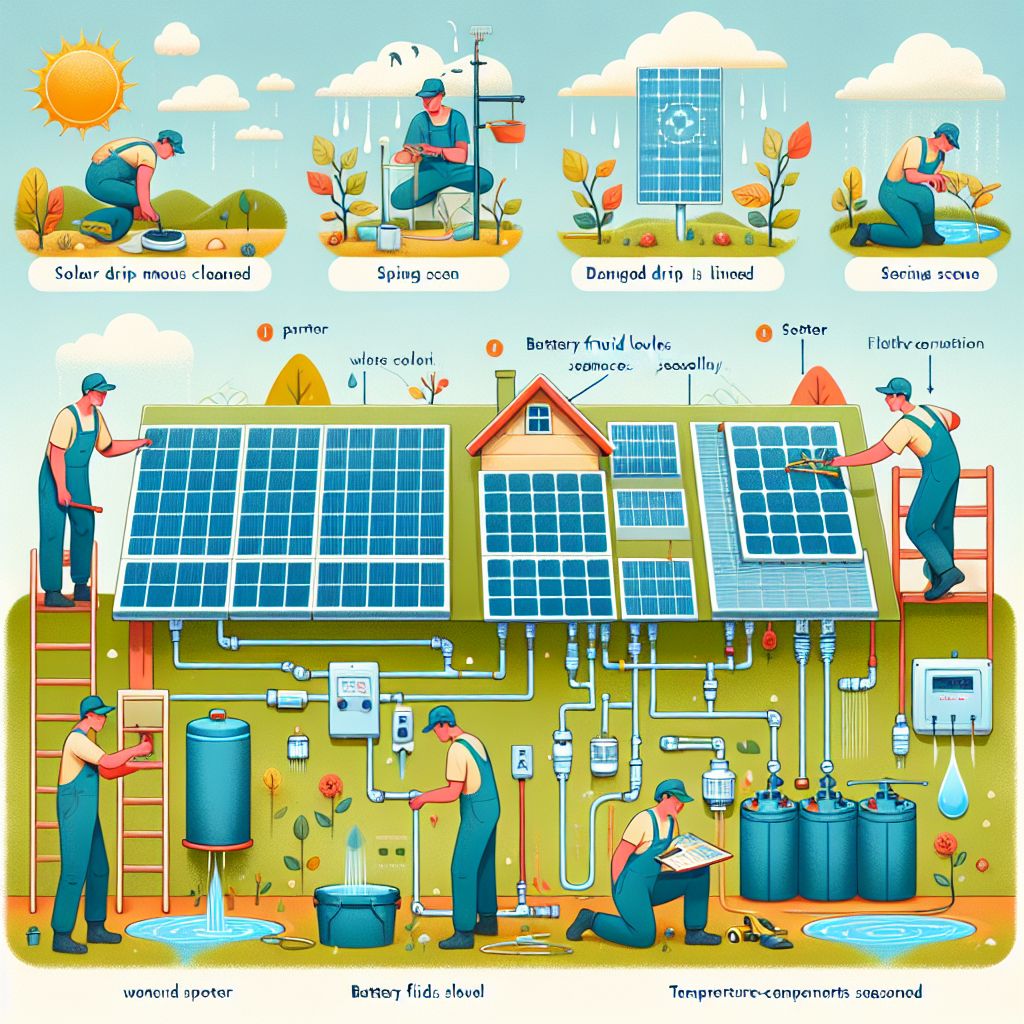
Proper maintenance ensures your solar drip system delivers years of reliable service with minimal downtime. Unlike conventional irrigation that may require frequent pump rebuilds and constant fuel or electricity costs, solar systems have fewer moving parts and lower operational demands. Most components are designed for 10+ years of service, but regular maintenance significantly extends system life and maintains peak efficiency. Creating a maintenance calendar with automated reminders helps ensure critical tasks aren’t overlooked during busy growing seasons.
Weekly and Monthly Checks
Establish a routine of quick visual inspections to catch small issues before they become costly problems. Weekly panel inspections to check for dirt buildup, bird droppings, or debris that shades cells takes just minutes but can prevent significant efficiency losses. Monitor system pressure gauges weekly to detect potential leaks or clogs early—a 15-20% pressure drop often indicates developing problems. Monthly checks should include examining all accessible connections for leaks, verifying proper controller operation, and testing system startup under various light conditions to ensure pumps trigger appropriately as sunlight increases.
Seasonal Maintenance Tasks
- Spring: Clean panels thoroughly, check and replace damaged drip lines, flush the entire system to remove winter sediment, test all zones for proper operation
- Summer: Check battery fluid levels (for lead-acid systems), monitor panel temperature and clean as needed, inspect for UV damage to exposed components
- Fall: Clean filters thoroughly, check all electrical connections and weatherproof housings before wet season, calibrate soil moisture sensors
- Winter: In freeze-prone areas, drain all water from the system, disconnect and store temperature-sensitive components, adjust panel tilt for winter sun angle
Beyond these seasonal tasks, perform annual maintenance on pumps according to manufacturer specifications, typically involving lubrication, seal inspection, and impeller cleaning. Battery systems require annual capacity testing to identify degradation before it impacts system performance. Replace batteries proactively when they drop below 80% of rated capacity to prevent irrigation failures during critical growing periods.
Drip irrigation components have different lifespans that should guide replacement schedules. Thin-wall drip tape typically lasts 3-5 years before mineral buildup or physical damage necessitates replacement. Mainlines and headers often serve 10-15 years, while filters may need replacement or media refreshing every 3-7 years depending on water quality. Controllers generally last 7-10 years before electronic components or weather seals begin to fail.
Document all maintenance activities in a system logbook, noting dates, actions taken, and parts replaced. This record becomes invaluable for troubleshooting recurring issues and planning future upgrades. Many modern controllers include maintenance logging features that automatically track run times and alert you when service intervals are reached based on actual system usage rather than calendar time.
Troubleshooting Common Issues
Even well-maintained systems occasionally encounter problems. Developing basic troubleshooting skills saves expensive service calls and minimizes crop stress during system downtime. For pumps that fail to start, first check solar panel connections and battery charge status before assuming pump failure. Decreasing water output often indicates filter clogging rather than pump problems—check and clean filters before more extensive troubleshooting. Uneven water distribution frequently stems from pressure issues; inspect for leaks, clogs, or zones operating simultaneously when designed for sequential operation. For systems with erratic operation, verify controller settings haven’t been changed accidentally and check for moisture in electrical connections that might cause intermittent shorts.

“Solar-Powered Drip Irrigation Systems …” from growingsolarmist.com and used with no modifications.
Case Studies: Farmers Who Made the Switch
The transformative impact of solar-powered drip irrigation is best understood through the experiences of farmers who have implemented these systems. Their journeys highlight both the challenges and rewards of transitioning to renewable irrigation technology. While individual results vary based on location, crop mix, and system design, certain patterns emerge across diverse operations.
Most notably, farmers consistently report water savings of 50-70% compared to previous methods, with energy cost elimination providing the fastest financial return. Many are surprised by unexpected benefits, including reduced pest and disease pressure due to drier foliage and soil surfaces between plants. Labor requirements for irrigation management typically decrease by 30-50%, freeing time for other farm activities or allowing expansion without additional hiring.
Crop quality improvements represent another consistent theme, with more uniform sizing, higher marketable yields, and extended harvest windows creating marketing advantages. Several farmers note that their solar irrigation systems have become effective marketing tools, attracting customers interested in sustainable growing practices.
- Water savings: 50-70% compared to conventional methods
- Energy costs: Eliminated entirely in most cases
- Labor reduction: 30-50% less time spent on irrigation management
- Crop quality: More uniform sizing, extended harvest periods, higher marketable yields
- Additional benefits: Reduced pest/disease pressure, marketing advantages, drought resilience
Small-Scale Vegetable Farm Success Story
Green Valley Farm, a 3-acre diversified vegetable operation in Oregon, installed a 4.2kW solar system with 10,000-gallon water storage in 2019. Owner Sarah Chen previously relied on municipal water and grid electricity, facing summer bills exceeding $800 monthly. Her $28,000 investment (reduced to $16,800 after incentives) included 14 solar panels, a specialized DC pump, 20kWh battery storage, and complete drip irrigation infrastructure. The system now waters 22 different crop types across 12 irrigation zones, each with custom scheduling based on crop requirements.
After three years, Chen reports water usage reduced by 68% compared to her previous overhead sprinkler system, with complete elimination of irrigation energy costs. Unexpected benefits included significant labor savings—approximately 15 hours weekly during peak season—as the automated system required only brief daily checks rather than constant monitoring and manual valve operation. Particularly notable was the reduction in foliar diseases like powdery mildew and tomato blight, which Chen attributes to keeping foliage dry while maintaining optimal soil moisture. The system achieved complete financial payback in just 2.4 years when accounting for all savings and yield improvements.
How a Midsize Orchard Cut Costs by 70%
Rivera Family Orchards, a 40-acre stone fruit operation in central California, faced critical challenges with rising electricity rates and increasingly restricted water allocations. Their 2018 installation included a 30kW ground-mounted solar array powering four zone-specific pump stations, each serving 10 acres with separate controls based on tree age and variety. The $175,000 system qualified for both federal tax credits and a USDA REAP grant, reducing net costs to approximately $105,000. Rather than batteries, they incorporated a 50,000-gallon elevated storage tank that provides gravity-fed irrigation during non-solar hours.
The results transformed their operation’s economics. Monthly electricity bills averaging $3,200 during peak season were eliminated, while water consumption decreased by 42% compared to their previous micro-sprinkler system. This water reduction allowed them to maintain full production despite a 35% cut in their water allocation during California’s recent drought years. Particularly impressive was the improvement in fruit quality—packout rates for premium grade fruit increased from 72% to 89%, generating approximately $67,000 in additional annual revenue. When combined with operational savings, the system achieved complete payback in just 3.1 years.
Large Farm Implementation Strategies
Heartland Organics, a 280-acre row crop operation in Iowa, demonstrates how larger farms can strategically implement solar irrigation. Rather than attempting to convert all acreage simultaneously, owner Marcus Wilson began with a pilot project on 20 acres of high-value seed production fields. The initial 15kW system proved so successful that Wilson expanded incrementally over five years, adding 20-40 acres annually until reaching full implementation. This phased approach allowed for system refinement and distributed the capital investment over multiple tax years, optimizing incentive capture.
Their current configuration includes five separate solar arrays (75kW total) powering dedicated irrigation zones, with central monitoring but independent operation. Wilson reports that the staged implementation identified several design improvements that were incorporated into later phases, including redesigned filtration systems and optimized panel placement. Unlike smaller operations, Heartland maintains a grid connection for backup during critical growth stages, though it typically supplies less than 5% of total irrigation energy. The complete system achieved 64% water reduction compared to center pivot irrigation, eliminated over $42,000 in annual electricity costs, and increased yield consistency across drought-prone areas of the farm.
- Start with high-value crops to maximize early returns
- Implement in phases to distribute capital costs and learn from early installations
- Consider zone-specific systems rather than one centralized installation
- Maintain grid connection as backup for critical periods on larger operations
- Develop in-house maintenance expertise to minimize service costs at scale
These varied case studies demonstrate that solar-powered drip irrigation delivers compelling benefits across diverse agricultural contexts. From small specialty crop producers to large commodity operations, the combination of water efficiency, energy independence, and improved crop quality creates powerful economic advantages while enhancing environmental sustainability.
Conclusion
Solar-powered drip irrigation represents one of the most significant technological advancements available to modern farmers seeking both sustainability and profitability. By harnessing renewable energy to deliver precisely targeted water, these systems address multiple challenges simultaneously: water scarcity, energy costs, labor constraints, and climate resilience. The technology has matured beyond experimental status to become a proven solution with predictable returns and well-understood implementation pathways. While initial investment costs exceed conventional irrigation methods, the elimination of ongoing energy expenses and substantial water savings create compelling economics with typical payback periods of 2-5 years.
Review Key Points
As we’ve explored throughout this article, solar drip systems deliver multiple advantages: water savings of 50-70% compared to conventional methods, complete elimination of irrigation energy costs, reduced labor requirements through automation, improved crop quality through consistent moisture levels, and enhanced resilience against both climate and energy market disruptions. The modular nature of these systems allows for implementation at virtually any scale, from small market gardens to large commercial operations. With proper maintenance, system components provide 10-25 years of reliable service, creating decades of operational savings after the initial payback period. Beyond the direct farm benefits, these systems contribute to broader sustainability goals by reducing aquifer depletion, preventing agricultural runoff, and eliminating irrigation-related carbon emissions.
Is it Worth a Farmers Investment to Add Solar Panels to a Drip Irrigation System
For the vast majority of farms, the investment in solar-powered drip irrigation delivers clear financial returns while enhancing operational resilience. The decision becomes particularly compelling for operations facing high electricity rates, unreliable grid service, increasing water costs, or drought-related restrictions. The availability of federal tax incentives, USDA grants, and state-level programs significantly improves project economics, often reducing net costs by 30-50%. While not every agricultural context will yield identical results, the proven track record across diverse farming operations suggests that solar-powered drip irrigation represents not merely an environmental choice, but a sound business decision that positions farms for long-term sustainability in an era of increasing resource constraints.
Frequently Asked Questions (FAQ)
The transition to solar-powered drip irrigation naturally raises questions for farmers considering this technology. Below are answers to the most common inquiries, based on real-world implementation experience across diverse agricultural settings. These practical insights address both technical considerations and financial concerns to help inform your decision-making process.
How much land do I need for solar panels to power my irrigation system?
Most agricultural solar arrays require 100-150 square feet of ground or roof space per kilowatt of capacity. For context, a typical 5-acre vegetable operation might need a 5kW system occupying approximately 500-750 square feet—roughly the size of a small greenhouse. This space requirement scales linearly with system size, so a 20kW system for larger operations would need 2,000-3,000 square feet. Panel efficiency continues to improve annually, gradually reducing these space requirements. Many farmers integrate panels into field margins, over irrigation ponds, or mounted on equipment buildings to minimize impact on productive land.
Can a solar-powered system deliver enough pressure for my entire field?
Yes, properly designed solar irrigation systems can generate sufficient pressure for fields of virtually any size, though design approaches differ based on scale. For fields under 10 acres, a single pumping station typically provides adequate pressure (30-50 PSI) for proper drip emitter function across the entire area. Larger operations benefit from zone-based designs with multiple smaller pumps rather than one large central unit, improving efficiency and providing redundancy.
Pressure management becomes critical in solar systems, with pressure regulators essential for consistent drip emitter performance. Many designs incorporate elevated storage tanks that provide gravity-based pressure, ensuring steady operation even during variable solar conditions. For hilly terrain, consider pressure-compensating emitters that deliver consistent flow despite elevation changes, or design your zone layout to minimize elevation differences within each irrigation block.
What happens to my irrigation during extended cloudy periods?
Modern solar irrigation systems employ several strategies to maintain reliable operation during limited sunlight. Battery storage provides the most common solution, with typical systems sized for 1-3 days of autonomy without full sun. Water storage offers another approach—many farms pump excess water during sunny periods into elevated tanks or reservoirs, then use gravity flow for irrigation during cloudy weather. Hybrid systems that can automatically switch between solar power and grid electricity provide the ultimate reliability, though at higher installation cost. For critical periods, some farms maintain backup generators, though these typically run fewer than 40 hours annually in most agricultural regions.
How difficult is it to install if I have basic technical skills?
Farmers with mechanical ability and basic electrical knowledge can successfully install many components of solar drip systems, particularly the irrigation infrastructure. Drip line layout, filtration systems, and basic plumbing connections fall within the capabilities of most technically-inclined farmers. The solar power generation side requires more specialized knowledge, with many farmers opting for professional installation of panels, controllers, and pumps while handling the irrigation components themselves. This hybrid approach typically saves 20-30% on installation costs while ensuring critical electrical components meet safety codes.
If attempting DIY installation, invest in detailed design consultation first—many suppliers offer design services that provide precise specifications and component lists even if you handle installation yourself. Always check local permitting requirements; many jurisdictions require licensed professionals for electrical work beyond certain voltage thresholds. Consider a phased approach, starting with a smaller pilot system to build experience before full implementation. Online communities and extension services increasingly offer workshops specifically on solar irrigation installation for farmers interested in developing these skills.
Is it possible to gradually transition from traditional to solar irrigation?
Yes, incremental implementation provides a practical pathway for many farms. Start by converting your existing irrigation to drip methods while still using conventional power, immediately capturing water savings while spreading capital costs. Next, add solar power to your highest-use irrigation zone, typically 15-20% of total acreage, focusing on high-value crops to maximize early returns. This pilot approach allows for system optimization before broader implementation while demonstrating the technology’s effectiveness in your specific conditions.
Many farmers successfully implement solar conversion over 3-5 years, adding capacity annually as capital becomes available or as existing pumps require replacement. This gradual approach also allows for taking advantage of declining solar component costs and improving technology. When planning a phased implementation, ensure your initial design accommodates future expansion—oversizing main electrical conduits, installing additional controller capacity, and selecting expandable pump stations can significantly reduce costs during later phases.
- Phase 1: Convert highest-value crops to drip irrigation (maintaining existing power source)
- Phase 2: Add solar power to your most frequently irrigated zone
- Phase 3: Expand solar capacity to additional zones annually
- Phase 4: Add battery storage or other reliability enhancements
- Phase 5: Integrate advanced monitoring and automation
This strategic approach minimizes financial risk while allowing you to gain experience with the technology progressively. Many farmers report that their phased implementations actually resulted in better final systems, as they incorporated lessons from early zones into later expansions. The modular nature of both solar power and drip irrigation makes this incremental strategy particularly effective.
Remember that solar components typically have different lifespans—panels last 25+ years, while pumps and controllers might need replacement after 10-15 years. When designing a phased system, prioritize high-quality, long-lasting components for elements difficult to upgrade later (like panel mounting systems or underground conduits) while accepting that certain components will be replaced on different schedules as technology improves.

Leave a Reply