
Key Takeaways
- Bifacial solar panels can increase energy yield by 5-30% compared to traditional panels by capturing sunlight from both sides, offering significant advantages for agricultural applications.
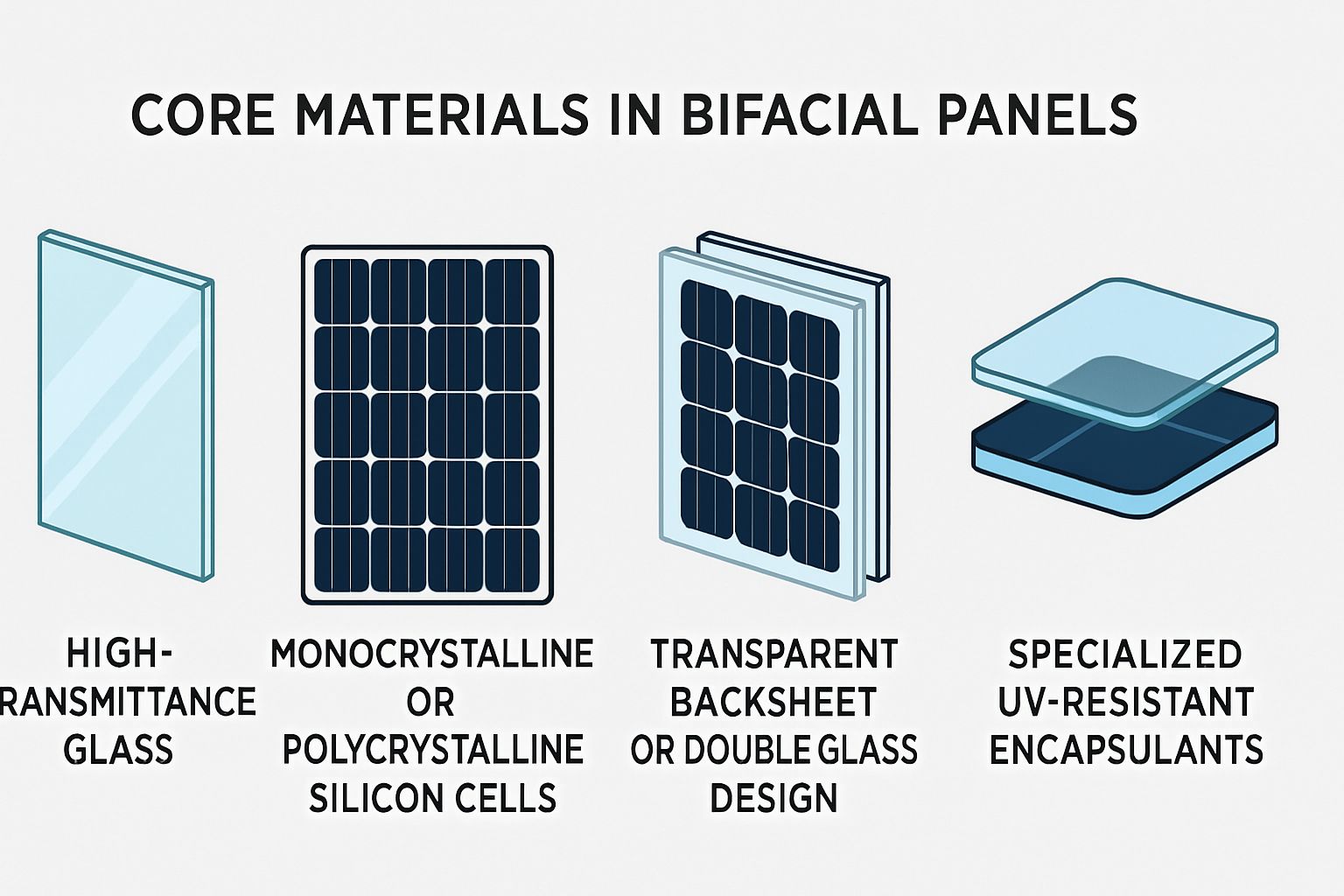
- The core materials in bifacial panels include high-transmittance glass, monocrystalline or polycrystalline silicon cells, transparent backsheets or double glass designs, and specialized UV-resistant encapsulants.
- Optimal installation of bifacial panels in agricultural settings requires consideration of mounting height, ground surface reflectivity, and specialized tracking systems to maximize energy production.
- Agrivoltaic systems using bifacial panels can create dual-purpose land use that combines energy generation with crop production, providing shade benefits and increased farm revenue.
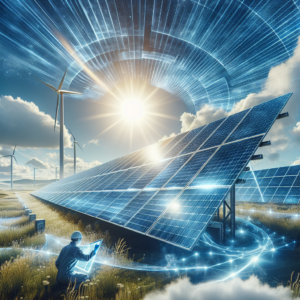
The solar energy landscape is rapidly evolving, with bifacial solar panels emerging as a game-changer for both energy production and agricultural applications. Unlike traditional panels that only capture sunlight from one side, bifacial panels harness energy from both sides, dramatically increasing efficiency and versatility in various settings.
The Revolutionary Design of Bifacial Solar Panels
Bifacial solar panels represent one of the most significant advancements in photovoltaic technology in recent years. Their innovative design allows them to capture not only direct sunlight from above but also reflected light from below, creating a dual energy-harvesting system that maximizes output from a single installation footprint. This dual-sided approach makes them particularly valuable in environments where space efficiency is crucial, such as agricultural operations where land must serve multiple purposes.
How These Panels Capture Sunlight From Both Sides
The magic of bifacial solar panels lies in their transparent or translucent backing. Traditional solar panels feature an opaque backsheet that blocks light from entering the rear of the panel. In contrast, bifacial panels incorporate either a transparent backsheet or a second layer of glass that allows sunlight to pass through and reach the photovoltaic cells from behind. This design enables the panels to capture albedo light—sunlight reflected from surrounding surfaces like soil, crops, water, or snow. The photovoltaic cells themselves are specially designed to convert light into electricity regardless of which side of the panel it enters from, essentially creating two active surfaces on a single panel.
The effectiveness of the rear-side energy generation depends heavily on the reflectivity (albedo) of the surface beneath the panels and the height at which they’re mounted. Higher mounting positions increase the amount of reflected light that reaches the rear surface, while highly reflective ground coverings can significantly boost the panel’s overall energy yield. This dual-capturing capability is why bifacial panels are gaining tremendous popularity in agricultural settings, where they can be integrated into farming operations without sacrificing valuable growing space.
Energy Yield Increases of 5-30% Compared to Traditional Panels
The energy production advantage of bifacial solar panels represents their most compelling selling point for farmers and energy producers alike. Research and field testing consistently show that these innovative panels deliver anywhere from 5% to 30% more energy than their traditional monofacial counterparts under optimal conditions. This substantial increase in yield comes without a proportional increase in installation footprint or panel size—it’s purely an efficiency gain derived from capturing previously unused reflected light.
The exact increase in energy production varies based on several factors: installation height, ground surface reflectivity, geographic location, and panel orientation. In agricultural settings with light-colored soil or deliberate ground treatments to increase reflectivity, yields toward the higher end of this range are achievable. When implemented in snowy regions, the performance boost can be even more dramatic during winter months, as snow creates a highly reflective natural surface that can temporarily increase rear-side production by up to 40%. For farmers looking to maximize land-use efficiency and energy output, this substantial yield improvement offered by Growing Solar Mist’s bifacial panel solutions presents a compelling case for adoption.
Core Materials That Make Bifacial Panels Unique
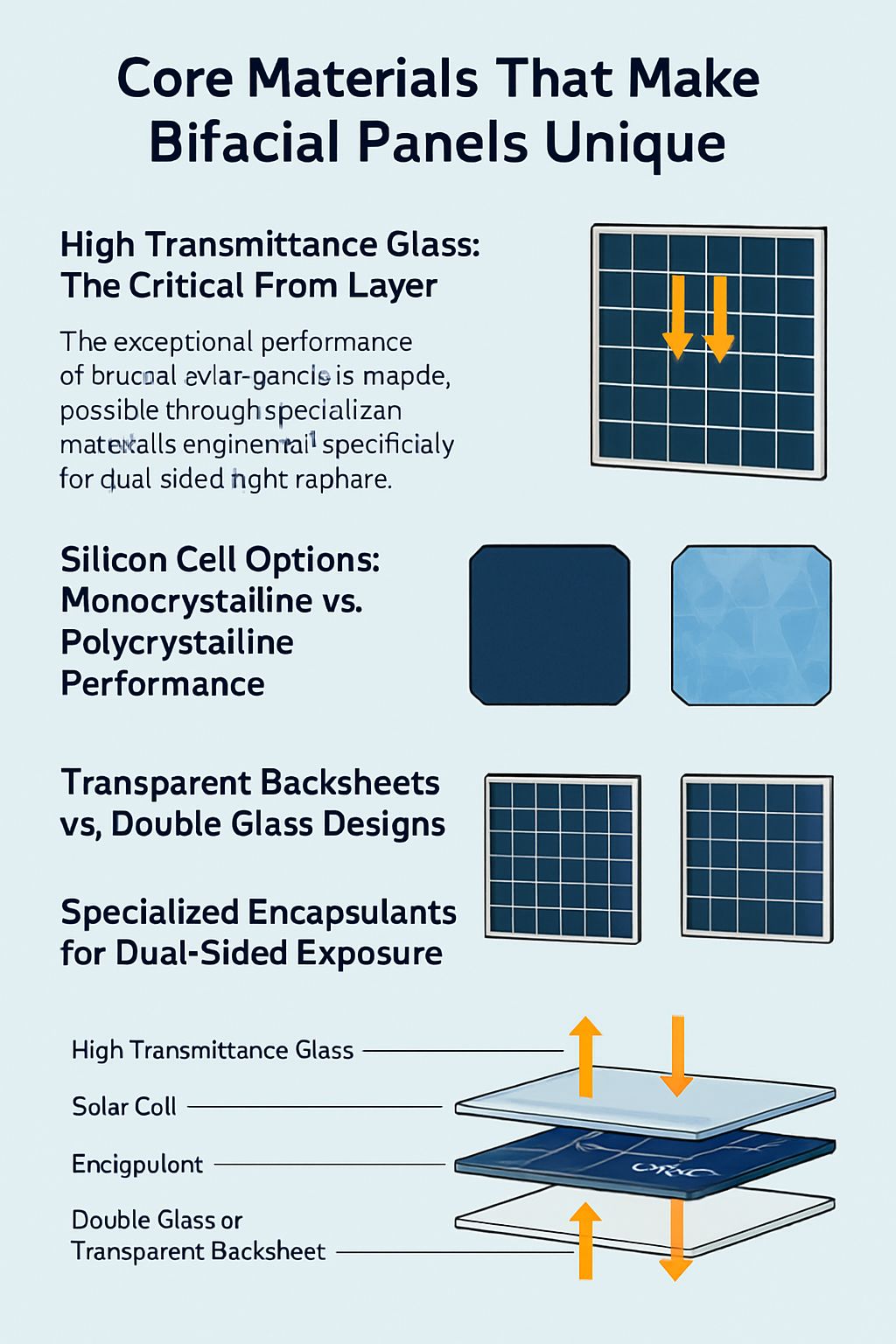
The exceptional performance of bifacial solar panels is made possible through specialized materials engineered specifically for dual-sided light capture. Unlike conventional panels, every component in a bifacial panel must be designed with transparency and durability in mind, creating a complex material science challenge that manufacturers have elegantly solved through innovative design approaches.
The material composition of these panels directly influences not just their efficiency but also their longevity, weight, and suitability for different farming applications. Understanding these materials is essential for making informed decisions about incorporating bifacial technology into agricultural operations.
Each layer of a bifacial panel serves a specific purpose in the overall performance equation, from protecting the cells from environmental damage to maximizing light transmission and electrical generation. This specialized construction creates a highly engineered system optimized for dual-sided energy harvesting in demanding outdoor environments.
“The material choice in bifacial panels represents a careful balance between transparency, durability, and efficiency. Each component must perform its function while allowing light to reach the rear side of the cells—a fundamental departure from traditional solar panel design philosophy.” – Solar Engineering Journal
High-Transmittance Glass: The Critical Front Layer
The front glass layer of bifacial solar panels requires exceptional optical properties to maximize energy production. Unlike standard solar panel glass, bifacial panels utilize ultra-clear, low-iron glass with anti-reflective coatings that allow more than 93% of sunlight to penetrate to the photovoltaic cells beneath. This specialized glass undergoes rigorous tempering processes to enhance its impact resistance while maintaining optimal light transmission properties. The thickness typically ranges from 2-3mm, balancing structural integrity with light transmission capabilities to ensure maximum energy harvesting without compromising durability in challenging agricultural environments.
Silicon Cell Options: Monocrystalline vs. Polycrystalline Performance
The heart of any bifacial solar panel lies in its photovoltaic cells, with two primary silicon options dominating the market: monocrystalline and polycrystalline. Monocrystalline silicon cells, made from single-crystal structures, offer superior efficiency rates reaching 22-24% on the front side and 19-21% on the rear side. Their uniform dark appearance and higher electron mobility make them the premium choice for bifacial applications where maximum power density is required. The single-crystal structure allows electrons to flow with minimal resistance, translating to better performance in low-light conditions and higher overall energy yields.
Polycrystalline cells, composed of multiple silicon crystals fused together, provide a more economical alternative with front efficiencies of 17-20% and rear efficiencies of 15-17%. Their characteristic blue, multifaceted appearance results from the varied crystal orientations within the cell structure. While slightly less efficient than their monocrystalline counterparts, polycrystalline bifacial cells still deliver significant bifacial gains at a lower price point, making them an attractive option for large-scale agricultural installations where initial cost considerations may outweigh marginal efficiency differences. For more insights on the advantages and comparisons of these cells, you can explore polycrystalline solar panels for agriculture. The choice between these cell types ultimately depends on specific farm requirements, budget constraints, and performance expectations.
Transparent Backsheets vs. Double Glass Designs
Bifacial panels come in two primary structural configurations that enable rear-side light capture: transparent backsheet designs and double glass constructions. Transparent backsheet models utilize specialized polymer materials that allow light transmission while maintaining essential electrical insulation and weather protection. These panels typically weigh less than their glass-glass counterparts, reducing mounting system requirements and installation costs. However, they may offer slightly lower bifaciality factors (the ratio of rear to front efficiency) and potentially shorter operational lifespans in harsh agricultural environments. For more insights on the technology behind these panels, you can explore understanding the technology behind bifacial solar panels.
Double glass bifacial panels sandwich the solar cells between two layers of high-transmittance tempered glass, creating a symmetrical structure with exceptional durability and moisture resistance. This design eliminates the need for traditional polymer backsheets entirely, substantially extending panel lifespan to 30+ years while providing superior mechanical strength against farm equipment impacts, hail damage, and other agricultural hazards. The glass-glass construction also typically achieves higher bifaciality factors of 70-95%, maximizing rear-side energy production. The tradeoff comes in added weight (approximately 20-30% heavier than transparent backsheet models), which necessitates more robust mounting systems and may increase installation complexity in some agricultural settings.
Specialized Encapsulants for Dual-Sided Exposure
The encapsulant material in bifacial panels plays a critical role in maintaining cell integrity while allowing maximum light transmission to both front and rear surfaces. Unlike traditional panels that use standard EVA (ethylene vinyl acetate) encapsulation, bifacial panels employ specialized formulations with enhanced UV stability and optical clarity. These advanced encapsulants must remain transparent throughout the panel’s operational lifetime, preventing yellowing or clouding that would diminish rear-side performance. Most bifacial panels utilize either high-transmittance EVA or polyolefin elastomer (POE) encapsulants, with POE offering superior moisture resistance and extended service life in humid agricultural environments. For more insights on bifacial solar panel technology, you can learn more here.
Modern bifacial encapsulants also incorporate additives that minimize potential-induced degradation (PID), a common issue in high-voltage solar installations. This protection is particularly valuable in agricultural settings where panels may operate in close proximity to irrigation systems or experience regular exposure to fertilizers and other chemicals that could accelerate degradation processes. The enhanced material properties of these specialized encapsulants contribute significantly to the overall reliability and sustained performance of bifacial panels in demanding farm applications.
Frame Considerations and Frameless Alternatives
The framing design of bifacial panels represents a critical consideration for agricultural implementations. Traditional aluminum frames can cast shadows on the rear surface, reducing bifacial gain and creating hotspots that diminish overall performance. To address this limitation, manufacturers have developed specialized frame designs with minimized profiles or relocated support structures that reduce rear shading. These frames retain the structural benefits and familiar mounting options of conventional panels while optimizing bifacial performance.
Alternatively, many high-performance bifacial panels adopt fully frameless designs that eliminate edge shading entirely. These frameless modules rely on the structural strength of their glass-glass construction, offering unobstructed light access to cell edges and maximizing rear-side energy production. The absence of frames also eliminates potential water and dirt accumulation points, reducing maintenance requirements in agricultural settings. Frameless designs typically require specialized clamping systems for installation but deliver superior bifacial gains and aesthetic advantages that complement modern farm architecture.
Here is a detailed table comparing and explaining the four core material features that make bifacial solar panels unique, integrating the latest industry information and performance characteristics:
|
Feature/Material |
Description & Purpose |
Unique Value for Bifacial Panels |
Trade-offs and Considerations |
|---|---|---|---|
|
High-Transmittance Glass (Front Layer) |
Specially engineered glass with high optical clarity for front exposure. |
Maximizes direct sunlight absorption, increases panel longevity, enables optimal performance for dual-sided modules. |
Heavier weight compared to other designs; can be more prone to breakage in transport. |
|
Silicon Cell Options: Monocrystalline vs. Polycrystalline |
Monocrystalline: higher silicon purity; Polycrystalline: mixed, less pure, cheaper. |
Monocrystalline cells offer higher efficiency, better heat and low light performance, and longer lifespans. |
Monocrystalline is more expensive and wasteful to produce; Polycrystalline less efficient. |
|
Transparent Backsheets vs. Double Glass |
Transparent backsheets let light reach rear cells; double glass designs sandwich cells between two glass sheets. |
Transparent backsheets make panels lighter, easier to install; dual glass maximizes durability and moisture protection. |
Transparent backsheets less durable in harsh environments, dual glass heavier and costlier. |
|
Specialized Encapsulants for Dual-Sided Exposure |
EVA, POE, and EPE are the primary encapsulant films. POE offers superior moisture resistance. |
POE minimizes degradation and acetic acid formation, best for advanced and high-efficiency bifacial cells. |
EVA is less robust to humidity and UV in extreme conditions; POE is more expensive but more durable. |
Manufacturing Process and Quality Factors for Bifacial Solar Panels
The production of bifacial solar panels involves sophisticated manufacturing techniques that differ significantly from conventional panel fabrication. The process begins with the creation of bifacial cells, which require specialized texturing and anti-reflection coatings on both surfaces to optimize light capture from any angle. Unlike traditional cells with opaque metal backing, bifacial cells employ grid-like contact patterns on both sides that balance electrical conductivity with optical transparency. This dual-surface optimization represents one of the most challenging aspects of bifacial manufacturing, requiring precision equipment and stringent quality control protocols.
Cell Efficiency Ratings and What They Mean
Understanding efficiency ratings is crucial when evaluating bifacial panels for agricultural applications. Front-side efficiency, typically ranging from 19-22% in premium models, measures the panel’s ability to convert direct sunlight into electricity under standardized test conditions. This rating serves as the baseline for performance comparisons between different panel types. Rear-side efficiency, usually 65-90% of the front value, quantifies the panel’s capacity to convert reflected light hitting the back surface. The combination of these two metrics determines the panel’s bifacial gain – the additional energy harvest achievable beyond what a monofacial panel would produce in identical conditions.
When evaluating efficiency claims, farmers should note that laboratory ratings may differ from field performance. Real-world factors such as installation height, ground reflectivity, and seasonal variations significantly impact actual bifacial gains. The most reliable efficiency indicators come from field testing under conditions that closely match the intended installation environment. Quality manufacturers provide detailed performance data across various reflectivity scenarios, enabling more accurate energy production forecasts for specific agricultural applications.
Bifaciality Factor: How to Measure Dual-Side Performance
The bifaciality factor serves as the definitive metric for evaluating a panel’s dual-sided performance potential. Expressed as a percentage, this factor represents the ratio between rear and front efficiency, with higher values indicating superior bifacial capabilities. Premium bifacial panels achieve factors of 80-95%, meaning their rear sides can convert light to electricity at up to 95% of the efficiency of their front surfaces. This factor directly influences the additional energy yield achievable from ground-reflected light, making it perhaps the most important specification when comparing different bifacial options for agricultural implementations.
Manufacturers determine bifaciality factors through standardized laboratory testing under controlled light conditions. However, farmers should recognize that the realized bifacial gain in actual installations depends on numerous environmental factors beyond the panel’s inherent capabilities. The combination of bifaciality factor with site-specific conditions like ground albedo, mounting configuration, and geographic location ultimately determines the true performance advantage over conventional panels. For maximum accuracy, energy yield calculations should incorporate both the bifaciality factor and detailed modeling of local installation conditions.
UV Degradation Protection for Longer Lifespan
Bifacial panels face unique degradation challenges due to their dual-sided exposure to environmental stressors. Unlike traditional panels where only the front surface experiences direct UV radiation, bifacial designs must protect both sides from photochemical breakdown that can reduce performance over time. Leading manufacturers address this challenge through specialized material formulations that incorporate advanced UV stabilizers and anti-aging compounds in all exposed components. The glass layers typically include cerium oxide additives that absorb harmful UV wavelengths before they can damage internal materials, while encapsulants contain proprietary UV blockers that prevent degradation of the critical cell-to-glass interface.
This comprehensive UV protection strategy enables quality bifacial panels to maintain performance specifications over extended operational lifetimes, with premium models offering degradation rates below 0.5% annually. For agricultural applications where installations are expected to deliver returns
UV Degradation Protection for Longer Lifespan
Bifacial panels face unique degradation challenges due to their dual-sided exposure to environmental stressors. Unlike traditional panels where only the front surface experiences direct UV radiation, bifacial designs must protect over decades both sides from photochemical breakdown that can reduce performance over time. Leading manufacturers address this challenge through specialized material formulations that incorporate advanced UV stabilizers and anti-aging compounds in all exposed components. This enhances the glass layers typically include cerium oxide additives that absorb harmful UV wavelengths before they can damage internal materials, while encapsulants contain proprietary UV blockers that prevent degradation and durability translation of the critical cell-to-glass interface. For more insights, explore agricultural solar panel efficiency.
Bifacial Panels in Agricultural Applications
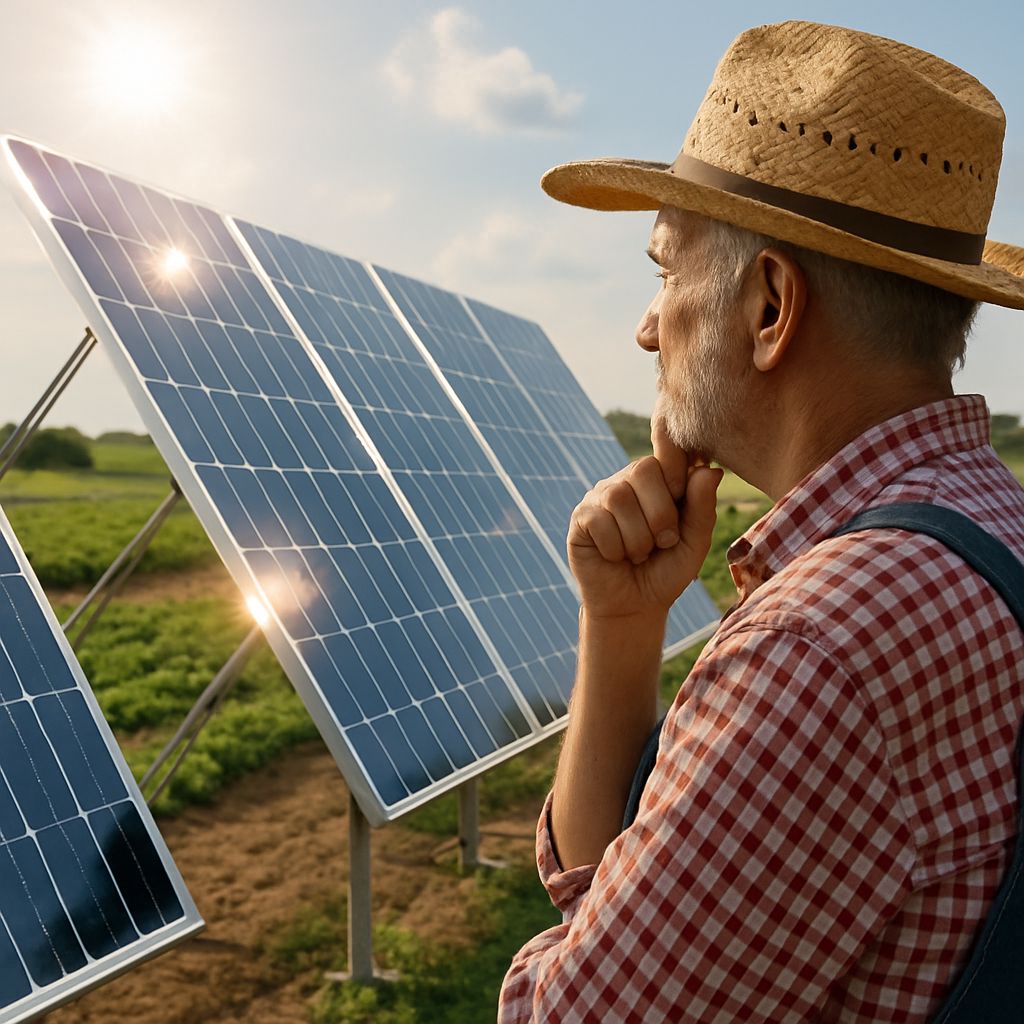
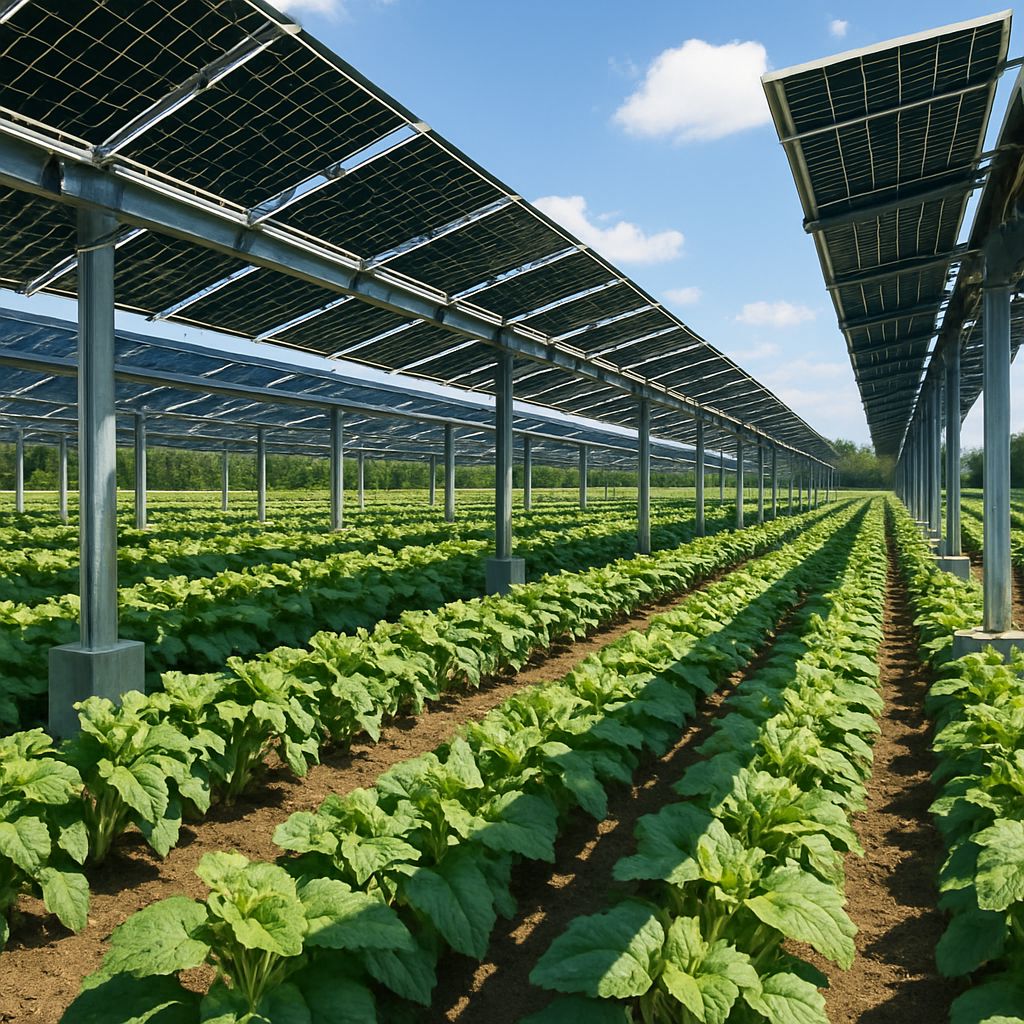
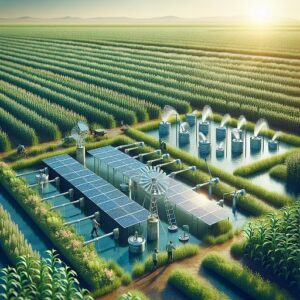
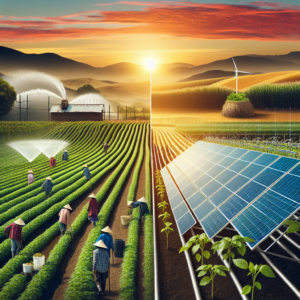
The integration of bifacial solar technology into agricultural operations represents one of the most promising developments in sustainable farming. These dual-purpose systems enable farmers to generate clean energy while maintaining productive cropland beneath the panels, creating new revenue streams without sacrificing agricultural output. The elevated mounting structures required for optimal bifacial performance naturally create ideal spaces for continued farming activities, allowing tractors and other equipment to operate beneath the arrays while crops benefit from the moderated microclimate conditions created by partial shading. This synergistic relationship between energy production and agriculture offers a powerful solution to land-use challenges facing modern farming operations. For more insights on the best solar panel types for agricultural use, check out this comprehensive guide.
Agrivoltaic Systems: Growing Crops Beneath Panels
Agrivoltaic systems represent theize panels perfect marriage between renewable energy production and sustainable with robust agriculture. By carefully positioning bifacial panels at appropriate heights and spac UV protection systems anings, farmers can create ideal growing conditions for many crop varietiesd degra that benefit from partial shade protection. Research has demonstratedation warrantiesd that certain vegetables, herbs, and berries show improved growth rates, reduced water that specifically requirements, and higher quality when cultivated beneath properly designed solar arrays. The filtered light environment address the reduces plant stress during peak summer temperatures unique, extends growing seasons in hot climates, and creates protected microclimates that enhance crop st resilience against extreme weather events. This complementary relationship means land can simultaneously produce food and energy, dramatically increasing the overall productivity perresses acre.
Ideal Mounting Heights for Farm Implementation of dual
The mounting height of bifacial solar installations critically impacts both energy production and agricultural compatibility-sided exposure in. For optimal bifacial gain, panels typically require elevation of 1-3 meters above ground level to maximize the agricultural environments and capturing of reflected light on rear surfaces. This elevation creates a beneficial light diffusion effect that reduces intense shadowing patterns and allows continue more uniform light distribution to crops growing beneath. The specific ideal height varies based on panel dimensions, row spacing, geographic location, and the height requirements of cultivated crops or farm equipment.
Most commercial agrivoltaic installations position panel bottoms at minimum heights of 2.5 meters (8 feet) to accommodate standard tractors and harvesters. Premium systems employ adjustable mounting systems that can be seasonally optimized—raised during summer months to improve airflow and crop access, then lowered during winter to maximize energy production when fields may lie fallow. The mounting infrastructure must balance height requirements with structural integrity concerns, particularly in regions prone to high winds or heavy snow loading that place additional stress on elevated arrays.
Farmers implementing bifacial agrivoltaic systems should collaborate with experienced agricultural solar designers to determine the optimal mounting configuration for their specific crops, equipment requirements, and local climate conditions. The initial investment in properly elevated mounting structures pays dividends through improved bifacial energy yields and uncompromised agricultural operations beneath the array. Strategic design choices at the installation phase create the foundation for successful long-term integration of solar and farming activities.
Best Ground Surfaces for Maximum Rear Reflection
The ground surface beneath bifacial panels functions as an essential component of the overall energy system by reflecting light to the panels’ rear surfaces. The reflectivity of this surface, measured as albedo, directly influences bifacial gain and total energy production. Natural agricultural surfaces typically have relatively low albedo values (10-25% for dark soils, 20-30% for most vegetation), which can limit rear-side performance. Farmers seeking to maximize bifacial advantages can implement various ground treatment strategies that enhance reflectivity without compromising agricultural activities. These treatments range from simple ground coverings to specialized reflective materials designed specifically for agrivoltaic applications.
1. Gravel Surfaces
Light-colored gravel represents one of the most practical ground treatments for agricultural bifacial installations. White or pale gravel can achieve albedo values of 35-50%, substantially increasing rear-side energy production compared to natural soil. This material offers excellent drainage characteristics that prevent water pooling around mounting structures, while its weight prevents displacement during heavy rainfall or wind events. For row crop operations, farmers can apply gravel selectively to inter-row areas where equipment traffic is minimal, creating reflective corridors between planted sections that enhance energy production without interfering with crop growth or harvesting operations. To explore more about solar panel types for farms, check out this detailed guide.
2. White Concrete
Concrete surfaces deliver exceptional reflectivity with albedo values reaching 60-80% when new and properly maintained. This high-performance option works particularly well for permanent structures like equipment access paths, maintenance areas, or sections between panel rows where crops aren’t cultivated. The durability of concrete provides decades of reliable performance with minimal maintenance requirements, making it cost-effective despite higher initial installation expenses. The material’s thermal mass characteristics also help moderate temperature fluctuations, creating more stable microclimate conditions beneficial to both panel efficiency and sensitive crops.
For agricultural implementations, permeable concrete formulations offer advantages by allowing water penetration while maintaining high reflectivity. These specialized concretes prevent runoff issues and support groundwater recharge, addressing water management concerns that often accompany large solar installations. The combination of high albedo and environmentally sensitive design makes quality concrete solutions attractive for premium agrivoltaic projects where maximizing both energy and crop production is prioritized.
3. Light-Colored Soil
Natural soil enhancement represents the most agriculturally compatible approach to increasing ground reflectivity. Adding materials like diatomaceous earth, light-colored sand, or calcium-based soil amendments can increase the albedo of cultivated areas without negatively impacting crop growth. These enhancements typically raise soil reflectivity from natural values of 15-25% to improved ranges of 30-40%, delivering moderate bifacial gains while maintaining or even improving soil health and crop productivity. The gradual incorporation of these materials through normal tillage operations allows farmers to enhance reflectivity progressively without disrupting established growing practices.
Some innovative farmers have implemented crop rotation strategies that incorporate high-reflectivity cover crops during certain seasons. White clover, alyssum, and other light-flowering ground covers can temporarily boost albedo values while simultaneously providing soil improvement benefits like nitrogen fixation and erosion control. This biologically-based approach to enhancing reflectivity aligns perfectly with sustainable farming practices and often delivers auxiliary benefits beyond improved solar performance.
4. Snow Coverage Benefits
Natural snow coverage creates ideal reflective conditions for bifacial panels, with fresh snow providing albedo values up to 85-90%—far exceeding any artificial treatment. In northern agricultural regions, winter snow coverage can generate substantial seasonal production boosts that significantly improve annual energy yields. The elevated mounting heights required for bifacial agricultural installations help prevent snow accumulation on panels while positioning them ideally to capture ground-reflected light from snow-covered fields. This natural reflectivity enhancement comes precisely when energy production would otherwise decline due to shorter days and lower sun angles, helping balance seasonal production variations.
Farmers in snow-prone regions should consider this natural reflectivity bonus when calculating expected annual energy production from bifacial installations. The winter performance boost can be substantial enough to justify bifacial technology even when summer reflectivity conditions are relatively modest. System designs for these regions should incorporate structural reinforcement to handle potential snow loads while maintaining optimal panel positioning to capitalize on the exceptional reflective properties of snow-covered ground surfaces.
Cost Analysis and Return on Investment for Farmers Using Bifacial Solar Panels
The economic equation for agricultural bifacial solar installations involves balancing higher initial investments against enhanced long-term energy production and agricultural benefits. While bifacial systems typically require 10-15% higher capital expenditure than comparable monofacial installations, their superior energy yields and extended operational lifetimes often deliver more favorable lifetime economics. A comprehensive ROI analysis must account for multiple value streams, including electricity savings or sales, agricultural productivity impacts, and potential incentives specifically targeting agrivoltaic implementations. The financial modeling should incorporate realistic performance projections based on site-specific conditions including ground reflectivity, seasonal variations, and local electricity pricing structures.
Premium Price Points Compared to Standard Panels
Bifacial panels command a price premium of approximately 8-20% over comparable monofacial models, with variation depending on manufacturing quality, bifaciality factor, and market availability. This higher acquisition cost stems from the specialized materials and manufacturing processes required for dual-sided light collection capability. The transparent backsheets or additional glass layers, enhanced cell designs, and specialized frame systems all contribute to increased production expenses that manufacturers pass along to consumers. Current market trends show this price differential gradually narrowing as production volumes increase and manufacturing processes mature, but a significant premium remains for premium bifacial products specifically designed for agricultural applications.
Real-World Farm Success Stories
The practical application of bifacial solar technology in agricultural settings has already produced remarkable results across diverse farming operations. In Minnesota, Eichten’s Hidden Acres dairy farm installed a 40kW bifacial array that generates nearly 30% more energy than predicted with conventional panels while protecting grazing areas from excessive summer heat. Their livestock naturally maintain ground vegetation at optimal heights for both reflectivity and grazing, creating a symbiotic relationship between energy production and farm operations. This dual-purpose land use has allowed the farm to substantially reduce operational costs while maintaining full agricultural productivity. For more insights, explore the best solar panel types for farms.
Crop Yield Improvements Under Bifacial Arrays
Research at the University of Arizona’s Biosphere 2 facility has documented significant crop yield improvements under properly designed bifacial arrays. Their studies show that shade-tolerant crops like lettuce, spinach, and certain berries experienced yield increases of 20-30% when grown beneath bifacial installations compared to open-field cultivation. The filtered light environment reduced water requirements by up to 40% while protecting plants from heat stress during peak summer temperatures. Most remarkably, certain tomato varieties showed improved flavor profiles and extended harvesting seasons, demonstrating that the microclimatic effects of bifacial arrays can enhance not just yield quantity but also crop quality. The partial shade created a protected growing environment that reduced sunscald damage and allowed for more consistent fruit development throughout the growing season. For more on the efficiency of agricultural solar panels, explore further insights.
Dual Land Use Economic Benefits
The economic advantages of dual land use through bifacial agrivoltaic systems can transform farm profitability models. A 200-acre vineyard in California’s Central Valley implemented a 1.2MW bifacial system over existing grape rows, creating a revenue stream of approximately $250,000 annually from energy sales while maintaining full grape production. The partial shading provided by the panels reduced irrigation requirements by 25% and protected sensitive grape varieties from increasingly extreme heat events, actually improving fruit quality. Analysis showed the combined revenue from energy and agricultural production exceeded either single-use option by more than 35%, while the solar system’s 30-year lifespan provided critical financial stability against agricultural market fluctuations. This economic diversification has become increasingly valuable as climate uncertainty and market volatility create challenges for conventional farming operations.
Future Innovations in Bifacial Technology
The evolution of bifacial solar technology continues at a rapid pace, with several breakthrough innovations poised to further enhance performance in agricultural applications. Next-generation bifacial designs are focusing on optimizing the balance between transparency and energy production, with some manufacturers developing variable-density cell arrangements that create customized shading patterns ideal for specific crop requirements. These panels can provide more uniform light distribution or targeted shading zones based on the specific needs of different agricultural operations.
Integration with digital farming technologies represents another frontier, with smart bifacial systems incorporating sensors that monitor both energy production and agricultural conditions beneath the panels. These systems can automatically adjust panel tilt or spacing based on crop growth stage, weather conditions, or seasonal requirements. The merging of clean energy infrastructure with precision agriculture creates powerful synergies that maximize both energy and crop yields through dynamic, responsive system management.
Emerging Cell Materials Beyond Silicon
The next generation of bifacial technology may transcend traditional silicon limitations through advanced material science. Perovskite-silicon tandem cells have demonstrated bifacial efficiency potential exceeding 35%, substantially outperforming current commercial options. These hybrid cells leverage perovskite’s excellent performance in the blue and visible light spectrum combined with silicon’s infrared light conversion capabilities to harvest more energy across the full solar spectrum. For agricultural applications, the higher efficiency translates to smaller array footprints achieving the same energy output, allowing more sunlight to reach crops growing beneath. Current research focuses on addressing perovskite stability challenges in field conditions, with commercial products targeting agricultural markets expected within 3-5 years. For more insights, explore our guide on solar panel types for farms.
Tracking Systems That Maximize Bifacial Gains
Advanced tracking systems specifically designed for bifacial agricultural applications represent one of the most promising technological developments for maximizing dual-use performance. Unlike conventional trackers that optimize only for direct sunlight, bifacial-specific systems consider both direct and reflected light to find the optimal panel position throughout the day. Some cutting-edge designs incorporate dynamic ground sensors that measure real-time albedo values and adjust panel positioning to maximize total energy collection based on changing ground conditions. Agricultural implementations benefit particularly from east-west tracking configurations that maintain more consistent light distribution to crops beneath while delivering bifacial gains of 35-45% compared to fixed installations. These tracking systems can also incorporate seasonal adjustment capabilities that prioritize agricultural access during critical planting or harvesting periods, then revert to energy-optimized positioning when farm equipment access is less essential.
Making the Smart Choice for Your Farm with Bifacial Solar Panels
Selecting the right bifacial solution for your agricultural operation requires careful consideration of multiple factors unique to your farm. The ideal system balances energy production goals with specific crop requirements, equipment access needs, and long-term land use plans. Start by analyzing your farm’s ground reflectivity potential, available mounting areas, and typical sunlight patterns throughout the growing season. Consider working with agricultural solar specialists who understand both energy systems and farming operations, as their expertise can help avoid common implementation pitfalls and identify optimization opportunities specific to your situation. Remember that the highest-performing agricultural solar installations are those designed holistically as integrated systems rather than as energy infrastructure merely placed on farm property.
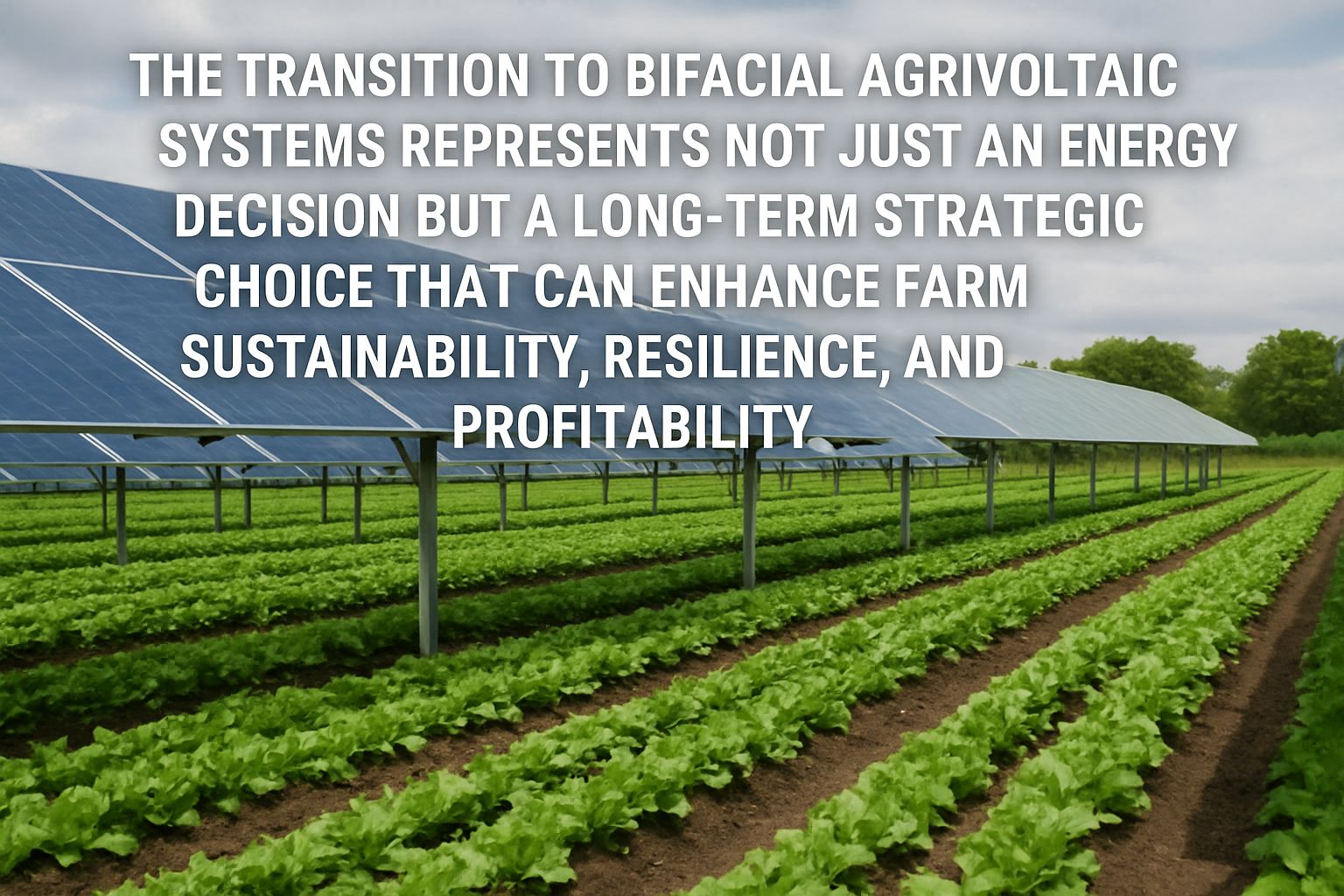
The transition to bifacial agrivoltaic systems represents not just an energy decision but a long-term strategic choice that can enhance farm sustainability, resilience, and profitability. By generating clean electricity while maintaining or even improving agricultural productivity, these dual-purpose systems help farms diversify revenue streams, reduce environmental impact, and adapt to changing climate conditions. The initial investment in quality bifacial technology pays dividends through decades of reliable energy production paired with optimized growing conditions beneath. As renewable energy and sustainable agriculture become increasingly interconnected, bifacial agrivoltaic systems stand at the forefront of this productive partnership.
Frequently Asked Questions
As bifacial solar technology continues gaining popularity in agricultural applications, farmers naturally have questions about implementation details, performance expectations, and best practices. These frequently asked questions address the most common concerns and provide practical insights for those considering bifacial installations for their operations. The information reflects current industry knowledge and practical experience from existing agricultural implementations across diverse farming environments.
Understanding these key considerations helps farmers make informed decisions about whether bifacial technology aligns with their specific agricultural and energy goals. Each farm presents unique circumstances that influence system design and performance, making personalized assessment essential for successful implementation.
How much more expensive are bifacial panels than traditional solar panels?
Bifacial panels typically cost 8-20% more than comparable monofacial models, with the price differential depending on manufacturing quality, bifaciality factor, and specific design features. However, this higher initial investment should be evaluated against the additional energy yield, which ranges from 5-30% depending on installation conditions. The total system cost increase is usually lower than the panel premium alone, as mounting hardware, inverters, and other balance-of-system components remain similar regardless of panel type. When calculated on a levelized cost of energy basis over the system’s 30+ year lifespan, bifacial installations often deliver lower long-term energy costs despite the higher upfront investment. Additionally, as manufacturing volumes continue increasing and production processes mature, the price gap between bifacial and traditional panels continues to narrow, further improving the economic equation for agricultural implementations.
Can bifacial panels work effectively in cloudy or low-light regions?
Bifacial panels actually offer proportionally greater advantages in regions with significant diffuse light conditions compared to direct sunlight environments. In cloudy or northern regions, a greater percentage of available solar energy comes from diffuse light scattered across the sky rather than direct beam radiation. Bifacial panels excel at capturing this diffuse light from multiple angles, including light reflected from cloud cover that reaches the rear surface. Field studies in the Pacific Northwest and northern Europe have demonstrated bifacial gain percentages of 15-25% in predominantly cloudy regions, comparable to or exceeding the performance boosts achieved in sunny locations. Additionally, the white or light-colored ground treatments that enhance bifacial performance work equally well in capturing and reflecting diffuse light during overcast conditions, making these panels an excellent choice for maximizing energy harvest in variable or predominantly cloudy climates.
What types of crops grow best beneath bifacial solar arrays?
Shade-tolerant crops generally perform best beneath bifacial arrays, with leafy greens like spinach, kale, and lettuce showing excellent results in agrivoltaic research studies. Herbs including mint, oregano, thyme, and cilantro thrive in the filtered light environment, often developing stronger flavor profiles than their full-sun counterparts. Many berry varieties including blueberries, blackberries, and certain strawberry cultivars show increased yield and quality when grown beneath properly designed bifacial installations. The key factor is matching crop light requirements with the specific shading patterns created by the panel configuration – some installations use varied panel spacing to create light gradients that accommodate different crop types within the same field. Certain varieties of tomatoes, peppers, and eggplants specially bred for partial shade conditions also perform well, particularly in hot climates where the shading reduces heat stress during peak summer temperatures. For more insights, explore agricultural solar panel efficiency and its impact on farming practices.
Some innovative farmers have developed dynamic cropping plans that rotate between shade-tolerant and sun-loving varieties based on seasonal changes in panel shading patterns. This approach maximizes year-round land productivity by aligning crop selection with the evolving light conditions beneath the array throughout the growing season.
How long do bifacial panels typically last compared to standard panels?
Premium bifacial panels, particularly glass-glass designs, typically offer extended operational lifespans compared to conventional panels. While standard panels generally carry 25-year power warranties, many bifacial manufacturers provide 30-year guarantees with lower annual degradation rates. The dual-glass construction provides superior protection against environmental stressors, moisture ingress, and mechanical damage, resulting in degradation rates as low as 0.25-0.3% annually compared to 0.5-0.7% for standard panels. This improved durability stems from the elimination of backsheet materials that typically represent failure points in conventional panels, replaced instead with highly durable glass that maintains its protective properties for decades. For agricultural applications where installations may experience mechanical stress from equipment, dust, or farming activities, this enhanced durability translates to longer productive lifespans and improved lifetime economics.
It’s worth noting that the extended lifespan applies primarily to premium bifacial models with glass-glass construction rather than all bifacial panels. Those using transparent polymer backsheets may have longevity more comparable to conventional panels, though still benefiting from their bifacial generating capabilities. When evaluating lifetime value, farmers should consider warranty terms, degradation rates, and construction details alongside initial performance specifications.
Are there special maintenance requirements for bifacial solar installations?
Bifacial installations do require some maintenance considerations beyond those of standard solar arrays. The most significant difference involves ground surface management to maintain optimal reflectivity for rear-side energy production. This typically includes periodic cleaning of reflective surfaces, vegetation management to prevent shadowing of the panels’ undersides, and occasional renewal of reflective ground treatments as they weather over time. The panels themselves generally require similar cleaning regimens to conventional arrays, though their elevated mounting positions in agricultural installations often reduce dirt accumulation and may extend cleaning intervals.
For agricultural implementations, maintenance planning should integrate solar care with normal farming operations to minimize additional labor requirements. Many successful agrivoltaic systems incorporate ground covers or grazing rotations that naturally maintain appropriate vegetation heights beneath panels while preserving reflectivity. Some farmers schedule panel cleaning to coincide with irrigation activities or equipment maintenance periods, creating efficient workflows that address both agricultural and energy system needs simultaneously. With proper integration into farm management routines, the additional maintenance requirements of bifacial systems can be minimized while maintaining optimal dual-purpose performance.
Growing Solar Mist provides comprehensive guidance on implementing and maintaining bifacial solar technology in agricultural applications, helping farmers maximize both energy and crop yields through optimized system design and management practices. Our agricultural solar specialists can develop customized maintenance plans that align with your existing farm operations while ensuring peak performance from your bifacial installation throughout its multi-decade operational lifespan.

Leave a Reply