

- Farmers can reduce operating expenses by 50-80% through solar power systems, with payback periods typically ranging from 5-10 years
- Agricultural operations can generate additional income by selling excess power back to the grid through net metering programs
- Solar installations on farms qualify for substantial federal tax credits, USDA grants, and state-specific incentives that significantly reduce initial costs
- Dual-use systems allow farmers to both harvest crops and generate clean energy on the same land, maximizing productivity per acre
- Cedar Creek Energy helps farmers implement customized solar solutions that enhance operational resilience against power outages and energy price volatility
Farming operations are increasingly caught between rising energy costs and thinning profit margins. As electricity rates continue to climb, the financial strain on agricultural businesses has become unsustainable for many. Solar power offers a practical solution that transforms this essential expense into a strategic investment with multiple returns.
Why Farmers Are Facing an Energy Crisis
Modern farming operations demand significant energy inputs that directly impact the bottom line. From irrigation systems and climate-controlled buildings to processing equipment and cold storage facilities, electricity costs can represent 5-10% of a farm’s total operating budget. These energy needs aren’t optional—they’re essential for productivity, quality, and meeting market demands.
Weather volatility and climate change have further increased energy demands, with more frequent temperature extremes requiring additional heating and cooling. Meanwhile, utility rates continue their upward trajectory, with many rural areas facing annual increases of 3-5%. For operations with slim profit margins, these rising costs can mean the difference between profitability and financial distress.
The traditional grid infrastructure serving rural communities often suffers from reliability issues, with power outages posing serious risks to livestock operations, cold storage, and time-sensitive processes. A single extended outage can result in substantial losses that insurance may not fully cover. This vulnerability has pushed many forward-thinking farmers to seek alternatives that provide both cost savings and energy security.
How Solar Power Transforms Farm Operations
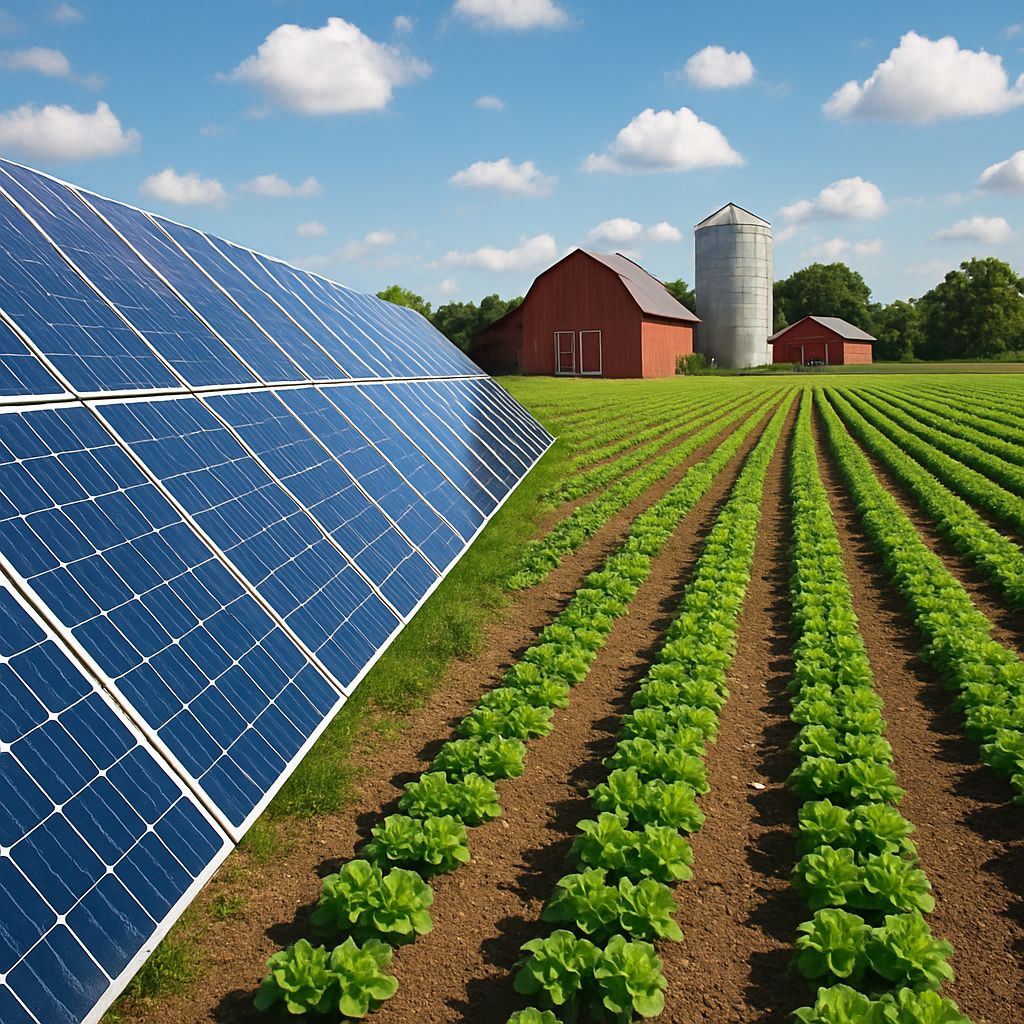
Solar energy provides a remarkably good fit for agricultural operations. Farms typically have abundant space for panel installation, whether on underutilized land, large roof areas, or even integrated with existing crops. Once installed, these systems generate electricity at zero marginal cost, transforming a volatile expense into a predictable investment with decades of returns. Cedar Creek Energy has helped numerous farms make this transition, dramatically reducing their operating costs while increasing sustainability.
Beyond simple cost reduction, solar installations create new revenue opportunities through net metering programs. When systems generate more electricity than the farm uses—often during peak daylight hours when utility rates are highest—this excess power is fed back into the grid. Farmers receive credits or direct payments for this contribution, essentially turning their rooftops and fields into additional sources of income. Learn more about agrivoltaics and its combined benefits for agriculture and solar energy.
The environmental benefits of farm-based solar extend beyond reducing carbon emissions. Solar installations require no water to generate electricity, unlike conventional power plants that consume massive water resources. For farmers already managing water as a precious resource, this alignment makes solar particularly attractive as part of a comprehensive sustainability strategy.
On-Farm Solar Systems: Types and Setups
Agricultural solar installations come in several configurations designed to meet specific farm needs and constraints. Grid-tied systems remain connected to the utility infrastructure, allowing farms to draw power when needed while selling excess generation. These systems offer the advantage of utility backup without requiring battery storage, making them more affordable as initial investments. For more insights on how solar panels are revolutionizing farm operations, explore our detailed guide.
Off-grid systems with battery storage provide complete energy independence, ensuring critical operations continue uninterrupted during outages. Though more expensive upfront, these systems offer unmatched reliability for operations where power interruptions could be catastrophic, such as poultry facilities with ventilation requirements or dairy operations with time-sensitive milking schedules. For more insights on how solar power benefits rural areas and agriculture, explore this detailed guide.
Hybrid systems combine grid connection with partial battery backup, offering a middle-ground solution that provides resilience for essential systems while maintaining grid benefits. This approach allows farmers to prioritize which operations need guaranteed power continuity while optimizing the overall system cost. For more insights on how solar energy can benefit agricultural operations, explore the concept of agrivoltaics.
Ground-Mounted vs. Roof Systems: What Works Best
Roof-mounted solar installations take advantage of existing structures without using additional land. Modern barns, equipment sheds, and processing facilities often have extensive roof areas ideally suited for solar panels. These elevated installations minimize potential interference with farm operations while keeping the valuable ground space available for its primary agricultural purpose.
Ground-mounted systems offer greater design flexibility and can be optimized for maximum production. These installations can be placed on marginal land, along field edges, or in locations unsuitable for profitable crop production. The additional space allows for ideal panel orientation and tilt angles that maximize energy harvest throughout the year.
“When we installed solar on our dairy operation, we had to choose between roof and ground mounting. The roof option saved us valuable pasture space, but we found ground-mounted panels on a hillside that wasn’t good for grazing actually produced 15% more electricity due to optimal positioning. Every farm has different needs and constraints.” – James Wilson, Cedar Creek Energy customer, Wisconsin dairy farmer
Dual-Use Land Management: Growing Crops Under Panels
Innovative agrivoltaic systems allow farmers to produce both solar energy and crops on the same land, effectively doubling productivity per acre. Research from the Department of Energy shows that certain crops actually thrive in the partial shade created by elevated panels, which reduce water evaporation and protect plants from excessive heat and sunlight intensity. Leafy greens, berries, and some vine crops have shown productivity gains of 20-30% under well-designed solar arrays.
These dual-use systems can be configured with panels mounted high enough to allow standard farm equipment to operate underneath. Panel spacing can be adjusted to provide optimal light patterns for specific crops, creating microclimates that extend growing seasons and reduce water requirements. For livestock operations, solar arrays can double as shade structures for grazing animals, improving animal welfare during hot weather while generating clean energy.
Financial Benefits That Make Solar Worth It
The economic advantages of solar power for agricultural operations extend far beyond simple utility bill reductions. When analyzing the complete financial picture, solar installations represent one of the most reliable investments available to modern farmers. With predictable returns spanning decades and multiple revenue streams, the business case for agricultural solar has never been stronger.
Cutting Monthly Energy Bills by 50-80%
Immediate utility bill reduction stands as the most tangible benefit of farm solar installations. Most properly sized systems offset between 50-80% of a farm’s electricity consumption, translating to substantial monthly savings. For operations with high energy demands like dairy farms, poultry houses, or irrigated crop production, these savings often reach thousands of dollars monthly.
The economics become even more favorable when considering long-term utility rate increases. While conventional electricity costs rise at an average of 3-5% annually, solar production costs remain fixed once the system is installed. This creates growing savings over time as the gap between what you would have paid versus your actual expenses widens each year. For a mid-sized farm operation, this can translate to hundreds of thousands in savings over the 25-30 year lifespan of a solar system.
Federal Tax Credits and USDA Grants for Farmers
The federal solar investment tax credit (ITC) offers a substantial 30% tax credit on the total system cost, significantly reducing the effective price of installation. Unlike deductions that only reduce taxable income, this credit directly reduces dollar-for-dollar what you owe in federal taxes. For farm operations structured as businesses, this incentive can often be combined with accelerated depreciation, further enhancing the financial benefits in the early years.
The USDA Rural Energy for America Program (REAP) provides both grants and loan guarantees specifically for agricultural producers investing in renewable energy. These grants can cover up to 25% of eligible project costs, while the guaranteed loans facilitate financing for the remainder. When combined with the federal tax credit, these incentives can reduce the upfront cost by more than 50%, dramatically improving project economics.
State-Specific Incentives That Boost Returns
Beyond federal incentives, many states offer additional programs specifically designed to promote agricultural solar adoption. These include production-based incentives that pay for each kilowatt-hour generated, capacity rebates based on system size, property tax exemptions for solar equipment, and specialized agricultural grants. States like Minnesota, California, and New York have particularly robust incentive packages that can reduce payback periods by several years.
Net metering policies vary significantly by state and utility, directly impacting project economics. The most favorable policies credit farmers at retail rates for excess electricity, effectively allowing the meter to run backward when production exceeds consumption. In some regions, time-of-use rate structures provide higher compensation for electricity produced during peak demand periods, which often aligns perfectly with peak solar production hours.
Payback Periods: When Your System Becomes Pure Profit
The combination of incentives, utility savings, and potential revenue streams typically results in payback periods between 5-10 years for agricultural solar installations. This represents an annual return on investment between 10-20% – far outperforming most traditional farm investments. Once the system has paid for itself, the subsequent decades of energy production represent almost pure profit for the operation. Learn more about solar panels revolutionizing farm operations.
Smart financial planning can further enhance these returns. Various financing options including solar leases, power purchase agreements (PPAs), and specialized agricultural loans allow farms to go solar with little or no money down. With properly structured financing, many operations achieve positive cash flow from day one, with the monthly energy savings exceeding loan payments from the start.

Real Farm Success Stories
The transformative impact of solar power is perhaps best illustrated through the experiences of farmers who have already made the transition. Across diverse agricultural sectors and geographical regions, producers are reporting substantial benefits that extend beyond the initial financial projections. These real-world implementations demonstrate how solar power adapts to the specific needs and constraints of different farming operations.
Sustainability improvements often translate into market advantages as consumers increasingly value environmentally responsible production methods. Many farms have leveraged their solar investments into marketing opportunities, commanding premium prices for products grown with renewable energy or accessing specialty markets with sustainability requirements.
|
Farm Type |
System Size |
Annual Savings |
Payback Period |
Additional Benefits |
|---|---|---|---|---|
|
Dairy (120 cows) |
75kW |
$14,500 |
6.2 years |
Reduced heat stress in barn |
|
Poultry Operation |
200kW |
$31,200 |
5.8 years |
Battery backup for ventilation |
|
Vegetable Farm |
35kW |
$7,800 |
7.1 years |
Marketing advantage with eco-conscious buyers |
|
Grain Operation |
150kW |
$22,500 |
6.5 years |
Powers grain drying during harvest |
These results reflect real installations completed by Cedar Creek Energy across the Midwest, with system performance validated through multiple years of operation. Each represents a customized solution designed around the specific energy profile, available space, and financial objectives of the individual farm operation.
Dairy Farm Cuts $24,000 Annual Energy Costs
When the Wilson Family Dairy installed a 120kW solar array on their operation in 2019, they were primarily motivated by reducing their substantial electricity bills. The farm’s milking parlor, milk cooling systems, and barn ventilation required constant power, resulting in monthly utility bills exceeding $3,500. After comprehensive energy auditing, Cedar Creek Energy designed a system combining roof-mounted panels on the main barn with a ground array adjacent to the milking facility. The installation now offsets over 85% of their electricity consumption, generating annual savings of approximately $24,000 while qualifying for $87,000 in tax credits and grants.
How a Small Vegetable Farm Became Energy Independent
Prairie Roots Organic Farm operates a diversified vegetable operation with four season-extending high tunnels and extensive refrigerated storage. Their remote location resulted in frequent power outages that threatened crop quality and marketability. By installing a 35kW solar array combined with battery storage, the operation achieved virtual energy independence. The system powers irrigation pumps, coolers, and essential equipment year-round, while excess summer production is sold back to the grid. Beyond the direct financial benefits, owner Sarah Johnson notes that energy security has allowed them to expand into higher-value crops that require precise climate control, substantially increasing the farm’s profit margin.
Beyond Cost Savings: Environmental Advantages
The environmental benefits of agricultural solar extend far beyond reducing carbon emissions, creating synergies with sustainable farming practices. As stewards of the land, many farmers find that these environmental advantages align perfectly with their long-term vision for land management and conservation. The integration of solar technology supports a holistic approach to farm sustainability that benefits soil health, water resources, and ecosystem services.
These environmental improvements often translate into tangible operational benefits. Reduced water usage lowers irrigation costs, improved soil health can decrease fertilizer requirements, and biodiversity enhancements can support natural pest control systems. When viewed comprehensively, solar installations become part of an integrated approach to sustainable farm management that builds resilience while reducing input costs.
Reducing Your Farm’s Carbon Footprint
Agricultural operations generate approximately 10% of U.S. greenhouse gas emissions through various processes including equipment operation, fertilizer application, and livestock production. Solar power provides an immediate and substantial way to reduce this environmental impact. A typical 100kW farm installation offsets approximately 150,000 pounds of carbon dioxide annually – equivalent to removing 15 cars from the road or planting 75 acres of forest. These reductions can contribute to carbon credit programs or sustainability certifications that create additional value streams for forward-thinking operations.
Water Conservation Benefits
Unlike conventional electricity generation that requires enormous water volumes for cooling, solar panels produce energy without consuming any water resources. For farms in water-stressed regions, this alignment between energy and water conservation creates multiple benefits. The partial shading provided by elevated panels in agrivoltaic systems reduces soil evaporation rates by 25-40%, improving moisture retention and reducing irrigation requirements. This dual benefit of generating electricity while conserving water makes solar particularly valuable in regions facing increasing drought pressure and water allocation constraints.
Some innovative installations are now incorporating rainwater harvesting systems that capture precipitation from panel surfaces, directing it to storage for later irrigation use. These integrated systems transform solar arrays into multifunctional assets that generate energy while enhancing water security – a critical advantage as climate variability increases.
Building Farm Resilience Against Climate Change
Climate resilience has become essential for agricultural operations facing increased weather extremes and volatility. Solar installations contribute to this resilience in multiple ways, beyond simply reducing emissions. Distributed generation provides energy security during grid disruptions caused by severe weather events. The partial shading created by panels can protect sensitive crops from excessive heat and reduce plant stress during temperature extremes. For livestock operations, solar structures can double as shelter during intense weather, protecting animals while generating power.
The financial stability provided by predictable energy costs further enhances farm resilience against economic disruptions. While conventional inputs and commodity prices fluctuate widely, solar electricity costs remain stable for decades ater installation, providing a reliable foundation for long-term planning and risk management.
Energy Independence: Breaking Free from the Grid
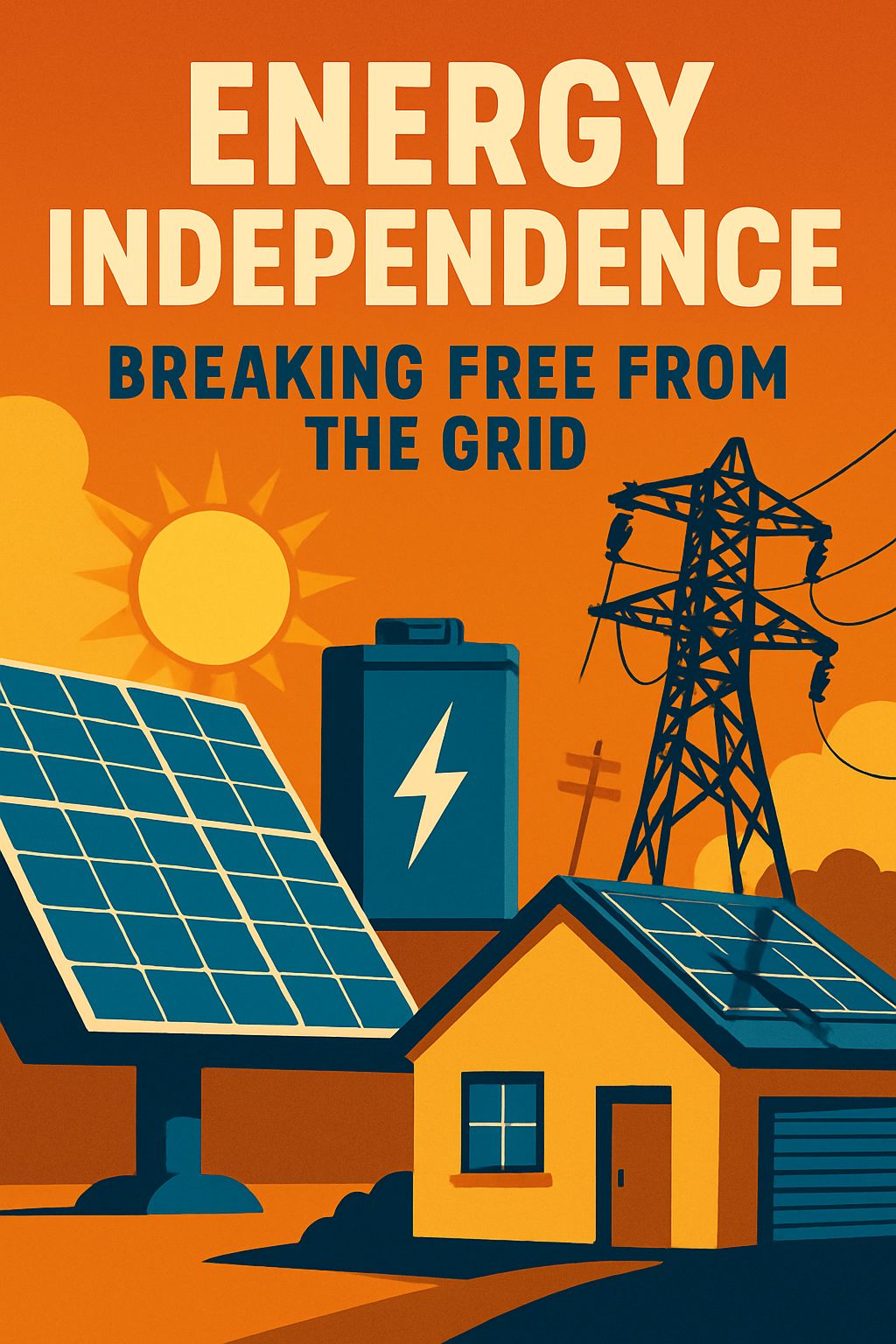
For many rural agricultural operations, energy reliability presents a persistent challenge. Remote locations often experience more frequent and longer-duration power outages, while also being the last areas restored after widespread disruptions. Grid infrastructure serving agricultural areas may be older and less maintained than urban systems, creating vulnerability that threatens critical farm operations. Solar power with appropriate storage provides a path to energy independence that protects against these risks while offering economic advantages.
Protection From Power Outages and Price Spikes
Power interruptions can have devastating consequences for agricultural operations. Ventilation failures in confined livestock facilities can cause animal losses within hours. Irrigation stoppages during critical growth periods can significantly reduce yields. Refrigeration disruptions can ruin harvested products awaiting processing or shipment. Solar systems with battery backup provide crucial protection against these risks, maintaining essential operations during grid outages. This reliability becomes increasingly valuable as climate change drives more frequent extreme weather events that threaten power infrastructure.
Battery Storage Options for 24/7 Power
Battery technology has advanced dramatically in recent years, making energy storage increasingly practical and affordable for farm applications. Modern lithium-ion systems offer 10+ year lifespans with minimal maintenance requirements while providing immediate backup during outages. These systems can be scaled to meet specific needs – from supporting just critical loads like well pumps and refrigeration to maintaining complete operations during extended outages.
Strategic battery deployment allows farms to maximize the value of their solar production by storing excess daytime generation for evening use or peak demand periods when utility rates are highest. This load-shifting capability often creates additional financial benefits beyond simple backup power, improving overall system economics. For operations with time-sensitive electricity needs that don’t align with peak solar production hours, battery storage transforms an intermittent resource into reliable 24/7 power.
How to Get Started with Solar on Your Farm
Transitioning to solar energy requires thoughtful planning to maximize benefits while minimizing disruption to ongoing operations. The process begins with a comprehensive energy assessment that analyzes current usage patterns, identifies potential efficiency improvements, and establishes baseline costs. This foundation ensures that solar systems are properly sized and designed to meet specific farm needs rather than generic specifications. Cedar Creek Energy specializes in these agricultural assessments, understanding the unique energy profiles and constraints of different farming operations.
5 Questions to Determine if Your Farm is Solar-Ready
Before pursuing detailed proposals, farmers should consider several key factors that influence solar viability. First, what is your current annual electricity spend, and does it justify investment in an alternative generation system? Second, do you have suitable space – either roof area with southern exposure or available ground space that won’t interfere with operations? Third, what is your tax situation, and can you utilize available tax credits effectively? Fourth, does your utility offer favorable interconnection and net metering policies? Finally, do you plan to maintain ownership of the property for at least 7-10 years to realize the full investment benefits?
Answering these questions helps determine whether solar represents a good strategic fit for your operation before investing in detailed technical assessments. Many farms discover that they’re better positioned for solar adoption than initially expected, especially when considering the comprehensive incentives currently available and the long-term outlook for conventional electricity costs.
Finding Qualified Agricultural Solar Installers
- Look for companies with specific agricultural experience and references from other farmers
- Verify proper licensing, insurance, and certification for commercial-scale installations
- Ensure they understand agricultural electrical loads and seasonal variations
- Confirm familiarity with USDA grant programs and agricultural financing options
- Check that installation crews understand farm biosecurity and operational constraints
Agricultural solar installations differ significantly from residential systems, requiring specialized expertise in larger electrical systems, three-phase power connections, and integration with farm equipment. Experienced agricultural installers understand the unique challenges of farm environments, including dust management, equipment clearances, and biosecurity protocols. They can design systems that accommodate seasonal load variations typical in agricultural operations while maximizing available incentives.
Cedar Creek Energy has completed dozens of agricultural installations across the Midwest, developing specific expertise in dairy operations, poultry facilities, grain handling systems, and diversified crop production. This agricultural focus ensures that systems are designed around the specific needs and constraints of working farms rather than generic commercial specifications.
The company’s agricultural team includes former farmers who understand seasonal workflows and can schedule installations to minimize disruption to critical operations. This practical experience translates into systems that integrate seamlessly with existing farm infrastructure while providing maximum financial benefits.
Financing Options That Require Zero Upfront Costs
Financial barriers have historically limited solar adoption despite favorable long-term economics. Today, multiple financing pathways make solar accessible without significant upfront capital. Agricultural-specific solar loans typically offer 7-15 year terms with fixed interest rates, structuring payments to align with projected energy savings. Power Purchase Agreements (PPAs) allow farmers to purchase the electricity produced by systems owned by third-party investors, eliminating upfront costs entirely while still reducing utility expenses. Operating or capital leases provide additional options with various tax and accounting advantages depending on the farm’s specific financial structure. These flexible financing solutions allow farms to implement solar with minimal capital disruption while still capturing substantial long-term benefits.
The Bright Future of Solar in Agriculture
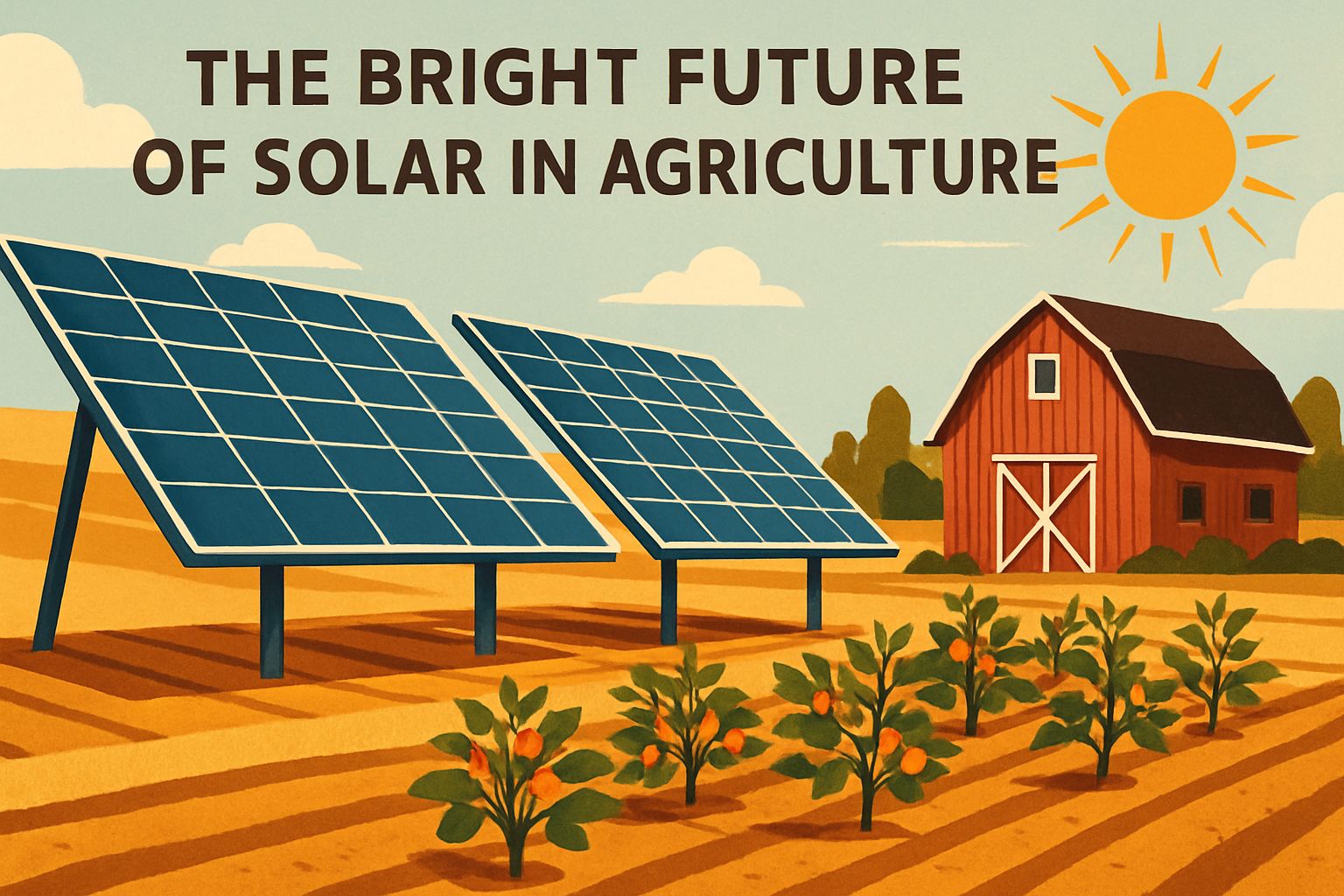
The convergence of advancing technology, favorable economics, and agricultural needs points toward accelerating solar adoption across farming operations. Ongoing innovations in panel efficiency, mounting systems, and energy storage continue to improve system performance while reducing costs. New business models like community solar provide additional opportunities for agricultural landowners to generate revenue while supporting broader renewable energy transitions. As climate initiatives expand at state and federal levels, additional incentives and market opportunities will likely emerge, further enhancing the value proposition for agricultural solar. Forward-thinking farmers are increasingly recognizing solar not merely as an energy alternative but as a strategic farm asset that provides decades of financial and operational benefits.
Is Solar Power Worth the Farmers Investment
When evaluated comprehensively, solar power represents one of the most reliable and lucrative investments available to modern agricultural operations. The combination of immediate expense reduction, long-term fixed energy costs, available incentives, and potential revenue streams creates compelling economics that few other farm improvements can match. Beyond the direct financial returns, solar installations enhance farm resilience, sustainability credentials, and long-term viability in an increasingly carbon-conscious market. For operations with suitable sites and energy demands, the question increasingly isn’t whether solar makes financial sense, but rather how to optimize implementation to maximize the substantial benefits available.
Frequently Asked Questions
Farmers considering solar installations typically share common questions about implementation, economics, and practical considerations. These concerns reflect the significant nature of the investment and the importance of making informed decisions that align with specific farm needs and constraints. Addressing these questions directly helps clarify both opportunities and limitations.
System designs must balance immediate needs with anticipated future requirements. While oversizing systems can maximize incentives and future-proof against increasing energy demands, proper planning ensures optimal sizing for current conditions while allowing for potential expansion. Most systems can be designed with modular approaches that facilitate later additions as farm operations grow or diversify.
The agricultural sector’s unique characteristics actually enhance solar viability compared to many other industries. Farms typically have abundant suitable space, significant energy demands, and business structures that can fully utilize available tax incentives. The alignment between peak solar production and many agricultural energy needs – particularly irrigation and cooling – further improves the economic case for agricultural solar adoption.
- Solar systems typically require minimal maintenance, with annual inspection and occasional panel cleaning
- Modern systems include monitoring tools that alert owners to any performance issues
- Quality installations provide warranties covering 25+ years of operation
- Snow generally self-clears from properly angled panels within 1-2 days
- Component replacement is rarely needed before the 15-year mark
For farmers with questions about specific applications or unique operational needs, consulting with an experienced agricultural solar provider offers the most reliable guidance. Free site assessments provide customized analysis of potential benefits without obligation, helping farmers make informed decisions based on their particular circumstances. Learn more about how solar panels are revolutionizing farm operations and the impact they have.
How much does a solar system for a medium-sized farm typically cost?
System costs vary based on size, configuration, and specific farm requirements, but typically range from $2.00-$2.75 per watt before incentives for commercial-scale agricultural installations. For a medium-sized 100kW system, this translates to approximately $200,000-$275,000 initial investment. However, federal tax credits immediately reduce this by 30%, and additional USDA grants can cover up to 25% of costs. State incentives further reduce net expenses, resulting in typical after-incentive costs between $90,000-$150,000 for systems that generate $15,000-$25,000 in annual electricity value. With these economics, payback periods typically range from 5-8 years, representing ROIs of 12-20% – far outperforming most alternative farm investments.
Will solar panels work efficiently in cloudy or cold climates?
Modern solar technology performs effectively even in northern climates with less direct sunlight. While production does decrease somewhat on cloudy days, systems are sized to account for local weather patterns using decades of solar radiation data. Interestingly, solar panels actually operate more efficiently in cold temperatures than hot conditions, partially offsetting reduced sunlight intensity during winter months. Snow typically slides off properly angled panels within 1-2 days of accumulation, with annual production calculations already accounting for these temporary reductions. Successful large-scale installations throughout Minnesota, Wisconsin, and other northern states demonstrate that solar provides excellent returns even in challenging climates.
Can I still farm on land where solar panels are installed?
Innovative agrivoltaic systems specifically designed for agricultural integration allow continued production beneath and between panel arrays. These systems elevate panels sufficiently for equipment access and crop growth while providing beneficial partial shading that reduces water requirements and protects certain crops from excess heat stress. Research shows that some crops—particularly leafy greens, berries, and shade-tolerant varieties—actually yield better under the dappled light conditions created by properly designed solar arrays. For livestock operations, panels can be installed with sufficient clearance for animal grazing while providing beneficial shade. These dual-use approaches maximize land productivity while generating both agricultural products and clean energy from the same acreage.
How long do agricultural solar systems typically last?
Quality agricultural solar installations are engineered for decades of reliable operation in demanding farm environments. Most premium solar panels carry 25-30 year performance warranties guaranteeing at least 80% of original output after this period, though actual field experience shows many systems performing above 90% even after 25 years. Inverters typically have 10-15 year warranties but can last 20+ years with proper maintenance. Mounting systems constructed with galvanized steel or aluminum provide 30+ year structural integrity even in harsh agricultural environments. This exceptional longevity means systems continue generating valuable electricity long after the initial investment has been recovered, providing decades of essentially free energy for farm operations.
What maintenance is required for farm solar systems?
Agricultural solar systems require minimal maintenance compared to most farm equipment, with no moving parts in the panels themselves. Annual visual inspections and electrical system checks are recommended to ensure optimal performance. Panel cleaning needs vary by location – in most regions, natural rainfall adequately maintains efficiency, though dusty environments may benefit from occasional washing. Modern monitoring systems automatically alert owners to any performance issues, allowing prompt identification of rare component failures. Snow removal is generally unnecessary as panels are installed at angles that promote self-clearing. This low maintenance requirement stands in stark contrast to conventional farm equipment, making solar one of the most reliable investments available to agricultural operations.
Farmers increasingly recognize solar power as not just an energy source but a strategic business asset that enhances profitability and operational resilience. The convergence of favorable economics, proven technology, and agricultural compatibility has created a unique opportunity for farm operations to secure their energy future while improving their bottom line. Discover how solar panels are revolutionizing farm operations and impacting their overall benefits.







Leave a Reply