
Key Takeaways
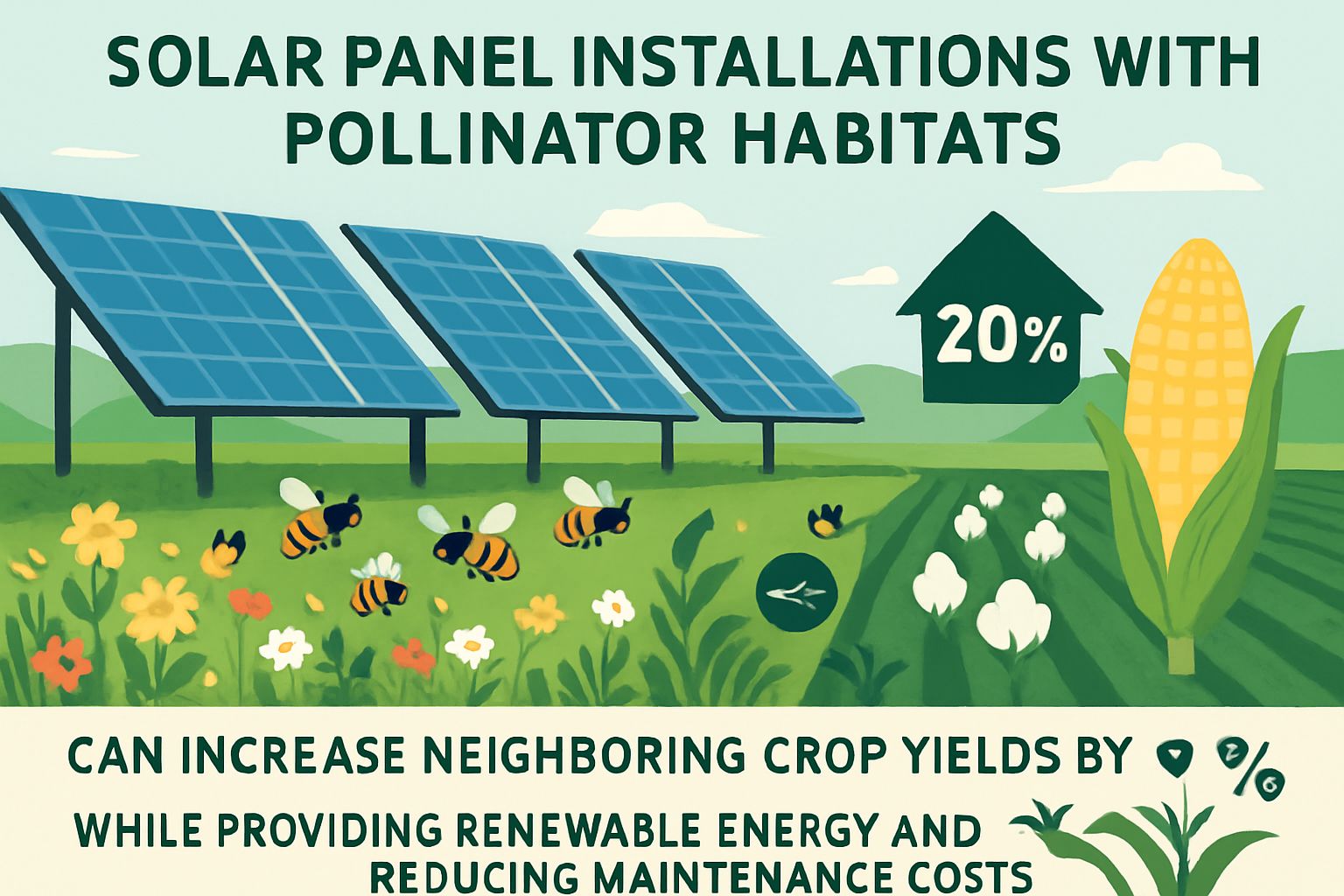
- Solar panel installations with pollinator habitats can increase neighboring crop yields by up to 20% while providing renewable energy and reducing maintenance costs
- Nearly 35% of global food crops depend on pollinators, making the integration of solar arrays with habitat creation a win-win solution for farmers
- Native plantings beneath solar panels create ideal microclimates that can improve panel efficiency by 3-5% while supporting declining pollinator populations
- Converting solar array ground cover to pollinator habitat can reduce maintenance costs by up to 30% through decreased mowing and herbicide applications
- The USDA’s Pollinator-Friendly Solar Initiative provides technical assistance and potential funding for farmers looking to implement these dual-purpose installations
The green energy transition doesn’t have to come at the expense of agricultural productivity. In fact, when solar panels and pollinator habitats join forces, farms can generate clean energy while supporting the very creatures that ensure crop success. This innovative approach is transforming how we think about land use on farms across America.
The Win-Win of Solar Panels and Pollinator Habitats
Imagine walking between rows of solar panels and hearing the constant hum of bees and flutter of butterfly wings. This isn’t just a pleasant scene – it’s a powerful agricultural solution. Traditional solar installations often use gravel or turfgrass underneath panels, creating ecological “dead zones.” By replacing these areas with native wildflowers and pollinator-friendly plants, farmers create dual-purpose land that generates both renewable energy and vital ecosystem services. The Department of Energy’s agrivoltaics research demonstrates that these combined systems offer multiple revenue streams while addressing critical environmental challenges.
Dual-Purpose Land Use That’s Changing Farming
The agricultural sector faces intensifying pressure to maximize land productivity while navigating climate challenges. Solar arrays with pollinator habitats represent an elegant solution to this dilemma. Rather than taking land completely out of agricultural production, these systems transform it into multi-functional spaces that produce energy while supporting the very insects that nearby crops depend on. A groundbreaking study by Argonne National Laboratory identified approximately 1,350 square miles of U.S. agricultural land near current or planned utility-scale solar deployments that could benefit from pollinator habitat integration. For farmers considering solar leases, pollinator-friendly designs can maintain agricultural connections while diversifying income.
Many farmers initially worried that leasing land for solar panels meant permanently removing it from agricultural productivity. The pollinator habitat approach changes this calculation entirely. The land beneath panels becomes working ecological infrastructure that directly supports surrounding cropland through improved pollination services. Some farmers have reported 10-20% yield increases in adjacent fields after implementing pollinator-friendly solar installations. This approach also helps meet growing consumer and corporate demand for sustainably produced agricultural products.
Why Pollinator Numbers Are Declining
The alarming decline in pollinator populations represents one of today’s most pressing ecological challenges. Bees, butterflies, and other pollinating insects face multiple threats including habitat loss, pesticide exposure, climate change, and disease. As industrial agriculture has expanded, natural pollinator habitat has diminished dramatically. Monoculture farming practices have eliminated the diverse flowering plants these creatures need throughout their life cycles. The conversion of natural landscapes to development further restricts habitat availability.
The consequences of pollinator decline extend far beyond ecological concerns. Without these creatures, many crops would produce dramatically lower yields or fail entirely. Creating new pollinator habitat under solar installations provides crucial refuge in otherwise pollinator-poor agricultural landscapes. These restored patches can serve as stepping stones, allowing pollinators to move across fragmented landscapes and maintain genetic diversity in their populations. For more insights, explore how solar panel installations can impact agricultural landscapes.
How Solar Panels Create Perfect Pollinator Homes
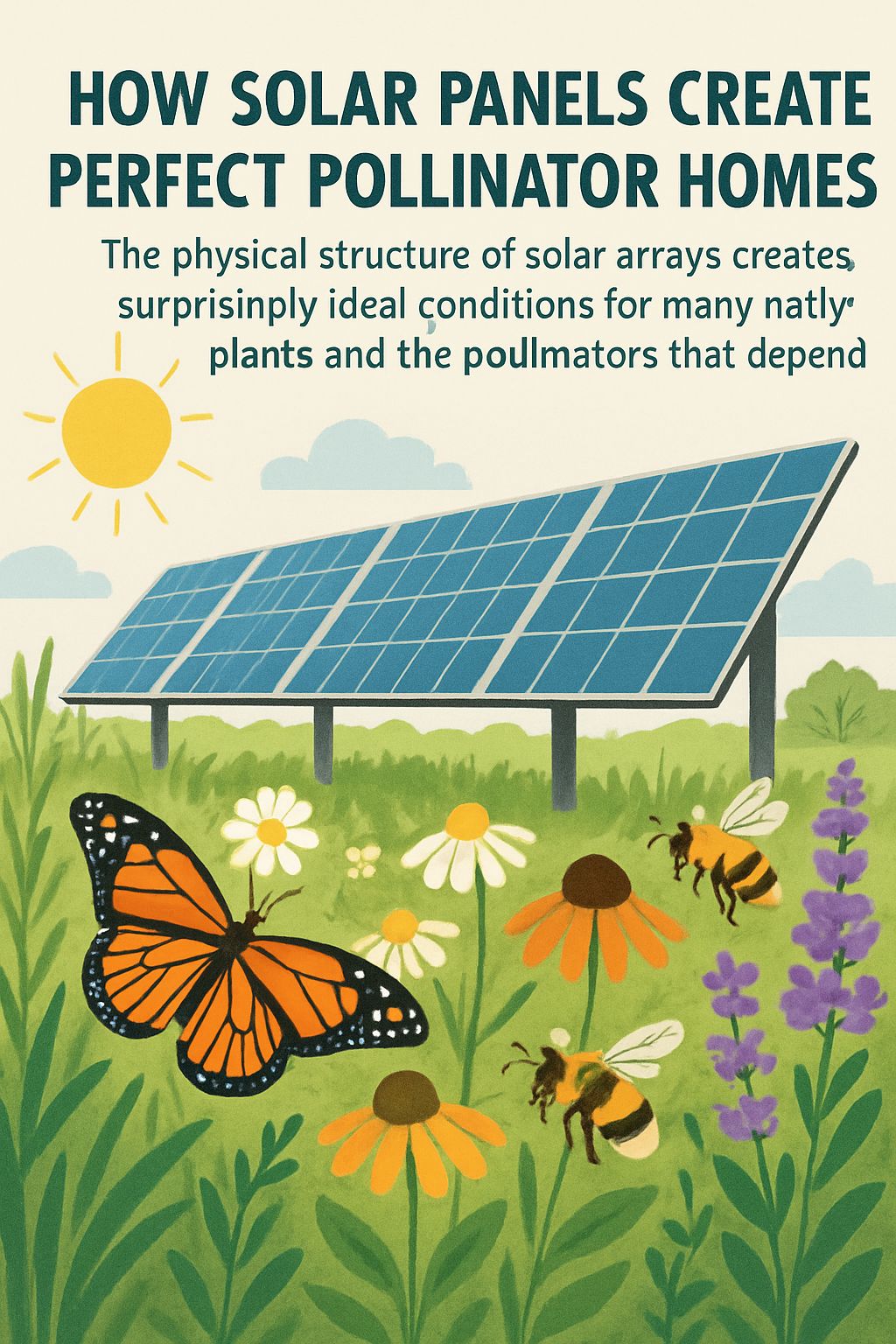
The physical structure of solar arrays creates surprisingly ideal conditions for many native plants and the pollinators that depend on them. The partial shade provided by panels creates microclimates that can support diverse plant communities. During extreme heat or drought conditions, this protected environment often remains viable when exposed areas struggle. The panels themselves act as artificial structures that can provide nesting sites for certain bee species. Many solar installations also exclude large herbivores and reduce human disturbance, allowing delicate flowering plants to flourish undisturbed.
Research from the National Renewable Energy Laboratory has documented significantly higher insect biodiversity in pollinator-friendly solar installations compared to conventional gravel or turfgrass systems. These biodiverse communities include not just pollinators but also beneficial predatory insects that help control agricultural pests naturally. This ecological complexity creates resilient systems that better withstand environmental stresses while providing multiple ecosystem services to surrounding farmland.
Microclimate Benefits Under Panels
The strategic placement of solar panels creates unique microclimates that benefit both the plants and the energy system. During hot summer months, the partial shade provided by panels reduces soil temperature and evaporation, creating conditions where certain native plants thrive better than in full sun. This protective environment helps pollinator-friendly vegetation survive drought periods that might otherwise devastate conventional landscaping. The moderated temperature also creates ideal conditions for many bee species that prefer cooler environments for foraging.
Remarkably, this relationship works both ways – the vegetation helps cool the panels too. Research has shown that solar panels operate more efficiently at lower temperatures, and the cooling effect of living plants beneath panels can increase energy output by 3-5% compared to gravel or bare soil installations. This vegetation-induced cooling effect is most pronounced during peak summer heat when electricity demand and prices are typically highest. The evapotranspiration from healthy plant communities essentially functions as a natural cooling system for the solar array, improving performance precisely when it’s most valuable.
Native Plant Species That Thrive in Solar Arrays
Selecting appropriate plant species forms the foundation of successful pollinator habitat in solar installations. Native prairie plants are particularly well-suited for these environments as they’ve evolved deep root systems that withstand drought conditions without requiring irrigation. Species like purple coneflower, black-eyed Susan, and various native grasses establish resilient ground cover that supports diverse pollinator communities throughout growing seasons. Once established, these native plant communities require minimal intervention to thrive.
Regional adaptation is crucial when selecting plant species. What works in the Midwest differs substantially from optimal choices in the Southwest or Northeast. Local ecological context should guide plant selection, with emphasis on creating blooming sequences that provide continuous nectar and pollen resources from early spring through late fall. This temporal diversity ensures that different pollinator species can find resources throughout their active seasons, maximizing the habitat’s ecological value.
- Early bloomers: Wild lupine, wild columbine, and wild geranium
- Summer bloomers: Butterfly milkweed, bergamot, and black-eyed Susan
- Late-season bloomers: New England aster, goldenrod, and joe-pye weed
- Native grasses: Little bluestem, prairie dropseed, and side-oats grama
- Regional specialists: Plants specifically adapted to local soil and climate conditions
Water Conservation Advantages
The deep root systems of native prairie plants used in pollinator habitats dramatically improve water infiltration at solar sites. Unlike conventional turfgrass with shallow roots, native plants create channels that allow rainwater to penetrate deep into soil profiles, reducing runoff and erosion. This improved infiltration helps recharge groundwater supplies while filtering out potential contaminants. During heavy rainfall events, these established root systems act as natural sponges, absorbing excess water and reducing flood risks in surrounding areas. Learn more about solar panels benefits for farmers.
Many solar developers report significant reductions in stormwater management costs when implementing pollinator habitats. The enhanced water absorption capacity of native plantings often eliminates the need for expensive engineered drainage systems. For farmers, this improved hydrological function extends beyond the solar array itself, potentially benefiting adjacent cropland through reduced erosion and more stable soil moisture levels during both wet and dry periods.
Reduced Mowing and Maintenance Costs
Traditional ground cover at solar installations typically requires frequent mowing throughout the growing season to prevent shading of panels and maintain site accessibility. By contrast, properly designed pollinator habitats need mowing just once or twice annually, dramatically reducing maintenance requirements and costs. These reduced mowing schedules can translate to 30-50% savings in long-term site maintenance, making pollinator habitat financially attractive for solar operators. The timing of these infrequent mowings can be strategically planned to promote plant diversity and create optimal habitat conditions.
Beyond mowing reductions, pollinator habitats typically eliminate the need for herbicide applications once established. Native plant communities naturally suppress weed growth through competitive root systems and canopy development. This reduction in chemical use not only saves money but also enhances the ecological value of the site and eliminates potential contamination risks to surrounding farmland. Solar operators increasingly recognize these maintenance savings as a significant advantage of pollinator-friendly design approaches.
Direct Benefits to Nearby Farms
The ecological benefits of pollinator habitat at solar installations extend well beyond the boundaries of the arrays themselves. As pollinator populations establish and grow at these sites, they create spillover effects that can substantially improve crop pollination in surrounding agricultural areas. This ecological service delivery represents a tangible, measurable benefit to neighboring farms that may otherwise struggle with insufficient pollination due to declining wild pollinator populations. The strategic placement of solar arrays with pollinator habitat can effectively create pollinator reservoirs that support wider agricultural landscapes.
35% of Global Food Crops Need Pollinators
The significance of pollinators to our food system cannot be overstated. Approximately 35% of global food crop production depends directly on pollination services provided by bees, butterflies, and other insects. Without these critical creatures, many fruits, vegetables, and nuts would simply disappear from our agricultural systems and dinner tables. Crops like almonds, apples, blueberries, and squash rely almost entirely on insect pollination to produce yields that are economically viable for farmers.
The economic value of these pollination services reaches into billions of dollars annually in the United States alone. As natural pollinator populations decline worldwide due to habitat loss, pesticide use, and climate change, the agricultural sector faces increasing vulnerability. Solar-pollinator habitats offer a scalable approach to rebuilding these essential ecological relationships within working landscapes. By integrating pollinator support directly into renewable energy development, we create infrastructure that addresses both energy and food security simultaneously.
Increased Crop Yields in Adjacent Fields
One of the most compelling advantages of solar-pollinator habitats is their measurable impact on neighboring crop productivity. Research conducted at multiple sites has documented yield increases of 10-20% in pollinator-dependent crops grown within a one-mile radius of pollinator-friendly solar installations. These productivity gains translate directly to improved farm economics without requiring additional inputs like fertilizer or irrigation. The effect is particularly pronounced in areas where natural habitat has been severely depleted, as the solar installation essentially creates an oasis for pollinator reproduction and activity.
The economic benefits extend beyond simple yield increases. Improved pollination often results in more uniform fruit development and better quality produce that commands premium prices in the marketplace. Farmers report fewer misshapen fruits and more consistent sizing in crops adjacent to pollinator-rich solar arrays. This quality improvement can substantially enhance profit margins for specialty crop producers who rely on cosmetic perfection to access high-value markets.
Sustainable Honey Production Opportunities
The flowering plants established within solar pollinator habitats create exceptional opportunities for honey production. Some farmers have partnered with local beekeepers to place hives adjacent to solar installations, creating another revenue stream from the same land. The diverse native plant communities in properly designed habitats produce distinctive, high-quality honey that often commands premium prices in specialty markets. This collaborative approach transforms solar installations from single-purpose energy infrastructure into multi-functional agricultural assets.
Beyond commercial honey production, these habitats support native bee populations that provide pollination services without managed hives. Unlike honeybees, most native bees are solitary species that nest in soil or hollow plant stems. The undisturbed areas around and under solar panels provide ideal nesting habitat for these crucial but often overlooked pollinators. A healthy native bee community contributes substantial pollination services to nearby crops without requiring the management intensity of honeybee colonies.
Environmental Improvements Beyond Pollination
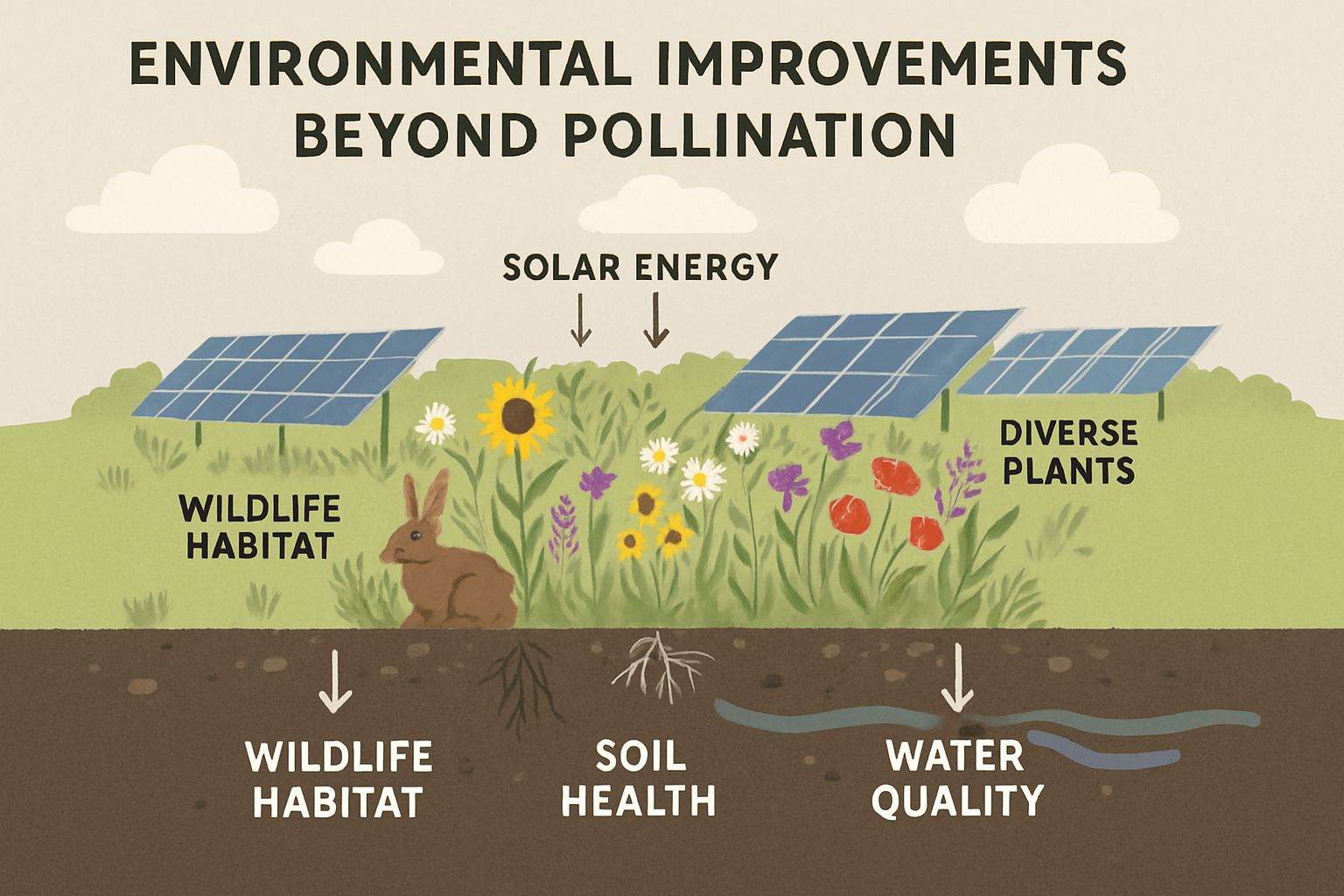
The environmental benefits of solar pollinator habitats extend well beyond supporting bees and butterflies. These diverse plant communities deliver a suite of ecosystem services that contribute to agricultural sustainability and environmental resilience. From carbon sequestration to water management, these multifunctional landscapes represent a significant upgrade from conventional solar installation approaches that typically feature gravel beds or turfgrass monocultures.
Soil Health Regeneration
The deep, extensive root systems of native plants used in pollinator habitats actively rebuild soil health beneath solar arrays. These roots penetrate compacted soils, increase organic matter, and create channels for water infiltration and gas exchange. Microbial communities thrive in the rhizosphere around these roots, accelerating nutrient cycling and building soil carbon. Over time, these biological processes transform even degraded soils into living, functioning ecosystems that support both aboveground biodiversity and belowground biological activity.
For farmland that may have experienced soil degradation from intensive agricultural practices, pollinator-friendly solar installations offer a pathway to regeneration. During the typical 25-30 year lifespan of a solar installation, soils can recover significantly under proper vegetative management. This restoration potential means that land hosting solar arrays can potentially return to conventional agriculture in improved condition rather than degraded state when panels reach the end of their functional life.
Groundwater Recharge Capabilities
The enhanced water infiltration provided by native plant communities significantly improves groundwater recharge compared to conventional solar installations. Research has documented up to 95% reduction in runoff from sites with established native vegetation versus gravel or turfgrass alternatives. This improved hydraulic function helps stabilize local water tables and maintain consistent flows in nearby streams and wetlands. For agricultural regions facing water scarcity challenges, this groundwater benefit represents a valuable ecosystem service with direct implications for irrigation sustainability.
The water management benefits of these systems become increasingly valuable as climate change drives more extreme precipitation patterns. During heavy rainfall events, the robust root systems and soil structure created by native plants help capture and slowly release water, reducing flash flooding risks. Conversely, during drought periods, the improved soil health and water retention capacity help maintain soil moisture levels longer than in conventional landscapes. This hydrological resilience supports both the pollinator habitat itself and surrounding agricultural operations.
Carbon Sequestration Benefits
Native prairie plants used in solar pollinator habitats excel at capturing atmospheric carbon and storing it in soil organic matter. Up to 80% of the biomass in prairie ecosystems exists below ground in extensive root systems that can reach depths of 15 feet or more. These roots continuously deposit carbon into soil through exudates and as they naturally die back and decompose. Research indicates that well-managed prairie plantings can sequester 1-2 tons of carbon per acre annually in soil, creating significant climate benefits beyond the renewable energy generation of the solar panels themselves.
This carbon sequestration function creates opportunities for solar developers to potentially access carbon offset markets or promote enhanced environmental attributes of their projects. As carbon pricing mechanisms mature, the sequestration value of these plantings may provide additional financial returns beyond energy generation. For farmers concerned about agriculture’s carbon footprint, pollinator-friendly solar represents a tangible climate action that aligns with both environmental stewardship and economic viability.
Erosion Control Effects
Solar sites are particularly vulnerable to erosion during construction phases when soil is exposed. The establishment of diverse native plant communities provides superior erosion control compared to conventional approaches like hydroseeding with non-native grasses. Once established, the varied architecture of pollinator plantings – with different root depths and aboveground structures – creates resilient systems that withstand heavy precipitation without soil loss. This erosion control function protects both the solar infrastructure itself and surrounding waterways from sedimentation. For more insights on solar panel benefits, check out solar panels benefits for farmers.
The erosion resistance of these plantings becomes particularly valuable on sloped terrain where conventional ground covers often struggle. The varied root structures of diverse native plantings provide mechanical reinforcement at multiple soil depths, effectively binding soil particles together even during extreme weather events. This structural resilience translates to reduced maintenance requirements and longer infrastructure lifespans for the solar installation itself.
Biodiversity Enhancement
While pollinators receive primary focus in these habitats, the ecological benefits extend to numerous other species. Bird populations often increase dramatically at solar sites with native vegetation, including species of conservation concern that require grassland habitat. Small mammals, reptiles, and beneficial insects like predatory wasps and beetles also find refuge in these diverse plant communities. This broader biodiversity supports natural pest control services that benefit adjacent agricultural operations by suppressing problem insect populations without chemical interventions.
The habitat complexity created by well-designed pollinator plantings supports multiple trophic levels and ecological relationships. From soil microbes to predatory birds, these systems rebuild functional food webs that have been disrupted by intensive agricultural practices. Many farmers report reduced pest pressure in crops adjacent to solar pollinator habitats, suggesting that the predator-prey relationships established in these areas extend beneficial effects well beyond the boundaries of the solar installation itself.
Getting Started with Solar-Pollinator Projects
For farmers considering solar-pollinator integration, several key factors influence successful implementation. Site assessment, thoughtful design, proper establishment techniques, and ongoing management all contribute to project success. Working with experienced partners who understand both renewable energy and ecological restoration significantly improves outcomes. Fortunately, a growing network of resources exists to support these integrated approaches to land management.
Best Native Plant Seed Mixes
Selecting appropriate seed mixes represents one of the most crucial decisions in establishing effective pollinator habitat at solar sites. Regional adaptation is paramount, as plant communities that thrive in the Northeast may struggle in the Southwest. Many state conservation agencies and native plant societies have developed specialized seed mix recommendations specifically for solar installations that balance pollinator support, low maintenance requirements, and compatibility with solar infrastructure. The ideal mix includes species with diverse growth habits, bloom periods, and ecological functions to create resilient plant communities that deliver multiple benefits.
Design Considerations for Maximum Benefit
Thoughtful design significantly enhances the ecological function of solar pollinator habitats. Panel height, spacing, and orientation all influence the light patterns reaching understory vegetation, which in turn affects plant community development. Designs that maintain some full-sun areas between panel rows create microclimatic diversity that supports a wider range of plant species. These sunny corridors become especially important for certain pollinator species that require direct sunlight for thermoregulation during foraging activities.
Access requirements for panel maintenance must be integrated into habitat design without compromising ecological function. Strategic placement of permanent low-maintenance pathways between panel rows allows necessary technical access while maximizing the area available for habitat. Some designers incorporate wider “habitat boulevards” at regular intervals throughout larger installations, creating connected corridors that facilitate pollinator movement across the landscape. These movement corridors significantly enhance the habitat’s ecological value by supporting species that require larger territories or specific microhabitat conditions.
Available Resources and Support Programs
Numerous resources have emerged to support farmers and solar developers interested in pollinator-friendly approaches. The Department of Energy’s InSPIRE project (Innovative Site Preparation and Impact Reductions on the Environment) provides comprehensive research and best practices for agricultural integration with solar development. Many states have established pollinator-friendly solar certification programs that provide clear guidelines and potential incentives for qualifying projects. These programs typically include scientifically-based scorecards that evaluate habitat quality based on plant diversity, bloom period coverage, and management practices.
Financial support for establishment costs is increasingly available through both public and private sources. The USDA’s Environmental Quality Incentives Program (EQIP) and Conservation Stewardship Program (CSP) can provide cost-share funding for pollinator plantings in appropriate contexts. Some innovative solar developers now incorporate habitat establishment costs directly into project financing, recognizing the long-term maintenance savings and public relations benefits. For farmers considering solar development on their land, negotiating habitat specifications in solar lease agreements can ensure that agricultural and ecological values are protected alongside energy production.

Conclusion: The Expanding Future of Solar-Powered Habitats
The integration of solar energy production with pollinator habitat creation represents one of the most promising developments in sustainable land management. This approach transforms potential conflicts between energy and agricultural land use into multifunctional systems that deliver multiple benefits simultaneously. As research continues to quantify the economic and ecological advantages of these integrated approaches, adoption is accelerating across agricultural landscapes nationwide.
The scalability of solar-pollinator systems makes them particularly valuable for landscape-level conservation efforts. Individual installations may seem modest in size, but collectively they can create meaningful habitat networks across otherwise fragmented agricultural regions. Strategic placement of these habitat patches can create stepping stones that connect larger natural areas, facilitating species movement and genetic diversity. This landscape connectivity function becomes increasingly important as climate change forces species to shift their ranges in response to changing conditions.
The economic case for pollinator-friendly solar continues to strengthen as more data becomes available on maintenance savings, panel efficiency improvements, and agricultural productivity benefits. What began as a primarily ecological approach has demonstrated clear financial advantages that appeal to diverse stakeholders. Solar developers increasingly recognize that the modest additional cost of habitat establishment is more than offset by long-term maintenance savings and project differentiation in competitive markets.
For farmers navigating complex decisions about land use, energy production, and environmental stewardship, pollinator-friendly solar offers a rare win-win opportunity. Rather than choosing between agricultural values and renewable energy development, this integrated approach honors both priorities while rebuilding critical ecological relationships that support sustainable food systems. By embracing these innovative land use models, farmers position themselves as leaders in both clean energy and biodiversity conservation.
“The beauty of solar pollinator habitat is that it transforms a potential ecological sacrifice zone into a biodiversity hotspot. In our monitoring at six Midwest solar sites, we’ve documented over 65 bee species utilizing these habitats – that’s approximately 20% of all bee species known in the region. The agricultural spillover benefits have exceeded even our most optimistic projections.” — Dr. Karen Robertson, Lead Researcher, Pollinator-Solar Initiative
Frequently Asked Questions
The rapidly evolving field of solar-pollinator integration generates many questions from farmers, solar developers, and conservation professionals. The following FAQs address the most common inquiries about implementation, benefits, and management of these multifunctional systems. As research continues and more projects reach maturity, our understanding of best practices continues to refine and expand.
These answers represent current knowledge based on research and field experience, but practices continue to evolve as we learn more about optimizing these systems for multiple benefits. Consulting with regional experts who understand local ecological conditions and agricultural contexts remains the best approach for site-specific implementation.
What types of pollinators benefit most from solar panel habitats?
Solar panel habitats support remarkably diverse pollinator communities when properly designed and established. Native bees, including bumble bees and numerous specialist solitary bee species, often show the most dramatic population increases. These ground-nesting and stem-nesting species particularly benefit from the undisturbed soil conditions and diverse plant communities found in solar installations. Monitoring studies have documented up to four times higher native bee diversity in pollinator-friendly solar sites compared to conventional agricultural landscapes. This native bee response is especially valuable for agricultural pollination, as many of these species are more efficient pollinators of specific crops than honeybees.
Butterfly and moth species also respond positively to these habitats, particularly when plant selection includes both nectar sources for adults and specific host plants needed by caterpillars. For example, including milkweed species supports monarch butterflies by providing both adult nectar resources and the exclusive larval food plants required for reproduction. The structural diversity of well-designed solar pollinator habitats creates microhabitats that support different pollinator groups throughout their life cycles, providing not just feeding resources but also nesting sites, overwintering habitat, and shelter from predators.
How much does it cost to establish pollinator habitat under solar arrays?
Establishment costs for pollinator habitat at solar sites typically range from $2,000 to $4,000 per acre, varying significantly based on site conditions, seed mix complexity, and installation methods. This initial investment is higher than conventional groundcover approaches like gravel or turfgrass. However, economic analyses consistently demonstrate that this upfront cost is recovered through reduced maintenance expenses over the project lifetime. Most solar facilities operate for 25-30 years, creating substantial long-term maintenance savings that typically provide full return on investment within 3-5 years, followed by ongoing savings for the remainder of the project life.
Several factors can influence establishment costs. Sites with challenging soil conditions may require additional soil preparation or amendments. Specialized seed drills designed for native plant installation generally produce better results than broadcast seeding but may increase initial costs. Some projects utilize plug planting for certain key species to accelerate establishment, which increases upfront investment but can provide faster habitat development. Working with experienced restoration contractors familiar with local growing conditions typically improves establishment success and may ultimately reduce costs by minimizing failures and reseeding requirements.
Can existing solar installations be retrofitted for pollinator habitats?
Existing solar installations can indeed be retrofitted with pollinator habitat, though the process typically requires more intensive management than incorporating habitat at the initial development stage. The specific approach depends on the current ground cover. Sites with gravel coverage present particular challenges, often requiring removal or redistribution of stone layers before planting can proceed. Existing vegetation must be carefully managed, typically through a combination of mowing, selective herbicide application, and proper timing to prepare for native seed installation. Despite these challenges, successful conversions have been implemented at numerous sites, demonstrating that retrofit approaches can effectively transform conventional solar installations into biodiversity assets.
Are there government incentives for solar-pollinator projects?
Several government programs provide incentives for incorporating pollinator habitat into solar developments. At the federal level, USDA conservation programs like EQIP and CSP can provide cost-share funding for establishing native plantings in appropriate contexts. Many states have implemented specific policies to encourage pollinator-friendly solar, including property tax incentives, expedited permitting, and preferential treatment in renewable energy procurements for projects that meet defined habitat standards. Minnesota’s pioneering “pollinator-friendly solar” certification program has served as a model that several other states have adapted to their specific ecological contexts.
Beyond direct financial incentives, pollinator-friendly designs can significantly smooth the permitting and approval process for solar developments in many jurisdictions. Local planning boards and conservation commissions often view pollinator-supporting designs more favorably than conventional approaches. Some utilities have incorporated pollinator habitat requirements or preferences into their renewable energy procurement processes, creating market advantages for projects that include robust habitat components. These non-financial incentives can translate into meaningful project advantages in competitive development environments.
How quickly do pollinator populations recover after habitat installation?
Pollinator response to newly established habitat typically follows a predictable timeline, though specific results vary based on existing pollinator populations in the surrounding landscape. Mobile species like butterflies and bumble bees often appear during the first flowering season, sometimes within weeks of initial bloom. Solitary bee species may take longer to colonize new habitats, with population increases becoming more apparent in years 2-3 as nesting habitat develops and specialist species locate host plants. Full community development with stable populations representing multiple functional groups typically requires 3-5 years as plant communities mature and ecological relationships establish.
Several factors influence recovery rates. Proximity to existing natural areas significantly affects colonization speed, with sites adjacent to natural habitats showing faster and more diverse pollinator recovery. The surrounding landscape matrix plays a crucial role, with more fragmented and intensive agricultural landscapes generally showing slower recovery rates. The quality and diversity of the installed seed mix also matters tremendously – mixes with higher species diversity and sequential blooming periods support more rapid pollinator colonization and greater ultimate diversity. Strategic inclusion of early-establishing flowering species can accelerate initial pollinator response while slower-growing perennials establish.
Ongoing monitoring programs at established sites demonstrate that pollinator diversity and abundance continue to increase for 5-7 years post-establishment before reaching relatively stable community compositions. These maturing habitats show increasing ecological complexity over time, including specialized relationships between particular plant and pollinator species that may take several years to develop. This progressive improvement highlights the long-term nature of the ecological investment represented by pollinator-friendly solar installations.
- Year 1: Pioneer pollinators appear, primarily generalist species with good dispersal abilities
- Years 2-3: Noticeable increases in pollinator diversity as plant communities develop structure
- Years 3-5: Specialist pollinator species establish as specific host plants mature
- Years 5+: Complex ecological networks develop with stable, diverse pollinator communities
The scientific evidence supporting pollinator-friendly solar continues to grow, with multiple research institutions documenting significant ecological and agricultural benefits. The National Renewable Energy Laboratory’s InSPIRE project has established a network of research sites across diverse geographic regions to quantify these benefits and develop region-specific best practices. As this evidence base expands, it strengthens the case for wider adoption of these integrated approaches to land management and energy production.
For farmers looking to support both clean energy and agricultural productivity, solar pollinator habitats represent a forward-thinking approach that aligns economic and ecological goals. By transforming solar installations from single-purpose infrastructure into multifunctional agricultural assets, this integrated approach helps build resilient, sustainable farming systems for the future. The Department of Energy’s Solar Energy Technologies Office continues to provide cutting-edge research and resources to support farmers and solar developers in implementing these innovative, dual-purpose systems.




Leave a Reply