
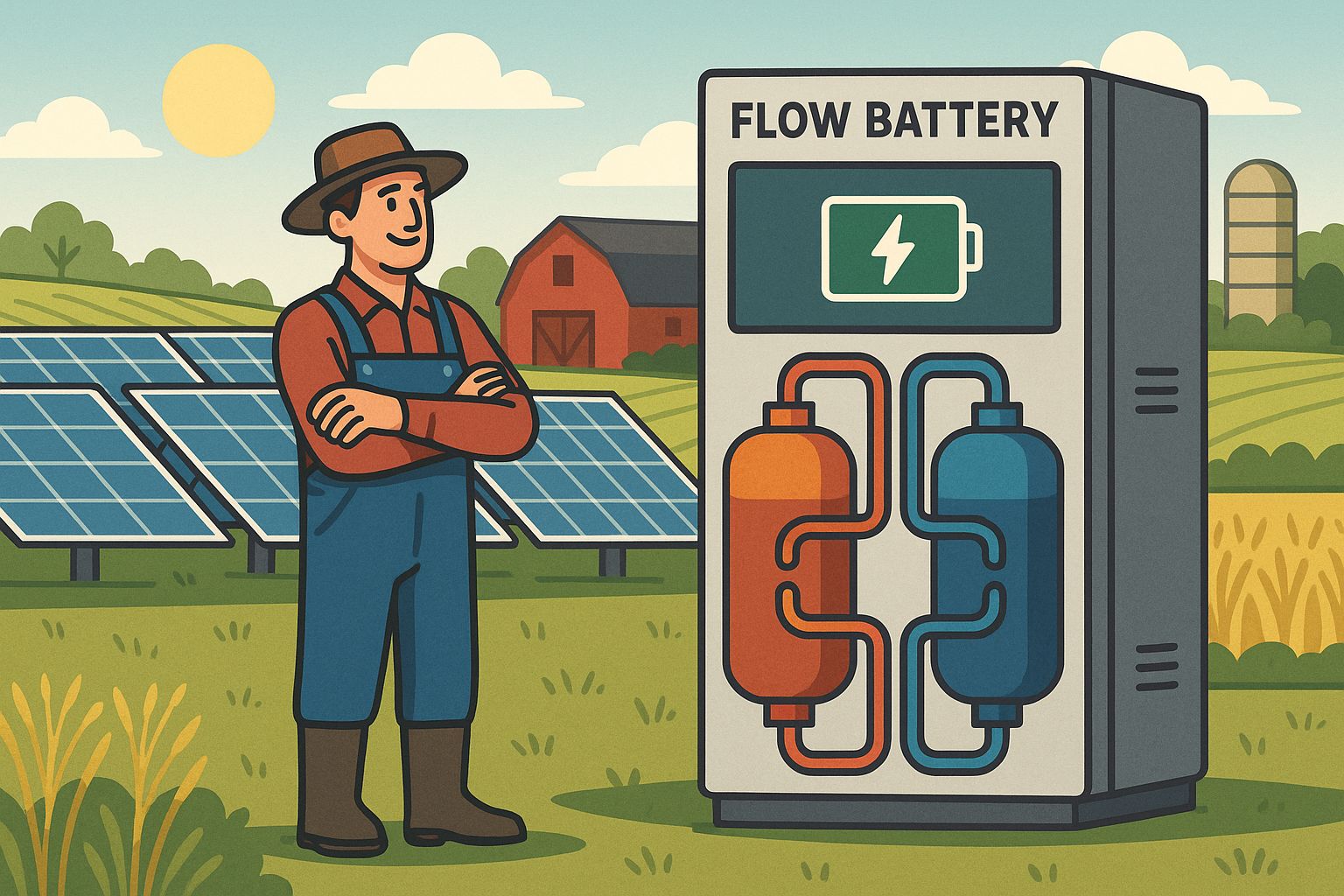
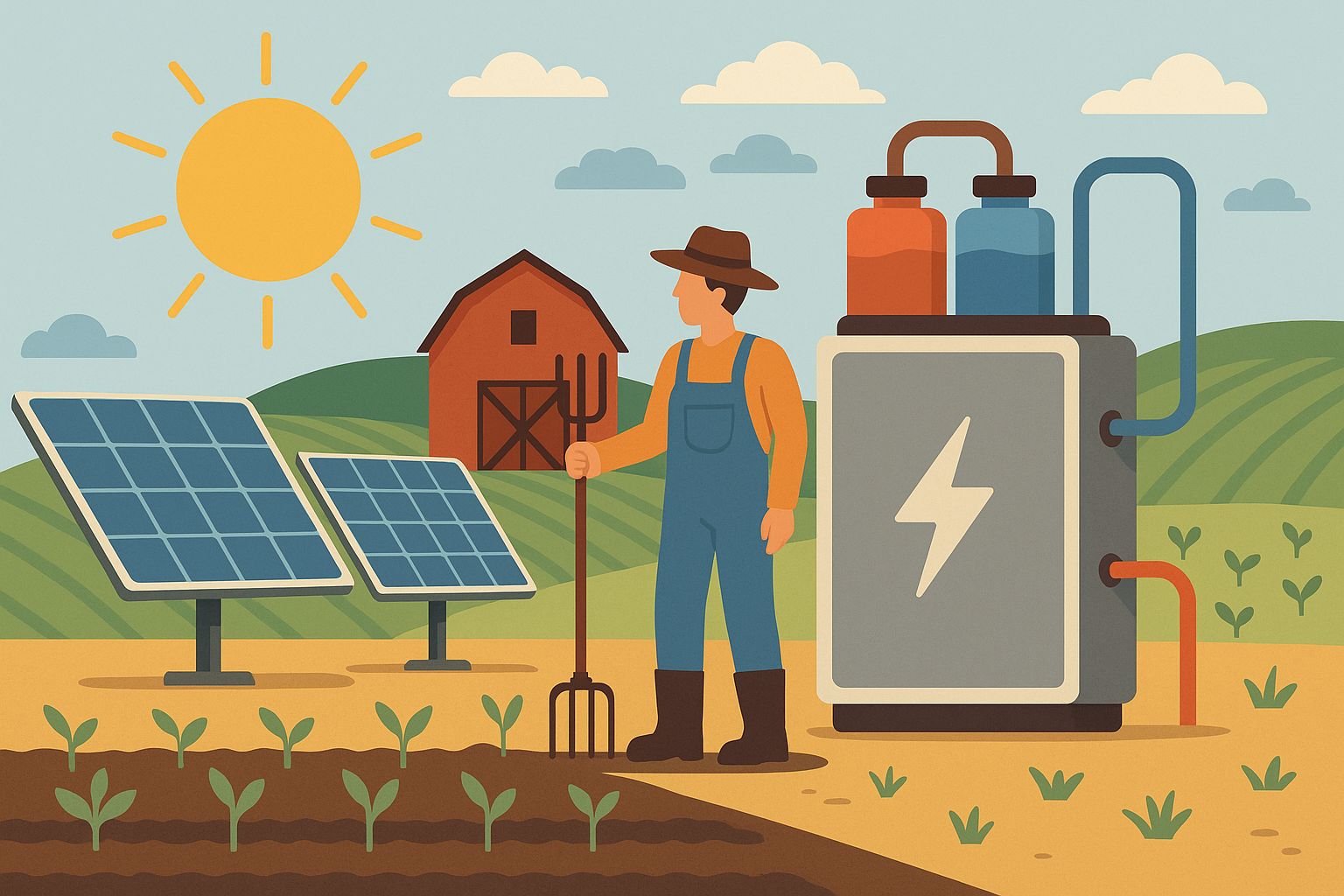
- Flow batteries offer farmers unprecedented energy independence by storing excess solar power for use during outages or nighttime operations
- Unlike traditional batteries, flow batteries maintain 100% capacity for 20+ years, making them ideal long-term investments for agricultural operations
- USDA’s REAP program can cover up to 50% of flow battery installation costs, dramatically improving ROI timelines
- Flow battery systems can scale with farm growth, allowing farmers to start with essential systems and expand capacity over time
- Sustainable energy storage solutions like flow batteries can increase property values by up to 4.3% while reducing environmental impact
When the power goes out during critical irrigation cycles or harvest processing, farmers face catastrophic losses that can destroy an entire season’s profits. For those who’ve invested in solar energy, these moments reveal a harsh truth: panels alone can’t provide 24/7 reliability without effective energy storage. Flow battery technology is rapidly emerging as the missing link for agricultural operations seeking true energy independence.
Flow batteries represent a fundamentally different approach to energy storage that addresses the unique challenges facing modern farming operations. Unlike conventional batteries that degrade with each charge cycle, flow batteries maintain their full capacity for decades, aligning perfectly with the long-term planning horizons of agricultural businesses. SolarFarm Technologies has been at the forefront of developing specialized flow battery systems designed specifically for agricultural applications, helping farmers maximize their renewable energy investments while minimizing operational disruptions.
Why Farmers Need Better Energy Storage Solutions
Agricultural operations face unique energy challenges that standard grid connections or basic solar installations simply cannot address reliably. Irrigation pumps require consistent power during drought conditions when electricity demand peaks and outages are common. Processing facilities need uninterrupted power to prevent spoilage of harvested crops. Livestock operations depend on climate control systems that cannot tolerate even brief power interruptions during extreme weather events. These critical vulnerabilities make farms particularly susceptible to power disruptions at precisely the moments when reliable energy is most vital.
Traditional backup generators come with significant drawbacks: high fuel costs, maintenance requirements, noise pollution, and emissions that contradict sustainability goals. Meanwhile, conventional battery storage options like lithium-ion systems typically offer insufficient capacity, deteriorate rapidly in agricultural environments, and present safety hazards when exposed to dust, moisture, or temperature extremes common in farm settings.
The economic consequences of inadequate energy storage extend beyond immediate crop losses. Without reliable power backup, farmers face increased insurance premiums, limited ability to participate in value-added processing, and vulnerability to increasingly volatile weather patterns. A robust energy storage solution, such as off-grid solar panels with battery use, is no longer a luxury but a fundamental requirement for agricultural resilience in the 21st century.
How Flow Batteries Solve Solar’s Biggest Problem
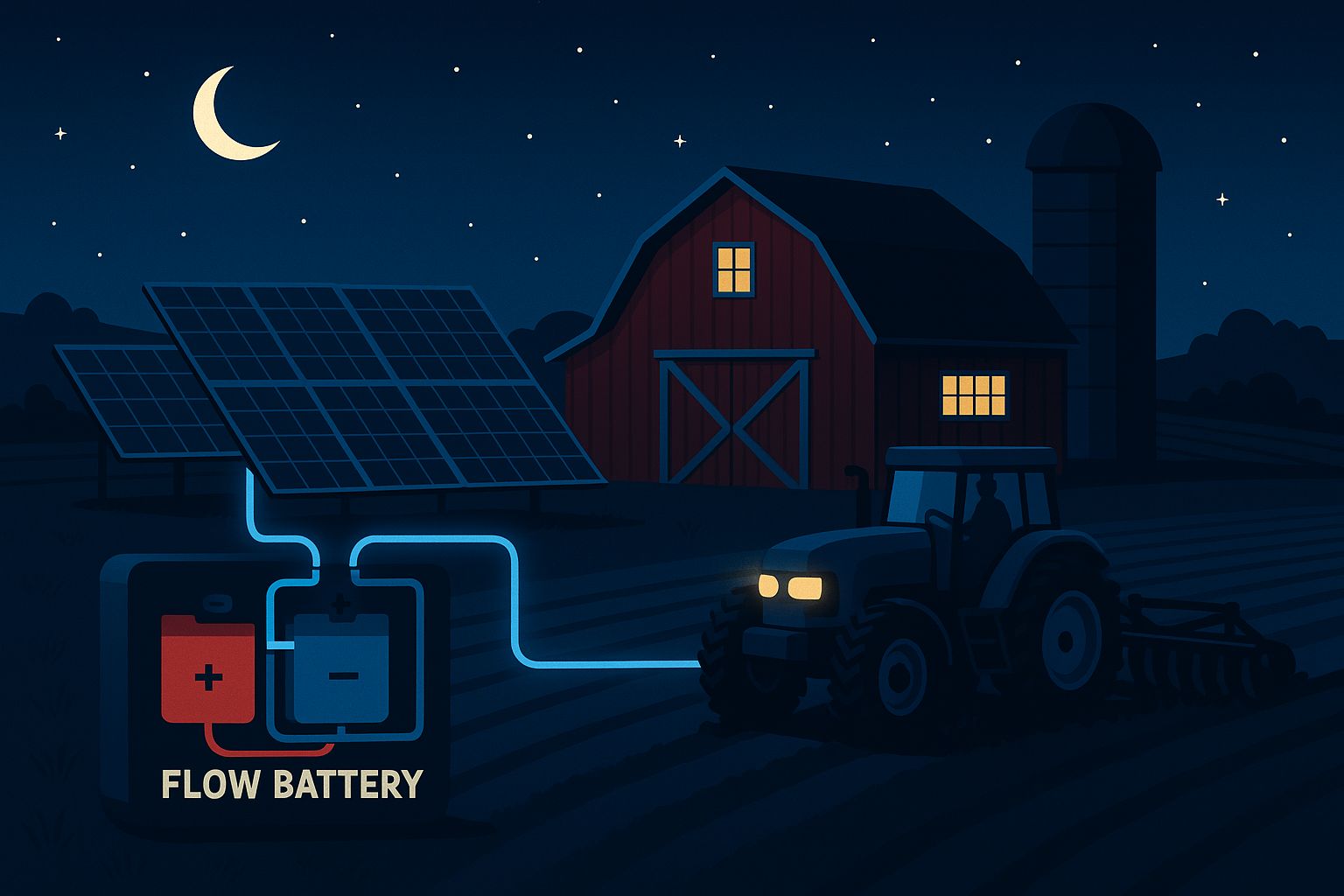
Solar energy production follows the sun’s schedule, not your farm’s. This fundamental mismatch between generation and demand creates the central challenge in renewable energy adoption. When your irrigation systems need power most—during prolonged dry periods—your solar panels may be producing at maximum capacity. But without storage, that excess production simply disappears, wasted rather than preserved for crucial nighttime operations or cloudy days. Discover why many farms are turning to battery storage for backup power.
Flow batteries solve this temporal disconnect by capturing excess solar generation during peak daylight hours and making it available precisely when and where it’s needed most. This time-shifting capability transforms intermittent solar power into a consistent, reliable energy resource that can support critical farm operations regardless of weather conditions or time of day. For more insights on integrating solar panels and battery systems on farms, check out this guide on off-grid farming.
The Intermittency Challenge of Solar Energy
The agricultural sector faces unique challenges with solar intermittency that differ from residential or commercial applications. Crop irrigation typically requires consistent pressure and flow rates that cannot tolerate interruptions without risking crop damage. Dairy operations need reliable power for milking and milk cooling systems on strict schedules regardless of weather conditions. These critical timing requirements make intermittency particularly problematic for farm applications, where operations often cannot simply be postponed until favorable generation conditions return.
What Makes Flow Batteries Different from Standard Batteries
Unlike conventional batteries where energy storage and power conversion happen within the same physical components, flow batteries separate these functions using liquid electrolytes stored in external tanks. This fundamental design difference creates several key advantages for agricultural applications. The separation of power and energy means capacity can be scaled independently from power output—simply by increasing electrolyte volume rather than duplicating entire battery systems. This architecture also prevents the degradation issues that plague traditional batteries, as the liquid electrolytes don’t deteriorate through normal use patterns.
Lifespan Advantages for Agricultural Applications
Farm investments require long-term thinking, and flow battery technology aligns perfectly with this perspective. While lithium-ion batteries typically require replacement after 7-10 years of operation, flow battery systems maintain their full capacity for 20+ years with minimal degradation. The electrolyte solutions themselves never wear out—only the mechanical components require periodic maintenance. This extended lifespan dramatically improves the economics of energy storage for agricultural operations, allowing farmers to amortize costs over decades rather than years.
Scaling Capacity to Match Farm Size
One of the most compelling advantages of flow battery technology for agricultural applications is its modular scalability. Unlike conventional battery systems that require complete replacement when capacity needs increase, flow batteries can be expanded incrementally by simply adding more electrolyte storage. A 500-acre operation might start with a 50kWh system focused on critical infrastructure and later expand to 200kWh as operational needs grow, without scrapping the initial investment.
This scalability creates a practical adoption pathway for farmers hesitant to make large upfront investments. Starting with a system sized for essential operations—irrigation pumps and cold storage, for example—allows for proof of concept before expanding to cover secondary farm operations. The electrolyte tanks can be upsized without replacing the more expensive power conversion components, resulting in declining costs per kilowatt-hour as the system grows.
Real Costs and Returns for Farmers
Flow battery investments require careful financial analysis that extends beyond simple payback calculations. Current installed costs range from $400-700 per kilowatt-hour of capacity, substantially higher than lithium-ion alternatives. However, this price differential disappears when considering the total cost of ownership over a 20-year horizon. When factoring in the elimination of replacement costs, reduced maintenance requirements, and consistent performance throughout the system lifespan, flow batteries typically become the most economical option for agricultural applications requiring 8+ hours of storage duration.
Initial Investment Analysis
A typical mid-sized farm requiring 100kWh of storage capacity can expect initial investment costs between $40,000-70,000 for a complete flow battery system, including installation and integration with existing solar infrastructure. While this represents a significant capital expenditure, agricultural-specific incentives dramatically improve the economics. The Modified Accelerated Cost Recovery System (MACRS) allows qualifying agricultural businesses to depreciate 85% of the system cost over just 5 years, creating substantial tax advantages in addition to direct incentives.
Sample Flow Battery ROI Calculation for 100-Acre Farm
Initial Investment: $60,000
Federal ITC (30%): -$18,000
USDA REAP Grant (25%): -$15,000
Net First-Year Investment: $27,000
Annual Energy Savings: $4,800
Maintenance Costs: $600/year
Simple Payback Period: 6.4 years
20-Year ROI: 273%
Operational Cost Savings Over 10+ Years
The economic advantages of flow battery systems compound over time as they eliminate the replacement cycles required by conventional batteries. A typical lithium-ion system requires complete replacement after 8-10 years, effectively doubling its lifetime cost compared to initial projections. Flow batteries maintain consistent performance throughout their 20+ year lifespan, with only minor maintenance costs for pumps and filters. This extended performance horizon aligns perfectly with farm equipment investment cycles and creates predictable energy costs that can be accurately budgeted over multiple decades.
Maintenance Requirements and Expenses
Flow battery maintenance primarily involves simple mechanical components rather than complex electrochemical systems. Annual maintenance typically includes filter replacements, pump inspections, and basic system diagnostics. These routine procedures can often be performed by farm staff after initial training, eliminating the need for specialized technicians in many cases. The electrolyte solutions themselves require no maintenance under normal operation, and their non-flammable nature eliminates the fire suppression systems and thermal management requirements associated with lithium-ion installations.
Comparing Flow Batteries to Generator Backup
When compared to traditional diesel generators, flow batteries eliminate ongoing fuel costs that typically range from $0.28-0.60 per kWh generated. For farms in remote locations where fuel delivery adds additional expense, these savings become even more significant. Unlike generators that require monthly test cycling and frequent maintenance regardless of actual use, flow batteries have minimal standby costs. This operational difference creates substantial lifecycle advantages that grow with each passing year, particularly as diesel prices continue to face volatility and steady long-term price increases.
5 Essential Farm Applications for Flow Battery Systems
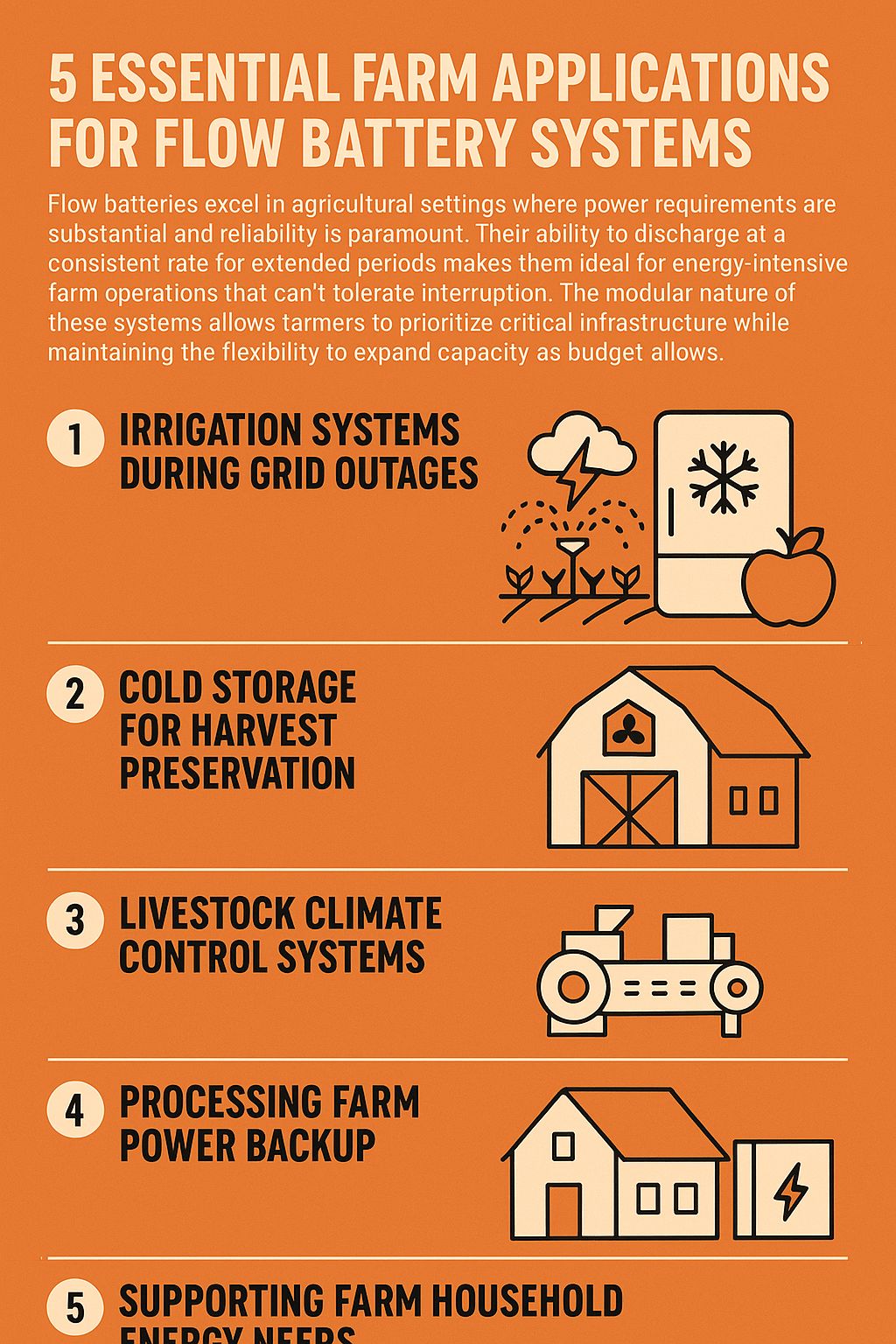
Flow batteries excel in agricultural settings where power requirements are substantial and reliability is paramount. Their ability to discharge at a consistent rate for extended periods makes them ideal for energy-intensive farm operations that can’t tolerate interruption. The modular nature of these systems allows farmers to prioritize critical infrastructure while maintaining the flexibility to expand capacity as budget allows.
- Critical Infrastructure Protection: Irrigation systems, livestock support, cold storage
- Peak Load Management: Offsetting high-demand periods to reduce utility demand charges
- Microgrid Development: Creating farm-wide energy resilience independent of utility reliability
- Revenue Generation: Participating in utility demand response programs when available
- Carbon Footprint Reduction: Eliminating generator emissions while maintaining operations during outages
1. Irrigation Systems During Grid Outages
When the grid goes down during critical growing periods, irrigation pumps can cease functioning at precisely the moment your crops need water most. Flow batteries provide seamless backup power for irrigation systems, ensuring continuous operation even during extended outages. Unlike generators that require manual startup, refueling, and maintenance checks, flow battery systems activate automatically within milliseconds of detecting power loss, protecting vulnerable crops from drought stress.
A properly sized flow battery system can maintain irrigation schedules for 24-72 hours without grid power, depending on water requirements and system efficiency. For farms in regions with unreliable grid infrastructure, this capability alone often justifies the investment by preventing catastrophic crop losses during a single critical outage event. The silent operation of flow batteries also eliminates the noise pollution associated with generators, which can be particularly valuable for farms near residential areas. To explore more on this topic, you can learn about the types of battery you can use with a solar irrigation system.
2. Cold Storage for Harvest Preservation
Post-harvest losses from inadequate refrigeration cost American farmers millions annually. Flow battery systems provide critical backup for cold storage facilities, maintaining precise temperature control during outages that would otherwise lead to spoilage. For high-value perishable crops like berries, leafy greens, and specialized vegetables, even brief temperature fluctuations can significantly reduce marketable yield and quality grade, directly impacting profitability.
Flow batteries excel in this application because they can deliver consistent power for the extended durations needed to preserve cold chain integrity until utility service is restored. The stable discharge characteristics of flow technology maintain cooling system performance without the voltage fluctuations that can damage sensitive compressor motors and control systems. For value-added operations producing premium products, the ability to guarantee cold chain integrity regardless of grid conditions creates marketing advantages and access to quality-sensitive markets.
Cold Storage Protection Analysis
Average cold storage capacity: 2,000 cubic feet
Value of stored produce: $15,000-$85,000 (crop dependent)
Critical backup duration needed: 48-72 hours
Flow battery system cost: $25,000-$45,000
Potential loss prevention: 100% of inventory value per outage event
Additional benefit: Reduced insurance premiums through documented risk mitigation
3. Livestock Climate Control Systems
Modern livestock operations depend heavily on climate control systems to maintain animal health and productivity. Ventilation failures in confined animal feeding operations can lead to rapid temperature spikes and dangerous air quality conditions, potentially causing significant animal losses within hours. Flow batteries provide crucial protection for ventilation systems, feed distribution equipment, and water pumping infrastructure that keeps livestock operations functioning during grid disruptions.
The extended runtime capabilities of flow battery systems are particularly valuable for livestock applications, where backup power may be required for several consecutive days during severe weather events that simultaneously increase climate control demands and threaten utility infrastructure. The ability to maintain essential systems without refueling concerns provides peace of mind that cannot be achieved with traditional generator systems alone.
4. Processing Equipment Power Backup
On-farm processing adds substantial value to agricultural products but introduces critical electricity dependencies. From milk pasteurization to nut dehydration, processing equipment requires consistent power to maintain food safety protocols and prevent batch losses. Flow batteries provide the clean, consistent power needed to keep processing operations running through outages, protecting both product quality and regulatory compliance. For those interested in alternative energy solutions, solar panels for off-grid farming can also be a viable option.
The stable power output characteristics of flow batteries make them particularly suitable for sensitive equipment with specific power quality requirements. Unlike generators that can produce problematic harmonics and voltage fluctuations during startup and load changes, flow battery inverters deliver consistent, clean power that won’t damage electronic controls or compromise product quality. This capability is increasingly important as farms invest in sophisticated processing equipment to capture more of the value chain.
5. Supporting Farm Household Energy Needs
Beyond operational considerations, flow battery systems can simultaneously support farm household requirements during outages. This dual-purpose capability eliminates the need for separate backup systems for residential needs, creating significant cost efficiencies. From maintaining well pumps for household water to supporting basic comfort and communication systems, integrated farm/home battery systems provide comprehensive resilience.
For multigenerational family farms where housing and operations share electrical infrastructure, this integrated approach creates particular value. The ability to maintain both business continuity and family comfort during extended outages improves quality of life while protecting livelihoods. The psychological benefits of energy security should not be underestimated, as they contribute significantly to the overall sustainability of family farming operations where work and home life are inherently interconnected.
Government Incentives That Make Flow Batteries More Affordable
The economics of flow battery investments have improved dramatically through recent government incentive programs targeting agricultural energy resilience. These programs substantially reduce upfront costs while accelerating payback periods, making 2023-2025 an optimal window for investment. Understanding and leveraging these incentives can transform a marginal financial case into a compelling investment opportunity with multi-decade returns.
Federal Tax Credits for Energy Storage
The Inflation Reduction Act of 2022 fundamentally transformed the economics of agricultural energy storage by extending the Investment Tax Credit (ITC) to standalone battery systems. Agricultural operations can now claim a 30% tax credit on the total installed cost of flow battery systems, regardless of whether they connect to existing solar installations. This represents a dramatic improvement from previous requirements that storage systems charge primarily from renewable sources to qualify for incentives.
For profitable farming operations with tax liability, this credit effectively reduces system costs by nearly one-third immediately. For operations without sufficient tax liability to utilize the full credit, the IRA also created direct payment options and credit transfer provisions that allow the value to be monetized through partnerships with tax equity investors. These flexible approaches ensure that virtually all agricultural operations can benefit, regardless of their tax situation.
USDA REAP Grants and Loan Guarantees
The Rural Energy for America Program (REAP) provides agricultural producers with grants covering up to 50% of eligible project costs for energy storage systems. REAP grants can be combined with tax credits to reduce out-of-pocket expenses by 80% or more in optimal scenarios. The competitive grant program prioritizes projects demonstrating significant energy resilience benefits, making flow battery installations particularly competitive due to their long duration storage capabilities and operational longevity.
Beyond grants, REAP also offers loan guarantee programs that reduce interest rates and improve terms for the remaining project costs. These guarantees typically result in 1-2% interest rate reductions and extended repayment terms, substantially improving project economics beyond the direct grant benefits. The combination of grants and loan guarantees creates a powerful financial package that dramatically improves project economics compared to conventional financing approaches.
State-Specific Agricultural Energy Programs
Many states have established complementary incentive programs specifically targeting agricultural energy resilience. California’s Self-Generation Incentive Program (SGIP) provides additional rebates of $200-400/kWh for qualifying battery systems, while Minnesota’s AgBMP Loan Program offers zero-interest financing for energy improvements including storage. These state-level incentives can be combined with federal programs to further improve project economics, making battery use a necessity for off-grid farm solar panels.
State agricultural extension services increasingly provide technical assistance and feasibility assessments for energy storage projects, helping farmers navigate the complex landscape of available incentives and technology options. These services often include energy audits, system sizing recommendations, and assistance with incentive applications, reducing the administrative burden on farmers while improving project outcomes.
Sizing Your Flow Battery System
Proper sizing represents the most critical decision in flow battery deployment, balancing capital costs against resilience requirements. Unlike residential applications where undersizing merely creates inconvenience, agricultural operations face potential catastrophic losses if critical systems lose power during key periods. A comprehensive energy assessment focusing on critical loads provides the foundation for effective system sizing.
Calculating Your Farm’s Critical Power Needs
Start by identifying truly essential systems that must remain operational during outages, categorizing them by criticality and power requirements. Irrigation pumps typically draw 5-10kW depending on size and lift requirements, while cold storage compressors often require 3-7kW of continuous power. Ventilation systems for livestock facilities generally need 1-2kW per 1,000 square feet to maintain minimum air exchange rates. Detailed power monitoring during peak operation periods provides the most accurate data for sizing calculations.
Beyond instantaneous power requirements, calculate the total energy (kilowatt-hours) needed to maintain operations for your desired backup duration. Most agricultural operations should plan for minimum 24-hour backup capability, with 48-72 hours recommended for regions with frequent extended outages or extreme weather vulnerability. Critical operations like livestock support may require even longer durations based on historical outage data for your specific region.
|
Farm Operation |
Typical Power Draw |
Daily Energy Requirement |
Criticality Level |
|---|---|---|---|
|
Irrigation (25HP pump) |
18.7 kW |
149.6 kWh (8hr operation) |
High (during growing season) |
|
Cold Storage (2,000 sq ft) |
5.5 kW |
99 kWh (18hr compressor runtime) |
Critical (continuous operation) |
|
Livestock Ventilation |
3.2 kW |
76.8 kWh (24hr operation) |
Critical (continuous operation) |
|
Well Pump |
2.2 kW |
11 kWh (5hr operation) |
Medium-High |
|
Processing Equipment |
7.5 kW |
37.5 kWh (5hr operation) |
Medium (schedulable) |
Matching Battery Capacity to Solar Production
For farms with existing solar installations, flow battery capacity should align with typical daily excess production to maximize self-consumption. Analyze at least 12 months of solar production data alongside load profiles to identify seasonal patterns and size the system accordingly. Most agricultural operations should target storing 40-60% of their average daily solar production to optimize economics while providing meaningful backup capability.
While oversizing storage relative to solar production improves resilience, it can negatively impact economic returns by leaving expensive battery capacity underutilized during normal operations. For operations prioritizing economic optimization, size the system to fully charge from excess solar generation at least 300 days annually. For those prioritizing resilience above economic considerations, size based on critical load requirements rather than available solar production, and consider maintaining grid charging capability for emergency preparation when severe weather threatens.
Remember that flow battery systems can be expanded more economically than other storage technologies by simply adding electrolyte tanks to increase capacity. This creates the option to start with a smaller system focused on economic optimization and expand capacity later as operational needs grow or resilience requirements change.
Planning for Seasonal Energy Demands
Agricultural operations face dramatic seasonal variations in energy requirements that must be factored into system design. Irrigation loads typically peak during summer months, precisely when solar production is highest but grid reliability may be compromised by cooling demands and storm activity. Cold storage requirements intensify during harvest periods, creating concentrated energy demands that may exceed typical daily patterns. A properly designed flow battery system must accommodate these seasonal variations without oversizing to the point of economic inefficiency.
Installation Process and Integration with Existing Solar
Flow battery installation on agricultural properties requires careful planning to maximize efficiency while minimizing disruption to ongoing operations. The process typically spans 6-12 weeks from contract signing to commissioning, with on-site work limited to 5-10 days for most installations. System components are typically installed on concrete pads adjacent to existing electrical infrastructure, with electrolyte tanks requiring the most substantial space allocation.
Integration with existing solar installations generally requires minimal modifications to the solar inverter systems, as most modern solar installations anticipate future storage additions. In retrofit applications, additional control systems may be required to coordinate charging and discharging cycles with solar production patterns and load requirements. For optimal performance, battery management systems should have direct communication with both solar production monitoring and critical load controllers.
Compatibility with Different Solar Setups
Flow battery systems can integrate with virtually any existing solar installation, though the complexity and cost vary by inverter type and age. AC-coupled integration, where the flow battery connects to the same electrical panel as the solar output, offers the simplest retrofit path for farms with existing solar. This configuration maintains complete independence between solar and storage systems, allowing each to operate optimally according to their own parameters.
DC-coupled integration, where the flow battery connects directly to the solar panels before the inverter, offers higher round-trip efficiency but typically requires more extensive modifications to existing systems. This approach works best for new installations designed from the ground up as integrated systems. The efficiency advantage of DC-coupling typically ranges from 5-8% compared to AC-coupled systems, which can substantially impact long-term economics for larger installations.
Finding Qualified Rural Installers
The specialized nature of flow battery technology creates challenges in finding qualified rural installers with relevant experience. The USDA maintains a directory of contractors with experience in agricultural energy projects through their Rural Energy for America Program (REAP). State agricultural extension offices typically maintain similar directories of qualified installers who have completed previous projects on agricultural properties.
When evaluating installers, prioritize those with specific flow battery experience rather than general battery storage backgrounds. The unique characteristics of flow systems require specialized knowledge of fluid systems, pump controls, and electrolyte management that differs substantially from solid-state battery technologies. Request references specifically from agricultural installations, as farm environments present unique challenges regarding dust exposure, temperature variations, and integration with specialized agricultural equipment.
Future-Proofing Your Farm’s Energy Infrastructure
Investing in flow battery technology positions agricultural operations to benefit from emerging opportunities in the rapidly evolving energy landscape. Virtual power plant (VPP) programs, which aggregate distributed energy resources to provide grid services, increasingly offer revenue opportunities for battery owners. These programs typically provide annual payments of $50-150 per kilowatt of capacity for making storage available during grid stress periods, creating new revenue streams without impacting normal farm operations.
The modular nature of flow battery systems creates inherent future-proofing advantages, as capacity can be expanded incrementally as needs grow or technologies improve. Unlike solid-state batteries that require complete replacement to benefit from technology improvements, flow systems allow for component-level upgrades that extend system lifespan indefinitely. This evolutionary approach aligns perfectly with the multi-generational planning horizons of family farming operations seeking to build lasting infrastructure.
Is it Worth the Investment for a Farmer to Use the Flow Battery as Back Up to Solar Panel
For the farmer who aims to maximize their solar investment, a flow battery can absolutely be a worthwhile investment. Its scalability, longevity, and safety features make it a robust and reliable partner to solar power.
While the initial cost is a significant factor, when viewed through the lens of avoiding costly downtime, reducing energy bills, and ensuring the continuity of essential farm operations, the long-term benefits can far outweigh the upfront expenditure. It’s not just about backup; it’s about building a more resilient, efficient, and independent agricultural future.
Frequently Asked Questions
As flow battery technology gains traction in agricultural applications, farmers naturally have questions about practical implementation details and operational considerations. The following answers address the most common questions based on real-world agricultural installations and operational experience.
How long do flow batteries typically last compared to lithium-ion batteries?
Flow batteries maintain their full rated capacity for 20-25 years with proper maintenance, compared to 7-10 years for typical lithium-ion systems. The electrolyte solutions themselves do not degrade with cycling, eliminating the capacity fade that characterizes conventional batteries. This fundamental difference stems from the separation of power and energy components in flow architecture, where reaction sites remain preserved regardless of cycle count.
From a practical agricultural perspective, this extended lifespan means flow batteries can be considered permanent infrastructure similar to buildings and irrigation systems, rather than depreciating equipment requiring regular replacement. This dramatically improves lifetime economics and reduces the operational disruption associated with battery replacements, which is particularly valuable for remote agricultural installations where specialized installation crews may not be readily available.
Can flow batteries operate in extreme temperatures common on farms?
Flow batteries maintain consistent performance across a much wider temperature range than lithium-ion alternatives, typically operating effectively from 0°F to 122°F (-18°C to 50°C) without active thermal management. This temperature tolerance makes them particularly suitable for agricultural applications where equipment may be exposed to seasonal temperature extremes. The liquid electrolyte’s high thermal mass provides inherent buffering against rapid temperature fluctuations that can damage solid-state battery systems.
For regions experiencing extreme cold beyond operating parameters, simple insulation measures and minimal heating elements can extend operation into ultra-low temperature ranges. These protective measures require significantly less energy than the extensive thermal management systems needed for lithium-ion installations in similar environments. This robust environmental tolerance reduces installation complexity and maintenance requirements while improving system reliability under challenging farm conditions.
What happens to flow batteries at end-of-life – can they be recycled?
Flow battery systems offer significant end-of-life advantages compared to conventional batteries, with nearly complete recyclability of all components. The electrolyte solutions, which represent the majority of the system’s material volume, can be reclaimed and reprocessed with minimal degradation, often achieving 98%+ recovery rates. This characteristic creates substantial sustainability advantages while potentially reducing lifetime costs through electrolyte reclamation value.
The mechanical components—pumps, filters, and control systems—follow standard industrial equipment recycling pathways through conventional metal recovery processes. The containment tanks typically use standard plastic materials with established recycling channels or metals with high scrap value. This comprehensive recyclability aligns with agricultural sustainability goals while potentially creating end-of-life value recovery that can offset decommissioning costs.
From a practical farm management perspective, the non-toxic nature of many flow battery chemistries eliminates concerns about soil or groundwater contamination that can complicate decommissioning of other energy storage technologies. This reduced environmental liability represents a significant long-term risk mitigation advantage for agricultural properties where land stewardship across generations remains a core value.
Will a flow battery system increase my property insurance rates?
Flow battery installations typically have neutral or positive impacts on farm insurance rates when properly disclosed and documented. The non-flammable nature of most flow battery electrolytes eliminates the fire risks associated with lithium-ion systems, often resulting in more favorable risk assessments. Many insurers now recognize energy resilience improvements as risk mitigation measures that may qualify for premium reductions, particularly for operations where power-dependent systems protect high-value assets. For more information on why farms are turning to battery storage, check out this article.
The key to favorable insurance treatment lies in proper documentation and certification. Systems should be installed according to all applicable electrical and building codes, with appropriate certifications from nationally recognized testing laboratories. Provide your insurer with detailed information about safety features, monitoring systems, and maintenance protocols to support appropriate risk assessment. Many system providers can assist with insurance documentation based on experience with previous agricultural installations.
- Request a pre-installation insurance review to identify any specific requirements
- Ensure installation includes proper signage and emergency response information
- Document all safety certifications and compliance with applicable standards
- Consider umbrella liability coverage for comprehensive protection
- Update insurance documentation whenever system modifications occur
Some insurance providers now offer specific policy endorsements for renewable energy systems that provide specialized coverage tailored to the unique characteristics of these technologies. These endorsements typically provide more comprehensive protection at lower cost than attempting to cover systems under standard farm policy language that wasn’t designed with modern energy systems in mind.
Can I start small and expand my flow battery system as my farm grows?
Flow battery architecture uniquely supports incremental expansion that aligns perfectly with farm growth patterns. Unlike other battery technologies where expansion requires duplicate systems operating in parallel, flow batteries can simply add electrolyte volume and storage tanks to increase capacity while utilizing the same power conversion equipment. This modular approach allows farms to match investments precisely to current needs while preserving expansion pathways as operations grow.
When planning initial installations, ensure adequate space allocation for future expansion and specify power conversion equipment with capacity for growth. The incremental cost of oversizing initial power components is typically much lower than retrofitting larger components later. Similarly, electrical interconnection should anticipate future capacity to avoid expensive electrical service upgrades as the system expands. For more insights, consider exploring the necessity of battery use in off-grid farm solar panel systems.
Consider implementing a phased approach that prioritizes protecting your most critical systems initially, then expands to cover secondary operations as budget allows. This strategy creates immediate protection for essential functions while distributing capital costs across multiple budget cycles. Each expansion phase becomes more economical than the last as the fixed infrastructure components are shared across greater total capacity. For more insights, read about why farms are turning to battery storage for backup power.




Leave a Reply