
Key Takeaways
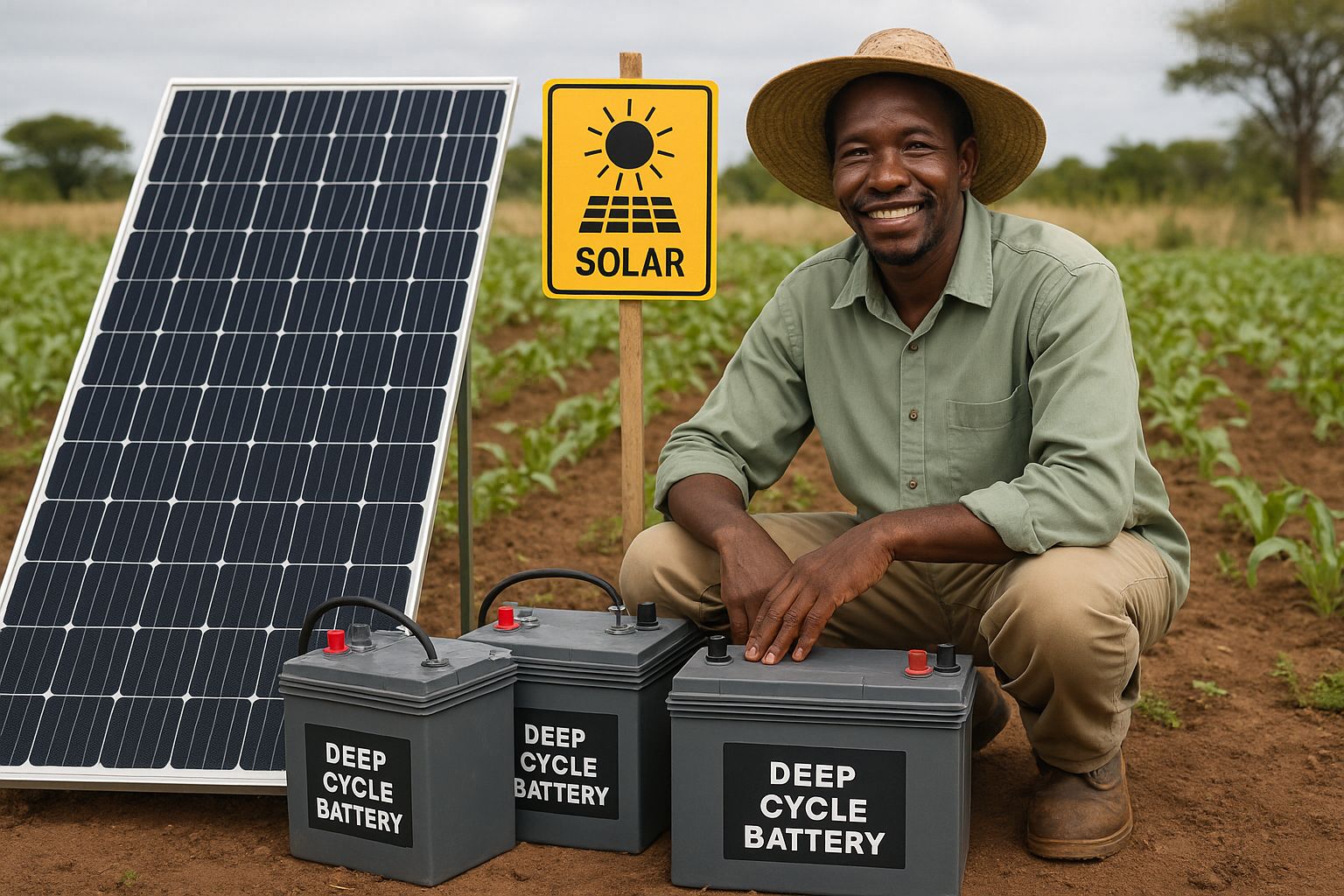
- Lead-acid deep cycle batteries provide farmers with reliable solar energy storage at a lower initial investment than lithium alternatives, offering essential backup power during outages and nighttime.
- When properly maintained, lead-acid batteries can last 5-7 years in agricultural applications, making them economically viable despite requiring more space and regular maintenance.
- Solar backup systems with lead-acid batteries can reduce diesel generator dependency by up to 70%, significantly lowering operational costs for irrigation, climate control, and cold storage.
- The most cost-effective setup for most farms combines flooded lead-acid batteries with a proper charge controller and adequate ventilation to maximize lifespan and performance.
- Farmers using solar backup systems report achieving energy independence during critical growing periods, providing security against rising utility costs and unpredictable weather events.
The sun doesn’t shine 24 hours a day, but your farm’s critical systems never stop. For farmers investing in solar energy, the question isn’t just about generating power—it’s about storing it effectively for when you need it most.
Lead-Acid Deep Cycle Batteries: The Farmer’s Guide to Solar Backup Power
Solar panels alone create an incomplete system that leaves your operation vulnerable when the sun sets or during cloudy periods. That’s where lead-acid deep cycle batteries enter the picture as the backbone of reliable solar backup systems that can transform how your farm operates.
Lead-acid batteries have been the workhorse of energy storage for over a century, and while newer technologies have emerged, their combination of affordability, reliability, and proven performance make them particularly attractive for agricultural applications where budgets matter and dependability are non-negotiable.
Why Farmers Need Battery Backup for Solar Systems
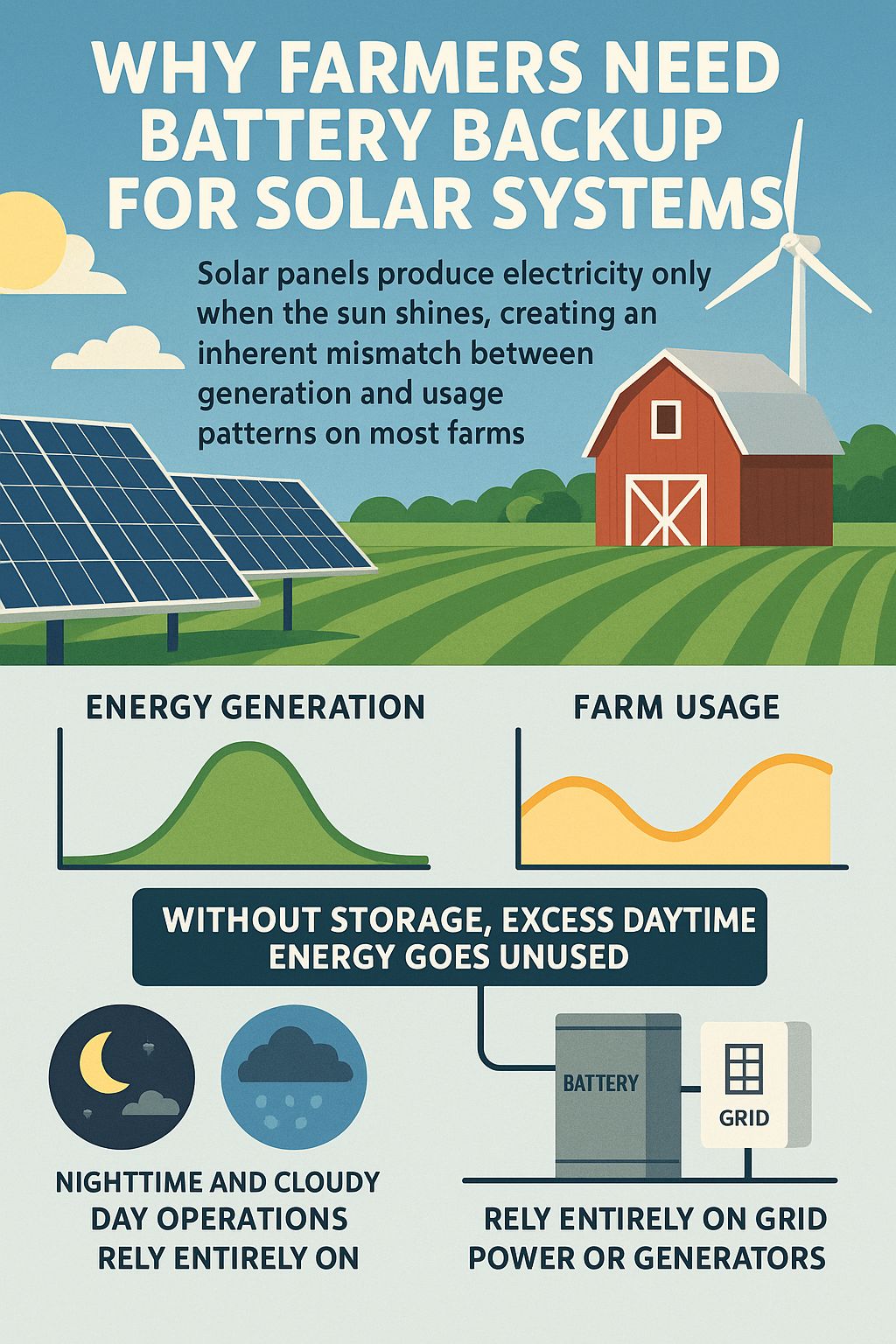
Solar panels produce electricity only when the sun shines, creating an inherent mismatch between generation and usage patterns on most farms. Without storage, excess daytime energy goes unused while nighttime and cloudy day operations rely entirely on grid power or generators. This fundamental limitation means standalone solar arrays without batteries typically offset only 20-40% of a farm’s total energy needs, leaving significant potential savings on the table. For more information on the necessity of battery use in off-grid farming, check out this guide on off-grid farm solar panels.
Modern farming operations require consistent, reliable power for irrigation controllers, ventilation systems, refrigeration, security lighting, and equipment charging. Weather events, seasonal demands, and utility outages don’t follow convenient schedules, making energy independence through battery backup increasingly critical for operational stability.
A complete solar+storage system creates true energy resilience—the ability to maintain critical operations regardless of external factors like utility outages or fuel availability. For farmers in remote locations or areas with unreliable grid service, this resilience isn’t just about savings—it’s about operational survival.
- Maintains power to critical irrigation systems during outages
- Ensures climate control systems in livestock facilities remain operational
- Powers essential security and monitoring systems around the clock
- Provides stable electricity for office operations and communication systems
- Reduces or eliminates dependency on diesel generators and their associated fuel costs
Energy Independence During Grid Outages
Rural power lines are typically the last to be repaired during outages, leaving farms vulnerable to extended downtime during critical periods. Weather events that damage transmission infrastructure can leave operations without power for days or even weeks. During the 2021 Texas winter storm, farms with solar+storage systems maintained essential operations while others faced devastating losses.
Lead-acid battery banks properly sized for critical loads can bridge these gaps, maintaining power to essential systems like water pumps, ventilation, and refrigeration. For livestock operations where power loss can quickly become life-threatening for animals, this independence isn’t just convenient—it’s essential risk management.
Nighttime Power Access for Critical Farm Operations
Agricultural work doesn’t stop when the sun sets. Many farm operations require 24-hour power access, from automated irrigation systems that run during off-peak hours to climate-controlled storage for temperature-sensitive crops. Livestock operations need consistent ventilation, lighting, and water pumping regardless of time of day.
Deep cycle lead-acid batteries excel at providing the steady, reliable power needed for these consistent loads. Unlike starting batteries designed for short bursts of high current, deep cycle batteries deliver moderate power over extended periods—precisely what overnight farm operations require. Their ability to handle regular deep discharge cycles makes them particularly well-suited to the daily charge/discharge pattern of solar applications.
Additionally, many rural areas experience higher electricity rates during peak evening hours. Battery storage allows farmers to use solar energy collected during the day to power evening operations, effectively time-shifting energy usage to avoid these premium rates.
Protection Against Seasonal Energy Fluctuations
Agricultural energy needs rarely remain constant throughout the year. Irrigation demands spike during dry periods, cooling systems work harder during summer heat, and processing equipment runs continuously during harvest. These seasonal variations create challenges for energy planning and can result in significantly higher utility bills during peak periods.
Battery backup systems provide a buffer against these fluctuations by storing excess energy produced during low-demand periods for use during high-demand times. This load-shifting capability is particularly valuable during harvest seasons when processing equipment might run nearly continuously while still needing to maintain refrigeration and other critical systems.
For farms in regions with net metering policies, battery systems can be strategically charged and discharged to maximize financial returns, storing energy when generation exceeds compensation rates and discharging when utility prices are highest. This intelligent energy management transforms a basic solar system into a sophisticated farm asset that actively reduces operational costs.
Lead-Acid Deep Cycle Batteries Explained
Lead-acid deep cycle batteries are specifically designed for the repeated charge and discharge cycles that solar backup systems demand. Unlike standard automotive batteries that provide quick bursts of energy for starting engines, deep cycle batteries deliver consistent power over extended periods. This fundamental difference makes them ideal for storing solar energy that needs to be released gradually to support farm operations when solar panels aren’t producing electricity.
The technology behind these batteries is surprisingly straightforward yet remarkably effective. Each battery contains lead plates submerged in an electrolyte solution of sulfuric acid and water. During charging, electrical energy converts lead sulfate back to lead and lead dioxide, storing energy in a chemical form. When power is needed, the chemical reaction reverses, releasing electrons that flow through your electrical system to power equipment.
How They Differ from Regular Batteries
The key distinction between deep cycle and standard batteries lies in their internal construction. Deep cycle batteries feature thicker lead plates that can withstand repeated deep discharges without damage. Standard batteries with thinner plates deteriorate quickly when discharged below 50% capacity, while quality deep cycle batteries can safely handle discharges of 80% or more of their total capacity thousands of times over their lifespan.
This durability comes with trade-offs in terms of power delivery. Deep cycle batteries provide steady, moderate current over many hours rather than the high-amperage burst that starting batteries deliver. For farm applications where consistent power matters more than momentary surges, this characteristic is precisely what’s needed to maintain critical systems overnight or during cloudy periods.
Another significant difference is maintenance requirements. While some standard batteries are fully sealed and maintenance-free, many deep cycle batteries require periodic water addition and terminal cleaning to ensure optimal performance and longevity. This maintenance, while simple, represents an ongoing commitment that farmers should factor into their decision-making process.
Types of Lead-Acid Batteries for Farm Applications
Flooded lead-acid (FLA) batteries remain the most economical choice for many farm operations. These traditional batteries with removable caps allow for water addition and direct monitoring of electrolyte levels. Their lower upfront cost makes them attractive for budget-conscious operations, though they require regular maintenance and must be installed in ventilated areas due to hydrogen gas emissions during charging.
Sealed lead-acid batteries include Absorbent Glass Mat (AGM) and Gel variants that eliminate most maintenance requirements. In AGM batteries, fiberglass mats absorb the electrolyte solution, preventing leaks and allowing installation in various orientations. Gel batteries use a silica additive that transforms the electrolyte into a non-spilling gel. Both types eliminate watering requirements and greatly reduce gas emissions, though they typically cost 1.5-2 times more than flooded batteries.
For remote or extreme weather installations, specialized deep cycle batteries with enhanced temperature tolerance offer better performance. These batteries incorporate additives and design modifications that extend functioning temperature ranges, though at premium prices typically 2-3 times higher than standard flooded options.
Lead-Acid Battery Type Comparison for Farm Use
Flooded Lead-Acid: Lowest initial cost ($150-250/kWh), highest maintenance, 5-7 year lifespan, requires ventilation
AGM: Medium cost ($250-350/kWh), no maintenance, 5-8 year lifespan, flexible mounting options
Gel: Highest cost ($300-400/kWh), no maintenance, 7-10 year lifespan, excellent deep discharge recovery
Typical Lifespan and Capacity Measurements
When properly maintained, quality lead-acid deep cycle batteries typically last 5-7 years in agricultural solar applications. This lifespan varies significantly based on depth of discharge patterns, maintenance practices, ambient temperatures, and charging system quality. Batteries consistently discharged to only 50% capacity may last twice as long as those routinely discharged to 80%.
Capacity ratings for deep cycle batteries come in ampere-hours (Ah) or kilowatt-hours (kWh). A typical 6V deep cycle battery might offer 225Ah capacity, while 12V batteries commonly range from 100-250Ah. For farm planning purposes, usable capacity matters more than total capacity. For lead-acid batteries, it’s prudent to calculate usable capacity at 50% of rated capacity to maximize battery lifespan, meaning a 10kWh battery bank should be treated as having 5kWh of usable daily energy.
Temperature significantly impacts performance, with capacity decreasing by approximately 1% for every degree Fahrenheit below 77°F. At 32°F, a battery may deliver only 65% of its rated capacity, while extremely high temperatures accelerate internal corrosion and shorten lifespan. This temperature sensitivity makes battery location and climate control considerations particularly important for farm installations.
Cost Analysis: Are Lead-Acid Batteries Worth It?
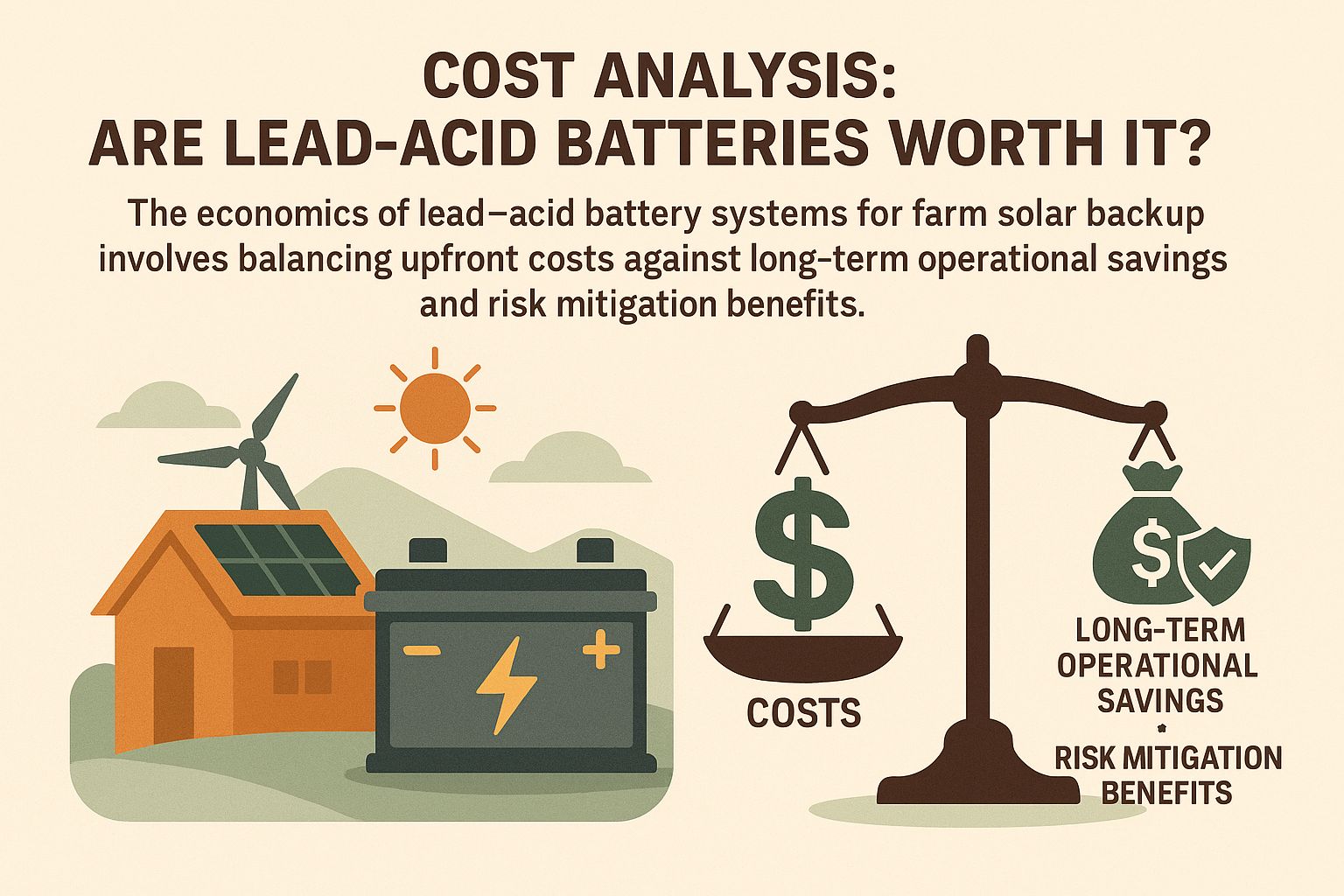
The economics of lead-acid battery systems for farm solar backup involves balancing upfront costs against long-term operational savings and risk mitigation benefits. A complete lead-acid battery backup system typically costs between $400-$800 per kilowatt-hour of storage capacity installed, including batteries, inverter, charge controller, and balance of system components. This translates to roughly $8,000-$16,000 for a modest 20kWh system capable of running critical farm loads overnight. For more on integrating battery systems, check out this guide on battery use for off-grid farms.
This initial investment delivers three distinct financial benefits: daily energy arbitrage (using stored solar energy instead of purchasing evening electricity), demand charge reduction for larger operations, and outage protection that prevents crop or livestock losses. The combination of these benefits typically delivers payback periods ranging from 3-8 years, depending on specific farm operations and local utility rates. For more information on how solar battery storage can be a good investment for farmers, visit our blog.
Break-Even Timeline for Different Farm Sizes
Small farms (under 10 acres) focusing on high-value crops typically achieve break-even on lead-acid battery systems within 4-5 years when the batteries primarily support irrigation, minimal cold storage, and basic security systems. The relatively modest investment of $5,000-$10,000 for a small system pays for itself through consistent energy savings and crop loss prevention during critical growing periods. For these operations, a 10-15kWh battery system usually provides sufficient backup for essential functions.
Medium-sized operations (10-100 acres) generally see faster returns of 3-4 years when batteries support multiple critical systems including larger irrigation setups, substantial cold storage, and basic processing equipment. The $15,000-$30,000 investment for a 30-60kWh system often prevents multiple potential loss scenarios each season while significantly reducing peak demand charges that frequently apply to farms of this size. The greater electrical load diversity of mid-sized operations also improves battery utilization efficiency, enhancing economic returns.
Large commercial farms with substantial electrical loads may experience either the fastest or slowest payback periods, depending on their specific operations and utility rate structures. Operations with significant refrigeration, processing, or climate control needs that coincide with peak utility rate periods can see paybacks as quick as 2-3 years on systems costing $50,000+. However, operations with primarily daytime loads may find limited economic benefit from battery storage unless outage protection carries substantial value due to the nature of their production.
Comparison with Lithium-Ion and Other Alternatives
Lead-acid batteries represent the most economical entry point for farm energy storage with initial costs 40-60% lower than comparable lithium systems. However, lithium batteries offer longer lifespans (10-15 years), deeper discharge capabilities, higher efficiency, and minimal maintenance requirements. For farms with limited installation space or labor availability for maintenance, the higher upfront investment in lithium might prove worthwhile despite costs ranging from $800-$1,200 per kilowatt-hour installed.
Flow batteries and emerging storage technologies offer promising advantages but currently come with prohibitive costs for most agricultural applications. These advanced systems, while offering extremely long cycle lives and other technical benefits, typically cost 3-5 times more than lead-acid solutions without providing proportional economic benefits for typical farm usage patterns. Their primary advantages emerge only in specialized applications with unique cycling requirements or extremely critical loads. For farmers looking to explore cost-effective solar options, understanding the off-grid farming guide can be beneficial.
For most agricultural operations, the pragmatic approach involves starting with lead-acid technology for initial energy storage needs, then potentially upgrading to lithium or other technologies when expanding the system or replacing batteries at the end of their useful life. This strategy minimizes upfront capital requirements while providing immediate benefits and leaving flexibility for future technological improvements.
Available Agricultural Incentives and Tax Benefits
The financial equation for lead-acid battery systems improves significantly when accounting for available incentives. The federal Investment Tax Credit (ITC) applies to battery storage when installed alongside solar panels, reducing system costs by 30% through 2032. This substantial credit directly reduces your tax liability dollar-for-dollar, dramatically improving ROI calculations.
Many states offer additional incentives specific to agricultural operations adopting renewable energy storage. These range from property tax exemptions for renewable energy improvements to direct rebates through utility or state agricultural programs. California’s Self-Generation Incentive Program, for example, provides substantial rebates specifically for energy storage systems installed on agricultural properties, while New York’s NY-Sun program offers enhanced incentives for farm operations.
USDA’s Rural Energy for America Program (REAP) provides both grants and loan guarantees covering up to 25% of project costs for renewable energy systems including battery storage. These agricultural-specific incentives can be combined with general energy storage incentives, sometimes reducing effective system costs by 50-70% after all benefits are applied.
6 Biggest Benefits for Farm Operations
Beyond pure economics, lead-acid battery systems deliver operational advantages that transform daily farm management. These benefits directly address the unique challenges agricultural operations face in maintaining consistent energy access across variable conditions and demanding schedules.
1. Reliable Power for Irrigation Systems
Modern precision irrigation demands reliable electricity for pumps, controllers, and monitoring systems. Power interruptions during critical growing periods can mean crop damage or loss within hours. Lead-acid battery backup ensures irrigation cycles continue uninterrupted regardless of grid conditions, protecting crop investments worth thousands of dollars per acre.
Battery systems enable strategic irrigation timing, allowing pumps to operate during nighttime hours when evaporation losses are minimized and utility rates are lower. This operational flexibility improves water efficiency while reducing energy costs. For drip irrigation systems with computerized controls, consistent power prevents programming loss and maintains precise watering schedules that optimize crop yield and quality.
2. Climate Control in Barns and Greenhouses
Temperature-sensitive environments like poultry houses, dairy operations, and greenhouses require uninterrupted climate control. Lead-acid battery systems maintain ventilation fans, heating systems, and automated controllers during outages that would otherwise create dangerous conditions within hours. This capability protects livestock from heat stress or hypothermia while preventing costly crop losses in controlled-environment agriculture.
The consistent power quality from battery-backed systems also protects sensitive climate control equipment from damage caused by voltage fluctuations common in rural power grids. For operations with computer-controlled environmental systems, this power conditioning benefit alone can prevent thousands in equipment repair or replacement costs annually while extending the lifespan of expensive control systems.
3. Uninterrupted Cold Storage for Perishables
Refrigeration represents one of the most critical power needs on farms handling perishable products. Even brief outages can compromise product quality, while extended interruptions may result in complete loss. Lead-acid battery systems sized for refrigeration loads ensure temperature integrity throughout storage and processing areas, protecting harvested value and maintaining compliance with food safety requirements.
For value-added operations producing dairy products, processed meats, or prepared foods, consistent refrigeration maintains both product safety and quality standards. Battery backup for cold storage becomes particularly valuable during harvest periods when storage facilities contain maximum inventory, representing maximum potential loss exposure. Many farmers report that preventing just one refrigeration outage can justify a significant portion of their battery system investment.
4. Energy Security During Critical Growing Periods
Certain agricultural phases demand perfect conditions and timing—germination, pollination, harvest preparation—where energy interruptions can impact an entire season’s productivity. Lead-acid battery systems provide operational certainty during these critical windows, ensuring that environmental controls, irrigation, and monitoring systems function flawlessly when the stakes are highest.
This reliability allows farmers to implement precise management practices like timed fertilizer injection, controlled atmosphere storage induction, or synchronized lighting cycles that maximize yield and quality. For specialty crop producers with high-value harvests, this operational precision often translates directly to premium pricing opportunities and market advantages.
5. Reduced Dependency on Diesel Generators
Many farms rely on diesel generators for backup power, incurring fuel costs, maintenance expenses, and starting delays during outages. Lead-acid battery systems provide instant, automatic power transition with zero fuel costs or emissions. While larger operations may still maintain generators for extended outages, batteries handle the majority of short-term interruptions that constitute 80-90% of typical power events.
This hybrid approach dramatically reduces generator runtime hours, extending equipment life while minimizing fuel consumption and maintenance. Farmers typically report 60-80% reductions in generator fuel consumption after installing appropriately sized battery systems. The environmental benefits complement the economic advantages, reducing farm carbon footprint while eliminating noise pollution that can affect livestock comfort and worker productivity.
6. Farmers or Workers Living Quarters
Many agricultural operations include on-site housing for farmers, family members, or seasonal workers where comfort and safety depend on reliable electricity. Battery systems ensure lighting, water pumps, heating/cooling, and communications remain functional during outages, maintaining basic quality of life while enabling continued farm oversight during adverse conditions.
For remote operations where family residences share farm electrical systems, battery backup eliminates the stress and disruption of frequent rural power interruptions. This residential benefit, while sometimes overlooked in purely economic analyses, significantly impacts farmer quality of life and operational continuity during challenging weather or grid conditions.
Real-World Performance on Working Farms
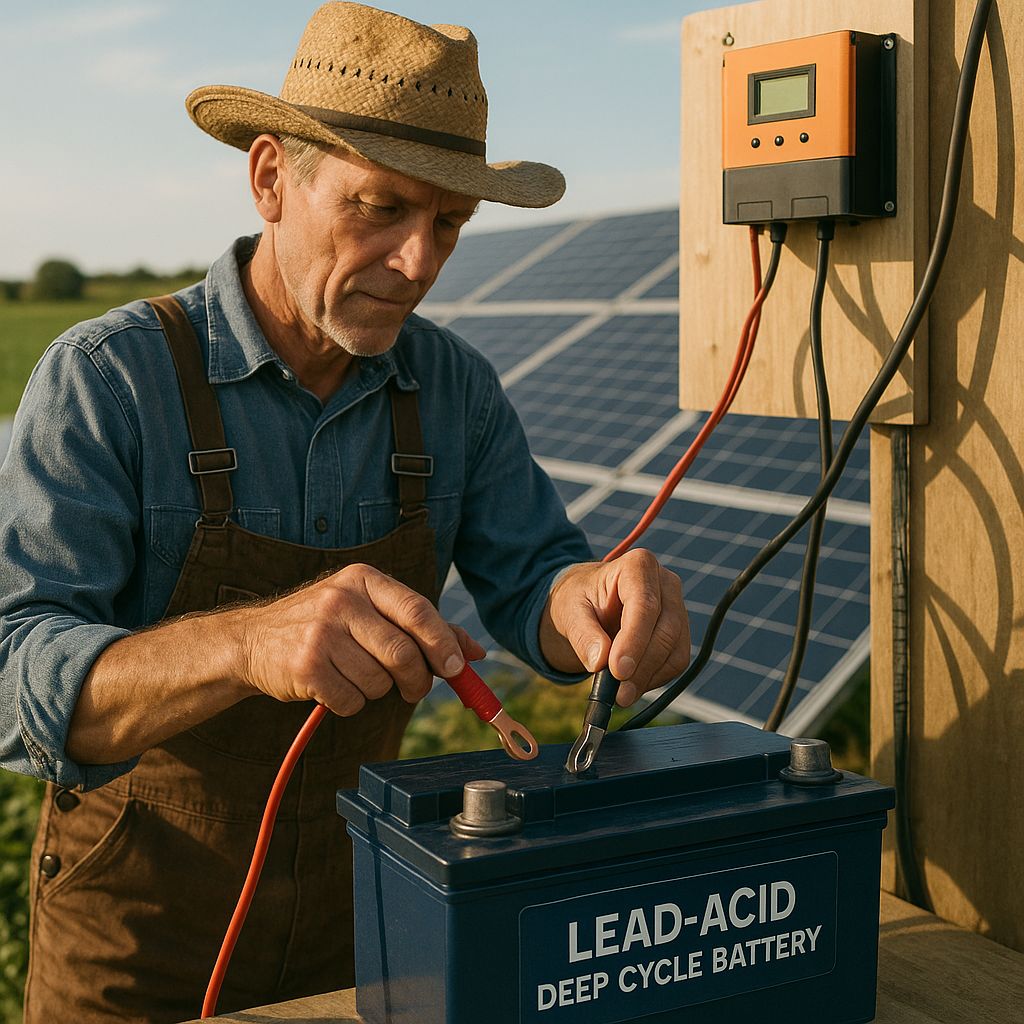
Theory and specifications provide guidelines, but actual field performance reveals how lead-acid batteries truly perform under agricultural conditions. Farmers consistently report that properly sized and maintained systems deliver 3-5 years of trouble-free operation before requiring any significant maintenance beyond routine water addition and terminal cleaning.
Small-Scale Vegetable Farm Case Study
Hillside Organic Farms in Vermont installed a 15kWh flooded lead-acid battery system to support their 10kW solar array in 2018. The $7,500 battery investment (after incentives) primarily powers irrigation pumps, cooler systems, and basic processing equipment. After four years, owner Maria Collins reports the system has prevented crop losses during 12 significant outages while maintaining consistent refrigeration for harvested produce.
The modest system has required approximately 2 hours of maintenance monthly and one set of replacement batteries for two cells that failed prematurely. Despite these minor issues, Collins calculates the system has already paid for itself through a combination of energy savings, loss prevention, and reduced generator usage. “The peace of mind alone is worth the investment,” notes Collins. “Knowing our coolers will keep running even if the power goes out for days during summer harvest is something you can’t put a price on.” For more insights on the importance of solar power in farming, check out this off-grid farming guide.
Large Dairy Operation Implementation
Meadowview Dairy in Wisconsin implemented a 60kWh lead-acid battery system in 2020 to support their extensive milking operation and milk cooling systems. The $32,000 system (after incentives) provides backup for critical systems including vacuum pumps, milk cooling, and barn ventilation. Farm manager Robert Peterson reports the system has maintained operations through 23 outages ranging from 30 minutes to 14 hours, preventing potential losses exceeding $50,000 in milk that would have been rejected due to temperature excursions.
When Lead-Acid Batteries Aren’t the Right Choice
Despite their advantages, lead-acid batteries aren’t optimal for every farm situation. Understanding their limitations helps identify scenarios where alternative technologies might better serve specific agricultural needs. The relatively limited cycle life, maintenance requirements, and temperature sensitivity create specific circumstances where other options deserve serious consideration.
High-Demand Applications Where Alternatives Shine
Operations requiring multiple daily deep discharge cycles may find lead-acid batteries’ lifespan unsatisfactory. Heavy equipment with high power demands like grain dryers, large mills, or industrial processing equipment often exceed lead-acid batteries’ practical discharge rates, resulting in reduced capacity and shortened lifespan. For these applications, lithium iron phosphate batteries with their superior cycle life and higher discharge capabilities may justify their premium price through extended service life and improved performance.
Farms with severe space constraints may struggle to accommodate lead-acid battery banks, which require approximately 2-3 times more space than lithium alternatives for equivalent capacity. The weight differential is even more significant, with lead-acid systems weighing 3-4 times more than comparable lithium systems. These physical constraints become particularly problematic in retrofitting existing buildings or in applications where structural limitations restrict floor loading.
Farm Locations with Extreme Temperature Ranges
Areas experiencing regular temperature extremes present challenges for lead-acid technology. Performance significantly degrades below freezing, with available capacity decreasing by up to 50% at 0°F (-18°C). These limitations necessitate heated enclosures in cold climates, adding complexity and operating costs to battery installations in northern regions. For more insights on managing solar energy systems in challenging climates, explore our off-grid farming guide.
Similarly, regions with sustained high temperatures above 95°F (35°C) accelerate internal corrosion and water loss in flooded lead-acid batteries, potentially reducing lifespan by 50% or more if adequate cooling isn’t provided. Farms in desert southwest regions or tropical zones may find the cooling requirements for lead-acid battery rooms prohibitively expensive compared to more temperature-tolerant lithium alternatives.
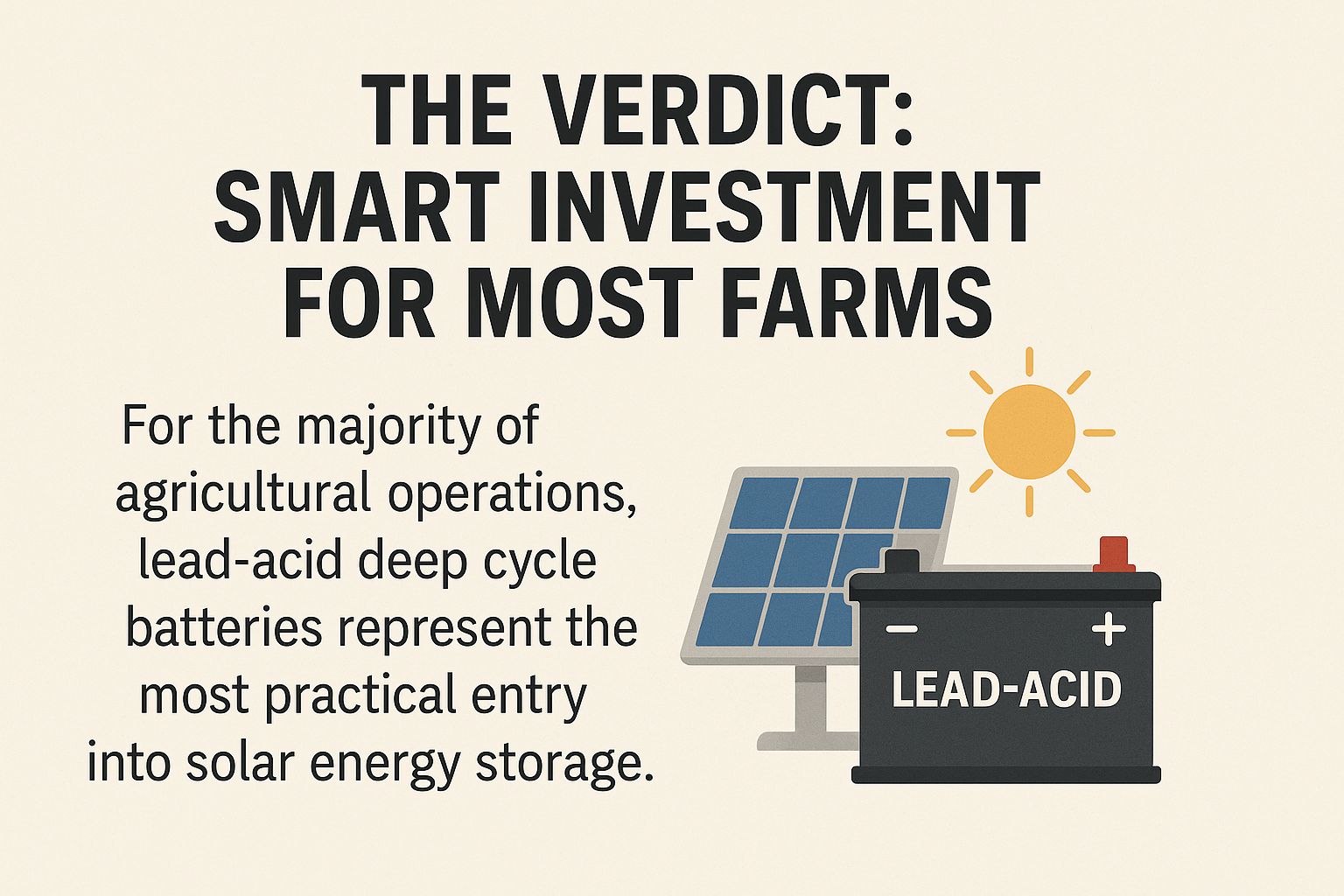
The Verdict: Smart Investment for Most Farms
For the majority of agricultural operations, lead-acid deep cycle batteries represent the most practical entry point into solar energy storage.
Their combination of affordable initial cost, proven reliability, and straightforward maintenance aligns well with farm operational patterns and financial constraints. When properly sized, installed, and maintained, these systems typically deliver 5-7 years of dependable service before requiring replacement, usually paying for themselves within the first half of their operational life.
The decision ultimately depends on specific farm needs, financial resources, and operational priorities. Operations with modest power requirements, reasonable temperature environments, and some maintenance capacity will typically find lead-acid batteries offer the best value proposition. Larger operations with higher power demands, critical consistency requirements, or minimal maintenance resources might justify the higher investment in lithium or other advanced technologies despite their premium pricing. The most successful implementations often start with lead-acid systems for initial energy independence, then gradually upgrade to advanced technologies as operations scale and financial returns justify reinvestment. For more insights on solar power operations, check out the dark side of solar panels.
Frequently Asked Questions
The practical considerations of implementing lead-acid battery storage raise common questions among farmers considering these systems. Understanding these aspects helps ensure successful implementation and realistic expectations for system performance and maintenance.
How many years do lead-acid deep cycle batteries typically last in farm applications?
In agricultural settings with proper maintenance and appropriate cycling patterns, quality lead-acid deep cycle batteries typically provide 5-7 years of service before requiring replacement. This lifespan varies significantly based on discharge depth, with batteries routinely discharged to only 50% capacity often lasting 1-2 years longer than those regularly discharged to 80%. Temperature also dramatically impacts longevity, with each 15°F above 77°F potentially reducing lifespan by up to 50%.
Proper charging protocols significantly influence battery life. Systems using three-stage charging with temperature compensation typically achieve the upper end of the lifespan range, while systems with basic charging often experience earlier capacity degradation. Many farmers report specific batteries exceeding manufacturer specifications by 1-2 years when maintenance protocols are diligently followed.
- Flooded lead-acid: 5-7 years with regular maintenance
- AGM batteries: 5-8 years with minimal maintenance
- Gel batteries: 7-10 years with minimal maintenance
- Industrial-grade batteries: 10-15 years with appropriate maintenance
- Premium batteries with robotic manufacturing: Generally 20-30% longer lifespan than standard versions
The end of life typically presents as gradual capacity reduction rather than complete failure. Many farmers repurpose batteries with reduced capacity for less critical applications, extending their practical utility beyond primary system use. For more on the importance of battery use in solar systems, read about off-grid farm solar panels and battery use.
Can I mix old and new batteries in my farm’s solar backup system?
Mixing batteries of different ages in the same bank is generally not recommended as it reduces system efficiency and accelerates degradation of all batteries involved. Newer batteries become limited by the older batteries’ reduced capacity, while older batteries experience accelerated wear trying to keep pace with newer components. This mismatch creates voltage imbalances during charging that can damage both new and old batteries while reducing overall system efficiency by 15-30%.
If expansion becomes necessary before existing batteries require replacement, the best practice involves creating a separate, isolated battery bank with its own charge controller and inverter. This configuration allows both old and new systems to operate independently at their optimal levels without compromising performance or lifespan. Though this approach increases initial hardware costs, it typically proves more economical over the complete system lifecycle by maximizing each battery’s useful service period.
What maintenance does a lead-acid battery bank need during harvest season?
Harvest season typically coincides with increased battery cycling as operations intensify and power needs grow. During this critical period, flooded lead-acid batteries require weekly electrolyte level checks rather than the monthly checks sufficient during normal operations. The increased cycling causes faster water consumption, particularly in warmer temperatures. Always use distilled water for topping off cells to prevent mineral contamination that reduces battery performance and lifespan.
Terminal connections should be inspected bi-weekly during heavy use periods, with corrosion immediately cleaned using a baking soda solution. Loose connections can cause voltage drops and localized heating that damages terminals and reduces system efficiency. Battery temperature monitoring becomes particularly important during harvest when systems often approach maximum discharge levels. Maintaining temperatures below 85°F significantly improves performance and prevents accelerated degradation during this period of heavy usage.
Are lead-acid batteries safe to use in barns with animals?
Lead-acid batteries can be safely used in agricultural buildings housing animals, provided proper installation guidelines are followed. The primary considerations involve ventilation, access restriction, and appropriate containment. Flooded lead-acid batteries release hydrogen gas during charging which, while not toxic to animals, creates an explosion risk if allowed to concentrate. Battery installations in animal housing should always include dedicated ventilation that prevents gas accumulation.
Physical separation between batteries and animal areas is essential for both animal safety and battery protection. A dedicated room or enclosed cabinet with controlled access prevents accidental damage while protecting animals from potential acid exposure if batteries are damaged. For operations without separate utility spaces, sealed AGM or gel batteries minimize gas emissions and eliminate acid spill risks, offering safer alternatives despite their higher initial cost. For more insights on the necessity of battery use in farming, explore our guide on off-grid farm solar panels.
How do temperature fluctuations affect battery performance for greenhouse operations?
Greenhouse environments present unique challenges for battery systems due to their significant temperature fluctuations. Lead-acid batteries perform optimally between 70-75°F, with capacity decreasing approximately 1% for every degree below this range. In unheated greenhouses during winter months, overnight temperatures can reduce available battery capacity by 20-40%, potentially limiting critical system operation during precisely the hours backup power is most needed.
Conversely, summer greenhouse temperatures frequently exceed 90°F, accelerating internal corrosion and water loss while reducing overall battery lifespan. The optimal solution involves housing batteries in an insulated, temperature-controlled enclosure separate from the greenhouse environment itself. This approach maintains consistent battery performance year-round while protecting the substantial investment these systems represent.
For greenhouse operations unable to provide temperature-controlled battery rooms, oversizing the battery bank by 25-30% can compensate for seasonal capacity variations. Additionally, AGM or gel batteries typically handle temperature extremes better than flooded types, making them worth considering despite higher initial costs for greenhouse applications specifically.
The agricultural transition to renewable energy represents both a practical necessity and an economic opportunity. Lead-acid deep cycle batteries, despite newer alternatives, continue providing the most accessible entry point for farms seeking energy independence without prohibitive upfront investments. Their proven reliability, straightforward maintenance, and decades of field experience make them particularly well-suited to agricultural applications were practicality and return on investment drive decision-making.




Leave a Reply