
Article At a Glance
- Saltwater batteries use sodium ions in a non-toxic electrolyte solution, making them one of the safest energy storage options available for farms and rural operations.
- Unlike lithium-ion batteries, saltwater batteries carry zero fire or explosion risk — a critical advantage in agricultural environments near livestock and dry crops.
- These batteries require virtually zero maintenance, outperforming flooded lead-acid systems that demand regular watering and terminal cleaning.
- Saltwater batteries can power essential farm operations including irrigation pumps, livestock ventilation, cold storage, and greenhouse systems during grid outages.
- There’s a surprising difference in long-term value between saltwater and lithium-ion batteries that most farmers don’t consider upfront — keep reading to find out why it matters.
Most farmers don’t realize their solar investment is only as strong as the battery storing that energy — and the wrong battery choice can cost them far more than they saved.
As solar adoption accelerates across agricultural operations, the demand for reliable, safe, and cost-effective battery backup systems has never been higher. Saltwater batteries are stepping into that gap in a meaningful way. Built around sodium ions suspended in a saltwater electrolyte solution, these batteries sidestep the toxic chemistry and fire risks associated with conventional lithium-ion and lead-acid alternatives. For farms where safety, sustainability, and low overhead are non-negotiable, this technology is worth understanding deeply. Resources like Growing Solar Mist have been tracking this shift closely, offering practical guidance for farmers navigating the move toward cleaner energy storage.
How Saltwater Batteries Actually Work
At their core, saltwater batteries function through the same basic electrochemical principles as any rechargeable battery — but the materials used are radically different. Instead of lithium compounds or sulfuric acid, saltwater batteries use a concentrated sodium-ion solution as the electrolyte. This single design choice is what gives them their standout safety and environmental profile.
Sodium Ions as the Core Energy Carrier
In a saltwater battery, sodium ions move between the anode and cathode through the saltwater electrolyte during both charging and discharging. Sodium is the 6th most abundant element on Earth, which makes it dramatically cheaper and more accessible to source than lithium. This abundance also stabilizes long-term supply chains — a factor that matters when you’re planning a 20-year farm energy strategy.
How Energy Moves in a Saltwater Battery:
Charging: Solar panels push electrical energy into the battery → sodium ions migrate toward the anode and store potential energy.
Discharging: When farm loads draw power → sodium ions flow back toward the cathode, releasing stored energy as usable electricity.
Electrolyte: Saltwater solution acts as the ion highway — non-flammable, non-toxic, and chemically stable across a wide temperature range.
The simplicity of this chemistry is exactly what makes saltwater batteries so durable. There are fewer reactive compounds that can break down under stress, which directly translates to longer cycle life and more predictable performance over time. For more information on how solar technologies support farming operations, check out the comparison of solar technologies for farmers.
Saltwater Electrolyte vs. Lithium-Ion Electrolyte
Lithium-ion batteries use a flammable organic solvent as their electrolyte — the same compound responsible for the thermal runaway events that make headlines. Saltwater batteries replace that entirely with an aqueous sodium solution that simply cannot combust. The tradeoff is lower energy density, but for stationary farm backup applications where weight and size aren’t critical constraints, that tradeoff is almost always worth making.
Charge and Discharge Cycle Basics
Saltwater batteries are designed for deep cycling, meaning they can be discharged to a very low state of charge repeatedly without significant degradation. Most lithium-ion batteries begin to degrade noticeably if regularly discharged below 20% capacity. Saltwater systems are far more forgiving, making them well-suited to the unpredictable energy demands of a working farm where power draws can vary dramatically day to day.
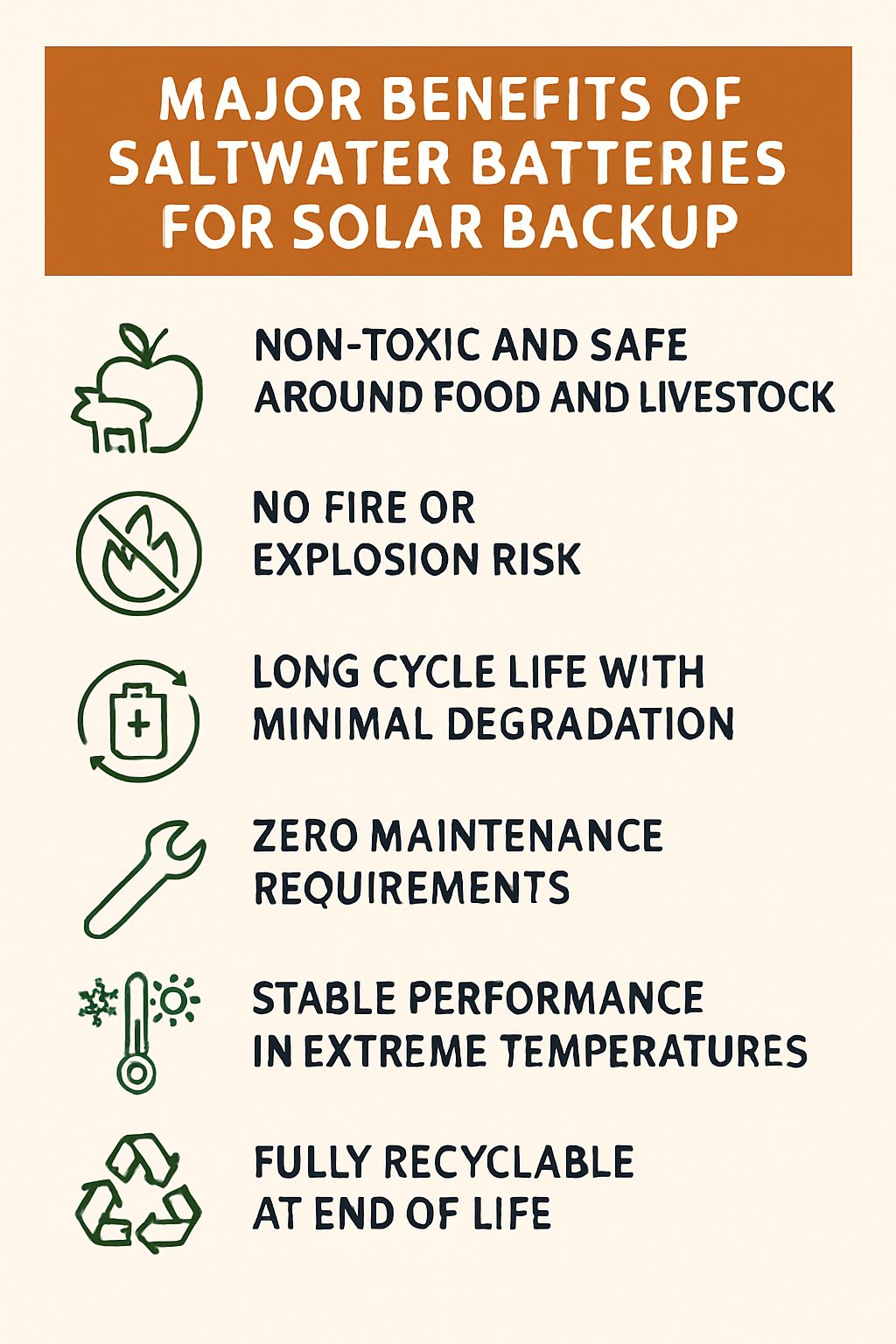
6 Major Benefits of Saltwater Batteries for Solar Backup
Each of these benefits connects directly to challenges that farmers face when managing energy on a working operation — this isn’t theoretical, it’s practical value built into the chemistry itself.
1. Non-Toxic and Safe Around Food and Livestock
Saltwater batteries contain no heavy metals, no caustic acids, and no toxic compounds. A leak or physical damage to the battery housing doesn’t create a hazardous spill event. For farms storing batteries near grain bins, animal housing, or vegetable crops, this distinction is enormous. Lead-acid battery acid spills can contaminate soil for years, and lithium battery failures can release toxic gases. Saltwater systems eliminate both risks entirely.
2. No Fire or Explosion Risk
Thermal runaway — the chain reaction that causes lithium-ion batteries to catch fire — cannot occur in a saltwater battery. The aqueous electrolyte is inherently non-flammable. In farm environments where dry hay, wooden structures, and combustible materials are everywhere, installing a battery system that physically cannot ignite is a genuine safety upgrade, not just a marketing claim.
3. Long Cycle Life with Minimal Degradation
Saltwater batteries are engineered to handle thousands of charge and discharge cycles while retaining the majority of their original capacity. Their electrochemical stability means the degradation curve is far flatter than what you’d see with lithium-ion cells that have been deeply cycled under variable load conditions — exactly the conditions a farm solar system operates under daily.
4. Zero Maintenance Requirements
Maintenance Comparison: Saltwater vs. Lead-Acid vs. Lithium-Ion
Saltwater: No watering, no terminal cleaning, no ventilation requirements, no equalization charges needed.
Flooded Lead-Acid: Regular distilled water top-offs, terminal corrosion cleaning, mandatory ventilation for hydrogen gas, periodic equalization charges.
Lithium-Ion: Battery management system monitoring required, temperature regulation needed in extreme climates, periodic cell balancing.
Saltwater batteries represent a significant advantage for busy farmers who simply don’t have time to manage battery upkeep between planting, harvesting, and daily operations. Unlike flooded lead-acid batteries that require regular watering and terminal cleaning, saltwater systems operate for years with virtually no maintenance intervention required.
This zero-maintenance profile isn’t just convenient — it’s financially meaningful. Every hour not spent maintaining a battery bank is an hour redirected to productive farm work. Over a 10 to 15-year battery lifespan, that adds up to a substantial hidden cost savings that rarely appears in standard battery comparison charts.
5. Stable Performance in Extreme Temperatures
Farm environments don’t offer climate-controlled battery rooms. Batteries get installed in outbuildings, equipment sheds, and utility structures that swing between freezing winters and scorching summers. Saltwater batteries maintain stable electrochemical performance across a broader temperature range than lithium-ion alternatives, which can throttle output or require active thermal management in cold conditions.
- Lithium-ion batteries can experience significant capacity loss below 32°F (0°C) without active heating systems
- Lead-acid batteries lose up to 50% of their capacity in freezing temperatures
- Saltwater batteries maintain functional discharge capacity in sub-freezing conditions without supplemental heating
- High-temperature stability also reduces the risk of accelerated degradation during hot summer months when solar generation — and cooling loads — peak simultaneously
6. Fully Recyclable at End of Life
When a saltwater battery reaches the end of its service life, every component can be recycled or safely disposed of without specialized hazardous waste handling. The sodium-ion electrolyte is non-toxic, the electrode materials contain no rare earth metals, and the housing materials are standard recyclables. This matters enormously for farms operating under sustainability mandates or seeking to maintain organic certifications. For those interested in sustainable energy solutions, exploring HJT solar panels can provide additional benefits for farming operations.
Compare that to lithium-ion batteries, which require specialized recycling facilities that are still limited in availability across rural areas, or lead-acid batteries that carry strict disposal regulations due to their toxic lead content. Saltwater batteries are the only major battery chemistry where end-of-life disposal is genuinely straightforward and environmentally clean.
Why Farms Are the Perfect Use Case
Farm Energy Storage Needs vs. Saltwater Battery Strengths
Safety near livestock and crops: Saltwater ✓ | Lithium-Ion ✗ | Lead-Acid ✗
Zero maintenance operation: Saltwater ✓ | Lithium-Ion △ | Lead-Acid ✗
Fire and explosion proof: Saltwater ✓ | Lithium-Ion ✗ | Lead-Acid △
Deep cycle durability: Saltwater ✓ | Lithium-Ion △ | Lead-Acid ✗
Temperature stability: Saltwater ✓ | Lithium-Ion △ | Lead-Acid ✗
Fully recyclable: Saltwater ✓ | Lithium-Ion ✗ | Lead-Acid △✓ = Strong advantage | △ = Conditional | ✗ = Disadvantage
Farms represent one of the most demanding real-world environments any battery system will ever operate in. Wide temperature swings, dust, humidity, physical vibration from equipment, irregular power draws, and extended periods of high-demand usage are the daily reality. Most battery technologies are engineered with cleaner, more controlled environments in mind. Saltwater batteries, by contrast, thrive under exactly these conditions.
The agricultural sector also operates on razor-thin margins where unexpected equipment costs can derail an entire season’s profitability. A battery system that eliminates maintenance costs, reduces fire insurance risk, and delivers consistent performance without technical intervention directly protects that margin. This isn’t a luxury upgrade — for many farm operations, it’s the most financially rational choice available.
There’s also the question of values alignment. A growing segment of the farming community is actively moving toward regenerative and sustainable practices. Deploying a battery system built from abundant, non-toxic materials that generates no hazardous waste is a natural extension of that commitment — and one that can be communicated credibly to consumers, certifiers, and partners.
High Energy Demand During Peak Growing Seasons
Planting and harvest seasons drive energy demand to its highest point precisely when weather unpredictability is also at its peak. Irrigation systems, grain dryers, cold storage units, and processing equipment all run simultaneously during these windows. A battery bank that can absorb maximum solar generation during the day and discharge reliably through overnight and cloudy-day demand cycles is what keeps those critical operations from stalling when the grid falters. For farmers exploring solar solutions, understanding the benefits of Topcon solar panels can be crucial in optimizing energy use.
Remote Locations with Unreliable Grid Access
A significant portion of productive agricultural land sits in areas where grid infrastructure is aging, undersized, or simply absent. Rural grid outages last longer on average than urban ones — utilities prioritize population centers for restoration. A farm that has sized its saltwater battery bank correctly can operate critical loads independently for multiple days without any grid input.
For operations that are entirely off-grid, saltwater batteries paired with solar arrays create a genuinely viable primary power system. Their deep-cycling tolerance means the battery bank can be drawn down substantially each night and recharged fully the following day without the accelerated degradation that would cripple a lithium-ion system under the same duty cycle.
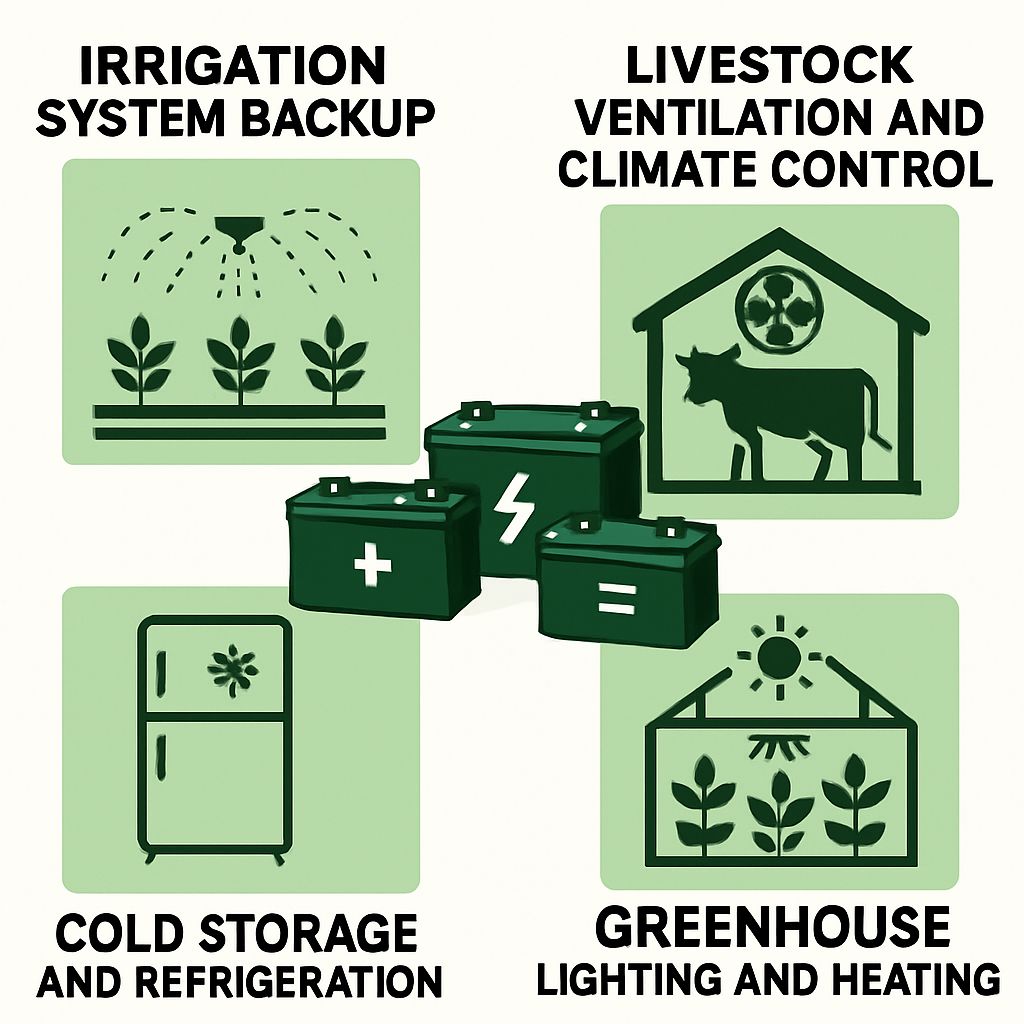
Critical Farm Operations Saltwater Batteries Can Power
Saltwater batteries excel at providing steady, moderate power output — which happens to match the load profile of the most critical farm systems perfectly. Understanding which operations benefit most from battery backup helps with both system sizing and prioritization when designing an energy management strategy.
The following farm systems represent the highest-value backup targets, where even a few hours of power interruption can result in direct financial losses through crop damage, livestock stress, or spoiled inventory.
Irrigation System Backup
Irrigation timing during critical crop development stages is non-negotiable — missing a scheduled watering cycle during germination or flowering can permanently reduce yield. Saltwater batteries can be sized to maintain irrigation schedules for several days without grid power, protecting valuable crops during the most vulnerable growth stages. Pump motors, solenoid valves, and control systems all fall well within the steady-discharge power profile that saltwater batteries deliver most efficiently.
Livestock Ventilation and Climate Control
Poultry and swine operations are particularly vulnerable to ventilation failures. In warm weather, a ventilation system outage lasting just a few hours can cause catastrophic livestock losses. Saltwater batteries provide the kind of reliable, sustained power output that keeps fans and climate control systems running through grid outages without the thermal management concerns that complicate lithium-ion installations in warm equipment buildings.
The zero fire-risk profile of saltwater batteries is especially valuable in livestock housing, where bedding materials, feed storage, and wooden structures create high fire-load environments. Installing a battery system that physically cannot ignite in these spaces is the kind of decision that farm insurance underwriters notice too.
Cold Storage and Refrigeration
Post-harvest cold storage is where a season’s work either gets preserved or lost. Refrigeration compressors are continuous-draw loads that pull consistent power around the clock — exactly the type of load that saltwater batteries handle well. A properly sized saltwater battery bank paired with a farm solar system can maintain cold chain integrity through multi-day outages that would otherwise result in complete inventory loss.
Walk-in coolers for vegetable operations and milk tanks for dairy farms represent two of the highest financial-loss scenarios from power interruption. Both run on the moderate, steady power draws that align directly with saltwater battery discharge characteristics, making them ideal backup targets to prioritize in system design.
Greenhouse Lighting and Heating
Year-round greenhouse operations depend on supplemental lighting and heating systems that can’t tolerate interruption during cold nights or low-light winter periods. Saltwater batteries integrated with greenhouse solar installations provide the overnight discharge capacity needed to keep grow lights and heating systems operational without relying on grid power — extending the productive growing season while reducing utility costs.
Saltwater Batteries vs. Lithium-Ion for Farm Solar Systems
The lithium-ion vs. saltwater battery comparison is more nuanced than most product comparisons suggest. Saltwater batteries currently dominate the energy storage market because of their high energy density and established supply chains — but energy density advantages that matter in electric vehicles are largely irrelevant for stationary farm storage where space is rarely the limiting factor.
What matters for farm solar backup is safety, durability, total cost of ownership over a decade-plus horizon, and performance under real agricultural conditions. On every one of those metrics, saltwater batteries either match or outperform lithium-ion alternatives — often significantly.
Upfront Cost vs. Long-Term Value
Saltwater batteries typically carry a higher upfront cost per kilowatt-hour than comparable lead-acid systems, and sit in a similar range to entry-level lithium-ion. However, when maintenance costs, replacement cycle frequency, and end-of-life disposal costs are factored into a 15-year total cost of ownership model, saltwater systems consistently deliver better financial outcomes for farm applications. The zero-maintenance profile alone eliminates recurring costs that compound significantly over time on flooded lead-acid installations.
Safety Profile in Agricultural Environments
Lithium-ion batteries require careful thermal management to prevent the conditions that lead to thermal runaway. In farm environments where batteries may be installed in uninsulated outbuildings subject to summer heat spikes, that thermal management requirement translates directly into additional infrastructure costs — ventilation systems, temperature monitoring, and in some cases active cooling. Saltwater batteries require none of this, which simplifies installation and reduces the total system cost gap between the two technologies.
From a fire risk standpoint, the comparison isn’t close. Lithium-ion battery fires are notoriously difficult to extinguish and can reignite hours after appearing to be out. A saltwater battery leak produces a saline solution. For farm operators weighing risk against reward, that difference in failure mode severity is often the deciding factor. For those interested in sustainable energy solutions, exploring HJT solar panels powering farming operations can provide additional insights.
Energy Density Differences and What They Mean for Farm Use
Lithium-ion batteries store more energy per kilogram than saltwater batteries — that’s a factual advantage that matters in applications where weight and size are constrained. A farm battery installation is not one of those applications. When your battery bank sits in a utility shed or equipment building, the difference between a system that occupies 40 square feet versus 60 square feet is operationally irrelevant. What isn’t irrelevant is whether that system poses a fire risk, requires active cooling, or needs specialized disposal at end of life. Saltwater batteries accept the energy density tradeoff and return real-world advantages that directly affect farm profitability and safety.
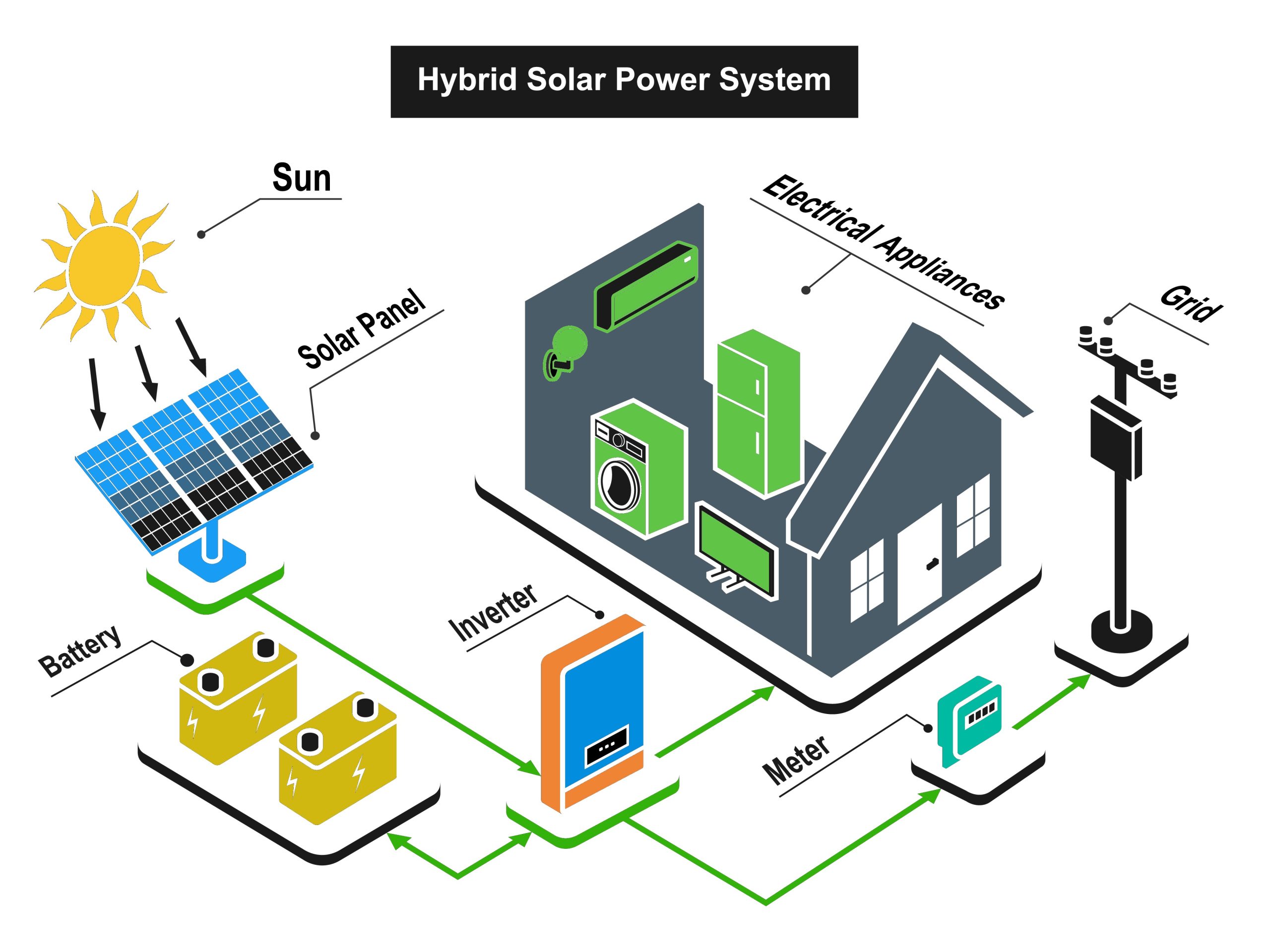
“Solar Energy Storage Systems: The Smart …” from sol-ark.com and used with no modifications.
How to Integrate Saltwater Batteries with Existing Solar Panels
Adding saltwater batteries to an existing farm solar installation is straightforward in most cases. The integration process follows the same fundamental architecture as any solar-plus-storage system — solar panels generate DC power, an inverter converts it to AC for farm loads, and a charge controller manages the flow of energy into and out of the battery bank. The key variables are inverter compatibility, battery bank sizing, and how the energy management system prioritizes loads during an outage or low-generation period.
Compatibility With Standard Solar Inverters
Most modern hybrid solar inverters are compatible with saltwater battery systems, but it’s worth confirming voltage range compatibility before purchasing. Saltwater batteries typically operate within standard 48V nominal voltage ranges common to residential and light commercial solar systems — the same range used by the majority of farm solar installations. Inverters from established manufacturers like SMA, SolarEdge, and Schneider Electric are generally compatible, but always verify the battery manufacturer’s communication protocol requirements, as some systems use proprietary battery management interfaces that require specific inverter firmware or hardware.
Sizing Your Battery Bank for Farm Energy Needs
Correct battery bank sizing is the single most important decision in any farm solar storage project. Undersizing means critical loads go dark during extended outages. Oversizing means capital is tied up in storage capacity that rarely gets used. The goal is to find the sweet spot that covers your highest-priority loads for a realistic outage duration — typically 24 to 72 hours for most agricultural operations.
Start by auditing your critical loads — the equipment that absolutely cannot lose power without causing financial damage. For most farms, that list includes irrigation control systems, livestock ventilation fans, cold storage refrigeration, and essential lighting. Add up the wattage of each system and multiply by the number of hours you need to run them without solar input. That gives you your minimum usable capacity requirement in watt-hours.
Because saltwater batteries can be deep-cycled more aggressively than lithium-ion without proportional degradation, you can design your system to use a higher percentage of the battery’s rated capacity in a backup scenario. A practical rule of thumb is to size your saltwater battery bank to deliver 1.5 to 2 times your calculated critical load requirement — this accounts for efficiency losses, partial cloudy-day recharging, and load variability across different seasons.
Energy Management Software for Load Prioritization
Modern solar-plus-storage systems use energy management software to automatically prioritize which loads receive power when battery capacity is limited. For farm operations, this means programming the system to protect cold storage and livestock ventilation above all other loads, while allowing non-critical loads like shop lighting or office equipment to be shed first. Systems like the Schneider Electric Conext Control platform or SMA’s Sunny Portal offer farm-appropriate load management features that can be configured to match your specific operational priorities — and adjusted seasonally as energy demands shift between planting, growing, and harvest cycles.
Saltwater Batteries Are a Smart Long-Term Bet for Sustainable Farming
Saltwater batteries aren’t a compromise technology — they’re a purpose-built solution for environments that demand safety, durability, and low overhead above all else. Farms happen to be the ideal proving ground for everything this chemistry does well. Zero fire risk, zero toxic materials, deep-cycle resilience, minimal maintenance, and end-of-life recyclability aren’t features that show up prominently in a spec sheet comparison, but they’re the features that determine whether a battery investment protects your operation for 15 years or creates new problems within 5. For farmers committed to building a genuinely sustainable energy infrastructure, saltwater batteries are the most defensible choice on the market today.
Frequently Asked Questions
Are saltwater batteries powerful enough to run a full farm operation?
Saltwater batteries excel at powering steady, moderate loads — which covers the majority of critical farm systems including irrigation pumps, ventilation fans, cold storage refrigeration, greenhouse lighting, and monitoring equipment. They deliver consistent, sustained power output rather than high-burst energy, which makes them well-matched to the load profiles of most stationary farm equipment.
For the heaviest farm equipment — large grain dryers, high-horsepower electric motors, or three-phase industrial machinery — saltwater batteries are best used as part of a hybrid system where the grid or a generator handles peak surge demands while the battery bank covers sustained operational loads. Most farm operators find that this hybrid approach covers 80 to 90 percent of their energy needs through solar and battery storage alone, with the grid or generator serving as a backstop for extreme demand events.
How long do saltwater batteries last compared to lithium-ion?
Saltwater batteries are designed for thousands of deep charge and discharge cycles with minimal capacity degradation — a service life that translates to well over a decade of daily cycling under normal farm conditions. Lithium-ion batteries in similar deep-cycling applications typically show more pronounced degradation over the same period, particularly when regularly discharged below 20% capacity or operated in high-temperature environments without active thermal management. The practical result is that a saltwater battery bank often outlasts a comparable lithium-ion installation in agricultural settings, delivering a longer return-on-investment window and lower lifetime replacement costs.
Can saltwater batteries work in freezing winter temperatures on a farm?
Yes — saltwater batteries maintain functional performance in sub-freezing temperatures without requiring supplemental heating systems, which is a meaningful advantage over lithium-ion batteries that experience significant capacity reduction below 32°F (0°C). Lead-acid batteries are even more severely affected by cold, losing up to half their rated capacity in freezing conditions. For farms in northern climates where winter temperatures regularly drop well below freezing, the cold-temperature stability of saltwater chemistry is a practical operational advantage that directly affects how reliably backup power is available during winter grid outages — often the most severe and prolonged outage events of the year.
Are saltwater batteries safe to install near crops or animal housing?
Saltwater batteries are among the safest battery chemistries available for installation in proximity to sensitive agricultural environments. They contain no heavy metals, no flammable electrolyte solvents, and no caustic acids. A physical breach of the battery housing produces a saline solution — the same basic chemistry as ocean water — rather than a toxic spill or fire event. This makes them appropriate for installation in or near livestock buildings, greenhouse structures, and crop storage facilities where conventional battery chemistries would introduce unacceptable fire or contamination risks.
How many saltwater batteries do I need to back up a solar panel system on a farm?
The number of batteries required depends entirely on your critical load total and how many hours of backup coverage you need without solar recharging. Begin by identifying every system that must stay powered during an outage and calculating its wattage draw. Multiply that total wattage by your target backup hours to get your minimum watt-hour requirement. For more insights, you can explore HJT solar panels powering farming operations and their benefits.
As a practical example, a farm running 2,000 watts of critical loads — irrigation controls, a ventilation fan array, and cold storage refrigeration — that needs 48 hours of backup coverage without any solar recharging requires a minimum of 96,000 watt-hours, or 96 kWh of usable capacity. Factor in a depth-of-discharge buffer and you’re looking at a system sized in the 110 to 120 kWh range.
Individual saltwater battery units typically range from 10 kWh to 30 kWh of capacity depending on the product configuration. A 120 kWh target could be achieved with as few as four 30 kWh units wired in parallel — a system that fits comfortably in a standard utility shed with room to expand if energy needs grow.
Always work with a qualified solar installer who has specific experience with saltwater battery chemistry to finalize your system design. The sizing calculation above provides a starting framework, but actual system performance depends on factors including panel array size, local solar irradiance data, seasonal load variation, and the specific charge and discharge characteristics of the battery model selected. Getting the sizing right from the start is what determines whether your investment delivers the energy security your farm operation depends on.




Leave a Reply