

Key Takeaways
- Solar linear move irrigation systems can reduce operational costs by up to 70% compared to diesel-powered alternatives while delivering precise water application.
- These systems are ideal for rectangular fields and can cover up to 98% of field area compared to center pivot’s 80% coverage.
- Farmers using solar linear irrigation systems report water savings of 20-30% through precision application and scheduling flexibility.
- Government incentives can offset up to 30% of initial installation costs, making the transition more affordable.
- With proper maintenance, solar-powered linear move systems typically have a payback period of 3-5 years and a lifespan of 25+ years.
Modern farming demands smarter solutions that save resources while boosting productivity. Solar linear move irrigation systems are revolutionizing how farms manage water distribution by combining renewable energy with precision irrigation technology. Growing Solar, a leader in agricultural solar solutions, has been helping farmers transition to sustainable irrigation systems that cut costs and increase crop yields.
These innovative systems represent the intersection of sustainable energy and efficient water management—two critical factors for today’s successful farming operations. By harnessing the sun’s power, these irrigation systems free farmers from rising utility costs while providing reliable irrigation even in remote locations.
What is a Linear Move Irrigation System?
Linear move irrigation systems, also known as lateral move systems, are self-propelled irrigation machines that travel in a straight line across rectangular or square fields. Unlike center pivot systems that rotate around a fixed point, linear systems move from one end of a field to the other, providing even water distribution across the entire cultivated area. This design makes them particularly valuable for farms with rectangular layouts where traditional pivot systems would leave corners unirrigated.
The fundamental advantage of linear systems is their ability to irrigate up to 98% of rectangular fields, significantly outperforming center pivots that typically cover only 80% of a field. This increased coverage translates directly to improved land utilization and potential yield increases of 15-20% from previously unirrigated corners. To explore more about the components that enhance these systems, you can learn about solar irrigation systems components that farmers can use.
Core Components and Design
Linear move systems consist of several interconnected spans supported by wheeled towers, similar to center pivots but designed for lateral movement. Each system includes a drive mechanism, control panel, water supply method, and the irrigation pipeline with sprinklers or drip emitters. Modern systems incorporate GPS guidance technology to ensure precise tracking and uniform application rates across fields.
- Main pipeline: Aluminum or galvanized steel structure that carries water along the length of the system
- Drive units: Motors at each tower that propel the system forward (solar-powered in these systems)
- Guidance system: Cable, furrow, or GPS technology that keeps the system moving in a straight line
- Water supply: Either through a flexible hose connection or from an open ditch with a traveling pump
- Control system: Programmable logic controllers that manage water application rates and system movement
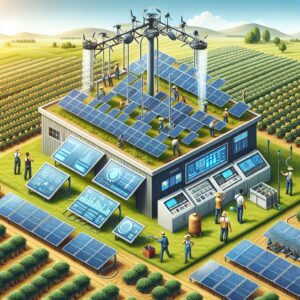
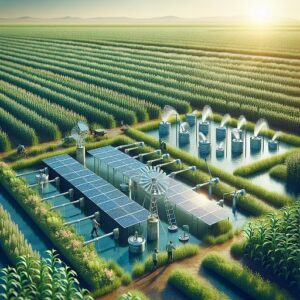
The integration of solar panels transforms these already efficient systems into self-sufficient irrigation solutions that can operate without connection to the electrical grid. Solar panels mounted along the length of the system provide power to the drive motors and control systems, eliminating the need for diesel generators or electrical hookups.
How Linear Systems Differ from Center Pivots
While both linear and center pivot systems serve the purpose of automated irrigation, they differ significantly in their operation and suitability for different field types. Center pivot systems rotate around a central fixed point, creating circular irrigation patterns that leave field corners untouched. Linear systems, by contrast, move in straight lines across fields, creating rectangular irrigation patterns that maximize coverage of rectangular plots.
Linear systems also typically require a different water supply approach than center pivots. While center pivots connect to a stationary water source at the pivot point, linear systems either draw water from an irrigation ditch that runs parallel to their path or use a flexible hose connection that moves with the system. This difference in water supply methodology affects installation requirements and operational considerations when planning irrigation system upgrades.
Field Types Best Suited for Linear Systems
The ideal candidates for linear move irrigation are rectangular or square fields with minimal elevation changes. These systems particularly excel in situations where field dimensions would result in significant corner loss with center pivot systems. Long, narrow fields that might require multiple center pivots can often be serviced by a single linear system, reducing both capital expenditure and maintenance requirements.
Crops with high water precision requirements also benefit from linear systems, as they provide exceptionally uniform application across the entire field. This uniformity is especially valuable for specialty crops like vegetables, turf, and seed production where irrigation consistency directly impacts quality and yield. The elimination of corner systems also simplifies management and reduces the complexity of irrigation scheduling compared to center pivots with corner arm attachments.

How Does Using Solar Power Improve Linear Move Irrigation Systems?
Adding solar power to linear move irrigation creates a transformative combination that addresses several critical challenges faced by modern farmers. By replacing traditional power sources with photovoltaic panels, these systems eliminate dependency on fluctuating fuel prices and unreliable grid connections. Solar arrays mounted on the irrigation structure itself or installed nearby convert abundant sunlight into reliable operating power, fundamentally changing the economics of irrigation.
Eliminating Costly Fuel and Electricity Dependencies
Traditional linear systems require either connection to grid electricity or diesel generators to power movement motors and pumps. These power sources create ongoing operational expenses that rise with fuel costs and utility rates. Solar-powered alternatives eliminate this variable expense, providing predictable operating costs for decades. Farmers using diesel-powered systems often face $15,000-25,000 in annual fuel costs for a quarter-mile linear system, expenses that virtually disappear with solar conversion.
Environmental Benefits of Solar-Powered Systems
Beyond cost savings, solar-powered linear irrigation systems deliver significant environmental advantages. A typical diesel-powered linear system can produce 40-60 tons of carbon dioxide annually, emissions completely eliminated by solar alternatives. Water pump operations powered by clean solar energy reduce groundwater contamination risks from fuel spills and engine leakage. This sustainability aspect increasingly matters to consumers, potentially opening premium market opportunities for crops grown using renewable energy practices.
Operational During Power Outages and Remote Areas
One often-overlooked benefit of solar linear systems is their ability to operate independently during grid failures or in remote locations. Conventional electric systems become useless during outages—precisely when irrigation may be most critical during heat waves. Solar-powered systems with battery storage continue functioning regardless of grid conditions, providing irrigation security during critical growing periods. This independence allows farmers to develop previously unusable land where power infrastructure doesn’t exist, expanding productive acreage without costly utility extensions.
Government Incentives and Tax Benefits
The financial case for solar linear irrigation strengthens considerably when accounting for available government incentives. Federal tax credits currently allow deduction of 30% of solar system costs, while many states offer additional rebates and incentives. USDA’s Rural Energy for America Program (REAP) provides grants covering up to 25% of renewable energy projects for agricultural producers. These combined incentives can reduce initial investment costs by 40-60%, dramatically improving return calculations and making solar conversion accessible to operations of all sizes.
Cost Benefits of Solar Linear Irrigation
While the environmental advantages of solar linear irrigation are compelling, the economic benefits often drive adoption decisions. The financial equation involves comparing higher upfront costs against eliminated operating expenses and extended system lifespan. When properly calculated, most farmers discover solar conversion offers one of the fastest returns on investment available in agricultural equipment, with positive cash flow often beginning in the first season of operation.
Initial Investment vs. Long-Term Savings
Solar linear move systems typically require 15-30% higher initial investment than conventional electric or diesel alternatives. A quarter-mile solar linear system might cost $180,000-250,000 compared to $150,000-200,000 for traditional systems. However, this premium is quickly offset by eliminated energy costs. Diesel systems consuming 20-30 gallons daily during irrigation season create $15,000-30,000 in annual fuel expenses that solar systems eliminate entirely.
The calculation becomes even more favorable when considering system lifespan. Solar panels typically carry 25-year warranties but often function for 30+ years with minimal efficiency loss. This extended operational timeline means the energy savings compound over decades, while conventional systems face rising fuel costs and potential carbon taxation in coming years.
Reduced Operating Expenses
Solar linear move systems dramatically reduce day-to-day operating expenses beyond just energy costs. Maintenance requirements decrease significantly without diesel engines requiring oil changes, filter replacements, and fuel system servicing. Labor costs associated with refueling, engine maintenance, and managing fuel deliveries are eliminated, allowing farm staff to focus on higher-value activities. Many farmers report maintenance cost reductions of 60-70% after converting to solar power, representing thousands in annual savings beyond energy costs.
Payback Period for Different Farm Sizes
Return on investment calculations vary based on operation scale, crop value, and local solar conditions, but most farmers experience complete system payback within 3-7 years. Larger operations with extensive irrigation needs often see faster returns due to greater fuel displacement. The highest returns typically come from high-value specialty crop operations where precise irrigation timing directly impacts crop quality and market value. Learn more about solar panels’ financial benefits for farmers.
Case Study: Arizona Vegetable Farm Solar Conversion
A 400-acre vegetable operation in Arizona converted their linear irrigation system to solar power in 2018. Initial investment: $215,000 (after incentives). Annual diesel savings: $28,000. Maintenance reduction: $7,500 annually. Additional water savings through precision control: $12,000. Total annual benefit: $47,500. Complete payback achieved in 4.5 years with projected 25-year savings exceeding $1.1 million.
Even smaller operations benefit substantially from solar conversion. A 120-acre family farm might see complete payback in 5-6 years while gaining protection against volatile energy markets. The financial calculation continues improving as technology advances lower installation costs while energy prices trend upward long-term.
The economics of solar linear systems create a compelling case even without considering productivity improvements that often accompany precision irrigation. Many farmers report yield increases of 5-10% simply from more consistent irrigation timing and uniformity made possible by solar reliability.

Water Management Advantages
The true measure of any irrigation system lies in its ability to deliver the right amount of water at the right time. Solar linear move systems excel in this area, offering precision that conventional systems often can’t match. With consistent power supply from solar energy, these systems maintain ideal pressure and flow rates regardless of time of day or utility load conditions.
Modern agricultural operations face increasing pressure to conserve water resources while maintaining productivity. Solar linear systems address this challenge through multiple technological advantages that optimize every drop of water applied to crops.
Precision Application and Reduced Waste
Solar linear move systems achieve exceptional water efficiency through uniform distribution and precise application rates. Variable frequency drives powered by solar energy allow for dynamic pressure adjustment that maintains optimal droplet size and penetration regardless of field position or slope changes. This precision reduces water loss from wind drift, evaporation, and runoff that commonly occurs with less sophisticated systems. For more information, explore solar irrigation systems for farmers.
Advanced control systems on solar-powered units enable variable rate irrigation based on soil moisture sensors, crop development stage, and even weather forecasts. Some farmers report water savings of 20-30% after upgrading to solar linear systems with integrated smart controls. These savings become increasingly valuable as water rights face restrictions and costs rise in many agricultural regions.
Scheduling Flexibility with Solar Power
One overlooked benefit of solar-powered systems is the ability to optimize irrigation timing without concern for peak electricity rates or grid capacity. Conventional electric systems often force farmers to irrigate during off-peak hours to avoid premium rates, which may not align with optimal watering times for crop development. Solar systems eliminate this constraint, allowing irrigation scheduling based purely on agronomic factors rather than utility rate structures.
This flexibility extends to nighttime operation through battery storage integration. Modern systems can store excess daytime solar production in battery banks that power overnight irrigation when evaporation losses are lowest. This capability creates water efficiency advantages beyond the equipment itself, optimizing the timing of application for maximum crop benefit and minimum loss. For more information on how solar irrigation systems enhance farming efficiency, visit our detailed guide.
Drought Resilience Through Efficient Distribution
As climate patterns become less predictable, irrigation systems that maximize every gallon become crucial drought management tools. Solar linear move systems create drought resilience through their exceptional distribution uniformity that eliminates both over-watered and under-watered zones common with less sophisticated systems. This uniformity ensures that limited water resources benefit the entire crop equally, preventing yield losses in marginal areas.
The reliability of solar power during extreme weather events further enhances drought management capability. When heatwaves strain electrical grids and create outages, solar systems continue operating independently, maintaining critical irrigation during periods when crop water needs are highest and most urgent. This operational reliability can mean the difference between salvaging a crop during drought conditions or facing catastrophic losses.
Real-World Success Stories of Solar Linear Move Irrigation Systems
The true test of any agricultural technology comes in real-world implementation across diverse operations. Solar linear move systems have proven their value through hundreds of successful installations worldwide, transforming both large commercial operations and small family farms. These case studies demonstrate the practical benefits beyond theoretical advantages.
Farmers who have adopted this technology consistently report three primary benefits: significant cost reductions, improved crop quality through precise irrigation, and peace of mind from system reliability. The testimonials from early adopters have accelerated industry acceptance of solar irrigation as a mainstream solution rather than an experimental technology.
The documentation of these success stories provides valuable implementation roadmaps for farmers considering similar conversions. By studying both the challenges and triumphs of pioneers in this field, new adopters can avoid common pitfalls and replicate proven strategies for maximum return on investment. For those interested in further details, explore more about solar irrigation systems for farmers.
Solar Linear Irrigation Performance Comparison
Metric
Diesel System
Electric System
Solar Linear System
Annual Energy Cost (250-acre field)
$18,000-25,000
$8,000-15,000
$0-500
Water Application Uniformity
75-85%
80-90%
90-98%
Annual Maintenance Cost
$3,000-5,000
$1,500-3,000
$800-1,500
Expected System Lifespan
12-15 years
15-20 years
25+ years
Carbon Emissions (tons/year)
40-60
Varies by grid mix
0
While individual results vary based on local conditions and specific implementations, the comparative advantages of solar systems consistently demonstrate compelling economic and environmental benefits across diverse operating environments. Even in regions with less-than-ideal solar conditions, battery storage and hybrid options ensure reliable performance year-round.
Case Study: Arid Region Vegetable Farm
Desert Valley Farms in Arizona presents a compelling example of solar linear irrigation success in extreme conditions. Facing water restrictions and electricity costs exceeding $45,000 annually, this 320-acre specialty vegetable operation installed a solar linear system with variable rate technology in 2019. Within the first year, they reduced water usage by 28% while electricity costs dropped to near zero. The precision irrigation improved product quality and uniformity, allowing them to command premium prices for their bell peppers and tomatoes. Despite temperatures regularly exceeding 110°F, the solar system maintained consistent operation throughout the season without the breakdowns that plagued their previous diesel system during heat waves.
Small-Scale Implementation Results
Family-owned Meadowbrook Farm demonstrates that solar linear systems deliver benefits at smaller scales too. This 80-acre organic operation in Colorado implemented a 1,320-foot solar linear system to replace multiple wheel line systems in 2020. Despite initial concerns about the investment for a small farm, their $120,000 system (after incentives) achieved payback in just over four years through labor savings alone. The elimination of manual irrigation moves freed the two-person operation to focus on value-added processing and direct marketing, doubling farm income while reducing working hours. Their system’s battery backup proved invaluable during grid outages, protecting high-value crops when neighboring farms lost irrigation capability during critical growing periods.
Large Commercial Operation Outcomes
Heritage Agricultural Enterprises converted their 1,800-acre operation to solar linear move systems over a three-year implementation period, providing valuable insights into large-scale conversion strategies. By phasing in four solar-powered linear systems to replace aging center pivots, they documented energy cost reductions exceeding $175,000 annually across their operation. More significantly, the improved irrigation uniformity increased their corn yields by an average of 22 bushels per acre in previously under-irrigated field corners. The company reports that the return on investment exceeded initial projections by nearly 40%, primarily due to yield improvements they hadn’t fully factored into their conversion decision. Their experience demonstrates that production gains often outweigh direct energy savings in the total value equation for large operations.

“Solar Powered Linear Irrigation Systems …” from growingsolarmist.com and used with no modifications.
Making the Switch to Solar Linear Irrigation
Converting to solar linear irrigation represents a significant investment in both capital and operational change management. Successful implementations require careful planning that begins with thorough site assessment and system design optimized for specific field conditions and crop requirements. Growing Solar specializes in guiding farmers through this transition, providing both technical expertise and financial analysis to ensure maximum return on investment.
Is it Worth the Farmers to Switch to Solar Linear Irrigation System
The decision to convert existing irrigation infrastructure to solar power depends on several key factors that determine financial viability. Operations with high energy costs, unreliable grid connections, or aging irrigation equipment typically see the strongest financial case for conversion. Farms with rectangular fields currently using multiple wheel lines or center pivots with corner arms often realize both water efficiency and labor savings that accelerate payback periods.
The most compelling cases typically involve high-value crops where precision irrigation directly impacts quality and marketability. Specialty crops like vegetables, berries, seed crops, and certified organic production benefit not just from energy savings but from the improved irrigation consistency that solar linear systems provide. When calculating potential returns, farmers should consider both direct energy savings and potential yield/quality improvements that often deliver equal or greater financial impact.
Step-by-Step Conversion Process
The transition to solar linear irrigation typically follows a structured implementation process that minimizes disruption to farming operations. Initial site assessment analyzes field dimensions, topography, soil types, water sources, and solar exposure to determine optimal system configuration. Detailed design follows, including solar array sizing, potential battery storage needs, and integration with existing infrastructure. Equipment selection matches system components to specific operational requirements, followed by professional installation typically completed in 2-4 weeks during off-season periods. Commissioning includes comprehensive testing and operator training to ensure the system performs to specifications and farm staff can maximize its capabilities. Most installations include at least one full growing season of technical support to fine-tune operations and address any adjustment needs. Learn more about solar irrigation system components that are essential for effective implementation.
Financing Options and Available Programs
The financial barriers to solar irrigation adoption have decreased dramatically through diverse funding mechanisms designed specifically for agricultural operations. Equipment leasing programs allow farmers to implement systems with little or no upfront capital, using energy savings to cover monthly payments while maintaining positive cash flow. USDA’s Rural Energy for America Program (REAP) offers both grants and guaranteed loans for renewable energy projects, covering up to 25% of costs through grants and securing favorable terms for remaining financing. For more information on the financial benefits of solar panels for farmers, you can explore additional resources.
State-level programs provide additional resources that can be combined with federal incentives. California’s State Water Efficiency and Enhancement Program (SWEEP) provides grants up to $100,000 for projects that reduce water usage and greenhouse gas emissions simultaneously. Colorado, Arizona, New Mexico and other western states offer similar programs focused on water conservation technology that includes solar irrigation systems.
Property Assessed Clean Energy (PACE) financing represents another innovative option, allowing system costs to be repaid through property tax assessments over 10-20 years, often with positive cash flow from the first year. This approach removes upfront cost barriers while ensuring the investment stays with the property if ownership changes. Working with a knowledgeable provider like Growing Solar ensures farmers can access all available incentives, often reducing out-of-pocket costs by 50-70%.
Frequently Asked Questions (FAQ)
As farmers consider the transition to solar linear irrigation, several common questions arise regarding practical implementation considerations. These questions reflect legitimate concerns about adopting relatively new technology for critical farm infrastructure. Addressing these concerns with data-driven answers helps farmers make informed decisions aligned with their specific operational needs.
How much land do I need for solar panels to power my irrigation system?
A typical quarter-mile (1,320 foot) linear move irrigation system requires approximately 30-40 kilowatts of solar capacity, which translates to roughly 2,500-3,500 square feet of panel area (about 0.06-0.08 acres). This area can be further reduced with higher-efficiency panels. Most installations mount panels directly on the linear system structure itself, eliminating the need for dedicated land allocation. For systems requiring larger power capacity, ground-mounted arrays near the field edge or on non-productive land provide additional generation without significant impact on cultivated acreage.
Can solar linear systems operate during cloudy days?
Modern solar irrigation systems incorporate multiple strategies to ensure reliable operation during cloudy periods. Battery storage systems capture excess generation during sunny days and provide power during low-light conditions, typically sized to provide 2-3 days of autonomy. Hybrid systems that can automatically switch to grid power or generator backup when needed provide additional reliability without manual intervention. Even without batteries, advanced controllers can adjust system operation to match available power, slowing movement rates rather than stopping completely during partial cloud cover. These technologies ensure continuous operation throughout the growing season regardless of weather variability.
What maintenance does a solar linear move system require compared to diesel?
Solar linear systems require significantly less maintenance than their diesel counterparts, reducing both scheduled service requirements and unexpected downtime. Diesel systems typically require oil changes every 250 hours, fuel filter replacements, fuel system maintenance, and regular engine rebuilds or replacements every 7,000-10,000 hours. Solar systems eliminate all engine-related maintenance while adding only minimal solar-specific requirements.
|
Maintenance Task |
Diesel System Frequency |
Solar System Frequency |
|---|---|---|
|
Oil Changes |
Every 250 hours |
None |
|
Fuel System Service |
Annually |
None |
|
Panel Cleaning |
N/A |
2-4 times per season |
|
Battery Maintenance |
N/A |
Annual inspection (if batteries installed) |
|
Major Rebuilds/Replacements |
Every 5-7 years |
Inverter replacement at 15+ years |
|
Emergency Service Calls |
3-5 per season |
0-1 per season |
The maintenance simplicity translates directly to improved reliability and reduced labor requirements. Most solar components carry warranties of 10-25 years compared to 2-3 years for diesel engines. Panel cleaning represents the primary recurring maintenance task, typically requiring just 1-2 hours per cleaning with simple water spray methods that farm staff can easily perform without specialized training.
This maintenance advantage becomes particularly valuable during peak irrigation season when service technicians are in high demand and equipment downtime can have serious crop consequences. Many farmers report this reliability factor as equally valuable as the direct cost savings when evaluating overall system benefits.
The operational simplicity also reduces training requirements for farm staff, allowing seasonal workers to safely operate these systems with minimal instruction compared to more complex diesel systems that require specialized knowledge of engines and fuel systems.
How quickly can I recover my investment in a solar linear move system?
Payback periods for solar linear irrigation systems typically range from 3-7 years depending on specific operational factors. Operations with high diesel consumption, irrigating crops with high water precision requirements, or located in areas with excellent solar resources often achieve payback in 3-4 years. Systems with battery storage components may extend payback periods by 6-12 months but provide additional benefits through expanded operational windows and enhanced reliability. For more information on these systems, you can explore solar-powered linear irrigation systems.
When calculating return on investment, it’s crucial to include all financial benefits including direct energy savings, maintenance reductions, labor savings, potential yield improvements, and available tax incentives or grants. Many farmers discover that the comprehensive financial benefits accelerate payback by 30-40% compared to calculations based solely on fuel or electricity savings. With system lifespans exceeding 25 years, the post-payback period represents two decades or more of essentially free irrigation energy—a compelling long-term value proposition.
Will a solar linear move system work for all crop types?
Solar linear irrigation systems effectively support virtually all crop types but offer particularly strong advantages for specific categories. Row crops like corn, soybeans, cotton, and small grains benefit from the uniform water distribution that eliminates yield variations across fields. Specialty crops including vegetables, berries, herbs, and seed production gain quality improvements through precise irrigation timing and consistent soil moisture maintenance that solar reliability enables.
Deep-rooted perennial crops like alfalfa and orchards benefit from the ability to apply larger water volumes at optimal intervals rather than being constrained by power availability or peak rate considerations. The only crop scenarios where solar irrigation systems may not provide optimal solutions involve extremely water-intensive crops in regions with very limited solar resources, though even these situations can be addressed through hybrid power systems or oversized solar arrays with storage.
The adaptability of modern solar linear systems to various application needs makes them suitable for diverse agricultural operations across virtually all growing regions. With proper design and component selection, these systems deliver optimal performance regardless of crop type or specific irrigation requirements. Learn more about the components and parts of solar irrigation systems.


Leave a Reply