

Key Takeaways
- Solar panels work through the photovoltaic effect, where photons from sunlight knock electrons free from atoms in silicon cells, creating an electrical current.
- Silicon is the primary material used in solar cells, with three main types of panels available: monocrystalline, polycrystalline, and thin-film—each with different efficiency levels and cost considerations.
- The P-N junction inside solar cells creates an electric field that forces freed electrons to flow in one direction, generating direct current (DC) electricity.
- Solar panel systems require inverters to convert DC electricity into alternating current (AC) that powers homes and businesses.
- Panel efficiency is affected by installation angle, temperature, shading, and regular maintenance—factors that determine how much of the sun’s 93-million-mile journey ultimately becomes usable energy.
Solar energy is revolutionizing how we power our world, but have you ever wondered exactly what happens when sunlight hits those sleek blue panels? The science behind solar power is both elegant and fascinating, transforming light into electricity without moving parts or emissions.
The journey from sunbeam to light bulb involves quantum physics, semiconductor technology, and electrical engineering working in perfect harmony. Understanding this process not only satisfies curiosity but helps you make informed decisions about your own sustainable energy options.
The Fascinating Science Behind Solar Energy Capture
Solar panels may look like simple glass sheets, but they’re actually high-tech energy converters that capitalize on one of the most abundant resources available to us—sunlight. Every day, the Earth receives more energy from the sun in a single hour than humanity uses in an entire year. This incredible potential is what makes solar technology so promising as a sustainable energy solution.
At its core, solar energy harvesting is about capturing photons—particles of light that have traveled 93 million miles from the sun—and converting their energy into electricity we can use. This remarkable transformation happens without any moving parts, fuel consumption, or greenhouse gas emissions, making it one of the cleanest energy sources available.
Photovoltaic Effect: Converting Sunlight to Electricity
The magic behind solar panels lies in the photovoltaic effect, first observed by French physicist Alexandre-Edmond Becquerel in 1839. When photons strike a semiconductor material like silicon, they transfer their energy to electrons, knocking them loose from their atoms. This creates a flow of electrons—in other words, electricity. Modern solar cells are specifically engineered to maximize this effect, creating an environment where freed electrons have no choice but to follow a predetermined path, generating usable electric current. To learn more about how solar panels can improve efficiency, check out how they improve farm water efficiency.
The 93 Million Mile Journey: How Photons Power Your Home
The journey begins 93 million miles away in the core of our sun, where nuclear fusion releases enormous amounts of energy in the form of photons. These light particles travel through space at 186,000 miles per second, reaching Earth in just 8 minutes. Once they strike a solar panel, the photons penetrate the surface and interact with silicon atoms in the semiconductor layer. This interaction energizes electrons, freeing them from their atomic bonds and allowing them to move. By creating special layers in the solar cells, manufacturers establish an electric field that forces these electrons to flow in a specific direction, generating the direct current electricity that ultimately powers our homes. Discover how solar panels benefit farms by reducing energy costs and providing savings.

Inside a Solar Panel: Materials and Construction
Solar panels are marvels of materials science, consisting of multiple layers that work together to capture and convert sunlight. Each panel is actually a collection of many individual solar cells connected in series and parallel configurations to achieve the desired voltage and current output.
Modern panels typically include an aluminum frame for structural support, a glass front layer for protection while allowing light transmission, and a weatherproof backing. Between these outer layers lie the critical components: the solar cells themselves, surrounded by encapsulant material that protects them from moisture and provides electrical isolation.
Most panels also include a junction box on the back where the electrical connections are made and protected from the elements. This seemingly simple construction belies the sophisticated engineering that goes into creating a product that can withstand decades of outdoor exposure while consistently producing electricity.
- Tempered glass front layer (3-4mm thick) that allows over 90% light transmission
- Encapsulant layers (typically EVA – ethylene vinyl acetate) that hold cells in place
- Solar cells arranged in series/parallel configuration
- Back sheet (usually made of polyvinyl fluoride) for electrical insulation and protection
- Aluminum frame for structural integrity and mounting options
- Junction box with diodes to prevent reverse current flow
Silicon: The Essential Building Block of Solar Cells
Silicon is the workhorse of the solar industry, accounting for more than 95% of all solar cells manufactured today. This abundant element—the second most common in the Earth’s crust—possesses semiconductor properties that make it ideal for photovoltaic applications. In its pure form, silicon creates a crystal lattice structure that provides the foundation for electron movement. Manufacturers purify raw silicon to an extraordinary 99.9999% purity level before it can be used in solar cells, a process that requires significant energy but results in material capable of converting light to electricity for decades. For more on how solar panels can reduce energy costs, check out this article.
P-N Junction: The Heart of Every Solar Cell
The most critical component of a solar cell is something you can’t even see: the P-N junction. This microscopic boundary is created by treating silicon with different elements in a process called “doping.” One layer is doped with phosphorus to create an N-type semiconductor with extra electrons, while the other layer is doped with boron to create a P-type semiconductor with electron “holes.” When these two layers meet, they form a junction with a built-in electric field. This electric field acts like a one-way gate for electrons knocked loose by sunlight, forcing them to flow through an external circuit rather than simply recombining with holes. This clever atomic arrangement is what transforms random photon impacts into orderly electric current.
From Cell to Panel: How Components Work Together
The journey from individual solar cell to complete panel involves precise manufacturing steps that ensure reliability and performance. Multiple cells are soldered together using thin conductive ribbons, creating strings that are then arranged in rows. These strings are connected in series to increase voltage and in parallel to increase current, achieving the panel’s rated power output. The entire assembly is sandwiched between protective layers and sealed against moisture and contaminants. Metal contacts on the front and back of each cell collect the generated electricity and channel it to junction boxes where it can be routed to inverters and ultimately to your home’s electrical system. This integration of components creates a robust unit designed to produce clean energy for 25-30 years with minimal maintenance.
Solar Panel Types and Their Efficiency Differences
Not all solar panels are created equal. The market offers several distinct technologies, each with its own set of advantages and limitations. Understanding these differences is crucial when planning a solar installation that meets your specific needs and budget constraints.
Each type represents a different approach to the same challenge: converting sunlight into electricity as efficiently and economically as possible. The right choice depends on your geographical location, available installation space, aesthetic preferences, and financial considerations. To better understand the different types of solar panels, you can explore more about how solar panels work.
Monocrystalline Panels: Premium Performance
Monocrystalline solar panels represent the premium tier of solar technology, recognizable by their uniform black appearance. These panels are manufactured from single silicon crystals grown using the Czochralski method, resulting in a highly pure and aligned crystal structure. This purity allows electrons to flow with less resistance, achieving efficiency rates typically between 17-22%. While these panels command the highest price point, they offer superior performance in limited space and maintain better output in low-light conditions. For homeowners with limited roof space or those seeking maximum energy production, monocrystalline panels often provide the best long-term value despite their higher initial investment.
Polycrystalline Panels: The Budget-Friendly Alternative
Polycrystalline panels, with their distinctive speckled blue appearance, offer a more economical alternative to their monocrystalline counterparts. These panels are made by melting multiple silicon fragments together, creating a crystal structure with various orientations. This manufacturing process is less energy-intensive and generates less waste, resulting in a lower price point. While their efficiency typically ranges from 13-17%, the cost-per-watt often makes them attractive for larger installations where space isn’t at a premium. Many homeowners and businesses find that polycrystalline panels deliver the sweet spot between upfront costs and long-term energy production, especially in regions with abundant sunshine.
Thin-Film Panels: Flexible Applications
Thin-film solar technology represents a radical departure from traditional crystalline silicon panels, using extremely thin layers of photovoltaic material applied to a substrate. These panels can be made from various semiconducting materials including amorphous silicon, cadmium telluride (CdTe), or copper indium gallium selenide (CIGS). Their flexibility, lightweight nature, and unique aesthetic make them suitable for specialized applications like curved surfaces, portable systems, or building-integrated photovoltaics. While their efficiency typically ranges from 10-13%, newer generations are steadily improving. The simplified manufacturing process results in lower production costs, but their reduced efficiency means more panels—and therefore more space—are required to match the output of crystalline alternatives.
Bifacial: New Technologies Changing the Solar Landscape
Bifacial solar panels represent one of the most exciting innovations in solar technology, capable of capturing light from both their front and rear surfaces. By harnessing reflected light from the ground or nearby surfaces, these double-sided panels can generate up to 30% more electricity than traditional single-sided panels in ideal conditions. Most bifacial panels use monocrystalline cells with transparent backing instead of the standard opaque back sheet, allowing light to enter from both sides. When installed at the optimal height above a reflective surface like white gravel, light-colored roofing, or even snow, these panels demonstrate impressive performance gains. Though they command a price premium, their increased energy harvest often justifies the investment for ground-mounted systems or elevated installations where reflected light is abundant.
Here is a table summarizing the main types of solar panels used for agricultural applications, highlighting their key characteristics, benefits, and limitations:
|
Solar Panel Type |
Key Features |
Best Uses in Agriculture |
Advantages |
Limitations |
|---|---|---|---|---|
|
Monocrystalline |
Single-crystal silicon, high efficiency, dark appearance |
Limited roof/land space; high-demand farms |
Highest efficiency (up to 22%), longest lifespan (25–30 years), reliable in smaller spaces |
Highest upfront cost, slightly less efficient in extreme heat |
|
Polycrystalline |
Multiple silicon crystals, bluish tone, moderate efficiency |
Large farm roofs/land, budget-conscious projects |
Lower cost per watt, stable performance, good for large-scale installations |
Lower efficiency (13–17%), needs more space, drops in high heat |
|
Thin-Film |
Flexible modules, thin, low weight, lower efficiency |
Curved/irregular surfaces, barns, greenhouse roofs |
Flexible installation, lightweight, better in low light/cloudy regions |
Shorter lifespan, lowest efficiency (<14%), requires most area |
|
Bifacial |
Absorbs sunlight from both sides, transparent back |
Open fields, reflective surfaces, agrivoltaics |
Can boost power output by up to 30% with good reflectivity (albedo); efficient land use |
Higher initial investment, requires careful ground preparation and mounting |

Step-by-Step: How Solar Panels Generate Usable Power
Understanding the journey from sunlight to usable electricity helps clarify the remarkable engineering behind solar power systems. The process involves several distinct stages, each critical to transforming photons into the alternating current that powers our homes and businesses.
The entire sequence happens almost instantaneously, with electrons completing their journey through the system in fractions of a second. Yet this silent, emission-free process can continue reliably for decades with minimal maintenance, making solar one of the most dependable forms of energy generation available today.
1. Solar Cells Absorb Photons
The process begins when photons—particles of light energy from the sun—strike the surface of the solar panel. The panels’ anti-reflective coating helps maximize absorption, ensuring as few photons as possible bounce off the surface. These photons penetrate the semiconductor material, typically silicon, and interact with its atoms. Only photons with sufficient energy can participate in the next stage of the process; those with too little energy pass through the material or generate heat rather than electricity. This selective absorption is why different solar cell designs are optimized for capturing specific portions of the light spectrum, with some advanced multi-junction cells able to capture a broader range than standard silicon cells.
2. Electrons Are Knocked Free
When an absorbed photon carries enough energy, it transfers that energy to an electron in the silicon atom, breaking the electron free from its atomic bond. This creates what physicists call an “electron-hole pair”—the freed electron and the positively charged “hole” left behind in the atom’s structure. Billions of these interactions happen simultaneously across the surface of the panel whenever sunlight strikes, with each freed electron representing a tiny packet of potential energy. The purity of the silicon and the design of the cell determine how efficiently this process occurs, with higher-quality materials allowing more electrons to be liberated with less recombination. For farmers, understanding the benefits of solar panels can enhance their operations and power solutions.
3. Electric Field Pushes Electrons in One Direction
Simply freeing electrons isn’t enough to generate usable electricity—these electrons need to flow in an organized manner. This is where the P-N junction becomes crucial. The electric field created at this junction acts like a one-way valve, forcing freed electrons to move toward the N-type layer while holes move toward the P-type layer. Metal conductive plates on the sides of the cell collect these electrons, transferring them to wires where they can flow as direct current (DC) electricity. This directional movement of electrons is what transforms random photon impacts into a steady electric current that can be harnessed for practical use.
The strength and integrity of this electric field is critical to panel performance, which is why manufacturing quality and material purity play such important roles in determining a panel’s efficiency and longevity. Higher-quality cells maintain stronger electric fields with fewer imperfections that might allow electrons to recombine with holes before contributing to the current. Additionally, understanding the benefits of solar panels for farm livestock can provide further insights into their efficiency and long-term value.
4. Inverter Converts DC to AC Power
The electricity generated by solar panels is direct current (DC), flowing in one direction—but most household appliances and the utility grid use alternating current (AC), where electrons periodically reverse direction. An inverter bridges this gap by converting DC electricity from the panels into AC electricity compatible with standard electrical systems. Modern inverters achieve this conversion with remarkable efficiency, typically losing only 3-5% of the energy in the process. Many systems now use microinverters attached to individual panels or power optimizers that combine the benefits of both centralized and distributed conversion, maximizing energy harvest even when some panels are shaded or facing different directions.
5. Electricity Powers Your Home
Once converted to AC, the solar-generated electricity travels to your home’s electrical panel, where it’s distributed to outlets and appliances throughout the building. This electricity functions identically to grid power, running everything from refrigerators to computers without any modification needed. When your system produces more electricity than you’re using, the excess typically flows back into the utility grid through your electric meter (which may run backward), earning you credits in regions with net metering policies. During nighttime or periods of low solar production, your home draws electricity from the grid as usual, with net metering effectively allowing you to use the grid as a battery, storing the value of your excess production for later use.
The Solar Energy System Beyond the Panels
While solar panels themselves capture sunlight and generate electricity, they’re just one component of a complete solar energy system. Understanding the supporting infrastructure helps explain how intermittent sunshine becomes reliable power for your home or business.
These system components work together to ensure that the electricity generated by your panels is usable, accessible, and integrated with your existing electrical infrastructure. The quality and compatibility of these components significantly impact the overall performance and reliability of your solar installation.
Inverters: Turning Direct Current into Household Power
Inverters serve as the brains of a solar energy system, performing the crucial task of converting the DC electricity produced by solar panels into the AC electricity used by household appliances and the utility grid. Modern inverters come in three main varieties: string inverters that handle multiple panels, microinverters that attach to individual panels, and power optimizers that combine aspects of both approaches. Beyond simple conversion, today’s smart inverters provide system monitoring, performance data, and grid-support functions. They can automatically disconnect during power outages for safety (anti-islanding) and provide reactive power to support grid stability. The technology continues to advance, with newer models achieving conversion efficiencies exceeding 98% while offering enhanced communication capabilities and longer warranties.
Mounting Systems: Positioning Panels for Maximum Exposure
Mounting systems do far more than simply hold solar panels in place—they position them to maximize energy production while protecting them from environmental forces. Roof-mounted systems use rails and clamps attached to the roof structure, while ground-mounted arrays use posts driven into the earth with frames that can be fixed or tracking. Fixed tilt systems orient panels at an optimal angle based on your latitude, typically facing south in the Northern Hemisphere. Tracking systems follow the sun’s path across the sky, increasing energy production by 20-40% but adding mechanical complexity and maintenance requirements. Regardless of mounting type, all systems must withstand decades of wind, snow, rain, and temperature fluctuations while maintaining precise alignment and electrical connections. For more information on how solar panels can benefit farmers’ operations and power solutions, explore our resources.
Battery Storage: Saving Energy for Cloudy Days
Battery storage systems are transforming solar energy from an intermittent to a dispatchable resource, allowing users to access solar electricity even when the sun isn’t shining. Modern home energy storage typically uses lithium-ion chemistry for its high energy density, reasonable cycle life, and falling prices. These systems connect to the home’s electrical panel, storing excess solar generation during peak production hours and discharging when needed—such as evenings, cloudy days, or during grid outages. Advanced battery systems include their own inverters and sophisticated energy management software that can be programmed for different objectives: maximizing self-consumption, providing backup power, or even participating in utility demand response programs. While still representing a significant investment, battery prices continue to decline, making energy independence increasingly accessible for homeowners and businesses alike. For those considering alternatives, lead-acid deep cycle batteries are another option worth exploring.

Solar Panel Efficiency: What Impacts Performance?
The efficiency of a solar panel—its ability to convert available sunlight into electricity—is influenced by numerous factors beyond just the panel technology itself. Understanding these variables helps explain why identical panels can perform differently depending on installation conditions and environmental factors.
Maximizing solar panel efficiency involves careful system design that accounts for these factors, potentially including adjustable mounting systems, active cooling solutions, or distributed power electronics that can mitigate partial shading effects. Even small improvements in efficiency can yield significant gains in energy production over a system’s multi-decade lifespan.
Temperature Effects on Solar Production
Counter to what many assume, solar panels actually perform better in cold temperatures than hot ones. While sunlight is necessary for production, excessive heat reduces panel efficiency due to increased electrical resistance. Most panels lose approximately 0.3-0.5% in efficiency for every degree Celsius above their rated test temperature (typically 25°C or 77°F). This temperature coefficient varies by panel type, with some premium models engineered to minimize these losses. In practical terms, a panel might produce 10-25% less electricity on a hot summer day than its rated capacity would suggest, despite abundant sunshine. Installation techniques that allow airflow beneath panels can help mitigate these temperature-related losses by promoting cooling.
Direction and Angle of Installation
The orientation and tilt angle of solar panels dramatically influence their energy production. In the Northern Hemisphere, south-facing installations typically capture the most sunlight throughout the year, though southeast or southwest orientations can still achieve 80-95% of optimal production. The ideal tilt angle roughly matches your location’s latitude, though this can be adjusted seasonally—steeper in winter and flatter in summer—if adjustable mounting is available. Modern design software uses sophisticated models that account for seasonal sun paths, local weather patterns, and even surrounding structures to predict energy production with remarkable accuracy. For installations where optimal orientation isn’t possible due to roof constraints, higher efficiency panels or a slightly larger system can compensate for the reduced production efficiency.
Shade and Obstruction Challenges
Shading presents one of the most significant challenges to solar panel performance, with impacts far greater than most people realize. Due to the series connection of cells within most panels, even small areas of shade can disproportionately reduce output—sometimes by 25-100% depending on the panel design and shade pattern. Trees, chimneys, nearby buildings, and even temporary obstructions like snow or fallen leaves can create problematic shading. Modern systems address this challenge through power optimizers or microinverters that isolate the impact of shade to individual panels rather than affecting entire strings. Sophisticated shade analysis tools using drone imagery or 3D modeling help installers identify potential shade issues before installation and design systems to minimize their impact.
Degradation and Maintenance Factors
Solar panels gradually lose efficiency over time, a process known as degradation. Quality panels typically degrade at rates of 0.3-0.8% annually, meaning a 20-year-old panel might still produce 80-85% of its original rated output. Factors affecting degradation include manufacturing quality, installation practices, climate conditions, and maintenance.
Proper maintenance can significantly extend panel performance and lifespan. Regular cleaning removes dust, pollen, bird droppings, and other debris that can block sunlight, especially in dry or agricultural regions. Electrical connections should be inspected periodically for corrosion or loose fittings, particularly in coastal areas where salt air can accelerate deterioration.
“Quality solar panels are incredibly durable, but their performance benefits from periodic attention. A well-maintained system can often exceed its warranted production levels even after decades of service, while neglected systems may underperform significantly. The difference in lifetime energy production between maintained and unmaintained systems can easily exceed the minimal costs of regular upkeep.” — Solar Energy International
Most residential systems benefit from cleaning 1-4 times annually, depending on local conditions. While rain provides some natural cleaning, it often leaves mineral deposits that accumulate over time. Professional cleaning services use deionized water and soft brushes to avoid scratching the protective glass or damaging seals.
System monitoring provides early warning of performance issues, allowing problems to be addressed before they significantly impact energy production. Modern monitoring platforms track performance down to the individual panel level, automatically alerting owners to unexpected production drops that might indicate maintenance needs.
From Sunlight to Savings: The Real-World Benefits for Farmers
“Agricultural operations are uniquely positioned to benefit from solar energy. Farms typically have abundant open space, high energy demands for irrigation and climate control, and business models that benefit from predictable long-term expenses. Solar investments allow farmers to lock in energy costs for decades while potentially generating additional income through net metering or community solar programs.” — American Farm Bureau Federation
The practical applications of solar technology extend far beyond the scientific principles we’ve discussed. For agricultural operations, solar energy represents both an environmental commitment and a sound business decision with multiple financial advantages.
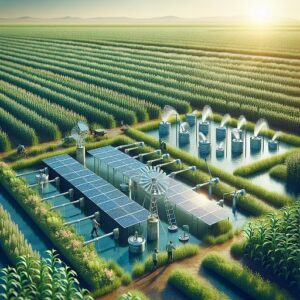
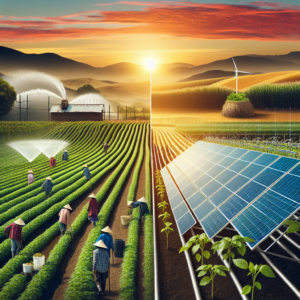
Solar installations on farms can be designed to complement agricultural activities rather than compete with them. Elevated mounting systems allow for continued grazing or crop production beneath panels, while strategic placement can provide shade for heat-sensitive crops or livestock.
Many agricultural producers find that solar installations provide welcome income diversification, generating steady revenue regardless of weather conditions or market fluctuations that might affect crop or livestock production. This stability can be particularly valuable in regions prone to drought or extreme weather events.
Beyond direct energy savings, agricultural solar adopters often benefit from accelerated depreciation, tax credits, USDA grants, and other financial incentives specifically designed for farm operations. When properly structured, these incentives can reduce payback periods to as little as 3-7 years while providing decades of subsequent benefits.
Energy Independence for Farmers
Energy costs represent a significant and growing expense for modern agricultural operations. Irrigation pumps, climate control systems, processing equipment, and cold storage facilities create substantial electricity demand that directly impacts farm profitability. By generating their own electricity, farmers can insulate themselves from utility rate increases that have historically outpaced inflation, converting unpredictable energy costs into fixed investments with predictable returns.
Solar energy also provides crucial reliability benefits for remote agricultural operations where grid service may be inconsistent. When combined with battery storage, solar can ensure critical systems remain operational during outages—protecting valuable crops and livestock from losses due to power failures. This resilience becomes increasingly valuable as climate change increases the frequency of extreme weather events that threaten grid infrastructure.
For off-grid agricultural operations, solar plus storage often represents the most economical power solution, eliminating the need for expensive grid extension or diesel generators with their associated fuel and maintenance costs. Modern solar-powered pumping systems can deliver water exactly when and where it’s needed, optimizing irrigation efficiency while eliminating fuel costs and reducing labor requirements.
Environmental Impact of Solar Adoption
Agricultural adoption of solar energy creates environmental benefits that extend far beyond reduced carbon emissions. By generating clean electricity on-site, farms reduce transmission losses and grid congestion while potentially eliminating the need for new power plants or transmission lines. This distributed generation model enhances grid resilience while reducing land impact compared to centralized power generation.
Solar installations can be integrated with sustainable land management practices that enhance biodiversity and soil health. Research shows that properly designed “agrivoltaic” systems—where agricultural production continues beneath solar arrays—can increase water efficiency by reducing evaporation, provide beneficial partial shade for certain crops, and create habitat corridors for pollinators and beneficial insects that enhance agricultural productivity.
For livestock operations, solar shade structures can reduce heat stress while generating electricity, improving animal welfare and productivity while simultaneously reducing energy costs. This dual-use approach maximizes land productivity while addressing multiple sustainability goals simultaneously—an increasingly important consideration as agricultural producers seek to document their environmental stewardship for consumers, regulators, and supply chain partners.

Conclusion: Does the Science Behind Solar Panels Motivate Farmers to Use them for Powering Agricultural Operations
The elegant science behind solar panels—from the photovoltaic effect to the sophisticated systems that deliver usable power—represents one of humanity’s most remarkable technological achievements. By harnessing abundant solar energy through increasingly efficient and affordable systems, we’re witnessing a transformation in how we power our world. For agricultural producers specifically, understanding how solar technology works demystifies the investment while highlighting the perfect alignment between farm operations and solar generation. As panel efficiencies continue to improve and costs decline further, solar energy will play an increasingly central role in sustainable agricultural operations—providing economic stability, operational resilience, and environmental benefits that complement modern farming’s multiple objectives. Whether you’re considering solar for your home, business, or farm, the science behind these remarkable devices offers compelling evidence that the future is indeed bright.
Frequently Asked Questions (FAQ)
Solar energy technology continues to evolve rapidly, leading to many questions from potential adopters. Here are answers to some of the most common inquiries about solar panel technology and performance.
These questions represent just a starting point for understanding solar technology. As with any significant investment, consulting with qualified solar professionals who understand both the technology and your specific needs is essential for making informed decisions.
How long do solar panels typically last?
Modern solar panels are engineered for remarkable longevity, with most quality modules carrying 25-30 year power production warranties and actual lifespans that can exceed 40 years. Manufacturers typically guarantee that panels will maintain at least 80-85% of their rated output capacity after 25 years, reflecting the gradual efficiency losses of approximately 0.5-0.7% annually. The silicon cells themselves could theoretically produce electricity for many decades; it’s usually the encapsulation materials, connections, and supporting components that determine useful lifespan. Many systems installed in the 1980s continue to produce significant power today, demonstrating the exceptional durability of photovoltaic technology when properly manufactured and installed.
Do solar panels work on cloudy days?
Yes, solar panels do produce electricity on cloudy days, though at reduced output levels compared to sunny conditions. Modern panels typically generate 10-25% of their rated capacity during heavy overcast, with higher percentages during partial cloud cover or light overcast conditions. Interestingly, certain cloud patterns can occasionally create short bursts of enhanced production due to edge-of-cloud effects where sunlight is reflected off cloud edges and concentrated onto panels. Areas like Germany, the UK, and the Pacific Northwest have successfully deployed significant solar capacity despite frequent cloud cover, demonstrating the technology’s viability even in less-than-ideal solar conditions. System designers in cloudier regions typically account for these conditions by sizing installations appropriately.
How much maintenance do solar panels require?
Solar panels require minimal maintenance compared to most energy-generating technologies, with no moving parts to wear out or fuel to replenish. For typical residential installations, maintenance primarily consists of occasional cleaning to remove dust, pollen, leaves, or bird droppings that might shade cells. The frequency depends on your local environment—from twice yearly in most areas to quarterly in very dusty regions. Beyond cleaning, annual electrical inspections are recommended to check connections, ensure ground wires remain intact, and verify inverter performance. Professional inspections typically cost $150-300 and can identify issues before they affect system performance. For farmers, solar panels offer benefits that extend beyond just energy savings.
Can I install solar panels myself?
While DIY solar installation is technically possible for those with significant electrical and construction experience, most homeowners benefit from professional installation. Professional installers bring specialized knowledge of local building codes, permitting requirements, utility interconnection standards, and safety protocols that DIY installers might overlook. They also typically secure necessary permits, arrange inspections, and handle utility paperwork. Most importantly, manufacturer warranties often require professional installation, and homeowner insurance policies may not cover improperly installed systems. For those determined to pursue DIY installation, “partial DIY” approaches where professionals handle critical electrical connections while homeowners manage mounting and panel placement offer a middle ground that preserves most warranties while reducing costs.
What happens to excess electricity my solar panels produce?
When your solar panels produce more electricity than you’re using, the excess typically flows back into the utility grid through your electric meter. In regions with net metering policies, you receive full retail credit for this excess production, effectively using the grid as storage and “withdrawing” that electricity later when your panels aren’t producing. Some utilities use time-of-use net metering, valuing electricity differently depending on when it’s produced, while others use net billing, crediting excess production at wholesale rather than retail rates. For off-grid systems or those with battery storage, excess production charges batteries for later use, with sophisticated control systems determining optimal charge/discharge cycles based on production forecasts and usage patterns.
The economics of excess production vary significantly by location, with some utilities offering generous compensation while others impose limits or reduced values for net excess generation. Understanding these policies is crucial when sizing a system, as oversized systems may produce diminishing financial returns if excess production is undervalued.
For the environmentally conscious, it’s worth noting that excess solar production displaces fossil fuel generation elsewhere on the grid, creating environmental benefits beyond your immediate property. With the right policies, your rooftop solar system becomes a tiny clean power plant benefiting the broader community while potentially providing you with income or credits.

Leave a Reply