

Key Takeaways
- Solar solid-set sprinkler systems eliminate grid dependency — giving permanent crop growers in remote locations full irrigation capability powered entirely by renewable energy.
- Permanent solid-set systems require significantly less labor than portable alternatives because nothing is moved between irrigation cycles, reducing both maintenance costs and crop damage risk.
- Sprinkler head selection is critical — the wrong product for your crop type, spacing, or wind conditions can create dry spots, uneven water distribution, and long-term yield loss.
- Nelson Irrigation offers a range of solid-set compatible sprinkler products — from Big Gun sprinklers to Rotator® heads like the R2000WF — engineered specifically for permanent crop applications like orchards and vineyards.
- Sizing your solar array correctly is one of the most common failure points — keep reading to learn exactly how to avoid the installation mistakes that quietly destroy system efficiency.
Solar Solid-Set Sprinkler Systems Work — Here’s Why Permanent Crop Growers Are Switching
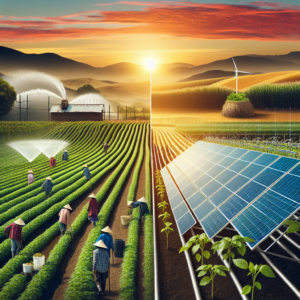
Permanent crop growers have a unique problem: their irrigation needs are fixed in place, but traditional power infrastructure often isn’t. Solar-powered solid-set sprinkler systems solve this by pairing stationary sprinkler networks with clean, renewable energy — delivering consistent water coverage without grid reliance or the constant labor burden of moving portable equipment around trees, vines, or shrubs.
The shift toward solar irrigation isn’t just about sustainability — it’s about operational efficiency. Fuel costs, labor overhead, and equipment wear from portable systems add up fast. A well-designed solar solid-set system removes those variables entirely. Nelson Irrigation has long provided the sprinkler technology that makes permanent systems like these work reliably across demanding agricultural environments.

What Is a Solar Solid-Set Sprinkler System?
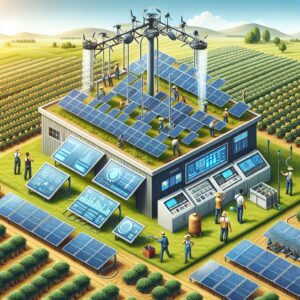
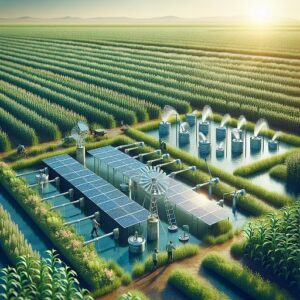
A solar solid-set sprinkler system is a permanently installed irrigation network powered by photovoltaic (PV) solar panels rather than grid electricity or diesel generators. The sprinkler heads, mainlines, and lateral pipes are fixed in position across the field or orchard, and water is delivered on a schedule driven by solar-powered pumps and automated control systems. Once installed, the infrastructure stays put for the life of the crop.
How Solar Power Drives the Irrigation System
Solar panels capture sunlight and convert it into DC electricity, which either powers the irrigation pump directly or charges a battery bank for use during low-light hours. The pump pressurizes the mainline, pushing water through lateral pipes and out through the sprinkler heads at a controlled flow rate and pressure. In most permanent crop systems, a charge controller and inverter sit between the panels and pump to regulate voltage and protect equipment from power fluctuations.
Battery storage is what separates a functional solar irrigation system from an unreliable one. Without adequate battery capacity, irrigation cycles become dependent on peak sunlight hours, which rarely align with optimal watering windows — particularly for frost protection applications where nighttime operation is non-negotiable.
What “Solid-Set” Actually Means in Practice
Solid-set means the entire pipe and sprinkler network is permanently installed and never moved. Mainlines are buried or surface-laid along field rows, laterals branch off at set intervals, and sprinkler heads are mounted on risers at fixed positions. The system is designed once, installed once, and operated indefinitely. There’s no seasonal setup, no dragging aluminum pipe between blocks, and no crew time spent repositioning equipment.
This permanence is exactly why solid-set systems are the standard choice for orchards and vineyards. Once tree canopies develop or trellis systems are established, moving irrigation equipment through the crop becomes impractical and damaging. Solid-set eliminates that problem entirely from day one.
How It Differs from Portable and Mechanized Systems
Portable systems use the same basic components — pipes, sprinklers, pumps — but require manual repositioning between sets, typically every 12 to 24 hours. Mechanized systems like center pivots automate movement but require open, unobstructed fields to operate. Neither approach works well in a mature orchard or established vineyard. Solid-set systems are stationary by design, which means they fit around the crop structure rather than requiring the crop to accommodate the equipment.
Why Permanent Crops Need a Different Irrigation Approach
- Tree crops and grapevines develop deep, structured root systems that need consistent, targeted water delivery — not variable coverage from relocated equipment.
- Orchard and vineyard layouts follow fixed row spacing, canopy dimensions, and trellis configurations that don’t accommodate moving equipment without risking damage.
- Permanent crops operate on multi-decade timelines — the irrigation infrastructure needs to match that longevity, not require annual reconfiguration.
- Frost protection in orchards requires instant, overnight system activation — only a permanently installed, always-ready network can deliver that response time reliably.
The Rooting and Water Demand Patterns of Tree Crops and Vineyards
Tree crops like almonds, citrus, and walnuts develop deep taproot systems alongside wide lateral root zones that can extend well beyond the drip line of the canopy. Grapevines similarly establish extensive root architecture over their first three to five years. Both crop types draw water from a relatively large soil volume, which means irrigation systems need to wet that entire zone consistently — not just the surface directly under the canopy. For more insights on this topic, check out solar irrigation systems for farmers.
Water demand also fluctuates significantly across the growing season. Stone fruits have critical water windows during pit hardening and fruit sizing. Vineyards require precise deficit irrigation strategies during berry development. A permanent solid-set system with automated scheduling and pressure-regulated sprinkler heads is the only practical way to manage those windows without constant manual intervention. For more information on this system, you can explore the solid-set irrigation solutions provided by Nelson Irrigation Corporation.
Why Moving Sprinkler Systems Through Orchards and Vineyards Creates Problems
Beyond the obvious labor cost, portable systems in permanent crops create real agronomic problems. Dragging aluminum pipe through vine rows causes cane breakage and wire damage. Moving equipment under tree canopies disturbs surface mulch, compacts soil in wheel tracks, and risks bark damage on low scaffold limbs. In high-density plantings, it’s often physically impossible to move standard portable equipment without significant crop contact. Solid-set systems make this entire category of risk disappear.

Core Components of a Solar Solid-Set System
Every solar solid-set irrigation system is built from the same foundational components, but the specific sizing and product selection for each component determines whether the system performs reliably for 20 years or starts failing in year three. Understanding what each component does — and why it matters — is essential before committing to a design. To learn more about these components, check out this detailed guide on solar irrigation system components.
Solar Panels and Battery Storage
The solar array is sized based on total pump load (measured in watts or kilowatts), daily operating hours, and peak sun hours at the installation site. A system running a 3 kW pump for 6 hours per day in a region with 5 peak sun hours per day needs a minimum array of roughly 3.6 kW after accounting for system losses — and that’s before adding battery capacity for cloudy-day or nighttime operation. Monocrystalline panels are the standard choice for agricultural systems due to their higher efficiency per square meter and better low-light performance compared to polycrystalline alternatives.
Pump Systems and Pressure Regulation
The pump is the heart of the system, and selecting the wrong one is one of the most expensive mistakes a grower can make. Submersible DC pumps are the most common choice for solar solid-set systems because they pair directly with solar panel output without requiring an inverter, reducing energy conversion losses. Surface centrifugal pumps work well where water sources are shallow and accessible, but require more careful priming management and are more exposed to temperature extremes. The pump must be sized to deliver the required flow rate (gallons per minute) at the system’s operating pressure (PSI) across the full irrigated area.
Pressure regulation is non-negotiable in permanent solid-set systems, particularly across sloped terrain. A 10-foot elevation change creates approximately 4.3 PSI of pressure variation — enough to significantly alter sprinkler throw radius and precipitation rate at lower elevations. Nelson Irrigation pressure regulators installed at each sprinkler head or zone valve maintain consistent outlet pressure regardless of inlet variation, ensuring every head in the system performs to its rated specification. Without inline pressure regulation, high-pressure zones overspray and waste water while low-pressure zones under-irrigate and create yield-limiting dry spots.
Sprinkler Head Selection for Permanent Crops
Sprinkler head selection drives the agronomic performance of the entire system. The head determines throw radius, precipitation rate, droplet size, and wind resistance — all of which directly affect how evenly water is distributed across the root zone. For permanent crops, this decision is made once at installation and lives with the system for decades, which means getting it right the first time matters enormously. The key variables to match are crop spacing, root zone diameter, soil infiltration rate, and prevailing wind conditions at the site. Learn more about irrigation systems that can enhance these decisions.
Mainlines, Laterals, and Riser Configuration
Mainlines are typically PVC or HDPE pipe sized to carry the full system flow with minimal friction loss — generally keeping velocity below 5 feet per second to avoid pressure drop and water hammer risk. Laterals branch off the mainline at intervals matching the sprinkler spacing pattern, with diameter sized to the flow demand of each lateral run. Risers connect the lateral to the sprinkler head at the appropriate height above the soil surface, which for tree crops is typically 18 to 36 inches to clear ground cover and direct water under the canopy rather than into it. In vineyards, low-angle risers positioned between rows deliver water to the root zone without wetting foliage and promoting disease pressure.
Automation and Control Valves
Automated control valves divide the system into independently operated zones, allowing different blocks, crop varieties, or soil types to receive customized irrigation schedules without manual valve operation. Solenoid valves connected to a solar-powered irrigation controller handle zone sequencing automatically. Nelson Irrigation’s Twig® Wireless Automation Controls take this further, enabling wireless zone control across large acreage without the cost and labor of running control wire through the field. This is particularly valuable in permanent crop systems where burying additional conduit after planting is disruptive and expensive.
Choosing the Right Sprinkler Heads for Your Crop
The sprinkler head is where engineering meets agronomy. Every specification — flow rate, radius, arc pattern, trajectory angle — has a direct consequence on crop performance. In permanent solid-set systems, you’re choosing heads that will irrigate the same plants in the same positions for the next 20 to 30 years, so the selection criteria go beyond price and availability. For more information on irrigation solutions, you can explore solid-set irrigation systems from Nelson Irrigation.
Rotator Sprinklers for Tree Crops
Rotator® sprinklers are the workhorse of permanent tree crop irrigation. The Nelson R2000WF Rotator® is specifically engineered for solid-set applications, delivering a slow, rotating stream pattern that applies water at low precipitation rates — typically 0.10 to 0.50 inches per hour depending on nozzle and pressure — which allows time for infiltration even in clay-heavy orchard soils. The R2000WF’s Windfighter® technology uses a low-angle, flat trajectory stream that resists wind deflection significantly better than conventional pop-up or impact heads, maintaining coverage pattern integrity in exposed orchard environments. The Nelson R10 and R10T Rotator® heads offer similar low-rate application in configurations suited to tighter tree spacing and smaller wetted diameter requirements. Learn more about solid-set irrigation solutions.
Big Gun Sprinklers for High-Volume Field Applications
Where large wetted diameters and high flow rates are required — particularly in widely spaced permanent crops or dual-purpose frost protection and irrigation systems — Nelson Big Gun® sprinklers are the appropriate tool. Big Gun® sprinklers operate at high pressure (typically 45 to 100 PSI) and deliver flow rates from 30 to over 300 GPM depending on nozzle size, with wetted diameters reaching 200 feet or more. This makes them particularly effective in walnut orchards, pecan groves, or large-format tree nut operations where wide spacing means fewer heads can cover more ground.
In solid-set configurations, Big Gun® sprinklers are paired with control valves that sequence zones to manage the high flow demand without overloading the solar pump system. The Nelson Big Gun® Portable/Solid Set Application Guide provides specific nozzle selection tables and spacing recommendations for permanent installations — essential reference material when designing a system that needs to perform reliably across years of continuous operation.
How Wind Conditions Should Influence Your Sprinkler Choice
Wind is the single biggest disruptor of sprinkler distribution uniformity in open orchard and vineyard environments. A standard high-trajectory impact sprinkler loses 20 to 40 percent of its effective coverage radius in winds above 10 mph. Low-angle Rotator® heads like the R2000WF reduce that vulnerability dramatically by keeping the water stream below the wind zone — the flat, fast-moving stream resists deflection in a way that high-arc patterns simply cannot.
For sites with consistent afternoon winds above 15 mph, the practical recommendation is to reduce sprinkler spacing by 10 to 15 percent from the standard overlap guideline and select the lowest trajectory nozzle configuration available for the chosen head. This costs more in heads per acre but recovers that investment through significantly more uniform soil moisture distribution and reduced crop stress during critical growth stages when wind events are most likely to coincide with peak water demand.
Labor and Maintenance Advantages Over Portable Systems
Factor
Portable Sprinkler System
Solar Solid-Set System
Daily Labor Requirement
2–4 hours per set move
Near zero (automated)
Equipment Wear from Moving
High — pipe, couplers, heads
Minimal — fixed installation
Crop Damage Risk
High in mature plantings
None after installation
Irrigation Timing Flexibility
Limited by crew availability
Any time, fully automated
Frost Protection Capability
Very limited
Full overnight activation
Energy Source
Diesel or grid
Solar — zero fuel cost
The labor math on portable systems in permanent crops is brutal when you run it honestly. A crew moving portable pipe through a 40-acre vineyard twice per day spends 3 to 5 hours per move — that’s 6 to 10 labor hours daily just on equipment repositioning, not on any actual agronomic work. At current agricultural labor rates, that adds up to tens of thousands of dollars per season in pure overhead that a solid-set system eliminates entirely from year one of operation.
Maintenance on a permanent solid-set system is also fundamentally different in character. Instead of repairing bent pipe couplers, replacing cracked risers from vehicle contact, and sourcing worn sprinkler bodies after a season of daily handling, maintenance becomes scheduled and predictable. Annual tasks include flushing lateral lines to remove sediment, inspecting and replacing sprinkler nozzles showing wear, checking solenoid valve diaphragms, and verifying solar panel output and battery charge capacity. These are planned activities, not reactive repairs driven by daily equipment damage.
The compounding benefit is crop health. When irrigation timing is driven by automated scheduling rather than crew availability, water is applied at agronomically optimal times — typically early morning to minimize evaporative loss — rather than whenever the crew finishes moving equipment. Over a full growing season, that consistency in timing and application uniformity translates directly into more even fruit sizing, better color development, and reduced stress-related crop drop in sensitive permanent crops like citrus and stone fruit.
Common Installation Mistakes That Kill System Efficiency
The difference between a solar solid-set system that performs flawlessly for 25 years and one that starts failing in year two almost always comes down to decisions made during the design and installation phase — not equipment quality. The three most damaging and most common mistakes are undersizing the solar power supply, poor sprinkler spacing, and ignoring pressure variation across elevation changes. Each one is entirely avoidable with proper upfront planning.
Undersizing the Solar Power Supply
This is the most expensive mistake in solar irrigation design, and it happens because growers focus on peak-day performance rather than worst-case conditions. A solar array sized to run the pump on a clear June afternoon will fail to deliver adequate pressure on overcast days in April and October — which are often the exact periods when frost protection or early-season establishment watering is most critical. The correct approach is to size the array based on the lowest solar resource month in which the system needs to operate, then add 20 to 25 percent overcapacity to account for panel degradation, soiling losses, and wiring inefficiencies. Battery storage should be sized to run the system for a minimum of one full irrigation cycle without any solar input — for most permanent crop systems, that means 8 to 12 hours of pump runtime from battery alone.
Poor Sprinkler Spacing Leading to Dry Spots
Sprinkler spacing in a solid-set system is locked in at installation. Unlike a portable system where you can adjust positioning between sets, a permanent installation lives with whatever spacing decision was made on design day. The standard overlap guideline for solid-set sprinklers is spacing at 50 to 65 percent of the wetted diameter — meaning a head with a 60-foot wetted diameter should be spaced no more than 36 to 39 feet from adjacent heads to achieve acceptable distribution uniformity. Many growers push spacing wider to reduce head count and cut installation cost, which creates triangular dry zones between heads that become visually obvious in aerial imagery within the first growing season and translate directly into yield variation across the block. The Nelson R2000WF, for example, has specific spacing recommendations published in its technical documentation that account for both square and triangular grid patterns — following those published values rather than estimating saves significant agronomic pain later.
Ignoring Pressure Regulation Across Elevation Changes
A hillside vineyard or terraced orchard with 30 feet of elevation change across its irrigated area has approximately 13 PSI of natural pressure variation between the highest and lowest points — enough to push sprinkler heads at the low end well outside their rated operating range. This means heads at lower elevations are throwing water well beyond their designed radius, creating runoff and oversaturation while heads at upper elevations are under-pressured and producing smaller, shorter-range patterns that leave dry zones. Installing pressure-compensating regulators at each head or lateral zone is the only reliable fix, and it’s far cheaper to install them during initial construction than to retrofit a completed system. Nelson Irrigation pressure regulators maintain outlet pressure within ±5 percent of the target value across wide inlet pressure variation ranges — that consistency is what makes distribution uniformity across variable terrain achievable rather than theoretical.

Solar Solid-Set Systems Are the Smartest Long-Term Investment for Permanent Crop Growers
When you run the numbers across the full lifespan of a permanent crop planting — 20 to 40 years for most tree crops and vineyards — the economics of a solar solid-set system are not particularly close. Eliminated labor costs, zero fuel expenditure, reduced equipment repair overhead, and superior crop performance from consistent, automated irrigation scheduling compound into a financial advantage that conventional portable or grid-powered systems simply cannot match. The upfront capital cost is higher, but the payback period for most well-designed systems in permanent crops falls between 4 and 8 years, after which the system is generating pure operational savings for the remaining life of the planting.
Beyond the economics, the sustainability argument is straightforward. Solar solid-set irrigation removes diesel combustion from the water delivery process entirely, reduces soil compaction from crew vehicle traffic during irrigation operations, and enables precision water management that reduces total seasonal water application compared to portable systems where timing compromises inevitably lead to over-irrigation. For permanent crop growers working in water-constrained regions — which describes most productive orchard and vineyard country in the American West — that water efficiency advantage is becoming as financially significant as the labor savings. Building a solar solid-set system is not just the sustainable choice. In most permanent crop situations, it is the rational one.
Frequently Asked Questions
Solar solid-set irrigation systems raise practical questions that matter before you commit to a design and installation. The answers below address the most common points of uncertainty growers encounter when evaluating this technology for permanent crop applications.
Can a Solar Solid-Set Sprinkler System Run on Cloudy Days?
Yes — with adequate battery storage, a solar solid-set system can run through multiple consecutive cloudy days without interruption. The key variable is battery bank capacity relative to daily pump energy demand. A properly sized system maintains a battery reserve capable of running at least one full irrigation cycle — typically 8 to 12 hours — without any solar charging input. In regions with frequent overcast conditions during critical irrigation periods, sizing the battery bank for two to three days of autonomy is the more conservative and reliable approach.
Solar panels also continue generating electricity on cloudy days — just at reduced output, typically 10 to 25 percent of rated capacity depending on cloud density. This partial generation can extend battery reserve significantly during overcast periods, meaning the practical autonomy of a well-designed system often exceeds its calculated worst-case figure. The combination of partial panel output and battery storage makes solar solid-set systems far more weather-resilient than their dependence on sunlight might initially suggest.
How Long Does a Permanent Solid-Set System Last Before Needing Replacement?
A well-installed permanent solid-set system with quality components has a functional lifespan that typically matches or exceeds the productive life of the crop it serves. PVC mainline and lateral pipe buried below tillage depth routinely lasts 40 to 50 years without degradation. Sprinkler heads and nozzles are wear components that need periodic replacement — typically every 8 to 15 years depending on water quality and operating hours — but this is a planned maintenance cost rather than a system replacement event. Solar panels carry manufacturer performance warranties of 25 years and often continue generating usable power well beyond that. The components most likely to require mid-life replacement are solenoid valve diaphragms (every 7 to 12 years), battery banks (every 8 to 15 years depending on chemistry and cycling), and pump impellers in high-sediment water environments.
Are Solar Solid-Set Systems Suitable for Frost Protection in Orchards?
Solar solid-set systems are well-suited for frost protection applications, but the design requirements for frost protection are significantly more demanding than standard irrigation duty. Frost protection requires the system to activate quickly — often in the middle of the night when solar panels are generating zero power — and run continuously for multiple hours at full flow rate. This means the battery bank must be sized to handle the full frost protection runtime at full pump load without solar input, which typically means substantially larger battery capacity than an irrigation-only system would require.
The sprinkler heads also need to be selected specifically for frost protection performance. Overhead sprinkler frost protection works by exploiting the latent heat released when water freezes on plant tissue — the water must be applied continuously at a rate that keeps the ice-water interface at 32°F while ambient temperatures remain below freezing. Nelson Big Gun® sprinklers are commonly used in large-format frost protection solid-set systems due to their high flow rates and large wetted diameters, which reduce head count while maintaining the continuous coverage that effective freeze protection requires. System design for dual-purpose frost protection and irrigation use should always be reviewed by an irrigation engineer familiar with both applications.
What Size Solar Array Do I Need to Run a Solid-Set Sprinkler System?
Array sizing depends on three primary variables: pump power consumption in watts or kilowatts, daily operating hours, and peak sun hours at your specific location. As a working starting point, divide your pump’s power draw by the peak sun hours for your worst-case operating month, then multiply by 1.25 to account for system losses. A 2 kW pump running in a location with 4 peak sun hours per day in its lowest-resource operating month needs a minimum array of (2,000 ÷ 4) × 1.25 = 625 watts — with additional panel capacity added if battery charging demand is factored in. Real-world system design should always use site-specific solar resource data from sources like the NREL PVWatts Calculator rather than regional averages, particularly in locations with significant seasonal cloud cover or shading from surrounding terrain.
Can I Automate a Solar Solid-Set System to Run Without Manual Input?
Yes — full automation is one of the primary advantages of a permanent solid-set system over portable alternatives, and modern solar irrigation technology makes completely hands-off operation achievable even on large, multi-zone permanent crop installations. A solar-powered irrigation controller connected to solenoid zone valves handles scheduling, zone sequencing, and runtime management automatically based on pre-programmed parameters. Soil moisture sensors integrated into the control system can trigger irrigation based on actual root zone conditions rather than fixed schedules, reducing water use while maintaining crop performance. Systems equipped with Nelson’s Twig® Wireless Automation Controls extend this automation capability across large acreage without control wire infrastructure, with wireless communication between the controller and remote zone valves enabling management of widely distributed blocks from a single central point.
Remote monitoring adds another layer of operational confidence. Most modern solar irrigation controllers offer cellular or Wi-Fi connectivity that allows growers to monitor system status, adjust schedules, and receive fault alerts from a smartphone or computer — eliminating the need for physical site visits to confirm the system is running as programmed. This is particularly valuable in permanent crop operations where irrigation blocks may be spread across multiple non-contiguous parcels that are impractical to visit daily during peak season.
The practical result of full automation in a solar solid-set system is that irrigation management shifts from a daily labor task to a periodic oversight function. Instead of dedicating crew time to moving equipment, monitoring portable pump operation, and manually opening and closing valves, the grower’s role becomes reviewing logged run data, adjusting seasonal schedules as crop water demand changes, and performing the planned maintenance tasks that keep the system performing at specification across its full operating life. For permanent crop growers managing high-value tree crops or vineyards where consistent water management directly influences fruit quality and market returns, that shift in operational character is as valuable as any of the direct cost savings the system delivers.
If you grow permanent crops and want to explore solar-powered irrigation solutions built on proven sprinkler technology, Nelson Irrigation offers a full range of solid-set compatible products — from Rotator® heads to Big Gun® sprinklers — engineered for exactly these applications.
Solar solid-set sprinkler systems are revolutionizing the way farmers irrigate permanent crops. These systems use solar energy to power the sprinklers, reducing reliance on traditional energy sources and lowering operational costs. With the integration of solar panels, farmers can achieve more sustainable and cost-effective irrigation solutions. For more information on how to integrate solar panels with sprinkler systems, check out this article on sprinkler irrigation system integration.


Leave a Reply