

“Solar Powered Irrigation System: Reduce …” from growingsolarmist.com and used with no modifications.
Key Takeaways
- The initial investment in solar panels may be high, but long-term savings can outweigh the costs.
- Solar-powered irrigation systems help conserve water and improve crop yields.
- Government incentives can significantly reduce the financial burden of solar panel installation.
- Farmers can expect a return on investment in solar panels within 3 to 7 years.
Solar panels can reduce energy costs by up to 90% for irrigation systems.
Understanding Solar Power in Furrow Irrigation
Farming is evolving, and with that comes the need for more sustainable practices. Solar power in furrow irrigation systems offers a solution that is both environmentally friendly and cost-effective. By harnessing the power of the sun, farmers can improve their irrigation methods while reducing their carbon footprint.
Basic Functionality of Furrow Irrigation
Furrow irrigation is a traditional method where water flows through small channels or furrows to water crops. This method is particularly effective for row crops such as corn, cotton, and potatoes. It is simple and requires minimal infrastructure, making it a popular choice for many farmers.
However, furrow irrigation can be inefficient in terms of water usage and energy consumption. That’s where solar power comes into play. By integrating solar panels, farmers can power their irrigation systems more efficiently and sustainably.
Introduction to Solar Energy in Furrow Irrigation System
Solar energy is a clean and renewable source of power that can be used to run irrigation pumps. By installing solar panels, farmers can convert sunlight into electricity, which is then used to operate the pumps that deliver water to the crops. For a basic understanding of the benefits of solar panels in agriculture, farmers can explore how this technology supports sustainable farming practices.
Besides that, solar-powered systems can be more reliable than traditional electric or diesel-powered systems, especially in remote areas where access to electricity is limited. This makes solar energy an attractive option for modernizing furrow irrigation systems.
Benefits of Solar Power for Furrow Irrigation System
Solar power offers several benefits for furrow irrigation systems:
- Cost Savings: Farmers can save significantly on energy costs, reducing their reliance on expensive fossil fuels.
- Environmental Impact: Solar power is clean and reduces the carbon footprint of farming operations.
- Water Efficiency: Solar-powered systems can be automated to deliver precise amounts of water, reducing waste.
- Increased Crop Yields: With more reliable water delivery, crops can grow healthier and more abundant.

Economic Benefits and Challenges
While the benefits of solar power in furrow irrigation are clear, it’s important to weigh the economic factors involved. Understanding both the costs and the potential savings is crucial for making an informed decision. For more information, explore the benefits, cost, and efficiency of solar panels in furrow irrigation systems.
Initial Costs vs Long-Term Savings
The initial investment for solar panels and installation can be substantial. However, it’s essential to consider the long-term savings on energy costs. Over time, the reduction in energy expenses can more than make up for the upfront costs.
Many farmers find that the savings begin to accumulate quickly, making solar power a worthwhile investment. For example, a farmer who spends $10,000 on solar panels might save $1,500 annually on energy costs, resulting in significant savings over the panels’ lifespan.
Return on Investment Timeline
When considering solar panel investments, the return on investment (ROI) is a key factor. Most importantly, farmers typically see a return on their solar investment within 3 to 7 years. This timeline can vary based on factors such as the size of the installation, local climate conditions, and available incentives.
For instance, a small farm might recover its investment in three years due to lower installation costs and higher energy savings. In contrast, a larger operation might take longer but will ultimately benefit from greater long-term savings. Therefore, it’s crucial to calculate potential savings and compare them to initial costs to determine the ROI timeline for your specific situation.
Available Financial Incentives
There are numerous financial incentives available for farmers looking to invest in solar-powered irrigation systems. These can significantly reduce the overall cost of installation and speed up the ROI process.
- Tax Credits: Many governments offer tax credits for renewable energy installations, reducing the tax burden for farmers.
- Grants: Various agricultural and environmental organizations provide grants to support sustainable farming practices.
- Subsidies: Some regions offer subsidies to offset the cost of solar panel installation.
- Low-Interest Loans: Financial institutions may offer favorable loan terms for renewable energy projects.
By taking advantage of these incentives, farmers can significantly lower their initial investment costs, making solar power a more accessible option.
Potential Financial Challenges
While solar panels offer numerous benefits, there are potential financial challenges to consider. Initial costs can be high, and not all farmers may have immediate access to capital or financing options. Additionally, maintenance costs, though generally low, should be factored into long-term budgeting.
Moreover, the availability of financial incentives can vary by location, and not all farmers may qualify for them. It’s essential to research local policies and incentives thoroughly before making a decision. Despite these challenges, the long-term benefits often outweigh the initial hurdles, making solar power a viable option for many farmers. For more information on how solar panels can be integrated into agricultural practices, check out this basic understanding of their benefits.

Environmental Impact and Sustainability
Incorporating solar panels into furrow irrigation systems not only benefits farmers economically but also promotes environmental sustainability. By reducing reliance on fossil fuels, farmers can significantly decrease their carbon footprint and contribute to a healthier planet.
Reducing Carbon Footprints
Solar energy is a clean, renewable resource that generates power without emitting greenhouse gases. By using solar panels, farmers can drastically cut down on their carbon emissions. This is crucial in combating climate change and promoting sustainable agriculture.
For example, a farm that switches to solar power can reduce its carbon emissions by several tons annually. This reduction not only benefits the environment but also aligns with global efforts to transition to more sustainable energy sources.
Enhancing Water Use Efficiency
Solar-powered irrigation systems can improve water use efficiency by delivering precise amounts of water to crops. This reduces water wastage and ensures that crops receive the optimal amount of hydration. For more insights, explore the comparison of solar vs conventional irrigation systems.
Moreover, automated systems can be programmed to water crops at specific times, further enhancing efficiency. This not only conserves water but also improves crop health and yields.
Impact on Soil Health and Crop Yields
Implementing solar-powered irrigation systems can have a positive impact on soil health and crop yields. By providing consistent and efficient water delivery, these systems help maintain optimal soil moisture levels, preventing issues such as soil erosion and nutrient depletion. For more information on how solar panels play a role in irrigation system design, visit this detailed guide.
Furthermore, healthier soil leads to more robust crops and increased yields. This not only benefits farmers economically but also contributes to food security and sustainability.
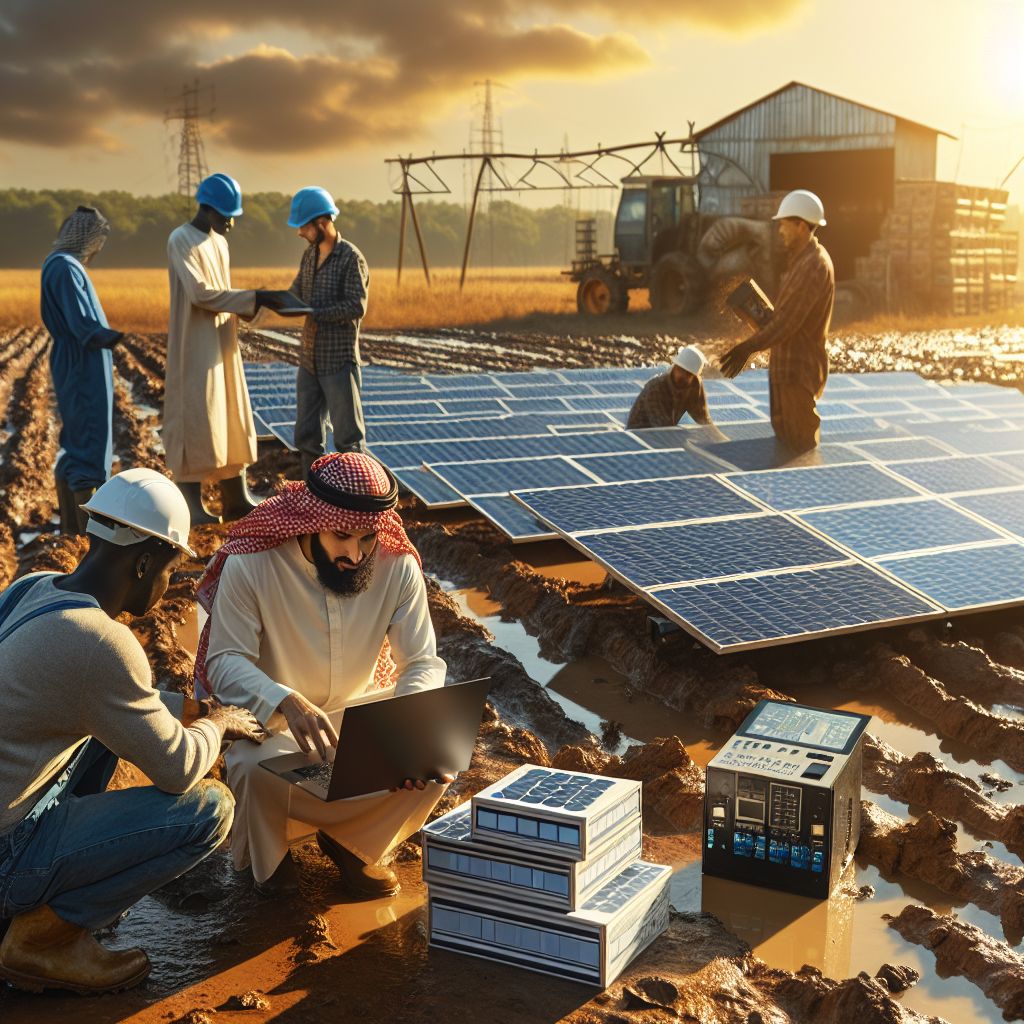
Implementing Solar-Powered Irrigation
Transitioning to solar-powered irrigation systems involves several steps. From choosing the right solar panels to installation and maintenance, each step requires careful consideration and planning.
Choosing the Right Solar Panel Systems
Selecting the right solar panel system is crucial for maximizing the benefits of solar power. Factors to consider include panel efficiency, size, and compatibility with existing irrigation systems.
Here’s a table comparing the different solar panel you can use with an irrigation system on a farm:
|
Solar Panel Type |
Efficiency |
Cost per Watt |
Pros |
Cons |
|---|---|---|---|---|
|
Monocrystalline |
17-22% |
$1.00 – $1.50 |
– Highest efficiency. 1, 3 |
– Most expensive option. 1, 3 |
|
Polycrystalline |
13-17% |
$0.90 – $1.20 |
– Lower cost than monocrystalline. 1, 3 |
– Slightly lower efficiency. 1, 3 |
|
Thin-Film |
10-13% |
$0.70 – $1.00 |
– Lowest cost. 1, 3 |
– Lowest efficiency. 1, 3 |
Monocrystalline panels are highly efficient and durable, making them ideal for high-performance irrigation systems that require consistent power output. Their higher cost is often offset by their superior performance in the long run 3.
Polycrystalline panels offer a good balance between cost and efficiency, making them suitable for medium-scale irrigation projects. They perform well in most conditions and are a popular choice for many agricultural applications 3.
Thin-film panels, while less efficient, are more affordable and flexible. They can be a good option for portable irrigation systems or installations where weight is a concern. Their lower efficiency means you may need more panels to achieve the same power output as crystalline options 3.
Consulting with a solar energy expert can help farmers make informed decisions and choose the most suitable system for their needs. Additionally, researching different brands and models can provide valuable insights into performance and reliability.
Installation and Maintenance Tips
Proper installation is key to ensuring the efficiency and longevity of solar panels. Hiring a professional installer with experience in agricultural systems can help avoid common pitfalls and ensure optimal setup.
Maintenance is generally straightforward, involving regular cleaning and inspections to ensure panels are free of debris and functioning correctly. Monitoring systems can also be installed to track performance and identify any issues early on.
Overcoming Common Implementation Challenges
While the transition to solar power offers numerous benefits, farmers may encounter challenges during implementation. These can include technical issues, regulatory hurdles, and financial constraints. For more insights, explore the future prospects and market trends of solar irrigation systems.
By planning carefully and seeking expert advice, farmers can navigate these challenges effectively. Additionally, connecting with other farmers who have successfully implemented solar systems can provide valuable insights and support.

Case Studies: Success Stories of Solar-Powered Furrow Irrigation
Let’s dive into real-life examples of farmers who have successfully implemented solar-powered furrow irrigation systems. These stories highlight the tangible benefits and potential challenges faced during the transition.
One such success story comes from a farmer in California who decided to invest in solar panels for his 50-acre farm. Initially, he was hesitant due to the upfront costs, but the promise of long-term savings convinced him to take the leap.
Increased Efficiency and Savings
After the installation, the farmer noticed a significant reduction in energy costs. His reliance on diesel generators decreased, leading to savings of over $2,000 annually. Moreover, the automated irrigation system allowed for more precise water delivery, which improved crop yields by 15% in the first year alone.
Lessons Learned from Implementation
One lesson learned was the importance of proper planning and consultation with solar energy experts. Initially, the farmer underestimated the amount of solar power needed, leading to some initial setbacks. However, with expert guidance, he was able to adjust the system to meet his farm’s needs effectively.
Long-term Outcomes and Benefits
“Switching to solar-powered irrigation has not only saved me money but also made my farming operations more sustainable. The benefits far outweigh the initial costs.” – California Farmer
Over time, the farmer saw continued improvements in efficiency and savings. The environmental benefits were also evident, with a noticeable reduction in carbon emissions. This success story serves as an inspiration for other farmers considering the switch to solar power.

Overall Value of Adding Solar Panels to A Furrow Irrigation System
Incorporating solar panels into a furrow irrigation system offers a range of benefits that make it a valuable investment for farmers. The potential for cost savings, environmental sustainability, and improved crop yields are compelling reasons to consider this transition. For more information on how to integrate solar panels with existing systems, you can explore integrating solar panels with existing irrigation systems.
“The initial investment may be daunting, but the long-term benefits make solar power an excellent choice for modern farmers.” – Agricultural Expert
By carefully planning and utilizing available incentives, farmers can maximize the value of their solar investments and contribute to a more sustainable future. For a deeper understanding of the benefits, explore our article on solar panels in agriculture.
Deciding if Adding Solar Panels to your Furrow Irrigation System is Right for You
When deciding whether to invest in solar panels for your irrigation system, consider the following factors:
- Your farm’s location and climate conditions
- Available financial incentives and support
- Initial investment costs versus potential savings
- Long-term goals for sustainability and efficiency
By evaluating these factors, you can make an informed decision that aligns with your farming objectives and financial capabilities.
The Future Landscape of Agricultural Solar Power
The future of agricultural solar power looks promising, with advancements in technology and increasing support for sustainable practices. Here are some trends to watch, including the future prospects and market trends of solar irrigation systems.
- Improved solar panel efficiency and affordability
- Increased availability of government incentives
- Growing awareness of the environmental benefits of solar power
- Integration of smart technologies for enhanced irrigation management
As these trends continue to develop, solar power will play an increasingly important role in the future of sustainable farming.
Frequently Asked Questions (FAQ)
Here are some common questions farmers have about solar-powered furrow irrigation systems:
How do solar panels impact water delivery in furrow irrigation?
Solar panels provide a reliable power source for irrigation pumps, ensuring consistent and efficient water delivery to crops. This reduces water waste and improves overall irrigation efficiency.
How do solar panels help in reducing energy costs for farmers?
By harnessing solar energy, farmers can significantly cut down on electricity and fuel costs. This reduces reliance on fossil fuels and leads to substantial savings over time.
What are the environmental benefits of using solar panels in irrigation?
Solar panels produce clean energy, reducing carbon emissions and promoting environmental sustainability. This contributes to healthier ecosystems and aligns with global efforts to combat climate change.
Are there any government incentives for solar-powered irrigation systems?
Yes, many governments offer incentives such as tax credits, grants, and subsidies to encourage the adoption of renewable energy systems. These incentives can significantly reduce the financial burden of installation.
Farmers are encouraged to research local policies and programs to take advantage of available support. For more information on how solar panels can benefit farm operations, check out this article on solar panels’ benefits and efficiency.
How long does it typically take for farmers to see a return on their solar investment?
Farmers can expect to see a return on investment within 3 to 7 years, depending on factors such as installation size, location, and available incentives. Careful planning and financial analysis can help optimize the ROI timeline. For further insights, explore the integration of solar panels with existing irrigation systems.
Can solar-powered irrigation systems be used for large-scale agricultural operations?
Yes, solar-powered systems can be scaled to meet the needs of large agricultural operations. By designing systems tailored to specific requirements, farmers can achieve efficient and sustainable irrigation on a larger scale.
“By investing in solar power, farmers can transform their operations into more sustainable and cost-effective enterprises.” – Renewable Energy Advocate
In conclusion, solar panel investments for furrow irrigation systems present a viable and beneficial option for farmers seeking to enhance their sustainability and efficiency. With careful planning and consideration, the transition to solar power can yield significant long-term rewards.
Investing in solar panels for irrigation systems can be a game-changer for farmers, especially those using furrow irrigation. By harnessing solar energy, farmers can reduce their dependency on traditional power sources, leading to cost savings and environmental benefits. However, understanding the integration of solar panels with existing irrigation systems is crucial for maximizing efficiency and ensuring a seamless transition. With the right setup, solar panels can significantly enhance the sustainability of farming operations.







Leave a Reply