
Key Takeaways
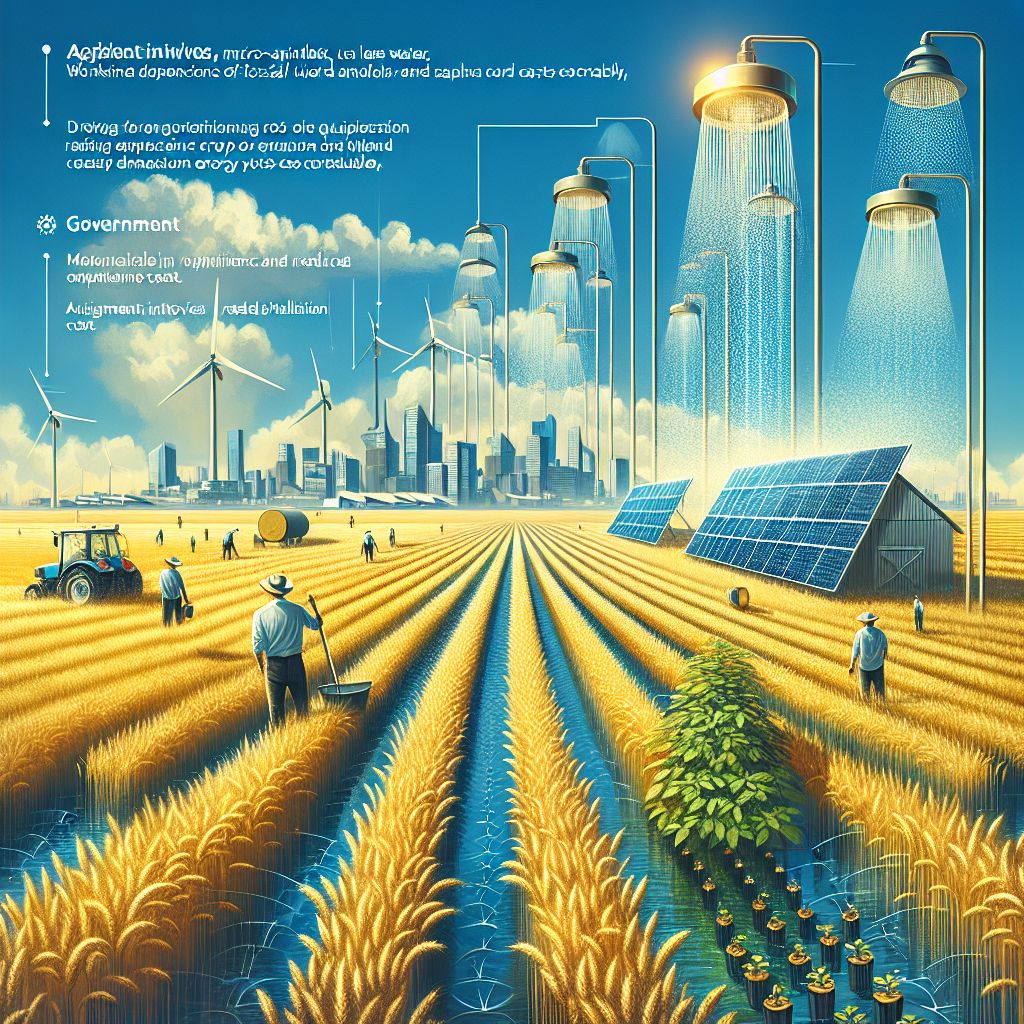
- Solar panels can reduce farm energy costs by up to 70%, providing significant savings over time.
- Micro-sprinkler systems use up to 50% less water compared to traditional irrigation methods, enhancing water conservation.
- Government incentives can cover up to 30% of the installation costs for solar-powered irrigation systems.
- Integrating solar energy into farming promotes sustainability and reduces reliance on fossil fuels.
- Choosing the right solar panels and micro-sprinklers is crucial for maximizing efficiency and crop yield.
Combining Solar Panels with Micro-Sprinkler Systems
Combining solar panels with micro-sprinkler systems is a smart choice for farmers aiming to boost sustainability and efficiency on their farms. Solar energy, being renewable, significantly cuts down electricity costs, while micro-sprinklers ensure precise water delivery to crops. This duo not only reduces the environmental impact but also enhances agricultural productivity.
Let’s dive into how these systems work together to revolutionize farming practices. By harnessing the power of the sun, solar panels convert sunlight into electricity, which can then be used to power irrigation systems. This means that even in remote areas without access to traditional power sources, farmers can still irrigate their fields effectively.
Micro-sprinkler systems, on the other hand, are designed to deliver water directly to the root zones of plants. This method minimizes water waste and ensures that crops receive the optimal amount of moisture needed for growth. When powered by solar energy, these systems become even more efficient and sustainable.
Introduction to Sustainable Farming Practices
Sustainable farming practices are essential for preserving our planet’s resources while meeting the growing demand for food. By integrating solar panels and micro-sprinkler systems, farmers can significantly reduce their carbon footprint and conserve valuable resources like water and energy.
These practices not only benefit the environment but also improve farm profitability. Lower energy costs and increased crop yields contribute to a more sustainable and resilient farming operation. Additionally, embracing sustainable methods can open up new markets and opportunities for farmers, as consumers increasingly prioritize environmentally friendly products.
Key Benefits for Farmers
Farmers who adopt solar-powered micro-sprinkler systems stand to gain a multitude of benefits. First and foremost, these systems offer significant cost savings. By reducing reliance on grid electricity and optimizing water usage, farmers can lower their operational expenses and increase their bottom line.
Moreover, these systems enhance crop health and yield. Precise watering techniques ensure that plants receive the right amount of moisture, leading to better growth and productivity. This can translate into higher profits and a more stable income for farmers.
Eco-Friendly Farming Solutions and Cost Savings
Eco-friendly farming solutions, such as solar-powered micro-sprinkler systems, play a crucial role in reducing agriculture’s environmental impact. By utilizing renewable energy and efficient irrigation methods, farmers can minimize their use of fossil fuels and water resources.
These solutions also offer substantial cost savings. Although the initial investment in solar panels and micro-sprinkler systems may be significant, the long-term savings on energy and water bills can quickly offset these costs. Additionally, government incentives and grants can help alleviate the financial burden of adopting these technologies.
Water Efficiency in Agriculture
Water efficiency is a critical concern in agriculture, as water scarcity continues to threaten global food security. Micro-sprinkler systems address this issue by delivering water directly to the root zones of plants, reducing evaporation and runoff.
This targeted approach not only conserves water but also improves crop health. By ensuring that plants receive the optimal amount of moisture, farmers can enhance growth and productivity. In turn, this leads to higher yields and a more sustainable farming operation. For more insights, explore the benefits of solar power micro-sprinkler irrigation systems.

Advantages of Solar Panels for Farmers
Solar panels offer numerous advantages for farmers, from reducing energy costs to promoting sustainability. By harnessing the power of the sun, farmers can generate clean, renewable energy to power their operations. This not only reduces their reliance on fossil fuels but also lowers their carbon footprint.
Moreover, solar panels provide a reliable and consistent energy source, even in remote areas without access to the grid. This ensures that farmers can continue to irrigate their fields and power their equipment, regardless of their location.
Renewable Energy Utilization
Utilizing renewable energy is a key component of sustainable farming practices. Solar panels enable farmers to generate their own electricity, reducing their dependence on non-renewable energy sources. This not only benefits the environment but also provides farmers with greater energy independence.
By investing in solar panels, farmers can protect themselves from fluctuating energy prices and ensure a stable energy supply for their operations. This can lead to increased profitability and a more resilient farming business.
Farm Operation Cost Reduction
Reducing operational costs is a top priority for farmers, and solar panels can play a significant role in achieving this goal. By generating their own electricity, farmers can significantly lower their energy bills and reduce their overall expenses.
In addition to energy savings, solar panels can also reduce maintenance costs. With fewer moving parts than traditional energy systems, solar panels require less upkeep and have a longer lifespan. This translates into lower maintenance expenses and increased savings for farmers.
Energy Independence on the Farm
Energy independence is a significant advantage for modern farmers. With solar panels, farms can generate their own electricity, reducing reliance on external power sources and shielding themselves from fluctuating energy prices. This independence ensures that farm operations can continue smoothly, even during power outages or energy shortages.
By producing their own energy, farmers can power irrigation systems, machinery, and other equipment without incurring high electricity costs. This not only boosts farm profitability but also promotes a more sustainable and resilient agricultural practice.
Government Incentives and Support
Governments worldwide offer various incentives to encourage the adoption of solar energy in agriculture. These incentives can significantly reduce the upfront costs of installing solar panels, making them more accessible to farmers. Common incentives include tax credits, grants, and low-interest loans.
For instance, the U.S. federal government offers the Investment Tax Credit (ITC), which allows farmers to deduct a portion of their solar installation costs from their taxes. Similarly, many states have their own programs to support renewable energy adoption. Farmers should research available incentives in their region and seek assistance from experts to navigate the application process.
Besides financial incentives, governments also provide technical support and resources to help farmers transition to solar energy. This support can be invaluable in ensuring a successful and efficient implementation of solar-powered systems on farms.
Here’s a table discussing the advantages of solar panels for farmers:
|
Advantage |
Description |
|---|---|
|
Reduced Energy Costs |
Solar panels significantly lower electricity expenses, providing long-term savings with a 25-30 year lifespan. 1, 4 |
|
Energy Independence |
Farmers become less reliant on the grid, protecting against price fluctuations and outages. 1, 4 |
|
Increased Farm Efficiency |
Solar-powered systems can run irrigation pumps and ventilation, improving water management and animal welfare. 1, 4 |
|
Environmental Benefits |
Reduces carbon footprint and harmful pollutants, contributing to agricultural sustainability. 1, 4 |
|
Additional Revenue |
Excess energy can be sold back to the grid through net metering programs, creating a new income stream. 1, 4 |
|
Crop Diversification |
Agrivoltaics allows for growing shade-tolerant crops and extending growing seasons. 2 |
|
Water Conservation |
Solar panels can reduce irrigation needs by shading plants, particularly beneficial in dry or hot areas. 2, 4 |
|
Improved Crop Yield |
In certain conditions, solar shade can lead to better crop resistance to extreme weather and potentially increase yields. 2, 4 |
|
Land Optimization |
Solar farms can coexist with crop cultivation and livestock grazing, maximizing land use. 3 |
|
Community Benefits |
Solar projects can create local jobs, expand clean energy access, and improve food security in rural areas. 2 |
This table highlights the multifaceted advantages that solar panels offer to farmers, encompassing financial, environmental, and operational benefits.

“micro sprinkler irrigation …” from www.rubber-pvc-hose.com and used with no modifications.
Understanding Micro-Sprinkler Irrigation Systems
Micro-sprinkler irrigation systems are a revolutionary approach to watering crops. Unlike traditional irrigation methods that can waste significant amounts of water, micro-sprinklers deliver water directly to the plant roots, ensuring efficient use of this precious resource.
Micro-Sprinkler Functionality
Micro-sprinklers function by releasing a fine mist of water over a targeted area, allowing for precise watering of crops. This method ensures that water reaches the root zone, where it is most needed, reducing evaporation and runoff. The result is healthier plants and more efficient water use. For more information on how climate factors can impact irrigation, explore the temperature effects on solar irrigation systems.
These systems are highly adaptable and can be customized to suit different crop types and field conditions. Farmers can adjust the spray pattern, flow rate, and coverage area to optimize water delivery for their specific needs. This flexibility makes micro-sprinklers an ideal choice for diverse farming operations.
Besides that, micro-sprinklers are easy to install and maintain, making them a cost-effective solution for farmers looking to improve their irrigation practices. With minimal maintenance requirements and a long lifespan, these systems offer a reliable and sustainable way to water crops.
Precision Watering Techniques
Precision watering is a key advantage of micro-sprinkler systems. By delivering water directly to the root zone, these systems minimize waste and ensure that plants receive the optimal amount of moisture. This targeted approach not only conserves water but also promotes healthier plant growth.
Benefits Over Traditional Irrigation Methods
Traditional irrigation methods, such as flood or furrow irrigation, can lead to significant water waste and uneven distribution. In contrast, micro-sprinklers provide uniform coverage and efficient water use, leading to improved crop health and higher yields.
Conserving Water Resources
Water conservation is a critical concern in agriculture, especially in regions facing water scarcity. Micro-sprinkler systems address this issue by using up to 50% less water than traditional methods. This not only conserves a vital resource but also reduces water costs for farmers.
Furthermore, by minimizing runoff and evaporation, micro-sprinklers help protect the environment and promote sustainable farming practices. This makes them an essential tool for farmers committed to preserving our planet’s resources.
Integration of Solar Panels with Micro-Sprinkler Systems
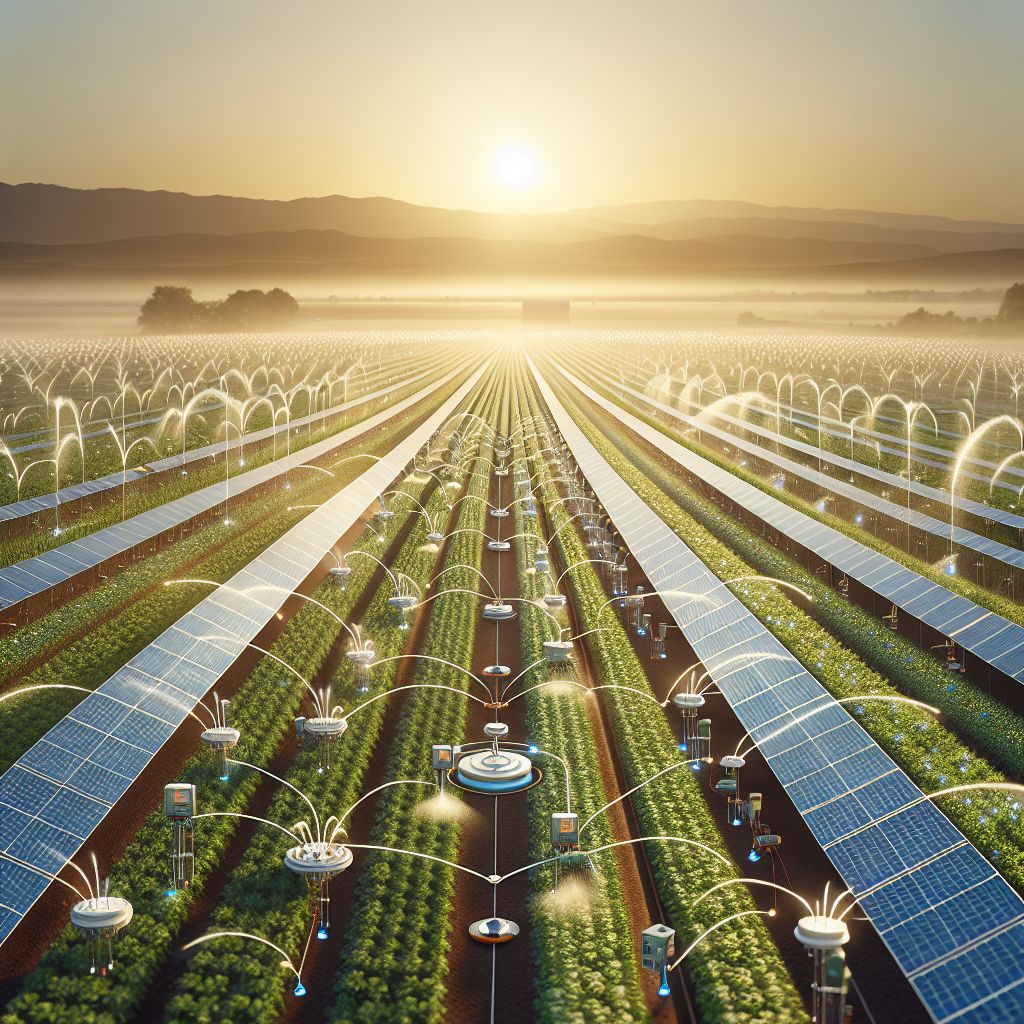
Integrating solar panels with micro-sprinkler systems creates a powerful combination that maximizes efficiency and sustainability. By using solar energy to power irrigation systems, farmers can reduce their reliance on non-renewable energy sources and lower their carbon footprint.
Designing a System for Your Farm
Designing a solar-powered micro-sprinkler system requires careful planning and consideration of various factors. Farmers must assess their energy needs, water requirements, and field conditions to create a system that meets their specific needs.
First, determine the size and type of solar panels needed for agriculture to generate sufficient energy for the irrigation system. This will depend on the farm’s location, available sunlight, and energy demands. Consulting with solar energy experts can help farmers make informed decisions.
Next, select the appropriate micro-sprinklers for the crops being grown. Consider factors such as spray pattern, flow rate, and coverage area to ensure optimal water delivery. Customizing the system to suit the farm’s unique conditions will maximize efficiency and crop yield. For more information on powering irrigation systems, check out this guide on irrigation systems farmers can power with solar.
Choosing Suitable Solar Panels
Choosing the right solar panels is crucial for maximizing the efficiency and longevity of the system. Farmers should consider factors such as panel efficiency, durability, and cost when selecting solar panels. Monocrystalline panels, for example, offer high efficiency and are ideal for limited spaces.
Here’s a table comparing the different solar panel you can use with an irrigation system on a farm:
|
Solar Panel Type |
Efficiency |
Cost per Watt |
Pros |
Cons |
|---|---|---|---|---|
|
Monocrystalline |
17-22% |
$1.00 – $1.50 |
– Highest efficiency. 1, 3 |
– Most expensive option. 1, 3 |
|
Polycrystalline |
13-17% |
$0.90 – $1.20 |
– Lower cost than monocrystalline. 1, 3 |
– Slightly lower efficiency. 1, 3 |
|
Thin-Film |
10-13% |
$0.70 – $1.00 |
– Lowest cost. 1, 3 |
– Lowest efficiency. 1, 3 |
Monocrystalline panels are highly efficient and durable, making them ideal for high-performance irrigation systems that require consistent power output. Their higher cost is often offset by their superior performance in the long run 3.
Polycrystalline panels offer a good balance between cost and efficiency, making them suitable for medium-scale irrigation projects. They perform well in most conditions and are a popular choice for many agricultural applications 3.
Thin-film panels, while less efficient, are more affordable and flexible. They can be a good option for portable irrigation systems or installations where weight is a concern. Their lower efficiency means you may need more panels to achieve the same power output as crystalline options 3.
Selection of Micro-Sprinklers for Different Crops
Different crops have varying water requirements, and selecting the right micro-sprinklers is essential for meeting these needs. Consider the crop type, growth stage, and field conditions when choosing micro-sprinklers. Adjustable systems that allow for customization can provide the flexibility needed to optimize water delivery.
Installation Process Overview
The installation process for solar-powered micro-sprinkler systems involves several steps. First, set up the solar panels in a location that receives maximum sunlight. Ensure that the panels are securely mounted and properly angled to capture the most solar energy.
Next, connect the solar panels to the irrigation system using appropriate wiring and components. This may require the assistance of a professional electrician to ensure proper installation and safety. Once the system is connected, test the micro-sprinklers to ensure they are functioning correctly and delivering water efficiently.
|
Component |
Considerations |
|---|---|
|
Solar Panels |
Efficiency, durability, cost |
|
Micro-Sprinklers |
Spray pattern, flow rate, crop suitability |
|
Installation |
Professional assistance, proper wiring, testing |
By carefully considering each component and ensuring proper installation, farmers can create an efficient and sustainable irrigation system that meets their needs.
Automation and Smart Farming Technologies
Automation and smart farming technologies can further enhance the efficiency of solar-powered micro-sprinkler systems. By incorporating sensors and controllers, farmers can automate irrigation schedules and monitor system performance in real-time.
This technology allows for precise control over water delivery, ensuring that crops receive the optimal amount of moisture. It also provides valuable data on soil conditions and weather patterns, enabling farmers to make informed decisions and optimize their irrigation practices.
Case Studies: Success Stories in Farming
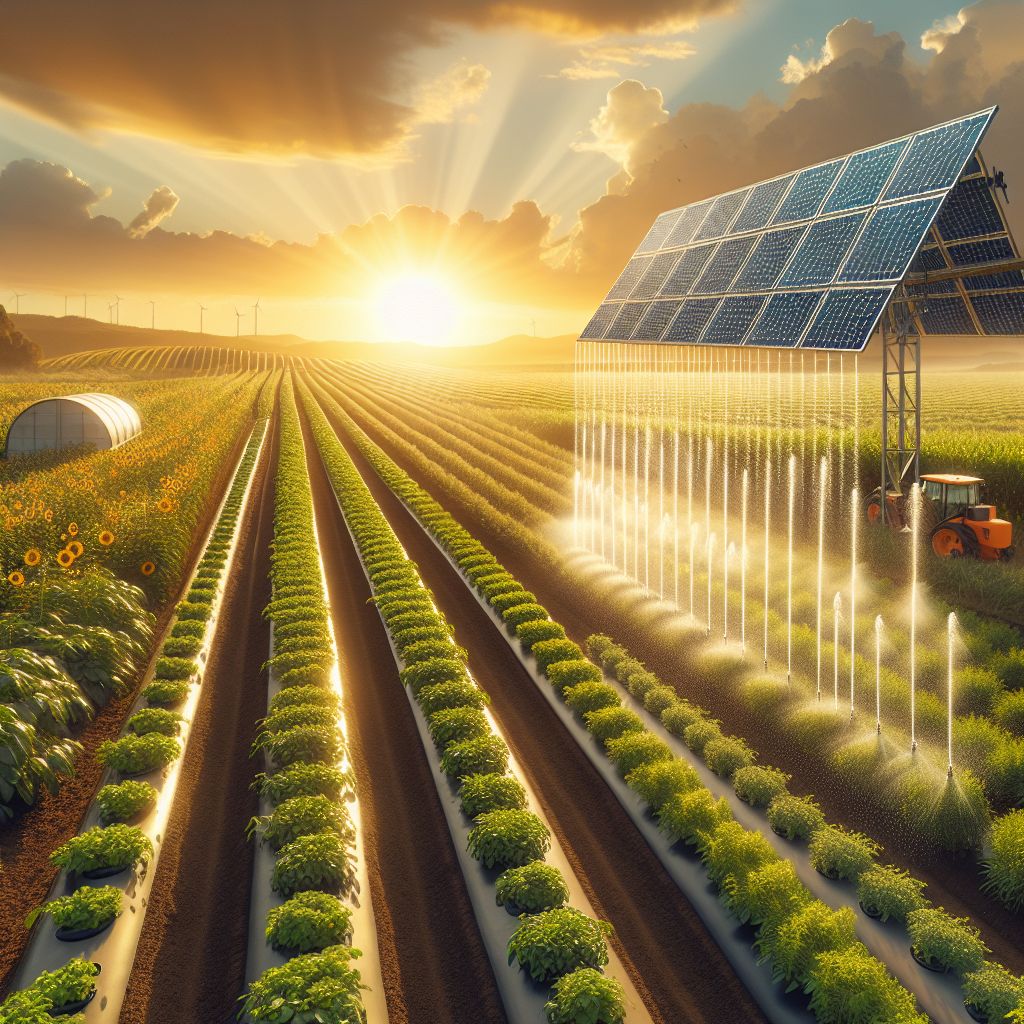
Many farmers around the world have successfully integrated solar panels and micro-sprinkler systems into their operations, reaping significant benefits. These success stories serve as inspiring examples of the potential of sustainable farming practices.
For instance, a small-scale organic farm in California implemented a solar-powered micro-sprinkler system to irrigate its diverse range of crops. The system not only reduced water usage by 40% but also lowered energy costs by 60%, leading to increased profitability and a more sustainable operation.
In another example, a large-scale agricultural operation in Australia adopted solar energy to power its extensive irrigation network. By combining solar panels with micro-sprinklers, the farm achieved a 50% reduction in water consumption and significantly decreased its carbon footprint. This transition not only improved the farm’s environmental impact but also enhanced crop yields and overall productivity.
These case studies demonstrate the transformative potential of solar-powered micro-sprinkler systems in agriculture. By embracing these technologies, farmers can achieve greater sustainability, efficiency, and profitability in their operations.
Small-Scale Farm Implementations
Small-scale farms can greatly benefit from solar-powered micro-sprinkler systems. These systems are relatively easy to install and maintain, making them an ideal choice for farmers with limited resources. By harnessing solar energy, small farms can reduce their reliance on grid electricity and lower their operational costs. This not only boosts profitability but also promotes sustainable farming practices.
Moreover, micro-sprinklers provide precise watering, ensuring that each plant receives the optimal amount of moisture. This targeted approach improves crop health and yield, leading to a more productive and efficient farming operation. For small-scale farmers, the combination of solar energy and micro-sprinklers can be a game-changer, enhancing both sustainability and profitability.
Large-Scale Agricultural Operations
Large-scale agricultural operations can also benefit significantly from solar-powered micro-sprinkler systems. These systems can be scaled to meet the needs of extensive fields and diverse crop types, providing efficient and sustainable irrigation solutions. By reducing water usage and energy costs, large farms can improve their environmental impact and increase profitability.
Additionally, solar panels provide a reliable and consistent energy source, ensuring that irrigation systems can operate smoothly even in remote areas. This energy independence allows large farms to maintain productivity and efficiency, regardless of external circumstances. By embracing solar energy and micro-sprinklers, large-scale operations can enhance sustainability and resilience, securing a stable future for their business.
Lessons Learned and Best Practices
Farmers who have successfully integrated solar-powered micro-sprinkler systems into their operations have learned valuable lessons and developed best practices. One key takeaway is the importance of careful planning and system design. By assessing energy needs, water requirements, and field conditions, farmers can create a customized system that meets their specific needs. For more insights on different systems, explore irrigation systems farmers can power with solar.
Another lesson is the value of automation and smart farming technologies. By incorporating sensors and controllers, farmers can optimize irrigation schedules and monitor system performance in real-time. This technology allows for precise control over water delivery, ensuring that crops receive the optimal amount of moisture and promoting healthier plant growth.
Empowering Farmers for the Future
Empowering farmers with sustainable technologies like solar-powered micro-sprinkler systems is crucial for the future of agriculture. These systems not only reduce environmental impact but also improve farm profitability and resilience. By embracing renewable energy and efficient irrigation methods, farmers can secure a stable and sustainable future for their operations.
Fostering Sustainable Communities
By adopting sustainable farming practices, farmers can contribute to the development of sustainable communities. These practices reduce the environmental impact of agriculture and promote the responsible use of resources, benefiting both farmers and the communities they serve.
Long-Term Environmental Impact
The long-term environmental impact of solar-powered micro-sprinkler systems is significant. By reducing reliance on non-renewable energy sources and conserving water, these systems help protect the environment and preserve valuable resources for future generations.
Furthermore, by promoting healthier plant growth and higher yields, these systems contribute to global food security and reduce the need for additional land and resources for agriculture. This makes them an essential tool for sustainable farming and environmental conservation.
In conclusion, solar-powered micro-sprinkler systems offer a powerful solution for farmers seeking to enhance sustainability and efficiency. By integrating these technologies into their operations, farmers can improve profitability, reduce environmental impact, and secure a stable future for their business.
Encouraging Innovation in Agriculture
Innovation is key to the future of agriculture, and solar-powered micro-sprinkler systems are a prime example of how technology can transform farming practices. By embracing these innovations, farmers can enhance their operations and contribute to a more sustainable and resilient agricultural industry.
Frequently Asked Questions (FAQ)
As more farmers consider adopting solar-powered micro-sprinkler systems, several common questions arise. Here, we address some of the most frequently asked questions to help farmers make informed decisions.
Can solar-powered micro-sprinkler systems be used on all types of farms?
Yes, solar-powered micro-sprinkler systems can be adapted to suit various farm types and sizes. By customizing the system design and selecting appropriate components, farmers can create an efficient and sustainable irrigation solution for their specific needs. For more information on irrigation systems powered by solar, explore our detailed guide.
These systems are versatile and can be used for a wide range of crops and field conditions. With proper planning and installation, solar-powered micro-sprinklers can enhance sustainability and efficiency on any farm.
How much can farmers save by switching to these systems?
Farmers can save significantly by switching to solar-powered micro-sprinkler systems. Energy costs can be reduced by up to 70%, while water usage can be decreased by up to 50%. These savings can quickly offset the initial investment and improve farm profitability.
Additionally, government incentives and grants can further reduce the financial burden of adopting these technologies, making them an attractive option for farmers seeking to enhance sustainability and efficiency.
Are there specific crops that benefit most from micro-sprinkler irrigation?
- Orchards and vineyards
- Row crops such as corn and soybeans
- Vegetables like tomatoes and peppers
- Floriculture and nursery plants
Micro-sprinkler irrigation is particularly beneficial for crops that require precise watering and consistent moisture levels. By delivering water directly to the root zone, these systems promote healthier plant growth and higher yields.
What is the typical lifespan of solar panels used in agriculture?
Solar panels used in agriculture typically have a lifespan of 25 to 30 years. With proper maintenance and care, these panels can provide a reliable and consistent energy source for decades, ensuring a stable and sustainable future for farm operations.
How can farmers access government incentives for solar systems?
Farmers can access government incentives for solar systems by researching available programs in their region and consulting with experts to navigate the application process. Common incentives include tax credits, grants, and low-interest loans, which can significantly reduce the initial costs of installing solar panels.
By taking advantage of these opportunities, farmers can make the transition to solar energy more affordable and accessible, enhancing sustainability and efficiency on their farms.
Solar panels have become an increasingly popular choice for powering irrigation systems on farms. By harnessing the power of the sun, farmers can reduce their reliance on traditional energy sources and lower their operational costs. This is particularly beneficial for micro-sprinkler irrigation systems, which require a consistent and efficient energy supply. For more detailed information, you can explore the benefits and installation guide for solar-powered micro-sprinkler systems.







Leave a Reply