
Key Takeaways
- Solar panels can reduce a farm’s operational costs by up to 70%, providing significant long-term savings and protection against rising electricity rates.
- Farmers implementing solar energy systems may qualify for sustainable farming certifications, potentially opening premium market opportunities.
- Agrivoltaics allows farmers to simultaneously use land for both solar energy production and crop cultivation, maximizing profit per acre.
- GrowingSolarMist helps farmers navigate the complex incentives landscape, ensuring they maximize available tax credits and grants for solar installations.
- Solar-powered irrigation systems can reduce water usage by 20-30% while maintaining or improving crop yields through precise application.
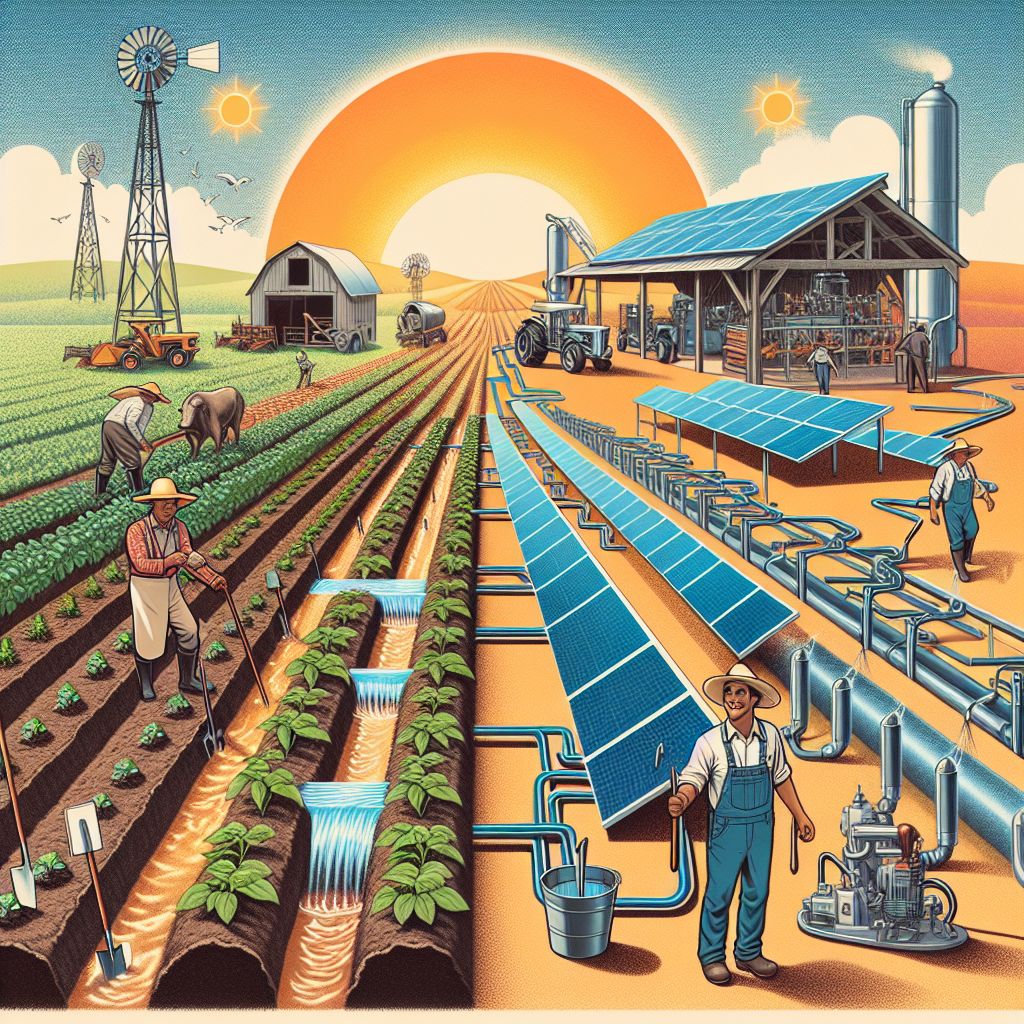
Farming has entered a new era where sustainability meets profitability. For today’s agricultural operators facing rising energy costs and environmental pressures, solar power offers a compelling solution. As electricity continues to represent one of the largest operational expenses on farms, harnessing the sun’s energy isn’t just an environmental choice—it’s becoming an economic necessity.
Why Farmers Are Switching to Solar Power Today
The agricultural sector consumes substantial energy for irrigation, climate control in livestock facilities, and equipment operation. With traditional energy costs continuing to rise, farmers across the country are discovering that solar installations provide a hedge against these unpredictable expenses. GrowingSolarMist’s analysis shows that farms implementing solar technology typically see a return on investment within 5-7 years, followed by decades of reduced operating costs.
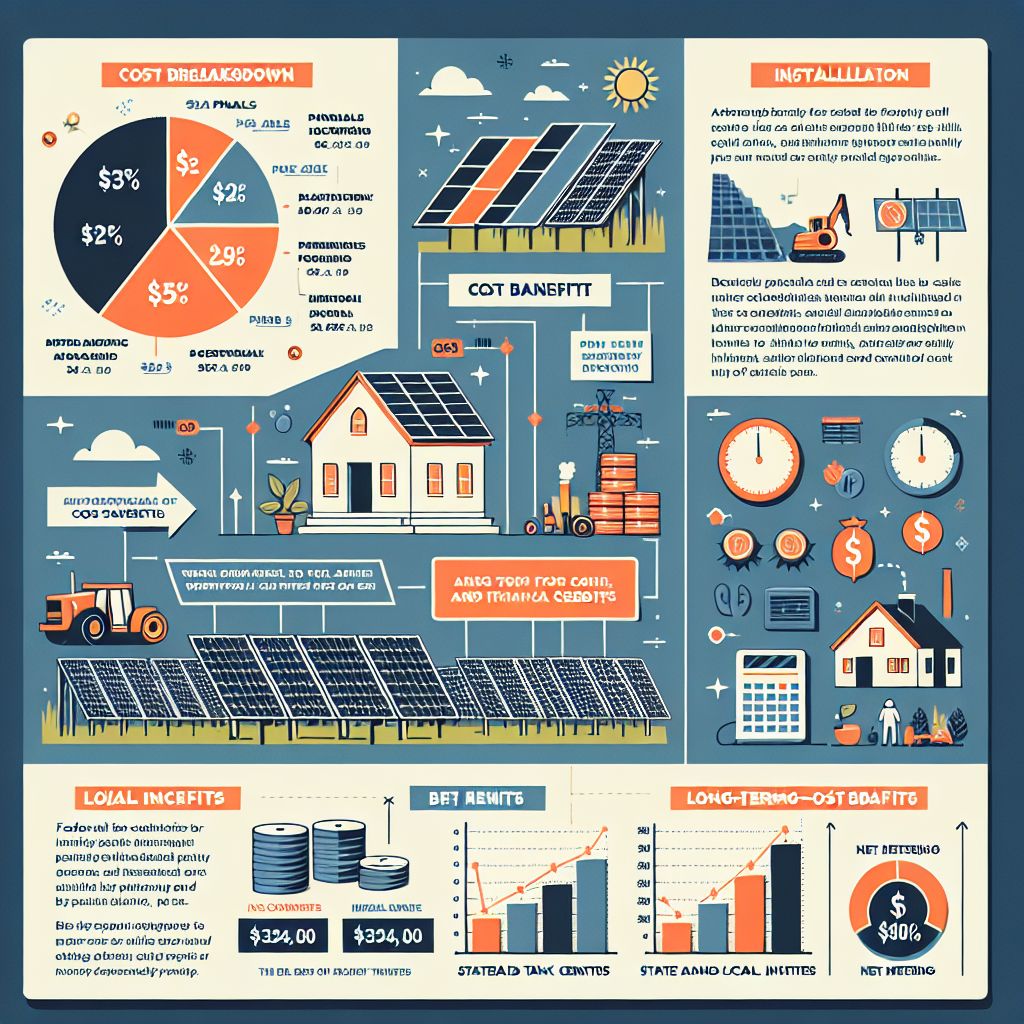
Beyond the immediate financial benefits, government incentives have made the transition more accessible than ever. The federal Investment Tax Credit currently allows farmers to deduct 30% of their solar system costs from their taxes, while USDA’s Rural Energy for America Program (REAP) provides grants covering up to 25% of project costs. Many states offer additional incentives, creating a financial environment where solar adoption makes undeniable economic sense.
Weather resilience represents another compelling reason for the agricultural shift toward solar energy. Modern farming operations are increasingly vulnerable to grid disruptions during critical periods like harvest or extreme weather events. Solar installations paired with battery storage provide essential energy independence, ensuring irrigation systems, climate controls, and essential equipment remain operational even when traditional power fails.
Farmers are rapidly adopting solar power solutions across the agricultural sector. The table below summarizes the main reasons behind this shift, highlighting both economic and practical benefits as well as environmental gains.
|
Reason |
Description |
|---|---|
|
Cost Savings |
Solar allows farms to generate their own electricity, reducing reliance on the grid and lowering utility bills. It protects against rising energy costs. |
|
Income Stability |
Selling surplus power to the grid or leasing land for solar provides new revenue streams. This buffers fluctuating crop prices and farm incomes. |
|
Energy Independence |
On-site solar generation (with possible battery storage) protects farms, especially in rural areas, from outages and power supply risks. |
|
Government Incentives |
Grants, rebates, and tax credits—such as those from the Inflation Reduction Act and state programs—make solar investments more affordable. |
|
Environmental Sustainability |
Solar energy reduces fossil fuel use, greenhouse emissions, and pollution, enhancing farm sustainability and appeal to eco-conscious consumers. |
|
Dual Land Use & Increased Yield |
Agrivoltaics (solar and farming together) can increase crop yield, protect plants/livestock from excess heat, and maximize land productivity. |
|
Water Conservation |
Solar in water-stressed regions can save water by shading crops and reducing evaporation, important in drought-prone areas. |
|
Future-Proofing Operations |
Solar helps mitigate future uncertainty about energy prices and climate risks, improving farm resilience and planning. |
Environmental Advantages Beyond Just Clean Energy
While the economic benefits alone justify solar adoption for many farmers, the environmental advantages create additional value streams that forward-thinking agricultural businesses are capitalizing on. Sustainable farming practices increasingly command premium prices in the marketplace, and solar adoption plays a significant role in qualifying for these certifications and marketing opportunities.
Carbon Footprint Reduction and Sustainable Farming Certification
The agricultural sector currently accounts for approximately 10% of U.S. greenhouse gas emissions. By transitioning to solar energy, farmers can dramatically reduce their carbon footprint while maintaining or improving production levels. A typical 100kW solar system on a farm prevents approximately 150,000 pounds of carbon dioxide emissions annually – equivalent to planting over 75 acres of forest. Learn more about the environmental benefits of solar energy for farmers.
This reduction creates opportunities beyond environmental stewardship. As consumers increasingly demand sustainably produced food, solar-powered farms can access certification programs that verify their lower environmental impact. These certifications often translate to premium pricing opportunities in both direct-to-consumer and wholesale markets, creating additional revenue streams that further justify solar investments.
Land Use Efficiency Through Agrivoltaics
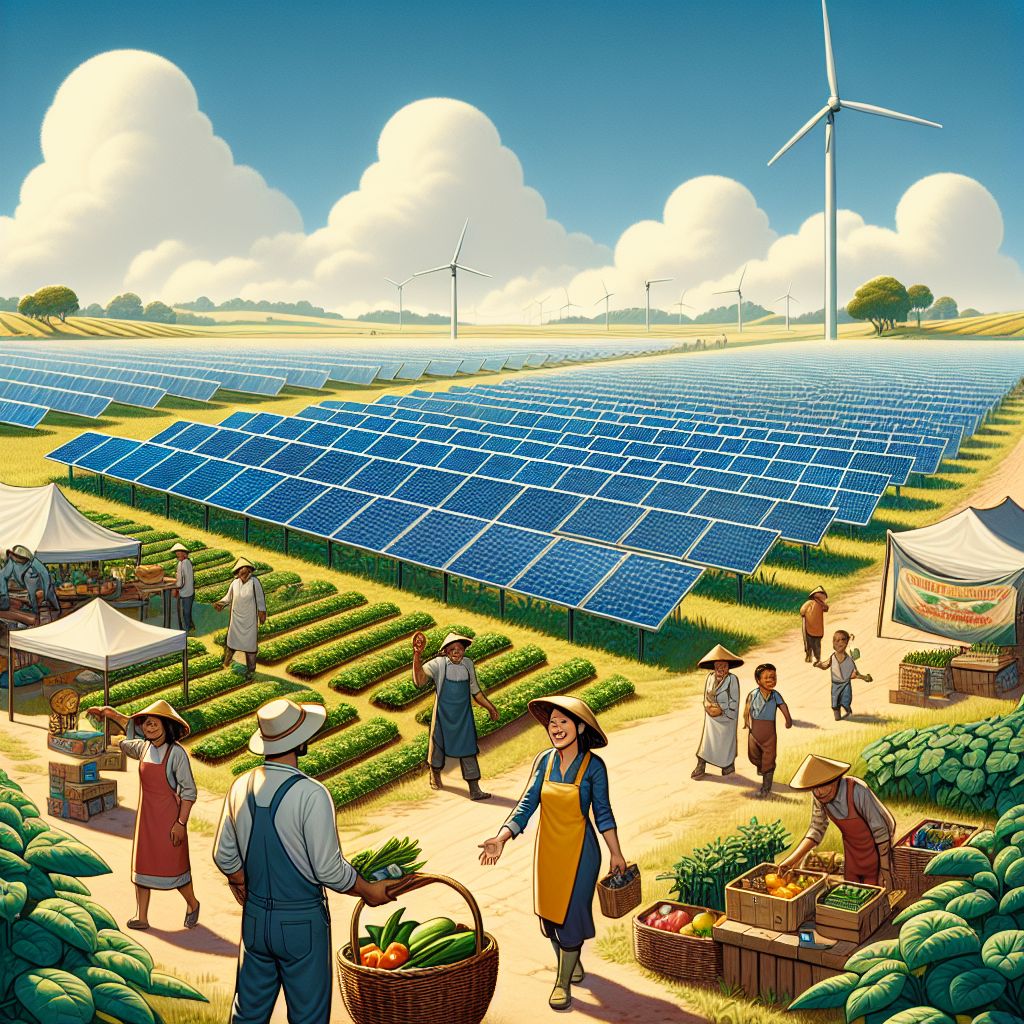
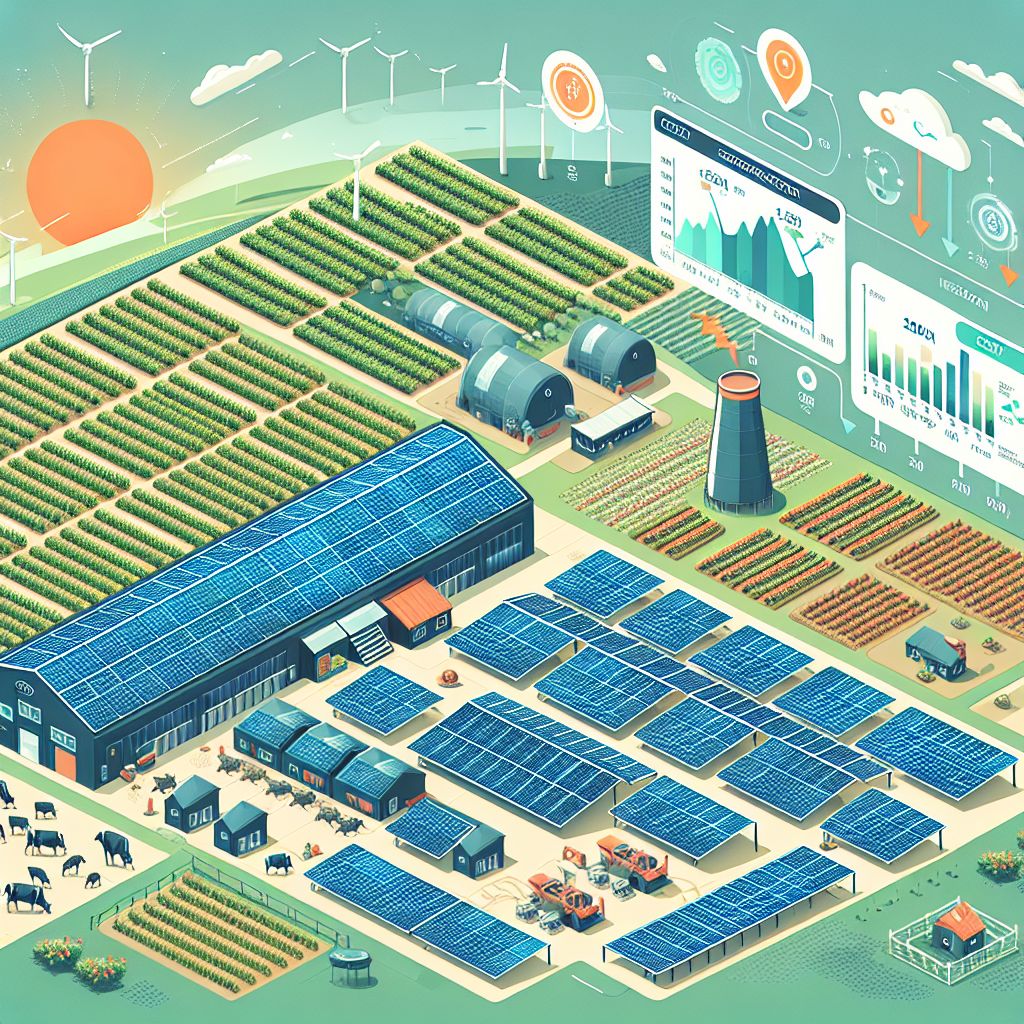
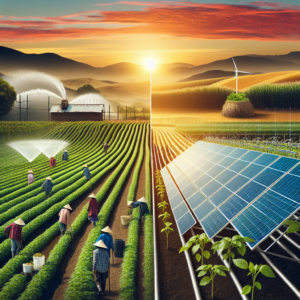
Innovative farmers are discovering that solar panels and agriculture can coexist on the same land through agrivoltaic systems. Rather than choosing between energy production and crop cultivation, these systems strategically position solar panels to allow sufficient sunlight for certain crops while generating clean electricity. Research from the National Renewable Energy Laboratory demonstrates that some shade-tolerant crops actually thrive under partial solar panel coverage, particularly in regions prone to excessive heat or drought conditions.
Agrivoltaic Success Case: Shepherd’s Vineyard
Shepherd’s Vineyard has effectively utilized solar power to enhance their agricultural operations, showcasing the potential of renewable energy in farming.
A 15-acre vineyard in California installed elevated solar panels above grapevines, resulting in:
- 20% reduction in water requirements
- 15% increase in grape quality due to moderated temperatures
- Annual electricity production sufficient to power all farm operations plus 40 nearby homes
- 40% increase in land-use efficiency compared to separate solar and agricultural operations
Water Conservation Benefits
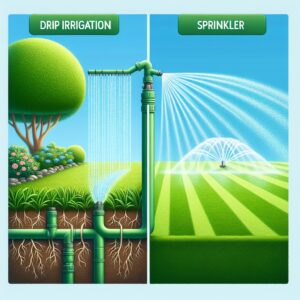
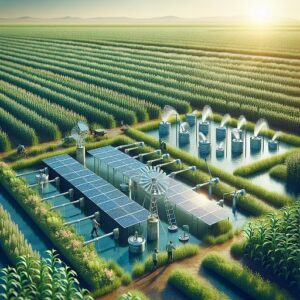
Perhaps one of the most overlooked advantages of solar implementation on farms is the potential for significant water conservation. Solar-powered drip irrigation systems can be precisely calibrated to deliver water exactly when and where crops need it, reducing waste and improving efficiency. These systems, when connected to soil moisture sensors and weather monitoring equipment, can reduce water usage by 20-30% while maintaining or improving yields.
Additionally, solar panels themselves create microclimate effects that can reduce evaporation from soil beneath them. This partial shading effect can be particularly beneficial in arid regions where water conservation represents both an environmental imperative and a significant cost consideration. The water savings alone can justify solar installations in regions facing increasing water scarcity or rising irrigation costs.
“How Solar Panels Help Farm Operations …” from growingsolarmist.com and used with no modifications.
Power Efficiency Improvements for Farm Operations
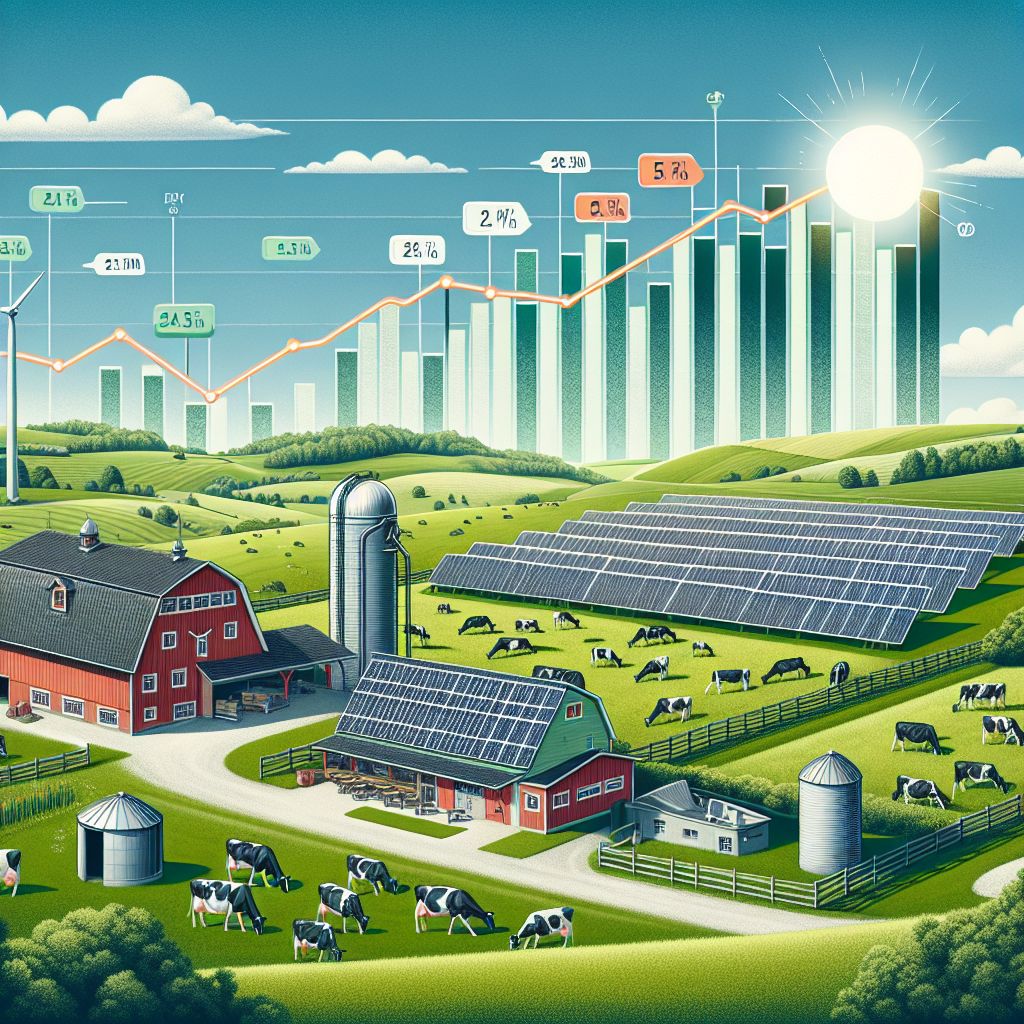
Farm operations rely heavily on consistent, affordable power to maintain productivity and profitability. Traditional energy sources subject agricultural businesses to unpredictable rate increases and potential service interruptions that can devastate crops or livestock. Solar panel systems address these vulnerabilities by providing stable, predictable energy costs locked in at the time of installation while reducing dependence on external power sources.
Modern agricultural facilities can experience extreme fluctuations in energy needs throughout the day and across seasons. Solar power systems can be designed to match these unique consumption patterns, ensuring power is available when most needed without the premium charges often associated with peak-time utility consumption. When properly designed, these systems dramatically reduce or eliminate utility bills while providing operational reliability that traditional grid connections cannot match.
- Reduce or eliminate monthly electricity bills, creating predictable operational costs
- Protect against utility rate increases, which have averaged 2.5% annually over the past decade
- Minimize power quality issues (surges, brownouts) that can damage sensitive equipment
- Provide energy security during critical periods like harvest, milking, or extreme weather
- Qualify for accelerated depreciation, lowering tax burden in addition to reducing expenses
The financial benefits extend beyond simple cost reduction. Farms with solar installations often report increased property values, improved insurance terms, and enhanced ability to secure agricultural financing due to more stable operational costs. These secondary benefits can be substantial, particularly for operations looking toward expansion or generational transition. For more insights, check out the financial and environmental benefits of solar energy in agriculture.
Energy Independence During Peak Demand Times
Agricultural power demands often align perfectly with solar production cycles. Irrigation requirements typically peak during summer months when solar generation is at its highest, creating a natural synergy between farm needs and renewable production. This alignment allows farmers to avoid costly demand charges that utilities assess during high-consumption periods. By generating power on-site during these peak times, farms can reduce their draw from the grid precisely when utility rates are highest, maximizing the financial benefit of their solar investment.
Grid Reliability Issues Solved for Remote Farms
Rural operations frequently suffer from grid reliability issues, including voltage fluctuations, extended outages, and limited capacity for expansion. These problems become particularly acute during extreme weather events when agricultural operations may need power most. Solar systems with battery backup provide critical resilience against these vulnerabilities, ensuring that essential systems remain operational regardless of grid conditions. For livestock operations where ventilation or temperature control interruptions can be catastrophic, this reliability factor alone often justifies the investment in renewable energy infrastructure.
Battery Storage Options for 24/7 Power Access
The integration of battery storage technologies has transformed the solar value proposition for agricultural operations. Modern battery systems allow farms to store excess daytime production for use during evening hours or cloudy days, creating true energy independence. These systems can be configured to automatically prioritize critical loads during outages, ensuring that essential operations continue uninterrupted while less critical systems remain offline until full power is restored. For more information on solar technologies, explore the benefits of Topcon solar panels in powering agricultural operations.
|
Battery Storage Size |
Typical Farm Application |
Approximate Backup Duration |
|---|---|---|
|
10-20 kWh |
Critical systems only (well pumps, refrigeration) |
12-24 hours |
|
30-50 kWh |
Small farm operations (irrigation, basic equipment) |
1-2 days |
|
100+ kWh |
Complete farm operations with livestock facilities |
3+ days |
The declining cost of battery technology has made these storage solutions increasingly accessible to agricultural operations of all sizes. Federal tax incentives now extend to standalone battery installations, allowing farms to add storage capacity to existing solar systems or even install batteries as a first step toward renewable integration.
Many farmers find that starting with a modest battery system addressing only their most critical needs provides immediate reliability benefits while establishing the infrastructure for future expansion. This phased approach makes renewable adoption more financially accessible while still delivering meaningful operational improvements.

“Farms Solar Power Usage: Applications …” from growingsolarmist.com and used with no modifications.
Best Applications of Solar Technology on Farms
While solar energy can benefit virtually any agricultural operation, certain farm activities represent particularly high-value applications where the return on investment is accelerated. Understanding these optimal use cases helps farmers prioritize their renewable energy investments for maximum impact. The most successful implementations typically focus initially on high-consumption, operationally critical systems where energy reliability directly impacts productivity and profitability.
Irrigation Systems Powered by the Sun
Irrigation represents one of the most energy-intensive aspects of many farming operations, with pumping systems often consuming thousands of kilowatt-hours monthly during growing seasons. Solar-powered irrigation eliminates these substantial electricity costs while providing water precisely when crops need it most – during sunny periods. Advanced systems incorporate soil moisture monitoring and weather prediction to optimize water application, further reducing both energy and water consumption while improving crop outcomes.
Livestock Facility Energy Solutions
Modern livestock operations require significant energy for ventilation, lighting, heating, cooling, and automated feeding systems. These continuous loads create substantial utility bills but also represent perfect candidates for solar conversion due to their predictable consumption patterns. Dairy operations in particular benefit from solar integration, as milk collection and refrigeration create consistent energy demands that align well with renewable generation capabilities.
Beyond cost savings, solar-powered livestock facilities often report animal welfare improvements resulting from more consistent environmental controls. When traditional power supplies experience fluctuations or outages, solar systems with battery backup maintain critical ventilation and temperature management systems, reducing animal stress and potential productivity losses.
Cold Storage and Processing Equipment
Post-harvest processing and storage facilities present significant opportunities for solar implementation. These operations typically involve substantial energy consumption for refrigeration, washing, sorting, and packaging – activities that directly impact product quality and market value. By powering these processes with on-site solar generation, farms can maintain precise temperature control and processing capabilities regardless of grid conditions.
The economics become particularly compelling for operations that process products during peak harvest periods, when solar production is typically highest. This natural alignment between energy production and consumption maximizes the value of the solar investment while ensuring product quality during critical processing windows.
Electric Farm Equipment Charging Stations
As agricultural equipment manufacturers increasingly develop electric tractors, utility vehicles, and specialized equipment, on-farm charging infrastructure powered by solar energy creates a compelling economic proposition. These systems allow farmers to transition from fossil fuel to electric equipment without increasing utility costs, while providing convenient charging locations throughout their property. Early adopters report operational cost reductions of 70-85% when comparing solar-charged electric equipment to traditional diesel or gasoline alternatives.
Real Farm Solar Success Stories
The theoretical benefits of solar energy for agricultural operations are convincingly demonstrated through numerous real-world implementations across diverse farming contexts. These success stories provide valuable insights into the practical application of renewable energy systems and the tangible results farmers can expect. From small family operations to large commercial enterprises, these case studies highlight how thoughtful solar integration delivers both economic and operational advantages.
Small Family Farm Case Study: 40% Energy Cost Reduction
The Johnson Family Farm, a 120-acre diversified operation in the Midwest, installed a 25kW solar array in 2019 to address rising energy costs for their irrigation system and small processing facility. The $62,000 system, after federal tax credits and USDA REAP grant funding, had a net cost of approximately $31,000. The system now produces approximately 35,000 kWh annually, covering roughly 60% of the farm’s total electricity needs and reducing annual utility costs by over $4,200.
Beyond the direct cost savings, the Johnsons report that their solar installation has created marketing advantages for their direct-to-consumer sales channels. Customers specifically mention their sustainable practices as a reason for choosing their products, and the farm has successfully increased prices by 8-12% based on their “solar-powered” branding. This premium pricing, combined with energy savings, created a system payback period of just under five years – substantially better than the seven years originally projected.
Large Agricultural Operation: Complete Energy Independence
Sunshine Valley Organics, a 500-acre certified organic vegetable operation in California, faced critical challenges with unreliable grid power and escalating energy costs for their extensive irrigation and cold storage facilities. In 2020, they invested in a comprehensive 350kW solar installation with 200kWh of battery storage. The $825,000 system, after incentives, had a net cost of approximately $450,000 but completely eliminated their $95,000 annual electricity bill while providing uninterrupted power for critical operations. Learn more about why farmers choose solar for their operations.
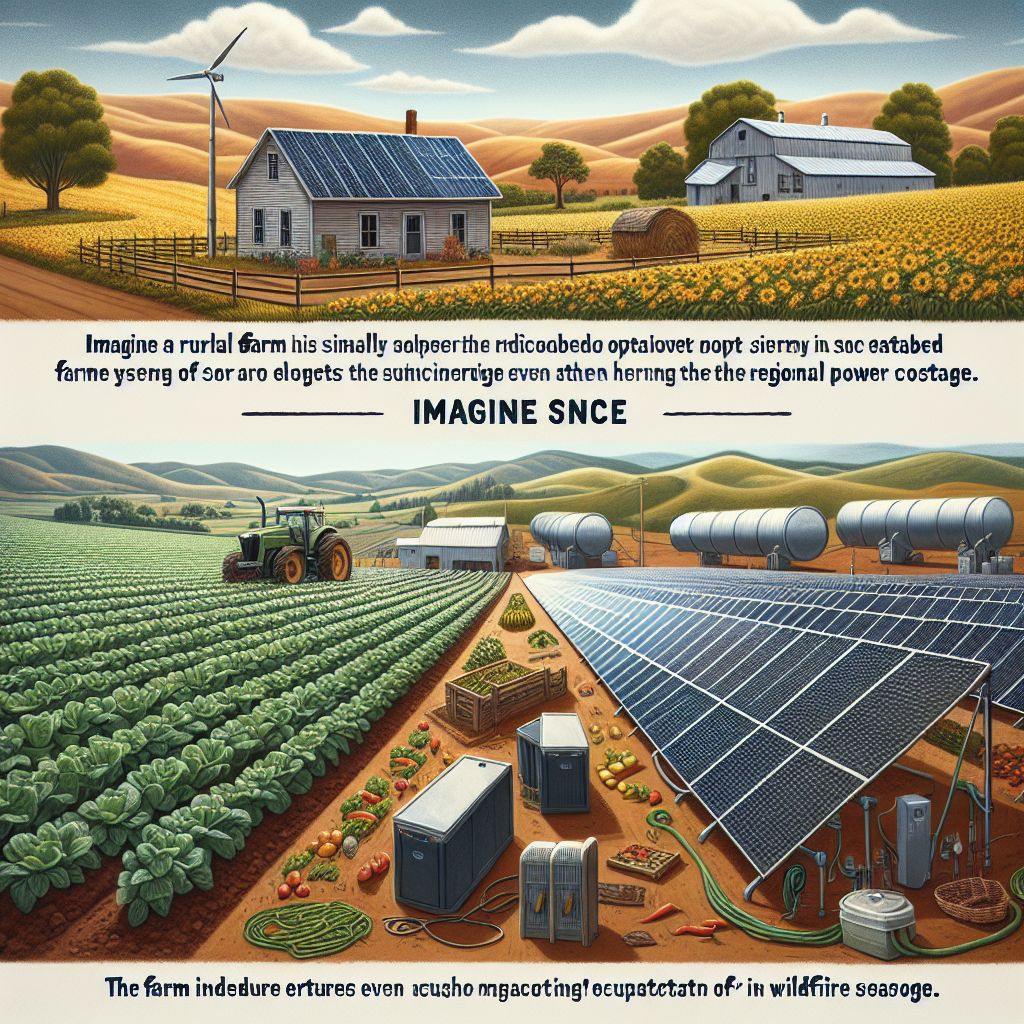
The most significant benefit came during the 2021 wildfire season, when grid power was interrupted for nearly two weeks across their region. While neighboring farms lost crops and refrigerated inventory, Sunshine Valley maintained full operations through their solar-plus-storage system. The company estimates this single event saved over $200,000 in potential losses while allowing them to meet delivery commitments when competitors couldn’t, strengthening their position with major buyers. Their system is now projected to pay for itself in under four years when accounting for avoided losses.
“Solar Panel Challenges for Farmers …” from growingsolarmist.com and used with no modifications.
Common Concerns Farmers Have About Solar (And Why They Shouldn’t Worry)
Despite the compelling benefits, many farmers hesitate to embrace solar technology due to common misconceptions about implementation challenges. Understanding these concerns and their practical solutions can help agricultural operators make informed decisions about renewable energy investments. The most successful solar adopters typically approach these concerns methodically, working with experienced agricultural solar specialists to develop solutions tailored to their specific operational needs. For instance, some farmers have found flexible thin-film solar panels to be an adaptable solution to their energy needs.
Addressing these concerns early in the planning process ensures that solar installations enhance rather than complicate farm operations. With proper design and implementation, solar systems integrate seamlessly into the agricultural landscape while delivering the promised economic and environmental benefits without compromising productive capacity.
Weather Durability in Agricultural Settings
Modern solar panel systems are engineered to withstand extreme agricultural environments, including high winds, hail, snow loads, and temperature fluctuations. Quality solar installations are typically rated to withstand winds of 140+ mph and hail up to 1 inch in diameter – conditions that would likely cause significant damage to crops and farm structures. Most manufacturers now provide 25-30 year warranties, with expected panel lifespans exceeding 35 years while maintaining at least 80% of their original production capacity, making them one of the most durable farm investments available.
Installation Impact on Farmland
Contrary to common belief, solar installations need not consume large amounts of productive farmland. Ground-mounted systems can be strategically placed on marginal land, field edges, or dual-purposed through agrivoltaic approaches. For operations concerned about ground space, building-mounted systems on barns, equipment sheds, and processing facilities offer excellent alternatives that require no additional land while protecting these structures from weather exposure.
The physical footprint of solar infrastructure is also minimized through advances in panel efficiency. Today’s high-efficiency panels generate significantly more power per square foot than older technology, reducing the space needed to meet farm energy requirements. Most agricultural operations can offset 60-100% of their electricity needs using less than half an acre of land – often utilizing space that wasn’t particularly productive for crops or grazing.
Financing Options for Cash-Flow Conscious Farmers
The financial landscape for agricultural solar has transformed dramatically in recent years, creating multiple paths to renewable energy adoption regardless of a farm’s capital position. Beyond traditional cash purchases, many farmers utilize agricultural operating loans with terms specifically designed for solar investments. These specialized loans typically feature repayment schedules aligned with projected energy savings, creating cash-flow positive scenarios from the first year of operation.
For operations preferring to avoid direct ownership, Power Purchase Agreements (PPAs) allow farmers to host solar systems owned by third parties while purchasing the generated electricity at rates 15-30% below utility costs. This arrangement requires zero upfront capital while immediately reducing operational expenses. Similarly, solar leasing programs provide fixed monthly payment options that typically cost less than the energy savings they generate, creating immediate positive cash flow without upfront investment.
Conclusion
Solar energy represents a transformative opportunity for the agricultural sector, offering solutions to multiple challenges facing modern farming operations. From dramatic reductions in operational costs to enhanced environmental sustainability, improved reliability, and protection against future energy price increases, the benefits extend far beyond simple renewable energy production. As panel efficiency continues to improve while installation costs decline, the economic case for agricultural solar adoption grows increasingly compelling. Farmers who embrace these technologies position themselves for both immediate operational improvements and long-term competitive advantage in a rapidly evolving agricultural landscape.
Does the Environmental Advantages & Power Efficiency Make the Solar Panel Investment Worth it for the Farmer
When evaluated comprehensively, solar investments deliver returns that few other farm improvements can match. The combination of direct energy savings (typically 60-100% of electricity costs), available incentives (reducing upfront costs by 50-60%), operational benefits (enhanced reliability and productivity), and marketing advantages (premium pricing opportunities) creates compelling economics across diverse agricultural contexts. For most farms, the question is no longer whether solar makes financial sense, but rather how to optimize implementation to maximize both short-term benefits and long-term returns. With payback periods now averaging 4-7 years and systems performing reliably for 30+ years, solar represents one of the most prudent investments available to forward-thinking agricultural operations.
Frequently Asked Questions
As farmers explore solar options, certain questions consistently arise during the consideration process. These FAQs address the most common inquiries with practical information derived from actual agricultural implementations across diverse growing regions and operation types.
How much farmland do I need to dedicate to solar panels?
The land requirements for agricultural solar installations vary based on energy needs and system design. As a general guideline, a 10kW system typically requires approximately 600-1,000 square feet (about 0.02 acres) of ground or roof space. For perspective, this system would generate roughly 14,000 kWh annually in most U.S. locations – sufficient to offset a significant portion of a small to medium farm’s electricity consumption. Larger operations requiring 100kW or more would need approximately a quarter-acre, though this space requirement can be reduced through building-mounted installations or high-efficiency panel selection. Many farmers utilize marginal land, field borders, or existing structure rooftops, minimizing impact on productive acreage while maximizing return on these often underutilized spaces.
Will solar panels work effectively in cloudy or cold agricultural regions?
- Modern solar panels operate efficiently in all agricultural regions across North America, including areas with frequent cloud cover or cold temperatures
- Cold weather actually improves solar panel efficiency, as panels generate more electricity when cool than when hot
- Northern regions benefit from longer summer daylight hours, partially compensating for reduced winter production
- Even areas with 30-40% less sunlight than optimal locations still achieve economically viable solar production
Germany, which receives significantly less annual sunlight than most U.S. farming regions, leads Europe in solar adoption – demonstrating that cloud cover does not prevent successful implementation. Most solar design professionals account for regional weather patterns when sizing systems, ensuring performance expectations align with actual generation potential. Additionally, grid-connected systems allow farmers to accumulate credits during high-production periods that offset consumption during lower-production times, smoothing out seasonal variations.
Advanced panel technologies specifically designed for diffuse light conditions have further improved performance in cloudy regions. These specialized panels capture indirect sunlight more efficiently than traditional designs, reducing the performance gap between sunny and cloudy locations. For agricultural operations in less sunny regions, these technological advances have transformed marginal solar economics into compelling investment opportunities.
System design adaptations like adjustable mounting angles and snow-shedding configurations further optimize performance in northern agricultural regions. These specialized designs may add 5-10% to initial installation costs but typically deliver 15-25% better annual production in challenging environments, substantially improving long-term economics.
Can I still farm underneath or around solar panel installations?
Agrivoltaic approaches specifically enable agricultural activity beneath and between solar panels, often with surprising benefits for certain crops. Research from multiple agricultural institutions demonstrates that partial shading from appropriately designed solar arrays can reduce water requirements by 20-30% while protecting sensitive crops from heat stress and sunscald. Shade-tolerant crops like lettuces, spinach, broccoli, chard, kale, and certain berries frequently show yield increases under these conditions, particularly in hotter climates where excessive sun exposure limits production.
Livestock operations have successfully integrated solar with grazing activities, particularly for sheep and certain poultry. These animals naturally maintain vegetation around panels while benefiting from the partial shade these structures provide. Proper system design includes elevated panels with adequate clearance for animals, appropriate fencing to prevent damage, and strategic panel spacing that allows sufficient sunlight penetration to maintain healthy ground cover.
Beekeeping represents another compatible activity, with solar arrays providing ideal apiary locations. The diversified flowering plants often established around solar installations support pollinator populations while producing honey as a secondary farm product. Several large-scale solar farms have demonstrated that apiaries not only coexist with solar production but create symbiotic benefits through enhanced pollination of nearby crops and additional revenue streams.
What happens to my excess solar power during low-use seasons?
Most agricultural solar installations connect to the utility grid through net metering arrangements, allowing excess production to flow back to the grid in exchange for credits on the farm’s electric account. These credits typically apply to future bills when consumption exceeds production, effectively using the grid as a battery. This arrangement is particularly valuable for agricultural operations with seasonal energy needs, as summer production surpluses can offset winter consumption. The specific credit rates and policies vary by state and utility, with some regions offering full retail value for solar exports while others provide wholesale or avoided-cost rates. Working with an agricultural solar specialist familiar with local utility policies ensures system design optimizes these financial arrangements.
How do I know if my farm qualifies for solar incentives?
Nearly all U.S. agricultural operations qualify for the federal Investment Tax Credit, currently at 30% of the total system cost through 2032. This credit applies to both personal and business tax liability, and excess credits can typically carry forward for up to 20 years, ensuring farms capture the full benefit regardless of their immediate tax situation. Additionally, accelerated depreciation benefits allow businesses to depreciate the remaining system cost over just five years, creating substantial tax advantages in the years immediately following installation.
The USDA’s Rural Energy for America Program (REAP) provides grants covering up to 25% of project costs and loan guarantees for the remaining amount, specifically targeted to agricultural producers and rural small businesses. While REAP funding is competitive, experienced agricultural solar developers typically achieve success rates exceeding 70% for well-designed applications. The program particularly favors projects demonstrating energy efficiency improvements alongside renewable generation, making comprehensive energy planning advantageous.
State-level incentives vary significantly but often include performance-based payments, property tax exemptions, sales tax relief, and specialized agricultural solar grants. Some states have developed specific programs for farm operations that combine energy and water conservation objectives, providing enhanced incentives for integrated approaches. Certain states also offer specialized support for solar installations that incorporate pollinator habitat or compatible agricultural uses.
Utility incentive programs represent another potential funding source, with many rural electric cooperatives offering specific agricultural solar support. These programs sometimes include upfront rebates, performance-based incentives, or favorable interconnection terms designed to encourage distributed generation within their service territories. Engaging with utility representatives early in the planning process can identify these opportunities and ensure system designs qualify for available programs.


Leave a Reply