
Key Takeaways
- Critter guards can prevent up to 90% of animal-related damage to solar panels, protecting farmers’ renewable energy investments.
- Birds, rodents, and larger mammals cause the most significant damage to farm solar installations through nesting, chewing wires, and physical impacts.
- Installing physical barriers like mesh guards and perimeter fencing offers the most reliable protection against wildlife interference.
- Modern tech-based deterrents including ultrasonic repellers and motion-activated systems provide additional layers of protection for solar arrays.
- The cost of preventative measures is significantly lower than repair expenses, with animal damage potentially costing farmers thousands in repairs and lost energy production.
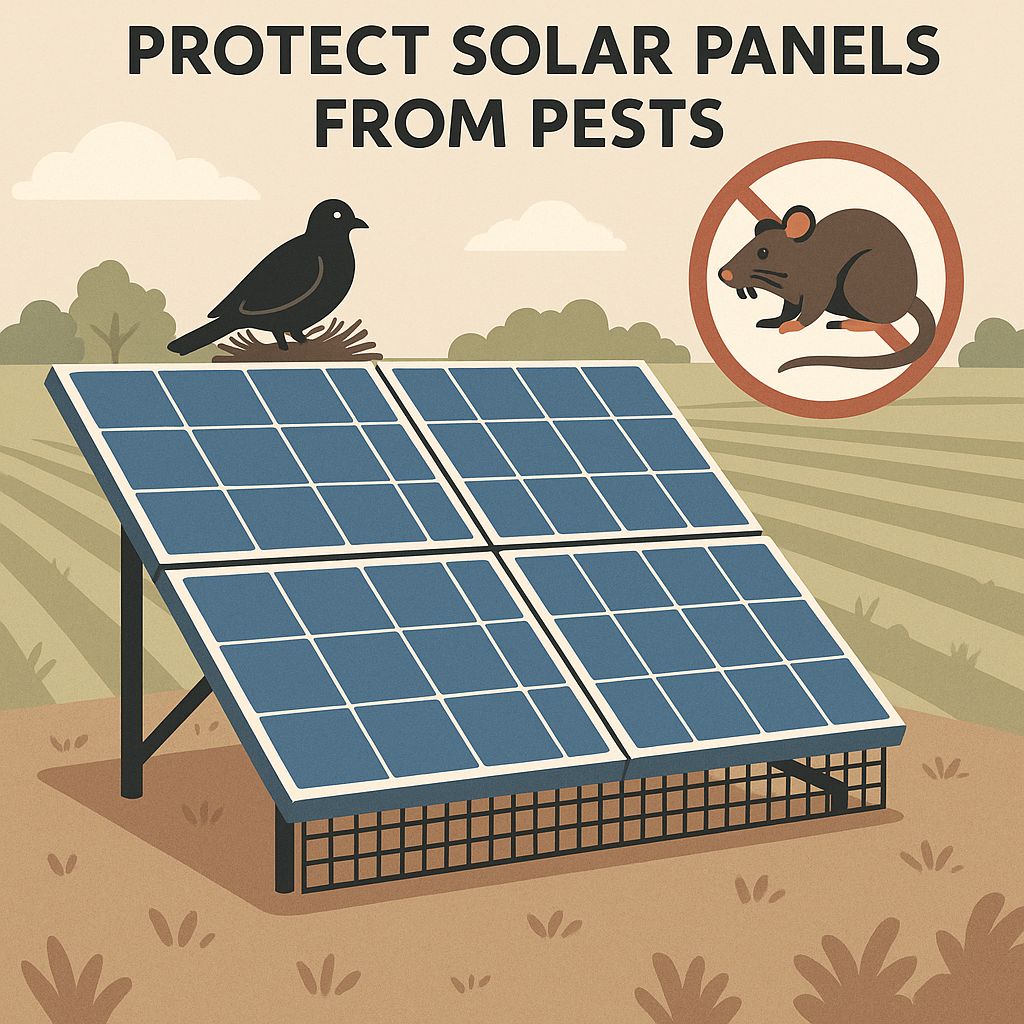
Solar panels represent a significant investment for farmers looking to reduce energy costs and increase sustainability. Unfortunately, these valuable installations can quickly become targets for wildlife that view them as perfect shelter or nesting sites. SolarMedix notes that proper protection measures can extend panel lifespan by years while maintaining optimal energy production.
When left unprotected, a single family of nesting birds or a determined rodent can cause thousands in damage to wiring, panel frames, and supporting structures. The good news? With the right preventative approach, you can keep your solar investment safe from nature’s curious creatures.
Critter Damage Costs Farmers Thousands in Solar Panel Repairs
The financial impact of animal damage to solar installations goes far beyond the immediate repair costs. When critters damage solar panels, farmers face a triple financial hit: repair expenses, system downtime, and reduced energy production. A typical wire replacement due to rodent damage can cost $200-500 per panel, while more extensive structural repairs from larger animals can run into thousands.
More concerning is the lost revenue during system downtime. A 50kW farm installation operating at reduced capacity due to animal interference might lose $15-25 per day in energy production. Over weeks or months, these losses compound significantly. Additionally, most standard insurance policies don’t fully cover animal-related damage, considering it preventable with proper protection.
The long-term performance degradation from persistent animal activity creates an even more significant financial drain. Panels with damaged seals from pecking or chewing develop moisture problems that gradually reduce efficiency by 5-15% annually. This silent efficiency killer can go unnoticed for months while steadily increasing your energy costs. To address this issue, consider investing in critter guards for solar panels to protect your investment.
5 Most Common Animals That Damage Farm Solar Installations
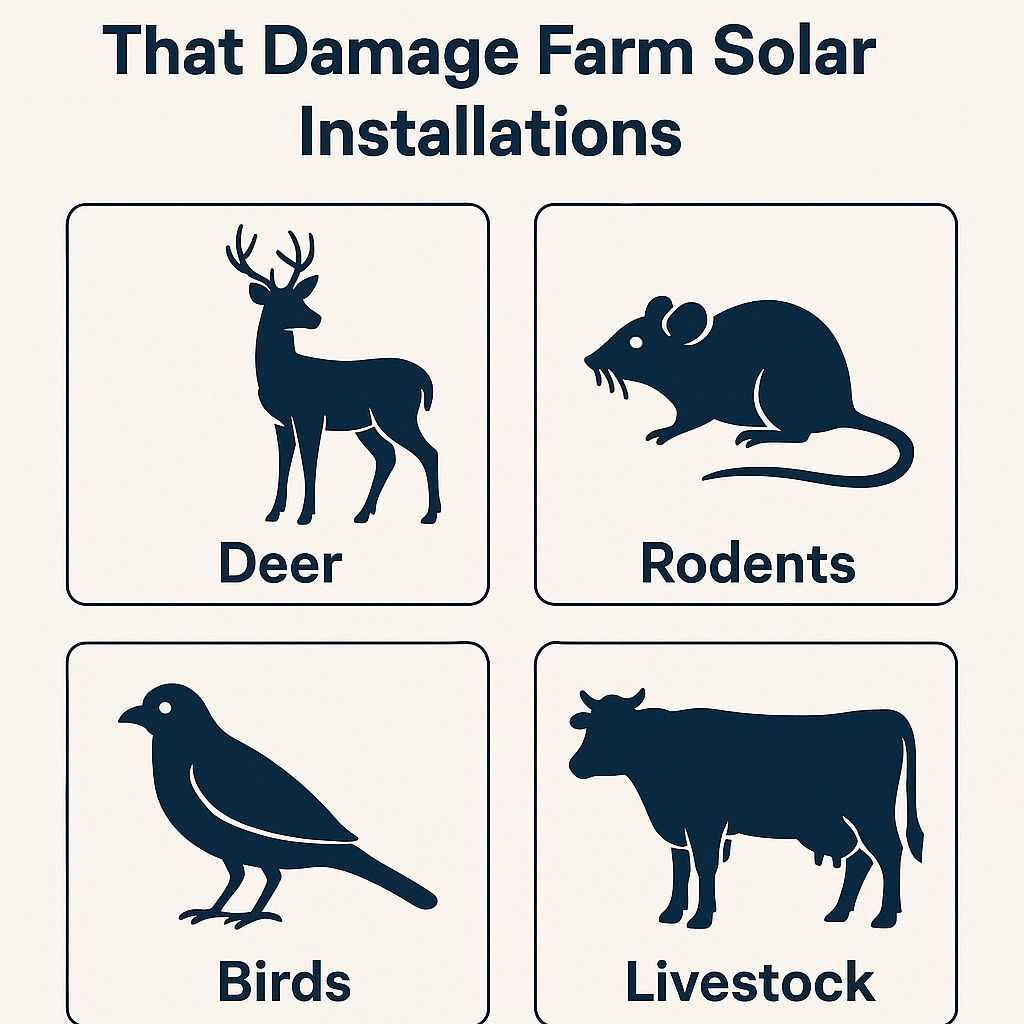
Farm environments create perfect ecosystems for wildlife to thrive, making solar arrays particularly vulnerable to damage from various creatures. Understanding which animals pose the greatest threats helps farmers implement targeted protection strategies. The damage patterns vary significantly between species, requiring different approaches to mitigation. For more insights on the benefits of using solar power in agriculture, you can explore this article on solar power applications for a farm.
Birds and Their Nesting Habits
Birds represent one of the most persistent threats to rooftop and ground-mounted solar installations. They’re attracted to the sheltered spaces beneath and between panels that offer protection from predators and weather. Pigeons, starlings, and sparrows commonly build nests under panels, with a single nest containing enough material to block multiple panels’ airflow.
The primary damage from birds comes from their droppings, which are highly acidic and can corrode panel surfaces over time. This corrosion gradually degrades the glass coating, reducing light penetration and energy production by up to 7% on affected panels. Additionally, nesting materials block essential airflow, causing panels to overheat and accelerating efficiency degradation.
The weight of accumulated nesting materials can even compromise mounting brackets and structural supports, especially during heavy rain when nests absorb water. Birds also create entry points for smaller pests like insects, compounding the damage potential. Successful bird management requires regular inspection and cleaning alongside physical barriers that prevent access to the spaces beneath panels. For more strategies, consider exploring solar panel protection tips that can help mitigate these issues.
- Pigeons and doves create bulky nests that block airflow and cause overheating
- Woodpeckers may damage panel frames and edges while searching for insects
- Raptors like hawks may land on panels, potentially causing micro-fractures in cells
- Swallows and martins create mud nests that can cause water drainage issues
- Bird droppings contain uric acid that gradually etches glass surfaces
Rodents: Mice, Rats, and Squirrels
Rodents pose perhaps the most destructive threat to solar panel systems due to their persistent chewing behavior and ability to access tight spaces. Squirrels, mice, and rats are naturally drawn to the warm, sheltered environment beneath solar panels. Their constantly growing incisor teeth drive them to chew on wiring, conduits, and even the aluminum frames of panels. A single squirrel can chew through standard DC wiring in under 15 minutes, potentially causing system failures or even electrical fires. For farmers, understanding the benefits of solar power in agriculture can be crucial in managing these challenges effectively.
Larger Mammals: Raccoons and Opossums
Larger mammals like raccoons and opossums approach solar arrays differently than smaller critters. These intelligent opportunists use solar panels as shelter and potential food sources, often tracking smaller prey that may already be nesting beneath the panels. Their substantial weight—adult raccoons can reach 20+ pounds—puts stress on mounting hardware and can break panels when they climb or fall onto arrays. Their dexterous paws easily manipulate protective elements that might deter smaller animals, making specialized barriers necessary.
Livestock Interference Problems
Farm animals themselves can damage ground-mounted solar arrays without proper separation measures. Cattle and horses may use panels as rubbing posts, their substantial weight easily bending frames or breaking glass. Goats and sheep, often used for vegetation management around panels, can jump onto lower arrays or chew exposed wiring if not properly monitored. Poultry may dust bathe around panel supports, gradually exposing foundations and creating stability issues. Effective livestock management includes creating proper setbacks with fencing that keeps larger animals at a safe distance while still allowing land to serve multiple purposes.
Case Study: Johnson Family Farm
After installing a 75kW ground-mounted system, the Johnson family lost 35% of their array’s production within eight months due to unprotected panels. Birds nested under 17 panels, rodents damaged wiring in 23 locations, and raccoons broke two panels climbing onto the array. After installing comprehensive critter guards and perimeter fencing, they’ve experienced zero animal-related issues for 26 months, saving an estimated $4,700 in potential repairs.
Insects and Their Impact on Wiring
While less immediately destructive than larger animals, insects create cumulative damage that compromises solar system integrity over time. Ants and termites can infiltrate junction boxes, creating nests that cause moisture problems and eventual short circuits. Wasps and hornets build nests that block airflow between panels and the roof, leading to efficiency-reducing heat buildup. Most concerning are boring insects that penetrate weatherproofing seals, creating entry points for water that leads to cell degradation and premature panel failure. Learn more about how solar panels work to understand their vulnerabilities.
Below is a table summarizing the most common animals that damage farmers’ solar panels and the types of damage they cause based on the latest evidence:
|
Animal |
Type of Damage |
Additional Details |
|---|---|---|
|
Birds |
Nesting under panels, droppings (corrosion), scratching/cracking, wire loosening |
Nesting blocks sunlight, droppings cause hotspots and corrosion |
|
Rodents (squirrels, mice, rats) |
Chewed wires and insulation, nesting |
Causes electrical shorts and fire hazards, reduces system efficiency |
|
Raccoons |
Climbing/breaking glass, scratching surfaces |
Can physically damage panel surfaces |
|
Monkeys |
Climbing, scratching, breaking panels |
Rare, but possible where monkeys are present |
|
Deer/Elk |
Scratching, breaking with antlers/hooves/horns |
Heavy animals may trample panels |
|
Livestock (cattle, goats) |
Stepping on or rubbing against panels, trampling |
Larger farm animals can dislodge, scratch, or break panels |
Physical Barriers That Stop 90% of Animal Damage
Physical barriers provide the most reliable frontline defense against wildlife interference with solar panels. According to installation professionals, properly installed barriers prevent up to 90% of all animal-related damage. These protective systems create physical exclusion zones that prevent animals from accessing vulnerable components while maintaining optimal panel performance.
The key advantage of physical barriers is their passive, constant protection that requires no energy input or maintenance. Once installed, these systems work continuously without farmer intervention, making them ideal for busy agricultural operations where daily monitoring isn’t practical. The most effective barriers combine multiple approaches tailored to the specific wildlife threats in your region.
Mesh Guards and Screening Systems (Critter Guards)
Mesh critter guards represent the most common and effective form of solar panel protection. These specially designed barriers attach to the perimeter of solar arrays, preventing animals from accessing the space beneath panels. Made from galvanized steel, aluminum, or heavy-duty UV-resistant plastics, quality mesh systems resist corrosion and withstand extreme weather while maintaining their protective capabilities for 10+ years. For more on how solar panels can enhance farm operations, explore our detailed guide.
Installation techniques vary based on panel mounting systems, with most guards using specialized clips that attach without penetrating panel frames or voiding warranties. The mesh spacing is critical—typically 0.5-0.75 inches—small enough to block most creatures while allowing adequate airflow for panel cooling. Professional installation ensures proper tension and secure attachment that prevents animals from pushing through or dislodging the guard.
When selecting mesh systems, farmers should consider potential snow loads, wind exposure, and the types of animals most common in their area. Premium systems incorporate additional weatherproofing features that prevent moisture accumulation and resist UV degradation, extending the system’s protective lifespan while maintaining panel efficiency. For more insights, farmers can explore critter guards for solar panels to see if they should invest in these protective measures.
Perimeter Fencing Options for Ground-Mounted Arrays
Ground-mounted solar installations require perimeter protection strategies that address both above-ground and burrowing threats. Effective fencing combines above-ground barriers with below-ground deterrents. The most successful systems extend 18-24 inches below ground with horizontal “L-footers” that discourage animals from digging underneath. Above ground, fencing should reach at least 6 feet with an outward-facing overhang to prevent climbing animals from accessing the array. For more tips and strategies, consider exploring solar panel protection from critters.
Material selection significantly impacts long-term performance, with welded wire mesh offering superior protection compared to chain link for most applications. Smaller animals require finer mesh (typically 1/2-inch hardware cloth) along the bottom sections, while taller sections can use larger openings to reduce wind load and material costs. Strategic gate placement and self-closing mechanisms prevent accidental human access points that animals could exploit.
Panel Skirting: Installation and Effectiveness
Panel skirting provides critical protection for the vulnerable gap between ground-mounted solar arrays and the ground surface. This specialized barrier material creates a continuous seal around the bottom edge of panels, preventing animals from accessing the underside while still allowing for airflow and maintenance access. The most effective skirting uses flexible, weather-resistant materials that can adapt to uneven terrain while maintaining a consistent barrier.
Installation requires careful ground preparation to minimize gaps, with skirting typically extending 4-6 inches below the surface to deter burrowing animals. The upper connection to panel structures must be secure yet removable for maintenance access, with specialized clips or channels that create continuous protection. In agricultural settings where vegetation management is critical, skirting should incorporate weed control fabric or gravel beds to prevent growth that could compromise the barrier over time. For more strategies, check out solar panel protection tips for farmers.
Tech-Based Deterrents for Modern Farms
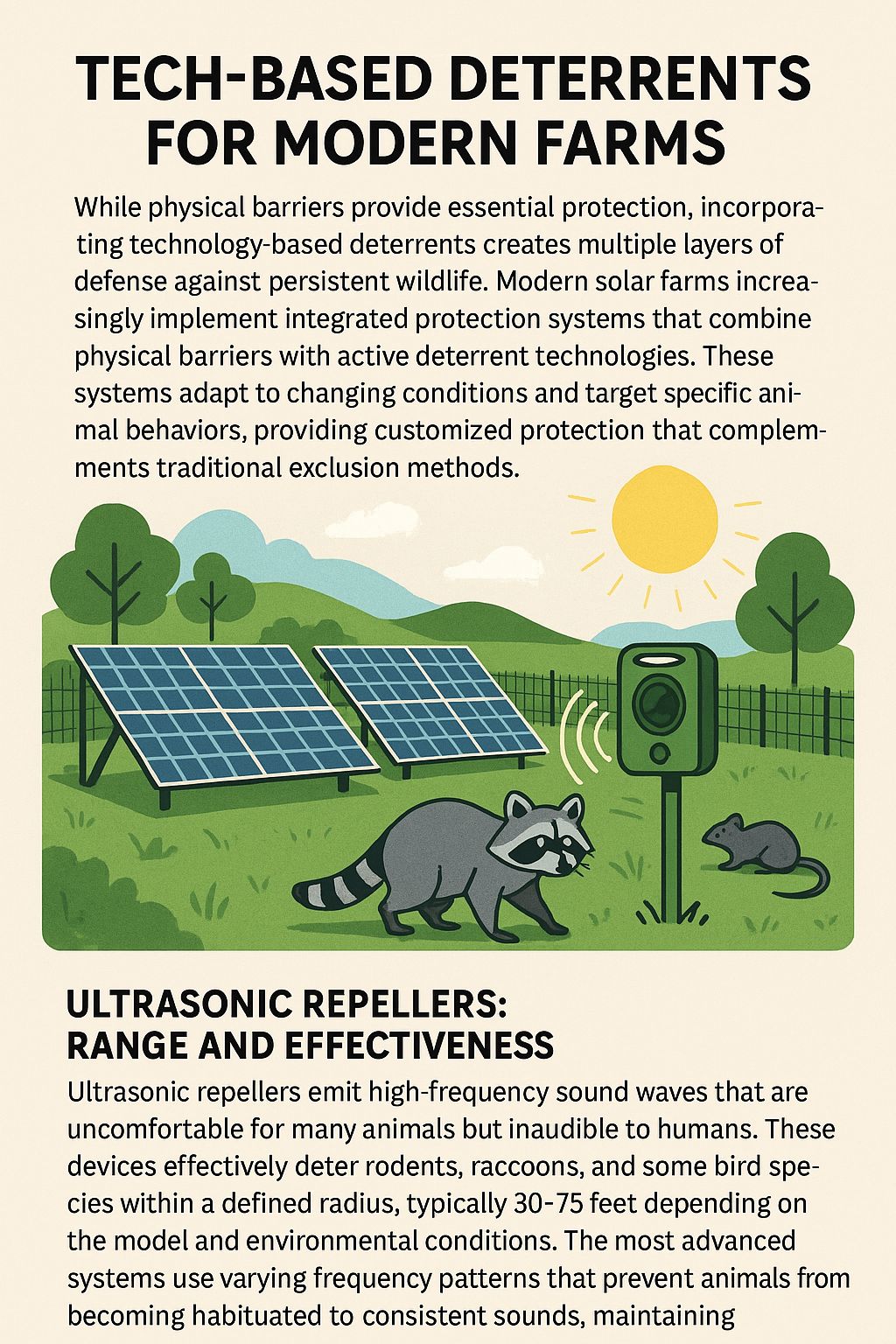
While physical barriers provide essential protection, incorporating technology-based deterrents creates multiple layers of defense against persistent wildlife. Modern solar farms increasingly implement integrated protection systems that combine physical barriers with active deterrent technologies. These systems adapt to changing conditions and target specific animal behaviors, providing customized protection that complements traditional exclusion methods. Learn more about how solar power is transforming modern farming with these advanced solutions.
Ultrasonic Repellers: Range and Effectiveness
Ultrasonic repellers emit high-frequency sound waves that are uncomfortable for many animals but inaudible to humans. These devices effectively deter rodents, raccoons, and some bird species within a defined radius, typically 30-75 feet depending on the model and environmental conditions. The most advanced systems use varying frequency patterns that prevent animals from becoming habituated to consistent sounds, maintaining effectiveness over longer periods.
Solar-powered ultrasonic units offer particular advantages for remote agricultural installations, operating autonomously without requiring grid connection or battery replacement. Strategic placement is critical, with units positioned to create overlapping coverage zones that eliminate blind spots. For maximum effectiveness, units should be installed at varied heights targeting specific animal entry paths identified during site assessment.
Modern systems incorporate weather sensors that automatically adjust output based on conditions, increasing power during rain when sound dissipates more quickly. While not effective as standalone protection, ultrasonic devices significantly enhance physical barrier systems by creating an additional deterrent layer that reduces persistent testing of physical barriers by determined animals.
Motion-Activated Sprinklers and Lights
Motion-activated deterrent systems create sudden environmental changes that startle animals and discourage repeated visits to solar arrays. Water-based systems deliver quick bursts when triggered, creating an immediate negative experience without causing harm. These systems are particularly effective against larger mammals like raccoons and opossums that quickly learn to avoid areas where they’ve been sprayed. The surprise factor rather than the water itself creates the deterrent effect, with animals typically needing only a few exposures to change their behavior patterns.
Light-based systems use sudden brightness changes, sometimes combined with sound, to create similar startle responses. Advanced systems combine multiple sensory deterrents, activating progressively stronger responses based on the persistence of the animal. For agricultural settings, systems must be carefully calibrated to avoid false triggering by wind-blown vegetation or normal farm activities while maintaining sensitivity to animal movement patterns.
Digital Monitoring Systems
Digital monitoring provides early detection of potential animal problems before significant damage occurs. Camera systems with motion detection and AI-powered animal recognition can identify specific species approaching solar installations, triggering appropriate deterrent responses or alerting farm managers. These systems create valuable data on wildlife patterns, allowing for continuous improvement of protection strategies based on actual behavior rather than assumptions.
Remote monitoring capabilities allow farmers to check system status and receive alerts through smartphone apps, reducing the need for physical inspections while ensuring prompt response to potential issues. Advanced systems incorporate thermal imaging for nighttime monitoring when many wildlife threats are most active. The most effective implementations integrate with other farm management systems, providing comprehensive oversight of solar assets alongside other critical infrastructure.
Natural and Eco-Friendly Animal Deterrents
For farmers committed to sustainable practices, eco-friendly deterrents offer wildlife protection without environmental harm. These natural approaches work with farm ecosystems rather than against them, creating balanced solutions that respect wildlife while protecting solar investments. Many traditional farming techniques can be adapted to protect modern solar technology, often at lower cost than commercial alternatives.
The most effective eco-friendly strategies mimic natural deterrents that animals already recognize and avoid. By understanding species-specific behaviors and aversions, farmers can implement targeted solutions that require minimal maintenance while providing consistent protection. These approaches often complement rather than replace physical barriers, creating multiple layers of protection. For more information on the environmental benefits of solar panels, you can explore the environmental advantages and power efficiency for farmers.
Predator Decoys That Actually Work
Strategic deployment of predator decoys triggers instinctive avoidance behaviors in prey animals. Owl decoys effectively deter birds and small mammals when positioned at panel corners with clear visibility. For maximum effectiveness, decoys should feature realistic details including reflective eyes and natural coloring, while incorporating movement mechanisms that prevent animals from recognizing them as stationary objects.
The key to long-term decoy effectiveness is regular repositioning—static decoys quickly lose effectiveness as animals realize they pose no actual threat. Modern designs incorporate solar-powered movement features that simulate natural predator behaviors through random head rotations or wing movements. Combining multiple predator types (hawks, owls, snakes) creates more comprehensive protection against different species while preventing habituation to any single deterrent.
Strategic Plant Placement Around Arrays
Certain plants naturally repel specific wildlife through scent, texture, or chemical compounds. Strategically planted perimeters create living barriers that discourage animal approaches while supporting beneficial insects and pollinators. Lavender, mint, and rosemary effectively deter rodents through strong scents that mask food odors and create confusing sensory environments that mice and rats avoid.
For ground-mounted systems, daffodils and allium plantings create natural rodent barriers—bulbs contain compounds that rodents find repulsive. Thorny barrier plants like barberry or roses discourage larger mammals without requiring artificial fencing. The most effective plantings combine multiple deterrent species in layered arrangements that address different animal threats while providing year-round protection through seasonal succession.
When planning vegetation strategies, consider maintenance requirements and potential wildlife habitat creation. Plants should deter target pests without creating new problems through excessive growth or by attracting unwanted species. Native plant selections typically require less maintenance while providing more effective protection against local wildlife challenges.
Natural Repellents: Essential Oils and Substances
Natural repellent compounds offer targeted protection that can be applied directly to solar installation perimeters. Peppermint oil effectively deters mice and rats when applied to cotton balls placed strategically around panel edges and support structures. Capsaicin (hot pepper) sprays create powerful deterrents for larger mammals without harming panels or supporting structures. These compounds typically require reapplication every 2-4 weeks depending on weather conditions, with more frequent treatment needed during rainy periods.
Diatomaceous earth creates effective perimeter barriers against crawling insects that might damage wiring or create nests in junction boxes. This natural substance physically damages insect exoskeletons rather than poisoning them, maintaining ecological balance while protecting electrical components. For maximum effectiveness, application should create continuous barriers around vulnerable access points, with periodic reapplication after heavy rain or wind events. For additional strategies, consider critter guards for solar panels to enhance protection.
Cost-Benefit Analysis: Protection vs. Repair
Investing in comprehensive solar protection systems delivers substantial return through prevented damage and maintained energy production. The average cost of installing complete critter protection ranges from $0.15-0.30 per watt of installed capacity, representing 2-5% of total system cost. For a typical 25kW farm installation, protection systems might add $3,750-7,500 to initial costs—significantly less than potential repair expenses from unprotected systems.
When evaluating protection options, consider both direct costs (repairs, replacements) and indirect costs (system downtime, reduced efficiency, increased maintenance). A single significant animal damage incident typically costs more than comprehensive protection, with common wire replacement expenses averaging $500-1,500 depending on location and system design. More severe damage involving multiple panels can easily exceed $5,000 when considering component costs, labor, and lost production during repairs. For a deeper understanding of the economic benefits of solar panels for farmers, consider exploring additional resources.
Average Costs of Critter Protection Systems
Protection system costs vary significantly based on installation size, mounting type, and local wildlife threats. Basic mesh critter guards for roof-mounted systems typically cost $45-65 per panel including materials and installation. More comprehensive systems including roof edge protection and specialized corner guards range from $75-95 per panel. Ground-mounted systems require additional investment in perimeter protection, typically adding $3-5 per linear foot for standard agricultural fencing or $7-12 per foot for specialized wildlife exclusion systems.
Technology-based deterrents represent additional investments that complement physical barriers. Quality ultrasonic systems covering up to 3,000 square feet range from $150-300 per unit, with most installations requiring multiple units for complete coverage. Motion-activated deterrent systems average $200-450 per unit depending on features and coverage area. When properly maintained, these systems typically last 5-8 years before requiring replacement, providing cost-effective protection throughout much of a solar system’s operational life. For more information, consider exploring critter guards for solar panels to enhance your solar investment.
Typical Repair Expenses After Animal Damage
Repair costs extend well beyond component replacement, including system downtime, diagnostic expenses, and potential collateral damage. Wiring repairs typically start at $200 for simple connections but can exceed $1,000 when damage occurs in difficult-to-access locations or affects multiple connection points. Panel replacement due to physical damage averages $350-500 per panel plus installation labor, with specialized panels potentially costing significantly more. Junction box repairs typically range from $150-400 depending on complexity and required components.
The hidden costs of animal damage include reduced system efficiency during partial operation and accelerated degradation of affected components. Systems operating with animal-damaged wiring may experience 10-30% production losses even before complete failure occurs. Additionally, wildlife damage often creates entry points for moisture, leading to accelerated corrosion and potential ground faults that further compromise system performance and safety.
Insurance Considerations for Solar Equipment
Standard farm insurance policies often provide limited coverage for solar equipment damage, with many specifically excluding animal-related incidents as “preventable damage.” Specialized solar equipment insurance typically covers sudden events but may exclude gradual damage from nesting or chewing unless specific preventative measures were implemented. When evaluating insurance options, farmers should carefully review coverage exclusions and documentation requirements for animal-related claims.
Some insurance providers offer premium discounts for systems with professional-grade protection measures, recognizing the reduced risk profile. These discounts typically require certification of installation by qualified professionals and may specify minimum protection standards. For substantial installations, enhanced coverage riders specifically addressing wildlife damage may be available, though these increase premium costs and must be evaluated against the protection investment alternative.
DIY vs. Professional Protection Installation
Many farmers consider DIY installation to reduce protection system costs, but this approach brings important considerations regarding effectiveness and warranty implications. Self-installed systems can reduce material costs by 30-50% compared to professional installation, but require proper planning, tools, and technical knowledge to ensure effectiveness. The critical factor in DIY success is understanding the specific requirements of your solar system type and the wildlife threats in your area.
Professional installation typically includes site-specific customization that addresses unique vulnerabilities based on panel configuration, mounting system, and local wildlife patterns. These tailored solutions often incorporate specialized components not readily available to consumers, potentially providing more complete protection than generic DIY approaches. Additionally, professional installation often includes warranties covering both the protection system and any damage that might occur despite protection, providing valuable peace of mind.
Tools and Materials for Self-Installation
Successful DIY critter guard installation requires proper tools and high-quality materials designed specifically for solar applications. Standard hardware store materials often degrade quickly under intense UV exposure or lack the specific design features needed for secure attachment without damaging panel frames. Agricultural-grade galvanized hardware cloth (1/2-inch openings) provides effective protection for most applications, while specialized UV-resistant zip ties or stainless steel mounting clips ensure secure attachment that resists weather degradation. For more insights on solar applications in agriculture, explore how solar power is transforming modern farming.
Essential tools include tin snips for cutting metal mesh, drill with metal bits for mounting holes, crimping tools for secure connections, and safety equipment including gloves and eye protection. For roof-mounted systems, proper fall protection equipment is essential, as is experience working on elevated surfaces. Ground-mounted systems require post-hole diggers, tamping tools, and concrete mixing equipment for secure fence post installation that resists animal pressure and digging attempts.
When to Call the Professionals
Professional installation becomes particularly valuable for complex systems, difficult access situations, or when comprehensive warranties are important. High-voltage systems (above 600V), tracking arrays, or installations with specialized panel technologies often have specific protection requirements that demand professional knowledge. Additionally, roof-mounted systems on steep slopes or multi-story buildings create safety challenges that justify professional installation despite higher costs.
Warranty protection represents a significant advantage of professional installation. Many DIY solutions can inadvertently void solar panel warranties if they damage frames, create water entry points, or restrict airflow beyond manufacturer specifications. Professional installers understand these limitations and use attachment methods specifically designed to maintain warranty coverage while providing effective protection. For substantial solar investments, this warranty preservation often justifies the additional installation cost.
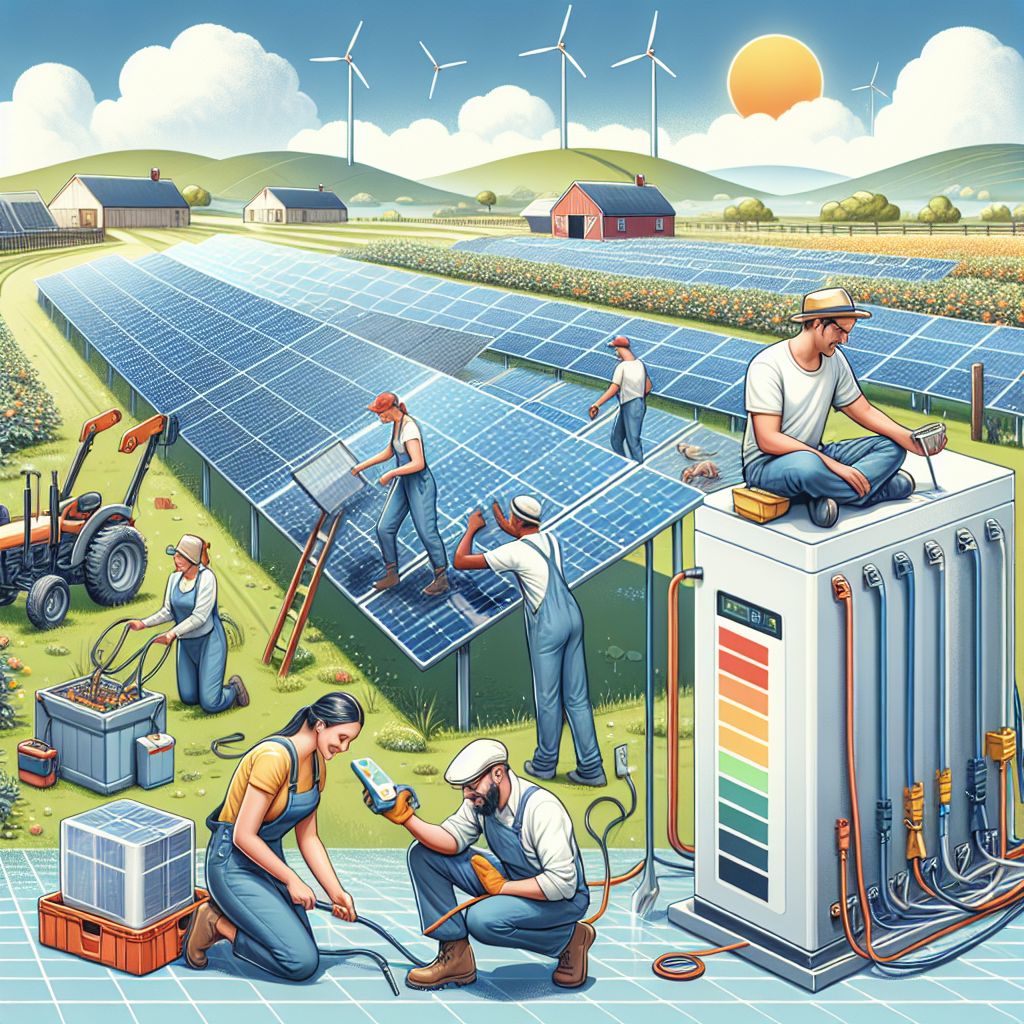
“Solar Power Benefits for Livestock …” from growingsolarmist.com and used with no modifications.
Maintenance Schedule to Keep Animals Away
Even the most robust protection systems require regular maintenance to ensure continued effectiveness against persistent wildlife. Developing a structured inspection and maintenance schedule prevents minor issues from developing into major vulnerabilities. Effective maintenance integrates solar system monitoring with protection system checks, creating efficient workflows that minimize additional farm labor requirements.
Weekly Inspection Checklist
Brief weekly visual inspections catch potential problems before animals establish habitats or create significant damage. During these 5-10 minute checks, examine panel perimeters for signs of attempted entry, displaced protection materials, or accumulating debris that might compromise barriers. Pay particular attention to connection points between different protection components, as these junctions often develop gaps over time due to thermal expansion and contraction cycles.
Monitoring system performance data provides additional insights without physical inspection. Unexpected production drops, particularly in specific array sections, often indicate partial shading from nesting materials or physical damage affecting specific panels. Many modern monitoring systems can detect these patterns automatically, generating alerts when production anomalies suggest potential wildlife interference.
Seasonal Protection Adjustments
Wildlife pressure changes throughout the year, requiring seasonal adjustments to protection strategies. Spring nesting season demands increased vigilance against birds and small mammals seeking protected spaces for reproduction. During this period, daily visual checks and more frequent activation of deterrent systems can prevent seasonal nesting attempts. Summer drought periods often increase rodent pressure as animals seek water sources associated with morning condensation on solar equipment, requiring reinforced ground-level protection.
Fall harvest activities can drive rodents from fields toward farm structures including solar arrays, necessitating perimeter protection enhancement during this period. Winter weather creates new vulnerabilities as animals seek shelter from harsh conditions, while snow accumulation can create new access paths over barriers. Seasonal maintenance should include complete system inspection and preemptive reinforcement of known vulnerability points before peak pressure periods begin.
Signs of Animal Activity to Watch For
Early detection of wildlife interest in solar equipment allows for intervention before damage occurs. Droppings near panel edges or support structures indicate animal investigation, while chew marks on non-metallic components suggest rodent testing of potential entry points. Accumulating nesting materials at panel edges, even in small amounts, indicates birds evaluating the location for potential nests and requires immediate removal to discourage continued interest.
Ground disturbances around support posts or concrete pads suggest burrowing attempts, while missing or damaged weather seals on junction boxes indicate potential insect activity. Nighttime inspection using thermal imaging can reveal wildlife that might not leave visible evidence, particularly helpful for detecting raccoons or opossums that may visit arrays after dark. Creating a log of observed activity helps identify patterns and target protection efforts toward specific threats and entry points.
Real Success Stories: How Farmers Solved Their Critter Problems
The Reynolds family farm in Iowa struggled with persistent squirrel damage to their 42kW roof-mounted system, losing approximately $3,200 in repairs and production during the first year of operation. After installing custom-fit stainless steel mesh guards with specialized panel edge clips, they’ve experienced zero rodent damage for 27 consecutive months. Their comprehensive approach included trimming nearby tree branches to eliminate direct roof access paths and installing ultrasonic deterrents at likely approach points. The $2,100 investment in protection has already paid for itself twice over in prevented damage and maintained production.
Heartland Organic Dairy faced different challenges with their ground-mounted 125kW system when birds created 31 nests beneath panels during the first nesting season, reducing production by 14% through partial shading and airflow restriction. Their solution combined mesh panel skirting with strategic predator decoy placement that includes automated movement features. The farm manager credits their success to consistent rotation of decoy positions every 72 hours, preventing birds from recognizing the pattern. Since implementation, nesting attempts have decreased by 94%, with isolated incidents quickly identified through their weekly inspection protocol.
Future-Proof Your Solar Investment Against Wildlife
Protecting solar investments requires systematic approaches that address current threats while anticipating future challenges. Effective strategies combine multiple protection layers, regular monitoring, and adaptive responses to changing conditions. Rather than viewing wildlife management as a one-time installation, successful farmers integrate protection into ongoing system maintenance, creating comprehensive approaches that evolve with changing farm conditions and wildlife behaviors.
Documentation plays a crucial role in long-term protection success. Maintaining detailed records of observed wildlife activity, implemented solutions, and their effectiveness creates valuable farm-specific knowledge that improves future decisions. These records help identify seasonal patterns requiring proactive attention and document the return on protection investments through tracked maintenance savings and preserved production capacity.
As solar technology continues evolving, protection strategies must adapt accordingly. Newer bifacial panels require different protection approaches that don’t block reflected light reaching rear surfaces. Tracking systems introduce moving components that need specialized protection accommodating their range of motion. By staying informed about emerging protection options and regularly reassessing system vulnerabilities, farmers can maintain effective wildlife management throughout their solar system’s operational life.
- Implement multiple protection layers combining physical barriers, deterrents, and monitoring
- Conduct regular inspections with special attention during seasonal wildlife pressure peaks
- Document all wildlife activity and protection measures to identify patterns
- Stay informed about new protection technologies compatible with evolving solar equipment
- Consider professional assessment if experiencing persistent wildlife problems despite protection efforts
Frequently Asked Questions
Farmers implementing solar protection systems commonly share similar questions about effectiveness, implementation, and maintenance. These practical concerns reflect the unique challenges of integrating renewable energy into working agricultural operations where space serves multiple purposes and resources must be carefully allocated. Understanding these common considerations helps new solar adopters avoid costly learning experiences.
The following questions address the most common concerns based on experiences from hundreds of farm solar installations across diverse agricultural regions. While specific solutions may vary based on local conditions, these general principles apply across most farming operations regardless of size or solar system type.
How quickly can animals damage solar panels?
Animal damage can occur with surprising speed once creatures discover solar equipment. Rodents can chew through standard solar wiring insulation within 15-30 minutes of concentrated effort, potentially causing immediate system shutdown or dangerous arc faults. Birds can construct basic nests in 1-2 days that block significant panel sections, while a determined squirrel can create entry points through flexible weatherproofing in under an hour. The most significant damage often happens overnight or during periods when farms have minimal activity, allowing animals to work undisturbed.
The progression from initial investigation to significant damage follows predictable patterns. Animals typically spend several days exploring and testing potential access points before beginning actual damage. This investigation period provides a critical intervention window where properly monitored systems can detect and deter animals before damage occurs. Once comfortable with a location, animals work surprisingly quickly—what appears as sudden damage often results from a longer evaluation process that went unnoticed.
Are some solar panel brands more resistant to animal damage?
Panel design differences do create varying levels of natural resistance to animal interference. Frameless glass-on-glass panels eliminate the edge gap that framed panels create between the glass and frame, reducing potential nesting spaces. Panels with factory-integrated critter guards built into their frames provide superior protection compared to standard designs. Some manufacturers now offer “hardened” junction boxes with reinforced entry points specifically designed to resist rodent chewing, though these typically add 5-8% to panel costs.
Will critter guards reduce energy production?
Properly designed and installed critter guards have minimal impact on panel performance when implemented correctly. Quality mesh systems with 0.5-0.75 inch openings reduce airflow by only 2-3%, which typically causes less than 1% production loss under most operating conditions. This minor reduction is substantially offset by preventing production losses from nesting materials and damage that would otherwise occur. Some older or improperly installed systems using solid barriers or extremely fine mesh can restrict airflow significantly, potentially causing 3-5% production losses through increased operating temperatures. For a broader perspective on how solar power is transforming modern farming, explore the various ways farmers are integrating these technologies into their operations.
Can I install protection systems after panels are already mounted?
Retrofitting existing installations with protection systems is entirely feasible and often necessary when wildlife problems emerge after installation. Retrofit solutions typically cost 15-25% more than systems installed during initial construction due to working around energized components and existing structures. The most effective retrofit approaches use specialized clips and mounting systems designed specifically for in-place installation without requiring panel removal or modification. For systems experiencing active wildlife problems, temporary deterrents should be deployed immediately while planning more permanent protection installation. For more information on how solar panels can improve farm operations, click here.
Do insurance policies typically cover animal damage to solar equipment?
Standard farm insurance policies vary significantly in their treatment of animal damage to solar equipment. Most base-level policies exclude gradual damage from nesting or chewing, considering these preventable through proper maintenance. Sudden damage events like animals falling onto panels may be covered, though often with high deductibles. Specialized renewable energy insurance riders provide more comprehensive coverage but typically require documentation of protection measures as a coverage condition. The most cost-effective approach combines adequate protection systems with insurance covering catastrophic incidents beyond normal wildlife pressure.
Farmers should carefully review policy language regarding “preventable damage” exclusions and required maintenance documentation. Some policies require photographic evidence of protection system condition at regular intervals to maintain coverage eligibility. When evaluating new policies, specifically discuss wildlife damage scenarios with your agent to understand coverage limitations before experiencing a claim situation.
Implementing appropriate protection measures not only prevents damage but also strengthens insurance claims if incidents do occur despite precautions. Documented protection efforts demonstrate proper system stewardship, potentially overcoming “preventable damage” exclusions that might otherwise apply. For more insights on how solar power is impacting the agricultural sector, check out how solar power is transforming modern farming.


Leave a Reply