

Key Takeaways
- Solar powered linear sprinkler systems can reduce irrigation energy costs by up to 80% compared to conventional diesel-powered systems
- These systems provide consistent water distribution across rectangular fields, improving crop yield by up to 25% through more uniform moisture levels
- With minimal moving parts and no fuel needs, maintenance requirements are significantly lower than traditional irrigation systems
- Growing Solarmist offers specialized consultations to help farmers determine the perfect solar irrigation solution for their specific crop and field needs
- Government incentives can offset up to 30% of installation costs, with most systems achieving complete ROI within 3-5 years
Finding the sweet spot between efficient water use and affordable energy costs has become increasingly challenging for modern farmers. Solar powered linear sprinkler systems represent a breakthrough solution by harnessing free solar energy while delivering precise irrigation across crops.
The Water-Energy Challenge Facing Modern Farmers
The agriculture industry stands at a critical crossroads where water scarcity meets rising energy costs, creating a perfect storm for farming operations worldwide. This dual challenge forces farmers to make difficult decisions about resource allocation while still maintaining crop yields sufficient to remain profitable in competitive markets.
Rising Costs of Traditional Irrigation Methods
Conventional irrigation systems typically rely on diesel generators or grid electricity, both increasingly expensive options that directly impact farm profitability. Diesel prices have seen dramatic fluctuations in recent years, with many farmers reporting fuel costs consuming up to 30% of their irrigation budget. Grid electricity presents its own challenges with steadily climbing rates and infrastructure limitations in remote agricultural areas. These escalating costs are squeezing profit margins at a time when food producers can least afford additional financial pressure.
Environmental Impact of Fossil Fuel Powered Systems
Beyond economic considerations, traditional irrigation systems carry a substantial environmental footprint that’s becoming increasingly untenable. Diesel-powered pumps emit significant carbon dioxide, nitrogen oxides, and particulate matter that contribute to climate change and local air quality concerns. A typical 30-horsepower diesel pump generates approximately 25 tons of CO₂ annually when operating during a standard growing season. This pollution affects not just global climate systems but can impact the health of farm workers and surrounding communities.
- Diesel pumps release approximately 0.8 kg of CO₂ per kilowatt-hour of energy produced
- Traditional irrigation systems waste up to 40% of water through evaporation and runoff
- Noise pollution from diesel generators disrupts natural ecosystems and worker comfort
- Fuel spills and leaks pose contamination risks to soil and water resources
Water Conservation Concerns in Agriculture
Agriculture accounts for approximately 70% of global freshwater withdrawals, placing enormous pressure on this increasingly scarce resource. In regions facing drought or water restrictions, farmers must maximize every drop while maintaining crop health. Traditional sprinkler systems often deliver water unevenly, creating oversaturated areas alongside patches receiving insufficient moisture. This inefficiency leads to root disease, nutrient leaching, and overall reduced crop vitality. The water conservation imperative has never been more urgent as climate change alters precipitation patterns and depletes groundwater reserves around the world.

How Solar Powered Linear Sprinkler Systems Transform Farming
Solar powered linear irrigation represents a paradigm shift in agricultural water management by combining renewable energy with precision water delivery. These systems convert abundant sunlight into electrical power that drives linear movement mechanisms, delivering precisely controlled water across rectangular or square fields with minimal waste or environmental impact. Unlike center pivot systems that create circular irrigation patterns, linear systems maximize coverage in standard field layouts while maintaining uniform distribution throughout the entire growing area. For more information on solar powered irrigation systems, visit this resource.
Core Components of a Solar Irrigation System
Understanding the essential elements of a solar powered linear system helps farmers evaluate this technology for their specific operations. These integrated systems combine photovoltaic technology with water delivery engineering to create a sustainable irrigation solution.
Core Components of Solar Linear Irrigation Systems
• Photovoltaic array: Converts sunlight to electricity (typically 5-20kW depending on system size)
• Battery storage: Maintains operation during cloudy periods (optional but recommended)
• Motor drive system: Powers the linear movement using solar electricity
• Control panel: Manages irrigation timing, speed, and water volume
• Sprinkler assemblies: Distributes water in precise patterns across crops
• Support structure: Maintains alignment and elevation above crops
• Water supply connection: Links to existing water sources (wells, canals, etc.)
The integration of these components creates a self-contained irrigation solution that operates independently from external power sources. Most systems include monitoring capabilities that allow farmers to track performance metrics like water volume, system position, and energy production. Advanced systems now incorporate weather monitoring stations that automatically adjust irrigation schedules based on precipitation, temperature, and humidity readings. For more information on how solar panels power a farm’s irrigation system, check out this comprehensive guide.
Linear Movement Mechanism for Even Water Distribution
The linear movement system forms the backbone of these innovative irrigation solutions, delivering consistent water distribution across rectangular fields. Unlike center pivot systems that create circular patterns with dry corners, linear systems travel in straight lines, maximizing coverage and field utilization. The drive system typically consists of wheeled towers supporting an elevated pipeline that moves parallel to the field’s length or width.
Most modern systems employ GPS guidance technology to maintain precise tracking and positioning. This eliminates the need for buried guide wires or above-ground tracks that were common in earlier designs. The movement speed is carefully calibrated to deliver the precise water volume required by the specific crop, with adjustable rates for different growth stages or soil conditions. Sophisticated control systems allow for variable speeds across different zones of the field, enabling micromanagement of moisture levels.
The mechanical design emphasizes durability and reliability under harsh field conditions. Heavy-duty steel construction resists wind forces while specialized gear systems prevent slippage even in muddy conditions. Most components are designed for minimal maintenance with sealed bearings and corrosion-resistant materials that withstand exposure to water, fertilizers, and agricultural chemicals.
Solar Panel Configuration and Energy Storage
The photovoltaic array serves as the system’s powerhouse, converting abundant sunlight into the electricity needed for operation. Most agricultural implementations use fixed ground-mounted panels positioned at the field’s edge, though some designs integrate panels directly onto the irrigation structure itself. The panel array size typically ranges from 5kW for smaller systems to 20kW or more for extensive operations, with module efficiency becoming increasingly important to minimize the footprint.
Solar Panel Types for Agricultural Applications
• Monocrystalline: Highest efficiency (19-22%) but higher cost per watt
• Polycrystalline: Good efficiency (15-17%) with moderate cost
• Thin-film: Lowest efficiency (10-13%) but performs better in high heat
• Bifacial: Captures reflected light from both sides, ideal for reflective soils
• Tracking systems: Increase energy production by 25-45% but add mechanical complexity
Here is a table comparing the four main types of solar panels suitable for powering a farm’s irrigation system: Monocrystalline, Polycrystalline, Thin-Film, and Bifacial. Each panel type offers unique combinations of efficiency, cost, lifespan, and suitability for various farm situations.
|
Type |
Efficiency |
Lifespan |
Cost |
Key Benefits |
Limitations |
Best For |
|---|---|---|---|---|---|---|
|
Monocrystalline |
17–22% (1) |
25+years 1 |
High 2 |
Highest efficiency, compact footprint, durable. |
Higher initial cost. | |
|
Polycrystalline |
13–17% (1) |
20–25 years 1 |
Moderate |
Lower upfront cost, decent durability. | ||
|
Thin-Film |
10–13% (1) |
10–20 years 1 |
Low |
Flexible, lightweight, easy installation. |
Lowest efficiency, shorter lifespan. 1 |
Unconventional installations, small systems. 1 |
|
Bifacial |
18–25% (3) |
25+ years (est.) |
High |
Captures light from both sides (5–30% more output), works in variable conditions. |
Higher cost, needs reflective surface or raised installation. 2, 3 |
High output, agrivoltaics, maximizing land use. 3 |
This table provides a concise overview to help decide the best solar panel type based on farm size, budget, desired efficiency, and specific irrigation needs.
Energy storage represents a critical component that determines system reliability during cloudy periods or for night irrigation. Battery banks using deep-cycle lead-acid technology remain common due to their favorable cost-to-capacity ratio, though lithium-ion systems are gaining popularity for their longer lifespan and improved depth of discharge characteristics. Sophisticated battery management systems prevent overcharging while ensuring sufficient reserve capacity for continuous operation.
Many systems now incorporate hybrid power options that combine solar with small wind turbines or backup generators to ensure uninterrupted operation during extended cloudy periods. This redundancy provides farmers with peace of mind that irrigation schedules won’t be compromised by weather variability, which becomes increasingly important as climate patterns grow less predictable.
Water Delivery and Sprinkler Technologies
The sprinkler components represent the final and perhaps most critical link in the system, directly affecting water use efficiency and crop response. Modern linear systems employ a variety of emitter types tailored to specific crops, soil conditions, and water conservation goals. Low-pressure sprinklers have revolutionized efficiency by operating at 10-25 PSI compared to traditional systems requiring 40-100 PSI, reducing both energy requirements and water loss from wind drift and evaporation.
Precision application technologies like pressure regulators, droplet-size control, and variable-rate nozzles ensure uniform distribution even on irregular terrain. Some advanced systems incorporate individual nozzle pulsing that can create precisely controlled wet-dry patterns across the field to promote optimal root development. The height of the sprinkler assemblies can be adjusted throughout the growing season to maintain ideal positioning above the canopy, from seedling stage through mature crops.
5 Key Benefits That Make Solar Linear Systems Worth the Investment
The convergence of economic, environmental, and agronomic advantages makes solar powered linear sprinkler systems increasingly attractive to forward-thinking agricultural operations. While the initial investment may be substantial, the long-term benefits create a compelling case for implementation, particularly as technology costs continue to decline and system efficiencies improve.
1. Significant Reduction in Energy Costs
The most immediate and measurable benefit comes from eliminating ongoing fuel or electricity expenses that traditionally represent 20-30% of irrigation operating costs. Once installed, solar powered systems harness free energy from the sun, creating predictable operating economics that aren’t subject to volatile energy markets. This advantage becomes particularly significant during drought years when increased irrigation demands would otherwise create budget-breaking fuel costs.
For a typical 80-acre field requiring regular irrigation, the annual energy savings can range from $8,000 to $20,000 compared to diesel-powered alternatives. These savings accelerate the return on investment timeline while providing protection against future energy price increases. The elimination of fuel delivery logistics also removes a significant operational headache, particularly for remote farming operations where reliable fuel delivery can be challenging. Learn more about solar panels powering a farm’s irrigation system to further enhance efficiency.
2. Consistent Water Distribution Across Rectangular Fields
The linear movement pattern creates remarkably uniform water distribution that directly translates to improved crop performance. Field studies consistently demonstrate yield increases of 8-15% in crops converted from less precise irrigation methods to linear systems. This uniformity eliminates both over-watered zones that waste resources and under-watered areas that limit yields, creating optimal growing conditions across the entire field.
- Uniform moisture levels reduce stress on plants and promote consistent growth
- Even nutrient distribution when fertigation systems are incorporated
- Reduced disease pressure from eliminated waterlogged zones
- Improved harvest timing with crops maturing simultaneously
- Better quality and grade consistency in specialty crops
The precision application capability becomes particularly valuable for high-value specialty crops where quality parameters directly affect market prices. For operations practicing regenerative agriculture, the ability to precisely manage soil moisture supports building soil health while maintaining productive capacity.
When compared to other irrigation methods, linear systems offer the highest distribution uniformity coefficient, typically achieving 85-92% compared to 65-75% for traditional methods. This translates directly to more crop per drop of water applied, a critical metric as water resources face increasing constraints.
3. Lower Maintenance Requirements Compared to Traditional Systems
Solar powered linear systems dramatically reduce maintenance demands by eliminating the complex mechanical components associated with combustion engines. With no fuel filters to replace, oil to change, or exhaust systems to maintain, these systems require significantly less routine attention. The primary maintenance tasks involve basic electrical inspections, battery maintenance (if equipped), and standard sprinkler system checks that are already part of normal irrigation protocols.
Most solar components are designed for 25+ years of operation with minimal intervention, while the simplified drive systems typically require only seasonal lubrication and alignment checks. This reduction in maintenance translates directly to lower operating costs and fewer unplanned interruptions during critical growing periods. For farms facing labor shortages, this reduction in maintenance hours allows staff to focus on more productive activities.
4. Environmentally Friendly Farming Practices
Beyond the economic advantages, solar powered irrigation systems substantially reduce the environmental footprint of farming operations. The elimination of diesel engines removes a significant source of greenhouse gas emissions and air pollutants from the farm ecosystem. A single 25-horsepower diesel pump operating 1,000 hours per season produces approximately 22 tons of CO₂ emissions – emissions completely eliminated by switching to solar power.
Environmental Benefits Comparison: Solar vs. Diesel Irrigation
• Carbon Emissions: Solar (0 tons CO₂/year) vs. Diesel (22 tons CO₂/year)
• Air Pollutants: Solar (None) vs. Diesel (NOx, particulates, SOx)
• Noise Pollution: Solar (40dB – whisper quiet) vs. Diesel (85-95dB – hearing damage risk)
• Soil Contamination Risk: Solar (None) vs. Diesel (Fuel spills, oil leaks)
• Resource Consumption: Solar (Renewable) vs. Diesel (Non-renewable)
This environmental stewardship increasingly translates to marketable advantages as consumers and food companies prioritize sustainably produced crops. Many producers have successfully leveraged their solar irrigation investments into premium pricing through sustainable certification programs or direct marketing highlighting their environmental practices.
5. Government Incentives and Rebate Opportunities
The financial equation for solar irrigation becomes even more favorable when considering the substantial government incentives available in many regions. Federal tax credits can offset up to 30% of system costs, while many states offer additional rebates, grants, or preferential loan programs specifically for agricultural solar applications. The USDA’s Rural Energy for America Program (REAP) provides grants covering up to 25% of project costs and loan guarantees for renewable energy systems including solar irrigation.
These incentives can dramatically improve project economics, often reducing payback periods from 7-8 years to 3-5 years depending on specific program availability and system design. Many agricultural extension offices now provide specialized assistance in navigating the sometimes complex application processes for these programs. Forward-thinking farmers are increasingly combining multiple incentive programs to maximize their return on investment while advancing environmental goals.
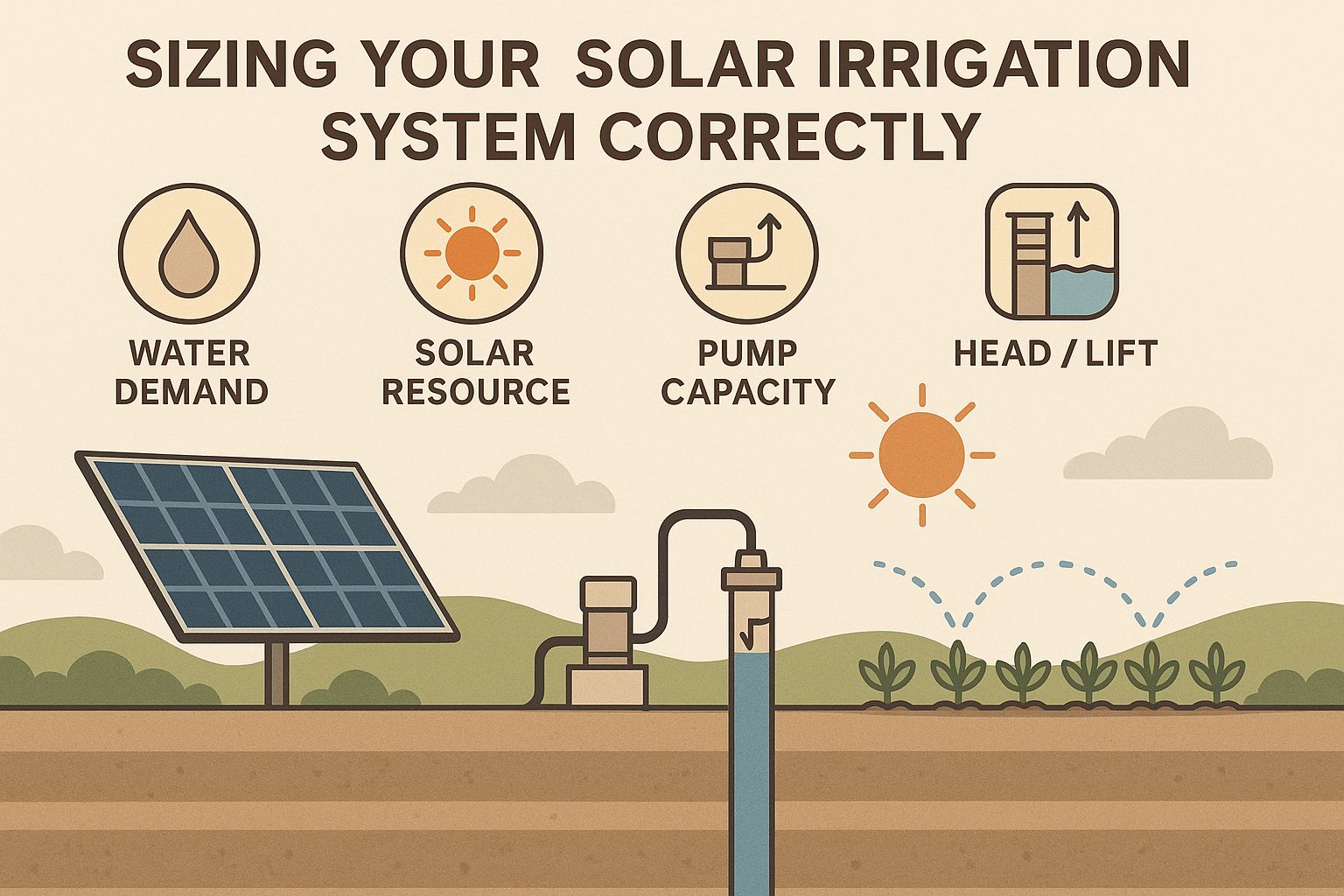
Sizing Your Solar Irrigation System Correctly
Proper system sizing represents the critical foundation for successful implementation of solar powered irrigation. Undersized systems create frustration through insufficient water delivery, while oversized configurations waste capital on unnecessary capacity. The sizing process requires careful consideration of several interrelated factors specific to each operation’s unique circumstances. For more information, explore the solar powered linear irrigation systems for agriculture.
Calculating Water Requirements Based on Crop Type
Different crops demand vastly different water volumes throughout their growth cycles, making accurate water requirement calculations the essential first step in system design. Water needs vary not only between crop types but also based on growth stage, with most crops requiring significantly more water during reproductive phases than during vegetative growth. Modern irrigation planning tools incorporate evapotranspiration models that predict water requirements based on crop coefficients, local climate data, and expected temperature patterns.
Root depth also significantly influences irrigation strategy, with shallow-rooted crops like lettuce requiring more frequent but lighter irrigation compared to deep-rooted crops like alfalfa. Soil type further modifies these calculations, as sandy soils require more frequent irrigation with smaller volumes compared to clay soils that hold moisture longer but accept water more slowly. Precision becomes particularly important with solar systems to ensure optimal use of available energy.
Determining Appropriate Solar Capacity
Converting water requirements into energy needs requires calculating the total dynamic head (pressure requirements) and flow rate necessary for effective irrigation. These hydraulic demands translate directly into the solar capacity required to power pumps and drive systems. Most agricultural installations require between 5-20kW of solar capacity depending on field size, with battery storage adding approximately 30-40% to the overall system cost but significantly improving reliability.
Local solar radiation data provides the foundation for calculating panel requirements, with most suppliers using historical insolation (sunlight intensity) data to determine the appropriate array size for specific locations. Oversizing the solar array by 15-20% from calculated minimums provides a valuable buffer against reduced panel efficiency from dust, aging, or lower-than-average sunlight years. This approach ensures reliable performance throughout the system’s multi-decade lifespan. For more information on optimizing solar panels for irrigation systems, check out this guide on solar panels for farm irrigation systems.
Field Dimensions and System Length Considerations
The physical layout of the field directly impacts system design, with field length, width, and topography all influencing equipment selection. Linear systems excel in rectangular fields, with optimal efficiency achieved when the system traverses the shorter dimension of the field. This configuration minimizes the number of required passes while maximizing coverage efficiency.
Most manufacturers offer standard length increments between 400-1320 feet, with customization available for specific field dimensions. The sprinkler package must be carefully matched to the system length and travel speed to ensure appropriate water application rates. Advanced designs now incorporate zone control that varies application rates across different sections of the field based on soil sensors or prescription maps, further optimizing water use efficiency.
Deciding Which Type of Solar Panels
Panel selection represents a critical decision point that balances efficiency, durability, and cost considerations. Monocrystalline panels offer the highest efficiency (19-22%) and require the smallest footprint but command premium pricing. Polycrystalline alternatives provide good efficiency (15-17%) at moderate cost, making them popular for agricultural applications where space constraints are less critical than in residential installations.
Mounting configuration significantly impacts both performance and durability, with fixed ground mounts representing the simplest and most reliable option for most farm applications. Single-axis tracking systems can increase energy production by 25-30% but add mechanical complexity and maintenance requirements that may not be justified in all situations. The mounting height must also account for potential flooding, snow accumulation, and security considerations specific to the installation location.
Real-World Performance in Different Farming Conditions
Performance varies significantly across different geographic regions and farming operations, making real-world experience invaluable for prospective adopters. Systems operating in the Southwest United States consistently demonstrate exceptional performance with solar production exceeding design expectations by 5-10% in many cases. Even in less sunny regions, properly designed systems achieve 85-95% of theoretical maximum efficiency through careful component selection and system optimization.
Effectiveness in High-Sun Regions
In high-insolation areas like Arizona, California, and Texas, solar powered linear systems operate with remarkable reliability, often delivering 8-10 hours of irrigation capacity daily throughout the growing season. These regions benefit from both abundant sunlight and predictable weather patterns that simplify system design. The high solar intensity allows for smaller panel arrays relative to irrigation capacity, improving economic returns and space efficiency.
Summer heat can actually reduce photovoltaic efficiency by approximately 0.5% for each degree Celsius above standard test conditions (25°C), making panel cooling strategies important in extremely hot regions. Some innovative installations incorporate simple passive cooling techniques like elevated mounting with airflow channels or reflective backing materials to mitigate these efficiency losses. Despite these minor challenges, high-sun regions represent the most favorable conditions for solar irrigation with the quickest return on investment.
Strategies for Cloudy Climate Operation
Even regions with less abundant sunshine can successfully implement solar irrigation through appropriate design adaptations. Oversizing the solar array by 20-30% compared to sunnier region specifications provides critical additional capacity during partial cloud cover. Battery storage becomes particularly important in these regions, with many systems incorporating 1-3 days of operational reserve to maintain irrigation schedules during extended cloudy periods. For more details on solar solutions for farm irrigation, check out this guide on solar panels for farm irrigation systems.
Hybrid power systems that combine solar with small wind turbines offer another viable strategy for regions with complementary wind and solar resources. These integrated renewable systems can maintain more consistent energy production across varying weather conditions. Programming irrigation to prioritize peak sun hours through sophisticated controllers further maximizes direct solar utilization while minimizing battery cycling and associated efficiency losses.
Seasonal Adjustments for Optimal Performance
Maximizing system effectiveness requires seasonal adjustments to match changing solar conditions and crop water requirements. Spring operation often benefits from panel cleaning to remove winter dust accumulation and pollen deposits that can reduce efficiency by 5-10%. Adjusting irrigation scheduling to maximize midday operation during spring and fall when solar intensity peaks earlier/later takes advantage of seasonal sun angles.
Winter storage requires specific protocols to prevent damage, particularly in freeze-prone regions. Battery maintenance becomes especially important during off-seasons, with proper charging cycles maintaining battery health and extending service life. Many farmers use the non-growing season to perform preventative maintenance on drive systems, checking for wear on moving parts before the critical growing season begins.
Seasonal Maintenance Checklist
Spring: Panel cleaning, battery inspection, system recommissioning, alignment verification
Summer: Monitor for overheating, check sprinkler nozzles for clogging, verify tracking accuracy
Fall: Clean panels before winter, check drive wheel condition, inspect electrical connections
Winter: Drain water systems in freeze-prone areas, maintain battery charge state, perform major repairs
The seasonal nature of many farming operations aligns well with solar production patterns, with peak water requirements typically occurring during maximum solar availability. This natural synchronization improves system economics compared to applications with more constant year-round energy demands.
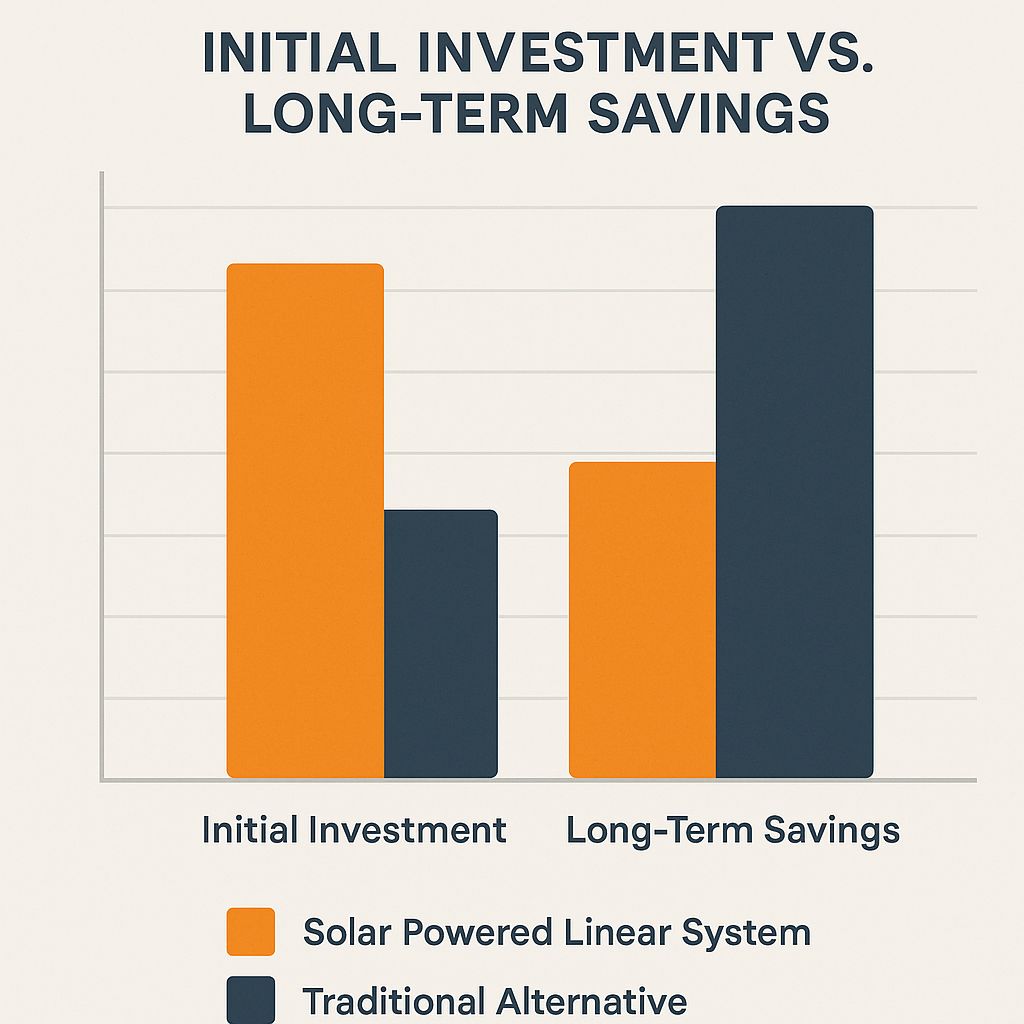
Cost Analysis: Initial Investment vs. Long-Term Savings
Understanding the complete financial picture requires examining both the substantial upfront investment and the significant ongoing savings that solar powered linear systems provide. While initial costs exceed traditional alternatives, the elimination of fuel expenses, reduced maintenance, and longer equipment lifespan typically create favorable long-term economics that improve with each passing year of operation.
Typical Setup Costs for Different Farm Sizes
Initial investment varies significantly based on system size, configuration, and optional features. Small systems covering 20-40 acres typically range from $75,000-$120,000 including solar components, while medium systems (40-80 acres) generally fall between $120,000-$200,000. Large installations covering 80+ acres can exceed $250,000, though economies of scale improve cost-efficiency for these larger systems.
Component selection significantly impacts costs, with premium options like lithium batteries, tracking arrays, and advanced control systems adding 15-30% to base system prices but potentially improving performance and reliability. Site-specific factors including distance from water source, terrain challenges, and soil conditions can also substantially influence installation costs. Most suppliers offer modular designs that allow for phased implementation, enabling farmers to expand systems as capital becomes available or as operational experience confirms benefits.
Annual Operating Cost Comparison
The dramatic reduction in operating expenses represents the most compelling economic advantage of solar powered systems. Traditional diesel-powered irrigation typically costs $70-$120 per acre-foot of water delivered when accounting for fuel, maintenance, and routine repairs. Solar powered alternatives reduce this to $15-$30 per acre-foot, creating annual savings of $55-$90 per acre-foot – a 70-85% reduction in operating costs.
Payback Period Calculations
Most agricultural operations achieve complete return on investment within 5-8 years depending on previous energy costs, irrigation requirements, and available incentives. When federal tax credits, USDA grants, and state incentives are successfully leveraged, this timeline can improve to 3-5 years. The expected 25+ year lifespan of major system components means that farmers enjoy 15-20 years of essentially free irrigation energy after the payback period, creating substantial long-term economic advantages. For more insights, explore how solar panels power a farm’s irrigation system.
Case Study: Arizona Vegetable Farm Cuts Water Usage by 30%
The experience of Verde Valley Farms provides a compelling real-world example of solar linear irrigation success. This 120-acre vegetable operation in central Arizona faced rising diesel costs exceeding $42,000 annually while struggling with water allocation reductions due to ongoing drought conditions. Their transition to solar powered linear irrigation in 2019 transformed both their economic and environmental position.
System Configuration and Specifications
Verde Valley implemented a comprehensive system featuring three 1,300-foot linear spans powered by a 15kW ground-mounted solar array with 3kWh of battery storage. The installation included precision application sprinklers operating at 18 PSI with variable frequency drive pumps that adjusted output based on available solar production. Advanced soil moisture sensors were integrated throughout the fields, providing real-time data to the control system that optimized irrigation timing and duration.
The design incorporated zone-specific application capabilities that allowed for different irrigation rates across 12 distinct management zones based on soil type and crop requirements. This precision approach enabled micromanagement of water resources impossible with their previous irrigation method. The total system cost was $237,000 before incentives, with federal and state programs reducing the net investment to $168,000.
Water and Energy Savings Results
After three full seasons of operation, Verde Valley documented water usage reductions of 32% compared to their previous system while completely eliminating approximately 38,000 gallons of diesel fuel annually. The energy cost savings alone exceeded $46,000 per year at current fuel prices, placing the system on track for complete payback within 3.7 years of implementation.
Crop Yield Improvements
Beyond resource savings, Verde Valley experienced significant yield improvements averaging 12% across their primary crops of tomatoes, peppers, and leafy greens. Quality metrics also improved substantially, with premium grade packout increasing by 18% for tomatoes and 14% for peppers. These quality improvements generated additional revenue estimated at $1,600-$2,200 per acre, further accelerating the return on investment timeline while strengthening the operation’s market position with high-end restaurant and retail customers.
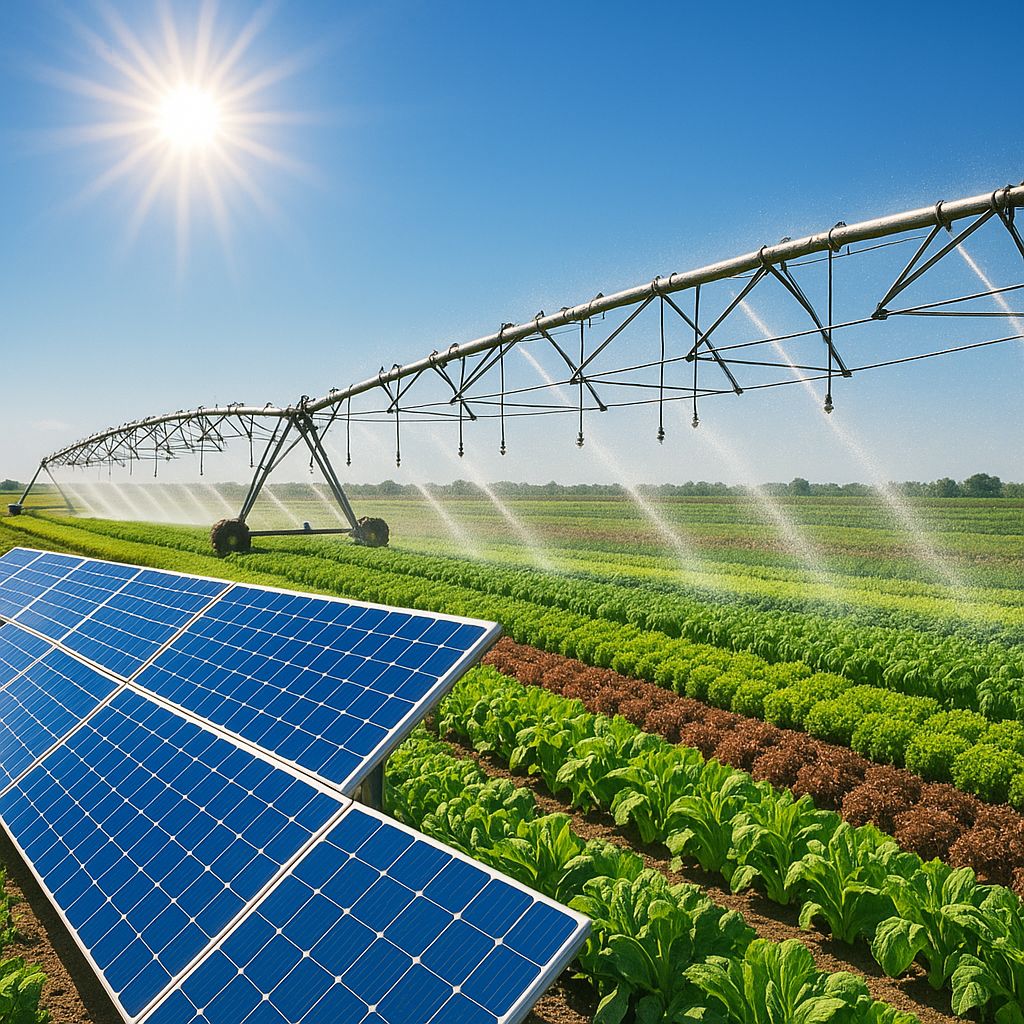
Future-Proofing Your Farm with Solar Irrigation
Implementing solar powered irrigation represents more than an operational improvement—it positions agricultural operations for long-term sustainability in a rapidly changing agricultural landscape. As climate variability increases, water restrictions tighten, and energy costs continue their upward trajectory, these systems provide critical resilience against multiple potential challenges facing modern farming operations.
Integration with Smart Farming Technologies
Solar irrigation systems provide an ideal platform for incorporating advanced agricultural technologies that further enhance efficiency and productivity. Modern implementations increasingly integrate with comprehensive farm management software that coordinates irrigation with other critical operations like planting, fertilization, and harvest scheduling. These interconnected systems leverage data from multiple sources to optimize resource utilization across the entire operation.
Expansion Options as Your Operation Grows
Most solar irrigation installations are designed with scalability in mind, allowing for system expansion as operations grow or as capital becomes available. Adding solar capacity, extending linear spans, or incorporating additional fields into the control network can be accomplished without replacing existing components. This modularity protects the initial investment while providing flexibility for future operational changes.
The solar infrastructure developed for irrigation often creates opportunities for additional on-farm renewable energy applications. Many operations later expand their solar capacity to power packing facilities, cold storage, or even farm residences, creating a comprehensive renewable energy ecosystem that extends benefits beyond irrigation. These integrated approaches maximize return on infrastructure investments while creating additional pathways to operational sustainability.
Building Climate Resilience Through Sustainable Practices
Perhaps the most significant long-term benefit comes from enhanced resilience against climate variability and resource constraints. As weather patterns become less predictable and water allocations face increasing pressure, the precision and efficiency of solar powered linear systems provide a critical adaptation strategy that helps ensure operational viability despite external challenges.
- Reduced dependence on fossil fuels insulates operations from energy price volatility
- Improved water efficiency creates buffer against allocation reductions
- Precision application capability allows quick adaptation to changing weather patterns
- Sustainable practices increasingly align with consumer preferences and regulatory direction
- Renewable energy infrastructure creates opportunities for carbon credit programs
Forward-thinking agricultural operations increasingly view sustainable infrastructure not as an optional upgrade but as essential protection against an uncertain future. Solar powered irrigation represents one of the most impactful investments in this resilience strategy, addressing multiple vulnerability points simultaneously while delivering immediate operational benefits.
By embracing these technologies today, farmers position themselves as leaders in agricultural sustainability while securing their operational viability for decades to come. The convergence of economic, environmental, and practical benefits creates a compelling case for implementation that grows stronger with each passing season.
Frequently Asked Questions
As solar powered linear irrigation systems gain popularity, many farmers have similar questions about implementation, performance, and economics. These frequently asked questions address the most common concerns and considerations for operations evaluating this technology.
Understanding these practical aspects helps farmers make informed decisions about whether solar powered linear systems represent the right choice for their specific operational needs and conditions.
How many acres can a typical solar powered linear system irrigate?
Typical Coverage Capacity by System Size
Small Systems: 20-40 acres with 400-600 foot span length
Medium Systems: 40-80 acres with 600-1000 foot span length
Large Systems: 80-160 acres with 1000-1320 foot span length
Custom Configurations: Multi-span systems can cover 200+ acres with appropriate solar capacity
System capacity depends primarily on the linear span length, solar array size, and water requirements of the specific crops being grown. Most manufacturers offer spans ranging from 400 feet to 1320 feet, with custom lengths available for specific field configurations. The solar capacity must be sized appropriately for the hydraulic demands, with typical installations requiring 1-1.5kW of solar capacity per 10 acres of coverage. For more information on solar panels powering a farm’s irrigation system, check out this resource.
Water delivery capacity represents another critical factor, with most systems designed to deliver 4-7 gallons per minute per acre depending on crop needs. Higher capacity systems require proportionally larger solar arrays and more robust drive systems, but offer faster irrigation cycles that can be advantageous during critical growth stages.
For larger operations, multiple linear systems can be implemented with coordinated controls to cover extensive acreage while maintaining the precision benefits of smaller installations. These multi-system approaches often achieve economies of scale that improve overall return on investment compared to single large systems.
Will the system work at night or during cloudy weather?
System operation during low-light conditions depends entirely on the battery storage capacity included in the design. Basic systems without batteries operate only during daylight hours with sufficient solar intensity, while systems with battery storage can continue operation through cloudy periods or scheduled night irrigation. Most agricultural installations include at least some battery capacity, with 1-3 days of operational reserve representing the typical range depending on local weather patterns and irrigation requirements.
What’s the average lifespan of a solar powered irrigation system?
The major components of solar powered irrigation systems offer exceptional longevity compared to conventional alternatives. Solar panels typically carry 25-30 year warranties with expected functional lifespans exceeding 30-35 years at reduced efficiency in later years. The mechanical components of linear systems generally last 15-20 years with proper maintenance, while control systems typically require updates or replacement every 8-12 years as technology advances. This extended lifespan significantly improves lifetime economics compared to diesel systems requiring major overhauls every 5-7 years.
Can I retrofit my existing linear irrigation system with solar power?
Many existing linear systems can be successfully converted to solar power through retrofit kits that replace conventional power sources with renewable alternatives. The feasibility depends primarily on the age and condition of the existing equipment, with newer systems offering more straightforward conversion pathways. The retrofit process typically involves replacing the power unit, adding solar panels and optional batteries, and upgrading the control system to manage the variable power availability inherent to solar generation. These conversions generally cost 30-40% less than complete system replacement while delivering most of the same benefits.
Are there specific crops that benefit most from linear sprinkler irrigation?
Row crops including corn, soybeans, cotton, and small grains show exceptional response to linear irrigation due to their uniform planting patterns and consistent water requirements. Specialty crops like tomatoes, peppers, and leafy greens benefit particularly from the precise moisture control that prevents quality issues like splitting or tip burn. Root crops including potatoes and onions show significant quality improvements under linear irrigation compared to less precise methods, with more uniform size distribution and fewer defects.
Crops with critical irrigation timing requirements during specific growth stages, such as corn during tasseling or cotton during boll development, benefit substantially from the reliability and precision of solar powered systems. The elimination of potential fuel delivery delays or power outages during these critical periods can prevent significant yield losses that might otherwise occur with conventional systems.

Leave a Reply