
Key Takeaways
- Solar panel installations can permanently remove prime agricultural land from food production, with studies suggesting 83% of new solar development will occur on farm and ranchland.
- Environmental impacts include heat island effects, soil disruption, wildlife habitat fragmentation, and water runoff issues that aren’t typically addressed in sales pitches.
- Financial returns often fall short of developer promises when accounting for maintenance costs, insurance premiums, and property value implications.
- Land lease agreements may contain restrictive terms that limit farm operations and create complex decommissioning responsibilities for landowners.
- AgriSolar Solutions offers specialized consultation services to help farmers navigate solar development decisions while protecting their long-term agricultural interests.
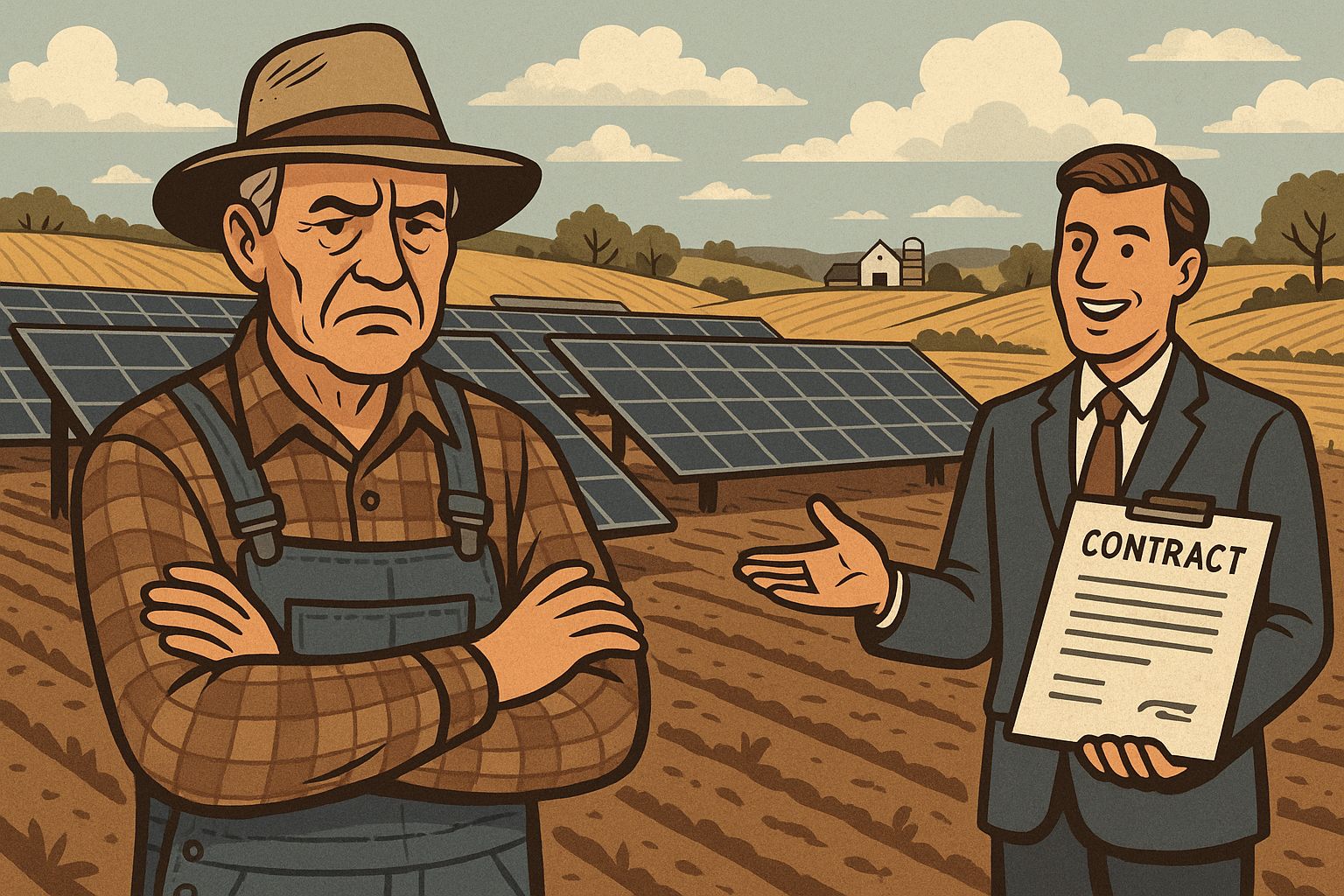
The renewable energy transition is transforming rural America, but not always in ways that benefit agriculture. As solar developers eagerly approach farmers with promises of steady income and clean energy production, many landowners are discovering significant drawbacks only after contracts are signed. Understanding these challenges is crucial before committing generational farmland to decades-long solar projects.
The Hidden Costs of Solar Panels on Farms
When solar developers approach farmers, they typically highlight guaranteed income, environmental benefits, and energy independence. What’s often missing from these conversations are the long-term implications for agricultural operations and rural communities. The reality is that utility-scale solar installations fundamentally alter both the land they occupy and surrounding properties.
Converting farmland to solar energy production isn’t simply a matter of installing panels that can be easily removed later. The installation process involves significant land disturbance, including access road construction, excavation for electrical infrastructure, and the installation of concrete foundations. This activity compacts soil, disrupts drainage patterns, and can irreversibly damage the fertile topsoil that may have taken generations to develop.
Beyond physical land changes, solar installations create complex financial and legal entanglements. Many farmers report being unprepared for property tax reassessments, insurance requirement changes, and restrictions on adjacent land use that weren’t clearly explained during initial discussions with developers. These hidden costs can significantly reduce the promised financial benefits of solar leases.
- Permanent topsoil and drainage disruption during construction
- Unexpected tax implications and insurance requirements
- Restrictions on surrounding land use affecting overall farm operations
- Complex decommissioning responsibilities at end-of-life
- Potential impacts on farm succession planning
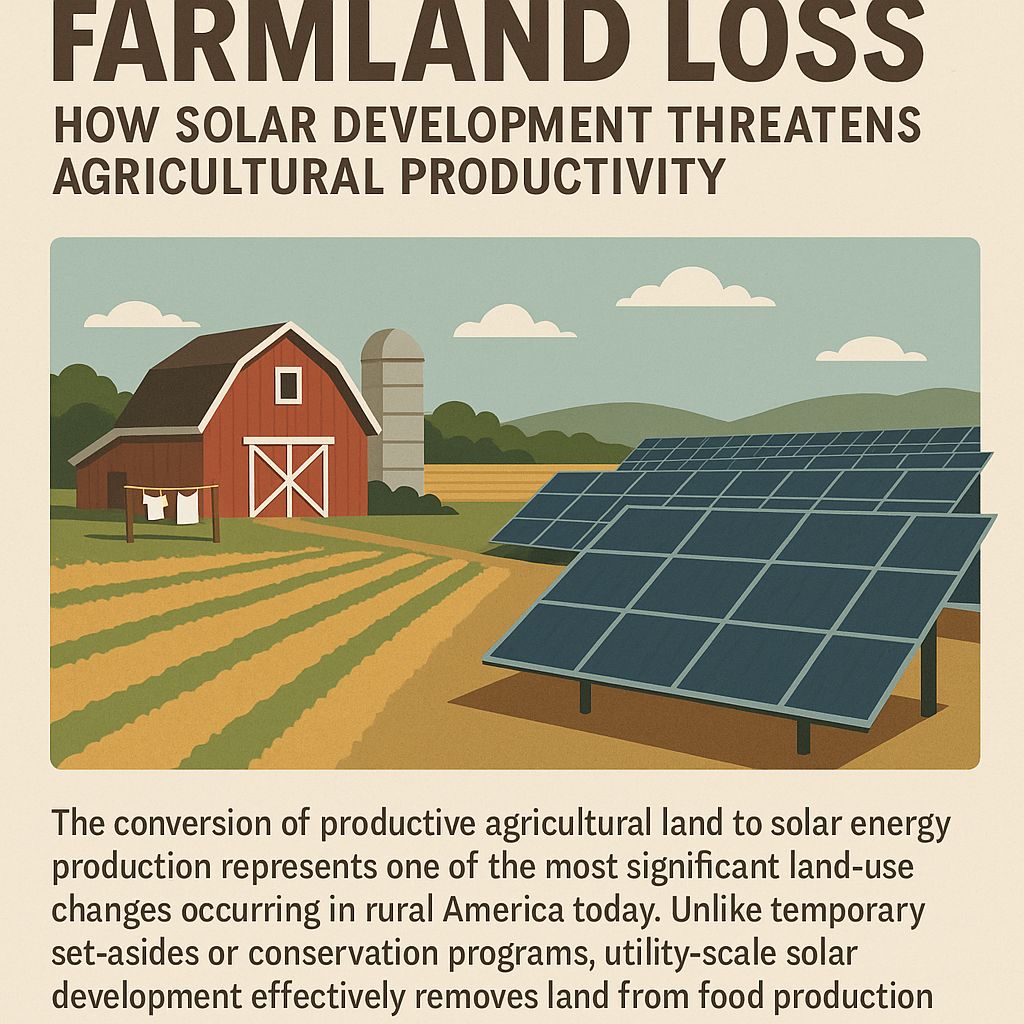
Farmland Loss: How Solar Development Threatens Agricultural Productivity
The conversion of productive agricultural land to solar energy production represents one of the most significant land-use changes occurring in rural America today. Unlike temporary setasides or conservation programs, utility-scale solar development effectively removes land from food production for decades, with questionable prospects for full restoration afterward.
Prime Cropland Being Converted to Solar Arrays
Despite developer claims that solar installations target marginal lands, research from American Farmland Trust and other agricultural advocacy organizations indicates that prime farmland is disproportionately affected. Solar developers naturally prefer flat, well-drained parcels with good road access and proximity to transmission infrastructure – the same characteristics that make land ideal for agriculture. A 2023 study projected that without policy changes, nearly half of new solar development would occur on America’s most productive cropland, precisely the land we can least afford to lose from food production.
The statistics are concerning: farmland in the United States has already declined by 76.2 million acres since 1997, according to USDA data. Solar development accelerates this trend, permanently altering landscapes that have supported agricultural communities for generations. Once solar infrastructure is installed, the likelihood of returning that land to productive farming diminishes dramatically.
Impact on Food Production Capacity
The cumulative effect of widespread solar development on agricultural lands raises serious food security concerns. Every acre converted from food production to energy production represents a small but meaningful reduction in domestic food production capacity. Agricultural economists warn that as climate change already threatens crop yields in many regions, preserving our most productive farmland becomes increasingly important for national resilience.
Changes to Rural Landscapes and Communities
“It’s not just the number of acres converting to solar that matters. It’s the quality of the land coming out of production, and what that means for local economies, state economies, and the country’s future abilities for crop production.”
– Dr. James Bennett, Agricultural Economist
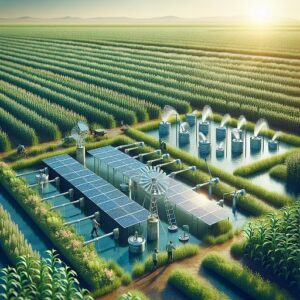
The social and economic fabric of rural communities changes when significant portions of agricultural land convert to industrial solar use. Farm equipment dealers, seed suppliers, grain elevators, and other agricultural businesses face reduced demand when farmland leaves production. Meanwhile, solar installations generate minimal ongoing local employment after construction and may diminish the agricultural character that defines many rural communities. For those interested in maximizing the benefits of solar technology in agriculture, exploring options like a solar-powered linear sprinkler irrigation system can be beneficial.
The Essex County Conservation Alliance summarizes the concern succinctly: “farmland lost is farmland lost forever.” Once a solar installation is established, the complex mix of soil disturbance, infrastructure development, and long-term contracts makes returning the land to agricultural use increasingly unlikely, even after panels reach the end of their useful life. For those looking to maintain solar panel efficiency, proper maintenance is crucial.
Environmental Impacts You Won’t Hear from Solar Companies
While solar energy is often promoted as environmentally friendly, large-scale installations on farmland create their own set of ecological concerns. These environmental impacts rarely appear in developer presentations but deserve serious consideration before converting productive agricultural land.
Heat Island Effect Around Large Solar Installations
Solar panels absorb and convert sunlight, but not all solar energy becomes electricity. A significant portion converts to heat. Because solar panels are substantially darker than surrounding vegetation, large solar arrays absorb and emit heat at higher rates than agricultural fields, creating localized “heat islands.” Temperature increases of 3-7°F have been measured around large installations, which can alter local growing conditions, affect wildlife patterns, and potentially impact neighboring crops. For more insights on improving solar panel performance in agriculture, explore solar panel efficiency tips.
This temperature modification extends beyond the immediate installation area, potentially changing microclimate conditions that may have supported specific agricultural practices for generations. For farms with diverse operations, these temperature changes can disrupt carefully balanced growing conditions that specialty crops may require.
Soil Disruption and Erosion Concerns
The construction phase of solar installations causes significant soil disturbance. Heavy equipment compacts soil, excavation for electrical conduits disrupts soil horizons, and vegetation removal exposes bare soil to erosion forces. These changes can permanently alter soil structure and fertility that may have taken decades or centuries to develop naturally. For farmers, implementing efficient solar solutions like solar pump inverters can help mitigate some of these impacts by optimizing energy use.
Even after construction, soil under panels experiences altered precipitation patterns. Rain tends to concentrate along panel edges, creating channelized flow that increases erosion risk. Meanwhile, areas directly beneath panels may receive significantly less moisture, potentially creating dry zones that change soil biology and organic matter cycling. For more insights on these environmental impacts, you can explore the dark side of solar energy.
- Panel installation requires soil compaction that damages structure and fertility
- Changed precipitation patterns create uneven moisture distribution
- Reduced vegetation coverage increases erosion vulnerability
- Altered soil temperatures affect microbial communities
- Chemical leaching concerns from damaged panels over time
Wildlife Displacement and Habitat Changes
Converting agricultural land to solar facilities fundamentally changes habitat conditions for native wildlife. Ground-mounted solar arrays fragment habitats, potentially affecting migration patterns and breeding grounds of local species. Fencing required for security creates additional barriers to wildlife movement, disrupting established corridors that animals may have used for generations.
Birds can be particularly affected by large solar installations. Some species mistake the reflective surfaces for water bodies, leading to what ecologists call the “lake effect” – causing birds to collide with panels. Additionally, certain installations create intense heat zones that can harm birds flying through concentrated solar reflection.
Water Runoff Issues During Construction and Operation
Agricultural fields typically have well-established drainage systems developed over decades of farming. Solar construction disrupts these patterns, often requiring new drainage solutions that alter natural water movement. During heavy precipitation, altered runoff patterns can cause flooding in previously dry areas and drought conditions where water once naturally accumulated. For farmers interested in maintaining solar panel efficiency amidst these challenges, understanding proper maintenance is crucial.
The impervious nature of solar panels themselves concentrates rainfall along their edges, creating erosion channels and potentially washing sediment into nearby water bodies. This concentrated flow can carry soil particles, nutrients, and potentially chemicals from panel materials into streams and rivers, affecting water quality beyond the installation boundary.
The Problem of Disposing Old or Broken Solar Panels
Solar panels have finite lifespans, typically 25-30 years, after which their efficiency declines significantly. Decommissioning and disposal present environmental challenges rarely discussed during installation planning. Modern solar panels contain various potentially hazardous materials including lead, cadmium compounds, and silicon tetrachloride that require specialized handling during disposal.
With limited recycling infrastructure currently available for solar panels, many decommissioned units end up in landfills despite their toxic components. For farm owners, this creates potential future liability if environmental regulations change before decommissioning occurs. The environmental footprint of panel disposal effectively extends the impact of solar installations decades beyond their operational life.
Financial Realities Behind Farm Solar Investments
True ROI Calculations: What’s Often Overlooked
Solar developers typically present farmers with attractive financial projections highlighting steady, guaranteed income for 25+ years. However, these calculations often omit critical factors that significantly impact actual returns. When evaluating these offers, farmers must consider opportunity costs – not just what they’ll gain, but what agricultural production they’ll forfeit over multiple decades. To optimize these investments, farmers can explore options like solar panel efficiency maintenance tips to ensure maximum returns over time.
A comprehensive ROI analysis must account for rising agricultural commodity prices over the lease period. Land that produces $500/acre annually today might generate substantially more in future decades as food demand increases and farmland disappears. The fixed escalator clauses in most solar leases (typically 1-2% annually) rarely keep pace with agricultural inflation or reflect the true appreciation of productive farmland.
Tax implications further complicate financial projections. Many farmers experience property tax reclassification from agricultural to commercial or industrial categories, dramatically increasing tax burdens on both leased and sometimes adjacent parcels. Income tax consequences of steady lease payments can also push farmers into higher tax brackets, reducing the net benefit of solar income.
Maintenance Costs Over System Lifetime
While most utility-scale installations place maintenance responsibilities on the developer, some contracts contain provisions requiring landowner participation in vegetation management, access road maintenance, or security monitoring. These obligations represent hidden costs rarely factored into initial financial projections but can accumulate significantly over decades. For tips on maintaining solar panel efficiency, check out this maintenance tips guide for farmers.
Weather-related damages present additional financial risks. While insurance typically covers panel replacement, landowners may face indirect costs from construction equipment access, soil remediation after repairs, or production losses on adjacent fields during major maintenance operations. Severe weather events like hail, tornados, or flooding can trigger complex insurance claims processes that require substantial landowner time and potentially legal assistance.
Insurance and Security Expenses
Most solar leases require landowners to maintain specific insurance coverage beyond typical farm policies. These specialized policies protect against liability claims related to the solar installation, environmental contamination, or other risks specific to energy production. Annual premiums for these additional coverages frequently range from $1,500-5,000 depending on installation size and location – costs rarely mentioned during initial financial discussions.
Security requirements represent another overlooked expense. Many contracts require landowners to monitor for vandalism, theft, or trespassing, with potential penalties if security breaches occur. Remote installations may necessitate security camera systems, regular inspections, or even contracted security services in high-risk areas.
The cumulative effect of these hidden costs can dramatically reduce the actual return on investment compared to developer projections. When combined with opportunity costs from lost agricultural production, many farmers discover the financial benefits of solar leases are substantially less attractive than initially presented, especially when considered over the multi-generational timeframe that most family farms operate within.
Land Lease Agreements: The Fine Print That Hurts Farmers
Solar lease agreements often span 25-50 years – longer than most farmers plan to actively manage their operations. These binding contracts contain numerous provisions that can restrict farm activities and create unexpected obligations across generations. Understanding these complex legal documents requires specialized legal expertise that many farmers don’t initially seek. For those interested in exploring alternative solutions, a solar-powered linear sprinkler irrigation system can be an efficient option for farmers.
Restrictive Contract Terms
Most solar leases include extensive restrictions on surrounding land use. Setback requirements, access easements, and provisions against activities that might shade panels or create dust can limit farming practices on adjacent land not included in the lease area. These restrictions effectively extend the solar project’s footprint beyond the installation boundaries, reducing operational flexibility across the entire farm.
Transmission line easements pose additional challenges, often cutting across productive fields and creating obstacles for large equipment. These easements typically remain in force even if the solar project fails, creating permanent encumbrances on the property that affect future agricultural use and property value.
Many contracts include confidentiality provisions that prevent farmers from discussing lease terms with neighbors or seeking community input. This isolation tactic benefits developers by preventing landowners from organizing or negotiating collectively, ultimately resulting in less favorable terms for the agricultural community.
Property Value Implications
Research indicates that large solar installations can negatively impact surrounding property values, with studies showing decreases of 5-10% for adjacent agricultural parcels. The industrial appearance, concerns about electromagnetic fields, and limited future land use options all contribute to this devaluation effect. This impact extends beyond the leased parcel to neighboring properties, creating community-wide economic ripples.
The long-term encumbrance on the land can significantly reduce its marketability for both agricultural and residential purposes. Many potential farm buyers are unwilling to purchase land with decades-long solar leases attached, effectively removing these properties from the agricultural land market and reducing the pool of potential future buyers. To understand more about the implications, you can explore solar power and farmland at risk.
End-of-Life Removal Responsibilities
Decommissioning provisions in solar contracts often contain inadequate financial assurances for complete site restoration. Many agreements require only removal of above-ground infrastructure, leaving access roads, underground cables, and concrete foundations in place. These remnants can permanently impair future agricultural use, especially for crops requiring deep tillage or specialized equipment.
The financial guarantees for decommissioning frequently underestimate actual removal costs, especially when accounting for inflation over the multi-decade contract period. If the developer or subsequent owner declares bankruptcy before decommissioning, landowners may inherit removal responsibilities with inadequate funds to complete the work properly. To explore more about maintaining solar systems efficiently, check out these solar panel efficiency maintenance tips.
Generational Impact on Family Farms
Perhaps most concerning for multi-generational family farms is how solar leases bind future generations to decisions made today. Children or grandchildren who inherit farmland under solar contracts have limited options to return that land to agricultural production until lease expiration. This constraint can disrupt family succession plans and limit opportunities for the next generation of farmers.
The long-term nature of these agreements means that decisions made in today’s economic and agricultural context will persist through decades of changing market conditions, climate patterns, and farming technologies. What seems financially advantageous today may represent a significant opportunity cost for future generations as agricultural practices and markets evolve.
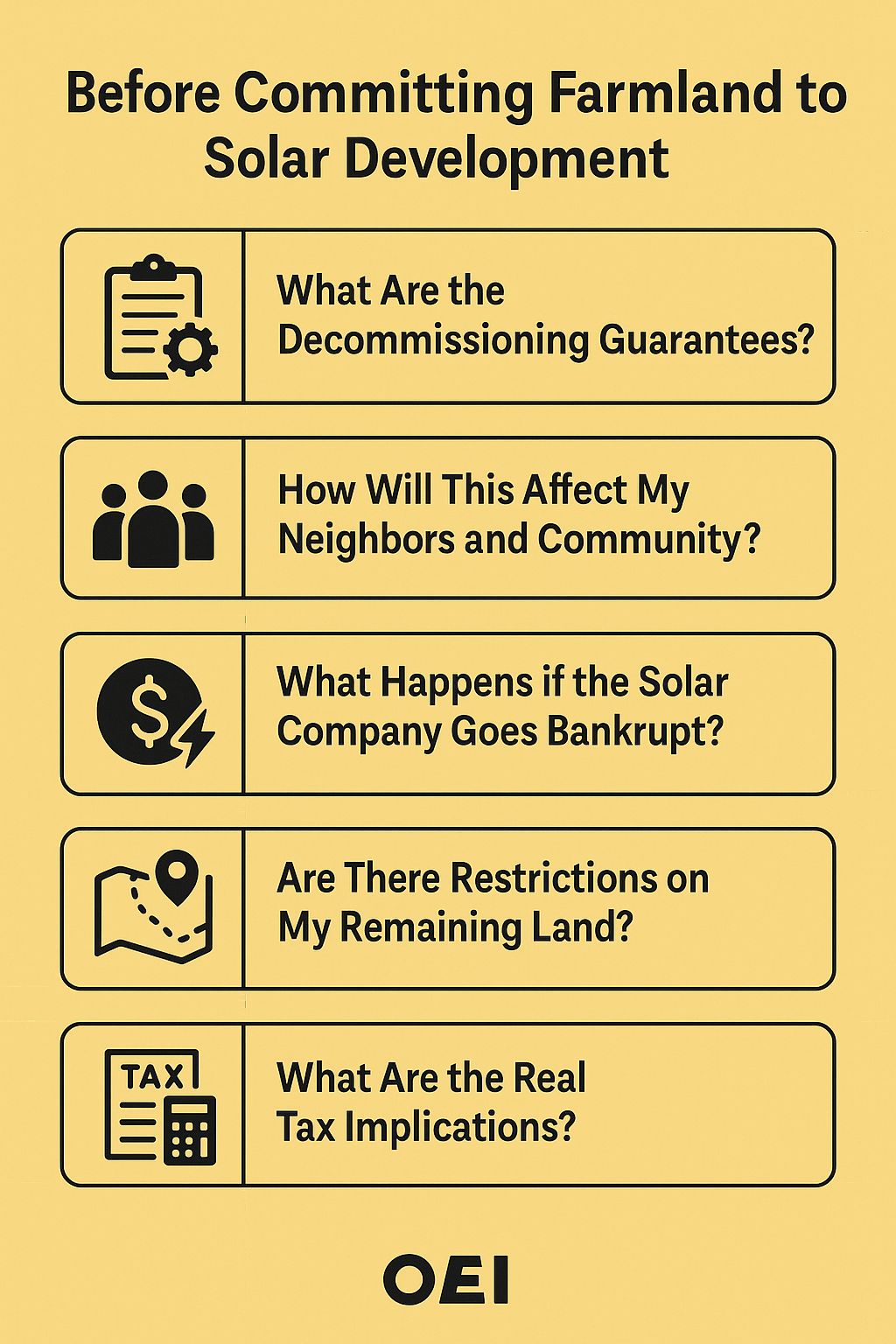
5 Questions to Ask Before Signing a Solar Developer Contract
Before committing farmland to solar development, landowners should thoroughly investigate several critical aspects of the proposed agreement. The answers to these questions can reveal potential problems and provide leverage for negotiating more favorable terms. For instance, understanding solar panel efficiency maintenance tips can be crucial in ensuring the long-term viability and profitability of the solar project.
1. What Are the Decommissioning Guarantees?
Insist on specific, detailed decommissioning provisions that include complete infrastructure removal and full soil restoration. Require financial assurances through bonds or escrow accounts that adjust for inflation and increase over time. The guarantee amount should be reassessed periodically by independent experts to ensure it reflects current removal and restoration costs. Remember that decommissioning technology that doesn’t exist yet (today’s solar panels) will likely cost more than developers estimate.
2. How Will This Affect My Neighbors and Community?
Consider how solar development impacts the broader agricultural community, not just your individual operation. Reduced active farmland can affect local agricultural suppliers, processors, and support services that all farmers depend on. Some communities have experienced significant division when solar projects are proposed, creating lasting social tensions that persist long after installation. Engaging with neighbors and local officials before signing can identify potential conflicts and community concerns.
3. What Happens if the Solar Company Goes Bankrupt?
Solar contracts typically allow developers to assign the lease to other entities without landowner approval. This provision means your agreement could transfer to an unknown company with different financial stability or operating practices. Insist on provisions requiring notification of ownership changes and maintaining all original guarantees and responsibilities regardless of corporate restructuring. Ensure the contract clearly states that all obligations survive bankruptcy proceedings.
4. Are There Restrictions on My Remaining Land?
Carefully review all provisions affecting non-leased portions of your property. Many contracts include restrictions on activities that might create dust, smoke, or shade affecting panel performance. These limitations can extend hundreds of feet beyond the installation boundary, significantly reducing operational flexibility on adjacent fields. Negotiate for specific, limited restrictions rather than broad prohibitions that might prevent normal farming activities.
5. What Are the Real Tax Implications?
Consult with an agricultural tax specialist before signing any agreement. Property tax reclassification from agricultural to commercial use can dramatically increase tax burdens, sometimes affecting even non-leased portions of the property. Income tax consequences may include recapture of prior agricultural tax benefits, loss of preferential capital gains treatment, and potential gift or estate tax complications for future generations. Understanding these tax implications is essential for accurate financial projections.
Better Alternatives for Farm Energy Independence
Farmers interested in renewable energy have several alternatives that provide benefits without permanently removing land from agricultural production. These approaches offer greater compatibility with ongoing farming operations while still reducing energy costs and environmental impact. For instance, utilizing solar pump inverters can enhance energy efficiency without disrupting farm productivity.
Smaller-Scale Solar That Preserves Farmland
Rooftop solar installations on existing farm buildings offer significant energy generation potential without consuming productive land. Barns, equipment sheds, grain storage facilities, and other structures often have substantial south-facing roof area ideal for solar panels. These installations typically generate enough electricity to offset most or all of a farm’s operational energy needs while keeping cropland in production. Parking canopies and other dual-use structures provide additional installation options that maintain agricultural land availability. For more on the environmental impacts of solar energy, you can read about the dark side of solar energy.
Agrivoltaics: When Solar and Farming Can Coexist
Agrivoltaics represents an emerging approach that integrates solar panels with specific agricultural activities. By elevating panels and spacing them appropriately, farmers can continue producing certain crops or grazing livestock beneath the installation. This approach maintains agricultural productivity while generating renewable energy from the same land area.
Research from the National Renewable Energy Laboratory indicates that certain crops, particularly shade-tolerant varieties, perform well in the partial shade environment created by elevated solar panels. Some plants even benefit from the reduced evaporation and heat stress, potentially increasing yields during drought conditions. Livestock grazing, particularly sheep, has proven especially compatible with solar installations, providing natural vegetation management while maintaining animal production. For those interested in enhancing their solar panel setups, there are various solar panel efficiency maintenance tips available to ensure optimal performance.
Energy Efficiency Upgrades with Better Returns
For many farms, energy efficiency improvements deliver better financial returns than renewable energy generation. Upgrading to high-efficiency equipment, improving insulation in farm buildings, and implementing energy management systems can reduce energy consumption by 20-40% with payback periods of just 2-5 years. These investments typically require much smaller capital outlays than solar installations while delivering immediate operational cost reductions.
Variable frequency drives for irrigation pumps, high-efficiency grain drying systems, and LED lighting represent particularly cost-effective energy upgrades for most farming operations. These technologies reduce both energy consumption and peak demand charges, often qualifying for utility incentives that further improve their financial return. For instance, solar pump inverters can significantly enhance the efficiency of irrigation systems.
- Conduct an energy audit to identify highest-impact efficiency opportunities
- Investigate USDA Rural Energy for America Program (REAP) grants for efficiency projects
- Consider smaller solar installations sized to offset specific farm loads
- Explore community solar participation as an alternative to on-farm installation
- Investigate wind energy potential if your property has suitable resources
By prioritizing energy efficiency and exploring multiple renewable options, farmers can develop comprehensive energy strategies that reduce costs and environmental impact without compromising agricultural productivity. AgriSolar Solutions offers farm energy assessments that identify the optimal mix of efficiency improvements and renewable generation for your specific operation.
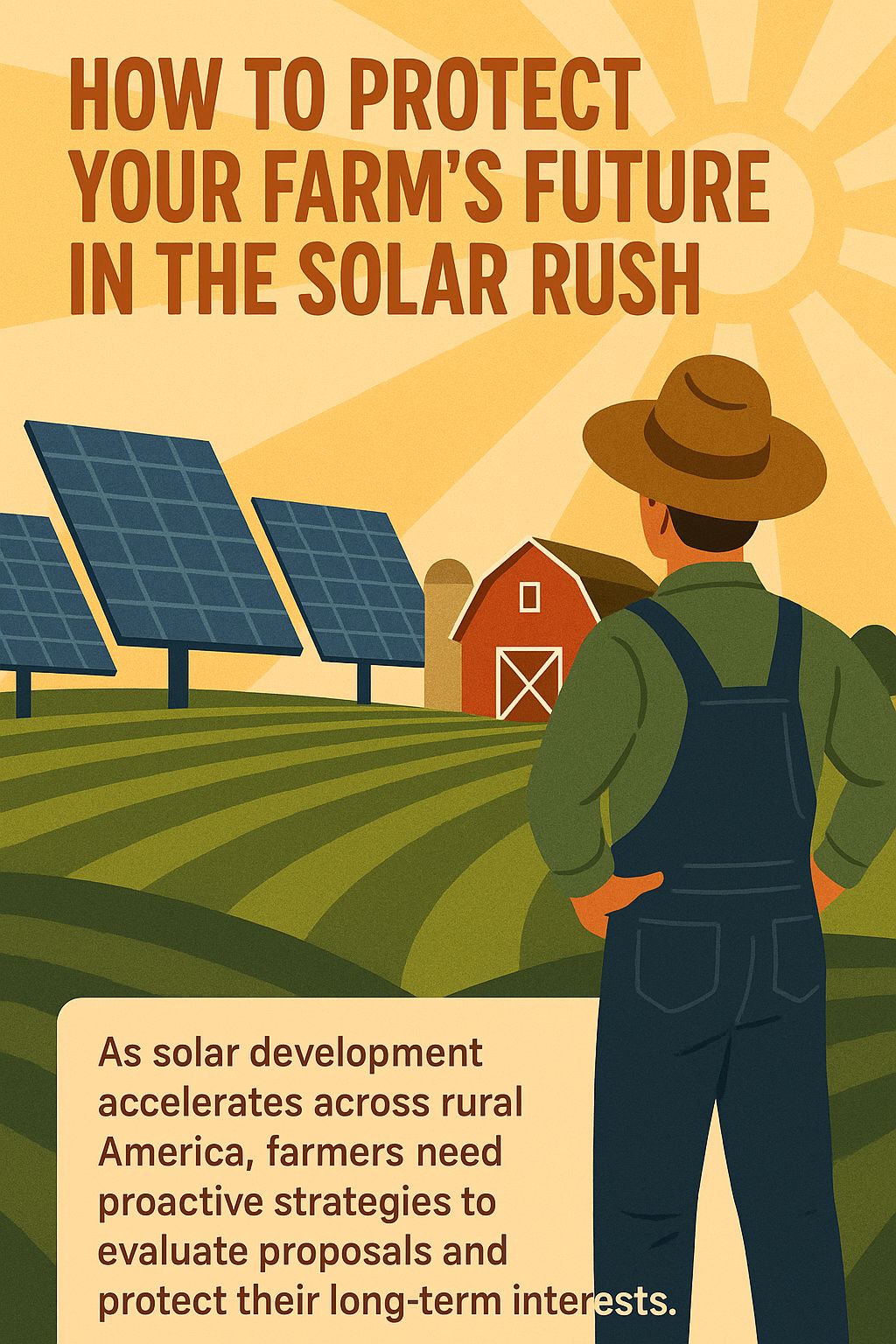
How to Protect Your Farm’s Future in the Solar Rush
As solar development accelerates across rural America, farmers need proactive strategies to evaluate proposals and protect their long-term interests. Start by assembling a qualified advisory team including an agricultural attorney experienced in energy contracts, a tax specialist familiar with both farm and energy tax provisions, and an independent renewable energy consultant not affiliated with development companies. This team can provide objective analysis of proposals and identify contract issues before signing. Consider joining or forming a landowner coalition to share information and potentially negotiate collectively with developers, as unified groups typically secure better terms than individual landowners. Finally, engage with local planning officials to advocate for solar siting ordinances that protect prime farmland while directing development toward marginal lands, brownfields, and other pre-disturbed sites.
Frequently Asked Questions
Many farmers share common questions when considering solar development proposals. These answers provide general guidance, though specific situations may vary based on location, project details, and individual farm circumstances.
How long do farm solar installations typically last?
Most utility-scale solar installations have expected operational lifespans of 25-35 years before significant efficiency degradation occurs. However, lease terms often extend to 40-50 years, potentially including equipment replacement or repowering provisions that extend the actual land commitment even longer. The true timeline extends beyond initial installation through decommissioning, which can add several additional years depending on project size and complexity.
When evaluating lease duration, farmers should consider not only their own lifetime but implications for the next generation. A 30-year-old farmer signing a 50-year lease is effectively making land use decisions that will extend beyond their likely farming career and into their children’s potential management period. For further insights, you can explore the impact of solar power on farmland.
Can I continue farming around or under solar panels?
Traditional farming activities are generally incompatible with standard ground-mounted solar installations due to panel density, height, and security requirements. While some vegetation management may occur between panel rows, conventional crop production is typically impossible within the installation footprint. For more insights on this topic, you can explore the impact of solar power on farmland.
Specially designed agrivoltaic systems with elevated panels and wider spacing can accommodate certain agricultural activities, particularly grazing, beekeeping, or growing shade-tolerant specialty crops. However, these custom designs are rarely used in utility-scale installations focused on maximizing energy production per acre.
Buffer areas and setbacks around solar installations may remain suitable for conventional farming, though access may be complicated by security fencing, transmission infrastructure, and contract restrictions on activities that might impact panel performance.
What happens to the soil quality under long-term solar installations?
Soil impacts vary depending on installation methods, maintenance practices, and local conditions. Construction typically causes significant initial disturbance through soil compaction, mixing of soil horizons during trenching, and potential erosion during the vegetation establishment period. Once operational, altered precipitation patterns around panels can create uneven moisture distribution, potentially affecting soil biology and nutrient cycling. For more on optimizing solar installations, explore solar panel efficiency maintenance tips.
Research on long-term soil impacts remains limited, as most large-scale installations are relatively recent. Preliminary studies suggest that soil organic matter often decreases under panels due to reduced plant growth and altered decomposition conditions. Microbial communities also change in response to modified temperature and moisture patterns. For farmers looking to optimize their solar installations, understanding solar panel efficiency maintenance tips can be crucial.
Do solar panels affect neighboring property values?
Multiple studies indicate that large solar installations can negatively impact adjacent property values, particularly for residential and undeveloped agricultural parcels. The industrial appearance, perceived environmental concerns, and potential glare or reflected heat contribute to this effect. The magnitude varies by location and project characteristics, but research generally shows value reductions of 5-10% for properties within visible range of utility-scale installations.
Are there any grants or tax incentives specifically for farmers considering solar?
The USDA Rural Energy for America Program (REAP) offers grants and guaranteed loans for renewable energy projects on farms and rural businesses. These incentives typically apply to owner-operated systems rather than leased installations. Additionally, federal investment tax credits may benefit farmer-owned systems, though professional tax guidance is essential as agricultural businesses have unique tax considerations that affect incentive eligibility.
Some states offer agricultural-specific renewable energy incentives, including specialized net metering provisions, property tax exemptions, or grant programs targeting on-farm generation. These programs generally favor smaller, farm-operated systems integrated with ongoing agricultural operations rather than utility-scale developments that displace farming. For example, solar panel efficiency maintenance tips can be crucial for farmers looking to maximize the benefits of these incentives.
While developer-owned projects benefit from various tax incentives, these primarily accrue to the developer rather than the landowner. Farmers should focus on how these incentives affect lease payment competitiveness rather than viewing them as direct benefits.
“The most sustainable approach balances renewable energy development with preserving our most productive agricultural lands. By prioritizing solar on rooftops, marginal lands, and through innovative agrivoltaic designs, we can generate clean energy while maintaining food production capacity for future generations.”
The solar energy transition offers both opportunities and challenges for America’s farmers. By thoroughly understanding the potential drawbacks of utility-scale solar development on farmland, agricultural producers can make informed decisions that protect their operations’ long-term viability while potentially incorporating appropriate renewable energy solutions.
The choices made today will shape rural landscapes for decades to come. Balancing clean energy production with agricultural preservation requires careful consideration of all impacts – environmental, economic, and social – rather than focusing solely on short-term financial returns. For instance, implementing solar tracking systems can significantly enhance solar panel efficiency, contributing to a more sustainable energy solution for farmers.
For personalized guidance on evaluating solar proposals or implementing farm-friendly renewable energy solutions, contact AgriSolar Solutions. Our team specializes in helping farmers navigate the complex intersection of agriculture and renewable energy while protecting your operation’s long-term sustainability.

Leave a Reply