
Key Takeaways
- Wildlife damage to solar panels costs farmers an average of $200-500 per panel for basic repairs, with comprehensive system damage potentially reaching thousands of dollars.
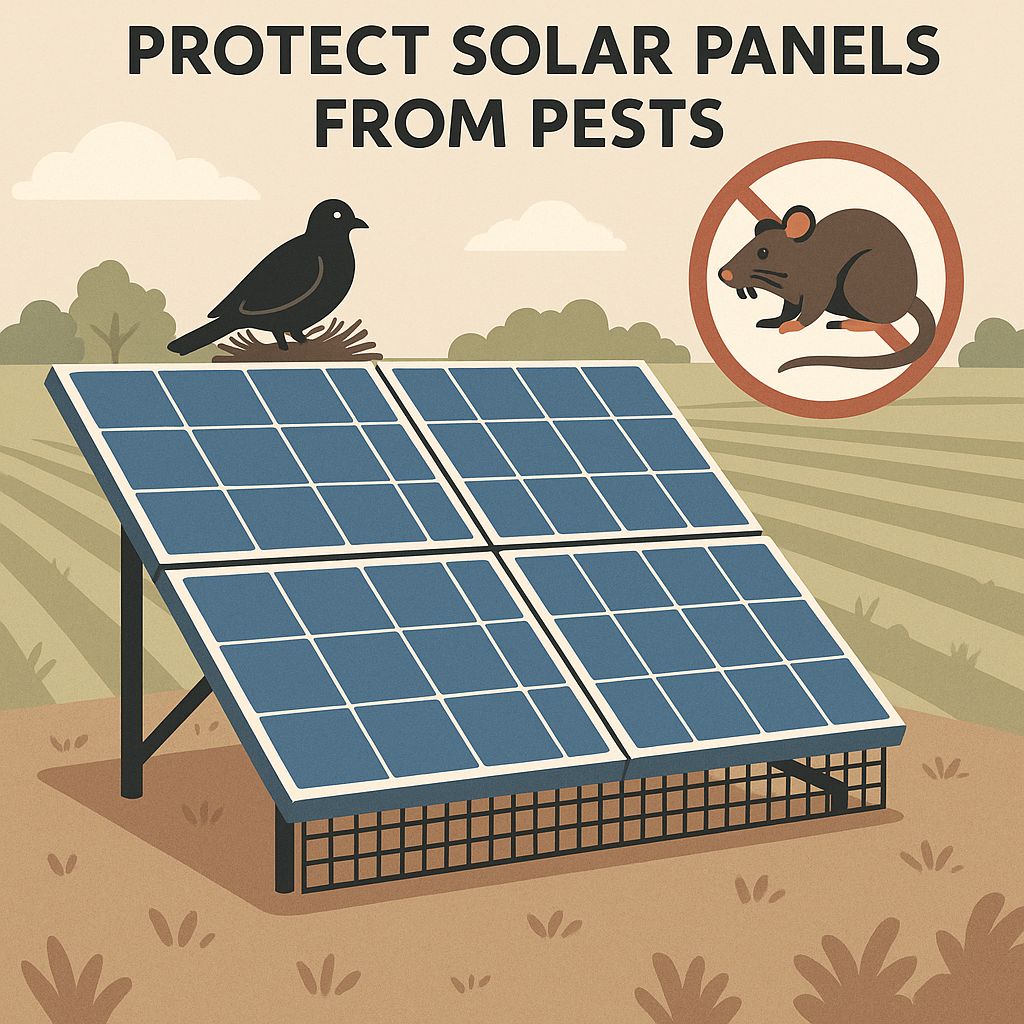
- Birds, rodents, and larger mammals are the primary culprits of solar panel damage through nesting, chewing wires, and physical impacts.
- Physical barriers like mesh critter guards and wire protection conduits offer the most reliable first line of defense against animal intrusions.
- Seasonal protection strategies must be adjusted throughout the year, with special attention to spring nesting season and fall harvest when wildlife activity increases.
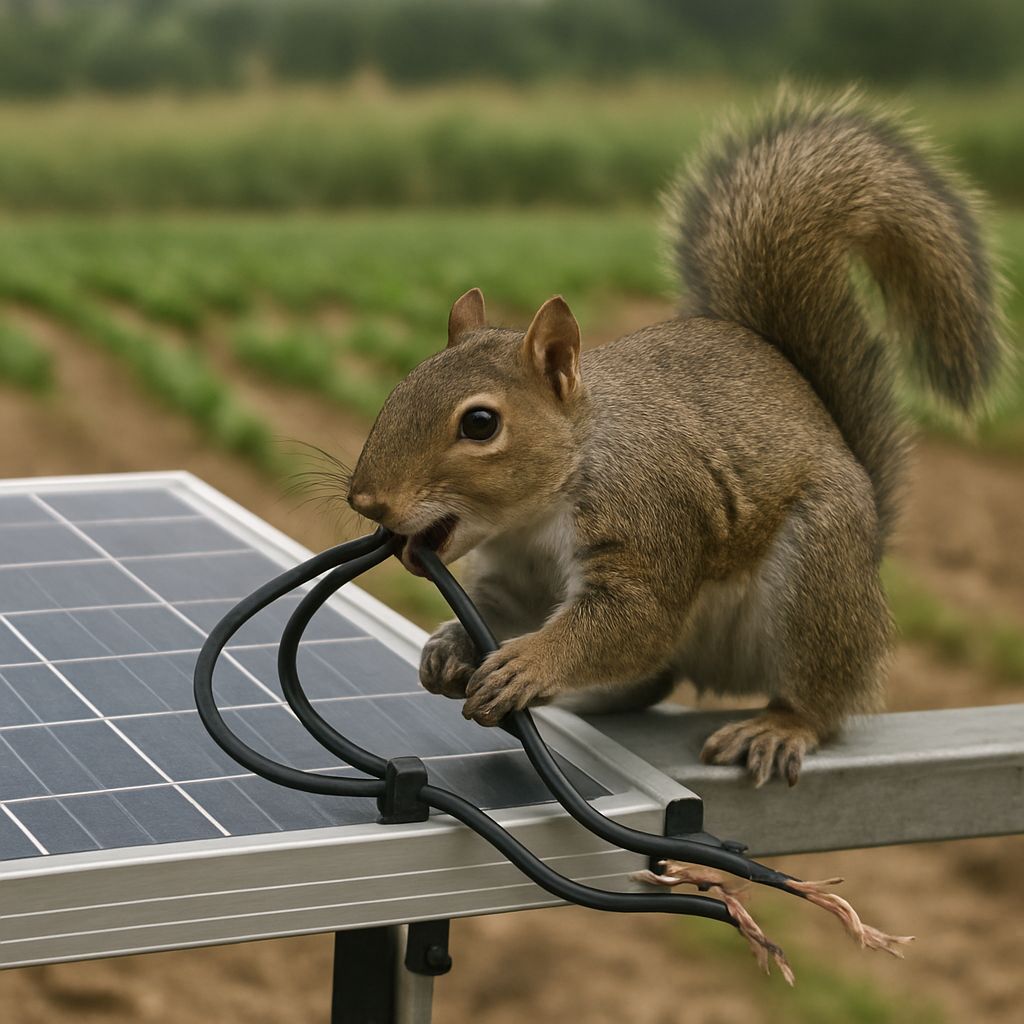
Birds, rodents, and curious mammals can wreak havoc on your farm’s solar investment in just days. A single determined squirrel can chew through critical wiring and cause system failures that leave your operation without power during crucial periods.
Your solar array represents a significant investment in your farm’s future sustainability and profitability. Without proper protection against wildlife damage, you’re essentially leaving thousands of dollars of equipment exposed to preventable risks. Let’s explore practical, farmer-tested solutions that actually work in agricultural settings.
Why Animals Attack Solar Panels: The Costly Threat to Your Farm Investment
Solar arrays create an irresistible environment for wildlife. The elevated panels provide shelter from predators and weather, while the warm underside creates an ideal nesting location. What begins as simple curiosity from local wildlife can quickly escalate to permanent residence and destructive behaviors. SolarMedix, specialists in agricultural solar protection, notes that most farmers don’t realize they have a wildlife problem until system efficiency drops or complete sections go offline.
The financial impact extends beyond simple repair costs. When critters damage your solar infrastructure, you face a triple financial hit: immediate repair expenses, system downtime during repairs, and reduced energy production that impacts your operation’s bottom line. A typical wire replacement due to rodent damage can cost $200-500 per panel, while more extensive damage to multiple components can quickly reach into thousands of dollars.
Farm environments create the perfect storm for wildlife conflicts with solar equipment. The combination of open spaces, nearby food sources, and limited human activity makes agricultural solar installations particularly vulnerable compared to residential or commercial systems. Understanding this unique vulnerability is the first step toward implementing effective protection strategies.
Common Farm Animals That Damage Solar Systems
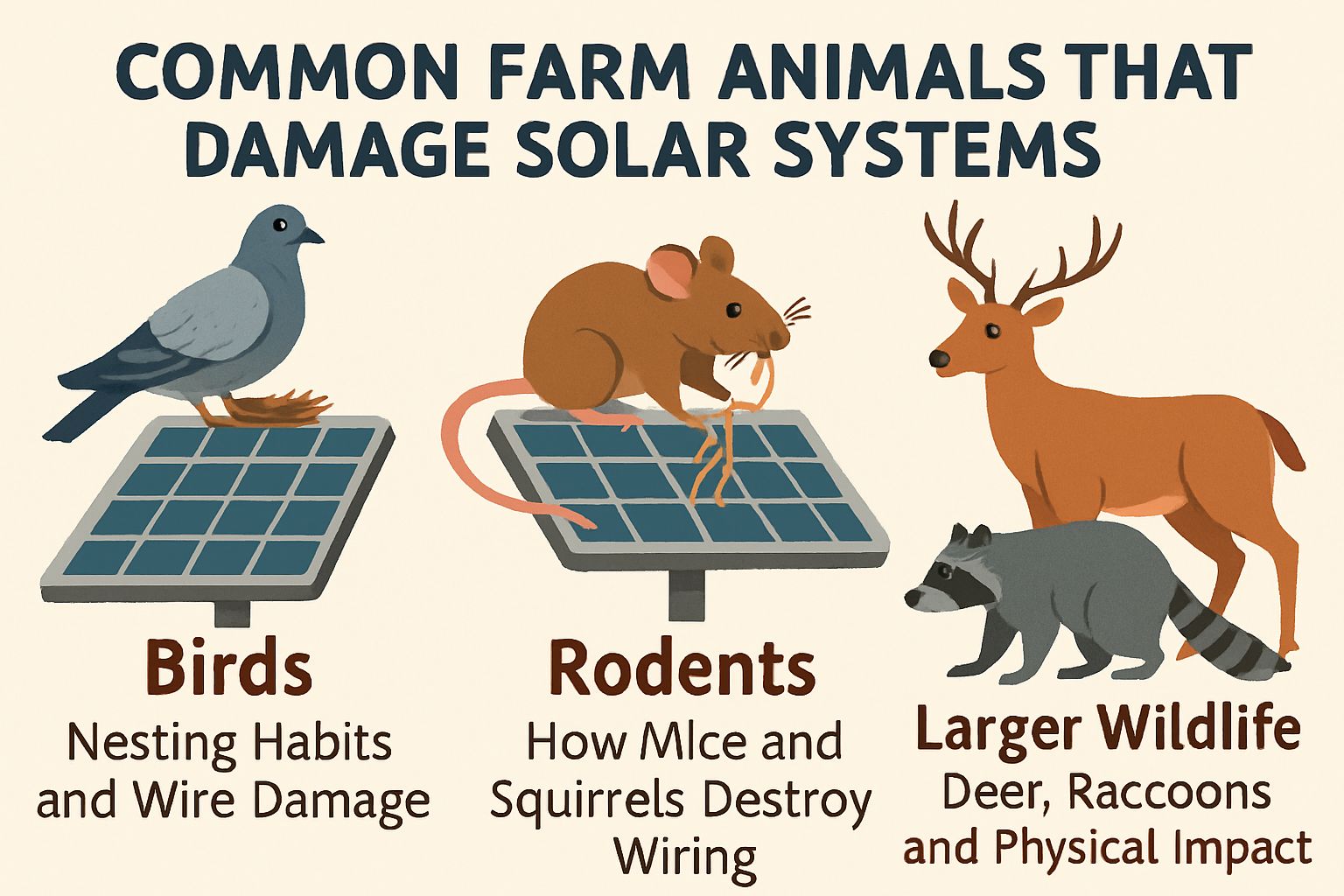
Identifying the specific wildlife threats on your property allows you to implement targeted protection measures. Different animals require different deterrent approaches, and knowing your adversaries is half the battle in effective protection.
Birds: Nesting Habits and Wire Damage
Birds pose a significant threat to solar panel systems through their nesting behaviors and acidic droppings. Pigeons and starlings particularly favor the sheltered spaces beneath panels for building nests, which block airflow and cause panels to overheat. The accumulated nesting materials trap moisture against wiring and connection points, accelerating corrosion and creating fire hazards.
The real damage comes from their droppings, which contain highly acidic compounds that erode protective coatings on panels and mounting hardware. Over time, this acidic exposure weakens critical components and creates entry points for moisture. A single season of unchecked bird activity can reduce panel efficiency by up to 30% and significantly shorten the lifespan of affected components. For farmers looking to reduce maintenance costs, solar power offers a sustainable solution.
Birds also create secondary problems by attracting predators like snakes and small mammals that cause additional damage while pursuing the nesting birds. Early intervention is critical, as established bird colonies become increasingly difficult to relocate once they’ve claimed your solar array as their territory. For more insights on how solar power cuts farmers’ maintenance costs, explore the benefits of integrating solar solutions on your farm.
Rodents: How Mice and Squirrels Destroy Wiring
Rodents present perhaps the most destructive threat to solar panel systems due to their persistent chewing behavior and ability to access seemingly protected spaces. Squirrels, mice, and rats are naturally drawn to the warm, sheltered environment beneath solar panels, especially during colder months. Their incisors grow continuously throughout their lives, creating a biological need to gnaw on hard materials – including the insulation covering your system’s wiring.
The damage pattern is distinctive: clean cuts through wire insulation followed by damage to the copper conductors themselves. Once they’ve breached the protective covering, exposed wiring creates short circuit risks and system failures. In agricultural settings where solar systems may power critical systems like irrigation pumps or ventilation, these failures can cascade into crop or livestock emergencies.
Beyond direct damage, rodents also build nests using materials they gather from nearby areas, which can include insulation, plastic components, and even parts of the solar panel backing. These nests block crucial airflow channels, causing panels to operate at higher temperatures and significantly reducing efficiency and lifespan.
Larger Wildlife: Deer, Raccoons and Physical Impact
While small animals cause incremental damage over time, larger wildlife can create catastrophic damage in a single encounter. Deer, particularly bucks during rutting season, may view their reflection in panels as territorial competition and directly attack the array. The impact force can crack panels, damage mounting hardware, or knock entire sections out of alignment.
Raccoons present a different challenge through their dexterous manipulation and problem-solving abilities. They can defeat simple barrier systems, access tight spaces between panels, and methodically dismantle components out of curiosity or while pursuing smaller prey animals. Their sharp claws can scratch panel surfaces and damage wiring as they investigate the unfamiliar structure.
Even domesticated farm animals pose risks to ground-mounted systems. Cattle and horses seeking shade or scratching posts can dislodge supports or damage cabling. Properly securing the perimeter around ground-level installations is essential for preventing these large-scale physical impacts.
Physical Barriers: Your First Line of Defense
Physical exclusion remains the most reliable and cost-effective approach to protecting solar installations from wildlife damage. Unlike chemical deterrents that require regular reapplication or electronic devices that can fail, properly installed physical barriers provide 24/7 protection with minimal maintenance requirements.
According to installation professionals, properly designed barriers prevent up to 90% of all animal-related damage to solar arrays. These systems create physical exclusion zones that prevent animals from accessing vulnerable components while maintaining necessary airflow for optimal panel performance. For more insights on improving solar efficiency, check out how solar power benefits farmers by enhancing operational efficiency.
The initial investment in quality barriers typically pays for itself within the first year through prevented damage and maintenance savings. When evaluating protection options, focus on durability, weather resistance, and compatibility with your specific panel configuration.
Mesh Critter Guards: Installation and Materials
Mesh critter guards serve as the foundation of any comprehensive solar protection system. These specially designed barriers attach to the perimeter of solar arrays, preventing animals from accessing the space beneath panels. Made from galvanized steel, aluminum, or heavy-duty UV-resistant plastics, quality mesh systems resist corrosion and degradation even in harsh agricultural environments.
Installation approaches vary based on panel configuration. For standard roof-mounted residential systems, clip-on designs that secure to panel frames without drilling provide quick installation. Agricultural installations often benefit from heavy-duty systems with reinforced attachment points that can withstand high winds and temperature extremes common in farm settings.
The mesh aperture size is critical – openings must be small enough to exclude the smallest potential invaders (typically 1/4 to 1/2 inch) while maintaining adequate airflow. Some advanced systems incorporate graduated mesh patterns that optimize both protection and ventilation. When selecting materials, consider your local climate conditions – aluminum performs well in coastal areas with salt exposure, while galvanized steel offers superior strength for areas with heavy snow loads or high winds. For more details on effective critter guards, you can refer to this comprehensive guide.
Perimeter Fencing Options for Ground-Mounted Systems
Ground-mounted solar arrays require comprehensive perimeter protection against both burrowing animals and larger wildlife. Effective fencing combines above-ground barriers with below-ground deterrents to create a complete exclusion zone. Hardware cloth extending at least 12 inches below grade prevents determined diggers from accessing your system from underneath. For farmers looking to enhance their solar setups, solar power benefits for farmers can significantly improve operational efficiency.
For areas with deer pressure, fencing should reach at least 8 feet tall with outward-facing top sections that prevent jumping. Electric fencing options offer enhanced protection, with multi-strand configurations that create psychological as well as physical barriers. Solar-powered fence energizers provide maintenance-free operation while consuming minimal power from your array.
Strategic gate placement and design prevent security breaches during maintenance access. Self-closing mechanisms and reinforced latching systems ensure that access points don’t become wildlife entry points after service visits. Remember that your protection system is only as strong as its weakest point – pay special attention to corners, gates, and transitions between different barrier types.
Bird Spikes and Deterrents for Roof Systems
Bird pressure requires specialized approaches focused on preventing perching and nesting behaviors. Stainless steel or polycarbonate bird spikes installed along panel edges create uncomfortable landing zones without harming wildlife. For established problem areas, optical gel discs that appear as fire to birds provide effective deterrence without requiring extensive hardware installation.
Strategic placement is essential for maximum effectiveness. Focus deterrents on preferred perching locations like panel edges, support brackets, and junction boxes. Visual deterrents like reflective tape or predator decoys provide supplementary protection but typically lose effectiveness over time as birds become habituated to their presence.
Wire Protection Conduits That Last
Even with comprehensive perimeter protection, dedicated wire protection provides essential backup security for your system’s most vulnerable components. Split-loom tubing reinforced with rodent-resistant compounds creates a physical barrier that discourages chewing while maintaining wire flexibility and heat dissipation. For critical connections, metal-reinforced conduit offers maximum protection against persistent chewers.
Pay special attention to transition points where wiring enters junction boxes or combiner panels. These areas often have small gaps that curious rodents can exploit. Expanding foam designed specifically for electrical applications can seal these entry points while maintaining code compliance. Remember that standard construction foams can degrade when exposed to UV light – only use products rated for outdoor electrical applications.
Tech-Based Deterrent Systems That Work
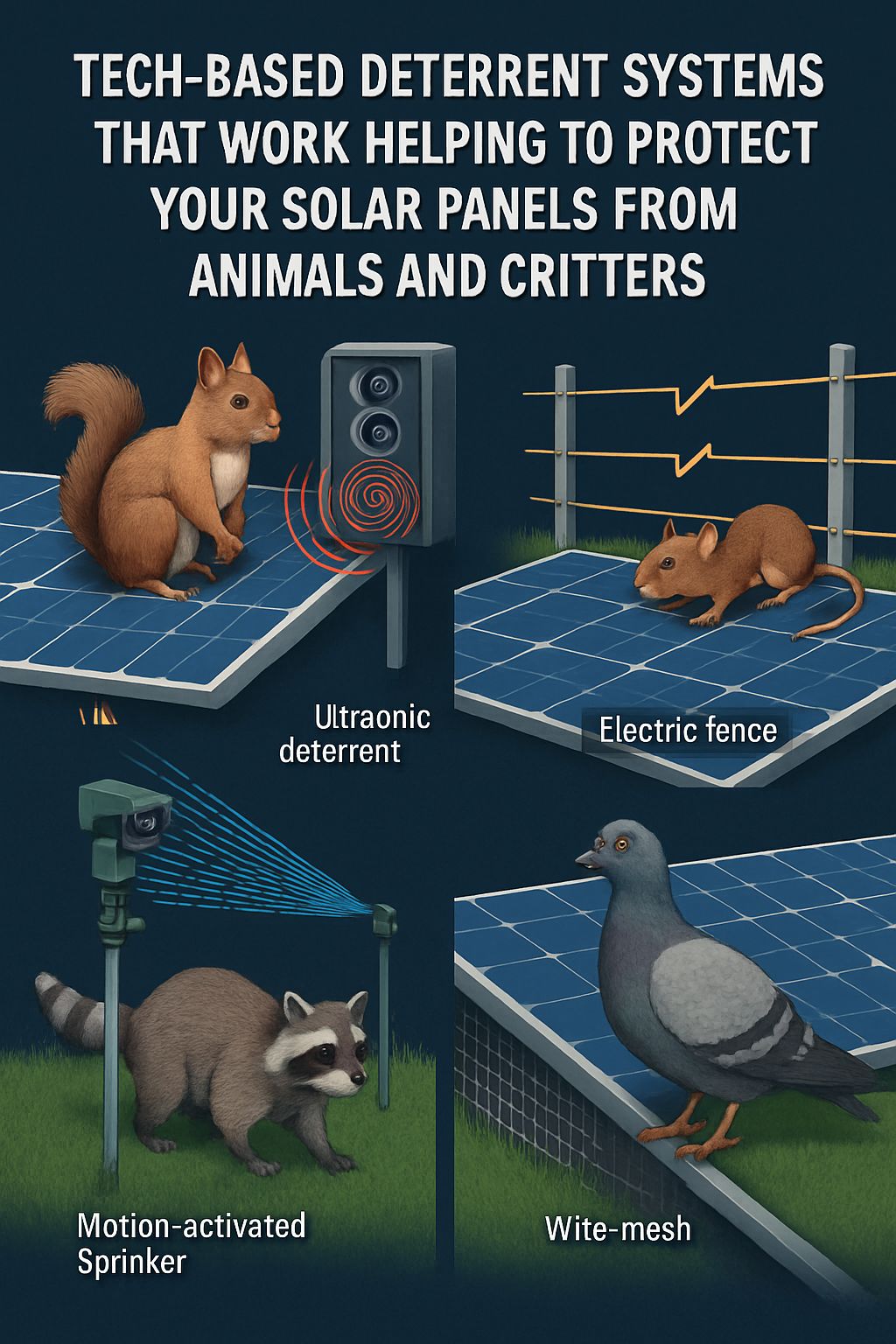
While physical barriers form your primary defense, technology-based solutions provide valuable secondary protection, especially for areas where complete physical exclusion is impractical. Modern deterrent systems leverage animal behavior patterns to create uncomfortable environments without causing harm. These systems excel at reinforcing boundaries and discouraging initial exploration of your solar equipment.
The most effective approach combines multiple sensory deterrents that target different aspects of animal behavior. Visual deterrents disrupt territorial patterns, while sound and scent-based systems trigger instinctive avoidance responses. By rotating between different deterrent types, you prevent habituation that can render single-approach systems ineffective over time.
When evaluating tech-based options, prioritize systems designed specifically for agricultural environments. Consumer-grade deterrents often lack the durability and range needed for farm-scale solar installations. Look for products with IP65 or higher weather protection ratings and robust mounting options that can withstand agricultural conditions.
Motion-Activated Sprinklers
Motion-activated sprinkler systems deliver an immediate aversive response that leverages animals’ innate startling response to sudden stimuli. These systems combine passive infrared motion sensors with targeted water discharge, creating a powerful but humane deterrent that works against multiple species. The combination of sudden movement, water spray, and activation noise creates a multi-sensory deterrent that animals rarely habituate to. For farms looking to integrate sustainable solutions, solar-powered sprinkler systems offer an efficient and eco-friendly option.
For optimal coverage around ground-mounted arrays, position units to create overlapping detection zones with special attention to common approach paths. Advanced systems offer adjustable sensitivity settings that can distinguish between small animals and larger threats, reducing false activations while maintaining protection. Battery life considerations are important for remote installations – look for solar-rechargeable units that maintain operation during extended cloudy periods.
Ultrasonic Repellers: Effective Ranges and Limitations
Ultrasonic repellers emit high-frequency sound waves that are uncomfortable to many pests while remaining inaudible to humans. These devices work best against rodents and smaller mammals but have significant limitations in agricultural settings. Effective range rarely exceeds 30-40 feet in optimal conditions, and physical barriers like vegetation or buildings can significantly reduce coverage. For maximum effectiveness, deploy multiple overlapping units and regularly change frequency patterns to prevent habituation.
Solar-Powered Motion Sensor Lights
Sudden illumination disrupts nocturnal animals’ foraging patterns and triggers predator-avoidance responses in many species. Solar-powered motion sensor lights provide 24-hour protection without requiring separate electrical connections. Modern LED arrays deliver intense illumination while drawing minimal power, making them ideal for integration into existing solar systems.
Strategic placement maximizes effectiveness – position lights to create sudden widespread illumination rather than gradual brightening that animals can adjust to. Strobing or variable patterns increase the disorientation effect, especially against persistent nighttime visitors like raccoons and opossums. For comprehensive coverage of larger arrays, network multiple units with overlapping trigger zones to prevent dark refuge areas.
Natural Repellents and Habitat Modification
Chemical and natural repellents provide an additional layer of protection when integrated with physical barriers. These solutions leverage animals’ highly developed sense of smell to create avoidance responses. Unlike harsh chemicals that can damage equipment or harm beneficial wildlife, modern repellent formulations use targeted compounds that specifically affect problem species.
The effectiveness of repellents depends heavily on consistent application and environmental conditions. Rain, irrigation, and UV exposure significantly reduce active periods, necessitating regular reapplication schedules. For maximum impact, coordinate repellent application with seasonal wildlife pressure patterns – increasing frequency during spring nesting season and fall migration periods.
Beyond direct repellents, strategic habitat modification reduces your solar array’s attractiveness to wildlife. By understanding what draws animals to your installation, you can make simple changes that encourage them to seek alternative territories without affecting your farm’s broader ecosystem balance.
Predator Urine and Scent Deterrents
Predator-based scent deterrents trigger innate fear responses in prey animals like rodents, rabbits, and deer. Commercial products containing concentrated urine from wolves, foxes, or coyotes create an impression of predator presence that discourages extended visits. These products work best when applied around perimeter areas and access points rather than directly on equipment.
For maximum effectiveness, establish a rotating schedule using different predator scents. Animals quickly habituate to static scent profiles, but variation prevents them from identifying the pattern as a false threat. Apply these products more heavily during seasonal pressure periods and immediately after detecting new animal activity around your installation. For more tips on improving farm operations, explore how solar power boosts farm efficiency.
While less concentrated than commercial products, encouraging natural predator presence through habitat management provides sustainable long-term protection. Barn owl nesting boxes positioned near (but not directly over) ground-mounted arrays create natural rodent control, while hawk perches discourage bird nesting activity through natural predation pressure. For more information on how solar panels improve crop efficiency, visit our detailed guide.
Strategic Landscaping to Reduce Wildlife Attraction
The vegetation surrounding your solar installation significantly impacts its attractiveness to wildlife. Maintaining a clear zone of 8-10 feet around arrays eliminates protective cover that animals need to feel secure when approaching infrastructure. Regular mowing or gravel installation prevents small mammals from establishing travel corridors to your equipment.
Plant selection matters tremendously when rehabilitating disturbed areas after installation. Avoid seed mixes containing animal favorites like clover or alfalfa that attract browsers. Instead, select native grasses that provide poor food value while still preventing erosion. For pollinators and beneficial insects, establish dedicated habitat areas well away from solar equipment rather than integrating them directly into array landscaping.
In agricultural settings, consider how crop rotation patterns affect wildlife pressure on nearby solar installations. Fields transitioning to harvest create temporary wildlife displacement as cover disappears. Anticipate increased pressure on solar arrays during these periods by enhancing protection measures before harvest operations begin.
Seasonal Protection Strategies for Farm Solar Panels
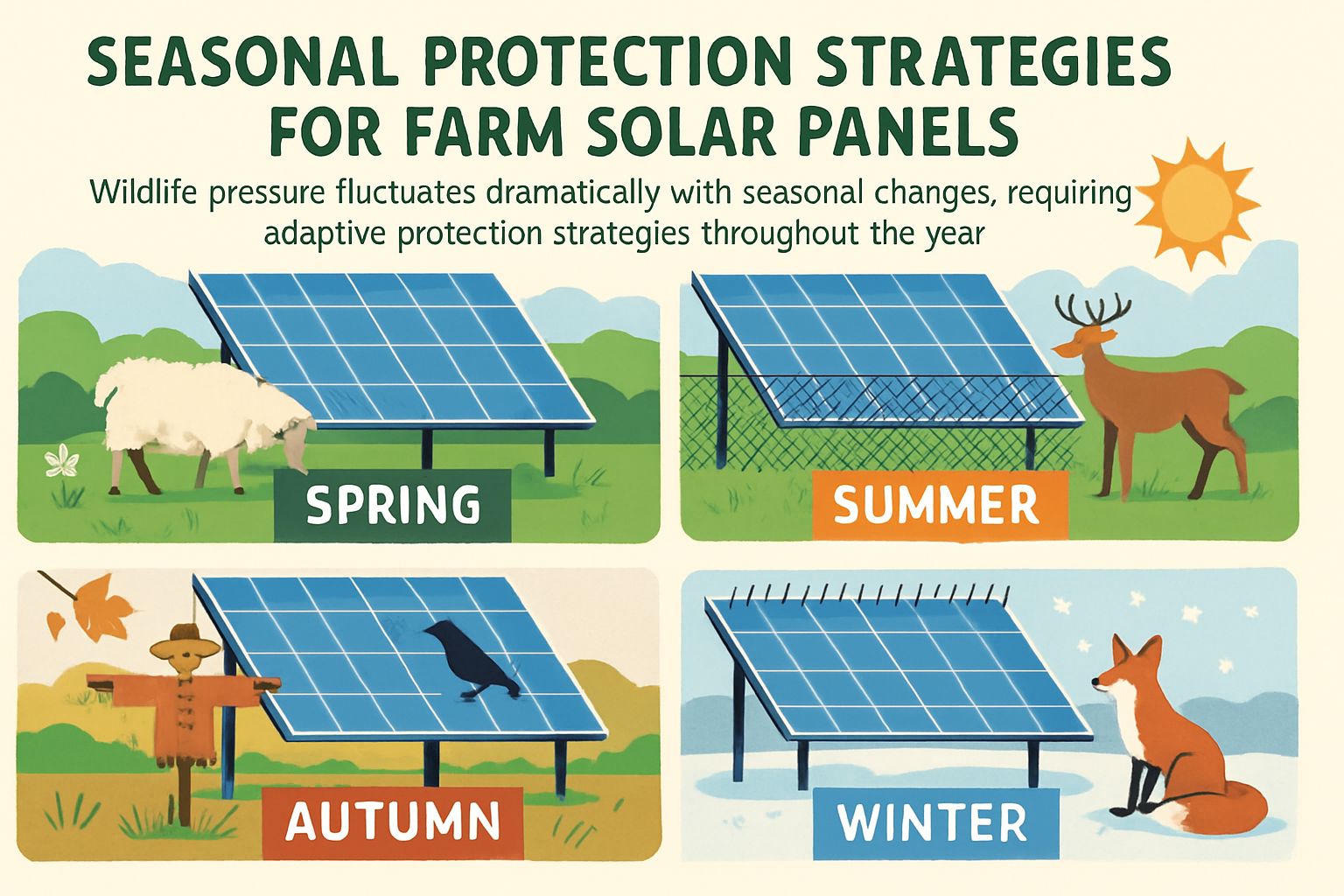
Wildlife pressure fluctuates dramatically with seasonal changes, requiring adaptive protection strategies throughout the year. Understanding these natural cycles allows you to anticipate potential problems and implement preventative measures before damage occurs. A proactive seasonal approach significantly reduces emergency repairs and system downtime.
The most successful protection strategies incorporate calendar-based maintenance with weather-triggered inspections. Major seasonal transitions require comprehensive system evaluations, while unusual weather events warrant targeted checks of specific vulnerabilities. Maintain detailed records of seasonal wildlife pressure patterns on your property to refine your approach each year. For more information on reducing maintenance costs, consider how solar power cuts farmers’ maintenance costs.
Spring Nesting Season Prevention
Spring represents the highest-risk period for new wildlife infestations as animals actively seek protected nesting sites. Begin increased vigilance in late winter before breeding pairs establish territories. Conduct comprehensive perimeter inspections to identify and repair any barrier breaches before nesting begins.
If you discover active nests during spring inspections, consult wildlife regulations before removal – many species have legal protections during breeding seasons. For unprotected species, early intervention prevents establishment of persistent colonies. Professional removal services can safely relocate animals without causing harm while implementing enhanced barriers to prevent return visitors.
Intensify repellent application schedules during spring, especially after rainfall that washes away previous treatments. Rotating between different repellent types creates uncertainty that discourages animals from adapting to your deterrent strategy. Focus special attention on south-facing array sections that warm earliest in the season and attract the first nesters.
Fall Harvest Wildlife Management
Fall crop harvest creates sudden habitat disruption that forces wildlife to seek new shelter – often within solar array structures. Anticipate this pressure by reinforcing physical barriers before harvest operations begin. Post-harvest inspection reveals whether additional animals have sought refuge in your system and allows for prompt intervention before winter weather makes repairs more challenging.
Rodent pressure increases dramatically during fall as animals prepare for winter by seeking stable shelter and creating food caches. Bait stations positioned strategically around (but not within) array perimeters intercept animals before they discover your equipment. Use tamper-resistant stations to prevent secondary exposure to non-target wildlife and livestock.
Fall represents your last opportunity for major system modifications before winter weather complicates outdoor work. Prioritize upgrades to areas that showed vulnerability during summer operations. Complete comprehensive system cleaning to remove debris accumulation that could provide nesting materials during winter months.
Winter Weather and Shelter-Seeking Animals
Winter drives desperate animals to seek shelter in any available protected space. Your solar array’s relatively warm, dry environment becomes particularly attractive during severe weather events. For more insights on safeguarding your solar panels, consider reading about critter guards for solar panels. Maintain regular inspection schedules even during cold periods, focusing on evidence of new entry attempts around perimeter barriers.
Snow accumulation creates temporary bridges over physical barriers, allowing animals to access normally protected areas. Develop snow management protocols that prevent drift formation against fencing and under panel edges. For roof-mounted systems, coordinate snow removal with barrier inspection to prevent inadvertent damage to protection systems.
Despite reduced biological activity, winter inspections remain crucial for identifying and addressing early signs of infestation before spring breeding season. Small entry points discovered and sealed during winter prevent major colonies from establishing during spring thaw. Pay special attention to cable entry points and junction boxes where even small openings can allow access to determined animals seeking warmth.
Maintenance Schedule to Keep Animals Away
Consistent maintenance forms the backbone of effective wildlife management for solar installations. Even the best protection systems degrade over time from weather exposure, UV damage, and persistent animal testing. Regular inspection and maintenance prevent minor vulnerabilities from developing into major access points.
Weekly Inspection Checklist
Quick weekly walkthroughs catch developing problems before they escalate into system failures. Focus on perimeter integrity, looking for signs of digging, chewing, or nesting activity around barrier edges. Check for droppings, tracks, or disturbed soil that indicate increased animal interest even if no damage has occurred yet.
Visual panel inspection from ground level can identify bird activity on upper surfaces before damage becomes significant. Look for accumulations of droppings on panel edges or nesting materials being transported to hidden areas. Early morning inspections often reveal overnight visitors through fresh evidence before it’s weathered away.
Monthly Maintenance Tasks
- Comprehensive barrier inspection with repair of any compromised sections
- Cleaning of panels and mounting hardware to remove droppings and debris
- Repellent application according to seasonal pressure patterns
- Vegetation management to maintain clear zones around array perimeters
- Inspection of wiring and junction boxes for early signs of rodent activity
Monthly maintenance provides the opportunity for closer component inspection than weekly walkthroughs permit. Use this time to check mounting hardware for corrosion from bird droppings or evidence of chewing on non-metallic components. Tighten any loose connections that could provide entry points for determined animals, helping to cut maintenance costs.
Performance monitoring complements physical inspection by identifying potential wildlife issues through data analysis. Sudden efficiency drops in specific panel sections often indicate debris accumulation from nesting activity even before visual confirmation. Establish baseline performance metrics for your system and investigate any departures from expected output patterns. For more insights on optimizing solar panel efficiency, explore how solar panels improve crop efficiency for farmers.
Document monthly findings in a maintenance log that tracks patterns over time. Note seasonal wildlife pressure changes, successful deterrent strategies, and areas requiring repeated attention. This documentation creates an invaluable reference for refining your protection strategy and scheduling preventative upgrades before problems develop.
Seasonal System Checks
Comprehensive seasonal inspections provide in-depth evaluation of your entire protection system. Schedule these detailed assessments to coincide with major seasonal transitions – early spring before nesting season, mid-summer during peak production, early fall before harvest pressure, and early winter before severe weather. Each seasonal check should include complete removal of accumulated debris, thorough cleaning of panels and mounting structures, and detailed inspection of all barrier components.
Include electrical testing during seasonal maintenance to identify any developing issues from wildlife damage. Insulation resistance testing can reveal early wire damage before complete system failure occurs. Thermal imaging during operation identifies hot spots that may indicate rodent damage to wiring connections or blocked airflow from nesting materials.
Seasonal maintenance provides the opportunity to implement system upgrades based on observed wildlife pressure patterns. If particular sections show repeated vulnerability, enhance protection in these areas rather than applying blanket solutions to the entire array. This targeted approach optimizes your protection investment while addressing specific threats to your system. For more insights on how solar power cuts farmers’ maintenance costs, explore our detailed article.
Farmer Case Study: Prevention Pays
After losing nearly 30% of his array capacity to squirrel damage in a single season, Iowa farmer James Peterson implemented a comprehensive protection system including mesh barriers, predator urine application, and monthly maintenance checks. His total investment of $2,800 prevented an estimated $14,500 in potential damage the following year. “The protection system paid for itself within the first six months,” Peterson reports. “Now I barely have to think about wildlife damage – the system just works.”
“How do Farmers Protect Solar Panels …” from growingsolarmist.com and used with no modifications.
Animal-Proof Your Solar Investment Today for Long-Term Savings
The financial math on solar protection is straightforward: prevention costs a fraction of repairs. A comprehensive protection system typically represents just 3-5% of your total solar investment while potentially saving 15-30% in damage-related costs over your system’s lifetime. Beyond direct repair savings, protected systems maintain optimal efficiency and avoid the production losses that inevitably accompany wildlife damage. For more insights on improving agricultural operations, explore how solar power boosts farm efficiency.
The proactive approach to wildlife management ensures your renewable energy investment delivers its full potential without interruption from preventable damage. By implementing the strategies outlined in this guide, you’ll secure your farm’s energy independence against nature’s most determined invaders. For specialized agricultural solar protection solutions designed specifically for farm installations, SolarMedix offers consultation services that analyze your specific wildlife challenges and develop customized protection plans.
Frequently Asked Questions
Solar system protection generates many questions from farm owners looking to maximize their investment protection. These answers address the most common concerns based on real-world agricultural installations and performance data. Remember that your specific situation may require customized approaches based on local wildlife patterns and system configuration.
Always consult with qualified professionals when making significant modifications to solar equipment to ensure continued warranty coverage and code compliance. Many manufacturers provide specific guidelines for approved wildlife protection measures that maintain system integrity while preventing damage.
How much damage can animals actually cause to solar panels?
Wildlife damage to agricultural solar installations frequently exceeds $5,000 per incident when accounting for equipment replacement, technician labor, and lost production during downtime. A single rodent can chew through multiple wire runs in just days, while bird colonies can affect entire array sections through droppings and nesting materials. The most severe cases often involve multiple issues compounding over time – initial wire damage creates entry points for moisture, leading to corrosion of connections and ultimately component failure that extends far beyond the original damage location.
Do insurance policies cover animal damage to solar systems?
Standard farm insurance policies typically provide limited coverage for wildlife damage to solar installations, with many carriers imposing high deductibles or excluding certain types of animal damage entirely. Policy language often distinguishes between “sudden and accidental” damage versus ongoing conditions, with many insurers classifying persistent wildlife problems as maintenance issues rather than covered incidents. For farmers looking to protect their investments, exploring solar power solutions that boost farm efficiency can be beneficial.
Review your specific policy carefully for exclusions and documentation requirements before assuming coverage exists. Many carriers require evidence of appropriate preventative measures as a condition of claim approval. Some specialized agricultural insurance providers now offer specific solar protection riders that provide enhanced coverage for wildlife damage, though these typically require documentation of prevention systems.
Insurance Industry Perspective:
“We’re seeing a significant increase in wildlife-related claims for agricultural solar installations,” reports Maria Chen, agricultural risk specialist at FarmGuard Insurance. “The carriers that continue to offer comprehensive coverage increasingly require documentation of preventative measures as a condition of policy renewal. Farms with documented protection systems typically qualify for premium discounts that offset the initial investment within 2-3 years.”
The most cost-effective approach combines quality protection systems with appropriate insurance coverage, creating multiple layers of financial security for your renewable energy investment. Document all prevention measures in detail and maintain records of regular maintenance to support potential future claims. For more information on how solar power can improve farm operations, visit our article on solar power benefits for farmers.
Can I install critter guards myself or do I need a professional?
Many basic wildlife protection systems can be successfully installed by farm operators with basic mechanical skills and appropriate safety equipment. Mesh barrier systems designed for DIY installation typically include pre-sized sections with simple attachment mechanisms that connect to existing panel frames without drilling or permanent modification. For ground-mounted systems, perimeter fencing installation uses standard agricultural fencing techniques that most farm operators already possess.
Professional installation becomes advisable for complex roof-mounted systems, specialized electrical protection components, or large-scale arrays where economy of scale justifies specialized equipment. If your solar system remains under warranty, review the manufacturer’s guidelines carefully – some warranties specifically prohibit unauthorized modifications or require certified technicians for any work affecting electrical components. For more insights on how solar power benefits farmers, consider exploring additional resources.
How do I know which animals are damaging my solar panels?
|
Animal |
Damage Pattern |
Evidence |
Recommended Protection |
|---|---|---|---|
|
Squirrels/Rodents |
Clean-cut wire damage, nesting materials |
Droppings, chew marks on plastic components |
Mesh barriers, wire conduit, predator urine |
|
Birds |
Accumulation of droppings, nesting materials in gaps |
Feathers, distinctive droppings on panels |
Bird spikes, visual deterrents, physical barriers |
|
Raccoons |
Manipulated/pulled components, systematic investigation |
Hand-like prints in dust/dirt, disturbed access points |
Heavy-duty barriers, locking components, motion lights |
|
Deer/Large Mammals |
Physical impact damage, bent mounting hardware |
Hoof prints, hair fragments, broken components |
Perimeter fencing, motion-activated deterrents |
Wildlife identification plays a crucial role in developing targeted protection strategies. Different animals require specific deterrent approaches based on their behavior patterns and physical capabilities. Trail cameras positioned strategically around your array provide valuable information about which species are investigating your equipment and when they’re most active.
Physical evidence offers additional clues to identify culprits even without direct observation. Different species leave distinctive damage patterns – rodents create clean, sharp-edged damage to wiring while birds generate accumulations of nesting materials and droppings with minimal component damage. The timing of damage also provides clues, with nocturnal visitors like raccoons and opossums leaving evidence overnight while daytime visitors like squirrels operate during daylight hours.
When analyzing damage patterns, pay attention to seasonality and weather correlations. Many wildlife pressures intensify during specific seasons or after particular weather events that disrupt normal habitat patterns. Documenting these connections helps predict future vulnerability periods and implement preventative measures before damage occurs.
Are there any animal deterrents that won’t harm wildlife?
Modern wildlife management emphasizes humane deterrence rather than harmful methods. Exclusion barriers physically prevent access without causing injury, while sensory deterrents create uncomfortable environments that animals naturally avoid without experiencing physical harm. These approaches effectively protect your equipment while maintaining ecological balance in surrounding farm environments.
Physical exclusion remains the gold standard for humane protection, creating barriers that prevent wildlife from accessing vulnerable components without risk of injury. Quality mesh systems with appropriate aperture sizes prevent entrapment while effectively blocking access. Similarly, properly designed ultrasonic and motion-activated deterrents cause temporary discomfort without lasting effects, encouraging animals to relocate to more favorable environments.



Leave a Reply