
Key Takeaways
- Solar power can reduce farm electricity costs by up to 70%, providing significant operational savings that improve the bottom line.
- Farmers using solar energy gain independence from grid outages and price fluctuations, ensuring critical farm operations remain functional year-round.
- Solar-powered equipment like irrigation systems, barn climate control, and cold storage solutions significantly enhance farm efficiency and productivity.
- Government programs like USDA REAP grants can cover up to 50% of solar installation costs, making the transition more affordable for farmers.
- Agrivoltaic systems allow farmers to simultaneously grow crops and generate electricity on the same land, maximizing land use efficiency.
Solar power is revolutionizing modern farming by cutting costs and boosting productivity across agricultural operations. As utility rates continue climbing and weather patterns become increasingly unpredictable, farmers are discovering that solar energy provides both economic security and operational resilience. The technology has matured significantly in recent years, making it more accessible and practical for farms of all sizes.
How Does Solar Energy Work
Solar power systems convert sunlight directly into electricity through photovoltaic (PV) cells made primarily of silicon. When sunlight hits these cells, it excites electrons, creating an electric current that can power farm equipment, buildings, and irrigation systems. Modern agricultural solar setups typically include panels, inverters (which convert DC power to usable AC power), and sometimes battery storage systems for energy when the sun isn’t shining.
Most farm installations use either roof-mounted systems on existing buildings or ground-mounted arrays that can be strategically placed to maximize sun exposure. The modular nature of solar technology means systems can be scaled to match specific farm energy requirements, from small operations needing just a few kilowatts to large commercial farms requiring hundreds of kilowatts of generating capacity.
Once installed, solar panels require minimal maintenance while producing clean electricity for 25-30 years or more. The systems operate silently, produce zero emissions during operation, and can withstand harsh agricultural environments when properly installed. This reliability makes solar particularly valuable for remote farm operations where grid connections are unreliable or unavailable.
Why Farmers Are Switching to Solar Energy
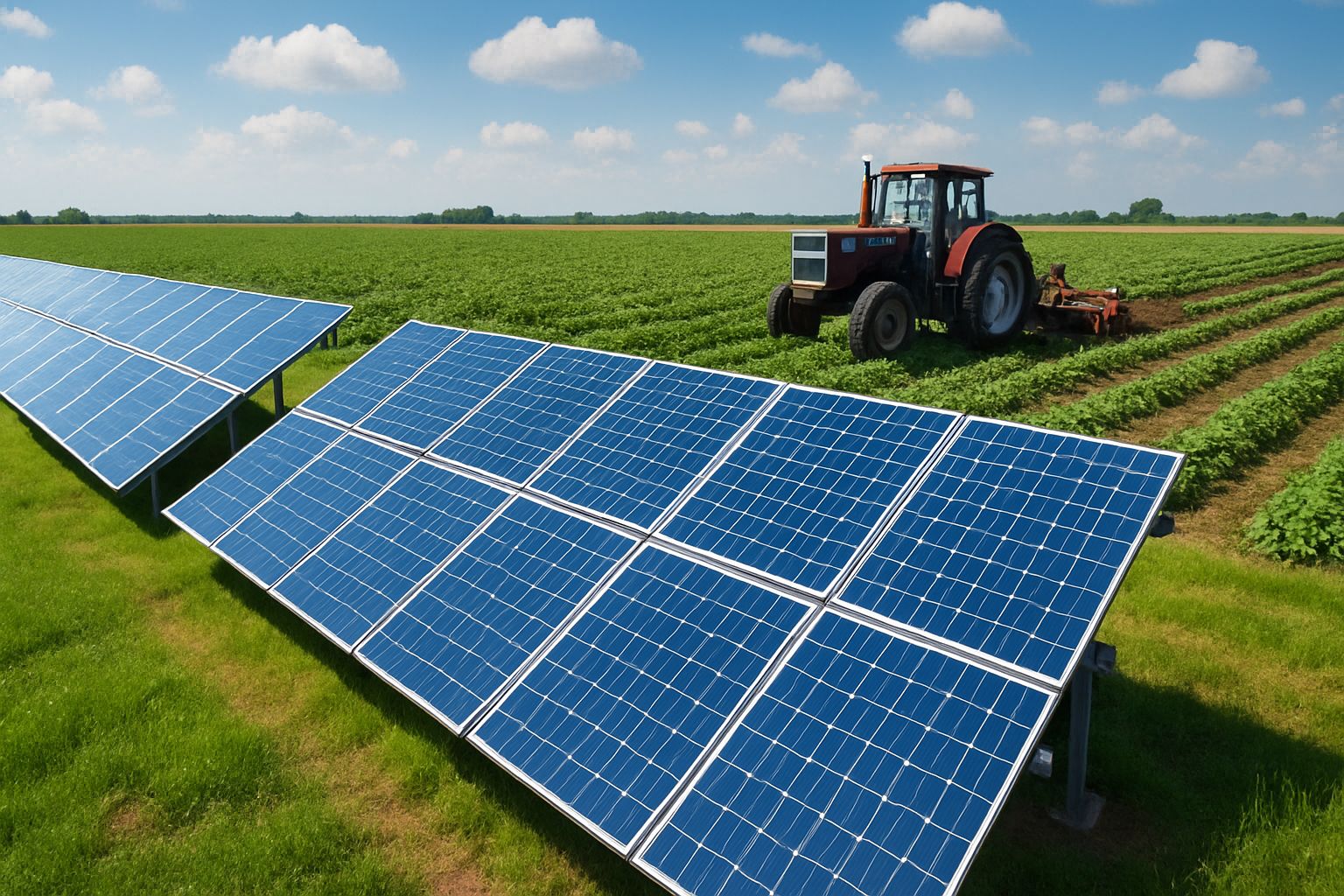
The agricultural sector is embracing solar energy at an unprecedented rate due to compelling economic and practical benefits. Beyond the obvious environmental advantages, solar power addresses several critical challenges facing modern farmers. Operational costs continue rising while commodity prices often remain unpredictable, creating financial pressure that solar can help alleviate through predictable, reduced energy expenses.
Farm operations demand consistent, reliable power for irrigation, climate control, milking operations, and cold storage. Grid outages can devastate livestock operations or ruin perishable crops. Solar systems with battery backup provide crucial energy security during critical periods, protecting farm investments when traditional power sources fail. Additionally, many farms operate in remote areas where grid connections are expensive or unreliable, making solar a practical alternative that increases farm resilience.
The agricultural sector is also increasingly focused on sustainability, with market premiums often available for products grown using renewable energy. Farms marketing their products as environmentally responsible can leverage solar installations as a visible commitment to sustainability that resonates with conscious consumers.
Cut Your Farm’s Electricity Costs by 70% with Solar Power
The financial impact of solar power on farm operations can be transformative, especially for energy-intensive operations. Dairy farms, which require continuous power for milking equipment, refrigeration, and ventilation, often see the most dramatic savings. Poultry operations with constant climate control needs and irrigated crop operations pumping large volumes of water also benefit substantially from solar investments that directly reduce monthly operating expenses.
Solar installations typically reduce farm electricity costs by 30-70% depending on system size, farm energy usage patterns, and local utility rates. These savings go straight to the bottom line, improving profitability even during challenging market conditions. For farms spending $1,000-$3,000 monthly on electricity, this can translate to tens of thousands in annual savings.
Typical Energy Cost Savings for Different Farm Types
|
Farm Type |
Average Monthly Electric Bill |
Potential Solar Savings |
Annual Cost Reduction |
|---|---|---|---|
|
Dairy (100 cows) |
$1,800-$2,500 |
50-65% |
$10,800-$19,500 |
|
Poultry (30,000 sq ft) |
$1,200-$1,800 |
60-70% |
$8,640-$15,120 |
|
Row Crops (irrigated) |
$800-$2,000 (seasonal) |
40-60% |
$3,840-$14,400 |
|
Greenhouse |
$1,500-$3,000 |
45-65% |
$8,100-$23,400 |
How Solar Protects Against Rising Utility Rates
Utility rates have increased approximately 3-5% annually in most agricultural regions, outpacing inflation and creating unpredictable operating costs. Solar power effectively locks in electricity costs for decades, creating budget certainty that helps with long-term farm planning and financial stability. When farmers generate their own electricity, each kilowatt-hour produced represents direct savings against ever-increasing utility rates.
Many utility companies offer net metering programs that credit farmers for excess electricity fed back to the grid during peak production periods. These credits can offset nighttime usage or winter consumption when solar production decreases, maximizing the financial benefit of the system throughout the year. This arrangement essentially turns the utility grid into a battery, storing the value of excess production for later use. For more insights on solar solutions, check out the best solar options for farms.
Payback Period: When Your Solar System Pays for Itself
The payback period for agricultural solar systems typically ranges from 4-10 years depending on several factors. System size and cost, available incentives, local electricity rates, and farm energy consumption patterns all influence how quickly the investment returns its value. Most modern solar systems continue producing electricity for 25-30 years, meaning farmers enjoy 15-25 years of essentially free electricity after the system has paid for itself. For those considering solar panels, exploring whether solar panels are a good investment for farmers can provide valuable insights.
Financing options including USDA-backed loans specifically for renewable energy projects can help manage upfront costs, allowing the monthly energy savings to offset loan payments from day one. This creates positive cash flow situations where farmers immediately benefit financially while building equity in their energy production assets. The combination of incentives, financing, and rising utility rates has dramatically improved the economics of solar investments for agricultural operations across all regions.
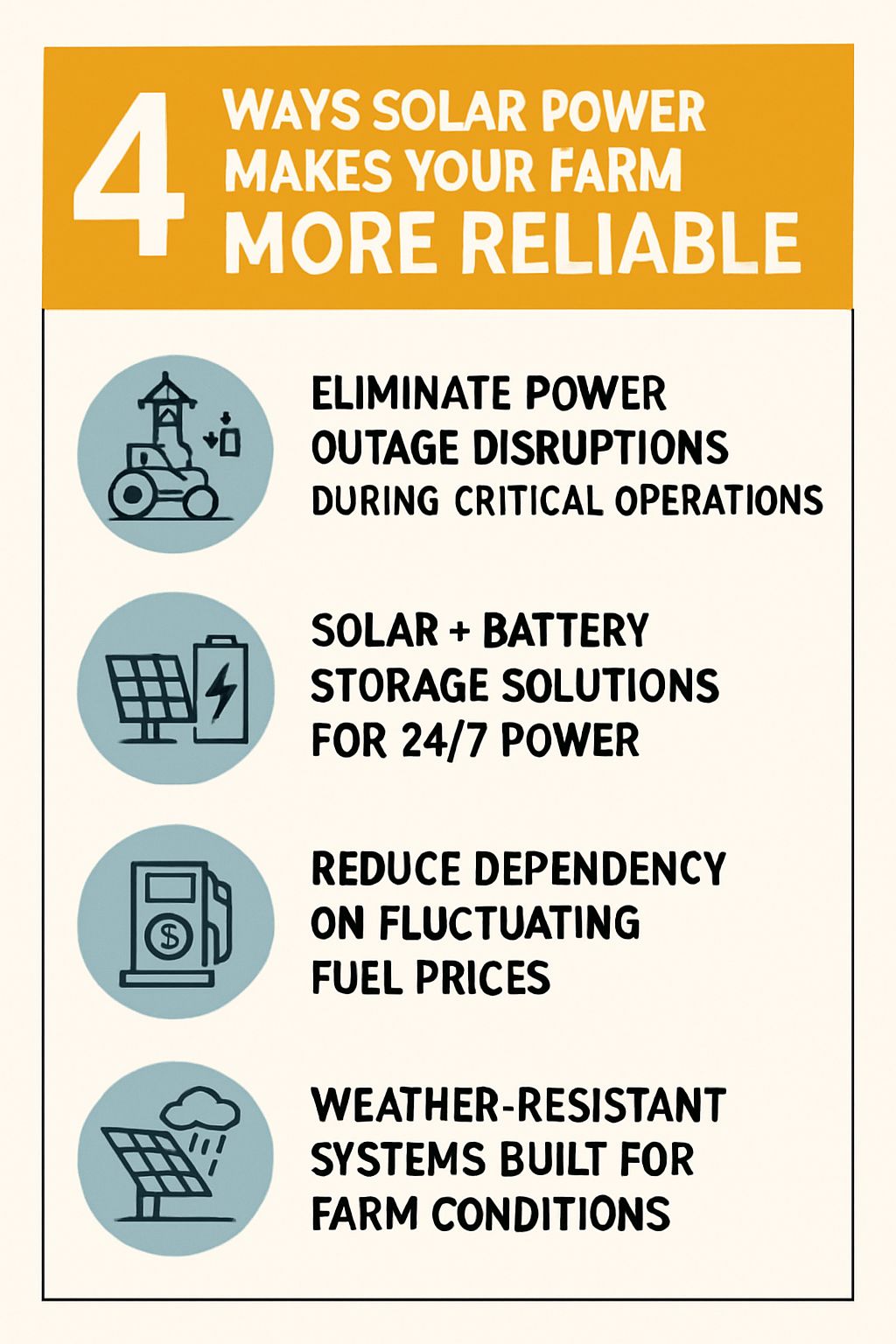
4 Ways Solar Power Makes Your Farm More Reliable
Reliability is critical in farming where timing often determines success or failure of entire seasons. Solar power enhances operational reliability through multiple mechanisms that traditional grid connections simply cannot match. By implementing solar solutions, farmers gain significant control over their energy supply, reducing vulnerability to external disruptions that can devastate farm operations.
Eliminate Power Outage Disruptions During Critical Operations
Power outages during critical farm operations can have devastating consequences. Dairy farms face immediate challenges when milking equipment shuts down, potentially causing animal distress and production losses. Poultry operations rely on continuous ventilation and climate control systems, where even brief power interruptions can lead to catastrophic losses. Irrigation schedules disrupted by outages can damage crops during crucial growth phases. Solar systems with proper backup capabilities ensure these essential operations continue regardless of grid conditions.
Solar + Battery Storage Solutions for 24/7 Power
Modern agricultural solar systems increasingly incorporate battery storage components that capture excess daytime production for nighttime use. These systems can be configured to automatically isolate from the grid during outages, creating microgrids that power critical farm infrastructure. The latest lithium-ion battery technologies provide efficient, compact energy storage solutions with 10+ year lifespans, making them practical for farm applications. Many systems can be monitored and controlled remotely via smartphone apps, allowing farmers to manage their energy systems while attending to other farm operations.
Reduce Dependency on Fluctuating Fuel Prices
Farms traditionally dependent on diesel generators for backup power or remote operations face constant exposure to volatile fuel markets. Solar systems eliminate this uncertainty by harvesting free, abundant sunlight. The predictability of solar energy costs allows for more accurate long-term financial planning and budgeting. Many farms report that freedom from fuel price anxiety represents one of the most significant psychological benefits of transitioning to solar power, particularly during periods of energy market turbulence.
Weather-Resistant Systems Built for Farm Conditions
Modern agricultural solar installations are engineered specifically for harsh farm environments, with components rated to withstand extreme temperatures, dust, moisture, and wind conditions typical of agricultural settings. Quality systems utilize marine-grade wiring connections, reinforced mounting systems tested for high wind loads, and panels designed to withstand impact from moderate hail. These systems typically require minimal maintenance beyond occasional panel cleaning and routine electrical inspections, making them practical additions to busy farm operations with limited maintenance resources. For more information on choosing the right solar panels, explore polycrystalline vs. thin-film solar panels.
Solar-Powered Equipment That Transforms Farm Operations
Beyond general electricity production, solar power enables specialized agricultural equipment that can dramatically improve operational efficiency. These purpose-built solar solutions address specific farm challenges while reducing both energy costs and environmental impact. Through targeted application of solar technology, farmers can optimize resource usage across multiple aspects of their operations, such as using solar-powered linear move irrigation systems.
1. Irrigation Systems That Cut Water Usage by 30%
Solar-powered irrigation represents one of the most transformative applications of renewable energy in agriculture. These systems pair solar arrays with efficient pump technology to move water precisely when and where it’s needed, without dependence on the grid or diesel generators. Advanced setups incorporate soil moisture sensors and weather monitoring to deliver exactly the right amount of water based on real-time conditions, eliminating waste from traditional timed watering schedules. Many farmers report water usage reductions of 30-50% after implementing solar irrigation while simultaneously improving crop yields through more consistent moisture management.
The economics of solar irrigation become particularly compelling when considering the elimination of fuel costs, pump maintenance, and labor associated with traditional systems. Remote fields previously impractical to irrigate due to grid connection costs become viable production areas with self-contained solar solutions. Modern systems can be designed with battery backup to ensure consistent operation even during cloudy periods, providing reliability that seasonal crops depend on during critical growth phases.
2. Barn Climate Control for Healthier Livestock
Livestock operations require precise environmental control to maintain animal health and productivity, particularly in dairy, poultry, and swine facilities where temperature regulation directly impacts production. Solar-powered ventilation, heating, and cooling systems provide consistent climate management while significantly reducing operational costs. These systems can incorporate smart controllers that adjust airflow and temperature based on environmental conditions, optimizing both animal comfort and energy usage without requiring constant manual adjustments.
3. Grain Drying and Storage Solutions
Post-harvest grain management represents a significant energy expense for many farms, with conventional drying systems consuming substantial electricity or propane. Solar thermal systems can supplement or replace traditional heating sources for grain drying, reducing energy costs during the critical harvest period. Low-temperature drying approaches paired with solar energy are particularly effective, allowing for more gentle moisture removal that preserves grain quality while utilizing renewable energy that aligns perfectly with harvest season availability.
4. Electric Fencing and Security Systems
Remote pastures and field boundaries often present challenges for conventional electric fencing due to lack of power infrastructure. Solar-powered fence chargers eliminate this limitation, allowing effective livestock containment anywhere on the property without running expensive power lines. These systems typically include battery storage to maintain fence integrity overnight and during cloudy periods, ensuring consistent animal control.
Beyond livestock management, solar-powered security systems provide property protection in remote farm locations. Motion-activated lighting, cameras, and alarm systems operated by independent solar power sources deter theft and vandalism without requiring grid connections. These systems can transmit alerts and video feeds to smartphones, allowing real-time monitoring of distant farm assets.
The mobility of solar security solutions provides additional flexibility, allowing systems to be relocated as security needs change throughout the growing season. Portable units can monitor equipment storage areas during winter months, then relocate to protect high-value crops during harvest season without requiring new electrical infrastructure at each location. For more information on enhancing agricultural resilience, check out this article on solar energy and food security.
5. Cold Storage for Improved Crop Preservation
Post-harvest losses significantly impact farm profitability, with inadequate cooling often responsible for product degradation before market delivery. Solar-powered refrigeration systems provide consistent temperature control for perishable crops, extending shelf life and preserving quality without the ongoing energy costs of conventional cooling. These systems prove especially valuable for organic and specialty crop producers who command premium prices for quality products delivered in optimal condition to discriminating markets.
Financing Your Farm’s Solar Transition
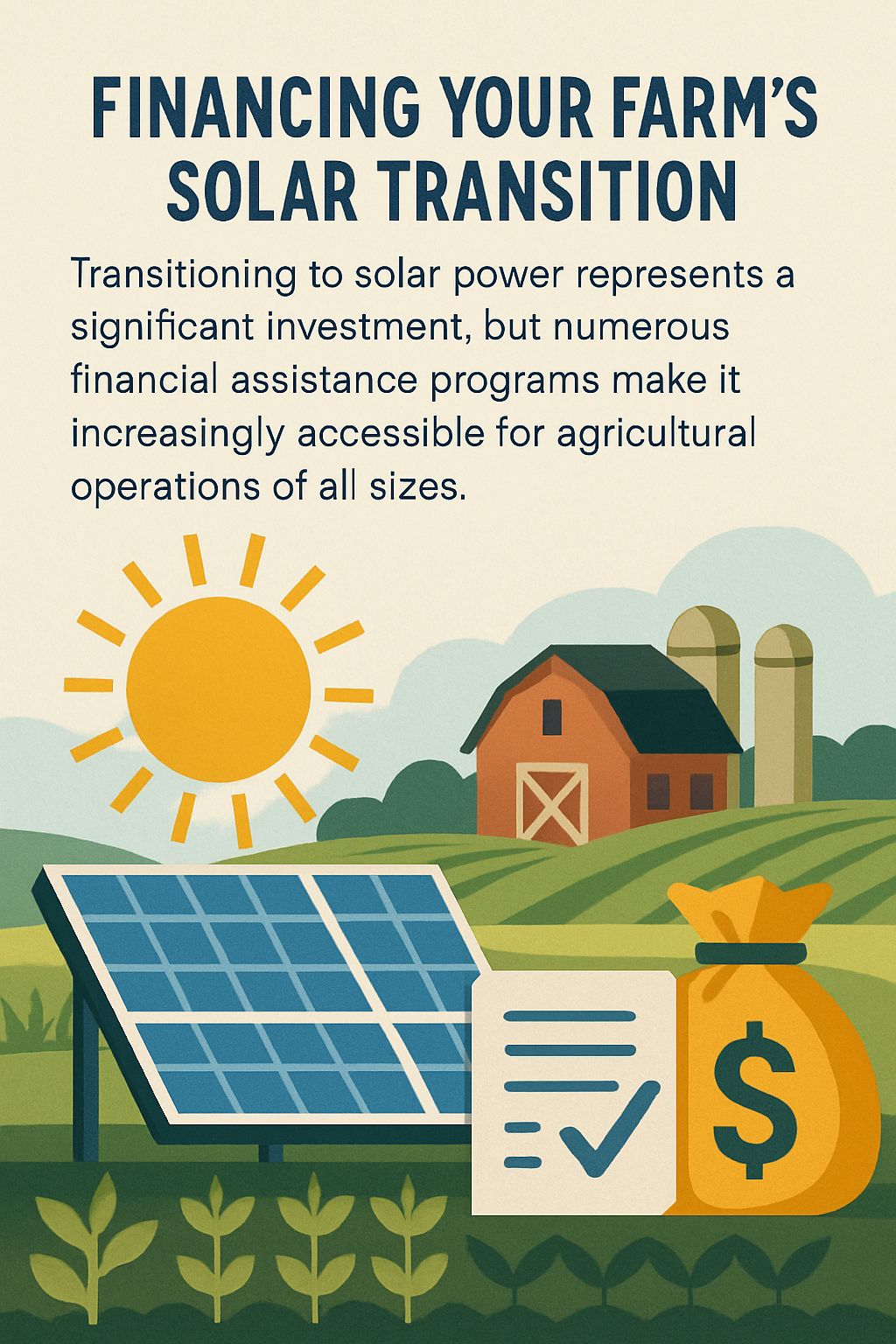
Transitioning to solar power represents a significant investment, but numerous financial assistance programs make it increasingly accessible for agricultural operations of all sizes. Understanding the available financing options is crucial for maximizing the return on solar investments while minimizing upfront costs that might otherwise be prohibitive.
USDA REAP Grants: Get Up to 50% of System Costs Covered
The USDA’s Rural Energy for America Program (REAP) stands as one of the most valuable resources for farmers considering solar installation. This program offers grants covering up to 50% of eligible system costs, with maximum awards of $500,000 for renewable energy projects. REAP also provides loan guarantees that can cover up to 75% of project costs, making financing more accessible and affordable through participating lenders. Application windows typically open twice yearly, with dedicated funding specifically earmarked for agricultural producers.
Success with REAP applications requires thorough energy audits documenting current farm energy usage and projected savings from the proposed solar system. Working with experienced grant writers familiar with USDA requirements significantly improves approval chances. Many solar installation companies specializing in agricultural applications offer assistance with the application process as part of their service package.
Federal Tax Credits and Depreciation Benefits
The federal Investment Tax Credit (ITC) currently allows farmers to deduct 30% of the cost of solar systems from their federal taxes, substantially reducing effective installation costs. This credit applies to both residential and commercial installations, with agricultural operations typically qualifying under business provisions. Unlike deductions that only reduce taxable income, this credit directly reduces dollar-for-dollar tax liability, creating significant value even for operations with modest tax burdens. For farmers considering solar, it’s worth exploring if solar panels are a good investment.
Beyond the ITC, agricultural solar installations qualify for accelerated depreciation through the Modified Accelerated Cost Recovery System (MACRS), allowing for equipment depreciation over just 5 years instead of the system’s actual 25-30 year lifespan. This creates substantial tax benefits during the initial years after installation, improving project economics and shortening the effective payback period. When combined with state-level incentives, these federal tax benefits can reduce the effective cost of solar systems by 50-60%.
State-Specific Agricultural Solar Incentives
Many states offer additional incentives specifically for agricultural solar installations that can be combined with federal programs for maximum benefit. These include production-based incentives that pay for each kilowatt-hour generated, property tax exemptions for renewable energy equipment, and specialized agricultural grant programs focusing on farm modernization and efficiency. Several states have created dedicated funding streams for agricultural solar projects recognizing their dual benefits for rural economic development and environmental sustainability.
Local agricultural extension offices often maintain current information about state-specific incentive programs and can provide valuable guidance on the application processes. Additionally, many rural electric cooperatives offer their own incentive programs for member farms installing solar systems, recognizing the grid benefits these distributed energy resources provide during peak demand periods. For farmers exploring solar options, understanding whether solar panels are a good investment can be crucial in making informed decisions.
How to Choose the Right Solar System for Your Farm
Selecting the optimal solar configuration for agricultural applications requires careful consideration of farm-specific factors including energy consumption patterns, available installation space, and operational priorities. Taking the time to properly assess these elements before installation ensures maximum return on investment and system performance aligned with actual farm needs.
Ground-Mount vs. Roof-Mount: Making the Right Choice
Ground-mounted solar arrays offer flexibility in orientation, allowing for optimal positioning toward the sun regardless of existing building alignment. These systems can be placed in otherwise unused areas like field margins, providing efficient land use while generating power. Modern ground-mount systems increasingly incorporate adjustable tilt mechanisms that can maximize seasonal production or allow for equipment clearance underneath the panels.
Roof-mounted systems utilize existing structures, preserving valuable land for agricultural production. They typically involve lower installation costs by eliminating the need for extensive ground preparation and support structures. Barn roofs, equipment sheds, and livestock housing often provide ideal south-facing surfaces with substantial square footage for panel placement. The best approach for many farms combines both methods, with roof installations on suitable existing structures and ground mounts strategically placed to complement overall energy needs.
Sizing Your System Based on Farm Energy Needs
Properly sizing a solar system begins with comprehensive analysis of at least 12 months of farm energy bills to identify both total consumption and seasonal patterns. This historical data reveals peak usage periods that often align with specific production cycles like irrigation seasons or harvest activities. Oversizing systems can lead to excessive costs without proportional benefits, while undersized installations may fail to deliver the expected financial returns by leaving too much consumption dependent on utility power.
Most agricultural operations benefit from systems designed to offset 70-90% of annual electricity consumption rather than aiming for complete energy independence. This approach maximizes financial return while minimizing battery storage requirements for operations that remain grid-connected. Energy efficiency improvements implemented before solar installation often reduce required system size, improving project economics by addressing the least expensive kilowatt-hours first through improved insulation, efficient motors, and optimized control systems. For more insights on solar solutions for agriculture, explore the best solar options for farms.
Choosing the Right Solar Panels to Use
Agricultural solar installations typically choose between three main panel technologies, each offering distinct advantages for farm applications. Monocrystalline panels provide the highest efficiency per square foot, making them ideal for limited installation spaces like equipment shed roofs. Polycrystalline panels offer better economics with slightly lower efficiency, suitable for ground-mount systems where space constraints are less significant. Thin-film technologies provide flexibility for installation on curved surfaces and better performance in extreme heat conditions typical of summer farm operations. Bifacial panels represent the newest mainstream solar technology, capturing light on both front and rear surfaces to increase energy production by 5-30% compared to traditional single-sided panels.
Panel durability considerations are particularly important in agricultural settings where dust, pollen, and airborne debris may be prevalent. Look for panels with robust tempered glass coverings, substantial hail ratings, and strong manufacturer warranties specifically covering agricultural environments. Premium panels with 25-30 year production warranties often deliver better lifetime economics despite higher initial costs by maintaining consistent output over decades of farm service.
Here is a comparison table of the four best solar panel types for agricultural use — focusing on features, efficiency, and suitability for farms.
|
Solar Panel Type |
Efficiency Range |
Cost per Watt (Approx.) |
Key Advantages for Agriculture |
Limitations |
Best Farm Applications |
|---|---|---|---|---|---|
|
Monocrystalline Panels |
17–22% 1 |
$0.90–$1.50 2 |
High efficiency, compact design, long lifespan, performs well in all climates |
Higher upfront cost |
Space-limited farms, rooftops, and irrigation systems 1 |
|
Polycrystalline Panels |
13–17% 3 |
$0.70–$1.00 3 |
Lower cost, durable, long lifespan, strong in direct sunlight |
Requires more space, less efficient in cloudy conditions | |
|
Thin-Film Panels |
10–13% 5 |
$0.50–$0.90 2 |
Lightweight, flexible, better low-light/shaded performance |
Lower efficiency, shorter lifespan |
Greenhouses, barns, shaded or irregular terrain 5 |
|
Bifacial Panels |
increase energy production by 5-30% compared to traditional single-sided panels. 6 |
$1.00–$1.60 6 |
Captures light from both sides, high energy yield, great for reflective surfaces like grass or soil |
Higher cost, more complex installation |
Agrivoltaics (dual-use with crops), open-field installations 6 |
Other Key Components for Agricultural Solar Systems
Inverter selection significantly impacts system performance and longevity in demanding farm environments. String inverters offer economical solutions for simple installations, while microinverters mounted on individual panels provide better performance when partial shading from trees or structures is unavailable. For livestock operations or dusty environments, selecting inverters with appropriate environmental ratings prevents premature component failure. Monitoring systems that track production and detect performance issues early are particularly valuable for busy farm operations where regular system inspection may be challenging during peak seasonal activities. For more insights on how solar technology can enhance farming, explore solar panels as a good investment for farmers.
Mounting systems deserve careful attention in agricultural applications where wind loads can exceed residential specifications. Enhanced structural engineering may be necessary for regions prone to extreme weather events. Livestock operations should consider raised ground-mount systems allowing animal access underneath panels, providing dual benefits of power generation and shade for grazing animals during hot periods.
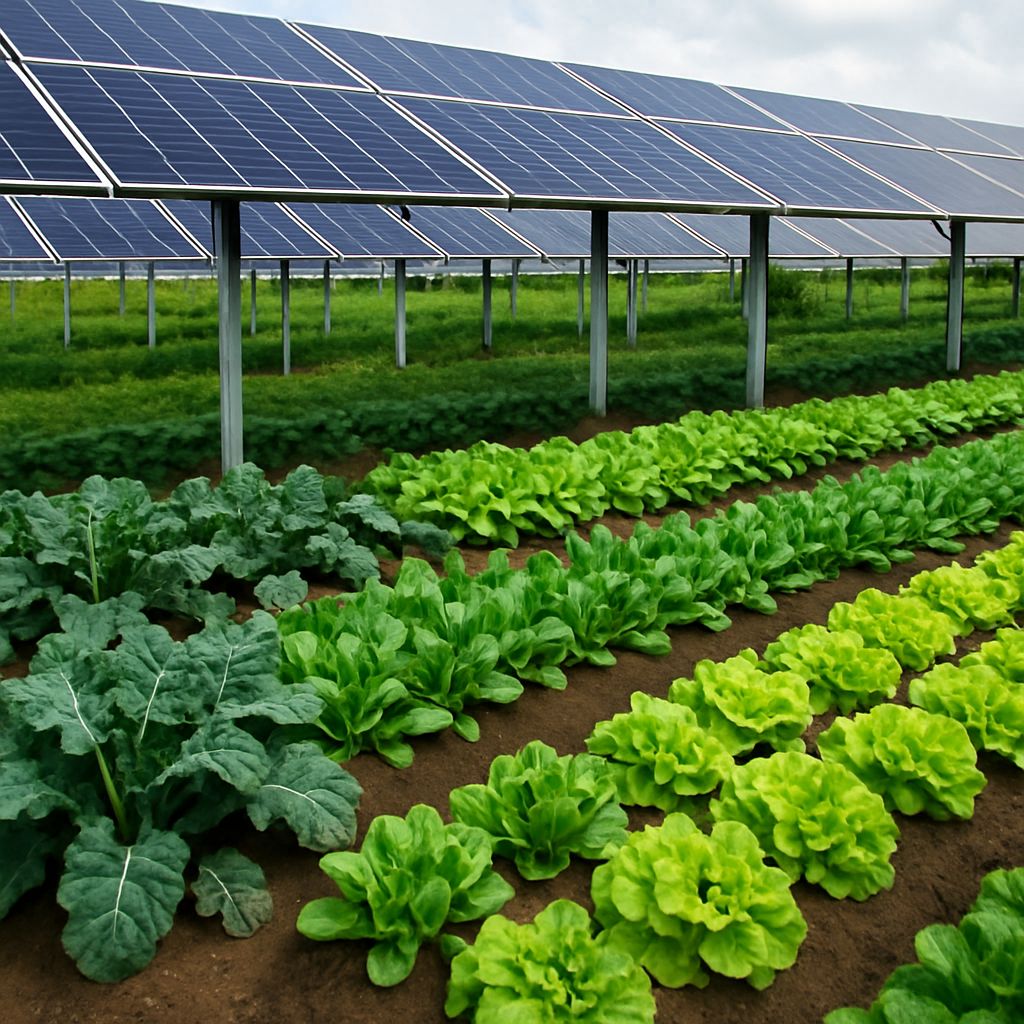
Dual-Use Solar: Grow Crops and Generate Power on the Same Land
The innovative practice of combining solar electricity generation with active crop production on the same land area, known as agrivoltaics, represents a breakthrough in agricultural land use efficiency. This approach challenges the misconception that farmers must choose between energy production and food production by demonstrating that carefully designed systems can enhance both simultaneously. The elevated panel structures create partially shaded microclimates that benefit many crop varieties while generating clean electricity that powers farm operations or provides additional revenue through utility sales.
Agrivoltaics: What Crops Thrive Under Solar Panels
Research from multiple agricultural universities has identified numerous crops that perform exceptionally well in the modified light conditions created by solar panel arrays. Leafy greens including kale, spinach, and lettuce varieties often show production increases of 20-30% under panels due to reduced heat stress and more moderate soil moisture conditions. Berry crops including blueberries, strawberries, and raspberries benefit from the partial shade conditions, often producing fruits with improved size and quality compared to full-sun plantings. Many herbs and specialty crops command premium prices specifically because they were grown in these optimized microclimate conditions, creating marketing advantages beyond the energy benefits.
Increased Land Productivity and Revenue
The economic case for agrivoltaics becomes compelling when analyzing the combined revenue streams from both electricity and crop production. Studies from the National Renewable Energy Laboratory demonstrate that total land productivity value can increase by 30-60% compared to single-use approaches. Beyond direct economic benefits, these systems demonstrate more efficient water usage, with soil moisture retention improved by 15-30% under panels, reducing irrigation requirements particularly in drought-prone regions. The partial shading can extend growing seasons for heat-sensitive crops, allowing earlier spring planting and later fall harvests that access premium market timing windows for many specialty crops.
Real Farmers, Real Results: Solar Success Stories
The Thompson family dairy farm in Wisconsin installed a 100kW solar array covering 30% of their electricity needs, combined with efficiency upgrades that reduced their energy consumption by an additional 25%. Their system qualified for a 25% REAP grant and federal tax incentives, resulting in a 4.5-year payback period. The reliability improvements proved especially valuable during regional grid outages when their operation continued milking and milk cooling without disruption, avoiding potential livestock health issues and product losses that affected neighboring farms without solar capacity.
Riverview Orchards in Washington state implemented an agrivoltaic system above their blueberry production, reporting a 22% increase in berry size and quality while generating 80% of their operation’s electricity. The dual-use approach attracted premium buyers interested in their sustainable production methods, allowing them to command prices 15% above regional averages for their crop. Beyond the marketing advantages, the farm documented reduced irrigation requirements and extended harvest seasons that improved overall profitability. Their installation serves as a regional demonstration site, attracting visitors from throughout the agricultural community interested in implementing similar systems.
Conclusion: Is Solar Power worth the investment for a Farmer
For most agricultural operations, solar power represents not just an environmental choice but a sound business decision that improves long-term profitability and operational resilience. The combination of reduced energy costs, protection against utility rate increases, improved reliability, and substantial available incentives creates compelling economics for farms across diverse production sectors. As agricultural margins continue facing pressure from rising input costs, solar investments provide one of the few opportunities to permanently reduce fixed operational expenses while simultaneously improving sustainability metrics increasingly valued in the marketplace.
Frequently Asked Questions
Farmers considering solar investments typically share common questions about implementation, economics, and practical considerations. These answers address the most frequent concerns based on actual agricultural installations and performance data.
How long do solar panels last on a farm?
Quality solar panels installed on farms typically deliver reliable performance for 25-30 years, with most manufacturers providing production warranties guaranteeing at least 80% of original output after 25 years. The actual functional lifespan often exceeds these warranty periods, with many systems continuing operation well beyond 30 years with gradually declining efficiency. Inverters typically require replacement after 10-15 years, representing the most common maintenance expense in agricultural solar systems. The durability of modern solar equipment makes it comparable to other long-term farm infrastructure investments like irrigation systems or equipment buildings in terms of useful life.
Can I still use the grid if I install solar on my farm?
Most agricultural solar installations maintain their connection to the utility grid, operating under net metering agreements that allow bidirectional energy flow. This arrangement provides significant advantages by eliminating expensive battery storage requirements for nighttime or low-production periods while still delivering substantial cost savings. The grid effectively serves as a battery, accepting excess production during sunny periods and providing power when needed. Farms can optimize their systems for overall annual production rather than sizing for worst-case scenarios, substantially improving project economics while maintaining reliable power availability.
What happens to my solar system during extreme weather?
Modern agricultural solar installations are engineered to withstand extreme weather conditions typical of farm environments. Quality systems are rated for wind loads of 120+ mph, making them capable of surviving most severe storms when properly installed. Hail resistance typically allows for impacts from 1-inch hail without damage, with actual field experience showing remarkable durability even in severe weather regions. Snow generally slides off panels installed at appropriate angles, with energy production resuming automatically as panels clear.
Lightning protection systems integrated into modern installations prevent electrical damage during storms, with proper grounding techniques essential for agricultural settings. The distributed nature of solar production means that even partial damage affects only specific system sections rather than causing complete failure, providing inherent resilience compared to centralized power sources.
Do I need to clean and maintain solar panels regularly?
Agricultural solar systems typically require minimal maintenance, with natural rainfall sufficient to clean panels in most regions. Studies show that regular cleaning typically improves annual production by only 2-5% in most agricultural areas, making scheduled cleaning economically justified only in exceptionally dusty regions or during extended drought periods. The optimal maintenance approach for most farms involves annual electrical inspections coinciding with routine panel examination, focusing resources on inverter health and connection integrity rather than frequent panel cleaning. Simple visual monitoring of system production data easily identifies when cleaning might be necessary based on unexpected performance decreases.
Can I start small and add more solar panels later?
Modular design represents one of solar energy’s significant advantages for farm applications, allowing phased implementation that aligns with capital availability and expanding operations. Starting with critical load coverage focusing on essential equipment provides immediate reliability benefits while demonstrating system performance before larger investments. Expansion planning should include appropriate inverter sizing and electrical infrastructure during initial installation to accommodate future additions without requiring complete system redesign. Many farms successfully implement 3-5 year expansion plans that systematically increase solar capacity as operations grow and capital becomes available from ongoing energy savings. For more insights, explore the investment benefits of solar panels for farmers.
Agricultural producers looking to enhance operational efficiency while reducing long-term costs should seriously consider solar power as a strategic investment. The technology has matured significantly, with proven performance across diverse farm applications and climates. When properly implemented with appropriate incentives, solar energy provides decades of reliable, low-cost electricity that improves both farm economics and environmental sustainability.
Ready to discover how solar power can transform your farming operation? Our agricultural energy specialists can provide a free assessment of your farm’s solar potential, including available incentives and expected return on investment tailored to your specific operation. Learn more about efficient farm operations with solar panels to enhance your farm’s productivity.







Leave a Reply