

- Gel lead-acid batteries offer farmers a reliable, maintenance-free solar energy storage solution with 5-7 years of service life in typical farm applications.
- Unlike flooded lead-acid batteries, gel batteries are completely sealed, eliminating the risk of acid spills that could damage expensive farm equipment or harm livestock.
- These batteries excel in extreme temperature environments, making them ideal for uncontrolled farm settings where temperatures can fluctuate significantly.
- Gel batteries typically cost 40-60% less upfront than lithium alternatives, offering an economical entry point for farmers looking to implement solar backup systems.
- With proper installation and minimal maintenance, gel batteries can help reduce diesel generator dependency by up to 70%, significantly lowering operational costs for irrigation, climate control, and cold storage.
When the sun sets or clouds roll in, your farm’s solar panels stop generating electricity. Without reliable backup power, critical systems from irrigation pumps to cold storage units can fail, potentially resulting in thousands of dollars in lost crops or livestock stress. Gel lead-acid batteries provide the dependable energy storage solution farmers need to bridge these gaps and maintain operations regardless of weather conditions or grid status.
Why Farms Need Reliable Solar Backup Power
Agricultural operations face unique energy challenges that make reliable backup power not just beneficial but essential. Modern farms rely on consistent electricity for critical functions including irrigation timing, climate control in livestock buildings, refrigeration for perishables, and security systems. When grid power fails or solar generation drops, even brief interruptions can compromise crop yields, animal welfare, and ultimately your bottom line.
The economic impact of power outages on farms can be severe. A single day without power during critical growing periods can result in crop damage worth thousands of dollars. For dairy operations, the inability to run milking systems can cause both immediate financial losses and potential health issues for livestock. These vulnerabilities make investing in reliable solar backup solutions with quality battery storage a form of operational insurance rather than merely a sustainability upgrade.
Remote farming operations face even greater energy security challenges, often dealing with unreliable grid connections or complete lack of grid access. For these farms, a solar system paired with gel lead-acid batteries creates energy independence, eliminating costly diesel generator dependencies while providing consistent, clean power regardless of location. Growing Solar Solutions has worked with hundreds of farms across the country to implement these systems, dramatically reducing operational costs while increasing resilience.
“After installing our solar system with gel battery backup, we survived three major power outages last growing season without losing a single irrigation cycle. The system paid for itself in the first year.” – James Wilson, Organic Vegetable Farmer, Idaho
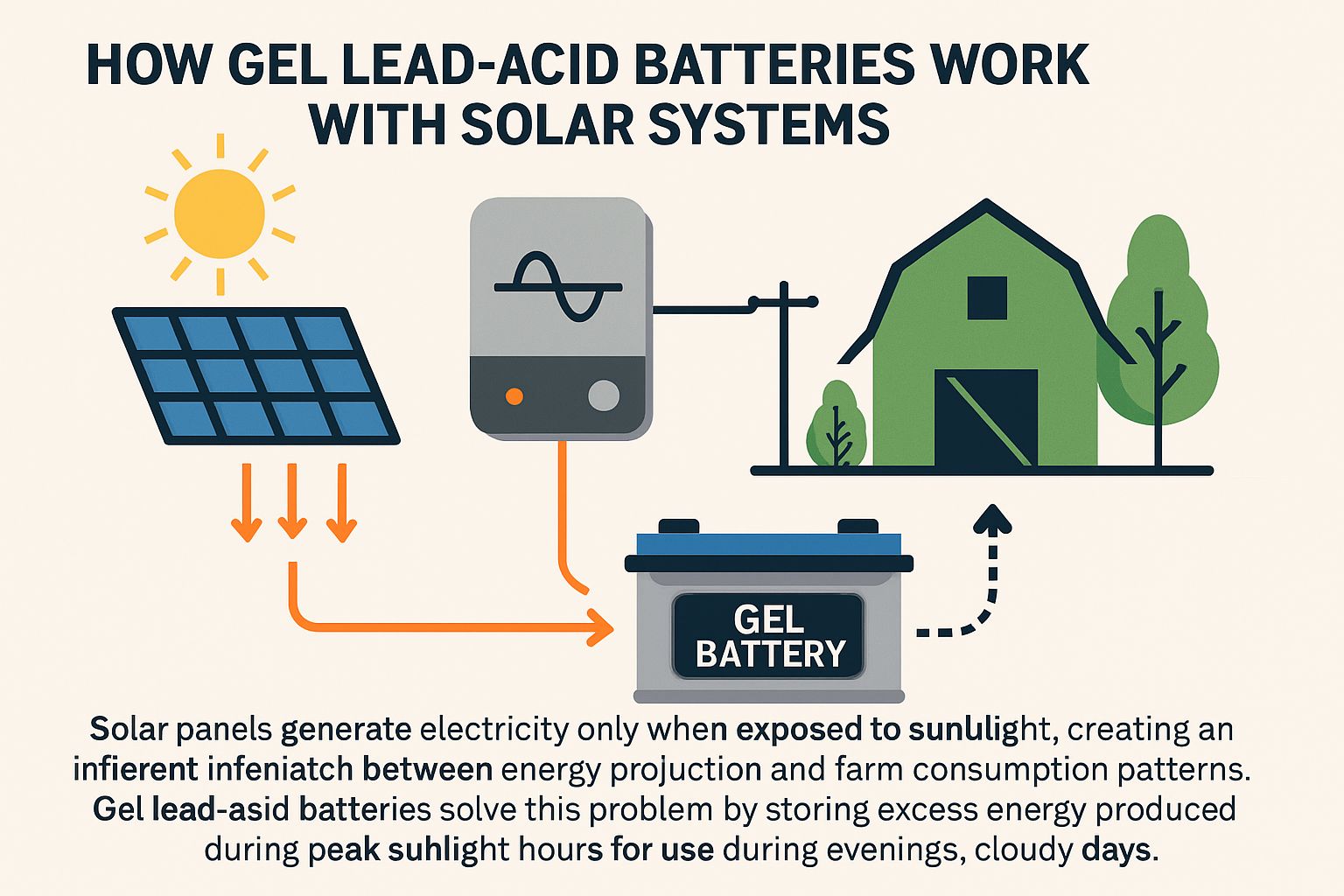
How Gel Lead-Acid Batteries Work With Solar Systems
Solar panels generate electricity only when exposed to sunlight, creating an inherent mismatch between energy production and farm consumption patterns. Gel lead-acid batteries solve this problem by storing excess energy produced during peak sunlight hours for use during evenings, cloudy days, or grid outages. The system works by routing DC power from solar panels through a charge controller, which regulates the charging process to protect the batteries from overcharging.
When your farm needs power but the solar panels aren’t producing (or aren’t producing enough), an inverter converts the DC power stored in the batteries to AC power that can run standard farm equipment. This seamless transition happens automatically with properly configured systems, ensuring continuous operation of critical farm infrastructure regardless of solar conditions.
The Science Behind Gel Batteries
Gel lead-acid batteries contain a silica gel electrolyte rather than the liquid electrolyte found in traditional flooded lead-acid batteries. This key difference transforms their performance characteristics in several important ways. The gelified electrolyte suspends the acid in a thick, non-liquid form, preventing stratification and allowing for installation in virtually any orientation without risk of leakage. For those interested in optimizing energy solutions for farms, understanding solar panel placement can further enhance efficiency.
The chemical reaction in gel batteries remains fundamentally similar to other lead-acid types—involving the conversion between lead, lead dioxide, and lead sulfate during charge and discharge cycles. However, the gel medium significantly reduces internal water loss through electrolysis and virtually eliminates gassing during charging when properly regulated. This results in a truly maintenance-free battery that never requires water additions, acid checks, or equalization charges.
The internal structure of gel batteries also includes specially designed thick plates and robust separators that enhance deep cycle capability—a critical feature for solar applications where batteries may need to provide power for extended periods. This construction allows gel batteries to withstand repeated deep discharges with minimal capacity degradation, providing reliable performance throughout their service life.
Differences Between Gel, AGM, and Flooded Lead-Acid Batteries
Farmers considering battery options for solar backup systems should understand the key differences between the three main lead-acid battery types. Flooded lead-acid batteries represent the most economical option initially but require regular maintenance including water additions, terminal cleaning, and proper ventilation to address hydrogen gas emissions. These maintenance requirements make them poorly suited for remote or unmanned installations common in agricultural settings.
AGM (Absorbent Glass Mat) batteries offer a middle ground, with the electrolyte suspended in fiberglass mats rather than free-flowing liquid. They require no maintenance and can be mounted in various positions, though not as flexibly as gel types. AGM batteries typically offer better high-current discharge capabilities than gel batteries, making them suitable for applications requiring brief periods of high power output.
Gel batteries command a premium price point but deliver superior deep cycle performance and the longest service life in typical farm applications. Their ability to handle partial state of charge operation—a common scenario in solar systems—significantly outperforms both flooded and AGM alternatives. For farms in extreme climate regions, gel batteries also offer the best temperature tolerance, maintaining performance in both very cold and very hot conditions.
Ideal Charging Parameters for Maximum Battery Life
Proper charging is critical for maximizing the lifespan of gel lead-acid batteries in farm solar applications. Unlike flooded batteries, gel batteries require precise voltage regulation during charging to prevent damage. The optimal bulk charging voltage for most 12V gel batteries falls between 14.1 and 14.4 volts, while float charging should be maintained between 13.2 and 13.8 volts. These narrower parameters compared to flooded batteries necessitate using charge controllers specifically designed for gel batteries or those with programmable settings. For more insights on optimizing farm solar systems, explore solar panel placement for farm efficiency.
Temperature compensation is another crucial aspect of charging gel batteries in farm environments where ambient conditions can vary dramatically. Most quality solar charge controllers include temperature sensors that automatically adjust charging voltages based on battery temperature – reducing voltage in hot conditions and increasing it in cold conditions. This feature alone can extend battery life by up to 50% in installations exposed to seasonal temperature extremes.
Avoiding both overcharging and deep discharging is essential for longevity. While gel batteries tolerate deep cycling better than other lead-acid types, limiting discharge to 50% of capacity will significantly extend their service life. Modern battery monitoring systems can be programmed to prevent discharges below this threshold, automatically starting generators or disconnecting non-essential loads to protect your investment.
Top 5 Benefits of Gel Batteries for Farm Solar Systems
1. Maintenance-Free Operation
The sealed design of gel batteries eliminates the time-consuming maintenance tasks required by traditional flooded lead-acid batteries. There’s no need to check electrolyte levels, add distilled water, or perform equalization charges. This maintenance-free nature makes gel batteries particularly valuable for remote agricultural operations or systems installed in difficult-to-access locations like distant pastures or irrigation pump stations. Farm operators already juggling numerous responsibilities can install these batteries and essentially forget about them, aside from occasional visual inspections.
The absence of maintenance requirements translates directly to labor savings and consistent performance. A typical flooded battery bank requires monthly maintenance that can add up to 15-20 hours of labor annually – time better spent on core farming activities. Gel batteries eliminate this ongoing commitment while providing more reliable service with less performance degradation over time.
2. Excellent Deep Cycle Performance
Gel batteries excel in applications requiring regular deep discharges, a common scenario in solar-powered farm systems. Their construction allows for 1,000+ cycles at 50% depth of discharge compared to 300-500 cycles for standard flooded batteries under similar conditions. This superior cycling capability ensures consistent performance throughout the day-night cycle and during extended periods of limited sunlight – precisely when backup power becomes most critical.
The ability to function effectively in partial state of charge operations gives gel batteries another advantage in real-world farm applications. Unlike some battery technologies that require regular full charges to prevent capacity loss, gel batteries can operate indefinitely in the 40-80% charge range common in solar applications without suffering sulfation damage. This resilience is particularly valuable during winter months when solar production may be insufficient to fully recharge batteries daily.
3. No Spill or Leak Risk in Agricultural Settings
The completely sealed construction of gel batteries eliminates any risk of acid spills – a significant advantage in agricultural environments where equipment may be subject to vibration, tilting, or even occasional impacts. Traditional flooded batteries can leak corrosive acid if tipped or damaged, potentially harming livestock, contaminating soil, or damaging expensive farm equipment. Gel batteries contain no free-flowing electrolyte, making them intrinsically safer for installation in barns, equipment sheds, and other farm buildings. For more ways to enhance farm efficiency, explore how solar power boosts farm efficiency.
This spill-proof design also enables mounting in any orientation, providing flexibility for space-constrained installations. Unlike flooded batteries that must remain upright, gel batteries can be mounted on their sides or even inverted if necessary to fit available space. This installation versatility proves valuable when retrofitting existing farm structures to accommodate battery storage.
4. Temperature Tolerance for Outdoor Installations
Gel batteries demonstrate exceptional performance across a wide temperature range, functioning effectively from -4°F to 140°F (-20°C to 60°C). This temperature tolerance makes them ideal for farm applications where batteries may be installed in unheated outbuildings, equipment sheds, or even outdoor enclosures. While extreme temperatures still affect capacity and charge acceptance, gel batteries suffer less performance degradation than other lead-acid types under these conditions.
The superior cold-weather performance of gel batteries is particularly valuable for winter operations. While all batteries lose capacity in cold temperatures, gel batteries retain up to 80% of their rated capacity at 32°F (0°C) compared to as little as 60% for conventional flooded batteries. This cold weather resilience ensures critical farm systems remain operational during winter months when heating for livestock buildings and freeze protection for water systems become essential.
5. Lower Self-Discharge Rates
Gel batteries exhibit significantly lower self-discharge rates than conventional flooded batteries – typically 1-3% per month versus 5-15% for flooded types. This characteristic makes them ideal for seasonal agricultural applications where batteries may sit unused for extended periods. Systems designed to power irrigation during summer growing seasons, for example, can remain charged and ready throughout winter without requiring maintenance charging.
The low self-discharge rate also improves overall system efficiency by reducing energy losses. In practical terms, more of the electricity generated by your solar panels ends up powering farm equipment rather than being wasted compensating for battery self-discharge. This efficiency advantage compounds over time, resulting in meaningful energy savings throughout the battery’s service life.

Real-World Farm Applications
Powering Irrigation Systems During Grid Outages
Irrigation timing is critical for crop success, and power outages during key growing periods can devastate yields. Gel battery backup systems provide uninterrupted power to irrigation pumps, controllers, and valves, ensuring watering schedules remain consistent regardless of grid reliability. For a typical 5HP pump system requiring 3,700 watts, a properly sized gel battery bank can provide 4-6 hours of runtime – sufficient to complete critical irrigation cycles during grid outages. To further enhance farm efficiency, consider how solar power boosts farm efficiency and improves agricultural operations.
Solar-powered irrigation systems backed by gel batteries also enable significant energy cost savings during normal operation. By programming irrigation to run during daylight hours when solar production is highest, farms can minimize battery cycling while avoiding expensive peak electricity rates. Some farms report reducing irrigation energy costs by 70-90% through this approach, achieving payback periods of 3-5 years for their entire solar-plus-storage system.
Climate Control for Livestock Buildings
Maintaining optimal temperatures in livestock housing is non-negotiable for animal health and productivity. When power outages occur during extreme weather, gel battery backup systems can power critical ventilation fans, heaters, or cooling systems until grid power returns. A medium-sized poultry house requiring 5-10 kW of continuous power for ventilation can operate for 8-12 hours on a properly sized gel battery bank, preventing catastrophic heat stress events that could result in significant losses.
The reliability of gel batteries in varying temperature conditions makes them particularly well-suited for livestock building applications. Unlike some battery technologies that struggle in hot environments, gel batteries maintain stable performance in the warm, humid conditions typical of animal housing. This resilience ensures ventilation systems remain operational during summer heat waves when cooling is most critical.
Many livestock farmers implement hybrid systems where critical ventilation loads are backed by gel batteries while secondary systems utilize generators during extended outages. This approach optimizes fuel efficiency by running generators at optimal loads rather than constantly to maintain minimal ventilation. The fuel savings alone can justify the investment in gel batteries within 2-3 years for larger operations.
Cold Storage for Perishable Crops
Post-harvest cold storage represents one of the most power-critical systems on produce farms. Even brief refrigeration failures can accelerate spoilage, reducing marketable crop yields and profitability. Gel battery systems provide reliable backup power for cold storage units, maintaining temperature integrity during grid outages or periods of insufficient solar production.
The deep cycle characteristics of gel batteries make them ideal for powering the high-startup current demands of refrigeration compressors. While the initial surge current when a compressor starts can be 3-5 times the running current, properly sized gel battery systems handle these demands without excessive voltage sag. This capability ensures refrigeration systems restart properly after power transitions, preventing compressor damage that can occur with less capable battery technologies.
For farms with on-site markets or CSA programs, maintaining cold chain integrity directly impacts customer satisfaction and food safety compliance. A modest 2-3 kW solar system with 10-15 kWh of gel battery storage can power essential refrigeration for 24+ hours, providing crucial protection for high-value crops during unexpected outages. Learn more about achieving farm energy independence with solar power.
Proper Sizing of Battery Banks for Farm Needs
Accurately sizing a gel battery bank requires balancing initial investment against energy security needs. Undersized systems may fail to support critical loads during extended periods without solar production, while oversized systems represent unnecessary capital expenditure. Most agricultural installations benefit from a system designed to provide 1-3 days of autonomy—the period the batteries can power essential loads without recharging.
The process begins with a comprehensive energy audit to identify critical loads that must remain operational during power outages. These typically include irrigation pumps, livestock ventilation, refrigeration, and essential lighting. Once these loads are identified, their daily energy consumption in kilowatt-hours becomes the foundation for battery bank sizing calculations.
Calculating Your Farm’s Essential Power Requirements
Begin by listing all critical equipment that must operate during power outages, noting both the wattage and daily hours of operation for each item. Multiply wattage by hours to determine daily energy requirements in watt-hours, then convert to kilowatt-hours by dividing by 1,000. For example, a 1,000-watt water pump running 3 hours daily consumes 3 kWh, while a 500-watt refrigerator running continuously consumes 12 kWh daily. To ensure you have reliable backup power, consider the benefits of lead-acid deep cycle battery backup for your farm’s solar panel system.
Next, account for system inefficiencies by multiplying your total energy requirement by 1.2 to compensate for inverter losses and other system inefficiencies. This adjusted figure represents the actual energy your battery bank must provide daily. Remember that seasonal variations may significantly impact energy requirements, particularly for climate control systems, so consider sizing based on worst-case scenarios for critical operations.
Determining Necessary Backup Duration
The appropriate backup duration depends on your farm’s specific vulnerability to power disruptions and local weather patterns affecting solar production. Farms in regions with frequent but short grid outages may need only 24 hours of autonomy, while operations in remote areas subject to extended outages might require 3-5 days. Multiplying your daily energy requirement by the desired days of autonomy provides the total energy storage needed.
Weather patterns affecting solar production also influence backup requirements. Farms in areas prone to extended cloudy periods should size battery banks accordingly, potentially increasing capacity by 30-50% to account for consecutive days with minimal solar charging. Seasonal considerations matter too—winter solar production typically falls to 30-60% of summer levels in most North American farming regions.
Battery Bank Configuration Options
Gel batteries typically come in 6V and 12V configurations, requiring series and parallel connections to achieve desired system voltages and capacity. Higher voltage systems (24V or 48V) offer greater efficiency for larger installations by reducing current levels and associated wire losses. For example, a 48V system carries one-fourth the current of a 12V system delivering the same power, allowing for smaller gauge wiring and reduced voltage drop over long distances.
When configuring battery banks, prioritize series connections to reach system voltage before adding parallel strings for increased capacity. This approach minimizes imbalances between parallel battery strings that can reduce system efficiency and battery life. For larger installations requiring multiple parallel strings, consider using string fusing and charge balancing systems to protect individual batteries and ensure even charging.
- Small systems (up to 5 kWh): Often use 12V configuration with 2-8 batteries
- Medium systems (5-15 kWh): Typically use 24V or 48V configuration with 8-24 batteries
- Large systems (15+ kWh): Almost exclusively use 48V configuration with 16+ batteries
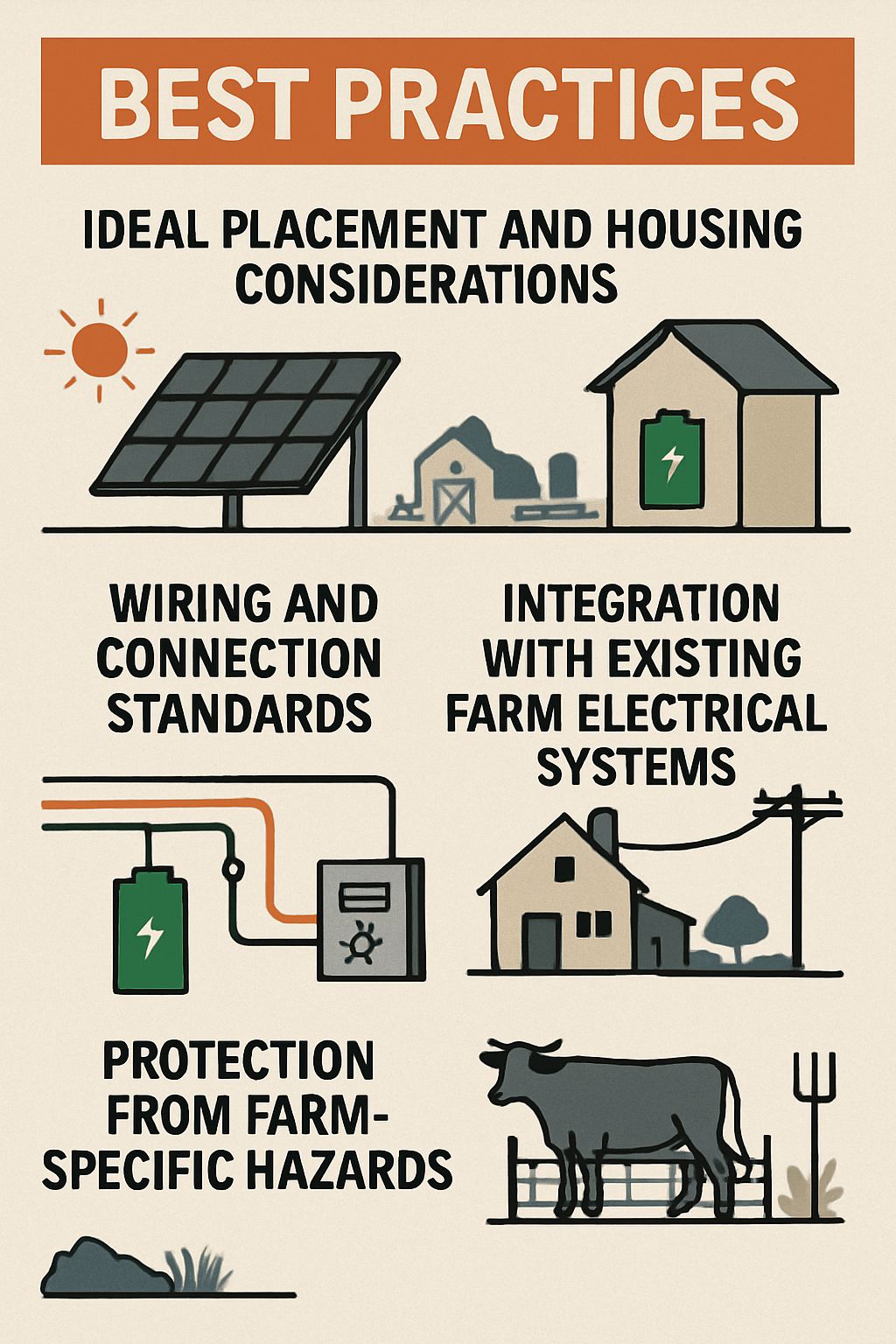
Installation Best Practices for Farm Environments
Ideal Placement and Housing Considerations
Battery location significantly impacts system performance and longevity. Install gel batteries in climate-controlled spaces whenever possible, aiming for ambient temperatures between 68-77°F (20-25°C) for optimal performance and lifespan. While gel batteries tolerate temperature extremes better than other lead-acid types, each 15°F (8°C) above 77°F (25°C) cuts battery life by approximately 50%, making temperature management a worthwhile investment.
In agricultural settings, dedicated battery enclosures often provide the best protection from environmental extremes and contamination. These enclosures should include passive ventilation to prevent heat buildup while keeping out dust, moisture, and rodents. For larger installations, consider insulated enclosures with thermostatically controlled ventilation fans to maintain moderate temperatures year-round.
Keep batteries accessible for periodic visual inspection but secured from unauthorized access. Mounting batteries on non-conductive, acid-resistant shelving elevated 12-18 inches from the floor provides protection from potential flood damage while facilitating air circulation. Ensure minimum clearance of 2 inches between batteries to prevent heat transfer and allow adequate cooling.
Wiring and Connection Standards
Use appropriately sized cables based on maximum current flow and distance to minimize voltage drop and prevent overheating. For most farm installations, battery interconnects should use flexible, fine-stranded copper cable with proper temperature rating (typically RHW, THWN, or battery-specific cable). Size interconnect cables generously—voltage drop between batteries should never exceed 0.1V during peak loads.
Connection quality dramatically impacts system performance and safety. Always use properly sized terminal connectors designed specifically for batteries, applying appropriate torque specifications (typically 9-11 ft-lbs for standard terminal bolts). After installation, coat all connections with high-quality terminal protectant to prevent corrosion that can increase resistance and generate heat.
Implement proper fusing at the battery bank level and for each parallel string in multi-string configurations. Battery disconnect switches should be installed as close to the battery bank as safely possible, providing emergency disconnection capability and simplifying maintenance procedures. Consider the additional protection of Class T or Class R fuses for faster response to short-circuit conditions.
Integration with Existing Farm Electrical Systems
Most farm solar battery systems integrate with existing electrical infrastructure through an AC-coupled or DC-coupled configuration. AC-coupled systems connect to the farm’s AC distribution panel through a battery inverter and automatic transfer switch, allowing seamless transition between grid power, solar generation, and battery backup. This configuration works well for retrofitting existing farms with minimal disruption to established electrical systems.
DC-coupled systems connect the solar array directly to the battery bank through a charge controller before conversion to AC power. This approach offers higher efficiency by eliminating one conversion step but may require more substantial modifications to existing electrical systems. For new construction or major renovations, DC-coupled configurations typically provide 5-10% higher overall system efficiency.
Regardless of coupling method, install proper monitoring systems that track battery state of charge, charging/discharging rates, and temperature. Modern monitoring solutions offer remote access via smartphone apps, providing real-time alerts if battery parameters exceed safe operating ranges. This visibility helps prevent system failures and extends battery life through early identification of developing issues.
Protection from Farm-Specific Hazards
Agricultural environments present unique challenges for battery installations, including dust, ammonia exposure in livestock buildings, vibration from equipment, and potential physical impacts. Install batteries in sealed, filtered enclosures when used near grain handling operations or livestock facilities to prevent dust and corrosive gas exposure that can degrade terminals and external battery components. For those interested in further enhancing farm efficiency, exploring solar-powered farm tools might be beneficial.
Protect battery banks from mechanical damage by installing physical barriers around installations in high-traffic areas or where farm equipment operates. Simple concrete-filled steel bollards or heavy-duty railing systems can prevent accidental impacts that might damage batteries or, worse, create hazardous short-circuit conditions.
Consider elevated mounting in areas prone to seasonal flooding or water accumulation. While gel batteries themselves resist water damage better than conventional batteries, associated electrical components remain vulnerable to moisture. Install water detection sensors in battery enclosures as an early warning system for water intrusion before damage occurs.
Maintenance and Monitoring for Long-Term Performance
Simple Inspection Routines
While gel batteries require far less maintenance than flooded types, regular visual inspections remain important for maximizing service life. Establish a monthly inspection routine checking for terminal corrosion, case swelling, excessive heat during charging, or any signs of physical damage. These simple observations can identify developing problems before they lead to battery failure or system downtime.
Clean battery tops and terminals quarterly using a mild baking soda solution on terminals with corrosion, followed by thorough drying and application of terminal protectant. Avoid using petroleum-based products that can damage battery cases. During cleaning, verify all connections remain properly tightened to manufacturer specifications, as connections can loosen over time due to thermal cycling.
Annual comprehensive inspections should include voltage testing of individual batteries to identify weakening cells before they affect system performance. A voltage variation exceeding 0.3V between batteries in the same bank indicates potential problems requiring further investigation. Professional evaluations using load testing equipment provide the most accurate assessment of remaining battery capacity and expected service life.
Battery Management Systems Worth the Investment
Modern Battery Management Systems (BMS) offer comprehensive protection and monitoring capabilities that significantly extend gel battery life in farm applications. Basic systems monitor voltage, current, and temperature, automatically adjusting charging parameters to optimize battery performance under changing conditions. Advanced systems add individual cell monitoring, active balancing, and automated reporting functions that identify failing batteries before they impact system performance.
The investment in quality BMS technology typically returns 2-3 times its cost through extended battery life and prevented system failures. For example, a $1,500 BMS investment on a medium-sized farm battery bank can extend battery service life by 1-2 years, representing $3,000-$5,000 in delayed replacement costs while providing invaluable operational data for system optimization.
Look for BMS solutions offering remote monitoring capabilities that allow tracking system performance from anywhere via smartphone or computer. This feature proves particularly valuable for seasonal operations or farms with multiple remote systems where regular physical inspection proves impractical. Many systems can send automated alerts when batteries require attention, ensuring timely intervention before minor issues become major problems.
Warning Signs of Battery Issues
Early detection of battery problems prevents cascading failures that can disable entire systems. Watch for excessive voltage drop under load, which indicates diminished capacity or internal resistance problems. Healthy gel batteries should maintain voltage above 11.7V per 12V battery under rated loads; significant drops below this threshold warrant further investigation.
Monitor charging efficiency by tracking the time required to reach full charge from a standard discharge level. Increasing charge times with consistent solar input suggest declining battery health or charging system problems. Similarly, batteries that reach “full” charge unusually quickly may have reduced capacity or internal short circuits developing. For more insights, explore factors affecting solar panels’ efficiency for farmers.
Physical warning signs include case bulging, excessive heat during charging or discharging, or unusual odors around the battery installation. These symptoms indicate potential thermal runaway conditions that require immediate attention to prevent catastrophic failure. If detected, disconnect affected batteries immediately and consult with a qualified technician before returning the system to service.
- Reduced capacity: Batteries discharge more quickly than when new under the same load
- Voltage irregularities: Resting voltage below 12.4V for a “charged” 12V battery
- Physical deformation: Any bulging, cracking, or leakage from battery cases
- Thermal issues: Batteries that become noticeably warm during normal operation
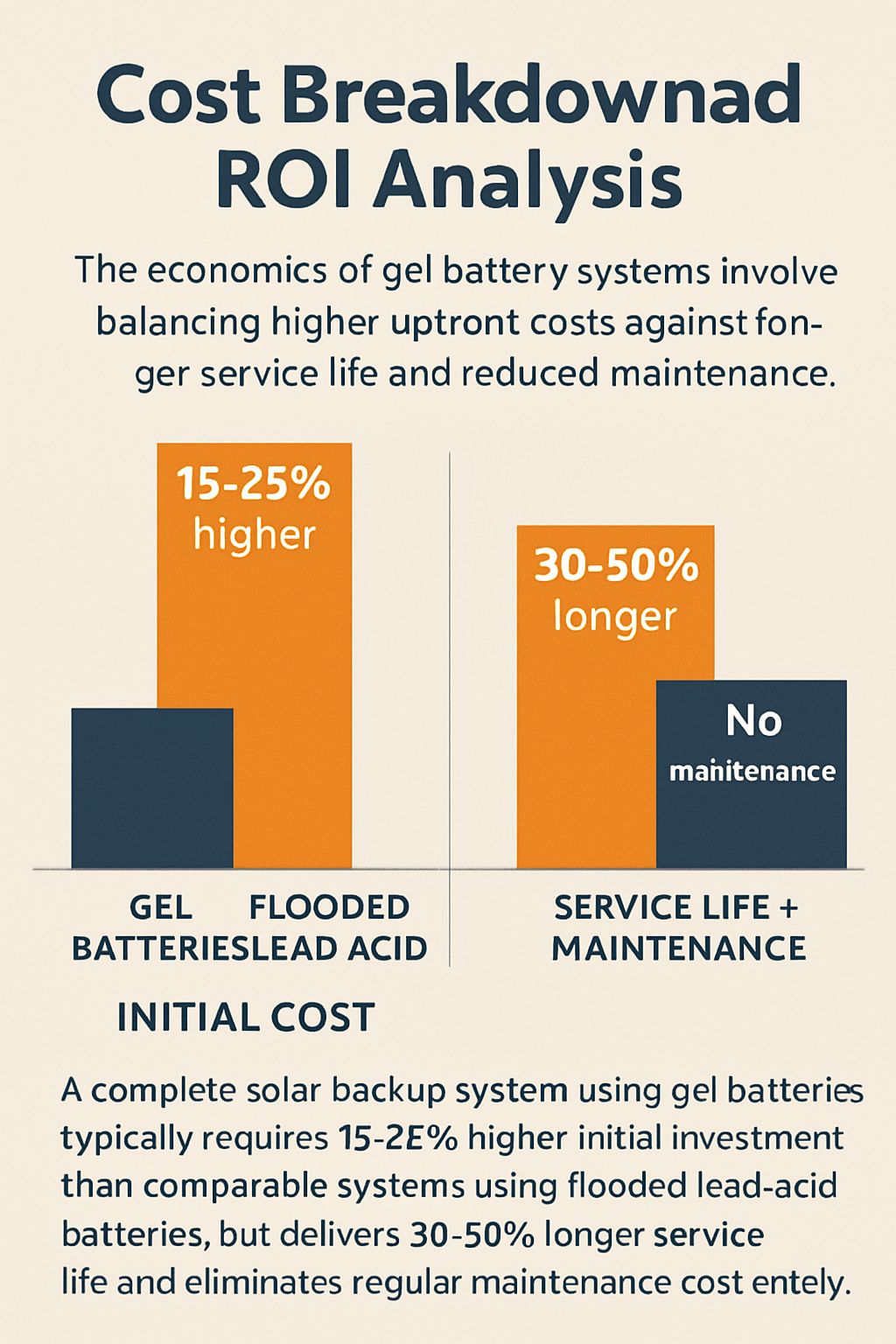
Cost Breakdown and ROI Analysis
The economics of gel battery systems involve balancing higher upfront costs against longer service life and reduced maintenance expenses. A complete solar backup system using gel batteries typically requires 15-25% higher initial investment than comparable systems using flooded lead-acid batteries, but delivers 30-50% longer service life and eliminates regular maintenance costs entirely.
When evaluating return on investment, consider both direct savings (reduced utility bills, decreased generator fuel consumption) and indirect benefits (operational continuity during outages, equipment protection from power fluctuations). Many farming operations find gel battery systems achieve positive ROI within 3-5 years through combined savings, with additional years of service representing pure economic benefit.
Initial Investment vs. Other Battery Technologies
Gel lead-acid batteries typically cost $180-$300 per kilowatt-hour of storage capacity, positioning them between flooded lead-acid ($150-$200/kWh) and lithium-ion technologies ($400-$750/kWh). For a typical 20kWh farm backup system, this represents approximately $4,000-$6,000 for gel batteries compared to $3,000-$4,000 for flooded types or $8,000-$15,000 for lithium alternatives. While gel batteries command a premium over flooded types, their maintenance-free operation and superior cycle life in partial state of charge conditions justify the additional investment for most agricultural applications.
Lifespan Considerations and Replacement Costs
Quality gel batteries properly maintained in farm solar applications typically deliver 5-7 years of service life compared to 3-5 years for flooded lead-acid alternatives. This extended service life significantly impacts lifetime system economics, reducing replacement frequency and associated labor costs. When calculating lifetime system cost, remember to factor in the residual value of used batteries, as lead-acid batteries retain recycling value ranging from $0.15-$0.25 per pound at end-of-life.
Payback Period for Typical Farm Applications
Payback periods vary significantly based on local utility rates, solar production, and specific farm operations. Irrigation-intensive farms in high electricity cost regions often see the fastest returns, with payback periods as short as 3-4 years. Livestock operations requiring continuous climate control represent another high-value application, particularly when system sizing allows for participation in demand response programs or peak shaving to avoid demand charges.
The economics improve substantially when accounting for available incentives including the federal Investment Tax Credit (currently 26%), USDA REAP grants, and state-specific agricultural energy programs. Many farmers can reduce effective system costs by 40-60% through strategic use of these incentives, dramatically improving ROI calculations and shortening payback periods to as little as 2-3 years for well-designed systems.
Case Study: Dairy Farm Saves $12,000 Annually with Solar + Gel Battery System
Hillcrest Dairy in Wisconsin implemented a 30kW solar array with 80kWh of gel battery storage to power critical milking operations and milk cooling. Prior to installation, the farm faced frequent power outages that disrupted milking schedules and threatened milk quality when cooling systems went offline. The $87,000 system (after incentives) provides uninterrupted power for milking equipment, milk cooling, and essential ventilation systems regardless of grid status.
The results proved transformative for farm operations. Annual electricity costs decreased by $8,400, while eliminated spoilage and reduced generator fuel consumption saved an additional $3,600 yearly. The system achieved payback in just over 7 years while providing operational resilience that prevented production losses during increasingly frequent weather-related outages. Of particular note, the farm experienced zero milk rejections due to cooling failures since installation, compared to three costly incidents in the previous two years that had resulted in the loss of nearly 4,000 gallons of milk.
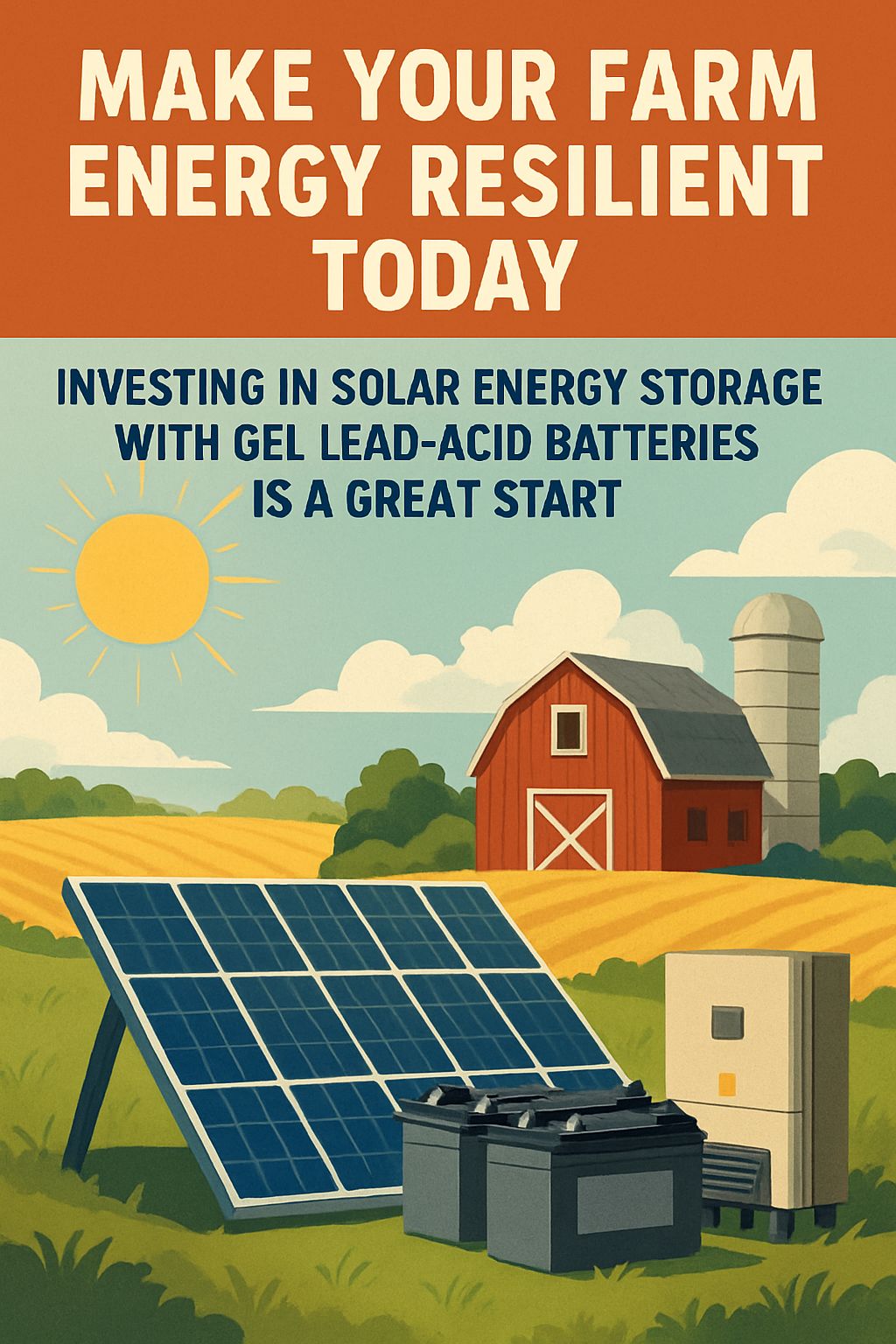
Make Your Farm Energy Resilient Today
The unpredictable nature of both weather patterns and the aging rural electrical grid makes energy resilience a critical consideration for modern farming operations. Investing in solar energy storage with gel lead-acid batteries provides both immediate operational benefits and long-term economic advantages that protect your farm’s productivity regardless of external conditions.
From irrigation systems that keep running during critical growth periods to livestock ventilation that continues uninterrupted during summer heat waves, properly designed battery backup systems transform potential disasters into minor inconveniences. The maintenance-free nature of gel batteries makes them particularly well-suited to agricultural applications where simplicity, reliability, and durability take precedence over absolute cutting-edge technology.
Begin your journey to energy independence by conducting an energy audit to identify critical systems that would benefit most from backup power. Consult with solar professionals experienced in agricultural applications to design a system tailored to your specific operational needs and budget constraints. Growing Solar Solutions specializes in designing custom solar solutions for farms of all sizes, with experts who understand the unique energy challenges facing modern agricultural operations.
Frequently Asked Questions
Farmers considering gel lead-acid batteries for solar backup systems often have similar questions about implementation, performance, and economics. Understanding these common concerns helps ensure appropriate system design and realistic expectations for system performance and maintenance requirements.
Below we address the most frequently asked questions about gel batteries in agricultural solar applications, based on our experience working with hundreds of farms across diverse agricultural sectors and climate regions. These practical insights help farmers make informed decisions about energy storage investments.
- How do gel batteries perform during seasonal temperature extremes?
- What specific maintenance is required for gel battery systems?
- Can gel batteries power heavy equipment like irrigation pumps?
- How does battery performance degrade over time?
- What safety measures should be implemented around battery installations?
For additional questions about implementing solar + storage solutions for your specific agricultural operation, contact our farm energy specialists for a personalized consultation tailored to your operational needs and energy goals.
How long do gel lead-acid batteries typically last in farm solar systems?
Quality gel batteries properly maintained in typical farm solar applications deliver 5-7 years of productive service life. This longevity depends significantly on operating conditions, particularly depth of discharge patterns and ambient temperature. Systems programmed to limit discharge to 50% of capacity may extend battery life to 7-8 years, while those routinely discharged to 80% typically achieve 4-5 years before requiring replacement. For more information on optimizing solar systems, check out our article on best solar panel placement for farm efficiency.
Temperature dramatically impacts longevity, with each 15°F (8°C) increase in average operating temperature above 77°F (25°C) potentially reducing service life by up to 50%. Farms in hot climates should prioritize temperature-controlled battery enclosures to maximize return on investment. Conversely, extremely cold installations may see reduced capacity but often experience extended calendar life due to slower chemical degradation processes. For more insights on optimizing energy systems in various climates, explore off-grid solar power systems for farms.
End-of-life for gel batteries typically occurs when capacity falls below 80% of original rating, though many agricultural applications continue using batteries until capacity drops below 60-70%. The gradual nature of capacity loss allows for planned replacement rather than emergency failure, enabling farmers to budget appropriately and schedule installation during seasonal downtime.
Can gel batteries freeze in cold farm environments?
Properly maintained gel batteries with sufficient charge levels resist freezing even in extreme cold. A fully charged gel battery can withstand temperatures down to approximately -60°F (-51°C) without freezing, while a battery discharged to 20% capacity may freeze at temperatures as high as 15°F (-9°C). This relationship between state of charge and freezing risk makes winter maintenance practices particularly important in cold climates.
For unheated outbuildings or remote installations in northern farming regions, implement automated charging programs that maintain higher minimum charge levels during winter months. Programming your charge controller to maintain at least 80% minimum charge during winter provides substantial freeze protection while minimizing any impact on battery longevity from the slightly higher float voltage.
While the electrolyte in gel batteries resists freezing better than flooded types, the physical battery case remains vulnerable to damage from expansion if freezing occurs. If batteries will experience extreme cold, insulated battery enclosures provide valuable protection. Simple passive measures like surrounding battery banks with straw bales in unheated structures can moderate temperature extremes sufficiently to prevent freezing in most agricultural settings.
Are there any safety concerns with gel batteries around livestock?
Gel batteries present minimal safety risks in livestock environments when properly installed. Their sealed construction eliminates acid spill concerns and prevents the release of hydrogen gas during normal operation—both significant advantages over flooded lead-acid alternatives in confined livestock buildings. However, certain precautions remain important for maximizing safety in agricultural installations. For more on how to optimize energy solutions for farms, consider exploring off-grid solar power systems.
Always install batteries in protective enclosures that prevent direct animal contact with terminals and electrical connections. While the batteries themselves are sealed, exposed terminals present electrical shock hazards and potential short-circuit risks if contacted by metal equipment or livestock containment hardware. Simple lockable enclosures provide adequate protection while maintaining necessary ventilation.
What’s the difference in cost between gel batteries and lithium batteries for farm solar systems?
Gel lead-acid batteries typically cost 40-60% less upfront than comparable lithium systems, with installed costs averaging $180-$300 per kilowatt-hour compared to $400-$750 for lithium technologies. This substantial initial price advantage makes gel batteries particularly attractive for budget-conscious farm implementations seeking to maximize storage capacity per dollar invested. However, the lifetime cost comparison becomes more complex when considering cycle life, efficiency, and maintenance requirements over the system’s operational lifespan.
Can I mix old and new gel batteries in my farm’s solar backup system?
Mixing batteries of different ages in the same bank is generally not recommended as it reduces overall system performance and accelerates degradation of newer batteries. Older batteries typically have higher internal resistance and reduced capacity, creating imbalances that force newer batteries to work harder, effectively reducing their useful life. When battery replacement becomes necessary, replace entire strings to maintain balanced charging and discharging.
If budget constraints necessitate partial replacement, isolate old and new batteries into separate parallel strings with individual charge controllers when possible. This configuration allows each battery group to operate independently at its optimal charging parameters. When this separation isn’t feasible, at minimum ensure all replacement batteries match the original specifications exactly—including manufacturer, model, and ampere-hour rating. For more insights on optimizing solar power usage, explore how solar power boosts farm efficiency and improves agricultural operations.
For farms planning system expansion rather than replacement, consider installing new batteries as a separate bank with dedicated charge controller and inverter. This approach allows independent operation while providing the opportunity to gradually transition critical loads to the new system as older batteries reach end-of-life. Growing Solar Solutions can help design expandable systems that accommodate future growth while maximizing the service life of each component.




Leave a Reply