

Key Takeaways
- Solar panels can reduce farm operating costs by 40-75%, providing significant long-term savings against rising utility prices.
- Agrivoltaics allows farmers to generate electricity while simultaneously using the same land for crop production or livestock grazing.
- USDA REAP grants and federal tax incentives can cover up to 50% of installation costs for agricultural solar systems.
- Solar-powered irrigation systems operate at peak efficiency during summer months when water demands are highest.
- Farms utilizing solar energy report improved crop yields for certain shade-tolerant plants grown beneath panel arrays.
The landscape of modern agriculture is evolving rapidly as farmers face mounting pressure from rising energy costs and climate challenges. Solar energy is emerging as a game-changing solution that addresses both economic and environmental concerns facing today’s agricultural operations. By integrating photovoltaic technology into farming practices, producers are discovering new paths to sustainability and profitability that weren’t possible a decade ago.
How Solar Panels Are Changing Farm Economics Forever
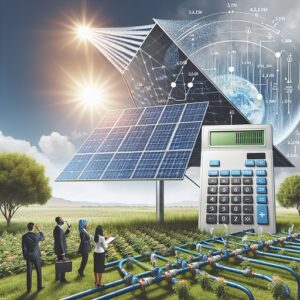
The economics of farming have always operated on thin margins, but solar power is rewriting this equation in favor of producers. When properly implemented, solar installations can transform a farm’s largest expense category into a fixed, predictable cost or even a revenue stream. This shift from energy consumer to energy producer represents perhaps the most significant operational change in agriculture since the mechanization era.
For family farms struggling to maintain viability amid volatile markets, solar offers a path to energy independence that stabilizes one of their most unpredictable costs. With electricity typically representing 8-12% of operational expenses, solar installations provide immediate relief while creating long-term financial security that can extend across generations of farm ownership.

Rising Energy Costs Threaten Farm Profitability
Energy expenses have been climbing steadily across agricultural sectors, outpacing inflation and creating significant pressure on farm profitability. From dairy operations running cooling systems to irrigated crop production, the rising cost of traditional electricity threatens to erode already tight profit margins that farmers depend on for survival. Exploring sustainable energy solutions can be a viable way to mitigate these rising costs.
Why Traditional Electricity Is Becoming Unsustainable
Traditional electricity delivery to rural areas has always come at a premium, but recent infrastructure upgrades and fuel price volatility have accelerated this trend. Many farmers are seeing annual increases of 5-8% in their electricity rates with little ability to negotiate better terms from rural utility providers. This constant upward trajectory makes long-term planning difficult and places farms at a competitive disadvantage compared to operations in regions with more stable energy prices.
The aging grid infrastructure in many agricultural regions also means reliability issues are increasing just as farming operations become more dependent on consistent power. Unplanned outages during critical periods like harvest or extreme weather events can lead to substantial financial losses that might have been prevented with energy independence.
The Hidden Costs of Grid Dependency for Farmers
Beyond the direct expense of electricity bills, grid dependency carries hidden costs that many farmers don’t fully calculate. Demand charges during peak usage periods can dramatically increase costs, especially for operations that require significant power for irrigation, refrigeration, or drying facilities. These charges often apply even when the actual energy consumption remains unchanged, simply because usage coincides with high-demand periods.
Line extension fees and service upgrades represent another significant expense for expanding operations. When farms need to increase their electrical capacity, utility companies typically pass these infrastructure costs directly to the farmer. These one-time expenses can range from $10,000 to over $100,000 depending on location and required capacity.
The volatility in energy markets also makes budgeting extremely difficult. Unlike many farm inputs where futures contracts can lock in prices, electricity costs remain subject to unexpected surges that can devastate cash flow during critical operational periods.
“After installing our 75kW solar array, we reduced our annual electricity expenses by 63%. The system will pay for itself in under 7 years, and after that, it’s essentially free power for the next two decades. No other farm investment delivers that kind of return while simultaneously reducing our environmental impact.” — Mark Henderson, Third-generation dairy farmer
Weather Volatility and Energy Demand Spikes
Climate change has introduced new patterns of weather extremes that directly impact farm energy consumption. Extended heat waves increase cooling demands for livestock operations, while drought conditions intensify irrigation requirements. These weather events often create energy demand spikes precisely when grid electricity is most expensive and least reliable.
The unfortunate reality is that traditional energy infrastructure wasn’t designed to handle these new patterns of use. When entire agricultural regions face the same weather challenges simultaneously, the resulting surge in electricity demand can overwhelm local grids. Solar power with battery storage capabilities provides critical resilience during these high-stress periods, ensuring operations can continue uninterrupted regardless of grid conditions.
Solar Power Solutions for Different Farm Types
Solar energy systems can be customized to address the specific energy requirements of various agricultural operations. From dairy to poultry to crop production, each farm type benefits from solar integration in unique ways that address their particular energy consumption patterns and operational needs.
The scalability of modern solar technology allows systems to be precisely sized to match a farm’s energy profile, ensuring optimal return on investment regardless of operation size. Even farms with limited roof space can often benefit from ground-mounted systems strategically placed on less productive land.
Dairy Farm Applications: Cooling and Equipment
Dairy operations represent some of the most energy-intensive farming activities, with milk cooling, vacuum pumps, and water heating accounting for up to 75% of electricity usage. Solar power is particularly well-suited for dairy farms because peak production typically coincides with summer months when solar generation is at its highest. Vacuum pumps for milking systems consume consistent power throughout the day, making them ideal candidates for direct solar powering.
Modern dairy operations utilizing robotic milking systems benefit even more from solar integration, as these automated systems require 24/7 power availability. With battery storage components, solar installations can maintain critical systems during grid outages, protecting valuable livestock and preventing milk loss during power failures.
Temperature management is critical in milk production facilities, where cooling requirements are constant. Solar-powered cooling systems ensure milk quality is maintained even during extreme heat events when traditional grid power might be compromised due to regional demand surges.
Poultry Operations: Climate Control and Lighting
Poultry houses require precise climate control and lighting schedules that consume significant electricity. Ventilation fans run nearly continuously in commercial operations, while lighting systems must maintain specific duration and intensity patterns to optimize bird health and production. Solar arrays sized to these substantial power requirements can dramatically reduce operating costs while providing energy security.
LED lighting powered by solar electricity has revolutionized poultry production by allowing farmers to implement sophisticated light management programs that improve feed conversion ratios and production metrics. The combination of energy-efficient lighting and solar power generation creates compounding savings that significantly improve operational margins.
Crop Production: Irrigation Systems and Grain Drying
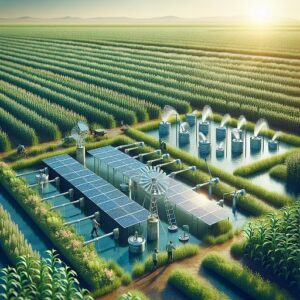
Irrigation pumps represent one of the largest single energy expenses for many crop producers. Solar-powered irrigation systems are particularly effective because water needs typically peak during the sunniest periods of the year when solar generation is maximized. Variable frequency drive pumps paired with solar arrays can adjust pumping capacity based on available sunlight, optimizing water delivery while minimizing grid electricity consumption.
Post-harvest operations like grain drying consume massive amounts of energy in short timeframes. While traditionally powered by propane or natural gas, modern grain drying facilities increasingly incorporate solar thermal systems that can reduce fossil fuel consumption by 40-60%. These hybrid systems maintain drying capacity even during cloudy periods while substantially reducing energy costs during normal operations.
Livestock Facilities: Water Pumping and Ventilation
Livestock operations depend on reliable water delivery and ventilation systems to maintain animal health and productivity. Solar-powered water pumping systems ensure consistent water availability even in remote pastures or during power outages. These systems can be designed with battery backup to provide multiple days of operation during cloudy periods, eliminating the risk of water shortages.
Ventilation requirements in confined animal feeding operations present another opportunity for solar integration. Large exhaust fans that run continuously during warm weather can be powered directly by solar arrays, with grid power serving only as backup during nighttime or low-light conditions. This approach not only reduces energy costs but also improves air quality by encouraging more frequent air exchanges when solar power is abundant.
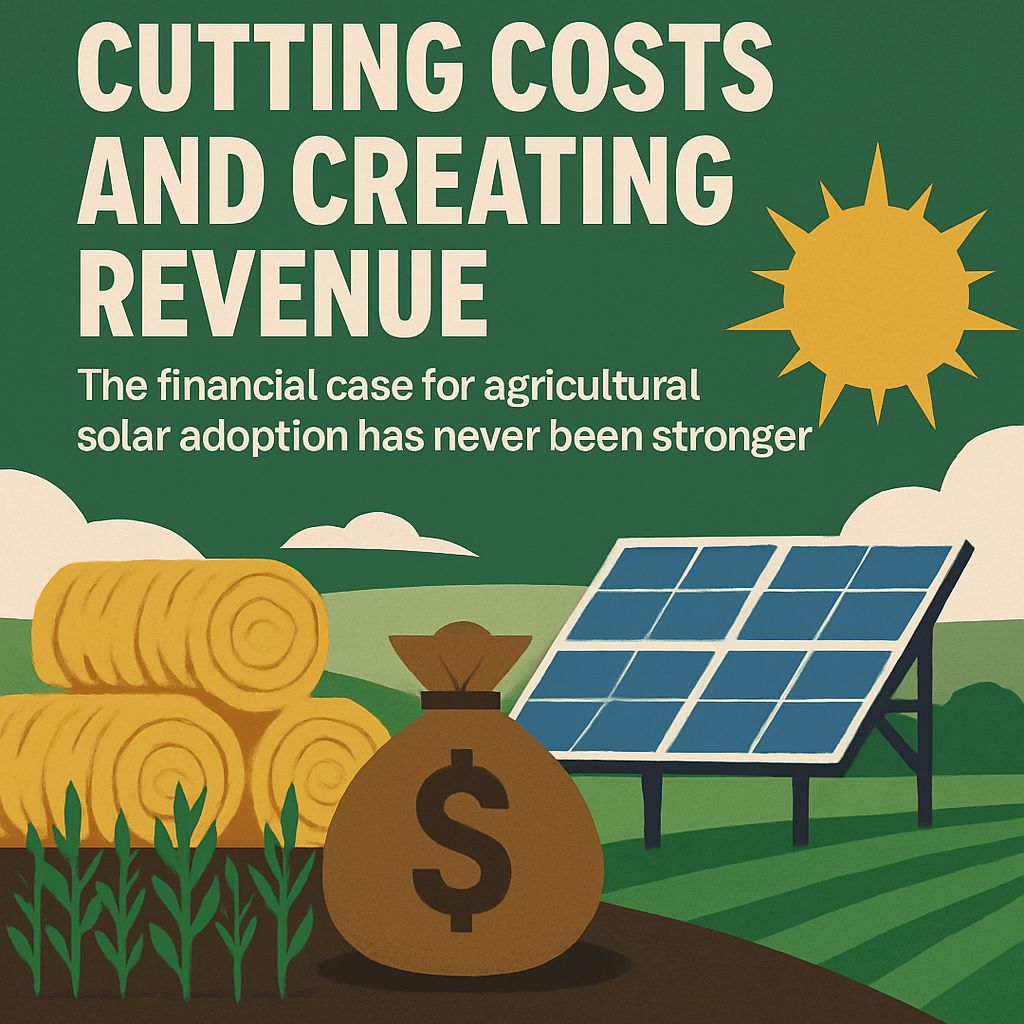
The Financial Advantage: Cutting Costs and Creating Revenue
The financial case for agricultural solar adoption has never been stronger. With system costs declining by over 70% in the past decade while efficiency continues to improve, the return on investment timeline has compressed dramatically. Most agricultural solar installations now demonstrate payback periods of 4-8 years, followed by decades of nearly free electricity generation. Learn more about how farm solar can cut energy costs.
Beyond simple cost savings, solar installations create new revenue opportunities through programs like net metering, carbon credits, and renewable energy certificates. These additional income streams can transform energy from a cost center into a profit center, fundamentally changing the farm’s financial equation in both the short and long term. Learn more about the financial benefits of solar panels for farmers.
Typical ROI Timeline for Agricultural Solar Installations
The return on investment for agricultural solar systems varies based on local electricity rates, available incentives, and system design, but most farmers experience complete payback within 4-8 years. This timeline is significantly faster than most farm infrastructure investments, which typically require decades to fully recover costs. The accelerated payback makes solar particularly attractive when compared to other capital improvements.
System longevity further enhances the financial proposition. Modern solar panels carry warranties of 25-30 years but typically continue producing at over 80% of their rated capacity for 35+ years. This extended productive lifespan means that farms enjoy decades of essentially free electricity after the initial payback period, creating a compelling long-term value proposition.
When factoring in the predictable nature of solar production versus the volatility of traditional electricity markets, the financial advantage becomes even more pronounced. Farmers who install solar effectively lock in their energy costs for decades, eliminating exposure to utility rate increases that have historically outpaced inflation by 2-3% annually.
Tax Credits and USDA REAP Grants Available Now
The economics of agricultural solar are dramatically improved by federal tax incentives that currently provide a 30% tax credit for qualified installations. This credit substantially reduces the effective system cost, improving cash flow and accelerating the payback timeline. When combined with accelerated depreciation benefits, these tax advantages can offset nearly half the system cost for profitable farm operations.
Net Metering: Selling Excess Power Back to the Grid
Most agricultural solar installations connect to the utility grid through net metering arrangements that allow farms to sell excess electricity during high-production periods and draw power when needed. This flexibility effectively transforms the utility grid into a virtual battery, eliminating the need for expensive on-site storage in many applications. Under favorable net metering policies, farms receive retail or near-retail rates for their solar electricity, maximizing the financial benefit.
The predictable daily and seasonal patterns of solar production often align well with time-of-use electricity pricing structures, allowing farms to offset purchases during expensive peak rate periods. This rate arbitrage can significantly enhance the value proposition beyond simple kilowatt-hour replacement, improving project economics even in regions with modest electricity rates.
Agrivoltaics: Dual-Purpose Land Use Innovations
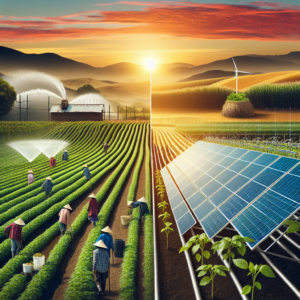
Agrivoltaics represents one of the most exciting developments in agricultural solar adoption, allowing farmers to produce both food and energy on the same land simultaneously. This innovative approach challenges the misconception that solar installations must displace productive farmland. Instead, thoughtfully designed systems can enhance land productivity while diversifying farm income streams through energy generation.
The concept is elegantly simple yet revolutionary in practice: mount solar panels at sufficient height and spacing to allow farming activities to continue beneath and between the arrays. This dual-use approach maximizes land value while creating microclimates that can actually benefit certain crops and livestock operations. For land-constrained operations, agrivoltaics offers a pathway to solar adoption without sacrificing agricultural productivity.
Growing Crops Under Solar Panels
Research from multiple agricultural universities has demonstrated that certain crops actually perform better when grown beneath properly spaced solar arrays. Leafy greens, root vegetables, and some berries have shown yield increases of 20-30% when cultivated in the dappled light conditions created by overhead panels. The partial shade reduces water stress, prevents sunscald, and creates more moderate temperature conditions that many plants prefer. Learn more about how solar panels are revolutionizing farm operations with these benefits.
The microclimate beneath solar arrays typically features reduced evaporation rates, allowing for more efficient water utilization. Studies show water use efficiency improvements of up to 40% for some crops grown in agrivoltaic systems compared to open-field production. This water conservation benefit becomes increasingly valuable as climate change intensifies drought conditions in many agricultural regions.
The panels themselves benefit from the cooling effect of the crops growing beneath them. Solar panel efficiency decreases as temperature rises, but the evapotranspiration from crops creates natural cooling that can improve panel output by 3-8% during hot weather. This symbiotic relationship enhances the productivity of both energy and crop systems.
Grazing Livestock Around Panel Arrays
Livestock integration represents another successful agrivoltaic approach, with sheep being particularly well-suited to grazing among solar installations. The animals naturally maintain vegetation under and around panels, eliminating the need for mechanical mowing while producing valuable agricultural products. This approach transforms maintenance costs into a revenue stream while maximizing land use efficiency.
The shade provided by solar arrays creates valuable shelter for livestock during extreme heat events, reducing heat stress and improving animal welfare. During summer months, grazing animals naturally seek shade during peak daylight hours, making the solar array a natural gathering point that enhances animal comfort while distributing manure fertility across the grazing area.
Water Conservation Benefits
Water conservation represents one of the most significant benefits of agrivoltaic systems in drought-prone regions. The partial shading created by solar panels reduces evaporation from soil by 15-30% compared to open fields, allowing farms to maintain productivity with substantially less irrigation. This water savings directly translates to reduced pumping costs and conservation of increasingly precious water resources.
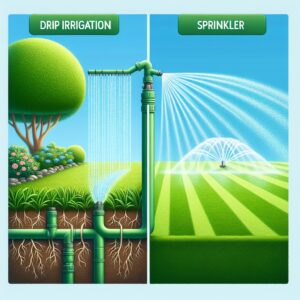
Solar-powered drip irrigation systems paired with soil moisture sensors can further optimize water use efficiency. These precision systems deliver water exactly when and where it’s needed, eliminating waste while ensuring optimal crop development. The energy independence provided by on-site solar generation ensures irrigation can continue even during grid outages or demand response events when traditional electric pumps might be curtailed. Learn more about how solar power is transforming agriculture.
Shade-Tolerant Crop Selection for Maximum Yields
Selecting appropriate crops for agrivoltaic systems is essential for maximizing both energy and agricultural productivity. Leafy greens like lettuce, spinach, and kale thrive in the filtered light conditions, often producing more tender leaves with less bitterness than their full-sun counterparts. Root crops including potatoes, carrots, and beets also perform exceptionally well, benefiting from more consistent soil moisture and temperature.
Certain berry crops show particular promise in agrivoltaic settings. Raspberries and blackberries naturally prefer woodland edges with partial shade, making them ideal candidates for cultivation beneath solar arrays. Research trials have demonstrated yield increases of up to 25% for these crops when grown in properly designed agrivoltaic systems compared to conventional production methods.
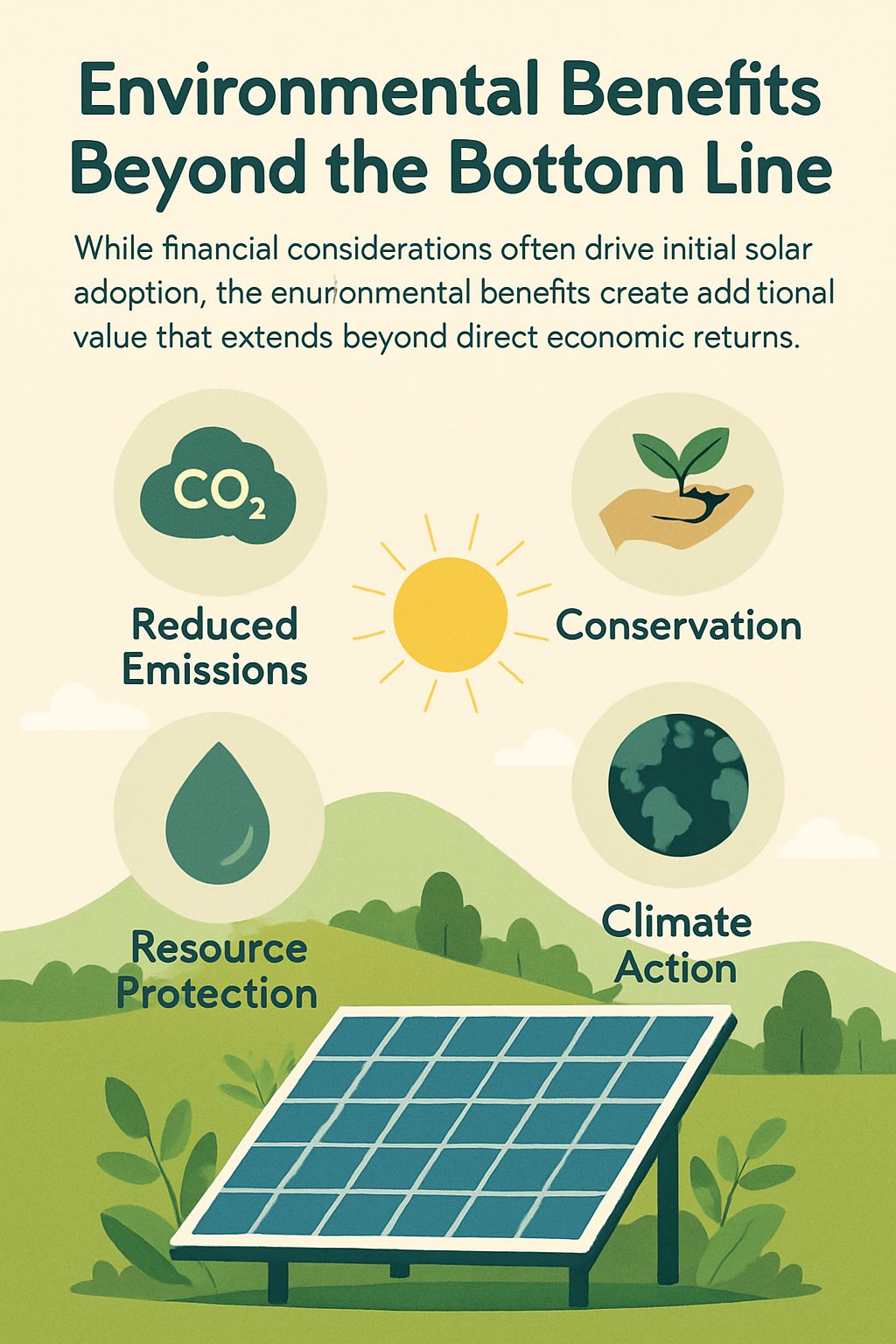
Environmental Benefits Beyond the Bottom Line
While financial considerations often drive initial solar adoption, the environmental benefits create additional value that extends beyond direct economic returns. Solar-powered farms demonstrate meaningful commitments to sustainability that increasingly resonate with consumers, regulators, and downstream supply chain partners. These environmental advantages can translate into market differentiation, regulatory compliance, and long-term operational resilience.
The emissions reduction achieved through agricultural solar adoption contributes to global climate stabilization while providing local air quality improvements. Farms that replace diesel generators or reduce fossil fuel consumption through solar integration experience healthier on-farm environments while contributing to broader sustainability goals that benefit entire agricultural communities.
Carbon Footprint Reduction for Sustainable Agriculture
Agricultural operations typically generate significant carbon emissions through electricity consumption, fuel use, and various production processes. Solar installations directly address this challenge by replacing carbon-intensive grid electricity with clean, renewable energy. A typical 100kW farm solar array prevents approximately 125 tons of carbon dioxide emissions annually – equivalent to removing 27 cars from the road or planting 2,900 trees each year.
This carbon reduction creates marketing advantages as consumers and food companies increasingly prioritize products with smaller environmental footprints. Forward-thinking agricultural producers are leveraging their solar investments to access premium markets that value demonstrated sustainability commitments. Some farms have successfully negotiated preferred supplier status or price premiums based partly on their renewable energy adoption.
Meeting Consumer Demand for Eco-Friendly Food Production
Consumer preference for sustainably produced food continues to strengthen, creating market opportunities for farms demonstrating genuine environmental commitments. Solar adoption represents a visible, verifiable sustainability practice that resonates with eco-conscious consumers and retail partners. Many farms have successfully incorporated their renewable energy investments into brand storytelling that differentiates their products in increasingly competitive markets.
Real-World Success: Farmers Winning with Solar
Across diverse agricultural sectors and geographic regions, farms are demonstrating remarkable success with solar integration. A 1,200-acre almond operation in California reduced irrigation pumping costs by 73% through a 650kW solar installation that powers precision water delivery systems. In Wisconsin, a third-generation dairy farm eliminated $45,000 in annual electricity expenses with a roof-mounted solar array that powers milk cooling and processing equipment. A North Carolina poultry producer improved profitability by $0.17 per bird after installing a comprehensive solar system that powers ventilation and climate control systems across multiple houses. These real-world examples illustrate how agricultural solar adoption creates immediate operational benefits while positioning farms for long-term success in evolving agricultural markets.

Is Solar Power Worth the Investment for Modern Day Farmers
For most agricultural operations, solar power represents one of the most financially sound investments available in today’s farming landscape. With system costs at historic lows, incentives at peak availability, and electricity prices projected to continue rising, the economic case for agricultural solar adoption has never been stronger. Farms that incorporate thoughtfully designed solar installations gain immediate energy cost reduction while establishing decades of price stability for a critical operational input. When these direct benefits are combined with potential revenue from carbon credits, market premiums for sustainable products, and increased property values, solar power emerges as an essential component of forward-thinking farm management strategies that balance short-term profitability with long-term sustainability. As climate change intensifies and energy markets become increasingly volatile, solar-equipped farms will enjoy significant advantages in operational resilience, cost control, and market positioning compared to operations that remain fully dependent on traditional energy sources.
Frequently Asked Questions
As farmers consider solar adoption, several common questions arise regarding system performance, economics, and practical implementation considerations. The following responses address the most frequently asked questions based on real-world agricultural solar installations and current industry best practices.
How long do solar panels typically last on farm buildings?
Modern agricultural solar installations typically carry manufacturer warranties of 25-30 years, but the actual productive lifespan extends considerably longer. Most systems continue functioning at 80-85% of their rated capacity even after 30 years of continuous operation. The primary components – the solar panels themselves – contain no moving parts to wear out, making them exceptionally durable in farm environments. Inverters, which convert DC electricity from panels to AC power for farm use, typically require replacement after 15-20 years, representing the main maintenance expense during a system’s lifetime. With proper installation and periodic maintenance, agricultural solar systems regularly deliver 35+ years of productive operation, making them one of the longest-lasting farm infrastructure investments available.
Can solar panels withstand extreme weather conditions common in agricultural areas?
Agricultural-grade solar installations are engineered to withstand the harsh conditions common in farming regions. Quality systems are rated to survive wind speeds of 140+ mph, equivalent to Category 4 hurricane forces. Impact-resistant panels can withstand 1-inch hail strikes, while mounting systems are designed to handle substantial snow loads of 30-50 pounds per square foot, depending on regional requirements.
Modern farm solar installations incorporate robust grounding and surge protection systems that safeguard against lightning strikes – a particular concern in open agricultural settings. These protective measures ensure system longevity even in locations prone to electrical storms. In drought-prone regions, panels are designed with dust-shedding surfaces and can be periodically cleaned to maintain optimal performance despite challenging conditions. Learn more about how solar panels are revolutionizing farm operations.
What maintenance is required for farm solar systems?
Agricultural solar installations require minimal maintenance compared to most farm equipment. Routine maintenance typically includes annual electrical inspections, periodic panel cleaning in dusty environments, vegetation management around ground-mounted arrays, and monitoring system performance for any production anomalies. Most farms allocate 2-4 hours monthly for system oversight, with professional inspections recommended annually. Modern monitoring systems alert operators to performance issues in real-time, allowing for prompt resolution before significant production losses occur. This low maintenance requirement stands in stark contrast to conventional farm equipment, making solar one of the most reliable and hands-off investments available to agricultural producers.
How do seasonal changes affect solar energy production on farms?
Solar production naturally varies with seasonal sunlight changes, with peak generation typically occurring during summer months when daylight hours are longest. Winter production may decrease by 30-60% compared to summer output, depending on latitude, panel tilt, and local climate conditions. However, this seasonal variation is highly predictable and can be accurately modeled during system design. Many agricultural operations benefit from this production pattern, as summer often coincides with peak energy demands for irrigation, cooling, and ventilation. By understanding these seasonal fluctuations, farms can optimize system sizing and energy management strategies to maximize financial returns throughout the year.
Are there special insurance considerations for farms with solar installations?
Agricultural operations should update their farm insurance policies to specifically cover solar assets, which typically increase property values by the installed system cost. Most farm insurance providers offer straightforward riders or policy adjustments to include solar equipment under existing coverage. The additional premium costs are generally modest, ranging from $200-$500 annually for typical farm installations, representing a small fraction of the energy savings generated. Some insurers now offer premium discounts for farms with solar plus battery storage systems, recognizing the reduced risk of loss during power outages or extreme weather events. When evaluating coverage options, farms should ensure policies include replacement cost valuation rather than actual cash value to protect against the full expense of system replacement if catastrophic damage occurs.
Solar energy is transforming how farmers manage expenses, improve efficiency, and prepare for the next generation of agriculture. With today’s technology, solar panels for farms are more affordable, more reliable, and more effective than ever before. Whether you’re looking to cut costs, increase sustainability, or prepare your operation for a changing energy future, All Energy Solar can help design a custom solution that meets your specific agricultural needs.


Leave a Reply