
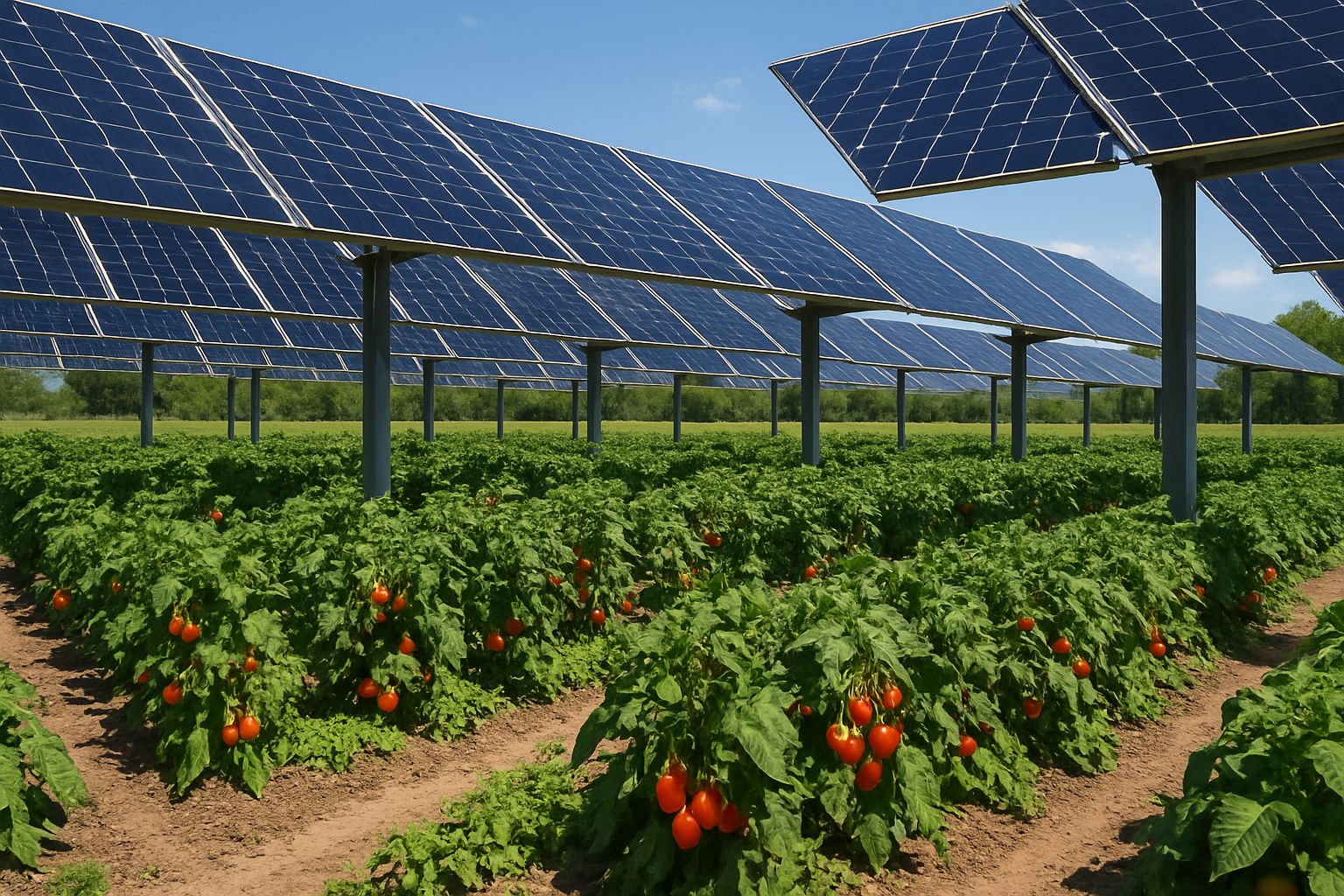
Key Takeaways: What Agrivoltaics Does for Farms and the Planet
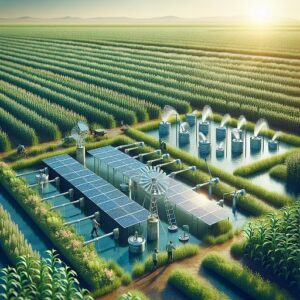
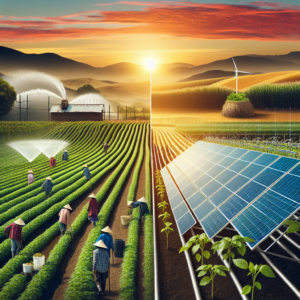
- Agrivoltaics combines solar energy generation and food production on the same land, boosting overall land use efficiency by up to 60% without forcing farmers to choose between crops and clean energy.
- Shade from solar panels has been shown to double tomato yields in hot, arid regions like Arizona, while reducing water consumption by nearly half in dryland test plots.
- Farmers gain two income streams — crop revenue plus electricity sales or savings — making agrivoltaic systems one of the most financially resilient land strategies available today.
- The environmental upside goes far beyond clean energy, with benefits ranging from groundwater retention and pollinator habitat creation to measurable reductions in greenhouse gas emissions.
- Not every crop or climate is the right fit — keep reading to find out which plants thrive under solar arrays and what the real barriers to adoption look like.
Agrivoltaics turns one of farming’s biggest constraints — limited land — into a competitive advantage by stacking solar energy production directly on top of active agricultural ground.
If you’ve ever wondered whether solar panels and crops can genuinely coexist without one harming the other, the research answers that clearly: not only can they coexist, but in many cases they actively help each other. MBT Energy’s agrivoltaic systems are built around exactly this principle — delivering practical dual-use land solutions for modern farming operations. The concept has moved well past experimental. Countries like Japan have already deployed over 1,000 agrivoltaic solar systems, with more in development, and the academic literature on its benefits has grown exponentially since the early 2010s.
One Piece of Land, Two Revenue Streams
The core economic logic of agrivoltaics is straightforward: why earn income from one use of your land when you can earn from two simultaneously? Traditional farming forces a binary choice — grow food or install solar. Agrivoltaics eliminates that tradeoff entirely.
Farmers who adopt agrivoltaic systems keep their land in agricultural production while layering solar electricity generation on top. That electricity can be sold back to the grid, used to offset farm energy costs, or both. In practice, this creates a financial cushion that pure crop farming simply can’t match, especially during years of poor harvests or low commodity prices.
How Agrivoltaics Boosts Land Use Efficiency by 60%
The metric researchers use to quantify this dual productivity is called the Land Equivalent Ratio (LER). When a single hectare is dedicated entirely to either crop production or solar generation, its LER is 1.0. Agrivoltaic systems consistently push that figure to 1.6 or higher — meaning the same hectare produces 60% more total output than it would under single-use management. That’s not a marginal improvement. It’s a fundamental shift in what a piece of ground can deliver.
Why Farmers Earn More Without Sacrificing Crop Output
The revenue model works because solar lease payments or electricity income don’t require the land to stop producing food. Depending on the system configuration — panel height, row spacing, and orientation — most crops planted beneath or between solar arrays receive adequate light to maintain strong yields. In some climates, the partial shade actually reduces heat stress on crops, which means yield quality improves rather than declines. The financial case becomes even stronger when you factor in reduced irrigation costs, which we’ll cover in the next section. For more insights, explore how solar panels are boosting crop growth.
The Crop Benefits Are Bigger Than Most People Expect
Most people assume that blocking sunlight from crops is inherently harmful. The reality is far more nuanced — and in many environments, the shade provided by solar panels is one of the most beneficial things that can happen to certain plants. For more insights, you can explore how agrivoltaics can provide more benefits than agriculture and solar photovoltaics separately.
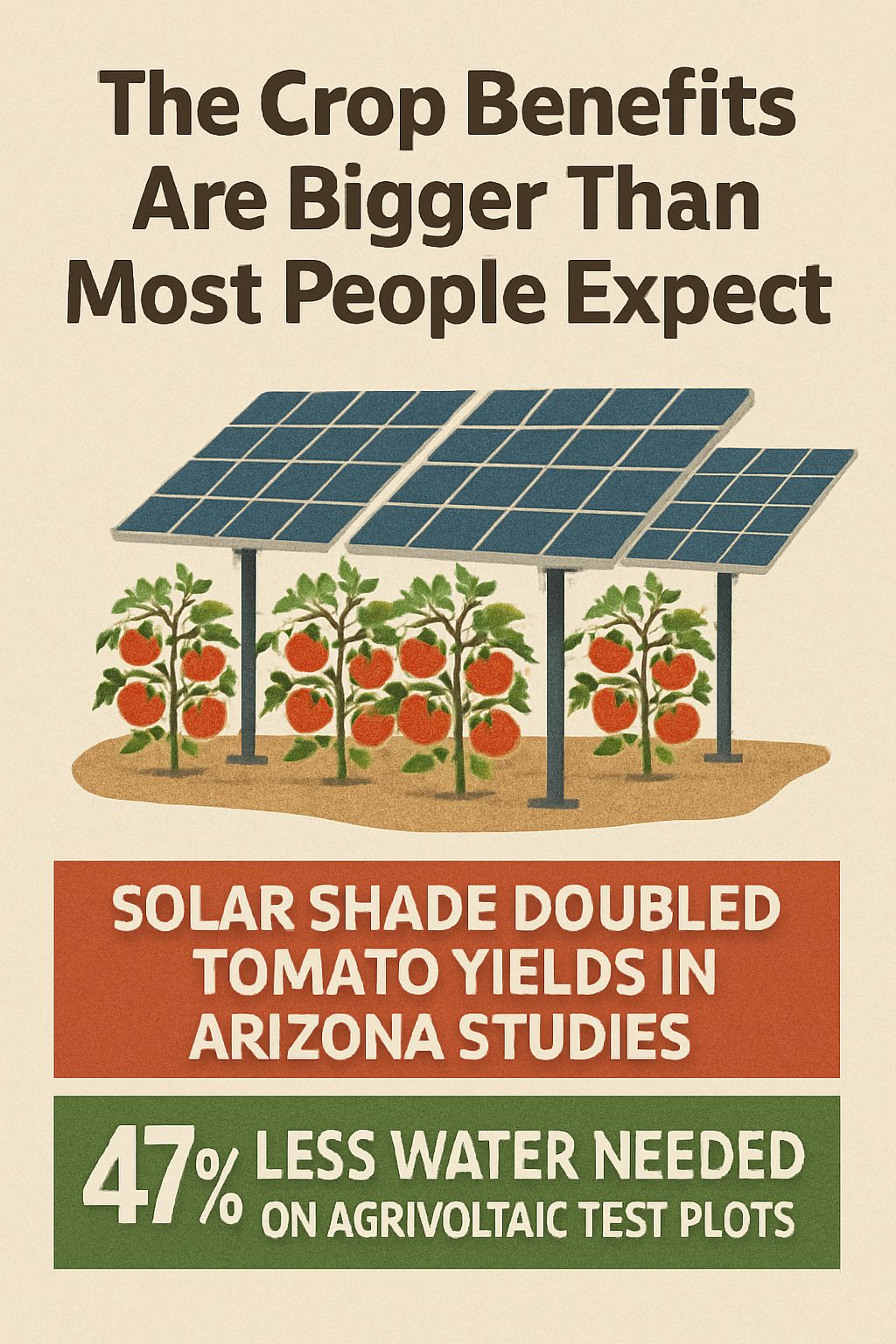
Solar Shade Doubled Tomato Yields in Arizona Studies
Research conducted in Arizona found that positioning solar panels over tomato crops didn’t just maintain yields — it doubled them. The panels reduced the intense direct radiation that causes heat stress and soil moisture loss in arid climates. Tomatoes grown under the panels experienced a more stable microclimate, with lower peak temperatures and higher relative humidity around the root zone. The results challenged assumptions that have held back agrivoltaic adoption for years.
The Arizona findings are part of a broader pattern observed in dryland and semi-arid regions globally. When crops are subjected to full, unfiltered sun in high-temperature environments, photosynthesis actually slows down past a certain intensity threshold — a phenomenon called photoinhibition. Solar panels intercept that excess radiation, keeping crops within their optimal light range while simultaneously generating electricity from energy the plant couldn’t have used anyway.
47% Less Water Needed on Agrivoltaic Test Plots
Water efficiency is one of agrivoltaics’ most compelling and underreported benefits. Studies on agrivoltaic test plots have documented water use reductions of up to 47% compared to conventional open-field agriculture. The mechanism is simple: solar panels reduce direct evaporation from soil surfaces and decrease the transpiration load on crops by moderating ambient temperature. In water-scarce regions, this isn’t just an efficiency gain — it’s a survival advantage for farming operations facing increasingly unreliable rainfall. For instance, some crops like spinach have been shown to thrive under solar panels, maximizing yield while conserving water.
Which Crops Thrive Under Solar Panels (and Which Don’t)
Not every crop responds equally to the agrivoltaic environment. Shade tolerance is the primary factor that determines compatibility, and it varies considerably across species.
- Lettuce, spinach, and other leafy greens — naturally shade-tolerant and often produce higher quality leaves with less bolting under panels
- Tomatoes and peppers — thrive in hot climates where panel shade reduces heat stress and water demand
- Herbs like basil and cilantro — perform well under partial shade without significant yield loss
- Grapes and berries — several vineyard agrivoltaic trials in Europe have shown stable or improved fruit quality under bifacial solar panels
- Wheat and corn — more light-demanding and generally less suited to dense panel coverage, though wider row spacing can maintain acceptable yields
- Pasture grasses for grazing — highly compatible, especially for sheep and poultry operations where animals naturally shelter beneath the panels
Livestock integration is one of the most practical near-term applications for farms that aren’t ready to commit to full crop-based agrivoltaics. Sheep, in particular, have become a common fixture beneath solar arrays because they graze the grass that would otherwise require mechanical mowing — reducing maintenance costs while adding animal husbandry revenue to the land’s output.
Agrivoltaics Protects Crops From Extreme Weather
Climate volatility is already one of the largest financial risks facing farmers. Hail events, heat domes, and intense rain episodes can wipe out an entire season’s crop in hours. Agrivoltaic infrastructure — particularly elevated panel systems — offers a layer of physical protection that conventional open-field farming simply doesn’t have.
How Solar Panel Rows Shield Against Hail, Heat, and Heavy Rain
Elevated solar panel arrays act as a physical canopy over crops, intercepting hailstones before they reach leaf surfaces and breaking the force of heavy rainfall before it compacts soil or causes erosion. In regions prone to hail — such as parts of the Great Plains and Midwest — this protection alone can justify a significant portion of the installation cost when weighed against crop insurance premiums and historical loss data. Discover how solar panels boost crop growth and offer additional farming benefits.
Heat protection works through a combination of direct shading and microclimate modification. Panels reduce the amount of shortwave radiation hitting the soil and plant canopy, which lowers surface temperatures by several degrees during peak afternoon heat. Research from the University of Arizona’s Biosphere 2 agrivoltaics trials found that soil moisture was significantly better preserved beneath panels compared to adjacent open plots, which directly translates to reduced irrigation frequency and improved crop resilience during dry spells.
Why Partial Shade Benefits Crops That Can’t Tolerate Direct Sunlight
Some crops are genetically predisposed to struggle under full sun exposure. Leafy greens like spinach and lettuce, for example, bolt rapidly when subjected to intense direct radiation — meaning they flower and turn bitter before they’re ready to harvest. Partial shade from solar panels slows this process down considerably, extending the harvest window and improving produce quality. For farmers growing these crops in southern states or during summer months, agrivoltaic shade isn’t a compromise — it’s an agronomic advantage.
The shade effect also stabilizes soil temperature fluctuations throughout the day. Open fields can swing dramatically between morning cool and afternoon heat, stressing root systems and accelerating moisture loss. Panels dampen that swing, creating a more consistent below-ground environment that supports stronger root development and more predictable growth cycles. When you combine that with the water savings documented in agrivoltaic trials, the case for shade-sensitive crop integration becomes difficult to argue against.
Environmental Advantages Beyond the Farm
The benefits of agrivoltaics don’t stop at the property line. At a systems level, combining food and energy production on the same land delivers environmental gains that neither industry achieves as effectively on its own.
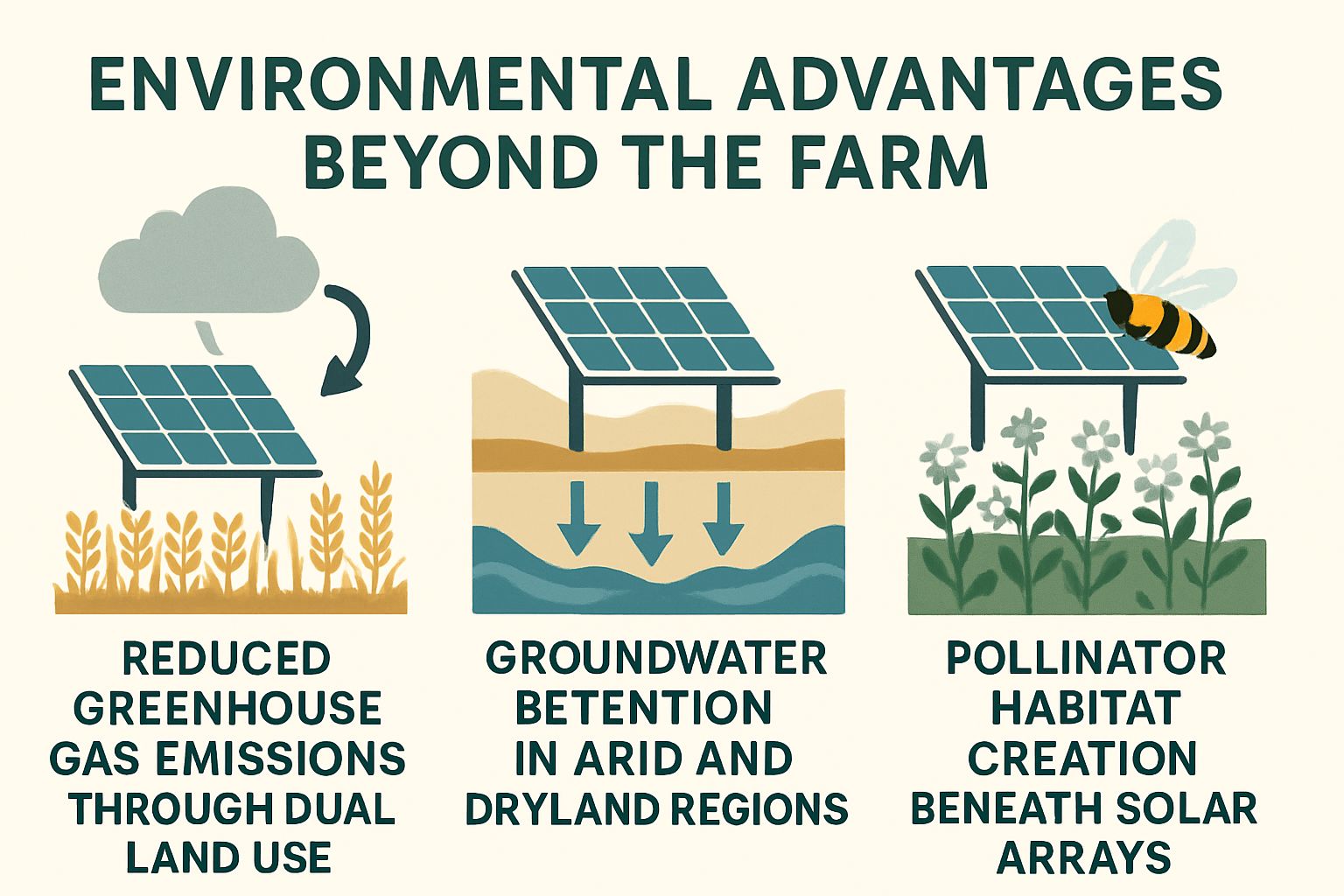
Reduced Greenhouse Gas Emissions Through Dual Land Use
Every megawatt-hour of solar electricity generated by an agrivoltaic system displaces fossil fuel generation on the grid. But the emissions benefit goes further than that. By eliminating the need to clear separate land for utility-scale solar installations, agrivoltaics avoids the carbon release associated with land conversion — particularly important when that land would otherwise come from forests or native grasslands. Dual-use systems make the carbon math considerably more favorable than standalone solar or standalone industrial agriculture when assessed on a per-hectare basis.
Groundwater Retention in Arid and Dryland Regions
In dryland environments, agrivoltaic systems create a measurable improvement in the local water cycle. Solar panels reduce direct evaporation from exposed soil surfaces, which means more of the available moisture stays in the ground where plant roots can access it. This effect compounds over time — better soil moisture retention supports greater vegetative cover, which further reduces erosion and runoff, which in turn protects the water table beneath the farm.
Research published through the food-energy-water nexus literature, including work cited by Barron-Gafford et al. in 2019, confirmed that agrivoltaic configurations provide meaningful mutual benefits across water management, energy production, and food security simultaneously. In regions already experiencing aquifer depletion — including much of the American Southwest and parts of sub-Saharan Africa — this groundwater conservation effect is not a secondary benefit. It’s a critical resilience mechanism.
Pollinator Habitat Creation Beneath Solar Arrays
One of the more surprising environmental advantages of agrivoltaics is what happens to the land between and beneath the solar panels when it’s planted with native wildflowers and pollinator-friendly ground cover. Solar installations typically require low-growing vegetation to prevent shading of the panel undersides, and when that vegetation is selected deliberately, it creates high-quality habitat for bees, butterflies, and other pollinators that are under severe pressure from conventional monoculture agriculture.
The practical upside extends directly back to farm productivity. Pollinator populations that build up around agrivoltaic installations don’t stay confined to the solar field — they spread to adjacent crop areas, improving pollination rates and yields across the broader farm. This cross-benefit between the solar infrastructure and surrounding agricultural land represents exactly the kind of systemic thinking that makes agrivoltaics so compelling from an ecological standpoint.
Agrivoltaics Supports Rural Economies and Communities
Beyond individual farm profitability, agrivoltaics has meaningful implications for rural communities that have historically been underserved by both the energy and agricultural sectors. Small and mid-size farming operations stand to gain the most, since the additional revenue stream from solar provides income stability that larger industrial operations achieve through sheer volume.
How Small-Scale Systems Deliver Rural Electrification
In regions without reliable grid access — parts of rural Africa, Southeast Asia, and even remote areas of the American West — small agrivoltaic installations can power irrigation pumps, cold storage units, and farm equipment directly. This on-site electricity generation eliminates dependence on expensive diesel generators and unreliable grid connections, reducing operating costs while improving the reliability of essential farm infrastructure.
The economic ripple effect of reliable on-farm electricity is significant. When farmers can power cold storage, they reduce post-harvest losses dramatically — a problem that accounts for an estimated 30 to 40 percent of food loss in developing regions according to food security research. Reliable electricity also enables value-added processing on-site, meaning farmers can sell dried, preserved, or processed products rather than raw commodities, which typically command far higher margins.
- Reduced diesel fuel costs — on-site solar generation eliminates or significantly reduces generator dependency for irrigation and equipment
- Cold storage capability — allows perishable crops to be stored longer and sold at better prices rather than rushed to market
- On-site processing potential — electricity enables drying, milling, and packaging operations that increase product value
- Grid independence — farms in areas with unreliable power supply gain consistent energy access regardless of grid outages
- Community energy sharing — surplus electricity from agrivoltaic systems can be sold or shared with neighboring households and local businesses
These advantages are particularly powerful in agricultural communities where thin margins and weather volatility have historically made farming economically precarious. Adding a stable, weather-independent revenue component through solar changes the financial risk profile of the entire operation.
Agrivoltaics also creates local jobs — in system installation, maintenance, and agricultural management — that tend to stay within rural communities rather than flowing to urban centers. This localized economic activity strengthens the tax base and supports the kind of rural infrastructure investment that farming communities have struggled to attract for decades.
412% Rise in Honey Production at Iowa State’s Agrivoltaic Farm
One of the most striking data points in the agrivoltaics literature comes from Iowa State University, where researchers documented a 412% increase in honey production at an agrivoltaic farm site compared to conventional agricultural land nearby. The wildflower ground cover planted beneath the solar arrays created exceptionally rich foraging habitat for honeybee colonies, producing a secondary agricultural product — honey — from land that was already generating electricity and supporting crop production. It’s the kind of outcome that illustrates exactly how agrivoltaics can unlock value that no single-use land strategy could achieve on its own.
Farmworker Safety Gets a Boost Too
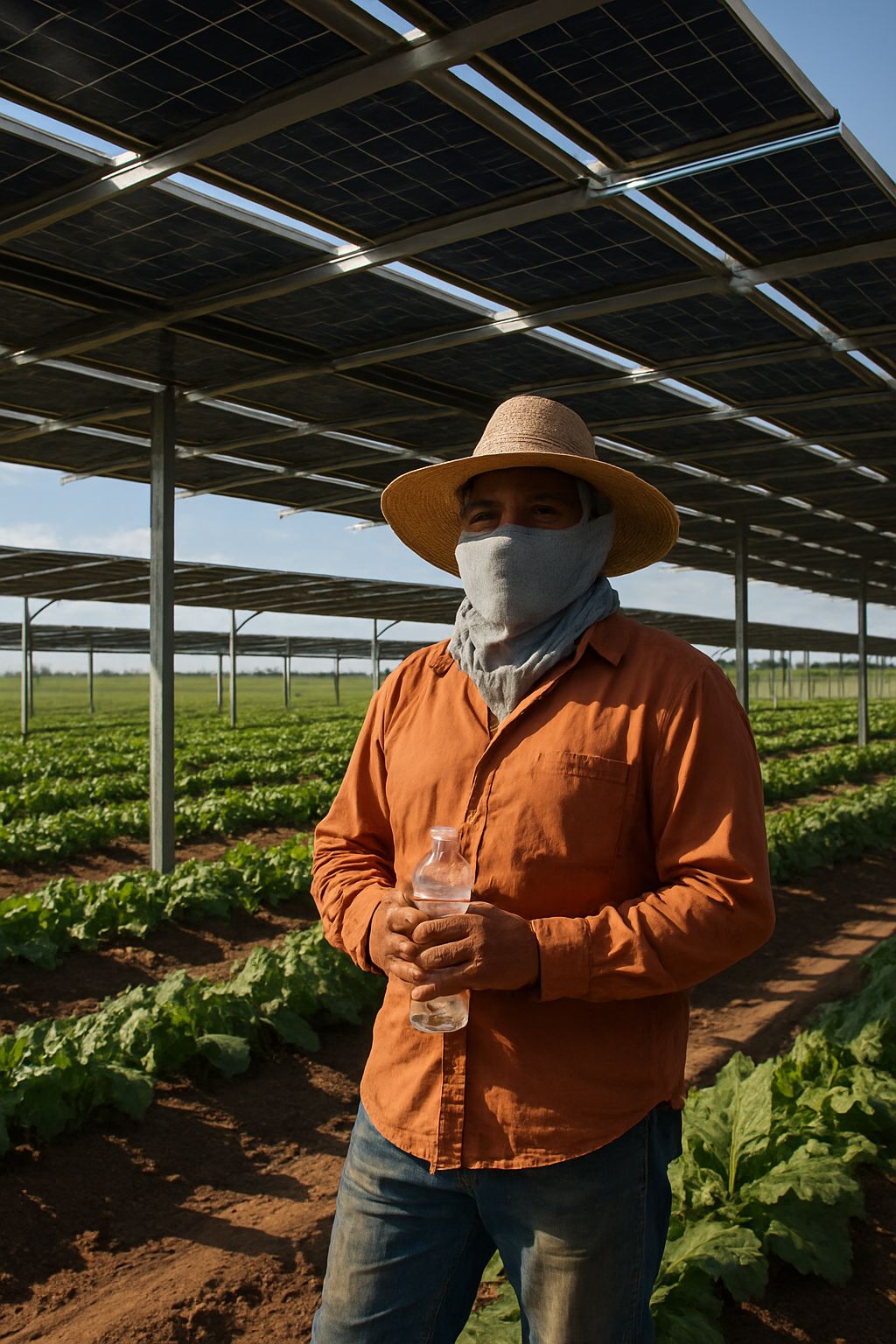
Heat illness is one of the most serious occupational hazards in agriculture, particularly as global temperatures rise and extreme heat events become more frequent. Farmworkers in open fields are exposed to direct solar radiation for hours at a time, with limited access to shade during peak working hours. Agrivoltaic systems change that environment structurally — the solar panel canopy provides consistent overhead shade across the working area, reducing radiant heat load on workers throughout the day.
The microclimate effects that benefit crops also benefit the people tending them. Lower ambient temperatures beneath the panels, reduced soil heat radiation, and the slight humidity increase associated with better moisture retention all contribute to a working environment that is measurably cooler than adjacent open fields. In practical terms, this can extend the number of safe working hours during heat waves, reduce heat-related illness incidents, and improve labor productivity — all of which have direct financial value to farm operators alongside the obvious human welfare benefit.
The Real Disadvantages You Need to Know
Agrivoltaics is a powerful strategy, but it’s not without real barriers. Understanding the limitations upfront is essential for anyone evaluating whether a system makes sense for their specific situation — because the wrong configuration, location, or crop selection can undermine the financial case quickly.
The three most significant challenges facing agrivoltaic adoption today are upfront capital costs, regulatory complexity, and crop compatibility limitations. None of these are insurmountable, but each requires honest assessment before committing to a system. Farmers who go in with clear expectations consistently achieve better outcomes than those who underestimate the planning and compliance work involved.
High Upfront Capital Costs Remain a Barrier
The single biggest obstacle to agrivoltaic adoption is the initial capital requirement. A fully installed agrivoltaic system — including elevated racking structures designed to accommodate farm equipment beneath the panels, the solar modules themselves, inverters, and grid connection infrastructure — costs significantly more than a standard ground-mounted solar installation. Elevated mounting systems alone can add 20 to 40 percent to installation costs compared to conventional fixed-tilt solar arrays. For small and mid-size farm operators already working with tight margins, finding that capital without grant support or favorable financing is genuinely difficult. However, some farmers have found success by growing crops like broccoli under solar panels, which can help offset costs through increased yield.
The payback period for agrivoltaic systems varies considerably depending on electricity rates, crop type, and available incentives, but most analyses place it in the 7 to 15 year range for systems without significant subsidy support. That timeline improves substantially when federal investment tax credits, state agricultural grants, or USDA programs like REAP (Rural Energy for America Program) are layered in. The financial case is real — but it requires patience and careful planning to realize.
Regulatory Hurdles Vary by State and County
Agrivoltaics occupies an awkward regulatory space in many jurisdictions because it doesn’t fit neatly into existing zoning categories. Agricultural land designated strictly for food production may require variances or special use permits before solar installations are permitted, even when crop production will continue. In some counties, solar development on farmland is actively restricted to prevent the permanent conversion of agricultural land to energy use — a concern that agrivoltaic dual-use systems directly address, but that local regulations haven’t always caught up to recognize.
The regulatory landscape is improving as agrivoltaics gains mainstream recognition, but the pace of change is uneven. Some states — including Massachusetts, Minnesota, and Colorado — have implemented specific policy frameworks that support agrivoltaic development. Others still require farmers to navigate overlapping agricultural, utility, and land use regulations without clear guidance. Working with an experienced agrivoltaic developer or legal advisor familiar with local permitting is essential before breaking ground on any system.
Not Every Crop or Climate Is Compatible
Agrivoltaics delivers its strongest results in hot, arid, or semi-arid climates where solar radiation is intense and water scarcity is a real constraint. In cooler, cloudier regions — parts of the Pacific Northwest, northern Europe, or high-altitude growing zones — reduced light availability beneath panels can suppress yields for crops that are already light-limited by the climate. Staple row crops like corn and soybeans, which require high light intensity throughout their growing season, are among the least compatible options for dense panel configurations. Attempting to force incompatible crops into an agrivoltaic system without adjusting panel spacing and orientation is one of the most common planning mistakes in early-stage projects. For more information on optimizing crop yields, explore how to boost crop growth with solar panels.
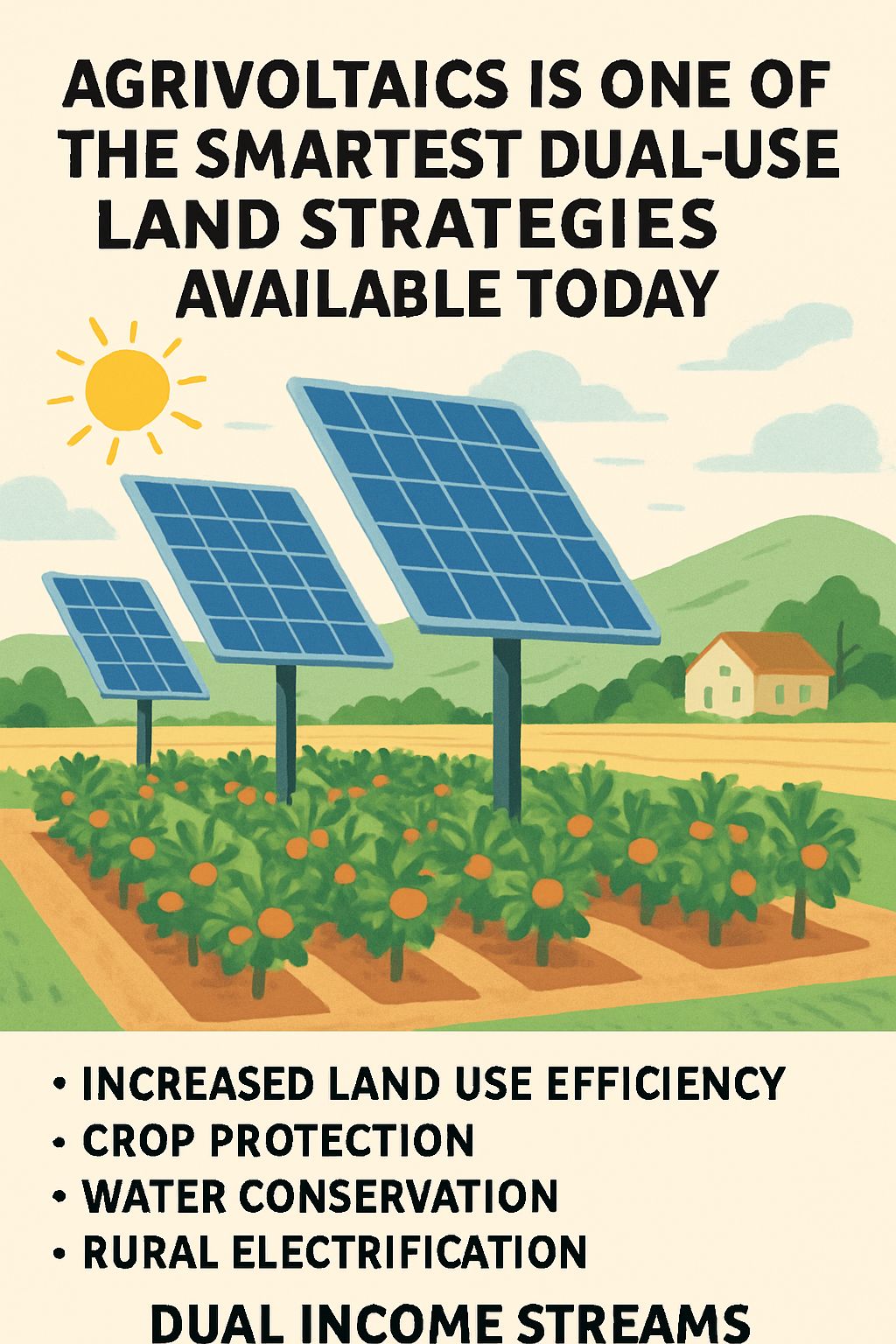
Agrivoltaics Is One of the Smartest Dual-Use Land Strategies Available Today
When you look at the full picture — increased land use efficiency, crop protection, water conservation, pollinator habitat, farmworker safety, rural electrification, and dual income streams — agrivoltaics isn’t just a clever idea. It’s one of the most complete responses to the interconnected pressures of climate change, food security, and the clean energy transition that agriculture has ever produced. The research base is growing, the technology is proven, and the early adopters have demonstrated that the system works across a wide range of crops, climates, and farm scales.
The key is matching the right configuration to the right farm context. Agrivoltaics isn’t a one-size-fits-all solution, and the farms that get the most out of it are the ones that invest in proper feasibility assessment, crop selection, and system design before installation. For farmers who do that work, the combination of energy revenue, improved yields, reduced input costs, and climate resilience creates a genuinely stronger agricultural business — one built to perform across a much wider range of market and weather conditions than conventional farming alone can withstand.
Frequently Asked Questions
Agrivoltaics is still a relatively new field for most farmers and landowners, and the questions that come up most frequently tend to cluster around crop compatibility, costs, livestock integration, and yield impacts. The answers below draw directly from research findings and real-world deployment data to give you practical, grounded information.
What crops are best suited for agrivoltaic systems?
Shade-tolerant and heat-sensitive crops consistently perform best under agrivoltaic configurations. Leafy greens like lettuce, spinach, kale, and chard are among the top performers, followed by tomatoes and peppers in hot climates, herbs including basil and cilantro, and small fruits like strawberries and raspberries. Grapes have shown strong results in European agrivoltaic vineyard trials. Pasture grasses for livestock grazing are also highly compatible and require minimal management adjustment when transitioning to a dual-use system.
How much does it cost to set up an agrivoltaic system?
Costs vary widely depending on system scale, panel type, mounting configuration, and regional labor rates. A basic ground-mounted agrivoltaic system with standard elevated racking typically runs between $1.00 and $1.50 per watt more than conventional solar installations due to the specialized mounting structures required for farm equipment clearance. For a 100-kilowatt system serving a mid-size farm operation, total installed costs commonly fall in the range of $150,000 to $300,000 before incentives. Learn more about how solar panels boost crop growth and contribute to farming benefits.
Federal programs like the USDA REAP grant, which covers up to 50 percent of eligible project costs for rural agricultural energy installations, can substantially reduce net outlays. The federal Investment Tax Credit (ITC) currently available for solar installations further reduces the effective cost. Farmers in states with strong renewable portfolio standards may also access state-level incentives or favorable net metering arrangements that shorten payback timelines considerably.
Can livestock be used in agrivoltaic systems?
Livestock integration is one of the most immediately practical and low-barrier entry points into agrivoltaics. Sheep are the most commonly used species — they graze the vegetation beneath solar panels without damaging the equipment, eliminate the need for mechanical mowing, and produce wool and meat as additional agricultural outputs. Poultry operations have also been successfully integrated into agrivoltaic systems, with chickens foraging beneath panels while benefiting from shade and shelter. Goats are generally not recommended due to their tendency to climb on and damage panel mounting structures.
The operational benefits of livestock integration are immediate and tangible. Solar operators who graze sheep beneath their panels report significant reductions in vegetation management costs — an expense that represents a meaningful ongoing operational line item for large solar installations. For farmers, the arrangement provides access to well-maintained land with built-in shade infrastructure at no additional cost. It’s one of the clearest win-win configurations in the agrivoltaic toolkit.
Does shade from solar panels reduce overall crop yields?
For shade-tolerant crops in high-radiation environments, the answer is often no — and in many documented cases, shade from panels actually increases yields by reducing heat stress, slowing bolting, and conserving soil moisture. The Arizona tomato study that documented doubled yields under panels is the most cited example, but similar yield improvements have been observed with lettuce, peppers, and herbs across multiple research programs. For light-demanding crops like corn and soybeans grown under dense panel configurations, yield reductions are real and should be accounted for in feasibility planning. The critical factor is matching crop selection to the specific light environment your panel layout creates.
Are there government subsidies available for agrivoltaic farmers?
Yes — and the subsidy landscape has improved considerably in recent years as policymakers have recognized agrivoltaics as a mechanism for simultaneously advancing agricultural resilience and clean energy goals. At the federal level in the United States, the USDA Rural Energy for America Program (REAP) provides grants covering up to 50 percent of eligible costs and loan guarantees for the remainder for agricultural producers and rural small businesses installing renewable energy systems. The federal solar Investment Tax Credit (ITC) applies to agrivoltaic solar components at the same rate as conventional solar installations.
State-level support varies significantly. Massachusetts has been a leader in agrivoltaic policy, implementing a dedicated Solar Massachusetts Renewable Target (SMART) program adder specifically for agrivoltaic installations that incentivizes dual land use financially. Minnesota and Colorado have also developed supportive frameworks. Outside the US, countries including Germany, Japan, and France have implemented specific agrivoltaic incentive structures that have driven significant installed capacity growth — Japan’s feed-in tariff program for agrivoltaic installations has been particularly influential in supporting the country’s 1,000-plus agrivoltaic site network.
Accessing these programs typically requires working with a grant writer, agricultural extension office, or solar developer experienced in navigating the application processes. The paperwork can be significant, but the financial impact of stacking REAP grants with the ITC and available state programs can reduce net project costs by 60 percent or more in favorable cases — transforming the economics of agrivoltaic adoption for farm operations that might otherwise be unable to access the capital required.


Leave a Reply