
Article At a Glance
- Lettuce is one of the best crops for agrivoltaic farming, with studies showing 10-30% higher yields under solar panels compared to open-field growing.
- The shade, cooler temperatures, and moisture retention created beneath solar panels directly solve lettuce’s biggest enemies: heat stress and premature bolting.
- Agrivoltaic systems can reduce irrigation water use by up to 29% — a game-changer for sustainable food production.
- The right panel height, spacing, and lettuce variety selection make the difference between a thriving bed and a struggling one — keep reading to get those details right.
- Growing Solar Mist is a leading resource for farmers and enthusiasts looking to combine renewable energy with productive food systems.
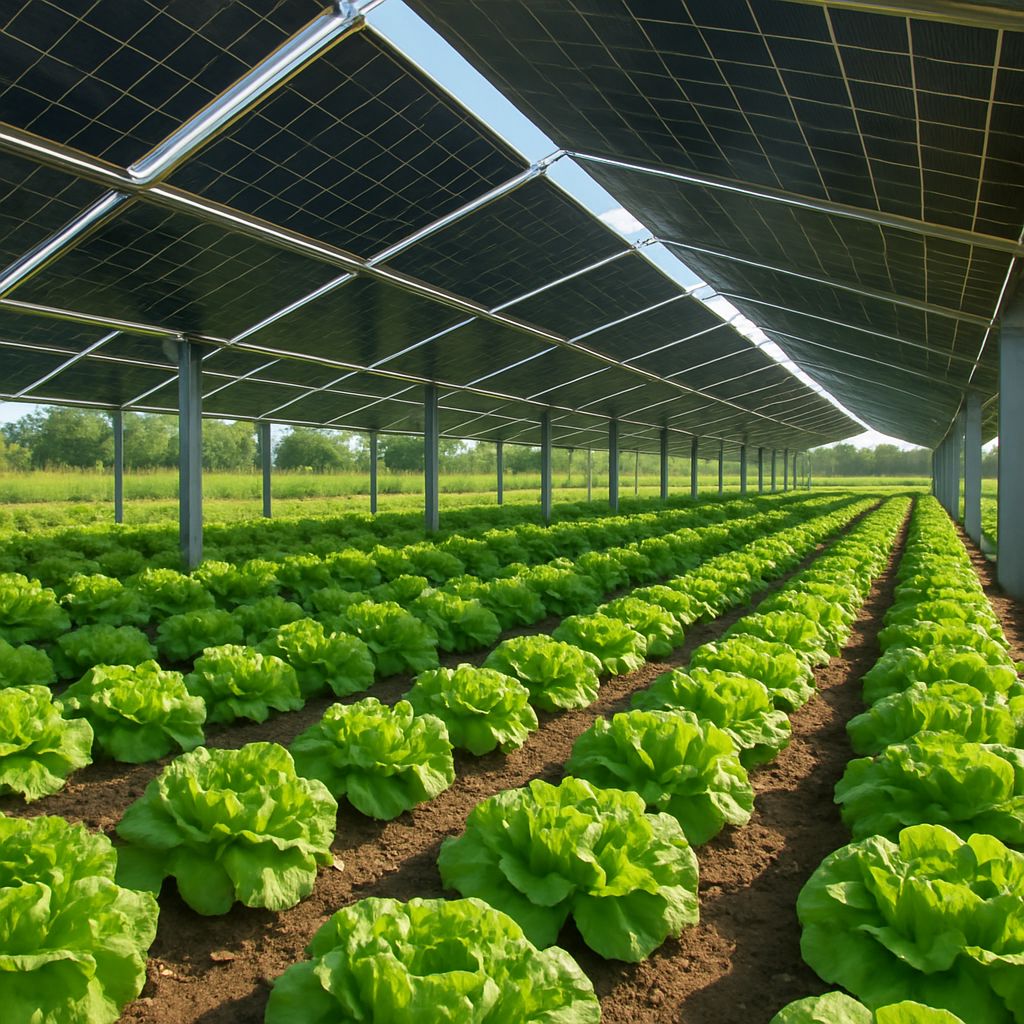
Growing lettuce under solar panels isn’t just a clever workaround — it’s one of the most productive things you can do with a dual-use piece of land.
The concept falls under agrivoltaics, the practice of co-locating solar energy production and crop cultivation on the same land. And lettuce is the star of this system. Its natural preference for partial shade, its sensitivity to heat, and its shallow root structure make it almost perfectly suited to the microclimate that solar panels create beneath them. What farmers used to consider dead space under their arrays is now being recognized as some of the most productive growing real estate available.
For sustainable farming enthusiasts, this is the kind of system that checks every box — higher yields, less water, longer growing seasons, and a smaller environmental footprint — all from land that’s already doing a job.
Lettuce Grows Better Under Solar Panels Than in Open Fields
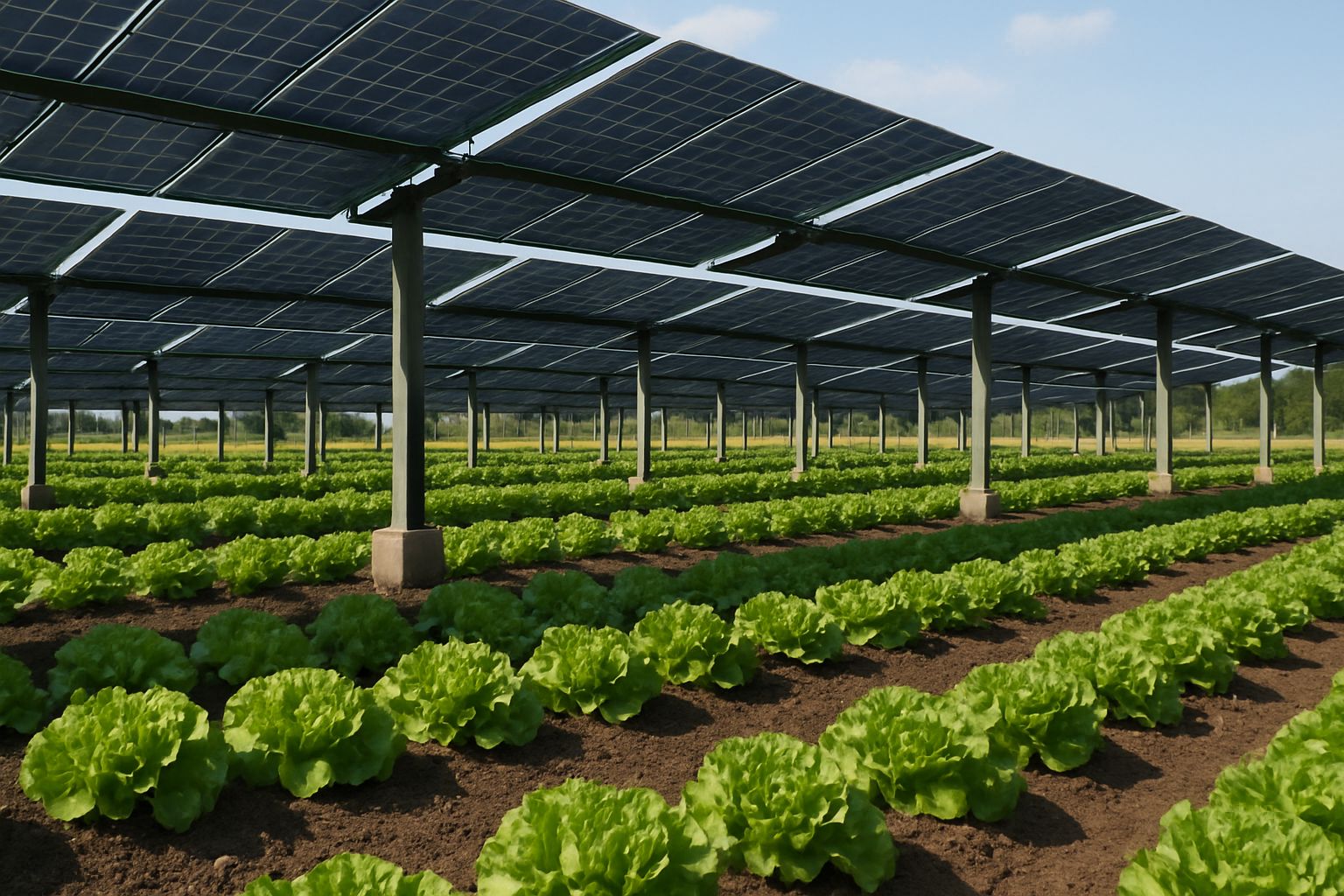
Most crops suffer under reduced light. Lettuce doesn’t — it actually prefers it. In its natural habitat, lettuce evolved as an understory plant, meaning it developed under the canopy of taller vegetation with filtered, diffused light reaching its leaves. Solar panels replicate that environment almost exactly. The result is a crop that grows faster, tastes better, lasts longer before bolting, and demands far less water than the same plant grown in full sun exposure.
This isn’t a niche observation. Research across agrivoltaic trials consistently shows leafy greens outperforming their open-field counterparts when grown beneath solar arrays. The performance gap is most dramatic during the peak summer months, when open-field lettuce is fighting heat stress, evaporation, and bolting all at once — while the panel-shaded crop is sitting in a stable, cooler, more humid microclimate doing exactly what it’s supposed to do.
Why Solar Panels Create the Perfect Lettuce Microclimate
Three things make solar panels unexpectedly excellent for lettuce production: shade, temperature regulation, and physical protection. Each one targets a specific vulnerability in lettuce’s growth cycle. Together, they transform a potentially hostile growing environment — hot summers, unpredictable rainfall, intense UV exposure — into one that mimics the cool, shaded growing conditions lettuce evolved to thrive in.
The panels don’t just block light. They intercept solar radiation before it hits the soil, which fundamentally changes the energy balance of the growing environment beneath them. Air temperature drops, soil surface temperature drops, and the rate at which water evaporates from both the soil and the plant leaves slows dramatically. For a crop as temperature-sensitive as lettuce, that shift is transformative.
How Panel Shade Keeps Soil Moisture Locked In
Soil moisture loss under open sun is relentless. On a hot day, exposed soil can lose a significant portion of its surface moisture within hours of irrigation — before roots even have a chance to absorb it. Solar panels interrupt that cycle. By shading the soil, they dramatically slow evaporation at the surface, keeping the root zone consistently hydrated between watering events.
Agrivoltaic research has documented water savings of 14-29% in solar-shaded growing systems compared to open-field equivalents. For lettuce, which has a shallow root system that depends on consistent surface-level moisture, this effect is particularly valuable. Dry spells that would stress or kill open-field lettuce have a far less severe impact on plants growing beneath panels. To explore more about suitable crops, check out this guide on best crops that thrive under solar panels.
Water Savings Comparison: Agrivoltaic lettuce systems require 14-29% less irrigation water than equivalent open-field plots — primarily driven by reduced soil evaporation beneath panel shade, not changes in rainfall.
Why Cooler Canopy Temperatures Reduce Heat Stress
Lettuce has a narrow thermal comfort zone. Once air temperatures push consistently above 75-80°F (24-27°C), the plant begins experiencing heat stress — growth slows, leaf texture changes, and the bolting process accelerates. Solar panels act as a thermal buffer, intercepting direct solar radiation and reducing the air temperature in the growing zone beneath them by several degrees compared to open-field conditions.
That temperature differential — even if it’s only 5-8°F — is often the difference between a productive summer harvest and a field full of bolted, unsellable plants. In USDA hardiness zones 8 through 11, where summer heat is most intense, this buffering effect extends the viable lettuce growing window by several weeks on both ends of the season.
|
Growing Condition |
Open Field |
Under Solar Panels |
|---|---|---|
|
Peak Summer Air Temp |
Ambient + full sun exposure |
Reduced by 5-8°F beneath panels |
|
Soil Moisture Retention |
High evaporation rate |
14-29% less water loss |
|
Bolting Risk (Summer) |
High |
Significantly reduced |
|
Growing Season Length |
Standard |
Extended by several weeks |
|
Yield vs. Open Field |
Baseline |
10-30% higher |
Physical Protection From Hail, Wind, and Heavy Rain
Beyond light and temperature, solar panels provide a mechanical shield over the crop. Lettuce leaves are delicate — a single hail event or heavy rainstorm can shred foliage, introduce disease vectors through soil splash, and render an entire bed commercially unviable overnight. The overhead canopy of a solar array absorbs the impact of falling rain, breaks up hail before it reaches the plants, and reduces the wind speed at crop level. It’s passive crop insurance built into the infrastructure.
The Science Behind Bolting and How Shade Stops It
Bolting is the single biggest threat to consistent lettuce production — and solar panels are one of the most effective tools available to suppress it. Understanding why bolting happens is key to understanding why shade is so powerful in lettuce cultivation.
What Causes Lettuce to Bolt Prematurely
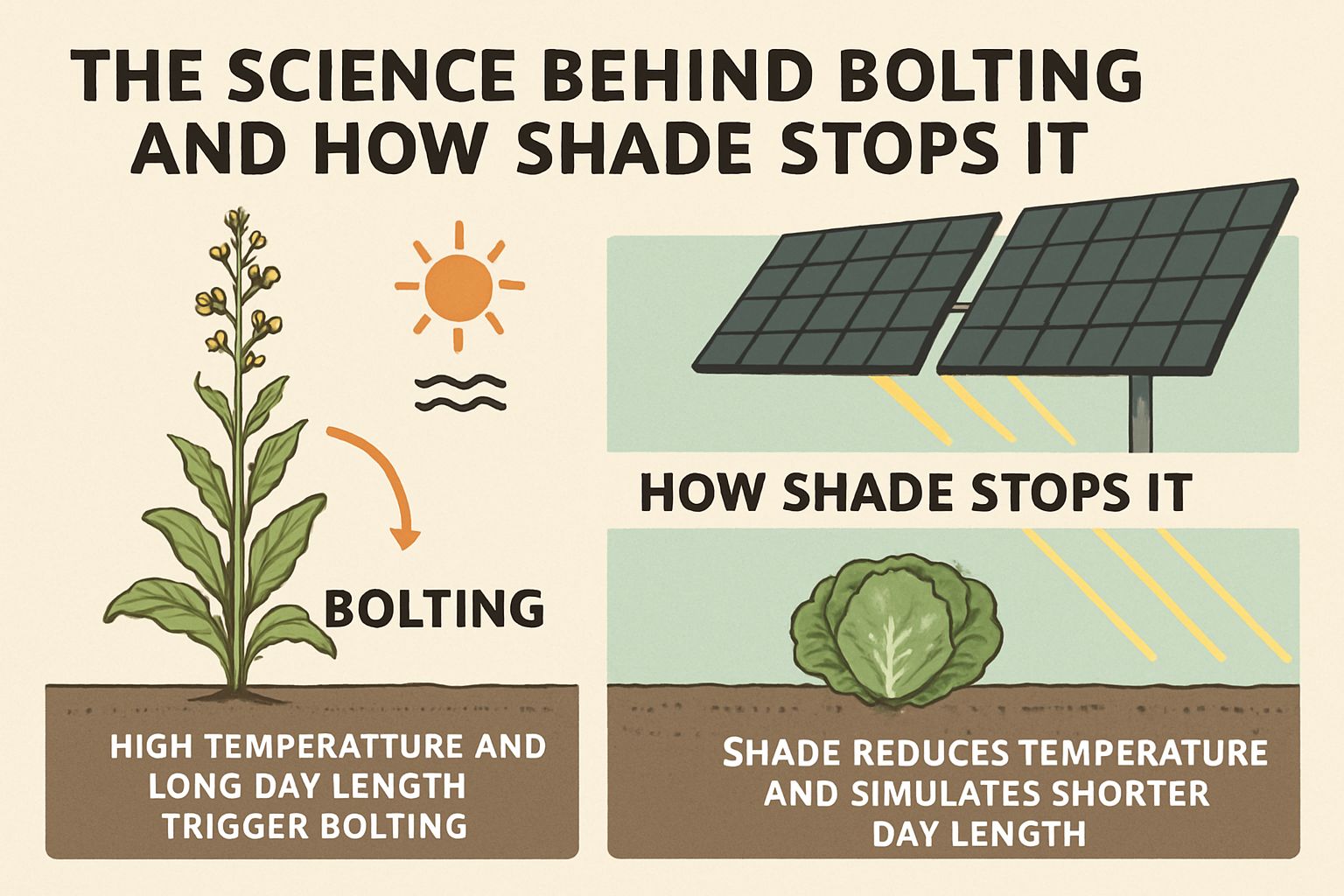
Bolting — the process where a lettuce plant rapidly shifts from vegetative leaf production to flowering and seed production — is triggered by a combination of heat and day length. When temperatures rise above the plant’s thermal threshold and daylight hours extend past a certain point, the plant interprets these signals as a cue to reproduce before it dies from heat. Within days of bolting initiation, leaves become intensely bitter and the plant becomes unusable. For commercial growers and home gardeners alike, a bolted crop means a lost harvest.
How Partial Shade Delays the Bolting Trigger
Solar panels reduce both components of the bolting trigger simultaneously. The thermal buffering effect keeps canopy temperatures below the threshold that initiates bolting, and the partial shading of the plant reduces the total light intensity received — which the plant interprets as a signal that peak summer conditions haven’t fully arrived yet. This effectively fools the plant into staying in vegetative production mode longer than it would in open-field conditions.
The practical result is that lettuce grown under solar panels can be harvested weeks later into the summer than open-field crops before bolting becomes an issue. For growers who sell at farmers markets or supply restaurants, that extended window is a direct revenue advantage — more harvests, longer supply continuity, and less crop loss from heat-induced bolting.
Yield Numbers: What the Research Actually Shows
The performance data from agrivoltaic lettuce trials is consistent and compelling. Leafy greens grown beneath solar arrays show yield increases of 10-30% compared to crops grown in full sun — with the gains being most dramatic during the hottest months of the growing season. The improvement isn’t driven by any single factor but by the combined effect of reduced heat stress, better soil moisture retention, suppressed bolting, and a more stable microclimate overall. When all those advantages stack together, the yield difference becomes significant enough to shift the economics of the entire growing operation. For more insights on how solar panels can enhance crop yield, explore increased growth under solar panels.
10-30% Higher Yields Compared to Open-Field Growing
Leafy greens beneath solar arrays consistently outperform their open-field counterparts, particularly during peak summer heat. Studies on agrivoltaic systems show lettuce demonstrating yield increases of 10-30% compared to crops grown in full sun exposure — a result driven by reduced heat stress, better moisture retention, and a more stable microclimate. The performance gap widens the hotter and drier the growing season gets, making agrivoltaic lettuce production especially valuable in warmer climates.
Water Savings of Up to 29% in Agrivoltaic Systems
Water efficiency is one of the most immediate and measurable benefits of growing lettuce under solar panels. The shade cast by panels dramatically slows moisture loss from the soil surface, keeping the root zone hydrated longer between irrigation events. For lettuce — a crop with shallow roots that depend heavily on consistent surface moisture — this effect directly translates into healthier plants and reduced irrigation labor.
Agrivoltaic research documents water savings of 14-29% compared to equivalent open-field production. At scale, those savings represent a meaningful reduction in both water costs and the environmental footprint of the growing operation. In drought-prone regions or areas with water-use restrictions, that efficiency advantage can be the deciding factor between a viable and non-viable growing season.
The savings aren’t just about the soil. Lettuce leaves transpire less aggressively under partial shade, meaning the plant itself is losing less water through its foliage. Combined with the slower soil evaporation rate, the entire water cycle of the growing bed becomes more conservative — less input required, more efficient uptake, and a more resilient crop during dry spells. This technique is part of the innovative approach known as agrivoltaics, which pairs solar power and agriculture for optimized results.
How Land-Use Efficiency Increases by 60-70%
One of the most compelling arguments for agrivoltaic lettuce production is what it does to the productivity of a single piece of land. When solar energy generation and crop production are co-located on the same plot, the combined output of both systems — measured in a metric called Land Equivalent Ratio (LER) — consistently exceeds what either system would produce independently. Agrivoltaic systems regularly achieve LER values of 1.6 to 1.7, meaning the same land area is producing 60-70% more total value than it would under single-use agriculture or solar-only installations.
Land Equivalent Ratio (LER) Explained: An LER of 1.0 means the combined system performs the same as single-use land. An LER of 1.6-1.7 — consistently achieved in agrivoltaic lettuce systems — means you’re generating 60-70% more total output from the same footprint. For land-constrained operations, this metric fundamentally changes the economics of both farming and solar investment.
For small-scale sustainable farmers, this efficiency gain is transformative. Land is the primary constraint in most growing operations, and any system that dramatically increases output per square foot without degrading the land itself is worth serious consideration. Agrivoltaic lettuce production does exactly that — and it does it while simultaneously generating clean electricity.
The dual-income potential is equally significant. A farmer operating an agrivoltaic system isn’t just selling lettuce — they’re either using the solar energy to offset farm operating costs or, where net metering policies allow, selling excess electricity back to the grid. The lettuce becomes one revenue stream among two, reducing the financial risk of either operation individually.
It’s worth noting that the 60-70% efficiency increase applies most strongly to shade-tolerant crops like lettuce, spinach, and herbs. Crops that require high light intensity see smaller LER gains, which is another reason lettuce consistently emerges as the benchmark crop in agrivoltaic research — its specific growing requirements align almost perfectly with what a solar array naturally provides.
How to Set Up Lettuce Beds Under Solar Panels
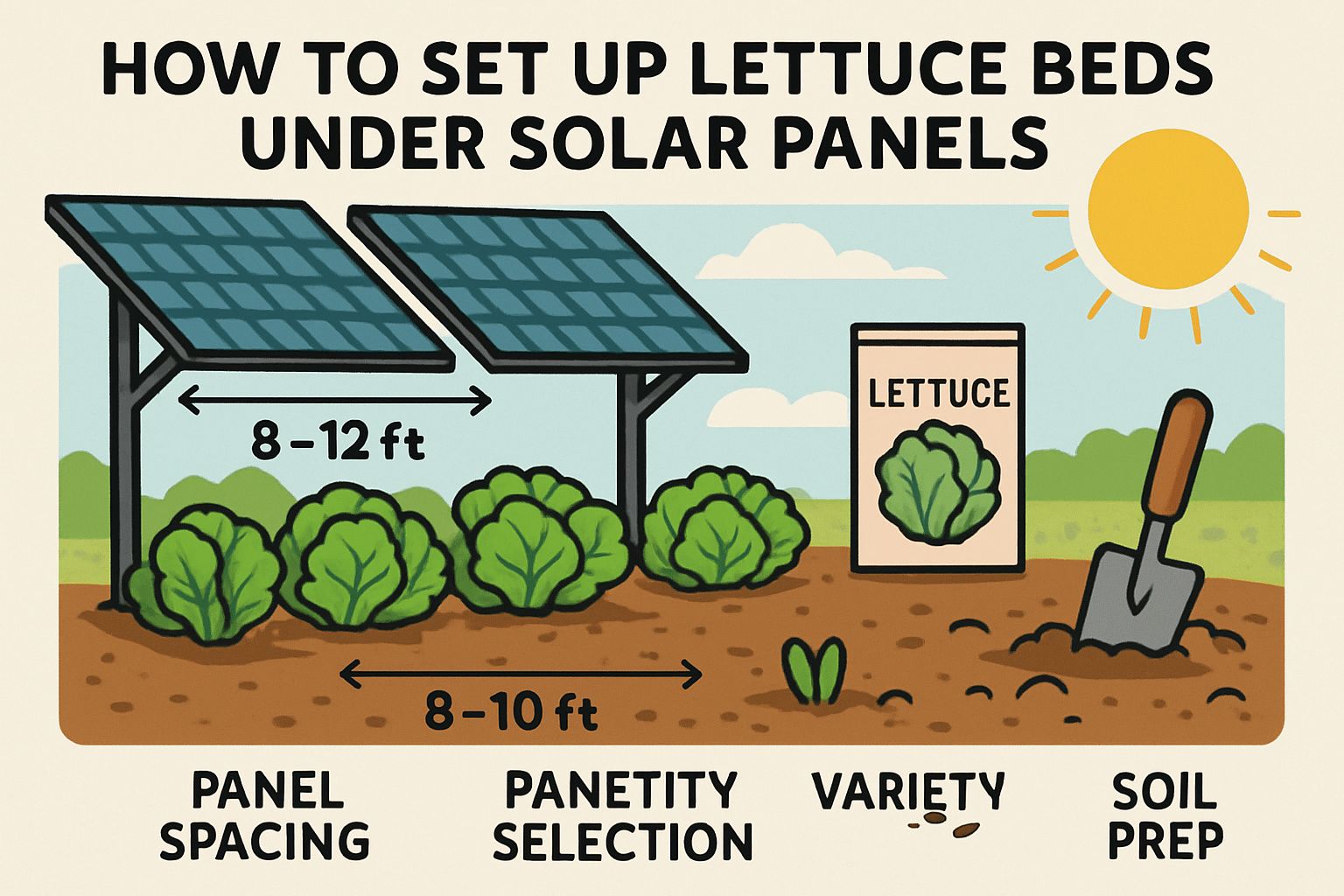
Getting the setup right from the start is what separates a productive agrivoltaic lettuce bed from one that underperforms. The good news is that the core requirements — panel height, spacing, variety selection, and soil prep — are straightforward once you understand what the lettuce actually needs at each stage of its growth cycle.
Ideal Panel Height and Spacing for Lettuce Growth
Panel height is the most critical structural variable in an agrivoltaic lettuce system. Panels mounted too low create excessive shade and restrict airflow, leading to fungal pressure and poor growth. Panels mounted too high reduce the shading benefit and allow more direct sun to penetrate — which partially defeats the purpose. For lettuce production, panels are ideally mounted at a minimum clearance height of 6-8 feet at their lowest edge, allowing adequate working space beneath the array and ensuring the shade pattern covers the growing beds consistently throughout the day.
Spacing between panel rows determines how much ambient light reaches the crop. Purpose-built agrivoltaic arrays are typically designed to transmit 30-60% of ambient light to the growing surface below — which falls precisely within the optimal photosynthesis range for lettuce. Achieving this light transmission level requires balancing row spacing against panel tilt angle, both of which vary depending on geographic latitude and seasonal sun angle. For more insights, explore the best crops that thrive under solar panels.
For retrofitting existing residential or farm solar arrays, the key is measuring actual light levels at soil surface using a basic lux meter at multiple points across the growing bed. Aim for readings between 10,000 and 30,000 lux during peak sunlight hours — the range where lettuce photosynthesizes efficiently without heat stress. Readings consistently below 10,000 lux indicate too much shade and may favor only the most shade-tolerant varieties.
|
Setup Variable |
Recommended Specification |
Why It Matters |
|---|---|---|
|
Minimum Panel Height |
6-8 feet at lowest edge |
Working clearance & airflow |
|
Light Transmission Target |
30-60% of ambient light |
Optimal lettuce photosynthesis range |
|
Soil Surface Lux Range |
10,000 – 30,000 lux (peak hours) |
Productive growth without heat stress |
|
Row Spacing |
Varies by latitude & tilt angle |
Controls light distribution across beds |
|
Panel Tilt Angle |
Matched to geographic latitude |
Maximizes energy output & shade consistency |
Best Lettuce Varieties for Low-Light Conditions
Not all lettuce varieties respond equally to the reduced light conditions under solar panels. Loose-leaf varieties are generally the most adaptable, with several performing exceptionally well in partial shade. Black Seeded Simpson, Oak Leaf, and Buttercrunch are among the most reliably productive choices for agrivoltaic beds — each offering good leaf production under lower light intensities without sacrificing flavor or texture.
Romaine varieties require slightly more light than loose-leaf types but still perform adequately under panels that transmit 40-60% of ambient light. Little Gem romaine is particularly well-suited to agrivoltaic conditions due to its compact growth habit and tolerance for temperature fluctuation. Iceberg-type lettuces are the least suitable for under-panel growing — their high light requirement and sensitivity to humidity make them prone to tip burn and poor head formation in the shadier microclimate.
For growers maximizing seasonal production, consider staggering varieties across the bed — planting shade-loving loose-leaf types directly beneath the densest panel coverage and positioning romaine varieties at the bed edges where more light penetrates. This spatial diversity lets you extract productivity from the entire growing area regardless of the light gradient across the bed.
Soil Preparation and Moisture Management Tips
Soil preparation under solar panels follows the same principles as any high-performance lettuce bed, with one important adjustment: drainage. The reduced evaporation rate beneath panels means soil stays wetter longer than in open-field conditions. While this is largely beneficial, poorly draining soils can become waterlogged, creating anaerobic conditions at the root zone and increasing disease pressure. Before planting, amend the soil with compost at a ratio of 30% by volume and ensure the bed has adequate slope or subsurface drainage to prevent standing water after heavy rainfall. For more insights, explore the concept of agrivoltaics which combines solar power and agriculture effectively.
Mulching is highly effective in agrivoltaic lettuce beds. A 2-3 inch layer of straw or wood chip mulch over the soil surface further reduces evaporation, moderates soil temperature, and suppresses weeds — compounding the moisture retention benefits already created by panel shade. Combined with drip irrigation delivering water directly to the root zone, a mulched agrivoltaic lettuce bed can operate at peak efficiency with a fraction of the water input required by open-field production.
When to Plant for Maximum Seasonal Advantage
The extended growing window is one of the biggest practical advantages of agrivoltaic lettuce production. In most climates, you can start planting 2-4 weeks earlier in spring than open-field growing allows, because the panels buffer against late frosts and moderate soil temperature. At the other end of the season, the heat buffering effect lets you continue harvesting 3-5 weeks deeper into summer before bolting pressure forces a halt. In warm climates (zones 8-11), this can effectively create a year-round lettuce production system where open-field growing would be impossible during summer months.
Common Mistakes to Avoid in Agrivoltaic Lettuce Growing
Most agrivoltaic lettuce setups that underperform share a common set of avoidable errors. The biggest is treating the space under existing solar panels as a passive growing environment without measuring actual light levels first. Panel orientation, row spacing, and seasonal sun angle create highly variable light conditions across a growing bed — and planting uniformly without accounting for that variation leads to uneven growth, patchy yields, and frustrated growers who dismiss agrivoltaic production as unreliable when the real issue was setup, not the concept.
A second common mistake is overwatering. Because the soil stays wetter longer under panels, growers accustomed to open-field irrigation schedules often apply far more water than the crop actually needs. The result is root rot, fungal disease, and poor plant vigor — problems that are then incorrectly attributed to insufficient light rather than excessive moisture. Before establishing an irrigation schedule, spend one full week monitoring soil moisture at 2-inch and 4-inch depths at multiple points across the bed. Let the data from those readings set your watering frequency, not the calendar.
Choosing the Wrong Panel Orientation
Panel orientation has a direct impact on the quality and consistency of shade reaching your lettuce beds. In the northern hemisphere, south-facing panels maximize solar energy capture — but they also create a highly directional shade pattern that moves significantly throughout the day. East-west oriented panels, by contrast, cast a more diffuse, consistent shade across the growing surface beneath them. For lettuce production specifically, east-west panel orientation is increasingly favored in agrivoltaic system design because it produces more even light distribution across the bed without the concentrated midday shade gaps that south-facing arrays create.
Ignoring Light Distribution Across the Growing Bed
The single most common technical mistake in agrivoltaic lettuce production is treating the growing bed as though it receives uniform light. It doesn’t. Depending on panel spacing, tilt angle, and time of day, light levels across a single bed can vary by a factor of two or three — from deep shade directly beneath the panels to near-full sun in the gaps between rows. Planting the same variety at the same density across that entire gradient without accounting for the variation leads to inconsistent growth, premature bolting in the higher-light zones, and stunted development in the denser shade areas.
- Use a lux meter to map light levels across the entire bed at three points in the day: 9 AM, noon, and 3 PM
- Mark zones of consistent shade, partial shade, and higher light exposure before planting
- Plant the most shade-tolerant varieties — like Black Seeded Simpson and Oak Leaf — in the deepest shade zones
- Position romaine types like Little Gem at bed edges where light penetration is strongest
- Revisit your light map seasonally — sun angle changes between spring and summer shift the shade pattern significantly
Taking an hour to map your light distribution before planting season saves weeks of troubleshooting mid-crop. It also lets you maximize yield across the entire bed rather than optimizing for only the zones that happened to perform well by accident.
Light mapping is also a useful diagnostic tool mid-season. If certain sections of a bed are bolting while others aren’t, pulling up your light readings and comparing them to bolting locations will almost always reveal the pattern — and give you the data you need to adjust plant placement in the next rotation. For more information on integrating solar power and agriculture, you can explore agrivoltaics and its benefits.
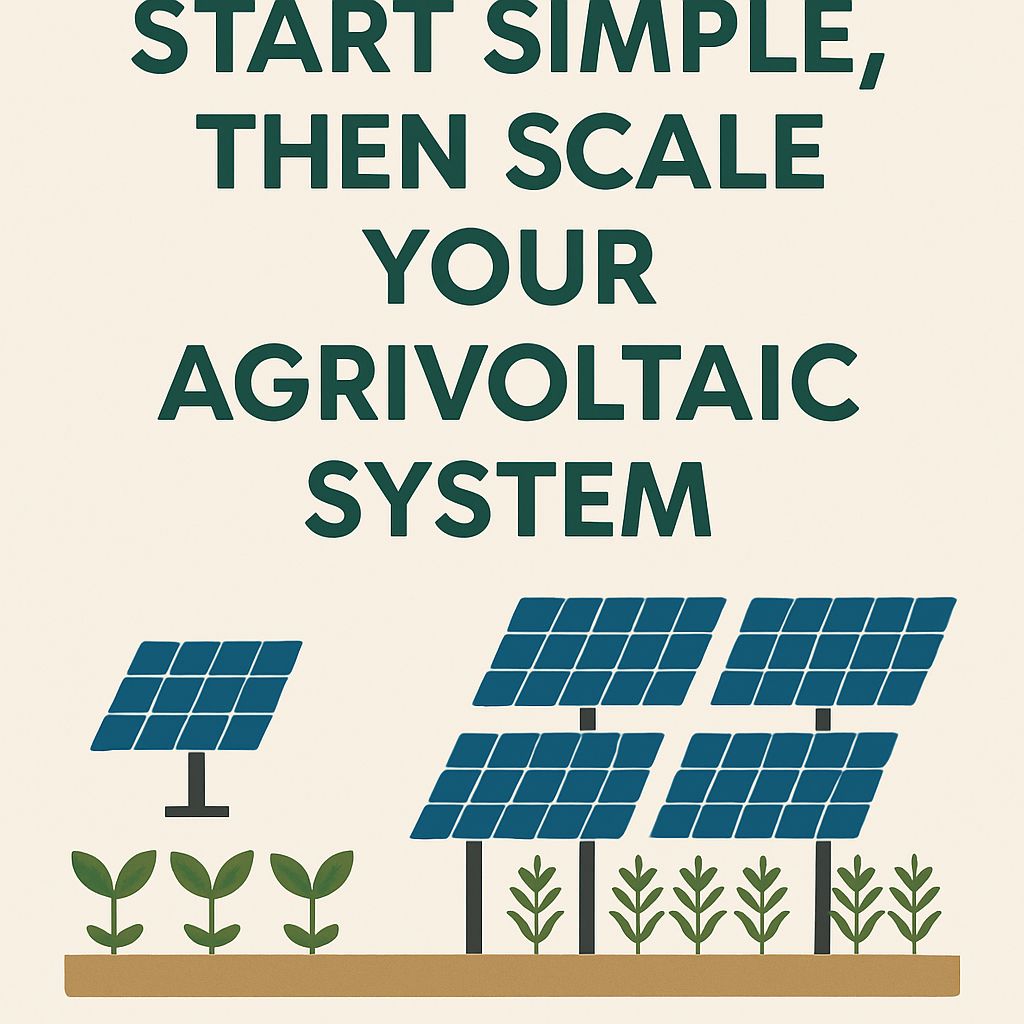
Start Simple, Then Scale Your Agrivoltaic System
The most sustainable way to enter agrivoltaic lettuce production is to start with the infrastructure you already have. If you have an existing solar array — residential rooftop, ground-mount farm system, or carport panels — measure the light levels beneath it, amend a small bed, and run a single-season trial with two or three lettuce varieties. That first season will teach you more about your specific microclimate, soil drainage behavior, and variety performance than any amount of prior reading can. The data you collect from a modest first planting becomes the foundation for every scaling decision that follows. For more insights, explore the best crops that thrive under solar panels.
Once you’ve validated that your specific panel setup produces the right light conditions and you’ve dialed in your irrigation schedule, scaling is straightforward. Expand the growing beds progressively, add drip irrigation infrastructure, and begin staggering planting dates every two to three weeks to create a continuous harvest stream rather than a single large flush. Many agrivoltaic growers find that the lettuce operation becomes self-financing within one to two seasons — with produce sales covering the incremental costs of bed expansion and irrigation upgrades while the solar system continues generating energy returns independently.
Frequently Asked Questions
Here are the most common questions growers ask when exploring agrivoltaic lettuce production for the first time — answered directly, with the details that actually matter for implementation.
Does growing lettuce under solar panels reduce the panels’ energy output?
Growing crops beneath solar panels does not meaningfully reduce their energy output. The panels capture light from above, and the crops growing below have no impact on the solar radiation hitting the panel surface. In fact, some agrivoltaic research suggests that the transpiration from plants beneath the panels — which releases moisture into the air — creates a slight cooling effect on the panels themselves, which can marginally improve energy output, since solar panels lose efficiency as they heat up. You’re not compromising the solar system by adding lettuce beneath it. You’re adding a productive layer to infrastructure that would otherwise be generating nothing from the ground below.
What types of lettuce grow best under solar panels?
Loose-leaf varieties consistently outperform other types in agrivoltaic conditions. Black Seeded Simpson, Oak Leaf, and Buttercrunch are the top performers across most agrivoltaic trials — tolerating lower light intensities while maintaining strong leaf production and good flavor. Little Gem romaine works well at bed edges where light penetration is higher. Iceberg types are the least suitable due to their high light requirements and sensitivity to the elevated humidity that panel shade creates.
How much water can I save by growing lettuce under solar panels?
Agrivoltaic research documents water savings of 14-29% compared to equivalent open-field lettuce production. The primary driver is reduced soil evaporation beneath panel shade — the soil surface stays cooler and loses moisture far more slowly than exposed open-field soil, keeping the root zone hydrated longer between irrigation events.
The lettuce plant itself also contributes to the water savings. Under partial shade, leaf transpiration rates drop — meaning the plant pulls and releases less water through its foliage throughout the day. This compounds the soil-level moisture retention to create a growing system that is genuinely more water-efficient at every level, not just at the soil surface.
In practical terms, a grower irrigating an open-field lettuce bed twice daily during a summer heat event may find that the equivalent agrivoltaic bed needs watering only once — sometimes less. Over a full growing season, that reduction adds up to significant water savings and a measurably lower operating cost. The actual savings you experience will depend on your climate zone, panel density, and soil type, but the directional result — less water needed, more efficiently used — is consistent across growing environments.
- 14-29% less irrigation water required compared to open-field production
- Reduced soil evaporation is the primary mechanism — shade keeps the surface cooler and wetter longer
- Lower leaf transpiration rates add a secondary layer of water conservation at the plant level
- Hot, arid climates (USDA zones 8-11) see the most dramatic water savings
- Pairing drip irrigation with panel shade maximizes both water efficiency and root zone consistency
For growers in water-restricted regions or those operating under irrigation permits, the documented efficiency gains from agrivoltaic lettuce production may also support applications for expanded growing operations under existing water-use allocations — a regulatory advantage worth exploring with your local agricultural extension office.
Can I retrofit existing solar panels for agrivoltaic lettuce growing?
Yes — and it’s often the most practical entry point for growers new to agrivoltaics. Ground-mounted solar arrays are the easiest to work with, provided the panels are mounted at sufficient height (at least 6-8 feet at their lowest edge) to allow access and airflow beneath the array. The key step before planting is measuring actual light levels at soil surface using a lux meter to confirm that the space beneath your specific array falls within the 10,000-30,000 lux range that supports productive lettuce growth. Arrays that are mounted too low or too densely packed may transmit less than 10,000 lux — which is insufficient for most lettuce varieties and will require either structural modification or a shift to extremely shade-tolerant crops. Rooftop panels are generally not suitable for under-panel growing for obvious physical access reasons, but the ground beneath a rooftop-panel structure — a pergola-style installation, for example — can sometimes be utilized depending on clearance and sun angle.
How many harvests per season can I get from lettuce grown under solar panels?
The number of harvests depends on your climate zone, the varieties you’re growing, and whether you’re using cut-and-come-again harvesting or full-head harvesting. Under agrivoltaic conditions in a temperate climate (zones 6-7), most growers can achieve three to four full lettuce rotations per season — starting earlier in spring and extending further into summer than open-field production allows. In warm climates (zones 8-11), the heat-buffering effect of the panels can push that number to five or six rotations, effectively enabling year-round lettuce production where it would otherwise be impossible during summer months.
Cut-and-come-again harvesting — where outer leaves are removed and the plant continues producing from the center — extends the productive life of each individual plant significantly. Under the stable microclimate of a solar array, lettuce harvested this way can remain productive for six to eight weeks per plant before quality begins to decline. Combined with staggered planting dates every two to three weeks, a well-managed agrivoltaic lettuce bed can deliver a continuous harvest stream throughout the growing season with minimal gaps.
The practical takeaway is that agrivoltaic lettuce production doesn’t just improve the quality and quantity of each individual harvest — it fundamentally extends the calendar window during which harvesting is possible. More time in the ground means more food produced, more revenue generated, and a growing system that works harder for the land it occupies than almost any single-use alternative available to sustainable farmers today.


Leave a Reply