
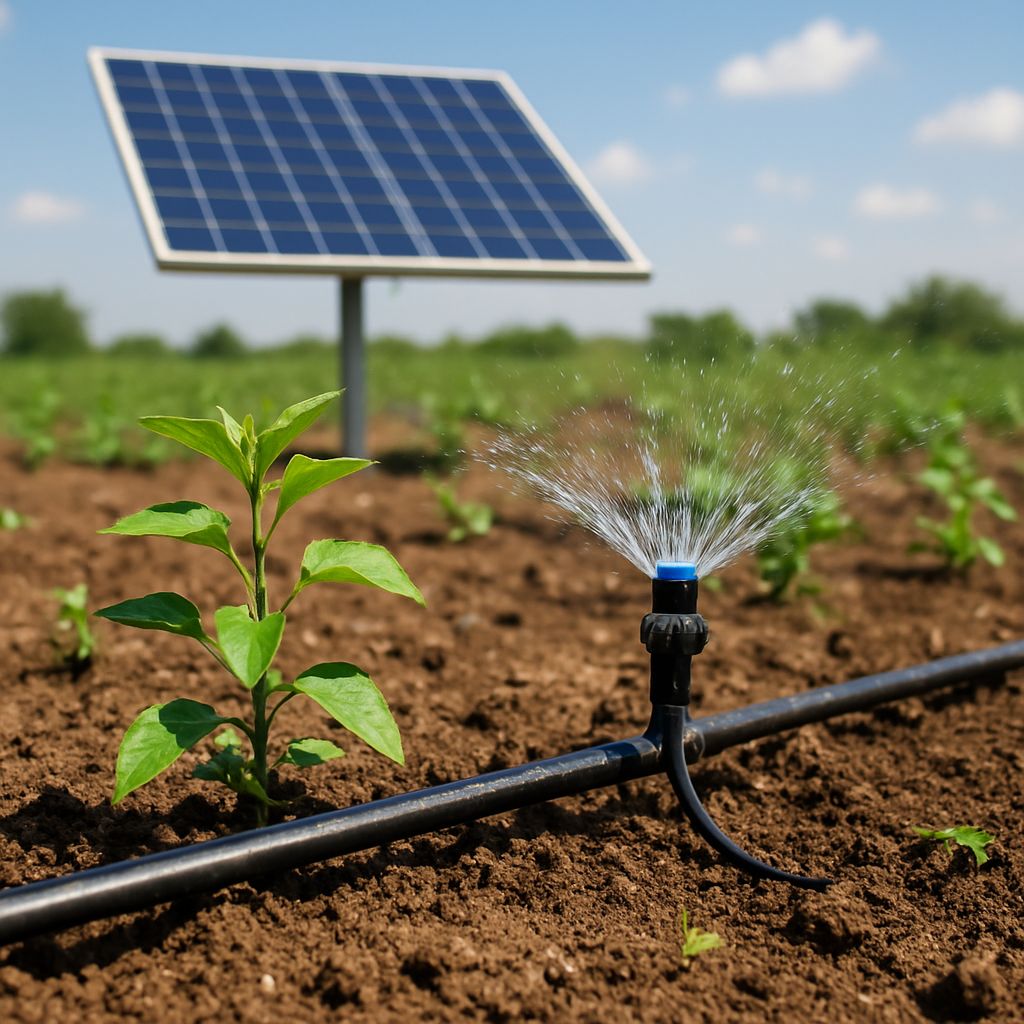
Article At-A-Glance
- Solar-powered micro-sprinkler systems can reduce water usage by up to 50% compared to traditional irrigation methods while cutting energy costs by 70%
- These systems deliver precise water application directly to plant root zones, dramatically improving crop health and yields
- Government incentives can offset up to 30% of installation costs, making sustainable irrigation more accessible
- The combination of solar power and micro-sprinklers works effectively across diverse climates and for various crop types
- Modern solar irrigation systems can be integrated with smart farming technologies for automated, data-driven water management
Farming is evolving. As water scarcity and energy costs continue to rise, farmers are seeking innovative solutions that maintain productivity while reducing resource consumption. Solar-powered micro-sprinkler irrigation stands at the intersection of these needs, offering a sustainable path forward for agriculture of all scales. By harnessing renewable energy to power efficient water delivery systems, farmers can significantly reduce both their environmental impact and operational expenses. GrowingSolarMist provides comprehensive resources to help farmers transition to these sustainable systems, offering expert guidance on system selection and installation.
What is Micro-Sprinklers Irrigation
Micro-sprinkler irrigation is a low-pressure, localized watering system that delivers water directly to plant root zones through small sprinkler heads positioned at or near ground level. Unlike traditional irrigation methods that flood fields or spray water high into the air, micro-sprinklers operate closer to the soil surface, minimizing water loss through evaporation and wind drift. These systems typically operate at pressures between 15-30 PSI (pounds per square inch), allowing for gentle, efficient water distribution that preserves soil structure while meeting plant hydration needs.
How Micro-Sprinklers Deliver Water Efficiently
The genius of micro-sprinkler systems lies in their precision. Each sprinkler head delivers water in a controlled pattern—typically covering a diameter of 3-25 feet depending on the model and pressure—creating a gentle rain-like distribution that mimics natural precipitation. This targeted approach means water reaches exactly where it’s needed rather than being wasted on non-productive areas. The slow application rate allows water to penetrate soil gradually, reducing runoff and promoting deeper root development.
Unlike drip irrigation, micro-sprinklers provide broader coverage while still maintaining efficiency, making them ideal for row crops, orchards, vineyards, and vegetable gardens. The spray pattern can be adjusted through interchangeable nozzles, allowing farmers to customize water distribution based on crop spacing, soil type, and seasonal requirements. This adaptability helps achieve optimal soil moisture levels without waterlogging or creating drought stress.
Modern micro-sprinkler systems also incorporate flow regulators and pressure-compensating features that ensure uniform water distribution across fields with varying elevations or distances from the water source. This consistency is crucial for even crop development and maximum yield potential, eliminating the common problem of under-watered or over-watered zones that plague traditional irrigation methods. For farmers interested in integrating renewable energy, exploring solar irrigation systems could be a beneficial step.
Types of Crops Best Suited for Micro-Sprinkler Systems
Micro-sprinkler irrigation excels with permanent plantings like fruit and nut trees, vineyards, berries, and woody ornamentals. These crops benefit from the broader water distribution pattern compared to drip irrigation, ensuring adequate soil moisture throughout the root zone. For tree crops, micro-sprinklers can be positioned to target the critical root absorption zone while avoiding trunk contact that could promote disease. The gentle spray also creates beneficial humidity around low-growing berries without wetting foliage excessively. Additionally, integrating agrivoltaics in agriculture can enhance water efficiency and crop yields.
Water Conservation Benefits Compared to Traditional Methods
The water savings achieved through micro-sprinkler systems are substantial and measurable. Traditional flood irrigation typically operates at 40-50% efficiency, meaning half the water applied never benefits the crop. Conventional overhead sprinklers improve this somewhat to 60-75% efficiency, but still lose significant water to evaporation and wind drift. In contrast, well-designed micro-sprinkler systems achieve 80-90% efficiency, reducing water consumption by up to 50% compared to older methods.
These water savings translate directly into reduced pumping costs, lower water bills, and the ability to irrigate more acreage with existing water rights. For farmers in water-restricted regions or facing drought conditions, the efficiency gains can mean the difference between a successful harvest and crop failure. Additionally, the precise application minimizes surface runoff and deep percolation, reducing the movement of fertilizers and pesticides into groundwater and nearby water bodies.
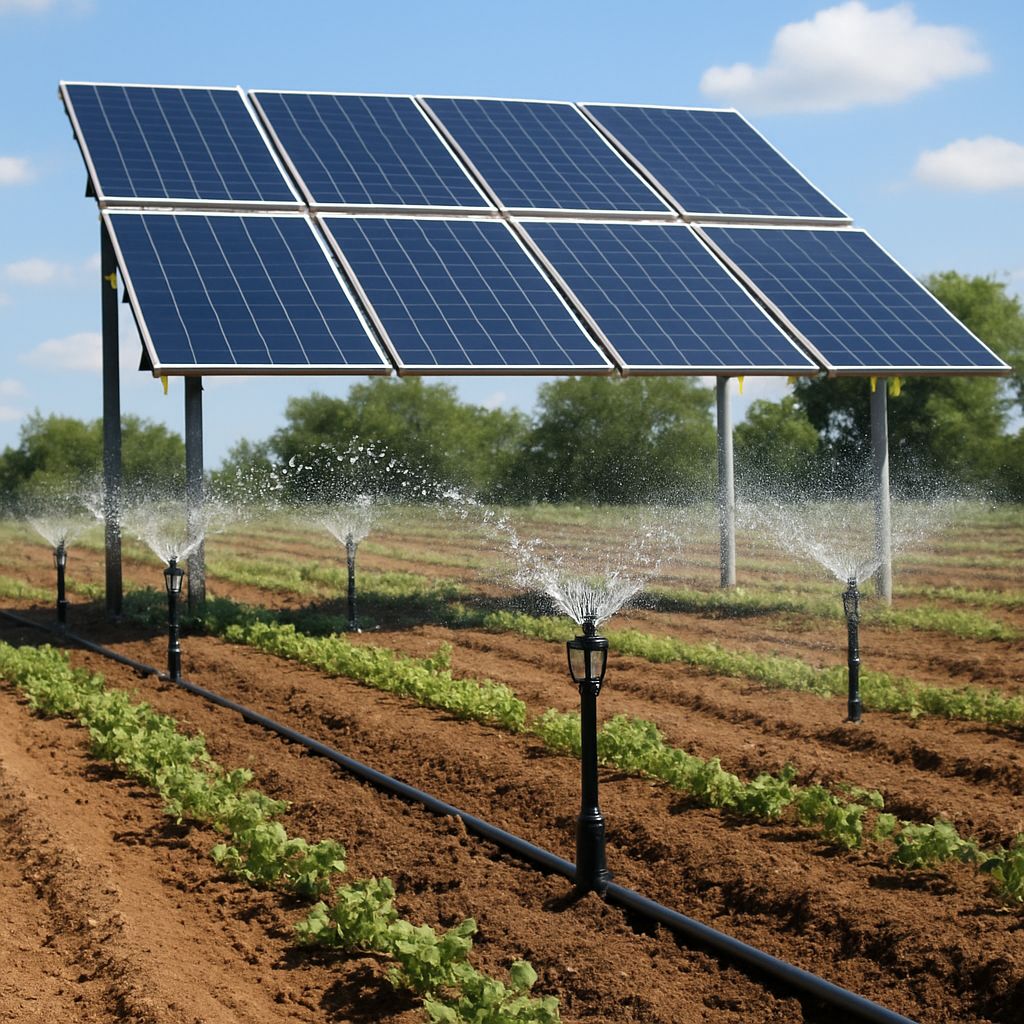
Solar Panel Integration with Micro-Sprinklers Irrigation Systems
The marriage of solar power with micro-sprinkler technology creates a self-sustaining irrigation solution that operates independently of the electrical grid. This integration is particularly valuable for remote agricultural areas without reliable power infrastructure or for farmers looking to reduce dependency on fluctuating energy markets. Solar-powered systems generate maximum energy during summer months when irrigation needs typically peak, creating a natural alignment between energy production and consumption patterns.
How Solar Power Works for Pumping Water
Solar-powered irrigation systems convert sunlight into electricity through photovoltaic panels, which then powers pumps that pressurize and distribute water through the irrigation network. The process begins when sunlight strikes the silicon cells within solar panels, causing electrons to flow and generate direct current (DC) electricity. This electricity can either directly power DC pumps or be converted to alternating current (AC) through an inverter for use with standard AC pumps.
Components Needed for a Complete Solar Irrigation System
A complete solar-powered micro-sprinkler irrigation system consists of several essential components working together. The foundation begins with appropriately sized solar panels mounted on sturdy frames oriented to maximize sun exposure throughout the day. These panels connect to a charge controller that regulates the electrical flow to prevent battery damage and optimize charging efficiency. For systems requiring operation during cloudy periods or at night, deep-cycle batteries store excess energy for later use.
The water pumping component typically includes either submersible pumps for wells or surface pumps for ponds and water storage tanks. These pumps must be matched precisely to the solar array capacity and water requirements of the irrigation zone. Between the pump and micro-sprinklers, a filtration system removes particulates that might clog the small orifices of the sprinkler heads. Pressure regulators ensure consistent water delivery regardless of elevation changes or distance from the pump source.
Modern systems often incorporate smart controllers that automate irrigation scheduling based on soil moisture sensors, weather forecasts, and evapotranspiration data. These controllers can be programmed to operate specific zones at optimal times, further enhancing water efficiency and crop response. Some advanced setups include remote monitoring capabilities that allow farmers to adjust settings via smartphone applications, providing real-time control even from off-site locations.
Sizing Solar Arrays for Different Farm Sizes
Proper sizing of the solar array is critical for system performance and determines much of the initial investment cost. For small market gardens of 1-2 acres, a 1-2 kW system might suffice to power a modest pump delivering water to micro-sprinklers. These smaller systems typically cost between $3,000-$7,000 installed and can operate low-pressure irrigation for 4-6 hours daily during peak growing seasons. To learn more about these systems, check out solar irrigation systems.
Medium-sized operations of 5-20 acres generally require 3-10 kW systems, depending on water depth, irrigation frequency, and crop water demands. These more substantial installations might range from $10,000-$30,000 but deliver proportionately greater capacity for expanded acreage. Large commercial farms irrigating 50+ acres often implement multiple solar arrays distributed across the property, each serving specific irrigation zones with 15-25 kW capacity or greater, representing investments of $50,000 or more.
The sizing calculation must account for the pump’s power requirements, daily runtime needs, available sunlight hours in the region, and seasonal variations in solar intensity. Professional solar irrigation designers typically analyze water requirements based on crop type, climate data, and soil conditions to determine the appropriate system capacity. Oversizing provides room for future expansion but increases initial costs, while undersizing can lead to insufficient irrigation during critical growth periods.
Cost-Benefit Analysis for Farmers
The decision to implement solar-powered micro-sprinkler irrigation ultimately comes down to economics for most farmers. While the environmental benefits are significant, agricultural operations must remain financially viable to survive. Fortunately, the business case for these systems has strengthened considerably as solar panel costs have declined by over 70% in the past decade while energy prices continue their upward trajectory.
Initial Investment Requirements
The upfront cost of a solar-powered micro-sprinkler system varies significantly based on farm size, water source depth, and desired automation level. For small farms under 5 acres, basic systems start around $5,000-$15,000 fully installed. This investment covers solar panels (typically 2-4 kW capacity), mounting hardware, pump controller, compatible water pump, filtration system, mainline piping, zone valves, and the micro-sprinkler components. Mid-sized operations between 10-25 acres might invest $20,000-$50,000 for systems with greater capacity, battery backup, and more sophisticated controls. Large commercial installations can exceed $100,000 but provide proportionately greater coverage and capability.
Long-Term Savings on Energy Costs
The operational savings from solar-powered irrigation accumulate significantly over time. Conventional electric irrigation systems for a 10-acre farm might consume $2,000-$5,000 in electricity annually, depending on local utility rates and irrigation requirements. By eliminating these ongoing energy costs, solar-powered systems essentially provide free irrigation after the initial investment is recovered. For diesel-powered pump systems, the savings are even more dramatic—fuel costs of $5,000-$10,000 annually can be eliminated entirely, while also reducing maintenance expenses associated with combustion engines.
Available Government Incentives and Rebates
Government programs significantly improve the economics of solar irrigation adoption across many regions. In the United States, the federal Investment Tax Credit currently allows agricultural businesses to deduct 30% of the solar system cost from their taxes, effectively reducing the net investment by nearly a third. Many states offer additional incentives—California’s SWEEP program provides grants up to $100,000 for water and energy-efficient irrigation projects, while the USDA’s REAP program offers grants covering up to 25% of renewable energy system costs for rural agricultural producers. Various conservation districts and watershed organizations provide cost-sharing programs specifically for irrigation efficiency upgrades, sometimes covering 50-75% of micro-sprinkler components.
Typical ROI Timeline for Small and Large Farms
Return on investment timelines vary based on system size, local energy costs, incentive availability, and irrigation frequency. Small farms typically achieve complete payback within 4-7 years when accounting for available tax incentives and grants. Medium-sized operations often see faster returns of 3-5 years due to greater energy displacement and economies of scale in system installation. Large commercial farms with high irrigation demands might recoup their investment in as little as 2-4 years, particularly in regions with expensive electricity or diesel fuel.
Beyond the direct financial returns, many farmers report additional economic benefits that accelerate the effective ROI. Crop yields often increase 15-25% due to more consistent soil moisture levels, while water savings can reduce costs or allow expansion of irrigated acreage within existing water rights. The elimination of fuel delivery for remote pumping stations and reduced pump maintenance further contribute to the overall economic advantage of solar-powered systems.
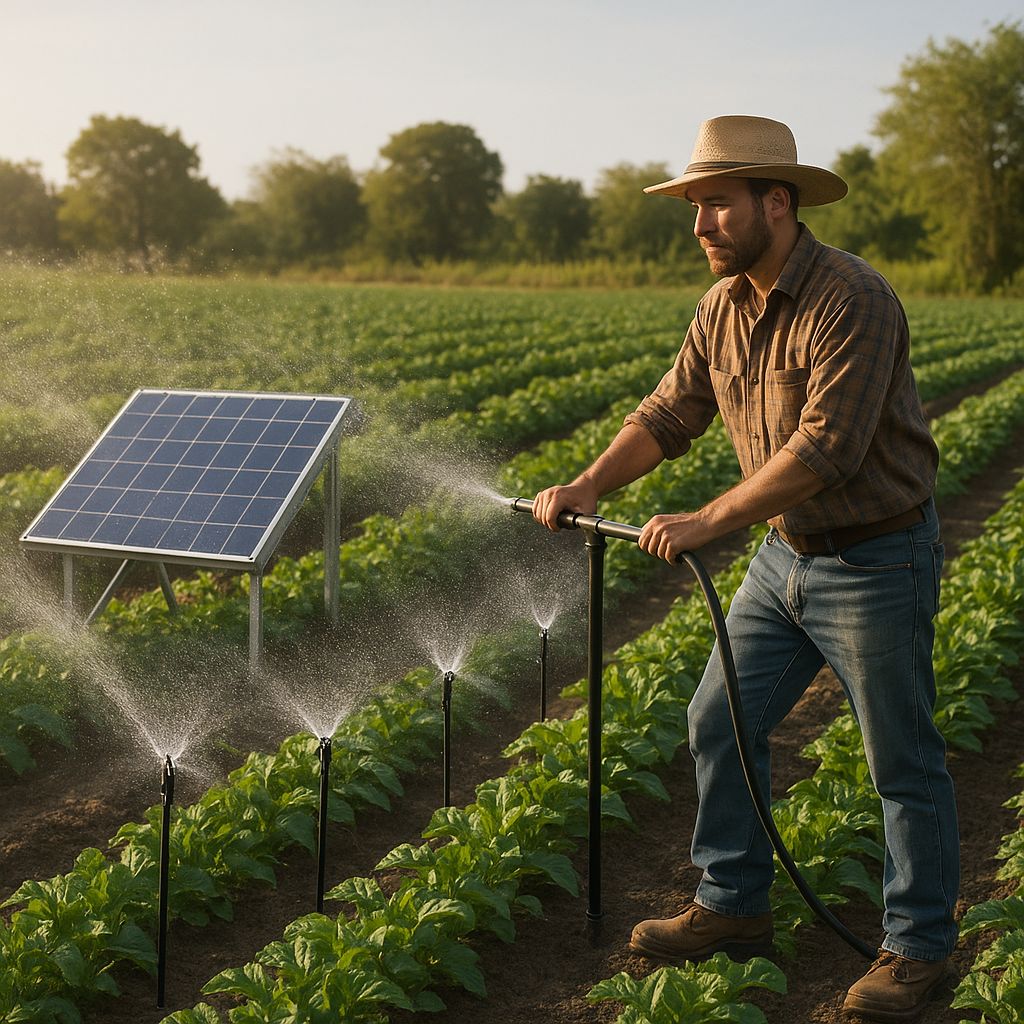
“Solar Micro-Sprinkler Irrigation …” from growingsolarmist.com and used with no modifications.
Real-World Success Stories of Farmers Using Solar Micro-Sprinklers Irrigation System
The practical benefits of solar-powered micro-sprinkler systems are best illustrated through the experiences of farmers who have successfully implemented this technology. Across diverse agricultural regions, producers report transformative results that extend beyond simple energy savings. These case studies demonstrate how combining renewable energy with efficient water delivery creates resilient farming operations better positioned to weather both climate and economic challenges. For more insights, explore what every farmer needs to know about solar irrigation systems.
From small organic vegetable operations to large commercial orchards, the adaptability of these systems has proven effective across various scales and production models. The following examples highlight specific outcomes achieved by early adopters who have pioneered the integration of solar power with micro-sprinkler technology.
Small Farm Case Study: Water and Energy Savings
On a 12-acre diversified vegetable farm in California’s Central Valley, owner Maria Rodriguez implemented a 4.5 kW solar-powered micro-sprinkler system to replace her aging diesel pump setup. The $18,500 investment was offset by a $5,500 USDA REAP grant and a 30% federal tax credit, reducing her net cost to approximately $7,450. Within the first year, Maria documented water usage reductions of 42% compared to her previous overhead irrigation method, allowing her to expand production by an additional 3 acres without increasing her water allocation. The elimination of $3,200 in annual diesel costs and $800 in pump maintenance expenses resulted in a complete return on investment in just under 2 years.
Large Agricultural Operation Results
Sunshine Orchards, a 120-acre almond operation in the San Joaquin Valley, installed a distributed solar micro-sprinkler system with three 15 kW arrays powering different irrigation zones. Their $95,000 investment (after incentives) replaced an annual $28,000 electricity expense, while the precision watering increased nut production by 18% in the first harvest following installation. The operation also reported reduced fungal disease pressure due to minimized leaf wetness and improved pollination rates attributed to drier orchard floor conditions during bloom. Their calculated ROI period of 2.7 years was further accelerated by quality improvements that commanded premium pricing for their crop.
Climate-Specific Adaptations
In the humid southeastern United States, Berry Hill Farms adapted solar-powered micro-sprinkler technology to address their specific climate challenges. Owner James Wilson installed a 7 kW system with battery storage to power micro-sprinklers in his 15-acre blueberry operation. The system was programmed to deliver precise early morning irrigation, minimizing humidity during peak disease-pressure hours. Despite the region’s frequent cloud cover, the system’s energy storage capabilities ensured consistent operation, reducing fungicide applications by 35% and increasing marketable yields by 22%. The improved berry quality and extended harvest window provided an additional $15,000 in revenue annually, contributing significantly to the system’s 4-year payback period.
Environmental Impact of Solar-Powered Irrigation
Beyond the economic advantages, solar-powered micro-sprinkler systems deliver substantial environmental benefits that align with both regulatory requirements and consumer preferences for sustainably produced food. The environmental footprint of traditional irrigation methods—particularly those powered by fossil fuels—extends well beyond the field boundaries. By adopting renewable energy for irrigation, farmers become active participants in climate change mitigation while simultaneously building resilience against its effects.
Carbon Footprint Reduction Metrics
Converting from grid electricity or diesel-powered pumps to solar irrigation dramatically reduces a farm’s carbon emissions. A typical 10-acre farm using conventional electric pumps for irrigation might generate approximately 10-15 metric tons of CO2 annually, depending on the local energy mix. Diesel-powered systems produce even higher emissions—often 20-30 metric tons for the same acreage—plus additional pollutants like nitrogen oxides and particulate matter. By switching to solar power, these emissions are essentially eliminated, with the only carbon cost being the embedded energy in manufacturing and installing the equipment (typically offset within 1-3 years of operation).
For larger operations, the climate impact becomes even more significant. A 100-acre farm transitioning to solar-powered irrigation can prevent 100-300 metric tons of CO2 emissions annually—equivalent to removing 20-65 passenger vehicles from the road each year. Some agricultural regions have begun quantifying these emissions reductions as carbon credits, providing additional revenue streams for farmers who adopt renewable energy systems. These climate benefits also support marketing advantages for crops branded as sustainably produced, potentially commanding premium prices in environmentally conscious markets.
Water Conservation Statistics
The water efficiency gains from micro-sprinkler systems translate into substantial conservation impacts at scale. Research conducted across multiple growing regions shows consistent water savings of 30-50% compared to conventional overhead sprinklers and 50-70% compared to flood irrigation. For a 50-acre farm in a water-stressed region, these reductions can preserve 15-30 million gallons annually—water that remains available for ecosystem functions or other agricultural uses. The precise application also minimizes runoff, reducing watershed contamination from agricultural chemicals that might otherwise be transported off-site with excess irrigation water.
This conservation aspect becomes increasingly valuable as climate change intensifies water scarcity in many agricultural regions. By adopting more efficient irrigation powered by renewable energy, farmers not only reduce their current environmental footprint but also build resilience against future water restrictions and higher pumping costs. Some water districts have implemented financial incentives for verified water conservation, providing additional economic benefits beyond the direct savings on water bills.
Soil Health Improvements
The gentle, controlled water application from micro-sprinklers contributes significantly to improved soil health compared to high-volume irrigation methods. By maintaining optimal soil moisture without saturation, these systems promote better soil structure and increased microbial activity. The reduced water volume prevents leaching of valuable nutrients beyond the root zone, improving fertilizer efficiency and reducing groundwater contamination. Farmers using micro-sprinklers frequently report decreased soil compaction and erosion, as the smaller droplet size causes minimal surface disturbance compared to higher-pressure systems.
The soil benefits extend to carbon sequestration potential as well. Healthier soils with greater microbial diversity tend to build organic matter more effectively, potentially storing additional atmospheric carbon over time. This improvement creates a virtuous cycle—as soil organic matter increases, water retention capacity improves, further enhancing irrigation efficiency and crop resilience during dry periods. For perennial crops like orchards and vineyards, these cumulative soil improvements represent a long-term asset that appreciates over years of proper management.
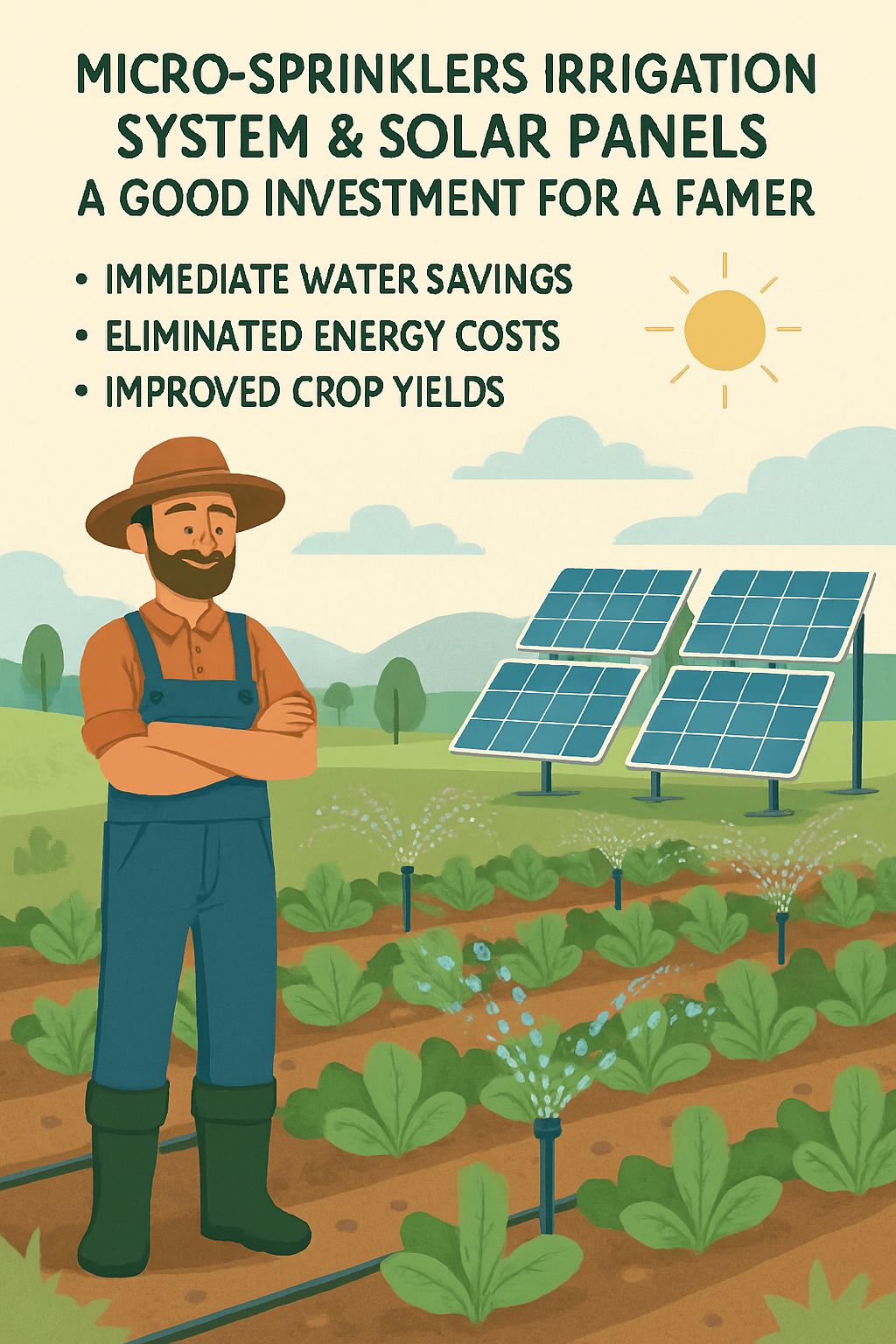
Connecting Micro-Sprinklers Irrigation System & Solar Panels a Good investment for a Farmer
When evaluating whether solar-powered micro-sprinkler systems represent a worthwhile investment, farmers must consider their specific operational context, climate conditions, crop requirements, and financial situation. For most agricultural operations, the combination of immediate water savings, eliminated energy costs, improved crop yields, and available incentives creates a compelling economic case with payback periods typically ranging from 2-7 years. The systems offer particular advantages for remote locations without reliable grid access, areas with high electricity rates, regions facing water restrictions, and farms growing high-value crops that benefit from precise irrigation.
Beyond the direct financial returns, these systems provide valuable risk mitigation against volatile energy prices, increasingly stringent water regulations, and extreme weather events associated with climate change. They also position agricultural operations favorably for emerging carbon markets, sustainability certification programs, and consumer preferences for environmentally responsible production methods. For farmers planning long-term succession or seeking to enhance property values, the infrastructure improvements represented by renewable irrigation systems can significantly increase land valuations and operational attractiveness to future owners or investors.
Frequently Asked Questions (FAQ)
As solar-powered micro-sprinkler systems gain popularity in agricultural communities, farmers considering adoption typically share common questions about implementation, performance, and maintenance. The following responses address the most frequent concerns based on real-world experience across diverse farming operations and growing regions.
These practical insights can help producers develop realistic expectations and make informed decisions about whether this technology aligns with their specific agricultural context and business objectives. For more information, explore the benefits of solar-powered micro-sprinkler irrigation systems.
How much maintenance do solar-powered micro-sprinkler systems require?
Solar-powered micro-sprinkler systems require significantly less maintenance than conventional pump systems. The solar panels themselves need only occasional cleaning (2-4 times annually) to remove dust and debris that might reduce efficiency, with more frequent attention in very dusty regions. The panels have no moving parts and typically come with 25-year warranties. The micro-sprinkler components require standard irrigation maintenance—regular filter cleaning (weekly to monthly depending on water quality), occasional nozzle inspection for clogging, and seasonal system flushing. Electronic components like controllers and sensors typically function for 7-10 years before replacement becomes necessary. Overall, most farmers report 70-80% reduction in maintenance time and cost compared to fossil fuel-powered systems, with much greater reliability and fewer emergency repairs.
Can these systems work in cloudy or rainy regions?
Solar-powered irrigation systems can indeed function effectively in regions with less-than-ideal solar conditions, though proper system design becomes even more critical. In cloudier climates, installations typically include oversized solar arrays (25-50% larger than minimum requirements) and battery storage to accumulate energy during available sunlight hours. Many farmers in the Pacific Northwest and Northeastern US successfully operate solar irrigation by incorporating intelligent controllers that prioritize pumping during peak solar production and schedule irrigation events based on weather forecasts. Modern systems can also include hybrid capabilities that automatically switch to grid power when solar production falls below threshold levels, ensuring irrigation continuity while still capturing renewable energy whenever available.
For areas with distinct rainy seasons, the natural alignment between reduced irrigation needs during wet periods and reduced solar production creates a workable balance. During predominantly cloudy seasons when irrigation is less necessary, the reduced system output typically remains sufficient for occasional supplemental watering.
What’s the lifespan of a typical solar irrigation system?
A well-designed solar-powered micro-sprinkler irrigation system delivers exceptional longevity compared to conventional alternatives. The solar panels themselves typically carry 25-30 year manufacturer warranties, with actual functional lifespans often exceeding 35 years with only gradual efficiency decline (approximately 0.5-0.8% annually). The mounting hardware, constructed from galvanized steel or aluminum, generally lasts 25+ years even in harsh environmental conditions. Electronic components including pumps, controllers, and sensors represent the more frequently replaced elements, with typical operational lives of 7-15 years depending on water quality and environmental exposure. The micro-sprinkler components themselves (tubing, emitters, valves) typically require partial replacement every 5-10 years due to UV degradation and mineral buildup, similar to conventional irrigation systems. When properly maintained, the complete system often functions effectively for 20+ years, with incremental component replacements rather than complete system overhauls.
Do I need battery storage for my solar irrigation setup?
Whether battery storage makes sense for a solar irrigation system depends on several factors including irrigation scheduling flexibility, crop water sensitivity, and local climate patterns. For many operations where irrigation can occur during daylight hours, direct-drive systems without batteries may be sufficient and reduce initial costs by 15-30%. These battery-free systems pump water when the sun shines, often into elevated tanks or reservoirs for gravity distribution, or directly into irrigation lines. However, battery storage becomes essential for operations requiring night irrigation (to reduce evaporation or accommodate labor schedules), crops with minimal irrigation flexibility, or regions with inconsistent solar availability. Modern lithium iron phosphate batteries sized to provide 1-3 days of autonomous operation typically add $5,000-$15,000 to system costs for small to medium installations but offer greater operational control and irrigation reliability. Many farmers begin with direct-drive systems and add battery capacity incrementally as their budget allows, creating a scalable approach to system development.
How do solar-powered systems perform during peak water demand periods?
Solar-powered irrigation systems show excellent alignment with peak water demand periods, as maximum irrigation requirements typically coincide with maximum solar production during summer months. This natural synchronization means systems often perform at their best precisely when needed most. For operations in extreme heat regions where water requirements may exceed even optimal solar production, proper system sizing becomes crucial—engineers typically design for the “worst-case scenario” of maximum water demand. Complementary practices like mulching, shade cloth, and windbreaks can reduce evaporation and crop water needs during extreme conditions, extending the effectiveness of solar irrigation capacity.
Smart irrigation controllers further optimize performance during high-demand periods by scheduling multiple shorter irrigation cycles during peak solar hours rather than single extended watering events, maximizing the direct utilization of solar energy without requiring oversized battery storage. Some advanced systems incorporate weather forecasting to proactively increase irrigation before predicted heat waves, building soil moisture reserves when energy is abundant.
For farmers seeking sustainable solutions to both energy and water challenges, solar-powered micro-sprinkler irrigation represents a technologically mature option with proven field performance across diverse agricultural contexts. By carefully matching system design to specific farm requirements and utilizing available incentive programs, producers of all scales can access the benefits of renewable irrigation while building resilience against future resource constraints.







Leave a Reply