
Article-at-a-Glance
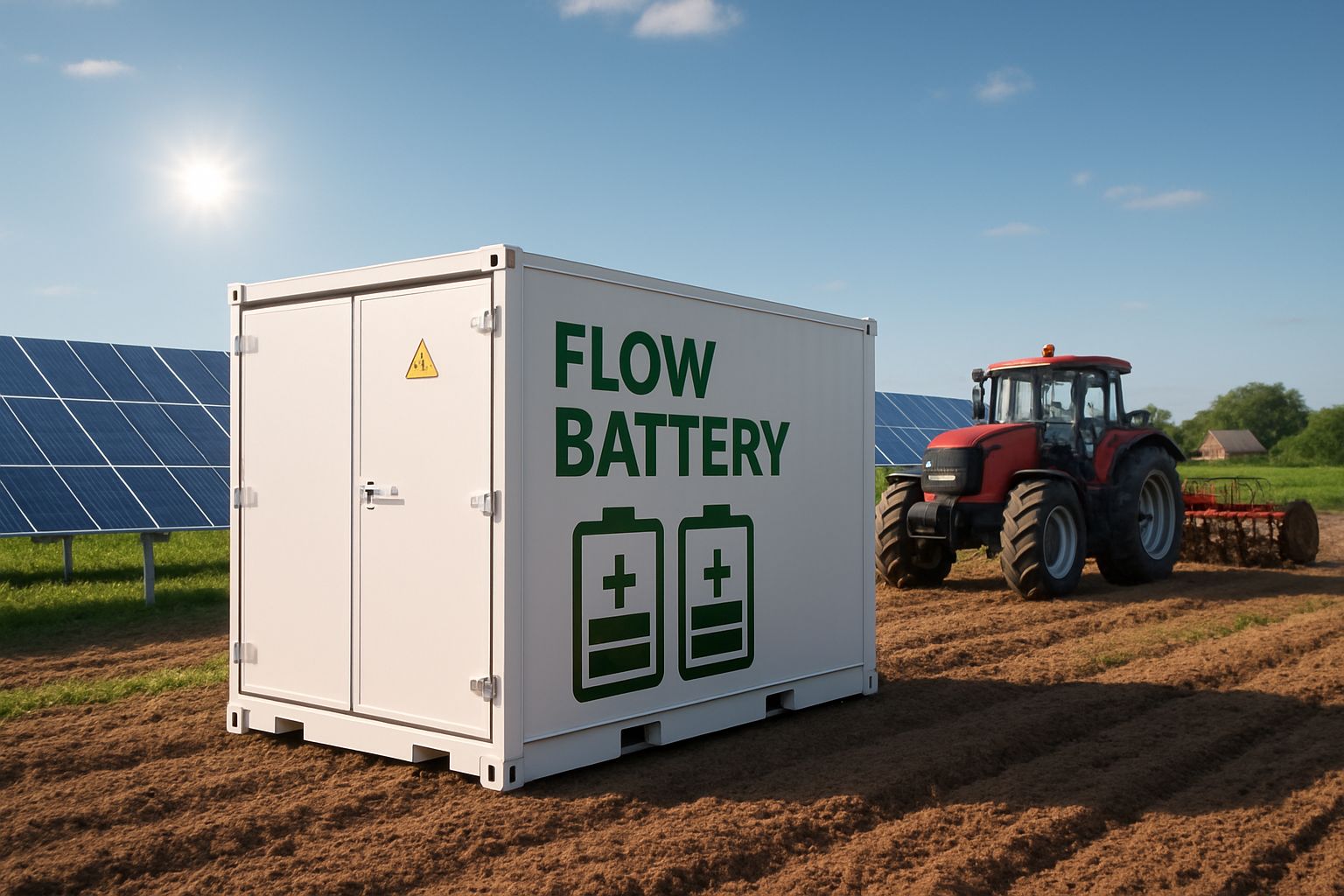
- Flow batteries paired with solar panels provide farmers with 24/7 power reliability, eliminating dependency on daylight hours or grid connectivity for critical farm operations.
- Unlike traditional lithium-ion batteries, flow batteries offer 15-20+ years of operational life with minimal capacity degradation, making them ideal for long-term agricultural investments.
- Agricultural operations can scale their energy storage capacity independently from power rating, allowing farms to grow their energy storage system alongside expanding operational needs.
- Flow batteries present significant safety advantages over lithium-ion alternatives, with non-flammable electrolytes and lower fire risks – critical considerations for rural farm settings.
- Flow Battery Solutions helps farmers implement continuous power systems that transform intermittent solar generation into consistent, reliable energy needed for modern farming practices.
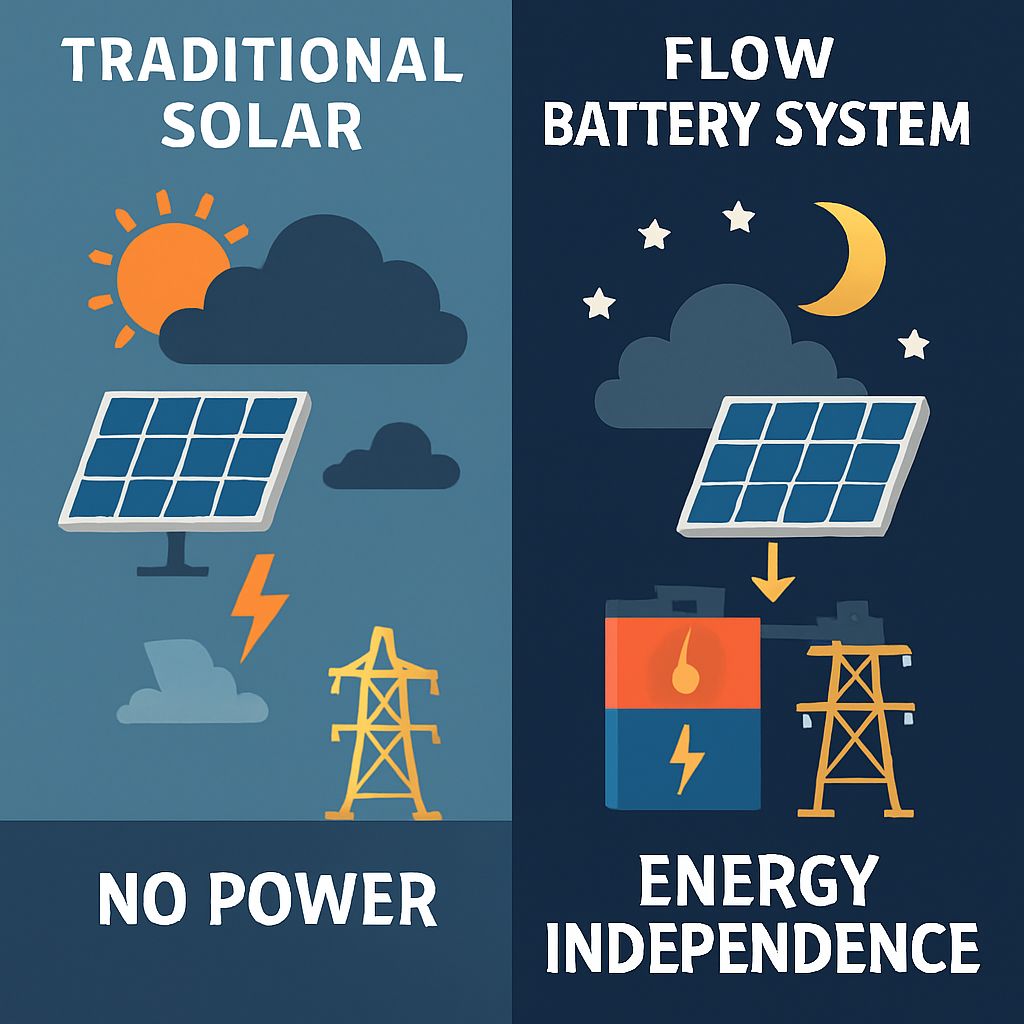
Solar power alone can’t deliver the consistent energy agriculture demands. When the sun sets or clouds gather, traditional solar systems leave critical farm operations vulnerable to disruption – a risk no modern farmer can afford to take.
Flow batteries are changing the game for agricultural operations by bridging the gap between intermittent solar generation and the 24/7 power requirements of modern farming. These innovative storage solutions store excess solar energy produced during peak daylight hours, making it available whenever needed – even during extended cloudy periods or overnight operations.
Why Farmers Need to Use Batteries with Solar Power on a Farm
Modern agriculture requires reliable electricity around the clock. Irrigation systems, climate control for livestock buildings, cold storage facilities, and essential equipment simply cannot afford downtime. Without battery storage, solar panels only provide power when the sun shines – leaving critical operations vulnerable during nights, cloudy days, or grid outages. For operations like dairy farms or poultry facilities, even brief power interruptions during extreme weather can lead to devastating losses.
Integrating battery storage with solar installations transforms an intermittent energy source into a dependable power supply that matches the 24/7 demands of farming. Flow Battery Solutions has been working with agricultural operations nationwide to implement continuous power systems that provide independence from unpredictable utility rates and unreliable grid service in rural areas.
Beyond reliability, battery storage enables farmers to optimize their energy economics. By storing excess solar production rather than selling it back to the grid at low rates, then using it during peak-rate periods, farms can significantly reduce their electricity costs. This load-shifting capability typically reduces monthly utility bills by 30-50% compared to solar-only installations.
How Flow Batteries Are Revolutionizing Farm Solar Power
Not all battery technologies are created equal for agricultural applications. While lithium-ion batteries dominate residential solar storage, their limitations become apparent in demanding farm environments. Flow batteries—sometimes called redox flow batteries—utilize liquid electrolytes stored in separate tanks, fundamentally changing how energy is stored and delivered in ways particularly advantageous for agricultural settings. For farmers looking to enhance their energy solutions, solar power benefits can significantly improve operations efficiency.
24/7 Power Availability Even When the Sun Isn’t Shining
“The biggest game-changer for our operation was gaining true energy independence. With our flow battery system, we’re running irrigation cycles based on crop needs rather than solar panel output or electric rates. During last summer’s heat wave, this capability quite literally saved our harvest while neighboring farms struggled with grid restrictions and outages.” – James Peterson, California Almond Grower
Traditional solar setups fall short when clouds roll in or night falls. Flow battery systems fundamentally transform this equation by providing true energy independence. Farmers can program irrigation cycles based on crop requirements rather than daylight availability or peak electricity rates. Essential climate control systems for livestock facilities remain operational during extended cloudy periods, and cold storage units maintain critical temperatures regardless of solar conditions.
For remote agricultural operations with limited or unreliable grid connections, flow batteries paired with solar generation create self-sufficient microgrids. These systems can operate entirely off-grid or in hybrid configurations that prioritize stored solar energy while maintaining grid connectivity as backup. This flexibility proves invaluable during seasonal peak demands when every operational hour counts.
The capacity for multi-day energy storage distinguishes flow batteries from most alternatives. While typical lithium-ion systems provide 4-6 hours of backup, flow batteries can be economically sized for 10+ hours of storage – or even multiple days for critical systems. This extended duration proves essential during harvest seasons when processing equipment must run continuously regardless of weather conditions.
Longer Lifespan Than Traditional Batteries (15-20+ Years)
Flow battery systems dramatically outperform lithium-ion alternatives in lifecycle economics for agricultural applications. While the initial investment may be higher, flow batteries typically deliver 15-20+ years of operation with minimal capacity degradation – compared to 7-10 years for lithium-ion systems that lose significant capacity over time. This extended operational life aligns perfectly with the long-term planning horizons of agricultural businesses and the 25-30 year lifespan of solar panel installations.
Scalable Storage Solutions for Farms of All Sizes
Unlike conventional batteries where energy capacity and power output are directly linked, flow batteries allow independent scaling of these critical parameters. This unique characteristic enables farmers to precisely match storage capacity to their specific operational needs without overbuilding expensive power conversion systems. As agricultural operations grow, additional electrolyte tanks can be added to increase storage duration without replacing the entire system – a significant advantage over fixed-capacity alternatives.
The modularity of flow battery systems allows phased implementation, enabling farmers to start with critical loads and expand as budget permits or operational needs grow. This flexibility proves particularly valuable for seasonal agricultural businesses where energy demands fluctuate dramatically throughout the year. During peak seasons, systems can be configured for maximum power delivery, while shifting to extended duration storage during slower periods. For those looking to enhance their farm’s energy efficiency, exploring solar power benefits for farmers can provide valuable insights.
The Solar Storage Problem Every Farmer Faces
Solar panels generate most of their power during midday when farm energy consumption often dips – creating a fundamental mismatch between production and demand. Without adequate storage, farmers must either sell excess power back to utilities at increasingly unfavorable rates or watch potential savings literally vanish into thin air. This production-consumption gap becomes particularly problematic during harvest seasons when extended processing hours demand electricity well beyond sunset.
Rural agricultural operations frequently face additional challenges with grid infrastructure limitations and reliability. Remote locations often experience more frequent and longer-lasting outages than urban areas, while also dealing with power quality issues like voltage fluctuations that can damage sensitive equipment. For operations requiring consistent power for livestock climate control or cold storage, these inconsistencies create significant operational risks that solar alone cannot address.
Weather dependency creates another critical vulnerability for solar-only systems on farms. Extended cloudy periods during critical growth stages can severely impact irrigation schedules, while seasonal storms that coincide with power outages can devastate temperature-sensitive operations. Flow battery systems mitigate these risks by providing multi-day power reserves that maintain essential operations regardless of weather conditions or grid status.
Why Solar Panels Alone Can’t Meet Farm Energy Demands
The fundamental challenge with solar-only farm systems is timing – panels produce power during daylight hours, but many critical agricultural processes require electricity around the clock. Irrigation pumps often operate during cooler evening hours to minimize evaporation loss. Climate control systems for livestock buildings demand consistent power regardless of sunlight availability. Processing equipment frequently runs extended hours during harvest seasons when every operational minute counts toward preserving crop quality. For more insights on optimizing energy use, explore how farm energy independence with solar power can be achieved.
Without storage, solar-powered farms remain tethered to utility grids for essential nighttime and cloudy-day operations. This dependency not only limits potential savings but also leaves critical systems vulnerable to increasingly frequent weather-related grid disruptions. For remote operations with limited grid infrastructure, this constraint can severely restrict productivity and increase operational risk during peak seasons when utility demand charges are highest.
The economic equation further complicates solar-only installations as utilities across agricultural regions implement time-of-use rates and reduced net metering compensation. Power generated during sunny midday hours receives progressively lower credit while evening and early morning consumption faces premium rates. Without storage to shift solar production to high-value consumption periods, the financial return on solar investments diminishes dramatically for agricultural operations.
Limitations of Traditional Battery Storage in Agricultural Settings
Conventional lithium-ion batteries, while effective for residential applications, present significant limitations in demanding agricultural environments. Their typical 4-6 hour storage duration proves insufficient for overnight agricultural operations requiring 10+ hours of consistent power. Temperature sensitivity creates another major hurdle, as battery performance and lifespan deteriorate rapidly in the extreme conditions common in farm settings – from freezing winters to scorching summer equipment rooms. For more on alternative solutions, you can explore about flow batteries and their potential benefits.
Cycle life limitations further complicate lithium-ion economics for farms. Agricultural operations often require daily deep cycling to maximize solar utilization, rapidly accelerating capacity degradation in traditional batteries. This deterioration typically necessitates replacement after 7-10 years – creating a significant mid-lifecycle reinvestment requirement that disrupts farm financial planning and reduces overall return on investment compared to longer-lived alternatives.
Safety concerns present perhaps the most significant barrier to widespread lithium-ion adoption in agricultural settings. Farm environments frequently combine dust, vibration, mechanical impacts, and limited fire suppression capabilities – all risk factors for conventional battery technologies. The potential for thermal runaway events in remote structures with valuable livestock or equipment creates an unacceptable risk profile for many agricultural operations, particularly those with limited insurance coverage for battery-related incidents.
The High Cost of Power Interruptions to Farm Operations
“When you’re dealing with livestock, power isn’t just about convenience – it’s about survival. During last winter’s ice storm, neighboring farms lost entire herds when ventilation systems failed. Our flow battery system kept critical systems running for three days until utility crews could reach our area. That single event paid for our entire system.” – Robert Miller, Poultry Producer
For modern agricultural operations, power interruptions create cascading financial impacts far beyond simple inconvenience. Climate control failures in poultry or dairy facilities can cause catastrophic losses within hours during extreme weather. Irrigation interruptions during critical growth stages can reduce crop yields by 30-50% even if power is restored the following day. Cold storage failures during harvest periods can destroy months of careful cultivation within a single unpowered day.
Beyond these direct losses, power inconsistency creates significant labor inefficiencies as farm workers scramble to implement emergency procedures or manually operate critical systems. For operations with tight seasonal timing windows, these disruptions can force expensive overtime labor or result in quality degradation that reduces market value. In processing operations, power interruptions often necessitate complete system cleanouts and restarts, creating substantial product waste and operational delays. Learn more about how solar power benefits farmers by improving operational efficiency.
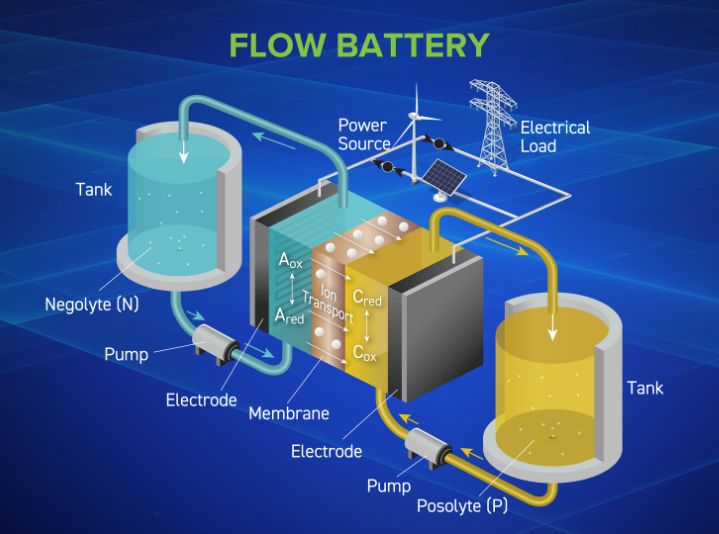
“About Flow Batteries | Battery Council …” from batterycouncil.org and used with no modifications.
What Makes Flow Batteries Different from Other Storage Options
The fundamental architecture of flow batteries creates distinct advantages for agricultural applications. Unlike conventional batteries where energy is stored within the cell structure itself, flow systems store energy in liquid electrolytes contained in external tanks. This physical separation between power generation components (the cell stack) and energy storage (the electrolyte tanks) creates unique benefits particularly valuable for farm implementations.
This distinctive design allows unlimited cycling without degradation – a stark contrast to conventional batteries where each cycle incrementally damages internal structures. Flow batteries can be fully discharged daily for decades without significant capacity loss, making them ideal for agricultural operations requiring consistent deep cycling to maximize solar utilization. This characteristic eliminates the degradation-related “oversizing” required with conventional systems to maintain end-of-life performance.
Perhaps most significantly for agricultural implementations, flow batteries eliminate the thermal runaway risks associated with lithium-ion technologies. Their aqueous electrolytes are inherently non-flammable, while physical separation of components prevents cascading cell failures. This safety profile proves particularly valuable in dusty farm environments with limited fire suppression capabilities and expensive equipment or livestock housed in the same structures.
How Flow Batteries Actually Work
Flow batteries operate on a remarkably straightforward principle compared to other energy storage technologies. Two liquid electrolytes containing different redox couples are stored in separate tanks and pumped through an electrochemical cell containing a membrane that prevents the liquids from mixing while allowing ion exchange. During charging, the electrical energy from solar panels drives a chemical reaction that stores energy in the electrolyte solutions. When power is needed, the process reverses as the liquids flow back through the cell, releasing the stored energy as electricity.
This elegant design creates several distinct advantages for farm implementations. Since energy is stored in the liquid electrolytes rather than solid materials, capacity can be expanded simply by increasing tank size without replacing other components. The physical separation of power (determined by the cell stack size) and energy (determined by tank volume) allows farmers to optimize each parameter independently based on their specific operational needs – something impossible with conventional battery technologies.
The mechanical simplicity of flow battery systems results in minimal maintenance requirements aligned with existing farm equipment service patterns. Primary maintenance involves simple fluid checks and occasional pump service – familiar activities for agricultural operations already managing irrigation and hydraulic systems. This straightforward maintenance profile contrasts sharply with the specialized servicing needed for more complex storage technologies.
Vanadium vs. Zinc-Bromide: Which Chemistry Is Best for Farm Use
Two primary flow battery chemistries have emerged as frontrunners for agricultural applications, each with distinct advantages for specific farm scenarios. Vanadium redox flow batteries (VRFB) utilize the same element in both tanks, eliminating cross-contamination concerns and enabling extremely long operational lifespans. These systems excel in applications requiring decades of daily cycling with minimal degradation, making them ideal for permanent installations integrated with fixed solar arrays on established agricultural operations.
Zinc-bromide flow batteries offer higher energy density and typically lower upfront costs, making them well-suited for space-constrained farm installations or operations with seasonal energy storage needs. Their more compact footprint integrates well with existing farm structures, while their deeper discharge capabilities provide advantages for applications requiring maximum energy storage in minimum space. For farms dealing with extreme temperature variations, zinc-bromide systems generally offer better cold-weather performance without supplemental heating requirements.
For agricultural implementations, the chemistry choice often depends more on farm-specific operational patterns than technical specifications. Operations requiring the absolute lowest lifetime cost and longest service life typically favor vanadium systems despite higher initial investment. Farms with space constraints or seasonal usage patterns often find zinc-bromide solutions more economically efficient despite slightly shorter operational lifespans and more complex maintenance requirements.
Temperature Tolerance Advantages in Harsh Farm Environments
Flow battery systems maintain stable performance across far wider temperature ranges than conventional lithium-ion alternatives – a critical advantage in agricultural settings where expensive climate-controlled battery rooms are impractical. Most flow systems operate efficiently from 20°F to 120°F (-6°C to 49°C) with minimal capacity impact, while some newer formulations extend this range even further. This temperature tolerance enables installations in existing farm buildings without costly HVAC upgrades or specialized enclosures required by temperature-sensitive alternatives.
For extreme environments, the liquid nature of flow battery electrolytes simplifies temperature management compared to solid-state alternatives. Simple insulation or basic heating elements maintain optimal operating conditions even in severe weather, with energy requirements significantly lower than climate control systems needed for conventional batteries. This resilience proves particularly valuable for remote agricultural installations where reliability during weather extremes remains essential but infrastructure support is limited.
Safety Profile Compared to Lithium-Ion Batteries
Safety considerations take center stage when evaluating energy storage for agricultural implementations, particularly given the high-value equipment, livestock, and limited emergency response in many rural locations. Flow batteries present an inherently safer profile than lithium-ion alternatives, with non-flammable water-based electrolytes and physically separated components that eliminate cascading thermal runaway risks. This fundamental safety advantage eliminates the need for complex fire suppression systems and creates buffer zones often required with conventional battery installations.
Beyond fire safety, flow battery systems contain no rare earth materials or toxic components that could contaminate agricultural land in case of damage or leakage. Most electrolytes are classified as low-hazard materials with straightforward containment requirements similar to existing farm chemicals. This safety profile often simplifies permitting and insurance requirements compared to alternatives, particularly in structures housing valuable livestock or located near environmentally sensitive agricultural areas.
Key Agricultural Applications for Flow Battery Systems
1. Irrigation System Management Beyond Daylight Hours
Consistent irrigation represents the lifeblood of crop production, yet traditional solar systems limit watering to daylight hours without battery backup. Flow battery storage transforms this equation by enabling irrigation scheduling based on agronomic requirements rather than power availability. Farmers can program pumps to operate during optimal moisture absorption periods – typically evening and early morning hours when solar panels produce little or no electricity. This capability not only improves crop outcomes but also reduces water consumption by minimizing evaporation losses associated with midday irrigation.
Advanced implementations take this concept further by integrating soil moisture sensors and weather forecasting with energy management systems. These smart irrigation platforms automatically adjust pumping schedules based on current field conditions while optimizing power usage from combined solar and battery resources. For operations in regions with tiered water pricing or restricted pumping hours, these systems create substantial additional savings beyond direct energy costs by shifting consumption to optimal rate periods.
2. Climate Control for Livestock Buildings and Greenhouses
Maintaining precise environmental conditions for livestock buildings and greenhouse operations requires 24/7 power reliability that solar alone cannot provide. Flow battery systems ensure continuous operation of ventilation systems, heating elements, cooling equipment, and humidity controls regardless of solar conditions or grid status. This reliability eliminates the stress and productivity losses associated with climate fluctuations while providing peace of mind during weather events that often coincide with grid outages.
For precision-controlled environments like poultry houses where temperature variations of just a few degrees can impact production efficiency and animal welfare, flow battery backup eliminates the need for fossil fuel generators that create noise stress and introduce exhaust gases. The silent, emission-free operation of battery systems maintains ideal growing conditions while reducing respiratory risks and stress factors for sensitive livestock. Similarly, in greenhouse operations where CO₂ levels and temperature patterns directly impact crop development, flow batteries enable precise environmental management independent of external power constraints.
3. Cold Storage and Produce Processing
Post-harvest preservation represents one of the most energy-intensive and time-sensitive aspects of modern farming. Flow battery systems ensure that cooling equipment, processing lines, and packaging systems remain operational during critical harvest windows regardless of grid reliability or solar conditions. This capability not only preserves crop quality but also enables processing schedule optimization based on product readiness rather than power availability constraints.
For value-added agricultural products requiring multi-stage processing, flow batteries eliminate the production interruptions and quality inconsistencies associated with intermittent power. Continuous operation of fermentation equipment, controlled atmosphere storage, and temperature-sensitive processing lines ensures consistent product quality while maximizing the operational capacity of expensive specialized equipment. This reliability proves particularly valuable for organic and specialty crop producers where product differentiation and quality consistency directly impact market value.
4. Powering Farm Equipment and Charging Electric Farm Vehicles
As agricultural operations increasingly adopt electric equipment – from utility vehicles and small tractors to specialized harvesting equipment – reliable charging infrastructure becomes essential. Flow battery systems paired with solar generation create ideal charging stations for electric farm equipment, ensuring vehicles remain operational regardless of grid status. The extended duration capabilities of flow systems support multiple vehicles through extended cloudy periods when solar production alone would prove insufficient.
Beyond basic charging functionality, advanced implementations integrate vehicle-to-grid capabilities that allow equipment batteries to supplement farm power systems during critical operations. Electric tractors or utility vehicles not actively working can provide additional capacity during peak demand periods like harvest operations. This bidirectional capability maximizes the utility of all energy storage assets on the farm while providing resilience during critical operational windows when equipment and processing systems must run simultaneously.
Real-World Farm Success Stories
California Almond Farm: Irrigation Independence During Peak Season
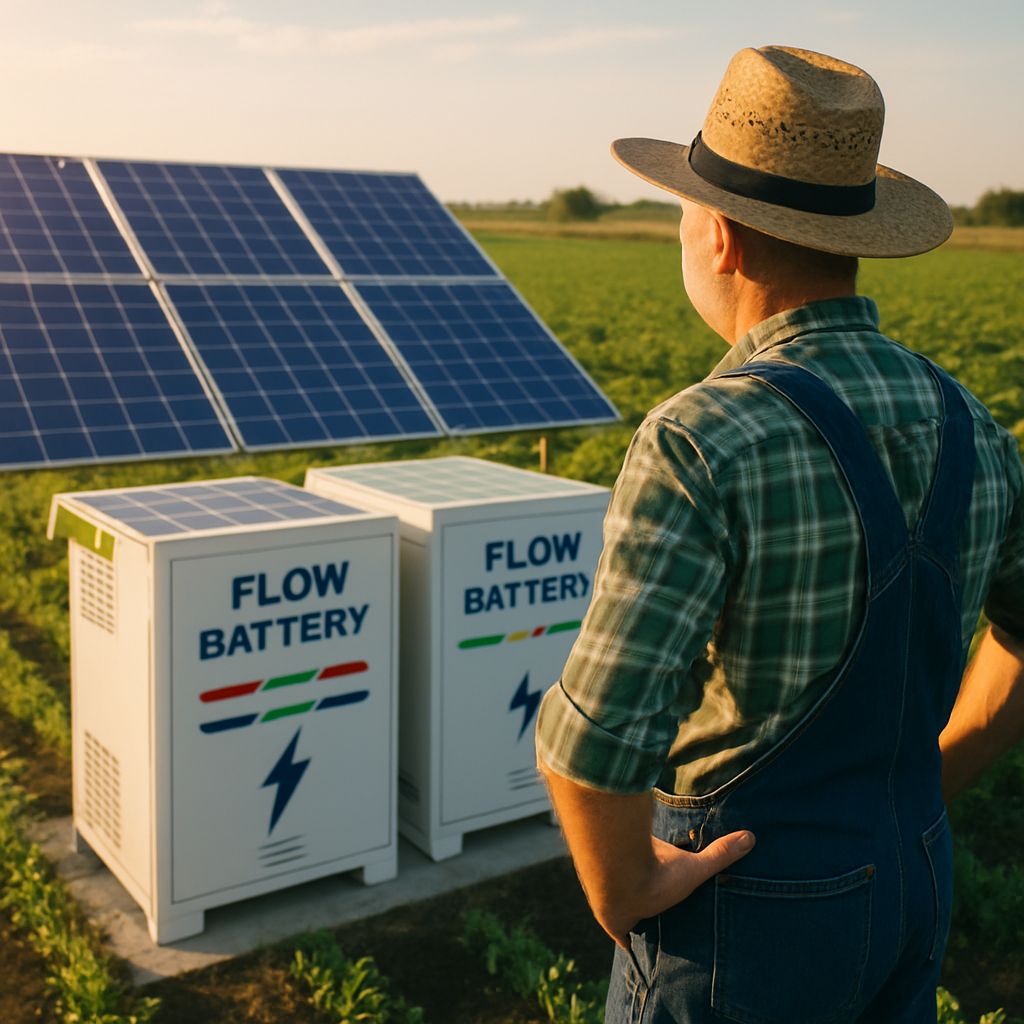
Western Groves, a 350-acre almond operation in California’s Central Valley, implemented a vanadium flow battery system paired with a 175kW solar array to address escalating electricity costs and unreliable grid service during critical irrigation periods. The 500kWh storage system enables continuous operation of precision irrigation pumps during optimal nighttime hours when evaporation losses are minimized. During the critical flowering and early nut development stages, this capability has increased water efficiency by 23% while eliminating the yield losses previously experienced during utility-imposed pumping restrictions.
During the record heatwave of 2023, when rolling blackouts affected much of the region for nearly a week, Western Groves maintained their precise irrigation schedule without interruption while neighboring operations faced significant moisture stress and yield impacts. The system’s ability to operate completely off-grid during extended utility outages provided critical business continuity during a period when replacement water rights would have cost more than the entire energy storage system. Based on the first three years of operation, the complete solar-plus-flow-battery system is on track for full return on investment in under seven years.
Midwest Dairy Operation: Climate Control Reliability During Grid Outages
Hillcrest Dairy, a 600-cow operation in rural Wisconsin, installed a zinc-bromide flow battery system integrated with their existing 120kW solar array after experiencing catastrophic losses during an extended winter power outage. The 350kWh system maintains critical barn ventilation, water pumping, and milking equipment through the frequent but brief rural grid outages common in their area. Most significantly, the system provides 36+ hours of backup for essential operations during severe weather events that historically caused their most significant operational disruptions.
Beyond emergency backup, the flow battery system has transformed Hillcrest’s energy economics by shifting consumption patterns to minimize expensive peak demand charges. By programming major electricity usage during off-peak rate periods and storing solar production for strategic deployment, the operation has reduced monthly utility bills by 62% compared to pre-installation baselines. The thermal regulation capabilities of the battery system have also stabilized barn climate conditions, contributing to a measurable improvement in milk production consistency throughout extreme weather fluctuations common in the region. For more insights on how solar power enhances agricultural operations, visit this resource on farm efficiency.
Small-Scale Vegetable Producer: Extending Processing Hours Without Grid Connection
“Our flow battery system transformed what we could accomplish with limited solar capacity. Instead of rushing to process everything during daylight hours, we can work at a sustainable pace into the evening. For a small operation where equipment and labor efficiency determines profitability, this flexibility has been game-changing.” – Maria Sanchez, Green Valley Organics
Green Valley Organics, a 15-acre diversified vegetable operation focused on direct-to-consumer sales, implemented a modest 30kW solar array with a 100kWh flow battery system to power their washing, packing and cold storage facilities located nearly a mile from the nearest utility connection. The system enables continuous operation of their processing equipment regardless of weather conditions, eliminating the production bottlenecks previously experienced during cloudy periods when solar production alone couldn’t meet equipment demands.
The battery system has proven particularly valuable during harvest peaks when processing must continue into evening hours to maintain product freshness. Rather than limiting harvest to what could be processed during direct solar production hours, the operation now optimizes picking schedules based on crop readiness and market demands. This flexibility has enabled expansion into additional farmer’s markets and restaurant accounts that require next-day delivery of freshly harvested produce, substantially increasing per-acre revenue while maintaining product quality that differentiates their premium organic offerings. Learn more about how solar power boosts farm efficiency.
Economic Analysis: Are Flow Batteries Worth the Investment?
The economics of flow battery systems for agricultural applications extends far beyond simple payback calculations. While initial costs typically exceed conventional alternatives, the comprehensive value proposition incorporates multiple revenue streams and cost avoidance factors specific to agricultural operations. Beyond direct energy savings, these systems create substantial value through operational resilience, production optimization, and risk mitigation that often outweigh the straightforward energy arbitrage benefits highlighted in residential analyses.
Initial Cost vs. Lifetime Value Calculation
Current agricultural implementations typically see installed flow battery costs ranging from $400-700 per kilowatt-hour of capacity, with larger systems achieving economies of scale at the lower end of this range. This initial investment exceeds conventional lithium-ion alternatives by approximately 20-40% but delivers operational lifespans 2-3 times longer with minimal capacity degradation. When calculated on a lifetime basis, flow systems typically deliver energy storage at $0.12-0.20 per cycle-kWh over their operational life – substantially below alternatives requiring replacement or significant capacity augmentation during the same period. For farmers looking to optimize their energy solutions, exploring solar power benefits for improved operations efficiency can be beneficial.
For comprehensive agricultural assessment, this cycle cost must be evaluated against the full spectrum of benefits beyond simple energy shifting. Operational continuity during critical periods often provides value that dwarfs direct energy savings, particularly for livestock operations where climate control failures can cause catastrophic losses or specialty crop producers where irrigation interruptions directly impact marketable yield. These risk mitigation benefits, though challenging to precisely quantify, often represent the most significant economic driver for agricultural implementations.
Available Tax Incentives and Agricultural Grants
The economics of agricultural flow battery installations have improved dramatically through expanded federal incentives and state-level programs specifically targeting farm energy resilience. The Inflation Reduction Act established a direct-pay Investment Tax Credit of 30% for standalone agricultural energy storage – a game-changing provision that substantially improves project economics regardless of tax appetite. For systems charged primarily through renewable sources, additional adders can push this benefit to 40% or higher, significantly accelerating payback periods compared to pre-IRA implementations.
Typical Payback Periods Based on Farm Size and Usage
- Small diversified operations (10-50 acres): 8-12 years based primarily on operational flexibility and premium market access enabled by consistent processing capabilities
- Mid-sized specialty crop producers (50-500 acres): 6-9 years driven by irrigation optimization, product quality improvements, and processing reliability
- Large commodity operations (500+ acres): 5-7 years through combined demand charge reduction, energy arbitrage, and operational continuity during critical seasonal windows
- Livestock operations (particularly dairy and poultry): 4-6 years primarily through climate control reliability and disaster avoidance during grid interruptions
These payback calculations accelerate substantially for operations with poor grid reliability, expensive standby generation requirements, or high-value products vulnerable to power-related quality impacts. Remote operations facing substantial utility interconnection costs for expanded service can often justify flow battery systems immediately compared to grid infrastructure expansion, particularly when future expansion potential is incorporated into system design.
For operations with seasonal processing or irrigation loads, flow batteries enable strategic peak demand management that often reduces utility bills by 25-40% beyond the savings from solar generation alone. By eliminating the sharp demand spikes associated with motor startups or simultaneous operation of multiple systems, these installations avoid the demand charges that frequently constitute 30-50% of total electricity costs for agricultural operations with seasonal processing requirements.
Agricultural implementers increasingly report significant “soft return” factors beyond direct energy economics. Operational flexibility to process crops at optimal ripeness rather than based on power availability improves product quality and market access for premium producers. For organic and regenerative operations, the renewable-plus-storage combination provides marketing advantages and alignment with sustainability certifications that command premium pricing in specialty markets.
Equipment longevity represents another frequently overlooked economic factor. By eliminating the power quality issues common in rural utility service – voltage sags, momentary interruptions, and phase imbalances – flow battery systems protect sensitive electronics in modern agricultural equipment. Operations report extended service life for irrigation VFDs, climate control systems, and processing equipment after implementing battery systems with power conditioning capabilities that isolate equipment from grid disturbances.
Comparison With Diesel Generator Alternatives
While diesel generators have traditionally provided agricultural backup power, their economics increasingly pale against modern flow battery alternatives. Beyond the obvious fuel costs and maintenance requirements, generators impose significant operational limitations – requiring manual startup, creating noise that stresses livestock, and producing emissions incompatible with organic certifications or food safety requirements. These limitations often restrict generator backup to minimal emergency systems rather than comprehensive operational support. For farmers looking to reduce operational costs, exploring solar power benefits can be a viable alternative.
Flow battery systems, by contrast, provide instant, automatic transition with zero emissions or noise impact. For sensitive agricultural environments like poultry houses or dairy operations where animal stress directly impacts production, this seamless transition preserves both animal welfare and operational productivity during power disruptions. The autonomous operation also eliminates the labor costs and response delays associated with generator activation during off-hours emergencies common with rural power disruptions.
|
Factor |
Diesel Generator |
Flow Battery + Solar |
|---|---|---|
|
10-Year Operational Cost |
$32,000-48,000 (fuel, maintenance, replacement) |
$5,000-10,000 (occasional pump service, electrolyte maintenance) |
|
Backup Duration |
Limited by fuel storage (typically 2-5 days practical maximum) |
Indefinite with solar recharging, sized to specific needs |
|
Environmental Impact |
Significant emissions, noise, potential fuel spills |
Zero emissions, silent operation |
|
Operational Constraints |
Manual intervention, periodic testing required |
Fully automated, continuous monitoring |
|
Revenue Potential |
None – cost center only |
Daily energy arbitrage, demand charge reduction, potential grid services |
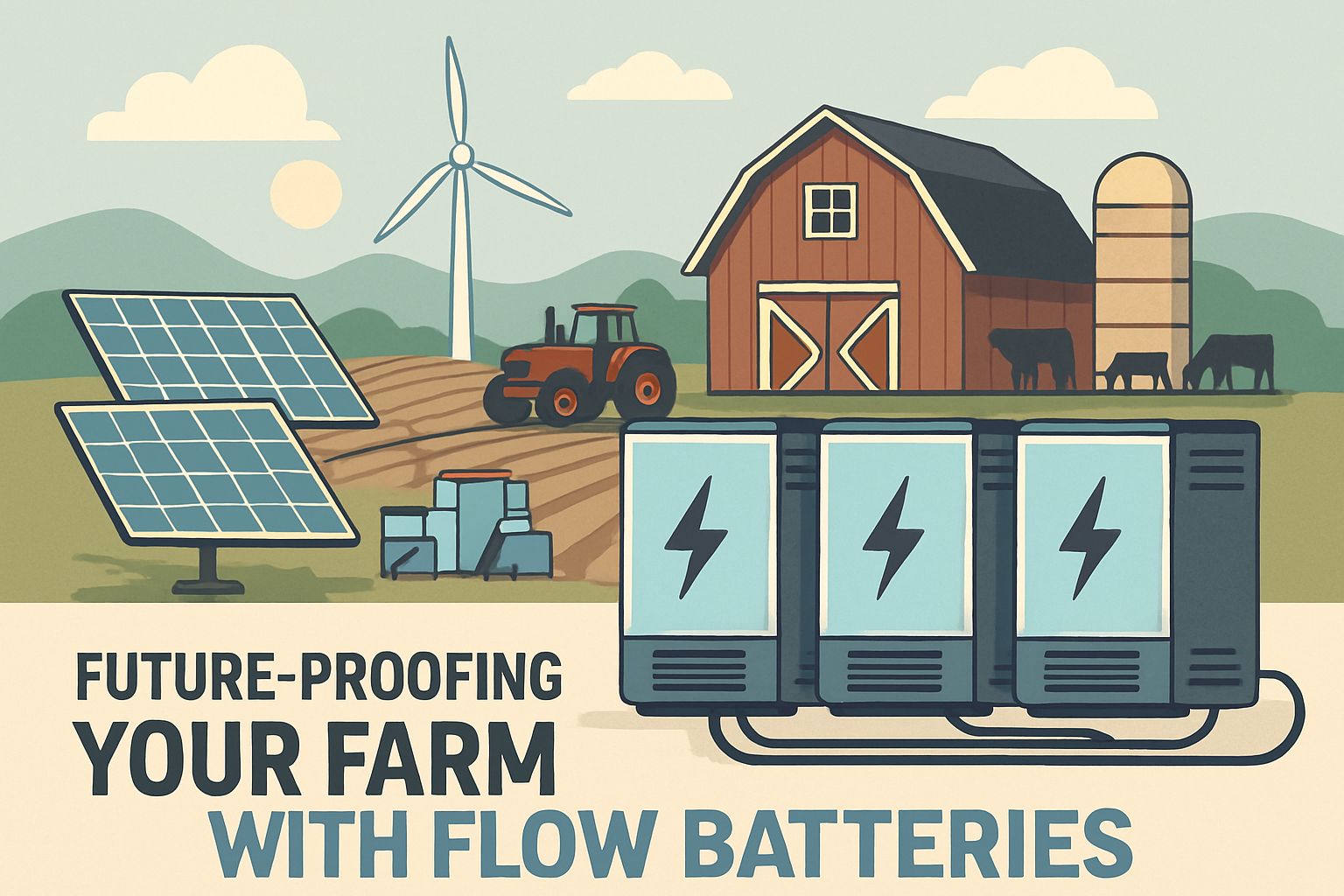
Future-Proofing Your Farm with Flow Batteries
Beyond current operational benefits, flow battery installations position agricultural operations for emerging opportunities and challenges in rapidly evolving energy landscapes. As utilities across agricultural regions implement increasingly complex rate structures with time-of-use factors and demand charges, storage flexibility becomes essential for optimizing energy economics. Forward-thinking farmers are implementing systems with expansion capabilities that accommodate both operational growth and participation in developing grid service markets that provide additional revenue streams.
Climate resilience represents perhaps the most significant future-proofing aspect of these systems. As extreme weather events increase in both frequency and intensity across agricultural regions, the ability to maintain critical operations independent of grid stability becomes increasingly valuable. Operations with appropriate storage capacity can continue essential functions through extended outages that historically caused significant losses, creating business continuity that provides competitive advantages during regional disruptions when product scarcity often drives premium pricing opportunities.
Frequently Asked Questions
As agricultural implementations of flow battery systems expand rapidly across diverse operations, common questions emerge from farmers evaluating these technologies for their specific needs. The following responses address the most frequent inquiries based on actual implementation experiences across various agricultural sectors and scales.
- What maintenance is required for agricultural flow battery systems?
- Can existing solar installations be retrofitted with flow batteries?
- How do flow batteries compare to other storage alternatives for farm use?
- What space requirements should farms anticipate for typical installations?
- Are specialized technical skills required for operation and maintenance?
Operational experience across hundreds of agricultural installations demonstrates that when properly sized and configured for specific farm requirements, flow battery systems deliver exceptional reliability with minimal intervention. Most agricultural implementations report system availability exceeding 98% with only basic scheduled maintenance performed by existing farm personnel familiar with common mechanical systems like pumps and simple fluid management.
While specific requirements vary by chemistry and manufacturer, the mechanical simplicity of flow systems aligns well with typical farm maintenance capabilities. Unlike complex battery technologies requiring specialized diagnostics or handling precautions, flow system maintenance primarily involves straightforward tasks like pump inspections, filter changes, and occasional electrolyte testing similar to existing fluid management routines common in agricultural operations.
How much do flow batteries cost for a typical 50-acre farm?
For a diversified 50-acre operation with mixed production, typical flow battery implementations range from $60,000-$120,000 for complete systems sized to power critical irrigation, processing and cold storage infrastructure. This investment typically provides 80-150kWh of storage capacity with 15-25kW of continuous power output – sufficient for operating essential equipment through extended cloudy periods and overnight processing requirements. After available tax incentives and agricultural grants, net costs typically range from $35,000-$75,000 depending on specific program availability and system configuration.
This investment scale delivers comprehensive energy resilience for most mid-sized diversified operations, enabling continuous operation of critical systems regardless of grid or weather conditions. For specialty crop producers with high-value products and irrigation-dependent production, these systems typically achieve full return on investment within 6-9 years through combined energy savings, operational optimization, and crop loss avoidance during critical periods. For livestock operations with 24/7 climate control requirements, payback periods often accelerate to 4-6 years due to the high value of operational continuity.
Can flow batteries be installed in existing barns or do they need separate housing?
Flow battery systems adapt well to existing agricultural structures with minimal modification requirements compared to alternative technologies. Most installations utilize standard outbuildings, equipment sheds, or dedicated areas within larger structures already used for farm operations. The non-flammable chemistry eliminates many of the fire separation requirements associated with lithium-ion alternatives, while their broad temperature tolerance minimizes climate control needs. Basic requirements include level concrete flooring, standard agricultural electrical service appropriate to system size, and minimal ventilation similar to other mechanical farm systems.
Are flow batteries environmentally safe for agricultural land?
The environmental profile of flow battery systems aligns exceptionally well with agricultural implementation requirements and sustainability concerns. Most commercial systems utilize electrolytes classified as low environmental hazard with straightforward containment requirements similar to existing agricultural fluids. Vanadium systems in particular present minimal environmental risk, as the element occurs naturally in soil and is actually used as a micronutrient in some agricultural applications. Modern zinc-bromide formulations incorporate engineering controls that minimize handling requirements and ensure containment integrity even in demanding farm environments.
For organic and regeneratively certified operations, flow battery systems typically receive ready approval from certifying organizations due to their self-contained design and minimal environmental interaction. Unlike fossil fuel alternatives that generate ongoing emissions and potential contamination concerns, flow systems operate as closed loops with zero operational emissions. This clean operation proves particularly valuable for food safety certifications and specialty crop production where chemical exposure concerns influence market access and premium pricing opportunities.
How do extreme temperatures affect flow battery performance?
Flow battery systems maintain operational stability across significantly broader temperature ranges than alternative storage technologies – a critical advantage for agricultural implementations where controlled equipment rooms are often impractical. Most commercial systems operate efficiently from 20°F to 120°F (-6°C to 49°C) without active temperature management, while simple insulation or basic heating elements extend this range for extreme environments. This temperature tolerance enables installation in existing agricultural buildings without the expensive climate control systems required for temperature-sensitive alternatives.
What happens to flow batteries during power outages or emergency situations?
Flow battery systems excel specifically in outage scenarios, providing seamless transition from grid power to stored energy without the interruptions or manual intervention required by generator alternatives. Advanced agricultural implementations include automated load management that prioritizes critical systems during extended outages – ensuring that essential operations like livestock ventilation or cold storage maintain continuous power while deferring optional loads to preserve capacity. This intelligent load management extends effective backup duration while maintaining critical life-safety systems.
For extended emergency scenarios, flow battery systems paired with solar generation create indefinite operational capacity for essential functions – a critical advantage over fuel-dependent alternatives with inherently limited duration. During regional disasters that interrupt both electrical service and fuel delivery infrastructure, this renewable-powered resilience enables continued operation of critical agricultural functions when communities need local food production most. For livestock operations in particular, this capability can preserve years of genetic development that would otherwise be lost during catastrophic power failures.
The modular architecture of flow systems also provides exceptional resilience during partial equipment failures, with redundant subsystems ensuring continued operation even if individual components require service. Unlike monolithic battery alternatives where a single cell failure can disable entire systems, flow batteries can typically operate at reduced capacity through component issues until convenient repair opportunities arise. This operational resilience proves particularly valuable for remote agricultural implementations where immediate technical support may not be readily available.




Leave a Reply