

Article-at-a-Glance
- Lithium-ion batteries provide critical power reliability for farms, maintaining operations during grid outages and nighttime hours when solar panels aren’t producing
- With 85-95% energy efficiency compared to lead-acid alternatives, lithium-ion technology maximizes the usable energy captured by agricultural solar arrays
- Modern farming operations can reduce energy costs by 50-75% when properly integrating solar generation with lithium-ion battery storage
- Batteries enable farms to eliminate expensive peak demand charges by drawing stored energy during high-rate periods
The agricultural sector faces unique energy challenges that put operations and profits at risk. From unpredictable weather patterns to rising utility costs, modern farming requires reliable power solutions that work around the clock. Lithium-ion battery backup systems are revolutionizing how farms integrate solar power, creating resilience while dramatically reducing operational expenses.
Integrating lithium-ion batteries with solar panels creates a continuous power supply that works regardless of weather conditions or time of day. Anern Store specializes in customized energy storage solutions that address the specific needs of agricultural operations, helping farmers achieve energy independence while protecting their bottom line. These advanced battery systems ensure critical farm equipment stays running when it matters most.
Why Farmers Need Lithium-Ion Battery Backup for Solar Systems
Agricultural operations require consistent, reliable power to maintain productivity. Solar panels alone provide energy only during daylight hours and at reduced capacity on cloudy days. This intermittent generation creates significant vulnerabilities for time-sensitive operations like irrigation, climate control, and cold storage. Lithium-ion battery backup bridges these gaps, storing excess solar power produced during peak sunlight hours for use whenever needed.
Unlike traditional diesel generators that require constant fuel resupply and maintenance, lithium-ion batteries operate silently, without emissions, and with minimal intervention. This self-sufficiency is particularly valuable for remote agricultural properties where fuel delivery can be costly and unreliable. The ability to automatically switch between solar generation, battery power, and grid electricity ensures farm operations continue uninterrupted regardless of external conditions.
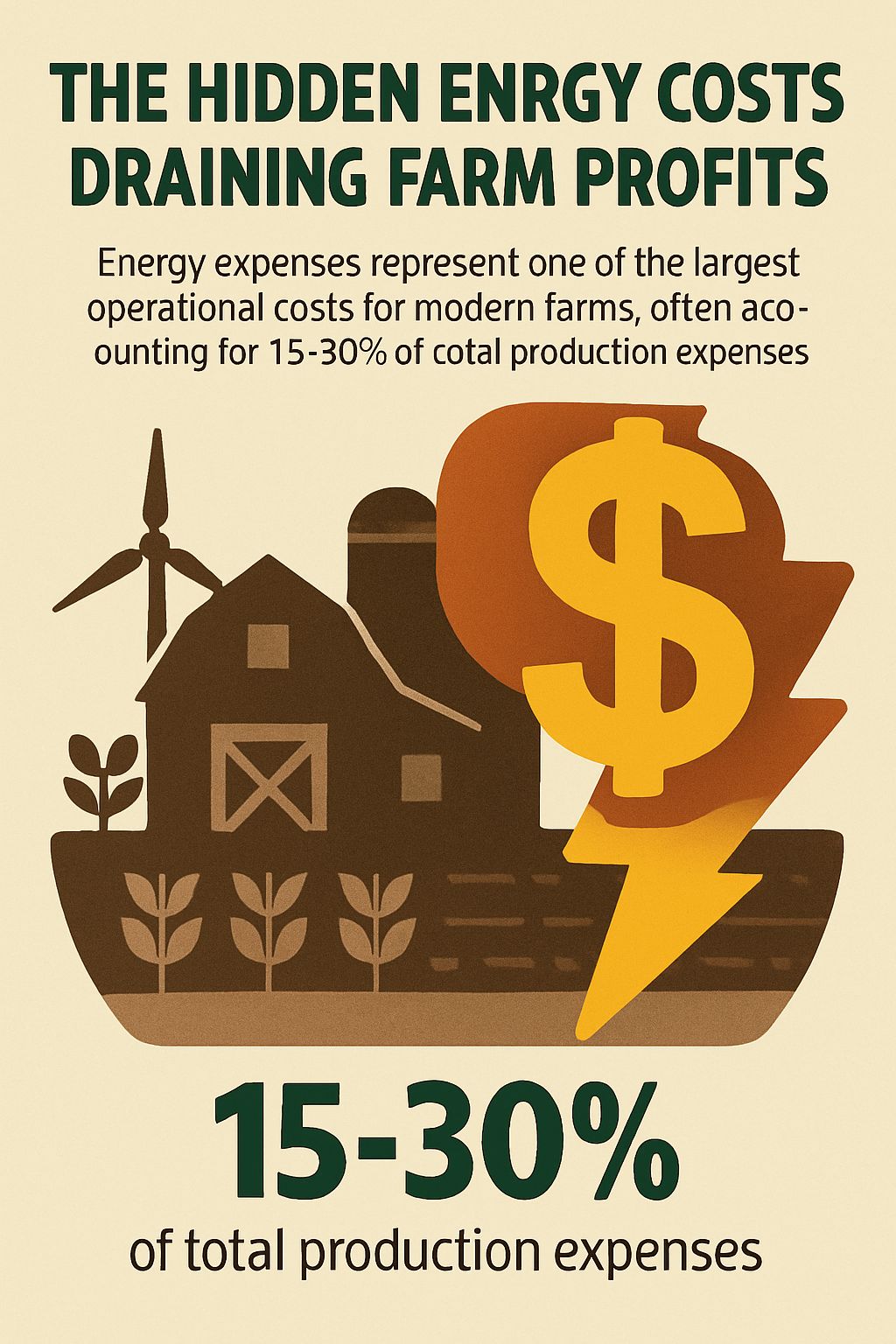
The Hidden Energy Costs Draining Farm Profits
Energy expenses represent one of the largest operational costs for modern farms, often accounting for 15-30% of total production expenses. These costs have been steadily rising over the past decade, with agricultural electricity rates increasing by approximately 3-5% annually in most regions. Without intervention, farms face a future of continually escalating energy expenses that directly impact profitability and competitiveness. To mitigate these rising costs, some farms are exploring off-grid solar panel systems as a sustainable energy solution.
Rising Utility Rates Impact on Agricultural Operations
Farm operations face particularly steep penalties from utility companies in the form of demand charges and time-of-use rates. Many agricultural activities like irrigation must run during peak rate periods when electricity costs can be 2-3 times higher than off-peak rates. Additionally, power-hungry equipment like pumps that start simultaneously can trigger substantial demand charges based on the highest 15-minute usage period each month, regardless of total consumption.
Lithium-ion battery systems allow farms to avoid these inflated costs by shifting energy use away from peak times. Instead of drawing expensive grid power during high-rate periods, operations can run on stored solar energy. This load-shifting capability often reduces monthly utility bills by 30-50% even before considering the direct savings from solar generation itself.
Power Outages: The Invisible Threat to Crop Production
Grid reliability in rural areas continues to decline as aging infrastructure meets increasingly severe weather events. Extended power outages can devastate agricultural operations in hours: irrigation systems fail, climate controls for livestock buildings shut down, and perishable products in cold storage begin deteriorating. A single extended outage during a critical production period can cause losses equivalent to an entire season’s profits. To mitigate these risks, many farmers are exploring on-grid solar panels as a reliable backup power solution.
With lithium-ion battery backup, essential systems continue operating seamlessly during grid interruptions. The automatic transition happens within milliseconds—fast enough that sensitive electronic equipment experiences no disruption. This continuity protects crops, livestock, and harvested products from the catastrophic consequences of unexpected power failures, regardless of their cause or duration.
Energy Dependency Risks for Modern Farming
Today’s agricultural operations have become increasingly dependent on reliable electricity for almost every aspect of production. From automated milking systems to precision irrigation controls, technology has improved efficiency but created new vulnerabilities. This dependency puts farms at the mercy of utility companies and fuel suppliers, with little control over availability or pricing.
Energy independence through solar generation paired with lithium-ion storage transforms this fundamental business risk into a competitive advantage. By producing and storing their own electricity, farms gain protection against utility rate increases, fuel price volatility, and supply disruptions. This self-sufficiency provides both immediate cost benefits and long-term operational security in an increasingly unpredictable energy landscape. For those interested in enhancing energy storage, exploring the best batteries for solar panel backup solutions can be beneficial.
How Lithium-Ion Batteries Transform Farm Solar Systems
The integration of lithium-ion batteries with agricultural solar power systems creates capabilities that neither technology can achieve alone. Traditional solar installations only generate electricity during daylight hours and are vulnerable to weather fluctuations. By adding lithium-ion storage, farms capture 100% of their solar production and distribute it precisely when and where it’s needed – creating true energy independence.
This transformation extends beyond simple backup power. Modern lithium-ion systems incorporate intelligent energy management that automatically prioritizes critical loads, schedules operations to maximize solar utilization, and maintains battery health through sophisticated charging algorithms. These systems learn from usage patterns to optimize performance, becoming more valuable over time as they adapt to a farm’s specific operational rhythms.
24/7 Power Reliability Even When the Sun Sets
The most immediate benefit of lithium-ion battery backup is continuous power availability regardless of solar conditions or grid status. Advanced battery management systems automatically balance input sources (solar, grid, or generators) with output requirements, creating a seamless power supply that never interrupts critical operations. This reliability extends across seasons and weather events that would otherwise disrupt both solar generation and grid power.
The rapid response capability of lithium-ion technology is particularly valuable for agricultural applications where even momentary power interruptions can damage equipment or disrupt sensitive processes. Unlike mechanical backup systems that require startup time, battery inverters can respond to outages in milliseconds – fast enough that connected equipment never experiences a disruption. This instantaneous transition protects not just the operation but also the equipment itself from damage caused by power fluctuations.
85-95% Energy Efficiency vs. 50-60% for Lead-Acid
Lithium-ion technology dramatically outperforms traditional lead-acid batteries in efficiency, delivering 85-95% of stored energy back as usable electricity compared to just 50-60% for lead-acid alternatives. This efficiency difference means farms need significantly less solar capacity to power the same operations when using lithium-ion storage – reducing upfront panel costs and space requirements. The higher charging efficiency also means systems recover faster between use cycles, maintaining availability even during extended periods of limited sunlight.
Beyond basic efficiency metrics, lithium-ion batteries maintain consistent performance across their entire discharge cycle. Unlike lead-acid batteries that lose voltage as they discharge, lithium-ion systems deliver stable power output until nearly depleted. This voltage stability is crucial for sensitive electronic equipment and variable-speed motors common in modern farm operations, ensuring they function optimally regardless of the battery’s current charge state.
10-15 Year Lifespan Compared to Traditional Alternatives
Agricultural investments demand durability, and lithium-ion systems deliver with typical lifespans of 10-15 years compared to just 3-5 years for lead-acid batteries in similar applications. This longevity comes from fundamentally different chemistry that resists degradation through thousands of charge-discharge cycles. Premium lithium battery systems often maintain over 80% of their original capacity even after a decade of daily use – longevity that dramatically improves lifetime return on investment.
This extended lifespan translates directly into lower operational costs and reduced maintenance requirements. While the initial investment in lithium-ion technology exceeds traditional alternatives, the total cost of ownership proves significantly lower when accounting for replacement cycles, maintenance requirements, and efficiency differences. For agricultural operations with long planning horizons, this lifecycle advantage aligns perfectly with other major farm infrastructure investments.

5 Critical Farm Operations Powered by Solar + Battery Systems
Agricultural operations have unique power requirements that vary widely by season, time of day, and production cycles. Lithium-ion battery systems excel in this environment by providing flexible capacity that adapts to changing demands. Understanding which farm systems benefit most from battery backup helps prioritize implementation and maximize return on investment. The following operations represent the highest-value applications for solar+storage integration.
1. Irrigation Pumps and Water Management
Water management represents the largest energy expense for many farms, with irrigation pumps consuming massive amounts of electricity during growing seasons. These systems typically operate during daylight hours when solar production is highest, but extended operation often stretches into evening hours when solar panels no longer generate power. Lithium-ion batteries enable continuous irrigation schedules without expensive grid electricity, maintaining optimal soil moisture levels regardless of time constraints.
Beyond basic pumping, modern precision irrigation systems require continuous power for sensors, controllers, and automated valves. These low-power but critical components maintain irrigation efficiency through real-time soil moisture monitoring and responsive water distribution. Battery backup ensures these precision systems function continuously, preventing both over-watering and drought stress that can dramatically impact crop yields and quality.
2. Climate Control for Livestock Buildings
Modern livestock facilities rely on sophisticated climate control systems that maintain precise temperature, humidity, and air quality conditions. These systems must operate continuously regardless of external power conditions, as even short interruptions can create dangerous conditions for animals. Ventilation failures in densely populated buildings can cause heat stress and oxygen depletion within minutes, making reliable backup power literally lifesaving.
Lithium-ion battery systems provide ideal protection for these critical systems by offering both long-duration backup for extended outages and rapid response for momentary interruptions. Advanced battery solutions can be configured to automatically prioritize climate control systems over less critical loads during limited capacity situations, ensuring animal welfare is protected even during prolonged power disruptions or severe weather events.
3. Cold Storage and Product Preservation
Refrigeration represents one of the most challenging applications for off-grid power due to its continuous operation and high startup current requirements. For farms with cold storage facilities, maintaining consistent temperatures is essential for preserving harvested products and preventing substantial financial losses. Lithium-ion batteries are uniquely suited to handle both the continuous base load and the high-current inrush demands of compressor startup cycles.
- Walk-in coolers for freshly harvested produce require 24/7 operation to maintain quality and extend shelf life
- Dairy operations depend on immediate milk cooling to prevent bacterial growth and maintain product quality
- Freezer storage for meat products must maintain strict temperature ranges to preserve food safety
- Seed storage facilities require precise temperature and humidity control to maintain germination viability
The cyclical nature of refrigeration loads pairs perfectly with lithium-ion battery capabilities. During peak solar production hours, the system can simultaneously power refrigeration equipment and charge batteries. This stored energy then powers cooling systems during evening hours and cloudy days, maintaining critical temperature ranges without interruption. The high discharge capacity of lithium-ion technology easily handles compressor startup surges that would overwhelm lesser battery technologies.
Modern energy management systems can further optimize refrigeration efficiency by pre-cooling storage areas during peak solar production, then reducing compressor cycling during non-solar hours. This load-shifting capability reduces both the battery capacity required and the total energy consumption, creating significant operational savings beyond simple backup power functionality.
4. Processing Equipment and Machinery
On-farm processing equipment transforms raw agricultural products into higher-value outputs but often requires substantial power capacity for motors, pumps, and control systems. These operations frequently involve scheduled batch processing that can be strategically timed to align with solar production or battery capacity. Lithium-ion systems support this flexibility by providing consistent power quality that protects sensitive processing equipment from damage caused by voltage fluctuations common in rural grid connections.
The ability to operate processing equipment independent of grid constraints creates new opportunities for operational efficiency. Rather than rushing harvests to meet processing schedules limited by peak utility rates, farms with battery storage can optimize both harvest timing and processing schedules based on product readiness and labor availability. This flexibility improves product quality while reducing stress on workers and equipment during critical harvest periods.
5. Office and Security Systems
Modern farm management relies on technology beyond the field or barn. Office systems including computers, internet connectivity, and communications equipment have become essential for operations management, market access, and regulatory compliance. These systems require not just continuous power but also clean, stable electricity free from surges or brownouts that can damage sensitive electronics or corrupt critical data. For farms considering energy solutions, understanding off-grid solar power systems can be crucial in maintaining the stability of these essential technologies.
Security systems represent another critical application that demands uninterrupted power. Remote agricultural properties often maintain extensive security infrastructure including cameras, access control systems, and automated lighting. These protective measures become even more important during grid outages when farms may be more vulnerable to theft or vandalism. Lithium-ion battery backup ensures these systems remain operational regardless of grid conditions, providing continuous protection for valuable equipment, livestock, and stored products.
Real-World Costs and ROI for Farm Battery Systems
Understanding the financial implications of lithium-ion battery systems requires analysis of both initial investments and long-term returns. While costs vary based on capacity needs and system complexity, agricultural applications consistently demonstrate compelling economic benefits when properly sized and integrated with existing operations. The combination of direct energy savings, operational improvements, and risk reduction creates multiple revenue streams that contribute to overall return on investment.
Initial Investment Range for Different Farm Sizes
Farm Size Comparison: Typical Lithium-Ion System Costs (2025)
Farm Type
System Size
Battery Capacity
Approximate Cost
Typical Coverage
Small Farm (5-50 acres)
10-15kW Solar + Storage
20-40kWh
$25,000-$45,000
Critical systems + partial operations
Medium Farm (50-500 acres)
25-50kW Solar + Storage
60-120kWh
$60,000-$120,000
Most operations with managed scheduling
Large Farm (500+ acres)
100kW+ Solar + Storage
200-500kWh+
$150,000-$400,000+
Complete operations with full redundancy
These investment ranges reflect complete installed systems including solar panels, lithium-ion batteries, inverters, mounting hardware, and control systems. Many agricultural operations qualify for substantial incentives that can reduce these costs by 30-50% through tax credits, USDA grants, and utility rebate programs. When these incentives are applied, the effective investment becomes significantly more accessible even for smaller operations with limited capital resources.
Maintenance Costs and Replacement Schedules
Lithium-ion battery systems require minimal maintenance compared to traditional power sources. Most systems operate with only annual professional inspections and occasional software updates that can often be performed remotely. This low-maintenance profile contrasts sharply with both generator systems requiring regular servicing and fuel management, and with lead-acid battery banks needing frequent watering, equalization charges, and ventilation maintenance. For more insights, discover how solar power cuts farmers’ maintenance costs.
Long-term planning should account for eventual replacement of battery modules, typically scheduled after 10-15 years of service. Modern modular designs allow for selective replacement of individual components rather than complete system overhauls, reducing lifetime costs. Many manufacturers now offer performance warranties guaranteeing at least 70-80% capacity retention after 10 years, providing predictable performance expectations for financial planning purposes.
Typical Payback Periods for Various Agricultural Applications
Agricultural lithium-ion battery systems achieve payback through multiple value streams that combine for rapid return on investment. Energy cost reduction provides the most direct financial benefit, with farms typically saving 50-70% on electricity expenses through a combination of solar generation, peak load shifting, and demand charge avoidance. Additional returns come from operational improvements, crop loss prevention, and extended equipment life resulting from stable power quality.
Based on current installation costs and energy prices, most agricultural operations achieve complete payback on lithium-ion battery systems within 5-8 years. Operations with high cooling or irrigation demands often see faster returns of 3-5 years due to their ability to shift substantial loads away from peak rate periods. These calculations become even more favorable when including available incentives, with some farms reporting payback periods under 3 years when leveraging all available financial support programs. For more insights, explore how on-grid solar panels can further optimize farm operations.
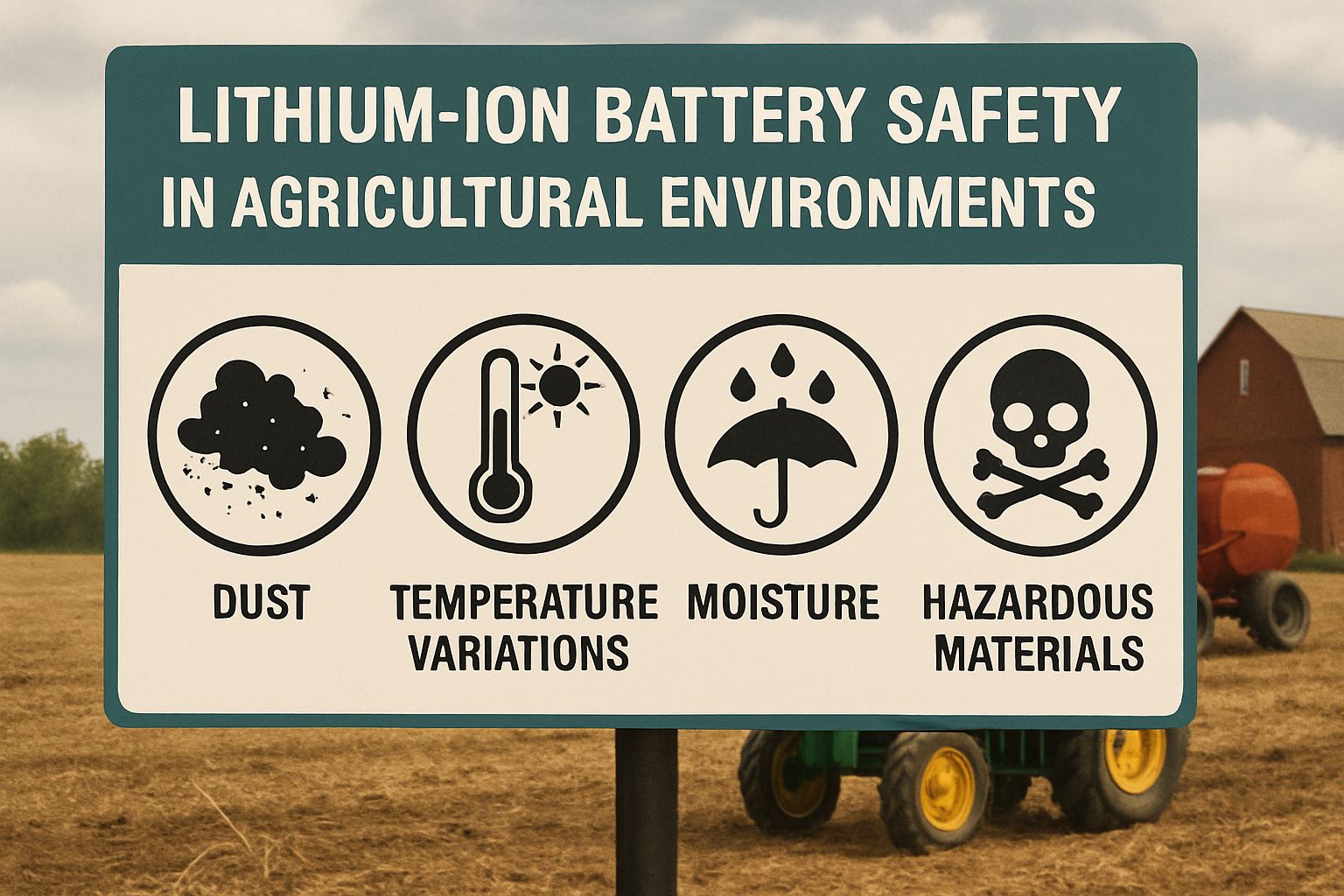
Lithium-Ion Battery Safety in Agricultural Environments
Farm environments present unique challenges for battery systems due to dust, temperature variations, moisture, and sometimes hazardous materials. Modern lithium-ion systems address these concerns through sophisticated engineering specifically designed for agricultural applications. Multiple redundant safety systems provide protection against internal failures while ruggedized enclosures defend against external threats common in farm settings.
Fire Prevention and Management Protocols
Quality lithium-ion battery systems incorporate comprehensive fire prevention measures beginning with cell-level protection. Each individual battery cell contains multiple safety mechanisms including pressure relief valves, thermal fuses, and current limiters that activate automatically at the earliest sign of abnormal conditions. These protections are further reinforced by module-level monitoring that continuously evaluates temperature, voltage, and current across thousands of measurement points, immediately disconnecting any component showing signs of malfunction.
System-level safety features provide additional layers of protection through advanced battery management systems that prevent conditions leading to thermal events. These computerized protections maintain safe operating parameters regardless of external demands or environmental conditions. For agricultural installations, this technology is typically housed in fire-resistant enclosures with automatic suppression systems designed to contain any unlikely thermal event without spreading to surrounding structures.
Protection from Dust, Moisture and Physical Damage
Agricultural environments demand rugged equipment design that withstands challenging conditions. Premium lithium-ion systems for farm applications feature IP65-rated or higher enclosures that completely seal internal components against dust and water intrusion. These industrial-grade housings protect sensitive electronics from the contaminants common in agricultural settings, ensuring reliable operation without special climate-controlled spaces.
Physical protection extends beyond environmental sealing to include impact resistance and structural integrity designed for farm conditions. Battery systems intended for agricultural use incorporate reinforced mounting systems, vibration isolation, and strategic placement recommendations that protect against accidental contact with equipment. This durability ensures systems continue functioning reliably despite the rigorous conditions typical of working farms.
Case Study: How Three Different Farms Cut Energy Costs with Lithium-Ion Storage
- All three case studies achieved ROI in under 5 years despite different farm types and sizes
- Custom system sizing based on actual load profiles proved critical to maximizing returns
- Combining solar generation with strategic battery discharge eliminated demand charges
- Operational improvements beyond direct energy savings significantly enhanced overall value
Real-world implementation provides the most compelling evidence for lithium-ion battery effectiveness in agricultural applications. The following case studies examine actual farms that have successfully integrated battery storage with their operations, documenting both the implementation process and measured results. While each farm faced unique challenges, their experiences reveal common success factors that can guide other agricultural operations considering similar investments.
These results reflect complete system performance over multiple seasons, capturing both the immediate benefits of energy cost reduction and the longer-term advantages of operational improvements. All three operations report additional qualitative benefits beyond measurable financial returns, including reduced stress during grid outages, improved planning flexibility, and enhanced sustainability credentials that strengthen their market position with environmentally conscious consumers.
Follow-up analysis conducted 2-3 years after installation shows these systems continue to perform at or above projected levels, with minimal maintenance requirements and no significant operational disruptions. The farms report that lithium-ion battery systems have become integral to their operations, enabling new efficiencies that would be impossible with either grid-only or solar-only power configurations.
Small Organic Farm: 75% Reduction in Energy Expenses
A 40-acre organic vegetable farm in California installed a 15kW solar array paired with a 30kWh lithium-ion battery system to power irrigation, cold storage, and processing equipment. Prior to installation, the operation faced monthly electricity bills averaging $1,200 during peak growing season. After implementing their battery-backed solar system, energy expenses dropped to approximately $300 monthly – a 75% reduction that saves nearly $11,000 annually. The system achieved full payback in just 4.2 years after accounting for available tax credits and USDA REAP grant funding. Beyond direct savings, the farm reports significantly improved crop quality due to more consistent irrigation and cooling capabilities during heat waves when grid power had previously been unreliable.
Mid-Size Dairy Operation: Complete Energy Independence
A 200-cow dairy operation in Wisconsin implemented a comprehensive energy solution combining 75kW of solar with 180kWh of lithium-ion battery storage to power milking equipment, refrigeration, and waste management systems. This carefully sized system achieves complete energy independence for all critical operations, running entirely off-grid during normal conditions but maintaining grid connection for extreme circumstances. The $175,000 investment (after incentives) eliminated a monthly electricity bill averaging $2,800, creating a 5.2-year payback period. Additionally, the dairy products now qualify for premium pricing through sustainability certification programs, generating approximately $32,000 in additional annual revenue that further accelerates return on investment.
Large Grain Producer: Peak Demand Charge Elimination
A 2,000-acre grain operation in Nebraska focused their energy strategy specifically on eliminating demand charges that had been adding 35-40% to their total electricity costs during irrigation season. By installing a 40kW solar array with a strategically sized 100kWh lithium-ion battery system, the operation successfully flattened their load profile to eliminate all demand charges while reducing overall consumption by 60%. This targeted approach reduced annual energy costs from $48,000 to approximately $18,000 – savings that delivered complete system payback in just 3.8 years. The operation reports additional benefits including extended irrigation pump life due to elimination of voltage fluctuations that had previously caused premature equipment failures.
Future-Proof Your Farm with Energy Independence By Adding Lithium-Ion Batteries to Your Solar Power System
Agricultural operations face increasing pressure from rising energy costs, climate volatility, and market competition. Investing in lithium-ion battery systems paired with solar generation creates both immediate financial benefits and long-term operational resilience. As energy markets continue evolving, farms with integrated battery storage will maintain competitive advantage through predictable costs, reliable operations, and sustainable practices that increasingly command premium pricing. Anern Store provides customized agricultural energy solutions designed specifically for farm applications, combining industry-leading technology with agricultural expertise to maximize both performance and return on investment.
Frequently Asked Questions
The following questions address the most common concerns raised by farmers considering lithium-ion battery systems. While every agricultural operation has unique requirements, these answers provide general guidance based on typical implementations across various farm types and sizes. For situation-specific recommendations, consulting with an agricultural energy specialist provides the most accurate information.
Most farmers find that addressing these fundamental questions helps clarify both the potential benefits and implementation considerations for their specific operation. Understanding these core concepts provides a foundation for more detailed system design discussions focused on maximizing return on investment through precise matching of battery capabilities with operational requirements.
How long do lithium-ion batteries last in agricultural applications?
Premium lithium-ion batteries designed for agricultural applications typically maintain 80% or greater of their original capacity for 10-15 years under normal operating conditions. This lifespan assumes one complete charge-discharge cycle daily, which aligns with most farm solar applications where batteries charge during daylight hours and discharge during evening operation. Actual longevity depends on several factors including depth of discharge, temperature conditions, and charge/discharge rates.
Farm environments that maintain moderate temperatures (40-90°F) achieve the longest battery lifespans, as extreme heat accelerates chemical degradation while extreme cold temporarily reduces available capacity. Installing battery systems in temperature-controlled spaces or using systems with integrated thermal management extends useful life in locations with temperature extremes. Most agricultural installations achieve optimal battery longevity by sizing systems to utilize only 80-90% of total capacity daily, avoiding both complete discharge and constant float charging.
Modern battery systems include sophisticated monitoring that tracks capacity degradation over time, providing advance notice when replacement becomes necessary. This predictability allows farms to plan for eventual battery replacement as a scheduled capital investment rather than an emergency expense. Many manufacturers now offer capacity guarantees ensuring batteries maintain at least 70% of original capacity after 10 years of use, providing financial security for long-term planning.
Can lithium-ion batteries work in extreme temperatures on farms?
- Modern lithium-ion systems include active thermal management that maintains optimal cell temperatures
- Operating range typically spans from -4°F to 131°F (-20°C to 55°C) with proper management systems
- Battery capacity temporarily decreases in extreme cold but returns to normal when temperatures rise
- Heat management systems prevent performance degradation during summer temperature extremes
Agricultural environments often experience temperature extremes that exceed the ideal operating range for battery systems. To address this challenge, quality lithium-ion installations for farm applications incorporate comprehensive thermal management systems. These include insulated enclosures, active heating elements for cold conditions, and cooling systems for hot weather. These protections ensure consistent performance regardless of ambient conditions while preventing long-term damage from temperature stress.
Cold weather operation presents specific challenges as lithium-ion chemistry naturally experiences reduced charging efficiency and available capacity at low temperatures. Advanced systems address this limitation through internal heating that maintains cell temperatures within optimal ranges even when ambient temperatures drop below freezing. This capability proves particularly valuable for winter operations including livestock facilities and year-round processing that cannot tolerate interruptions regardless of weather conditions.
Hot weather performance concerns focus on preventing battery degradation caused by elevated temperatures. Quality lithium-ion systems incorporate multiple cooling strategies including forced air ventilation, liquid cooling circuits, and strategic cell spacing that dissipates heat effectively. These thermal management systems protect against both immediate performance reductions and accelerated long-term degradation that would otherwise occur under sustained high temperature conditions common in agricultural buildings during summer months.
What maintenance do farm battery systems require?
Lithium-ion battery systems require minimal routine maintenance compared to traditional power sources. Most agricultural installations need only quarterly visual inspections checking for physical damage, proper ventilation, and connection integrity. Annual professional service typically includes terminal cleaning, firmware updates, and diagnostic testing that verifies system performance against baseline specifications. Remote monitoring capabilities now standard in quality systems automatically alert owners to potential issues before they affect performance, further reducing hands-on maintenance requirements. This low-maintenance profile makes lithium-ion technology particularly suitable for agricultural applications where operational simplicity and reliability are essential during busy seasonal periods when maintenance time is limited.
Are there grants available to help farmers invest in solar+battery systems?
Multiple funding programs specifically target agricultural energy improvements, substantially reducing the effective cost of lithium-ion battery systems. The USDA Rural Energy for America Program (REAP) offers both grants covering up to 25% of project costs and guaranteed loans for the remaining investment. Additional opportunities include federal Investment Tax Credits currently providing 30% credit for integrated solar+storage systems, accelerated depreciation benefits, and various state-level incentives designed specifically for agricultural operations. Many utility companies also offer agricultural efficiency programs with rebates for peak load reduction achieved through battery storage.
Successful grant applications typically require detailed energy audits documenting current consumption patterns and projected savings from proposed systems. Working with experienced agricultural energy consultants significantly improves approval rates by ensuring applications demonstrate clear energy reduction metrics and operational benefits beyond simple financial returns. Most funded projects document 15-25% internal rate of return after accounting for all available incentives, making agricultural battery storage among the most financially attractive farm infrastructure investments currently available.
How quickly can a battery system pay for itself on a typical farm?
Payback periods for agricultural lithium-ion systems typically range from 3-8 years depending on existing energy costs, usage patterns, and available incentives. Operations with high electricity rates (over $0.15/kWh) or substantial demand charges achieve the fastest returns, often recouping their investment in under 5 years. Farms with energy-intensive processes that can be scheduled to maximize solar utilization similarly experience accelerated payback periods compared to operations with less flexible load profiles.
The most financially successful implementations focus first on offsetting the highest-cost energy consumption – typically peak-period usage and demand charges – rather than attempting to achieve complete energy independence. This targeted approach maximizes return on investment by addressing the most expensive energy first, then expanding system capacity as additional capital becomes available. Many farms implement phased installation plans that begin with critical systems offering immediate payback, then gradually expand to cover additional operations as initial savings generate funding for further investment. For more insights on optimizing farm energy systems, explore best solar panel placement for farm efficiency.
Beyond direct energy savings, comprehensive financial analysis should include operational benefits that contribute to return on investment. These include reduced crop losses from power interruptions, extended equipment life from improved power quality, labor savings from automated energy management, and premium pricing opportunities from sustainable certification programs. When these additional value streams are properly quantified, many agricultural operations discover their effective payback period is 30-40% shorter than calculations based solely on direct energy cost reduction.



Leave a Reply