

Key Takeaways
- Solar drip irrigation systems can reduce water usage by up to 70% compared to conventional methods, while delivering water directly to plant roots for maximum efficiency.
- Micro-sprinkler systems provide better coverage for orchards and frost protection capabilities, making them ideal for tree crops and regions with variable climates.
- Adding solar power to either irrigation system can save farmers $800-1,500 per acre annually in energy costs while providing reliable off-grid operation.
- The choice between systems should be based on specific crop needs, soil type, and farm size—drip systems excel for row crops while micro-sprinklers are superior for broader root zone coverage.
Choosing between solar drip irrigation and micro-sprinklers can transform your farm’s productivity and sustainability. The right system not only conserves water but also reduces energy costs while optimizing crop yields.
Modern farming demands efficient water management solutions that maximize productivity while minimizing resource usage. As water scarcity becomes increasingly prevalent and energy costs continue to rise, solar-powered irrigation systems represent the future of sustainable agriculture.
What is a Drip Irrigation System
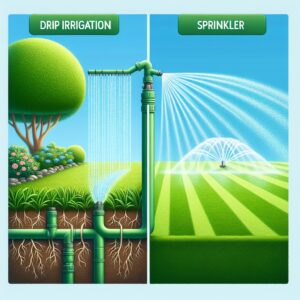
A drip irrigation system delivers water directly to the plant’s root zone through emitters, tubing, and valves that allow water to drip slowly onto the soil surface or directly to the roots. This precise water delivery method minimizes evaporation, runoff, and water contact with plant foliage, stems, and fruit. The system typically operates at lower pressure than sprinkler systems (15-25 PSI) and distributes water at 1-4 gallons per hour per emitter.
How Water Flows Through Drip Irrigation
In a solar drip system, water is pumped from a source (well, pond, or municipal supply) using solar-powered pumps into a main line that branches into smaller lateral lines positioned along crop rows. Water passes through pressure regulators and filters to prevent clogging before reaching emitters that precisely control flow rates. These emitters are specifically designed with tiny pathways or labyrinths that slow water movement and maintain consistent pressure despite variations in terrain.
The system can be programmed to deliver specific amounts of water at optimal times through automated controllers that can be adjusted for seasonal changes or specific growth stages. Many advanced systems incorporate soil moisture sensors that trigger irrigation only when moisture levels fall below programmed thresholds, ensuring plants receive water only when needed. For more information on the types and examples of these systems, visit our article on solar-powered irrigation systems.
For larger operations, zone-based systems allow farmers to separately control irrigation for different crop areas, soil types, or microclimates within the same field. This precision targeting significantly reduces water usage while maintaining optimal growing conditions across diverse agricultural environments.
5 Major Benefits of Drip Irrigation for Farms
Water Efficiency: 30-70% less water used compared to conventional irrigation systems. Learn more about different solar-powered irrigation systems that enhance water efficiency.
Reduced Weed Growth: Water reaches only target plants, not spaces between rows, which is a significant advantage of micro-irrigation systems.
Decreased Disease Pressure: Keeps foliage dry, reducing fungal disease incidents by up to 60%
Fertilizer Efficiency: 30% reduction in fertilizer use through fertigation capabilities
Labor Savings: 50-80% reduction in irrigation management time after installation
Beyond these key benefits, drip irrigation provides exceptional versatility across various terrains, including steep slopes where traditional irrigation would cause erosion. The slow application rate prevents surface water accumulation and soil compaction issues commonly seen with other methods. Additionally, the system’s ability to maintain consistent soil moisture levels prevents stress cycles in plants, resulting in more uniform crop development and higher overall quality.
Farmers implementing drip systems often report not just water savings, but significant improvements in harvest timing predictability. This consistency allows for better labor management and market coordination, particularly valuable for high-value vegetable and fruit operations with precise harvest windows.
Best Crops for Drip Irrigation
Drip irrigation excels with row crops, vegetables, berries, and vine crops where water needs to be precisely directed at the plant base. Tomatoes, peppers, cucumbers, and strawberries show yield increases of 20-40% under drip irrigation compared to other methods. Tree crops with established root systems also benefit from drip systems with multiple emitters around the root zone. Crops requiring consistent moisture levels such as leafy greens and herbs thrive with the steady water delivery that prevents stress fluctuations, resulting in premium quality production that often commands higher market prices.
Water Conservation Statistics
Field studies across various agricultural regions show drip irrigation achieving 95-98% water use efficiency compared to 60-70% for traditional methods. A five-year University of California study found drip-irrigated tomato fields used 43% less water while increasing yields by 27% compared to furrow irrigation. In arid regions, farms transitioning to drip systems reported water use reductions of 50-60% while maintaining or improving yields, effectively doubling their water productivity. These efficiency gains translate to significant conservation, with estimates suggesting widespread drip adoption could save trillions of gallons of agricultural water annually while improving crop resilience to drought conditions.
Installation and Maintenance Requirements
Installing a drip irrigation system involves laying main water lines connected to lateral lines with emitters positioned at each plant. Initial setup costs range from $1,200-$3,000 per acre depending on crop spacing, terrain, and system sophistication. Maintenance includes regular filter cleaning (weekly during peak season), system flushing to remove sediment, and periodic emitter inspection for clogging. Most systems require replacement of drip lines every 3-7 years depending on water quality and UV exposure, though main lines typically last 10-15 years with proper care.
Preventative maintenance is critical for system longevity, including winterization in freezing climates and chemical treatments to prevent mineral buildup in hard water areas. Modern systems increasingly incorporate remote monitoring capabilities that alert farmers to pressure changes or flow irregularities, allowing for immediate intervention before crop stress occurs.

What is a Micro-Sprinklers Irrigation System
Micro-sprinkler systems distribute water through small sprinkler heads mounted on stakes or hanging from wires, creating a localized spray pattern above the ground. These systems operate at medium pressure (25-35 PSI) and deliver water in a fine mist or small droplets that cover more surface area than drip irrigation. Typical flow rates range from 5-25 gallons per hour per sprinkler head, creating small wetted circles or patterns that can be adjusted for diameter and spray pattern.
Unlike conventional overhead sprinklers that spray water high into the air, micro-sprinklers release water closer to the ground, typically 12-36 inches above soil level, significantly reducing wind drift and evaporation while still providing broader coverage than drip systems. This hybrid approach combines some of the efficiency benefits of drip irrigation with the expanded coverage capabilities of sprinkler systems.
How Micro-Sprinklers Distribute Water
Micro-sprinklers use specialized nozzles that break water into tiny droplets, creating a gentle rain-like pattern that covers a circular or sectoral area. Water flows from the main line through lateral lines to individual sprinkler heads, which contain precisely engineered deflectors or spinners that control the spray pattern. Unlike drip irrigation that delivers water to a single point, micro-sprinklers create a broader wetted zone ranging from 3-25 feet in diameter, depending on the sprinkler model and operating pressure.
The distribution uniformity of modern micro-sprinklers can reach 85-90% when properly designed and maintained, ensuring consistent moisture throughout the target area. Many systems incorporate pressure-compensating features that maintain consistent flow rates despite variations in terrain or distance from the water source. This technology ensures plants at the beginning and end of irrigation lines receive equal amounts of water, eliminating dry spots or oversaturated areas common in less sophisticated systems.
Advanced micro-sprinkler designs include adjustable flow rates and spray patterns that can be modified as crops grow or seasons change. Some feature specialized deflector plates or rotating mechanisms that create unique distribution patterns tailored to specific crop architectures, maximizing water placement efficiency while minimizing waste.
Coverage Area and Water Distribution Patterns
Micro-sprinklers offer exceptional versatility in water distribution, with coverage diameters typically ranging from 10-30 feet depending on operating pressure and nozzle design. Various spray patterns include full circle (360°), half circle (180°), quarter circle (90°), and strip patterns for specific applications. This flexibility allows farmers to customize irrigation designs for different crop spacings and growth habits, placing more water near the root zone while minimizing overspray.
The droplet size produced by micro-sprinklers is significantly larger than mist systems but smaller than conventional sprinklers, creating an ideal balance that reduces evaporation while preventing soil compaction. This medium droplet size penetrates light canopy cover effectively, reaching the soil surface without damaging delicate plants or causing erosion. The broader coverage area compared to drip systems promotes more extensive root development, particularly beneficial for tree crops and plants with expansive root systems.
Micro-Sprinkler Distribution Patterns:
- Full Circle (360°): Ideal for isolated trees or central plantings
- Half Circle (180°): Perfect for border rows or edge applications
- Quarter Circle (90°): Used for corner plantings or specialized coverage
- Strip/Rectangular: Designed for row crops with specific spacing
- Butterfly Pattern: Created for dual-row plantings with concentrated center coverage
Ideal Farm Situations for Micro-Sprinklers
Micro-sprinklers excel in orchards, vineyards, and nurseries where broader root zone coverage is advantageous. They’re particularly effective for established trees that benefit from wider water distribution matching their expanding root systems. Sandy soils that don’t move water horizontally very effectively are ideal candidates for micro-sprinkler systems, as the broader water distribution compensates for poor lateral water movement.
Farms transitioning from conventional overhead irrigation to more efficient methods often find micro-sprinklers an easier adaptation than drip systems. The visible water application makes monitoring simpler, and the larger orifices in micro-sprinklers are less prone to clogging than drip emitters, making them suitable for water sources with moderate sediment or mineral content. Additionally, operations with multiple crop types or frequent replanting benefit from the flexibility of micro-sprinklers, which can be easily adjusted or moved as field configurations change.
Frost Protection Capabilities
One significant advantage of micro-sprinklers over drip irrigation is their ability to provide frost protection for valuable crops. During freezing events, continuously running micro-sprinklers can maintain temperatures around plants above critical damage thresholds through the release of latent heat as water freezes. This protective capability has saved millions of dollars in crop value across fruit-growing regions where even a single frost event can devastate a harvest.
Research demonstrates that micro-sprinklers operated during frost events can maintain temperatures 2-5°F higher in the protected zone compared to unprotected areas. For many high-value crops like citrus, berries, and tree fruits, this temperature difference represents the margin between minor damage and catastrophic loss. The dual-purpose nature of these systems—providing both regular irrigation and emergency frost protection—offers significant value to growers in regions with spring frost risks.
Setup and Maintenance Needs
Installing a micro-sprinkler system requires placing mainlines along field edges with lateral lines running along crop rows. Sprinkler heads are positioned on risers or suspended from support wires at appropriate intervals based on desired coverage overlap. Initial installation costs typically range from $1,000-$2,500 per acre, depending on sprinkler spacing, automation level, and site conditions.
Maintenance includes regular inspection of sprinkler heads for clogging or damage, cleaning of filters, and occasional flushing of lines to remove accumulated sediment. Systems should be evaluated periodically for distribution uniformity, with sprinkler heads replaced every 3-5 years depending on water quality and environmental conditions. While micro-sprinklers are less susceptible to clogging than drip emitters, they still require filtration systems rated at 80-120 mesh (depending on manufacturer specifications) to prevent particulate matter from obstructing spray patterns.
How Solar Power Benefits Each Irrigation System
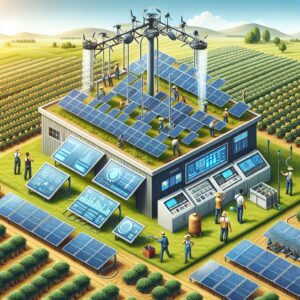
Integrating solar power with irrigation transforms traditional water delivery into a self-sufficient, eco-friendly operation that slashes operating costs while ensuring reliable performance even in remote locations. The symbiotic relationship between solar energy and efficient irrigation creates a powerful sustainability solution that addresses both water and energy conservation simultaneously. By harnessing abundant sunshine to power water delivery, farms gain independence from the electrical grid while reducing their carbon footprint. For more information on solar-powered irrigation systems, explore the various types and examples available.
Both drip and micro-sprinkler systems benefit tremendously from solar integration, though each has unique considerations for optimal implementation. The lower pressure requirements of drip systems (typically 15-25 PSI) translate to smaller solar arrays and pumps compared to micro-sprinklers operating at 25-35 PSI. This pressure difference significantly impacts system design, component selection, and overall installation costs.
Solar Panel Requirements for Irrigation Systems
Solar requirements vary significantly based on water volume, pumping depth, and system pressure. For a typical 5-acre drip irrigation system pumping from surface water, approximately 1.5-2.5kW of solar capacity is needed, translating to 4-7 standard solar panels. Micro-sprinkler systems require approximately 20-40% more solar capacity than equivalent drip systems due to their higher operating pressures and flow rates.
Panel orientation and mounting options significantly impact system performance, with fixed south-facing arrays (northern hemisphere) tilted to match the farm’s latitude providing optimal year-round production. Tracking systems that follow the sun’s path can increase daily energy harvest by 25-35% but add complexity and maintenance requirements. Ground-mounted systems offer easier maintenance access, while roof installations on farm buildings maximize space utilization but may require structural reinforcement.
Modern solar irrigation systems increasingly incorporate advanced controllers that dynamically adjust pump operation based on available solar energy, automatically reducing flow during cloudy periods rather than shutting down completely. This intelligent power management ensures continuous irrigation even during suboptimal solar conditions, maintaining crucial water delivery during critical growth periods.
Energy Savings and ROI Timeline
Solar-powered irrigation systems typically achieve complete return on investment within 3-7 years, depending on previous energy costs, available incentives, and system utilization. Farms previously using grid electricity for irrigation often save $800-1,500 per acre annually after switching to solar power, with higher savings in regions with expensive electricity rates. Operations relying on diesel or gasoline pumps see even more dramatic savings, often recouping investment within 2-4 years while eliminating fuel delivery logistics and reducing environmental contamination risks.
Battery Storage Options for Nighttime Operation
Battery storage systems allow solar irrigation to operate during nighttime or cloudy periods, offering crucial flexibility for farm operations. Lithium-ion batteries dominate the market due to their longer cycle life, higher depth of discharge capabilities, and decreasing costs—now averaging $500-800 per kWh of storage capacity. For a typical 5-acre irrigation system, 5-10kWh of battery storage provides sufficient overnight operation capability, adding approximately $2,500-5,000 to system costs but significantly enhancing reliability. For more on solar irrigation systems, explore different solar-powered sprinkler irrigation systems available to farmers.
Battery selection should account for discharge rates matching irrigation system requirements, with oversizing recommended for systems in regions with consecutive cloudy days. Advanced battery management systems monitor cell health, temperature, and charge status while preventing harmful deep discharging that could shorten battery lifespan. Most agricultural solar systems use deep-cycle batteries designed specifically for the charge-discharge patterns common in solar applications, offering 2,000-4,000 cycles compared to standard batteries.
Strategic irrigation scheduling can maximize battery efficiency, such as programming heavy irrigation cycles during peak solar production and reserving battery power for lighter maintenance irrigation overnight. This approach extends battery capacity while ensuring crops receive optimal moisture throughout the 24-hour cycle, particularly valuable during peak growing seasons when nighttime water management is crucial for quality and yield.
Off-Grid Farming Possibilities
Solar irrigation creates unprecedented opportunities for productive farming in locations without grid electricity access. Remote fields that previously relied on diesel generators or remained unirrigated can now support high-value crops with reliable, cost-effective water delivery. This expanded cultivation potential is transforming agricultural possibilities in developing regions and remote areas where solar-powered irrigation systems provide a feasible alternative to costly grid extensions.
Completely off-grid systems require careful sizing of solar arrays, battery banks, and backup power options to ensure reliability during critical growth periods. Most successful implementations include 20-30% additional solar capacity beyond baseline calculations to account for seasonal variations and system inefficiencies. Integrated weather forecasting technologies can further optimize system performance by adjusting irrigation schedules based on predicted solar availability, maximizing water application during optimal conditions. For more information on different types of solar-powered irrigation systems, explore solar-powered irrigation systems.
The off-grid capability creates strategic advantages beyond operational savings, allowing farmers to develop previously unusable land or extend growing seasons into periods when grid power might be unreliable. This flexibility has proven particularly valuable in regions with seasonal water availability, where maximizing irrigation efficiency during limited windows determines the entire season’s productivity.
Government Incentives for Solar Agricultural Systems
Federal, state, and local governments offer substantial financial incentives that can reduce solar irrigation system costs by 30-60%. The Federal Investment Tax Credit currently provides a 30% tax credit on qualified solar expenditures, while USDA’s Rural Energy for America Program (REAP) offers grants covering up to 25% of system costs and loan guarantees for renewable energy projects. Many states provide additional tax incentives, rebates, and specialized agricultural solar programs that can be combined with federal benefits.
Beyond direct financial incentives, accelerated depreciation schedules allow farmers to deduct the full cost of solar equipment in the first year, creating significant tax advantages that improve project economics. Some utility companies offer specialized agricultural rates or net metering programs specifically for farm operations, providing credits for excess solar production that can offset other farm electrical costs. Conservation programs through the Natural Resources Conservation Service (NRCS) may also provide cost-sharing for solar irrigation as part of water conservation initiatives.

Direct Comparison: Drip vs. Micro-Sprinklers
Choosing between solar drip and micro-sprinkler systems requires evaluating numerous factors specific to your agricultural operation. While both systems deliver significant improvements over conventional irrigation, their fundamental differences create distinct advantages in different scenarios. Understanding these differences enables strategic decision-making that optimizes both resource efficiency and crop performance. For more insights on solar-powered irrigation systems, you can explore various types and examples available.
Water Efficiency Differences
Drip irrigation achieves 90-95% water use efficiency by delivering moisture directly to root zones with minimal evaporation or runoff. This precision targeting can reduce water consumption by 20-50% compared to micro-sprinklers, making drip systems superior for water-scarce regions or crops with specific root zone requirements. Micro-sprinklers typically achieve 80-85% efficiency, with losses primarily occurring through evaporation and wind drift, though this represents substantial improvement over conventional overhead irrigation’s 60-70% efficiency.
The efficiency gap narrows in specific scenarios—sandy soils with poor lateral water movement often show similar water use between properly designed systems of both types. Likewise, for widely spaced tree crops with extensive root systems, the broader distribution pattern of micro-sprinklers may actually provide more effective root zone coverage despite slightly higher water use. The critical calculation involves matching water application patterns to specific crop root architectures for optimal moisture availability.
Installation Cost Breakdown
|
System Component |
Drip System Cost (per acre) |
Micro-Sprinkler Cost (per acre) |
|---|---|---|
|
Mainline/Sub-main Pipes |
$300-500 |
$400-600 |
|
Emitters/Sprinkler Heads |
$350-650 |
$400-800 |
|
Filtration System |
$200-400 |
$150-300 |
|
Solar Pump System |
$1,500-2,500 |
$2,000-3,500 |
|
Controllers/Automation |
$300-800 |
$300-800 |
|
Installation Labor |
$500-1,000 |
$400-900 |
|
Total System Cost |
$3,150-5,850 |
$3,650-6,900 |
While micro-sprinkler systems typically have higher initial costs, the difference can be offset by lower maintenance requirements and reduced filtration needs in some applications. Both systems represent significant investments that deliver returns through water savings, yield improvements, and operational efficiencies. The total ownership cost should include consideration of system lifespan—drip tape may require replacement every 3-7 years, while quality micro-sprinkler components often last 7-10 years with proper maintenance.
Maintenance Time Requirements
Drip systems require more intensive maintenance, particularly in regions with hard water or high mineral content. Regular inspection for clogging, leaks, and damage is essential, with most operations allocating 2-4 hours weekly for monitoring and maintenance during peak season. Micro-sprinklers generally demand less frequent attention due to larger orifices that resist clogging, typically requiring 1-3 hours weekly for inspection and adjustment. However, they remain susceptible to physical damage from equipment, animals, or severe weather events that can displace or break sprinkler heads.
The complexity of maintenance tasks also differs between systems. Drip maintenance often involves detailed inspection of individual emitters and frequent filter cleaning, while micro-sprinkler maintenance focuses more on checking spray patterns and coverage uniformity. Both systems benefit from end-of-season maintenance programs that include thorough flushing, inspection, and repair of damaged components before winter storage in seasonal operations.
Technologies like remote monitoring systems have transformed maintenance requirements for both irrigation methods. Pressure sensors, flow meters, and soil moisture probes connected to smartphone applications can alert farmers to potential issues before they impact crops, shifting maintenance from reactive to preventive. These monitoring systems add $300-800 per installation but typically reduce overall maintenance time by 30-50% while improving system reliability. For more information on integrating solar power with irrigation, check out our guide on efficient farm operations.
Climate Adaptability Factors
Micro-sprinklers demonstrate superior performance in regions with frost risk due to their ability to provide freeze protection when operated during cold events. This dual-purpose functionality makes them particularly valuable for high-value fruit and nut crops in regions with spring frost concerns. In contrast, drip systems excel in extremely hot, arid environments where minimizing evaporation becomes critical for water conservation and preventing salt accumulation at the soil surface.
Wind impact differs significantly between the systems, with drip irrigation virtually unaffected by windy conditions while micro-sprinklers can experience considerable spray pattern distortion and uneven distribution in high winds. This consideration becomes crucial in regions with predictable strong winds during growing seasons. Similarly, humidity levels affect system performance differently—high humidity regions gain fewer evaporation-reduction benefits from drip systems, potentially making micro-sprinklers more cost-effective in these areas.
Decision Framework for Your Farm
Making the right irrigation choice requires a systematic evaluation of your specific agricultural conditions, crop requirements, and operational constraints. Rather than viewing this as a binary decision, consider the possibility of hybrid approaches that leverage the strengths of both systems in different farm zones. The investment in proper planning pays dividends through optimized system performance and resource efficiency.
Soil Type Considerations
Heavy clay soils benefit from drip irrigation’s slow application rate, which prevents surface pooling and runoff while allowing time for water penetration. Sandy soils often perform better with micro-sprinklers due to limited lateral water movement, requiring broader distribution patterns to adequately hydrate root zones. Loamy soils work well with either system, though drip irrigation typically provides greater water savings in these balanced soil structures.
Soil chemistry also influences system selection—soils with high salinity benefit from drip irrigation’s ability to maintain consistent moisture levels that prevent salt concentration in the root zone. However, in soils with high calcium content where mineral buildup is a concern, micro-sprinklers’ larger orifices may prove more maintenance-friendly despite slightly reduced efficiency. For operations with mixed soil types across their property, zone-specific irrigation design may incorporate both systems optimized for each area’s characteristics.
Crop-Specific Recommendations
- Drip Irrigation Excels For: Row vegetables (tomatoes, peppers, cucumbers), berries, vineyards, newly planted orchards, greenhouse crops, and any plants sensitive to foliar disease
- Micro-Sprinklers Preferred For: Established orchards, nursery operations, field-grown ornamentals, citrus groves, and crops benefiting from humidity or cooling effects
- Either System Works Well For: Field crops with appropriate modifications, vegetable seedlings (with careful pressure management), and many perennial plantings
Root architecture plays a decisive role in system selection. Plants with shallow, concentrated root systems benefit from drip irrigation’s precise delivery, while those with extensive lateral root development often show better response to the broader distribution pattern of micro-sprinklers. Similarly, crop canopy considerations matter—dense foliage that could block micro-sprinkler spray suggests drip as the preferred option, while widely spaced plants with minimal foliage interference might benefit from micro-sprinklers’ coverage area.
Farm Size and Shape Impact
Field geometry significantly influences irrigation system efficiency and design complexity. Irregularly shaped fields often benefit from micro-sprinklers’ adaptability and simplified layout requirements, while perfectly rectangular fields maximize the efficiency advantages of precisely aligned drip systems. For very large operations (100+ acres), the reduced water volume requirements of drip systems can substantially impact infrastructure costs, potentially requiring smaller pumps, filters, and main lines that generate significant savings.
Labor availability also influences the decision, as drip systems typically require more specialized maintenance but less frequent adjustment. Small farms with limited labor resources might prioritize micro-sprinklers’ reliability and simplified troubleshooting, while operations with dedicated irrigation staff can maximize the efficiency advantages of more maintenance-intensive drip systems. The scale economies change dramatically between small plots and commercial-scale operations, with different decision factors dominating at different size thresholds.
Water Quality and Filtration Needs
Water source quality dramatically impacts system selection and operational requirements. Drip irrigation demands comprehensive filtration (typically 150-200 mesh) to prevent emitter clogging, adding both equipment costs and maintenance requirements. Micro-sprinklers function adequately with less intensive filtration (typically 80-120 mesh) due to larger orifices, reducing both initial investment and ongoing maintenance demands for operations with challenging water sources.
When using reclaimed water or sources with biological contaminants, both systems require treatment considerations, though drip systems face greater clogging risks from organic matter. Chemical water treatments (chlorination, acidification) become particularly important for drip systems in these scenarios. For operations in regions with seasonal water quality fluctuations, the more forgiving nature of micro-sprinkler systems may provide operational advantages despite slightly lower efficiency metrics.

Real Farm Success Stories
Small Vegetable Farm Case Study
Morning Glory Farm, a 12-acre diversified vegetable operation in California’s Central Valley, transitioned from overhead sprinklers to a hybrid solar irrigation system with drip irrigation for row crops and micro-sprinklers for their three-acre orchard section. Their total investment of $42,000 (offset by a $15,000 USDA grant) achieved complete payback within 2.5 growing seasons. Water usage decreased by 62% while crop quality improvements generated a 24% increase in direct-market revenue. The solar component eliminated their previous $7,200 annual irrigation electricity cost while providing reliable operation during increasingly frequent public safety power shutoffs during fire season.
Large Orchard Implementation Results
Sunset Orchards, a 175-acre apple and stone fruit operation in Washington state, implemented a comprehensive solar micro-sprinkler system across their entire operation at a cost of $4,200 per acre. The system’s dual-purpose design provides both efficient irrigation and spring frost protection that has prevented crop losses estimated at $300,000-500,000 during two significant frost events since installation. Water consumption decreased by 40% compared to their previous overhead system, while improved distribution uniformity eliminated previous dry spots that had caused uneven fruit sizing. The operation has documented a 30% reduction in fungal disease incidence due to reduced canopy wetting, significantly decreasing their fungicide application requirements.
Arid Region Adaptation Success
Desert Bloom Farm, located in Arizona’s Sonoran Desert, transformed 25 acres of previously unproductive land into a thriving specialty crop operation using an off-grid solar drip irrigation system. The $115,000 system (partially funded through NRCS conservation programs) draws water from a 280-foot well using solar-powered submersible pumps that fill storage tanks during peak sun hours. Advanced filtration systems and acid injection overcome the region’s challenging water quality issues, while soil moisture sensors and automated controllers optimize water application timing. The operation now produces high-value specialty crops that generate over $25,000 per acre in annual revenue on land previously considered unsuitable for intensive agriculture.
Making the Switch to Solar Irrigation
Transitioning to solar-powered irrigation represents a significant but highly rewarding investment in your farm’s future productivity and sustainability. The process requires careful planning, appropriate timing, and strategic implementation to minimize disruption to existing operations while maximizing system performance. The most successful transitions occur through phased implementation that allows for learning and adjustment throughout the process.
Step-by-Step Implementation Plan
Begin with a comprehensive site assessment including water source evaluation, soil testing across all field zones, topographic analysis, and historical climate data review. This foundational information informs critical system design decisions such as water delivery capacity requirements, filtration needs, and component sizing. Next, develop detailed irrigation zone maps based on crop types, soil variations, and water requirements, dividing your property into logical sections that can be independently controlled. For more insights, explore sustainable irrigation solutions that combine solar power with micro-sprinklers.
Create equipment specifications aligned with your specific needs rather than accepting generic system designs, including precise solar array sizing based on peak water demands and pumping requirements. Many farmers benefit from installing small test zones (1-2 acres) of each system type before committing to full implementation, allowing hands-on evaluation of performance in their specific conditions. This phased approach provides valuable operational experience while minimizing financial risk.
Seasonal Timing for Installation
Schedule major irrigation system installation during your farm’s natural downtime to minimize disruption to production. For most operations, late fall or early spring installations provide ideal conditions—completing work before peak water demands while allowing time for testing and adjustments before critical growth periods. Winter installations may offer contractor availability advantages and better pricing in many regions, though weather constraints must be considered.
For operations transitioning from existing irrigation systems, consider overlapping capabilities during the first season, maintaining previous systems as backup while the new solar installation proves reliability. This redundancy reduces adoption risk while providing direct performance comparisons under identical growing conditions. Many successful implementations maintain strategic sections of previous systems as emergency backups even after full transition.
- Fall Installation Advantages: Completed harvest provides clear field access, contractors often have better availability, system can be tested before winter shutdown
- Winter Installation Benefits: Lowest labor costs, ample time for testing before growing season, potential equipment discounts during off-peak season
- Spring Installation Considerations: Allows immediate implementation for current season, soil conditions may be ideal for trenching, immediate verification of system performance
Whatever installation timing you choose, allow sufficient buffer before critical irrigation periods to address any system adjustments, component replacements, or design modifications needed after initial testing. The commissioning phase typically requires 2-3 weeks of active monitoring and adjustment to optimize performance for your specific conditions. For more information on solar-powered irrigation systems, explore our detailed guide.
Finding Qualified Installers
Look for contractors with specific experience in agricultural solar irrigation rather than general solar installers or traditional irrigation companies. Qualified installers should provide multiple references for similar-sized agricultural projects and demonstrate understanding of both irrigation principles and solar power generation. Certification from the Irrigation Association (IA) or North American Board of Certified Energy Practitioners (NABCEP) provides additional verification of technical competency.
Request detailed system designs with component specifications rather than generic quotes, ensuring proposals include system performance projections under various conditions. The most qualified contractors include comprehensive commissioning plans, training for farm staff, and ongoing support agreements in their proposals rather than simply focusing on equipment installation. Many agricultural extension offices maintain lists of qualified contractors with agricultural specialization, providing a valuable starting point for your search.
Financing Options for Farmers
Beyond traditional equipment loans, specialized financing vehicles have emerged specifically for agricultural solar projects. USDA’s Farm Service Agency offers low-interest loans for conservation and renewable energy projects with extended terms of 7-20 years and favorable rates. Property Assessed Clean Energy (PACE) financing allows system costs to be repaid through property tax assessments, creating potential tax advantages while matching payment obligations to system performance. Some solar providers offer Power Purchase Agreements (PPAs) or equipment leases that eliminate upfront costs entirely, though these arrangements may impact eligibility for certain tax incentives.

Conclusion:
The choice between solar drip irrigation and micro-sprinkler systems ultimately depends on a nuanced understanding of your specific agricultural operation’s needs. Both technologies represent dramatic improvements over conventional irrigation in terms of water efficiency, energy consumption, and crop productivity. The most successful implementations often incorporate both systems strategically across different farm zones based on crop requirements, soil characteristics, and microclimate conditions.
As water resources become increasingly constrained and energy costs continue rising, the transition to solar-powered efficient irrigation represents not just an environmental choice but a fundamental economic necessity for sustainable farm operations. The initial investment, while significant, consistently delivers returns through reduced resource inputs, improved crop quality, and enhanced operational resilience against both climate and market volatility.
Best Choice for Farmers: Solar Drip Irrigation or Solar Micro-Sprinklers System
For row crops, vegetables, and situations where absolute water efficiency is the primary concern, solar drip irrigation typically provides the optimal solution despite higher maintenance requirements. The precise water delivery, reduced disease pressure, and exceptional efficiency make this technology particularly valuable for high-value specialty crops and water-limited regions. Conversely, established orchards, nursery operations, and farms in regions with frost concerns generally benefit more from micro-sprinkler systems’ broader coverage, simplified maintenance, and frost protection capabilities.
Rather than viewing this as an either/or decision, progressive farmers increasingly implement integrated systems that leverage each technology’s strengths across different farm zones. This hybrid approach maximizes overall farm productivity while building resilience through diversified irrigation capabilities. Whichever technology pathway you choose, the transition to solar-powered efficient irrigation positions your operation for long-term sustainability in an era of increasing resource constraints and climate uncertainty.
Frequently Asked Questions
The decision to implement solar irrigation raises many practical questions from farmers considering this significant operational change. Below we address the most common concerns and considerations based on real-world implementation experience across diverse agricultural operations. These insights help bridge the gap between technical specifications and practical field application.
Understanding the financial, operational, and maintenance implications of these systems allows for more informed decision-making tailored to your specific situation. Many of these considerations vary significantly based on regional factors, crop selection, and existing farm infrastructure, highlighting the importance of customized system design rather than one-size-fits-all approaches.
- What is the typical lifespan difference between components of drip and micro-sprinkler systems?
- How do I calculate the appropriate battery storage capacity for my irrigation needs?
- Can these systems be integrated with existing conventional irrigation as a hybrid approach?
- What water quality parameters are most critical for successful system operation?
- How do I maximize available tax incentives and grants for system installation?
Working with qualified agricultural irrigation specialists who understand both conventional growing practices and solar technology applications provides the most reliable guidance for your specific operation. Many successful implementations begin with small pilot projects that allow hands-on evaluation before full-scale deployment.
How much does a solar drip irrigation system typically cost per acre?
Complete solar drip irrigation systems typically cost $3,500-6,000 per acre for standard field crops, with specialty applications reaching $8,000-10,000 per acre for high-density plantings requiring multiple emitters per plant. This comprehensive cost includes solar panels, pumping systems, filtration, distribution piping, emitters, controllers, and professional installation. Economies of scale significantly reduce per-acre costs for larger implementations, with 50+ acre systems often achieving 20-30% lower per-acre costs compared to small installations.
Can micro-sprinklers work effectively with high-sediment water sources?
Micro-sprinklers demonstrate moderate tolerance for sediment-laden water but still require appropriate filtration systems (typically 80-120 mesh) to prevent performance degradation. Their larger orifices (compared to drip emitters) resist clogging more effectively, making them suitable for surface water sources with proper pretreatment. For particularly challenging water sources, self-cleaning filters with automated flush cycles provide the most reliable performance, adding $500-1,500 to system costs but significantly reducing maintenance requirements and extending component lifespan. For more on sustainable irrigation practices, consider exploring pairing solar power with micro-sprinklers.
What maintenance is required monthly for solar irrigation systems?
Monthly maintenance for both system types includes filter inspection and cleaning, system pressure checks, and visual inspection of water distribution patterns to identify potential issues. Solar components require panel cleaning (frequency depending on local dust conditions) and battery maintenance if included in the system. Drip systems additionally require periodic flushing of lateral lines and inspection of emitters for clogging or damage, particularly in zones showing irregular plant growth.
During peak growing season, weekly quick-checks of critical components are recommended regardless of system type. Modern systems increasingly incorporate remote monitoring capabilities that alert operators to pressure changes, flow irregularities, or filter differential pressure indicating cleaning needs, reducing physical inspection requirements.
Establishing a comprehensive maintenance calendar with specific weekly, monthly, and seasonal tasks provides the structure necessary for optimal system performance. Many successful operations designate a specific team member as the irrigation system specialist responsible for maintaining this schedule and documenting all maintenance activities.
How many years do solar panels for irrigation systems typically last?
Quality solar panels used in agricultural applications typically maintain at least 80% of their original production capacity for 25-30 years, with manufacturers providing 25-year performance warranties as standard. The panels themselves often outlast other system components, requiring minimal maintenance beyond occasional cleaning and inspection of mounting hardware and electrical connections. Most system designs incorporate panel output degradation factors in initial sizing calculations, ensuring sufficient power throughout the system’s operational life. For more information on the types of solar panels used in agriculture, you can explore solar-powered irrigation systems.
While solar panels demonstrate exceptional longevity, associated electronic components like inverters and charge controllers typically require replacement every 10-15 years. Battery banks, if included, generally need replacement every 7-10 years for lead-acid types or 10-15 years for lithium technologies. These replacement cycles should be incorporated into long-term financial planning for system operation.
Can I convert my existing irrigation system to solar power without replacing everything?
Existing irrigation infrastructure can often be successfully converted to solar power through strategic component replacement rather than complete system redesign. The most common approach maintains existing distribution piping, emitters/sprinklers, and controls while replacing conventional pumps with solar-compatible models and adding appropriate solar arrays and controllers. This hybrid approach typically reduces conversion costs by 30-50% compared to complete system replacement while still capturing most energy-saving benefits.
Conversion success depends heavily on existing system pressure requirements, with high-pressure systems (above 40 PSI) presenting greater challenges for solar conversion without significant battery storage. Most successful conversions begin with a professional energy audit that identifies the most efficient pathway to solar integration based on current system specifications and operational patterns. For more insights on solar-powered irrigation systems, explore the various types and examples available for farmers.
For many farms, phased conversion provides the most practical approach—initially powering lower-pressure zones with solar while maintaining conventional power for high-pressure applications until technology advances or system redesign opportunities emerge. This graduated implementation minimizes risk while still generating immediate benefits in appropriate applications.
The integration of solar panels with irrigation systems has revolutionized modern agriculture. Farmers now have the opportunity to choose between solar drip irrigation and solar micro-sprinklers systems. Each system offers unique advantages, but the decision ultimately depends on the specific needs of the farm. For those interested in understanding the benefits of combining solar power with irrigation, this integration of solar panels and irrigation systems can lead to more efficient farm operations.

Leave a Reply