
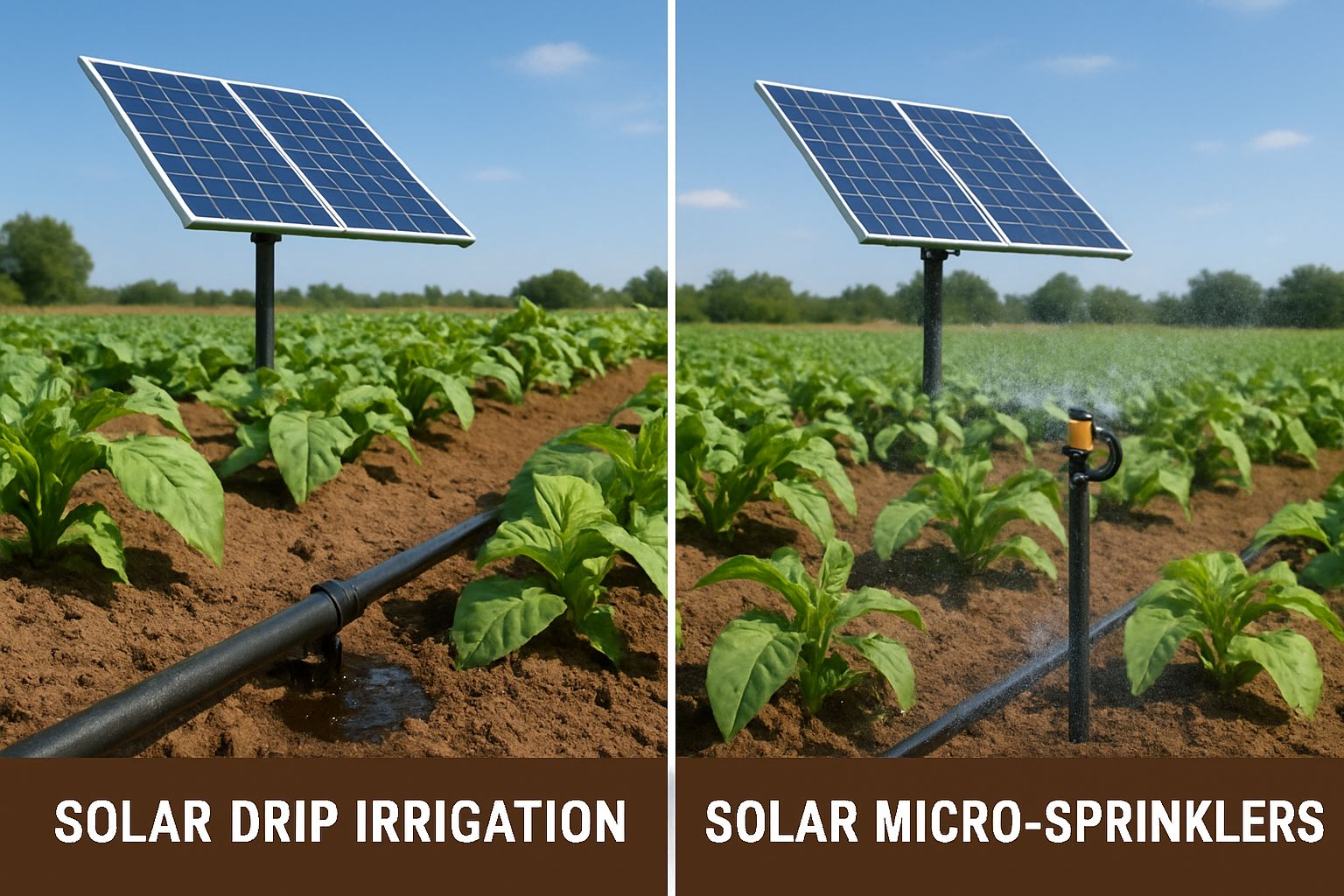
Article-At-A-Glance: Solar Drip vs Solar Micro-Sprinkler Irrigation
- Solar drip irrigation delivers water at up to 90% efficiency, compared to 80% for micro-sprinkler systems — a gap that adds up to tens of thousands of liters of wasted water per season on mid-sized farms.
- Micro-sprinkler systems cost 15–25% less upfront than drip systems, making them an attractive entry point for farmers with tighter installation budgets.
- Soil type is the most overlooked factor in system selection — drip excels in clay and loam soils, while micro-sprinklers outperform in sandy conditions where water spreads laterally before reaching roots.
- Certain crops, including frost-prone orchards and widely spaced shrubs, are better matched to micro-sprinklers, while row vegetables and foliar-sensitive crops strongly favor drip delivery.
- You can run both systems simultaneously across different farm blocks — keep reading to find out how farmers are structuring hybrid solar irrigation setups to get the best of both worlds.
Picking the wrong irrigation system doesn’t just waste water — it quietly drains your profits season after season. GrowingSolarMist.com has been helping farmers navigate exactly this decision, and the comparison between solar drip and solar micro-sprinkler systems is one of the most searched and most misunderstood topics in sustainable agriculture today.
Both systems run on solar power, both conserve more water than traditional flood or furrow irrigation, and both can dramatically cut your energy costs. But the similarities stop there. How each system delivers water, where it places that water, how much pressure it demands from your solar pump, and which crops it suits best are all very different — and getting those details wrong costs real money.
Two Systems, One Critical Decision for Your Farm
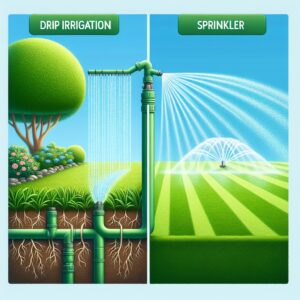
Drip irrigation and micro-sprinkler systems represent the two primary approaches to efficient water delivery in solar-powered setups. Drip systems use tubes fitted with small emitters that release water directly into the soil at the root zone, operating at low pressure and targeting individual plants. Micro-sprinklers, by contrast, distribute water through rotating or fixed spray heads positioned above the soil surface, covering a wider radius per unit.
Neither is universally superior. The right choice depends on your soil texture, crop type, climate, budget, and how you plan to scale your operation over time. What this comparison will give you is a clear, no-fluff breakdown of both systems so you can make that decision with confidence.
Solar Drip Irrigation Achieves Up to 90% Water Efficiency
Solar drip irrigation systems achieve up to 90% water use efficiency. That figure means 90 out of every 100 liters pumped from your water source reaches the plant root zone where it’s actually needed. On a farm using 500,000 liters per growing season, dropping from 90% to 80% efficiency means an extra 50,000 liters lost to evaporation, runoff, or surface spread — water your solar pump had to work to move, water you paid to store or source.
Micro-Sprinklers Cost 15–25% Less Upfront Than Drip Systems
The lower upfront cost of micro-sprinkler systems is a genuine advantage, not a marketing claim. Drip systems require more components — emitter lines, pressure regulators, filtration systems to prevent clogging, and in many cases, fertigation injectors. Micro-sprinklers use fewer specialized parts and are faster to install across large areas. For farmers working with limited capital or testing a new crop block before committing to full infrastructure, that 15–25% cost difference is meaningful.
Soil Type Is the Hidden Factor Most Farmers Overlook
Soil texture directly controls how water moves after it leaves your emitter or sprinkler head. In clay and loam soils, drip emitters release water slowly enough for the soil to absorb it laterally, creating an ideal moisture bulb around the root zone. In sandy soils, that same slow drip can migrate straight down past the root zone before roots absorb it — a process called deep percolation. Micro-sprinklers apply water faster and across a broader surface, which works with sandy soil’s rapid drainage rather than against it. Learn more about irrigation systems powered by solar panels to optimize water use in different soil types.
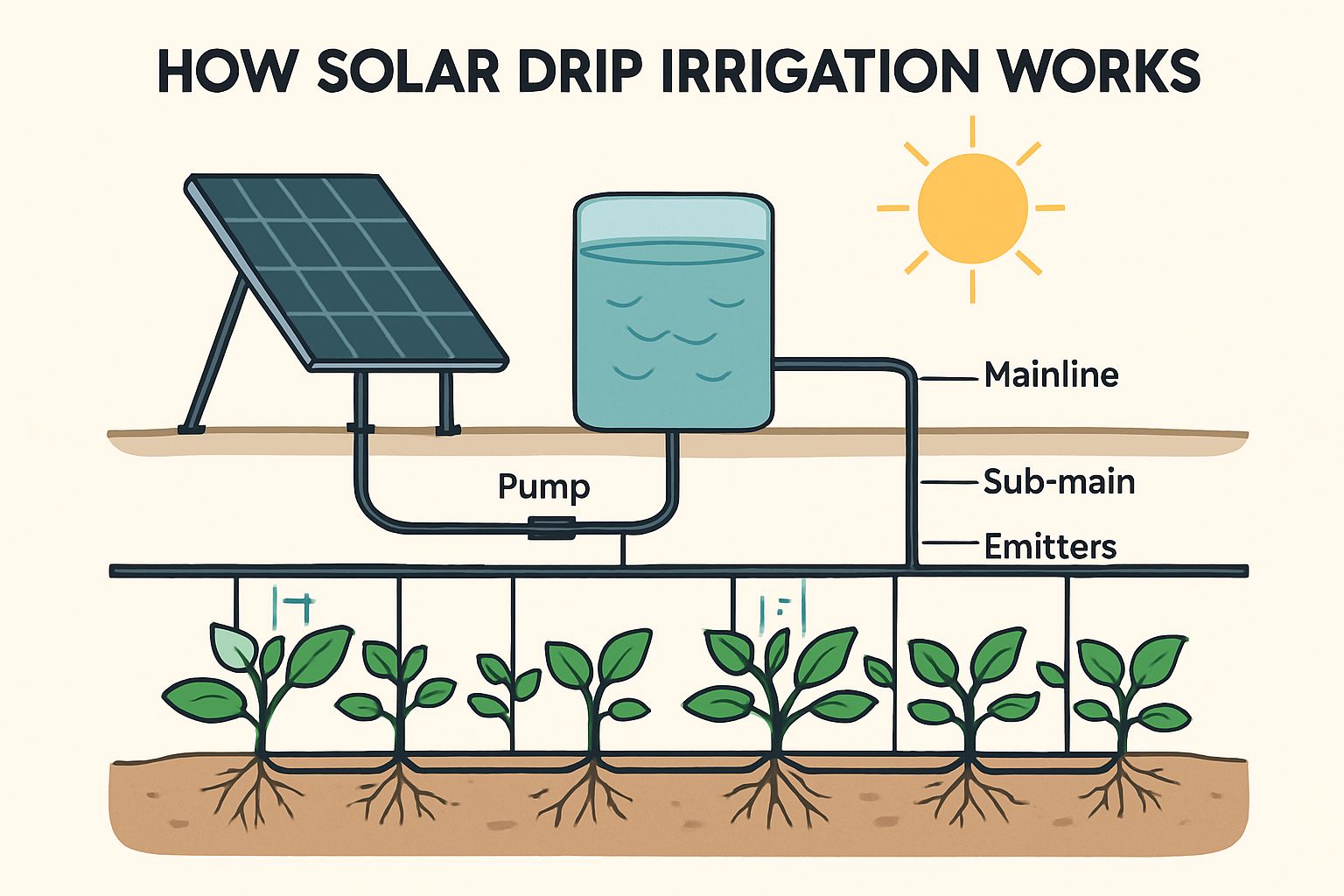
How Solar Drip Irrigation Works
A solar drip irrigation system connects a solar-powered pump to a network of mainline pipes, sub-mains, and drip laterals fitted with emitters spaced according to your crop’s root spread. The pump draws water from a tank, borehole, or surface source and pushes it through the system at low pressure — typically between 0.5 and 1.5 bar depending on emitter type and system design. A filter unit, usually a disc or screen filter rated at 120–200 mesh, sits between the pump and the mainline to prevent emitter clogging, which is the most common maintenance issue in drip systems.
Root-Zone Water Delivery and Why It Matters
Delivering water directly to the root zone does two things simultaneously: it keeps the soil surface dry, which reduces weed germination and slows fungal disease spread, and it eliminates the evaporative losses that happen when water is sprayed into the air or sits on leaves in sunlight. For crops like tomatoes, peppers, and cucumbers — where foliar moisture drives diseases like early blight and powdery mildew — keeping water off the plant canopy is not a minor benefit. It’s a crop protection strategy. For more on innovative farming techniques, explore solar-powered irrigation systems and their benefits.
Solar Pump Sizing for Drip System Pressure Requirements
Drip systems run at lower pressure than sprinkler systems, which is actually an advantage for solar pump sizing. A standard drip system operating at 1.0 bar across a 1-hectare block typically requires a pump with a flow rate of 1.5 to 3 cubic meters per hour, depending on emitter spacing and number of laterals. That lower flow and pressure demand means your solar array can be smaller — reducing both installation cost and the number of panels needed to run the system through peak irrigation hours.
When sizing your solar pump, the key calculation is total dynamic head (TDH), which combines your static water lift height with friction losses through the pipe network. Most small to mid-scale solar drip systems operate effectively with a 0.37 kW to 1.5 kW DC solar pump paired with a 2–4 panel array, though larger farms will need to engineer this specifically per block size and pipe diameter.
Emitter Types: In-Line Drippers vs Pressure-Compensating Emitters
Not all drip emitters behave the same way, and choosing the wrong type for your terrain or crop spacing is a common and costly mistake. In-line drippers are pre-installed within the drip tape or lateral pipe at fixed intervals — commonly 20 cm, 30 cm, or 45 cm — and are best suited for flat land and uniform crops like strawberries or lettuce. Pressure-compensating (PC) emitters maintain a consistent output flow rate across a wide pressure range, typically 0.5 to 4.0 bar, making them the correct choice for sloped land or long lateral runs where pressure variation would otherwise cause uneven watering.
Emitter Type
Best For
Pressure Range
Typical Flow Rate
In-Line Dripper (Drip Tape)
Flat land, row crops
0.5 – 1.5 bar
0.6 – 1.0 L/hr per emitter
Pressure-Compensating Emitter
Sloped land, long runs
0.5 – 4.0 bar
2.0 – 4.0 L/hr per emitter
Button Dripper
Potted plants, nurseries
1.0 – 3.0 bar
2.0 – 8.0 L/hr per emitter
Adjustable Dripper
Mixed crops, small plots
1.0 – 2.5 bar
0 – 70 L/hr (variable)
PC emitters cost more per unit than standard in-line drippers, but on uneven terrain, they’re not optional — they’re essential for delivering uniform water application across the full lateral length.
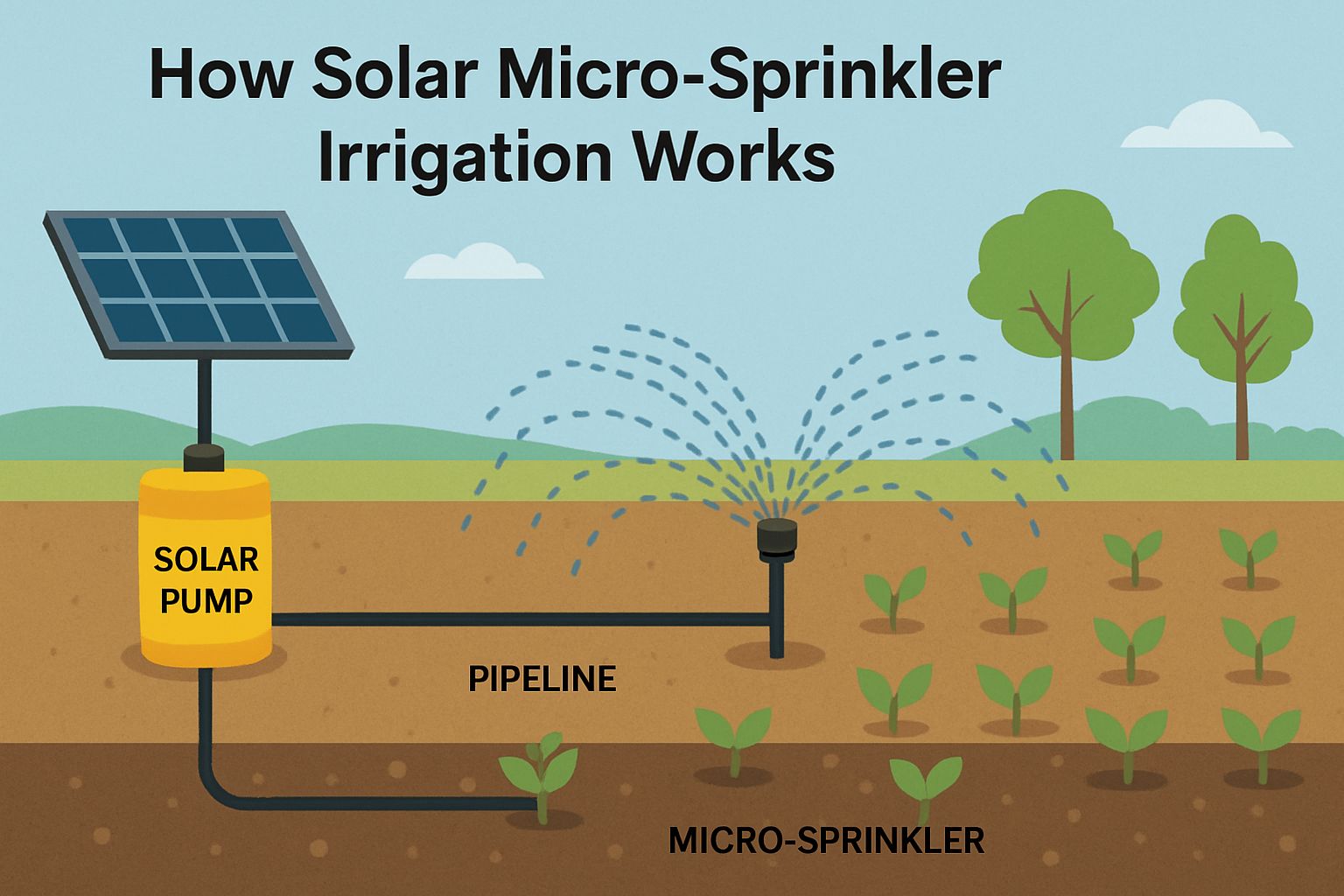
How Solar Micro-Sprinkler Irrigation Works
A solar micro-sprinkler system replaces drip laterals with small spray heads or rotating spinners mounted on stakes above the soil surface. The solar pump delivers water at slightly higher pressure — typically 1.5 to 2.5 bar — which the micro-sprinkler head converts into a fine spray distributed across a defined radius. Each head covers between 1.5 and 6 meters in diameter depending on the nozzle design, flow rate, and operating pressure, making them far more suited to ground coverage than point-source drip emitters.
Spray Radius, Flow Rate, and Coverage Patterns
Micro-sprinkler heads are available in fixed-pattern and rotating designs. Fixed heads deliver a consistent spray arc — typically 90°, 180°, or 360° — while rotating spinners distribute water more evenly over the full coverage radius. Flow rates typically range from 30 to 150 liters per hour per head, which means your solar pump must move significantly more volume per hour than a drip system serving the same area. This higher flow demand directly increases solar panel requirements.
Why Micro-Sprinklers Work Well in Sandy Soils
In sandy soil, water infiltrates rapidly and spreads very little laterally. A drip emitter releasing water at 1–2 liters per hour into sand will often create a narrow, deep wet column that bypasses the root zone of shallow-rooted crops entirely. Micro-sprinklers apply water faster and across a wider surface area, giving sandy soil time to absorb moisture across a broader zone before it drains below root depth. This makes micro-sprinklers the technically correct choice for sandy or gravelly profiles, especially for crops with shallow, wide-spreading root systems.
Sandy soils also tend to be common in coastal growing regions and in arid zones where solar irrigation is most needed. Farmers in these areas who choose drip systems without accounting for their soil texture often report poor crop performance despite technically correct installation — a problem that traces directly back to soil-water interaction, not system failure.
Solar Drip vs Solar Micro-Sprinkler: Head-to-Head Comparison
This is where the decision gets real. Both systems are valid, both are proven, and both work well on solar power — but they perform very differently across the key metrics that affect your farm’s productivity and operating costs. The comparison below covers the factors that matter most to working farmers.
Water Efficiency: 90% vs 80% and What That Costs You Per Season
Solar drip systems achieve up to 90% water use efficiency versus approximately 80% for micro-sprinklers. That 10-percentage-point gap is driven primarily by evaporative loss — micro-sprinklers spray water into the air where heat and wind carry moisture away before it reaches the soil. On a farm irrigating with 500,000 liters per season, the less efficient micro-sprinkler system wastes an additional 50,000 liters compared to drip. In water-scarce regions or on farms paying for water by volume, that gap translates directly into operating cost. For more information on irrigation systems, explore this comparison of solar drip vs solar micro-sprinklers.
Installation Complexity and Maintenance Demands
Drip systems are more complex to install than micro-sprinkler systems, full stop. A properly designed drip network requires careful hydraulic calculations to ensure uniform emitter output across every lateral, correct filter sizing, pressure regulation at zone inlets, and precise emitter spacing matched to your crop geometry. That complexity pays dividends in operating efficiency, but it demands more time and technical knowledge upfront — or a qualified installer who understands solar-powered low-pressure systems specifically.
Micro-sprinkler systems are faster to install and easier to reconfigure between seasons. Replacing a blocked or broken micro-sprinkler head takes seconds — you pull the stake, swap the head, and you’re done. Drip emitters embedded in buried laterals are harder to locate and replace, and a single clogged emitter can stress an individual plant before you even notice the problem. Both systems require regular inspection, but micro-sprinklers surface their problems more visibly.
Crop Disease Risk From Foliar Moisture
This is one of the most practically important differences between the two systems and one that’s frequently underweighted in standard comparisons. Micro-sprinklers wet plant foliage and the soil surface with every irrigation cycle. For crops with known foliar disease vulnerability — tomatoes, grapes, roses, cucumbers, potatoes — that repeated wetting creates the exact humid microclimate that fungal pathogens like Botrytis cinerea, Phytophthora infestans, and powdery mildew species need to establish and spread. Drip irrigation eliminates this risk entirely by keeping water below the canopy and off leaf surfaces throughout the growing season.
Frost Protection Capability
Micro-sprinklers hold a specific and significant advantage in frost-prone growing regions. When water freezes, it releases latent heat — approximately 334 joules per gram — and a micro-sprinkler system running through a frost event continuously coats plant tissue with a thin layer of water that releases this heat as it freezes, maintaining tissue temperature at or just above 0°C. This technique, called evaporative frost protection or overhead irrigation frost management, is an established practice in citrus, stone fruit, and berry production.
Drip systems cannot provide frost protection. Water delivered at the root zone has no mechanism to protect above-ground plant tissue from freezing air temperatures. For orchards and berry farms in regions where late spring frosts are a genuine seasonal risk, this single factor can determine which system is the correct choice regardless of water efficiency numbers.
Solar Panel and Battery Requirements for Each System
Because drip systems operate at lower pressure and lower flow rates than micro-sprinkler systems, they demand less from your solar array. A drip system irrigating 1 hectare may run effectively on a 600W to 1,500W solar array with a pump operating at 0.37–0.75 kW. The same area irrigated by micro-sprinklers — which require higher pressure and higher flow volume — may need a 1,500W to 3,000W array to deliver equivalent coverage within the same daily irrigation window.
Battery storage requirements follow the same logic. If your irrigation schedule runs during daylight hours, both systems can operate effectively without battery banks by using direct solar-to-pump DC connections. However, if your farming schedule requires early morning or evening irrigation — which is agronomically preferred for reducing evaporation — battery storage or a hybrid grid-backup becomes necessary, and the higher energy demand of micro-sprinklers makes that battery bank proportionally more expensive to size correctly.
Which Crops Perform Better With Solar Drip Irrigation
Drip irrigation consistently outperforms micro-sprinklers for crops where root-zone precision, foliar disease management, and fertigation delivery are priorities. The system’s ability to apply water and dissolved nutrients directly to the root zone — with zero canopy contact — gives it a clear agronomic advantage across a wide range of high-value and commercially important crops. For more details on choosing the right system, you can explore micro-sprinkler vs drip irrigation in orchards.
Crops suited to drip irrigation also tend to be those planted in defined rows with consistent in-row spacing, which allows drip lateral design to be standardized and optimized. Irregular planting patterns or very widely spaced individual trees can make drip system design more expensive per plant, which is one reason orchards sometimes favor micro-sprinklers despite drip’s efficiency advantages.
Row Vegetables and Foliar-Sensitive Crops
Tomatoes, peppers, cucumbers, eggplant, lettuce, onions, garlic, and strawberries are among the strongest candidates for solar drip irrigation. These crops are typically planted in defined rows, have concentrated root zones that benefit from localized moisture, and — in the case of solanaceous crops like tomatoes and peppers — carry significant foliar disease risk that drip irrigation actively reduces. Strawberries irrigated with drip systems show measurably lower incidence of grey mold (Botrytis cinerea) compared to overhead or sprinkler-irrigated crops, with the dry canopy environment being the primary contributing factor.
High-Value Specialty Crops Where Precision Pays Off
Drip’s precision delivery becomes economically decisive when you’re growing crops with high market value and narrow tolerance for stress or disease. Greenhouse herbs, cut flowers, nursery stock, cannabis, and specialty salad greens all benefit from the consistent, controllable moisture delivery that drip systems provide. The ability to inject fertilizer directly through the drip system — a practice called fertigation — means nutrients are delivered exactly where roots can access them, reducing fertilizer waste by up to 30–50% compared to broadcast surface application and increasing uptake efficiency significantly. Learn more about the benefits of solar panels for farm irrigation systems.
Which Crops Perform Better With Solar Micro-Sprinklers
Micro-sprinklers earn their place in the toolkit when crop spacing is wide, when ground cover crops benefit from broad moisture distribution, or when frost protection is a genuine seasonal need. Understanding where micro-sprinklers genuinely outperform drip — rather than just offering a cheaper alternative — helps farmers deploy each system where it delivers real agronomic value. For those interested in sustainable agriculture, exploring solar-powered irrigation systems can be a beneficial step.
The coverage radius of micro-sprinklers makes them practical for crops where placing individual emitters near each plant would be either physically difficult or prohibitively expensive. A mature avocado tree, for example, has a root zone that can extend 2–3 meters from the trunk in all directions. Covering that root zone with drip requires multiple laterals per tree row, while a single micro-sprinkler head with a 3-meter radius can cover the same area from a single stake position.
Micro-sprinklers are also better suited to situations where the goal is uniform moisture across the full soil surface rather than targeted delivery to specific plant positions. Cover cropping, green manure establishment, and pasture irrigation all benefit from the broad, even distribution pattern that micro-sprinklers provide naturally.
Here’s a quick summary of which crop categories align best with micro-sprinkler systems:
- Orchard crops — citrus, avocado, mango, macadamia, stone fruit
- Berry crops in frost-prone regions — blueberries, cranberries
- Widely spaced shrub crops — coffee, tea, cacao
- Nursery and propagation beds — seedling trays, cutting beds
- Sandy-soil row crops where drip creates deep percolation issues
- Cover crops and pasture establishment requiring full surface coverage
Orchards and Widely Spaced Shrub Crops
Citrus, avocado, mango, and macadamia orchards are among the most common applications for micro-sprinkler systems worldwide. The wide plant spacing typical in orchard production — commonly 5 to 8 meters between trees — means each tree needs a water delivery zone that covers significant ground area. Micro-sprinklers with 3–5 meter throw radius heads, positioned between tree rows or at the tree base, deliver this coverage efficiently without the complexity of multi-lateral drip design per tree. In established citrus orchards specifically, micro-sprinklers also help maintain humidity around the tree canopy during hot, dry periods, reducing heat stress on flowering and fruit-set stages.
Germination and Seedling Establishment Stages
Seeds germinate from the soil surface down — and drip emitters buried or placed at ground level struggle to maintain the consistent surface moisture that germination requires. Micro-sprinklers keep the top 2–5 cm of soil consistently moist without saturating the root zone, creating ideal germination conditions for direct-seeded crops like carrots, beetroot, beans, and maize.
Once seedlings are established and root systems have developed beyond the surface layer, switching to drip irrigation becomes agronomically beneficial. Some farmers run hybrid systems precisely for this reason — using micro-sprinklers during establishment phases and transitioning to drip for the main growing season to capture water efficiency gains once roots are deep enough to benefit from localized delivery.
For transplanted seedlings, the transition is simpler. Drip can be used from day one of transplanting because the root ball is already positioned at the emitter depth. It’s specifically direct-seeded crops where micro-sprinklers earn their role during the critical germination window.
Crops in Frost-Prone Growing Regions
As discussed in the frost protection section, any orchard or berry crop grown in a region with documented late spring frost events should factor micro-sprinkler frost protection capability into the system selection decision. The economic cost of a single frost event that destroys a season’s fruit set — particularly in crops like stone fruit where the entire yield is concentrated in a brief flowering window — can exceed the total installation cost difference between drip and micro-sprinkler systems many times over.
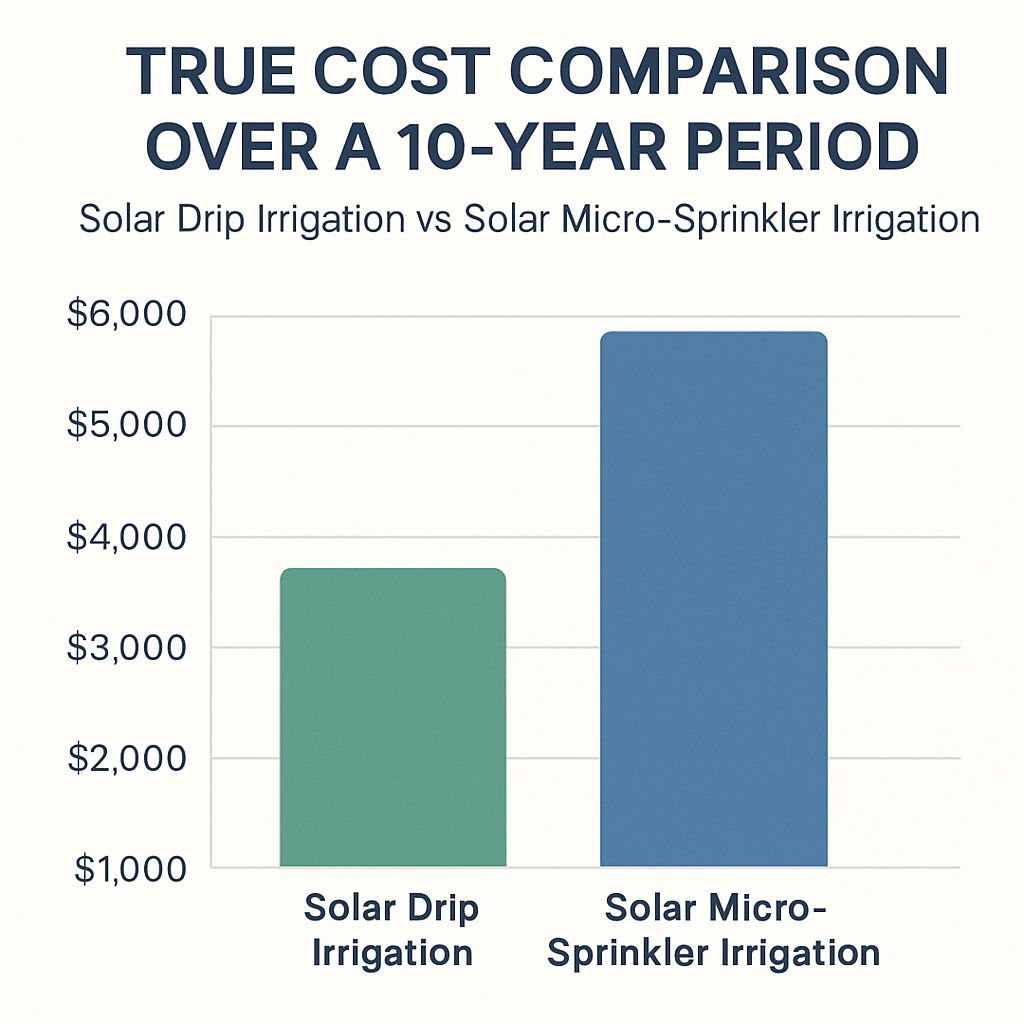
True Cost Comparison Over a 10-Year Period
Upfront installation cost is the number most farmers look at first, but it’s the least useful metric for comparing these two systems. The real comparison happens over time — across water consumption, energy demand, maintenance frequency, crop yield quality, and system longevity. A system that costs 20% more to install but saves 10% of your water volume every season for ten years is almost always the better financial decision, particularly as water costs and energy costs trend upward in most agricultural regions.
Ten-year cost modeling should account for four variables: initial capital outlay, annual operating costs (water, energy, maintenance), crop yield impact from system performance, and system replacement or component lifecycle costs. Drip tape, for example, typically has a lifespan of 3–7 years depending on UV exposure, water quality, and rodent pressure — a replacement cost that needs to be factored into drip system economics. Micro-sprinkler heads generally last longer as individual components but are more exposed to physical damage from farm equipment and wildlife.
Upfront Installation Costs for Each System
Micro-sprinkler systems cost approximately 15–25% less to install than equivalent drip systems at the same scale. The primary drivers of drip’s higher upfront cost are the filtration system (essential to prevent emitter clogging), the higher per-meter cost of quality drip tape or emitter line compared to micro-sprinkler risers, and the more detailed hydraulic design work required for uniform pressure distribution. For a 1-hectare installation, this cost difference can represent a meaningful capital saving — but it narrows significantly when you account for the larger solar array and pump required to power a micro-sprinkler system at equivalent coverage.
Water and Energy Savings That Compound Over Time
The 10-percentage-point water efficiency advantage of drip systems compounds significantly across a 10-year operation period. On a farm consuming 500,000 liters per season, drip saves approximately 50,000 liters annually compared to micro-sprinklers. Over ten seasons, that’s 500,000 liters of water — which, depending on your water source, represents either direct cost savings on pumped or purchased water, or preserved water storage capacity that extends your irrigation season during dry periods.
Energy savings follow directly from water savings. Every liter of water not pumped is energy not consumed. Drip systems’ lower pressure requirements mean the solar pump runs at lower load, extending pump motor lifespan and reducing the total solar array size needed to power the system. When you factor in the lower panel count, smaller pump motor, and reduced water volume, the total system operating cost of solar drip irrigation is consistently lower than solar micro-sprinklers over any multi-year horizon — despite the higher installation cost.
Running Both Systems Simultaneously Across Different Farm Blocks
Running solar drip and micro-sprinkler systems simultaneously across different farm blocks is not only possible — it’s a strategy that experienced farmers are increasingly using to match water delivery precisely to what each crop and soil type actually needs. A farm with both a vegetable production block and a citrus orchard, for example, has genuinely different irrigation requirements in each area. Forcing a single system across the entire operation means one block is always compromised. To learn more about the types of irrigation systems powered by solar panels, check out this resource.
The practical approach is to run separate pump zones or separate solar-powered pump stations for each system, sized specifically to that block’s pressure and flow requirements. A dedicated 0.75 kW DC solar pump for the drip zone and a separate 1.5 kW DC solar pump for the micro-sprinkler orchard block gives you independent control, independent fault isolation, and the ability to irrigate each zone on its own schedule without pressure conflicts. The additional capital cost of two pump systems is typically offset within two to three seasons through improved crop performance and water savings in each optimized zone.
How to Choose the Right System for Your Farm
The decision between solar drip and solar micro-sprinkler irrigation comes down to four factors that are specific to your operation: your soil, your crops, your budget timeline, and your climate. Work through these steps in order and the right system — or combination of systems — will be clear.
Most farmers who regret their irrigation system choice made the decision based on upfront cost alone, without accounting for the compounding effect of water efficiency, energy demand, and crop yield quality over multiple seasons. Take the time to work through all four steps before committing capital to either system.
There is no universally correct answer here. The goal is to match the delivery mechanism to the specific conditions of your land and the agronomic requirements of your crops — not to pick the system with the best marketing materials or the lowest quote from the first supplier you contact.
Step 1: Identify Your Soil Texture and Water Source Capacity
Start with a basic soil texture assessment. You don’t need a laboratory analysis for this — a simple jar test or ribbon test will tell you whether your soil is predominantly sandy, loamy, or clay-dominant. If your soil forms a ribbon longer than 5 cm when rolled between your fingers, it has significant clay content and drip irrigation will create a well-defined moisture bulb in the root zone. If it crumbles immediately, you’re working with sandy soil and micro-sprinklers will perform more reliably.
Your water source capacity matters equally. A low-yield borehole producing 1–2 cubic meters per hour sets a hard ceiling on what any irrigation system can deliver. Drip systems are better matched to low-yield water sources because they require lower flow rates to irrigate the same area as a micro-sprinkler system. If your water source is limited, drip irrigation isn’t just the more efficient choice — it may be the only choice that keeps your system within the flow capacity you have available.
Also assess your water quality at this stage. High iron content, hard water with elevated calcium and magnesium, or high sediment loads all affect filtration requirements and emitter clogging risk for drip systems. If your water quality is poor, the maintenance burden of drip irrigation increases significantly, and you’ll need to factor in acid injection or enhanced filtration equipment in your installation cost.
Step 2: Match Your Crop Type to the Right Delivery Method
Use your crop’s root architecture, foliar disease susceptibility, and plant spacing as the primary filters. Row vegetables, foliar-sensitive crops, and high-value specialty crops point clearly toward drip. Orchards, widely spaced shrub crops, frost-prone berry farms, and direct-seeded crops in their germination phase point toward micro-sprinklers. If your farm grows multiple crop types across different blocks, map each block to the system that suits it best — then evaluate whether a hybrid installation makes financial sense for your scale.
Step 3: Calculate Your Budget Against Long-Term ROI
Don’t evaluate installation cost in isolation. Build a simple 5-year cost model that includes installation, annual water consumption at your local cost or scarcity value, solar array sizing, pump maintenance, and component replacement cycles. Drip tape replacement every 5–7 years is a real cost line. A larger solar array for micro-sprinklers is a real cost line. When these are modeled together over five years, drip irrigation’s higher upfront cost is typically recovered through water and energy savings within 2–4 growing seasons on a mid-sized farm.
If your capital is genuinely constrained and the upfront saving on micro-sprinklers is the difference between installing a system this season or waiting another year, that’s a legitimate reason to choose micro-sprinklers now. An operating micro-sprinkler system this season outperforms a theoretical drip system next season. Just plan the transition to drip for your most water-intensive blocks as capital becomes available.
Step 4: Factor in Your Local Climate and Frost Risk
If you farm in a region where late spring frosts occur with any regularity and your crops are frost-sensitive — particularly orchards, stone fruit, or berry crops in their flowering stage — micro-sprinkler frost protection capability is not a minor consideration. A single frost event destroying a full season’s fruit set is a financial catastrophe that dwarfs any efficiency savings from drip irrigation. In frost-risk regions, micro-sprinklers earn their installation cost through insurance value alone, independent of all other performance comparisons.
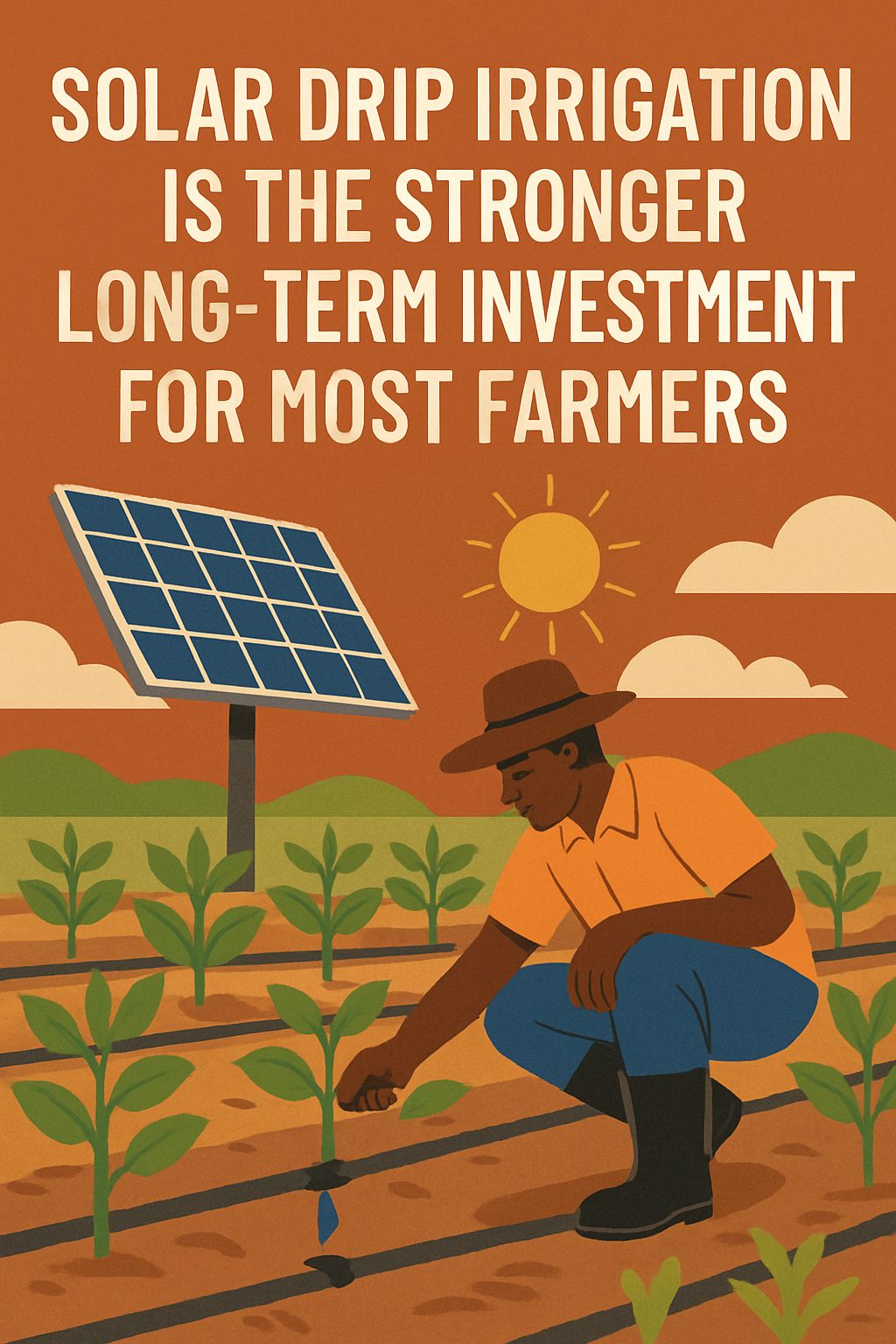
Solar Drip Irrigation Is the Stronger Long-Term Investment for Most Farmers
For the majority of farming operations — particularly those growing row vegetables, high-value specialty crops, or any crop with foliar disease sensitivity — solar drip irrigation delivers better outcomes across every metric that matters over time. The upfront cost premium is real but recoverable. The water efficiency advantage compounds every season. The energy savings reduce solar array sizing requirements and extend pump lifespan. And the disease management benefit of keeping canopies dry reduces fungicide inputs and crop losses in ways that show up directly in your profitability.
- 90% water use efficiency versus 80% for micro-sprinklers — a gap that adds up to hundreds of thousands of liters over a decade of farming
- Lower solar pump and panel requirements due to reduced pressure and flow demand, cutting both installation and operating costs
- Fertigation capability that reduces fertilizer waste by up to 30–50% compared to broadcast surface application
- Reduced foliar disease pressure on susceptible crops, lowering fungicide costs and crop rejection rates
- Consistent root-zone moisture delivery that supports more uniform crop growth and predictable yield quality
- Lower weed germination rates on dry soil surfaces between plant rows, reducing manual weeding or herbicide inputs
That said, micro-sprinklers are the correct system for orchards, frost-prone farms, sandy-soil operations, and germination-phase management — and dismissing them as simply the cheaper or less efficient option misses the genuine agronomic value they deliver in those specific applications.
The strongest farming operations don’t commit blindly to one system across their entire land holding. They evaluate each block on its own merits — soil texture, crop type, climate risk, water source capacity — and deploy the system that serves that block best. In many cases, that means drip on the vegetable blocks and micro-sprinklers in the orchard, powered by separate solar pump stations sized specifically for each zone’s requirements.
What this comparison should give you is the technical foundation to have that conversation clearly — with your agronomist, your irrigation supplier, or your own farm planning process — without being sold a system that doesn’t fit your land. Water is your most critical input. The system that delivers it most effectively, for your specific crops and conditions, is always the right investment.
Frequently Asked Questions
Here are direct answers to the questions farmers ask most when comparing solar drip and micro-sprinkler irrigation systems.
Can I Run Solar Drip and Micro-Sprinkler Systems on the Same Farm?
Yes, and for many mixed farming operations, running both systems simultaneously is the most agronomically sound approach. The key is to treat each system as an independent irrigation zone with its own solar pump, pressure requirements, and scheduling — rather than trying to run both system types from a single pump on a shared mainline, which creates pressure conflicts that undermine the performance of both.
A practical hybrid setup uses a dedicated low-pressure DC solar pump for the drip zone, typically operating at 0.5–1.5 bar, and a separate higher-pressure pump for the micro-sprinkler zone operating at 1.5–2.5 bar. Each pump is sized to its zone’s specific flow and pressure requirements and powered by its own solar array or a shared array with a charge controller and solenoid valve sequencing system that runs each zone at optimal solar production times during the day. For more information on how farmers can power irrigation systems with solar panels, check out this resource.
How Many Solar Panels Do I Need to Power a Drip Irrigation System?
The number of solar panels you need depends on your pump’s wattage, the peak sun hours available at your location, and whether you’re running the system direct-coupled to the panels or through a battery bank. As a starting framework, a 0.37 kW (370W) DC solar pump requires approximately 2–3 panels rated at 200W each under standard test conditions, accounting for real-world efficiency losses of 15–20% from heat, wiring resistance, and partial shading. For more details on solar panels for farm irrigation systems, you can explore additional resources.
For a larger drip system requiring a 0.75 kW pump covering 1–2 hectares, a 4-panel array of 250W panels provides adequate power during 5–6 peak sun hours in most tropical and subtropical farming regions. In locations with fewer peak sun hours — typically below 4 hours daily — you’ll need to either increase panel count by 25–30% or reduce your daily irrigation window accordingly.
Battery storage adds complexity and cost but gives you scheduling flexibility. A 100Ah 24V lithium battery bank can power a 370W pump for approximately 6–7 hours — enough for a full daily irrigation cycle — and can be charged during daylight hours for morning or evening use. Lead-acid batteries are cheaper upfront but deliver fewer usable cycles and require more maintenance, making lithium iron phosphate (LiFePO4) the preferred choice for solar irrigation battery banks despite the higher initial cost.
If you’re running the system purely during daylight hours with direct solar-to-pump connection — which works well for drip systems on a midday irrigation schedule — battery storage may not be necessary at all, significantly simplifying your system design and reducing installation cost.
Pump Size
Recommended Panel Array
Coverage Area (Drip)
Battery Option
0.37 kW (370W)
2 × 250W panels
Up to 0.5 hectare
100Ah 24V LiFePO4
0.75 kW (750W)
4 × 250W panels
0.5 – 1.5 hectares
200Ah 24V LiFePO4
1.5 kW
6 × 300W panels
1.5 – 3 hectares
400Ah 48V LiFePO4
2.2 kW
8 × 300W panels
3 – 5 hectares
600Ah 48V LiFePO4
Estimates based on 5 peak sun hours daily and standard drip system pressure requirements.
Does Drip Irrigation Work on Sloped or Uneven Land?
Yes — drip irrigation works on sloped land when pressure-compensating (PC) emitters are used. On slopes greater than 3–5%, standard in-line drippers will deliver more water at the top of the slope where pressure is highest and less at the bottom where pressure drops, creating uneven application that stresses crops at one end of every lateral run. PC emitters maintain consistent output across a pressure range of 0.5 to 4.0 bar, compensating for elevation-driven pressure variation and delivering uniform water application from the first emitter to the last regardless of terrain gradient. For slopes steeper than 15%, additional pressure zoning or anti-siphon measures at lateral inlets are also recommended to prevent drainage of the system when the pump shuts off. To explore more about how solar panels can benefit irrigation systems, check out this article on solar panels for farm irrigation systems.
How Often Do Drip Emitters and Micro-Sprinkler Heads Need Replacing?
Drip tape used in seasonal vegetable production typically lasts 3–5 seasons under normal conditions — UV degradation, physical damage from cultivation equipment, and rodent pressure are the main factors that shorten lifespan. Heavier-walled drip line used in permanent orchard or perennial crop installations can last 7–15 years when properly managed and protected from UV exposure. Micro-sprinkler heads are durable as individual components, with quality units from manufacturers like Netafim, Senninger, and NaanDanJain rated for 8–12 years of service life under normal agricultural conditions. Both systems require regular flushing of laterals and periodic emitter or head inspection — quarterly at minimum, monthly during peak growing season — to catch clogging or flow irregularities before they cause crop stress.
Which System Handles Hard or Mineral-Rich Water Better?
Hard water — water with elevated calcium, magnesium, or iron content — poses a significantly greater challenge for drip irrigation than for micro-sprinkler systems. Drip emitters have small internal flow passages, typically 0.6 to 2.0 mm in diameter, where mineral deposits accumulate and progressively restrict or block flow. This process, called chemical clogging, can reduce emitter output by 20–50% within a single growing season if water quality is not managed actively. The standard management protocol involves periodic injection of dilute acid — typically phosphoric acid at pH 4.0–5.0 — through the drip system to dissolve mineral deposits and restore emitter flow rates.
Micro-sprinkler heads are far less susceptible to mineral clogging because their nozzle openings are substantially larger — typically 1.5 to 5.0 mm — and mineral scale that would block a drip emitter passes through a micro-sprinkler head without restriction. This makes micro-sprinklers the technically lower-maintenance choice in regions where groundwater or borehole water carries high mineral loads, particularly in arid zones where dissolved solids concentrations in groundwater are elevated.
If your water source has high mineral content and drip irrigation is otherwise the better agronomic fit for your crops, the solution is enhanced filtration at the pump outlet — typically a combination of a sand media filter and a disc filter rated at 120 mesh — combined with a monthly acid flush protocol and regular water quality testing. It adds maintenance time and some operating cost, but it keeps drip systems functioning effectively in water quality conditions that would otherwise favor micro-sprinklers.

Leave a Reply