
Key Takeaways
- Solar sprinkler irrigation systems can reduce energy costs by up to 80% compared to traditional grid-powered systems while providing sustainable water delivery.
- Center pivot systems paired with solar panels offer the most efficient solution for large-scale farming operations of 40+ acres.
- Micro-sprinkler systems powered by solar energy provide precision irrigation for high-value crops, reducing water usage by 30-60% compared to conventional methods.
- Battery storage solutions are essential components of solar irrigation systems, ensuring consistent operation during cloudy periods and nighttime.
- GrowingSolarMist’s advanced solar irrigation solutions help farmers achieve sustainable water management while significantly reducing operational costs.
Solar power is revolutionizing irrigation across farms of all sizes. By combining renewable energy with water delivery systems, farmers are slashing operational costs while boosting sustainability credentials. Solar sprinkler irrigation systems represent the perfect intersection of agricultural innovation and environmental stewardship, providing reliable water distribution without the ongoing expense of traditional energy sources.
At GrowingSolarMist, we’ve seen firsthand how these systems transform farming operations, particularly in remote locations where grid power is unreliable or unavailable. The technology has matured significantly in recent years, making solar irrigation not just an environmentally friendly choice, but often the most economical one as well. Our agricultural experts have helped hundreds of farmers implement these systems across diverse growing environments with impressive results.
How Solar-Powered Sprinkler Systems Are Transforming Modern Farming
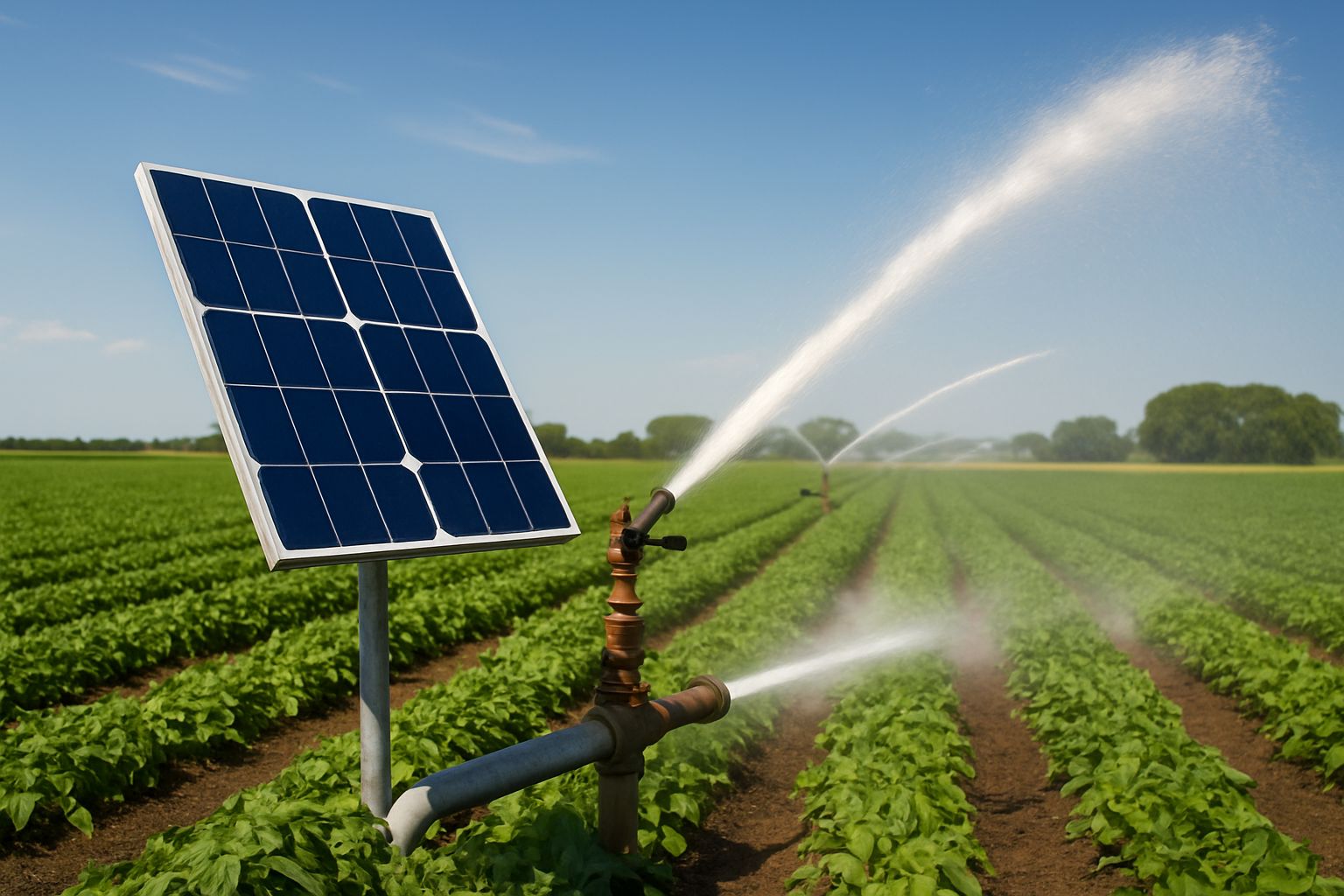
Solar-powered sprinkler systems are fundamentally changing agricultural irrigation practices through energy independence and operational flexibility. These systems harness energy from photovoltaic panels to power pumps and controllers that distribute water precisely where and when crops need it. The elimination of fuel costs and power lines means farmers can irrigate previously unprofitable land and reduce their carbon footprint simultaneously.
The economic benefits become apparent quickly after installation. While traditional irrigation systems incur ongoing electricity or diesel costs, solar systems require only the initial investment and minimal maintenance. Most farmers report complete return on investment within 3-7 years, depending on system size and local sunlight conditions. After this payback period, irrigation essentially becomes free aside from routine maintenance costs.
Modern systems incorporate smart technology that optimizes both energy and water usage. Weather sensors, soil moisture monitors, and automated controls ensure water is applied efficiently based on actual crop needs rather than rigid schedules. This precision approach not only conserves water but also improves crop health by maintaining ideal soil moisture levels throughout growing cycles.

Center Pivot Irrigation Systems: Powering Large-Scale Field Coverage
Center pivot irrigation represents the most common large-scale sprinkler system used in modern agriculture, capable of efficiently watering circular fields ranging from 40 to 500+ acres. These systems feature a central pivot point with long spans extending outward, supporting sprinkler heads that distribute water as the entire apparatus slowly rotates around the field. Their popularity stems from reliable performance, relatively simple operation, and the ability to apply water uniformly across vast acreages with minimal labor requirements.
How Solar Panels Integrate with Center Pivot Systems
Solar integration with center pivot systems typically involves installing photovoltaic arrays near the pivot point or along the system’s path. These panels generate electricity that powers the motors driving the pivot’s movement and the pumps that pressurize water throughout the system. For larger pivots, multiple solar arrays may be strategically positioned around the field to maintain consistent power as the system rotates. Battery banks store excess energy during peak sunlight hours, ensuring continuous operation during cloudy periods or for night irrigation when evaporation losses are minimized.
The size of the solar array depends primarily on water volume requirements, pumping depth, and system pressure needs. A typical quarter-section pivot (120 acres) might require a 15-30kW solar array, though this varies based on local solar radiation levels and specific crop water demands. Advanced systems incorporate variable frequency drives (VFDs) that adjust pump speeds to match changing energy availability, maximizing the utility of available solar power throughout the day.
Water Distribution Efficiency and Coverage Area
Modern solar-powered center pivots achieve remarkable water distribution uniformity, typically exceeding 85% efficiency when properly designed and maintained. This precision results from carefully engineered sprinkler packages that feature pressure regulators, flow control nozzles, and drop tubes positioning water release points closer to the crop canopy. The reduced distance water travels through the air minimizes evaporation and wind drift losses that plague less sophisticated irrigation methods.
“After converting our 320-acre corn operation to solar-powered center pivots, we’ve reduced our irrigation costs by 76% while maintaining the same yield levels. The system paid for itself in just under four years, and we’re now experiencing essentially free irrigation.” – James Harrington, Nebraska corn producer
Ideal Crops and Field Conditions for Solar Center Pivots
Solar center pivot systems perform optimally with row crops like corn, soybeans, wheat, cotton, and alfalfa grown on relatively flat terrain with minimal obstructions. These crops benefit from the uniform water application and can be planted in circular patterns to maximize irrigated acreage. The ideal field should have slopes under 15% to prevent runoff and ensure even water distribution, though specialized sprinkler packages can accommodate moderately rolling terrain.
Linear Move Irrigation: Maximizing Water Efficiency for Rectangular Fields
Linear move irrigation systems, also known as lateral move systems, offer an excellent alternative to center pivots for rectangular fields where maximizing irrigated acreage is critical. Unlike center pivots that rotate around a fixed point, linear systems travel in straight lines across fields, providing nearly 100% coverage of rectangular plots. This configuration eliminates the corner losses inherent to center pivot systems and can increase irrigated area by up to 25% on the same acreage. For more information on irrigation systems, check out solar irrigation systems components that every farmer should know about.
Solar Power Requirements for Linear Systems
Linear move systems typically require more energy than comparable center pivots due to their continuous movement and the need to pump water through flexible hoses or channel systems as they traverse the field. A standard quarter-mile linear system irrigating 120-160 acres generally requires a 25-40kW solar array, depending on water requirements and pumping specifications. Battery storage becomes particularly important for these systems, as consistent power delivery ensures smooth movement and prevents potential damage from irregular stopping and starting.
Most modern solar-powered linear systems incorporate dual power sources, with solar providing primary power and either batteries or small backup generators ensuring operational reliability. Advanced setups feature cart-mounted solar panels that move with the system, supplementing stationary arrays and maximizing energy capture throughout the day. This hybrid approach provides the reliability commercial farmers need while still delivering substantial energy cost reductions.
Water Application Uniformity Benefits
Linear move systems excel in delivering extremely uniform water application, typically achieving distribution uniformities of 90-95% when properly designed and maintained. This exceptional performance stems from their consistent travel speed and stable sprinkler height, which creates ideal conditions for precise water delivery. High uniformity translates directly to improved yields, as all plants receive optimal moisture without the stress caused by over- or under-watering different sections of the field.
For farms growing high-value crops where irrigation uniformity significantly impacts quality and yield, the additional investment in linear systems often pays dividends through improved crop performance. Crops like seed potatoes, fresh market vegetables, and certain specialty grains benefit particularly from the consistent soil moisture these solar irrigation systems maintain throughout the growing season.
Installation Considerations and Field Preparation
Implementing a solar-powered linear system requires careful site preparation and infrastructure planning. Fields must be precisely graded to ensure smooth system travel, with slopes ideally under 3% to prevent runoff and uneven water distribution. Guidance systems—either buried cables, above-ground rails, or GPS technology—must be installed to maintain straight travel paths. Water delivery infrastructure, whether flexible hose feeds or concrete-lined supply ditches, represents a significant portion of the installation cost.
Despite these additional considerations, linear systems remain the gold standard for large rectangular fields where maximizing irrigated acreage justifies the higher initial investment. Their superior coverage and exceptional uniformity make them particularly valuable for high-return crops where precision irrigation translates directly to improved quality and increased market value. For more information on different types of irrigation systems, visit this guide on sprinkler irrigation types.

Solid-Set Sprinkler Systems for Permanent Crop Irrigation
Solid-set sprinkler systems provide exceptional irrigation flexibility for permanent plantings like orchards, vineyards, and berry farms. These systems feature permanently installed pipes with risers and sprinklers positioned throughout the field, allowing for targeted irrigation without moving equipment. Once installed, they require minimal labor to operate and can be programmed for precise irrigation timing based on specific crop needs and growth stages.
Solar Panel Configuration Options
Solar arrays for solid-set systems are typically centralized near the pumping station, with panel capacity determined by system pressure requirements and total water volume needs. Unlike moving irrigation systems, solid-set installations benefit from simplified solar setups that don’t need to accommodate changing positions or variable power demands. A standard 10-acre orchard solid-set system might require a 5-15kW array depending on sprinkler density, operating pressure, and irrigation scheduling requirements.
Battery storage plays a crucial role in solid-set systems, particularly for operations requiring nighttime irrigation to minimize evaporation and fungal disease pressure. Modern lithium-ion battery banks provide efficient energy storage that allows for 24-hour system operation, giving farmers complete flexibility in irrigation timing regardless of immediate sunlight availability. Advanced systems incorporate weather forecasting algorithms that automatically adjust charging cycles to prepare for anticipated irrigation needs.
Application for Orchards and Vineyards
Permanent crops benefit tremendously from solid-set solar irrigation systems, which can be precisely configured to match tree or vine spacing patterns. Sprinkler heads can be selected and positioned to create specific wetted patterns that target root zones while keeping foliage and fruits dry. This targeted approach reduces disease pressure, improves water efficiency, and allows for precise delivery of nutrients when fertigating through the irrigation system.
For frost protection applications, solid-set systems provide dual functionality, serving both routine irrigation needs and critical freeze protection during vulnerable spring flowering periods. The ability to power these systems with solar energy ensures they remain operational during weather events that might otherwise disrupt grid power, providing invaluable crop insurance during critical growth stages.
Pressure Requirements and Energy Storage Solutions
Solid-set systems typically operate at higher pressures than other sprinkler types, generally requiring 40-60 PSI at the sprinkler head for proper droplet formation and coverage patterns. These elevated pressure demands translate directly to increased pumping energy requirements, making efficient solar array design and energy storage particularly important. Variable frequency drive (VFD) pumps allow systems to operate at different pressures based on available solar power, optimizing performance throughout changing daylight conditions.
Modern energy storage solutions have transformed the reliability of solar-powered solid-set systems. Lithium iron phosphate (LiFePO4) batteries offer 10+ year operational lifespans and maintain consistent power delivery even during partial discharge cycles. For larger operations, hybrid systems that incorporate modest backup generators provide complete operational assurance during extended cloudy periods without significantly compromising the economic and environmental benefits of solar power.
Traveling Gun Systems: Portable Solar Solutions
Traveling gun irrigation systems represent the most mobile solar-powered option for farmers seeking flexibility across multiple fields. These systems feature a large sprinkler mounted on a wheeled cart that travels along a predetermined path, propelled either by the water pressure itself or a separate motor. Traveling guns deliver high-volume water over long distances, making them suitable for irregular fields where fixed systems would be impractical. For more information on solar irrigation systems, check out our detailed guide.
While traditionally powered by diesel engines or grid electricity, modern traveling guns increasingly incorporate solar technology to reduce operating costs and improve sustainability. The mobility requirement presents unique challenges for solar integration, as power sources must either move with the system or provide remote power delivery to multiple locations.
Mobile Solar Arrays and Battery Options
Mobile solar setups for traveling gun systems typically feature trailer-mounted arrays that can be positioned strategically to power the irrigation equipment. These portable units range from 5-15kW depending on pumping requirements and generally incorporate substantial battery storage to ensure consistent operation. The most advanced systems use bifacial solar panels that capture both direct sunlight and reflected light from ground surfaces, increasing energy production by 10-30% compared to traditional panels. For more information, check out solar irrigation systems and what every farmer needs to know.
For larger operations, some farmers establish multiple fixed solar stations throughout their property, allowing traveling guns to connect to the nearest power source as they rotate between fields. This approach eliminates the need to transport solar arrays but requires more extensive initial infrastructure development. Hybrid systems that combine solar with small biodiesel generators provide complete reliability for critical irrigation periods while still substantially reducing fossil fuel consumption.
Water Distribution Patterns and Coverage
Traveling guns create distinctive water distribution patterns characterized by high-volume application over a wide radius. A typical gun can throw water 70-150 feet in each direction, creating a wetted diameter of 140-300 feet as it travels. This high-intensity application makes traveling guns particularly suitable for crops that can withstand heavier water application, including field corn, alfalfa, and certain pasture grasses. For more information on different types of sprinkler systems, you can explore different sprinkler irrigation types available for farmers.
When powered by properly sized solar systems, traveling guns can cover 3-5 acres per setup position, making them efficient for irregular fields where fixed equipment would leave significant dry areas. Their ability to apply large volumes quickly also makes them valuable for supplemental irrigation during critical growth stages when crops need immediate moisture support.
Micro-Sprinkler Systems: Precision Irrigation with Solar Power
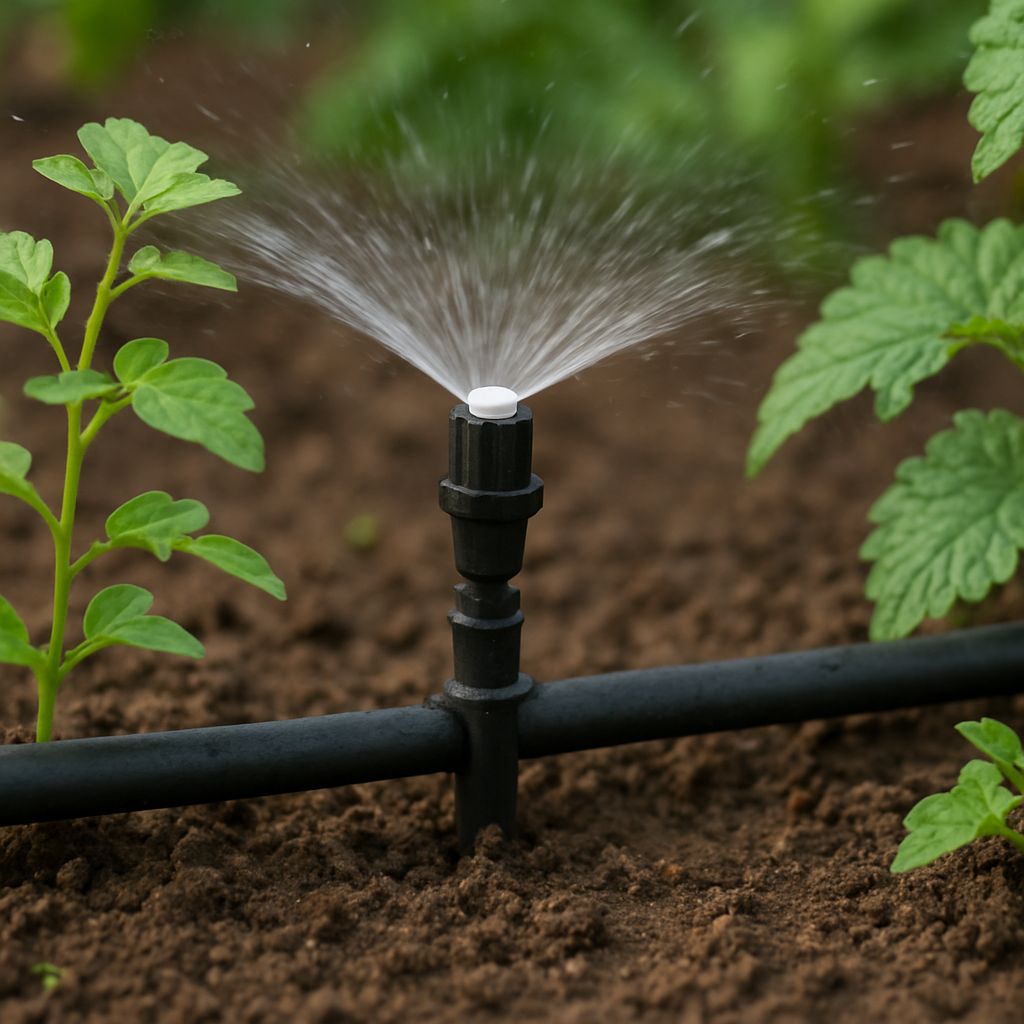
Micro-sprinkler systems represent the pinnacle of precision irrigation, delivering water directly to plant root zones through low-pressure, small-diameter sprinklers positioned at ground level or on short risers. These systems operate at significantly lower pressures (15-25 PSI) than conventional sprinklers, making them ideal candidates for solar power applications where energy efficiency is paramount.
Low-Pressure Operation Benefits
The reduced pressure requirements of micro-sprinklers translate directly into lower energy demands, allowing smaller solar arrays to power these systems effectively. A typical 5-acre micro-sprinkler installation might require only a 2-5kW solar array, making it accessible even for small-scale growers with limited investment capital. This energy efficiency extends operational time on battery power, enabling these systems to run longer during cloudy periods or at night when evaporation losses are minimized.
Beyond energy savings, low-pressure operation reduces wear on system components, extending equipment lifespan and decreasing maintenance requirements. The gentle water application also minimizes soil compaction and runoff issues that can plague higher-pressure systems, preserving soil structure and enhancing long-term field productivity.
Direct Root Zone Targeting Advantages
Micro-sprinklers excel at delivering water precisely where plants need it most—directly to the root zone. This targeted approach reduces water losses from evaporation and wind drift, with efficiency rates typically 30-60% better than conventional overhead sprinklers. For high-value specialty crops with specific moisture requirements, this precision translates into improved quality, higher yields, and reduced disease pressure.
Modern micro-sprinkler systems incorporate pressure-compensating emitters that maintain consistent water delivery regardless of terrain changes or line-pressure fluctuations. This uniformity ensures all plants receive optimal irrigation, eliminating the stressed areas common with less precise systems. When paired with soil moisture sensors and automated controllers, these systems can respond dynamically to actual plant needs rather than rigid schedules. For more information on solar-powered sprinkler irrigation systems, you can explore various types and options available for farmers.
1. Water Conservation Features
- Low flow rates (10-35 gallons per hour per emitter) minimize runoff and deep percolation losses
- Precise application patterns that match specific crop root structures
- Sectional control allowing irrigation of specific zones based on varying crop needs
- Compatibility with recycled or lower-quality water sources through specialized filtration
- Reduced evaporation losses due to limited water exposure to air and sun
2. Energy Efficiency Improvements
Solar-powered micro-sprinkler systems represent the most energy-efficient irrigation option available to modern farmers. Their low operating pressure dramatically reduces pumping requirements, allowing smaller solar arrays to effectively power larger irrigated areas. This efficiency creates a virtuous cycle—lower energy needs mean smaller, less expensive solar systems, which in turn reduces initial investment costs and accelerates ROI timelines.
For operations transitioning from conventional high-pressure systems, the energy savings from micro-sprinklers can reduce power requirements by 50-70%. This reduction often allows farmers to implement solar power with smaller arrays than would be needed for traditional sprinklers, making renewable energy adoption more economically feasible even for operations with limited capital resources.
3. Crop-Specific Applications
Micro-sprinklers find their highest value in high-density, high-value cropping systems. Berries, tree fruits, vineyards, vegetables, and nursery operations particularly benefit from their precision and efficiency. The ability to deliver small, frequent irrigation events keeps soil moisture levels consistent—ideal for crops sensitive to moisture fluctuations that can affect quality parameters like fruit size, sugar content, and skin appearance. For more insights on optimizing irrigation systems, explore solar irrigation systems that every farmer needs to know.
“Switching to solar-powered micro-sprinklers in our blueberry operation reduced our water use by 42% while improving fruit size consistency by nearly 30%. The system paid for itself in just two growing seasons through water savings, reduced pumping costs, and premium fruit prices.” – Maria Gonzalez, Oregon berry producer
Cost Analysis and ROI for Solar Sprinkler Systems
Understanding the financial implications of solar irrigation systems requires comprehensive analysis of both initial investment and long-term operational savings. While upfront costs typically exceed conventional alternatives, the elimination of ongoing fuel or electricity expenses creates compelling economics over the system lifespan. Most agricultural solar installations achieve positive cash flow within 3-7 years, followed by decades of essentially free irrigation power.
Initial Investment vs. Long-Term Savings
Initial system costs vary significantly based on irrigation type, acreage, and water requirements. A complete solar-powered center pivot system for a 120-acre field typically requires $75,000-$150,000 in solar infrastructure beyond the base irrigation equipment. Micro-sprinkler systems for high-value crops might require $5,000-$15,000 per acre for complete solar integration. While these figures represent substantial investments, they should be evaluated against 25+ years of operational savings, during which traditional systems would incur $150,000-$500,000 in energy costs for comparable water delivery.
Operating cost differences become particularly pronounced in regions with high electricity rates or where diesel generators would otherwise be necessary. Many farmers report 70-90% reductions in irrigation energy costs after solar conversion, with complete elimination of fuel expenses and minimal maintenance requirements. These savings accelerate in areas with generous net metering policies that allow farmers to sell excess solar production back to the grid during non-irrigation periods.
Available Tax Incentives and Agricultural Grants
Numerous financial incentives significantly improve the economics of solar irrigation investments. The federal Investment Tax Credit (ITC) currently allows agricultural businesses to deduct 30% of solar system costs from their tax liability. Additionally, accelerated depreciation provisions enable farmers to recover their remaining investment costs through tax deductions over a shortened timeframe, improving cash flow during critical early years.
Beyond tax incentives, multiple grant programs target agricultural solar adoption specifically. The USDA’s Rural Energy for America Program (REAP) offers both grants and loan guarantees covering up to 25% of renewable energy projects. State-level programs provide additional support, with some agricultural regions offering specific irrigation efficiency grants that can cover 40-50% of solar conversion costs when water conservation is demonstrated.
Payback Period Calculations for Different System Types
Payback periods vary by system type, with micro-sprinklers typically achieving the fastest returns due to their lower energy requirements and smaller initial investment. A typical micro-sprinkler system might reach payback in 3-5 years, while larger center pivot systems generally require 4-7 years to break even. These calculations improve substantially when water savings are factored in, particularly in regions with high water costs or limited allocation rights.
The most favorable economics typically occur in sunny regions with high conventional energy costs and substantial irrigation requirements. Southern states with abundant sunshine and year-round growing seasons often see payback periods under 4 years regardless of system type, while northern regions might require 5-8 years to reach breakeven. With proper maintenance, systems typically operate for 25+ years, providing decades of essentially free irrigation after the initial payback period.
How to Choose the Right Solar Sprinkler Irrigation System for Your Farm
Selecting the optimal solar irrigation solution requires careful evaluation of your specific agricultural operation, considering factors beyond simple cost comparisons. The right system matches your unique field characteristics, crop requirements, and long-term farm objectives while working within your available resources and infrastructure constraints.
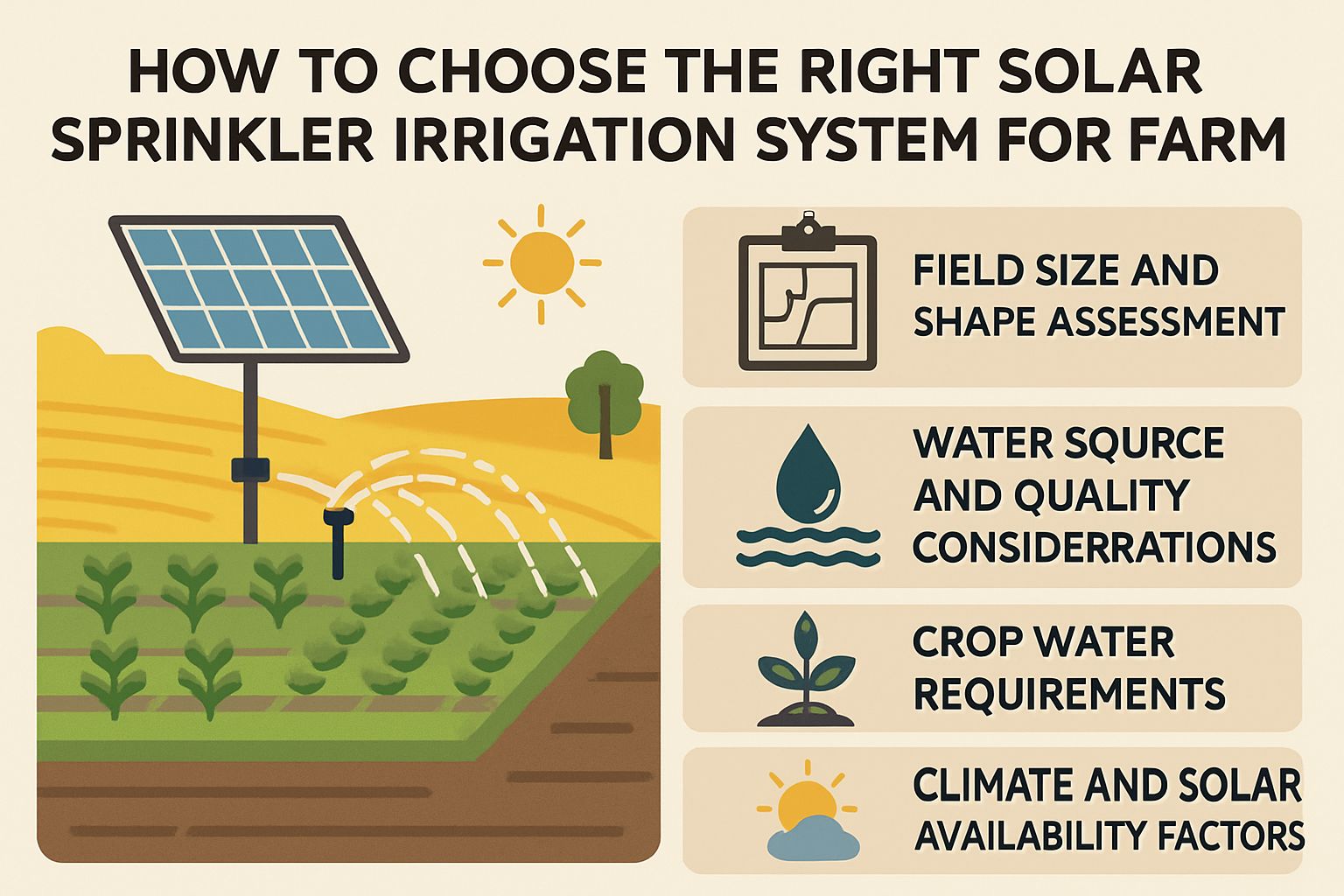
Field Size and Shape Assessment
Field geometry fundamentally dictates which irrigation technologies merit consideration. Square or circular fields exceeding 40 acres typically optimize with center pivots, which provide excellent coverage efficiency and lower per-acre installation costs at scale. Irregular fields benefit from traveling gun systems that can navigate around obstacles and cover oddly-shaped areas. Rectangular fields maximize irrigated acreage with linear move systems, particularly when field length exceeds 1,000 feet.
Beyond basic shape, field topography influences system selection. Significant elevation changes may require additional pressure regulation components or booster pumps that increase solar power requirements. Fields with substantial slope benefit from precision application systems that reduce runoff potential, such as micro-sprinklers or pressure-regulated center pivots with specialized sprinkler packages.
Water Source and Quality Considerations
Your water source—whether well, surface water, or municipal supply—significantly impacts solar system design through its influence on total dynamic head requirements. Deep wells require substantially more pumping energy than surface sources, sometimes necessitating 50-100% larger solar arrays for equivalent water delivery. Water quality factors, particularly sediment content and mineral composition, influence filtration needs that may introduce additional pressure losses requiring compensation through enhanced solar capacity.
For operations with limited water availability, higher-efficiency systems like LEPA (Low Energy Precision Application) center pivots or micro-sprinklers maximize productive output from each gallon pumped. These water-conserving technologies often reduce overall energy requirements as well, creating synergistic benefits when paired with appropriately sized solar arrays.
Crop Water Requirements
Different crops demand vastly different irrigation approaches based on their root structure, growth patterns, and sensitivity to moisture stress. Deep-rooted crops like alfalfa or corn can tolerate less frequent, heavier irrigation events well-suited to center pivots or traveling guns. Shallow-rooted vegetables and berries perform best with more frequent, lighter applications through micro-sprinklers or drip systems. Permanent crops like orchards and vineyards generally optimize with solid-set systems that can deliver precise amounts to established root zones without wetting foliage.
Climate and Solar Availability Factors
Local climate conditions fundamentally shape both irrigation requirements and solar potential. Regions with high evapotranspiration rates demand more water delivery capacity but typically offer abundant solar resources to power these needs. Hot, windy areas benefit from low-trajectory sprinklers that minimize evaporation losses during application, while humid regions might prioritize systems that reduce leaf wetness to minimize disease pressure. For more information, explore different solar-powered sprinkler irrigation systems available for farmers.
Solar resource evaluation should include not just annual averages but seasonal distribution patterns. Farms with peak irrigation demands aligned with maximum solar availability (typically summer) can optimize with smaller battery storage, while operations requiring significant shoulder-season irrigation may need enhanced storage capacity to bridge cloudy periods. For more information on solar irrigation systems, check out what every farmer needs to know about solar irrigation systems.
- Southern states: Typically achieve 5-7 peak sun hours daily during growing season
- Midwest: Generally receive 4-6 peak sun hours with more seasonal variability
- Pacific Northwest: Often limited to 3-5 peak sun hours with significant seasonal differences
- Desert Southwest: Consistently delivers 6-8 peak sun hours with minimal seasonal variation
- Southeast: Averages 5-6 peak sun hours but with more cloudy day interruptions
Panel orientation and mounting systems should be optimized for your specific latitude and seasonal irrigation requirements. Fixed systems typically orient due south at an angle matching your latitude, while advanced tracking systems can increase energy production by 20-40% by following the sun’s daily path, though with increased mechanical complexity. For more information on solar-powered sprinkler irrigation systems, explore the different types and options available for farmers.
Many agricultural operations benefit from slightly west-biased panel orientation that better matches late afternoon irrigation timing when crop water demand peaks. This approach sacrifices some total annual production but improves system performance during critical periods, reducing battery storage requirements and maximizing usable solar energy.
Real-World Solar Irrigation Success Stories
|
System Type |
Farm Size |
Location |
Energy Savings |
Water Savings |
Payback Period |
|---|---|---|---|---|---|
|
Center Pivot |
320 acres |
Nebraska |
83% reduction |
22% reduction |
4.2 years |
|
Micro-Sprinkler |
18 acres |
California |
100% off-grid |
41% reduction |
3.1 years |
|
Linear Move |
240 acres |
Kansas |
76% reduction |
18% reduction |
5.5 years |
|
Traveling Gun |
85 acres |
Georgia |
62% reduction |
12% reduction |
4.8 years |
|
Solid-Set |
32 acres |
Oregon |
94% reduction |
35% reduction |
3.7 years |
Successful implementations across diverse agricultural regions demonstrate the versatility and effectiveness of solar irrigation technologies. From large-scale commodity operations to specialty crop producers, farmers consistently report both expected benefits like energy savings and unexpected advantages including improved water management precision, reduced maintenance needs, and enhanced operational flexibility.
Beyond direct economic returns, many farmers report significant improvements in their farms’ environmental profiles, helping secure premium markets and preparing operations for increasing climate-related regulations. Several major food processors now offer preferential contracts to producers employing renewable energy, creating additional value streams that accelerate ROI timelines.
For farmers concerned about irrigation reliability during transition, hybrid systems provide an excellent pathway. These installations maintain conventional power connections as backup while generating 70-90% of required energy through solar, delivering substantial savings with complete operational assurance during critical growth periods.
Case Study: 150-Acre Corn Farm Conversion
A family farm in eastern Colorado transformed their irrigation approach by converting two aging diesel-powered center pivots to solar operation. The 150-acre operation installed a 45kW ground-mounted solar array with 60kWh of lithium iron phosphate battery storage, completely eliminating their previous $27,000 annual diesel expenditure. Beyond fuel savings, the precision control enabled by the solar system’s variable frequency drive allowed implementation of deficit irrigation strategies during non-critical growth phases, reducing total water application by 26% while maintaining yields within 3% of previous averages. After applying available tax credits and USDA grant funding, the system achieved complete payback in just under four years, with projected savings exceeding $850,000 over the system’s expected 25-year lifespan.
Water and Energy Savings Data from Working Farms
Across hundreds of documented solar irrigation conversions, consistent patterns of resource efficiency emerge regardless of specific technology implemented. Average energy cost reductions exceed 75% in the first year of operation, with many systems eliminating conventional energy inputs entirely after optimization. Water usage typically decreases 15-40% compared to previous irrigation methods due to improved timing precision, reduced pressure losses, and better application uniformity. These efficiency improvements translate directly to operational savings, with many farmers reporting total annual irrigation cost reductions of $50-$200 per acre after solar conversion, creating substantial impact on overall farm profitability.

Conclusion:
Solar sprinkler irrigation represents a transformative approach to agricultural water management that aligns economic and environmental objectives without compromising operational reliability. The technology has matured beyond early adoption phase into mainstream implementation, with proven performance across diverse growing regions, crop types, and farm scales. For forward-thinking agricultural operations, the question is no longer whether solar irrigation systems make sense, but rather which specific configuration best matches their unique requirements.
As climate variability increases and energy costs continue rising, solar-powered irrigation systems provide both immediate operational benefits and long-term resilience advantages. They free farmers from volatile energy markets while enhancing water utilization efficiency—addressing two of modern agriculture’s most pressing challenges simultaneously. With diverse system options available and increasingly favorable economics, solar irrigation represents one of the most accessible and impactful sustainability transitions available to today’s agricultural producers.
- Center pivots excel for large, regularly-shaped fields with row crops
- Linear systems maximize coverage for rectangular fields
- Micro-sprinklers provide unmatched precision for high-value specialty crops
- Traveling guns offer flexibility for irregular fields and supplemental irrigation
- Solid-set systems optimize permanent crop irrigation with minimal labor requirements
The irrigation technology you select today will influence your operation’s profitability and environmental impact for decades. By carefully matching system capabilities to your specific agricultural context and leveraging available incentives, you can implement solar irrigation that delivers both immediate cost savings and long-term competitive advantages in an increasingly resource-constrained agricultural landscape.
Is a Solar Sprinkler Irrigation Systems Worth the Farmers Investment
For the vast majority of agricultural operations, solar sprinkler irrigation systems represent not just a worthwhile investment but increasingly a competitive necessity. With payback periods typically ranging from 3-7 years and operational lifespans exceeding 25 years, these systems deliver exceptional financial returns while insulating operations from escalating energy costs. The economics prove particularly compelling when accounting for available tax incentives, grants, and depreciation benefits that can reduce effective first costs by 50-75%. Beyond direct financial returns, solar systems provide valuable operational benefits including remote management capabilities, improved irrigation precision, and enhanced drought resilience that further strengthen their investment case. As agricultural markets increasingly reward sustainable production methods through preferred purchasing agreements and premium pricing, the marketing advantages of solar-powered irrigation add another dimension to already compelling ROI calculations.
Which Solar Sprinkler Irrigation Systems is the best choice for the Farmer
The optimal solar irrigation system depends entirely on your specific agricultural context—no single technology universally outperforms alternatives across all situations. For large-scale row crop operations exceeding 40 acres with regular field shapes, center pivots typically deliver the most cost-effective solution when paired with appropriately sized solar arrays. Small to medium specialty crop producers generally maximize returns with micro-sprinkler systems that precisely target high-value plantings while minimizing water and energy requirements. Operations with irregular fields or those requiring rotational flexibility often benefit most from traveling gun systems despite their somewhat lower water application efficiency. Your ideal solution should align with your specific crops, field characteristics, water availability, and long-term farm objectives rather than following generic recommendations that fail to account for your operation’s unique circumstances.
Frequently Asked Questions
As solar irrigation adoption accelerates across agricultural regions, common questions arise regarding system sizing, performance reliability, maintenance requirements, and crop suitability. Addressing these concerns provides crucial information for farmers evaluating potential transitions to renewable-powered irrigation systems.
The following responses reflect actual field experience rather than theoretical capabilities, providing practical guidance based on hundreds of successful installations across diverse agricultural contexts.
How many solar panels are needed to power a typical irrigation system?
Panel requirements vary significantly based on system type, water volume, pumping depth, and pressure needs. For reference, a typical center pivot covering 120 acres requires approximately 40-60 panels (15-25kW total capacity) when paired with appropriate battery storage. Micro-sprinkler systems generally need 5-10 panels per acre (2-4kW) due to their lower pressure requirements. Traveling gun systems typically require 25-40 panels (10-15kW) to provide sufficient power for their high-pressure operation. These estimates assume modern high-efficiency panels (400-500W each) and standard North American solar conditions.
Most agricultural installations benefit from slightly oversizing solar arrays (by 15-25%) relative to irrigation power requirements. This approach ensures sufficient energy generation even during suboptimal conditions and allows excess production to power other farm operations or potentially generate revenue through net metering arrangements with local utilities.
Can solar irrigation systems work during cloudy days?
Modern solar irrigation systems incorporate battery storage specifically to maintain operation during cloudy periods. A properly designed system typically includes sufficient battery capacity to operate for 2-3 days with minimal solar input, ensuring irrigation continuity through typical weather variations. During extended cloudy periods, smart controllers automatically extend irrigation cycles across more hours at reduced flow rates, maximizing utilization of available energy while maintaining essential water delivery. For operations requiring absolute irrigation reliability regardless of weather conditions, hybrid systems that incorporate small backup generators provide complete assurance while still delivering 85-95% of energy through solar under normal conditions.
What maintenance is required for solar sprinkler systems?
Solar irrigation systems require significantly less maintenance than conventional alternatives, with most components designed for 25+ years of operation with minimal intervention. Panel maintenance typically involves semi-annual cleaning in dusty regions (less frequently in areas with regular rainfall) and annual inspection of electrical connections. Battery systems generally require quarterly performance monitoring and terminal inspection, with most modern lithium systems operating 10+ years before replacement. The most maintenance-intensive components remain the irrigation equipment itself rather than the solar power system, with standard sprinkler maintenance schedules unchanged after solar conversion.
Many solar installations include remote monitoring systems that continuously track performance metrics, automatically alerting operators to any deviation from expected output patterns. This predictive approach enables preventative maintenance before failures occur, maximizing system reliability during critical irrigation periods. Most agricultural solar providers offer maintenance service contracts covering all routine requirements for $200-$500 annually depending on system size and complexity.
How long do solar-powered irrigation systems typically last?
Solar panels consistently demonstrate exceptional longevity, with manufacturers typically warranting 80% of original power production after 25 years and actual field experience showing many systems exceeding 30 years with gradual output decline rather than catastrophic failure. The solar industry standard includes performance warranties guaranteeing at least 90% production after 10 years and at least 80% after 25 years, providing dependable long-term operation. Battery components generally require replacement after 10-15 years for lithium systems (3-5 years for lead-acid alternatives), while inverters and control systems typically operate 15-20 years before replacement. For more insights, explore what every farmer needs to know about solar irrigation systems.
The irrigation components themselves—pumps, motors, piping, and sprinklers—maintain their standard operational lifespans when powered by solar energy, with some evidence suggesting reduced wear due to the gentle startup characteristics of variable frequency drives commonly used in solar applications. Most farmers can realistically expect 25+ years of reliable operation from well-maintained solar irrigation systems, with periodic component upgrades rather than complete system replacement.
Are there specific crops that benefit most from solar sprinkler irrigation?
High-value specialty crops typically realize the greatest economic benefit from solar irrigation systems due to their enhanced precision and reliability. Fruits, vegetables, nuts, and wine grapes particularly benefit from the precise moisture control these systems enable, with many producers reporting quality improvements that command premium market prices. These crops’ higher per-acre returns more readily justify the initial investment while benefiting most from the irrigation precision that solar-powered variable frequency drives enable.
From a technical perspective, crops with critical irrigation timing windows and low tolerance for moisture stress benefit substantially from solar systems’ operational reliability. Water-sensitive crops during flowering or fruit development phases—including corn during pollination, tomatoes during fruit set, and tree fruits during final sizing—show measurable yield improvements when irrigation timing precisely matches physiological needs rather than being constrained by energy cost considerations or equipment limitations.
Solar irrigation ultimately benefits virtually all crops through improved water use efficiency and reduced production costs. Even commodity crops with narrow profit margins can justify solar conversion through the substantial operational savings these systems deliver over their multi-decade lifespans. As agricultural markets increasingly reward sustainable production methods, the marketing advantages of solar-powered irrigation add another dimension to their economic benefits across all crop categories.
For farmers considering their first solar irrigation implementation, starting with higher-value production areas typically delivers the fastest financial returns while providing valuable experience applicable to potential future expansion across additional acreage.
Solar irrigation systems are becoming increasingly popular among farmers due to their cost-effectiveness and sustainability. These systems utilize solar energy to power water pumps, making them an eco-friendly alternative to traditional irrigation methods. By harnessing the power of the sun, farmers can reduce their dependency on fossil fuels and decrease their operational costs. For more information on the components and benefits of these systems, check out this article on solar irrigation systems.

Leave a Reply