

Key Takeaways
- Bifacial solar panels can capture sunlight from both sides, increasing energy output by up to 25% compared to traditional panels.
- These panels are especially beneficial for farms due to their ability to maximize land use and provide additional shade for crops.
- Using bifacial solar panels can significantly reduce energy costs for farming operations, leading to long-term savings.
- They offer environmental benefits, including a lower carbon footprint and reduced land use requirements.
- Despite higher initial costs, bifacial panels often provide a better return on investment due to increased energy efficiency.
Introduction to Bifacial Solar Panels
Imagine doubling the efficiency of your solar panels just by changing their design. That’s exactly what bifacial solar panels offer. These innovative panels are transforming the way we think about solar energy, particularly in farming operations. By capturing sunlight from both sides, they provide a unique advantage that traditional solar panels simply can’t match.
For farmers, who are always looking for ways to optimize resources and cut costs, bifacial solar panels represent a promising solution. They not only increase energy output but also integrate seamlessly with agricultural practices, offering both economic and environmental benefits.
What Are Bifacial Solar Panels?
Bifacial solar panels are a type of solar technology that can absorb sunlight from both their front and back sides. Unlike traditional solar panels, which are designed with cells on only one side, bifacial panels are equipped with solar cells on both surfaces. This allows them to capture reflected sunlight, known as albedo light, from the ground or surrounding surfaces.
The ability to harness light from multiple angles means that bifacial panels can generate more electricity than their single-sided counterparts. This increased efficiency makes them particularly attractive for areas with high albedo, such as snowy regions or locations with reflective surfaces like white rooftops or sand.
How They Differ from Traditional Panels
The primary difference between bifacial and traditional solar panels lies in their design. Traditional panels have a single layer of photovoltaic cells and a backsheet that prevents light from passing through. In contrast, bifacial panels use a transparent backsheet or dual glass design, allowing light to reach the rear side of the cells. To understand how these panels can be integrated with existing systems, you can explore integrating solar panels with existing irrigation systems on a farm.
This design innovation enables bifacial panels to generate up to 25% more energy than traditional panels under optimal conditions. Furthermore, they can continue to produce electricity even when partially shaded, making them more versatile and efficient in various environmental settings.
Why They’re Gaining Popularity in Agriculture
Farmers are increasingly turning to bifacial solar panels because they offer several advantages over traditional solar solutions. First and foremost, they maximize energy output, which translates to significant cost savings over time. This is crucial for farmers who operate on tight margins and are constantly seeking ways to reduce expenses.
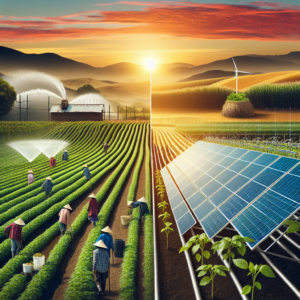
Moreover, bifacial panels can be integrated into existing agricultural systems without taking up additional land. They can be installed above crops, providing shade and reducing water evaporation, which is particularly beneficial in hot climates. This synergy between energy production and agriculture is known as agrivoltaics, and it’s becoming a popular practice worldwide.

How Bifacial Solar Panels Work
Understanding how bifacial solar panels function is key to appreciating their benefits. At their core, these panels utilize advanced photovoltaic technology to capture sunlight more efficiently. Let’s dive deeper into the design and technology behind these innovative solar solutions.
Design and Technology
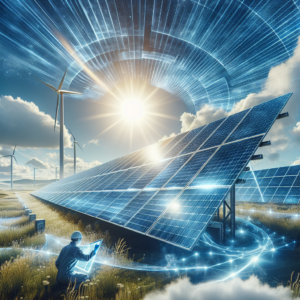
The design of bifacial solar panels is both simple and sophisticated. By incorporating solar cells on both sides, these panels can absorb direct sunlight on the front and reflected light on the back. This dual absorption capability is made possible by using materials like tempered glass or transparent polymer on the rear side, which allows light to pass through.
Additionally, bifacial panels often feature a frameless design, reducing shading and allowing more light to reach the cells. This design also helps in minimizing dust and dirt accumulation, which can otherwise decrease efficiency.
Role of Albedo Light Reflectivity
Albedo light reflectivity plays a crucial role in the performance of bifacial solar panels. Albedo refers to the fraction of sunlight that is reflected off surfaces like the ground, buildings, or even snow. The higher the albedo, the more light is available for the rear side of the panels to capture.
For instance, installing bifacial panels on a reflective surface, such as a white roof or sandy ground, can significantly enhance their energy output. This is because these surfaces reflect more sunlight, allowing the panels to generate additional electricity from the reflected light. For more information, check out this comprehensive guide on bifacial modules.
In a real-world example, a solar farm in Nevada found that bifacial panels produced 15% more energy than traditional panels, thanks to the reflective properties of the desert sand.
Bifacial solar panels offer several advantages over traditional monofacial panels, making them an attractive option for powering farm operations. Here’s a table comparing the benefits of bifacial solar panels to other solar panels:
|
Benefit |
Bifacial Solar Panels |
Traditional Solar Panels |
|---|---|---|
|
Energy Production |
Standard energy production | |
|
Efficiency |
Lower efficiency, only captures light from one side | |
|
Space Utilization |
More power generation in limited space 5 |
Requires more panels for equivalent power |
|
Low-Light Performance |
Better performance in diffused light conditions 2 |
Less effective in low-light situations |
|
Durability |
Enhanced durability with dual-glass construction 3 |
Standard durability |
|
Warranty |
Typically shorter warranty periods | |
|
Ground Reflection Utilization |
Captures albedo light, ideal for farms with reflective surfaces 4 |
Does not utilize ground-reflected light |
|
Cost-Effectiveness |
Standard LCOE | |
|
Versatility |
Suitable for various installations, including ground-mounted systems ideal for farms 2, 4 |
Limited installation options |
|
Performance in Snow |
Better performance in snowy conditions due to reflectivity 5 |
Reduced performance in snowy conditions |
Bifacial solar panels are particularly advantageous for farm operations due to their ability to capture reflected light from the ground, making them ideal for open spaces with high albedo surfaces common in agricultural settings. 4, 5

Enhanced Energy Efficiency for Farms
Bifacial solar panels are revolutionizing energy efficiency on farms. By capturing sunlight from both sides, these panels offer a significant boost in energy production. This dual absorption capability not only maximizes the use of available sunlight but also enhances the overall output of the solar installation.
Dual-Sided Light Absorption
The key to bifacial panels’ superior performance is their ability to absorb light from both the front and rear sides. This dual-sided light absorption allows the panels to capture more sunlight throughout the day, especially during early morning and late afternoon when the sun’s angle is lower. This results in a more consistent and higher energy yield compared to traditional single-sided panels. For those interested in choosing the right solar panels for an irrigation system, understanding the benefits of bifacial panels is crucial.
Impact on Energy Yield
The impact of bifacial panels on energy yield can be substantial. Studies have shown that these panels can increase energy output by 5-30% compared to traditional panels. This increase is largely due to the additional light captured from the rear side, which would otherwise be lost with conventional solar installations.
Besides that, bifacial panels perform better in diffuse light conditions, such as cloudy days, because they can absorb light from multiple angles. This makes them an excellent choice for regions with variable weather patterns.
Most importantly, the additional energy generated by bifacial panels can lead to significant cost savings over time. This is particularly beneficial for farmers, who can use the extra energy to power irrigation systems, storage facilities, and other essential operations.
For example, a farm in California reported a 20% increase in energy production after switching to bifacial solar panels, allowing them to reduce their reliance on grid electricity and lower their energy bills significantly.
Case Study: Increased Output on Farms
Let’s take a closer look at a real-world case study to illustrate the benefits of bifacial solar panels on farms. A mid-sized farm in the Midwest decided to replace its aging traditional solar panels with bifacial ones. The farm’s primary goal was to increase energy production and reduce operational costs.
After the installation, the farm observed a 22% increase in energy output. This boost in production allowed the farm to power additional equipment, such as electric tractors and automated feeding systems, without incurring extra energy costs. The farm also experienced fewer disruptions due to weather variations, thanks to the panels’ ability to capture diffuse light.
Moreover, the farm’s owners noted an improvement in the overall efficiency of their energy use. By generating more electricity on-site, they were able to sell excess power back to the grid, creating an additional revenue stream.
Environmental and Economic Benefits
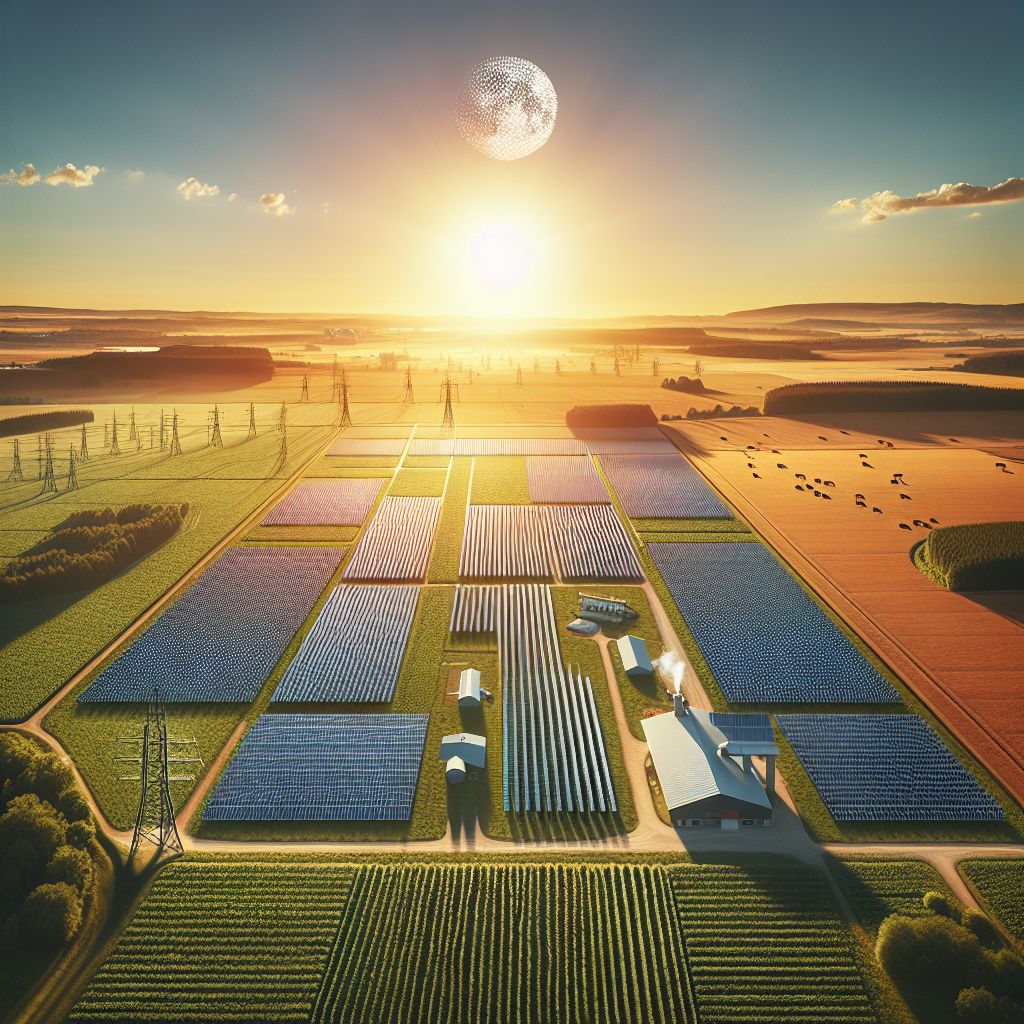
Beyond energy efficiency, bifacial solar panels offer numerous environmental and economic benefits for farming operations. These benefits make them an attractive option for farmers looking to adopt sustainable practices and improve their bottom line.
- Reduced land use requirements
- Lower carbon footprint
- Decreased dependency on fossil fuels
- Potential for additional income through energy sales
One of the most significant advantages of bifacial panels is their ability to reduce land use requirements. Because they can generate more energy from the same footprint, farmers can maximize their energy production without needing additional land. This is particularly important for farms with limited space or those looking to preserve land for agricultural purposes.
Additionally, bifacial panels contribute to a lower carbon footprint. By generating more renewable energy on-site, farms can decrease their reliance on fossil fuels and reduce greenhouse gas emissions. This aligns with global efforts to combat climate change and promotes a more sustainable agricultural industry.
Reduced Land Use Requirements
The efficient design of bifacial solar panels means they require less land to produce the same amount of energy as traditional panels. This is a crucial consideration for farmers who want to maintain as much land as possible for crops and livestock. For more insights, check out this guide on bifacial solar panels for farms.
By utilizing bifacial panels, farmers can optimize their land use, ensuring that every acre contributes to both energy production and agricultural output. This dual-purpose approach helps farmers maintain productivity while embracing renewable energy solutions.
Lower Carbon Footprint
Farming operations are often energy-intensive, leading to significant carbon emissions. By adopting bifacial solar panels, farmers can significantly reduce their carbon footprint. These panels enable farms to generate more clean energy on-site, decreasing the need for fossil fuel-based power.
Furthermore, the increased efficiency of bifacial panels means that farms can achieve greater energy independence. This not only helps in reducing emissions but also protects farms from fluctuating energy prices and supply disruptions.
As more farms adopt bifacial solar panels, the collective impact on carbon emissions can be substantial, contributing to a more sustainable and environmentally friendly agricultural sector.
Savings on Energy Costs
The economic benefits of bifacial solar panels extend beyond their environmental advantages. By generating more energy, these panels can lead to significant savings on energy costs for farming operations.
Farmers can use the extra energy produced by bifacial panels to power various farm activities, reducing their reliance on expensive grid electricity. Over time, these savings can offset the initial investment in the panels, resulting in a positive return on investment.
Moreover, farms with excess energy production can sell the surplus back to the grid, creating an additional revenue stream. This opportunity for income generation makes bifacial solar panels an even more attractive option for farmers looking to enhance their financial stability.
Integration with Agricultural Practices
One of the standout features of bifacial solar panels is their ability to integrate seamlessly with existing agricultural practices. This compatibility ensures that farmers can adopt renewable energy solutions without disrupting their core operations.
Compatibility with Cropland
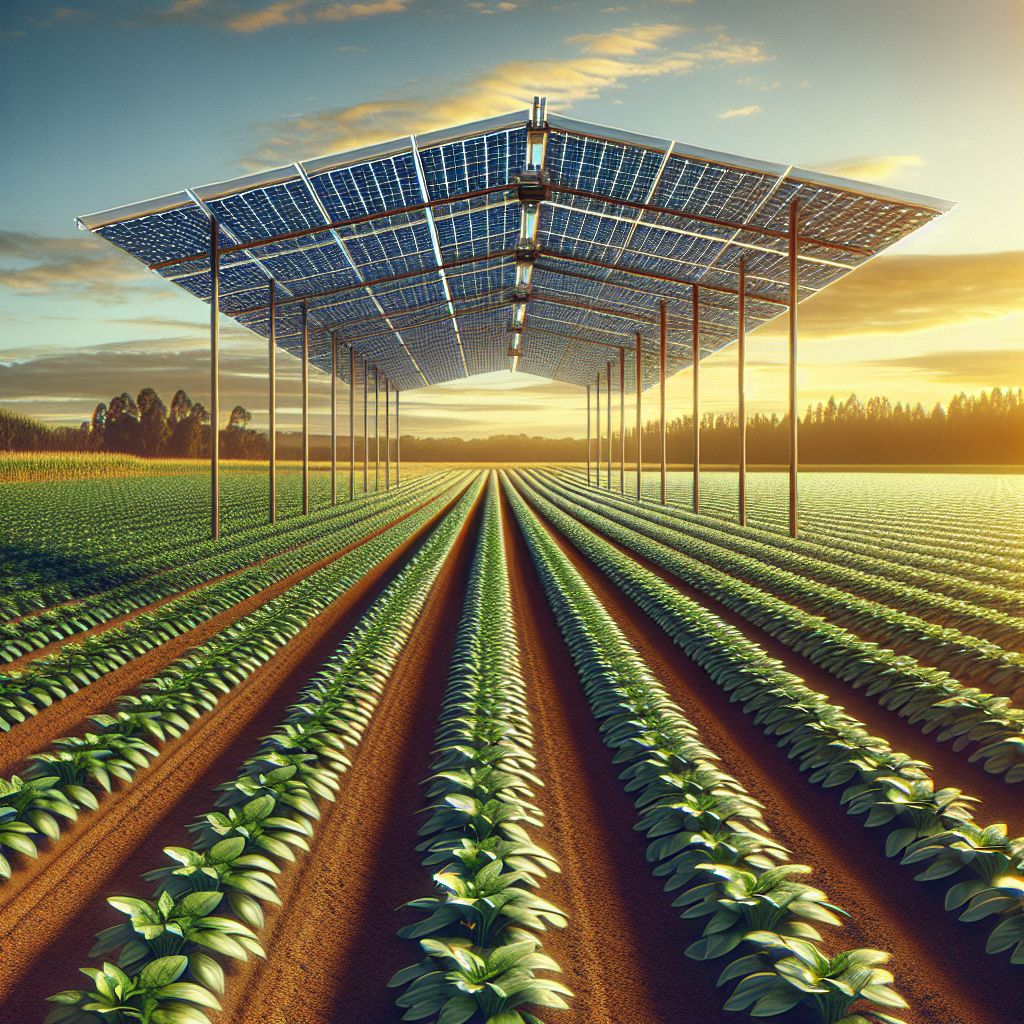
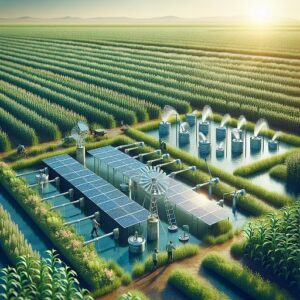
Bifacial solar panels are particularly well-suited for installation on cropland. Their design allows them to be mounted above crops, providing shade and reducing water evaporation. This can be especially beneficial in hot and arid regions where water conservation is critical.
By positioning panels above crops, farmers can create a microclimate that enhances plant growth. The shade provided by the panels helps regulate temperature and moisture levels, leading to healthier crops and increased yields.
Shade Benefits for Crop Growth
The shade benefits offered by bifacial solar panels can be a game-changer for farmers. By providing partial shade, these panels help protect crops from excessive heat and sun exposure, which can be detrimental to plant health.
In addition to reducing heat stress, the shade from bifacial panels can help conserve soil moisture. This is particularly important in regions prone to drought or where water resources are limited. By retaining moisture, farmers can improve crop resilience and reduce irrigation needs.
Synergy with Agrivoltaics
Agrivoltaics, the practice of combining solar energy production with agriculture, is gaining traction worldwide. Bifacial solar panels are at the forefront of this movement, offering a perfect synergy between energy generation and farming activities.
By integrating bifacial panels into agrivoltaic systems, farmers can maximize land use efficiency while generating clean energy. This approach not only enhances energy production but also supports sustainable agricultural practices, creating a win-win situation for farmers and the environment.

Challenges and Considerations
While bifacial solar panels offer numerous benefits, there are also challenges and considerations that farmers need to keep in mind. Understanding these factors is essential for making informed decisions about adopting this technology, especially when considering solar panels for agriculture use.
Installation and Maintenance Costs
- Initial investment can be higher than traditional panels
- Requires specialized installation techniques
- Ongoing maintenance to ensure optimal performance
One of the main challenges associated with bifacial solar panels is the higher initial investment compared to traditional panels. The advanced technology and materials used in bifacial panels can lead to increased upfront costs. However, these costs are often offset by the panels’ superior energy output and long-term savings.
Installation of bifacial panels also requires specialized techniques to ensure optimal performance. Farmers need to work with experienced solar installers who understand the unique requirements of bifacial systems. This can add to the overall installation cost but is crucial for maximizing the panels’ efficiency.
Additionally, ongoing maintenance is necessary to keep bifacial panels operating at peak performance. Regular cleaning and inspections help prevent dirt and debris from affecting energy output. While maintenance adds to the overall cost, it is essential for ensuring the longevity and effectiveness of the solar installation.
Land Suitability and Reflection
When considering bifacial solar panels for farming, the suitability of the land is a critical factor. These panels thrive in environments where they can capture reflected sunlight, so surfaces with high albedo are ideal. For example, installing panels over light-colored soil or gravel can enhance their performance significantly. For more insights, check out this comprehensive guide on bifacial modules.
Besides that, the panels’ elevation and angle also play a crucial role in optimizing reflection. Farmers should ensure that panels are installed at a height and tilt that maximizes the capture of reflected light. This might require some trial and error, but the increased energy output is worth the effort.
Weather and Positioning Factors
Weather conditions can greatly impact the efficiency of bifacial solar panels. Areas with frequent cloud cover or heavy snowfall might see reduced performance, although bifacial panels still outperform traditional ones in diffuse light conditions. It’s essential to consider the local climate when planning a bifacial solar installation. For a basic understanding of solar panels in agriculture, it’s important to explore how they can be effectively utilized in different weather conditions.
Positioning is another important consideration. Panels should be oriented to capture the maximum amount of sunlight throughout the day. For instance, facing some panels east and others west can help produce energy peaks in the morning and afternoon, ensuring a steady energy supply.
Future Prospects for Bifacial Panels in Agriculture
The future looks bright for bifacial solar panels in agriculture. As technology advances and costs decrease, more farmers are likely to adopt these innovative panels. The potential for increased energy efficiency and reduced environmental impact makes bifacial panels a compelling choice for sustainable farming.
Trends in Renewable Energy Adoption
Globally, there is a growing trend towards renewable energy adoption. Governments and organizations are increasingly supporting initiatives that promote clean energy solutions. For farmers, this means more incentives and support for installing bifacial solar panels, making it a timely investment.
Technological Innovations on the Horizon
Technological innovations continue to improve the efficiency and affordability of bifacial solar panels. Researchers are exploring new materials and designs that could further enhance their performance. For example, developments in transparent solar cells and reflective coatings could boost energy capture even more. Learn more about the benefits of solar panels in agriculture.
Additionally, advancements in solar tracking systems could allow bifacial panels to adjust their angle throughout the day, optimizing sunlight capture and increasing energy output. These innovations hold great promise for the future of solar energy in agriculture.
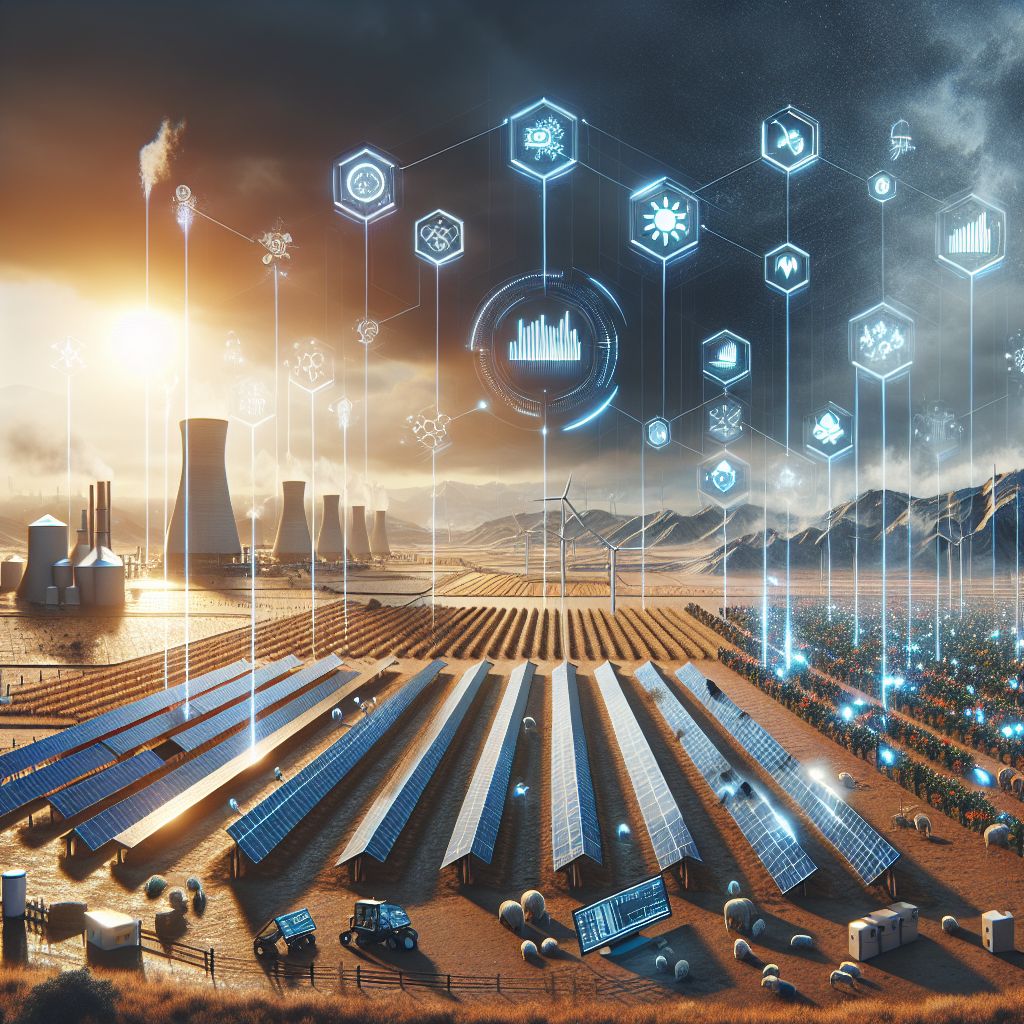
Furthermore, integrating bifacial panels with smart farming technologies could revolutionize how energy is managed on farms. By using real-time data and analytics, farmers can optimize energy use and improve overall farm efficiency.
Potential for Expansion in Different Climates
The versatility of bifacial solar panels makes them suitable for various climates and regions. Whether in sunny deserts or snowy landscapes, these panels can adapt and perform well. This adaptability opens up new opportunities for expanding solar energy use in agriculture worldwide.
Frequently Asked Questions
As bifacial solar panels become more popular in agriculture, many farmers have questions about their features, benefits, and installation. Here are some of the most common inquiries and their answers.
What are the unique features of bifacial solar panels?
Bifacial solar panels are unique because they can capture sunlight from both sides, unlike traditional panels that only absorb light from one side. This dual-sided capability allows them to generate more electricity and perform better in various lighting conditions. For a basic understanding of their benefits in agriculture, explore more resources.
Another distinctive feature is their ability to utilize reflected light from the ground or surrounding surfaces, enhancing their overall efficiency. This makes them particularly effective in areas with high albedo surfaces.
- Dual-sided light absorption
- Increased energy output
- Enhanced performance in diffuse light
- Ability to capture reflected sunlight
How do bifacial panels differ from standard solar panels?
Unlike standard solar panels, which have a solid backsheet, bifacial panels use a transparent backsheet or dual glass design. This allows them to capture light from both the front and rear sides, increasing their energy output.
What are the maintenance requirements for bifacial panels?
Maintaining bifacial solar panels involves regular cleaning to remove dust and debris that can reduce efficiency. Farmers should also inspect the panels periodically to ensure they are free from damage and operating at peak performance. For a basic understanding of the benefits of solar panels in agriculture, further reading is recommended.
Additionally, it’s important to monitor the surrounding environment to ensure that reflective surfaces remain effective. This might involve adjusting the ground cover or managing vegetation around the panels.
Can bifacial panels be used on all types of farms?
Yes, bifacial solar panels can be used on various types of farms, from small family operations to large commercial farms. Their versatility and efficiency make them suitable for different agricultural settings and climates. For more information, you can explore this guide on bifacial solar panels for farms.
How do bifacial solar panels benefit farm ecosystems?
Bifacial solar panels can benefit farm ecosystems by providing shade for crops, reducing water evaporation, and supporting sustainable energy practices. They also help lower carbon emissions by generating clean, renewable energy on-site.
What is the expected lifespan of bifacial panels in agricultural settings?
The expected lifespan of bifacial solar panels is similar to that of traditional panels, typically around 25 to 30 years. With proper maintenance and care, these panels can provide reliable energy production for decades, making them a sound long-term investment for farmers. For those interested in how solar technology can be integrated into farming, understanding the role of solar panels in irrigation system design is crucial.

Leave a Reply