

Key Takeaways
- Solar panels can reduce a farm’s energy costs by up to 70%, making them a cost-effective solution for farmers.
- They provide a renewable energy source, decreasing reliance on fossil fuels and contributing to environmental sustainability.
- Solar panels can power farm machinery, irrigation systems, and livestock facilities, enhancing overall farm productivity.
- Government incentives and subsidies can significantly offset the initial installation costs of solar panels.
- Integrating solar power with existing farm operations can lead to increased efficiency and energy independence.
The Role of Solar Panels in Boosting Farm Efficiency
Solar panels are transforming the agricultural landscape by offering a reliable and sustainable energy solution. By harnessing the power of the sun, farms can operate more efficiently and reduce their carbon footprint. This shift towards renewable energy is not just beneficial for the environment; it also makes good economic sense for farmers.
Most importantly, solar panels provide a consistent energy source that can power a wide range of farm operations. From running machinery to maintaining optimal conditions in livestock facilities, solar energy is a versatile tool for modern agriculture. As technology advances, the potential for solar panels on farms continues to grow, promising even greater efficiency and sustainability in the future.
Introduction to Solar Panels on Farms
Imagine a farm where the energy bills are slashed, and the carbon footprint is minimal. That’s what solar panels can offer. These panels convert sunlight into electricity, providing a clean and renewable energy source for farms. By reducing reliance on fossil fuels, farms not only cut costs but also contribute to a healthier planet.
Solar panels are typically installed on rooftops, open fields, or even integrated into farm equipment. They capture sunlight and convert it into electricity, which can then be used to power various farm operations. With advancements in technology, solar panels have become more efficient and affordable, making them an attractive option for farmers looking to boost their farm’s efficiency.
Key Benefits of Adopting Solar Panels
Adopting solar panels offers numerous benefits for farms. First and foremost, they provide a cost-effective energy solution. By generating their electricity, farms can significantly reduce their energy bills. This allows farmers to reinvest the savings into other aspects of their operations, such as upgrading equipment or expanding production.
Moreover, solar panels contribute to environmental sustainability. By using a renewable energy source, farms can decrease their reliance on fossil fuels and reduce greenhouse gas emissions. This not only benefits the environment but also aligns with the growing consumer demand for sustainable and eco-friendly products.
Another key benefit is energy independence. With solar panels, farms are less vulnerable to energy price fluctuations and supply disruptions. This stability allows farmers to better plan their operations and focus on maximizing productivity.
This table below will show what role solar panels have in boosting a farm efficiency
|
Aspect |
Impact |
|---|---|
|
Energy Costs |
Reduces operating costs by up to 75% through free electricity generation after initial investment. 3 |
|
Energy Independence |
Provides a reliable energy source, especially in remote areas, protecting against grid outages and price fluctuations. 3 |
|
Irrigation |
Powers solar water pumps, reducing dependence on grid power or fuel-driven pumps, leading to cost savings and sustainable water management. 1 |
|
Crop Production |
Can increase crop productivity by 100-300% for certain species when grown under solar panels. 2 |
|
Water Conservation |
Reduces irrigation water use by 15% and overall water consumption by 157% due to shading from panels. 2 |
|
Climate Control |
Powers ventilation systems in greenhouses and barns, improving plant productivity and animal welfare. 1 |
|
Land Use Efficiency |
Enables dual use of land for both energy production and agriculture, increasing overall land productivity. 2 |
|
Environmental Impact |
Reduces carbon footprint and greenhouse gas emissions associated with traditional energy sources. 3 |
|
Crop Protection |
Shields crops from intense rain, hail, and extreme weather conditions2 |
|
Technological Integration |
Powers precision farming tools for monitoring crop health, soil moisture, and other critical factors. 3 |
|
Income Diversification |
Creates an additional revenue stream for farmers through energy production and potential sale of excess electricity. 3 |
|
Soil Health |
Can improve soil quality and contribute to biodiversity in some cases. 4 |
This table summarizes the various ways solar panels can enhance farm efficiency, from reducing costs and improving crop production to enabling technological advancements and environmental benefits.

Transforming Agricultural Operations with Solar Power
Solar power is revolutionizing agricultural operations by providing a reliable and sustainable energy source. It enables farms to power machinery, support livestock facilities, and manage irrigation systems more efficiently. This transformation not only enhances productivity but also reduces the environmental impact of farming.
Powering Farm Machinery and Equipment
Solar panels can power a wide range of farm machinery and equipment. From tractors to processing equipment, solar energy provides a clean and renewable power source. This not only reduces energy costs but also decreases reliance on fossil fuels, contributing to a more sustainable farming operation.
- Tractors and other farm vehicles can be equipped with solar-powered charging stations, reducing fuel costs and emissions.
- Processing equipment, such as grain dryers and milk coolers, can run on solar energy, lowering operational costs.
- Lighting systems in barns and storage facilities can be powered by solar panels, ensuring energy efficiency.
By integrating solar power into farm operations, farmers can enhance efficiency and reduce their environmental impact. This not only benefits the farm’s bottom line but also contributes to a more sustainable future for agriculture. For more insights on solar power in agriculture, check out this comparison between solar panels for farm operations and solar farms.
Supporting Livestock and Animal Housing
Solar panels are not just for powering machinery; they also play a crucial role in supporting livestock operations. By providing a consistent energy source, solar panels help maintain optimal conditions for animal housing, ensuring the health and productivity of livestock.
For instance, solar-powered ventilation systems can regulate temperature and humidity levels in barns, creating a comfortable environment for animals. This is particularly important in regions with extreme weather conditions, where maintaining a stable climate can be challenging. Additionally, solar panels can power lighting systems, ensuring adequate illumination for animal care and management activities.
Most importantly, solar energy can support the operation of electric fences and automated feeding systems, enhancing security and efficiency in livestock management. By leveraging solar power, farmers can ensure that their livestock facilities operate smoothly and sustainably. For those interested in implementing such systems, here’s a step-by-step guide to installing solar panels on your farm.
Solar-Powered Irrigation and Water Management
Water management is a critical aspect of farming, and solar panels can significantly enhance irrigation systems. By powering pumps and other water management equipment, solar energy ensures that crops receive adequate water supply, even in remote areas without access to the grid.
Solar-powered irrigation systems are particularly beneficial in regions with limited water resources. By optimizing water usage, these systems help conserve water while ensuring that crops receive the necessary hydration for optimal growth. This not only boosts crop yields but also contributes to sustainable water management practices.
Moreover, solar panels can support water storage and distribution systems, ensuring a reliable water supply throughout the year. This is especially important during dry seasons when water scarcity can threaten crop production. By integrating solar power into water management systems, farmers can enhance efficiency and resilience in their operations.

Economic and Environmental Advantages
Adopting solar panels on farms offers both economic and environmental benefits. By providing a renewable energy source, solar panels reduce reliance on fossil fuels and contribute to a cleaner, more sustainable environment.
- Cost Savings: Solar panels can reduce energy costs by up to 70%, allowing farmers to reinvest savings into other areas of their operations.
- Environmental Impact: By decreasing reliance on fossil fuels, solar panels reduce greenhouse gas emissions and contribute to a healthier planet.
- Energy Independence: Solar energy provides a stable and predictable power source, reducing vulnerability to energy price fluctuations and supply disruptions.
Furthermore, government incentives and subsidies can significantly offset the initial installation costs of solar panels, making them an economically viable option for farmers. By embracing solar power, farms can enhance their efficiency, sustainability, and profitability. For more insights, check out our guide on installing solar panels on your farm.
Reducing Energy Costs
One of the most compelling reasons for adopting solar panels on farms is the potential for significant energy cost savings. By generating their electricity, farms can reduce their reliance on external energy providers and lower their energy bills.
This cost reduction allows farmers to allocate resources more effectively, whether it’s investing in new equipment, expanding production, or improving farm infrastructure. Moreover, solar panels provide a stable and predictable energy source, helping farmers avoid the financial impact of fluctuating energy prices.
In the long run, the savings from reduced energy costs can outweigh the initial investment in solar panels, making them a financially sound choice for farmers looking to boost their farm’s efficiency and profitability.
Decreasing Carbon Footprint
Solar panels offer a sustainable energy solution that helps farms reduce their carbon footprint. By using a clean and renewable energy source, farms can decrease their reliance on fossil fuels and reduce greenhouse gas emissions.
This not only benefits the environment but also aligns with the growing consumer demand for sustainable and eco-friendly products. By adopting solar power, farms can enhance their environmental stewardship and contribute to a healthier planet.
Securing Energy Independence
Energy independence is a crucial advantage of solar panels on farms. By generating their electricity, farms are less vulnerable to energy price fluctuations and supply disruptions. This stability allows farmers to better plan their operations and focus on maximizing productivity.
Moreover, solar energy provides a consistent and reliable power source, ensuring that farm operations run smoothly and efficiently. By securing energy independence, farms can enhance their resilience and adaptability in an ever-changing agricultural landscape.
Crops Efficiency
Solar panels can enhance crop efficiency by powering irrigation systems, water management equipment, and other essential farm operations. By ensuring a reliable energy source, solar panels help optimize crop growth and boost yields.
This increased efficiency not only benefits the farm’s bottom line but also contributes to sustainable farming practices. By leveraging solar power, farms can maximize productivity and resource utilization, paving the way for a more sustainable and resilient agricultural future.
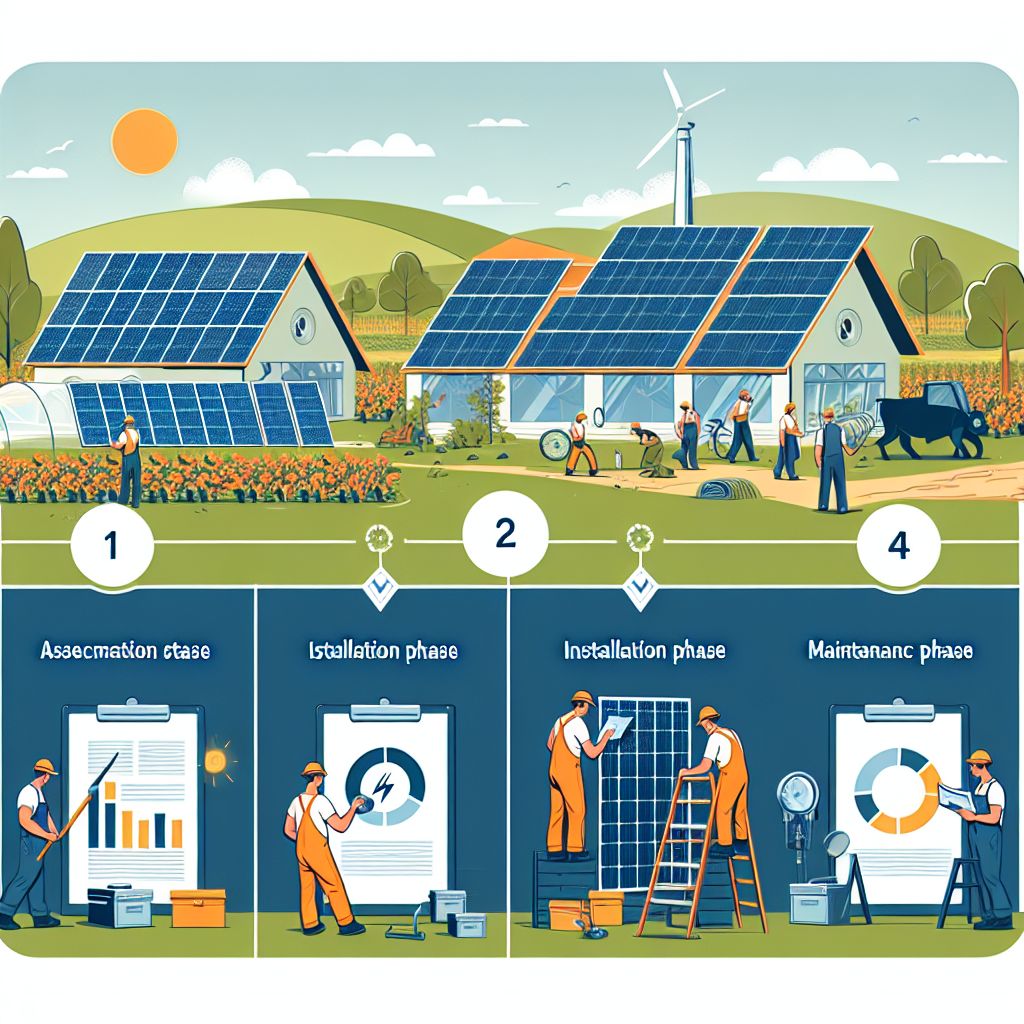
Steps to Implement Solar Panels Effectively
Implementing solar panels on a farm requires careful planning and consideration. By following a systematic approach, farmers can ensure a successful transition to solar power and maximize the benefits of this renewable energy source.
Assessing Solar Energy Needs
The first step in implementing solar panels is to assess the farm’s energy needs. This involves evaluating current energy consumption and identifying areas where solar power can be effectively integrated.
Farmers should consider the following factors when assessing their solar energy needs, including the differences between solar panels for farm operations and solar farms.
- Current energy usage and costs
- Potential energy savings from solar panels
- Areas of the farm where solar power can be integrated
- Available space for solar panel installation
By conducting a thorough energy assessment, farmers can determine the optimal size and capacity of the solar panel system needed to meet their energy needs.
“A comprehensive energy assessment is crucial for determining the right solar panel system for your farm. By understanding your energy needs, you can maximize the benefits of off-grid farming with solar power and enhance your farm’s efficiency.”
Selecting the Right Solar Technology
Once the energy assessment is complete, the next step is to select the right solar technology for the farm. There are various types of solar panels and systems available, each with its advantages and disadvantages.
When selecting solar technology, farmers should consider the following factors:
- Efficiency and performance of the solar panels
- Cost and return on investment
- Durability and lifespan of the solar panels
- Compatibility with existing farm operations
Here’s a table comparing the different solar panel you can use to power a farms operation:
|
Solar Panel Type |
Efficiency |
Cost per Watt |
Pros |
Cons |
|---|---|---|---|---|
|
Monocrystalline |
17-22% |
$1.00 – $1.50 |
– Highest efficiency. 1, 3 |
– Most expensive option. 1, 3 |
|
Polycrystalline |
13-17% |
$0.90 – $1.20 |
– Lower cost than monocrystalline. 1, 3 |
– Slightly lower efficiency. 1, 3 |
|
Thin-Film |
10-13% |
$0.70 – $1.00 |
– Lowest cost. 1, 3 |
– Lowest efficiency. 1, 3 |
Monocrystalline panels are highly efficient and durable, making them ideal for high-performance irrigation systems that require consistent power output. Their higher cost is often offset by their superior performance in the long run 3.
Polycrystalline panels offer a good balance between cost and efficiency, making them suitable for medium-scale irrigation projects. They perform well in most conditions and are a popular choice for many agricultural applications 3.
Thin-film panels, while less efficient, are more affordable and flexible. They can be a good option for portable irrigation systems or installations where weight is a concern. Their lower efficiency means you may need more panels to achieve the same power output as crystalline options 3.
By choosing the right solar technology, farmers can ensure that their solar panel system meets their energy needs and provides a reliable and sustainable power source.
Installation and Maintenance Tips
Proper installation and maintenance are crucial for the success of a solar panel system. By following best practices, farmers can ensure that their solar panels operate efficiently and have a long lifespan.
When installing solar panels, farmers should consider the following tips:
- Work with a reputable and experienced solar installer
- Ensure proper placement and orientation of the solar panels
- Conduct regular maintenance and inspections
- Keep the solar panels clean and free from debris
By following these tips, farmers can maximize the efficiency and longevity of their solar panel system, ensuring a successful transition to solar power. For more information, check out this step-by-step guide to installing solar panels on your farm.

Case Studies: Successful Farm Transitions to Solar Power
Real-life examples of farms successfully transitioning to solar power can provide valuable insights and inspiration for other farmers considering this renewable energy source. These case studies highlight the benefits and challenges of implementing solar panels on farms.
Small-Scale Farm Implementation
Small-scale farms can greatly benefit from solar panels by reducing energy costs and increasing sustainability. These farms often operate on tight budgets, and the savings from solar energy can be substantial. By generating their power, small farms can reduce their reliance on external energy sources and invest more in their operations. For more insights, explore how solar panels increase efficiency and sustainability.
For example, a small dairy farm in Wisconsin installed solar panels to power its milking equipment and refrigeration systems. The farm saw a 50% reduction in its energy bills, allowing it to reinvest the savings into expanding its herd and improving animal welfare. This transition not only improved the farm’s financial stability but also enhanced its environmental stewardship.
Large-Scale Agricultural Operations
Large-scale agricultural operations can also reap significant benefits from solar panels. These farms often have higher energy demands, and solar power can help meet these needs sustainably. By integrating solar panels into their operations, large farms can reduce energy costs and decrease their carbon footprint.
For instance, a large crop farm in California installed solar panels to power its irrigation systems and processing facilities. The farm experienced a 60% reduction in energy costs and increased its crop yields by optimizing water usage. This transition to solar power not only boosted the farm’s productivity but also contributed to its long-term sustainability.

Future Trends of Solar Energy in Agriculture
The future of solar energy in agriculture looks promising, with technological advancements and increasing adoption of renewable energy sources. As solar panels become more efficient and affordable, more farms are likely to embrace this sustainable energy solution.
One emerging trend is the integration of solar panels with other renewable technologies, such as wind turbines and bioenergy systems. This combination of energy sources can provide a more reliable and consistent power supply for farms, further enhancing their efficiency and sustainability.
Technological Innovations in Solar Panels
Technological innovations in solar panels are making them more efficient and accessible for farms. Advances in solar cell technology have increased the efficiency of solar panels, allowing them to generate more electricity from the same amount of sunlight. This means that farms can produce more energy with fewer panels, reducing installation costs and space requirements. For more details, explore the differences between solar panels for farm operations and solar farms.
Additionally, innovations in solar panel design, such as flexible and lightweight panels, are making it easier to install solar systems on a variety of farm structures. These advancements are helping to drive the adoption of solar energy in agriculture, paving the way for a more sustainable future.
Integration with Other Renewable Technologies
The integration of solar panels with other renewable technologies is a growing trend in agriculture. By combining solar power with wind turbines, bioenergy systems, and energy storage solutions, farms can create a more resilient and reliable energy supply.
This integrated approach allows farms to harness multiple energy sources, ensuring a consistent power supply even when one source is unavailable. For example, a farm in Iowa combined solar panels with wind turbines to power its operations. This hybrid system provided a stable energy supply, reducing the farm’s reliance on the grid and enhancing its energy independence.

Conclusion
Solar panels are a powerful tool for increasing the efficiency and sustainability of farms. By providing a renewable energy source, they reduce energy costs, decrease reliance on fossil fuels, and contribute to environmental stewardship. As technology advances and adoption grows, the potential for solar energy in agriculture continues to expand.
Is Adding Solar Panels to a Farm’s Operations a Good Investment for a Farmer?
Absolutely. Investing in solar panels can be a smart financial decision for farmers. The cost savings from reduced energy bills can offset the initial investment, and government incentives can further reduce installation costs. Moreover, solar panels enhance a farm’s sustainability and energy independence, making them a valuable long-term investment.
FAQs
Farmers often have questions about implementing solar panels on their farms. Here are some common queries and answers to help guide the transition to solar power.
What are the initial steps for a farm to switch to solar energy?
The first step is to assess the farm’s energy needs and determine the optimal size and capacity of the solar panel system. Next, farmers should research available solar technologies and select the one that best meets their needs. Finally, working with a reputable solar installer ensures proper installation and maintenance.
How can solar panels reduce a farm’s operational costs?
Solar panels reduce operational costs by generating electricity on-site, lowering energy bills. The savings from reduced energy costs can be significant, allowing farmers to reinvest in other areas of their operations.
Are there any government incentives for installing solar panels on farms?
Yes, many governments offer incentives such as tax credits, grants, and subsidies to offset the cost of solar panel installation. These incentives can significantly reduce the initial investment required for solar energy systems.
What maintenance do solar panels on farms require?
Solar panels require minimal maintenance, but regular inspections and cleaning are essential to ensure optimal performance. Farmers should check for debris, dirt, and any potential damage to the panels and address any issues promptly.
Can solar panels supply all the energy needs of a farm?
While solar panels can supply a significant portion of a farm’s energy needs, it may not be feasible for them to meet all energy demands, especially for large-scale operations. However, integrating solar power with other renewable technologies can provide a more comprehensive energy solution.
“Solar panels are not just an energy solution; they’re a gateway to a more sustainable and efficient farming future.”







Leave a Reply