
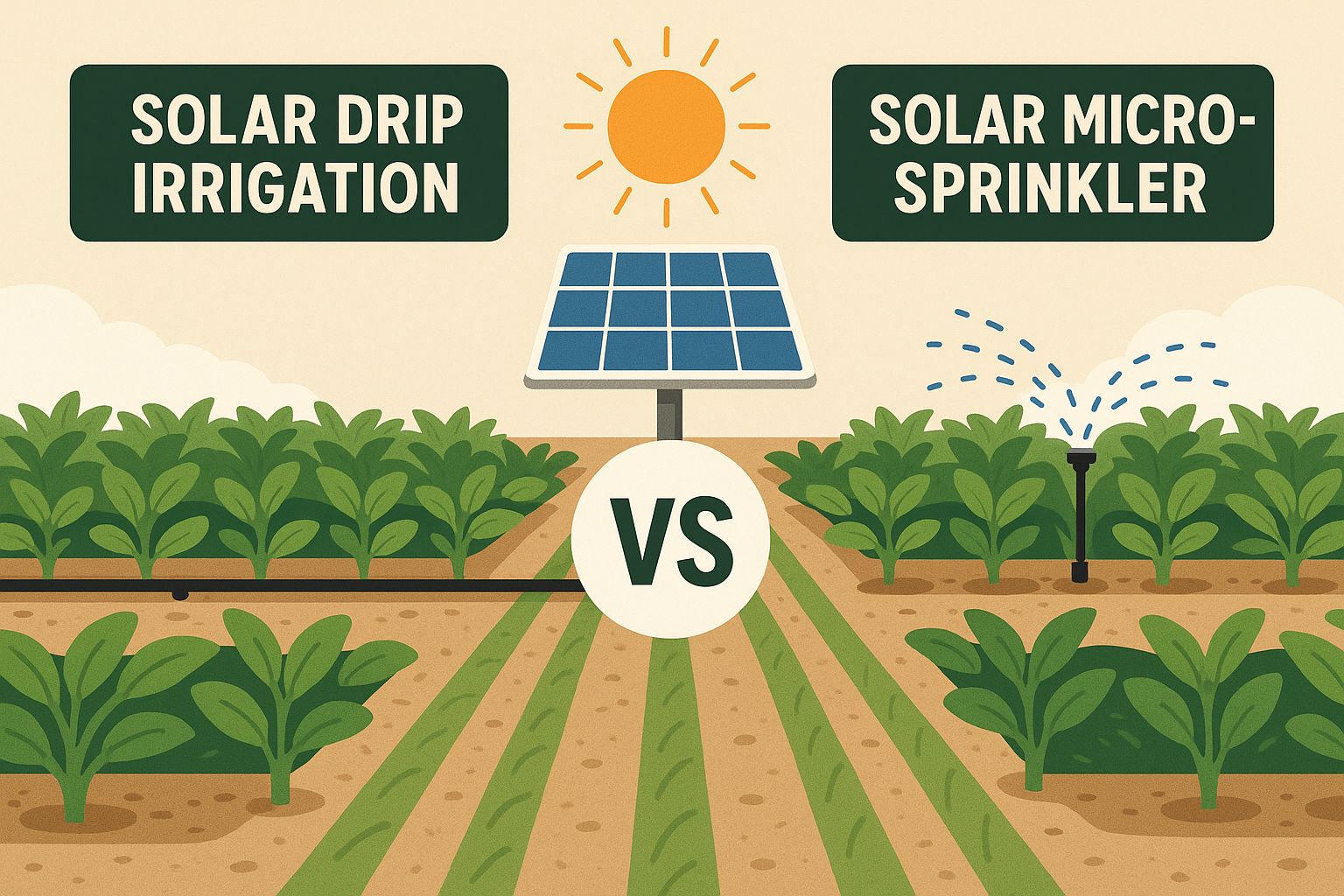
- Solar drip irrigation systems achieve up to 90% water efficiency compared to 80% for micro-sprinklers, making them ideal for water-scarce regions and conservation efforts.
- Crop type significantly influences system selection – row vegetables thrive with drip irrigation while orchards may benefit more from micro-sprinklers’ wider coverage area.
- Solar-powered irrigation systems can reduce operational costs by up to 70% compared to conventional grid or diesel-powered systems.
- Micro-sprinkler systems offer additional benefits beyond irrigation, including frost protection and improved humidity for certain crops.
Choosing between solar drip irrigation and micro-sprinkler systems might seem like splitting hairs, but the decision can dramatically impact your farm’s productivity, water conservation efforts, and bottom line. As global water scarcity intensifies and energy costs climb, solar-powered irrigation represents a sustainable solution that addresses both challenges simultaneously. The right system for your operation depends on numerous factors unique to your farm’s situation.
The shift toward sustainable agriculture demands irrigation solutions that maximize efficiency while minimizing environmental impact. Solar-powered systems eliminate fossil fuel dependence while delivering precise water application – but the method of water delivery creates significant operational differences that every farmer should understand before investing.
Article-at-a-Glance
This comprehensive guide examines the critical differences between solar drip irrigation and micro-sprinkler systems, helping farmers make informed decisions about which technology best suits their specific agricultural needs. We’ll explore water efficiency ratings, crop compatibility, climate considerations, and cost factors to provide a complete picture of both irrigation approaches.
- Key performance differences between solar drip and micro-sprinkler systems
- Crop-specific recommendations for optimal irrigation results
- Real-world water and energy savings from field case studies
- Cost analysis including initial investment and long-term returns
- Installation best practices and common pitfalls to avoid
Understanding these irrigation technologies in depth allows farmers to maximize their investment while conserving precious water resources. Both systems harness solar energy, but their water delivery methods create distinct advantages and limitations that must be matched to your specific farming operation. For an overview of different solar-powered irrigation systems, you can explore various types and methods available.
Solar Irrigation Game-Changers: Drip vs Micro-Sprinkler Systems
Solar-powered irrigation revolutionizes agriculture by combining renewable energy with water-efficient delivery systems. Traditional irrigation methods typically waste 50-60% of water through evaporation, runoff, and poor targeting. In contrast, modern solar systems deliver precision application while eliminating the ongoing fuel or electricity costs of conventional pumps. For a deeper understanding, explore the differences between micro-irrigation and drip irrigation.
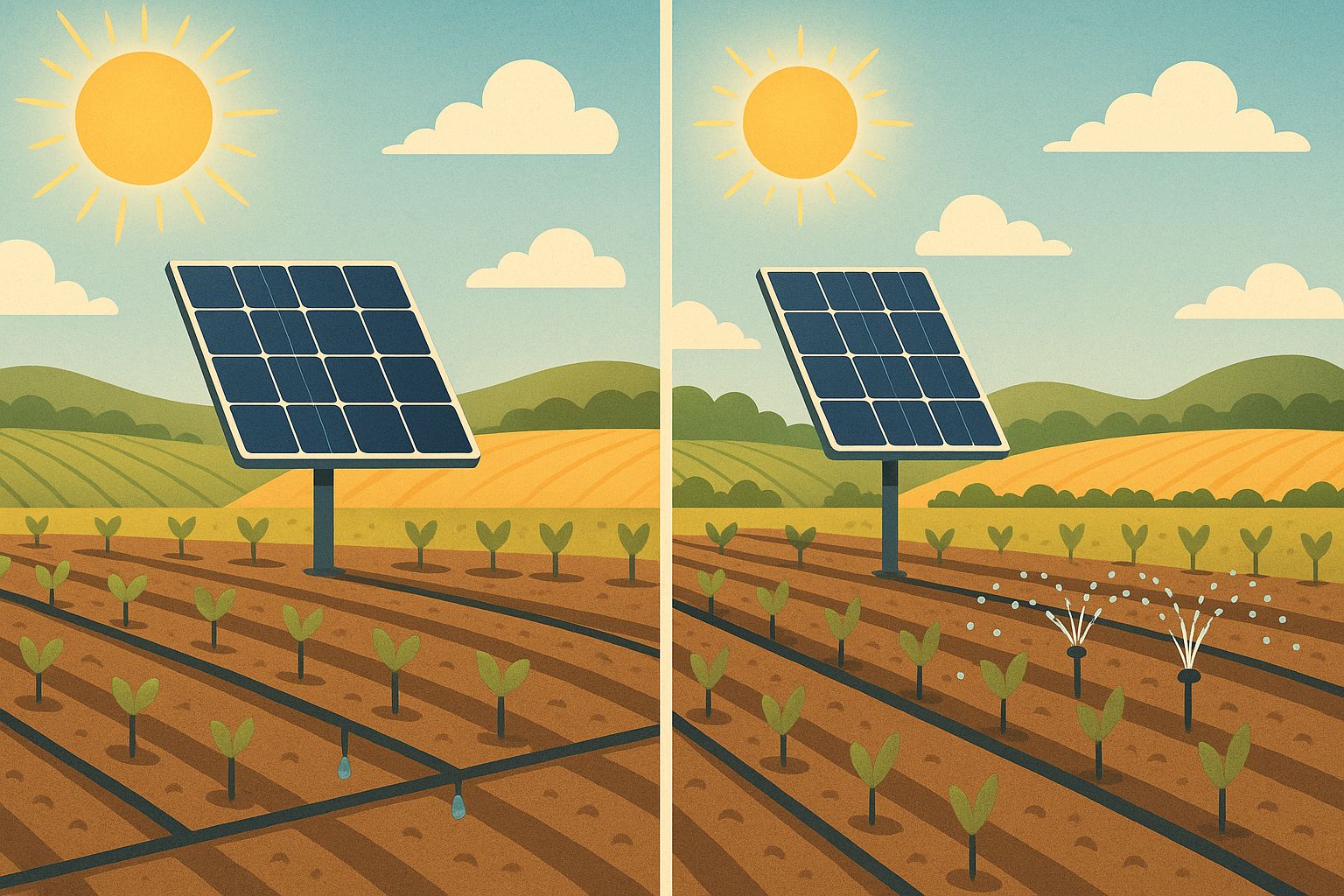
Drip irrigation and micro-sprinkler systems represent the two primary approaches to efficient water delivery in solar setups. Drip systems utilize tubes with small emitters that release water directly into the soil at low pressure, creating a slow, steady moisture supply directly to the root zone. Micro-sprinklers, meanwhile, spray water in small patterns above ground, creating miniature rain patterns that cover more surface area but still maintain relatively high efficiency compared to conventional sprinklers.
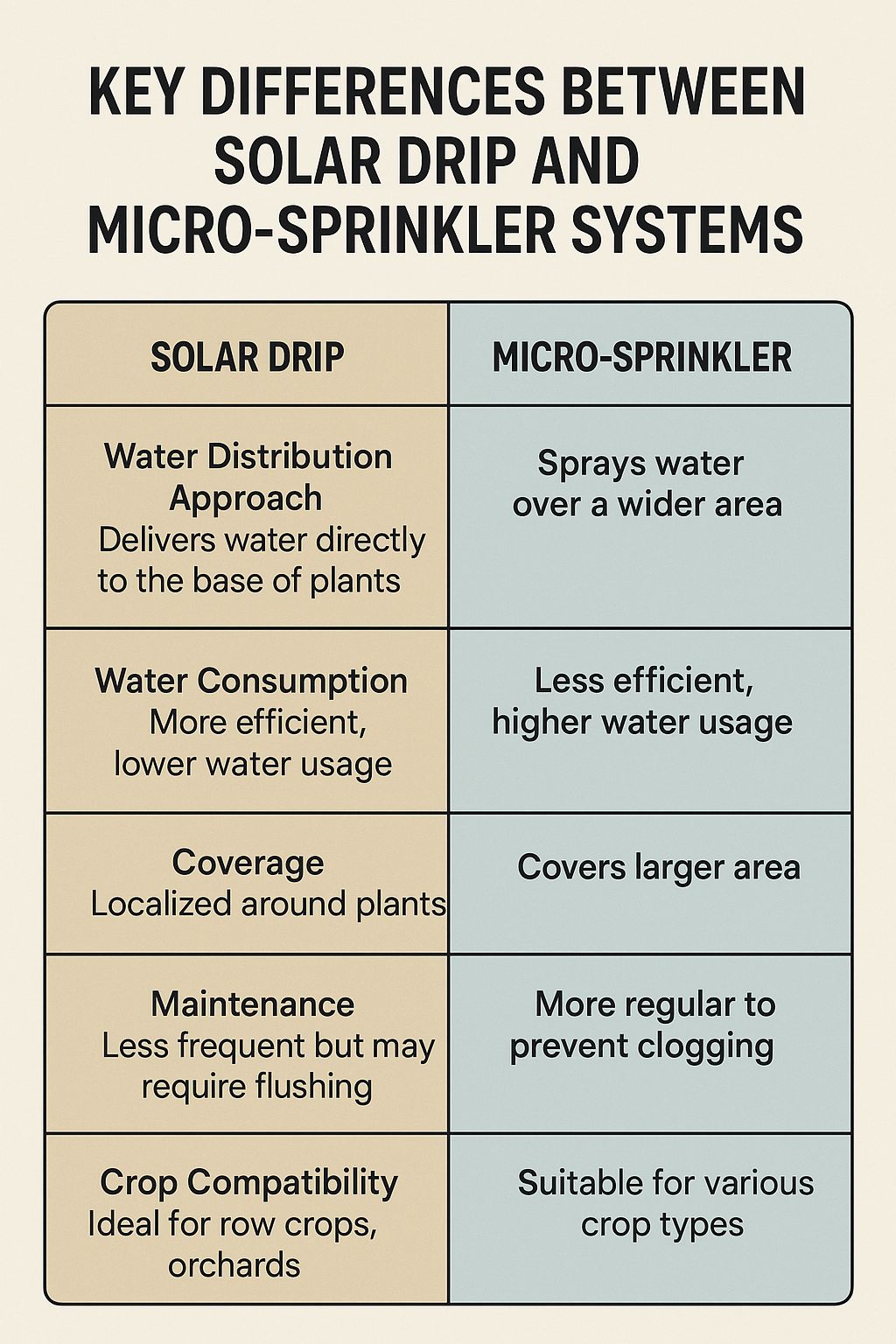
Key Differences Between Solar Drip and Micro-Sprinkler Systems
The fundamental distinction between these systems lies in their water distribution approach. This core difference cascades into various performance characteristics that directly impact farm operations, from water consumption to maintenance requirements and crop compatibility. Understanding these contrasts is essential for making an informed decision that aligns with your agricultural goals.
Water Delivery Method: Root Zone vs Aerial Coverage
Drip irrigation delivers water directly to the soil surface or subsurface, creating a concentrated moisture zone around plant roots. This targeted approach minimizes evaporation and virtually eliminates water contact with foliage, reducing disease pressure for many crops. The slow application rate also prevents runoff and deep percolation losses, making it ideal for row crops and individual plants with defined root zones. For more information on how solar panels can power these systems, explore our guide on solar panels powering a farm’s irrigation system.
Micro-sprinklers, by contrast, emit water in small spray patterns above the soil surface, covering circular areas typically ranging from 3 to 25 feet in diameter. This aerial distribution creates broader water coverage that benefits crops with wider root systems or situations where multiple plants can share a common irrigation zone. The spray pattern also increases humidity in the plant canopy, which can be beneficial for certain crops and during high-heat conditions. For more on different irrigation methods, explore solar-powered irrigation systems.
The choice between these delivery methods often depends on crop architecture, soil type, and climate conditions. Root vegetables like carrots and onions typically perform better with drip systems that keep foliage dry, while tree crops often benefit from the wider distribution pattern of micro-sprinklers that can reach expanding root systems.
“In our California almond orchard trials, we found that mature trees irrigated with micro-sprinklers showed 12% higher yields compared to drip systems, despite using approximately the same water volume. The difference was attributed to the micro-sprinklers’ ability to wet a larger soil volume, allowing for more extensive root development.” – Agricultural Research Journal, 2023
Water Efficiency: 90% vs 80% Utilization Rates
Drip irrigation systems typically achieve 90-95% water application efficiency, making them the gold standard for water conservation. By delivering moisture directly to the root zone with minimal exposure to air, evaporation losses are dramatically reduced. This exceptional efficiency makes drip irrigation particularly valuable in regions facing water scarcity or during drought conditions when every drop counts.
Micro-sprinkler systems generally deliver 80-85% efficiency – still impressive compared to conventional irrigation but slightly lower than drip systems due to increased evaporation from aerial distribution. However, this slight efficiency disadvantage is often balanced by better soil coverage, improved water distribution uniformity in sandy soils, and additional benefits like frost protection. In humid climates or regions with ample water resources, the slight efficiency difference may be less significant than other operational advantages.
Installation Complexity and Maintenance Requirements
Micro-sprinkler systems generally offer simpler installation with fewer components than drip systems, making them attractive for farms with limited technical resources. These systems require fewer emission points (sprinklers) compared to the hundreds or thousands of emitters in drip lines, resulting in quicker setup and fewer potential failure points. Most micro-sprinkler components can be visually inspected and replaced without specialized tools or extensive system shutdown. For more information on powering these systems, check out this guide on powering sprinkler irrigation systems with solar panels.
Drip irrigation systems, while more complex to install initially, offer precision that justifies the additional effort for many crops. The installation process involves careful planning of mainlines, sub-mains, laterals, and emitter placement to ensure uniform water distribution. The smaller orifices in drip emitters make them more susceptible to clogging, necessitating better filtration systems and more frequent maintenance checks. However, subsurface drip installations can significantly reduce maintenance once properly installed by protecting lines from surface damage and UV degradation.
Maintenance requirements create meaningful operational differences between these systems. Drip systems typically require more rigorous filtration, regular flushing protocols, and occasional chemical treatments to prevent biological growth and mineral buildup in emitters. Micro-sprinklers, with their larger orifices, tend to be more forgiving of water quality issues but may require more frequent adjustments to maintain proper spray patterns and coverage areas. For more insights on irrigation systems, explore solar-powered irrigation systems.
Cost Comparison: Initial Investment and Long-Term Value
Initial costs for solar micro-sprinkler systems typically run 15-25% lower than comparable drip installations covering the same acreage. This cost advantage stems from fewer required components – micro-sprinklers use fewer emission points, simpler filtration requirements, and less complex installation labor. For small to medium farms with limited capital, this lower entry barrier makes micro-sprinklers an attractive option to begin the transition to solar irrigation.
Drip irrigation systems generally command higher upfront investments but often deliver superior long-term value through water savings, reduced weed pressure, and enhanced crop quality. For water-intensive crops or in regions with high water costs, the additional efficiency of drip systems can recover the cost difference within 2-3 growing seasons. The economic calculation becomes particularly favorable for high-value crops where quality improvements directly impact market prices.
When comparing complete solar systems, the irrigation delivery method represents only one cost component. Solar panels, pumps, controllers, and storage solutions comprise significant portions of the total investment and may be similar regardless of whether you choose drip or micro-sprinkler distribution. This makes the water delivery system selection more about operational fit than dominating the budget consideration.
Best Crops for Solar Drip Irrigation
Certain crops show consistently superior performance with drip irrigation, making them natural candidates for this technology. The direct soil application, minimal wetting of foliage, and precise control over moisture levels create ideal growing conditions for many high-value crops where quality directly impacts marketability and price points.
Row Crops: Vegetables and Small Fruits
Vegetables with defined planting rows show exceptional response to drip irrigation’s targeted water delivery. Tomatoes, peppers, eggplants, and cucumbers develop significantly higher marketable yields when watered precisely at their root zone while keeping foliage dry. These crops are particularly susceptible to foliar diseases exacerbated by wet leaves, making drip irrigation’s moisture control a powerful disease management tool beyond its water conservation benefits.
Strawberries and other ground-level berries achieve remarkable quality improvements with drip irrigation. The consistent soil moisture without fruit wetting reduces rot issues while supporting uniform ripening. Many commercial strawberry operations report 20-30% higher marketable yields after converting to drip systems, with fruits showing better color development, higher sugar content, and extended shelf life – all qualities that command premium market prices.
Root vegetables including carrots, onions, and potatoes benefit from drip irrigation’s ability to maintain optimal soil moisture without creating overly saturated conditions that lead to rot or misshapen growth. The controlled moisture environment supports uniform development while minimizing issues with soil-borne pathogens that thrive in waterlogged conditions.
Deep-Rooted Perennials and Trees
Young orchard establishments show excellent development with drip irrigation during critical establishment years. The targeted water application encourages deep root development rather than surface rooting, creating more drought-resistant trees. For newly planted orchards, drip systems can reduce establishment time by 1-2 years while significantly cutting water usage during this vulnerable period.
Vineyards consistently demonstrate superior performance with drip irrigation, with wine grapes showing improved quality metrics including higher brix levels, better phenolic development, and more consistent ripening. The precise moisture control allows growers to implement regulated deficit irrigation strategies that stress vines at specific developmental stages, enhancing desirable characteristics in the resulting fruit and wine.
Nut crops including almonds and pistachios benefit from drip irrigation’s efficiency in arid growing regions. These high-value crops justify the investment in precision irrigation, with studies showing improved nut fill, lower incidence of blank nuts, and better overall yield consistency year-over-year when moisture stress is carefully managed through drip systems.
Water-Sensitive Specialty Crops
Leafy greens including lettuce, spinach, and kale achieve exceptional quality with drip irrigation that keeps foliage dry while maintaining consistent soil moisture. These crops are particularly vulnerable to quality degradation from inconsistent water management, with issues ranging from bitterness development to tip burn that can render entire crops unmarketable. Drip irrigation provides the steady moisture conditions that support premium quality development.
Herbs and medicinal crops often command premium prices based on their essential oil content and appearance – both factors significantly influenced by irrigation management. Drip systems support optimal oil development while preventing the leaf spotting and quality degradation associated with overhead watering. For organic herb producers, the reduced weed pressure from targeted watering also decreases labor costs associated with weed management.
- Tomatoes, peppers, and other fruiting vegetables
- Strawberries and low-growing berries
- Leafy greens and delicate herbs
- Young tree establishments and vineyards
- High-value root crops requiring uniform development
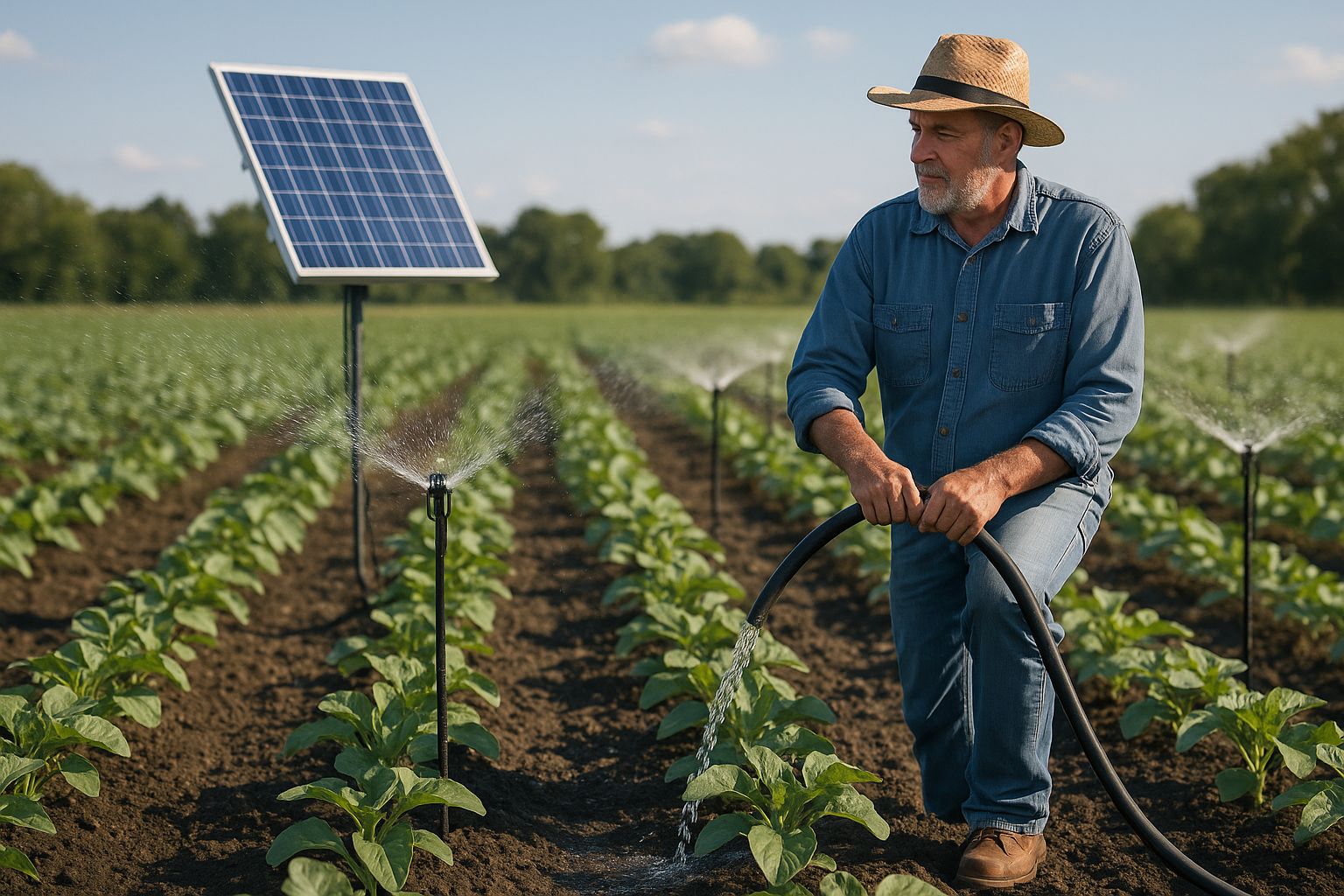
When Solar Micro-Sprinklers Outperform Drip Systems
While drip irrigation excels in many applications, solar micro-sprinkler systems offer distinct advantages in specific agricultural scenarios. Understanding these conditions helps farmers select the most appropriate technology for their particular operation rather than following a one-size-fits-all approach.
Sandy Soils and Poor Water Distribution
Sandy soils present unique challenges for irrigation due to their limited lateral water movement. In these soil types, drip emitters create narrow columns of moisture that fail to spread horizontally, leaving significant portions of the root zone dry. Micro-sprinklers overcome this limitation by distributing water over a wider surface area, ensuring more uniform soil moisture throughout the root zone despite poor lateral movement.
The wider distribution pattern of micro-sprinklers provides more effective salt management in regions with water quality challenges. The larger water volume helps push accumulated salts beyond the root zone, preventing the concentrated salt buildup that can occur with drip systems in arid regions. For coastal farms or operations using moderately saline water sources, this salt management capability can be critical for long-term soil health.
Uneven terrain benefits from micro-sprinklers’ ability to create more uniform coverage across undulating topography. While pressure-compensating drip emitters can address elevation changes, micro-sprinklers often achieve more consistent distribution in rolling landscapes without requiring special components. This makes them particularly valuable for hillside orchards and vineyards where maintaining uniform soil moisture presents significant challenges. For more information on how these systems work, check out this guide on solar-powered irrigation systems.
Frost Protection Capabilities
Micro-sprinklers offer significant frost protection capabilities that drip systems simply cannot match. During critical freeze events, running micro-sprinklers continuously creates a protective ice layer around sensitive plant tissues that maintains temperatures at approximately 32°F (0°C), preventing exposure to potentially lethal lower temperatures. This dual-purpose functionality provides substantial value for orchards and vineyards in regions prone to late spring or early fall frosts, potentially saving entire crops worth thousands of dollars per acre during freeze events.
Larger Orchard Applications
Mature orchards typically benefit more from micro-sprinkler systems due to their extensive root systems and larger water requirements. A single micro-sprinkler can effectively irrigate an entire mature tree, while drip systems would require multiple emitters arranged in patterns to achieve similar coverage. The wider distribution pattern better matches the natural root spread of established trees, supporting healthier development across the entire root zone rather than creating concentrated moisture areas that encourage problematic surface rooting.
Orchard floor management becomes simpler with micro-sprinklers that can irrigate both trees and cover crops simultaneously. This supports beneficial insectary plantings or nitrogen-fixing cover crops between rows without requiring separate irrigation systems. For organic orchards utilizing mulch for weed suppression and soil building, micro-sprinklers can effectively wet mulch layers that might otherwise intercept and divert water from drip emitters before it reaches the soil.
Germination and Seedling Establishment
Seed germination and early establishment phases often show better results with micro-sprinkler irrigation that creates favorable surface moisture conditions. The gentle spray pattern maintains consistent moisture in the seed zone without creating erosion or soil crusting that can impede emergence. For direct-seeded crops, this capability can significantly improve germination rates and stand uniformity compared to drip systems that may create uneven moisture distribution at the critical germination depth.
Nursery operations and propagation facilities benefit from the flexibility micro-sprinklers provide in adjusting moisture levels during different growth stages. The aerial distribution pattern creates beneficial humidity around young plants while allowing quick adaptation of watering intensity as plants develop. This versatility makes micro-sprinklers particularly valuable in operations working with multiple plant varieties or developmental stages simultaneously.
Solar Components: Powering Your Irrigation System
The solar energy components represent the engine behind both irrigation delivery methods, and proper sizing is critical regardless of which distribution system you select. A properly designed solar irrigation system balances power generation, storage capacity, and pump requirements to ensure reliable operation even during periods of limited sunlight. Undersized systems lead to inconsistent irrigation scheduling, while oversized systems unnecessarily increase capital costs without providing proportional benefits.
Panel Types and Efficiency Ratings
Monocrystalline panels typically offer the highest efficiency ratings (17-22%) and smallest footprint for solar irrigation applications, making them ideal for installations with limited space. Though commanding a price premium of approximately 15-20% over polycrystalline alternatives, their superior performance in high-temperature conditions and better low-light electricity generation often justify the additional investment for agricultural applications requiring consistent power output. For drip systems requiring steady pressure maintenance, this performance consistency is particularly valuable.
Polycrystalline panels provide a cost-effective alternative with slightly lower efficiency ratings (13-17%) but substantial durability for farm environments. The larger footprint requirement becomes less significant in agricultural settings where space constraints are minimal compared to residential installations. For micro-sprinkler systems that can tolerate slight pressure variations without significantly impacting performance, polycrystalline panels often represent the most economical solution with favorable payback periods.
Thin-film panels represent a fundamentally different approach to solar technology. Instead of using crystalline silicon wafers, thin-film panels deposit semiconductor materials like amorphous silicon, cadmium telluride, or copper indium gallium selenide onto backing substrates. The result is an incredibly thin, lightweight, and sometimes flexible panel that opens up installation possibilities on non-traditional surfaces. Though less efficient (typically 10-13%) than crystalline options, thin-film technology excels in high-temperature environments and can be integrated into building materials like roofing shingles.
PERC (Passivated Emitter and Rear Cell) panels are a newer technology that enhances the efficiency of traditional monocrystalline and polycrystalline panels by adding a layer that reflects unused sunlight back into the cell. This innovation can significantly boost energy output, especially in low-light conditions.
Choosing the right type of solar panel for your system is crucial. Consider the specific needs of your operations, the available space, and your budget. This below table will help you choose the right one:
|
Type of Solar Panel |
Advantages |
Disadvantages |
|---|---|---|
|
Monocrystalline Solar Panels | ||
|
– Performance drops slightly in extreme heat. 1 | ||
|
– Performs well in low-light conditions (cloudy days, mornings). 1, 2 | ||
|
Polycrystalline Solar Panels |
– Cost-effective option, suitable for large-scale installations. 1, 3 |
– Lower efficiency (13-17%) compared to monocrystalline panels. 1, 3 |
|
– Durable and handles heat well. 3 |
– Requires more space for the same energy output as monocrystalline panels. 3 | |
|
– Affordable initial investment, often offset by government incentives. 3 | ||
|
Thin-Film Solar Panels |
– Lightweight, flexible, and easy to install on unconventional surfaces (e.g., curved roofs)1, 5, 7 |
– Lowest efficiency (10-13%) among the options, requiring more space for equivalent output. 5, 7 |
|
– Performs well in high temperatures and low-light conditions, ideal for diverse climates. 5, 7 |
– Shorter lifespan (10-20 years) compared to crystalline panels. 5, 7 | |
|
– Cost-effective with lower production and installation costs. 5, 7 |
– Bulkier installations needed for larger-scale energy production. 5 | |
|
PERC Solar Panels |
– Enhanced efficiency (Up to 22% or higher) due to passivation layer, capturing more sunlight. 4 |
– Higher cost than traditional Monocrystalline panels, but prices are becoming comparable. 4 |
|
– Performs well in low-light and high-temperature conditions, ideal for varied climates. 2, 4 |
– Technology may be less familiar, requiring specialized installation expertise. 4 | |
|
– Maximizes energy output in limited space, suitable for farms with restricted installation areas. 4 |
This table provides a comparison of solar panel options for farmers, highlighting their suitability based on efficiency, cost, durability, and space requirements. Farmers should consider their specific energy needs, budget, and available installation area when making a decision.
Battery Storage Options for Consistent Operation
Lithium-ion battery systems offer superior cycle life and depth-of-discharge capabilities for solar irrigation applications, though at higher initial cost. With lifespans exceeding 10 years and 3000+ cycles at 80% depth of discharge, these systems provide the lowest lifetime cost for operations requiring daily irrigation cycles. The compact size and minimal maintenance requirements make lithium solutions particularly valuable for remote installations where service access is limited.
Lead-acid batteries remain viable for smaller systems or operations with intermittent irrigation schedules due to their lower upfront costs despite shorter lifespans. For seasonal operations or systems with backup grid connections, the economic calculation often favors these traditional battery technologies despite their larger footprint and maintenance requirements. Proper sizing is critical, as lead-acid systems should typically be oversized by 20-30% compared to lithium alternatives to achieve comparable service life.
Pump Requirements for Different Systems
Drip irrigation typically requires lower flow rates but higher operating pressures (20-50 PSI) to ensure proper emitter function and uniform distribution throughout the system. DC submersible pumps or surface-mounted centrifugal pumps with 1/2 to 2 horsepower ratings generally provide sufficient capacity for small to medium drip installations up to 5 acres. The consistent pressure requirements make variable frequency drives (VFDs) particularly valuable for drip systems, allowing precise pressure control while optimizing energy consumption.
Micro-sprinkler systems generally demand higher flow rates but operate effectively at moderate pressures (15-30 PSI), creating different pumping requirements. The higher volume demands often necessitate larger pump capacities, typically 1 to 3 horsepower for similar acreage, but with less stringent pressure regulation needs. Solar-direct pumping configurations without batteries work particularly well with micro-sprinklers, as these systems can often tolerate the variable flow rates that occur with changing sunlight conditions better than drip systems with precise pressure requirements.
Controllers and Automation Features
Modern solar irrigation controllers provide sophisticated scheduling capabilities that maximize water efficiency regardless of distribution method. Advanced controllers incorporate soil moisture sensors, weather data, and evapotranspiration calculations to continuously adjust irrigation timing and duration based on actual plant needs rather than fixed schedules. For high-value crops, these smart systems can reduce water usage by an additional 15-30% beyond the efficiency gains from the delivery method alone, often paying for themselves within 1-2 growing seasons. For more information on optimizing irrigation systems, check out this guide on powering sprinkler irrigation systems with solar panels.
Remote monitoring capabilities have become essential features for modern solar irrigation systems, allowing farmers to manage irrigation from smartphones or computers. These systems provide real-time alerts for pressure drops, flow anomalies, or battery status changes that might indicate problems requiring attention. For operations managing multiple fields or properties, this remote capability significantly reduces labor costs associated with system checks while ensuring immediate response to potential issues before crop stress occurs.
Real Water Savings: Field Results and Case Studies
The theoretical efficiency differences between irrigation systems tell only part of the story. Real-world implementation across various crops, climates, and soil conditions provides more meaningful insights into the practical benefits farmers can expect. Case studies from working farms demonstrate how these technologies perform under actual field conditions, offering valuable guidance for farmers considering similar transitions.
California Almond Orchards: 25% Less Water with Drip
A three-year study across 12 Central Valley almond orchards demonstrated that converting from conventional flood irrigation to solar drip systems reduced water consumption by 25% while increasing yields by 15-20%. The improved water placement stimulated more consistent nut development while reducing alternate bearing tendencies common in conventionally irrigated orchards. Notably, trees under drip irrigation showed greater resilience during drought years, maintaining production levels that dropped significantly in flood-irrigated comparison plots.
Energy savings proved equally impressive, with solar-powered drip systems reducing pumping costs by 70-80% compared to conventional electric or diesel systems. The combination of reduced water volume requirements and elimination of ongoing energy costs created average payback periods of 4-6 years for complete system installations, with faster returns during drought years when water allocation costs increased dramatically.
Texas Vegetable Farms: Comparative Water Usage Data
Vegetable operations in Texas High Plains regions reported water usage reductions of 30-45% after converting from center pivot systems to solar drip irrigation, with tomato and pepper crops showing the most significant improvements. Beyond water savings, these farms documented substantial quality improvements, with grade A production increasing from 65% to over 85% of total harvest. The precision watering reduced blossom end rot incidence by 70% while supporting more uniform ripening patterns that improved harvest efficiency and reduced labor costs.
Side-by-side trials comparing drip and micro-sprinkler systems in these vegetable applications found drip systems used approximately 15% less water while producing comparable yields. However, the micro-sprinkler plots showed faster germination rates and more uniform early development during spring planting when soil temperatures were lower. This highlights how specific growth stages might benefit from different irrigation approaches, with some larger operations implementing hybrid systems that utilize micro-sprinklers during establishment phases before transitioning to drip for production periods.
Small Farm Case Study: Switching from Traditional to Solar Irrigation
A 10-acre diversified organic farm in Colorado documented their transition from grid-powered overhead irrigation to a solar micro-sprinkler system, recording comprehensive before-and-after metrics. Water usage decreased by 60% compared to their previous impact sprinkler system, while total energy costs for irrigation dropped from $4,200 annually to zero after the solar conversion. The $32,000 system investment was partially offset by a $12,000 USDA REAP grant, creating a net investment of $20,000 that achieved complete payback within 4.8 years through combined water and energy savings.
Crop quality improvements generated additional revenue beyond the direct resource savings. Leafy greens showed 30% less leaf damage and significantly longer post-harvest shelf life, allowing the farm to expand to more distant farmers markets and restaurant accounts. The elimination of irrigation-related leaf wetness also reduced fungal disease pressure, cutting fungicide applications in half and supporting the farm’s organic certification goals while further improving the economic return on the irrigation investment.
Financial Analysis: Breaking Down the Investment
The financial considerations for solar irrigation systems extend far beyond the initial purchase price. A comprehensive economic analysis must account for installation costs, operational savings, maintenance requirements, system lifespan, and available incentives. This holistic approach reveals the true cost-benefit relationship that determines whether an irrigation investment makes financial sense for a specific farming operation.
System Costs: Equipment, Installation, and Maintenance
Complete solar drip irrigation systems typically range from $3,000-$5,000 per acre for small to medium installations, with economies of scale reducing per-acre costs for larger projects. This investment includes solar panels, mounting hardware, pumps, controllers, batteries (if required), filtration systems, mainlines, sub-mains, drip laterals, and emitters. Installation labor generally adds 20-30% to equipment costs unless significant site preparation or unusual terrain challenges increase complexity.
Solar micro-sprinkler systems generally cost $2,500-$4,000 per acre for comparable acreage, representing savings of approximately 15-25% compared to drip installations. The lower cost stems primarily from reduced lateral line quantities, fewer emission points, and simpler filtration requirements. However, these initial savings must be balanced against potential differences in water efficiency and crop performance when calculating the true lifetime value of each approach. For more insights on irrigation systems, check out this guide on solar-powered irrigation systems.
Available Subsidies and Tax Incentives
USDA programs including EQIP (Environmental Quality Incentives Program) and REAP (Rural Energy for America Program) can offset 25-75% of solar irrigation system costs for qualifying farmers. These programs particularly target water conservation improvements and renewable energy adoption, making solar irrigation projects highly competitive for funding. Application processes typically require detailed system specifications and projected resource savings, with higher reimbursement rates available for beginning, limited-resource, or socially disadvantaged farmers.
Federal tax incentives currently provide 30% investment tax credits for solar energy components through 2032, with additional depreciation benefits available through bonus depreciation provisions. Many states offer supplemental incentives including sales tax exemptions, property tax exclusions, or additional rebates for agricultural solar installations. These combined incentives can reduce effective system costs by 40-60%, dramatically improving return-on-investment calculations and shortening payback periods to as little as 2-3 years for well-designed systems.
ROI Timeline: When Will Your System Pay for Itself?
Average payback periods for solar drip irrigation systems range from 3-7 years depending on current water costs, energy rates, applicable incentives, and crop value improvements. High-value crops showing quality improvements typically generate faster returns than commodity crops where yield increases might be the primary benefit. Regions with escalating water costs or unreliable electricity service generally experience shorter payback periods due to the increased value of water security and operational reliability.
Micro-sprinkler systems typically achieve payback in 2.5-6 years due to lower initial investment, despite potentially higher water usage compared to drip systems. The dual-purpose benefits for frost protection can substantially improve economics in climate zones where freeze protection provides significant crop insurance value. When calculating ROI, farmers should include both direct resource savings and indirect benefits including reduced disease pressure, lower labor requirements, and potential quality premiums that contribute to the total economic impact.
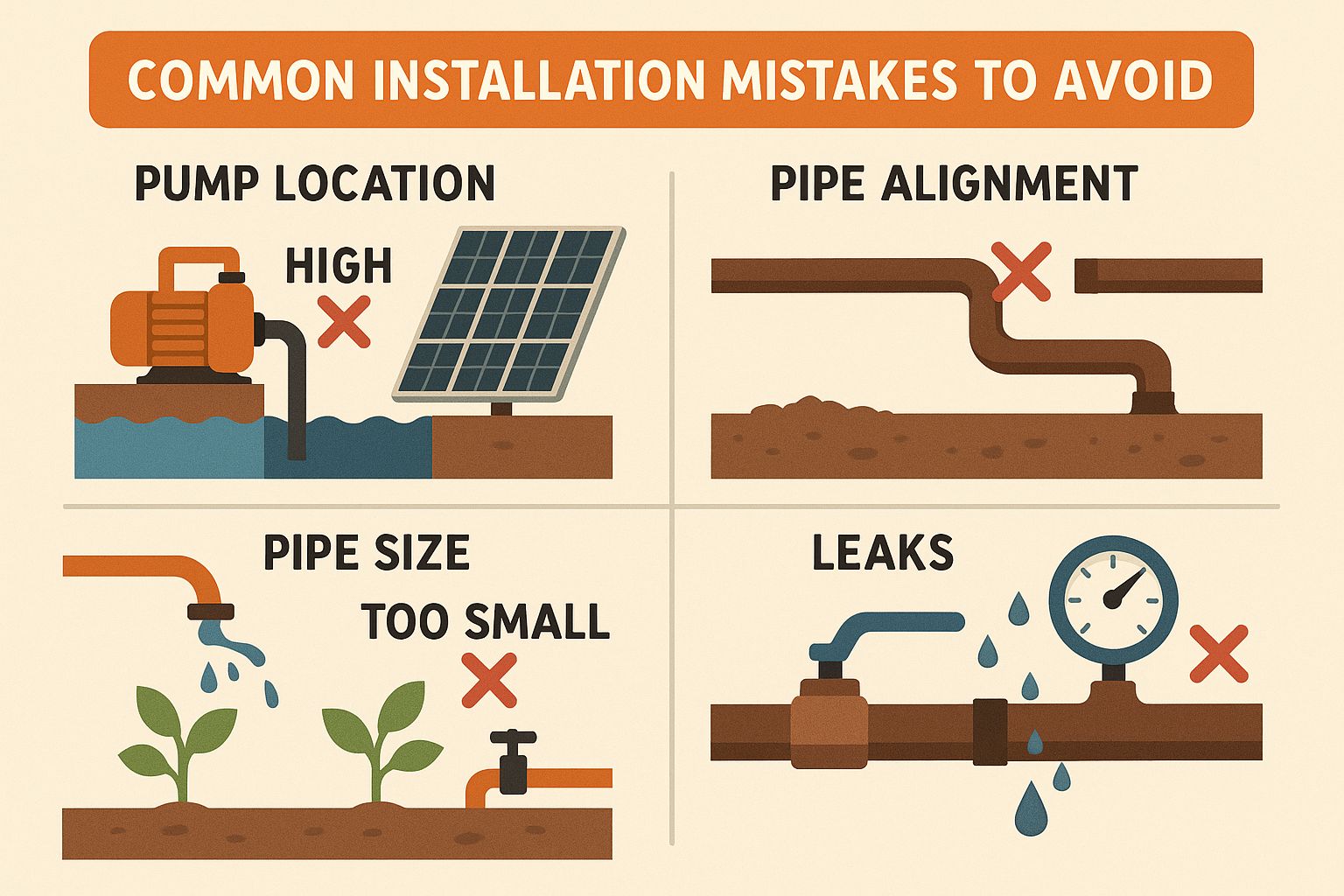
Common Installation Mistakes to Avoid
Even the best-designed irrigation system will underperform if installation errors compromise its functionality. By understanding common pitfalls, farmers can ensure their solar irrigation investment delivers its full potential benefits rather than creating ongoing operational headaches. Proper installation establishes the foundation for years of reliable service with minimal maintenance requirements.
Under Sizing Your Solar Array
Insufficient solar capacity represents the most common design flaw in agricultural installations, creating systems that cannot maintain consistent irrigation schedules during peak demand periods. Proper sizing should account for the longest, highest-demand irrigation days rather than average conditions, with additional capacity for cloudy weather operation if battery storage is limited. A system designed for July-August peak requirements will easily handle lower demands during spring and fall growing periods while avoiding critical shortfalls during production peaks. For more insights on optimizing your solar setup, check out this guide on solar panels for farming.
Poor Filtration Leading to Clogged Emitters
Inadequate filtration systems create persistent maintenance problems, particularly for drip irrigation with small-orifice emitters. Filters should be selected based on water source quality and emitter requirements, with minimum filtration of 120 mesh (125 micron) for standard drip systems and 80 mesh (177 micron) for most micro-sprinklers. Surface water sources typically require multi-stage filtration including settling tanks or sand media filters followed by screen or disc filters, while deep well sources might need only simple screen filtration if water quality is consistently good.
Automatic backflushing capabilities become essential for larger systems or installations using lower-quality water sources. These self-cleaning filters significantly reduce maintenance requirements while preventing the gradual system degradation that occurs when manual cleaning is neglected. Though representing an additional upfront cost, automatic systems typically pay for themselves quickly through reduced labor requirements and prevention of crop stress events caused by clogged irrigation systems.
Insufficient Pressure Management
Inadequate pressure regulation creates distribution uniformity problems that leave some areas overwatered while others receive insufficient moisture. Solar-powered systems with variable flow rates particularly need proper pressure regulation through pressure-compensating emitters or dedicated pressure regulators at zone inlets. For drip systems, pressure differences exceeding 10% between the first and last emitters in a zone will create significant uniformity problems that compromise efficiency and crop performance regardless of how sophisticated other system components might be.
Neglecting Winterization Protocols
Freeze damage represents one of the most common causes of catastrophic system failure in seasonal growing regions. Proper winterization procedures including complete drainage of above-ground components, air purging of lines that cannot be fully drained by gravity, and protection of sensitive components like controllers and valves can prevent thousands in repair costs. Solar components generally withstand winter conditions well, but water-filled pipes, pumps, and valves remain vulnerable to expansion damage unless properly protected or emptied before freeze events.
How to Choose the Right System for Your Farm
The optimal irrigation approach for your operation depends on multiple interconnected factors rather than any single variable. By systematically evaluating these key considerations, farmers can identify the system that best addresses their specific priorities and constraints. This evaluation process should precede any equipment purchases to ensure the selected technology aligns with both short-term needs and long-term farm development plans.
Soil Type Assessment
Soil composition significantly influences irrigation system performance, with different technologies better suited to specific soil types. Heavy clay soils with excellent lateral water movement generally perform well with drip irrigation, as moisture spreads effectively from emission points to create uniform root zone hydration. Sandy soils with limited horizontal water movement typically show better results with micro-sprinkler systems that distribute water across a wider surface area, preventing the dry zones between emitters that can occur with drip installations in highly permeable soils.
Soil infiltration rates directly impact appropriate application rates and scheduling for both systems. Slow-draining clay soils require longer, less frequent irrigation cycles with lower precipitation rates to prevent surface ponding and runoff. Sandy soils benefit from more frequent, shorter irrigation events that maintain consistent moisture without excessive deep percolation beyond root zones. Understanding these soil-specific requirements helps determine which delivery system can most effectively maintain optimal moisture conditions throughout diverse growing seasons.
Crop Water Requirements Analysis
Different crops show distinct irrigation preferences based on root architecture, sensitivity to moisture stress, and disease susceptibility. Shallow-rooted crops like lettuce and strawberries typically perform exceptionally well with drip irrigation that maintains consistent shallow moisture. Deep-rooted perennials including tree fruits and nuts often benefit from the wider distribution pattern of micro-sprinklers that encourage expansive root development across a larger soil volume, particularly in soils with good structure.
Crop value and quality sensitivity provide additional selection criteria. High-value specialty crops with direct quality correlations to consistent moisture generally justify the higher investment in precision drip irrigation. Commodity crops with lower returns per acre might achieve better economic results with lower-cost micro-sprinkler systems despite slightly reduced water efficiency. This economic calculation becomes particularly important for operations with limited capital where maximizing return on irrigation investment takes priority over achieving absolute maximum water conservation.
Climate and Geographic Considerations
Regional climate patterns significantly impact irrigation system selection and design requirements. Arid regions with high evaporation rates and limited rainfall typically benefit most from high-efficiency drip systems that minimize water losses. Humid regions with supplemental irrigation needs might find micro-sprinklers provide sufficient efficiency while offering additional benefits like improved airflow that reduces fungal disease pressure during humid periods.
Wind exposure creates particular challenges for micro-sprinkler systems, as spray patterns can be significantly distorted in consistently windy locations. Farms in high-wind regions generally achieve better results with drip irrigation that delivers water below the surface where wind effects are minimal. Alternatively, micro-sprinklers with lower trajectory angles and larger droplet sizes can provide acceptable performance in moderately windy conditions while still offering the benefits of wider distribution patterns.
Farm Size and Topography Evaluation
Operation scale influences both economic and practical aspects of irrigation system selection. Larger commercial operations often benefit from the water efficiency and precision of drip systems despite higher initial investments, as the per-acre cost differential decreases with scale while resource savings accumulate across larger acreage. Smaller diversified farms with multiple crop types might find micro-sprinklers offer greater flexibility to accommodate changing field allocations without requiring system reconfiguration.
Terrain challenges including slopes, terraces, or irregular field shapes create additional selection considerations. Drip systems typically handle elevation changes more effectively through pressure-compensating emitters that maintain consistent output despite pressure variations. Micro-sprinklers require more careful design on sloped terrain to prevent runoff from higher areas while ensuring adequate coverage in lower sections. The specific topographical challenges of your property may favor one technology over the other regardless of other selection factors.
Accessibility for maintenance and system monitoring should factor into the decision process, particularly for remote field locations. Drip systems generally require more frequent inspection and maintenance due to their vulnerability to clogging, making them less ideal for difficult-to-access locations. Micro-sprinklers with their visible operation and larger orifices typically require less intensive monitoring, potentially making them better suited for distant fields or locations with limited management presence.
Conclusion
The choice between solar drip irrigation and micro-sprinkler systems ultimately depends on your specific agricultural context rather than any universal superiority of either technology. Both systems offer significant advantages over conventional irrigation methods in terms of water conservation, energy independence, and crop performance. By carefully evaluating your unique combination of soil conditions, crop selection, climate challenges, and operational priorities, you can select the system that delivers optimal results for your farm’s particular circumstances. For more insights on how solar panels can enhance your farm’s irrigation, check out this guide on solar-powered irrigation systems.
Solar Drip Irrigation vs Solar Micro-Sprinkler System: Which System is Best for the Farmer
Drip irrigation excels in water efficiency, precision delivery, and disease prevention for crops sensitive to foliar moisture. It represents the optimal choice for water-scarce regions, high-value specialty crops, and operations where maximum water conservation takes priority. The higher initial investment typically pays dividends through resource savings and quality improvements that compound over the system’s lifespan. For row crops, vegetables, and permanent plantings in their establishment phase, drip irrigation often provides the best combination of performance and resource efficiency.
Your Path to Sustainable Farming Starts Here
Whichever system you select, the transition to solar-powered irrigation represents a significant step toward more sustainable and resilient agricultural practices. By harnessing renewable energy while conserving precious water resources, these systems align environmental stewardship with economic advantages that strengthen farm viability. The combination of reduced operating costs, improved crop quality, and protection against rising energy and water prices creates compelling long-term value beyond the immediate benefits of more efficient irrigation.
Frequently Asked Questions
Below are answers to common questions farmers ask when considering solar irrigation systems. These responses address typical concerns about system sizing, operation, maintenance, and performance considerations that influence technology selection and implementation decisions.
How many solar panels do I need to power an irrigation system for 5 acres?
For a 5-acre drip irrigation system, you’ll typically need 2-3kW of solar capacity, requiring 6-8 standard 400-watt panels. Micro-sprinkler systems for the same acreage generally require 3-4kW (8-10 panels) due to higher flow rates. The exact requirements depend on your specific crop water needs, pumping depth, pressure requirements, and regional solar insolation values. Systems with battery storage need approximately 25-30% more panel capacity to account for charging inefficiencies and ensure consistent operation during cloudy periods. A professional site assessment provides the most accurate sizing based on your specific conditions and irrigation scheduling requirements.
Can solar irrigation systems work during cloudy days?
Yes, properly designed solar irrigation systems continue functioning during cloudy weather through two primary approaches. Battery-based systems store excess energy produced during sunny periods for use during low-light conditions, providing the most consistent operation regardless of weather. These systems typically include 1-3 days of autonomy depending on local weather patterns and irrigation criticality. Direct-drive systems without batteries can still operate at reduced capacity during cloudy conditions, as panels continue generating approximately 20-30% of their rated output even on heavily overcast days. For systems requiring absolutely consistent operation regardless of weather, hybrid designs incorporating small backup generators or grid connections provide additional reliability for critical irrigation periods. Learn more about solar panels powering a farm’s irrigation system.
The economics of weather resilience should be evaluated based on your specific crop sensitivity to irrigation disruptions. High-value crops with minimal drought tolerance justify more substantial battery storage or backup systems, while more resilient crops might accommodate simpler direct-drive systems with adjusted irrigation scheduling based on available sunlight.
What maintenance do solar drip systems require compared to micro-sprinklers?
Drip irrigation systems typically require more intensive maintenance due to their vulnerability to clogging. Regular maintenance includes monthly filter cleaning (weekly for poor water quality sources), end-of-line flushing every 2-4 weeks during the growing season, and annual inspection of emitters for clogging or damage. Chemical treatment with chlorine or acid may be necessary 1-2 times per season to control biological growth or mineral buildup in systems using problematic water sources. Proper winterization is essential in freezing climates to prevent emitter and line damage. For a comprehensive guide on solar-powered irrigation systems, you can explore different types, examples, and methods.
Micro-sprinkler systems generally demand less intensive maintenance, with their larger orifices less prone to clogging. Typical maintenance includes quarterly filter inspection, occasional sprinkler pattern checks to identify worn or damaged components, and cleaning of individual sprinklers as needed. The visible operation of micro-sprinklers makes problem identification easier, as distribution issues can be observed during normal operation rather than requiring specialized pressure testing. Both systems require similar maintenance for solar components, including panel cleaning 2-4 times annually depending on dust conditions and periodic battery maintenance if storage systems are included.
Are there organic farming benefits to choosing one system over the other?
Organic operations often find specific advantages with drip irrigation systems that support certification requirements and production practices. The precise water delivery minimizes weed pressure by irrigating only the crop row rather than the entire field surface, reducing cultivation needs and supporting organic weed management approaches. The reduced soil disturbance from fewer cultivation passes helps maintain soil biological activity and organic matter levels that form the foundation of organic production systems. Additionally, drip systems facilitate the precise application of approved liquid organic fertilizers directly to the root zone, improving nutrient use efficiency while minimizing runoff concerns.
However, micro-sprinkler systems offer organic-specific benefits in certain situations, particularly for establishing cover crops that support soil health and beneficial insect populations. The wider distribution pattern supports diverse inter-row plantings that can fix nitrogen, reduce erosion, and provide habitat for beneficial organisms central to organic pest management strategies. For organic orchards utilizing mulch systems or compost applications, micro-sprinklers more effectively wet these surface materials, accelerating decomposition and nutrient cycling compared to drip systems that apply water beneath these organic additions.
How do I prevent clogging in solar drip irrigation systems?
Effective clog prevention requires a multi-faceted approach beginning with proper system design. Install appropriately sized filtration matched to both your water source quality and emitter requirements – typically 120-200 mesh (125-74 micron) filters for standard drip emitters. Implement regular end-line flushing by installing flush valves at the end of each lateral or zone and operating them at least monthly during the growing season. For systems using surface water or water with high mineral content, include chemical injection capabilities for periodic treatment with chlorine (to control biological growth) or acid (to dissolve mineral deposits). For more information on different solar-powered irrigation systems, explore our detailed guide.
Farmers are increasingly turning to solar-powered irrigation systems as a sustainable solution for their watering needs. These systems not only reduce reliance on traditional energy sources but also help in conserving water. Among the various options available, solar drip irrigation and solar micro-sprinkler systems are popular choices. Each system has its own advantages and is suited to different types of crops and farming conditions. To learn more about these solar-powered irrigation systems, farmers can explore the different types and methods available.

Leave a Reply