
Article-at-a-Glance
- Agrivoltaic systems can boost land-use efficiency by 60-70%, creating dual value from the same acreage
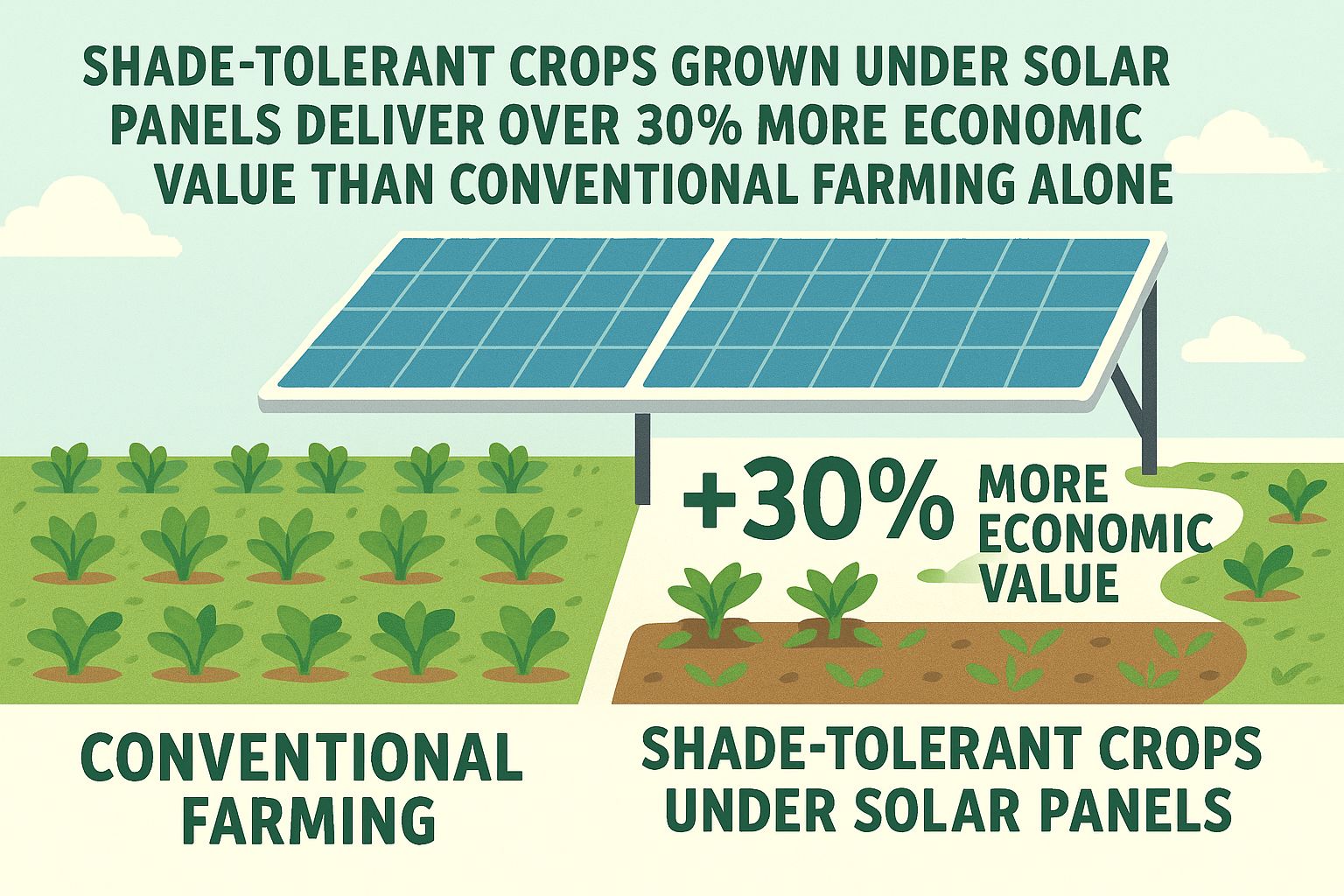
- Shade-tolerant crops grown under solar panels deliver over 30% more economic value than conventional farming alone
- Solar panels create beneficial microclimates that reduce water evaporation by 14-50%, helping crops survive with less irrigation
- Leafy greens, berries, and some vegetables have shown significant yield increases when grown in agrivoltaic setups
- Farmers can generate both food and energy income streams, providing financial stability during increasingly unpredictable growing seasons
Surprising Dual Harvest: How Solar Panels Boost Crop Production
The conventional wisdom that solar panels compete with farming for land use is being turned on its head. Innovative farmers across the country are discovering that the strategic placement of solar panels above cropland doesn’t just generate clean energy—it actually boosts crop yields in many cases. This practice, known as agrivoltaics, is emerging as a powerful solution to both renewable energy expansion and sustainable food production challenges.
Rather than competing with agriculture, solar panels can complement farming practices when implemented correctly. Research demonstrates that agrivoltaic systems can increase land-use efficiency by an impressive 60-70%, with farms delivering over 30% more economic value than conventional farming alone. For farmers facing increasing climate pressures and economic uncertainty, this dual-purpose approach offers a promising path forward.
What Is Agrivoltaics? Combining Solar Energy with Agriculture
Agrivoltaics—sometimes called agri-PV or solar sharing—is the practice of installing solar panels on agricultural land in ways that allow farming to continue underneath and between the panels. Unlike conventional solar farms that typically exclude other land uses, agrivoltaic systems are specifically designed to create synergies between energy production and crop cultivation. The concept has moved beyond theoretical benefits, with multiple studies confirming that these systems can enhance crop yields while simultaneously generating renewable electricity.
The science behind agrivoltaics is straightforward but powerful. Solar panels intercept and convert some of the sun’s energy into electricity, while also creating partially shaded areas below. This modified environment can benefit many crops, especially during increasingly common heat waves and drought conditions. Rather than competing for resources, the dual systems often create complementary effects that benefit both energy production and plant growth.
Different Types of Agrivoltaic Systems
Farmers have several options when implementing solar panels on their land. The three main types of agrivoltaic systems each offer unique advantages depending on the farm’s specific needs and crops.
- Interleaved systems: Solar panels are spaced out in rows, allowing crops to grow in the areas between panels. This approach works well for field crops that need periodic direct sunlight.
- Elevated systems: Panels are mounted high enough above the ground (typically 8-12 feet) to allow farm equipment to pass underneath, creating a partially shaded environment where crops grow directly below the panels.
- Solar greenhouses: Semi-transparent photovoltaic panels form part of the greenhouse structure, filtering sunlight for plants below while generating electricity. This option is particularly valuable for controlled environment agriculture.
How Solar Panels Create Beneficial Microclimates for Plants
The partial shade created by solar panels establishes microclimates that can significantly benefit many crops, especially as climate change drives more extreme weather events. By reducing direct sun exposure during the hottest parts of the day, panels help maintain more optimal growing temperatures and reduce heat stress that can stunt plant growth or damage fruits. This temperature moderation effect is particularly valuable during heat waves that would otherwise damage crops.
Beyond shade, solar panel structures modify airflow patterns around crops, often decreasing wind stress and creating pockets of higher humidity that benefit moisture-loving plants. The panels also serve as overnight condensation surfaces, collecting dew that drips onto plants below—essentially providing a natural irrigation supplement. This combination of effects creates growing conditions that many plants actually prefer over full-sun exposure, especially in hot, dry regions. Learn more about farming and solar benefits.
“While it might seem counterintuitive, many plants don’t actually need or want full sun exposure all day long. The filtered light conditions created by solar panels can closely mimic the dappled light environments where many food plants naturally evolved.”
Proven Crop Yield Increases Under Solar Panels
The results from agrivoltaic research farms and commercial operations have been remarkably positive. Many crops show not just comparable yields to traditional farming methods, but significant increases. These yield improvements are particularly pronounced in regions experiencing hotter, drier conditions due to climate change. The protective microclimate beneath panels helps plants photosynthesize more efficiently by reducing excessive heat and water stress.
Studies across different climate zones have documented yield increases from 10% to over 30% for certain crops when grown under properly designed solar arrays. Even more impressive is that these gains often come with reduced irrigation needs, creating a double benefit for farmers facing water constraints. The specific yield improvements vary by crop type, climate region, and panel configuration, but the overall trend is consistently positive for many common agricultural products.
Leafy Greens and Vegetables That Thrive in Partial Shade
Leafy greens have emerged as clear winners in agrivoltaic systems. Lettuce, spinach, kale, and other greens not only tolerate the dappled light conditions under solar panels—they flourish. Field trials show yield increases of 20-35% for many leafy vegetables, with the added benefit of extended growing seasons. The shade protection prevents premature bolting (flowering) during hot periods, keeping greens productive longer while maintaining better flavor and texture compared to crops grown in full sun.
Broccoli, celery, and tomatoes have also demonstrated impressive performance in agrivoltaic settings. These vegetables benefit from the moderated temperature extremes, often producing more consistent yields with fewer deformities and stress-related issues. For tomatoes in particular, the partial shade can reduce sunscald damage on fruits while the overall microclimate helps prevent blossom drop during heat waves—translating to higher marketable yields and better quality produce.
Fruit Crops That Show Yield Improvements
Berry crops have shown remarkable improvements when grown under solar panels. Blueberries, which naturally evolved as understory plants, thrive in the filtered light conditions, with studies showing yield increases of 15-25% in agrivoltaic systems. Strawberries benefit similarly, with the added advantage that partial shade often produces sweeter berries with longer shelf life. The protection from extreme heat and direct sunlight reduces fruit damage and extends the productive season for these high-value crops.
Tree fruits and vine crops are also promising candidates for agrivoltaic integration. Grapes grown under properly spaced panels have demonstrated improved quality metrics in wine production regions, with the modified microclimate often protecting against temperature extremes that affect flavor development. Some orchard trials have shown that apples and pears benefit from reduced sunburn damage while maintaining productivity when solar panels are correctly positioned to allow sufficient light penetration.
Grain and Root Crops: Mixed Results Worth Exploring
The picture is more nuanced for traditional field crops like corn, wheat, and potatoes, with results varying based on specific implementation. Studies show that when solar panel height, spacing, and orientation are carefully calibrated to crop needs, many field crops can maintain comparable yields while gaining added protection against extreme weather events. Some potato varieties, for instance, have shown yield increases when solar panels protect them from excessive heat that would normally reduce tuber formation.
The key to success with grain and root crops lies in system design optimization. Panels must be sufficiently elevated and spaced to allow adequate light penetration during critical growth phases. Emerging technologies like translucent panels and tracking systems that can adjust panel angles throughout the season offer promising solutions for improving compatibility with these traditionally full-sun crops. For farmers in regions experiencing increasing heat stress, even small yield trade-offs may be worthwhile when balanced against the added energy income and climate resilience benefits.
Solar panels can increase crop yields for certain crops, especially those that benefit from partial shade, though the effect varies by crop type and local climate conditions. Here is a table summarizing proven crop yield increases under solar panels for farmers according to recent studies and field trials:
|
Crop Type |
Proven Yield Increase |
Key Conditions/Evidence |
|---|---|---|
|
Leafy greens |
10-30% |
Notable increase during heat-stressed summer months. 1 |
|
Fruits & berries |
15-16% |
Yield increase with 35% shade under agri-PV. 2 |
|
Lettuce |
Up to 60% |
Field trials in high solar radiation areas (Fraunhofer Inst.). 3 |
|
Tomatoes |
Up to 60% |
Enhanced microclimate, better water retention. 3 |
|
Celery |
12% |
Specific agri-PV pilot trials in Germany (APV-RESOLA). 2 |
|
Forage grasses |
4% |
Slight increase with moderate shade. 2 |
|
Blueberries |
Not specified, increased |
Benefit from partial shading, Arizona study. 4 |
|
Maize, wheat, cereals |
~80% yield maintained |
Combined with dual land revenue; some decrease offset by energy profits. 2 |
Partial shading by solar panels helps certain crops thrive, especially those sensitive to heat or requiring water conservation. For more shade-intolerant crops like wheat or maize, dual land use (energy + crops) can still offer economic advantages even if yields decrease slightly. Farmers should select crop varieties and solar system designs to optimize both harvests and energy production.
How Solar Panels Help Save Water and Protect Crops
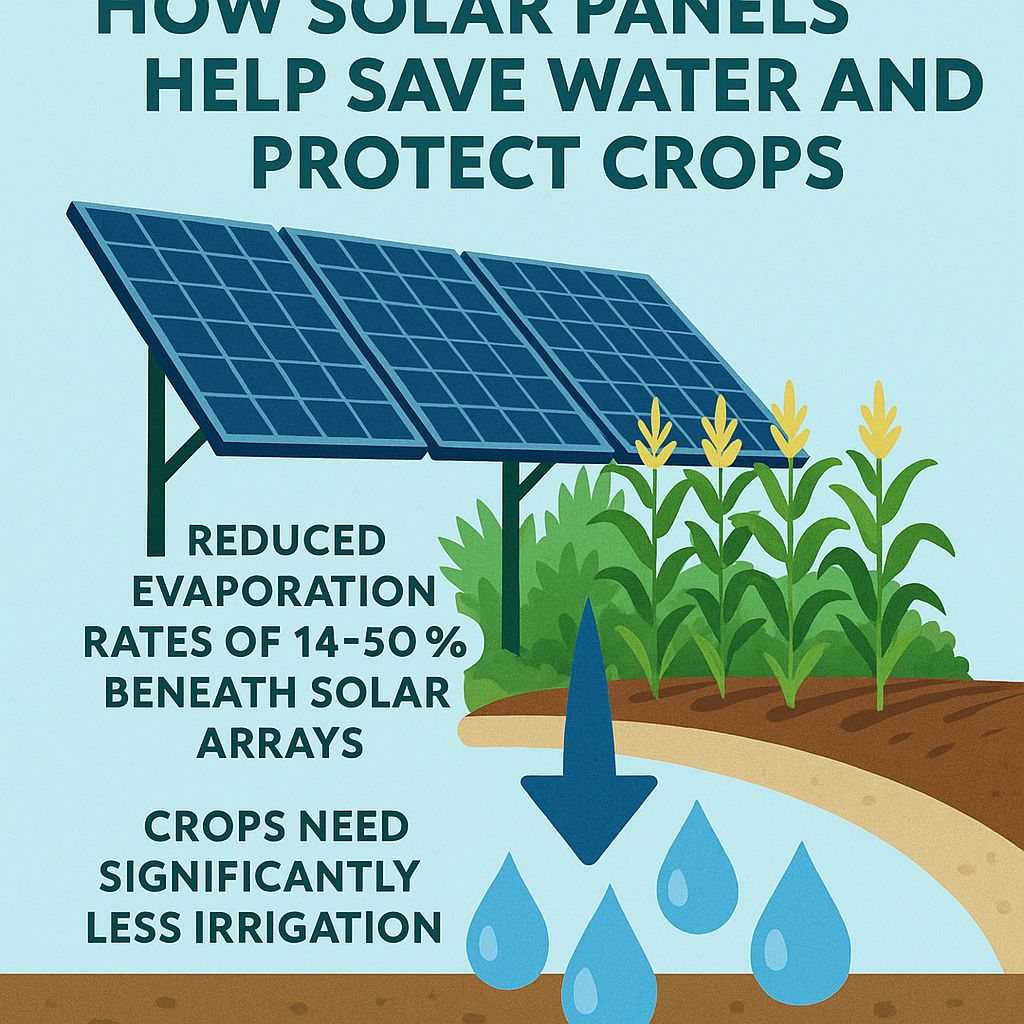
Perhaps the most significant benefit of agrivoltaic systems in many regions is their remarkable water efficiency. Studies have documented reduced evaporation rates of 14-50% beneath solar arrays compared to open fields. This moisture retention means crops need significantly less irrigation—a critical advantage as water becomes increasingly scarce and expensive. The water savings alone can justify agrivoltaic investments in drought-prone regions, even before considering yield increases and energy production.
The physics behind this water conservation is straightforward but powerful. By blocking direct sun and wind, panels reduce the evaporative forces that pull moisture from soil and plant surfaces. This creates a more humid microenvironment where plants can maintain optimal hydration with less water input. Additionally, the cooler soil temperatures under panels slow moisture loss, allowing irrigation water to remain available to plants for longer periods. For more insights on integrating solar technology in agriculture, check out this off-grid farming guide.
Many farmers implementing agrivoltaic systems report being able to reduce irrigation frequency by 25-40% while maintaining or improving crop health. For water-stressed regions, this efficiency gain represents not just cost savings but potentially the difference between profitable production and having to fallow fields during drought years. As climate change intensifies water scarcity issues across agricultural regions, this water conservation benefit becomes increasingly valuable.
Collecting Rainwater from Panel Surfaces
Innovative agrivoltaic systems are taking water efficiency a step further by incorporating rainwater harvesting. Solar panels naturally concentrate rainfall at their edges, creating predictable drip lines. By placing collection channels at these points, farmers can capture, store, and redistribute this otherwise lost resource. Some advanced systems channel this collected water directly to crop root zones through drip irrigation, creating highly efficient closed-loop water cycling that maximizes every drop of precipitation.
Protection from Extreme Weather Events
Solar panel structures provide physical protection from increasingly frequent extreme weather events. The panels act as partial shields against damaging hail, heavy rain, and intense UV radiation that can stress or injure crops. This protective function is particularly valuable for high-value specialty crops where quality and appearance directly impact market value.
In winter growing regions, panels can offer modest frost protection by trapping radiant heat and blocking some radiational cooling at night. While not a complete solution for freeze events, this effect can make the difference during marginal cold snaps. During increasingly common heat waves, the shade provided by panels can prevent crop-damaging temperature spikes that would otherwise reduce yields or completely destroy sensitive crops.
Financial Benefits Beyond Increased Yields
The economic case for agrivoltaics extends far beyond improved crop yields. These integrated systems create multiple revenue streams from the same land, significantly increasing per-acre returns compared to either farming or solar generation alone. Research indicates that well-designed agrivoltaic systems can boost land-use efficiency by 60-70%, delivering over 30% more economic value than conventional farming.
This dual-income approach helps farmers hedge against both agricultural and energy market fluctuations. When crop prices are down or growing conditions challenging, energy production provides stable income. Conversely, when energy prices fluctuate, agricultural production helps maintain financial stability. This diversification is particularly valuable as climate change increases production uncertainties.
The capital costs of agrivoltaic systems are offset by multiple financial benefits that accumulate over the system’s lifetime. Beyond the obvious dual revenue streams, farmers often qualify for accelerated depreciation, tax credits, carbon offset payments, and other financial incentives that improve project economics. Many farmers find that the combination of these benefits results in payback periods of 5-10 years, followed by decades of enhanced profitability.
- Increased per-acre revenue from dual production
- Reduced irrigation costs due to water conservation
- Lower crop insurance premiums through diversified risk
- Potential premium pricing for sustainable production
- Extended growing seasons and reduced crop losses
Creating a Second Income Stream from Energy Production
The energy produced by an agrivoltaic system creates a reliable secondary income source that can transform a farm’s financial stability. Most systems are connected to the local electrical grid through net metering agreements that allow farmers to sell excess electricity. Depending on system size and local utility rates, this can generate $15,000-50,000 in annual revenue per acre of solar installation—often exceeding the profit margins of the crops growing underneath.
Some forward-thinking farmers are leveraging their clean energy production for premium marketing opportunities. By promoting carbon-neutral or even carbon-negative farming practices, these producers can access premium markets willing to pay more for sustainably produced food. This marketing advantage, combined with direct energy sales, creates a compelling financial case even before considering the agricultural yield benefits.
Stabilizing Farm Income During Uncertain Times
For many family farms struggling with volatile commodity prices and increasing weather uncertainties, solar integration offers a lifeline of predictable income. Most power purchase agreements guarantee fixed rates for 15-25 years, providing financial certainty that agricultural markets simply cannot match. This income stability allows farmers to weather poor growing seasons or market downturns that might otherwise threaten the farm’s viability.
The dual-income model also opens new financing opportunities that can benefit the entire operation. Banks and agricultural lenders increasingly view farms with solar assets as lower-risk investments due to their diversified revenue streams. This improved financial standing can translate to better loan terms for equipment purchases, land acquisition, or operational improvements that benefit both the agricultural and energy-producing aspects of the business.
Available Incentives and Funding Options
The economics of agrivoltaic systems are dramatically improved by numerous incentives available at federal, state, and local levels. The federal Investment Tax Credit allows farmers to deduct 30% of the solar system’s cost from their taxes, while accelerated depreciation enables writing off the entire system value within the first few years. Many states offer additional tax exemptions, rebates, and performance-based incentives that can reduce payback periods to as little as 4-7 years in favorable locations.
Beyond tax incentives, specialized grant programs are emerging specifically for agrivoltaic projects. The USDA’s Rural Energy for America Program (REAP) offers grants covering up to 25% of project costs and guaranteed loans for the remainder. Conservation programs through the Natural Resources Conservation Service (NRCS) can provide additional funding when projects incorporate pollinator habitat or other environmental benefits. Some innovative farmers have even leveraged carbon credit markets to monetize the emissions reductions from their solar installations, creating yet another revenue stream.
Environmental Wins from Solar Farming
The environmental benefits of agrivoltaics extend well beyond renewable energy production. These integrated systems represent a form of regenerative agriculture that can actually improve soil health over time. The reduced ground temperature and wind exposure under panels creates favorable conditions for beneficial soil microorganisms, while strategic planting between panel rows can build organic matter and sequester carbon.
Water quality also improves under many agrivoltaic designs. The reduced need for irrigation minimizes nutrient runoff, while the physical protection from panels reduces soil erosion during heavy rain events. When combined with cover cropping or pollinator plantings, these systems can significantly reduce agricultural impacts on local watersheds while supporting biodiversity that benefits the farming operation.
Supporting Pollinators with Solar Field Plantings
The areas between and beneath solar panels create ideal opportunities for establishing pollinator habitat that benefits both wild ecosystems and agricultural productivity. Native flowering plants that support bees, butterflies, and other pollinators thrive in these protected spaces, creating habitat corridors that can boost populations of these essential species. For crops that depend on pollinators, this integrated approach can improve fruit set and quality while reducing dependence on managed honeybee colonies.
Leading agrivoltaic farms are documenting pollinator population increases of 300-400% compared to conventional farmland, translating to improved pollination services worth thousands of dollars per acre for nearby crops. These “solar sanctuaries” serve as refuge areas during pesticide applications and provide continuous flowering resources throughout the growing season, supporting more diverse and resilient pollinator communities that benefit the entire agricultural landscape.
Reducing Carbon Footprint While Growing Food
The climate benefits of agrivoltaic systems are substantial and multifaceted. Beyond the obvious carbon emissions avoided through solar electricity generation, these systems can reduce the carbon footprint of agricultural production itself. Decreased irrigation pumping, reduced equipment passes, and lower cooling needs for some crops all translate to fewer emissions from farm operations. When combined with soil carbon sequestration under appropriate management, some agrivoltaic farms are achieving carbon-negative food production—removing more greenhouse gases than they emit.
This climate-positive approach resonates strongly with environmentally conscious consumers and food companies with sustainability commitments. Forward-thinking farmers are capitalizing on this advantage through direct marketing, premium branding, and contracts with food companies seeking verifiable climate benefits in their supply chains. The combination of emissions reductions, carbon sequestration, and renewable energy production creates a compelling environmental case that increasingly translates to marketplace advantages.
Practical Steps to Implement Solar Panels on Your Farm
The journey toward agrivoltaic farming requires careful planning and a methodical approach. Success depends on selecting appropriate technologies, designing systems that complement rather than compete with agricultural activities, and identifying the right partners for implementation. While the process may seem complex, breaking it down into manageable steps makes the transition achievable for farms of various sizes and types.
The most successful agrivoltaic projects begin with clear goals and realistic expectations. Some farmers prioritize maximizing total land productivity, while others focus on protecting high-value crops from climate extremes. Still others may emphasize energy independence or steady income from power sales. These priorities will guide critical decisions about system design, scale, and configuration, ensuring the final installation aligns with the farm’s specific needs and constraints.
Determining If Your Land Is Suitable
Not all farmland is equally suitable for agrivoltaic development. The ideal sites have relatively flat topography, unobstructed southern exposure (in the Northern Hemisphere), and proximity to electrical infrastructure for grid connection. Soil quality actually matters less for solar compatibility than for pure agriculture, meaning that marginally productive areas of the farm often make excellent candidates for agrivoltaic conversion.
Beyond physical characteristics, regulatory factors must be considered. Zoning restrictions, agricultural land preservation programs, and utility interconnection policies all influence project viability. Many states and counties have updated regulations to specifically accommodate agrivoltaic systems, recognizing their dual agricultural and energy production functions. Consulting with local planning departments and agricultural extension services early in the process can identify potential regulatory hurdles before significant resources are invested.
Choosing the Right System for Your Crops
The specific design of an agrivoltaic system should be tailored to the crops being grown. Shade-tolerant crops like leafy greens benefit from designs with higher panel density, while sun-loving crops require wider spacing or tracking systems that move panels throughout the day to optimize light distribution. Panel height must accommodate both plant growth habits and any equipment needed for cultivation, harvest, and maintenance.
Water management represents another crucial design consideration. Some systems incorporate rainwater collection from panels to supplement irrigation, while others position panels to create beneficial moisture gradients across fields. Advanced designs even integrate irrigation systems directly into the panel mounting structures, creating efficient water delivery that compensates for altered rainfall patterns beneath the arrays. Working with agricultural engineers familiar with both crop requirements and solar technologies ensures optimal system design for specific farming operations.
Finding Qualified Installers with Agricultural Experience
The specialized nature of agrivoltaic systems requires installation partners with both solar expertise and agricultural understanding. The most qualified contractors recognize that these systems differ significantly from conventional solar installations in their mounting requirements, spatial configuration, and integration with farm operations. Experienced installers will address concerns about equipment access, seasonal maintenance needs, and compatibility with irrigation systems during the design phase.
When evaluating potential installation partners, farmers should request references specifically from agricultural projects. Site visits to operating agrivoltaic farms can provide valuable insights into how different system designs function in practice. Industry associations like the American Solar Grazing Association and various state renewable energy organizations maintain directories of contractors with agricultural project experience, making them excellent starting points for identifying qualified partners.
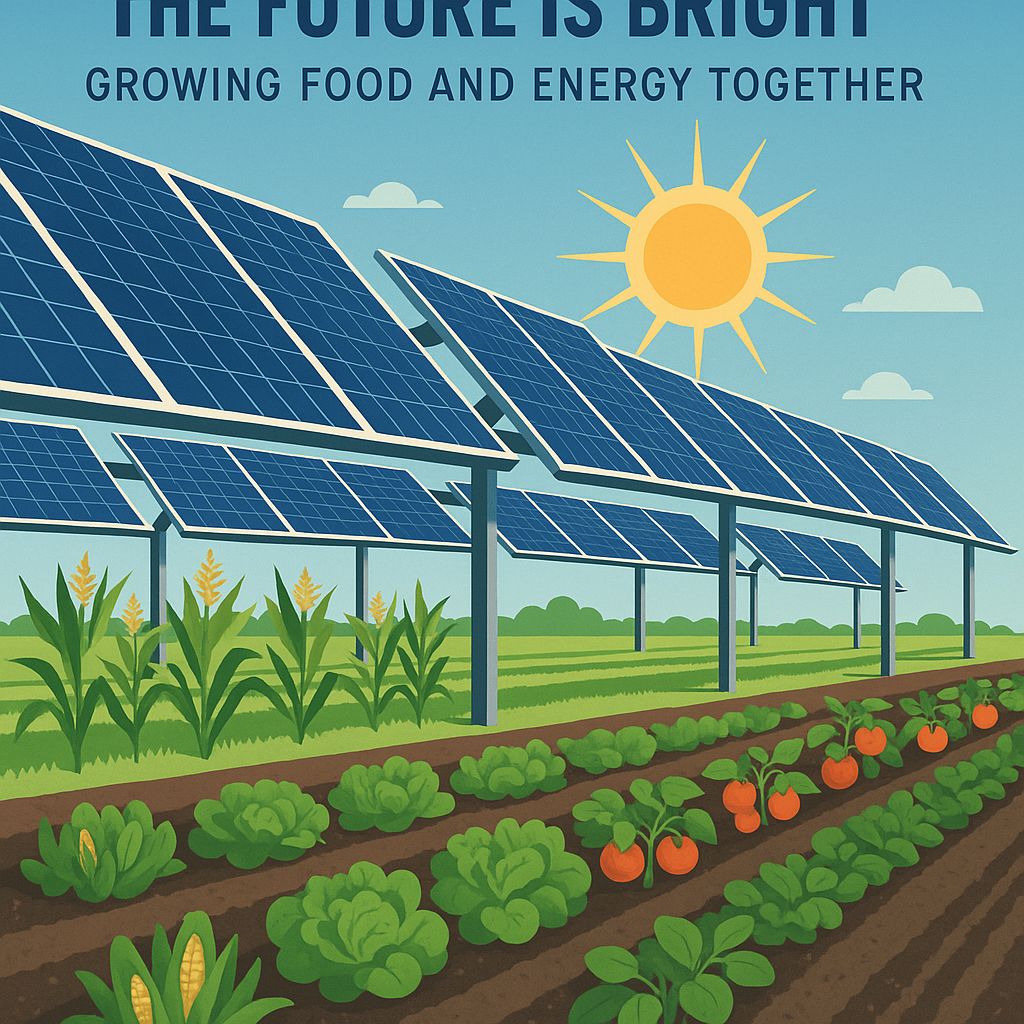
The Future Is Bright: Growing Food and Energy Together
The trajectory of agrivoltaic development points toward increasingly sophisticated and efficient systems. Emerging technologies like semi-transparent solar panels, advanced light management systems, and AI-controlled tracking arrays promise to further optimize the balance between energy generation and crop production. These innovations will expand the range of suitable crops and farming systems that can benefit from solar integration, potentially making agrivoltaics a standard practice across diverse agricultural regions.
As climate pressures on traditional farming intensify, the protective benefits of agrivoltaic systems will likely become even more valuable. The partial shelter provided by panels represents an adaptive strategy that can help maintain food production in the face of increasing temperature extremes, water limitations, and weather volatility. For forward-thinking farmers, integrating solar now represents not just an economic opportunity but a proactive approach to climate resilience that positions their operations for long-term sustainability in a changing world. However, it’s important to be aware of the dark side of solar panels for farm power operations to ensure successful integration.
Frequently Asked Questions
As agrivoltaics gains momentum across farming communities, many common questions arise from those considering this innovative approach. Below are answers to the most frequently asked questions based on current research and commercial implementation experience.
How much does it cost to install an agrivoltaic system?
Installation costs typically range from $1.50-3.00 per watt of capacity, meaning a 1-megawatt system covering 4-6 acres might cost $1.5-3 million before incentives. However, federal tax credits reduce this by 30%, while accelerated depreciation, grants, and state incentives can lower costs by an additional 20-40%. When calculated on a lifecycle basis including energy revenue and crop benefits, agrivoltaic systems often achieve payback periods of 5-10 years with 25+ years of productive operation afterward.
Will solar panels damage my soil or affect long-term land productivity?
Properly designed agrivoltaic systems actually improve soil health rather than degrading it. The partial shading reduces evaporation and protects soil biology from temperature extremes, while the physical protection minimizes erosion from heavy rainfall. Studies measuring soil organic matter, microbial activity, and nutrient cycling all show neutral to positive effects compared to open-field agriculture.
The physical footprint of panel mounting systems is minimal, typically affecting less than 5% of the total land area through foundation posts. These mounting systems are fully removable if land use needs change in the future, with minimal permanent impact. Many agrivoltaic designs incorporate cover cropping or diverse plantings between panels that further enhance soil biology and structure compared to conventional monoculture systems.
Some innovative farmers are specifically using agrivoltaic systems as part of soil regeneration strategies for depleted farmland. The modified microclimate creates favorable conditions for building soil carbon, while the reduced need for equipment passes minimizes compaction. When grazing animals are integrated into these systems, their managed impact further contributes to soil building through manure deposition and plant stimulation.
- Reduced soil temperature fluctuations protect beneficial microorganisms
- Decreased erosion from both wind and water improves topsoil retention
- Lower evaporation rates maintain soil moisture at more optimal levels
- Reduced equipment traffic minimizes soil compaction issues
- Integration with cover crops enhances organic matter accumulation
Regulatory frameworks increasingly recognize that agrivoltaic systems maintain agricultural functionality, with many states explicitly classifying them as compatible with agricultural land preservation programs when properly designed. This regulatory recognition reflects the growing evidence that these dual-use systems preserve rather than compromise the land’s agricultural capability.
Can I still use farm equipment with solar panels installed?
Modern agrivoltaic systems are specifically designed to accommodate farm equipment needs. Elevated systems maintain clearances of 8-12 feet or more, allowing standard tractors, sprayers, and even combine harvesters to operate underneath. Panel rows are typically spaced to create “equipment alleys” that match standard machinery widths, while robust mounting systems are engineered to withstand incidental contact without damage. Some farms are also adapting to smaller, more specialized equipment like compact electric tractors that are perfectly suited to operation between and under panel arrays.
Which crops show the biggest yield increases under solar panels?
Leafy greens consistently demonstrate the most dramatic yield improvements, with increases of 20-35% commonly reported for lettuce, spinach, chard, kale, and similar crops. Berry crops including blueberries, blackberries, and strawberries also perform exceptionally well with yield gains of 15-25% under optimal configurations. Other standouts include tomatoes, peppers, and broccoli, which benefit from protection against heat stress and sunscald that can significantly reduce marketable yields in conventional settings. The key determinant is matching panel density and configuration to the specific light requirements of each crop type.
Are there government programs that help fund agricultural solar projects?
Multiple federal programs provide substantial financial support for agrivoltaic projects. The USDA’s Rural Energy for America Program offers both grants and guaranteed loans specifically for agricultural energy projects, while the Environmental Quality Incentives Program can fund components that deliver conservation benefits. The federal Investment Tax Credit allows deducting 30% of system costs from tax liability, and accelerated depreciation provides additional tax benefits in early years.
State-level incentives vary widely but are often substantial. Many states offer production-based incentives, property tax exemptions for renewable energy improvements on farms, and specialized grant programs for agricultural solar projects. Some states have developed specific agrivoltaic incentive programs that provide premium payments for solar systems that maintain agricultural production underneath. Local agricultural extension offices can provide guidance on available programs within specific regions.
Community solar programs represent another funding pathway that allows multiple participants to share costs and benefits. These arrangements can be particularly advantageous for farmers who want to implement agrivoltaic systems larger than their own electrical needs would justify. By selling subscriptions to community members seeking clean energy, farmers can scale up installations to more economically advantageous sizes while providing a valuable service to their broader community.







Leave a Reply