
Key Takeaways
- Monocrystalline solar panels achieve 20-22% efficiency due to their single-crystal silicon structure, making them ideal for limited farm roof spaces.
- The purity of silicon used in monocrystalline panels (99.999%) directly impacts performance, especially in varying farm weather conditions.
- Agricultural environments benefit from the tempered glass and aluminum framing that protect panels from hail, debris, and chemical exposure common on farms.
- SunFarm Solutions provides specialized solar installations designed specifically for agricultural applications, combining optimal panel materials with farm-focused mounting solutions.
- Monocrystalline panels, while more expensive initially, deliver 25+ years of reliable power with minimal degradation, providing better long-term ROI for farming operations.
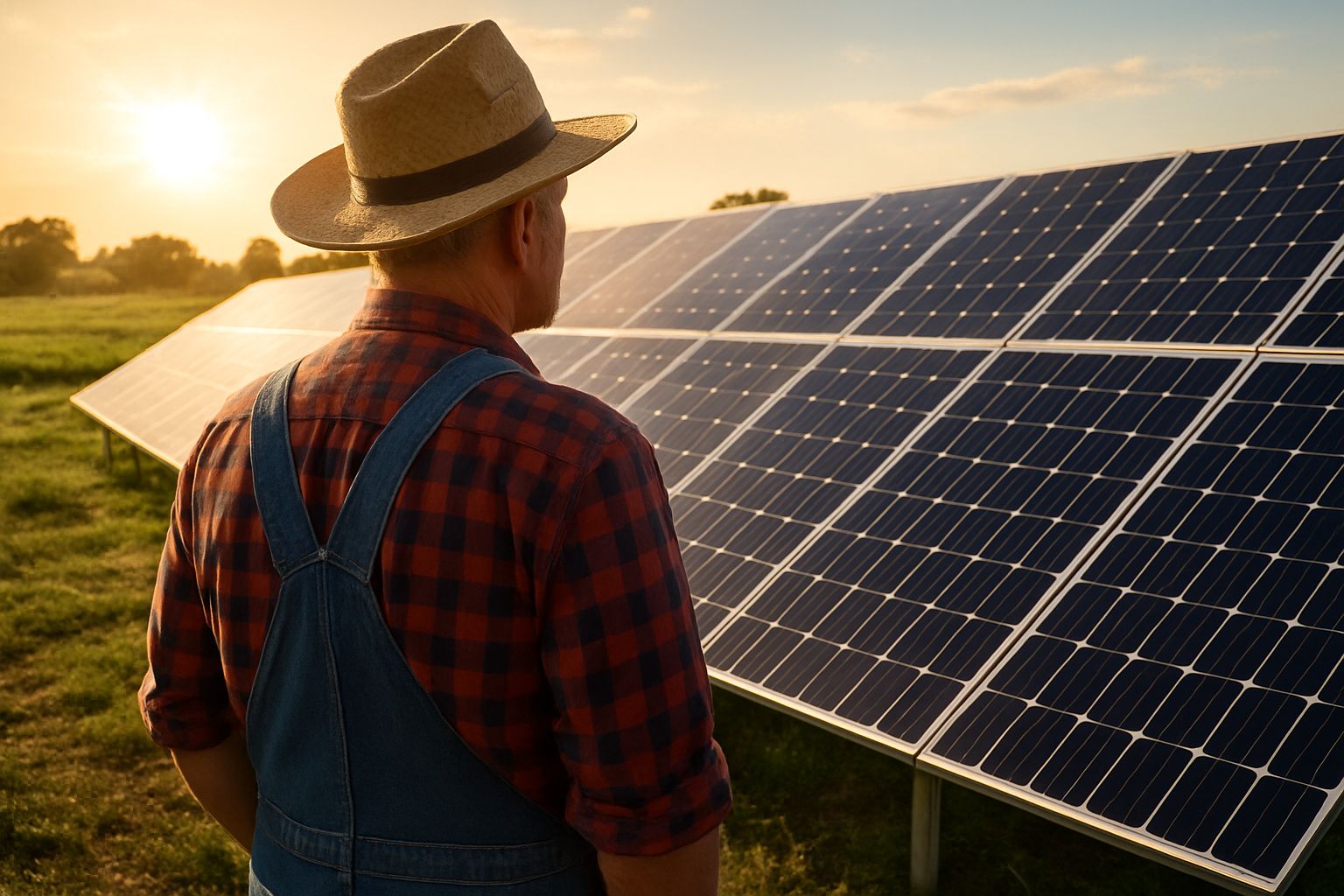
Monocrystalline solar panels stand out as the premium choice for agricultural applications, delivering exceptional efficiency even in challenging farm environments. These panels convert more sunlight into electricity than any other type, making them perfect for maximizing power generation on limited barn roofs or in dedicated solar arrays. Whether you’re powering irrigation systems, barn operations, or looking to reduce your farm’s energy bills, understanding the materials behind these high-performance panels helps you make smarter energy investments.
For farmers concerned about durability and performance, SunFarm Solutions offers specialized installation services tailored to agricultural settings, ensuring your solar investment delivers maximum returns in the unique conditions found on working farms. Their agricultural experts understand how panel materials interact with the farm environment, from dust management to weather resistance.
Pure Silicon: The Heart of Monocrystalline Solar Panels
At the core of every monocrystalline solar panel lies high-purity silicon—the second most abundant element on earth. Unlike other panel types, monocrystalline panels use silicon formed into a single, continuous crystal structure. This single-crystal formation allows electrons to flow more freely, creating significantly higher efficiency rates between 20-22%, compared to the 15-17% typically seen in polycrystalline alternatives. For farmers with limited roof space on barns or equipment sheds, this efficiency translates directly into more power generation from the same square footage.
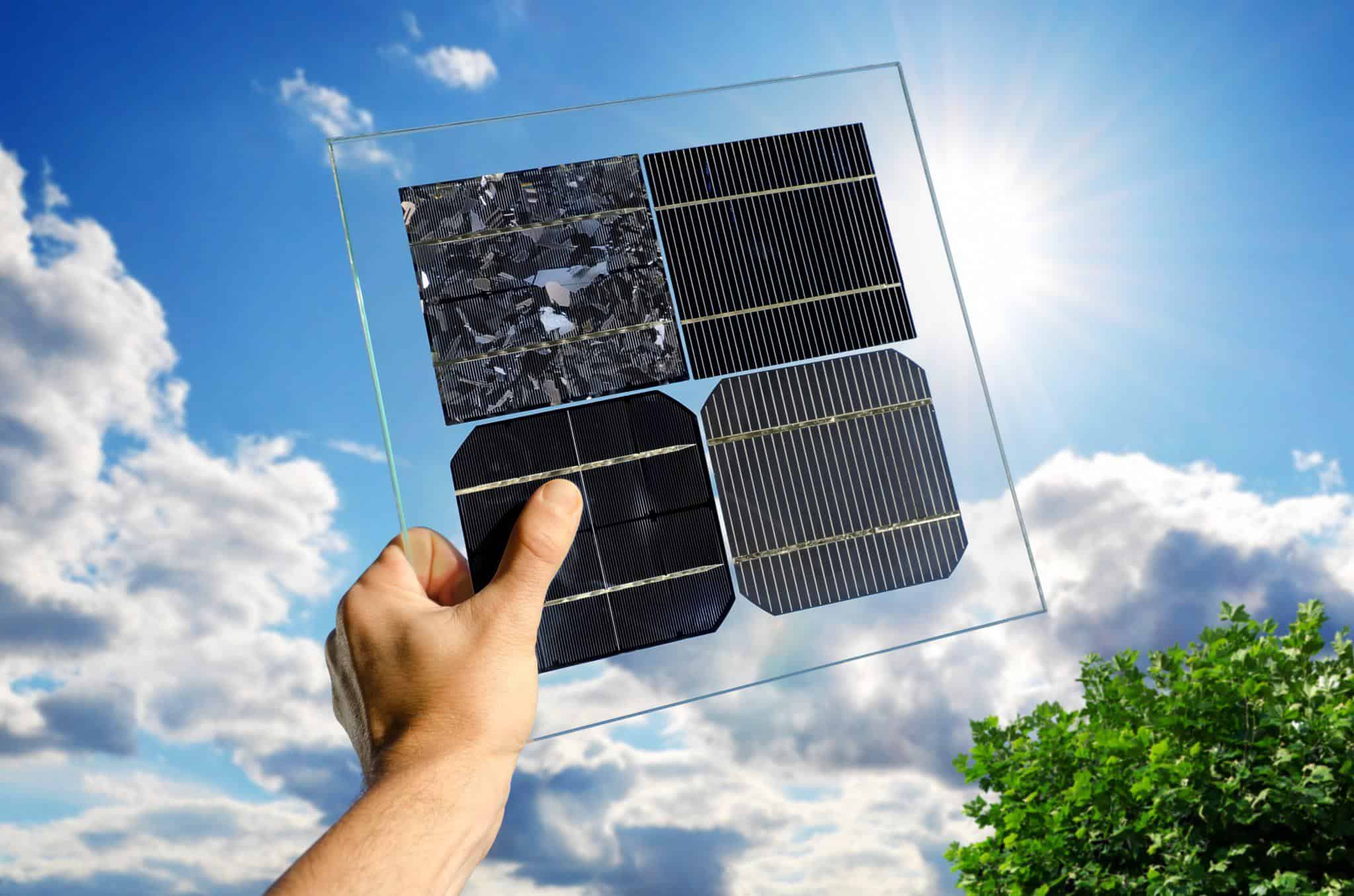
The distinctive uniform black appearance of these panels comes from how sunlight interacts with the pure silicon crystal structure. When you see monocrystalline panels with their characteristic deep black color and rounded edges, you’re observing the visual signature of silicon in its most efficient solar-collecting form. This uniform coloration isn’t just aesthetic—it indicates the structural consistency that delivers reliable power generation, even during morning fog or partial cloud cover common in many farming regions.
What sets premium panels apart is silicon purity, which typically reaches 99.999% in high-quality monocrystalline cells. This exceptional purity means fewer imperfections to impede electricity flow, resulting in panels that perform better in lower light conditions during early mornings, late afternoons, and overcast days—maximizing energy harvest throughout variable farm weather conditions that would challenge lesser panels. For more insights, check out our solar panel materials construction guide.
How Single-Crystal Silicon Creates Superior Efficiency
Monocrystalline panels achieve their superior efficiency through perfect atomic alignment within a single silicon crystal. This orderly structure creates what engineers call a “perfect lattice” where electrons can move with minimal resistance. In agricultural settings where every kilowatt-hour matters for running critical equipment, this efficiency advantage translates to more reliable power production and faster return on investment. The crystal structure also provides better performance in partial shade conditions, which can be particularly valuable when panels must be placed near trees or buildings on a farm property.
When sunlight strikes the silicon crystal, it knocks electrons loose from their atomic bonds, creating the electric current that powers your farm equipment. The purer the crystal, the more efficiently this process works. High-quality monocrystalline panels convert as much as 22% of available sunlight into usable electricity—a critical factor for seasonal farm operations when maximizing winter sun exposure can make a significant operational difference. This efficiency remains relatively stable even as temperatures rise, making these panels ideal for hot barn roofs and open field installations where summer heat would cause greater efficiency drops in other panel types.
The Czochralski Process: From Sand to Solar Cells
The journey from ordinary sand to a finished monocrystalline solar cell involves a fascinating process called the Czochralski method. Silicon dioxide (silica) from sand is first refined to remove impurities, then melted in crucibles at temperatures exceeding 2,500°F. A small seed crystal is dipped into this molten silicon and slowly pulled upward while rotating, causing silicon atoms to attach to the seed in a perfect crystalline structure. The result is a cylindrical ingot of pure silicon crystal that can reach up to 8 feet in length and 300 pounds in weight—an impressive transformation from ordinary sand to a material that will power farm operations for decades.
Why Silicon Purity Levels Matter for Farm Applications
For agricultural installations, silicon purity translates directly into reliability and longevity—crucial factors when panels need to withstand decades of exposure to dust, pollen, ammonia from livestock operations, and agricultural chemicals. Higher-purity silicon creates panels with lower degradation rates, maintaining more of their original power output over their 25+ year lifespan. This matters particularly for farming operations where steady, predictable power generation affects everything from irrigation scheduling to climate control in livestock buildings. Premium monocrystalline panels typically degrade at just 0.3-0.5% annually compared to 0.5-0.8% for standard panels, meaning they’ll maintain approximately 90% of their original power output even after two decades of service in demanding farm environments.
Essential Materials in Modern Monocrystalline Panels
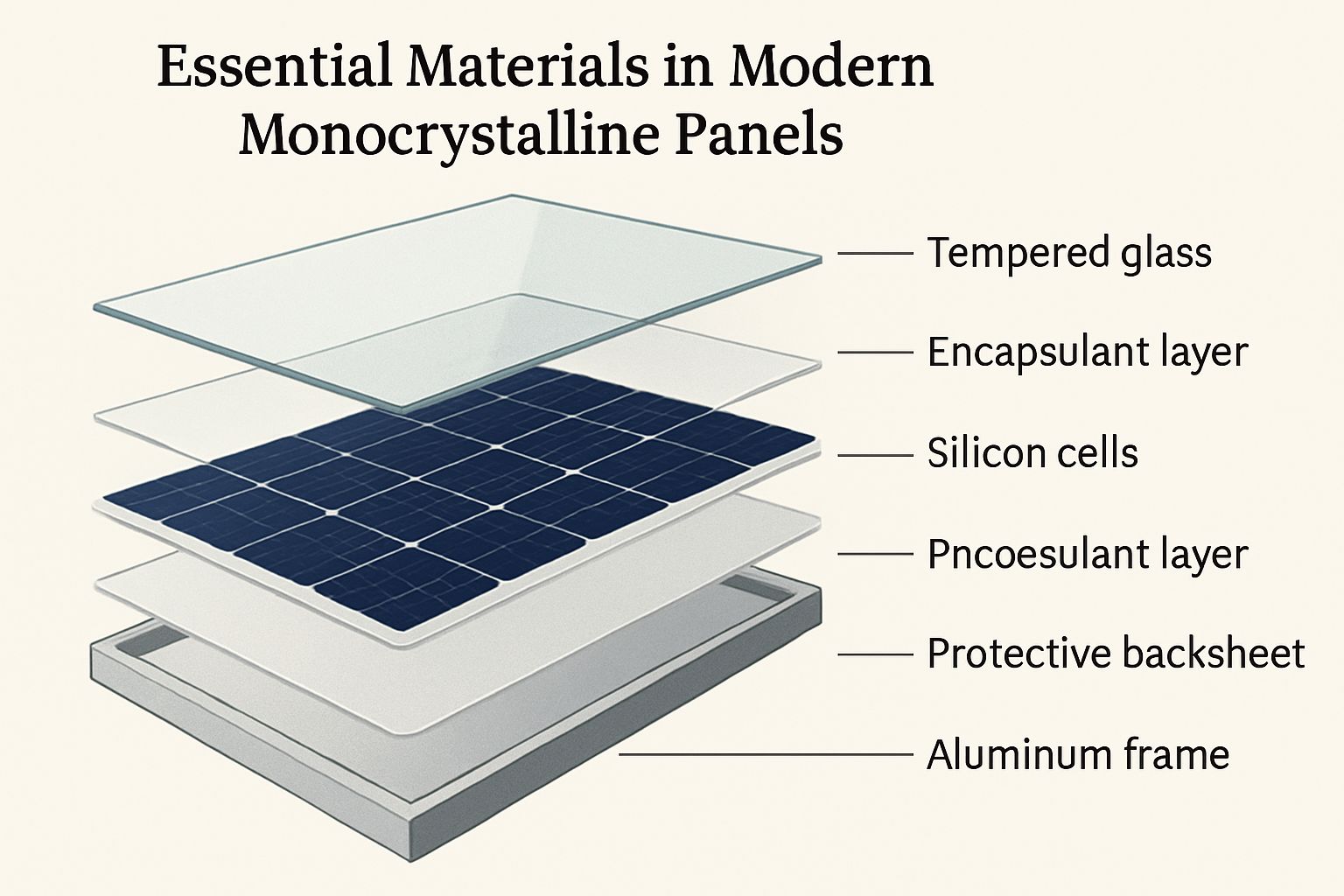
Beyond the silicon cells themselves, monocrystalline solar panels incorporate several specialized materials that determine their durability in agricultural settings. The layered construction begins with tempered glass on top, followed by an encapsulant layer, the silicon cells themselves, another encapsulant layer, a protective backsheet, and finally an aluminum frame. Each component plays a vital role in protecting the valuable silicon cells from the unique challenges present in farm environments. For more details on these components, check out this solar panel materials construction guide.
Tempered Glass: Protection Against Harsh Farm Conditions
The outermost layer of monocrystalline solar panels consists of specialized tempered glass—typically 3.2mm to 4mm thick—designed to withstand the unique challenges of agricultural environments. This isn’t ordinary window glass; it’s engineered to withstand impacts from hailstones up to 1 inch in diameter, protecting the valuable silicon cells beneath. Premium panels use low-iron glass that increases light transmission by up to 91% compared to standard glass, allowing more sunlight to reach the silicon cells and generating additional electricity even on overcast days common in many farming regions.
For farm installations where panels might be mounted at ground level or on outbuildings, this impact resistance becomes particularly valuable. The glass undergoes a specialized heat treatment process that creates compression on the surface while putting the interior under tension. This treatment makes the glass approximately four times stronger than annealed glass of the same thickness. Should extreme impact occur—such as from falling branches or severe hail—the glass breaks into small, relatively safe granular pieces rather than dangerous shards, maintaining some structural integrity to continue protecting the silicon cells beneath.
EVA Film: The Critical Binding Layer
Beneath the protective glass lies a crucial component called ethylene-vinyl acetate (EVA) film—a transparent polymer that serves as the adhesive binding layer between the glass and silicon cells. This material must perform multiple critical functions in agricultural settings: it must remain completely transparent for decades, maintain flexibility through extreme temperature fluctuations, prevent moisture ingress that would corrode electrical components, and provide electrical insulation. Premium panels use specially formulated EVA that resists yellowing from UV exposure, maintaining panel efficiency even after years of deployment in sunny field locations. This material’s ability to absorb mechanical stress also helps protect the brittle silicon cells when panels experience expansion and contraction through seasonal temperature changes common in farming regions.
Aluminum Frames: Durability for Agricultural Settings
The structural integrity of monocrystalline panels comes from their anodized aluminum frames, which protect the edges of the glass-cell sandwich and provide mounting points for installation. These frames use aluminum alloys specifically chosen for their excellent strength-to-weight ratio, corrosion resistance, and ability to withstand decades of outdoor exposure. For agricultural applications where panels might be exposed to ammonia from livestock operations or agricultural chemicals, higher-grade anodized coatings provide crucial additional protection. The frames typically feature water drainage holes at strategic locations to prevent water accumulation that could otherwise lead to corrosion or water intrusion, particularly important for ground-mounted systems in fields where standing water might occur after heavy rainfall. For more detailed insights, check out this monocrystalline solar panel guide.
Backsheet Materials: Moisture Prevention in Field Installations
On the reverse side of the panel, a specialized backsheet provides the final layer of protection for the silicon cells. This multi-layer polymer sheet serves as a moisture barrier, electrical insulator, and reflector to bounce light back toward the silicon cells. In agricultural settings where humidity levels fluctuate dramatically, premium panels use composite backsheets that maintain their integrity even after decades of thermal cycling and UV exposure. Traditional backsheets use a Tedlar (PVF) outer layer, though some newer panels employ more advanced materials that offer enhanced durability in challenging environments. The backsheet’s integrity directly impacts panel longevity—any moisture infiltration can lead to electrical shorts, corrosion of metallic components, and potentially catastrophic panel failure.
Metal Contacts and Busbars: The Power Collection System
Once sunlight creates an electrical charge within the silicon cells, an intricate network of metal conductors collects this electricity and directs it to the junction box. This collection system represents a critical balance between conductivity and cell shading—wider conductors collect electricity more efficiently but block more incoming sunlight. Modern monocrystalline panels employ thin, precisely placed silver lines screen-printed onto the silicon cells to minimize shading while maximizing electrical collection. These thin front-side collectors connect to wider busbars that run across the cell, channeling electricity toward the panel’s junction box where it connects to your farm’s wider electrical system.
Silver Paste Conductors: Efficiency vs. Cost Considerations
The fine grid of conductors visible on monocrystalline solar cells consists primarily of silver paste—a mixture of silver particles, glass frit, and organic binders that creates highly efficient electrical pathways. Silver remains the material of choice despite its cost because it offers the lowest electrical resistance of any metal, maximizing power output. For a typical 60-cell monocrystalline panel, between 5-7 grams of silver are used in these conductive pathways—a significant contributor to the panel’s overall cost but critical to its performance. Some manufacturers now employ techniques that reduce silver usage while maintaining conductivity, including using copper as a base layer with a thin silver coating, helping to reduce panel costs without compromising the performance farmers depend on.
These silver conductors must maintain their integrity through thousands of thermal cycles as panels heat during the day and cool at night. Premium panels use advanced silver pastes that resist micro-cracking during these cycles, maintaining consistent electrical contact throughout the panel’s lifetime. This resilience is particularly important for agricultural applications where panels often experience more extreme temperature fluctuations than residential installations, transitioning from frost-covered mornings to intense midday sun exposure in many farming regions. For more information on this topic, you can read about monocrystalline solar panels.
Multi-Busbar Technology Benefits for Rural Applications
Advanced monocrystalline panels now feature multi-busbar (MBB) technology—replacing the traditional 3-5 busbars with 9-12 thinner wires that collect electricity more efficiently. This design reduces electrical resistance and the distance electrons must travel, increasing power output by 1-2% while improving reliability through redundant pathways. For rural installations where panels might experience microcracks from vibration, wind loads, or handling during installation, these multiple collection pathways ensure electricity can still flow even if some connections are compromised. MBB technology also performs better in low-light conditions common during early morning and late afternoon, extending daily power generation for critical farm operations like irrigation systems that benefit from longer running hours.
Anti-Reflection Coatings for Maximum Light Absorption
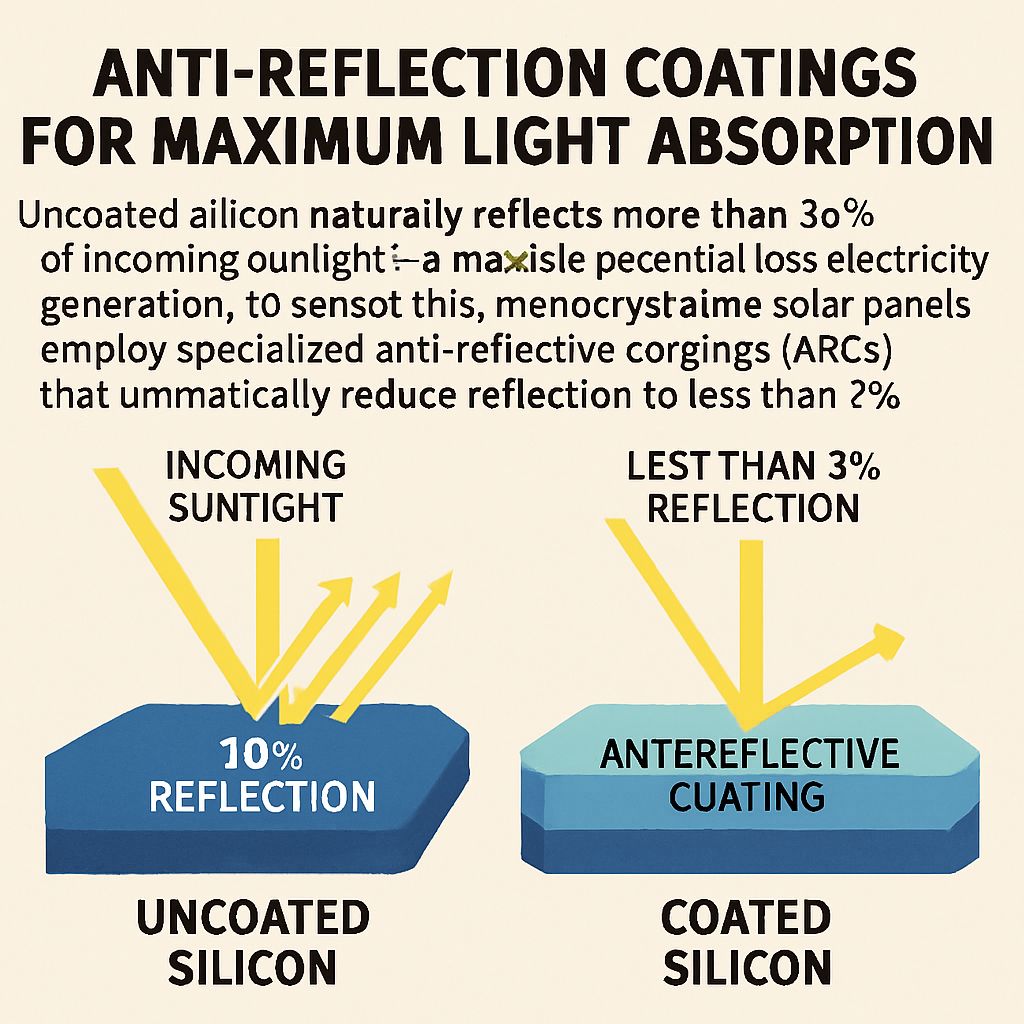
Uncoated silicon naturally reflects more than 30% of incoming sunlight—a massive potential loss in electricity generation. To combat this, monocrystalline solar panels employ specialized anti-reflective coatings (ARCs) that dramatically reduce reflection to less than 3%. These nanometer-thin layers, typically made of silicon nitride, are precisely engineered to match the wavelength of incoming light, allowing significantly more sunlight to penetrate to the silicon cells beneath. The coating’s thickness—typically just 70-80 nanometers, or about 1/1000th the width of a human hair—is precisely calculated to create destructive interference patterns that cancel out reflected light.
For agricultural applications where maximizing energy harvest directly impacts operational costs, these anti-reflective coatings make a substantial difference in overall system performance. The coatings are applied using plasma-enhanced chemical vapor deposition (PECVD) during manufacturing, creating a uniform layer that works effectively across the broad spectrum of sunlight. This technology is particularly valuable in dusty farm environments, as it helps panels maintain better performance between cleanings when dust accumulation might otherwise significantly reduce light transmission. For more insights, you can explore this guide on monocrystalline solar panels.
Silicon Nitride: The Blue-Black Appearance Explained
The distinctive blue-black color of monocrystalline solar panels comes from the silicon nitride anti-reflective coating interacting with light. This isn’t merely aesthetic—the specific coloration indicates the coating has been calibrated to the optimal thickness for capturing the solar spectrum’s most energy-rich wavelengths. When you see variations in the bluish tint between different manufacturers’ panels, you’re observing slight differences in their anti-reflective coating formulations and thicknesses. These variations can actually indicate which wavelengths the panel is optimized to capture, with darker blue tints typically suggesting better performance in the higher-energy blue light spectrum.
Beyond improving light absorption, silicon nitride coatings also provide crucial surface passivation, reducing electron recombination at the silicon surface. This technical-sounding benefit translates to meaningful real-world performance improvements of 3-4% in overall panel efficiency. For a typical 50kW farm installation, this coating alone can generate an additional 2,000 kWh annually—enough to power critical equipment during harvesting seasons when energy demands peak. To learn more about these coatings, you can explore the monocrystalline solar panel materials.
How Anti-Reflective Coatings Boost Farm Energy Production
Anti-reflective coatings deliver their greatest benefits during low-angle sunlight conditions—early mornings and late afternoons—when light would otherwise bounce off uncoated panels. For agricultural operations that need consistent power throughout the day, this extended generation window can significantly reduce dependence on grid electricity during peak rate periods. The coatings also improve performance on overcast days, capturing diffuse light that would otherwise be reflected away, making them particularly valuable in regions with variable weather patterns typical of many farming areas.
The effectiveness of these coatings remains consistent throughout seasonal changes, unlike some panel technologies that struggle with seasonal light variations. Advanced coatings now include hydrophobic properties that help panels shed water more quickly after rainfall, reducing soiling and minimizing the time that water droplets might otherwise act as tiny magnifying glasses that create hotspots on the panel surface. For farm installations where regular cleaning might be challenging, this self-cleaning property helps maintain optimal performance between maintenance visits. To understand more about how these solar panels work, it’s essential to explore their underlying science and functionality.
N-Type vs. P-Type Silicon: What Farmers Should Know
Monocrystalline silicon cells come in two fundamental varieties—P-type and N-type—distinguished by how they’re “doped” with trace elements to create their electrical properties. Traditional P-type cells use boron as their base dopant and are found in approximately 80% of installed panels worldwide. However, N-type cells, which use phosphorus as their base dopant, offer several advantages particularly relevant to agricultural applications: they’re less susceptible to light-induced degradation, perform better in high temperatures common on barn roofs, and generally maintain their efficiency longer over decades of deployment.
While P-type cells have dominated the market due to their lower manufacturing costs, the price gap between these technologies has narrowed significantly. For farm installations designed for 25+ year lifespans, the superior long-term performance of N-type cells often justifies their modestly higher initial cost. When evaluating panels for agricultural applications where replacement is labor-intensive and disruptive, this material distinction becomes an important consideration that can significantly impact your system’s lifetime energy yield.
Boron and Phosphorus Doping: Creating the Electric Field
The semiconductor properties of silicon cells depend on precisely controlled “doping”—the introduction of tiny amounts of elements like boron and phosphorus that create either a surplus or deficit of electrons. This process creates the P-N junction—essentially a one-way door for electricity—that forms the heart of every solar cell. In high-quality monocrystalline panels, manufacturers maintain extremely precise control over these doping concentrations, typically just one dopant atom per million silicon atoms. This precision directly affects the electric field strength within the cell and, consequently, how efficiently it converts sunlight to electricity. For more insights, you can explore our solar panel materials construction guide.
For agricultural applications where panels might experience more extreme temperature variations than residential installations, the different thermal behaviors of these dopants become particularly important. N-type cells, with phosphorus as their base dopant, demonstrate greater temperature stability, losing less efficiency during hot summer days when panels on metal barn roofs can reach temperatures exceeding 150°F. This temperature coefficient advantage—typically 0.35%/°C for N-type versus 0.45%/°C for P-type—can translate to 5-10% more annual energy generation in hot climates or on unventilated roof installations.
Performance Differences in Agricultural Settings
Beyond temperature considerations, the choice between N-type and P-type monocrystalline panels affects long-term performance in ways particularly relevant to agricultural installations. N-type silicon demonstrates significantly higher resistance to light-induced degradation (LID)—a phenomenon where panel output decreases by 2-3% within the first few months of operation. For farm systems sized precisely to meet operational needs, this degradation resistance means N-type panels are more likely to deliver their rated power throughout their lifetime, ensuring irrigation systems and other critical farm equipment receive consistent power supply.
N-type silicon also shows greater resistance to common metal contaminants that might be present in agricultural environments, particularly iron. This resistance helps maintain performance even in dusty conditions where airborne particulates containing trace metals regularly settle on panel surfaces. For installations near fields where fertilizers and other agricultural chemicals are regularly applied, this contamination resistance provides an additional layer of performance protection that can make a meaningful difference in system output over decades of operation. Learn more about solar panel materials and their construction to understand how they withstand such environments.
Material Durability in Agricultural Environments
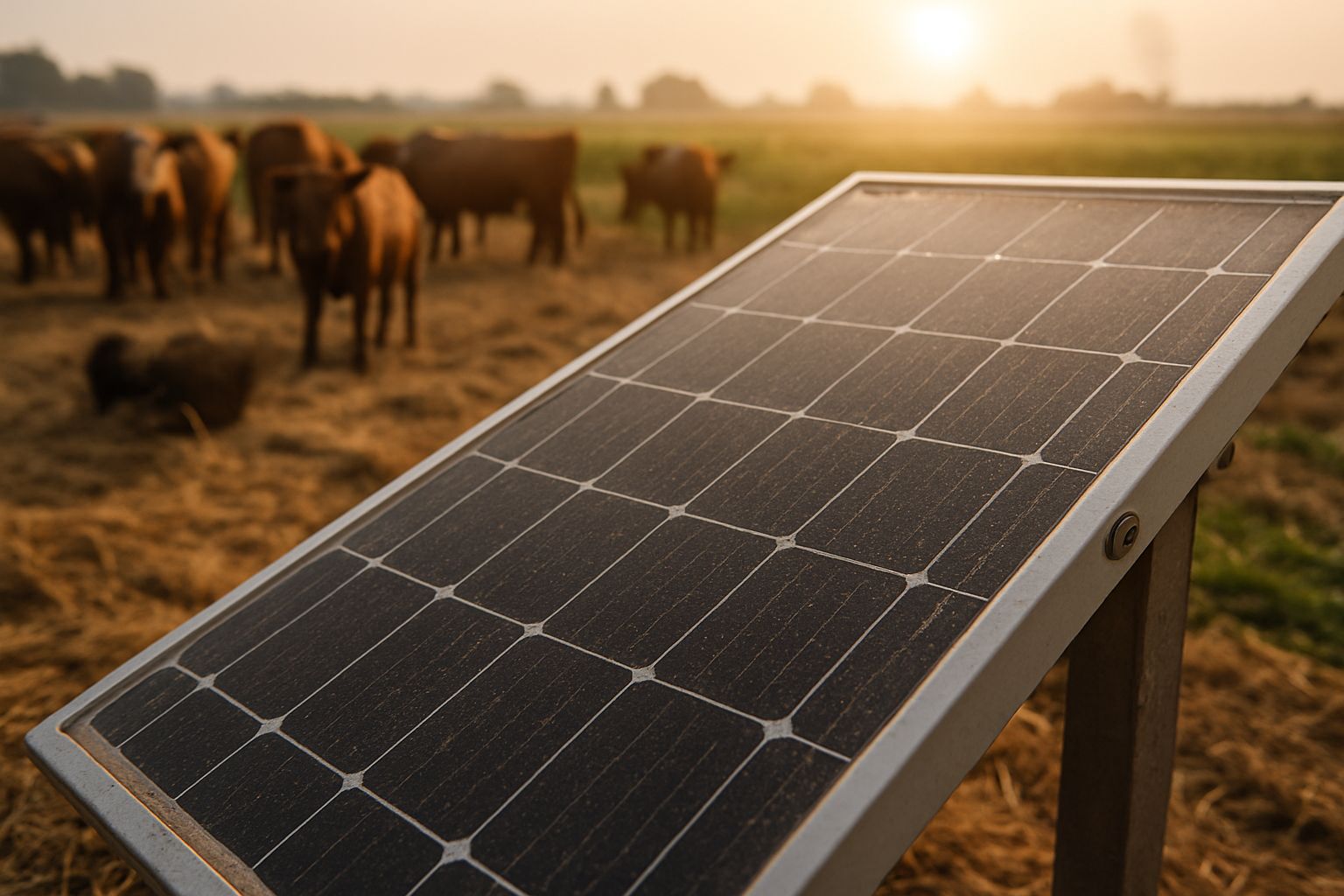
Farm environments present unique challenges for solar panel materials—from ammoniated air near livestock operations to dust from field activities and exposure to agricultural chemicals. Premium monocrystalline panels use materials specifically selected to withstand these conditions while maintaining performance. The glass surfaces employ textured patterns that help retain efficiency even when partially soiled, while specialized edge seals prevent moisture ingress that could otherwise lead to internal corrosion of metallic components or delamination of the panel layers. For more insights on this topic, explore our solar panel materials construction guide.
The junction boxes mounted on the back of panels represent another critical durability element. High-quality panels use IP68-rated junction boxes—meaning they’re completely dust-tight and protected against prolonged immersion in water. This rating becomes particularly important for ground-mounted systems in fields that might experience temporary flooding or for panels installed on irrigation pivot points where water exposure is inevitable. The diodes housed within these junction boxes also require proper thermal management to prevent premature failure during hot summer conditions when panels reach their highest operating temperatures.
Weather Resistance Capabilities
Modern monocrystalline panels undergo rigorous testing to ensure they can withstand extreme weather conditions common in agricultural areas. Quality panels are certified to withstand wind loads up to 2,400 Pascals (equivalent to approximately 140 mph winds) and snow loads up to 5,400 Pascals (approximately 113 pounds per square foot). These ratings become critical for panels installed on exposed barn roofs or in open field arrays where wind protection is minimal. The aluminum frames are designed with reinforced corners and precise calculation of expansion coefficients to maintain structural integrity through thousands of thermal cycles without developing gaps that could allow moisture penetration.
Humidity cycling resistance represents another crucial durability factor for farm installations. Premium panels undergo testing through 1,000+ cycles of high humidity followed by dry conditions to ensure their edge seals and junction box connections maintain integrity. This testing simulates decades of real-world exposure to morning dew followed by midday drying—conditions that can stress adhesive bonds and create pathways for moisture ingress in lesser-quality panels. For installations in regions with significant seasonal humidity variations or morning fog patterns, this resistance to humidity cycling directly impacts system longevity.
Dust and Debris Impact on Panel Materials
Agricultural environments typically expose solar panels to higher concentrations of airborne particulates than residential or commercial installations. Quality monocrystalline panels address this challenge through specialized glass texturing that helps maintain better performance when dust accumulates between cleanings. The anti-reflective coatings also incorporate hydrophobic properties that allow rainfall to more effectively clean panels, reducing the frequency of manual cleaning required to maintain optimal performance. Some advanced coatings now include anti-static properties that actively repel dust particles, particularly beneficial for installations near dirt roads or fields where soil disturbance regularly creates dust clouds. For more insights, explore how solar panel materials are constructed to withstand such challenges.
The impact of pollen—a seasonal challenge in many farming regions—receives special consideration in premium panel designs. The same hydrophobic coatings that help shed water also reduce pollen adhesion, while the glass tempering process creates microscopically smooth surfaces that provide fewer attachment points for sticky pollen particles. For installations near flowering crops or orchards where heavy pollen seasons occur, these material properties can significantly reduce seasonal performance drops that would otherwise require more frequent cleaning to address.
Chemical Exposure Considerations Around Farm Operations
Agricultural environments often expose solar equipment to chemicals not typically encountered in other settings—from ammonia near livestock operations to pesticides and fertilizers that may drift during application. Quality monocrystalline panels use materials tested for resistance to these specific compounds. The aluminum frames employ enhanced anodization layers at least 15 microns thick (compared to standard 8-10 micron coatings) to resist corrosion from chemical exposure. Similarly, the backsheet materials undergo specific testing with common agricultural chemicals to ensure they maintain their protective properties even after years of incidental exposure.
Cost vs. Quality: Material Selection for Farm Budgets
When evaluating monocrystalline solar panels for agricultural applications, the relationship between material quality and long-term performance becomes particularly important. Premium materials typically increase initial panel costs by 15-25% but can deliver 30-40% more lifetime energy through higher efficiency, slower degradation rates, and greater durability in challenging farm environments. For agricultural operations with 25+ year planning horizons, these material differences translate directly to your bottom line through increased energy production and reduced replacement needs.
The economics become even more compelling when considering the labor and opportunity costs associated with system failures or accelerated degradation. Replacing underperforming panels on a barn roof or in a field installation typically costs 3-4 times the panel price itself when accounting for labor, equipment rental, and system downtime. This replacement cost reality makes the modest premium for higher-quality materials one of the most financially sound decisions in agricultural solar planning.
Premium vs. Standard Material Options
Several key material distinctions separate premium monocrystalline panels from standard offerings, with each difference affecting performance in agricultural settings. Premium panels typically use higher-purity silicon (9N or 99.9999999% pure versus 6N or 99.9999%), resulting in better low-light performance during early mornings and late afternoons. They also employ more busbars (9-12 versus 5-6) for better electrical collection efficiency and redundancy against microcracks, particularly valuable in environments where panels experience vibration from nearby equipment operation or handling during installation.
Advanced backsheet materials represent another significant difference between panel tiers. Premium panels use composite backsheets with multiple protective layers, often including fluoropolymers like PVDF that demonstrate superior weathering resistance compared to standard polyester backsheets. This material choice directly impacts the panel’s ability to maintain its moisture barrier over decades of exposure to UV radiation and temperature cycling, protecting the sensitive electrical components within. For installations near livestock buildings where ammonia exposure occurs, fluoropolymer backsheets maintain their integrity significantly longer than standard materials.
Frame construction quality varies meaningfully between panel tiers, with premium options using heavier extrusions, additional corner reinforcement, and deeper glass insertion channels. These structural enhancements enable premium panels to exceed minimum wind and snow load ratings by 20-50%, providing crucial additional security for installations in exposed rural locations. The anodization thickness on premium frames typically reaches 18-25 microns versus 8-15 microns on standard frames, significantly improving corrosion resistance in agricultural environments where exposure to chemicals and organic acids may occur.
- Silicon purity: 9N (99.9999999%) in premium vs. 6N (99.9999%) in standard panels
- Busbar count: 9-12 in premium vs. 5-6 in standard configurations
- Backsheet materials: Multi-layer fluoropolymers vs. standard polyester
- Frame anodization: 18-25 micron thickness vs. 8-15 microns
- Temperature coefficient: -0.35%/°C vs. -0.45%/°C (lower is better)
- Warranty terms: 25-30 years vs. 10-15 years on product defects
Long-Term ROI Based on Material Quality
The financial calculations around panel material quality become compelling when viewed through the lens of lifetime energy production rather than upfront cost. Premium monocrystalline panels typically cost 15-25% more initially but deliver 8-12% higher energy yields in the first year alone due to higher efficiency and better temperature performance. This advantage compounds over time as the premium panels degrade more slowly—often 0.3% annually versus 0.6-0.7% for standard panels. By year 25, this degradation difference alone means premium panels produce approximately 10% more electricity annually than standard panels of the same original rating.
For a typical 50kW farm installation, the premium for higher-quality panel materials might add $7,500-$12,500 to initial system costs but generate an additional 125,000-175,000 kWh over the system’s lifetime. At average rural electricity rates, this additional production represents $15,000-$21,000 in energy value, delivering a positive return on the material investment even before considering reduced replacement costs or system downtime. When agricultural operations depend on solar power for critical functions like irrigation, cold storage, or livestock environmental controls, this reliability premium delivers additional value through operational continuity that’s difficult to quantify but immediately apparent during grid outages or system failures.
Choose These Panels for Your Farm’s Energy Needs
Monocrystalline solar panels represent the optimal choice for most agricultural applications due to their superior efficiency, durability, and long-term performance. Their ability to generate more power from limited space makes them particularly valuable for barn roof installations where available area is constrained. The higher efficiency also reduces balance-of-system costs like mounting hardware and wiring on a per-watt basis, partially offsetting their premium price. For farmers making long-term infrastructure investments, the proven reliability and slower degradation of monocrystalline panels align perfectly with agricultural planning horizons that typically extend decades into the future.
When selecting specific monocrystalline panels for your farm, prioritize models with N-type silicon for hot environments, robust frame construction for high wind areas, and enhanced chemical resistance for installations near livestock or crop spraying operations. Look for manufacturers who provide agricultural-specific installation guidelines and whose warranty terms specifically cover farm environments without exclusions for dust or chemical exposure. Remember that panel performance affects your operation daily for decades—making material quality one of the most important considerations in your renewable energy transition.
Frequently Asked Questions
Farmers considering monocrystalline solar installations often have specific questions about how these panels will perform in agricultural settings. The unique challenges of farm environments—from dust and pollen to seasonal temperature extremes—create legitimate concerns about long-term performance and maintenance requirements. The following questions address the most common inquiries regarding monocrystalline panel materials and their suitability for agricultural applications.
Understanding these material considerations helps farmers make informed decisions that align with their specific operational needs and environmental conditions. While initial investment in quality materials increases upfront costs, the long-term benefits in performance, reliability, and reduced maintenance make monocrystalline panels the preferred choice for most agricultural solar applications.
How long do monocrystalline solar panels last on farms?
Monocrystalline solar panels installed in agricultural settings typically maintain productive operation for 25-35 years, with premium panels still generating 80-85% of their original rated output after 25 years. This longevity stems from their inherently durable materials—tempered glass, anodized aluminum frames, and silicon cells protected within multiple encapsulation layers. The actual lifespan varies based on environmental conditions, with installations in moderate climates and lower dust environments typically lasting longer than those in extreme temperature zones or high-particulate areas near tilled fields.
The degradation rate—how quickly panels lose production capacity—represents the most accurate predictor of useful lifespan. Premium monocrystalline panels typically degrade at 0.3-0.4% annually, while standard panels may degrade at 0.5-0.7% annually. This seemingly small difference compounds dramatically over decades. For example, after 25 years, a premium panel might retain 90% of its original output while a standard panel retains only 82-85%. For agricultural operations where system replacement is costly and disruptive, this degradation difference translates directly to additional years of productive operation.
Physical durability often exceeds electrical lifespan in farm environments. The aluminum frames, tempered glass, and sealed construction typically withstand agricultural conditions for 30+ years without physical failure. Most system replacements occur due to efficiency economics rather than catastrophic failure—when new panel technology offers sufficient efficiency improvements to justify replacing panels that are still functioning but at reduced capacity. For more information on the materials used in solar panels, you can refer to this monocrystalline solar panels guide.
Monocrystalline Panel Lifespan by Environment Type
Moderate climate, roof-mounted: 30-35+ years
Hot climate, roof-mounted: 25-30 years
High dust environment, ground-mounted: 25-30 years
Near livestock facilities with ammonia exposure: 20-25 years
Coastal regions with salt exposure: 20-25 yearsNote: Premium panels with enhanced materials may extend these estimates by 3-5 years.
Can monocrystalline panels withstand agricultural chemicals and dust?
Quality monocrystalline panels are engineered with agricultural environments in mind, featuring materials that resist common farm exposures including fertilizer dust, pesticide overspray, and ammonia from livestock operations. The tempered glass fronts resist chemical etching, while high-quality frames feature enhanced anodization layers that prevent corrosion from chemical exposure. Premium panels undergo specific testing with agricultural chemicals to ensure their protective encapsulants maintain integrity even after repeated incidental exposure. For installations near regular spray operations, look for panels with IP68-rated junction boxes and enhanced edge sealing that provide additional protection against chemical infiltration.
Are monocrystalline panels worth the higher upfront cost for farmers?
For most agricultural applications, monocrystalline panels justify their premium price through superior long-term economics. Their higher efficiency (20-22% vs. 15-17% for polycrystalline) means fewer panels and less mounting hardware for the same power output, partially offsetting initial costs. More importantly, their slower degradation rates and better performance in high temperatures directly increase lifetime energy production. For a typical 50kW farm system, premium monocrystalline panels might cost $7,500-$12,500 more initially but generate an additional $15,000-$21,000 worth of electricity over their lifespan. When factoring in agricultural-specific benefits like better performance when partially soiled and greater resilience against extreme weather, monocrystalline panels represent the most cost-effective lifetime choice for most farm operations.
How do monocrystalline panel materials affect performance in partial shade?
Monocrystalline panels maintain better performance under partial shading conditions than other panel types due to both their material properties and cell architecture. The single-crystal silicon structure creates more uniform electrical characteristics across each cell, reducing the impact when portions become shaded. Modern monocrystalline panels also incorporate half-cut cell designs that divide each panel into two electrically independent halves, limiting power loss when shadows affect one section. This technology proves particularly valuable for agricultural installations near trees, buildings, or equipment that cast moving shadows throughout the day.
Advanced bypass diode configurations further enhance partial shade performance in quality monocrystalline panels. While standard panels typically use three bypass diodes (one per string of 20 cells), premium panels often incorporate additional diodes or cell-level power optimization. These material and design choices can maintain up to 75-80% of rated output even with 20% of the panel shaded, compared to 50-60% output retention in basic panel designs. For installations where some shading is unavoidable—such as near windbreaks or farm buildings—these performance differences significantly impact annual energy production and system economics.
What maintenance do monocrystalline panels need in farm settings?
Monocrystalline panels require minimal maintenance in most agricultural settings, with performance-focused cleaning being the primary consideration. In dusty farm environments, quarterly visual inspections and cleaning as needed helps maintain optimal output. The cleaning process typically requires only water and a soft brush—pressure washers should be avoided as they risk damaging the panel surface or forcing water past seals. For installations near field operations that create significant dust, automated cleaning systems or regular rainfall may be insufficient to maintain peak performance, making scheduled manual cleaning a worthwhile investment in system output. For more insights on maintaining monocrystalline solar panels, visit this comprehensive guide.
Beyond cleaning, annual electrical inspections provide valuable preventive maintenance. These inspections should check for secure connections, signs of water infiltration in junction boxes, and potential hot spots indicating cell damage or connection issues. Quality monocrystalline panels with proper installation typically show no significant issues during these inspections for the first 10-15 years, with potential connection maintenance becoming more important in later years. For ground-mounted systems in agricultural settings, vegetation management around the array prevents shading and reduces potential fire hazards during dry seasons.
The relatively maintenance-free nature of monocrystalline panels makes them particularly suitable for busy agricultural operations where maintenance tasks must compete with essential farming activities. Their durable materials and sealed construction allow them to continue functioning efficiently with minimal intervention, even in challenging farm environments. When budgeting for solar system ownership, most farmers allocate just 1-2 hours of maintenance time per 10kW of installed capacity annually, primarily for cleaning and visual inspection. For more insights on solar solutions, explore best power solutions for farmers.


Leave a Reply