
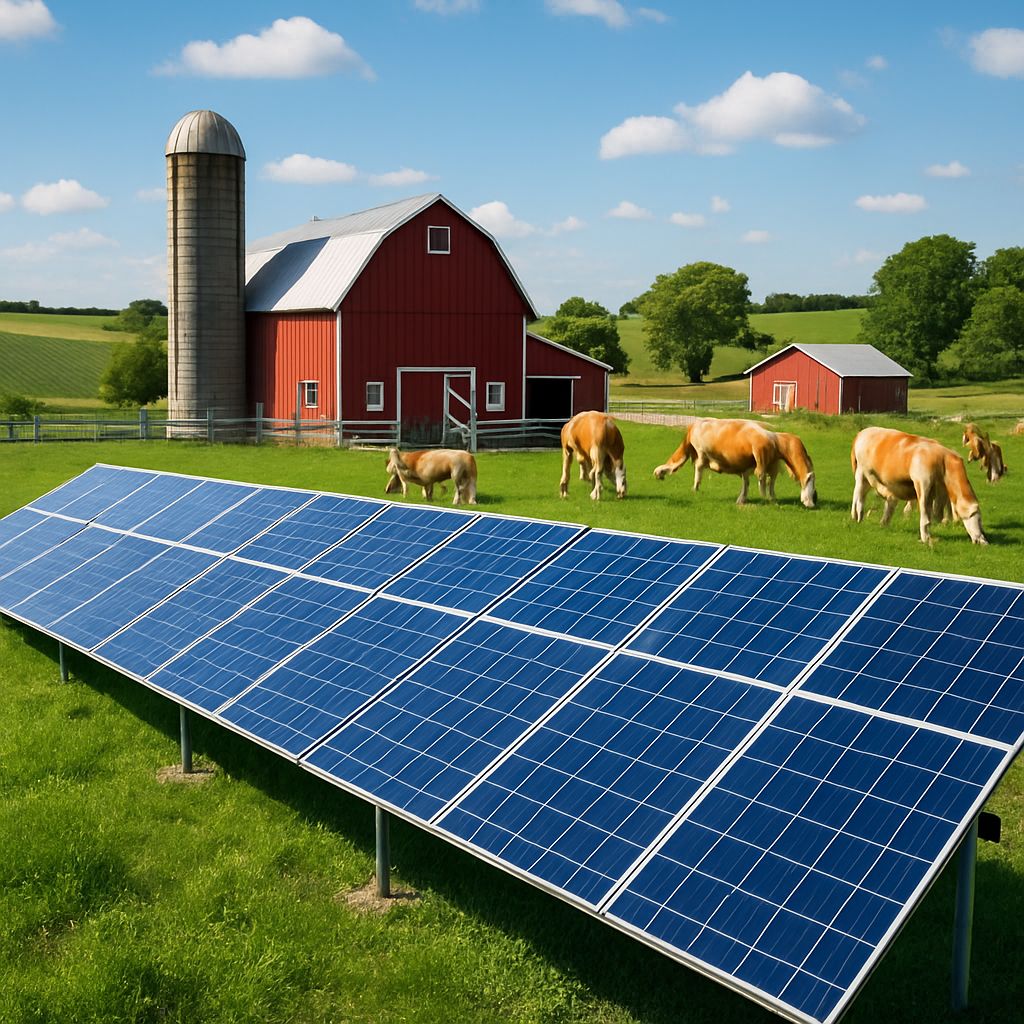
Key Takeaways
- Solar power can reduce farm energy costs by up to 70%, freeing capital for essential agricultural investments
- Federal incentives cover up to 30% of solar installation costs, with additional state programs making renewable energy more affordable for farmers
- Solar systems provide critical protection against unpredictable utility rate increases and power outages that can devastate farm operations
- Modern agricultural solar applications extend beyond basic electricity to power irrigation, lighting, ventilation, and cold storage systems
- Nuance Energy helps farmers transition to sustainable energy solutions with specialized agricultural solar expertise
Slash Your Farm’s Energy Bills with Solar Power
Farm energy costs are eating away at profits like never before. With utility rates climbing by 3-5% annually across rural America, many agricultural operations face a growing threat to their financial stability. Solar power presents a game-changing opportunity to slash these expenses while gaining energy independence.
The numbers tell a compelling story. Farms implementing solar solutions typically see energy cost reductions of 40-70%, depending on system size and local conditions. This isn’t just about saving money – it’s about taking control of your operation’s financial future. By generating your own electricity, you’re effectively locking in energy costs for the 25+ year lifespan of your solar array.
Modern agricultural solar solutions have evolved tremendously in recent years. Nuance Energy has pioneered farm-specific installations that address the unique power needs of agricultural operations. From powering irrigation systems to maintaining climate control in livestock facilities, today’s solar technology delivers reliable performance in demanding farm environments.
The Rising Cost Crisis for Farmers
Energy costs represent the third largest operational expense for most farms, trailing only behind land and labor. What makes this particularly challenging is the unpredictable nature of these expenses. A single rate hike from your utility company can throw carefully planned budgets into disarray, forcing difficult decisions about where to cut corners.
The agricultural sector is especially vulnerable to energy price volatility. Irrigation, climate control, and processing equipment all demand significant power inputs that can’t simply be switched off without consequences for production. Unlike urban businesses that might adjust hours or operations, farms face biological timelines that can’t be easily shifted to avoid peak electricity rates.
Weather extremes further complicate this picture. Extended heat waves drive up cooling costs for livestock operations, while drought conditions increase irrigation demands. These climate-related challenges are becoming more frequent and severe, creating additional pressure on farm energy budgets at precisely the moments when operations can least afford disruption.
How Energy Expenses Eat into Farm Profits
The hidden impact of fluctuating energy costs extends beyond your monthly utility bill. When farmers face unpredictable energy expenses, they often delay crucial investments in equipment upgrades, land improvements, or expansion opportunities. This creates a compounding negative effect – outdated equipment typically consumes more energy, further increasing operational costs. Exploring efficient farm operations with solar panels can help mitigate these costs.
Consider a typical 100-acre vegetable operation. Irrigation pumps alone might consume 30,000-50,000 kWh annually, translating to $3,000-$6,000 in electricity costs at current rates. Add in cold storage, processing equipment, and general farm operations, and energy expenses can quickly balloon to $15,000-$25,000 per year. With solar power, these expenses become predictable assets rather than variable costs.
The financial strain creates a competitive disadvantage for farms without energy independence. While your operation remains vulnerable to utility rate increases, competitors who’ve invested in solar enjoy stable energy costs, allowing them to price products more competitively or invest their savings into growth. Breaking this cycle requires a strategic approach to energy management, with solar power at its center.
Why Farm Energy Independence Matters Now More Than Ever
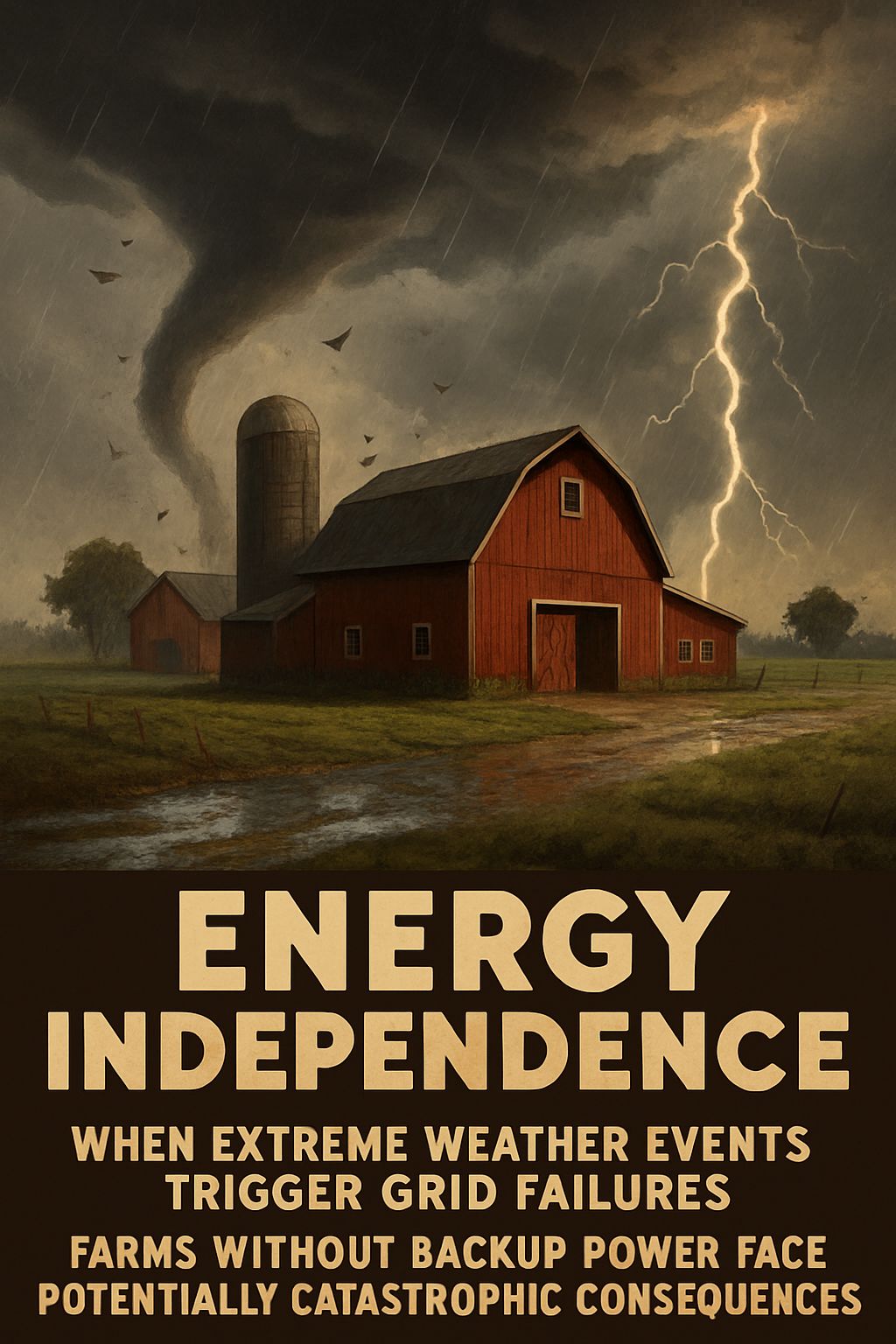
Energy independence isn’t just about saving money – it’s about securing your farm’s operational resilience. When extreme weather events trigger grid failures, farms without backup power face potentially catastrophic consequences. Livestock operations rely on ventilation and temperature control systems that can’t tolerate extended outages. Irrigation schedules can’t simply pause during critical growing periods. Cold storage failures can destroy harvested crops within hours.
Solar power paired with battery storage provides critical protection against these vulnerabilities. Your operation continues functioning while neighboring farms scramble for generator fuel or face production losses. This resilience becomes increasingly valuable as climate instability creates more frequent and severe disruptions to conventional power infrastructure. For farmers interested in sustainable solutions, exploring solar panels and sprinkler irrigation systems integration can further enhance operational efficiency.
Breaking Free from Unpredictable Utility Rate Hikes
The rural energy landscape presents unique challenges for agricultural operations. Many farms are served by electric cooperatives or municipal utilities with limited competition, giving producers little leverage when rates increase. Historical data shows rural electricity rates rising faster than urban rates in many regions, creating a growing disparity that puts additional pressure on farm profitability.
By generating your own power through solar, you effectively lock in your electricity costs for decades. While your neighbors face 3-5% annual increases, your energy expenses remain consistent and predictable. This transforms a variable expense into a fixed asset, allowing for more accurate long-term financial planning and greater confidence in farm investments.
The economics become even more favorable when considering net metering programs. These arrangements allow farmers to sell excess solar production back to the grid, offsetting costs during periods of lower generation. In many cases, a well-designed system can reduce annual utility bills to near zero, providing complete insulation from future rate increases. For more insights on achieving energy independence with solar, explore this resource.
Protection Against Power Outages and Grid Failures
Grid reliability in rural areas often lags behind urban centers, with outages lasting longer and occurring more frequently. For farms, even a short power interruption can have devastating consequences – from spoiled milk in dairy operations to suffocating conditions in confined animal facilities when ventilation systems fail. These vulnerabilities create an urgent need for backup power solutions.
Solar systems with battery storage provide critical protection during these events. When the grid goes down, your essential farm operations continue without interruption. Modern battery solutions can be configured to power critical loads for hours or even days, bridging the gap during extended outages. This capability alone justifies the investment for many farmers who have experienced significant losses during previous power failures.
The autonomy provided by solar-plus-storage systems extends beyond emergency situations. During normal operations, these systems can be programmed to minimize energy purchases during peak rate periods, further reducing costs. This intelligent energy management transforms how farms interact with the power grid, shifting from passive consumers to active energy managers.
Building Long-Term Farm Sustainability
Energy independence represents a cornerstone of farm sustainability planning. As consumers increasingly prioritize environmentally responsible agriculture, solar-powered farms gain a marketable advantage. Many buyers, from individual consumers to large food processors, actively seek suppliers with strong sustainability credentials. Your investment in clean energy becomes part of your farm’s brand story.
The environmental benefits are substantial. A typical 25kW farm solar array prevents approximately 30 tons of CO₂ emissions annually – equivalent to taking 6 cars off the road. Beyond these direct impacts, solar-powered farms often inspire broader sustainability initiatives, from water conservation to reduced chemical inputs, creating a virtuous cycle of environmental stewardship.
Perhaps most importantly, on-farm solar generation helps secure agricultural livelihoods for the next generation. Young farmers increasingly seek operations with modernized infrastructure and sustainable practices. Energy independence through solar power signals a forward-thinking approach that makes your operation more attractive for succession planning or future sale.
Solar Applications That Transform Farm Operations to Energy Independence
The versatility of solar power makes it adaptable to virtually every aspect of agricultural production. From field operations to processing and storage, solar solutions can be tailored to your specific farm needs. The key is identifying your energy-intensive activities and designing systems that directly address these demands.
Most farms begin by targeting their largest energy consumers for solar conversion. This strategic approach delivers the fastest payback and creates immediate impact on monthly expenses. As comfort with the technology grows, many producers gradually expand their solar capacity to cover additional farm operations, moving toward complete energy independence.
Powering Irrigation Systems and Water Pumps
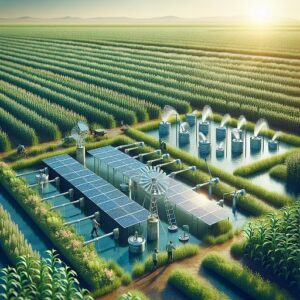
Irrigation represents one of the most energy-intensive aspects of crop production, with pump systems consuming massive amounts of electricity during growing seasons. Solar-powered irrigation solutions range from direct-drive systems that operate only during daylight hours to grid-tied setups that balance pump operation with power generation. For many farms, irrigation alone justifies the investment in solar infrastructure.
Water delivery systems benefit tremendously from the distributed generation model of solar power. Remote pumping stations that previously required expensive utility line extensions can operate independently with properly sized solar arrays. This capability opens new possibilities for accessing water sources across your property without prohibitive infrastructure costs.
Advanced solar irrigation controllers add another dimension of efficiency. These systems can be programmed to operate pumps when solar generation is at its peak, storing water rather than electricity for later use. This approach maximizes the direct utilization of solar energy and reduces the need for battery storage in many applications.
Barn Lighting and Ventilation Systems
Livestock facilities present ideal opportunities for solar power implementation. The consistent energy demands of these operations – lighting, ventilation, heating, and cooling – align well with the generation profile of properly designed solar systems. Year-round power needs ensure that your solar investment remains productive across seasons, maximizing return on investment.
Ventilation systems in particular benefit from solar power. Modern DC ventilation equipment can run directly from solar panels with minimal power conversion, increasing efficiency and reducing system complexity. For poultry, swine, and dairy operations, where air exchange requirements are critical, solar ventilation provides both operational savings and increased resilience against power disruptions.
Smart lighting systems powered by solar further enhance efficiency. LED fixtures connected to daylight sensors and timers optimize light delivery while minimizing energy consumption. These systems create ideal growing conditions while reducing electricity demands by 60-80% compared to traditional lighting approaches.
Electric Fencing and Security
Perimeter security and livestock containment systems present perfect applications for small-scale solar solutions. Solar-powered electric fence energizers eliminate the need for long power runs to remote field boundaries, reducing installation costs and increasing placement flexibility. These reliable systems maintain fence integrity regardless of grid conditions, providing peace of mind for livestock producers. For farmers exploring other solar applications, solar-powered sprinkler irrigation systems offer efficient solutions for irrigation needs.
Farm security systems increasingly leverage solar power for similar reasons. Cameras, motion sensors, and alarm systems equipped with dedicated solar panels operate independently from the main electrical system. This separation creates an additional layer of security, as these critical systems remain functional even during main power interruptions. To explore more about solar power applications, check out this article on efficient farm operations with solar panels.
Gate automation represents another popular solar application on farms. Remote entrances that would otherwise require expensive trenching for power can be operated using compact solar systems with battery backup. These solutions combine convenience with significant cost savings on infrastructure.
Cold Storage and Processing Equipment
Post-harvest handling represents a critical vulnerability for many farming operations. Power interruptions during crucial cooling periods can destroy an entire season’s production within hours. Solar-powered cold storage with battery backup provides essential protection against these scenarios, preserving product quality regardless of grid conditions.
Value-added processing equipment increasingly incorporates solar power options. From milk cooling systems to fruit washing lines, manufacturers now offer energy-efficient designs specifically intended for renewable power integration. These specialized systems maximize productivity while minimizing energy requirements, creating ideal solar applications.
For operations with substantial cold storage needs, solar cooling technologies offer particularly compelling economics. These systems align perfectly with solar generation patterns, as cooling demands typically peak during the same high-sunlight hours when panels produce maximum power. This natural synchronization creates exceptional efficiency without requiring extensive battery storage.
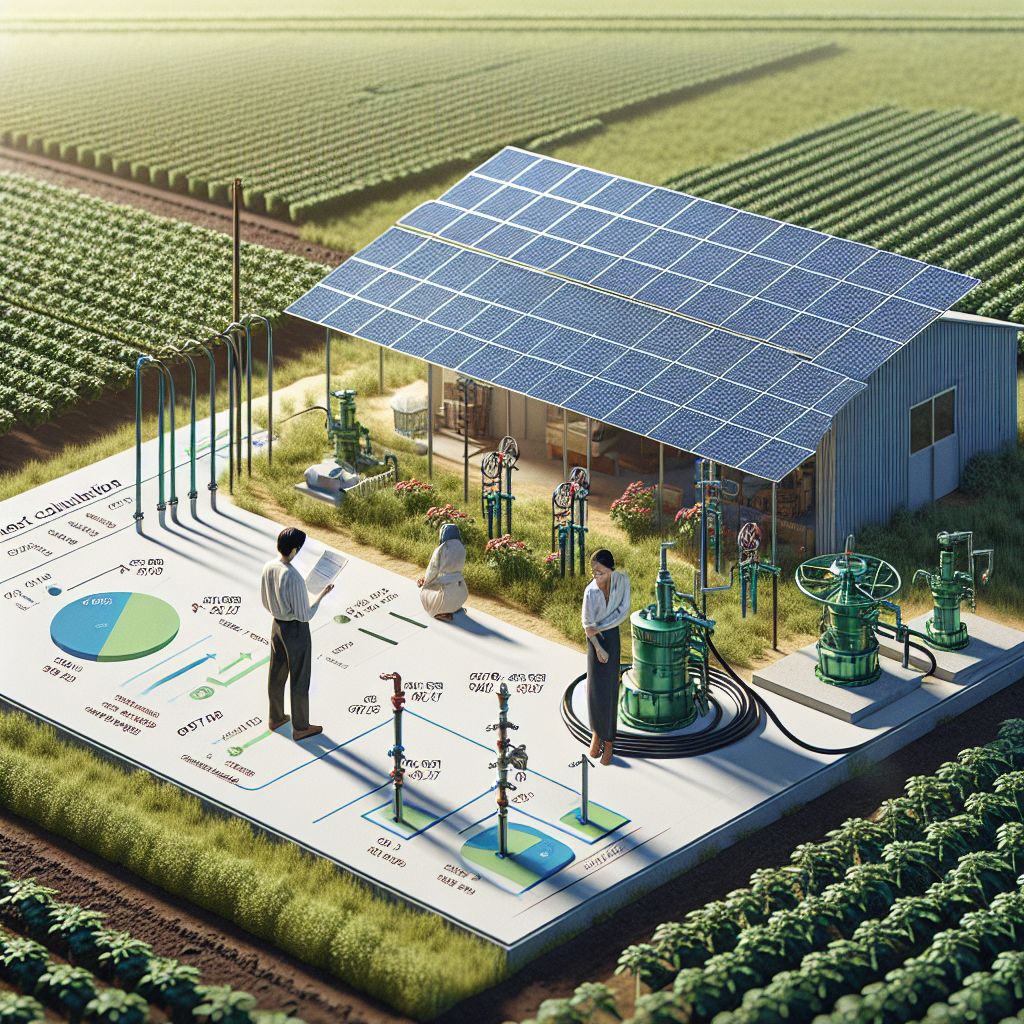
“Small Farms Solar Irrigation System …” from growingsolarmist.com and used with no modifications.
The Real Economics of Farm Solar: Costs vs. Benefits
Understanding the true financial picture of solar power requires looking beyond the initial sticker price. Agricultural solar investments typically deliver returns in multiple ways: direct energy savings, tax benefits, increased property value, and potential income from excess power generation. When analyzed comprehensively, most farm solar projects achieve positive cash flow within 5-7 years.
The economics become even more favorable when considering the protection against future rate increases. Traditional ROI calculations often undervalue this aspect, using conservative utility inflation estimates. In reality, many regions have experienced electricity rate increases exceeding 5% annually for consecutive years. Solar investments effectively lock in your energy prices, creating predictable operational costs in an otherwise volatile market.
While evaluating solar economics, it’s crucial to consider system longevity. Modern agricultural solar installations routinely deliver 30+ years of productive operation, with panels typically warranted for 25 years but continuing to generate at reduced capacity for much longer. This extended productive lifespan significantly enhances lifetime return on investment calculations.
Initial Investment Breakdown
Agricultural solar systems typically range from $2.00-$3.50 per watt of capacity before incentives, with costs varying based on system complexity, mounting requirements, and site conditions. For perspective, a 25kW system sufficient for a small to medium farm operation might cost $50,000-$87,500 before applying any incentives or tax benefits. Larger operations requiring 100kW or more would scale proportionally, though economies of scale typically reduce per-watt costs for larger installations.
This initial investment breaks down into several categories. Approximately 45-60% goes to equipment costs (panels, inverters, mounting hardware), 25-30% to labor and installation, and the remainder to design, permitting, interconnection, and monitoring systems. Understanding this breakdown helps when comparing quotes, as some contractors might emphasize equipment costs while others might highlight installation efficiencies.
Typical 25kW Farm Solar System Cost Breakdown
Solar Panels: $22,500
Inverters & Electrical: $12,500
Mounting System: $7,500
Installation Labor: $18,500
Design & Permitting: $6,000
Monitoring System: $2,500
Total Before Incentives: $69,500
Payback Period and ROI Timeline
Farm solar investments typically achieve payback periods of 5-10 years, varying based on local electricity rates, available incentives, and system design. This calculation represents the time required for energy savings and incentives to equal your initial investment. After this point, your system generates essentially free electricity for the remainder of its 25-30 year operational life, creating substantial long-term value.
The ROI timeline accelerates significantly when incorporating available tax incentives. The federal Investment Tax Credit currently provides a 30% reduction in system costs, while accelerated depreciation allows qualifying farm businesses to recover their solar investment through tax deductions over just 5 years. These tax benefits can effectively reduce payback periods by 2-3 years compared to unsubsidized costs. For more details, check out this article on solar options for farms.
Many farmers are surprised to discover that solar investments often outperform traditional farm equipment purchases in terms of ROI. While tractors and implements typically depreciate over their useful lives, solar assets maintain their value while continuously generating returns through energy production. This fundamental difference makes solar particularly attractive as a farm capital investment strategy.
Long-Term Savings and Financial Stability
The cumulative financial impact of farm solar extends far beyond simple payback calculations. A properly sized system might generate $5,000-$15,000 in annual energy value, translating to $125,000-$375,000 over a 25-year system life. These figures become even more impressive when factoring in the escalating cost of grid electricity, which historically increases 3-5% annually in most rural areas. For more insights on how solar power can reduce costs, explore the benefits of center pivot irrigation powered by solar panels.
This predictable energy cost structure creates significant operational advantages. With solar power, you’re effectively pre-purchasing decades of electricity at a fixed rate. This cost certainty allows for more accurate long-term planning and potentially more competitive pricing of your agricultural products, as you’ve eliminated a major variable expense that impacts your competitors.
For many family farms, solar investments also represent a form of retirement planning. A fully paid system continues generating value for decades, providing passive income or cost reduction during retirement years. This aspect is particularly valuable for succession planning, as younger generations inherit not just land and equipment, but also energy-producing assets that strengthen the operation’s financial foundation.
Government Incentives That Make Solar Affordable
The economics of agricultural solar have been transformed by a robust framework of federal, state, and local incentives specifically designed for farm applications. These programs can reduce effective system costs by 50-75%, dramatically accelerating return on investment. Understanding and leveraging these incentives is often the difference between marginal and exceptional project economics.
Timing considerations play a crucial role in maximizing these benefits. While federal incentives provide long-term stability through 2032, many state and utility programs operate with limited funding pools that can be exhausted. Farmers who move decisively often secure the most favorable incentive packages, while those who delay may find reduced options available.
Federal Tax Credits and Depreciation Benefits
The cornerstone of federal solar support is the Investment Tax Credit (ITC), currently providing a 30% tax credit on qualified solar expenditures. Unlike a deduction, this credit directly reduces your federal tax liability dollar-for-dollar. For a $100,000 farm solar system, this translates to $30,000 in direct tax savings, effectively reducing your net system cost to $70,000 immediately.
Complementing the ITC, accelerated depreciation through the Modified Accelerated Cost Recovery System (MACRS) allows qualifying agricultural businesses to depreciate the remaining system value over just 5 years. This accelerated schedule creates significant tax benefits during the early years of system ownership, improving cash flow and further reducing effective system costs.
These federal incentives can be combined with other programs without reduction or offset. A farm operation might simultaneously claim the 30% federal tax credit, accelerated depreciation benefits, state tax incentives, and utility rebates. This comprehensive approach can reduce effective system costs by 60-70% in optimal scenarios. For more on how solar power can enhance farm operations, explore efficient farm operations with solar panels.
State-Specific Agricultural Solar Programs
State-level incentives vary dramatically by location but often provide substantial additional value for farm solar projects. These programs range from production-based incentives that pay for each kilowatt-hour generated to capacity-based rebates that provide upfront cost reductions. Some states have developed agricultural-specific solar incentives that recognize the unique needs and benefits of farm energy projects.
Property tax exemptions represent another valuable state-level incentive. Many states exempt solar equipment from property tax assessments, preventing increased tax liability despite the added property value. These exemptions typically extend for the full system lifetime, creating significant cumulative savings. For more information on achieving energy independence with solar, check out related resources.
- Sales tax exemptions on solar equipment (available in 25+ states)
- Performance-based incentives paying $0.02-$0.10 per kWh generated
- Upfront rebates ranging from $0.10-$1.00 per watt installed
- Low-interest loan programs with favorable terms for agricultural solar
- Specialized agricultural grant programs targeting on-farm renewable energy
USDA REAP Grants and Low-Interest Loans
The Rural Energy for America Program (REAP) offers perhaps the most valuable incentive specifically designed for agricultural solar projects. This USDA program provides grants covering up to 25% of system costs and loan guarantees for an additional 75%, potentially financing an entire project through a combination of grant funding and guaranteed loans.
REAP grants are competitive but particularly accessible for small and mid-sized farm operations. The program reserves 20% of its funding for projects under $20,000, creating special opportunities for smaller farms to implement renewable energy. Applications are accepted year-round, with competitive funding rounds typically occurring twice annually.
Beyond REAP, the USDA offers additional programs supporting agricultural energy projects through Natural Resources Conservation Service (NRCS) initiatives. These programs often focus on energy efficiency improvements that complement solar installations, creating opportunities for comprehensive energy management approaches that maximize overall farm sustainability.
Farm Solar Installation Options
The physical implementation of solar power on farms offers several distinct approaches, each with unique advantages for different agricultural contexts. Understanding these options helps match system design with your specific operational needs, land use priorities, and financial objectives. The most suitable configuration depends on your available space, existing infrastructure, and long-term farm planning.
System sizing represents the most fundamental decision in farm solar planning. While some operations aim for complete energy independence, others strategically target specific energy loads or focus on offsetting the highest-cost electricity. Your solar provider should analyze your utility bills, understand your seasonal energy patterns, and recommend appropriate capacity based on your goals and budget.
Roof-Mounted vs. Ground-Mounted Systems
Roof-mounted solar installations maximize existing infrastructure, requiring no additional land while providing excellent protection for the underlying roof surface. Barn, equipment shed, and livestock building roofs often present ideal solar mounting opportunities, with large unobstructed areas and appropriate orientations. These installations typically cost 10-15% less than ground-mounted alternatives due to reduced structural requirements and simpler installation processes.
Ground-mounted systems offer superior flexibility in orientation, tilt angle, and maintenance access. These installations can be optimally positioned regardless of existing building orientations, maximizing energy production. For many farms, strategic placement of ground-mounted arrays on marginal land areas, field edges, or buffer zones creates value from otherwise underutilized space.
Both approaches can incorporate tracking technology, which follows the sun’s path to increase energy production. Single-axis tracking systems boost annual generation by 15-25% compared to fixed installations, while dual-axis systems can achieve 30-45% improvements. While these systems entail higher initial costs and maintenance requirements, they often deliver superior economics for larger installations. For more information on integrating solar technology in farming, consider exploring efficient farm operations with solar panels.
Agrivoltaics: Combining Crop Production with Solar Generation
Innovative agrivoltaic designs enable simultaneous land use for both energy and crop production. These systems elevate panels sufficiently to allow equipment access underneath, creating partially shaded growing environments. Research shows this approach can actually increase yields for certain crops in hot climates by reducing water requirements and heat stress while maintaining sufficient sunlight for photosynthesis. For a deeper understanding of how solar energy can enhance agricultural efficiency, explore efficient farm operations with solar panels.
Several specialized crops thrive in these modified light conditions. Leafy greens, berries, root vegetables, and certain herbs often perform exceptionally well under partial solar shading. The approach is also well-suited for grazing operations, providing livestock with valuable shade while maintaining adequate forage growth. This dual-use approach effectively doubles land productivity compared to dedicated solar or agricultural use alone.
Modern agrivoltaic designs increasingly incorporate adjustable panel positioning to optimize both energy and crop production throughout growing seasons. These dynamic systems can adjust tilt angles to provide more light during critical plant development stages and maximize energy production during harvest periods. While more complex, these systems represent the cutting edge of agricultural solar integration.
Battery Storage Solutions for 24/7 Power – Needed to be Energy Independence
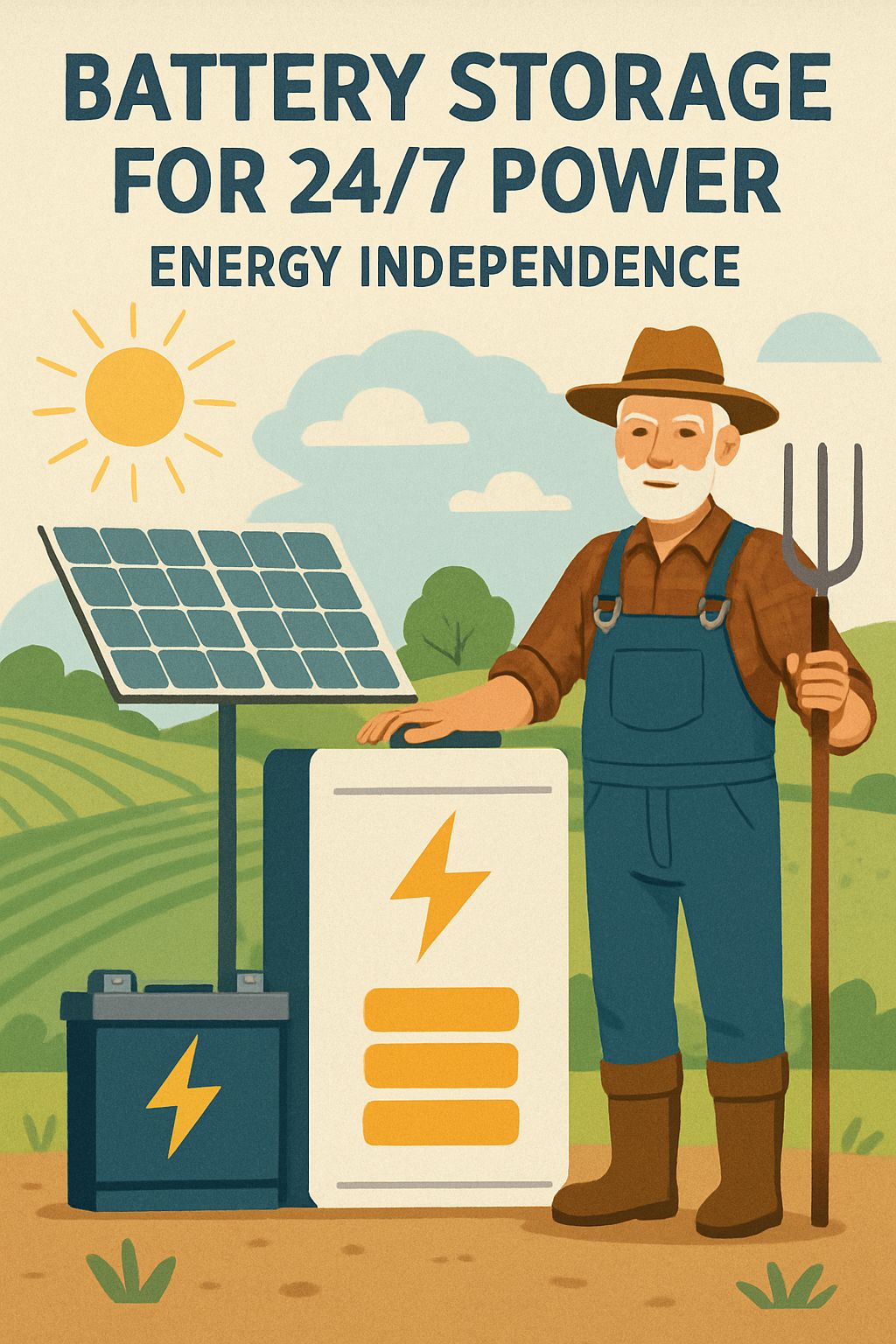
Energy storage transforms intermittent solar generation into reliable, continuous power. Battery systems allow farms to store excess daytime production for evening and overnight use, creating true energy independence regardless of grid conditions. While adding 30-40% to system costs, storage provides critical resilience during outages and opportunities for advanced energy management strategies.
Battery technologies have evolved rapidly, with agricultural applications benefiting from industrial-scale innovations. Lithium-ion systems currently dominate the market, offering excellent energy density, efficiency, and cycle life. Emerging alternatives like flow batteries provide advantages for larger installations requiring longer duration storage, while repurposed electric vehicle batteries offer cost-effective options for some farm applications.
Strategic battery sizing depends on your specific resilience requirements and economic objectives. Critical load backup typically requires less capacity than full farm operation, allowing targeted investments in essential systems protection. Your solar provider should analyze your unique needs to recommend appropriate storage capacity that balances cost with resilience objectives.
Take Action: Your Path to Farm Energy Independence
Transitioning to solar power requires methodical planning to maximize benefits while minimizing disruption to your agricultural operation. The process typically spans 3-6 months from initial consultation to operational system, with seasonal considerations affecting installation timing. Starting with a comprehensive energy assessment establishes the foundation for system design that precisely matches your farm’s unique requirements.
Step 1: Conduct a Farm Energy Audit
Begin with a thorough analysis of your current energy consumption patterns. Collect at least 12 months of utility bills to capture seasonal variations and identify peak usage periods. This baseline data enables accurate system sizing and highlights opportunities for efficiency improvements that might reduce your required solar capacity.
Beyond billing analysis, a comprehensive audit examines individual farm systems and equipment to identify specific energy loads. Irrigation pumps, ventilation systems, refrigeration units, and processing equipment should be evaluated separately to understand their contribution to overall consumption. This detailed assessment allows for targeted solar solutions addressing your largest or most critical energy demands.
Step 2: Get Multiple Solar System Quotes
Solicit proposals from at least three qualified solar providers with specific agricultural experience. Quality proposals should include detailed system specifications, production estimates, financial analyses, and clear explanations of recommended equipment. Beware of overly simplified quotes lacking specifics – comprehensive proposals demonstrate provider expertise and commitment to your project’s success.
Step 3: Review Financing and Incentive Options
Explore all available financing approaches to determine the optimal ownership structure for your situation. Options range from outright cash purchase to specialized agricultural solar loans, property assessed clean energy (PACE) financing, and lease arrangements. Each approach offers distinct advantages regarding upfront costs, tax implications, maintenance responsibilities, and long-term economics. Your accountant should review these options alongside any current farm financing to ensure alignment with your broader financial strategy.
Step 4: Select a Farm-Experienced Solar Provider
Choose a solar partner with specific agricultural experience who understands farm operations, seasonal energy patterns, and the unique challenges of rural installations. Verify their track record through references from other farm clients, ensuring they’ve successfully completed projects similar to yours. The right provider will coordinate all aspects of your project, from permitting and utility interconnection to incentive application and system commissioning, creating a seamless transition to solar power.
Conclusion:
Solar power represents a transformational opportunity for farms to achieve energy independence while strengthening their financial foundation. By converting unpredictable energy expenses into fixed assets, agricultural operations gain protection against rising utility costs while building long-term sustainability. The combination of federal incentives, state programs, and rapidly improving technology has created an unprecedented opportunity for farmers to take control of their energy future. Nuance Energy helps farmers across America implement customized solar solutions that deliver decades of reliable, affordable power for every aspect of agricultural production.
Frequently Asked Questions
Below are answers to common questions about implementing solar power on farms. These insights address technical considerations, economic factors, and practical implementation concerns that arise during the planning process. For more information on how solar power can be integrated with irrigation systems, you can explore solar panels for fixed sprinkler systems.
How long do farm solar systems typically last?
Modern agricultural solar systems are designed for 25+ years of productive operation. Solar panels typically carry 25-year warranties guaranteeing at least 80% of their original output at that age, though actual performance often exceeds these conservative guarantees. Many systems continue generating valuable power well beyond 30 years, albeit with gradually declining efficiency. Inverters and electrical components generally require replacement after 10-15 years, representing the main maintenance expense during system lifetime. For more information on solar options for farms, you can explore best solar options for farms.
Can I install solar if my farm has limited roof space?
Absolutely. Ground-mounted systems offer excellent alternatives when suitable roof space is unavailable. These installations can be strategically placed on marginal land, along field borders, over drainage areas, or integrated with grazing pastures. Many farms utilize unused corners, buffer zones, or areas with poor soil quality for solar placement. For operations with severe space constraints, high-efficiency panel options can maximize energy production from limited available area.
Will solar panels work during winter or cloudy days?
Solar panels generate electricity whenever light strikes them, even on cloudy days or during winter months. While production decreases proportionally with reduced sunlight intensity, modern panels typically deliver 10-25% of their rated capacity during heavy overcast conditions. Snow generally slides off properly tilted panels as soon as any melting occurs at the panel surface, quickly restoring production. For more information on integrating solar panels with irrigation systems, check out our article on efficient farm operations.
Seasonal production variations are factored into system design through annual generation projections. While summer months typically produce 3-4 times more energy than mid-winter, properly sized systems account for these seasonal patterns. Grid-connected installations effectively use the utility as a battery, banking excess summer production through net metering to offset winter shortfalls.
How does solar impact farm insurance rates?
Most farm insurance providers now offer specific coverage options for solar equipment. Typically, systems are covered as farm personal property or as additions to existing structures for roof-mounted installations. Premium increases are generally modest compared to system value, typically adding 0.5-1% of the system cost annually to existing coverage. For farmers considering solar, exploring solar panel benefits can provide additional insights into its advantages.
Insurance considerations should be discussed early in the planning process. Some carriers have specific requirements regarding installation methods, equipment certification, or maintenance procedures. Ensuring your system meets these standards prevents coverage complications following installation. Many insurers actually view solar positively, as these systems often include monitoring capabilities that provide early warning of potential issues.
For larger installations, specialized renewable energy insurance products may offer advantages over standard farm policies. These tailored coverages can include production guarantees that protect against lost revenue during system downtime, providing more comprehensive protection for operations heavily reliant on solar generation.
Can I sell excess solar power back to the grid?
Most agricultural areas offer some form of net metering or feed-in tariff program allowing farms to receive credit for excess generation. These programs effectively enable you to “bank” overproduction during sunny periods against future consumption. The specific compensation structure varies significantly by location – some utilities provide full retail value for excess generation, while others offer wholesale rates or create separate solar renewable energy credits.
Understanding your local utility’s specific interconnection requirements is crucial during system planning. Some rural electric cooperatives maintain limitations on system size or total solar capacity on specific distribution circuits. Early consultation with your utility helps identify any restrictions that might affect your project.
For large-scale agricultural operations, community solar development presents additional opportunities beyond on-site consumption. Farms with substantial available land can develop larger systems specifically designed to sell power to nearby consumers through specialized programs. These arrangements can create significant additional revenue streams while helping neighboring homes and businesses access renewable energy.

Leave a Reply