

Key Takeaways
- Solar-powered center pivot irrigation systems can reduce operational costs by up to 70% compared to conventional electricity or diesel-powered systems.
- Initial investment for solar irrigation typically ranges from $40,000 to $150,000 depending on system size, but federal tax credits can offset up to 30% of this cost.
- Farmers using solar panels for irrigation report payback periods between 3-7 years, with systems designed to last 25+ years.
- Solar irrigation provides energy independence and protection against volatile energy prices that are increasingly cutting into agricultural profit margins.
- Modern battery storage solutions allow for 24-hour irrigation operation, addressing previous limitations of solar-only systems.
Rising energy costs are squeezing profit margins for irrigated farms across America. As diesel and electricity prices climb, farmers are seeking sustainable alternatives that make economic sense while ensuring reliable crop production.
The Rising Energy Crisis Facing Modern Irrigated Farms
Center pivot irrigation transformed agriculture by delivering precise water application across vast acreages. But this revolutionary technology comes with substantial energy requirements that increasingly strain farm budgets. A typical quarter-section pivot (covering approximately 160 acres) consumes between 15,000 and 25,000 kilowatt-hours annually—equivalent to powering two average American homes for a year.
How Energy Costs Are Squeezing Farm Profits
Energy expenses now represent 10-15% of total production costs for irrigated farms, up from just 3-5% a decade ago. This dramatic increase directly impacts bottom lines as commodity prices haven’t kept pace with rising input costs. For many operations, irrigation energy has become the second-highest expense after land itself. Even modest farms with just a few pivot systems can face monthly electricity bills exceeding $5,000 during peak growing season, creating significant cash flow challenges.
Adding to this challenge, rural electricity rates in many agricultural regions have increased by 30-40% over the past five years, outpacing the national average. Diesel-powered systems face even greater volatility, with fuel price swings making budgeting nearly impossible for forward-thinking farm managers.
The Water-Energy Nexus in Agricultural Production
Modern agriculture operates at the intersection of water and energy efficiency. The most productive farms optimize both resources simultaneously, recognizing that pumping water requires substantial energy input. This interdependence—known as the water-energy nexus—means improvements in one area typically benefit the other. For instance, solar irrigation systems can significantly enhance energy efficiency while maintaining effective water management.
Center pivot systems already represent a water efficiency breakthrough compared to flood irrigation, reducing water usage by 20-30%. However, their energy demands present a significant challenge. Every acre-inch of water applied requires approximately 2.5 kWh of electricity to pump and distribute through a center pivot system—multiplied across hundreds or thousands of acres, the energy requirements become substantial.
Traditional Power Sources for Center Pivot Systems
Historically, farmers have relied on three primary energy sources to power center pivot irrigation: grid electricity, diesel generators, and natural gas engines. Each option presents distinct advantages and limitations in today’s agricultural landscape.
Grid electricity offers convenience but leaves farmers vulnerable to utility rate increases and potential service interruptions during critical growing periods. Many rural areas still experience reliability issues with aging electrical infrastructure, particularly during peak demand periods that often coincide with irrigation needs. Diesel generators provide mobility and independence from the grid but carry significant fuel costs, maintenance requirements, and environmental impacts through emissions and potential spill contamination. For those interested in alternatives, switching to solar power offers a sustainable solution with numerous benefits for modern farming operations.
Natural gas emerged as a cleaner alternative but requires proximity to gas lines, which aren’t available in many agricultural regions. Additionally, natural gas prices have shown increasing volatility in recent years, undermining the predictability farmers need for long-term planning.

“Center Pivot Irrigation System …” from growingsolarmist.com and used with no modifications.
How Solar-Powered Pivot Irrigation Systems Work
Solar-powered center pivot irrigation harnesses photovoltaic technology to convert sunlight directly into electrical energy that powers pumps and drive motors. The fundamental concept aligns perfectly with irrigation needs—maximum sunlight hours typically coincide with peak water requirements for crops. This natural synchronization creates an ideal match between energy generation and irrigation demand throughout the growing season.
Modern systems incorporate advanced controllers that adjust pumping rates based on available solar energy, optimizing water application even during variable sun conditions. When the sun shines brightest during midday, pumps operate at maximum capacity, delivering optimal water volume precisely when crops experience their highest evapotranspiration rates.
Components of a Solar Pivot Irrigation Setup
A complete solar irrigation system integrates several key components beyond the familiar pivot structure. The solar array—typically ground-mounted near the pivot point—forms the heart of the system, with panel capacity sized to match pumping requirements. Most agricultural installations utilize commercial-grade monocrystalline or polycrystalline panels designed to withstand harsh weather conditions.
Power conditioning equipment, including specialized inverters and controllers, converts the direct current from solar panels into appropriate alternating current for irrigation motors. These sophisticated electronics continuously optimize system performance based on available sunlight and irrigation requirements programmed by the farmer. A variable frequency drive (VFD) provides crucial functionality by allowing motors to operate efficiently across different power availability levels, maximizing water pumping even during less-than-ideal solar conditions.
In more advanced setups, monitoring systems provide real-time data on energy production, water application rates, and system efficiency—accessible remotely through smartphone applications that keep farmers connected to their irrigation operations.
Direct DC vs. Grid-Tied Systems
Farmers can choose between direct DC systems that operate pumps only when the sun shines or grid-connected installations that offer greater flexibility. Direct systems provide maximum energy independence and eliminate utility interconnection requirements, making them ideal for remote locations without reliable grid access. These setups typically cost less initially but may require adjustments to irrigation scheduling to align with daylight hours.
Direct DC vs. Grid-Tied Systems
Farmers can choose between direct DC systems that operate pumps only when the sun shines or grid-connected installations that offer greater flexibility. Direct systems provide maximum energy independence and eliminate utility interconnection requirements, making them ideal for remote locations without reliable grid access. These setups typically cost less initially but may require adjustments to irrigation scheduling to align with daylight hours.
Grid-tied systems, in contrast, allow farmers to draw supplemental power during cloudy periods and potentially sell excess solar energy back to utilities during non-irrigation seasons. This approach maximizes the financial return on solar investment while ensuring continuous irrigation capability regardless of weather conditions. Many farmers report that net metering arrangements with local utilities significantly improve project economics by crediting them for surplus energy production during spring and fall months.
The choice between these configurations depends largely on specific farm circumstances, including local utility policies, available incentives, and operational requirements. Most agricultural solar specialists recommend conducting a detailed energy audit before deciding, analyzing both historical irrigation patterns and potential for scheduling flexibility.
Battery Storage Options for 24-Hour Operation
Modern battery technology has revolutionized solar irrigation by enabling around-the-clock operation. Lithium-ion battery banks can now store excess daytime solar production for overnight irrigation, addressing one of the historical limitations of solar-powered systems. This capability proves particularly valuable for crops requiring consistent moisture levels or in regions where nighttime watering reduces evaporation losses.
Though adding battery storage increases initial investment by 20-40%, it can significantly enhance system versatility and crop production outcomes. Many farmers find this additional cost justified through improved yield consistency and expanded irrigation windows. Battery systems typically store enough energy to run pivots for 4-8 hours after sunset, depending on system design and capacity.
Recent developments in second-use electric vehicle batteries have created more affordable storage options, with some agricultural installations now repurposing batteries from retired electric delivery vehicles at roughly half the cost of new units. These systems typically retain 80% of their original capacity—more than adequate for most irrigation applications—while significantly improving project economics.
The Economics of Solar Panels on Irrigation Systems
Converting to solar-powered irrigation represents a significant capital investment that requires careful financial analysis. While conventional energy sources carry lower upfront costs, their escalating operational expenses create a compelling case for solar alternatives when evaluated over appropriate timeframes. The decision ultimately hinges on accurate assessment of current energy expenditures, projected cost increases, and available financial incentives that can substantially improve return calculations.
Most agricultural financial advisors recommend analyzing solar irrigation investments using a 15-20 year horizon that aligns with both equipment lifespan and farm succession planning. This longer view often reveals substantial advantages that might be overlooked in traditional 3-5 year agricultural planning cycles. For more detailed guidance, consider exploring this solar panel systems guide for farmers.
Initial Investment Requirements
Solar irrigation systems typically require $40,000 to $150,000 in initial investment, depending on system capacity, configuration, and local installation factors. A standard 25-kilowatt system sufficient for a small to medium pivot might cost approximately $60,000 before incentives, while larger operations requiring 75-100 kilowatts can exceed $150,000. These figures typically include solar panels, mounting infrastructure, inverters, controllers, and basic monitoring systems.
Most installations require approximately 100 square feet of panel area per kilowatt of capacity, with ground-mounted arrays being most common in agricultural settings. The modular nature of solar technology allows farmers to scale systems based on available capital and specific irrigation requirements, potentially implementing projects in phases to manage cash flow constraints.
Installation costs have declined approximately 60% over the past decade, with panel efficiency improvements simultaneously reducing the physical footprint required for equivalent power production. Industry projections suggest continued cost reductions of 2-3% annually, though at a slower pace than the dramatic decreases seen in previous years.
Available Federal and State Incentives
The economics of agricultural solar projects improve substantially through various incentive programs designed specifically for rural energy transitions. The federal Investment Tax Credit currently offers a 30% tax credit against the total installed cost of qualifying solar systems, significantly improving project financials for operations with sufficient tax appetite. For a typical $100,000 system, this represents $30,000 in direct tax savings.
Beyond federal incentives, many states offer additional benefits for agricultural solar adoption. These range from property tax exemptions for renewable energy equipment to specialized grant programs targeting rural energy independence. The USDA’s Rural Energy for America Program (REAP) provides both grants and guaranteed loans specifically for agricultural energy projects, covering up to 25% of eligible project costs through direct grants and securing favorable financing terms for remaining expenses.
Local utility incentives further enhance project economics in many regions, particularly those with aggressive renewable energy targets or reliability challenges in rural service areas. These programs may include upfront rebates, performance-based incentives, or specialized agricultural rate structures that maximize the value of solar production.
Calculating Payback Period and ROI
Most solar irrigation systems achieve financial payback within 3-7 years, depending on current energy costs, available incentives, and operational patterns. This calculation compares the initial net investment (after applying all incentives) against annual energy savings plus any additional production benefits from improved irrigation reliability. For a typical quarter-section pivot system, annual energy savings often range from $5,000 to $12,000, creating compelling economics even before considering secondary benefits.
The internal rate of return (IRR) for agricultural solar projects typically ranges from 15-25%, substantially exceeding returns from many traditional farm investments. This favorable comparison drives increasing adoption among financially-oriented agricultural operations seeking to optimize capital allocation. Long-term escalation of conventional energy prices significantly improves these calculations, with each percentage point of annual energy inflation accelerating payback periods and enhancing lifetime returns.
Sophisticated agricultural operators also factor production benefits into ROI calculations, quantifying the value of reduced irrigation interruptions during critical growth stages and the operational flexibility gained through energy independence. These benefits, though sometimes challenging to precisely quantify, often contribute significantly to the overall economic case for solar conversion.
Long-Term Savings Potential
Over their 25-30 year operational lifespan, solar irrigation systems typically generate cumulative energy savings of 3-5 times their initial investment cost. A $100,000 system often delivers $300,000 to $500,000 in direct energy cost avoidance, creating substantial long-term value for farm operations. This calculation assumes conservative 3-4% annual increases in conventional energy costs, in line with historical trends in agricultural regions.
The most significant savings typically occur in years 8-25, after initial investment recovery, when systems continue producing energy with minimal operational expenses. During this period, the effective cost of solar-generated electricity falls to approximately $0.01-0.02 per kilowatt-hour, representing a 90-95% discount compared to typical utility rates.
Forward-thinking farm managers increasingly view solar irrigation as both an operational expense reduction and a hedge against future energy price volatility that might otherwise threaten farm viability. This dual benefit proves particularly valuable for multi-generational operations concerned with long-term sustainability and financial resilience.
Financing Options for Solar Irrigation Projects
Specialized agricultural lenders now offer tailored financing packages for renewable energy investments, recognizing both the environmental benefits and economic stability these systems provide to farm operations. These financing options typically feature extended terms of 10-15 years that align with the productive lifespan of solar equipment, along with competitive interest rates reflecting the secured nature of these investments. Many agricultural banks have developed specific solar irrigation loan programs with simplified application processes and flexible terms designed to accommodate seasonal farm cash flows.
Equipment leasing presents another viable pathway, allowing farmers to implement solar irrigation without large upfront capital commitments. These arrangements typically involve fixed monthly payments over 7-10 years, after which ownership transfers to the farm operation. The predictable payment structure helps with budgeting while preserving capital for other operational needs. Some leasing companies specialize in agricultural solar projects, bringing valuable expertise to the financing process and often handling incentive applications as part of their service package.
Power Purchase Agreements (PPAs) offer perhaps the most accessible entry point, allowing farmers to purchase solar-generated electricity rather than the equipment itself. Under these arrangements, third-party investors own and maintain the solar assets while selling the power to the farm at predetermined rates typically 15-30% below conventional utility costs. This approach eliminates upfront investment entirely while still delivering meaningful operational savings and predictable energy costs. For more information on how this can be integrated with irrigation systems, check out this guide for farmers.
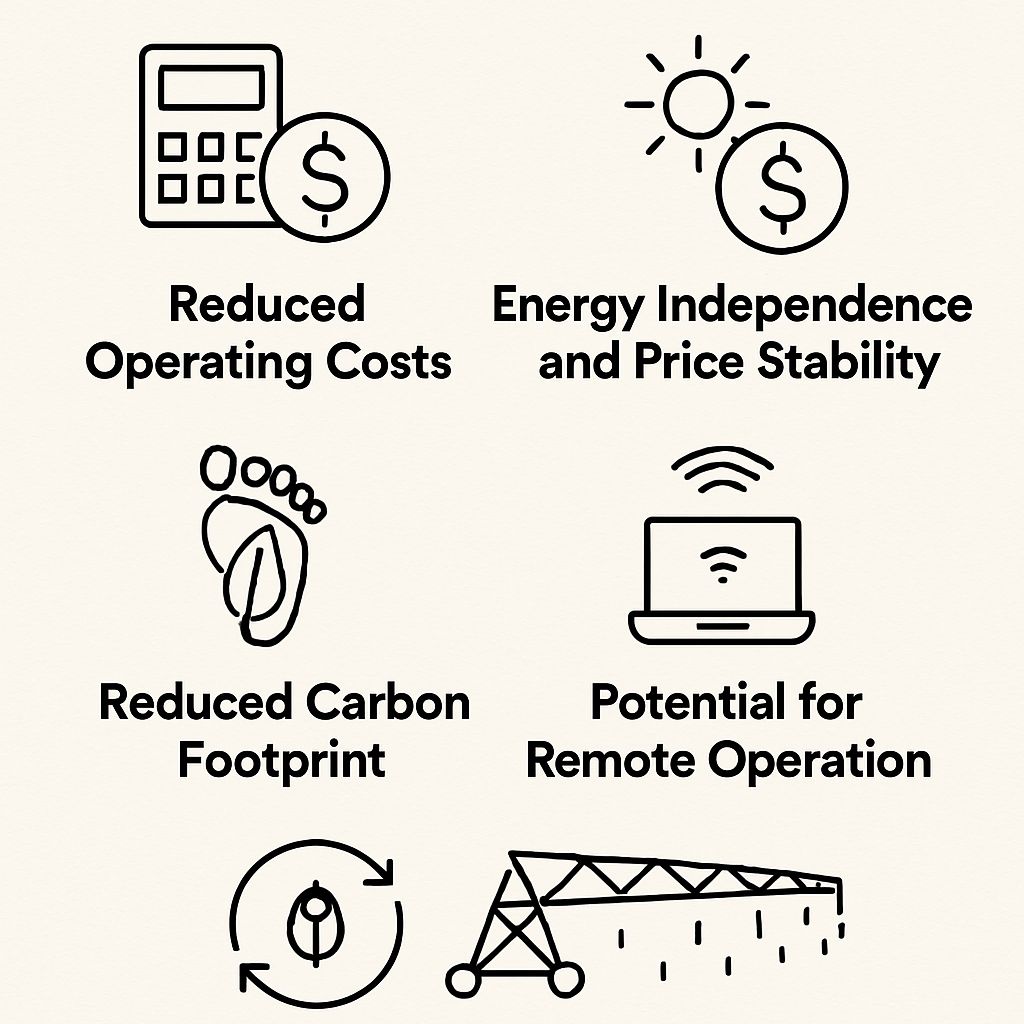
5 Key Benefits of Solar-Powered Center Pivot Systems
Beyond pure economics, solar irrigation delivers multiple operational advantages that contribute to overall farm sustainability and resilience. These benefits compound over time, creating value that extends well beyond simple energy cost savings. Many farmers report that these secondary benefits ultimately prove more valuable than the direct financial returns initially calculated when considering the technology.
1. Reduced Operating Costs
The most immediate benefit comes from dramatically lower energy expenses, with most systems reducing conventional energy costs by 60-90% depending on configuration and local utility rates. This reduction flows directly to the bottom line, enhancing profitability even during market downturns when commodity prices face pressure. For a typical quarter-section pivot operating 1,000 hours annually, this translates to $5,000-$12,000 in first-year savings, with increasing benefits as conventional energy prices rise over time.
2. Energy Independence and Price Stability
Solar-powered systems insulate farm operations from volatile energy markets and unpredictable utility rate increases. This protection proves particularly valuable in rural areas where grid reliability issues can cause irrigation disruptions during critical growing periods. Farmers with solar systems report significantly reduced stress during extreme heat or drought conditions when regional energy demand spikes, knowing their irrigation capabilities remain unaffected by potential brownouts or rolling blackouts.
The long-term price certainty of solar-generated electricity allows for more accurate crop planning and budgeting, eliminating energy as a variable expense. This stability enhances overall farm financial resilience and improves access to operating credit as lenders increasingly value predictable input costs when evaluating agricultural loans. For farmers interested in learning more about the integration of solar panels with irrigation systems, this guide on solar panel systems for center pivot irrigation provides valuable insights.
3. Reduced Carbon Footprint
Each solar-powered pivot system typically offsets 20-30 metric tons of carbon dioxide emissions annually compared to conventional grid electricity. This reduction creates potential value through emerging carbon credit markets that monetize emission reductions, with several agricultural-focused carbon programs now specifically including irrigation energy transitions in their protocols. Beyond potential financial incentives, many farmers report that environmental stewardship aspects align with personal values and multi-generational land management philosophies.
The environmental benefits extend beyond carbon reduction to include eliminated risks of fuel spills associated with diesel systems and reduced air pollutants that can impact worker health and neighboring communities. As agricultural sustainability increasingly factors into supply chain decisions and consumer preferences, these environmental attributes may create market access advantages and potential premium opportunities. Learn more about agrivoltaics and their combined benefits.
4. Potential for Remote Operation
Solar-powered systems paired with modern control technology enable sophisticated remote management capabilities, even in locations without reliable cellular coverage. Many installations include satellite or low-power radio communications that allow farmers to monitor and adjust irrigation parameters from anywhere with internet access. This capability reduces labor requirements while improving irrigation precision through real-time system adjustments based on changing weather conditions or crop needs.
Advanced systems now integrate soil moisture sensors, weather monitoring, and crop growth models to automatically optimize irrigation scheduling, maximizing both water and energy efficiency. These smart irrigation features typically deliver additional 15-30% water savings beyond standard pivot efficiency, creating significant conservation benefits in water-stressed regions.
5. Extended Equipment Lifespan
The consistent power delivery of properly designed solar systems eliminates voltage fluctuations that often damage pump motors and electrical components in conventional setups. Many farmers report reduced maintenance costs and longer equipment life after converting to solar power, with typical motor lifespans increasing 30-50%. The elimination of mechanical engine components in diesel conversions removes numerous failure points while dramatically reducing maintenance requirements and associated downtime risks.
Practical Implementation Challenges
Despite compelling benefits, implementing solar-powered irrigation requires addressing several practical challenges. Understanding these limitations helps farmers develop realistic expectations and appropriate implementation strategies. With proper planning, most obstacles can be effectively mitigated, but they require thoughtful consideration during system design and installation phases.
Land Requirements for Solar Arrays
Ground-mounted solar arrays typically require 0.5-1 acre of land per 25-30 kilowatts of capacity—space that could otherwise produce crops. This land allocation represents a real opportunity cost that should factor into economic assessments. Creative solutions include mounting panels on non-productive areas near pivot points, utilizing field margins, or implementing elevated mounting systems that allow continued grazing or limited cultivation beneath panels. For more details on these innovative solutions, check out this guide for farmers.
Some innovative farmers have integrated solar arrays with pollinator habitat or specialty crop production, creating dual-use scenarios that maximize land productivity. Recent developments in agrivoltaics—the simultaneous use of land for both solar energy production and agriculture—show promise for reducing this tradeoff through systems designed specifically for agricultural integration.
Weather Variability and System Reliability
Solar generation varies with weather conditions, creating potential challenges for irrigation scheduling during extended cloudy periods. Properly designed systems address this variability through oversized solar arrays, battery storage components, or hybrid configurations that incorporate grid backup or small generators for supplemental power. Advanced weather forecasting integration allows for proactive irrigation scheduling that maximizes solar utilization while maintaining optimal crop moisture levels.
Seasonal variation in solar production requires careful system sizing to balance peak summer irrigation demands with available energy. Most agricultural systems optimize for mid-season requirements, accepting that early and late-season irrigation might require supplemental power sources in some regions. This design approach typically delivers the most favorable economics while ensuring reliable operation during critical growth periods. Learn more about how solar panels impact farm economics and their benefits.
Maintenance Considerations
While solar panels require minimal maintenance compared to engine-driven alternatives, they do need regular inspection and occasional cleaning to maintain optimal performance. Dust accumulation can reduce energy production by 5-15% in agricultural environments, making periodic panel cleaning an important operational consideration. Most farmers establish quarterly inspection routines that include checking electrical connections, monitoring inverter performance, and clearing vegetation that might shade panels. For more detailed guidance on integrating solar panels with irrigation systems, you can refer to this solar panel systems guide for farmers.
Snow removal presents a winter maintenance challenge in northern regions, though most agricultural systems operate seasonally and can tolerate some winter production losses. For year-round operations, steeper mounting angles facilitate natural snow shedding, minimizing manual clearing requirements. The solid-state nature of photovoltaic technology means no moving parts to wear out, contributing to exceptional reliability and minimal maintenance compared to conventional alternatives.

Real-World Performance: Farmers Who Made the Switch
The most compelling evidence for solar irrigation comes from farmers who have successfully implemented these systems across diverse agricultural environments. Their real-world experiences provide valuable insights beyond theoretical projections, highlighting both challenges and benefits encountered during actual implementation. Case studies consistently show that while initial transitions require adjustment, the long-term outcomes typically exceed expectations in both financial and operational dimensions. For more information on how farmers are benefiting from switching to solar power, check out this detailed analysis.
Corn Belt Success Stories
Nebraska farmer James Wentworth converted three center pivots to solar power in 2019, utilizing a 75-kilowatt system that eliminated approximately $18,000 in annual electricity costs. His system incorporated smart controllers that automatically adjust irrigation schedules based on available solar production, optimizing water application during peak generation periods. After accounting for a 25% REAP grant and federal tax incentives, his net investment reached payback in just under four years. “Beyond the financial returns, I’ve gained peace of mind knowing exactly what my irrigation energy costs will be for the next twenty-plus years,” Wentworth explains. “That predictability is invaluable when planning crop rotations and evaluating potential market contracts.”
Adaptations for Different Climates and Crops
In California’s Central Valley, specialty crop producer Elena Mendoza implemented a solar-battery hybrid system to power precision drip irrigation for her high-value almond orchards. Her 120-kilowatt array coupled with 60 kWh of lithium battery storage enables 24-hour irrigation cycles that maximize water efficiency while eliminating approximately $32,000 in annual electricity expenses. The system’s sophisticated controls integrate weather forecasting data to proactively adjust irrigation schedules, ensuring optimal moisture levels even during variable weather conditions.
Colorado potato grower Michael Chen took a phased approach, initially converting one pivot to solar while maintaining conventional power for others. This cautious strategy allowed him to evaluate performance before expanding. After documenting first-year energy savings exceeding projections by 15%, he proceeded with converting three additional pivots the following season. “The most surprising benefit has been irrigation reliability,” Chen notes. “We no longer face power quality issues during peak summer demand, when grid voltage fluctuations previously caused pivot malfunctions during critical tuber development stages.” For more insights on this topic, check out solar irrigation systems.
Is Solar Irrigation Right for Your Farm?
Determining whether solar irrigation makes sense for your specific operation requires holistic evaluation of multiple factors beyond simple payback calculations. The ideal candidates typically have substantial irrigation energy requirements, favorable solar exposure, and operational flexibility that allows for some adaptation of irrigation scheduling. Local utility policies regarding net metering, standby charges, and interconnection requirements also significantly impact project viability and should be thoroughly investigated during preliminary assessment.
Farm Size and Energy Usage Assessment
Operations with annual irrigation electricity expenses exceeding $8,000-10,000 typically find the most compelling economic case for solar conversion. This threshold ensures sufficient energy consumption to justify the fixed costs associated with system design, permitting, and installation. Farmers should analyze at least three years of historical energy bills to establish accurate baseline consumption patterns and identify seasonal variations that might affect system sizing. For a comprehensive guide on integrating solar panels with center pivot irrigation, check out this solar panel systems guide for farmers.
The consistency of irrigation requirements also matters significantly, with predictable patterns offering more straightforward optimization than highly variable needs. Crops requiring regular, scheduled irrigation throughout the growing season align particularly well with solar generation patterns and typically show the strongest economic returns. Farms already utilizing soil moisture monitoring and precision irrigation management often achieve even better results by fine-tuning water application timing to maximize solar utilization.
Field layout and proximity to existing electrical infrastructure should also factor into assessment, as panel placement efficiency and interconnection costs can substantially impact overall project economics. Centralizing solar production near multiple pivot points often improves returns by reducing wiring distances and maximizing energy utilization across multiple irrigation systems.
Location and Solar Resource Evaluation
Geographic location significantly impacts solar production potential, with southwestern states typically offering 20-30% more annual generation than northeastern regions for identical system sizes. However, even areas with moderate solar resources can achieve compelling economics when offsetting high electricity rates or expensive diesel operation. Professional solar assessment using tools like the National Renewable Energy Laboratory’s PVWatts Calculator provides location-specific production estimates accounting for historical weather patterns, seasonal sun angles, and typical cloud cover.
Local shading factors including nearby structures, tree lines, and topographical features require on-site evaluation to ensure optimal panel placement. Most agricultural installations prioritize unobstructed southern exposure with minimal early morning or late afternoon shading that might reduce production during peak irrigation seasons. Preliminary site assessments typically identify multiple potential array locations that balance solar exposure, proximity to irrigation equipment, and minimized impact on productive cropland. For a comprehensive guide on integrating solar panels with irrigation systems, check out this solar panel systems guide for farmers.
Integration with Existing Equipment
Most center pivot systems can be adapted to solar power with minimal modification, though older equipment may require controller upgrades or motor replacements to optimize performance with variable power availability. Variable frequency drives (VFDs) often prove essential for effective solar integration, allowing motors to operate efficiently across different power levels as solar production fluctuates throughout the day. These drives typically add $2,000-5,000 to project costs but significantly improve system performance and often extend motor lifespan through reduced mechanical stress.
Farmers should evaluate existing pump specifications to determine compatibility with solar operation, as oversized pumps may perform poorly under variable power conditions. Right-sizing water delivery systems to match both crop requirements and available solar energy often improves overall irrigation efficiency while reducing capital costs for solar equipment. Most agricultural solar specialists recommend comprehensive irrigation audits before finalizing system designs, identifying potential efficiency improvements that might reduce required solar capacity and associated investment.
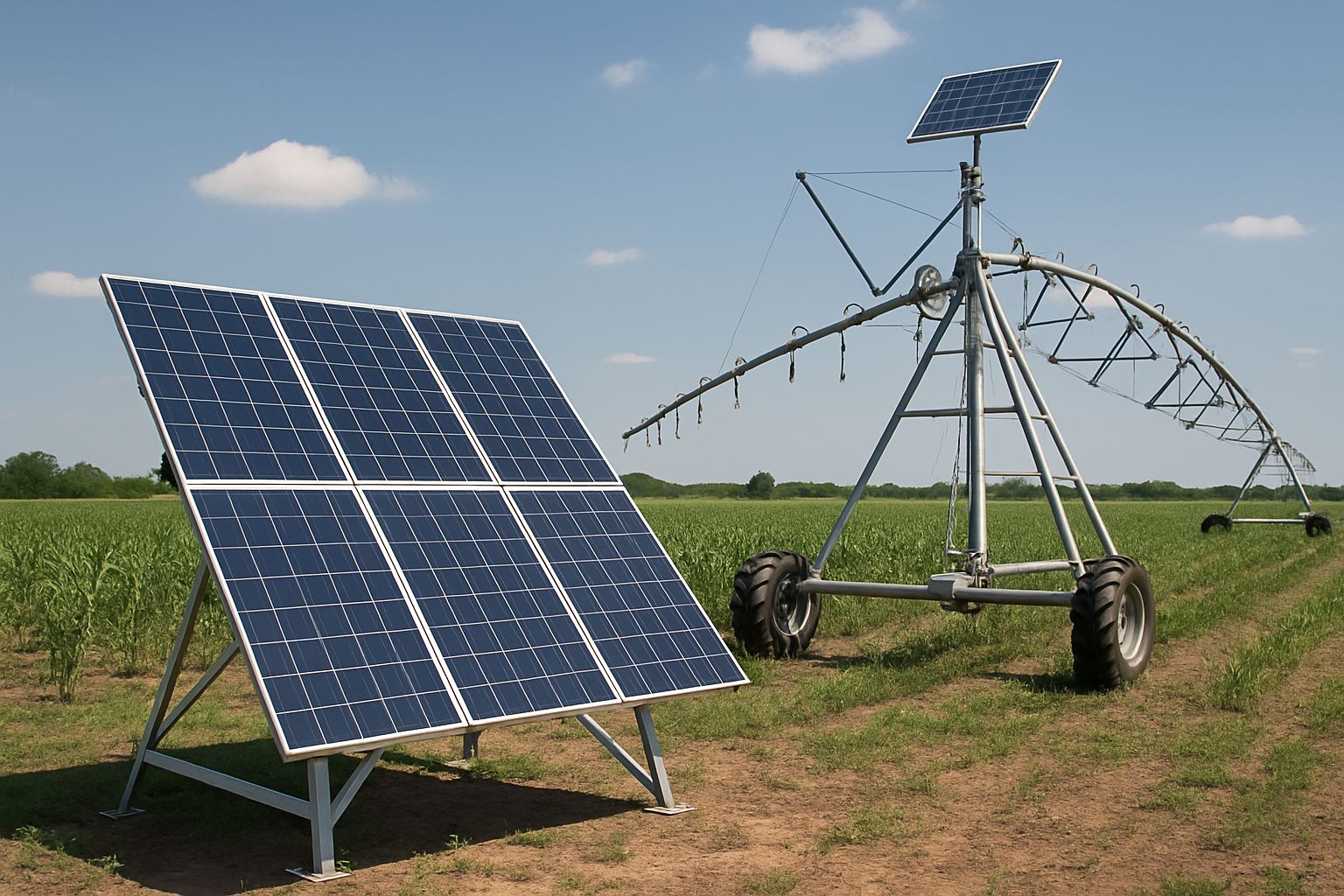
Is Solar-Powered Center Pivot Irrigation Worth the Farmer’s Investment
For most irrigated operations facing rising energy costs, solar power represents a financially sound long-term investment that simultaneously addresses operational, environmental, and risk management objectives. While individual circumstances vary, the combination of declining solar costs, improving technology performance, and generous incentive programs has created a compelling value proposition across diverse agricultural regions. Farmers who approach implementation thoughtfully—starting with professional assessment and developing realistic expectations—typically report high satisfaction with their transition to solar-powered irrigation. As weather patterns become less predictable and energy markets increasingly volatile, the stability and resilience provided by renewable irrigation systems deliver value that extends well beyond simple cost savings calculations.
Frequently Asked Questions
The following questions represent those most commonly raised by farmers considering solar irrigation adoption. These practical considerations address real-world implementation concerns that often arise during the evaluation process.
How much does a solar-powered center pivot irrigation system cost?
Complete solar irrigation systems typically cost between $1,500 and $2,500 per kilowatt of capacity installed, before applying available incentives. A medium-sized 40-kilowatt system sufficient for a typical quarter-section pivot might cost $60,000-100,000 depending on site-specific factors, component selection, and local installation costs. After applying federal tax credits and potential USDA grants, net farmer investment often reduces to $30,000-60,000, substantially improving project economics.
Installation costs vary significantly by region and system complexity, with ground preparation, mounting systems, and electrical integration representing substantial portions of total expense. Remote locations may incur additional costs for specialized equipment transportation or crew accommodations. Most solar providers offer free preliminary estimates based on satellite imagery and basic farm information, followed by detailed proposals after conducting on-site assessments. For more insights on how solar panels can affect farm economics, explore the impact of solar panels on farm economics.
Will solar panels generate enough power for my irrigation needs?
Properly sized solar arrays can meet 90-100% of irrigation requirements in most agricultural regions, though system design must account for local solar resources, irrigation schedules, and specific crop water needs. A typical center pivot requiring 25 horsepower might need a 30-40 kilowatt solar array to ensure sufficient power generation throughout the irrigation season. Professional system designers analyze both historical energy consumption and projected irrigation requirements to determine appropriate system sizing. To learn more about solar irrigation systems, check out what every farmer needs to know.
Solar production aligns naturally with seasonal irrigation needs, with maximum generation occurring during summer months when water requirements typically peak. This natural synchronization improves system economics compared to many other agricultural applications. Daily generation patterns generally match evapotranspiration curves, with maximum solar production occurring during periods of highest potential water loss. Learn more about how solar panels transform modern farming operations.
- Western irrigated regions typically achieve 1,800-2,200 kWh annual production per kilowatt of installed solar capacity
- Midwestern farms average 1,400-1,800 kWh per kilowatt annually
- Southeastern operations typically generate 1,300-1,700 kWh per kilowatt of capacity
- Tracking systems can increase production by 25-35% but add complexity and maintenance requirements
- Bifacial panels, which capture reflected light from both sides, can improve performance by 5-15% in agricultural settings
Most agricultural systems incorporate some oversizing to ensure sufficient power during partly cloudy conditions and to accommodate future irrigation expansion needs. This approach typically adds 10-20% to initial system costs but improves operational reliability and provides growth capacity as water efficiency improvements potentially allow irrigating additional acreage. To learn more about how solar irrigation systems benefit farmers, check out this detailed guide.
Can I still irrigate at night with a solar system?
Night irrigation requires either battery storage or grid connectivity, as direct solar systems only operate during daylight hours. Battery solutions have become increasingly viable as costs have declined approximately 80% over the past decade. A typical battery system sized for overnight operation might add $20,000-40,000 to project costs but enables 24-hour irrigation capability independent of grid availability. These systems typically store excess daytime production to power 4-8 hours of nighttime operation, depending on system design and irrigation requirements.
Grid-tied systems offer another solution, using conventional power during nighttime hours while potentially earning credits for excess daytime solar production through net metering arrangements. This approach minimizes battery investment while maintaining operational flexibility. Many farmers implement hybrid approaches that incorporate limited battery capacity for critical periods while maintaining grid connections for extended operations or backup during unusual weather patterns. These flexible configurations balance investment costs against operational priorities while maximizing system resilience.
What maintenance do solar irrigation systems require?
Solar arrays require minimal maintenance compared to engine-driven alternatives, with no moving parts to wear out or fluids to replace. Routine maintenance typically includes quarterly visual inspections, annual electrical connection checks, and occasional panel cleaning as needed based on local dust conditions. Most farmers handle basic maintenance themselves after receiving training during system commissioning, while scheduling professional inspections every 3-5 years to verify optimal performance and address any developing issues before they impact production.
How long do solar panels on irrigation systems typically last?
Modern solar panels carry 25-year manufacturer warranties guaranteeing at least 80% of original production capacity throughout this period, with actual field experience suggesting 30-40 year functional lifespans are realistic. Most panels degrade at approximately 0.5% annually, maintaining excellent production capabilities throughout multiple decades of operation. Inverters typically carry 10-15 year warranties, with replacement generally required once during the system’s lifespan at a cost representing approximately 10% of initial investment. For more information on the benefits of solar irrigation systems, visit our detailed guide.
The long operational life of solar equipment creates exceptional long-term value, as systems continue producing significant energy savings long after achieving financial payback. Many farmers view solar irrigation as infrastructure investments similar to land improvements, with benefits extending across generations of farm operation. This longevity contrasts sharply with conventional equipment that typically requires replacement every 7-10 years, creating recurring capital expenditure cycles.
Most solar-powered irrigation systems increase property values proportionally to their income-generating potential, with appraisers increasingly recognizing the asset value of renewable energy infrastructure that delivers predictable operational savings. This capitalized value becomes particularly significant during farm transitions or refinancing, often exceeding the original net investment within 5-7 years of installation. For more information on these systems, check out what every farmer needs to know.
As weather patterns become less predictable and energy costs continue rising, solar irrigation systems deliver both immediate operational benefits and long-term farm resilience. The technology has matured beyond early adoption into mainstream agricultural practice, with proven performance across diverse farming operations throughout the country. For more insights, check out this guide for farmers on integrating solar panel systems with center pivot irrigation.

Leave a Reply