
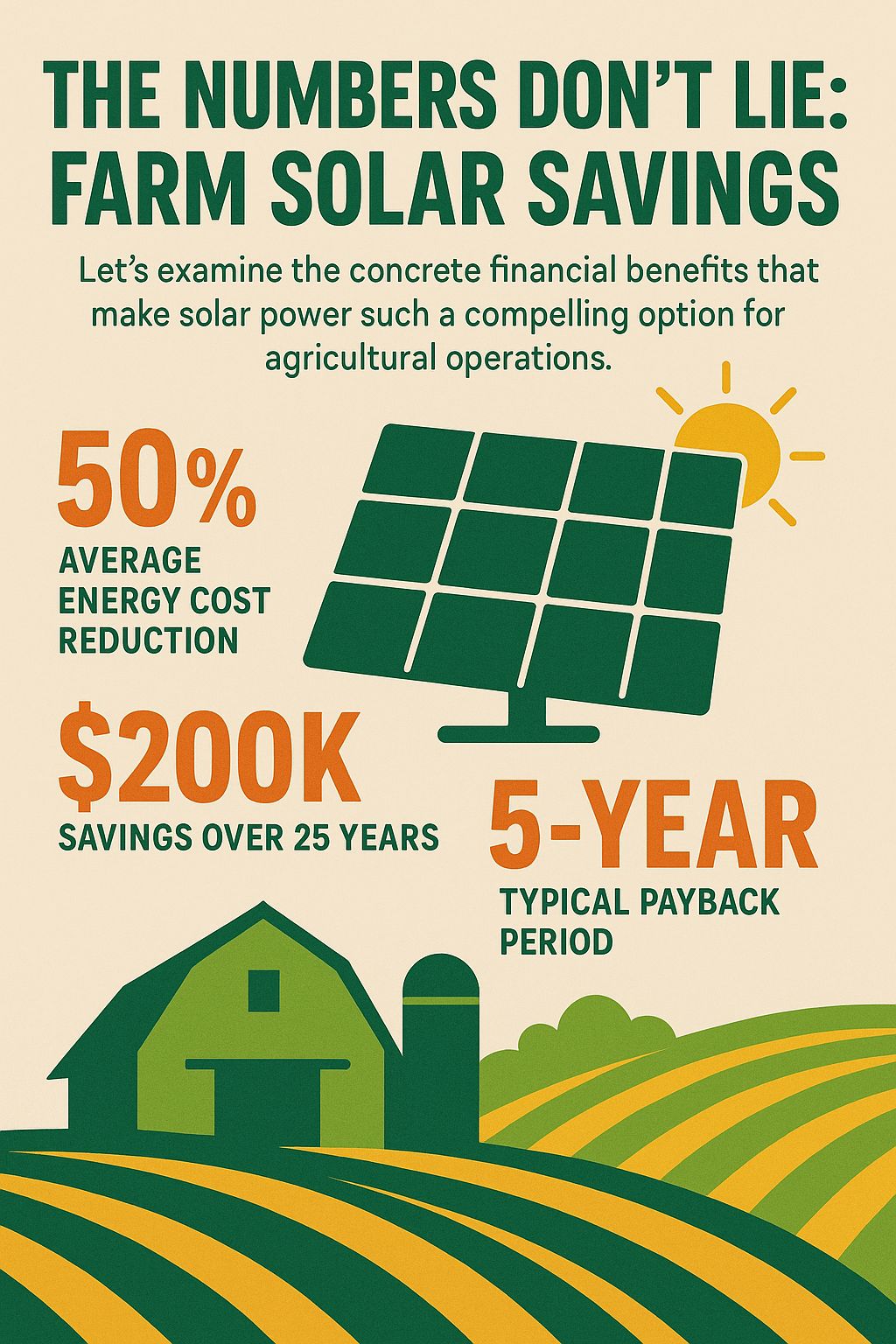
“Farm Energy Cost Reduction: Solar …” from growingsolarmist.com and used with no modifications.
Key Takeaways
- Solar installations can reduce farm operational costs by 30-100%, with many systems paying for themselves within 5-10 years.
- Federal tax incentives currently offer a 30% tax credit for agricultural solar installations, significantly lowering initial investment costs.
- Dual-use strategies like agrivoltaics and solar grazing create multiple revenue streams from the same land, increasing farm resilience.
- Modern solar systems require minimal maintenance with panel lifespans exceeding 25 years, providing decades of reliable farm power.
- Farms with solar installations report enhanced operational stability during grid outages and extreme weather events.
Rising Energy Costs Are Eating Farm Profits
Farm energy costs have skyrocketed by nearly 40% over the past decade, creating an increasingly painful expense line in agricultural budgets. From powering irrigation systems and climate-controlled barns to running processing equipment and cold storage, electricity often represents 5-10% of a farm’s operating expenses. For dairy operations, poultry farms, and greenhouse growers, that percentage can climb even higher. These rising costs arrive at a time when margins in agriculture continue to tighten, squeezing farm profitability from multiple directions.
Climate volatility further compounds the problem by increasing energy demand. More frequent temperature extremes require additional cooling for livestock facilities in summer and supplemental heating in winter. Extended dry periods necessitate more irrigation pump runtime, while unpredictable weather patterns often force farmers to operate equipment during peak-rate hours when utility charges are highest.
The traditional utility model also leaves farms vulnerable to power disruptions and quality issues. Grid outages can devastate agricultural operations, particularly those with time-sensitive processes or climate-dependent systems. Livestock operations face particular risks when ventilation systems fail, while irrigation interruptions during critical growth periods can significantly impact crop yields. This combination of rising costs, reliability concerns, and sustainability pressures has created a perfect storm driving farmers toward energy independence.

“Solar Panels Benefits, Run Farm …” from growingsolarmist.com and used with no modifications.
Solar Power Solutions That Pay For Themselves
Solar energy systems have emerged as a financially viable solution to agricultural energy challenges. Unlike many farm investments that depreciate over time, properly installed solar arrays appreciate in value as electricity rates continue to climb. Most agricultural solar installations generate positive returns within 5-10 years while continuing to produce power for 25-30+ years. This extended production timeline transforms what was once just an expense—electricity—into a predictable, controllable asset that can be leveraged for decades.
- Grid-tied systems allow farms to offset purchased electricity and potentially sell excess generation
- Battery-backed systems provide critical power during outages, protecting sensitive operations
- Standalone microgrids can power remote agricultural facilities beyond utility lines
- Mobile solar solutions can follow seasonal operations or provide temporary power for field activities
The economics become particularly compelling when analyzing lifetime energy production costs. While fossil-fuel generation requires continuous fuel purchases and maintenance, solar systems produce energy with minimal operating expenses after installation. The levelized cost of electricity (LCOE) from farm solar installations now ranges from $0.04-$0.08 per kilowatt-hour compared to average agricultural utility rates exceeding $0.12 per kilowatt-hour in many regions. This permanent reduction in operating costs contributes directly to improved farm profitability.
Initial Investment vs. Long-Term Returns
Agricultural solar installations typically range from $2-$4 per watt for ground-mounted systems depending on scale and complexity. A mid-sized 100kW system—capable of powering substantial farm operations—generally requires an initial investment between $200,000-$400,000 before incentives. While this represents a significant capital outlay, current tax incentives immediately reduce this figure by 30% or more. The remaining investment generates returns through avoided electricity purchases, potential income from excess generation, and increased property values.
Modern solar equipment has evolved to withstand agricultural environments, with quality panels maintaining 80%+ efficiency after 25 years of operation. Inverters—the components that convert solar DC power to usable AC electricity—typically carry 10-15 year warranties with straightforward replacement protocols. This durability translates to predictable performance that financial institutions increasingly recognize as loan-worthy, with many agricultural lenders now offering specific financing programs for farm solar projects.
What truly distinguishes solar investments from other farm capital expenses is their inflation-hedging capability. As utility rates increase (historically 2-4% annually), the value of self-generated power rises proportionally. This creates an unusual situation where the return on investment actually improves over time rather than diminishes. For farm operations with significant electricity consumption, this long-term financial benefit often makes solar installation one of the most financially sound investments available.
Payback Period: When Solar Starts Earning Its Keep
The solar payback period represents how long it takes for energy savings to equal your initial investment. For most agricultural operations, this timeline typically ranges from 5-10 years depending on electricity usage patterns, local utility rates, and available incentives. High-consumption operations like dairy farms, which use electricity for milk cooling, ventilation, and processing, often see the fastest payback periods. Irrigation-dependent farms in regions with high electricity rates can similarly achieve rapid returns, sometimes breaking even in as little as 4-5 years.
What many farmers find surprising is how dramatically incentives can accelerate this timeline. When combining the 30% federal tax credit with state-specific agricultural solar incentives and USDA grants, some operations have reduced their effective payback period to under three years. After this breakeven point, the system essentially provides free electricity for the remainder of its 25+ year lifespan. This represents decades of operational cost advantage over competitors still paying ever-increasing utility bills. For more information, check out the tax incentives that make solar panels more affordable than ever for farmers.
The financial analysis becomes even more favorable when considering time-of-use billing structures increasingly implemented by utilities. Many agricultural activities align perfectly with peak solar production hours, allowing farms to offset the highest-priced electricity periods. Irrigation pumping, packing operations, and cold storage cooling often occur during daylight hours when solar generation is at maximum capacity. This natural alignment maximizes the value of each kilowatt-hour produced.
Maintenance Costs You Actually Need to Budget For
Contrary to common misconceptions, solar systems require minimal maintenance once installed. Most agricultural solar arrays operate with no moving parts and minimal intervention requirements. Annual panel cleaning in dusty regions may be necessary, though many installations rely simply on natural rainfall to maintain performance. Monitoring systems automatically alert owners to any production anomalies, allowing for prompt troubleshooting if issues arise. For more on the economic benefits, explore the benefits of agrivoltaics for farmers.
The most significant maintenance consideration involves inverter replacement, typically scheduled once during a system’s lifespan. Modern string inverters generally carry 10-15 year warranties, with replacement costs ranging from $0.10-$0.20 per watt of system capacity. Some farmers opt for microinverters attached to individual panels, which carry longer warranties (often 25 years) but higher initial costs. This predictable maintenance timeline allows for straightforward financial planning without the surprise expenses common with fossil fuel generators or grid connections.
“Our 200kW system has required exactly two service visits in seven years – once for a minor inverter issue covered under warranty, and once after a lightning strike. Compare that to our diesel backup generator that seems to need attention every other month.” – James Wilson, Wilson Family Dairy
Farm-Friendly Solar Incentives Cut Your Costs
The agricultural sector enjoys some of the most advantageous solar incentives available to any industry. These programs acknowledge both the economic challenges facing farmers and the environmental benefits of rural renewable energy development. The layering of federal, state, and utility incentives can dramatically improve project economics, often reducing initial costs by 50-70% when properly combined. Understanding and accessing these incentives represents one of the most significant opportunities for agricultural operations considering solar investments.
What makes farm solar particularly attractive from an incentive perspective is the unique ability to qualify for both agricultural support programs and renewable energy initiatives simultaneously. Many farmers discover they’re eligible for funding sources they never previously considered, from rural development grants to sustainable agriculture programs. The key lies in understanding how these incentives interact and how to structure projects to maximize eligibility across multiple programs.
Federal Tax Credits That Slash Installation Expenses
The federal Investment Tax Credit (ITC) provides a straightforward 30% credit against tax liability for solar systems installed before 2033. This dollar-for-dollar reduction in federal taxes effectively discounts system costs by nearly a third immediately. For a $300,000 agricultural solar installation, this translates to $90,000 in direct tax savings. Unlike many agricultural tax incentives, the solar ITC remains stable through 2032 before beginning a gradual step-down, creating a predictable planning window for farm investments.
What many agricultural operations overlook is the ability to carry forward unused tax credits for up to 20 years if their tax liability in the installation year is insufficient. This flexibility proves particularly valuable for farms with fluctuating profitability due to weather conditions or market volatility. For partnerships and S-corporations common in agriculture, these credits pass through to individual owners, potentially offsetting income from both farm and non-farm sources.
State-Specific Agricultural Solar Programs
Beyond federal incentives, most states offer additional programs specifically targeting agricultural renewable energy adoption. These range from property tax exemptions that prevent solar installations from increasing farm property taxes to specialized grant programs for on-farm energy projects. California’s Net Energy Metering Aggregation (NEMA) program allows farmers to offset electricity usage across multiple agricultural meters with a single solar array, while New York’s NY-Sun program provides additional per-watt incentives for farm installations. Massachusetts offers its SMART program with specific agricultural solar tariff adders that can increase revenue by 15-30% for dual-use systems that maintain agricultural production.
Many states have established specialized “Ag Energy” programs through their departments of agriculture or rural development agencies. These programs frequently offer technical assistance alongside financial incentives, helping farmers navigate the complexities of solar development. Some provide energy audit services that identify the most cost-effective solar applications specific to each operation’s energy usage patterns. The availability and structure of these programs vary significantly by location, making local research essential for maximizing benefits. For more insights on the financial benefits of solar panels, exploring specific incentives can be highly beneficial.
USDA REAP Grants: Free Money for Farm Solar
The USDA’s Rural Energy for America Program (REAP) stands as perhaps the most powerful solar incentive available to agricultural producers. This program offers grants covering up to 50% of project costs (maximum $1 million) and loan guarantees for renewable energy systems and energy efficiency improvements. Unlike tax credits that require tax liability to monetize, REAP grants provide direct cash funding that reduces initial capital requirements. Competition for these grants remains strong but farms with well-prepared applications focusing on energy intensity, environmental benefits, and economic impact consistently secure funding.
USDA REAP Grants: Free Money for Farm Solar
The USDA’s Rural Energy for America Program (REAP) stands as perhaps the most powerful solar incentive available to agricultural producers. This program offers grants covering up to 50% of project costs (maximum $1 million) and loan guarantees for renewable energy systems and energy efficiency improvements. Unlike tax credits that require tax liability to monetize, REAP grants provide direct cash funding that reduces initial capital requirements. Competition for these grants remains strong but farms with well-prepared applications focusing on energy intensity, environmental benefits, and economic impact consistently secure funding.
The application process involves demonstrating the technical feasibility of the project and documenting its energy production potential. Successful applicants typically partner with experienced solar developers who understand agricultural operations and can help navigate the technical requirements. Applications are accepted year-round with funding decisions made quarterly, allowing farmers to time installations with seasonal operational demands. Many state agricultural extension offices provide assistance with REAP applications, offering templates and review services to maximize approval chances.
Accelerated Depreciation Benefits for Farm Businesses
Beyond direct incentives, agricultural solar installations qualify for accelerated depreciation through Modified Accelerated Cost Recovery System (MACRS), allowing farms to deduct the depreciable basis over just 5 years instead of the system’s 25+ year lifespan. This accelerated schedule creates significant tax benefits during the early years of system ownership when combined with potential bonus depreciation options. For a typical farm operation in the 24% tax bracket, these depreciation benefits can effectively reduce system costs by an additional 15-20% beyond other incentives.
What makes these depreciation benefits particularly valuable for agricultural operations is their interaction with farm income fluctuations. In years with strong farm income, accelerated depreciation from solar assets can help manage tax exposure. During leaner years, farms can potentially carry forward unused depreciation benefits. Properly structured, these tax strategies allow agricultural operations to maximize the financial benefits of solar investments across variable market conditions while maintaining cash flow flexibility.
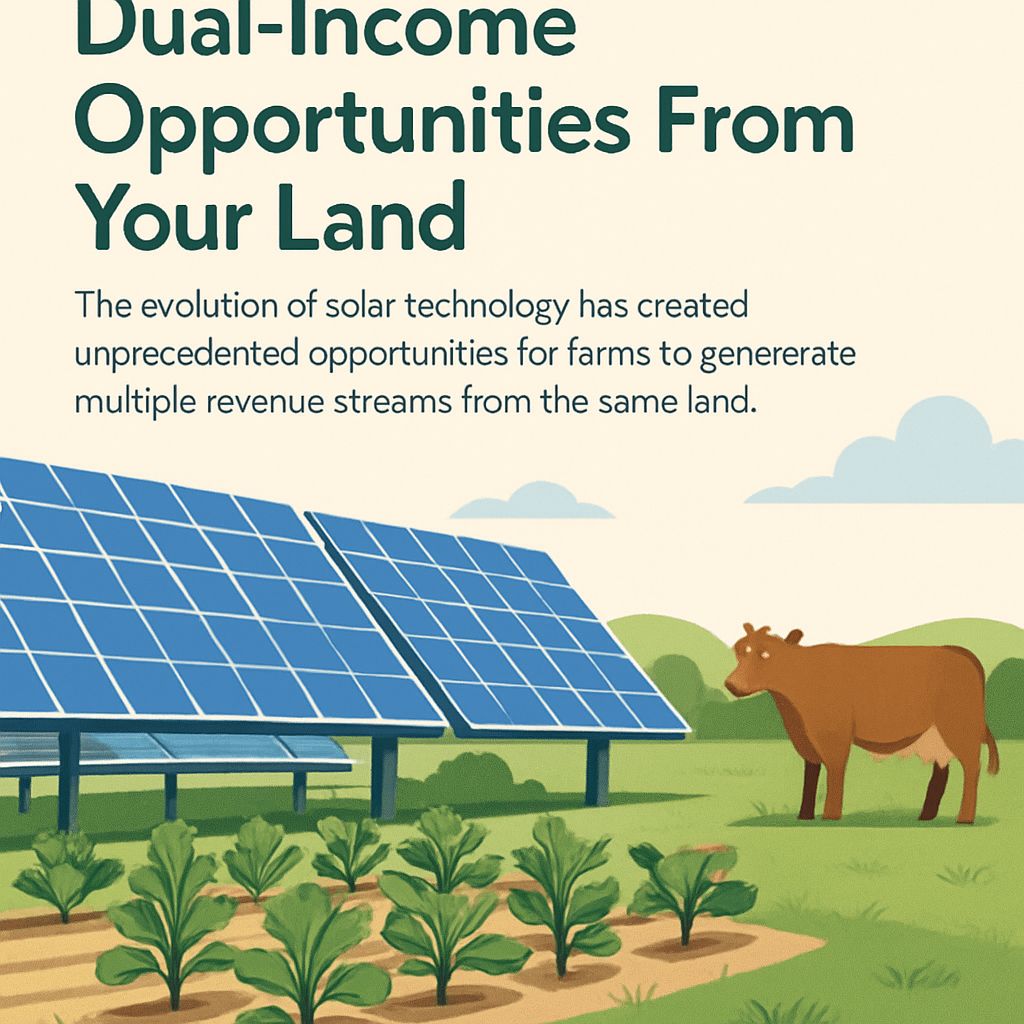
Dual-Income Opportunities From Your Land
The evolution of solar technology has created unprecedented opportunities for farms to generate multiple revenue streams from the same land. Unlike traditional energy development that often displaces agricultural production, modern approaches to solar integration can actually enhance farm income while maintaining or even improving land productivity. This dual-use approach, sometimes called “agrivoltaics,” represents one of the most promising innovations at the intersection of energy and agriculture.
Forward-thinking farmers now view solar not merely as an energy solution but as an agricultural diversification strategy that parallels crop rotation, value-added processing, or agritourism. The stable income from solar production can balance seasonal or market-driven fluctuations in traditional farm revenue, creating greater financial resilience. For multi-generational operations, this diversification often plays a crucial role in succession planning by providing predictable income streams that support transition periods.
Selling Excess Power Back to the Grid
Net metering programs allow farmers to sell surplus solar electricity back to utilities at retail or near-retail rates. When solar production exceeds farm consumption—common during midday hours or seasonal low-usage periods—the excess electricity flows to the grid, spinning meters backward and generating credits. These credits then offset purchases during high-consumption periods like irrigation season or evening operations. The financial benefit can be substantial, effectively turning underutilized daylight hours into revenue-generating opportunities.
Beyond basic net metering, some regions offer specialized agricultural solar tariffs that recognize the grid benefits of rural distributed generation. These programs may include premiums for solar production during peak demand periods or capacity payments for systems that help stabilize rural power distribution networks. Minnesota’s community solar gardens have created particularly lucrative opportunities for farmers, allowing them to lease small portions of land for solar development while receiving credits that offset electricity costs across multiple meters or properties.
For larger agricultural operations, participating in wholesale electricity markets represents an increasingly viable option. Power purchase agreements (PPAs) with utilities or corporate buyers can secure fixed electricity prices for 15-25 years, creating predictable revenue streams that complement traditional agricultural income. These arrangements often value the rural location of farm solar installations, which can address grid congestion issues while avoiding transmission losses associated with distant generation.
Solar Grazing: Livestock Management Under Panels
The space beneath solar arrays provides ideal grazing conditions for sheep, who naturally maintain vegetation without risking damage to panel systems. This solar grazing approach has created an entirely new agricultural business model where shepherds contract with solar facilities for vegetation management. For sheep producers, these arrangements provide access to additional grazing land without purchase costs while creating premium pricing opportunities for maintenance services. The controlled environment under panels often extends the grazing season by moderating temperature extremes and preserving soil moisture.
Beyond sheep, some innovative operations have incorporated free-range poultry beneath solar installations, creating dual revenue streams from both electricity and egg production. The panels provide natural shelter for birds while protecting them from aerial predators. Mobile chicken tractors can be designed to navigate between panel rows, allowing for rotational grazing that improves soil health while controlling insects and weeds. This integration particularly benefits pastured poultry operations by extending outdoor access periods and moderating temperature extremes that can stress birds.
Agrivoltaics: Growing Crops Between Solar Arrays
Research increasingly demonstrates that certain crops actually perform better under the partial shade of solar panels, particularly in hot, dry regions where water stress limits productivity. The panels create microclimate benefits including reduced evaporation, wind protection, and moderated temperature extremes that can extend growing seasons. Studies from the University of Arizona have documented 300% improvements in water efficiency for some crops grown under solar arrays compared to full-sun cultivation, while fruit quality metrics often improve through reduced sunscald and more consistent ripening.
Particularly well-suited crops include leafy greens, herbs, berries, vine crops, and certain specialty vegetables that benefit from filtered light. Some operations design special “agrivoltaic” arrays with wider spacing or elevated panels specifically to accommodate agricultural equipment between rows. The dual revenue streams from both electricity generation and high-value crop production can significantly outperform either solar or agriculture alone, sometimes doubling land productivity values. These integrated systems also demonstrate improved resilience to climate variability, with the partial shade providing crucial protection during extreme heat events. For more information on the economic benefits of agrivoltaics, you can visit this article.
Real Farms Getting Real Results With Solar
Across rural America, farms of all types and sizes are demonstrating the practical benefits of solar integration. These real-world examples move beyond theoretical advantages to show measurable impacts on farm profitability and sustainability. From multi-generational family operations to innovative new agricultural ventures, solar adoption continues to accelerate as farmers witness their neighbors’ success. These case studies particularly highlight how different agricultural sectors leverage solar in ways specific to their operational needs.
Dairy Farm Cuts $45,000 Annual Electric Bill
Mountain Dairy in Connecticut installed a 280kW system that now provides 85% of the operation’s annual electricity needs. With heavy electricity demands for milk cooling, pasteurization, and barn ventilation, the farm previously faced monthly utility bills exceeding $5,000. Their ground-mounted solar array now offsets nearly all this expense while providing shade for cattle during summer months. By incorporating a small battery backup system, they’ve also eliminated production losses from previously common grid outages that would spoil milk awaiting processing.
The project became financially viable through a creative combination of the federal tax credit, REAP grant funding covering 25% of costs, and an innovative “cow power” premium program where consumers voluntarily pay slightly more for dairy products from renewable-powered farms. The system achieved payback in just 4.5 years and now generates approximately $45,000 in annual avoided electricity costs. This improved cash flow has allowed the farm to expand production and add value-added processing that would have been cost-prohibitive under previous energy expenses.
Vegetable Operation Extends Growing Season Under Panels
Blue Barn Farm in Massachusetts pioneered an innovative agrivoltaic system where elevated solar panels are integrated directly above crop production areas. By carefully calibrating panel density and height, they’ve created ideal growing conditions for shade-tolerant crops including leafy greens, herbs, and root vegetables. The partial shade has reduced irrigation requirements by approximately 40% while extending the viable growing season for heat-sensitive crops by nearly six weeks. The microclimate created under the panels has effectively shifted their growing zone, allowing for crop varieties previously unsuitable for their region.
Beyond production benefits, the farm receives stable solar revenue through Massachusetts’ SMART program, which provides performance-based incentives for agricultural solar installations. This guaranteed income stream has enabled access to favorable financing for expanded processing facilities and cold storage that improves produce shelf-life. The farm reports that tour requests from other farmers have become so frequent they now host monthly “agrivoltaic field days” to demonstrate their system to interested producers.
Poultry Producer Powers Climate Control Systems
Sunrise Poultry in Georgia installed a 500kW solar array specifically sized to power their critical ventilation and cooling systems across six production houses. These climate control systems previously represented over 60% of operational costs and posed significant risk during summer power outages when heat stress could cause catastrophic bird loss within hours. The solar installation now provides reliable daytime power precisely when cooling demands peak, reducing both energy costs and operational risks. By incorporating a modest battery system, they’ve created a microgrid capable of maintaining essential functions even during extended utility outages.
The operation structured their solar investment to take advantage of USDA REAP grant funding, the federal tax credit, and accelerated depreciation benefits that collectively reduced effective system costs by nearly 70%. Their local utility’s agricultural solar program provided additional interconnection incentives that simplified grid integration. The system achieved financial payback in just over five years, with the most significant benefit being the avoided losses from heat-related mortality during increasingly frequent summer power disruptions. Learn more about how solar panels are revolutionizing farm operations.
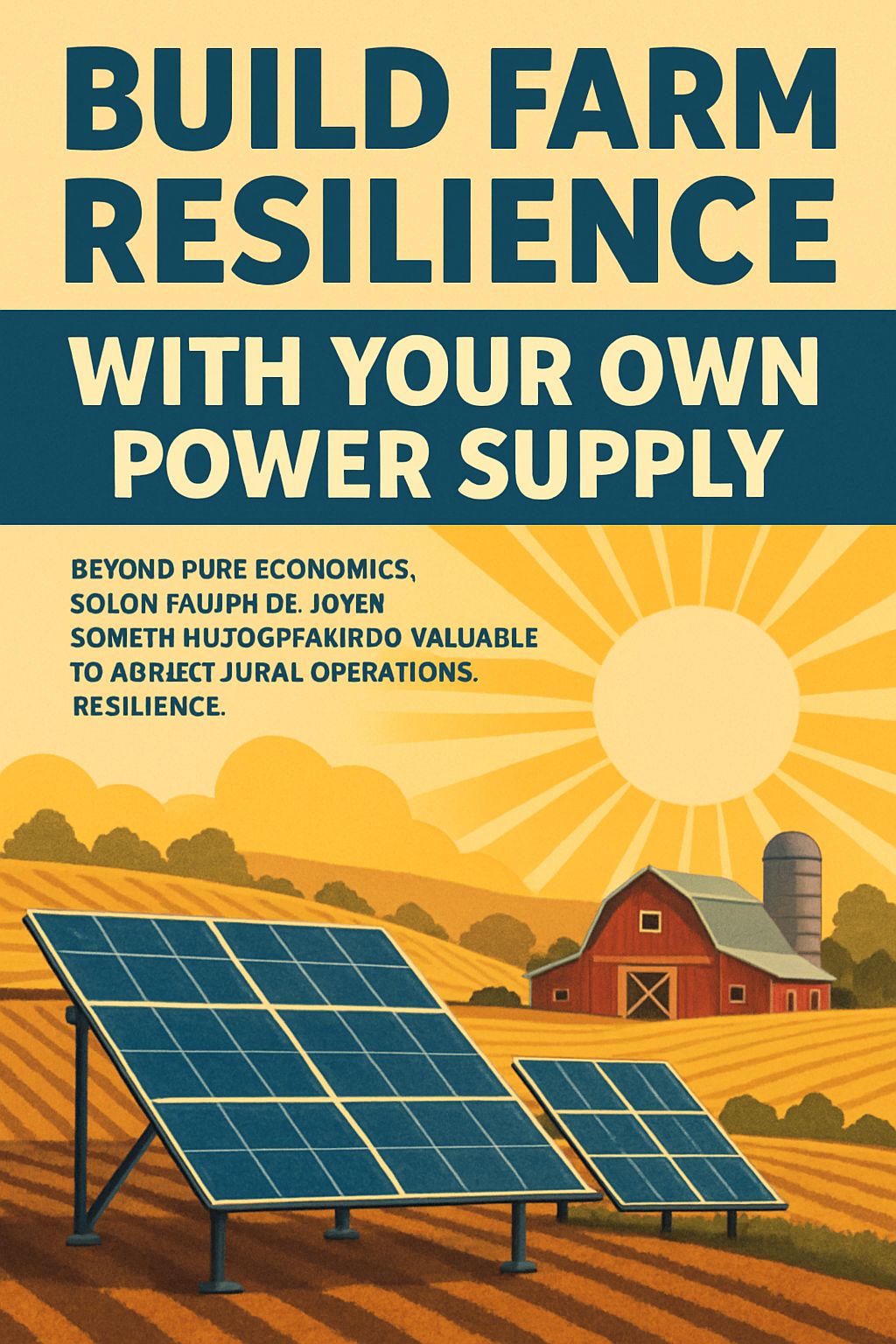
Build Farm Resilience with Your Own Power Supply
Beyond pure economics, solar power delivers something increasingly valuable to agricultural operations: resilience. As climate volatility increases and grid reliability challenges grow, farms with independent energy generation capacity gain significant operational advantages. Solar installations with proper storage integration can maintain critical functions during utility outages—keeping irrigation systems running during drought periods, maintaining ventilation in livestock facilities, or preserving cold chains for perishable products. This operational continuity has value far beyond simple energy cost savings, potentially preventing catastrophic losses during increasingly common extreme events.
The resilience benefits extend to financial dimensions as well. Farms with predictable energy costs gain advantages in forward contracting and long-term planning compared to operations subject to volatile utility pricing. The fixed nature of solar production costs creates budgeting certainty that improves access to operating loans and expansion capital. For multi-generational operations, energy independence through solar often becomes a key component of succession planning, reducing fixed costs for incoming farmers who may face tighter margins during transition periods. These combined resilience factors increasingly drive agricultural solar adoption even in regions where simple payback periods might be longer.
Frequently Asked Questions
The rapid evolution of agricultural solar technology often leaves farmers with important questions about implementation details. The following responses address the most common concerns raised by agricultural producers considering solar investments. While every farm situation differs, these general guidelines provide starting points for more detailed, site-specific analysis.
How much farmland do I need to dedicate to solar panels?
A ground-mounted solar system typically requires approximately 5-10 acres per megawatt of capacity, depending on panel efficiency and mounting configuration. For context, a 100kW system sufficient for many small to medium farm operations generally occupies about half an acre. However, modern agricultural solar approaches increasingly integrate production beneath or between panels, maintaining land in agricultural use while adding energy production. This dual-use approach effectively eliminates the “either-or” decision between farming and solar.
Many farms start with rooftop installations on existing structures like barns, equipment sheds, or processing facilities, which require zero additional land. These roof-mounted systems often provide sufficient capacity for immediate farm needs without any land use changes. For operations considering ground-mounted systems, strategic placement on less productive land—north-facing slopes, areas with poor soil quality, or flood-prone sections—can maximize overall farm productivity.
The land requirement question also depends significantly on the farm’s energy goals. Systems designed merely to offset existing electricity usage require much less space than those intended to generate substantial revenue through excess production. A thorough energy audit identifying current consumption patterns should precede any sizing decisions to ensure appropriate scale. Most agricultural operations find their optimal solar footprint represents less than 1% of total farm acreage while providing substantial energy benefits.
Can I still plant crops or graze animals where solar panels are installed?
Modern agrivoltaic designs specifically enable agricultural production beneath and between solar panels. Research from multiple agricultural experiment stations demonstrates that certain crops—particularly leafy greens, root vegetables, berries, and shade-tolerant herbs—often perform better in the modified microclimate created by partial panel shading. Panel heights can be adjusted to accommodate specific crops or farm equipment, with some systems elevating arrays 8-12 feet to allow standard tractor access underneath.
Do solar panels work effectively in cloudy or cold farming regions?
Solar panels actually perform more efficiently in cooler temperatures, often generating more electricity per rated watt in northern regions than in hot southern locations. While total annual production correlates with available sunlight, modern panel technology generates meaningful power even on overcast days. Germany—which receives similar sunlight to Alaska—leads Europe in solar adoption with over 50 gigawatts installed capacity.
What matters most for economic viability isn’t absolute production but rather the relationship between that production and local electricity rates. Many northern regions with lower solar resources also have higher electricity prices, creating favorable economics despite fewer peak sun hours. Additionally, snow reflection can actually boost production through the “albedo effect,” sometimes increasing output by 15-25% during winter months when panels are clear. For more information on how solar panels are revolutionizing farm operations, you can explore additional resources.
What happens to my solar system during extreme weather events?
Modern agricultural solar installations are engineered to withstand environmental conditions specific to their location, including maximum expected wind speeds, snow loads, and temperature extremes. Quality systems in hail-prone regions utilize specialized impact-resistant panels and mounting systems designed to absorb vibration. Most agricultural installations include monitoring systems that automatically secure arrays in protective positions when extreme conditions are detected.
The distributed nature of solar generation also provides inherent resilience advantages compared to centralized power. While large transmission systems often fail during storms, properly designed local solar+storage systems can continue operating independently. Many farms incorporate battery storage specifically sized to maintain critical functions during outages—keeping livestock ventilation systems running, maintaining refrigeration for perishable products, or powering essential security systems.
How do I find installers who understand agricultural solar needs?
The most reliable approach is seeking installers with specific agricultural project experience rather than just general solar credentials. Reputable agricultural solar specialists should provide farm-specific references and demonstrate understanding of agricultural electrical loads, seasonal usage patterns, and equipment integration requirements. State departments of agriculture, USDA Rural Development offices, and agricultural extension services often maintain lists of qualified installers with farm project experience.
The North American Board of Certified Energy Practitioners (NABCEP) certification represents the industry’s highest credential, though additional agricultural specialization remains important. Farmers should request examples of similar-sized agricultural installations and ask specifically about experience with relevant agricultural equipment integration—whether that’s irrigation pumps, dairy parlor systems, or grain drying facilities. Qualified installers should also demonstrate knowledge of agricultural-specific incentives beyond general solar programs.
Perhaps most importantly, choose partners willing to provide system monitoring and operational support appropriate for farm environments. Agricultural operations often lack dedicated facilities staff, making user-friendly monitoring and responsive service particularly valuable. The best agricultural solar providers offer remote system monitoring with automated alerts when production anomalies occur, along with clear maintenance protocols designed for farm implementation. For more insights, check out how solar panels are revolutionizing farm operations.
|
Farm Type |
Common Solar Applications |
Typical System Size |
Payback Period Range |
|---|---|---|---|
|
Dairy |
Milk cooling, ventilation, lighting |
75-300kW |
4-7 years |
|
Poultry |
Climate control, lighting, feed systems |
50-500kW |
5-8 years |
|
Irrigated Crops |
Pump operation, processing, cold storage |
30-200kW |
6-10 years |
|
Greenhouse |
Climate control, lighting, automation |
25-150kW |
5-9 years |
The transformation of farms from energy consumers to energy producers represents one of the most significant structural changes in modern agriculture. As solar technology continues advancing and agricultural integration models mature, the question for most operations shifts from “if” to “when” and “how” solar adoption makes sense. The combined benefits of cost reduction, revenue diversification, and operational resilience create compelling arguments across virtually all agricultural sectors.
The environmental benefits—while significant—often represent secondary considerations for farmers making these investments primarily for economic and operational reasons. This pragmatic approach has accelerated adoption rates as agricultural producers recognize solar not as an ideological choice but as a practical business strategy. The resulting emissions reductions and sustainability improvements happen almost as byproducts of sound farm business decisions.
Agricultural operations interested in exploring solar options should begin with a comprehensive energy audit to understand current consumption patterns and identify the most valuable applications for on-site generation. AgVolts provides specialized energy assessment services tailored specifically to farm operations, helping identify the optimal solar configurations that maximize both economic returns and operational benefits for your unique agricultural needs.
Solar panels have become an essential part of modern farming, offering numerous benefits that significantly impact farm economics. By harnessing solar energy, farmers can reduce their dependency on traditional energy sources, leading to substantial cost savings. Additionally, solar panels provide a sustainable energy solution that aligns with environmental goals. To explore how solar panels are revolutionizing farm operations, farmers are encouraged to consider the long-term advantages and potential financial incentives available.


Leave a Reply