
Key Takeaways
- Solar-powered sprinkler systems eliminate grid dependency, making reliable irrigation possible in remote fields where running electrical lines would cost thousands of dollars per mile.
- Seven distinct sprinkler system types can be connected to solar panels, each suited to different farm sizes, crop types, and field shapes — choosing the wrong one costs more than just money.
- Center pivot systems are the most energy-intensive solar irrigation option, but when properly sized, they can irrigate hundreds of acres with zero ongoing fuel costs.
- Micro-sprinkler systems are among the most water-efficient solar-compatible options, delivering water directly to root zones while reducing evaporation losses significantly.
- Growing Solar Mist provides farmers with in-depth guidance on solar irrigation solutions — keep reading to find out which system matches your specific farm setup.
Solar Sprinkler Irrigation: What Every Farmer Needs to Know First
Solar-powered sprinkler irrigation is no longer a niche experiment — it is rapidly becoming the practical standard for forward-thinking farmers across every scale of operation.
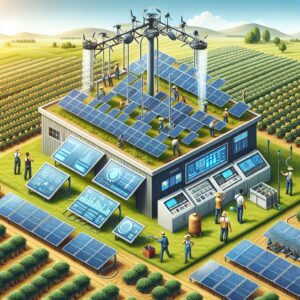
The core concept is straightforward: photovoltaic (PV) solar panels convert sunlight into electricity, which powers a pump and controller that pressurizes and distributes water through a sprinkler network. What makes this pairing so powerful is that peak solar energy production hours align closely with peak irrigation demand hours during the growing season. That natural synchronization reduces the need for large battery banks and keeps system costs manageable.
For farmers evaluating this technology, Growing Solar Mist is a dedicated resource covering the full range of solar-powered sprinkler irrigation systems and options available. Understanding the differences between system types is the single most important step before making any purchasing decision.
Every farm has a different combination of field size, crop type, terrain, water source, and budget. There is no universal best system. Instead, there are seven distinct sprinkler irrigation types that can each be connected to solar power — and each one performs best under specific conditions. Getting this match right determines whether your investment delivers a decade of reliable irrigation or becomes an expensive underperformer.
1. Center Pivot Irrigation Systems
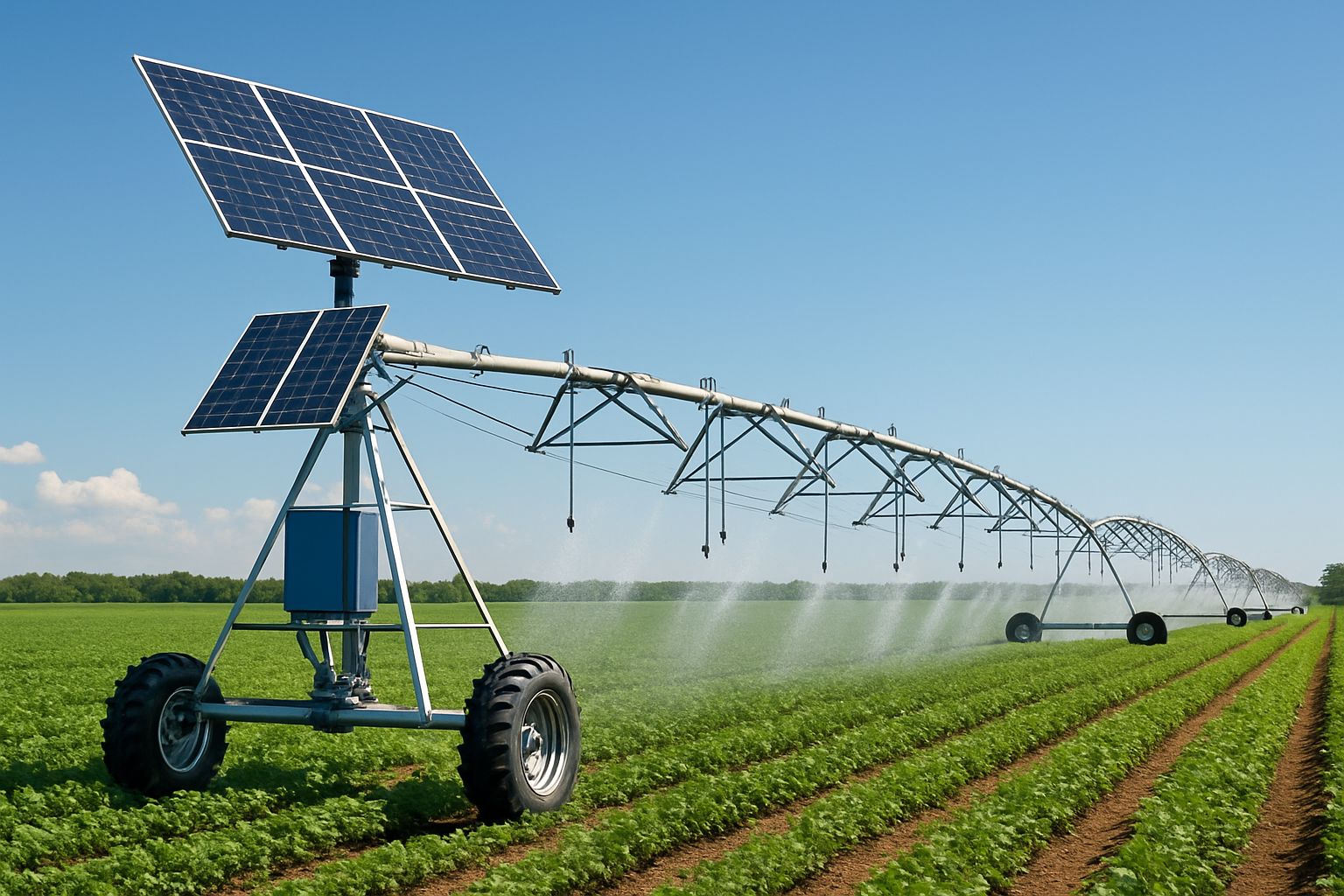
Center pivot systems are the workhorses of large-scale agriculture. A central pump station feeds water through a rotating arm that can stretch anywhere from 400 meters to over 800 meters, covering circular field areas measured in hundreds of acres per unit.
How Center Pivot Systems Work with Solar Panels
A solar-powered center pivot uses a PV array connected to a variable frequency drive (VFD) pump controller. The VFD adjusts pump speed in real time based on available solar input, which means the system scales output up or down as cloud cover changes rather than shutting down entirely. This is a critical design feature — without VFD integration, inconsistent solar supply would cause pressure drops that result in uneven water distribution across the field.
The pivot arm itself is driven by electric motors at each tower. These motors, combined with the main pump load, create a substantial energy demand. For large pivots covering 125+ acres, solar arrays of 30kW to 75kW or more are typically required depending on pump head pressure and pivot length.
Best Crop and Field Types for Center Pivot Systems
Center pivot systems excel on flat to gently rolling terrain. Crops that perform exceptionally well under pivot irrigation include:
- Corn and maize
- Soybeans
- Wheat and small grains
- Alfalfa and forage crops
- Sugar beets
- Certain pasture grasses
The circular coverage pattern does leave corner areas unirrigated, which is why center pivots are best suited to fields specifically designed or selected for their geometry. Irregular or narrow fields are poor matches for this system type.
Solar Panel Sizing Requirements for Center Pivot Systems
Sizing solar for a center pivot is not a one-size-fits-all calculation. The key variables include total dynamic head (TDH), required flow rate in gallons per minute, pipeline friction losses, and the number of tower drive motors. A 40-acre pivot may operate on a 15kW solar array, while a 200-acre system could demand 60kW or more. Battery storage is optional for day-only operation but becomes essential if nighttime or early morning irrigation windows are needed.
2. Solid Set Sprinkler Systems
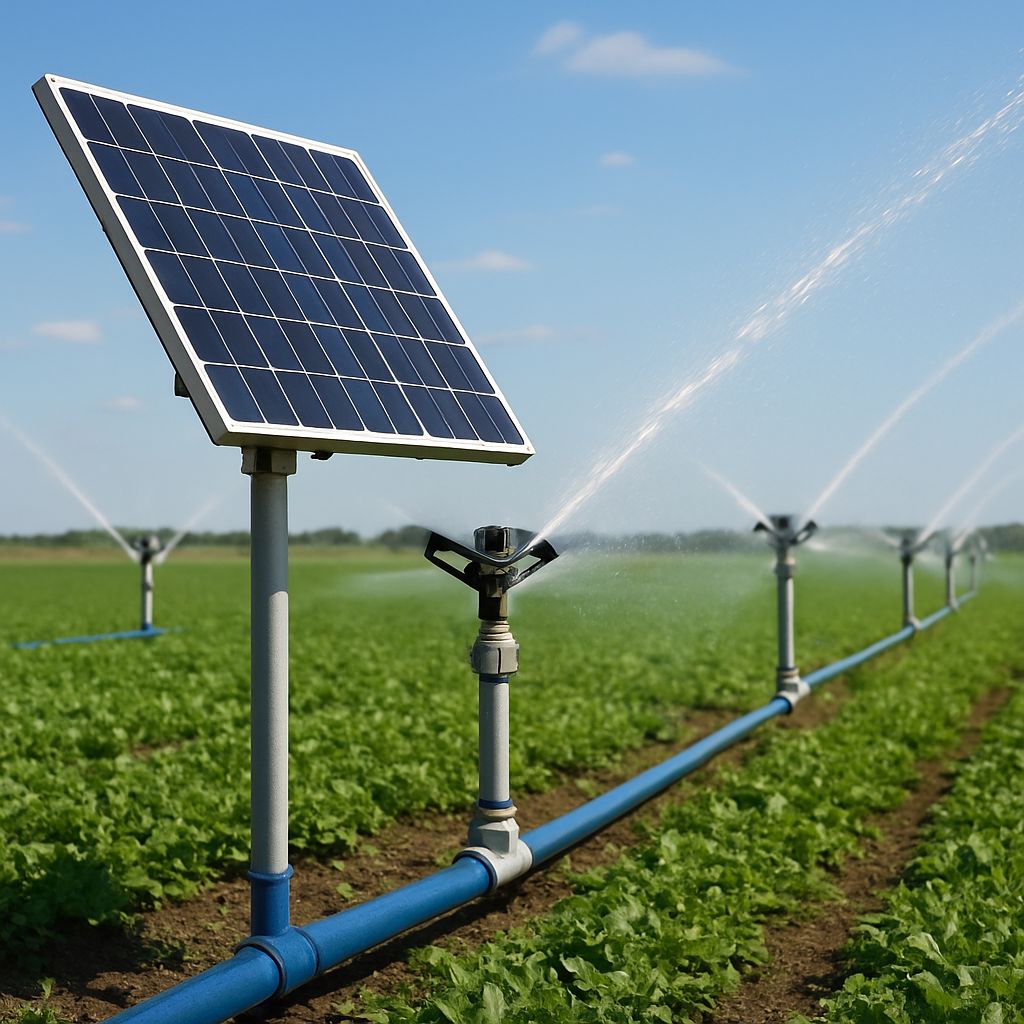
Solid set sprinkler systems are exactly what the name implies: a fixed network of pipes and sprinkler heads installed throughout a field, either permanently or for a full growing season. These systems eliminate the labor of moving equipment and are particularly well-suited to high-value crops where consistent, reliable coverage matters most.
Permanent vs. Temporary Solid Set Configurations
Permanent solid set systems use buried mainlines and risers with above-ground sprinkler heads. Once installed, the infrastructure lasts decades with minimal intervention. The solar power system for a permanent solid set setup benefits from this stability — the pump demand is consistent, predictable, and easy to size accurately.
Temporary solid set systems use above-ground aluminum or PVC pipe that is laid out at the start of the season and removed at harvest. While more labor-intensive to set up, they offer flexibility for farmers who rotate crops or fields between seasons. Solar-powered pump stations for temporary systems are often skid-mounted or trailer-mounted for easy repositioning.
Both configurations can run effectively on solar power because the system operates on fixed schedules during daylight hours. Timed controllers synchronized with solar production windows maximize efficiency without requiring battery storage in most warm-season applications.
Which Crops Benefit Most From Solid Set Systems
Orchards and vineyards are the classic application for permanent solid set systems. Tree fruits like apples, cherries, and citrus benefit from overhead sprinkler coverage for both irrigation and frost protection — a use case where having a reliable solar-powered system can directly prevent significant crop loss. Vegetables grown for fresh market, including lettuce, spinach, and strawberries, also respond very well to the uniform coverage solid set systems deliver.
3. Micro-Sprinkler Irrigation Systems
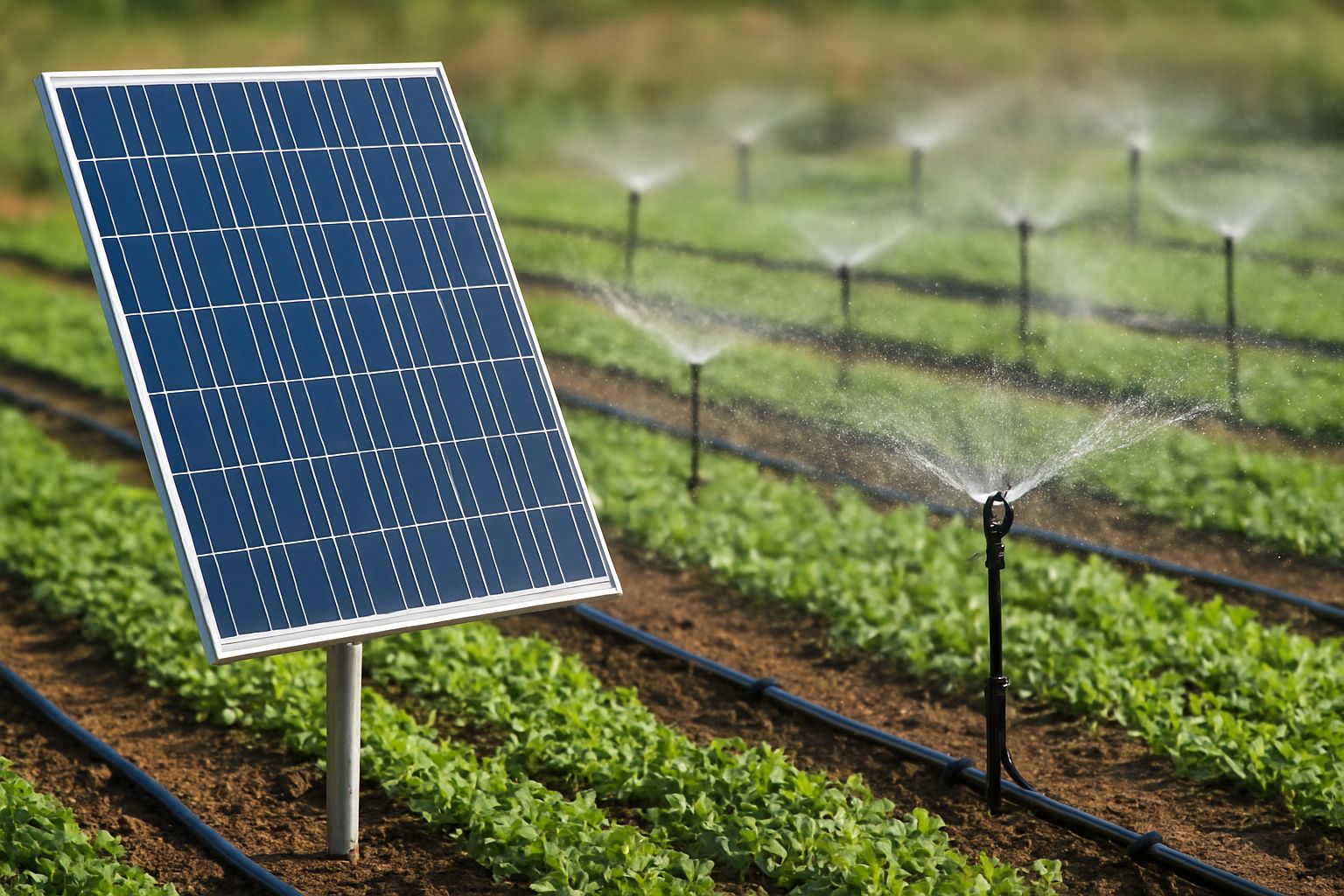
Micro-sprinkler systems operate at a completely different scale than conventional overhead sprinklers. Individual emitters deliver water in small, targeted patterns at low pressure, typically covering a radius of 1 to 4 meters per head. This precision dramatically reduces water waste while maintaining the above-ground delivery that makes them more flexible than buried drip lines.
Because micro-sprinklers operate at low pressure — typically between 1.0 and 2.5 bar (15 to 36 PSI) — the pump energy requirements are substantially lower than full-scale overhead systems. This directly translates to smaller, less expensive solar arrays powering the same irrigated area compared to high-pressure alternatives.
How Micro-Sprinklers Differ From Standard Sprinkler Heads
Standard overhead sprinkler heads deliver water at high pressure over large areas, producing medium to large droplet sizes. Micro-sprinklers use precision-engineered deflector plates or spinner mechanisms to distribute water in controlled low-volume patterns. Flow rates per emitter typically range from 20 to 150 liters per hour, compared to hundreds of liters per hour for conventional heads. This low-volume, low-pressure operation is what makes them so compatible with modestly-sized solar power systems.
Water Savings Micro-Sprinklers Deliver Compared to Conventional Methods
Micro-sprinkler systems consistently outperform conventional overhead irrigation on water efficiency. By delivering water closer to the root zone and reducing airborne evaporation losses, these systems can achieve water savings compared to traditional overhead sprinkler approaches, particularly in arid or semi-arid climates where evaporation during irrigation is a significant loss factor.
Solar Power Requirements for Micro-Sprinkler Systems
The low operating pressure of micro-sprinkler systems makes them one of the most solar-friendly irrigation options available. A small farm plot of 2 to 5 acres running micro-sprinklers may operate efficiently on a solar array as compact as 1.5kW to 3kW paired with a submersible or surface pump rated for low-to-medium head pressure. This makes micro-sprinkler systems particularly attractive for smallholder farmers or specialty crop producers working with limited capital budgets.
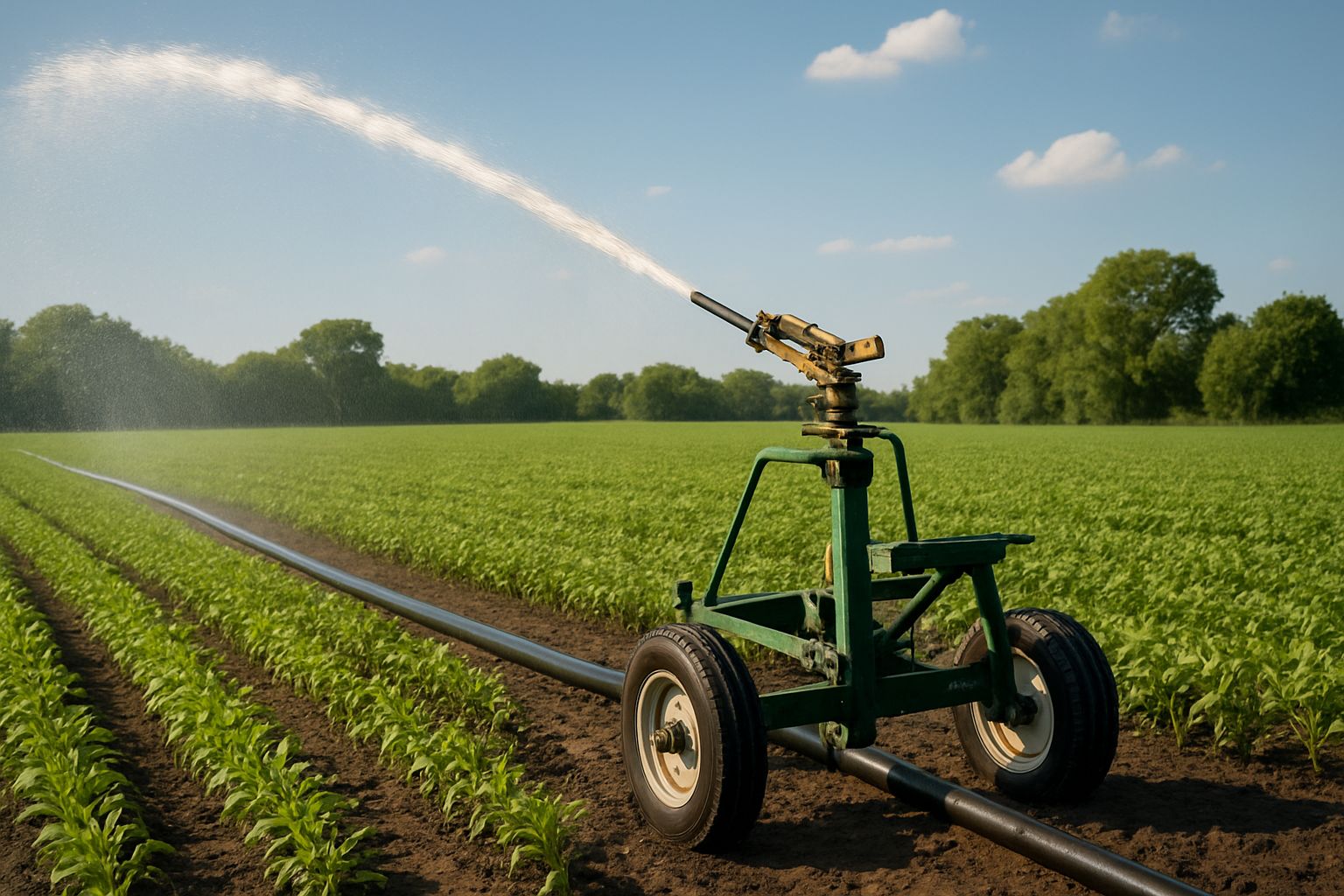
4. Traveling Gun Sprinkler Systems
Traveling gun irrigation systems represent the most mobile solar-powered option for farmers seeking flexibility across multiple fields. These systems feature a large sprinkler mounted on a wheeled cart that travels along a predetermined path, unwinding a flexible hose connected to the water supply as it moves.
How Traveling Gun Systems Move Across Fields
The traveling gun cart is propelled by a water-driven turbine or electric motor that winds a cable anchored at the far end of the field. As the cart moves, the large-volume gun sprinkler rotates and throws water in a wide arc — typically covering a wetted diameter of 60 to 120 meters per pass depending on nozzle size and operating pressure. Operating pressures for traveling gun systems are among the highest of any sprinkler type, commonly ranging from 4 to 8 bar (58 to 116 PSI), which is an important factor when sizing the solar array and pump system. Once the cart completes a run, the operator repositions the system for the next lane.
Field Shapes and Sizes That Suit Traveling Gun Systems Best
Traveling gun systems perform best on rectangular or elongated fields where long, straight runs maximize efficiency per setup. They are particularly well-suited to irregular field boundaries and fields with obstacles, since the system only requires a clear travel lane rather than permanent infrastructure throughout the entire field. Pastures, hay fields, and large vegetable operations are the most common applications. For solar integration, a dedicated mobile solar skid can travel with the system, making this one of the few truly off-grid, field-portable irrigation solutions available to farmers.
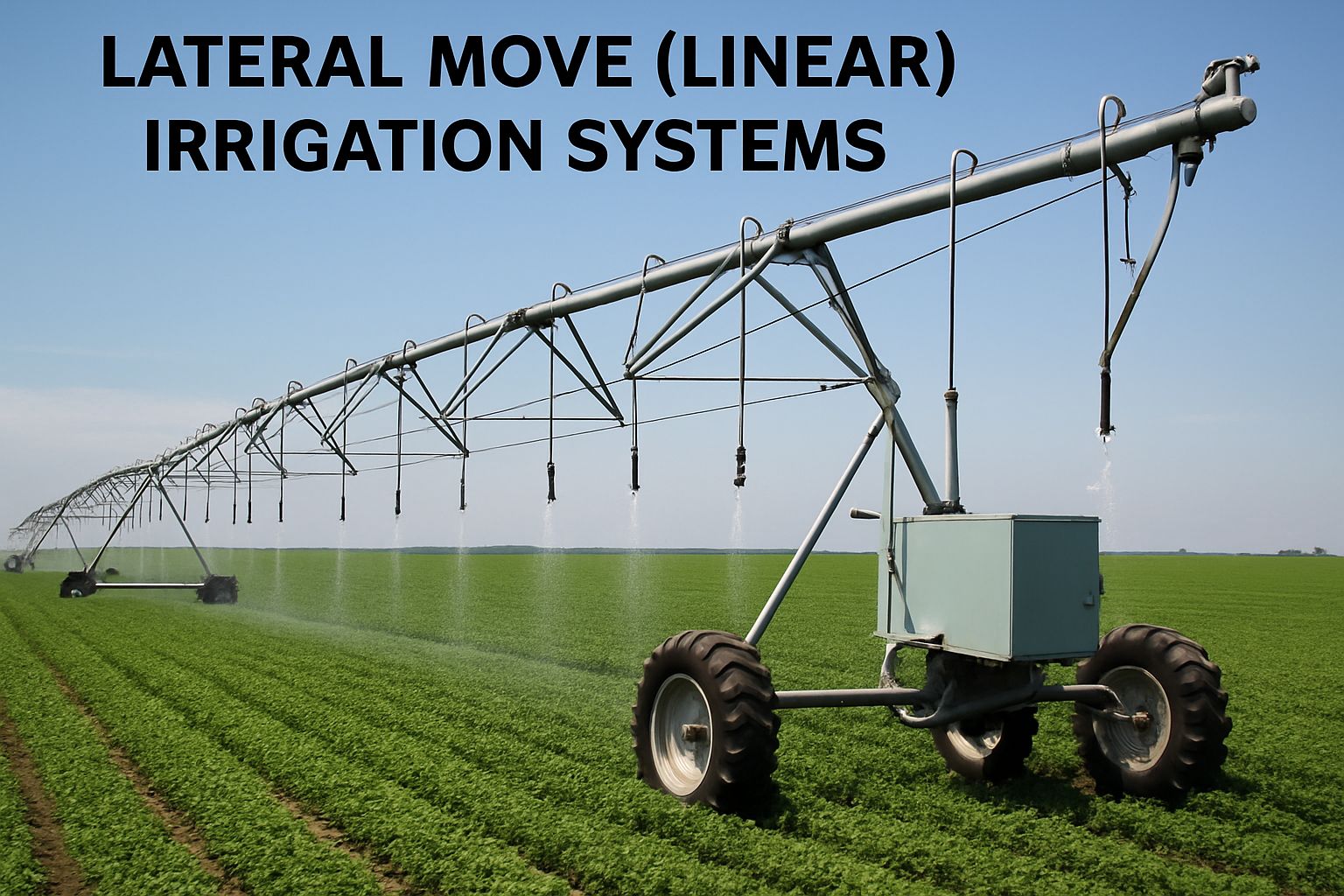
5. Lateral Move (Linear) Irrigation Systems
Lateral move systems, also called linear move irrigators, are structurally similar to center pivots but move in a straight line across a rectangular field rather than rotating around a central point. This fundamental difference makes them far better suited to square and rectangular field layouts that would leave large unirrigated corners under a pivot system.
A lateral move system spans the full width of a field — sometimes exceeding 400 meters — and travels from one end to the other, irrigating in a uniform strip pattern. Water is supplied either through a mainline canal running alongside the field or through a drag hose connected to hydrant outlets spaced at regular intervals.
How Linear Systems Differ From Center Pivots
The core mechanical difference is the drive system. Where a center pivot uses a fixed anchor point and each tower travels at a progressively faster speed to maintain alignment, all towers in a lateral move system travel at the same speed simultaneously. This creates uniform coverage across perfectly rectangular fields with no wasted corners — a significant agronomic and economic advantage over pivots on appropriately shaped land. For farmers looking to enhance their irrigation systems, integrating solar panels for farm equipment can offer sustainable energy solutions.
Energy demand for lateral move systems is comparable to center pivots of similar length, but water delivery efficiency is often higher because the system covers the entire field area rather than leaving corner zones dry. For solar-powered setups, this means a higher return on both the irrigation investment and the solar array investment per acre irrigated.
Linear move systems also offer GPS-guided auto-steering as a standard feature on most modern units, which pairs exceptionally well with automated solar-powered pump controllers. The entire system can operate on timed schedules during peak solar hours with minimal operator involvement.
Solar Integration Challenges Unique to Linear Move Systems
The primary solar challenge with lateral move systems is the moving water supply connection. Drag hose systems require the pump to maintain consistent pressure as hose length and friction losses change during field traversal. VFD pump controllers that adjust output in real time — the same technology used in center pivot solar setups — are essential here. Canal-fed systems are more straightforward for solar integration since the pump station remains stationary throughout operation.
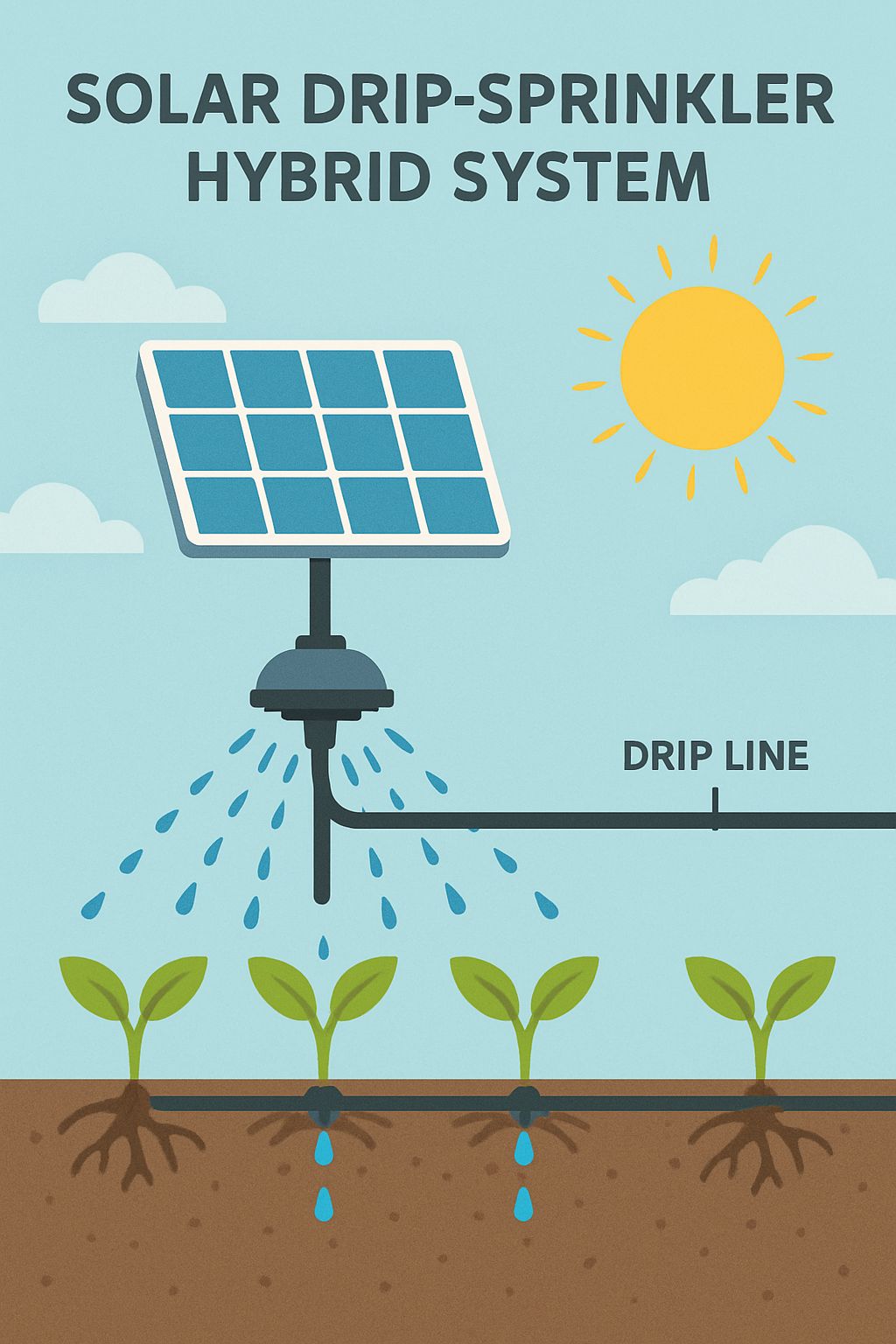
6. Drip-Sprinkler Hybrid Systems
Drip-sprinkler hybrid systems combine subsurface or surface drip emitters with overhead micro-sprinkler or sprinkler heads within the same irrigation network. Rather than choosing between the two methods, hybrid systems deploy each where it delivers the greatest agronomic benefit within a single field or growing block.
These systems are more complex to design and install than single-method approaches, but the water use efficiency gains and crop quality improvements they deliver frequently justify the added investment — particularly in high-value specialty crop production.
When a Hybrid System Outperforms a Single Method
The clearest case for a hybrid system is frost protection in permanent crops. Drip lines handle routine irrigation with exceptional water efficiency, while the overhead sprinkler component activates during frost events to coat foliage and fruit with a protective ice layer that holds temperature at 0°C, preventing damage from colder ambient air. Neither drip-only nor sprinkler-only systems can handle both functions with the same efficiency.
Hybrid systems also outperform single methods in nursery production, young orchard establishment, and any situation where germination or canopy cooling requirements exist alongside precision root-zone irrigation needs. The solar power system for a hybrid setup must be sized to handle the peak demand of both subsystems operating simultaneously during frost protection events.
How Solar Powers Both Drip and Sprinkler Components Together
In a solar-powered hybrid system, a single pump station with zone valves and a programmable controller manages both the drip and sprinkler circuits independently or simultaneously. The solar array is sized to the highest simultaneous load scenario — typically the frost protection mode when all sprinkler zones activate at once. During normal drip-only irrigation cycles, the system operates well below peak capacity, making battery charging during those periods a practical option for nighttime drip cycle operation.
High-Value Crops That Get the Most From Hybrid Systems
The crops that deliver the strongest return on a hybrid solar irrigation investment include wine grapes, table grapes, blueberries, strawberries, citrus, and stone fruits such as peaches, nectarines, and cherries. These crops combine high per-acre market value with specific irrigation requirements that benefit directly from the dual capability of hybrid systems — precise water management through drip for flavor and quality optimization, plus overhead coverage for frost protection and heat stress mitigation.
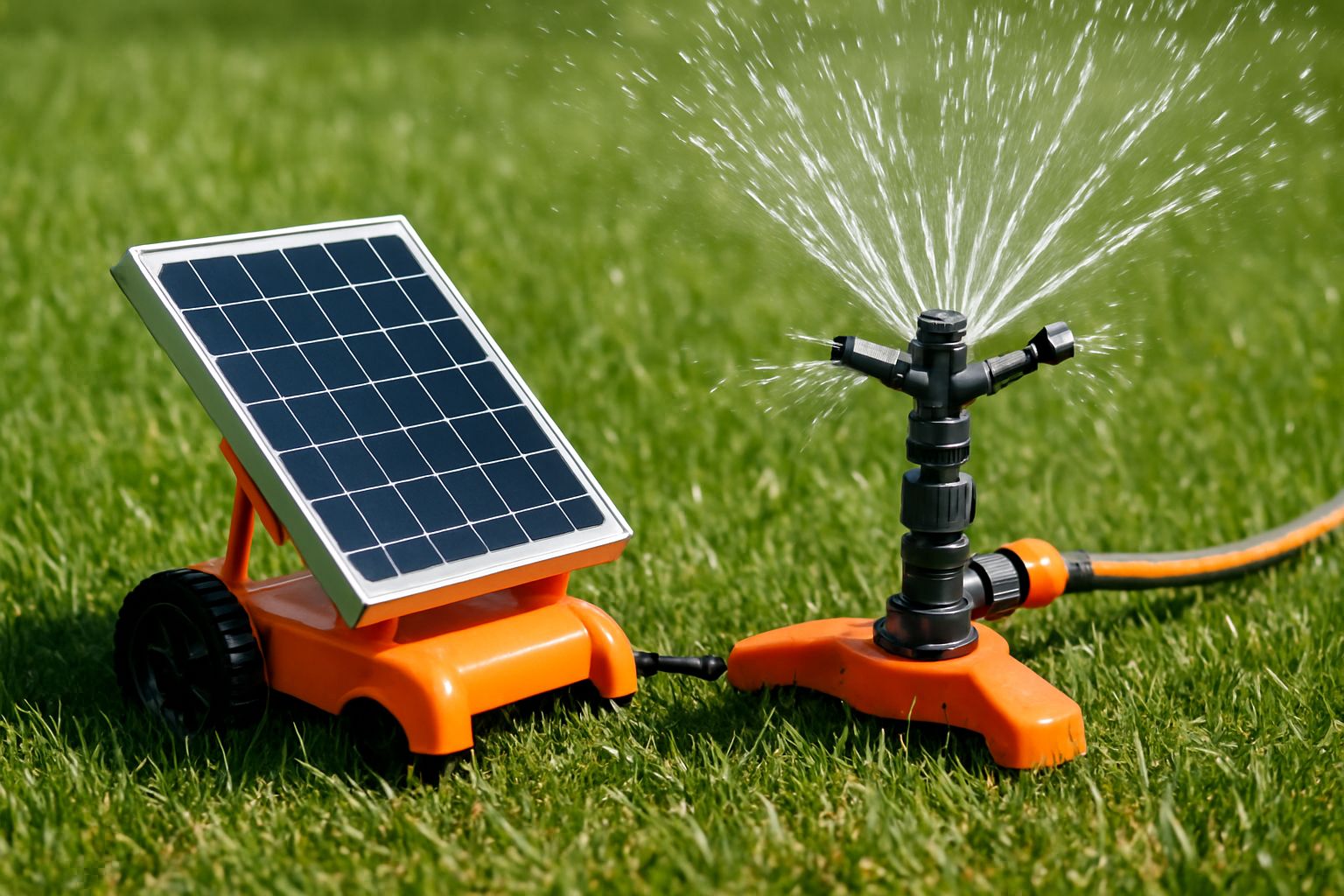
7. Portable Sprinkler Systems
Portable sprinkler systems are the most accessible entry point into solar-powered irrigation for small-scale farmers, market gardeners, and remote plot operators. These systems use above-ground aluminum or PVC lateral pipes, impact sprinkler heads, and a portable pump that can be moved between fields or storage locations as needed.
The appeal of portable systems goes beyond cost. They require no permanent infrastructure, no excavation, and no specialized installation. A farmer can set up a functional solar-powered portable sprinkler system in a single day and relocate it entirely within hours. This flexibility makes them ideal for diversified farms where irrigation needs shift with crop rotation schedules.
Portable sprinkler systems typically operate at moderate pressures of 2 to 4 bar (29 to 58 PSI), making them compatible with a wide range of solar pump options without requiring oversized arrays. The total system cost for a small portable setup can be a fraction of permanently installed alternatives.
Portable Solar Pump Options That Pair With Portable Sprinklers
The most practical solar pump pairings for portable sprinkler systems fall into two categories. Surface centrifugal pumps mounted on portable frames are ideal when drawing from open water sources like ponds, canals, or tanks. Submersible solar pumps work best when the water source is a shallow well or borehole. Both types connect directly to small PV arrays ranging from 300W to 2kW depending on flow and pressure requirements.
Popular configurations include the Lorentz PS2-150 and similar DC solar pump units, which are designed specifically for direct solar operation without battery storage during daylight hours. These pumps adjust their output based on available solar irradiance through built-in MPPT (Maximum Power Point Tracking) controllers, eliminating the need for separate charge controllers and simplifying the overall system design considerably.
Best Use Cases for Small and Remote Farm Plots
Portable solar sprinkler systems are the definitive solution for farms that lack grid electricity access entirely. Remote plots located more than 300 meters from the nearest power infrastructure — where grid connection costs typically exceed the entire cost of a solar irrigation system — are the ideal application. Market gardens, community farm plots, smallholder vegetable operations, and seasonal crop areas that only require irrigation for part of the year all represent strong use cases where the portability and low capital cost of these systems deliver maximum value.
How to Match Your Farm’s Needs to the Right System
Choosing the right solar sprinkler system is not about finding the most advanced technology — it is about finding the best match for your specific land, crops, water source, and financial reality. A system that performs brilliantly on a 200-acre corn operation in Nebraska will be completely wrong for a 3-acre strawberry farm in California.
Working through four key variables in sequence gives you a clear framework for narrowing your options from seven system types down to the one or two that genuinely suit your situation.
Field Size and Shape
Field geometry is the first filter to apply. It immediately eliminates several system types and highlights the strongest candidates for your situation. For instance, when considering solar integration, you might explore solar panels for ventilation systems as a viable option.
Field Size & Shape Matching Guide
Field Type
Best System Match
Systems to Avoid
Large circular/square (>50 acres)
Center Pivot
Portable, Micro-Sprinkler
Large rectangular (>50 acres)
Lateral Move (Linear)
Center Pivot
Irregular or oddly shaped
Traveling Gun, Portable
Center Pivot, Lateral Move
Orchard or vineyard blocks
Solid Set, Hybrid
Traveling Gun
Small plots (<5 acres)
Micro-Sprinkler, Portable
Center Pivot, Lateral Move
Fields with significant elevation changes introduce additional complexity. Steep slopes increase the total dynamic head your pump must overcome, which directly increases solar array size requirements. On highly variable terrain, micro-sprinkler and drip-sprinkler hybrid systems often outperform high-pressure overhead options because their lower operating pressure requirements keep solar sizing practical and cost-effective.
Corner irrigation efficiency is a commonly overlooked factor. If your fields are strictly rectangular and maximizing irrigated area matters, a lateral move system will outperform a center pivot on the same land — potentially irrigating 15 to 20 percent more of the total field area without additional water or energy input.
Crop Type and Water Requirements
Different crops have fundamentally different water delivery requirements, and the irrigation method you choose directly influences both yield and quality outcomes. Root vegetables and field crops like corn, soybeans, and wheat tolerate overhead sprinkler application well and benefit from the uniform coverage center pivots and solid set systems provide. High-value specialty crops like wine grapes, berries, and tree fruits demand precision water management at the root zone, making micro-sprinkler and hybrid systems the agronomically superior choice. Forage crops and pasture grasses are the most forgiving applications — traveling gun and portable systems deliver adequate results at lower capital investment than permanent infrastructure. For more on how solar panels can power farm equipment, explore additional resources.
Available Solar Resources and Battery Storage Needs
Your geographic location and seasonal sun hours directly determine how much solar panel capacity you need to deliver reliable irrigation output. Farms in high-irradiance regions like the southwestern United States, Australia, sub-Saharan Africa, and South Asia have a significant solar resource advantage — smaller arrays produce the same irrigation output compared to farms in cloudier northern climates.
The decision to include battery storage is one of the most consequential choices in system design. Day-only irrigation — running the system only during peak solar hours between approximately 9am and 4pm — eliminates battery costs entirely and is a practical approach for most field crops. However, frost protection applications, early morning irrigation windows, and crops sensitive to midday heat stress may require battery storage or grid backup to operate outside solar production hours.
When evaluating battery storage needs, consider these key factors: the efficiency of your solar panels, the capacity required for your operations, and the potential for future expansion.
- Irrigation timing flexibility: Can your crops tolerate daytime-only watering windows, or are specific timing windows agronomically necessary?
- Frost protection requirements: Frost events occur at night and pre-dawn — if your crops need overhead protection, battery storage is non-negotiable.
- Cloud cover frequency: Regions with frequent afternoon cloud cover benefit from modest battery buffers that maintain consistent pump pressure during intermittent shading.
- Water source type: Solar-direct pumping from open water or pressurized tanks is simpler than borehole pumping, which may require consistent minimum pressure to prevent pump damage.
Budget and Long-Term Return on Investment
Initial capital cost is only one dimension of the financial picture. Solar-powered irrigation systems carry higher upfront costs than grid-connected alternatives in most cases, but eliminate ongoing electricity expenses for the operational life of the system — typically 20 to 25 years for quality solar panels and 15 to 20 years for quality pump components.
The return on investment calculation shifts dramatically when you factor in grid connection costs for remote fields. Running a new electrical service line to an off-grid field location can cost anywhere from $15,000 to $50,000 or more per mile depending on terrain and local utility rates. A complete solar-powered irrigation system frequently costs less than the grid connection alone, making solar the financially superior option from day one in remote applications.
For farms where grid power is already available, the ROI calculation depends on local electricity rates, annual irrigation hours, and available government incentives or agricultural grants for renewable energy adoption. In regions with strong solar incentive programs, payback periods for solar irrigation systems can be as short as 3 to 6 years, after which the system produces free irrigation energy for the remainder of its operational life.
The Right Solar Sprinkler System Can Transform Your Farm’s Productivity
- Center pivot systems deliver the highest per-acre coverage for large open fields but require the largest solar arrays and the most capital investment.
- Solid set systems provide unmatched reliability for permanent crops where consistent coverage and frost protection capability justify the infrastructure cost.
- Micro-sprinkler systems offer the best water efficiency per dollar of solar investment for specialty crops and smallholder operations.
- Traveling gun systems give maximum flexibility for irregular fields and large forage operations where permanent infrastructure is impractical.
- Lateral move systems maximize irrigated area on rectangular fields with the same energy budget as a comparable center pivot.
- Drip-sprinkler hybrid systems deliver the highest crop quality outcomes for high-value permanent crops requiring both precision irrigation and frost protection.
- Portable systems provide the lowest-cost entry point for small farms, remote plots, and operations with rotating irrigation needs.
The common thread across all seven system types is that solar power fundamentally changes the economics of irrigation. Fuel costs disappear. Grid dependency disappears. The ability to irrigate remote land that was previously too expensive to water opens up productive potential that was simply unavailable to previous generations of farmers.
Matching your system choice to your specific field, crop, and resource reality is what separates a transformative investment from an expensive mistake. Take the time to work through the four selection variables — field size and shape, crop type, solar resources, and budget — before committing to any system type. The right match will deliver reliable, low-cost irrigation for the next two decades and beyond.
For a deeper dive into all available solar irrigation options and how they compare side by side, explore the full resource library at Growing Solar Mist, where detailed system comparisons, sizing guides, and farmer case studies are available to help you make the most informed decision possible.
Frequently Asked Questions
As solar irrigation adoption accelerates across agricultural regions worldwide, these are the questions farmers ask most frequently when evaluating system options.
Can Any Sprinkler Irrigation System Run on Solar Power?
Yes, any sprinkler irrigation system that uses an electric pump can be connected to a solar power supply. The practical distinction is not whether solar can power a given system, but whether the solar array required to do so is economically practical for your situation.
High-pressure systems like traveling guns require larger arrays and more robust pump systems compared to low-pressure micro-sprinkler setups covering the same area. The solar compatibility spectrum from most to least energy-demanding looks like this:
- Most energy-intensive: Center pivot, lateral move, traveling gun
- Moderate energy demand: Solid set, drip-sprinkler hybrid
- Lowest energy demand: Micro-sprinkler, portable systems
Every system on this list has been successfully deployed with solar power in real agricultural operations worldwide. The question is always about appropriate sizing, not fundamental compatibility.
How Many Solar Panels Does a Sprinkler Irrigation System Need?
Panel requirements vary enormously based on pump size, operating pressure, flow rate, and daily irrigation hours. A small portable system for a 2-acre plot may need as few as 4 to 6 standard 400W panels. A center pivot covering 150 acres may require 80 to 150 panels or more. The most reliable way to determine your specific requirement is to calculate your pump’s kilowatt demand, multiply by your daily irrigation hours, and size the solar array to meet that load during your location’s average peak sun hours per day. For more information on selecting the right system, you can refer to this guide on selecting sprinkler irrigation systems.
Do Solar Sprinkler Systems Work at Night or on Cloudy Days?
Solar-direct systems without battery storage do not operate at night and produce reduced output on heavily overcast days. This is a real operational constraint that needs to be factored into your irrigation scheduling from the outset. For most field crop applications, daytime irrigation is perfectly adequate and scheduling around solar production hours is straightforward.
Systems requiring nighttime operation — particularly frost protection applications — require battery storage or a grid/generator backup connection. Hybrid inverter systems that can switch seamlessly between solar, battery, and backup grid power are the most reliable solution for operations where irrigation timing flexibility is limited or frost risk is present.
What Is the Most Water-Efficient Solar Sprinkler System for Small Farms?
Micro-sprinkler systems deliver the best water efficiency for small farm applications, particularly when combined with soil moisture sensors and automated controller scheduling. Their low operating pressure reduces evaporative losses during application, their targeted delivery reduces wetting of inter-row areas, and their compatibility with small solar arrays keeps both water and energy costs at minimum. For farms under 10 acres growing vegetables, berries, or tree fruits, a solar-powered micro-sprinkler system represents the strongest combination of water efficiency and capital efficiency available.
How Long Does a Solar-Powered Sprinkler Irrigation System Last?
System longevity varies by component. Quality monocrystalline solar panels from reputable manufacturers carry 25-year performance warranties and frequently operate beyond 30 years with minimal degradation. Solar pump units from established agricultural pump manufacturers like Lorentz, Grundfos, and Franklin Electric are rated for 15 to 20 years of service life under normal operating conditions. Sprinkler heads and pipe infrastructure in permanent solid set and center pivot systems typically operate 15 to 20 years before replacement components are needed.
The weakest link in most solar irrigation systems from a longevity standpoint is the battery bank, if one is included. Lead-acid batteries in agricultural solar systems typically last 3 to 7 years depending on cycling frequency and temperature management. Lithium iron phosphate (LiFePO4) battery systems last significantly longer — typically 10 to 15 years — and are increasingly the preferred choice for agricultural solar irrigation installations where long-term reliability is a priority.
Sprinkler irrigation systems are an efficient way to water crops, as they distribute water evenly across the field. These systems can be powered by solar panels, making them an eco-friendly choice for farmers. By utilizing solar panels for farms, farmers can reduce their reliance on traditional power sources and lower their energy costs. Additionally, solar-powered irrigation systems can be used in remote areas where access to electricity is limited, providing a sustainable solution for agricultural needs.

Leave a Reply