

Key Takeaways
- Solar micro-sprinkler systems can reduce water usage by 30-50% compared to traditional irrigation methods while delivering precise moisture to crop root zones.
- Combining solar power with micro-sprinklers can slash energy costs by up to 70%, with many systems paying for themselves within 3-5 years.
- Proper component selection is crucial – solar panel capacity, pump specifications, and sprinkler head types must be matched to your specific farm needs.
- These systems significantly improve crop yields through uniform moisture distribution and reduced disease pressure from keeping foliage dry.
- GrowingSolarMist offers customized solar micro-sprinkler system designs that maximize efficiency for farms of all sizes and crop types.
The farming landscape is changing rapidly, and water conservation is no longer optional – it’s essential. Solar micro-sprinkler irrigation represents the perfect intersection of renewable energy and precision water application, allowing you to slash operating costs while boosting yields. By combining the power of the sun with targeted water delivery, these systems are transforming agriculture across diverse growing regions and crop types. GrowingSolarMist has been at the forefront of helping farmers implement these systems with dramatic results in both water conservation and crop productivity.
How Solar Micro-Sprinklers Are Revolutionizing Farm Irrigation
Solar micro-sprinkler systems are fundamentally changing how we approach irrigation by addressing the two biggest operational costs farmers face: energy and water. Traditional irrigation methods waste substantial amounts of both resources, with electricity for pumping often representing 20-30% of operational expenses. By harnessing solar energy, you eliminate grid dependency while the micro-sprinkler design ensures water reaches exactly where plants need it most – their root zones.
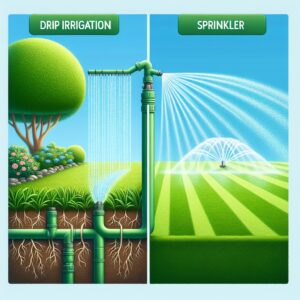
Unlike conventional overhead sprinklers that lose significant water to evaporation and wind drift, micro-sprinklers operate closer to the ground with smaller water droplets that penetrate soil efficiently. The solar component means no monthly electricity bills and minimal carbon footprint. Many farmers report system payback periods of just 3-5 years, after which they enjoy essentially free irrigation power for the 25+ year lifespan of quality solar equipment.
What truly sets these systems apart is their adaptability. Whether you’re growing orchard crops, vegetables, berries, or field crops, a properly designed solar micro-sprinkler system can be customized to your specific needs. The technology scales effectively from small family farms to large commercial operations, with modular designs that can expand as your operation grows.

Components of an Effective Solar Micro-Sprinkler System
Creating an efficient solar micro-sprinkler system requires careful integration of several key components. Each element must be properly sized and selected based on your specific water requirements, field dimensions, crop types, and local climate conditions. Understanding these components helps you make informed decisions when planning your system.
Solar Panels: Types and Power Requirements
The heart of your solar irrigation system is the photovoltaic array that converts sunlight into electricity. Panel selection depends primarily on your water pumping needs, with most farm systems requiring between 1-10kW of capacity. Monocrystalline panels offer the highest efficiency (17-22%) and longest lifespan, making them ideal despite their higher initial cost. Polycrystalline panels provide a more budget-friendly option at slightly lower efficiency (13-17%). Thin-film solar panels are lightweight and flexible, making them easy to install on various surfaces. They are less efficient than crystalline panels but can be a good option for farms with ample space and lower energy requirements.
Here’s a table describing the three types of solar panels and their advantages and disadvantages for powering an irrigation system on a farm:
|
Solar Panel Type |
Advantages |
Disadvantages |
|---|---|---|
|
Monocrystalline |
– Highest efficiency (17-22%) 2, 3 |
– Most expensive option 2, 3 |
|
Polycrystalline |
– More affordable than monocrystalline 1, 3 |
– Lower efficiency compared to monocrystalline 3 |
|
Thin-Film |
– Cheapest option 1, 4 |
– Lowest efficiency (10-13%) 1, 4 – Shortest lifespan 4 – Requires the most space 1, 4 – Degrades faster than crystalline panels 1, |
For a typical 5-acre vegetable operation, you might need a 2-3kW system, which translates to approximately 6-10 solar panels. Panel orientation and mounting angle are crucial considerations – in the Northern Hemisphere, panels should face south with an angle roughly equal to your latitude for optimal year-round performance. Fixed ground mounts are most common for farm applications, though pole mounts may be preferred to keep panels above potential flooding or to minimize land use. For more insights on solar panels and micro-sprinkler irrigation systems, check out this article.
Solar Panel Sizing Guide
1-2 acres: 1-2kW system (3-6 panels)
3-5 acres: 2-3kW system (6-10 panels)
5-10 acres: 3-5kW system (10-16 panels)
10+ acres: 5kW+ system (16+ panels)
*Actual requirements vary based on crop water needs, climate, and soil conditions
Pumps and Pressure Regulators
Selecting the right pump is critical to system performance. Most solar micro-sprinkler systems utilize DC pumps that can operate directly from solar panels without inverters, maximizing energy efficiency. Surface pumps work well when water sources are accessible, while submersible pumps are necessary for deeper wells.
Pressure requirements for micro-sprinklers typically range from 15-30 PSI – significantly lower than conventional sprinklers, which contributes to energy savings. Pressure regulators are essential components that maintain consistent output regardless of fluctuations in solar power availability. This consistency ensures uniform water distribution across your entire field.
Variable frequency drives (VFDs) are valuable additions that allow pumps to operate efficiently even during periods of reduced sunlight. These controllers adjust pump speed based on available power rather than shutting down completely, maximizing daily watering windows. For larger operations, incorporating a small battery bank can provide power consistency during brief cloudy periods.
Micro-Sprinkler Heads and Their Spray Patterns
Micro-sprinklers come in various designs, each suited to different crops and field conditions. Unlike drip emitters, micro-sprinklers create a spray pattern that covers more surface area, making them ideal for crops with broader root zones. Standard spray patterns include 360° full circle, 180° half circle, 90° quarter circle, and strip patterns for row crops. For those interested in exploring different solar-powered irrigation systems, there are numerous types and methods to consider.
Micro-Sprinkler Heads and Their Spray Patterns
Micro-sprinklers come in various designs, each suited to different crops and field conditions. Unlike drip emitters, micro-sprinklers create a spray pattern that covers more surface area, making them ideal for crops with broader root zones. Standard spray patterns include 360° full circle, 180° half circle, 90° quarter circle, and strip patterns for row crops.
Flow rates typically range from 5-30 gallons per hour, with spray diameters of 3-25 feet depending on the model and operating pressure. For tree crops, select sprinklers with larger diameters that can cover the entire root zone. Vegetable crops often benefit from sprinklers with smaller diameters and lower flow rates for more precise application. Materials matter significantly – look for UV-resistant plastic components that withstand sun exposure and chemical treatments.
Advanced micro-sprinklers feature adjustable flow rates and spray patterns, allowing you to customize water application as crops grow or seasons change. Some models include built-in pressure compensation to ensure uniform water distribution even across fields with elevation changes. Most quality sprinkler heads last 5-7 years before needing replacement, making them a durable component of your irrigation system.
Controllers and Automation Options
Modern solar micro-sprinkler systems benefit tremendously from automation. Smart controllers allow precise scheduling based on environmental conditions rather than rigid timers. These controllers connect to soil moisture sensors, weather stations, and even satellite data to determine exactly when and how much to irrigate. For more information on how solar panels can enhance these systems, visit this guide on solar-powered irrigation systems.
For small to medium operations, basic solar-powered timers offer reliability with programmable start times, durations, and days. More sophisticated systems incorporate zone control, allowing different sections of your farm to receive customized irrigation schedules based on crop type, soil conditions, and growth stage. Remote monitoring capabilities via smartphone apps have become increasingly affordable, letting you manage irrigation from anywhere and receive alerts for system issues. For more information on different types of solar-powered irrigation systems, you can explore this comprehensive guide.
Battery backup systems ensure your controller continues functioning overnight and during cloudy periods. Many farmers find that investing in quality automation provides rapid returns through labor savings and improved water management. The ability to precisely control irrigation timing also helps prevent disease pressure by avoiding extended leaf wetness periods.
Water Filtration Requirements
Proper filtration is non-negotiable for micro-sprinkler systems. The small orifices in micro-sprinkler heads can easily clog with sediment, organic matter, or mineral deposits. A multi-stage filtration system typically includes primary screening to remove large particles, followed by finer filters rated at 120-200 mesh (depending on your water source and sprinkler specifications).
Sand media filters work well for sources with organic material, while screen and disc filters are efficient for water with mineral particles. Automatic self-cleaning filters, though more expensive initially, reduce maintenance time and ensure consistent system performance. Plan to position filtration components after your pump but before any fertilizer injection systems to prevent contamination of your filters with precipitates.
Water quality significantly impacts filtration needs – well water typically requires less filtration than surface water from ponds or streams. Regular filter inspection and cleaning are essential maintenance tasks, particularly after storms or seasonal changes in water sources. Some advanced systems include pressure differential sensors that alert you when filters need cleaning.
Water-Saving Benefits That Boost Your Bottom Line
Water conservation represents both an environmental imperative and a significant economic opportunity for farmers. Solar micro-sprinkler systems deliver remarkable water efficiency through several mechanisms that traditional irrigation simply cannot match. The financial implications of these water savings can transform your farm’s profitability while ensuring sustainable water use for future generations.
30-50% Water Reduction Compared to Traditional Methods
Field studies consistently demonstrate that micro-sprinkler systems reduce water consumption by 30-50% compared to conventional overhead sprinklers or flood irrigation. This dramatic reduction comes primarily from delivering water directly to the root zone rather than broadcasting it across the entire field. For a typical 10-acre farm in a moderate climate, this can mean saving 500,000-1,000,000 gallons of water annually – a substantial conservation achievement with real economic value.
The cost implications are significant whether you’re paying for municipal water, pumping from wells, or managing water rights. Reduced pumping translates directly to lower energy costs, while decreased water usage may allow you to expand irrigation to previously unirrigated acreage without developing new water sources. Many regions now face water restrictions that limit traditional irrigation methods, making micro-sprinklers an essential adaptation strategy.
The environmental benefits extend beyond your farm boundaries. Reducing agricultural water consumption helps preserve aquifers, maintain stream flows for wildlife, and ensure water availability for downstream users. As climate change intensifies water scarcity in many regions, these conservation measures will become increasingly valuable both ecologically and economically. For more insights, explore how solar panels can power a farm’s irrigation system.
Targeted Root Zone Application
Micro-sprinklers excel at delivering water precisely where crops need it most – in the active root zone. This targeted application ensures that water becomes immediately available for plant uptake rather than percolating beyond root depth. The improved soil moisture uniformity creates optimal growing conditions throughout your fields, eliminating both over-watered and under-watered zones that plague conventional irrigation methods.
Root zone targeting allows for maintaining ideal soil moisture levels between field capacity and permanent wilting point – the “sweet spot” for plant growth. This precision reduces plant stress and promotes robust root development, ultimately resulting in healthier plants more resistant to diseases and environmental challenges. For crops with varying water needs throughout their growth cycle, micro-sprinklers allow you to adjust application rates to match developmental stages.
The ability to maintain consistent soil moisture also improves nutrient availability and uptake efficiency. Nutrients remain dissolved in the soil solution within the root zone rather than being leached below by excessive irrigation. This nutrient retention not only enhances plant health but can reduce fertilizer requirements by 15-30%, representing another significant cost saving. For more information on how solar technology can benefit your farm’s irrigation, explore our guide on solar panels powering a farm’s irrigation system.
Reduced Evaporation and Runoff Losses
Conventional irrigation systems lose substantial water to evaporation, particularly in hot, windy conditions. The large water droplets and ground-level delivery of micro-sprinklers significantly reduce evaporative losses, with studies showing 60-80% application efficiency compared to 30-50% for traditional overhead systems. This efficiency means more of the water you pump actually benefits your crops rather than evaporating into the atmosphere.
Reduced Evaporation and Runoff Losses
Conventional irrigation systems lose substantial water to evaporation, particularly in hot, windy conditions. The large water droplets and ground-level delivery of micro-sprinklers significantly reduce evaporative losses, with studies showing 60-80% application efficiency compared to 30-50% for traditional overhead systems. This efficiency means more of the water you pump actually benefits your crops rather than evaporating into the atmosphere.
Runoff represents another major source of water waste in traditional irrigation. When water is applied faster than soil can absorb it, valuable moisture flows away from your fields, often carrying topsoil and nutrients with it. Micro-sprinklers apply water at lower rates that match soil infiltration capacity, virtually eliminating runoff even on sloped terrain. This not only conserves water but also prevents soil erosion and nutrient leaching that can damage water quality in nearby streams and lakes.
The combination of solar power with efficient water delivery creates a sustainable irrigation solution that addresses both energy and water conservation simultaneously. Many farmers report that their solar micro-sprinkler systems reduce overall resource consumption by 60-70% compared to conventional methods, creating dramatic improvements in operational sustainability and cost structure.
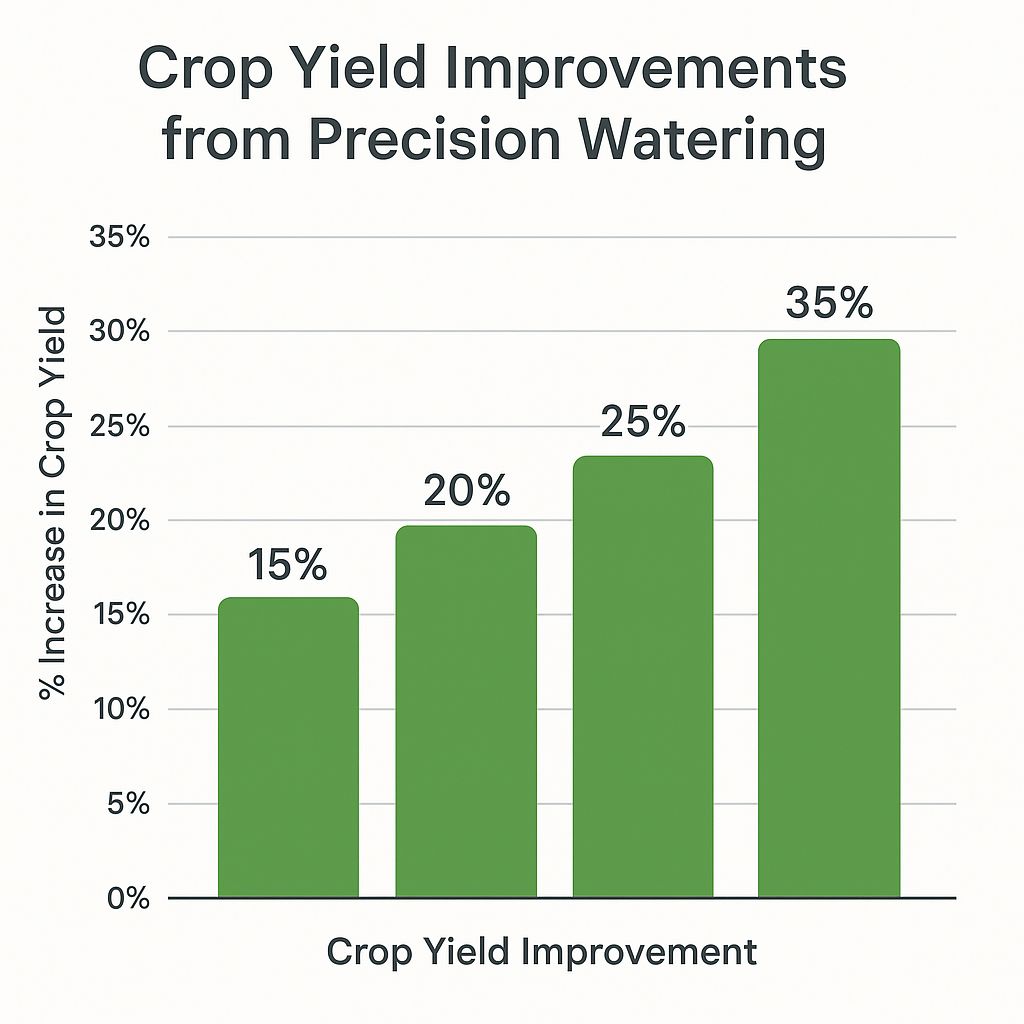
Crop Yield Improvements from Precision Watering
Beyond resource conservation, solar micro-sprinkler systems directly impact your bottom line through improved crop yields and quality. Precision irrigation creates optimal growing conditions that allow your crops to reach their full genetic potential. The yield increases typically range from 15-35% depending on crop type, previous irrigation method, and climate conditions. For more information on how solar panels can power these systems, check out this guide on powering a sprinkler irrigation system with solar panels.
Uniform Moisture Distribution Effects
Consistent soil moisture is perhaps the single most important factor in achieving uniform crop development. Micro-sprinklers excel at creating even moisture distribution throughout the root zone, eliminating the wet and dry spots common with other irrigation methods. This uniformity ensures that every plant in your field has equal access to water, leading to synchronized growth stages and more consistent crop maturity.
For fruiting crops like tomatoes, peppers, and tree fruits, uniform moisture dramatically improves fruit set and size consistency. Vegetable growers typically see significant improvements in marketable yield percentage, with fewer culls due to growth irregularities or stress-related defects. Even field crops like corn show measurable improvements in stand uniformity and ear development when irrigation is precisely managed.
The economic impact of this uniformity extends beyond raw yield numbers. Harvest efficiency improves when crops mature simultaneously, and marketing opportunities expand when you can deliver consistent quality and size. Many farmers find that the premium prices commanded by their improved crop quality represent an even greater financial benefit than the increased yield volume.
Reduced Disease Pressure from Dry Foliage
Unlike overhead irrigation that wets entire plants, micro-sprinklers primarily wet the soil while leaving foliage dry. This seemingly simple difference has profound implications for disease management. Fungal pathogens like powdery mildew, early blight, and various fruit rots require leaf wetness to establish infection. By keeping foliage dry, micro-sprinklers create an environment less conducive to disease development.
The disease suppression benefit is particularly valuable for high-value crops like berries, tomatoes, and orchard fruits where fungicide applications represent a significant expense. Many growers report reducing fungicide applications by 30-50% after converting to micro-sprinkler irrigation. This reduction not only lowers input costs but also slows the development of fungicide resistance and reduces environmental impact.
Beyond direct disease suppression, plants with optimal water availability develop stronger natural defense systems. Drought-stressed plants are more susceptible to both disease and insect pressure, while plants with consistent moisture can devote energy to producing defensive compounds. This systemic resistance further reduces pest management costs while improving crop health and yield potential.
Better Nutrient Uptake Through Consistent Soil Moisture
Plants absorb nutrients dissolved in soil water, making moisture management inseparable from fertility management. Consistent soil moisture ensures continuous nutrient availability and efficient uptake throughout the growing season. When soil alternates between overly wet and dry conditions, nutrient availability fluctuates dramatically, leading to inefficient fertilizer use and potential deficiencies during critical growth stages.
The precise water application of micro-sprinklers maintains soil moisture at ideal levels for nutrient mobility and root uptake. This improved nutrient efficiency typically allows for 15-25% reduction in fertilizer applications while maintaining or improving plant nutrition. For organic growers relying on soil biological processes for nutrient mineralization, consistent moisture is particularly crucial for maintaining microbial activity that converts organic matter into plant-available nutrients. For more on sustainable farming, explore solar panels for farming solutions.
Many micro-sprinkler systems can be equipped with fertigation capabilities, allowing for precise application of liquid fertilizers directly through the irrigation system. This approach ensures nutrients are delivered exactly when and where plants need them, further improving efficiency and reducing environmental impact from excess application. The combination of solar power and micro-sprinklers creates a sustainable growing system that optimizes both water and nutrient management.
Less Weeds to Deal With
Weed control represents a significant labor and input cost for most farming operations. Micro-sprinkler systems provide a substantial advantage by watering only your crop areas rather than the entire field surface. This targeted approach dramatically reduces weed germination and growth in row middles and other non-crop areas, decreasing competition for resources and reducing the need for cultivation or herbicides.
The water conservation aspect of micro-sprinklers also contributes to weed suppression. By maintaining optimal soil moisture in the crop root zone while allowing surface soil to dry between irrigations, you create conditions that favor established crops with deeper roots over shallow-rooted weed seedlings. Many farmers report 40-60% reductions in weed pressure after converting to micro-sprinkler irrigation, translating to significant savings in labor and weed control products.
For organic growers who rely heavily on mechanical cultivation, reduced weed pressure means fewer tractor passes, saving fuel, labor, and soil structure. The weed suppression benefit combines with energy and water savings to create a powerful economic argument for solar micro-sprinkler adoption, even before considering yield improvements.
Installation Steps for Different Farm Sizes
Implementing a solar micro-sprinkler system requires careful planning and execution, regardless of your farm size. The installation process follows similar principles whether you’re irrigating half an acre or fifty, though scale and complexity increase with system size. Following a systematic approach ensures your system performs optimally from day one.
1. Site Assessment and System Planning
Proper planning begins with comprehensive site assessment. Measure your field dimensions accurately and identify key features like water sources, slopes, soil types, and shaded areas. Test your water source for flow rate, pressure, and quality parameters including sediment content and mineral composition. This baseline information guides all subsequent system design decisions and helps identify potential challenges before installation begins.
Using this data, create a detailed irrigation plan showing solar panel location, pump placement, mainline routes, lateral line spacing, and sprinkler positions. Consider factors like sun exposure for panels, elevation changes that affect pressure, and access points for maintenance. For larger farms, dividing the system into independently controlled zones allows for more precise irrigation management based on crop needs and soil conditions.
A comprehensive parts list with appropriate specifications ensures you have all necessary components before beginning installation. Include contingency materials for inevitable field adjustments and repairs. For systems beyond home garden scale, consulting with an irrigation specialist during this planning phase can prevent costly mistakes and optimize system performance.
2. Solar Array Positioning and Mounting
Solar panel installation forms the foundation of your system. Select a location with unobstructed southern exposure (in the Northern Hemisphere) that receives at least 6-8 hours of direct sunlight daily. Mount panels at an angle approximately equal to your latitude for optimal year-round performance, or slightly less for summer-biased irrigation needs. Ensure the mounting structure is engineered to withstand local wind conditions and secured properly to prevent damage.
For small systems under 2kW, ground mounts with concrete footings provide stability and accessibility. Larger arrays may require engineered mounting systems with stronger structural components. Position panels to avoid shading from trees, buildings, or other obstructions, particularly during peak sun hours. In areas with snowfall, allow adequate ground clearance for winter accumulation.
Wiring from panels to controller and pump requires weatherproof connections and appropriate gauge wire based on distance and current. Use UV-resistant conduit to protect wiring from environmental damage. For systems beyond 1-2kW, professional electrical installation is strongly recommended to ensure safety and compliance with local codes.
3. Pump and Controller Setup
Install your pump on a stable, level surface with proper protection from the elements. For surface pumps, create a small concrete pad with appropriate anchoring to minimize vibration. Ensure the intake line is properly sized and includes a foot valve and strainer for reliable prime maintenance. Submersible pumps require secure suspension in the well and proper electrical connections protected from moisture.
Mount the controller in a weather-protected location with easy access for programming adjustments. Connect solar input, pump output, and any sensors according to manufacturer specifications. Program initial irrigation schedules based on crop water requirements, but plan to refine these settings as you observe system performance and plant response. Modern controllers allow for multiple programs to accommodate different zones or changing seasonal needs.
Install pressure regulation after the pump but before filtration to ensure consistent system operation. Add pressure gauges before and after filters to monitor performance and indicate when cleaning is needed. For larger systems, consider a variable frequency drive controller that adjusts pump speed based on available solar power, maximizing daily operating hours.
4. Laying Main Lines and Laterals
Mainline installation should follow your system plan, using appropriate pipe sized for your total flow requirements. PVC pipe is commonly used for buried mainlines, while polyethylene is preferred for above-ground applications. Trench mainlines at least 12-18 inches deep to prevent damage from field equipment and temperature extremes. Install valves at key junctions to allow for zone control and system maintenance without complete shutdown.
Lateral lines carrying water to individual sprinklers typically use flexible polyethylene tubing in ½” to 1″ diameters depending on length and flow requirements. Space laterals according to your sprinkler specifications and crop row configuration, typically 10-30 feet apart. Secure lateral lines with stakes in above-ground installations or bury them 6-8 inches deep for permanent systems and protection from UV degradation. For more insights, explore the types and uses of solar-powered sprinkler systems.
For sloped terrain, install pressure-compensating hardware to ensure uniform water delivery regardless of elevation changes. Use quality fittings appropriate for your pipe type, and consider future expansion needs when sizing mainlines and positioning junction points. Flush all lines thoroughly before connecting sprinklers to remove any debris introduced during installation.
5. Installing and Testing Micro-Sprinklers
Mount sprinkler heads according to manufacturer specifications and your irrigation design. For tree crops, position sprinklers to cover the root zone without wetting trunks. Row crops typically use sprinklers centered between rows or offset patterns for complete coverage. Install sprinklers on rigid risers or flexible tubing depending on your crop management practices and need for positioning flexibility.
Before full system operation, test each zone individually at operating pressure to verify coverage patterns and identify any leaks or malfunctioning components. Adjust sprinkler positions and spray patterns as needed to ensure uniform coverage without overlap or dry spots. Measure actual flow rates at various points in the system to confirm design specifications are being met in real-world conditions.
Once the physical system is operating correctly, fine-tune controller settings based on observed performance. Create a system map documenting component locations and specifications for future reference and troubleshooting. Establish a maintenance schedule appropriate for your water quality and operating conditions to ensure long-term reliability.
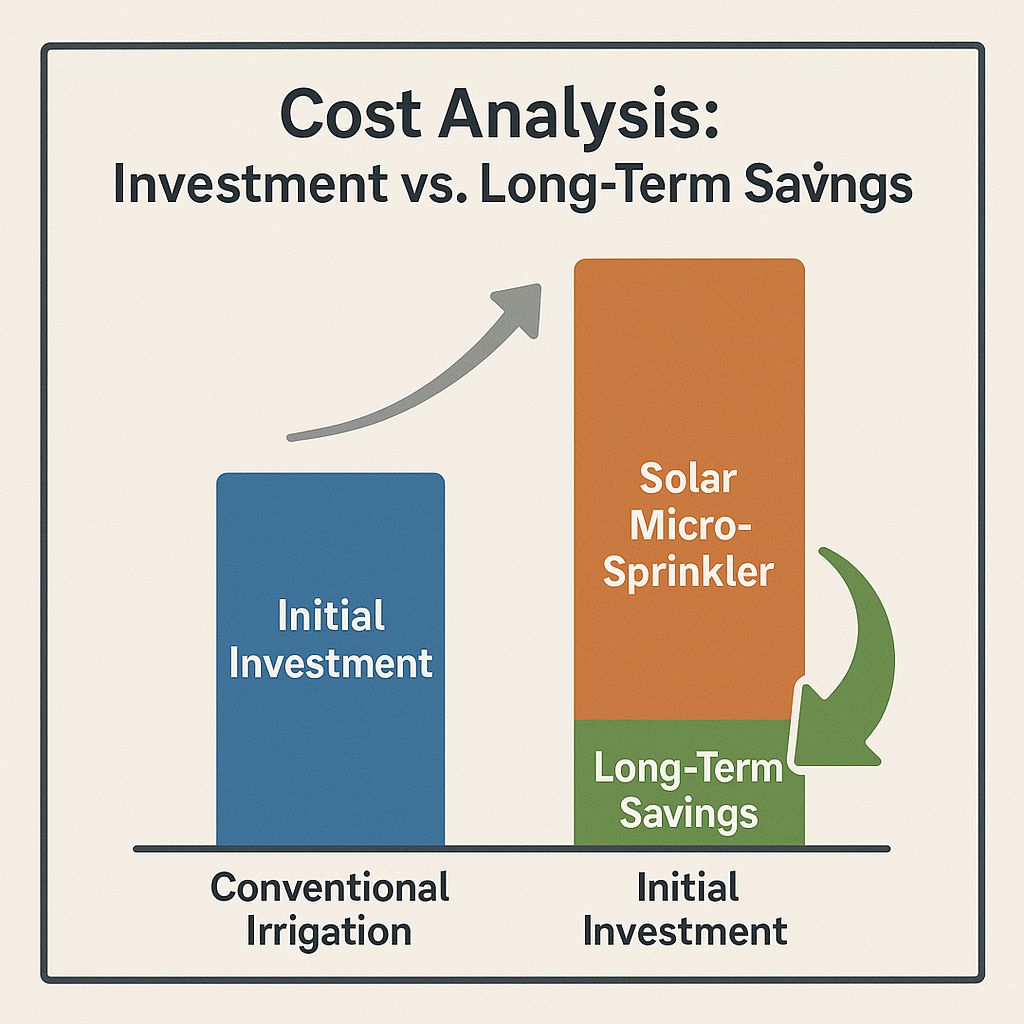
Cost Analysis: Investment vs. Long-Term Savings
Understanding the financial implications of solar micro-sprinkler systems is essential for making informed investment decisions. While initial costs exceed those of conventional irrigation, the long-term economics strongly favor these efficient systems through multiple savings streams and potential yield improvements.
Initial Setup Costs Breakdown
A complete solar micro-sprinkler system typically costs $2,000-$5,000 per acre for small to medium installations, with economies of scale reducing per-acre costs for larger systems. Solar components (panels, mounting, controller) represent about 40-50% of this cost, while irrigation components (pump, filtration, piping, sprinklers) make up the remainder. Professional design and installation add 15-25% but often provide value through optimized system performance and reduced maintenance issues.
For a typical 5-acre vegetable operation, expect total investment of $10,000-$25,000 depending on system complexity, water source challenges, and component quality. Higher-end systems include features like remote monitoring, automated filtration, and zone control that increase initial cost but improve long-term performance. Budget for replacement parts and system expansion in your financial planning, as most growers find they want to extend their systems after seeing the benefits.
Quality components significantly impact system longevity and maintenance requirements. While budget options exist, commercial-grade components typically offer better durability and performance, particularly for filtration, controllers, and sprinkler heads. The cost difference often pays for itself through reduced replacement frequency and improved reliability.
Energy Savings Over 5-10 Years
Energy represents one of the most significant operational costs for irrigated agriculture, with conventional electric pumps consuming $200-$600 per acre annually depending on water requirements and electricity rates. Solar-powered systems eliminate this expense entirely, creating immediate operational savings. For a 5-acre farm, this represents $1,000-$3,000 annual reduction in operating costs, with larger operations seeing proportionally greater savings.
These energy savings accelerate payback periods, with most systems reaching break-even within 3-7 years based solely on eliminated electricity costs. As utility rates continue rising (averaging 3-5% annually in most regions), the value of energy independence grows accordingly. The long-term inflation protection provided by solar power represents a significant but often undervalued financial benefit.
Beyond direct cost savings, solar irrigation systems eliminate vulnerability to grid outages that can threaten crops during critical water needs periods. This reliability has real economic value, particularly for high-value crops where even brief irrigation interruptions can impact yield or quality. Many growers report that this operational security alone justifies their investment in solar power.
Water Conservation Financial Benefits
Water savings translate directly to financial benefits, particularly in regions with volumetric water pricing or pumping depth issues. The 30-50% water reduction typical with micro-sprinkler systems represents $50-$200 per acre annually in direct water costs for farms using municipal or district water supplies. Even for operations with water rights or private wells, reduced pumping translates to lower maintenance costs and extended equipment life.
In areas facing water restrictions or declining aquifer levels, the value of water conservation extends beyond immediate cost savings to long-term viability. Farms that can produce more crop per drop gain competitive advantage and operational security in water-constrained environments. As climate change increases water supply volatility, efficient irrigation systems become essential risk management tools rather than optional improvements.
Reduced water application also creates indirect savings through decreased fertilizer leaching, reduced disease pressure, and lower weed management costs. These operational benefits typically add $75-$150 per acre annually to the financial advantages of micro-sprinkler systems, accelerating return on investment beyond direct resource savings.
Available Subsidies and Tax Incentives
Numerous financial incentives can significantly reduce the net cost of solar micro-sprinkler systems. The federal Investment Tax Credit currently allows you to deduct 30% of solar system costs from your federal taxes, effectively reducing system cost by nearly one-third for tax-paying entities. This credit applies to all solar components including panels, mounting hardware, controllers, and installation labor directly related to the solar portion. For more information on solar panel systems, you can explore our guide to solar panels for farm irrigation systems.
USDA programs like EQIP (Environmental Quality Incentives Program) and REAP (Rural Energy for America Program) offer substantial cost-share funding for agricultural water conservation and renewable energy projects. These programs typically cover 25-75% of eligible costs, with higher rates for historically underserved producers. State and local incentives provide additional support in many regions, particularly those facing water scarcity or energy challenges.
Many irrigation districts and water management agencies offer rebates specifically for converting to water-efficient irrigation methods. These programs can provide $200-$500 per acre toward micro-sprinkler components and installation. Combined with energy-focused incentives, these water conservation programs can reduce your net system cost by 50-80% in some regions, dramatically improving project economics and shortening payback periods to as little as 1-2 years.
Real Success Stories from Farmers Using Solar Micro-Sprinklers
The true test of any agricultural technology lies in real-world implementation across diverse farming operations. Solar micro-sprinkler systems have proven their value on farms ranging from small specialty crop producers to large commercial operations. These success stories provide practical insights and inspiration for farmers considering similar transitions.
While each operation faces unique challenges and opportunities, common themes emerge across successful implementations: significant resource savings, improved crop quality, and enhanced farm resilience. The following case studies highlight different scales and applications, demonstrating the adaptability of solar micro-sprinkler technology to various agricultural contexts.
Small Vegetable Farm Case Study
- Farm profile: 3-acre diversified vegetable operation in California’s Central Valley
- Previous system: Municipal water with electric pump and overhead sprinklers
- Solar capacity installed: 2.4kW ground-mounted array
- System cost: $12,500 ($4,167/acre) before incentives, $6,200 net cost after tax credits and EQIP funding
- Annual savings: $1,850 in electricity and $900 in water costs
Green Valley Farm implemented their solar micro-sprinkler system in stages over two growing seasons, allowing for careful evaluation and refinement. Owner Maria Rodriguez initially converted one acre of tomatoes and peppers, then expanded after seeing dramatic improvements in fruit quality and reduced disease pressure. “The payback has been faster than we expected,” reports Rodriguez. “Our water bill dropped immediately, and we’ve cut our fungicide applications in half because the plants stay dry.”
The system incorporates zone control that allows for customized irrigation scheduling based on crop needs and growth stages. Soil moisture sensors connected to an automated controller ensure optimal watering despite variable weather conditions. Rodriguez particularly values the system’s reliability during California’s frequent summer power outages, which previously threatened crops during critical periods. “When grid power fails during heat waves, nearby farms struggle while our crops continue receiving perfect irrigation,” she notes. Learn more about powering sprinkler irrigation systems with solar panels.
Beyond the direct resource savings, Green Valley Farm reports a 22% increase in marketable yield for their premium heirloom tomatoes and a significant reduction in cracking and blossom end rot issues. Labor requirements for irrigation management have decreased by approximately 5 hours weekly, allowing reallocation to other farm tasks. The farm offers regular tours showcasing their sustainable irrigation practices, creating additional agritourism revenue and community education opportunities.
Medium Orchard Implementation Results
Hillside Orchards, a 15-acre apple and pear operation in Washington state, converted from diesel-powered overhead irrigation to a solar micro-sprinkler system in 2018. Their 8.5kW solar array powers a zoned irrigation system that precisely targets tree root zones while keeping foliage dry. The $42,000 system ($2,800/acre) was offset by a 30% federal tax credit and a state-funded agricultural water efficiency grant, resulting in a net investment of $21,000. Owner James Wilson calculates annual savings of $7,200 in diesel costs and $3,500 in reduced fungicide applications.
Wilson reports multiple benefits beyond direct cost savings: “Fruit quality has improved dramatically with consistent moisture. We’re seeing better color development, more uniform sizing, and higher brix levels that translate to better flavor and storage life.” The system includes frost protection capabilities that have successfully protected blossoms during critical spring freeze events. Dual-use design allows the solar array to power both irrigation during growing season and workshop equipment during winter months, maximizing return on the renewable energy investment.
Large-Scale Row Crop Application
Sunshine Farms operates 120 acres of organic sweet corn and dry beans in Colorado’s San Luis Valley. Their multi-phase conversion to solar micro-sprinklers began in 2019 with a 20-acre pilot project and expanded based on impressive results. The current 35kW solar system powers micro-sprinklers across 80 acres, with expansion planned for remaining acreage. Operations manager Robert Chen notes that water application efficiency increased from approximately 40% with their previous wheel-line system to over 75% with micro-sprinklers.
The farm’s $175,000 investment ($2,188/acre) qualified for USDA REAP funding, state renewable energy incentives, and water conservation grants from their local irrigation district, reducing net costs by approximately 65%. Annual savings include $22,000 in eliminated grid electricity costs and labor reductions valued at $15,000. Chen emphasizes system reliability as a critical benefit: “Our previous irrigation required constant attention and troubleshooting. The solar micro-sprinklers operate consistently with minimal intervention, freeing our team to focus on other aspects of production.”
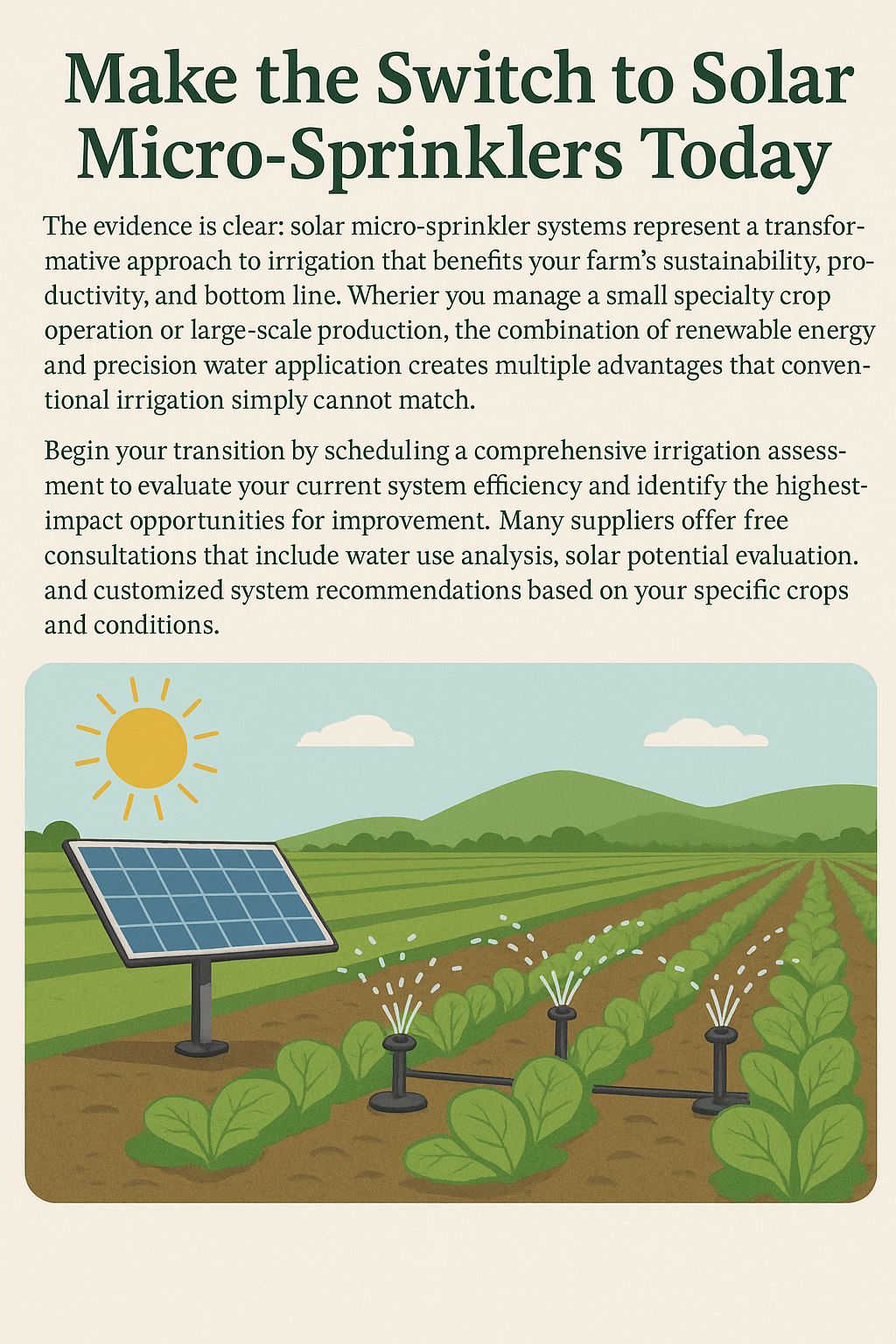
Make the Switch to Solar Micro-Sprinklers Today
The evidence is clear: solar micro-sprinkler systems represent a transformative approach to irrigation that benefits your farm’s sustainability, productivity, and bottom line. Whether you manage a small specialty crop operation or large-scale production, the combination of renewable energy and precision water application creates multiple advantages that conventional irrigation simply cannot match. The technology has matured beyond experimental status to become a proven solution with predictable benefits and reliable performance across diverse agricultural settings.
Begin your transition by scheduling a comprehensive irrigation assessment to evaluate your current system efficiency and identify the highest-impact opportunities for improvement. Many suppliers offer free consultations that include water use analysis, solar potential evaluation, and customized system recommendations based on your specific crops and conditions.
Frequently Asked Questions
As you consider implementing solar micro-sprinkler irrigation, you likely have specific questions about system performance, requirements, and limitations. The following answers address the most common inquiries from farmers evaluating this technology for their operations.
How long does a solar micro-sprinkler system typically last?
A properly designed and maintained solar micro-sprinkler system offers exceptional longevity compared to many farm investments. Solar panels typically carry 25-year warranties and often operate effectively for 30+ years with minimal degradation in output. The irrigation components have varying lifespans: mainlines and quality valves generally last 15-20 years, while micro-sprinkler heads typically need replacement every 5-7 years depending on water quality and operating conditions. Controllers and pumps typically provide 7-10 years of reliable service before requiring major maintenance or replacement. With appropriate component selection and regular maintenance, expect your complete system to function effectively for 15+ years, with incremental updates rather than complete replacement.
Can solar micro-sprinklers work in cloudy or rainy regions?
Solar irrigation systems operate effectively in most agricultural regions, including those with seasonal cloud cover. System design for less sunny locations typically includes oversized solar arrays (25-40% larger than minimum requirements) and sometimes incorporates small battery banks to maintain consistent operation during cloudy periods. Even locations with 3-4 hours of daily equivalent full sun can support effective solar irrigation with proper system sizing. Remember that irrigation requirements naturally decrease during cloudy and rainy periods, creating a beneficial alignment between power availability and water needs. Many farms in notoriously cloudy regions like the Pacific Northwest and Northeast successfully operate solar irrigation by designing systems matched to their specific solar resource and crop requirements.
Do I need battery backup for my solar irrigation system?
Most solar micro-sprinkler systems operate effectively without batteries by pumping directly when sunlight is available, particularly for installations with water storage capacity like tanks or ponds. This direct-drive approach maximizes efficiency and minimizes system cost and complexity. However, batteries become valuable additions in specific circumstances: when irrigation must occur during pre-dawn hours for crop health reasons, when cloud patterns in your region create frequent interruptions during critical irrigation windows, or when you want to operate the system consistently regardless of solar conditions.
Battery costs have decreased significantly in recent years, making small backup systems more economically viable. A modest battery bank providing 4-6 hours of operation during low solar periods adds approximately 15-25% to system cost but significantly enhances flexibility and reliability. Many farmers begin without batteries and add storage capacity later if operational experience demonstrates specific needs not met by direct solar pumping.
What crops benefit most from micro-sprinkler irrigation?
While nearly all crops show positive response to precise irrigation, certain types demonstrate particularly dramatic benefits from micro-sprinkler systems. Tree fruits and nuts show exceptional improvement in yield and quality due to uniform root zone moisture without leaf wetness that promotes disease. Berries and other high-value fruits benefit from precise moisture control that enhances flavor development and reduces fruit rot issues. Vegetables with sensitive quality parameters like tomatoes, peppers, and leafy greens show significant improvements in marketable yield percentage and shelf life. Nursery crops and ornamentals benefit from uniform growth and reduced disease pressure. Even field crops like corn, beans, and small grains demonstrate yield improvements and water use efficiency gains, though the economic return may be less dramatic than for higher-value specialty crops.
How does frost protection work with micro-sprinklers?
Frost Protection Methods with Micro-Sprinklers
Method: Low-volume continuous operation
Temperature Range: 28-32°F (-2 to 0°C)
Water Application: 15-25 gallons per acre per hour
Protection Mechanism: Maintains soil heat release, prevents radiational cooling
Effectiveness: 2-4°F protection (varies by conditions)Method: High-volume intermittent operation
Temperature Range: 25-28°F (-4 to -2°C)
Water Application: 40-60 gallons per acre per hour
Protection Mechanism: Releases latent heat during freezing process
Effectiveness: 4-6°F protection (varies by conditions)Requirements: Adequate water supply, proper sprinkler coverage, monitoring system
Micro-sprinklers provide effective frost protection through several mechanisms depending on system design and operation. Unlike conventional overhead sprinklers that protect through continuous ice formation, micro-sprinklers primarily utilize soil moisture management and targeted application to sensitive plant parts. By maintaining optimal soil moisture, you maximize heat storage capacity that releases during nighttime cooling events. Strategic placement of sprinklers at crop height rather than below plants allows for direct protection of sensitive flowers or developing fruit when necessary. For more information on the benefits of these systems, you can explore micro-sprinkler irrigation systems.
For light frost events (down to 28°F), continuous low-volume operation during the entire risk period maintains air temperature in the crop zone through evaporation and condensation cycling. For more severe events, higher application rates may be necessary, though still significantly less than conventional overhead frost protection systems. Solar-powered systems require careful consideration of nighttime operation needs, typically incorporating either battery storage or small backup generators to ensure protection during pre-dawn hours when frost risk peaks but solar power is unavailable.
Many growers combine micro-sprinkler frost protection with other methods like wind machines or row covers for comprehensive cold protection. The precision application of water only where needed significantly reduces total water requirements compared to overhead systems while still providing effective temperature moderation. This efficiency makes frost protection viable even in water-limited regions where conventional approaches would be impractical.
Advanced frost protection systems include temperature sensors at multiple heights within the crop canopy, automated start-stop controls based on wet-bulb temperatures, and remote monitoring capabilities. These smart systems minimize water use while maximizing protection effectiveness by operating only when and where needed rather than based on conservative fixed schedules. The combination of precise water application and intelligent controls represents the cutting edge of agricultural frost protection technology.
Successful frost protection requires thorough planning and system testing before actual freeze events occur. Conduct dry runs during favorable conditions to verify coverage patterns, pressure adequacy, and control system functionality. Document effective settings and procedures for quick implementation when frost threatens. Remember that micro-sprinkler frost protection works best as part of a comprehensive cold management strategy rather than as a standalone solution.



Leave a Reply