
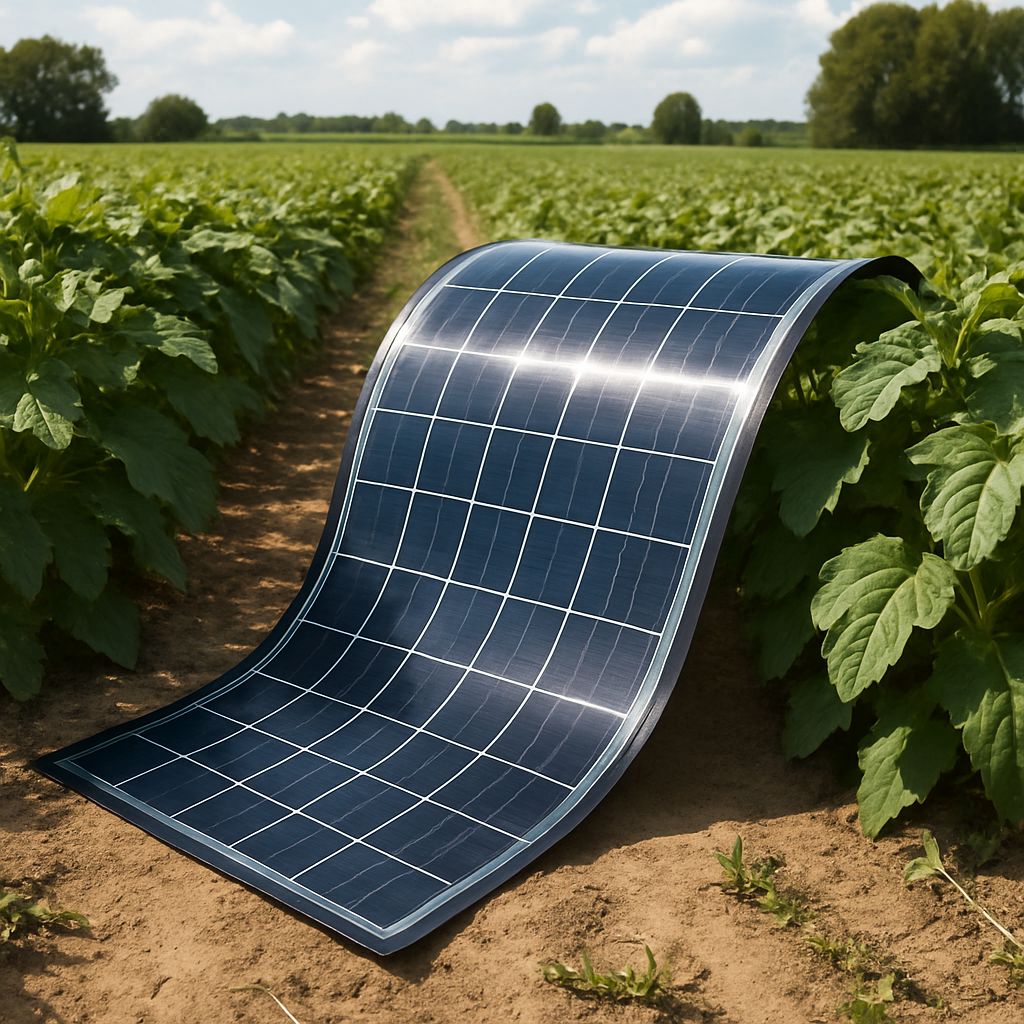
Article-At-A-Glance
- Thin-film solar panels use materials like CdTe, CIGS, and a-Si that enable flexible, lightweight designs perfect for diverse agricultural applications
- Despite lower efficiency than traditional panels (10-13% vs 13-22%), thin-film technology performs better in low-light and high-temperature farm environments
- The multi-layer construction of thin-film panels allows for versatile installation options across greenhouse roofs, barn sides, and portable farm equipment
- Emerging materials like perovskites promise to revolutionize farm solar applications with potential efficiencies above 25% while maintaining thin-film benefits
Thin-film solar technology is transforming agricultural energy production with materials that balance efficiency, flexibility, and durability. Unlike bulky traditional panels, these ultra-slim alternatives open new possibilities for integrating renewable energy throughout farm operations.
For farmers seeking sustainable power solutions, Growing Solar Mist provides specialized thin-film solar panel systems that seamlessly integrate with existing agricultural infrastructure. Their adaptable designs work with the unique requirements of modern farming while significantly reducing energy costs.
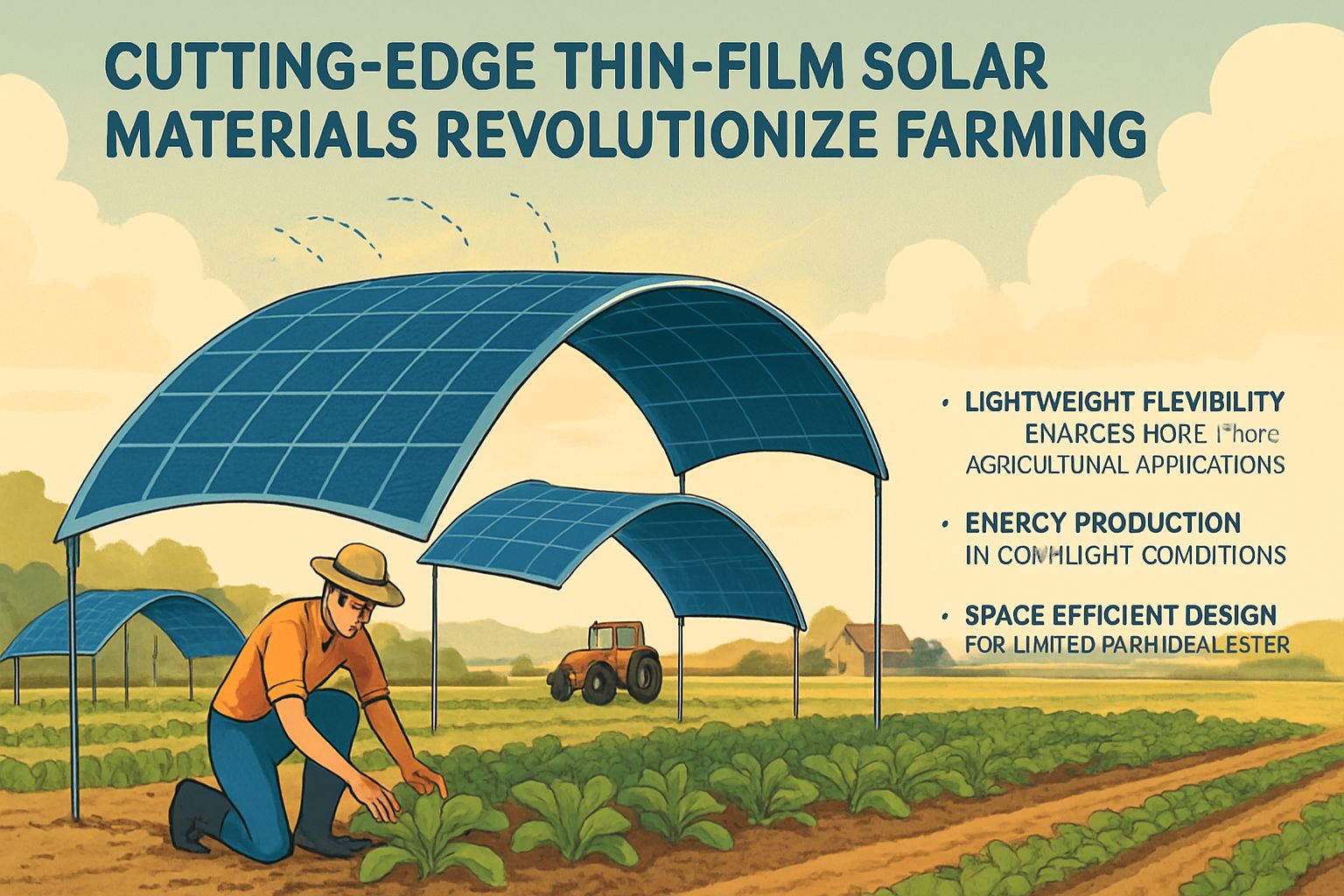
Cutting-Edge Thin-Film Solar Materials Revolutionize Farming
Thin-film solar panels represent a remarkable shift in how we harness solar energy in agricultural settings. These innovative panels are manufactured by depositing one or more ultra-thin layers of photovoltaic material onto a substrate, creating panels that are often less than 2 micrometers thick—about 100 times thinner than traditional silicon solar panels. This slimmed-down profile doesn’t just save on materials; it fundamentally changes what’s possible in farm-based solar applications.
Lightweight Flexibility Enables New Agricultural Applications
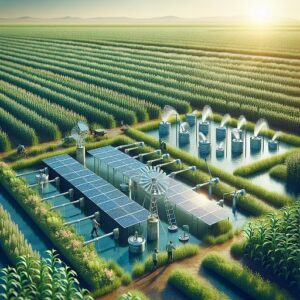
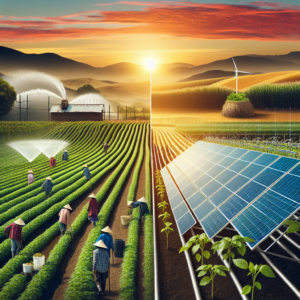
The most immediately apparent advantage of thin-film panels is their exceptional flexibility and lightweight nature. Traditional crystalline silicon panels are rigid and heavy, limiting installation options to reinforced rooftops or ground-mounted arrays that take up valuable farming space. In contrast, thin-film panels can conform to curved surfaces, be integrated into greenhouse coverings, wrapped around cylindrical water tanks, or even incorporated into portable equipment covers. This flexibility allows farmers to harvest solar energy from previously unusable spaces without sacrificing land that could otherwise be used for crops or livestock.
Energy Production in Low-Light Conditions
Farm operations don’t stop when clouds roll in, and neither should energy production. Thin-film panels excel in variable weather conditions that are common in agricultural settings. These materials have superior low-light performance compared to traditional silicon panels, producing electricity earlier in the morning, later in the evening, and during overcast days. This extended production window is particularly valuable for farming operations that require consistent power throughout the day for irrigation, ventilation, and monitoring systems regardless of perfect sunshine.
Space-Efficient Design for Limited Farm Real Estate
Land utilization is a critical consideration for any profitable farming operation. Thin-film technology allows for dual-purpose installations that maximize every square foot of farm property. These panels can be integrated into existing structures like barn roofs, equipment sheds, and livestock shelters without requiring dedicated solar fields. Some innovative applications even include semi-transparent thin-film panels incorporated into greenhouse roofs, allowing selective wavelengths of light to pass through for plant growth while converting other wavelengths into electricity. This dual-functionality preserves valuable growing space while generating power directly where it’s needed most.
Four Major Thin-Film Solar Panel Materials
The performance characteristics of thin-film solar panels are directly tied to their composition. Each material offers distinct advantages that make them suitable for different agricultural applications, from powering irrigation systems to climate control in livestock facilities. Understanding these differences helps farmers select the optimal solution for their specific needs and environmental conditions.
Here is a table summarizing the main core materials used for thin-film solar panels, along with their roles and defining characteristics:
|
Core Material |
Role in Panel |
Key Characteristics |
|---|---|---|
|
Amorphous Silicon (a-Si) |
Semiconductor absorber layer |
Flexible, lightweight, low-cost, less efficient (6–8%), shorter lifespan, good low-light performance. 1, 2, 3 |
|
Cadmium Telluride (CdTe) |
Semiconductor absorber layer |
Cost-effective, relatively high efficiency (9–18%), scalable, toxic cadmium, moderate durability. 1, 2, 3 |
|
Copper Indium Gallium Selenide (CIGS) |
Multi-element semiconductor absorber layer |
High efficiency (up to 23% in labs), flexible options, expensive, complex manufacture, good in heat/low light. 2, 3, 4 |
|
Gallium Arsenide (GaAs) |
High-performance semiconductor |
Extremely high efficiency (~30%), very costly, mainly used in niche or space applications. 3 |
These materials enable thin-film solar panels to be lighter, more flexible, and suitable for a broad range of applications compared to traditional silicon wafer panels—but with trade-offs in efficiency, cost, toxicity, and longevity.
Cadmium Telluride (CdTe): Highest Market Share
CdTe panels dominate the thin-film market with approximately 50% market share due to their balance of cost and performance. These panels achieve efficiency ratings of 9-18% and perform exceptionally well in hot conditions—a critical advantage for sun-exposed farm installations. CdTe panels maintain steady output even as temperatures rise, unlike traditional silicon panels that lose efficiency in high heat.
The manufacturing process for CdTe panels requires significantly less energy than traditional silicon panels, resulting in a carbon payback period as short as eight months. For farmers concerned about both economic and environmental sustainability, this quick return on carbon investment makes CdTe an attractive option for powering high-consumption agricultural operations like dairy cooling systems and grain drying facilities.
Copper Indium Gallium Selenide (CIGS): Best Efficiency-to-Cost Ratio
CIGS technology offers impressive efficiency levels reaching 15-20%, approaching those of traditional silicon panels while maintaining the flexibility advantages of thin-film technology. These panels utilize a semiconductor layer made from copper, indium, gallium, and selenium deposited on a flexible backing. For agricultural applications requiring higher power output from limited space, CIGS provides an excellent balance of performance and adaptability. To learn more about the composition and uses of thin-film solar panels, visit this comprehensive guide.
The versatility of CIGS panels makes them ideal for farm implementations requiring flexible mounting solutions, such as curved greenhouse roofs or cylindrical grain silo covers. Their higher efficiency means farmers can generate more power from the same square footage, maximizing energy production from available infrastructure without sacrificing usable land.
Amorphous Silicon (a-Si): Perfect for Variable Weather Conditions
Amorphous silicon panels excel in inconsistent light conditions common in many farming regions. While they offer lower efficiency (typically 6-8%) compared to other thin-film technologies, their superior performance in diffuse light and partial shading makes them valuable for installations where consistent energy production matters more than peak output. These panels maintain better relative efficiency during cloudy days, early mornings, and late afternoons—extending useful production hours for critical farm operations.
A-Si panels also demonstrate exceptional temperature stability, maintaining performance even in the extreme heat often experienced in open agricultural settings. This resilience makes them particularly suitable for powering continuous operations like ventilation systems in livestock facilities, where reliability in varying conditions outweighs maximum efficiency considerations.
Gallium Arsenide (GaAs): Premium Performance for Specialized Applications
For farm operations where maximum energy production from limited space is essential, GaAs offers unmatched efficiency among thin-film technologies—reaching up to 29% in ideal conditions. This premium performance comes with higher costs, making GaAs panels most suitable for specialized agricultural applications where space is severely constrained or energy demands are particularly high.
The exceptional efficiency of GaAs makes it appropriate for powering high-value precision agriculture equipment like automated harvesters, environmental control systems in indoor growing operations, or critical monitoring systems where reliability justifies the premium investment. These panels can generate substantially more power per square foot than any other thin-film option, minimizing the installation footprint on valuable farm property.
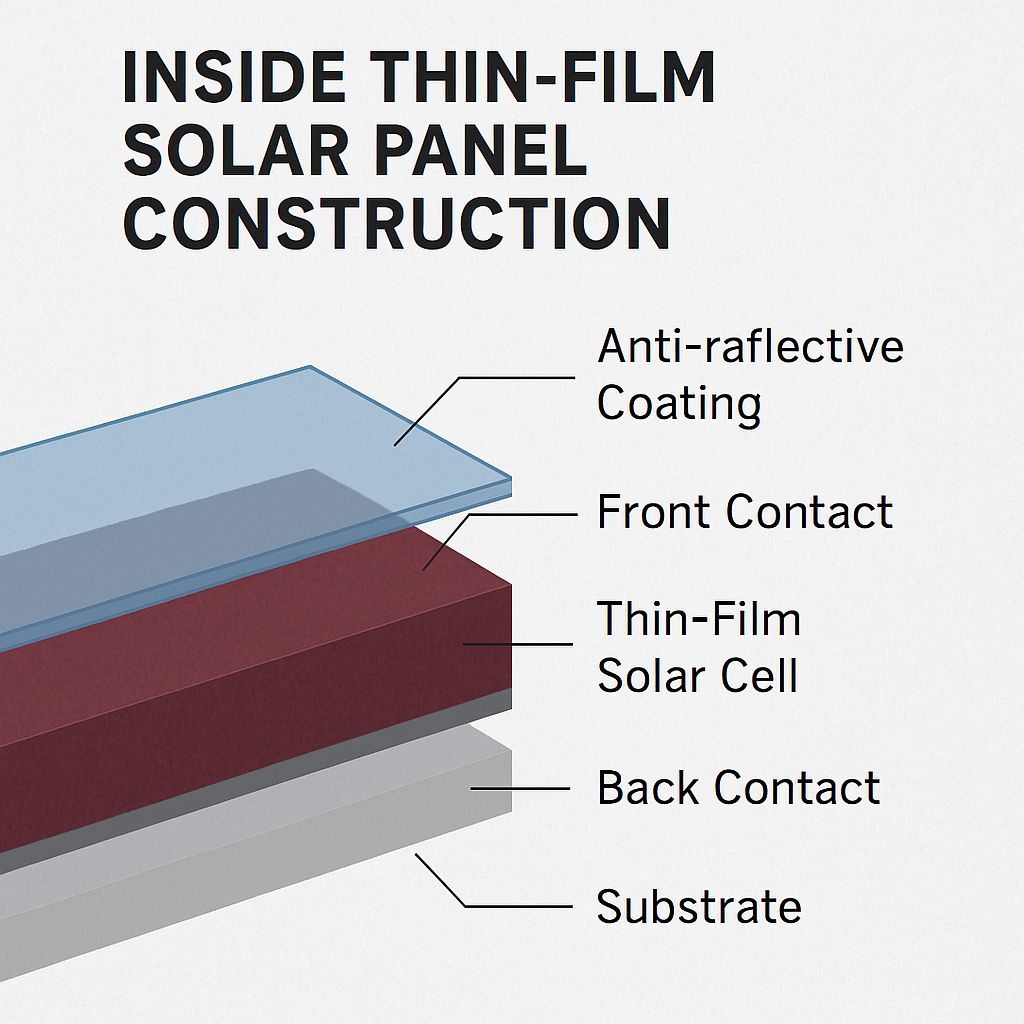
Inside Thin-Film Solar Panel Construction
Understanding the layered composition of thin-film panels reveals why they perform differently from traditional solar technology and how these differences benefit agricultural applications. Each component plays a critical role in the panel’s flexibility, durability, and performance profile—characteristics that determine its suitability for specific farm environments. For more details on the materials used in these panels, check out this solar panel materials construction guide.
Multi-Layer Composition Breakdown
Thin-film panels employ a surprisingly complex structure despite their slim profile. The foundation typically consists of a substrate layer that provides structural support, followed by a transparent conductive oxide layer that allows light to pass while conducting electricity. Next comes the crucial semiconductor layer (using one of the materials discussed above) that converts photons to electricity. This is topped with another conductive layer and finally protected by an encapsulant that shields the delicate internal components from moisture and physical damage.
This strategic layering allows for the exceptional thinness that defines these panels while maintaining the necessary electrical properties for efficient energy conversion. The minimal material usage not only reduces weight but also decreases embodied energy—the total energy required for manufacturing—making thin-film panels more environmentally sustainable than their thicker counterparts.
Substrate Materials: Glass, Metal, and Plastic Options
The substrate layer fundamentally determines how and where a thin-film panel can be deployed on a farm. Glass substrates offer excellent durability and weather resistance, making them ideal for permanent installations on barn roofs or equipment sheds. Metal foil substrates provide flexibility while maintaining good durability, perfect for curved surfaces like grain silo covers or water tank wraps. Plastic substrates offer the ultimate in flexibility and lightweight design, enabling innovative applications like solar tarps for temporary power needs during harvest or portable panels for remote field operations.
Each substrate material presents different tradeoffs between durability, flexibility, weight, and cost that influence its suitability for specific agricultural applications. The ability to choose the appropriate substrate based on installation requirements gives farmers unprecedented versatility in integrating solar power throughout their operations.
Semiconductor Layers: How They Convert Sunlight to Electricity
The heart of any thin-film panel is its semiconductor layer, where the photovoltaic effect occurs. When photons from sunlight strike this layer, they excite electrons, creating an electric current that can be captured and utilized. The composition and thickness of this layer directly affect the panel’s efficiency, spectral response (which wavelengths of light it can convert), and performance under various temperature and light conditions.
What makes thin-film semiconductors particularly valuable for agricultural applications is their excellent low-light performance and reduced sensitivity to partial shading—common conditions in farm settings where dust, pollen, or temporary shadows from equipment might affect panels. This resilience translates to more consistent power production throughout changing farm conditions, supporting critical systems that require reliable energy.
Encapsulation Technology for Weather Protection
Farm environments present numerous challenges for solar equipment, from extreme weather to dust, pollen, and agricultural chemicals. Advanced encapsulation technologies protect the delicate internal layers of thin-film panels from these threats, significantly extending their useful life in harsh agricultural settings. Modern encapsulants employ fluoropolymers, specialized adhesives, and multi-layer protection systems that seal out moisture while remaining transparent to incoming light. To explore the best options for solar panels in agricultural settings, you can learn more about the best solar panel types for farms.
For livestock facilities where ammonia and other corrosive gases are present, specialized encapsulation options provide enhanced chemical resistance. Similarly, panels installed near crop spraying operations can be equipped with coatings resistant to agricultural chemicals. These protective measures ensure that thin-film installations maintain performance despite the challenging conditions typical of working farms.
Performance Comparison: Thin-Film vs. Traditional Silicon Panels
When evaluating solar options for agricultural applications, understanding the performance differences between thin-film and traditional crystalline silicon panels is crucial. While traditional panels generally offer higher standard test condition (STC) efficiency ratings of 13-22%, thin-film panels typically range from 10-13% efficiency. However, this efficiency gap narrows considerably in real-world farm conditions where temperature fluctuations, dust accumulation, and variable lighting are common.
The practical performance advantage of thin-film panels often outweighs their lower rated efficiency, particularly in agricultural settings where installation versatility and resilience to real-world conditions matter more than laboratory specifications. Their ability to generate power across a broader range of conditions often results in more consistent daily energy production throughout the growing season.
Efficiency Rates Across Different Weather Conditions
Thin-film technologies demonstrate superior performance during cloudy or hazy conditions compared to crystalline silicon panels. CdTe and CIGS panels typically retain up to 95% of their efficiency in diffuse light conditions, while traditional panels may drop to 60-70% efficiency. For farms in regions with frequent cloud cover or morning fog, this characteristic translates to more consistent power production throughout varying weather patterns, supporting critical systems like irrigation controllers and monitoring equipment that must function reliably regardless of perfect sunshine.
Temperature Coefficient Benefits for Hot Farm Environments
One of the most significant advantages of thin-film panels for agricultural settings is their excellent performance in high temperatures. Traditional silicon panels lose approximately 0.4-0.5% of their efficiency for every degree Celsius above 25°C (77°F), while thin-film panels experience only 0.2-0.25% efficiency loss per degree. In open farm installations where panel temperatures regularly exceed 60°C (140°F) during summer months, this temperature coefficient advantage can result in thin-film panels outperforming higher-rated traditional panels by 10-15% during the hottest, sunniest days when maximum power is most valuable for cooling systems and water pumping.
Lifespan and Degradation Factors
Modern thin-film panels typically carry warranties of 20-25 years, comparable to traditional silicon panels, though their degradation patterns differ. While thin-film panels may experience slightly higher initial degradation in the first year (2-3% vs 1-2% for silicon panels), their subsequent annual degradation rate is often lower (0.4-0.5% vs 0.5-0.7%). This degradation profile means that after 10-15 years of operation, many thin-film installations maintain a higher percentage of their original output than traditional panels exposed to the same farm conditions.
Field Test Results: 5-Year Performance Comparison
A three-acre test plot in the Midwest growing region showed that while CdTe thin-film panels initially produced 12% less energy than equivalently-sized monocrystalline panels during ideal spring conditions, they produced 8% more total energy over the full growing season. The difference was particularly pronounced during July and August when high temperatures significantly impacted the crystalline panels’ performance during peak irrigation demand.
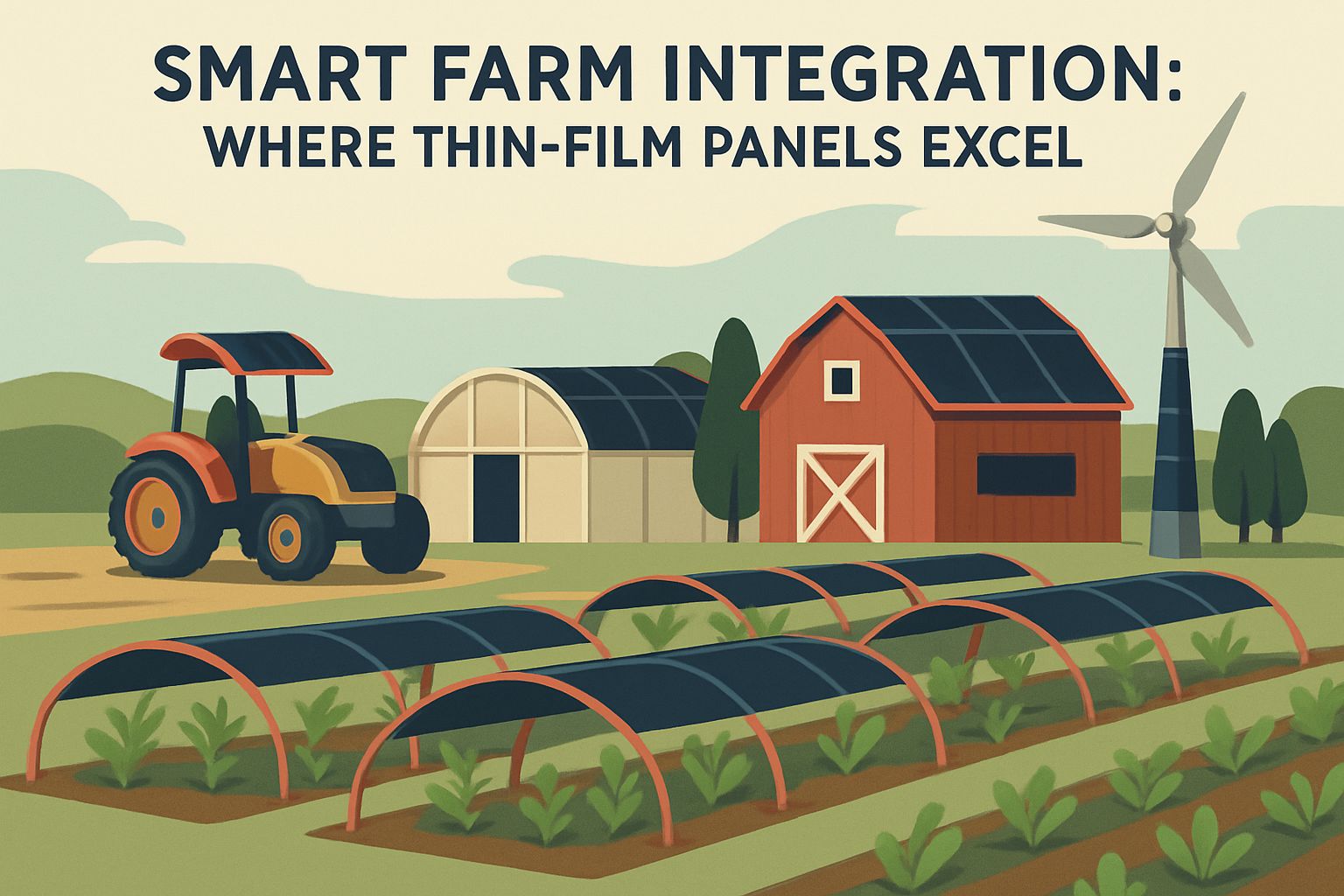
Smart Farm Integration: Where Thin-Film Panels Excel
The unique properties of thin-film solar panels create opportunities for integration throughout farming operations that simply aren’t possible with traditional rigid panels. Their lightweight, flexible nature allows for creative mounting solutions that generate power directly where it’s needed while potentially serving dual purposes in farm infrastructure. For those interested in the materials and construction of these panels, further insights are available.
Greenhouse Roof Applications Without Blocking Vital Light
Semi-transparent thin-film panels, particularly those using a-Si technology, can be integrated directly into greenhouse coverings to generate electricity while allowing sufficient light transmission for plant growth. These specialized panels can be engineered to allow specific light wavelengths beneficial for plant development to pass through while converting other wavelengths into electricity. This dual functionality transforms greenhouses from energy consumers into energy producers without sacrificing growing space or crop yields, making them ideal for intensive year-round production systems.
Barn and Equipment Storage Integration
The flexible nature of thin-film panels allows for installation on various barn surfaces, including curved metal roofs where traditional panels cannot be mounted. This adaptability enables power generation from existing structures without requiring purpose-built mounting systems or dedicated solar areas. For equipment storage buildings that receive minimal use but offer substantial roof area, thin-film installations can transform underutilized space into productive energy-generating assets that power other farm operations.
Portable Power for Remote Irrigation Systems
Lightweight thin-film panels are ideal for creating portable power stations that can be relocated throughout the growing season to support remote irrigation systems, temporary electric fencing, or seasonal equipment. These mobile power solutions eliminate the need for long cable runs or fuel-powered generators in distant fields, providing clean, quiet energy exactly where and when it’s needed. For operations that rotate crops and irrigation equipment across multiple fields, this portability represents a significant advantage over fixed solar installations.
Livestock Shelter Combined with Energy Production
Thin-film panels can be incorporated into shade structures for livestock, providing both protection from the elements and power generation for nearby watering systems, fans, or monitoring equipment. This dual functionality makes particularly good sense for rotational grazing operations where portable shade structures follow animal movements across pastures. The electricity generated can power electric fencing, water pumps, or even cooling systems that improve animal comfort and productivity during hot weather.
Environmental Impact of Thin-Film Solar Materials
The environmental footprint of solar panels extends far beyond their carbon-free electricity generation. Manufacturing processes, material sourcing, and end-of-life considerations all factor into the true sustainability profile of different solar technologies. For environmentally conscious farmers, understanding these impacts is essential for making truly sustainable energy choices.
Thin-film solar panels offer significant environmental advantages in manufacturing energy requirements and resource utilization compared to traditional panels. However, certain thin-film technologies also present unique environmental challenges that must be addressed through responsible manufacturing, installation, and eventual recycling.
The holistic environmental assessment must consider the entire lifecycle from raw material extraction through manufacturing, decades of clean energy production, and ultimately to recycling or disposal. When properly managed, thin-film technologies can offer substantial net environmental benefits despite material concerns.
Carbon Footprint Comparison with Other Solar Technologies
The energy payback time—how long a panel must operate to generate the energy used in its production—significantly favors thin-film technologies. CdTe panels typically achieve energy payback in 0.8-1.5 years, compared to 1.5-2.5 years for crystalline silicon panels. This shorter payback period means thin-film panels begin delivering net positive environmental benefits much sooner, an important consideration for farmers with sustainability goals tied to specific timeframes. Over a 25-year lifespan, thin-film panels can generate 15-20 times the energy used in their production, making them among the most energy-efficient renewable technologies available for agricultural applications.
End-of-Life Recycling Options
As the first generation of solar installations reaches the end of their useful life, recycling infrastructure is developing to recover valuable materials. For thin-film technologies, specialized recycling processes can recover up to 95% of semiconductor materials for reuse in new panels, significantly reducing the environmental impact of continued production. Learn more about how solar panels reduce carbon emissions and their benefits.
Several manufacturers now offer take-back programs that guarantee responsible recycling of their panels, providing farmers with assurance that their renewable energy investment won’t ultimately create waste problems. These closed-loop systems represent the ideal model for truly sustainable solar development on agricultural land.
|
Thin-Film Technology |
Recyclable Materials |
Current Recovery Rate |
Value of Recovered Materials |
|---|---|---|---|
|
CdTe |
Cadmium, Tellurium, Glass |
90-95% |
High (rare materials) |
|
CIGS |
Copper, Indium, Gallium, Selenium, Glass |
85-90% |
Very High (critical materials) |
|
a-Si |
Silicon, Glass, Aluminum |
80-85% |
Moderate |
|
GaAs |
Gallium, Arsenide, Substrate materials |
90-98% |
Extremely High (scarce materials) |
For agricultural installations, planning for eventual recycling should be incorporated into initial system design, with documentation of materials and considerations for future decommissioning. Some forward-thinking farmers are even including solar recycling provisions in their farm succession and estate planning.
Toxic Material Concerns with CdTe and GaAs
The presence of cadmium in CdTe panels and arsenide in GaAs technology raises legitimate environmental and health concerns that require proper management throughout the panel lifecycle. However, these materials are securely encapsulated during normal operation, presenting minimal risk during use. Extensive testing has demonstrated that even in extreme scenarios like fires or severe weather damage, the release of toxic materials from modern thin-film panels is negligible. For agricultural installations where food safety is paramount, this encapsulation technology ensures that these panels pose no contamination risk to crops or livestock when properly installed and maintained according to manufacturer specifications.
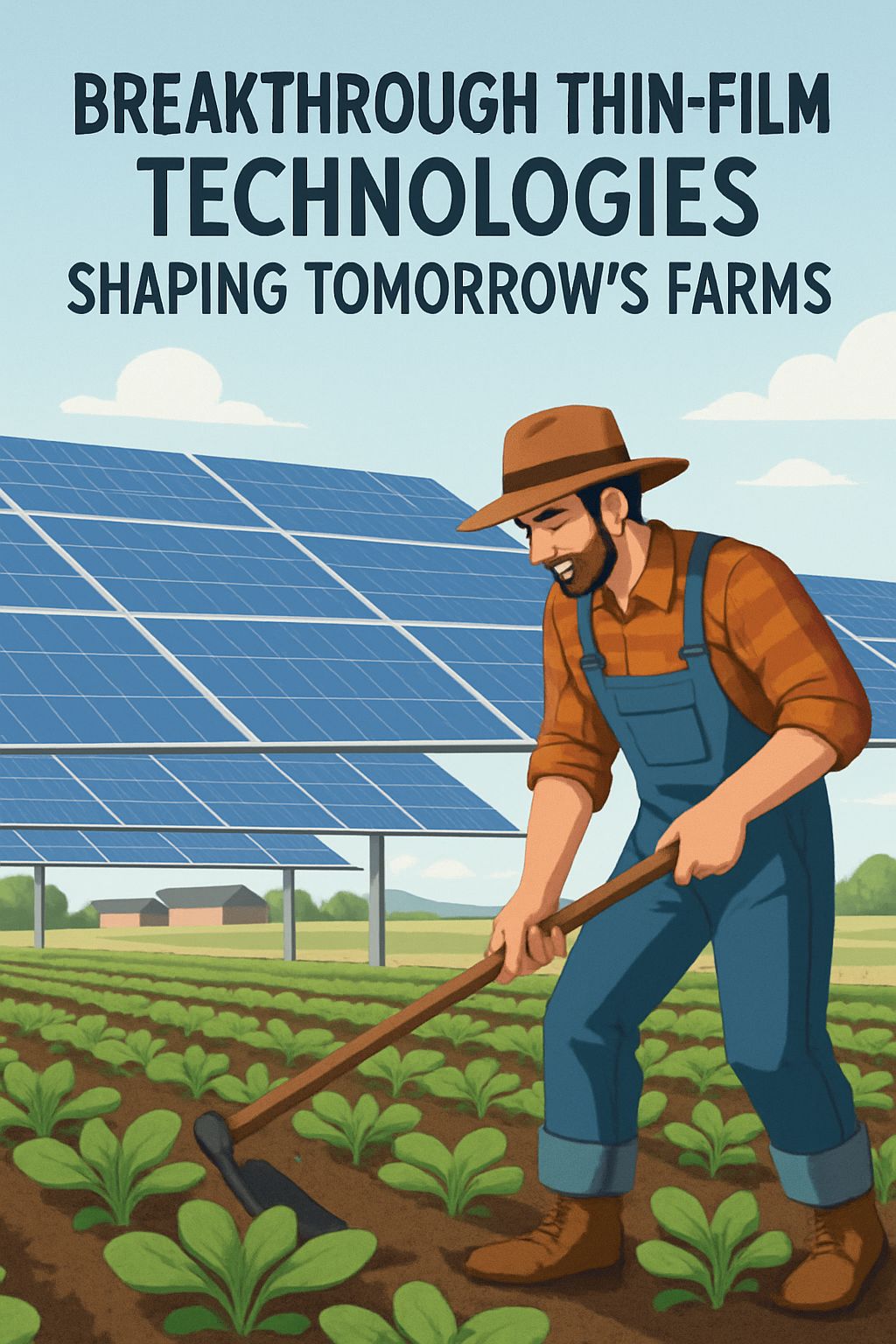
Breakthrough Thin-Film Technologies Shaping Tomorrow’s Farms
The next generation of thin-film solar technologies promises to address current limitations while building on existing advantages, creating even more compelling options for agricultural applications. These emerging technologies combine the flexibility and adaptability farmers value with improved efficiency and potentially lower environmental impacts. Forward-thinking agricultural operations are already participating in pilot programs testing these new materials in real-world farm environments.
Perovskite Solar Cells: Next-Generation Efficiency
Perovskite solar technology has generated tremendous excitement in the renewable energy sector, achieving laboratory efficiencies exceeding 25% while maintaining thin-film benefits of lightweight flexibility. These materials can be tuned to absorb different wavelengths of light, potentially allowing customized panels that maximize electricity generation while transmitting specific light spectrums beneficial for plant growth. For agricultural applications, this spectral tunability could revolutionize greenhouse integrated panels, creating coverings that generate substantial power while actually enhancing rather than compromising plant development underneath. Though commercial availability remains limited to pilot projects, several agricultural research institutions are actively testing perovskite panels in controlled growing environments with promising preliminary results.
Organic Photovoltaics for Biodegradable Solutions
Organic photovoltaic (OPV) technology uses carbon-based polymers instead of inorganic semiconductors to convert sunlight into electricity. While current efficiency levels remain modest (8-12%), these materials offer unprecedented flexibility, potential biodegradability, and ultra-low-weight profiles perfect for temporary or seasonal farm applications. Their environmental advantages include non-toxic materials, extremely low embodied energy in manufacturing, and potential biodegradability at end-of-life. For temporary structures like seasonal high tunnels, lamination film for greenhouse repairs, or portable animal shelters, OPV technology offers a solar solution that aligns perfectly with sustainable agricultural principles of reduced waste and closed material cycles. To explore more about solar applications in agriculture, check out how solar panels improve farm resilience.
Quantum Dot Solar Cells: Higher Energy Harvesting
Quantum dot solar technology represents a potential breakthrough in overcoming the theoretical efficiency limits of current solar materials. By precisely engineering nanoparticles that can be tuned to capture specific light wavelengths, these advanced thin-film panels could eventually exceed 30% efficiency while maintaining flexibility. The technology’s ability to capture infrared light—which passes unused through conventional panels—makes it particularly valuable for farm applications where capturing maximum energy from available sunlight is crucial. Though commercial quantum dot panels remain in development, their potential to significantly increase power output from limited installation space makes them particularly promising for farms where available mounting area is constrained by operational requirements.
Frequently Asked Questions
As farmers consider incorporating thin-film solar technology into their operations, common questions arise about practical implementation, performance expectations, and integration with agricultural activities. These questions reflect the unique considerations of agricultural solar installations compared to residential or commercial projects.
Understanding these agricultural-specific concerns helps farmers make informed decisions about whether thin-film technology aligns with their operational needs and sustainability goals. The following answers address the most common inquiries from farmers evaluating thin-film solar options.
How long do thin-film solar panels last when used in farm environments?
Modern thin-film panels typically carry manufacturer warranties of 20-25 years, with expected operational lifespans of 25-30 years in agricultural settings. Their performance degradation follows a different pattern than traditional panels—usually showing slightly higher initial degradation (2-3% in the first year) but slower subsequent annual losses (0.4-0.5% per year). Environmental factors specific to farms, such as dust from field operations, ammonia exposure in livestock applications, or chemical drift from crop spraying, can affect longevity if not properly managed through appropriate panel selection and maintenance routines. With proper installation and periodic cleaning, many agricultural thin-film installations maintain over 80% of their original production capacity after 20 years of operation.
Can thin-film panels be installed by farmers themselves or is professional installation required?
The lightweight, flexible nature of many thin-film products does make DIY installation more feasible than with heavy traditional panels, particularly for smaller off-grid systems. Flexible panels with adhesive backing can be applied to existing structures with basic tools and moderate technical skill. However, any grid-connected system still requires professional electrical work to ensure proper interconnection, safety systems, and compliance with utility requirements.
For maximum financial benefit and safe operation, most farm-scale installations should involve qualified solar professionals, though farmers can reduce costs by handling non-electrical aspects like mounting structure preparation or trenching for cables. Many agricultural extension services now offer workshops specifically on solar installation basics for farmers interested in handling portions of the work themselves.
Do thin-film solar panels work effectively in cloudy or partially shaded farm areas?
Thin-film panels generally outperform traditional crystalline panels in cloudy conditions and partial shading situations common in agricultural settings. Their superior low-light performance allows electricity generation earlier in the morning, later in the evening, and during overcast days when crystalline panels produce significantly less power. This extended daily production window is particularly valuable for powering continuous farm operations like ventilation, refrigeration, or monitoring systems.
Additionally, when partial shading occurs from nearby trees, equipment, or structures, thin-film panels experience less dramatic power reduction than crystalline panels. While a shadow covering just 5% of a traditional panel might reduce output by 25% or more due to the series connection of cells, thin-film panels typically see a more proportional reduction, losing only about 5-10% output from the same shadow coverage. This resilience to partial shading makes thin-film technology especially suitable for installations where ideal, unobstructed mounting locations are limited by farm operational requirements.
What maintenance do thin-film solar installations need on a working farm?
Thin-film solar installations generally require minimal maintenance, though farm environments present unique considerations. Regular cleaning is the most important maintenance task, particularly in dusty agricultural settings where field operations, unpaved roads, or livestock can generate significant airborne particles. Depending on local conditions, cleaning might be needed 2-4 times annually, with additional cleaning after particularly dusty activities like harvesting or tilling. Simple water rinsing is usually sufficient, though areas with hard water may require soft brushes and mild detergent to prevent mineral buildup. Avoiding high-pressure washing is important to prevent damage to seals and connections. For more on solar panel upkeep, explore our solar power generation process for farmers.
Are there special permits required for agricultural thin-film solar installations?
Permit requirements vary significantly by location, but agricultural solar installations often qualify for streamlined permitting compared to commercial projects, particularly when the energy primarily serves on-farm use. Many jurisdictions have created agricultural exemptions for smaller solar installations integrated into existing farm structures. However, ground-mounted systems that remove land from agricultural production may face additional scrutiny or restrictions, particularly in areas with farmland preservation programs or special agricultural zoning.
Working with local agricultural extension offices early in the planning process can help identify jurisdiction-specific requirements and potential exemptions available for farm operations. Many states also offer specialized guidance documents specifically addressing solar permitting in agricultural zones that simplify the process for farmers.
Understanding the local regulatory landscape before committing to a specific installation approach can prevent costly surprises and delays. Some jurisdictions even offer expedited permitting specifically for agricultural solar projects that maintain the primary farm use of the property.


Leave a Reply