

Key Takeaways
- Solar irrigation systems can reduce operating costs by up to 70% compared to diesel pumps while providing reliable water access in remote areas without grid electricity.
- Modern solar-powered systems offer smart features like automated scheduling, soil moisture sensing, and mobile monitoring for precise water management.
- The initial investment in solar irrigation typically pays for itself within 3-5 years through fuel savings, government incentives, and increased crop yields.
- Different irrigation methods (drip, sprinkler, surface, center pivot) can be powered by solar energy, allowing farmers to select the best option for their specific crops and field size.
- SunHub’s solar irrigation solutions are helping farmers across diverse climates adopt sustainable practices while improving their bottom line.
Why Traditional Irrigation Is Failing Today’s Farmers
Water is becoming agriculture’s most precious and precarious resource. Traditional irrigation methods—whether dependent on diesel generators or grid electricity—are increasingly unsustainable for today’s farmers. Fuel costs continue to rise unpredictably, cutting deeper into already thin profit margins. Grid electricity remains inaccessible to countless rural farming communities worldwide, with infrastructure development lagging far behind agricultural needs. Even where grid connections exist, reliability issues and frequent power outages leave crops vulnerable during critical growth periods.
Environmental concerns compound these challenges. Diesel-powered pumps release significant greenhouse gas emissions while creating noise pollution that disrupts farm ecosystems. The operational logistics of fuel-based systems—transportation, storage, and maintenance—create additional headaches for farmers already juggling numerous responsibilities. Perhaps most significantly, traditional systems lack the precision and flexibility modern agriculture demands, leading to water wastage through evaporation, runoff, and inefficient distribution.
As climate patterns become more erratic, with longer dry spells and more intense rainfall events, the limitations of conventional irrigation become increasingly apparent. Farmers need solutions that are not just economically viable but also resilient and adaptable to changing conditions.

Solar-Powered Irrigation: The Smart Solution for Modern Farming
Solar irrigation stands at the intersection of renewable energy and agricultural innovation, offering a powerful solution to many of the challenges facing modern farmers. By harnessing abundant solar energy, these systems provide reliable water access without the ongoing fuel costs of diesel pumps or the connectivity requirements of grid-powered systems. This independence is particularly valuable for remote farming operations where grid extension would be prohibitively expensive.
The economic case for solar irrigation becomes increasingly compelling as technology improves and costs decrease. After the initial investment, operational expenses drop dramatically—there’s no fuel to purchase, minimal maintenance requirements, and system lifespans typically exceeding 25 years. Many farmers report recouping their investment within just 3-5 years through direct savings and increased productivity.
Beyond the financial benefits, solar irrigation offers remarkable environmental advantages. These zero-emission systems help reduce agriculture’s carbon footprint while eliminating the soil and water contamination risks associated with fuel storage. The modular nature of solar technology also allows systems to grow alongside farming operations, with additional panels easily integrated as water needs increase.
How Solar Irrigation Systems Actually Work
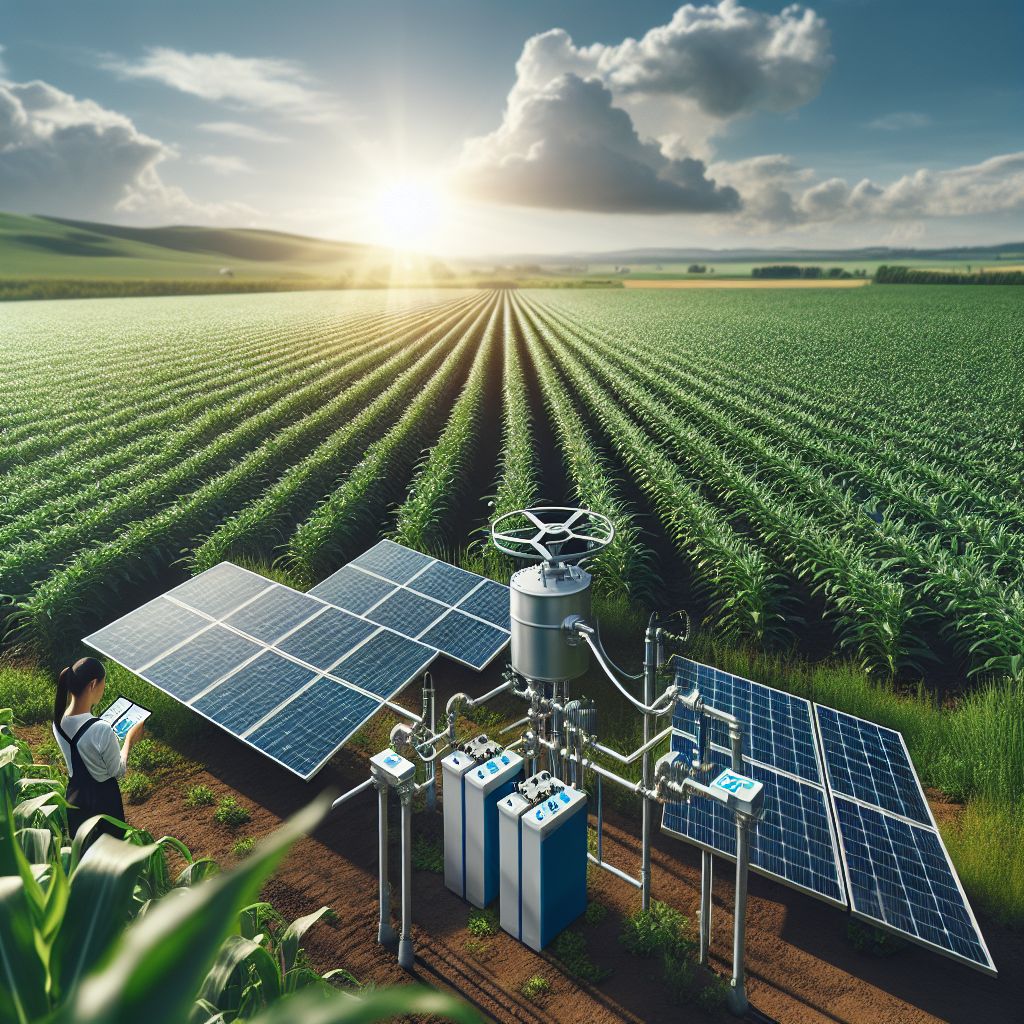
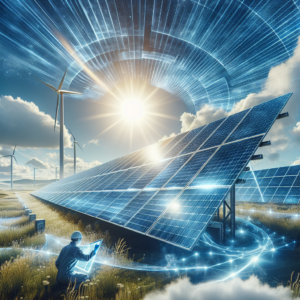
Solar irrigation harnesses photovoltaic (PV) technology to convert sunlight directly into electricity that powers water pumps. The process begins with solar panels, typically mounted on ground structures or tracking systems that follow the sun’s path for maximum energy capture. These panels generate DC (direct current) electricity when exposed to sunlight, with output varying based on solar intensity, panel efficiency, and array size.
This electricity flows to a controller unit—the system’s brain—which manages power flow and protects components from electrical surges or insufficient voltage. For AC (alternating current) pumps, an inverter converts the DC electricity into the appropriate AC form. The controller then delivers this electricity to the pump, which draws water from the source (well, river, reservoir) and distributes it through the irrigation network. For more on how solar panels can transform sunlight into energy efficiently, visit our guide on solar panels to farm power.
Modern systems incorporate impressive smart features. Variable frequency drives adjust pump speed based on available sunlight, ensuring optimal performance even during partially cloudy conditions. Advanced controllers allow for programmable operation times, soil moisture monitoring, and even smartphone integration for remote management. Some systems include battery storage for operation during low-light periods, while others incorporate water storage tanks as a more cost-effective alternative, pumping water when the sun shines for use during any time of day.
Types of Solar Water Pumps: Surface vs Submersible
When selecting a pump for your solar irrigation system, you’ll first need to decide between surface and submersible options—each designed for specific scenarios. Surface pumps sit above water level and excel at moving water horizontally over long distances from sources like ponds, streams, and shallow wells (typically less than 20 feet deep). They’re easier to access for maintenance and generally cost less initially, making them ideal for flood irrigation and situations where the water source is readily accessible. Models like the Grundfos CR and Lorentz PS surface pumps have proven particularly reliable in agricultural applications.
Submersible pumps, as their name suggests, operate underwater, usually installed directly in wells or deep water sources. Their key advantage is the ability to push water from significant depths—often 100-600 feet depending on the model. Since they’re already at water level, they don’t need to create suction, making them more efficient for deep-water extraction. Popular options include the Grundfos SQFlex series and Sun Pumps SCS submersibles, which are specifically designed for solar applications with variable power inputs.
“Choosing between a surface and submersible pump isn’t just about water depth. Consider your long-term maintenance capacity, initial budget constraints, and whether water quality issues like sediment might affect performance. For my 40-acre vegetable operation, switching to a Lorentz PS2-1800 submersible with solar power cut my irrigation costs by 63% in the first year alone.” — James Wilton, California Organic Farmer
The decision ultimately depends on your specific water source, required flow rate, and total dynamic head (the vertical distance plus friction losses water must travel). For many diversified farming operations, a combination of both pump types might be optimal—submersibles for deep well extraction and surface pumps for distribution across irrigation zones.
Complete System Components You’ll Need
A complete solar irrigation system requires several key components working together seamlessly. At the heart of the system are the solar panels (PV modules), typically arranged in arrays and mounted on either fixed structures or sun-tracking frames. These panels require proper sizing based on your water demands, pump specifications, and local solar conditions. The controller serves as the system’s command center, managing electricity flow and protecting components from electrical issues. For systems using AC pumps, an inverter converts DC electricity from the panels into AC current.
The water delivery infrastructure includes the pump (surface or submersible), pipes, valves, and filtration systems to remove debris that could clog irrigation components. Most systems incorporate some form of water storage—either elevated tanks that use gravity for distribution or ground-level reservoirs paired with secondary distribution pumps. To ensure longevity, protection components like surge protectors, junction boxes, and proper grounding systems are essential.
Smart agriculture features can dramatically improve system efficiency. Soil moisture sensors, automated scheduling controls, and weather monitoring stations help deliver precisely the right amount of water exactly when crops need it. Remote monitoring capabilities through cellular or WiFi connections allow farmers to manage irrigation from anywhere, receiving alerts about system performance and making adjustments without physically visiting each field. While some of these components might seem optional, they often provide the best return on investment through water conservation and labor savings.
4 Major Types of Solar Irrigation Systems
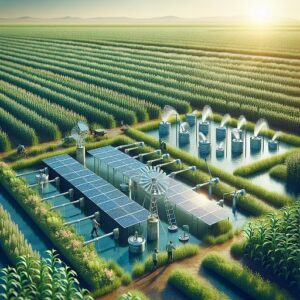
Solar power can drive virtually any irrigation method, giving farmers the flexibility to match their watering strategy to their specific crops, soil conditions, and climate. Each system has distinct advantages in different agricultural contexts, and the right choice depends on your particular farming operation. While the energy source—the sun—remains constant, the water delivery mechanisms vary significantly.
1. Drip Irrigation: Maximum Efficiency with Minimal Water
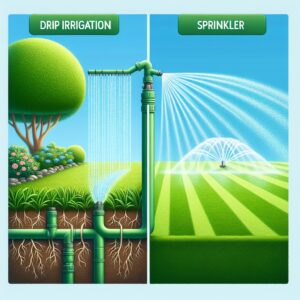
Drip irrigation represents the gold standard for water efficiency in agriculture, making it an ideal partner for solar power. This system delivers water directly to the root zone through a network of tubes, emitters, and drippers positioned at or below the soil surface. Water flows at low pressure through these components, releasing small amounts precisely where plants need it most. The slow, consistent application virtually eliminates runoff and evaporation losses, reducing water usage by 30-70% compared to conventional methods. For more insights on integrating solar power with agriculture, explore the benefits of agrivoltaics.
Solar-powered drip systems excel in water-scarce regions and for high-value crops like vegetables, berries, and tree fruits. The low pressure requirements align perfectly with solar pumping capabilities, often eliminating the need for batteries since water can be pumped during daylight hours into a reservoir for gravity-fed distribution. Modern versions incorporate pressure-compensating emitters that ensure uniform water distribution even across fields with varying elevations. For row crops, specialized drip tape can be installed seasonally and retrieved at harvest, while permanent installations with buried tubes work well for perennial crops and orchards.
2. Sprinkler Systems: Wider Coverage for Larger Fields
Sprinkler irrigation delivers water through overhead spray devices that simulate rainfall, making it versatile across diverse crop types and field sizes. These systems range from portable pipe networks with impact sprinklers to sophisticated center pivots covering hundreds of acres. Solar-powered sprinkler systems typically require more energy than drip systems due to higher operating pressures, but advancements in low-pressure sprinkler technology have made them increasingly viable with solar power.
For smaller operations, solid-set sprinklers with carefully sized solar arrays provide reliable coverage without the labor of moving pipes. Traveling gun systems—large sprinklers mounted on wheeled carts that move slowly across fields—offer another option that balances coverage with energy efficiency. The primary advantages include adaptability to various soil types, ability to apply fertilizers through fertigation, and suitability for frost protection in specialty crops. While sprinklers lose more water to evaporation than drip systems, their uniform coverage and ability to irrigate larger areas quickly make them appropriate for field crops like corn, alfalfa, and small grains.
When paired with soil moisture sensors and weather stations, modern solar sprinkler systems can automatically adjust application rates based on real-time conditions, significantly improving water use efficiency while requiring minimal farmer intervention. The modular nature of solar power allows these systems to expand over time as farm operations grow. For more information on how these systems are transforming agriculture, check out this article on solar-powered irrigation.
3. Surface Irrigation: Traditional Methods with Solar Power
Surface irrigation—including furrow, border, and basin methods—harnesses gravity to distribute water across fields through soil-level channels. While sometimes viewed as outdated, these traditional approaches remain appropriate in specific contexts, especially when modernized with solar pumping and precision controls. In furrow irrigation, water flows between crop rows through small trenches, while border irrigation uses strips of land separated by ridges, and basin irrigation temporarily floods level areas completely.
Solar-powered surface irrigation typically uses the sun’s energy to pump water to elevated holding tanks or directly into main canals, from which gravity distributes it through the field system. The primary advantages include simplicity, low filtration requirements, and compatibility with soils that have slower infiltration rates. Modern enhancements like laser-leveled fields, surge valves, and precision land grading have dramatically improved the efficiency of these traditional methods.
These systems often require significant water volumes but relatively low pressure, making them well-suited to solar pumping capabilities. For farms with existing surface irrigation infrastructure, adding solar pumping can dramatically reduce operating costs while maintaining familiar irrigation practices. The approach works particularly well for rice cultivation, flood-tolerant crops, and regions with abundant water but limited access to electricity.
4. Center Pivot Systems: Automating Large-Scale Watering
Center pivot irrigation represents the intersection of efficiency and scale, capable of watering vast acreages with minimal labor. These systems feature a long pipe supported by wheeled towers that rotate around a central pivot point, creating the distinctive circular fields visible from airplanes. While traditionally energy-intensive, modern low-pressure pivots can now operate effectively with appropriately sized solar arrays, particularly when supplemented with water storage for cloudy periods.
The advantages are substantial for larger operations: a single pivot can irrigate 120-500 acres with remarkable uniformity while requiring minimal labor. Advanced features include variable-rate irrigation that adjusts water application based on field mapping, drop nozzles that reduce evaporation losses, and complete computerization that allows remote monitoring and control. For solar applications, DC-powered pivot drives can operate directly from PV panels without inverters, improving overall system efficiency.
While the initial investment is significant, center pivots offer exceptional longevity—often 20+ years with proper maintenance—making them compatible with the long-term economics of solar power. The combination of solar energy and center pivot technology is particularly transformative in regions with abundant land but limited infrastructure, allowing previously unproductive areas to become agriculturally viable.

“Financial Benefits of Solar Panels …” from growingsolarmist.com and used with no modifications.
The Real Financial Benefits of Switching to Solar
The economic argument for solar irrigation has never been stronger, especially as technology costs decrease while conventional energy prices continue their upward trajectory. Beyond the environmental benefits, the financial case stands on its own merits for most agricultural operations. When evaluating the transition to solar irrigation, farmers should consider the complete financial picture, including direct savings, productivity improvements, and available incentives.
Initial Investment vs. Long-Term Savings
The upfront cost of solar irrigation systems typically ranges from $2,500-$10,000 for small farms (1-5 acres) to $10,000-$50,000 for medium operations (5-25 acres), with larger installations scaled accordingly. These figures encompass the complete system: solar panels, mounting structures, pumping equipment, controllers, and basic installation. While these numbers might initially appear significant, they must be weighed against the cumulative operational expenses of conventional alternatives over the system’s 25+ year lifespan.
Diesel-powered irrigation typically costs $3-$5 per hour in fuel alone, plus maintenance and eventual replacement. Grid electricity, where available, averages $0.12-$0.25 per kilowatt-hour for agricultural operations, often with higher demand charges during peak irrigation seasons. By eliminating these recurring expenses, solar systems create immediate positive cash flow—most farmers report annual savings between $1,500-$6,000 per pump, depending on system size, water requirements, and local energy costs. These savings accelerate as conventional energy prices inevitably increase, while your solar costs remain fixed after the initial investment.
Payback Period: When You’ll Start Seeing Profit
The payback period—the time required for cumulative savings to equal the initial investment—varies based on several factors but has been steadily decreasing. For farms replacing diesel generators, payback typically ranges from 2-4 years in sunny regions, making solar irrigation one of the fastest-returning agricultural investments available. Operations switching from grid electricity generally see paybacks of 3-6 years, with shorter periods in areas with higher electricity rates or substantial demand charges.
Water-scarce regions often experience the fastest returns, as solar enables precision irrigation techniques that simultaneously reduce water usage and increase yields. The economics become even more favorable when factoring in system longevity—solar panels typically carry 25-year warranties but often perform well for 30+ years with minimal degradation. Pumping components generally require replacement after 7-15 years, but this still results in decades of essentially free irrigation after the initial payback period. Learn more about the financial benefits of solar panels for farmers.
Many farmers overlook the productivity gains that contribute to faster payback. Solar systems eliminate the production losses that occur during grid outages or fuel shortages, ensuring consistent irrigation even during critical growth periods. The precise water application possible with solar-powered smart systems can increase yields by 20-30% for many crops while reducing input costs, further accelerating the return on investment.
Available Tax Credits and Agricultural Subsidies
“The USDA’s Rural Energy for America Program (REAP) covers up to 25% of solar irrigation project costs through grants, with an additional 75% potentially available through guaranteed loans. Combined with the 30% federal Investment Tax Credit and accelerated depreciation benefits, most farmers can reduce their out-of-pocket costs by 50-75%.”
Government incentives dramatically improve the economics of solar irrigation, often reducing payback periods to under two years for qualifying operations. The federal Investment Tax Credit (ITC) currently offers a 30% tax credit on qualified solar expenditures through 2032, with no upper limit on system size. This credit can be carried forward if your tax liability is insufficient in the installation year. Additionally, solar irrigation qualifies for accelerated depreciation under the Modified Accelerated Cost Recovery System (MACRS), allowing the remaining system cost to be depreciated over just five years.
State-level incentives provide additional support, varying by location but often including property tax exemptions, sales tax waivers, and performance-based incentives that pay for each kilowatt-hour produced. Agricultural-specific programs like the USDA’s Rural Energy for America Program (REAP) offer both grants and guaranteed loans for renewable energy projects, while Natural Resources Conservation Service (NRCS) programs provide financial assistance for water-conserving irrigation technologies through the Environmental Quality Incentives Program (EQIP).
Agricultural water districts and irrigation associations increasingly offer their own incentive programs, recognizing that solar adoption helps address regional water conservation goals. These local programs often provide technical assistance alongside financial incentives, helping farmers optimize system design and maximize available benefits. Working with an experienced agricultural solar provider ensures you capture all available incentives, as application deadlines and program requirements vary significantly.
Maintenance Costs: What to Actually Expect
Maintenance for solar irrigation systems is remarkably minimal compared to conventional alternatives. Most systems require just an annual inspection that costs $100-$250 depending on system complexity and local service rates. This typically includes panel cleaning, electrical connection checks, and controller programming verification. Unlike diesel systems with their frequent oil changes, filter replacements, and engine overhauls, solar systems have virtually no moving parts in the power generation components.
The most common maintenance expense comes from the pump itself, which generally requires seal replacement every 3-5 years ($150-$300) and potential rebuilding after 7-10 years of operation ($400-$800). Water filtration systems need regular cleaning and occasional filter replacement, costing $50-$150 annually depending on water quality and irrigation method. Some farmers choose to handle these routine maintenance tasks themselves after receiving proper training, further reducing costs.
The financial predictability of solar maintenance represents one of its greatest advantages. While diesel systems can surprise farmers with major repair bills and unexpected downtime during critical irrigation periods, solar maintenance is largely preventative and can be scheduled during off-seasons. This predictability makes financial planning more accurate and reduces the stress associated with potential equipment failures during peak growing seasons. To learn more about the financial benefits of solar panels, explore how they are worth the investment for farmers.
Sizing Your Solar Irrigation System Correctly
Proper system sizing represents perhaps the most critical factor in solar irrigation success. An undersized system will fail to meet crop water requirements, while oversizing unnecessarily increases capital costs. The sizing process begins with a clear understanding of your specific agricultural operation and involves several interconnected calculations.
Calculate Your Water Requirements
Water requirements depend on multiple factors: crop type, growth stage, soil characteristics, climate conditions, and irrigation method efficiency. Calculate your peak daily water needs during the most demanding growth stage, typically measured in gallons per day or acre-inches per week. For example, corn during tasseling might require 0.35 inches of water daily in hot conditions, translating to about 9,500 gallons per acre daily.
Evapotranspiration (ET) rates provide the most accurate basis for these calculations, accounting for both water lost through soil evaporation and plant transpiration. Many agricultural extension services offer region-specific ET data for common crops. Apply an efficiency factor based on your irrigation method—drip systems might be 90-95% efficient, while furrow irrigation might only be 60-70% efficient, meaning you’ll need to pump more water to deliver the required amount to plants.
Factor in additional uses like livestock watering, washing harvested produce, or frost protection when determining total water requirements. The system must be sized for peak demand (typically midsummer), but incorporate the flexibility to operate at lower capacity during less demanding periods. Most importantly, include a safety margin of 15-20% to account for unexpected conditions like extended heatwaves or panel efficiency losses from dust accumulation.
Determining the Right Pump Size
Pump selection depends on both flow rate (volume of water moved per time unit) and pressure requirements (influenced by elevation changes and friction losses). Flow rate derives directly from your daily water requirements and available sunlight hours—a system needing 10,000 gallons over 6 hours of peak sunlight requires a minimum flow capacity of about 28 gallons per minute. Total dynamic head (TDH) measures the pressure the pump must overcome, combining static head (vertical lift from water source to discharge point), friction losses in pipes and fittings, and operating pressure required by your irrigation method. For farmers, solar-powered farm equipment can be a sustainable solution to meet these requirements.
Match these specifications with appropriately rated solar pumps, which are categorized by their flow rate at specific head conditions and power requirements. When reviewing pump curves (performance charts), focus on the pump’s behavior under variable power conditions since available solar energy fluctuates throughout the day. Helical rotor pumps generally work better for high-head, low-flow applications like deep wells, while centrifugal pumps suit high-flow, low-head scenarios such as surface water pumping.
Remember that bigger isn’t always better—an oversized pump wastes energy and may cycle on and off frequently, reducing lifespan. Work with an agricultural pump specialist familiar with solar applications to find the optimal balance between capacity, efficiency, and reliability for your specific situation.
Solar Panel Capacity: How Much Power You’ll Need
The required solar array size depends directly on your pump’s power consumption and local solar conditions. Most agricultural pumps list power requirements in horsepower (HP) or watts—a typical 1 HP pump requires approximately 900-1,100 watts of power when running at capacity. Convert this to daily energy needs by multiplying by expected operating hours, then factor in system inefficiencies: inverter losses (if using AC pumps), wiring losses, and controller power requirements typically add 15-25% to the raw pump power needs.
Local solar radiation, measured in peak sun hours, determines how much energy each kilowatt of panel capacity will generate daily. This varies significantly by location and season—Phoenix might average 7+ peak sun hours in summer, while Seattle might see just 3-4 hours. Divide your total daily energy requirement by available peak sun hours to determine the minimum array size needed. Most agricultural installations benefit from oversizing the array by 20-30% relative to the pump’s rated capacity, allowing earlier morning startup, later evening operation, and better performance during partially cloudy conditions.
Panel orientation and mounting systems also influence system performance. Fixed ground mounts tilted at your latitude angle offer a good balance of simplicity and production, while dual-axis tracking systems can increase daily energy harvest by 25-45% but add mechanical complexity. For seasonal operations, adjustable tilt mounts allow optimization for summer or winter production depending on your irrigation schedule.
“Solar Irrigation Systems for Farms …” from growingsolarmist.com and used with no modifications.
Success Stories: Farmers Thriving with Solar Irrigation
The transformative impact of solar irrigation becomes most evident through the experiences of farmers who have successfully implemented these systems. Their firsthand accounts provide valuable insights into real-world applications across diverse agricultural contexts.
Small-Scale Farm Transformation in California
Maria Gonzalez operates a 15-acre diverse vegetable farm in California’s Central Valley, where water and energy costs had been steadily eroding her profit margins. In 2019, she invested $28,000 in a comprehensive solar irrigation system featuring a 5 kW solar array powering a submersible pump that feeds a drip irrigation network. After applying available incentives, including the federal ITC and a USDA REAP grant, her out-of-pocket cost was reduced to approximately $12,500.
The results have been transformative. Maria’s electricity bills for irrigation dropped from $4,800 annually to zero, while the precision watering improved her tomato yields by 22% and reduced water usage by 35% compared to her previous overhead sprinkler system. The system paid for itself in just 2.5 years, and she has since expanded her growing season by three weeks on each end, taking advantage of the essentially free irrigation to extend production into traditionally less profitable periods. “The reliability factor has been just as valuable as the cost savings,” Maria notes. “Even during public safety power shutoffs during fire season, my crops continue receiving exactly the water they need.”
How African Farmers Doubled Crop Yields
In Kenya’s semi-arid eastern region, a cooperative of 24 smallholder farmers pooled resources to implement a shared solar irrigation project that has fundamentally changed their agricultural prospects. The system consists of a 10 kW solar array powering two surface pumps that draw water from a seasonal river into a 100,000-gallon lined reservoir. From there, gravity-fed pipes distribute water to individual farms covering a combined 30 acres.
Prior to the solar system, these farmers relied entirely on rainfall, limiting them to a single growing season and making them vulnerable to increasingly unpredictable precipitation patterns. With reliable irrigation, they’ve introduced two additional growing cycles annually, focusing on high-value export crops like green beans and snow peas alongside traditional staple foods. Average household income among cooperative members has increased by 370% over three years, while their food security has dramatically improved through consistent production regardless of rainfall variability.
The cooperative structure proved crucial to the project’s success, allowing farmers to share both costs and technical knowledge while creating sufficient scale to attract initial grant funding. The system’s modular design has allowed for phased expansion as revenues increase, with plans to extend coverage to neighboring farms through a tiered water-pricing model that will further improve the return on investment while strengthening the entire community’s resilience to climate change.
Overcoming Common Challenges
While solar irrigation offers tremendous benefits, successful implementation requires addressing several common challenges. With proper planning and design considerations, these potential obstacles can be effectively managed.
Dealing with Cloudy Days and Seasonal Changes
Solar irrigation systems must account for variability in available sunlight, both day-to-day and seasonally. The most cost-effective solution for most farms is water storage rather than battery storage—pumping excess water during sunny periods into reservoirs or tanks for use during cloudy periods. This approach costs approximately $0.10-$0.25 per gallon of storage compared to $0.50-$1.00 per watt-hour for battery systems. Oversizing the solar array relative to pump requirements (typically by 20-30%) enables operation even during partial cloud cover and extends pumping hours into early morning and late afternoon periods. For more insights on how agrivoltaics can benefit agriculture, explore our detailed article.
Water Storage Solutions for Consistent Supply
Water storage options range from simple above-ground tanks to sophisticated lined reservoirs with floating covers to minimize evaporation. The optimal solution depends on your specific needs, budget, and available space. Elevated tanks provide gravity-pressure for irrigation systems without requiring additional pumping energy, typically delivering 0.43 PSI per foot of elevation above your field. For larger operations, earthen or lined ponds offer more economical storage at scale, though they require secondary pumping systems for distribution.
Smart controllers that integrate weather forecasts can automatically adjust pumping schedules to maximize storage before predicted cloudy periods. Some systems incorporate hybrid power options, allowing connection to grid electricity or generators as backup during extended low-solar periods, particularly valuable for operations where irrigation interruptions would cause significant crop damage. The key is designing a system with sufficient buffer capacity to maintain consistent irrigation through your region’s typical cloudy period duration. For those considering the investment, understanding the financial benefits of solar panels can be crucial.
Protecting Your System from Theft and Damage
Security concerns require serious consideration, particularly for systems in remote locations. Physical measures include tamper-resistant hardware, security enclosures for controllers and electrical components, and perimeter fencing with lockable gates. Many farmers are integrating surveillance systems powered by the same solar array, with motion-activated cameras that send alerts to smartphones when movement is detected outside of normal operating hours. Equipment should be insured under an agricultural policy specifically covering renewable energy systems, with coverage reflecting replacement costs rather than depreciated value. For more insights, explore solar-powered farm equipment that pays for itself.

Future-Proof Your Farm with Solar Irrigation
As agriculture faces increasing pressures from climate change, resource constraints, and economic volatility, solar irrigation represents a powerful strategy for long-term resilience. These systems offer independence from the unpredictability of fossil fuel prices and availability, providing cost stability for one of farming’s most essential operations. The modular nature of solar technology allows systems to evolve alongside your farm, with additional capacity easily added as operations expand or water needs change.
Climate adaptation becomes increasingly important as traditional growing seasons shift and weather patterns become more erratic. Solar irrigation provides the flexibility to adjust watering schedules to match changing conditions without concern for escalating energy costs. Many farmers find this adaptability allows them to extend growing seasons, introduce new crops, or implement regenerative practices that might initially require additional water to establish but ultimately build soil health and drought resistance.
Is a Solar Irrigation System Worth a Farmer’s Investment
For most agricultural operations, solar irrigation represents not just a viable option but increasingly the most economically sound long-term investment. The initial question most farmers ask—”Can I afford solar irrigation?”—often transforms upon closer examination into “Can I afford to continue without it?” With payback periods typically ranging from 2-6 years and system lifespans exceeding 25 years, the financial case grows more compelling annually as conventional energy costs rise while solar technology becomes more affordable and efficient.
Beyond the direct economic benefits, solar irrigation positions farms advantageously within changing market and regulatory landscapes. Consumer preference for sustainably produced foods continues to grow, creating marketing opportunities for solar-irrigated products. Meanwhile, as water regulations tighten in many agricultural regions, the precise application capabilities of modern solar systems help farmers comply with restrictions while maintaining productivity. For next-generation farmers concerned about long-term viability, renewable energy integration represents a cornerstone of future-focused agriculture—producing more with less while building resilience against climate and market volatility.
Frequently Asked Questions
As farmers consider transitioning to solar irrigation, several common questions arise about system capabilities, economics, and practical implementation. The following insights address the most frequently raised concerns based on real-world experiences across diverse agricultural operations.
How much does a complete solar irrigation system cost for a small farm?
Complete solar irrigation system costs vary based on water requirements, pumping depth, irrigation method, and local conditions. For a small farm (1-5 acres), typical investments range from $5,000-$15,000 before incentives. This includes the solar array, pump, controller, mounting hardware, and basic installation. Drip irrigation components would add approximately $1,000-$1,500 per acre if not already in place.
The most significant cost variables include pumping depth (deeper wells require larger pumps and more solar panels), water volume requirements (determined by crop type, climate, and irrigated acreage), and system sophistication (basic timers versus advanced soil moisture monitoring and automation). Remote monitoring capabilities typically add $500-$1,200 depending on the technology used and desired functionality.
After applying available incentives—including the federal Investment Tax Credit (30%), USDA grants (where available), and accelerated depreciation benefits—many farmers reduce their effective out-of-pocket costs by 40-60%. Financing options specifically designed for agricultural solar projects can often create immediate positive cash flow, where monthly loan payments are less than the energy costs being replaced.
“Our 3-acre organic vegetable farm in Colorado installed a complete solar drip system for $8,200 after incentives. With previous irrigation power costs averaging $190 monthly during growing season, we’ll recover our investment in less than four years while gaining water efficiency benefits that have already increased our production by 15% in the first season.” — Sarah Martinez, Sunshine Organic Farms
Can solar irrigation systems work in less sunny regions?
Solar irrigation systems remain viable even in regions with moderate solar resources, though system design must account for local conditions. In less sunny areas, systems typically incorporate larger solar arrays (20-30% bigger than in optimal solar regions), strategic water storage capacity, and sometimes hybrid power options for extended cloudy periods. Northern latitude installations benefit from adjustable mounts that optimize panel angle seasonally, potentially increasing winter production by 15-25% compared to fixed installations. The economics still work favorably in these regions, especially when compared against increasingly expensive conventional alternatives, though payback periods might extend to 4-7 years rather than the 2-4 years typical in sunnier climates. For more insights on solar-powered farm equipment, check out how solar panels can pay for themselves.
What maintenance does a solar irrigation system require?
|
Component |
Maintenance Task |
Frequency |
Estimated Cost |
|---|---|---|---|
|
Solar Panels |
Cleaning, visual inspection |
2-4 times annually |
$0-$150 (often DIY) |
|
Pump System |
Inspection, lubrication |
Annually |
$100-$250 |
|
Pump System |
Seal replacement |
Every 3-5 years |
$150-$300 |
|
Filters |
Cleaning/replacement |
Monthly-Quarterly |
$50-$150 annually |
|
Controllers |
Programming verification |
Seasonally |
$0 (DIY) |
|
System Check |
Professional inspection |
Every 2-3 years |
$200-$400 |
Solar irrigation systems require significantly less maintenance than conventional alternatives, with no fuel deliveries, oil changes, or exhaust system repairs. The solar components (panels and mounting structures) need only occasional cleaning—typically 2-4 times annually depending on local dust conditions—and visual inspection for any damage. Many farmers handle this maintenance themselves, using simple tools like extended soft brushes and clean water, though professional cleaning services typically cost $100-$200 per cleaning for average-sized systems.
Pump maintenance follows standard schedules regardless of power source, typically including annual inspection and lubrication ($100-$250) and seal replacement every 3-5 years ($150-$300). Water filtration systems require the most frequent attention, with cleaning or replacement intervals ranging from monthly to quarterly depending on water quality. Modern controllers with remote monitoring capabilities can alert farmers to potential issues before they cause system failures, reducing emergency repair needs.
The maintenance simplicity of solar irrigation represents one of its key advantages. Most farmers report spending less than 5 hours annually on routine maintenance for the solar components, compared to 20-30 hours for equivalent diesel systems. This time savings allows more focus on crop production rather than equipment maintenance, particularly valuable during busy growing seasons. For those interested in further efficiency savings, solar panels science is helping farmers optimize their operations.
How long do solar irrigation systems typically last?
Solar irrigation systems offer exceptional longevity compared to conventional alternatives, with different components having varying but generally long lifespans. The solar panels themselves typically carry 25-year manufacturer warranties guaranteeing at least 80% of original power output after 25 years, though real-world experience shows many panels still performing at 85-90% capacity after this period. High-quality panels often continue functioning productively for 30-40 years with gradual, predictable efficiency declines of approximately 0.5-0.8% annually.
- Solar panels: 25-40 years with gradual efficiency decline
- Mounting structures: 25+ years (depending on material quality and environmental conditions)
- Controllers/inverters: 10-15 years
- Pumps: 7-15 years depending on water quality and usage patterns
- Batteries (if included): 5-15 years depending on technology and cycling patterns
Component replacement follows a predictable schedule, allowing for planned upgrades rather than emergency repairs. Controllers and inverters typically require replacement after 10-15 years, while pumps last 7-15 years depending on water quality and usage patterns. The modular nature of solar systems allows for component upgrades without replacing the entire system, often incorporating technological improvements that increase overall efficiency.
The system’s exceptional longevity dramatically improves lifetime economics compared to alternatives. Diesel pumps typically require replacement every 5-7 years with significant ongoing maintenance, while grid-connected electric pumps may last slightly longer but remain vulnerable to power quality issues. The predictable degradation curve of solar equipment allows for accurate long-term planning, with many farmers reporting their systems outlasting initial financial projections and continuing to provide value well beyond the calculated payback period.
Can I integrate solar irrigation with my existing watering setup?
Integrating solar power with existing irrigation infrastructure is not only possible but often represents the most cost-effective approach for farmers transitioning to renewable energy. Most conventional irrigation systems—whether drip, sprinkler, or surface flow—can be adapted to solar power with appropriate design modifications. The key components requiring evaluation include pump compatibility, pressure requirements, and control systems.
For electric pump systems, the transition typically involves adding solar arrays, controllers, and possibly inverters while keeping much of the existing water delivery infrastructure. DC pump replacements often provide better efficiency for purely solar operations, while AC pumps may be retained if grid-connection remains available as backup. Pressure requirements represent a critical consideration—some existing systems designed for high-pressure operation may need reconfiguration or pressure-reducing valves to operate efficiently with solar pumping, which typically works best at moderate pressures.
Control system integration varies in complexity. Basic systems might simply replace the power source while retaining manual controls, while more sophisticated approaches incorporate solar-specific controllers that optimize pumping based on available sunlight and irrigation needs. Hybrid systems that maintain grid connectivity can use intelligent controllers to prioritize solar power when available while seamlessly switching to grid electricity when necessary, providing both economic benefits and operational reliability.
The incremental approach to solar conversion allows farmers to spread investments over time while gaining experience with the technology. Many begin by converting a single irrigation zone to solar operation, evaluating performance before expanding to additional areas. This phased implementation reduces initial capital requirements while providing practical experience that informs future expansion. Most importantly, working with an agricultural solar specialist familiar with irrigation systems ensures compatibility between new and existing components, maximizing return on investment while minimizing disruption to farming operations.
SunHub’s agricultural solar specialists can help you evaluate your specific irrigation needs and design a customized system that maximizes both water and energy efficiency while providing decades of reliable operation. Harness the power of the sun to transform your farm’s productivity and sustainability today.

Leave a Reply