

Key Takeaways
- Solar traveling gun irrigation systems can reduce farm energy costs by 60-80% compared to diesel-powered alternatives, offering substantial long-term savings.
- These sustainable systems combine solar power with mobile irrigation technology, providing flexibility for various field shapes and sizes without grid dependency.
- Battery storage solutions enable 24/7 operation, ensuring crops receive consistent irrigation even during cloudy periods or nighttime.
- Farmers using solar traveling gun systems report fewer maintenance issues and breakdowns compared to traditional fuel-powered options.
- Government incentives, including tax credits and USDA grants, can significantly offset the initial investment costs for farmers transitioning to solar irrigation.
Imagine watering your entire farm without a single drop of fossil fuel or a penny spent on utility bills. That’s the reality for an increasing number of farmers who’ve switched to solar traveling gun irrigation systems. As water and energy costs continue to climb, innovative farmers are turning to the sun to power their irrigation needs—and discovering benefits that go far beyond simple cost savings.
At Growing Solarmist, we’ve seen firsthand how solar-powered irrigation technologies are transforming agricultural operations across the country. These systems represent the perfect marriage between renewable energy and efficient water distribution, creating a sustainable solution for modern farming challenges.
What is a Traveling Gun System?
A traveling gun irrigation system is a mobile sprinkler setup that moves across fields, distributing water in a wide arc. Unlike fixed irrigation systems, these units can be positioned and programmed to travel along predetermined paths, ensuring comprehensive coverage for crops. The “gun” refers to the large sprinkler nozzle that shoots water in patterns reaching up to 200 feet in diameter, depending on the model and water pressure. These systems have been around for decades, but their integration with solar power represents a significant advancement in agricultural technology.
Core Components of Traveling Gun Irrigation
The typical traveling gun irrigation system consists of several essential components working in harmony. At its heart is the sprinkler gun itself, mounted on a wheeled cart or platform that enables movement across the field. The gun connects to a flexible hose that unwinds as the system travels, drawing water from a main supply line. A drive system—traditionally powered by water pressure, but in solar configurations, powered by electric motors—propels the cart along its path. Control systems determine travel speed, which directly affects water application rates. When powered by solar energy, these components work with remarkable efficiency, eliminating the need for fossil fuels while maintaining or even improving performance. For more insights on solar configurations, explore solar irrigation systems for farmers.
How These Systems Move Across Fields
Movement is what sets traveling gun systems apart from stationary irrigation methods. These ingenious systems typically travel along a straight path using one of two primary methods: cable-drawn or self-propelled. Cable-drawn systems use a cable anchored at the end of the field that slowly winds onto a drum, pulling the gun cart forward at a controlled pace. Self-propelled units use the water pressure itself or, in solar configurations, electric motors to drive wheels that move the system forward. The travel speed is precisely calculated to ensure proper water application—move too quickly, and crops receive insufficient water; too slowly, and you risk overwatering and runoff. Solar power brings additional precision to this movement, with electric motors offering finer control than traditional water-driven alternatives.
Modern solar traveling gun systems often incorporate GPS technology for enhanced tracking and positioning. This allows for automated operation and ensures the system follows optimal paths for maximum irrigation efficiency. Some advanced models can even adjust their travel speed based on soil moisture readings, plant types, or weather conditions—creating truly responsive irrigation systems that maximize water conservation.
Water Distribution Methods and Coverage Area
The magic of traveling gun systems lies in their water distribution capabilities. The large sprinkler nozzle rotates as it moves, creating a circular or semi-circular pattern of water application. Depending on the size of the gun, water pressure, and nozzle type, these systems can throw water 80-250 feet in diameter. As the cart travels, these circular patterns overlap slightly, creating consistent coverage across rectangular or irregularly shaped fields. For a typical mid-sized traveling gun, coverage can range from 2-10 acres per setup, though multiple runs can irrigate much larger areas. The water distribution is adjustable through interchangeable nozzles and pressure regulation, allowing farmers to customize application rates based on crop needs, soil conditions, and weather patterns.

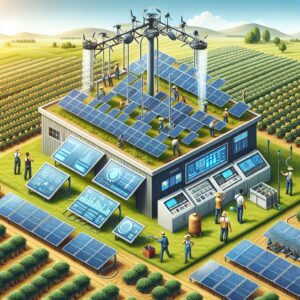
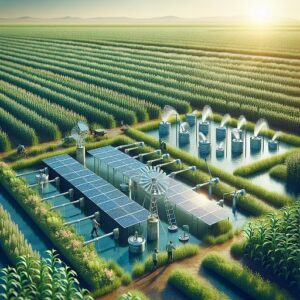
“Solar Powered Traveling Gun Sprinkler …” from growingsolarmist.com and used with no modifications.
How Solar Power Improves Traveling Gun Systems
The marriage between solar power and traveling gun irrigation represents a revolution in agricultural water management. Traditional traveling gun systems typically rely on diesel generators or direct connection to the power grid—both options that come with significant drawbacks. By harnessing solar energy, these systems gain independence from fluctuating fuel prices and grid limitations while dramatically reducing operating costs. The improvements go beyond simple energy substitution; solar power enables more precise control, quieter operation, and the ability to irrigate in remote locations previously impossible to reach with conventional systems.
Solar panels convert sunlight into electricity that powers the pump motors, drive mechanisms, and control systems. This electricity can be used directly during daylight hours or stored in batteries for overnight operation. The capacity to generate power on-site eliminates the need for fuel transportation and storage, reducing both costs and environmental risks. For farmers in remote areas with unreliable grid connections, this self-sufficiency can be transformative, ensuring irrigation continues regardless of external power availability.
From Diesel to Sunshine: The Energy Transition
The shift from diesel-powered to solar-powered traveling gun systems represents a fundamental change in agricultural energy use. Diesel engines have traditionally been the workhorses of remote irrigation, but they come with significant drawbacks: high fuel costs, regular maintenance requirements, noisy operation, and substantial carbon emissions. Solar power eliminates these issues while providing consistent, renewable energy. A typical medium-sized farm irrigation system might consume 10-15 gallons of diesel daily during peak season—translating to thousands of gallons annually. Eliminating this fuel dependency not only reduces direct costs but also shields farmers from fuel price volatility that can wreak havoc on operating budgets.
- Elimination of fuel costs (saving $5,000-$15,000 annually for mid-sized operations)
- Reduction in maintenance requirements (no oil changes, fuel filters, or engine repairs)
- Significantly quieter operation, reducing noise pollution
- Zero emissions during operation, lowering farm carbon footprint
- Reduced risk of soil/water contamination from fuel spills
The transition process typically involves replacing the diesel power source with solar panels, battery storage, and electric motors. While the initial investment is higher than simply replacing an old diesel system with a new one, the long-term economics strongly favor solar. Most farmers report complete return on investment within 3-7 years, depending on system size, local sunshine conditions, and available incentives. After this payback period, the operational costs drop dramatically, with minimal expenses beyond occasional maintenance and eventual battery replacement. For more information on how solar panels offer financial benefits for farmers, explore this detailed guide.
Battery Storage Solutions for 24/7 Operation
Battery storage is the critical component that transforms solar-powered irrigation from a daylight-only solution to an around-the-clock operation. Modern lithium-ion battery systems can store excess energy generated during peak sunlight hours for use during cloudy periods or nighttime irrigation. A properly sized battery bank ensures irrigation schedules can be maintained regardless of weather conditions or time of day. For most agricultural applications, systems are designed with 1-3 days of autonomy, allowing continuous operation even during extended cloudy periods. This reliability is essential for maintaining crop health during critical growth stages when irrigation timing can’t be compromised.
Advanced battery management systems protect the investment by regulating charging cycles and preventing deep discharge situations. Most modern setups include remote monitoring capabilities, allowing farmers to check battery status, energy production, and system operation from their smartphones or computers. This connectivity provides peace of mind and enables quick response to any potential issues before they affect crop irrigation. With proper maintenance, today’s lithium battery systems can last 7-10 years before requiring replacement—a significant improvement over earlier lead-acid technologies that typically lasted only 3-5 years in similar applications.
Solar Panel Requirements for Different Farm Sizes
Determining the appropriate solar capacity for a traveling gun system depends primarily on water volume requirements, pumping height (head), and daily operating hours. For small operations irrigating 5-10 acres, a 5-10 kW system typically suffices, consisting of 15-30 solar panels. Medium-sized farms covering 10-30 acres generally require 10-25 kW systems with 30-75 panels. Large operations irrigating more than 30 acres often need 25-50 kW systems or multiple smaller systems working in tandem. These calculations must account for peak summer demand when both irrigation needs and solar production are highest.
Panel quality and efficiency make a significant difference in system performance. High-efficiency monocrystalline panels may cost more initially but require less space and produce more power per square foot—an important consideration when land space is limited or valuable. Most agricultural installations use ground-mounted systems with single-axis tracking, which can increase energy production by 25-35% compared to fixed installations. This tracking capability allows panels to follow the sun’s path throughout the day, maximizing energy capture and extending productive hours.
Cost Comparison: Traditional vs. Solar-Powered Systems
Initial investment represents the most significant hurdle for farmers considering solar traveling gun systems. A complete solar-powered setup typically costs 2-3 times more than a comparable diesel system upfront. For a medium-sized operation, this might mean $30,000-$60,000 for a solar system versus $12,000-$25,000 for diesel. However, this cost differential disappears quickly when operational expenses are considered. Diesel systems incur ongoing fuel costs of $5,000-$15,000 annually, depending on usage and current fuel prices. Solar systems, by contrast, have minimal operational costs—primarily battery maintenance and occasional panel cleaning.
5-Year Cost Comparison: 20-Acre Farm Irrigation
Solar System: $45,000 initial + $2,500 maintenance = $47,500 total
Diesel System: $18,000 initial + $50,000 fuel + $12,000 maintenance = $80,000 total
Net Savings with Solar: $32,500 over 5 years
The economic advantage becomes even more pronounced when considering system longevity. Solar panels typically carry 25-year warranties with expected lifespans of 30+ years, while diesel engines generally require replacement every 7-10 years. When factoring in potential carbon tax implications, rising fuel costs, and the increasing availability of renewable energy incentives, the financial case for solar becomes undeniable for most agricultural operations with medium to long-term planning horizons.
Main Benefits for Farmers
The advantages of solar traveling gun systems extend far beyond simple economics. These systems represent a fundamental shift in how farmers approach resource management, offering benefits that touch on environmental stewardship, operational reliability, and business resilience. For many agricultural operations, these systems are transforming irrigation from a necessary expense into a strategic advantage that enhances both productivity and sustainability. Learn more about solar irrigation systems and their impact on modern farming.
The most compelling benefits emerge over time as farmers experience reduced stress from fuel price fluctuations, fewer maintenance emergencies, and the satisfaction of knowing their operations are becoming more environmentally responsible. Many report unexpected advantages, such as improved relationships with neighbors due to quieter operation, enhanced farm value due to infrastructure improvements, and even marketing benefits when selling to sustainability-conscious buyers.
Slashing Energy Costs by 60-80%
The most immediate and measurable benefit of solar traveling gun systems is the dramatic reduction in energy costs. By harnessing free solar energy instead of purchased diesel or electricity, farmers typically see operating cost reductions of 60-80%. For a mid-sized operation that previously spent $10,000-$15,000 annually on irrigation energy, this translates to $6,000-$12,000 in savings each year. These savings accelerate after the system’s payback period, effectively transforming irrigation from a major expense into a minimal cost center. Many farmers report that these savings alone justify the investment, especially in regions with high electricity rates or remote locations where diesel delivery adds significant cost premiums.
Reduced Carbon Footprint and Environmental Impact
- Elimination of diesel exhaust emissions, reducing air pollutants and greenhouse gases
- Prevention of potential soil and groundwater contamination from fuel spills
- Reduction in noise pollution, benefiting wildlife and neighboring properties
- Decreased transportation emissions associated with fuel delivery
- Lower overall resource consumption throughout the system lifecycle
Environmental benefits extend beyond simple carbon reduction. Traditional diesel pumps create significant noise pollution that can disturb wildlife patterns and cause friction with neighboring properties. Solar systems operate almost silently, creating a more harmonious farm environment. The elimination of potential fuel spills also protects soil health and water quality, supporting overall ecosystem integrity. For organic operations or farms near sensitive environments, these environmental advantages can be particularly significant.
Many farmers report that environmental benefits translate into tangible business advantages. Properties with solar infrastructure typically see increased valuation, reflecting both the capital investment and future energy savings. Farms marketing directly to consumers can leverage their sustainable practices as a selling point, particularly with eco-conscious customers willing to pay premium prices for responsibly grown produce. Some growers have even secured preferred supplier status with companies seeking to reduce the environmental footprint of their supply chains. For more insights, explore the impact of solar panels on farm economics.
The sustainability advantages also position farms favorably as environmental regulations tighten. Many regions are implementing increasingly stringent emissions standards that may require costly upgrades to diesel equipment in coming years. Solar systems bypass these concerns entirely, future-proofing operations against regulatory changes and potentially avoiding compliance costs. This regulatory advantage, though difficult to quantify precisely, represents a significant risk reduction for forward-thinking agricultural businesses.
Less Maintenance and Fewer Breakdowns
The mechanical simplicity of solar-powered systems translates directly into reduced maintenance requirements and fewer system failures. Traditional diesel engines require regular oil changes, filter replacements, and fuel system maintenance—tasks that consume valuable time and resources during busy growing seasons. Solar systems eliminate these requirements, with maintenance primarily limited to occasional panel cleaning, battery checks, and standard irrigation component upkeep. Most farmers report maintenance time reductions of 70-90% after switching to solar systems, freeing up significant labor resources for other farm activities.
Reliability improvements stem from the elimination of the most failure-prone components in traditional systems. Diesel engines frequently experience issues with fuel quality, clogged filters, starter failures, and mechanical wear—problems that can cause devastating irrigation interruptions during critical growing periods. Solar systems rely on solid-state electronics with few moving parts, dramatically reducing failure points. When properly installed, most components are rated for 25+ years of operation, with only batteries requiring replacement on a 7-10 year schedule. This dependability provides invaluable peace of mind during drought periods when irrigation system failures can result in substantial crop losses.
Independence from the Power Grid
Energy independence represents one of the most transformative benefits for many agricultural operations. Grid-tied farms face numerous challenges: limited service to remote fields, costly connection fees, demand charges during peak irrigation seasons, and vulnerability to power outages. Solar traveling gun systems eliminate these constraints, allowing irrigation wherever water is available, regardless of power infrastructure. This independence enables farming in previously impractical locations and expands irrigation possibilities on existing properties without costly utility extensions.
For farmers in regions with unreliable grid service, the value of energy independence can’t be overstated. Power outages during critical irrigation periods can compromise entire crops within days. Solar systems with adequate battery storage continue operating regardless of grid conditions, providing crucial resilience against infrastructure failures. This reliability becomes increasingly valuable as climate change increases the frequency of extreme weather events that often disrupt power distribution.
Grid independence also shields farmers from electricity rate increases and structural changes to utility billing. Many regions are implementing time-of-use rates that charge premium prices during daylight hours—precisely when irrigation is most needed. Solar systems bypass these rate structures entirely, providing predictable energy costs for decades. Additionally, some utilities impose demand charges based on peak usage, which can add thousands to annual irrigation costs. By operating off-grid, farmers avoid these charges completely.
The strategic advantage of energy autonomy extends to business planning as well. With solar systems, irrigation energy costs become fixed and predictable for 25+ years—a stark contrast to the volatility of fuel and electricity markets. This predictability enables more accurate long-term planning and budgeting, reducing financial stress and improving business stability. Many farmers report that this benefit alone justifies the investment in solar infrastructure, particularly during periods of energy price uncertainty.
- Elimination of utility demand charges and connection fees
- Protection from power outages during critical irrigation periods
- Ability to irrigate remote fields without power infrastructure
- Predictable energy costs for decades, regardless of utility rate changes
- Increased property value through energy infrastructure improvements
Tax Incentives and Rebates Available
Financial incentives significantly improve the economics of solar traveling gun systems, often reducing payback periods by 30-50%. The federal Investment Tax Credit currently allows farmers to deduct 30% of solar system costs from their taxes, effectively reducing a $50,000 installation to $35,000. Additionally, accelerated depreciation options like bonus depreciation or MACRS (Modified Accelerated Cost Recovery System) enable writing off the remaining investment rapidly, further improving cash flow. Many states offer additional incentives, including sales tax exemptions, property tax exclusions, or direct rebates that can reduce costs by an additional 10-20%. The USDA’s Rural Energy for America Program (REAP) provides grants covering up to 25% of system costs and loan guarantees for the remainder, making systems accessible even for operations with limited capital resources.

Best Uses Across Different Farm Types
Solar traveling gun systems prove exceptionally versatile across various agricultural operations. Their mobility and customizable water distribution make them suitable for diverse crop types, field configurations, and farming practices. Understanding the optimal applications for these systems helps farmers maximize their investment and achieve the best possible results for their specific operations.
The adaptability of these systems allows for strategic irrigation planning that can improve crop yields while optimizing water usage. By matching system capabilities to specific crop needs, farmers can implement precision irrigation strategies that deliver water exactly when and where it’s needed most. Learn more about the different irrigation systems a farmer can use with solar panels.
Row Crops: Corn, Soybeans and Wheat
For traditional row crops like corn, soybeans, and wheat, solar traveling gun systems offer exceptional coverage and efficiency. These crops typically benefit from periodic deep watering rather than frequent light irrigation, making traveling guns an ideal match. The systems can be programmed to move slowly enough to deliver 1-2 inches of water per pass, providing deep soil penetration that encourages robust root development. For corn specifically, these systems excel during the critical tasseling and silking stages when water stress can dramatically reduce yields. Farmers growing these crops report yield increases of 15-30% in drought years when using solar traveling gun irrigation compared to non-irrigated fields.
The flexibility of traveling gun systems allows adjustments throughout the growing season. Early in the season, faster travel speeds with lower water application rates prevent soil crusting that can inhibit emergence. As plants develop and water requirements increase, travel speed can be reduced to deliver higher application volumes. This adaptability makes solar traveling guns particularly valuable for farmers growing multiple row crops with different watering needs. The systems can be easily moved between fields and reconfigured as crops progress through growth stages, maximizing the utility of a single system across diverse plantings.
Specialty Crops and Orchards
Specialty crop producers find solar traveling gun systems particularly valuable due to their precision and adjustability. For high-value crops like vegetables, berries, and orchard fruits, water timing and distribution significantly impact both yield and quality. The adjustable arc settings on traveling guns allow farmers to direct water precisely where needed, avoiding irrigation of roadways, buildings, or other non-productive areas. This targeted application is especially important for crops with specific water requirements or sensitivity to foliar diseases that can be exacerbated by overhead irrigation.
Orchard operations benefit from the ability to irrigate under tree canopies without installing permanent infrastructure. The traveling gun can be configured to deliver water at angles that reach root zones while minimizing leaf wetting. For berry producers, these systems provide the flexibility to irrigate during establishment, then easily relocate as different blocks reach production or require replacement. The mobility aspect proves particularly valuable for specialty crop rotations, allowing irrigation to follow high-value crops as they move through field rotations without requiring multiple permanent systems.
Pasture Management for Livestock Operations
Livestock producers using managed grazing systems find solar traveling guns transform their pasture productivity. These systems enable strategic irrigation of rotational grazing paddocks, extending the growing season and increasing forage density. For dairy operations, maintaining consistent high-quality pasture can reduce supplemental feed costs by $50-100 per cow monthly during dry periods. The mobility of traveling guns complements rotational grazing perfectly, allowing irrigation to follow the grazing schedule and promote rapid regrowth in recently grazed sections.
The water distribution pattern of traveling guns works exceptionally well for establishing new pasture seedings or renovating degraded pastures. The gentle, rain-like application prevents seed washing and soil erosion while providing ideal moisture for germination. Many ranchers report that solar traveling guns have allowed them to establish productive pastures in areas previously considered too dry or inconsistent for quality forage production. This expansion of grazing land directly translates to increased carrying capacity and improved profitability per acre.
Real-World Results: What Farmers Are Saying About Using Solar Traveling Gun Systems
The true test of any agricultural technology comes in its real-world application across diverse operations. Farmers who have adopted solar irrigation systems report consistent benefits that often exceed initial expectations. These case studies demonstrate how the theoretical advantages translate into practical improvements in farm productivity, profitability, and sustainability.
Case Study: Nebraska Corn Farm Saves $12,000 Annually
Third-generation farmer James Wilson from Grand Island, Nebraska, installed a 15kW solar traveling gun system in 2020 to irrigate 35 acres of corn. Previously using a diesel pump consuming approximately 12 gallons daily during irrigation season, Wilson calculated his annual fuel costs at nearly $11,000, plus another $2,500 in maintenance and repairs. “The diesel system was bleeding us dry,” Wilson explains. “Every season started with expensive repairs, and fuel costs kept climbing.” After receiving a 25% REAP grant and applying tax incentives, his out-of-pocket cost for the solar system was $28,500. First-year results showed complete elimination of fuel costs and a 90% reduction in maintenance expenses.
Wilson’s system includes 48 high-efficiency panels with single-axis tracking and a 20kWh battery bank allowing operation during early morning and evening hours when evaporation losses are lowest. The system’s performance exceeded expectations, with sufficient power generation even during partly cloudy days. “We’re saving over $12,000 annually when you factor in all costs, meaning the system will completely pay for itself in less than three years,” Wilson notes. “Beyond the financial benefits, we’ve eliminated the constant headache of fuel deliveries, engine maintenance, and middle-of-the-night breakdowns. That peace of mind is almost more valuable than the dollar savings.”
Drought Resistance: Success Stories from California
Maria Gonzalez, who operates a 15-acre organic vegetable farm in California’s Central Valley, invested in a solar traveling gun system specifically to build drought resilience. Facing increasingly unreliable water allocations and skyrocketing electricity rates, Gonzalez installed an 8kW system with advanced moisture sensors and precision control technology. “During the 2021 drought, our water allocation was cut by 60%, but we maintained 90% of normal production by precisely targeting irrigation when and where crops needed it most,” Gonzalez reports. The system’s ability to operate independently of the grid proved crucial during rolling blackouts that affected many neighboring farms relying on conventional irrigation.
Small Farm Experiences with 5-Acre Systems
Small-scale farmers have found solar traveling guns particularly advantageous due to their scalability and flexibility. Ryan Chen, who operates a diversified 5-acre market garden in Oregon, purchased a compact 3kW system to support his intensive vegetable rotation. “As a small producer, I couldn’t justify multiple irrigation systems for different fields, and dragging hoses was consuming hours daily,” Chen explains. His solar traveling gun provided the versatility to irrigate everything from newly seeded beds to mature crops with simple adjustments to travel speed and water volume. The system’s mobility allowed him to expand production into previously non-irrigated areas of his property, increasing his cultivated acreage by 40% without additional land purchase. “The system paid for itself in 18 months through labor savings alone, not counting the additional revenue from expanded production,” Chen notes.

Is a Solar Traveling Gun Systems Worth the Investment for the Farmer
The economic viability of solar traveling gun systems ultimately depends on farm-specific factors including current energy costs, irrigation requirements, available incentives, and long-term planning horizons. For operations with significant irrigation needs and high energy costs, the investment typically delivers returns within 3-7 years, followed by decades of minimal-cost operation. Farmers most likely to see rapid returns include those currently using diesel systems (especially in remote locations), those facing high or escalating electricity rates, and those able to take full advantage of available tax incentives and grants. The non-financial benefits—including operational reliability, environmental improvements, and reduced labor requirements—often tip the scales for farmers on the fence about the investment. For most moderate to large operations with 10+ year planning horizons, solar traveling gun systems represent not just a viable option but an economically advantageous one with compound benefits accumulating over time.
Frequently Asked Questions
Farmers considering solar traveling gun systems consistently raise similar questions about practical aspects of implementation, operation, and economics. These frequently asked questions address the most common concerns and provide straightforward information to assist in decision-making.
While each farm situation is unique, these answers provide general guidance based on aggregate experience across diverse agricultural operations. For specific recommendations, farmers should consult with qualified solar irrigation specialists familiar with local conditions and agricultural practices.
How much does a solar-powered traveling gun system typically cost?
Initial costs for complete solar-powered traveling gun systems typically range from $15,000-$20,000 for small operations (5 acres or less) to $40,000-$75,000 for medium-sized farms (10-40 acres). Larger operations requiring multiple systems or high-volume water delivery can expect investments of $75,000-$150,000. These figures include all components: solar panels, mounting hardware, batteries, controllers, pumps, traveling gun equipment, and professional installation. Actual costs vary significantly based on water source depth, pressure requirements, desired coverage area, and regional labor rates. After applying available tax credits, grants, and incentives, many farmers report net out-of-pocket costs 40-60% lower than list prices.
Can these systems work during cloudy days or at night?
Yes, properly designed solar traveling gun systems include battery storage specifically sized to ensure operation during cloudy periods and nighttime hours. Most agricultural systems include battery capacity sufficient for 1-3 days of typical operation without significant solar input. This storage capacity ensures irrigation schedules can continue uninterrupted regardless of weather conditions or time of day. In fact, many farmers purposely program their systems to run during early morning or evening hours when evaporation losses are lowest and water use efficiency improves.
For extended cloudy periods beyond battery capacity, most systems include backup options such as generator connections or grid-tie capabilities. These backup systems rarely activate in most regions but provide important insurance against extended unfavorable weather during critical irrigation periods. Advanced system monitoring allows farmers to receive alerts when battery levels drop below predetermined thresholds, enabling proactive management of irrigation schedules during challenging weather conditions.
System Performance Under Different Conditions
Full Sun: 100% of rated capacity, simultaneously powers irrigation and charges batteries
Partly Cloudy: 40-70% of rated capacity, typically sufficient for irrigation with reduced battery charging
Heavy Overcast: 10-30% of rated capacity, may require supplemental battery power
Night Operation: Relies entirely on stored battery power, typically sized for 8-16 hours of continuous operation
Modern solar panel technology performs significantly better in less-than-ideal conditions than older systems. Today’s high-efficiency panels can generate meaningful power even in diffuse light conditions, and micro-inverters or power optimizers ensure that partially shaded arrays continue producing at maximum possible capacity. For regions with consistently cloudy seasons, system designers typically oversize solar arrays to ensure sufficient energy generation during lower-light periods.
What maintenance is required for solar traveling gun systems?
Maintenance requirements for solar traveling gun systems are minimal compared to conventional alternatives. The solar component typically requires only occasional panel cleaning (2-4 times annually in most regions) and an annual inspection of electrical connections and mounting hardware. Battery systems need periodic monitoring of charge levels and terminal connections, with a professional inspection recommended annually. The traveling gun irrigation components require standard maintenance similar to conventional systems: nozzle inspection, hose examination for wear or damage, lubrication of moving parts, and winterization in freezing climates. Most farmers report spending 5-10 hours annually on system maintenance, representing a 70-90% reduction compared to diesel-powered alternatives that require regular oil changes, filter replacements, and engine maintenance.
How long does it take to see a return on investment?
Return on investment timing varies based on several factors, but most farmers achieve complete payback within 3-7 years. Operations previously using diesel systems typically see the fastest returns, often reaching breakeven in 3-4 years due to eliminated fuel costs. Farms converting from grid electricity generally experience 4-6 year payback periods, depending on local utility rates. The availability of incentives significantly impacts these timelines—farmers utilizing USDA REAP grants, federal tax credits, accelerated depreciation, and state-specific programs often reduce payback periods by 30-50%. After the payback period, systems typically provide 20+ years of nearly expense-free operation, with only battery replacement (approximately every 8-10 years) representing a significant cost. For planning purposes, most agricultural financial advisors recommend calculating ROI based on conservative 5-year payback assumptions, with any faster return considered an additional benefit.
Are there government programs to help fund these systems?
Yes, numerous government programs substantially reduce the cost of implementing solar traveling gun systems. The federal Investment Tax Credit currently allows deducting 30% of system costs directly from federal tax liability. The USDA’s Rural Energy for America Program (REAP) provides grants covering up to 25% of system costs for agricultural producers, with additional guaranteed loan programs covering much of the remaining investment. Accelerated depreciation options, including bonus depreciation and MACRS (Modified Accelerated Cost Recovery System), enable rapid write-off of the remaining system cost, providing significant tax advantages in early years. Many states offer additional incentives including sales tax exemptions, property tax exclusions for renewable energy improvements, and utility-sponsored rebate programs. Combined, these incentives typically reduce net system costs by 50-70%, dramatically improving return on investment calculations.
To maximize available funding, farmers should consult with agricultural energy specialists familiar with both federal and state-specific programs. Timing applications strategically can significantly impact funding success, as many programs have specific application windows or limited annual budgets. USDA Service Centers and Extension offices can provide guidance on navigating the application process and connecting with qualified grant writers when needed.
Environmental quality incentive programs (EQIP) through the Natural Resources Conservation Service (NRCS) may provide additional funding when solar irrigation systems deliver specific conservation benefits. These programs often support water conservation technologies that reduce groundwater depletion or protect water quality, both potential benefits of properly implemented solar traveling gun systems.
For farmers without the capital resources for the remaining costs after grants and incentives, numerous agricultural lending institutions offer specialized renewable energy financing with favorable terms. These green lending programs typically feature extended repayment periods aligned with system lifespan, reduced interest rates, and flexible payment schedules that accommodate agricultural cash flow patterns.
Solar traveling gun systems have revolutionized the way farmers irrigate their fields. These systems are not only efficient but also environmentally friendly, reducing the reliance on fossil fuels. By harnessing solar energy, farmers can save on energy costs and contribute to a sustainable future. For those interested in understanding the full range of benefits of solar-powered irrigation systems, further reading is recommended.

Leave a Reply