

Key Takeaways
- Solar panels can reduce farm electricity costs by 30-100%, with ROI typically achieved within 5-10 years
- USDA REAP grants and federal tax incentives can cover up to 60% of installation costs for agricultural solar projects
- Agrivoltaic systems allow farmers to produce both energy and crops on the same land, maximizing profitability per acre
- Modern solar installations can withstand harsh farm conditions while providing energy independence during grid outages
- Farms marketing their solar-powered production methods often command premium prices from sustainability-conscious consumers
Farm Energy Costs Are Eating Into Your Profits
Running a modern farm requires more electricity than ever before. From irrigation systems to climate-controlled barns, automated feeding equipment to refrigeration, energy costs have become one of the largest operational expenses in agriculture. For many farmers, utility bills now represent 10-15% of annual expenses – a significant chunk that directly impacts bottom-line profitability.
What’s more concerning is that agricultural energy costs aren’t just high – they’re rising at a pace that outstrips inflation. This creates a perpetual squeeze on farm margins that’s becoming increasingly difficult to absorb through production efficiencies alone. The financial sustainability of farming operations now depends on finding innovative approaches to energy management that protect profitability against these mounting costs.
Rising Electricity Bills on Modern Farms
Technological advancements in agriculture have dramatically increased on-farm electricity demands. Dairy operations run refrigeration systems continuously. Poultry houses require constant climate control. Irrigation pumps draw significant power during growing seasons. Grain drying and storage facilities consume massive energy loads during harvest periods. Even basic lighting and security systems contribute to the constant drain on resources.
The average U.S. farm now spends between $2,000 and $30,000 annually on electricity alone, depending on size and production type. For large operations, especially those with significant refrigeration or climate control needs, annual energy costs can easily exceed $100,000. These expenses represent a significant and growing threat to agricultural profitability in an industry already challenged by thin margins. To understand the potential savings, consider the economic impacts of solar energy for farmers.
How Traditional Energy Impacts Your Bottom Line
Traditional energy sources create unpredictable cost structures that make farm financial planning extraordinarily difficult. Utility rates fluctuate seasonally and trend upward over time, often jumping 3-5% annually in many rural areas. Fuel costs for generators and equipment follow global market volatility, creating budget uncertainty that can disrupt cash flow during critical production periods.
This financial unpredictability extends beyond direct costs. Energy-intensive operations face increased vulnerability to power outages that can devastate livestock operations or ruin perishable products. The ripple effects of unreliable or expensive energy touch virtually every aspect of farm operations, from production scheduling to equipment maintenance cycles.
“My family’s dairy operation watched our monthly electric bill climb from $1,800 to over $3,400 in just five years – all while milk prices remained relatively flat. Something had to change if we wanted to stay in business.” – James Winters, 3rd Generation Dairy Farmer
Why Farmers Need Cost-Effective Alternatives
The combination of rising costs, unpredictable rates, and increased consumption creates an urgent need for alternative energy approaches in agriculture. Beyond the immediate financial pressure, farmers increasingly recognize that energy represents one of the few operational costs they can potentially control or even eliminate with the right investments. Unlike land prices, equipment costs, or commodity markets, energy expenses can be dramatically reduced through strategic decisions.
This recognition has led to growing interest in renewable energy systems, particularly solar power, as a means of both controlling costs and improving long-term farm sustainability. The agricultural sector’s unique combination of available land, high energy usage, and long-term operational planning makes it particularly well-suited to benefit from solar technology investments.

“Farms Irrigation Solar Panels System …” from growingsolarmist.com and used with no modifications.
Solar Panel Installation: What Farmers Need to Know
Converting farm operations to solar power requires understanding agricultural-specific considerations that differ significantly from residential or commercial installations. Farm systems must withstand harsh environmental conditions, accommodate seasonal production patterns, and integrate with specialized equipment. The most successful agricultural solar projects begin with thorough planning that addresses these unique operational requirements.
Choosing the Correct Solar Panels
Solar panel selection represents a critical early decision that impacts overall system performance. For both irrigation types, monocrystalline panels typically offer the highest efficiency (17-22%) but at premium prices. Polycrystalline panels provide a middle-ground option with 13-17% efficiency and more moderate pricing. For larger installations where space isn’t limited, thin-film panels offer the lowest cost per watt despite lower efficiency (10-13%). PERC (Passivated Emitter and Rear Cell) panels are a newer technology that enhances the efficiency of traditional monocrystalline and polycrystalline panels by adding a layer that reflects unused sunlight back into the cell. This innovation can significantly boost energy output, especially in low-light conditions.
- Monocrystalline panels: Highest efficiency, longest lifespan (25+ years), best performance in partial shade, higher cost
- Polycrystalline panels: Moderate efficiency, good durability, more cost-effective for large installations
- Thin-film panels: Lowest efficiency but highly flexible, ideal for irregular surfaces like curved barn roofs
- PERC panels: Capture light from both sides, optimal for ground-mounted systems in locations with highly reflective soil or snow
Choosing the right type of solar panel for your system is crucial. Consider the specific needs of your operations, the available space, and your budget. This below table will help you choose the right one:
|
Type of Solar Panel |
Advantages |
Disadvantages |
|---|---|---|
|
Monocrystalline Solar Panels | ||
|
– Performance drops slightly in extreme heat. 1 | ||
|
– Performs well in low-light conditions (cloudy days, mornings). 1, 2 | ||
|
Polycrystalline Solar Panels |
– Cost-effective option, suitable for large-scale installations. 1, 3 |
– Lower efficiency (13-17%) compared to monocrystalline panels. 1, 3 |
|
– Durable and handles heat well. 3 |
– Requires more space for the same energy output as monocrystalline panels. 3 | |
|
– Affordable initial investment, often offset by government incentives. 3 | ||
|
Thin-Film Solar Panels |
– Lightweight, flexible, and easy to install on unconventional surfaces (e.g., curved roofs)1, 5, 7 |
– Lowest efficiency (10-13%) among the options, requiring more space for equivalent output.5, 7 |
|
– Performs well in high temperatures and low-light conditions, ideal for diverse climates. 5, 7 |
– Shorter lifespan (10-20 years) compared to crystalline panels. 5, 7 | |
|
– Cost-effective with lower production and installation costs. 5, 7 | – Bulkier installations needed for larger-scale energy production. 5 | |
|
PERC Solar Panels |
– Enhanced efficiency (Up to 22% or higher) due to passivation layer, capturing more sunlight. 4 |
– Higher cost than traditional Monocrystalline panels, but prices are becoming comparable. 4 |
|
– Performs well in low-light and high-temperature conditions, ideal for varied climates. 2, 4 |
– Technology may be less familiar, requiring specialized installation expertise. 4 | |
|
– Maximizes energy output in limited space, suitable for farms with restricted installation areas. 4 |
This table provides a comparison of solar panel options for farmers, highlighting their suitability based on efficiency, cost, durability, and space requirements. Farmers should consider their specific energy needs, budget, and available installation area when making a decision.
Ground-Mounted vs. Roof Systems for Agricultural Settings
Farms have unique flexibility when it comes to solar panel placement options. Roof-mounted systems utilize existing structures like barns, equipment sheds, and livestock buildings without consuming additional land. These installations typically cost 10-15% less than ground systems but may require structural reinforcement of older farm buildings. Orientation and pitch limitations on existing roofs can also reduce overall system efficiency. For those considering backup options, lithium-ion batteries can be an efficient solution.
Ground-mounted arrays offer maximum production efficiency through optimal positioning toward the sun. These systems can be installed on marginal land, along field borders, or in underutilized areas. While requiring more initial infrastructure, ground systems provide easier maintenance access and better airflow, which improves panel efficiency and longevity in dusty agricultural environments. Some farms are now implementing elevated ground systems that allow continued agricultural use underneath the panels. For those considering energy storage options, exploring solar panel battery technology for agriculture can offer efficient energy solutions.
Space Requirements and Land Considerations
A typical agricultural solar installation requires approximately 100 square feet per kilowatt of capacity. For a 25kW system – sufficient to offset energy costs for many small to mid-sized operations – you’ll need roughly 2,500 square feet of unshaded space. Larger commercial farm operations requiring 100kW or more should plan for at least a quarter-acre of dedicated solar space if ground-mounting. For those interested in additional energy storage solutions, exploring solar panel battery technology for agriculture can provide efficient energy solutions.
The land value equation is critical when considering ground-mounted systems. Ideal locations include non-productive areas, field margins, or land with poor soil quality. Some farmers strategically place solar arrays on north-facing slopes that deliver suboptimal crop yields but work perfectly for energy generation. The most successful implementations treat solar not as competition for valuable cropland but as a complementary use for marginal areas.
Connecting to the Grid vs. Off-Grid Options
Grid-tied systems remain the most cost-effective option for most farms, allowing excess production to offset consumption through net metering arrangements with utilities. These systems eliminate battery storage costs while maintaining reliable power access during low-production periods. The financial viability of grid-tied systems depends heavily on your utility’s net metering policies and interconnection requirements, which vary significantly by region.
Off-grid systems with battery storage provide energy independence but typically increase project costs by 30-40%. However, for remote operations facing extremely high utility connection costs or unreliable grid service, off-grid solutions may prove economically advantageous. Many farms are now implementing hybrid systems that remain grid-connected but include limited battery backup for critical systems like livestock ventilation or refrigeration during outages.
Equipment Durability in Farm Environments
Agricultural environments present unique challenges for solar equipment durability. Dust from field operations, ammonia exposure from livestock facilities, and potential impact from farm equipment all threaten system longevity. Investing in industrial-grade components with robust protective features pays significant dividends through reduced maintenance and extended system life. For those considering solar solutions, exploring solar panel battery technology can provide efficient energy solutions tailored for agriculture.
Look for panels with tempered glass covers, reinforced frames, and high IP (Ingress Protection) ratings when planning farm installations. Inverters should be housed in weatherproof enclosures, ideally with filtered ventilation systems in dusty environments. For ground-mounted systems near livestock, secure fencing prevents animal contact that could damage components or wiring. These durability considerations often justify slightly higher initial investment in agricultural applications compared to residential installations.
Direct Financial Benefits of Farm Solar Systems
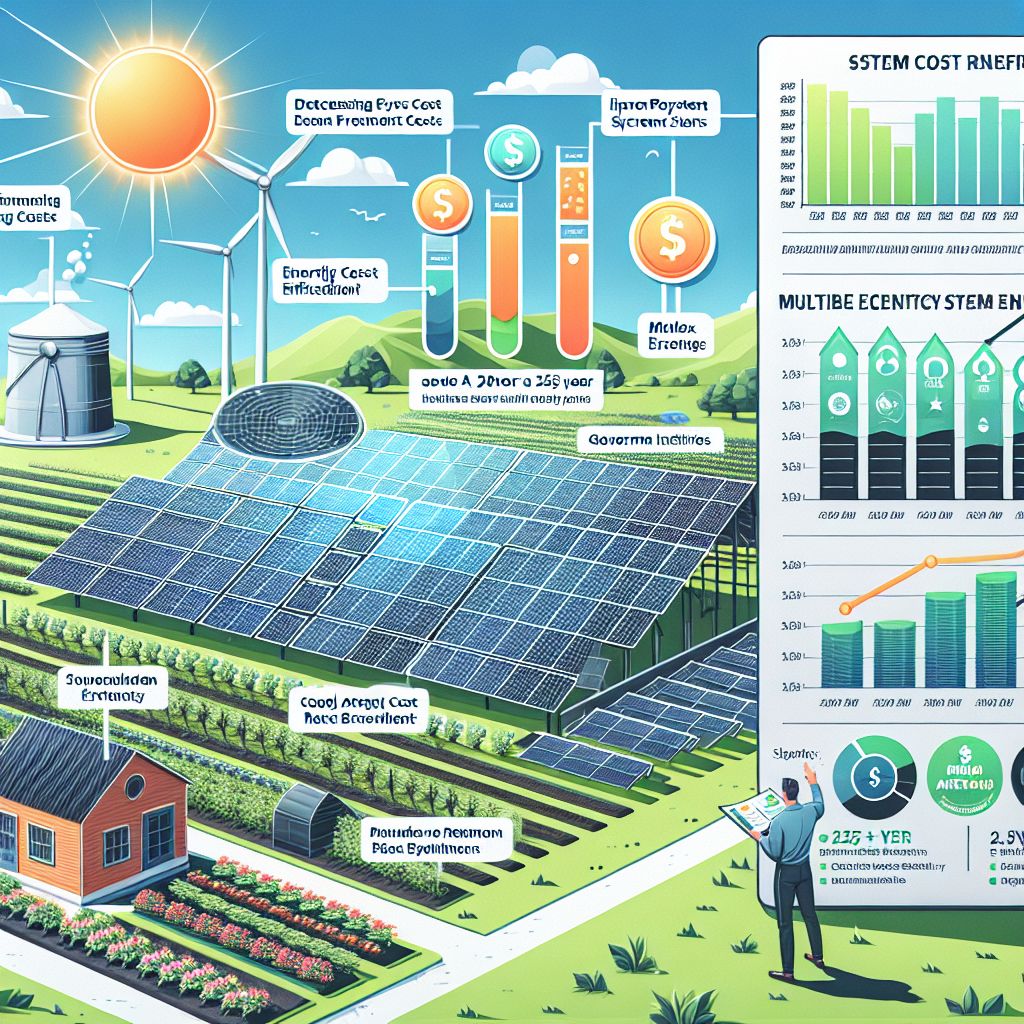
The economic case for agricultural solar has never been stronger. Between dramatically falling equipment costs, improved system efficiency, and unprecedented government incentives, many farms now achieve complete energy cost recovery in under seven years. The financial benefits extend far beyond simple utility bill reduction, creating multiple revenue streams and tax advantages that compound over the 25+ year lifespan of modern systems. For more insights, explore the economic impacts of solar energy for farmers.
Average Energy Cost Savings in Year One
Properly sized solar systems typically reduce farm electricity expenses by 30-100% immediately upon activation. For a mid-sized operation spending $15,000 annually on electricity, first-year savings often range from $4,500 to $15,000 depending on system size, local utility rates, and seasonal production patterns. These savings begin accumulating from day one, improving cash flow and creating immediate positive impact on operational margins.
Energy savings typically accelerate over time as utility rates continue rising while solar production costs remain fixed. A system designed to offset 75% of current usage might provide 90% coverage in later years as efficiency improvements reduce farm consumption patterns. When calculating potential savings, consider both current electricity costs and projected increases, which have historically outpaced general inflation by 1-2% annually in most agricultural regions.
Selling Excess Power Back to Utilities
Net metering programs enable farms to receive credit for excess electricity fed back into the grid during high-production periods. These credits then offset consumption during nighttime or low-production seasons, effectively using the utility grid as free battery storage. Some agricultural operations strategically oversize their solar arrays to generate additional revenue through power sales, particularly in states with favorable net metering or feed-in tariff policies.
The financial returns from excess production vary dramatically by location. States like Massachusetts, New Jersey, and California offer premium compensation rates that can turn solar overproduction into a significant revenue stream. Other regions limit credit accumulation or provide wholesale rather than retail compensation rates. Understanding your local utility’s specific net metering policies is essential when calculating potential returns from excess production.
Tax Credits and Depreciation Advantages
The federal Investment Tax Credit (ITC) currently provides a direct 30% tax credit on the total cost of agricultural solar installations, dramatically improving project economics. This dollar-for-dollar reduction in tax liability can be carried forward for up to 20 years if not fully utilized in the installation year. For a $100,000 farm solar project, this represents an immediate $30,000 tax benefit that directly improves project ROI.
Beyond the ITC, farms can also leverage accelerated depreciation schedules for solar equipment. The Modified Accelerated Cost Recovery System (MACRS) allows agricultural businesses to depreciate their solar assets over just 5 years instead of the 25+ year actual lifespan. This front-loaded depreciation creates significant tax benefits in the early years of system ownership, further improving project economics and cash flow impacts. Combined with the ITC, these tax advantages often cover 45-50% of total project costs.
USDA REAP Grants and State-Level Incentives
The USDA’s Rural Energy for America Program (REAP) provides game-changing financial support specifically for agricultural solar projects. These grants cover up to 25% of total project costs with a maximum of $500,000 for renewable energy systems. REAP funding doesn’t require repayment and can be combined with tax incentives, potentially covering over 60% of installation costs. Competition for these grants is fierce, so applications require thorough energy audits, detailed business plans, and clear documentation of projected benefits.
State-level incentives create additional layers of financial support that vary dramatically by location. States like New York, California, and Massachusetts offer performance-based incentives that pay farms for each kilowatt-hour generated over multi-year terms. Others provide upfront rebates, sales tax exemptions, or property tax exclusions specifically for agricultural renewable energy. Some rural electric cooperatives offer member-specific incentive programs for farm solar adoption. Researching all available programs in your specific region often reveals funding opportunities that significantly improve project economics.
Typical ROI Timeline for Farm Solar Projects
Most agricultural solar installations achieve full payback within 5-10 years depending on system size, available incentives, and local utility rates. Dairy and poultry operations with high continuous electricity demands typically see the fastest returns, often breaking even in 5-7 years. Row crop operations with seasonal energy needs may require 8-10 years to reach break-even, though strategic system sizing can improve these timelines.
After reaching payback, solar systems continue generating essentially free electricity for an additional 15-20 years. This extended production period transforms what was previously a fixed expense into a long-term asset that delivers continuous financial returns. A properly maintained system installed today will likely still be producing valuable energy in 2050, long after the initial investment has been recovered many times over.
|
Farm Type |
Typical Energy Use |
Estimated Payback Period |
30-Year ROI |
|---|---|---|---|
|
Dairy (100 cows) |
60,000-80,000 kWh/year |
5-7 years |
300-400% |
|
Poultry (40,000 birds) |
50,000-70,000 kWh/year |
6-8 years |
250-350% |
|
Row Crops (500 acres) |
30,000-50,000 kWh/year |
7-10 years |
200-300% |
|
Greenhouse (10,000 sq ft) |
40,000-60,000 kWh/year |
6-9 years |
225-325% |
Operational Advantages Beyond Direct Savings
While immediate cost savings drive most farm solar decisions, the operational advantages extend far beyond simple utility bill reduction. Solar installations provide strategic benefits that strengthen overall farm resilience, create marketing advantages, and open new agricultural possibilities. These secondary benefits often prove as valuable as the direct financial returns, particularly for farms seeking long-term sustainability in changing markets.
Protection Against Future Utility Rate Increases
Solar energy effectively locks in electricity costs for decades, providing crucial budget stability in an era of volatile energy markets. While neighboring farms face annual utility rate increases of 3-5%, solar-powered operations maintain predictable energy costs that support confident long-term planning. This price certainty becomes increasingly valuable as farms expand into energy-intensive value-added processing or consider electrification of equipment previously powered by fossil fuels.
The hedge against future rate increases becomes more valuable with time. A system that offsets $10,000 in annual electricity costs today might prevent $15,000 in annual expenses ten years from now as utility rates continue climbing. This compounding protection dramatically improves long-term farm profitability while reducing vulnerability to external market factors beyond the farmer’s control. For more insights on how solar energy impacts farm profitability, you can read about the economic impacts of solar energy for farmers.
Energy Independence During Power Outages
Solar systems with battery storage or specialized inverters provide critical backup power during grid outages, protecting vulnerable livestock and perishable products. For poultry houses, dairy operations, or greenhouse facilities where even brief power interruptions can cause catastrophic losses, this energy security delivers immediate risk reduction and peace of mind. Many farmers report this operational resilience as the most emotionally valuable benefit of their solar investment, particularly after experiencing close calls during previous outages.
Modern battery systems have transformed the economics of farm energy storage. While whole-farm backup remains expensive, strategic storage systems can power critical loads like well pumps, refrigeration, or ventilation equipment during outages. These targeted approaches deliver essential protection at more reasonable investment levels. Some farms implement phased approaches, starting with grid-tied systems and adding strategic storage capacity over time as battery costs continue falling.
Agrivoltaics: Growing Crops Under Solar Panels
Innovative agrivoltaic systems allow simultaneous crop production and energy generation on the same land, dramatically improving per-acre profitability. Early research shows that certain crops, particularly leafy greens, berries, and some root vegetables, thrive in the partial shade created by elevated solar arrays. The panels reduce water evaporation, extend growing seasons by moderating temperature extremes, and create microclimate benefits that can actually increase yields for shade-tolerant crops.
Livestock integration offers another promising agrivoltaic approach. Sheep grazing between and under panel rows provide natural vegetation management while converting otherwise unused space into productive pasture. Some dairy operations have implemented solar shade structures over feeding areas, simultaneously generating power while improving cow comfort during hot weather. These dual-use strategies transform solar from a competing land use into a complementary system that enhances overall farm productivity.
Marketing Benefits of Sustainable Farming Practices
Farms powered by renewable energy increasingly command premium prices from sustainability-conscious consumers and corporate buyers. Major food companies now actively seek suppliers with documented carbon reduction practices, creating competitive advantages for solar-powered operations. Direct-market farms find that promoting their solar investments resonates strongly with customers willing to pay premium prices for environmentally responsible products.
Beyond price premiums, solar investments open doors to specialty markets with stringent sustainability requirements. Organic certification bodies increasingly consider energy sources when evaluating farm practices. European export markets now prioritize products with lower carbon footprints. Even conventional commodity markets are developing sustainability certification programs that provide preferential access for farms demonstrating climate-smart practices. As these market trends accelerate, early solar adopters position themselves advantageously for future opportunities.
Real-World Solar Success on Working Farms
The abstract benefits of farm solar become concrete when examining actual implementation results across diverse agricultural operations. From small family farms to large commercial enterprises, solar adopters consistently report exceeding initial financial projections while discovering unexpected operational advantages. These real-world examples provide valuable insights for farmers considering their own renewable energy investments.
Dairy Farms Cutting Refrigeration Costs
Hillcrest Dairy in Vermont installed a 150kW system that now powers 80% of their operation, including energy-intensive milk cooling and pasteurization equipment. Their $310,000 installation, after REAP grants and tax incentives, achieved payback in just 6.2 years. Beyond direct savings, owner James Peterson reports that milk quality has improved thanks to more consistent refrigeration during summer grid brownouts that previously affected cooling performance.
For smaller operations, targeted solar applications deliver impressive results. Sunnybrook Farm installed dedicated solar-powered refrigeration that eliminated $4,800 in annual electricity costs for their direct-market cheese production. The reliability improvement also reduced product loss during summer heat waves, providing secondary financial benefits beyond direct energy savings. Their example demonstrates how even modest solar investments can deliver transformative results when strategically applied to energy-intensive processes.
Poultry Operations Reducing Ventilation Expenses
Triple J Farms in Georgia covered their 40,000 square foot poultry house roof with solar panels that now offset 90% of their substantial ventilation and climate control costs. The 175kW system reduces annual operating expenses by over $23,000 while improving barn conditions during summer heat. Owner Jessica Williams notes that bird mortality rates dropped measurably after installation, creating additional profit improvements beyond direct energy savings.
The consistent energy supply has proven particularly valuable during Georgia’s frequent summer thunderstorms that previously caused brief but disruptive power fluctuations. With battery backup for critical ventilation systems, Triple J now maintains optimal growing conditions regardless of grid stability issues. This operational resilience has allowed them to achieve weight gain metrics that consistently exceed industry averages, creating premium pricing opportunities with their processor.
Irrigation Systems Powered by the Sun
Westfield Orchards implemented solar-powered irrigation that eliminated $12,000 in annual pumping costs while improving watering consistency. Their 60kW direct-drive system powers submersible pumps during daylight hours, filling elevated storage tanks that provide gravity-fed irrigation during nighttime hours. This simple but effective design eliminated both electricity costs and the complexity of battery storage while ensuring 24-hour water availability.
The solar installation also enabled expansion into previously unirrigated acreage that lacked practical grid access. By mounting panels on portable skid platforms, Westfield can relocate power generation as irrigation needs shift throughout the season. This flexibility has allowed them to increase production on remote fields that were previously limited to dryland farming methods, significantly improving per-acre revenue without increasing fixed utility infrastructure costs. For more insights, explore this comparison of solar irrigation systems.
Planning Your Farm Solar Project for Maximum Profit
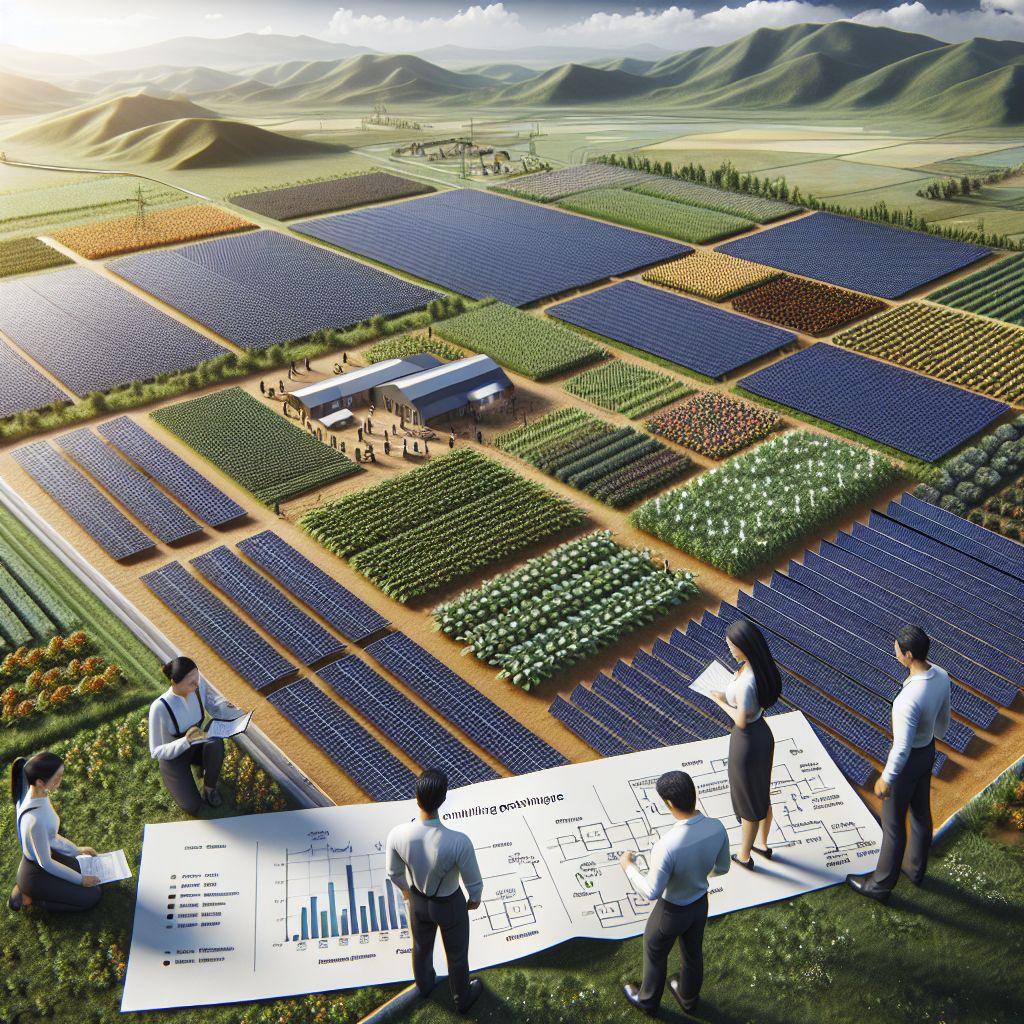
Successful agricultural solar projects begin with methodical planning that addresses both technical requirements and financial optimization. From initial assessment through implementation and beyond, each step influences long-term returns and operational benefits. Taking time to thoroughly evaluate options and align system design with farm-specific needs dramatically improves project outcomes and prevents costly mistakes.
Energy Audit: First Step to Right-Sizing Your System
Begin with a comprehensive energy audit that documents current consumption patterns, identifies efficiency opportunities, and establishes baseline metrics for system sizing. Professional audits typically cost $1,000-$3,000 but often identify immediate efficiency improvements that reduce required solar capacity and improve overall project economics. Most state agriculture departments and extension services offer subsidized farm energy audit programs that significantly reduce these costs.
The most effective approach implements basic efficiency measures before finalizing solar system design. Simple improvements like LED lighting conversions, variable frequency drives on motors, and improved insulation often reduce energy requirements by 15-30% with minimal investment. This “efficiency first” strategy reduces required solar capacity and improves overall project economics while delivering immediate savings during the solar planning and installation process.
Financing Options for Agricultural Solar
Beyond grants and incentives, specialized financing mechanisms can eliminate upfront costs while maintaining positive cash flow from day one. USDA’s Rural Energy for America Program offers guaranteed loans with favorable terms specifically for agricultural renewable energy. Farm Credit institutions have developed specialized solar financing products that align repayment schedules with projected energy savings. Some states offer revolving loan funds with below-market interest rates for agricultural clean energy projects.
Third-party ownership models provide another compelling option for farms with limited capital or inability to utilize tax incentives directly. Power Purchase Agreements (PPAs) allow developers to own and maintain systems on farm property while selling power to the farm at predetermined rates below utility costs. Similar lease arrangements enable immediate savings without capital investment, though they typically deliver lower long-term returns than direct ownership after incentives.
Working With Solar Installers Who Understand Farming
Selecting installers with specific agricultural experience dramatically improves project outcomes. Farm-experienced providers understand critical considerations like equipment placement that accommodates machinery movement, dust-resistant component selection, and integration with specialized agricultural equipment. They’re also typically more familiar with USDA grant requirements and agricultural-specific incentive programs that improve financial returns.
When evaluating potential installers, request agricultural references and examples of similar projects. Experienced providers should demonstrate understanding of farm-specific challenges like seasonal load variations, power quality requirements for sensitive equipment, and durability considerations in agricultural environments. The best partners will suggest system designs that complement rather than disrupt existing farm operations while maximizing financial benefits.
The ideal installer relationship extends beyond initial implementation to include ongoing performance monitoring and maintenance planning. Look for providers offering comprehensive support packages that include regular system checkups, production verification, and assistance with warranty claims if components fail. These ongoing relationships ensure systems continue performing optimally throughout their multi-decade operational lives.
Maintenance Requirements and Long-Term Costs
Modern solar systems require minimal maintenance, typically limited to occasional panel cleaning and routine electrical inspections. Annual maintenance costs generally run 0.5-1% of initial system price, making long-term ownership exceptionally affordable compared to continuously escalating utility bills. Most agricultural installations benefit from quarterly panel cleaning to remove dust accumulation, though rainfall provides natural cleaning in many regions.
Component replacement represents the most significant long-term cost consideration. Inverters typically require replacement after 10-15 years at a cost of approximately 10% of the original system price. Panel degradation occurs at predictable rates (0.5-0.7% annually), maintaining at least 80% of original production capacity after 25 years. Factoring these replacement and degradation costs into financial projections ensures realistic long-term return calculations.
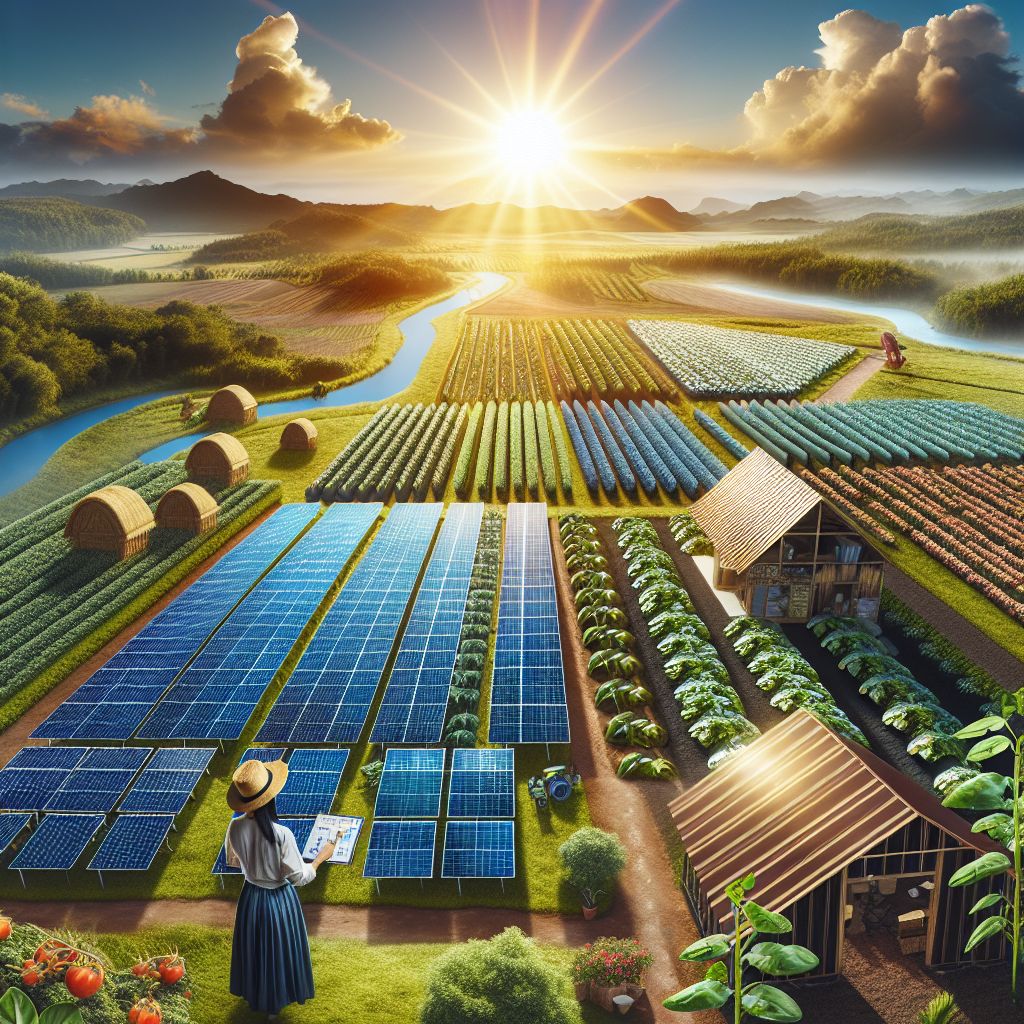
Turn Sunlight Into a Reliable Farm Income Stream
The economic case for agricultural solar has never been stronger. With proper planning, strategic implementation, and optimization of available incentives, farm solar investments consistently deliver returns that outperform most alternative uses of capital. Beyond immediate financial benefits, these systems provide operational resilience, marketing advantages, and long-term sustainability that strengthen overall farm viability. The sun’s energy falls freely on your land every day – capturing and converting it into financial returns represents one of the most accessible opportunities to enhance farm profitability while building climate resilience.
Frequently Asked Questions
As solar adoption accelerates across the agricultural sector, farmers consistently raise similar questions about implementation details, financial considerations, and operational impacts. Addressing these common concerns provides essential clarity for those considering their own renewable energy investments. While specific answers vary based on individual farm circumstances, these general guidelines offer valuable starting points for further exploration, such as understanding the benefits of solar panels powering irrigation systems.
Remember that solar technology continues evolving rapidly, with improving economics and expanding applications emerging regularly. Consulting with agricultural solar specialists who stay current with technology developments and incentive programs ensures access to the latest opportunities as you plan your own implementation.
How much farmland do I need to dedicate to solar panels?
Ground-mounted systems typically require about 8-10 acres per megawatt of capacity. For context, a 100kW system sufficient for many mid-sized operations needs approximately one acre. However, roof-mounted systems on existing structures require no additional land, making them ideal for farms with limited space or valuable cropland. Elevated agrivoltaic systems allow continued agricultural production underneath panels, effectively eliminating the land use tradeoff entirely for compatible crops.
When evaluating land dedication, consider opportunity costs carefully. Solar installations on marginal land with poor soil quality or awkward field configurations often generate more revenue per acre than conventional crops while requiring minimal inputs and labor. Some farms strategically place solar arrays on land that consistently underperforms agriculturally, improving overall farm economic efficiency while maintaining prime cropland for production.
Will solar panels work effectively in cloudy or northern climates?
Modern solar technology performs surprisingly well in less-than-ideal conditions. While production decreases in cloudy regions, properly sized systems still deliver substantial savings. Northern states like Vermont, Minnesota, and Wisconsin have thousands of successful farm solar installations despite shorter winter days and frequent cloud cover. These regions often have lower land costs and less competition for installation services, partially offsetting the efficiency disadvantage. Additionally, many northern areas experience cooler summer temperatures that actually improve panel efficiency compared to hotter southern regions.
Can I still qualify for agricultural tax breaks on land with solar panels?
Land assessment policies for solar-equipped agricultural properties vary significantly by state and sometimes by county. Many states have created specific provisions allowing continued agricultural classification for land used in dual-purpose solar/farming applications. Others maintain agricultural status if solar production primarily serves on-farm energy needs rather than commercial power generation. Some jurisdictions have established minimum agricultural production requirements that dual-use systems must meet to maintain preferential tax treatment. Consulting with local tax authorities and agricultural solar specialists familiar with regional policies ensures compliance with current requirements.
How long do farm solar systems typically last?
Quality agricultural solar installations reliably generate power for 25-30 years with minimal maintenance. Most manufacturers guarantee at least 80% production capacity after 25 years, though actual performance often exceeds these conservative estimates. System components have different lifespans – panels typically last 25-30 years, while inverters generally require replacement after 10-15 years. Mounting hardware, particularly galvanized steel structures designed for agricultural environments, typically outlasts the panels themselves. With component replacement as needed, many systems continue functioning productively for 30+ years, delivering exceptional return on investment over their extended operational lives.
What happens to my solar system during a power outage?
Standard grid-tied systems without battery storage shut down during outages to prevent backfeeding that could endanger utility workers. However, specialized inverters with “secure power supply” features can provide limited daytime power (typically 1500-2000 watts) during outages, sufficient for critical needs like water pumping or refrigeration. Full backup capability requires battery storage or specialized transfer switches that isolate farm systems from the utility grid. These backup configurations add 20-30% to system costs but provide invaluable protection for operations where continuous power is essential for animal welfare or product preservation.
Many farms implement hybrid approaches that provide backup power only for critical systems rather than entire operations. This targeted strategy significantly reduces battery costs while protecting essential functions. Common configurations include dedicated circuits for well pumps, refrigeration equipment, or ventilation systems that receive automatic backup power during outages while non-essential systems remain offline until grid power returns.
Integrating solar panels into farming operations can significantly enhance energy efficiency and reduce costs. Farmers are increasingly looking at solar technology to power their irrigation systems and other farm equipment. By using solar panels, farmers can harness renewable energy to support their agricultural activities, making their operations more sustainable and environmentally friendly. For those interested in understanding the differences between various solar-powered irrigation systems, it is beneficial to explore the solar drip irrigation system vs. solar micro-sprinkler irrigation system.







Leave a Reply