
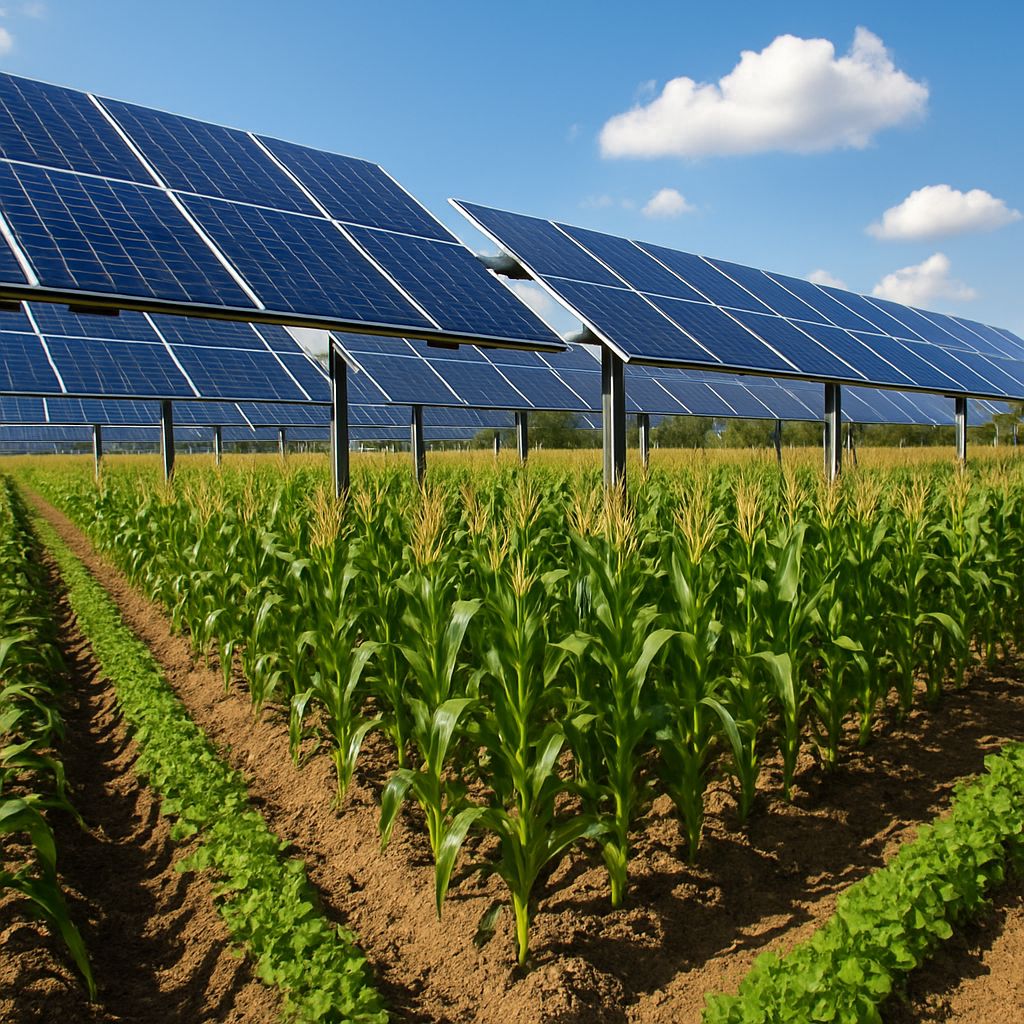
Article-At-A-Glance
- Agrivoltaic systems can increase crop yields by up to 20% while simultaneously generating clean energy for farm operations
- Solar panels create beneficial microclimates that reduce water evaporation by 30% and protect crops from extreme weather events
- Leafy greens, herbs, and certain root vegetables thrive particularly well under partial shade conditions created by solar panels
- Farmers implementing agrivoltaics report extended growing seasons and significant reductions in irrigation needs
- Beyond agricultural benefits, solar farming creates additional revenue streams through energy production and government incentives
Solar Panels Boost Farm Yields by 20%: Here’s How It Works
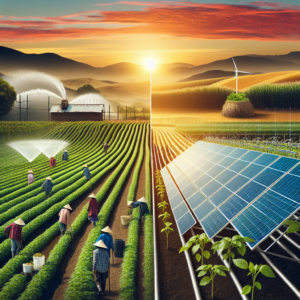
Imagine harvesting more crops while simultaneously generating clean energy on the same piece of land. This isn’t science fiction—it’s the reality of agrivoltaics, the practice of growing food beneath solar panels. As climate change intensifies and arable land becomes increasingly precious, innovative farmers are discovering that solar panels and agriculture can do more than just coexist—they can actually enhance each other.
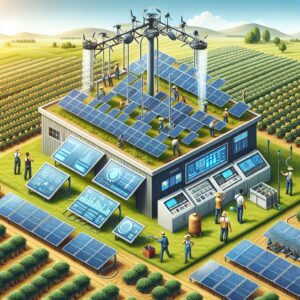
Agrivoltaic systems, where carefully positioned solar panels share space with growing crops, are revolutionizing sustainable farming by creating ideal growing conditions for many plants. These dual-use systems are being implemented by forward-thinking farmers who understand that renewable energy and food production don’t have to compete for land—they can complement each other beautifully. Studies show that strategically placed solar arrays can boost the productivity of certain crops by up to 20%, all while generating clean electricity.
The Perfect Marriage: How Agrivoltaics Creates Ideal Growing Conditions
While traditional farming wisdom suggests crops need maximum sunlight, research reveals many plants actually perform better with strategic shading. Solar panels create a partial shade environment that protects sensitive crops from excessive solar radiation during peak daylight hours. This controlled light exposure reduces plant stress, particularly in regions experiencing intensifying heat waves and drought conditions.
The microclimate created beneath solar arrays offers several advantages that conventional open-field agriculture simply cannot match. By intercepting and diffusing direct sunlight, panels create a more moderate growing environment where temperature fluctuations are less extreme, moisture is retained longer in the soil, and plants can focus energy on fruit production rather than survival mechanisms. This innovative approach aligns with sustainable irrigation practices that maximize efficiency and yield.
Controlled Shade Reduces Water Evaporation by Up to 30%
One of the most significant benefits of growing crops under solar panels is dramatically improved water efficiency. The partial shade created by overhead panels reduces soil surface temperatures, which directly translates to reduced evaporation rates. Research from the University of Arizona demonstrates that agrivoltaic systems can reduce irrigation needs by 20-30% compared to traditional open-field farming.
This water conservation aspect is particularly valuable in drought-prone regions where irrigation resources are increasingly limited and expensive. Farmers implementing these systems report being able to reduce watering frequency while maintaining or even improving crop yields, creating a win-win scenario for both their bottom line and environmental sustainability. For more information on how solar technology is enhancing irrigation, check out this article on solar-powered linear move irrigation systems.
The soil moisture retention benefits extend beyond just reducing water usage. More consistent soil moisture levels help prevent nutrient leaching and promote healthier soil biology. The enhanced microbiome activity under these conditions contributes to improved nutrient cycling and ultimately more resilient plants.
Temperature Regulation Extends Growing Seasons
Solar panels act as climate moderators, creating a buffer zone that protects crops from temperature extremes. During hot summer days, the panels absorb much of the intense heat that would otherwise stress plants, while at night, they help retain some warmth that radiates back toward crops. This temperature regulation effect essentially creates a more moderate growing environment that many plants thrive in. For more insights, explore how solar panels benefit irrigation systems.
The temperature moderation has allowed farmers in various regions to extend their growing seasons by weeks or even months. Early spring frosts and late fall cold snaps become less damaging under panel protection, while summer heat waves that would normally devastate certain crops become manageable. This extension of productive growing time translates directly to increased annual yields and more harvests per season.
How Panels Create Beneficial Microclimates for Plants
The microclimates formed beneath solar panels create ideal growing conditions that simply can’t be replicated in traditional open fields. This dynamic environment features higher humidity levels, more consistent soil moisture, and filtered light that reduces photoinhibition—the process where excessive sunlight actually decreases photosynthesis. Many crops that normally suffer during intense summer heat waves actually show improved metabolic efficiency in these conditions.
Research from Georgia Tech has demonstrated that the altered light patterns under solar arrays can trigger beneficial plant responses. The diffused light reaching plants beneath panels contains a higher ratio of blue light wavelengths, which can stimulate more compact growth patterns, thicker leaves with higher chlorophyll content, and ultimately more efficient photosynthesis per unit of light received. This scientifically explains why some farmers report more vibrant, nutrient-dense produce from their agrivoltaic plots.
Panel Height and Positioning: Critical Factors for Success
The height and arrangement of solar panels directly impact crop performance. Panels mounted at least 8-12 feet above ground provide sufficient clearance for most farming equipment while ensuring adequate light penetration to crops below. Advanced tracking systems that slowly rotate panels throughout the day maximize both energy capture and the movement of dappled light across plant surfaces, preventing any single area from receiving too little sunlight.
Strategic panel spacing allows farmers to fine-tune the light-to-shade ratio based on specific crop needs. For leafy greens that thrive in partial shade, panels can be positioned more densely, while crops requiring more direct sunlight benefit from wider spacing. Some innovative systems even feature dynamic adjustment capabilities, allowing seasonal optimization as the sun angle changes throughout the year. Learn more about the benefits of growing crops under solar panels.
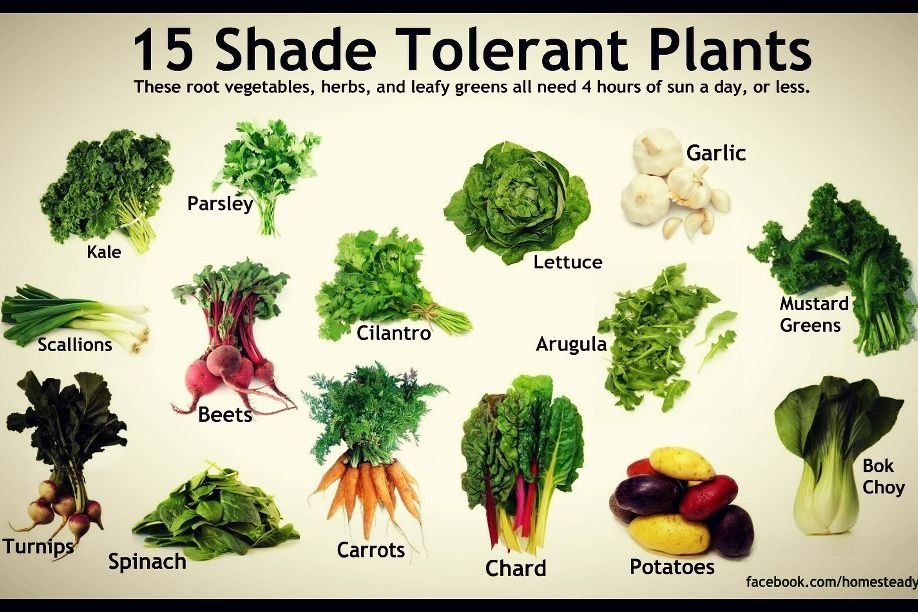
“Shade Tolerant Vegetables | Portland …” from www.pdxmonthly.com and used with no modifications.
Top Crops That Thrive Under Solar Panels
Not all plants respond equally to the partial shade environment created by solar installations. The most successful agrivoltaic systems carefully match crop selection to the unique growing conditions beneath the panels. Plants that naturally evolved in forest understory or dappled light environments typically perform exceptionally well, often showing improved quality and yield compared to full-sun cultivation. For farmers interested in optimizing their operations, choosing the best solar panels can be crucial.
Leafy Greens and Herbs: Perfect Shade-Tolerant Options
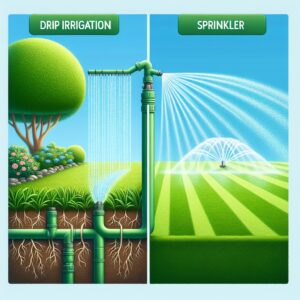
Leafy greens like spinach, kale, lettuce, and chard have consistently demonstrated remarkable performance in agrivoltaic settings. These crops naturally prefer cooler growing conditions and often bolt (flower prematurely) when exposed to excessive heat and sunlight. Under solar panels, they maintain vegetative growth longer, resulting in extended harvest periods and higher seasonal yields. For farmers interested in sustainable practices, pairing up a drip irrigation system and solar panels can further enhance crop efficiency and sustainability.
Culinary herbs including basil, cilantro, parsley, and mint flourish in the moderated environment beneath panels. The reduced light intensity actually enhances flavor development and essential oil production, resulting in more aromatic, flavorful herbs. Many herb farmers report being able to harvest these crops weeks longer than in conventional settings, significantly improving their seasonal production capacity. To maximize the benefits, some farmers are exploring monocrystalline vs. bifacial solar panels to determine the best choice for their specific needs.
The combination of consistent soil moisture and reduced leaf surface temperatures drastically decreases the bitter compounds that develop in many leafy greens during hot weather. Chefs and market customers frequently note the superior flavor profile of greens grown in these systems, allowing farmers to command premium prices for their agrivoltaic produce.
Root Vegetables That Show Increased Yields
Certain root crops including carrots, radishes, and beets demonstrate surprising benefits from partial shading. The moderated soil temperatures prevent the tough, woody texture that often develops in these vegetables during hot weather. The result is sweeter, more tender roots with improved color and nutrient density.
Potatoes grown under solar panels have shown particular promise, with some farmers reporting yield increases of 15-22% compared to control plots. The moderated soil temperature prevents the growth suppression that typically occurs when soil exceeds 75°F, allowing tubers to continue developing during periods when traditional potato fields would essentially shut down due to heat stress. Learn more about the benefits of growing crops under solar panels.
Specialty Crops: From Wine Grapes to Mushrooms
Some of the most promising economic returns from agrivoltaic systems come from high-value specialty crops. Wine grapes grown under carefully calibrated partial shading have shown improved quality metrics including better acid retention and more complex flavor development. In regions where climate change is pushing vineyard temperatures beyond ideal ranges, solar integration offers a path to maintaining quality while generating supplemental income.
Mushroom cultivation represents perhaps the most natural pairing with solar installations. Many commercial mushroom varieties require exactly the conditions created beneath solar arrays: diffused light, consistent moisture, and protection from environmental extremes. Innovative farmers are installing dedicated mushroom production beds between panel rows, effectively creating a triple-income system—electricity, field crops, and specialty mushrooms—all from the same acreage. For more insights, consider how efficient farm operations can benefit from integrating solar panels.
“Before installing our solar array, we could only grow lettuce profitably for about 7 months of the year. Now we’re harvesting premium quality greens nearly year-round, while our energy bills have dropped to almost zero. The system paid for itself faster than we ever anticipated.” — Maria Gonzalez, Green Valley Farm, California
Real-World Results From Farmers Using Agrivoltaics
The theoretical benefits of solar panels for crop production are compelling, but what matters most is real-world performance. Across diverse growing regions, farmers implementing agrivoltaic systems are documenting remarkable results that confirm the scientific predictions. These practical applications demonstrate that the dual-use approach can succeed in various climates and with different farming systems.
Early adopters have been instrumental in refining best practices for this emerging agricultural approach. Their willingness to experiment with different panel configurations, crop varieties, and management techniques has created valuable knowledge that new implementers can build upon, reducing the learning curve for farmers just beginning to explore agrivoltaics.
Case Study: German Hop Farmers See 20% Better Growth
In Bavaria, Germany, hop farmers facing increasingly hot, dry summers installed elevated solar arrays above their hop yards. The results exceeded their expectations, with hop plants showing 20% better growth rates and producing cones with higher alpha acid content—the compound brewers value most. The panels provided crucial protection during the record-breaking European heat waves of recent years, allowing these farmers to maintain production while neighboring conventional hop yards suffered significant losses. Learn more about the benefits of growing crops under solar panels.
The multi-year data from this operation demonstrates that the benefits compound over time. Soil organic matter increased steadily under the panels, improving water retention capacity and reducing irrigation requirements progressively each season. What began as a climate adaptation strategy has evolved into a comprehensive system that simultaneously improves crop quality, reduces input costs, and generates clean energy.
Water Usage Drops While Profits Rise
A vegetable operation in Arizona documented a 28% reduction in irrigation requirements after installing their agrivoltaic system. This water conservation translated directly to cost savings, but the benefits extended far beyond just reduced water bills. The improved growing conditions led to higher quality produce with lower cull rates, allowing the farm to increase the percentage of marketable harvest and command premium prices for their solar-grown vegetables.
The electricity generated by the panels eliminated the farm’s energy costs for cooling and refrigeration—previously one of their largest operational expenses. After accounting for all production benefits and energy savings, the farm’s net profit per acre increased by over 30% compared to their conventional growing areas. The system’s payback period was initially calculated at seven years, but actual performance suggests it will achieve full return on investment in under five years.
Extended Growing Seasons in Harsh Climates
Farmers in northern regions with shorter growing seasons have documented remarkable extensions of productive growing time using agrivoltaic systems. In Minnesota, a family farm was able to harvest frost-sensitive crops nearly four weeks longer than neighboring conventional fields. The panels provided just enough thermal protection to prevent light frosts from damaging plants, effectively extending their fall production window by almost a month.
Spring planting dates were also advanced by approximately two weeks, as soil beneath the panels warmed more quickly and maintained more consistent temperatures. This combined six-week extension of the growing season allowed for additional harvest cycles of high-value crops, dramatically improving the land’s annual productivity without requiring additional acreage or resources.
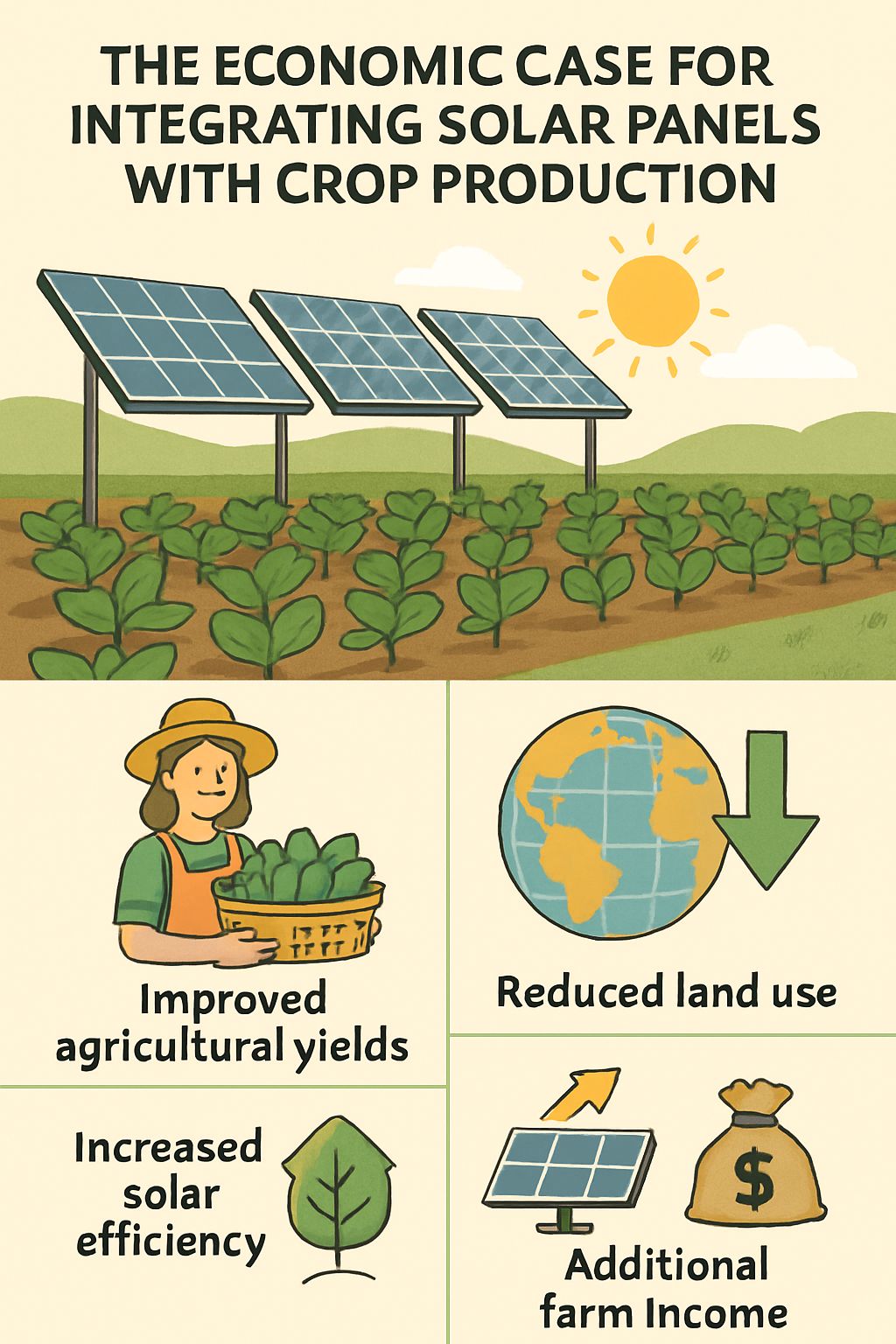
Double Your Income: The Financial Benefits of Solar Farming
The economic case for integrating solar panels with crop production extends well beyond just improved agricultural yields. These systems create multiple revenue streams from the same acreage, transforming the financial outlook for farms of all sizes. When properly implemented, agrivoltaics can significantly enhance a farm’s economic resilience through diversified income sources.
The dual-use nature of these systems allows farmers to monetize the same land in multiple ways simultaneously. While the upfront investment is substantial, the combined returns from improved crop production, energy generation, and various incentive programs typically deliver faster payback than either solar or agriculture could achieve independently. For more information on how solar power can enhance agricultural practices, check out this article on efficient farm operations with solar panels.
Energy Production Revenue Streams
The electricity generated by agrivoltaic systems creates flexible income opportunities tailored to each farm’s specific situation. Many operations choose to use the power directly on-farm, eliminating or drastically reducing energy bills for irrigation, refrigeration, processing equipment, and other electrical needs. For larger systems that produce excess electricity beyond on-farm requirements, grid connection allows farmers to sell power back to utilities, creating a steady, predictable income stream regardless of agricultural market conditions.
Some farmers have formed innovative partnerships with nearby businesses or communities, creating local microgrids that sell clean energy directly to neighbors at rates beneficial to both parties. This approach circumvents some of the limitations of traditional utility buyback programs while strengthening community relationships and building local energy resilience.
Government Incentives and Tax Benefits
Federal, state, and local incentives significantly improve the economics of agrivoltaic installations. The Investment Tax Credit (ITC) can reduce the upfront cost of solar components by 30% through tax credits, while accelerated depreciation provisions allow for faster write-off of the system’s value. Many states offer additional incentive programs specifically targeting agricultural solar adoption, with some providing grants covering up to 25% of installation costs. For more information on how solar panels can enhance agricultural efficiency, check out efficient farm operations with solar panels.
Beyond installation incentives, ongoing production-based incentives in many regions provide payments for each kilowatt-hour generated, creating dependable revenue for system owners. Some areas have implemented specialized rate structures or renewable energy credit systems that provide premium payments for solar electricity from agricultural operations, recognizing the additional environmental benefits these dual-use systems provide.
Reduced Water and Cooling Costs
The operational savings from agrivoltaic systems extend well beyond just electricity generation. The reduced water requirements translate directly to lower irrigation costs, while improved growing conditions often reduce the need for certain inputs like fungicides that combat heat and moisture stress. These operational savings compound over time, improving cash flow and reducing the farm’s vulnerability to input price fluctuations. For more on how solar power can enhance irrigation, explore sustainable irrigation solutions.
In livestock operations integrating solar panels with grazing land, the shade benefits translate to improved animal welfare and productivity. Cattle, sheep, and poultry all show reduced heat stress under panel-covered areas, resulting in better weight gain, milk production, or egg laying with lower supplemental feed requirements. These production benefits further enhance the system’s overall economic return.
Calculating Your ROI Timeline
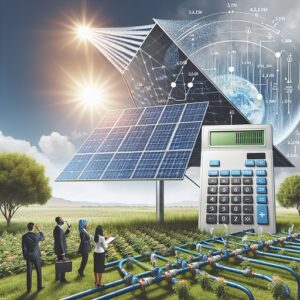
While every farm’s situation is unique, most agrivoltaic systems achieve complete return on investment within 5-8 years when all benefits are properly accounted for. This calculation should include direct revenue from energy production, agricultural yield improvements, operational cost reductions, and applicable incentives or tax benefits. The most successful implementations typically see agricultural benefits covering 25-40% of the system cost, with energy production and incentives covering the remainder.
Long-term financial planning is essential when considering these systems, as the benefits accumulate and often increase over the 25-30 year lifespan of solar equipment. Many farmers find that working with both agricultural and renewable energy financial specialists helps develop accurate projections that capture all potential value streams these hybrid systems create.
How to Set Up Your Own Agrivoltaic System
Implementing an effective agrivoltaic system requires careful planning that balances agricultural needs with energy production goals. Success depends on thoughtful design tailored to your specific farm conditions, crop selection, and business objectives. For instance, understanding the best choice of solar panels for farmers can significantly impact your investment returns across both agricultural and energy dimensions.
1. Assess Your Farm’s Solar Potential
Begin by evaluating your land’s solar resource using tools like the National Renewable Energy Laboratory’s PVWatts Calculator or consulting with a solar professional who can conduct a site assessment. South-facing slopes with minimal shading from trees or structures offer optimal conditions for solar production, but even less-than-ideal sites can still be viable with proper system design. Consider both your energy needs and your local utility’s interconnection and net metering policies when determining appropriate system size.
Simultaneously assess your current cropping systems to identify which fields might benefit most from the microclimate created by overhead panels. Areas where crops currently experience heat stress, excessive water requirements, or sun-scald issues are often perfect candidates for agrivoltaic conversion, as these challenges are precisely what the solar integration helps mitigate.
2. Choose the Right Panel Height and Configuration
Panel height and spacing decisions should prioritize agricultural operations while maintaining viable energy production. For most vegetable and field crop applications, mounting panels at least 8-12 feet above ground provides necessary clearance for equipment access while ensuring adequate light penetration. Specialty applications like vineyards or orchards may require custom configurations that complement existing trellis systems or tree arrangements.
The density and orientation of panels directly impacts the light-to-shade ratio crops will experience. East-west tracking systems that follow the sun provide more even light distribution throughout the day, while fixed south-facing arrays create more consistent shade patterns. Your specific crop selection should inform these design decisions, with shade-tolerant varieties allowing for denser panel arrangements that maximize energy production.
3. Select Compatible Crops
Choose crops that will thrive in the modified light environment beneath your solar array. Leafy greens, herbs, many berries, and certain root vegetables consistently demonstrate excellent performance under partial shading. Consider creating a diverse cropping plan that maximizes the unique microclimates created within your system—some areas will receive more morning light, others more afternoon exposure, allowing for strategic placement of different crops based on their specific light preferences. For those interested in optimizing farm operations, consider exploring efficient farm operations with solar panels.
Plan for potential adjustments to your cultivation practices. Partial shade often reduces the need for irrigation, but may require modifications to fertilization schedules as nutrient uptake patterns change under different light conditions. Many farmers find that soil-building practices like cover cropping perform exceptionally well in agrivoltaic settings, accelerating organic matter accumulation and microbial activity.
4. Connect With Solar Developers
Partner with solar installers who have specific experience with agricultural applications. Standard commercial solar installations often prioritize maximum energy density without consideration for farming operations, so seek developers who understand the unique requirements of dual-use systems. Ask for references from other agricultural clients and visit existing agrivoltaic installations they’ve completed to evaluate compatibility with your farming approach.
Consider ownership structures carefully. While direct ownership provides maximum long-term returns, third-party models where a developer owns and maintains the solar equipment while leasing your land can eliminate upfront costs and maintenance responsibilities. Some innovative arrangements share both costs and benefits proportionally, creating partnerships that distribute risks and rewards between farm and developer.
5. Apply for Available Grants and Incentives
Research all available financial support programs before finalizing your installation timeline. The USDA Rural Energy for America Program (REAP) offers grants and guaranteed loans specifically for farm energy projects, while state departments of agriculture and energy often have complementary programs. Some utility companies operate their own incentive programs, particularly in areas working to increase distributed energy resources.
Work with specialists who understand both agricultural and renewable energy incentive landscapes. The intersection of these sectors creates unique opportunities that generalist consultants might miss. Timing applications strategically can sometimes allow you to leverage multiple programs simultaneously, significantly improving project economics and accelerating your return on investment.
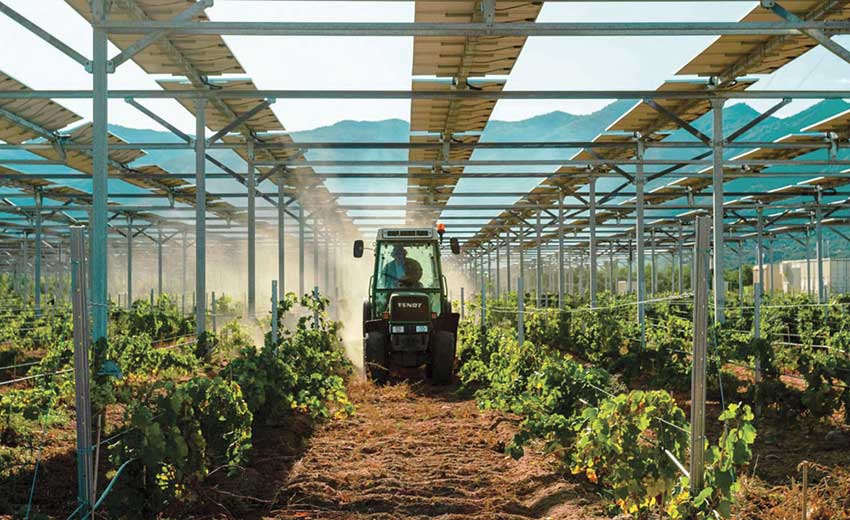
“Solar Mounting Structures for …” from www.mbt-energy.com and used with no modifications.
Common Challenges and How to Overcome Them
While agrivoltaics offers tremendous potential, implementing these systems does present certain challenges. Understanding common obstacles in advance allows for proactive planning to minimize their impact. With thoughtful design and management, most challenges can be effectively addressed, maintaining both agricultural productivity and energy generation efficiency.
Successful implementers typically approach challenges as design considerations rather than insurmountable barriers. By anticipating potential issues during the planning phase, system design can incorporate solutions that prevent problems before they develop, ensuring smoother operation once the system is installed.
Initial Investment Hurdles
The substantial upfront cost represents the most significant barrier for many farmers considering agrivoltaics. A commercial-scale system typically requires investment of $2,000-3,500 per kilowatt of capacity, with agricultural modifications adding 15-30% to standard solar installation costs. While long-term returns are compelling, the initial capital requirements can be challenging for operations with limited cash reserves or existing debt loads.
- Explore phased implementation approaches that allow for gradual expansion as initial sections prove successful and generate returns
- Investigate equipment leasing options that convert large capital expenses into manageable operational costs
- Consider forming cooperatives with neighboring farms to increase project scale and improve financing terms
- Explore specialized agricultural lenders who understand both the farming and renewable energy aspects of these projects
Many successful implementations begin with pilot projects covering 1-5 acres, allowing for proof of concept and operational learning before scaling up. This approach reduces initial financial exposure while providing valuable data on how specific crops perform in your local conditions, informing more effective expansion plans. For more information on integrating solar technology, consider exploring efficient farm operations with solar panels.
Creative financing approaches like power purchase agreements (PPAs) can eliminate upfront costs entirely by having a third party own and maintain the solar equipment while you purchase the electricity at predetermined rates. These arrangements often include options to buy the system outright after a specified period, allowing you to capture full benefits once the project has demonstrated its value.
Adapting Farm Equipment for Panel-Covered Fields
Standard farm equipment is typically designed for open-field operations, creating potential challenges when operating beneath solar structures. Most agrivoltaic systems require specialized equipment considerations, from height-restricted implements to adjusted operating patterns that work around support posts. Planning for these modifications during system design is essential for maintaining efficient field operations throughout the system’s lifespan. For more insights, explore the best solar panel choices for farmers.
Balancing Light Requirements Throughout Seasons
Crop light requirements change throughout the growing season and across different development stages. A panel density that provides ideal shading during summer heat might create excessive shade during spring establishment or fall maturation. Advanced systems incorporate seasonal adjustments to panel tilt or utilize selective removable panels in critical areas to provide optimal light conditions throughout the year, maximizing both crop performance and energy generation.
The Future of Farming Is Here: Why You Should Act Now
The agricultural landscape is transforming rapidly in response to climate pressures, economic challenges, and technological evolution. Agrivoltaics represents a forward-thinking approach that addresses multiple challenges simultaneously—generating clean energy, improving crop resilience, conserving water, and diversifying farm income. Early adopters of this integrated approach are positioning themselves advantageously as agriculture continues its inevitable evolution toward more sustainable and economically resilient models.
With increasing pressure on agricultural land from development, climate impacts, and competing uses, systems that maximize productivity per acre while addressing environmental challenges will define successful farming operations in coming decades. By implementing agrivoltaics now, you not only access current incentives and market advantages but also build the operational knowledge and systems that will become increasingly valuable as these approaches move from innovative to standard practice.
Frequently Asked Questions
As interest in agrivoltaics grows, farmers naturally have questions about how these systems might work in their specific contexts. The following answers address the most common inquiries, though consultation with specialists familiar with your particular region and operation is always recommended for detailed implementation planning.
Remember that this field is evolving rapidly, with new research and case studies continuously refining best practices. Connecting with agricultural extension services and renewable energy organizations can provide access to the most current information relevant to your specific situation.
How much does it cost to install an agrivoltaic system on my farm?
Installation costs typically range from $2,500-4,000 per kilowatt of capacity for agricultural applications, varying based on system size, mounting height requirements, and site conditions. A 100 kilowatt system covering approximately one acre would generally cost $250,000-400,000 before applying tax credits and incentives, which can reduce this amount by 30-50%. Most farms find that combining direct energy savings, improved crop performance, and incentive programs creates a payback period of 5-8 years, after which the system generates significant positive cash flow for its 25+ year lifespan. Learn more about the benefits of growing crops under solar panels.
Will solar panels damage my soil quality over time?
Contrary to concerns about negative soil impacts, research shows agrivoltaic systems typically improve soil health metrics over time. The moderated microclimate beneath panels reduces extreme temperature fluctuations that stress soil organisms, while the partial shading often increases soil moisture retention and organic matter accumulation. Many farmers report accelerated improvements in soil structure, biological activity, and carbon sequestration compared to adjacent open fields.
The support structures for panels typically impact less than 5% of the soil surface, creating minimal disturbance to cultivation areas. Advanced installation methods like driven piers or helical anchors further minimize soil disruption compared to traditional concrete foundations, preserving soil structure and drainage patterns throughout the installation area.
Can I still use tractors and other farm equipment with solar panels installed?
Yes, modern agrivoltaic systems are designed with farm operations in mind. Panels are typically mounted at heights of 8-12 feet or more, providing clearance for most standard equipment. System designs incorporate regular spacing between support posts that aligns with equipment widths, creating clear operational lanes. Some farms modify their equipment selection toward compact or specialized implements that better navigate these environments, while others design their panel layout specifically around their existing machinery requirements.
Advanced planning is essential for maintaining operational efficiency. Working with designers experienced in agricultural applications ensures that panel placement, height, and support structures accommodate your specific equipment needs and operational patterns. Some farms find that transitioning portions of their operation to more manual cultivation methods or smaller-scale equipment actually improves overall profitability when combined with the premium prices their agrivoltaic crops command.
How do I know if my crops will perform well under solar panels?
Research has established clear patterns regarding which crop categories generally thrive in agrivoltaic settings. Leafy greens, most herbs, many berries, and certain root vegetables consistently show neutral to positive responses to partial shading. Crops with high light requirements throughout their development cycle, like corn and sunflowers, typically show yield reductions under significant shading and are less ideal candidates unless panel spacing is very wide.
The most reliable approach is starting with small test plots to evaluate how specific varieties perform in your local conditions. Many agricultural extension services now offer guidance on crop selection for agrivoltaic systems, and an increasing number of seed companies have begun identifying varieties specifically bred or selected for partial shade tolerance. Collaborating with research institutions or participating in agrivoltaic trials can provide valuable data while potentially offsetting some implementation costs through research partnerships.
Are there special insurance considerations for agrivoltaic systems?
Insurance for dual-use systems typically requires policies that address both agricultural and energy production aspects. Standard farm insurance policies may need endorsements or riders to cover the solar equipment, while standalone solar insurance might not adequately address the agricultural activities beneath panels. Working with insurance providers experienced in both sectors helps ensure comprehensive coverage without gaps or excessive overlaps.
Many farmers find that initially higher premiums decrease over time as insurers gain more experience with these systems and recognize their resilience benefits. The distributed nature of agrivoltaic installations often makes them less vulnerable to catastrophic losses than either conventional solar farms or traditional agriculture alone, as the diversity inherent in these systems provides natural risk mitigation against both agricultural and energy production challenges.
Ready to take your farming operation to the next level with agrivoltaic technology? Explore how our sustainable farming experts can help you design and implement a custom system that maximizes both crop production and clean energy generation for your specific agricultural needs.
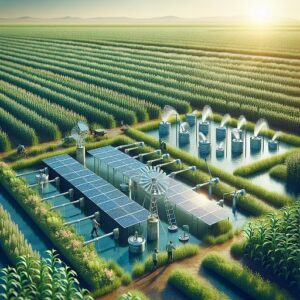
Solar panels have revolutionized the way farmers manage their resources, particularly in irrigation. By integrating solar energy with sprinkler irrigation systems, farmers can significantly reduce their operational costs while enhancing crop efficiency. This sustainable approach not only helps in conserving water but also maximizes growth and yield, providing a win-win situation for both the environment and agricultural productivity.


Leave a Reply