

“Conventional Irrigation Systems …” from growingsolarmist.com and used with no modifications.
Key Takeaways
- Solar irrigation systems typically reduce operational costs by 70-100% compared to traditional methods, though they require 2-3 times higher initial investment.
- Traditional irrigation systems provide consistent power regardless of weather conditions, while solar systems are dependent on sunlight availability.
- Farms in regions with 5+ hours of daily sunlight can achieve complete ROI on solar irrigation systems within 3-5 years through energy savings.
- Solar-powered systems significantly reduce environmental impact with zero emissions during operation compared to diesel systems that produce 2.6 kg of CO2 per liter of fuel.
- Growing Solarmist provides comprehensive solar irrigation solutions that integrate with existing farm infrastructure while reducing long-term operational expenses.
Choosing between solar and traditional irrigation systems isn’t just about following trends—it’s a decision that directly impacts your farm’s bottom line, sustainability, and operational resilience. As weather patterns become increasingly unpredictable and energy costs continue to rise, this choice becomes even more crucial for long-term farm viability.
In this comprehensive guide, we’ll examine exactly how each system performs in real-world farming conditions, what they cost over their lifetime, and which factors should guide your decision based on your specific agricultural operation.
Why Your Irrigation Choice Makes or Breaks Farm Profitability
The irrigation system you select fundamentally shapes your farm’s operational costs, water efficiency, and ability to withstand external challenges. Traditional irrigation systems have been the backbone of farming for generations, offering reliability and familiar technology. However, they come with ongoing fuel or electricity costs that can consume 20-30% of operational budgets. These expenses fluctuate with energy markets, creating financial uncertainty year after year.
Solar irrigation systems, by contrast, represent a paradigm shift in agricultural water management. While they require higher upfront investment, they dramatically reduce or eliminate ongoing energy expenses. For a typical 50-acre farm, this can translate to savings of $3,000-5,000 annually. This shift from operational to capital expenditure can transform a farm’s financial structure, potentially increasing profitability by 15-25% over a decade. Learn more about the comparison between solar and traditional irrigation systems.
Beyond direct costs, your irrigation choice affects crop yields, water conservation, and farm resilience. Modern solar systems can be integrated with precision irrigation technologies that deliver water exactly where and when crops need it, potentially reducing water usage by 30-60% compared to conventional methods while maintaining or improving yields.
“Solar Powered Irrigation Systems …” from dasenergie.com and used with no modifications.
Solar Irrigation Systems: What Every Farmer Needs to Know
Solar irrigation harnesses energy from the sun to power water pumps and distribution systems, creating a renewable energy loop that can operate independently from traditional power sources. This technology has matured significantly in the past decade, with efficiency improvements and cost reductions making it viable for farms of all sizes.
How Solar Pumps Actually Work in the Field
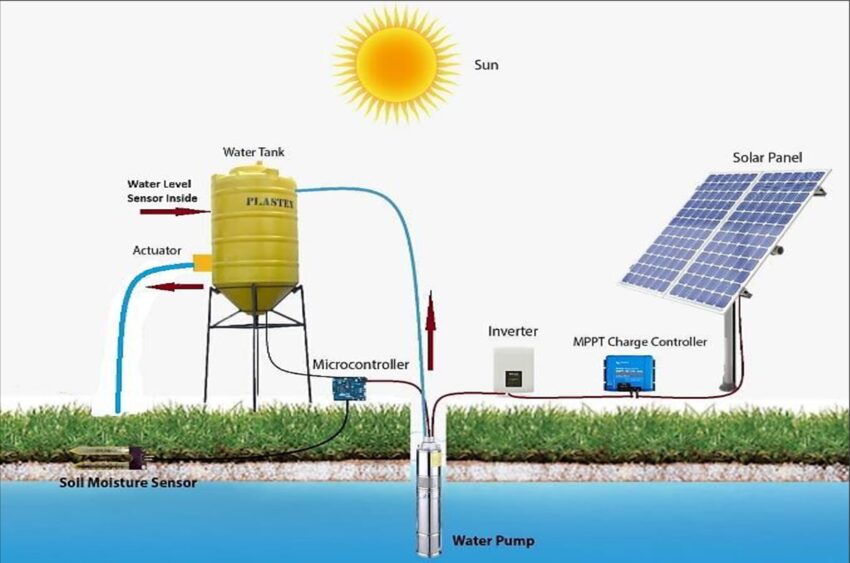
Solar pumps convert sunlight into electricity through photovoltaic (PV) panels, which then powers DC or AC pumps to move water from its source to your crops. Unlike traditional systems that maintain constant power output regardless of demand, solar systems typically follow the sun’s intensity curve—pumping more water during peak sunlight hours and less during early morning and late afternoon. This natural rhythm can be advantageous, as it often aligns with optimal irrigation timing to reduce evaporation losses.
Most modern systems include Maximum Power Point Tracking (MPPT) controllers that optimize the relationship between the solar array and pump, ensuring maximum efficiency even as sunlight conditions change. This technology can increase water output by 20-30% compared to basic solar pump setups, extracting the most value from your solar investment.
Main Components That Make Up a Complete System
A comprehensive solar irrigation system consists of several essential components working in harmony. The solar array forms the power generation foundation, typically requiring about 1kW of panels for every 1HP of pumping capacity needed. These panels feed into charge controllers that regulate voltage and current, protecting your pump investment and optimizing system performance.
The heart of the system is the water pump—either submersible for deep wells or surface-mounted for ponds, rivers, and shallow wells. Modern solar-compatible pumps are designed to operate efficiently across varying power inputs, maintaining functionality even during partial cloud cover. For farms requiring operation beyond daylight hours, battery storage systems can be incorporated, though they add 30-50% to system costs.
Additional components include monitoring systems that provide real-time data on water flow, system performance, and potential maintenance issues. Many advanced setups include automatic shut-off protection against dry running and integrated filtration systems to prevent clogging and damage.
Typical Water Output and Coverage Capabilities
Solar irrigation systems offer surprising pumping capacity despite their renewable energy source. A well-designed 2kW system can typically deliver 20,000-40,000 liters per day from depths of 10-30 meters, sufficient for 3-5 acres of crops depending on water requirements and climate conditions. Larger systems scale accordingly, with 10kW arrays capable of supporting 15-25 acres under intensive cultivation.
The actual coverage depends on multiple factors including crop type, soil conditions, and irrigation method. When paired with efficient delivery systems like drip irrigation, solar pumps can support significantly larger areas than when used with traditional flood irrigation. For example, a 5kW system might irrigate 8-10 acres using flood methods but can extend to 15-20 acres with precision drip systems.
Seasonal variations in sunlight also affect output, with summer typically providing 20-40% more pumping capacity than winter months in most regions. This natural variation often aligns with crop water needs, as summer heat increases both sunlight availability and plant water requirements simultaneously. For farms considering solar options, understanding whether off-grid solar panels are necessary can help optimize energy use during these seasonal changes.
Traditional Irrigation Methods: The Conventional Approach
Traditional irrigation systems have been the backbone of modern agriculture for decades, providing reliable water delivery regardless of weather conditions. These systems typically fall into three categories based on their power source: electric pumps, diesel engines, and direct grid connections. Each offers distinct advantages in specific farming contexts.
Many farmers continue to rely on conventional methods due to their proven track record and lower initial costs. Understanding their operational characteristics helps in making fair comparisons with newer solar alternatives.
Electric Pump Systems and Their Requirements
Electric pump systems connect to the local power grid to drive motors that pressurize water for distribution. These systems typically require 3-phase power connections for larger applications, making accessibility to robust electrical infrastructure essential. A standard 10HP electric pump can deliver approximately 50,000-60,000 liters per hour under optimal conditions, sufficient for irrigating 15-20 acres of diverse crops. For farms considering alternative energy solutions, exploring on-grid solar panels can be a viable option to power operations.
Grid-powered electric systems demand proper electrical installations including transformers, starters, and safety equipment to prevent damage from power fluctuations. Monthly electricity costs for a 10HP pump operating 6 hours daily average $300-450, depending on local rates. This represents a significant operational expense that compounds over years of use. For those looking to reduce costs, exploring efficient solar power backup options can be a viable alternative.
The primary advantage of electric systems is their consistent performance and ability to operate at any time, regardless of weather conditions. However, they remain vulnerable to grid failures and power outages, which can be devastating during critical irrigation periods.
Diesel-Powered Irrigation: Performance Details
Diesel irrigation systems offer mobility and independence from electrical infrastructure, making them popular in remote locations and developing regions. A typical 10HP diesel pump consumes 1.5-2 liters of fuel per hour while delivering 45,000-55,000 liters of water, slightly less efficient than electric alternatives. The real costs extend beyond fuel consumption to include regular maintenance, oil changes, and eventual engine rebuilds. For those considering alternatives, off-grid solar panels can offer a sustainable solution.
Diesel systems require significant ongoing attention, with maintenance intervals typically every 250-500 operating hours. Fuel quality issues and improper maintenance can lead to unexpected breakdowns during critical growing periods. The true operational cost includes not just fuel ($5-7 per hour at current prices) but also labor for maintenance and the environmental impact of emissions.
While diesel systems offer independence from the grid, they create considerable noise pollution and produce approximately 2.6kg of CO2 per liter of fuel burned, contributing to both local air quality issues and global carbon emissions. This environmental impact is increasingly becoming a concern for conscious farmers and regulatory bodies alike.
Grid-Connected Systems: Reliability Factors
Grid-connected irrigation represents the most common traditional approach, offering relatively stable power at regulated rates. Reliability, however, varies dramatically by region and season. In many agricultural areas, grid power quality suffers during peak summer demand—precisely when irrigation needs are highest. Farmers report voltage fluctuations damaging pump motors and control systems, creating unexpected repair costs.
Rural power infrastructure often experiences 15-25% more outages than urban areas, with some agricultural regions facing scheduled load-shedding during peak demand periods. These outages can disrupt carefully planned irrigation schedules and stress crops at critical growth stages. Many farmers invest in backup generators to mitigate this risk, further increasing their total irrigation system cost.
Despite these challenges, grid-connected systems benefit from established infrastructure support and predictable operational costs. When properly protected with voltage regulators and phase protection devices, these systems can provide decades of reliable service with minimal intervention.

Cost Comparison: What You’ll Actually Pay
The financial implications of irrigation choices extend far beyond initial purchase prices. A comprehensive cost analysis must account for installation, operational expenses, maintenance, and system longevity to provide an accurate comparison.
Upfront Investment Breakdown
Solar irrigation systems typically require an initial investment 2-3 times higher than equivalent traditional systems. A 5HP solar pump system sufficient for 8-10 acres costs approximately $7,000-$10,000 including panels, mounting structures, pump, controllers, and basic installation. Comparable diesel or electric systems range from $2,500-$4,500. This significant cost differential represents the primary barrier for many farmers considering solar options.
However, installation requirements differ substantially between systems. Traditional electric pumps often require expensive infrastructure improvements including power line extensions ($5-15 per foot), transformers, and service upgrades that may add $3,000-$8,000 to remote installations. Diesel systems require minimal infrastructure but need secure, weatherproof housing and fuel storage facilities that meet environmental regulations. For those considering renewable options, off-grid solar panels can be an alternative, potentially reducing the need for extensive infrastructure.
|
System Type |
Basic Equipment Cost (5HP) |
Installation & Infrastructure |
Total Initial Investment |
|---|---|---|---|
|
Solar Irrigation |
$6,500-$9,000 |
$500-$1,000 |
$7,000-$10,000 |
|
Electric Grid |
$1,800-$2,500 |
$1,500-$8,000* |
$3,300-$10,500 |
|
Diesel Powered |
$2,200-$3,500 |
$300-$1,000 |
$2,500-$4,500 |
Monthly Operating Expenses
The stark contrast between traditional and solar irrigation becomes evident when examining monthly operating costs. A 5HP diesel pump operating 25 days monthly for 6 hours per day consumes approximately 225-275 liters of fuel, costing $350-$450 at current prices. Electric pumps of equivalent power running the same schedule typically incur $150-$250 in monthly utility charges depending on local rates and time-of-use factors.
Solar systems, by comparison, have effectively zero operational energy costs after installation. Their monthly expenses are limited to occasional cleaning and minimal maintenance checks that can be performed by the farmer. This dramatic difference in operating expenses means that solar systems begin generating significant savings immediately after installation, despite their higher initial cost.
For Growing Solarmist’s solar irrigation solutions, this operational advantage creates compelling long-term value, particularly for farms with substantial water needs. The elimination of ongoing energy expenses provides not just cost savings but also predictable budgeting unaffected by volatile energy markets. For a comprehensive comparison of solar vs traditional irrigation, check out our detailed guide.
Long-Term Financial Returns
The true financial comparison emerges when analyzing total ownership costs over a system’s lifetime. Solar irrigation systems typically function reliably for 20-25 years, with panels carrying 25-year warranties and pumps needing replacement every 7-10 years. Traditional systems generally require major overhauls or replacement within 10-15 years, with diesel engines often needing rebuilding after 5,000-7,000 hours of operation.
When calculating 10-year ownership costs, solar systems demonstrate clear financial advantages despite higher upfront investments. A 5HP solar system costing $9,000 initially might require $1,500 in maintenance over ten years. Compare this to a diesel system costing $3,500 initially but consuming $42,000 in fuel and $4,500 in maintenance over the same period. Electric systems fall between these extremes, with lower maintenance but substantial ongoing energy costs.
Available Subsidies and Tax Benefits
Government incentives significantly alter the financial equation for solar irrigation adoption. Many regions offer agricultural solar incentives covering 30-50% of system costs. The federal Investment Tax Credit (ITC) provides a 30% tax credit for qualified solar installations, effectively reducing a $10,000 system cost to $7,000 for tax-paying farm operations. State-level incentives often provide additional benefits, sometimes pushing total subsidies to 60-70% of system costs. For more information on solar power solutions, explore off-grid solar panels and how they can power a farm’s operations.
Beyond direct subsidies, accelerated depreciation benefits allow farmers to recover solar system costs more quickly through tax deductions. Many agricultural extension offices offer assistance with paperwork and application processes, simplifying access to these financial benefits. Local utility companies sometimes provide additional rebates for systems that reduce peak load demands, particularly in areas with strained electrical infrastructure. For more information on how on-grid solar panels can power farm operations, explore our detailed guide.
Real Payback Period Examples
Actual payback periods vary based on local conditions, but case studies provide valuable reference points. A 30-acre vegetable farm in California replaced a 15HP diesel pump with a solar alternative, investing $28,000 after incentives. With previous fuel costs averaging $8,500 annually, they achieved complete payback in just 3.3 years. A 12-acre mixed crop farm in Colorado replaced grid electricity costing $3,200 annually with a $16,000 solar system (reduced to $10,000 after incentives), reaching break-even in approximately 3.1 years.
Smaller operations see similar results adjusted for scale. A 5-acre specialty crop farm in Georgia installed a 3HP solar system for $6,500 after incentives, replacing $1,800 in annual electricity costs. Their payback period of 3.6 years aligned with larger operations’ experiences. Importantly, these calculations don’t include the added value of uninterrupted irrigation during power outages or the marketing advantages of sustainable production methods that may command premium prices.
Water Efficiency: Getting More Crop Per Drop
Beyond energy considerations, irrigation efficiency fundamentally affects farm profitability and sustainability. Both system types can be integrated with efficient water delivery methods, but their operational characteristics create distinct differences in water usage patterns.
Pumping Capacity Differences
Traditional systems provide consistent water flow regardless of time of day, delivering predictable volumes for scheduling. A standard 5HP electric pump typically supplies 20-25 cubic meters hourly at 30-meter head pressure, maintaining this output as long as power is available. Solar systems, conversely, follow a bell curve matching sunlight intensity, with peak performance during midday and reduced output during morning and evening hours. A comparable 5HP-equivalent solar system might deliver 15-18 cubic meters at peak but average 10-12 cubic meters throughout the day.
This variable flow characteristic initially appears disadvantageous but often aligns well with optimal irrigation timing. Midday solar output coincides with peak evapotranspiration periods when crops benefit most from additional moisture. Early morning and late afternoon pumping reductions naturally minimize evaporation losses that occur during the hottest periods. Some farmers report 15-20% improvements in water efficiency simply from this natural alignment between solar pumping patterns and crop needs.
Flow Rate Control Options
Modern solar irrigation systems incorporate sophisticated flow management technologies that traditional systems often lack. Variable frequency drives (VFDs) automatically adjust pump speeds based on available solar power, maintaining optimal pressure across varying conditions. This prevents the pressure surges common in conventional systems that can damage drip emitters and sprinkler components while wasting water.
Smart controllers enable programming based on soil moisture readings rather than rigid schedules, ensuring water is applied only when crops actually need it. These systems can reduce water consumption by 30-40% compared to timer-based approaches. While similar technologies can be retrofitted to traditional systems, they’re more commonly integrated directly into solar installations, providing synergistic efficiency benefits.
5 Key Advantages of Solar Irrigation
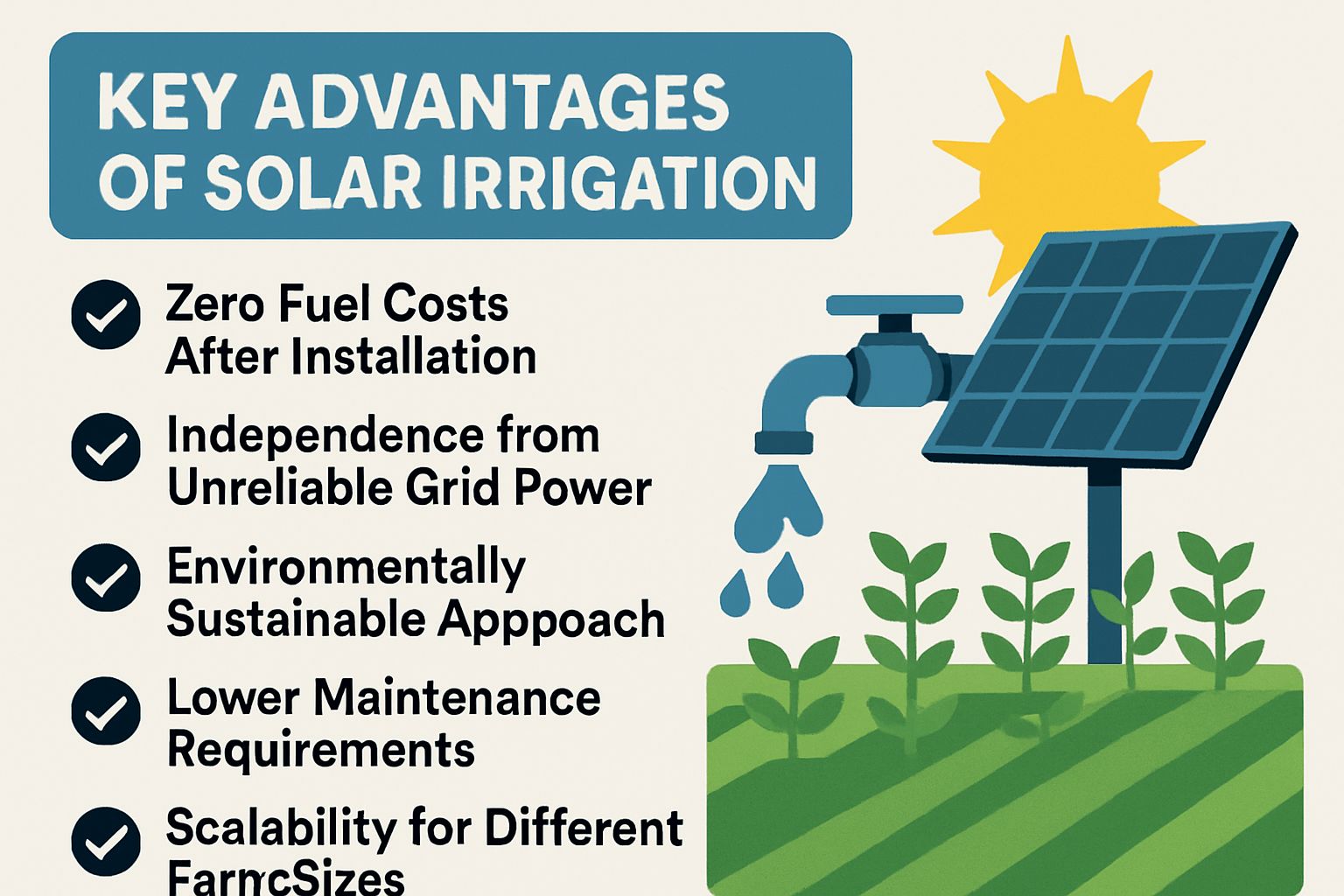
1. Zero Fuel Costs After Installation
The most immediate benefit of solar irrigation is the complete elimination of ongoing fuel or electricity expenses. For farms with substantial irrigation needs, this can represent savings of thousands to tens of thousands of dollars annually. A typical 20-acre vegetable operation might spend $7,000-10,000 yearly on irrigation energy costs with traditional systems—an expense completely eliminated with solar alternatives. This predictable cost structure shields farm operations from energy price volatility and inflation, creating more stable financial planning.
2. Independence from Unreliable Grid Power
Solar irrigation systems operate independently from the electrical grid, eliminating vulnerabilities to outages and service interruptions. In rural agricultural areas where power quality issues are common, this autonomy prevents crop losses from irrigation disruptions during critical growth stages. During peak summer months when grid demand is highest and outages most common, solar systems operate at maximum capacity, providing water precisely when crops need it most.
This independence extends beyond reliability to include freedom from utility connection requirements and approval processes. New installations can proceed immediately without waiting for power line extensions or service upgrades that might delay conventional systems by weeks or months.
3. Environmentally Sustainable Approach
Solar irrigation dramatically reduces the environmental footprint of farm operations. A typical 10HP diesel pump operating 1,000 hours annually produces approximately 5-7 metric tons of CO2 emissions—equivalent to driving an average passenger vehicle 12,000-17,000 miles. Eliminating these emissions improves local air quality while reducing agriculture’s contribution to climate change. This sustainability commitment increasingly resonates with consumers willing to pay premium prices for environmentally responsible production methods.
Beyond emissions reductions, solar systems eliminate risks of fuel spills and groundwater contamination associated with diesel storage. They also reduce noise pollution that can disturb wildlife and create tensions with neighboring properties. Many farmers report these quality-of-life improvements as significant benefits beyond the direct environmental impact. For more insights on protecting solar panels from environmental factors, consider these farmer tips.
4. Lower Maintenance Requirements
Solar systems feature significantly fewer moving parts than traditional alternatives, reducing maintenance demands and associated downtime. Unlike diesel engines requiring oil changes, filter replacements, and eventual overhauls, solar panels need only occasional cleaning to maintain performance. The primary maintenance component—the water pump—typically requires attention only every 3-5 years, compared to annual servicing for fuel-powered alternatives.
This maintenance simplicity translates to reduced labor requirements and fewer emergency repairs during critical growing periods. Farmers report 60-80% reductions in irrigation system maintenance time after switching to solar, allowing reallocation of labor to more productive activities. The predictable maintenance schedule also eliminates unexpected repair costs that can disrupt farm budgeting.
5. Scalability for Different Farm Sizes
Solar irrigation systems offer exceptional scalability, accommodating farms from small market gardens to large commercial operations. Systems can begin small with minimal panels and expand as budgets allow, adding capacity incrementally without replacing existing components. This modular approach enables phased investment that aligns with farm growth and financial capabilities. For a detailed comparison of solar and conventional irrigation systems, explore our comprehensive guide.
For diversified operations with varying seasonal water needs, solar arrays can be designed to support multiple pumps serving different fields or crops. Portable solar pumping units provide flexibility for rotational grazing systems and temporary irrigation needs. This adaptability contrasts with traditional systems that often require complete replacement when expanding capacity.
3 Major Drawbacks of Solar Systems
1. Weather Dependency Limitations
Solar irrigation’s primary limitation is its dependence on favorable weather conditions. During extended cloudy periods, system output may drop to 10-30% of rated capacity, potentially compromising irrigation schedules. This variability creates challenges for crops with strict water timing requirements and limited drought tolerance. Farms in regions averaging fewer than 4-5 daily sunlight hours may find solar systems insufficient as primary irrigation sources without substantial battery storage.
Seasonal variations also affect system performance, with winter sunlight providing 40-60% less pumping capacity than summer in many regions. This reduction often aligns with reduced crop water requirements but can create challenges for year-round greenhouse operations and winter crops. Some farmers maintain backup traditional systems for critical periods, slightly reducing the financial advantages of solar adoption.
2. Higher Initial Investment Barrier
The substantial upfront cost of solar irrigation represents a significant adoption barrier, particularly for small and mid-sized farms with limited capital access. Even after applying available incentives, solar systems typically require 1.5-2.5 times the initial investment of comparable traditional alternatives. This cost differential can strain farm finances and compete with other essential investments in land, equipment, or infrastructure.
Financing options including agricultural loans, equipment leasing, and solar-specific financing programs can mitigate this challenge, but may not be accessible to all operations. Some farmers overcome this barrier through phased implementation, starting with smaller systems for high-value crops and expanding as savings accumulate. Community solar programs and equipment sharing arrangements provide additional pathways for farms with limited investment capacity.
3. Storage Challenges for Night Operations
Standard solar irrigation systems operate only during daylight hours unless equipped with battery storage—a component that adds 30-50% to system costs and requires replacement every 5-10 years. This limitation restricts irrigation to daylight periods, potentially conflicting with optimal watering times for certain crops and regions. In hot climates where nighttime irrigation minimizes evaporation losses, this constraint can reduce water efficiency.
Battery storage systems introduce additional maintenance requirements and vulnerability points, potentially compromising the reliability advantages of basic solar setups. Alternative approaches include using daytime solar pumping to fill elevated tanks or reservoirs for gravity-fed nighttime irrigation, but these solutions require suitable topography and additional infrastructure investment. For some operations, these challenges necessitate hybrid systems combining solar with traditional backup power sources.
4 Benefits of Sticking with Traditional Irrigation
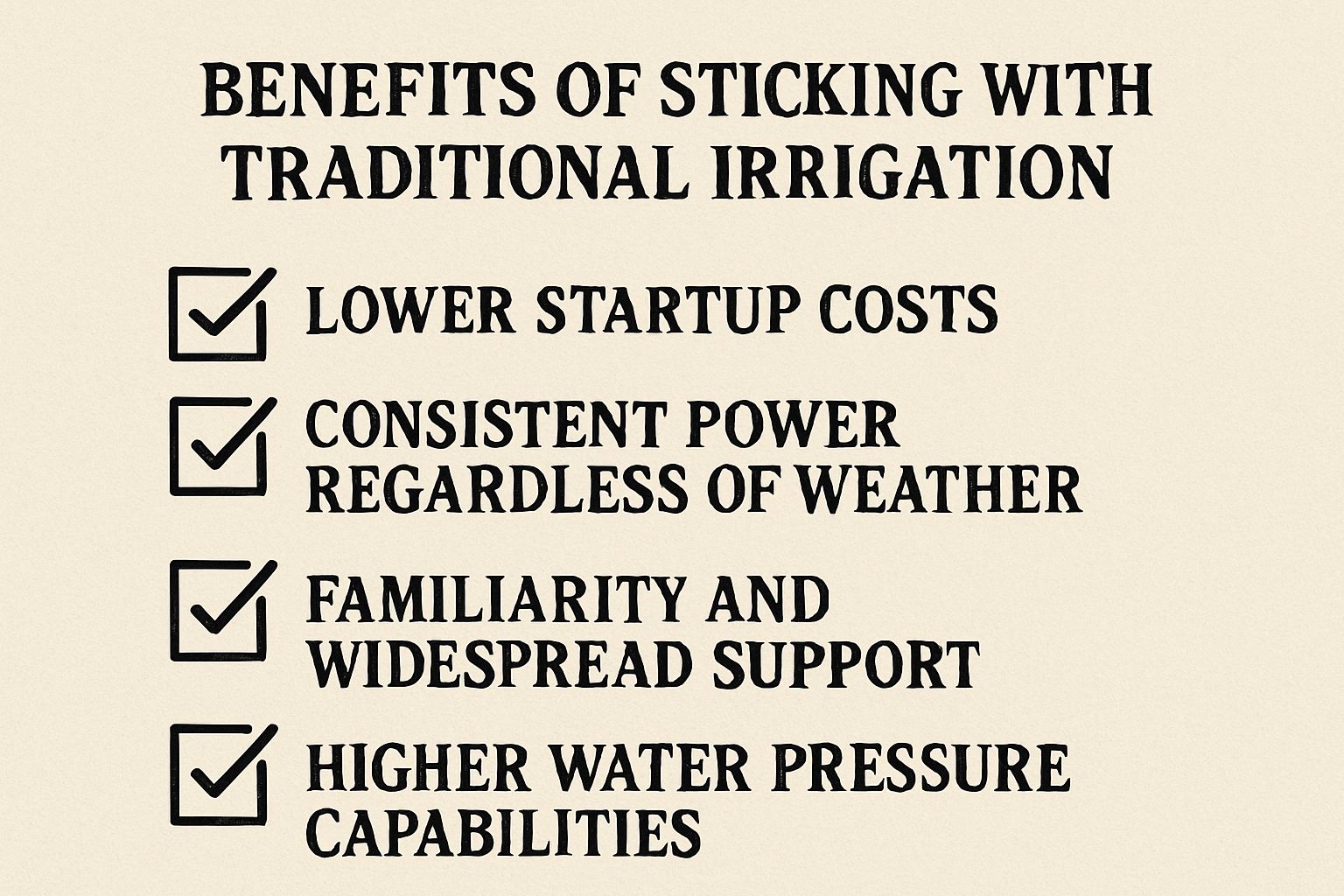
1. Lower Startup Costs
Traditional irrigation systems maintain a significant advantage in initial affordability, particularly for farms with existing electrical infrastructure. A new electric pump installation typically costs 40-60% less than a comparable solar system before incentives. This lower entry point enables farms to preserve capital for other productivity investments and reduces financing requirements that might strain credit capacity.
For operations with short-term land leases or uncertain future plans, the lower capital commitment of traditional systems may better align with business timelines. Farms transitioning between crops or considering operational changes can implement traditional systems with lower sunk costs if irrigation needs change significantly. This financial flexibility represents a legitimate advantage for operations in transitional phases or with limited investment horizons.
2. Consistent Power Regardless of Weather
Traditional systems deliver reliable, consistent water flow unaffected by weather conditions (barring power outages). This predictability simplifies irrigation scheduling and ensures water availability during critical growth stages regardless of sunlight conditions. For precision irrigation programs requiring exact timing and volumes, this consistency provides operational advantages that may outweigh energy cost savings.
Crops with minimal drought tolerance or precise water timing requirements benefit particularly from this reliability. High-value specialty crops often justify the additional operational costs of traditional systems to eliminate weather-related irrigation variability. In regions with frequent cloudy periods or seasonal fog, this consistent performance may be essential for maintaining optimal crop conditions. For more information on how different irrigation methods compare, check out this comparison of solar vs traditional irrigation.
3. Familiarity and Widespread Support
The mature infrastructure supporting traditional irrigation offers practical advantages including readily available replacement parts, experienced repair technicians, and established knowledge bases. Most agricultural regions maintain multiple service providers capable of repairing conventional systems, often providing same-day emergency service during critical periods. This support ecosystem reduces downtime risk compared to newer solar technologies that may have limited local expertise available.
Farm staff typically possess existing knowledge of traditional system operation and maintenance, eliminating learning curves associated with new technologies. Equipment dealers offer extensive training resources, troubleshooting support, and performance optimization guidance based on decades of field experience. For operations with limited technical capacity, this established support structure provides valuable operational security.
4. Higher Water Pressure Capabilities
Traditional systems typically deliver higher and more consistent water pressure than solar alternatives, particularly for larger applications. Standard electric irrigation pumps easily maintain 40-60 PSI necessary for impact sprinklers, center pivots, and other high-pressure distribution systems. Solar pumps may struggle to maintain these pressures consistently throughout the day without oversized arrays that increase costs substantially.
Applications requiring deep well pumping (beyond 100 meters) generally favor traditional systems unless solar arrays are significantly oversized. This performance advantage becomes particularly relevant for operations irrigating elevated terrain or requiring substantial pressure for specialized distribution systems. While solar technologies continue advancing in this area, traditional systems maintain a practical edge for high-pressure, high-volume applications.
Is Your Farm Right for Solar Irrigation?
Climate Suitability Assessment
Regional climate conditions fundamentally determine solar irrigation viability. Ideal locations receive 5+ hours of direct sunlight daily throughout the growing season, with minimal extended cloudy periods. Locations experiencing frequent fog, persistent cloud cover, or heavy atmospheric pollution may achieve only 60-70% of theoretical system performance, potentially compromising economic viability. The U.S. Solar Radiation Database provides location-specific insolation data essential for accurate system sizing and performance predictions.
Seasonal sunlight patterns must align reasonably well with crop irrigation needs. Regions with winter growing seasons but significantly reduced winter sunlight may require oversized systems or supplemental power sources. Extreme temperature conditions also affect performance—solar panels lose approximately 0.5% efficiency for each degree above standard testing conditions (25°C/77°F), potentially reducing midsummer output by 10-15% in very hot climates.
Land Requirements and Positioning
Effective solar irrigation requires suitable space for panel placement with unobstructed southern exposure (northern hemisphere) or northern exposure (southern hemisphere). A typical 5HP system requires approximately 400-500 square feet of panel area, ideally positioned at latitude-specific angles to maximize energy capture. This space must remain unshaded from 9am to 3pm year-round, sometimes necessitating tree trimming or placement away from structures.
Panel mounting options include fixed ground mounts (most common for agricultural applications), pole mounts for smaller systems, or tracking systems that follow the sun’s movement to increase daily energy capture by 25-35%. Tracking systems add 15-25% to initial costs but can significantly improve performance, particularly in regions with clear skies but limited peak sunlight hours. Security considerations sometimes influence placement decisions, with some farmers preferring locations visible from main buildings to discourage theft or vandalism.
Water Source Compatibility
Water source characteristics significantly impact solar irrigation feasibility. Solar pumps perform optimally with static water levels less than 50 meters deep, though specialized systems can reach 100+ meters with reduced flow rates. Wells requiring constant high pressure or exceptionally deep pumping may demand larger solar arrays that increase costs disproportionately. Surface water sources generally pair excellently with solar pumps due to reduced lifting requirements.
Water quality affects maintenance requirements and system longevity. Sources with high sediment content necessitate robust filtration to prevent accelerated pump wear, while mineral-heavy water may cause scaling that reduces efficiency over time. These water quality challenges affect all irrigation systems but can have outsized impacts on solar installations where maximizing efficiency is critical for economic viability. Pre-installation water testing helps identify potential issues and design appropriate filtration and maintenance protocols.
Real-World Performance: Solar vs Traditional in Different Conditions
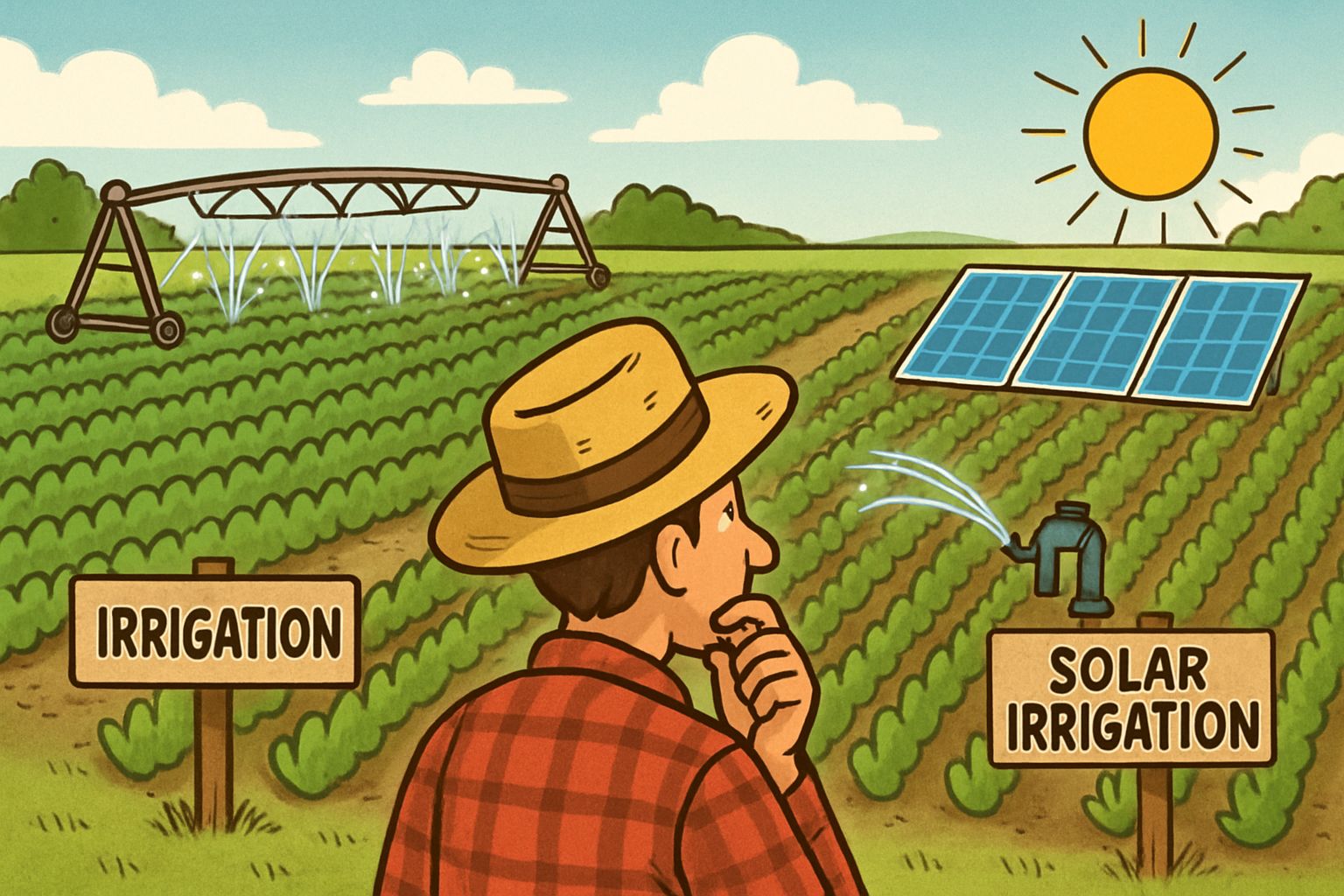
Beyond theoretical comparisons, real-world performance in specific agricultural contexts provides the most relevant decision-making information. Actual field results reveal performance patterns that help determine which system best suits particular farming operations.
Arid Region Performance Comparison
In arid regions with abundant sunlight, solar irrigation systems consistently outperform expectations. Case studies from Arizona and New Mexico demonstrate solar systems achieving 110-120% of rated capacity during peak growing seasons due to enhanced panel efficiency in low-humidity environments. These regions typically record 7-9 daily peak sunlight hours, enabling systems to pump water from sunrise to sunset with minimal interruption. The natural alignment between maximum sunlight availability and maximum crop water requirements creates ideal conditions for solar irrigation.
Seasonal Weather Impact on Each System
Seasonal variations affect both system types differently. Traditional systems maintain consistent output year-round but experience increased operational costs during peak demand periods when energy prices often surge. During summer months, electric grid reliability frequently decreases precisely when irrigation needs are highest. Diesel systems maintain performance regardless of season but may require more frequent maintenance during intensive summer use.
Farm Size Considerations
Farm scale significantly influences irrigation system economics. Small farms (1-10 acres) typically achieve faster payback with solar systems due to the disproportionate cost of establishing electrical service for relatively small water requirements. Medium operations (10-50 acres) generally see balanced economic comparisons where specific operational factors determine optimal choices. Large commercial farms (50+ acres) often implement hybrid approaches, using solar for baseline irrigation and supplementing with traditional systems for peak demands or specialized applications.
For diversified operations with multiple water needs, combinational systems often provide optimal solutions. These might include solar-powered drip irrigation for vegetable production alongside conventional systems for field crops requiring periodic flood irrigation. This targeted approach maximizes the advantages of each technology while minimizing their respective limitations.
Maintenance Requirements Side by Side
Maintenance demands significantly impact total ownership costs and operational reliability. A detailed comparison reveals substantial differences in routine care requirements, technical complexity, and long-term durability between system types.
Daily and Weekly Checks for Each System
Traditional systems demand more frequent attention than their solar counterparts. Diesel systems require daily fuel level checks, exhaust system inspections, and cooling system monitoring. Operators must verify proper oil levels before each use and watch for leaks or unusual operating sounds that might indicate developing problems. Electric systems need less daily attention but still require weekly monitoring of pump bearings, electrical connections, and control systems for signs of wear or damage.
Solar systems, by contrast, need minimal routine attention. Weekly panel cleaning may be necessary in dusty environments or during pollen seasons, but many installations in areas with regular rainfall require no routine cleaning. Monthly inspection of mounting hardware, wiring connections, and controller displays is typically sufficient to ensure optimal performance. This reduced maintenance burden translates to labor savings of 2-4 hours weekly for medium-sized systems.
Seasonal Maintenance Tasks
- Solar System: Bi-annual panel cleaning, annual controller inspection, check mounting hardware tightness, inspect wiring for rodent damage, test pump performance
- Electric System: Quarterly motor bearing lubrication, bi-annual control panel inspection, annual starter replacement, check pressure switch calibration, inspect wiring insulation
- Diesel System: 250-hour oil and filter changes, 500-hour fuel filter replacement, 1000-hour injector inspection, annual cooling system flush, exhaust system integrity check
These maintenance schedules reveal dramatic differences in time and material requirements. A typical diesel system accumulates 15-20 hours of maintenance labor annually plus $300-500 in parts and consumables. Electric systems require 8-12 hours of annual maintenance with $150-250 in parts. Solar systems typically need only 3-5 hours of annual attention with minimal replacement parts unless the pump requires service.
Beyond scheduled maintenance, system winterization requirements differ substantially. Traditional systems require draining pumps and pipes to prevent freeze damage, often necessitating professional service for proper antifreeze procedures. Solar systems typically incorporate simpler winterization processes using automated drain-back features that prevent freeze damage without specialized intervention.
The technical expertise required for maintenance also varies significantly. Diesel system maintenance demands mechanical knowledge of internal combustion engines, fuel systems, and cooling components. Electric systems require electrical troubleshooting skills and knowledge of motor control circuits. Solar maintenance is generally simpler, focusing on basic electrical connections and visual inspections accessible to operators without specialized training.
These differences directly impact farm labor allocation and technical service costs. Farms with limited mechanical expertise may find solar systems’ simplified maintenance particularly advantageous, reducing dependence on increasingly scarce rural service technicians.
Common Repair Issues and Costs
Repair patterns reveal further distinctions between irrigation technologies. Traditional systems experience more frequent component failures but generally lower individual repair costs. Electric systems commonly require pump seal replacements ($150-300), control switch failures ($75-200), and eventual motor rebuilds ($500-1,200). Diesel systems typically need injector services ($300-600), starter replacements ($200-400), and eventual major overhauls costing $1,500-3,000 depending on engine size.
Solar systems experience fewer failures but may incur higher costs for specialized components. Pump replacements represent the most common major repair ($800-1,500), typically required every 7-10 years. Controller failures ($400-700) occasionally occur due to lightning strikes or power surges. Panel failures are extremely rare, with manufacturers reporting less than 0.5% failure rates over 25-year warranties. The primary advantage of solar system repairs is their predictability—components typically show gradual performance decline rather than catastrophic failures common in mechanical systems.
Should Farmers Invest in Solar Power to Future-Proof Their Farm’s Irrigation
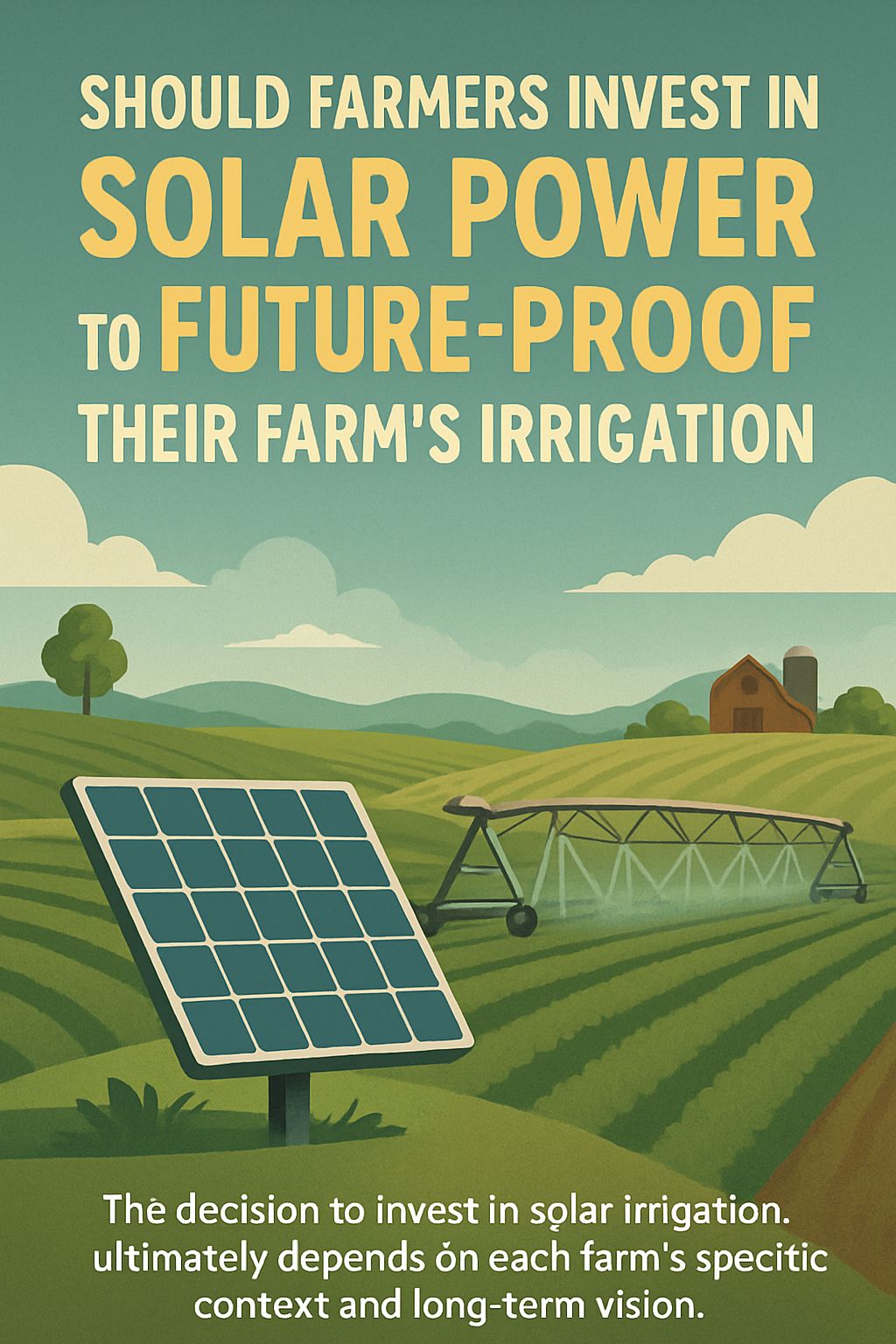
The decision to invest in solar irrigation ultimately depends on each farm’s specific context and long-term vision. Farms with high irrigation demands, suitable climate conditions, and stable land tenure generally benefit most from solar conversion. Operations in regions with rising energy costs, unreliable grid service, or stringent emissions regulations find particularly compelling economic and operational advantages. For these farms, solar irrigation represents not just cost savings but strategic positioning for agricultural markets increasingly valuing sustainable production methods. As panel efficiency continues improving and system costs decline, the economic equation increasingly favors renewable irrigation for a growing percentage of agricultural operations.
Frequently Asked Questions
Below are answers to the most common questions farmers ask when considering solar irrigation systems. These practical insights address the real-world concerns that influence irrigation technology decisions.
How many solar panels do I need to run an irrigation system?
Solar panel requirements depend primarily on pump horsepower and water lifting height. As a general rule, each horsepower requires 900-1,100 watts of solar capacity, meaning a 5HP pump typically needs 4.5-5.5kW of panels. This translates to approximately 15-18 standard 300-watt panels. Deep well applications may require 20-30% additional capacity to overcome increased lifting requirements. Your specific needs should be calculated based on well depth, desired flow rate, and local solar conditions by a qualified system designer. For more information on choosing the right solar panel backup solutions, consult a professional.
Can solar irrigation systems work at night?
Standard solar irrigation systems operate only during daylight hours without additional components. For night operation, three primary options exist: battery storage, water storage, or hybrid power systems. Battery systems store excess daytime energy for evening use but add 30-50% to system costs. Water storage—pumping to elevated tanks during daylight for gravity distribution at night—provides a cost-effective alternative where topography permits. Hybrid systems incorporating traditional power sources for nighttime operation offer flexibility but sacrifice some operational savings.
What happens to a solar irrigation system during cloudy days?
During cloudy conditions, solar irrigation systems continue functioning but with reduced output proportional to sunlight reduction. Light overcast might decrease performance by 20-30%, while heavy cloud cover can reduce output by 60-80%. Modern MPPT controllers optimize available power to maintain pump operation even in suboptimal conditions. System designs typically incorporate weather pattern analysis, sizing arrays to meet minimum requirements even during typical cloudy periods.
For regions with regular cloud cover, oversized arrays provide more consistent performance but increase initial costs. Some farmers implement simple water storage solutions to buffer against weather variability, accumulating reserves during peak sunlight periods for use during reduced output. Others incorporate weather-responsive irrigation controls that automatically adjust watering schedules based on current conditions and forecasts.
The impact of reduced performance depends heavily on crop type and soil conditions. Drought-sensitive crops in sandy soils may require backup power sources for cloudy periods, while crops with moderate drought tolerance in moisture-retentive soils may tolerate occasional pumping reductions without yield impacts.
Is it possible to convert my existing pump to solar power?
Many existing pumps can be converted to solar operation, but compatibility and efficiency vary significantly. AC pumps require additional inverters that reduce system efficiency by 10-15% compared to purpose-built DC solar pumps. Conversion generally proves most successful with newer pump models specifically designed for variable speed operation. Older pumps with high starting torque requirements may function poorly with solar power’s gradual ramp-up characteristics.
Professional assessment is essential before conversion, as inappropriate adaptations may damage equipment and provide disappointing performance. The most successful conversions typically involve relatively new submersible pumps with appropriate voltage characteristics and moderate power requirements. For marginal compatibility situations, soft starters or specialized controllers can sometimes bridge performance gaps but add complexity and cost.
How long does a solar irrigation system typically last?
Solar irrigation components have differing but generally excellent longevity. Solar panels carry 25-year manufacturer warranties guaranteeing at least 80% of original output after this period, with actual field experience suggesting 30-40 year functional lifespans. The panels’ lack of moving parts contributes to this exceptional durability, with most degradation occurring gradually rather than through catastrophic failure. For more insights on solar irrigation systems, you can explore this comparison of solar vs conventional irrigation systems.
Electronic controllers and inverters typically provide 10-15 years of reliable service, though lightning protection is essential to prevent premature failure in storm-prone regions. Pumps represent the most frequently replaced components, with quality submersible models averaging 7-10 years of operation before requiring replacement or rebuilding. Surface-mounted pumps often achieve slightly shorter lifespans of 5-8 years due to increased exposure to environmental conditions.
Mounting structures, when properly installed and constructed of appropriate materials, generally match or exceed panel lifespan. Galvanized or stainless steel mounting systems properly anchored to withstand local wind conditions can provide decades of service with minimal maintenance beyond occasional hardware tightening.
This exceptional longevity significantly impacts lifetime economic calculations. When amortized across their full functional lifespan, solar components often demonstrate lower annual costs than traditional alternatives despite higher initial investments. For farm succession planning, solar irrigation systems represent intergenerational infrastructure that continues providing value and cost savings across ownership transitions.







Leave a Reply